
 All Posts By Presser
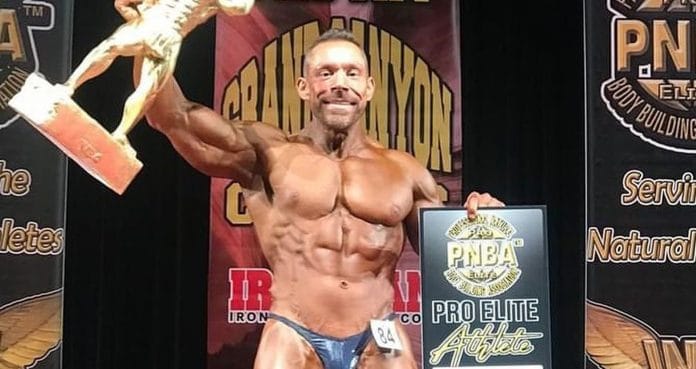
Paul Krueger Won The 2021 Natural Olympia Just Weeks After Earning Pro Card
Paul Krueger goes from amateur bodybuilder to pro bodybuilding champion overnight.
Pro natural bodybuilder, Paul Krueger, made quite the entrance into professional bodybuilding by winning his first-ever professional bodybuilding competition. He’s no noob when it comes to bodybuilding though. Krueger’s been an amateur bodybuilder for the last 25 years before turning pro.
He competed at the 2021 INBF Phoenician Classic where he expressed in an Instagram post that it had been 16 years since he last jumped on a stage. Despite the lack of on-stage presence, Krueger won the men’s open bodybuilding class in the amateur division.
Although Krueger’s had feats in other bodybuilding competitions, it was the Grand Canyon Classic in Phoenix, Arizona on Saturday, October 24, 2020, that took his training wheels off, molding him from an amateur bodybuilder to a professional bodybuilder. Winning that event landed him his pro debut card. That gave him the golden opportunity to compete in natural bodybuilding’s biggest event of the year held in Vegas – the 2021 Natural Olympia.
Although it seems Krueger’s win at the 2021 Natural Olympia was an overnight success, Krueger shed light on his experience before being crowned champ in an Instagram post on October 29, 2021:
“A 25-year overnight success. Lol. From eating horse feed with one of my training partners back in our teens thinking we would get huge (story for another time), to ballooning up to a fluffy 250lbs last year in the summer, and all the ups and downs in between, this journey has been my biggest lifesaver, my biggest teacher, my biggest drive to better myself in every area of life, and still as satisfying as ever.”
You can view his full Instagram post below.
Life Outside of Competing
Outside of competing in professional natural bodybuilding, Krueger is a lifestyle and prep coach and Youtube creator. His Youtube channel, Gains Paradise, covers natural ways to transform your physique and him prepping for shows.
He posted a video on November 4, 2021, covering the golden ratio – how the approximate number 1.618 relates to mathematics – and how it affects your bodybuilding physique. In the video, he’s seen with the Vitruvian Man – a depiction of the perfect proportionate man by Leonardo da Vinci in the 15th century – in his backdrop that applies this principle. Krueger states that if you want a 32” waist, then you’ll want a 52” circumference on your shoulders to give you the astonishing V-taper, which is imperative to have as a bodybuilder.
You can check out the full video below.
[embedded content]
Paul Krueger is a professional natural bodybuilder, a champion, and a coach. If there’s any takeaway from his journey into professional natural bodybuilding, it’s to never give up. He’s proof of what your physique is truly capable of accomplishing without the use of steroids and PEDS. His story reveals what’s possible for all upcoming bodybuilding professionals when you have the heart of a champion.
Generation Iron would like to congratulate Paul Krueger on his latest 2021 Natural Olympia win. Stick around for the forthcoming natural bodybuilding competitions; Krueger will likely be an eminent face.
To stay tuned in, follow us on Facebook, Instagram, and Twitter.

Grammy-Award Winning Artist Adele Says She Can Deadlift 160 Pounds
Adele shared some fitness achievements during a recent interview with Oprah Winfrey.
Adele has put together an incredible career in music that has spanned many years. She has won 15 Grammy’s and might not be done adding to that total. Adele recently released an album entitled “30” and promoted it during a performance during a CBS Special. The “One Night Only” event took place in Los Angeles. This is also where Adele sat down for an interview with Oprah Winfrey.
During the interview, the two discussed Adele’s incredible transformation where she has lost 100 pounds over the last two years. Adele spoke on the transformation and explained how her anxiety and overall mindset led to making some changes.
“I had the most terrifying anxiety attacks…paralyzed me completely.”
Over the last two years, Adele has put in some serious work in the gym and it is only natural to wonder what she has been lifting. Adele admitted that she was able to deadlift 160 pounds at her peak.
This was not her starting weight however. She admitted to putting in time at the Heart & Hustle gym in Los Angeles. Here, she was able to focus on training the right away and regaining the right mindset to do so.
During the interview, Adele explained how she did not begin this transformation to lose the weight initially. It was mostly about getting back in the right headspace. She said that going to the gym and working out added discipline and structure to her day-to-day life. Once she was in the swing of it all, it was just another routine to get into and results came quickly.
Adele did not follow a strict diet during her transformation. She was not too concerned with following a particular diet and often indulged in comfort food. This includes Chinese food, which she admitted to having the previous day before the event. Along with weight lifting, Adele confirms that she is a good boxer and that this was her preferred method of cardio.
Adele burst onto the scene in 2011 after releasing “21,” which was her second studio album. This took her career to the next level and it is still incredibly successful today. Adele continues to be one of the biggest names in music with a net worth close to $200 million.
Adele has been an inspiration to many and has done so in many ways. Her recent weight loss is just another amazing feat to add to the list.
For more news and updates, follow Generation Iron on Facebook, Twitter, and Instagram.
Omega-3 Supplements & Their Benefits Towards Powerlifters
Taking the top supplements can seriously improve your powerlifting performance.
We as powerlifters are constantly pushing ourselves to the absolute limit and having the right supplements, along with a great training and diet routine, can keep us operating at the highest of levels. While we take those supplements to increase strength and size, as well as boost recovery, too often do we neglect those that can be of great assistance to our overall health and wellness. The more time we spend being healthy, the less time we spend out of the gym, thus giving us the ability to see greater gains.
Maybe you already take a multivitamin. That’s great. Multis are perfect for boosting our overall health and wellness by pumping us with those vital nutrients often missed in our diet. But that only goes so far. Omega-3’s are becoming more and more popular, especially as other sources aside from fish oil are starting to emerge. For a long time, fish oil was the only way to get these great fatty acids, but now, as science and sports supplements begin to improve, the options for more great products only continues.
Let’s take a look at the relationship between powerlifting and omega-3’s and see what makes these supplements so helpful to our powerlifting goals. The right supplements can make all the difference to not just training and performance, but also health and wellness and that should not be ignored.
Benefits Of Omega-3 Supplements
Let’s first talk about the overall benefits of omega-3’s to see what these supplements can do for all our gains. Knowing how these work and what they can do for us is the first step in planting the seed in our mind that omega-3’s may just be the answer we’re looking for.
Some benefits of omega-3’s include:
Fight inflammation by reducing soreness and working to kill any substances linked to inflammation (1).
Increase bone and joint health by reducing pain and working to increase calcium in your bones.
Promote better heart health working to lower blood pressure and decrease plaque development (2).
Enhance eye and brain health by improving the structural components to prevent degradation and boost cognitive function.
Improve immune function to keep you healthier overall and really boost your immune system to fight off foreign illnesses (3).
As you can see, omega-3’s work to help with those physical and cognitive needs, making this supplement a potentially great option for those wanting to increase training, see better performance, improve their health, and promote better wellness.
Different Types Of Omega-3 Supplements
Omega-3 supplements come from a few different sources and we wanted to share a few with you, plus offer up some great products from some of the top supplements companies. The first is fish oil, a popular choice and the most common. Kaged Muscle is a top supplements company and their Omega-3 Fish Oil is a great option for those seeking a fish oil product.
Krill oil is another option and this seems to be a cleaner, more bioavailable form rising in the omega-3 ranks (4). Transparent Labs is an honest and very reputable company with their product RawSeries Krill Oil, only offering the best for transparency and results. Lastly, algal oil is a plant-based source of omega-3’s, making this highly conducive to those following a certain diet. Performance Lab, a premium supplements company, has their Omega-3 designed for optimal absorption and clean benefits for those seeking a vegan option.
Check out our list of the Best Omega-3 Supplements for more great health and wellness products!
Why Powerlifters Should Take Omega-3’s
When it comes down to it, powerlifters are constantly putting their bodies under immense amounts of stress. Our joints tend to feel tight and not as effective after a serious lift or workout. That inflammation can just seem too much at times and it turns into something we absolutely can’t stand. Rolling out with a quality foam roller and stretching is imperative, but why not work with a supplement that can aid in this? A joint supplement is never a bad option if you find the right one, but omega-3’s clearly have those physical benefits that can really assist with your inflammation and joint pain fighting needs for the best help to your physical powerlifting performance.
Staying mentally sharp as well is vital for any athlete, let alone a powerlifter who seeks to compete and see great results. Working with omega-3’s to boost cognitive function and give you the edge when it comes to thinking more clearly with a sharper sense of your surroundings will only prove to be to your benefit in the long run.
Other Great Supplements For Powerlifters
On top of omega-3’s, having a well-rounded supplementation routine can prove to be highly effective moving forward. Looking to build strength and size, as well as overall mass? Look into a protein powder, mass gainer, or creatine supplement, for all will work to pump you with protein, aid in growth, and even assist with recovery (5). For those pre-workout needs, look into a pre-workout supplement, or just find a caffeinated beverage you enjoy. This can give you energy and raise your level of alertness to keep you as engaged as possible. And while you may be wondering where an omega-3 fits into this mix, having that one supplement, or two if you choose a multivitamin, to work towards your health and wellness, will make these others very much worth it.
Wrap Up
Powerlifters have a tough job; lift massive amounts of weight and keep their bodies intact. Like many athletes, this can be daunting and will really start wear on you overtime. But the right supplements can help with this, along with a great training and dietary routine. Working with an omega-3 supplement will be of great assistance to you, for it will provide amazing benefits and work to boost your overall health and wellness goals. Check out some top omega-3’s and see what these can do for all your powerlifting goals today.
Let us know what you think in the comments below. Also, be sure to follow Generation Iron on Facebook, Twitter, and Instagram.
*Images courtesy of Envato
References
Calder, Philip C. (2017). “Omega-3 fatty acids and inflammatory processes: from molecules to man”. (source)
Harvard Men’s Health Watch (2020). “Omega-3 supplements may improve heart health”. (source)
Gutierrez, S.; et al. (2019). “Effects of Omega-3 Fatty Acids on Immune Cells”. (source)
Da, Boit, M.; et al. (2015). “The Effect of Krill Oil Supplementation on Exercise Performance and Markers of Immune Function”. (source)
Pasiakos, S.; et al. (2015). “The effects of protein supplements on muscle mass, strength, and aerobic and anaerobic power in healthy adults: a systematic review”. (source)
Larry Wheels Sets Deadlift PR With 7 Reps of 347kg
Larry Wheels has continued his work in the gym by setting another PR.
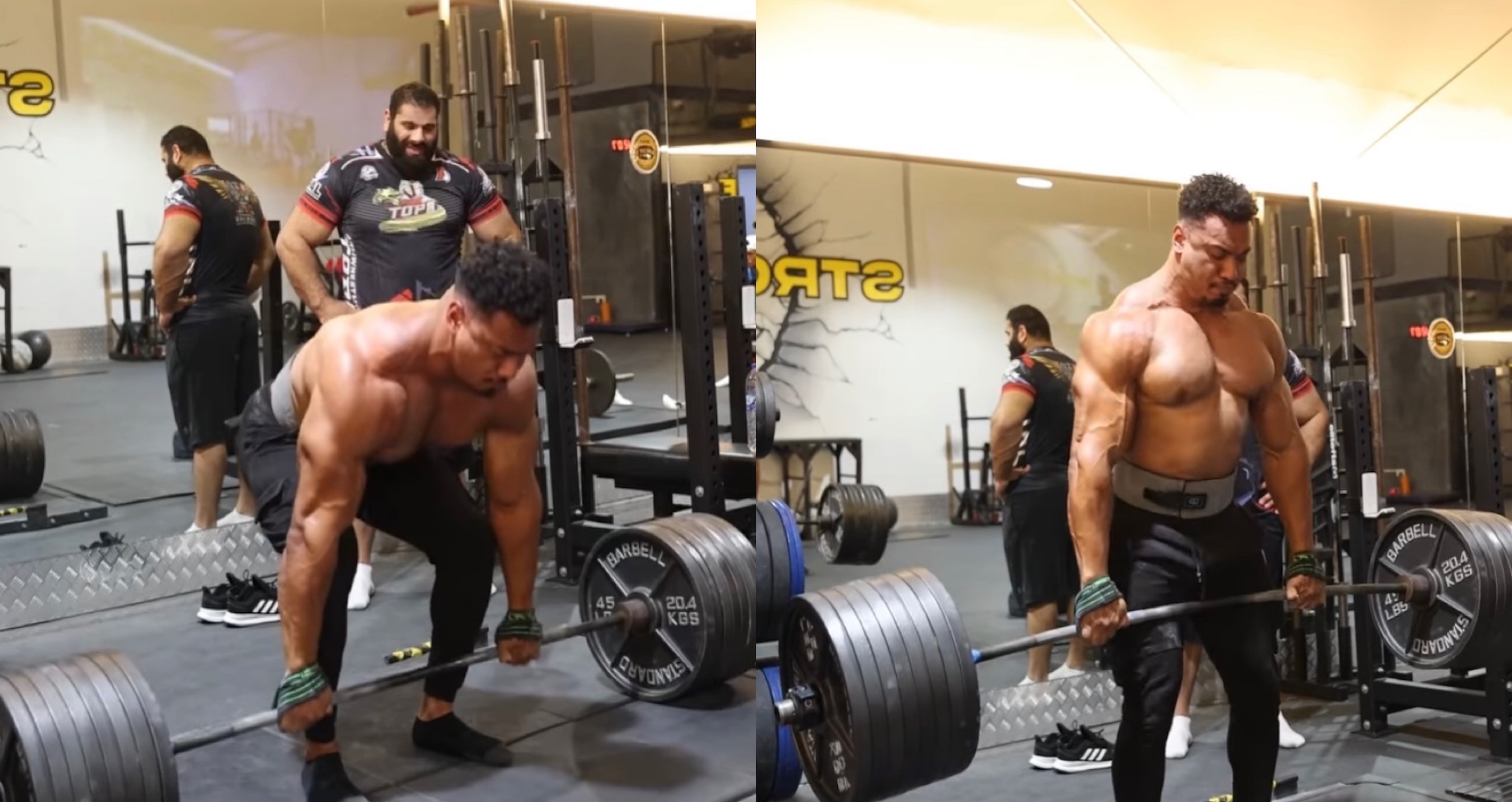
Larry Wheels has been putting in some serious work in the gym in recent months. We know this because he shares frequently on social media displaying different lifts and personal records. This continued on Monday as Wheels set a new PR performing seven reps of 347kg (765lb) deadlifts.
Wheels stepped over the weight wearing a lifting belt and straps. He performed the first four reps with ease before struggling a bit with No. 5. Wheels was able to power through two more reps to make a total of seven. Wheels posted the entire set on Instagram.
“765/347 x7 rep PR. Haven’t deadlifted in 2 months. Rest can do wonders!@teampersonalrecordLifting straps SWIPE@levansaginashvili“
This is not the first PR that Larry Wheels has achieved in recent weeks. On Oct. 29, he performed 17 shoulder press reps with a 140-pound dumbbell in each hand. Just weeks before that, Wheels set a new PR with a 950-pound squat. Now, Wheels has taken on deadlifts, which is something he has not been doing recently. This record squat came before he suffered a quad injury and was forced to take some time off.
In the caption with the video, Wheels shares that he has not deadlifted in two months. He credits the needed rest for being able to pull off a feat such as this. This is important for Wheels given the fact that he has suffered his fair share of injuries over the years. He felt as strong as ever attempting this set of deadlifts after the time off.
Larry Wheels has been injured in the past performing deadlifts. This came earlier in the year when he was hurt while moving an enormous weight back to the floor. At the Strong Gym in Dubai, Wheels completed three reps of 387kg (855lb), which is another PR of his. While performing a backdown set, Wheels strained his back on the way down.
While Wheels set a new PR with seven reps, this was not his all-time heaviest deadlift. That came with a single rep of 419kg (924lb).
Larry Wheels has turned into a PR monster who is always trying to improve his numbers in the gym. It is always exciting to wait and see which lifts he takes on next.
For more news and updates, follow Generation Iron on Facebook, Twitter, and Instagram.
Robert Timms On Cheat Meals: “I Don’t Cheat. I Do Everything To The Gram”
[embedded content]
Robert Timms shares his philosophy on whether or not pro bodybuilders can afford cheat meals.
In pro bodybuilding, genetics can have a large role in the success of an athlete. Hard work and dedication always reign supreme – but genetics will affect how far that hard work takes you. For example, every individual body reacts differently to food. Some can get away with eating “dirty” food more often. Some can’t afford it at all. Robert Timms is a genetically gifted pro bodybuilder. He has consistently gotten away with only 3 hours of sleep without adverse effects (so far).
So do those blessed genetics also afford him a cheat meal every so often? Robert Timms doesn’t even allow himself to risk it. Even with blessed genetics, he wants to be the best of the best – so why possibly set himself back with dirty foods? In our latest GI Exclusive interview, Robert Timms explains his philosophy behind cheat meals and why he avoids them at all costs.
There are two prevailing schools of thought when it comes to cheat meals in diets. One is that you avoid them at all times and focus on clean healthy foods. The other is to allow a limited amount of cheat meals. The idea behind the latter is that allowing the occasional cheat meal psychologically satisfies your cravings and makes you less likely to fall off your diet completely. We all have human desires for tasty food. To deny them completely would lead to an eventual crash from a person’s healthy eating habits.
During our conversation with Robert Timms, we asked him his thoughts on cheat meals. It’s been well established that Timms has impressive genes. So it’s likely he can afford the occasional cheat meal without issue. While that might be true, Timms refuses to risk it. He avoids all forms of dirty food 24/7. His reasoning, is that if he loses a show he will instantly think back to the cheat meal he treated to himself. Whether it was the real reason or not – his mind would shame him and blame the cheat meal for his loss.
Robert Timms also doesn’t see the reason to take that risk with cheat meals. With blessed genetics, he can use hard work and consistent dedication to be the best of the best. Meaning he wants to be the best of the other athletes with impressive genetics. If other bodybuilders sometimes cheat but he doesn’t – then he has an advantage.
“If I just go with just my genetics and then just eat whatever I want, yeah sure I would still be lean. But why not be the best I can be by keeping it clean.”
– Robert Timms
On top of this, Robert Timms also has seemingly trained himself out of desiring cheat meals through consistent and healthy eating habits. According to him, he does’t want or desire dirty foods anymore. It’s no longer a temptation for him. He mentions this in an anecdote from a conversation he had with his coach:
“I know the other athletes he is working with that need that for their mental clarity. Right? They need that. They need that burger because it’s been so long. No, I don’t need it… because I always look at the goal. The goal isn’t to feel better. The goal is to look the best you can on stage.”
Robert Timms understands that our desires when it comes to food is mostly self taught. Some of us build such a strong relationship to tasty food – that we need cheat meals to give us little gifts and avoid crashing completely. For Timms, he instead chose to go cold turkey and eventually retrain his brain to not desire dirty food or cheat meals. His desire to be the best helped him stick to this plan and eventually lose the “need” for cheat meals.
You can watch Robert Timms go into full detail about his diet and his thoughts on cheat meals in bodybuilding by watching our latest GI Exclusive interview segment above.
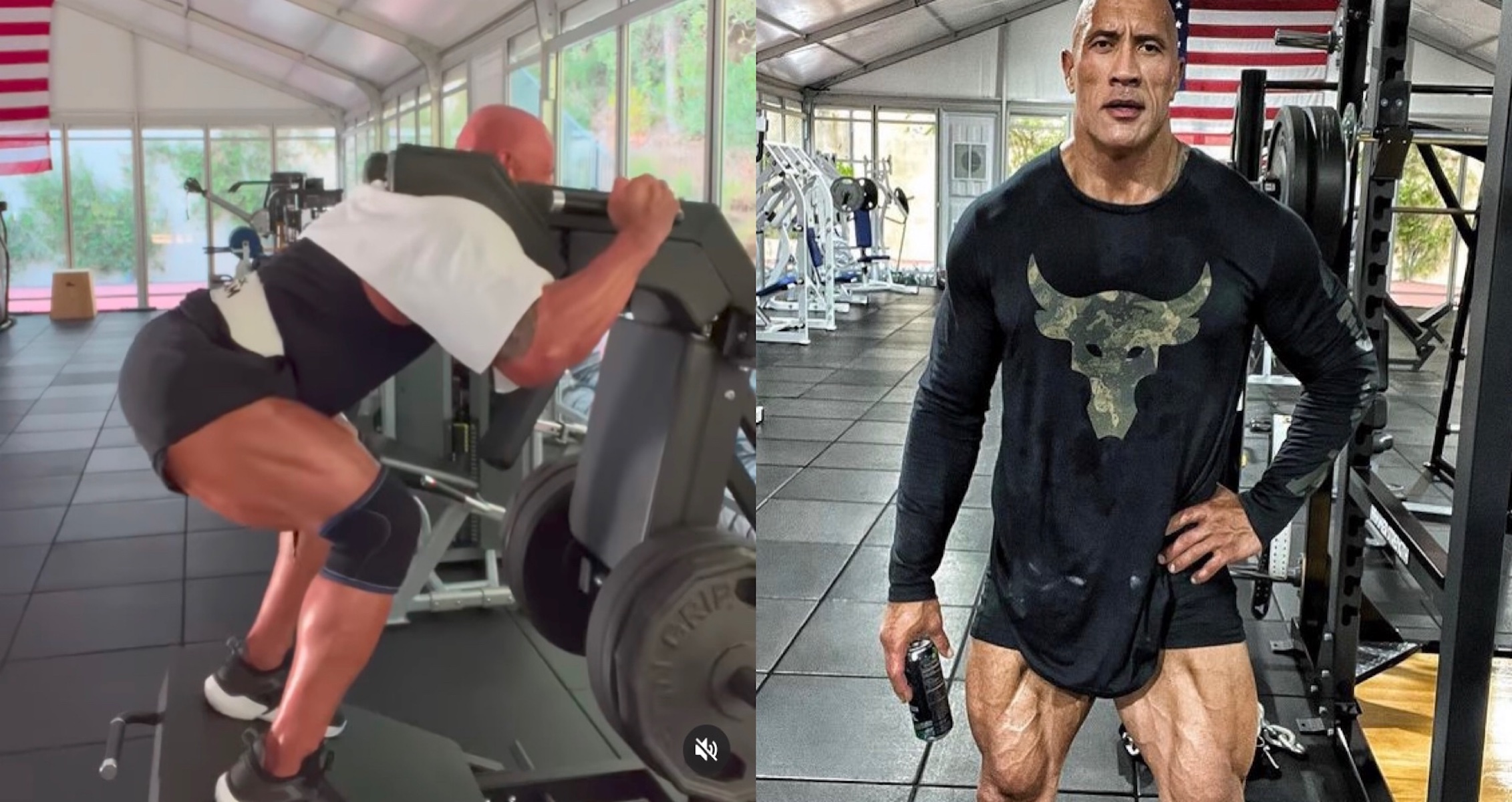
The Rock Shares Insane 100-Rep Workout To end Leg Day
Dwayne ‘The Rock’ Johnson has shown yet another exercise that will add necessary gains.
Dwayne ‘The Rock’ Johnson has always known a thing or two about weight lifting and he is not shy about showing it off. On Monday, that continued as The Rock shared a video on Instagram of an insane way to end leg-day work.
Johnson has always been a huge advocate of leg day. This is why he has continued to show off exercises to try at the gym and add extra muscle. In his most recent video, The Rock performs reloaded power squats on a hack machine. He completes four total sets with 25 reps to make it an even 100 in all.
“Bad ass song to train legs to????
Smashed leg training this morning and finished with this reloaded power squat 4×25.Give it a shot next leg day.* raise the foot platform to target certain areas of the quads and glutes.
These final 100 reps at the end of your leg training are brutal, but extremely productive.
Put yourself thru hell when you train, but especially on leg day.
Legs separate the men from the boys.
Don’t skip it ??
#ironparadise ???#itsaboutdriveitsaboutpower“
The Rock is seen using the hack squat machine backward. This is a different variation to hit different parts of the legs. This is usually seen performed like a reverse leg press machine. On a hack squat machine, the lifter’s feet are planted firmly on the platform with their shoulders under the pads that carry the weight. This brings more balance and stability in order to target certain muscles.
The lifts that Johnson does in the video shows him facing the opposite way under the pads of the machine. He lowers to the ground with form that looks more like a traditional squat. Johnson also raised the platform a bit. This targets the hamstrings and flutes — two muscles that many believe do not get hit as hard while performing on the hack squat machine.
Leave it to The Rock to find a new way to destroy legs at the end of a set. It is the movement being performed and the amount of reps that will leave legs pumped after performing an exercise such as this one. The Rock has displayed many workouts on Instagram over the years and that is not going to change.
If there is one star to focus on when performing in the gym, Johnson certainly has to be at the top of the list.
For more news and updates, follow Generation Iron on Facebook, Twitter, and Instagram.
Michael B. Jordan Looks Jacked in Upper Body Training for Creed 3
Michael B. Jordan pushes himself in training to prep for Creed 3.
Ahead of the third film in the Creed series, actor Michael B. Jordan is hitting the weights hard. The Black Panther star is looking to pack some muscle onto his frame to once again embody the role of Adonis Creed in the upcoming film.
These days it isn’t enough for an actor to just be able to memorize their lines. It’s all about full immersion and in order for audiences to believe what they’re seeing on screen is true, an actor must fully embody their role. Playing a pro bodybuilder? Better hit the gym and bulk up your frame. Playing a secret agent? You better get weapons training and again hit the gym to get your body in tip top condition. And of course, there’s the superhero. That one is self-explanatory. For actor Michael B. Jordan playing such roles are nearly second nature at this point.
From Creed to Black Panther, Michael B. Jordan has had to stay in the gym to play the iconic roles of Adonis Creed and Eric Killmonger. He’s fully embraced the reality of building a body worthy of these physically demanding roles. You can’t play a boxer and not build a fighter’s physique. These days it’s just unheard of.
So ahead of Creed 3 Michael B. Jordan once again finds himself in the gym, taking his physique to the next level. In order to pull off playing a championship caliber boxer Jordan has once again enlisted the help of his long-time trainer Corey Calliet.
Veteran Trainer
An experienced bodybuilder and personal trainer, Corey Calliet is no stranger to body transformations. He’s cornered a market on training celebrities after all which means Calliet clearly knows his stuff. He’s built up his own impressive physique over time which shows that he has the formula to get into incredible shape.
Slow progress is better than No progress. Practice what you Preach or don’t Preach at all!! 35 is about to be the best year ever.
Corey Calliet is once again helping Michael B. Jordan get ready for another physically demanding role. The two have worked together in the past and clearly the pairing has paid dividends for Jordan.
Now as he prepares to once again play Adonis Creed in Creed 3, Michael B. Jordan is throwing himself into his training. Under the watchful eye of Corey Calliet, Jordan is undergoing some intense training to prepare for the role. That not only means undergoing boxing training, but bodybuilding training as well.
Creed Training
Here we can see the popular actor being put to the task with some solid upper body training.
Like they say, no pain, no gain and Michael B. Jordan is clearly embracing the notion. He’s willing to push through his limits in order to put on an authentic performance in this next outing in Creed 3. There can be no doubt that the final product will look impressive much as the last two times Jordan embodied the role.
What do you think of Michael B. Jordan and his training for Creed 3?
For more news and updates, follow Generation Iron on Facebook, Twitter, and Instagram.
News and Editorial Writer at Generation Iron, Jonathan Salmon is a writer, martial arts instructor, and geek culture enthusiast. Check out his YouTube, Instagram, Twitter, Facebook, and Sound Cloud for in-depth MMA analysis.
How Mike O’Hearn Works Out With Real Intensity For Gains
Get a great pump from this monster natural bodybuilder.
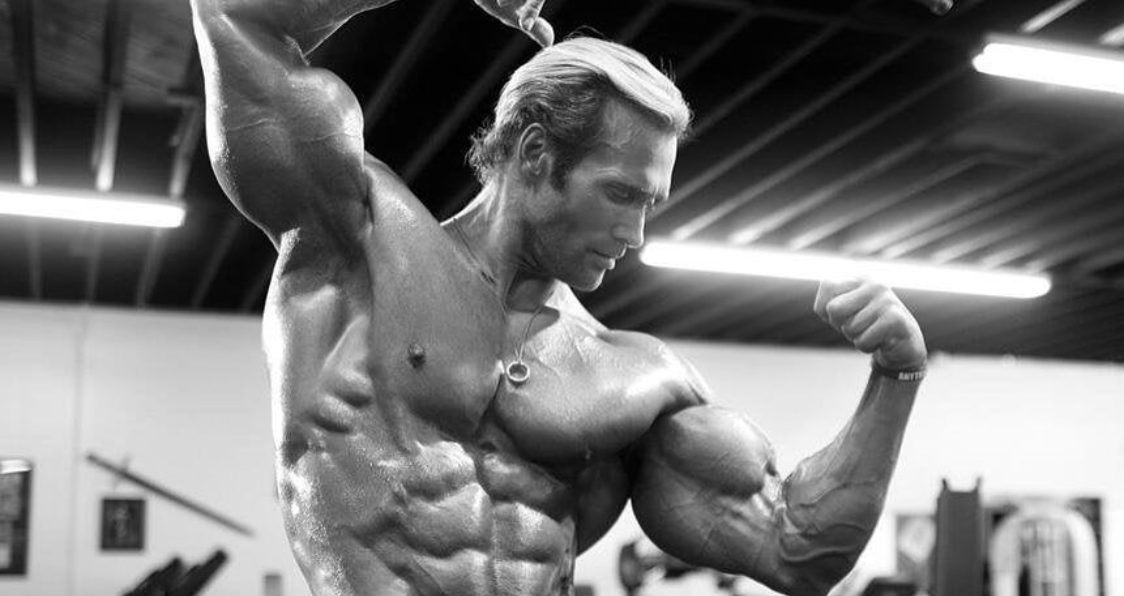
Mike O’Hearn is a bodybuilder, fitness model, actor, and entrepreneur who has had a long career both inside and out of the gym. With a massive physique and following, people fell in love with his hard style of training in the gym and his cool, personable attitude out of it.
When it comes to getting a great pump, and especially for those of us only seeking the natural approach, we need to pay attention to those natural bodybuilders with incredible accolades. They’ve done it before, they know what it takes to succeed, and they are living proof that you can get huge without using any enhancing drugs to see gains. While it does take more effort from your training, diet, and supplementation, clearly it is possible to see massive gains all-naturally and Mike O’Hearn is a prime example.
For training hard and seeing all those gains you want most, looking to someone like Mike can be incredibly helpful for he wants to inspire others and share his knowledge of the bodybuilding and fitness world.
Full Name: Mike O’Hearn
Weight
Height
Date Of Birth
245-255 lbs.
6’3’’
01/26/1969
Profession
Era
Nationality
Bodybuilder, Fitness Model, Actor, Entrepreneur
1990, 2000, 2010
American
These workouts from Mike will provide serious growth with a variety of exercises for all your gains and give you a chance to see results while remaining all-natural. Mike has made a great career for himself staying free of enhancing drugs and these workouts can show you how.
About Mike O’Hearn
As the youngest of 10, Mike was always picked on by his siblings. Coming from a family of bodybuilders and powerlifters, Mike’s way of living up to and exceeding expectations was to be the best out of everyone. Hitting the gym and starting his bodybuilding journey gave him not only a massive physique, but also the confidence to do just that.
His career includes notable finishes as a 4-Time Mr. Natural Universe Champion, Mr. America, Mr. International, Mr. World, and a 4-time California Powerlifting Champion. He has starred in movies and television and was featured in over 500 magazines, mostly on the cover. He also was featured in Generation Iron: Natty 4 Life. Working with charities as well, Mike’s philanthropic work involves helping animal rescue shelters so animals can find loving homes.
Mike O’Hearn Training Routine
Mike’s hard style of training is well noted and a main reason people love him. He generally works with heavy compound movements, but of course, sometimes will sneak isolation movements to change things up. Either way, he puts out as much intensity as he can. With his core lifts being the incline bench, squat, and deadlift, he is sure to target all of his muscles to aid in his absolutely shredded aesthetic.
Let’s take a look at some awesome workouts from Mike including chest, back, legs, and arms so you too can see serious growth like Mike himself.
Chest
Exercises
Sets
Reps
Incline Barbell Bench Press
3
10
DB Bench Press
3
10
Incline Fly
3
8
Decline Chest Fly
3
8
Push Press
3
10
Back
Exercises
Sets
Reps
Underhand-Grip Lat Pulldown
3
12
Cable Row
3
10
Underhand-Grip Chest Lat Rows
3
12
Elevated Pulldowns
3
10
Back Extensions
3
10
Legs
Exercises
Sets
Reps
Back Squat
4
8
Leg Press
4
10
Hack Squat
4
10
Arms
Exercises
Sets
Reps
Triceps Pushdown
3
10
Skullcrushers
3
10
Triceps Extension
3
10
Barbell Curls
3
12
Cable Curls
3
12
Cable Concentration Curls
3
10
Preacher Curls
3
10
Cardio Work
For cardio, Mike does put a bit of an emphasis on this and will break his cardio training into week cycles as follows:
Weeks 1-4, 4 days/week, 30-minute sessions
Weeks 5-8, 5 days/week, 45-minute sessions
Weeks 9-12, 6 days/week, 1-hour sessions
Mike’s Nutrition
As a bodybuilder, and someone who prides themselves on routine and a shredded physique, Mike typically eats up to 8 meals a day. About half of his meals include protein, carbs, and fat, and the other half will see a swap out for vegetables instead of carbs. Trying different things can greatly impact your gains and for Mike, what works for him may not work for others and he wants people to know that. Finding your own groove is what will help keep you on track to avoid any diet slipping.
Best Ways To Enhance Natural Gains
While diet and the right training routine are exactly what you need to see huge gains, it would be a disservice to neglect a good supplementation routine to capitalize on all those goals. What supplements can do are assist your daily routine by providing you with extra nutrients and important ingredients that are worthwhile to promote gains like muscle growth, recovery, immunity, and many more.
For those looking to increase strength and improve recovery, definitely check out protein powders, but also look into mass gainers, creatine, and BCAAs for highly effective muscle building supplements. If you struggle to get started before your workout, definitely look into a pre-workout which can offer energy and give you a great boost to help tackle any of your needs. For outside training, consider a multivitamin or omega-3 supplements to aid in health and wellness to keep you thriving inside and out of the gym.
Wrap Up
Mike O’Hearn has had an incredible bodybuilding career, among other notable professions. As someone who prides themselves on their ability to work hard and see the best gains possible, Mike is certainly one of those athletes for us all to pay attention to as we seek the best from our own workouts. Between his training, nutrition, and supplementation, Mike knows exactly what is needed to see real growth and of course, give you that massive and shredded aesthetic that others will envy. Give these workouts from Mike a try and see what they can do for your routine today.
Let us know what you think in the comments below. Also, be sure to follow Generation Iron on Facebook, Twitter, and Instagram.
*Images courtesy of Mike O’Hearn Instagram
Is Training To Muscular Failure Necessary?
The Benefits and Drawbacks of Training To Failure
When it comes to strength training, there are a number of different training methodologies that can be applied – some which are undoubtedly beneficial and others that lack scientific backing.
Training to failure is a highly popular method, particularly for those who aspire to develop muscle size and strength.
In particular, traditional bodybuilding training utilizes a lot of sets to failure as they believe it to be a key component of muscle growth.
However, what does the science actually say about training to failure? Is this a training method that you should really be applying to your workouts?
What Is Muscular Failure?
As the name suggests, training to failure involves performing as many reps as possible until you can no longer complete any more.
When performing strength training exercises, the working muscles are subject to fatigue. This fatigue gradually builds over time and begins to impact performance.
Providing that the exercise is maintained, this fatigue will continue to build until the muscles are unable to generate enough force in order to overcome the resistance.
What Is The Purpose Of Training To Failure?
It is not uncommon to see bodybuilders use this training technique in an attempt to force the muscles to increase in size.
Research has determined that there are three mechanisms required to cause muscle hypertrophy (growth). They are mechanical tension, metabolic stress, and muscle damage.
The reason that bodybuilders train to failure is primarily to increase the amount of metabolic stress. Metabolic stress refers to the build-up of metabolites such as lactate and hydrogen ions within the muscle.
Studies suggest that the build-up of fatigue can have an anabolic effect thus increasing the size of the muscles (1).
While hypertrophy tends to be the main reason to train to failure, it is often commonly used in an attempt to increase strength or move beyond a training plateau.
It is believed that working the muscles to failure can enhance muscle activation and motor unit recruitment which may also contribute towards improvements in strength and mass (2).
The Benefits Of Training To Failure
This section will review a number of scientific findings and discuss three proposed benefits associated with training to failure.
1) Increases Muscle Hypertrophy
As highlighted, there is a good reason why bodybuilders tend to utilize training to failure. The greater amount of metabolic stress can stimulate the muscles of the body to grow.
Research suggests that muscular hypertrophy can be attained by working to failure.
As well as increasing metabolic stress, it is theorized that working to failure promotes the activation of motor units consequently increasing muscular hypertrophy.
That said, much of the research is inconclusive and more is required to definitively confirm whether training to failure causes hypertrophy.
2) May Improve Strength
In addition to improving hypertrophy, training to failure may also help to drive an increase in muscular strength.
Therefore, it is not uncommon to find powerlifters and other strength athletes also training to failure.
Studies on the matter have found a link between training to failure and strength improvements.
One particular study divided participants into two groups. The first group performed sets to absolute muscular failure while the other group performed non-failure sets.
After six weeks of training, the results suggested that the lifters participants from the muscular failure group experienced a greater improvement in strength (3).
3) Moving Past A Plateau
For those who are highly trained, hitting a training plateau is not uncommon.
A training plateau is where the body has adapted to a certain point but now will not improve any further.
This occurs when the body becomes accustomed to the training stimulus that it is being exposed to. In order to start adapting again, this training stimulus must change.
If you are not currently training to failure regularly, adding max sets will change the training stimulus which may force the body to change and improve once again.
A recent study determined this method to be highly beneficial for experienced lifters who are struggling to make substantial improvements (4).
The Drawbacks Of Training To Failure
Let’s now consider three potential drawbacks associated with training to muscular failure.
1) Technique Break Down
While the build-up of fatigue is an important part of increasing metabolic stress, it can interfere with exercise technique.
When energy is depleting and the muscle’s ability to contract is affected, it can be more difficult to ensure that you are moving in the right way.
Allowing your form to significantly deviate can increase your risk of sustaining an injury.
Not only will this increase your risk of injury, it may not effectively work the muscles that you are intending to target which may lead to suboptimal improvements in strength and size.
2) Increased Risk Of Injury
As touched upon in the previous point, allowing your technique to break down can increase the chances of poor movement and consequently elevate your injury risk.
Whether you are using a heavy weight for low reps or light weight for high reps, the risk of sustaining an injury is similar. The muscles are still being pushed to their absolute limits regardless of the volume used.
Furthermore, considering the repetitive nature of this training method, there may be an increased risk of developing overuse or repetitive strain injuries.
3) Overtraining Risk
Although training to failure does have the potential to break through training plateaus, if applied incorrectly it may actually lead to overtraining syndrome.
Overtraining is where the body cannot adequately recover from the training stimulus and, instead of making progress, it will actually begin to regress.
Strength, mass, and performance will decline and a variety of symptoms may be experienced, such as chronic fatigue, constant soreness, reduced appetite, poor sleep, and reduced immunity.
By working to failure too often, it is possible to overtrain. Therefore, you should ensure that you apply this training method sparingly in order to avoid overtraining.
Training Volume Considerations
When applying this training technique, bodybuilders tend to use lighter loads and high reps while strength athletes are more likely to use heavier loads with low reps.
So, when applying this training method, how much volume should you use?
The training volume that you use is important and depends on your training goal, requirements, and limitations. However, that said, there are a few considerations that you must make.
Performing heavy lifts, such as the deadlift or squat, to absolute muscular failure is risky. It is likely that your form will begin to deviate well before you actually reach failure.
Pushing through with poor form is not recommended and is likely to interfere with your motor skills or, even worse, cause a serious injury.
Lifting extremely heavy weights can be risky enough even without working to failure, therefore, going lighter may be a more advantageous approach.
However, if you do decide to train to failure when using heavy loads, consider training to technical failure instead. You can read more about technical failure in the section below.
Training with a lighter load may be more beneficial from a technique standpoint as it may be easier to maintain good movement despite the fatigue build-up.
However, a potential issue with going too light is that the training volume may be too high for the body to deal with. Consequently, overtraining or overuse injuries may occur.
As mentioned, the best approach is to use training to absolute failure sparingly to begin with. As your body becomes more accustomed to this training method, you can gradually increase the frequency.
Training To Technical Failure
While there are some concerns regarding training to failure, there is a better option that can minimize these drawbacks known as technical failure.
This involves stopping once you feel or see that your technique is beginning to break down.
As mentioned, when working to failure, technique can easily become compromised which can increase the risk of experiencing an injury.
By working to technical failure, your technique will remain intact thus minimizing the risk of injury.
Furthermore, by working to technical failure it is likely you will do less volume, thus potentially reducing the chances of overtraining.
Final Word
While there are a number of scientific studies that have found training to failure to be beneficial for developing strength and size, more research is required to confirm this.
Although it may cause the body to adapt in strength and size, there are concerns regarding exercise form, injury risk, and overtraining. Therefore, this methodology should be applied to your training with care and precision.
References:
1 – https://www.ncbi.nlm.nih.gov/pmc/articles/PMC5489423/ de Freitas, Marcelo Conrado; Gerosa-Neto, Jose; Zanchi, Nelo Eidy; Lira, Fabio Santos; Rossi, Fabrício Eduardo (2017-06-26). “Role of metabolic stress for enhancing muscle adaptations: Practical applications”. World Journal of Methodology. 7 (2): 46–54. doi:10.5662/wjm.v7.i2.46. ISSN 2222-0682. PMC 5489423. PMID 28706859.
2 – https://www.ncbi.nlm.nih.gov/pmc/articles/PMC4731492/#B8 Nóbrega, Sanmy R.; Libardi, Cleiton A. (2016-01-29). “Is Resistance Training to Muscular Failure Necessary?”. Frontiers in Physiology. 7. doi:10.3389/fphys.2016.00010. ISSN 1664-042X. PMC 4731492. PMID 26858654.
3 – https://pubmed.ncbi.nlm.nih.gov/15903379/ Drinkwater, Eric J.; Lawton, Trent W.; Lindsell, Rod P.; Pyne, David B.; Hunt, Patrick H.; McKenna, Michael J. (2005-05). “Training leading to repetition failure enhances bench press strength gains in elite junior athletes”. Journal of Strength and Conditioning Research. 19 (2): 382–388. doi:10.1519/R-15224.1. ISSN 1064-8011. PMID 15903379.
4 – https://pubmed.ncbi.nlm.nih.gov/17530977/ Willardson, Jeffrey M. (2007-05). “The application of training to failure in periodized multiple-set resistance exercise programs”. Journal of Strength and Conditioning Research. 21 (2): 628–631. doi:10.1519/R-20426.1. ISSN 1064-8011. PMID 17530977.
Best Workouts to Do While Traveling
Travel presents challenges to training.
Whether it’s early-morning flights, late arrivals, modest hotel gyms, irregular eating, or, in the case of vacation travel, a disruption from routine, it’s enough to make even the most dedicated gym rat blow off training until returning home.
It doesn’t have to be that way. Travel offers the opportunity to explore new gyms and fitness studios, try new outdoor activities, and even take one’s training up a notch. For some folks, a vacation isn’t a vacation unless it involves pushing the limits of training and crossing off bucket-list feats of strength and endurance.
Any travel, including routine business trips, should involve some training since studies have suggested that frequent travel can be damaging to health and well-being.
Here are eight moves that can be done on the road in the absence of equipment and even being pressed for time. If your day gets away from you in a blur of meetings or sightseeing, it can be done in just a few minutes in a hotel room.
Glute Bridge
What it does: Traveling by plane and car is brutal on the glutes. This move activates the glutes at the start of your session.
How to do it: Lie faceup on the floor with knees bent 90 degrees and feet on the floor. Squeeze your glutes and bridge your hips to the ceiling. Only your shoulders and hips remain on the ground. Hold for two seconds and then lower your hips toward the ground without touching.
How many? 10 reps.
Quadruped Rocking
What it does: This move is a combination of two familiar yoga poses: cow and child’s pose and provides a great stretch for the quads and hips.
How: Get down on all fours and let the lower back sag. Push your hips back as far as you can, holding the lumbar arch. You should feel a stretch in and around the hips. Return to the starting position and repeat.
Prescription: 2 sets of 10 reps with 30 seconds rest between sets.
3-Way Pushups
What it does: By doing three sets of 10 pushups in three different positions consecutively, we’re challenging our chest and shoulders from three angles.
How to do it: Do 10 traditional pushups (hands directly below the shoulders) followed by 10 “diamond” pushups (index fingers and triceps touching), followed by 10 wide-grip pushups (hands wider than the shoulders)
How many? 10 reps of each.
Straight Leg Lowering
What it does: This hamstring stretch also challenges the muscles of the chest and torso.
How to do it: Lie flat on your back with arms at your sides and legs straight up above your hips. Keeping one leg straight, slowly lower the other to just above the floor. Return to starting position and repeat. The key is to keep toes pointed toward your shins and back flat on the floor.
How many? 10 reps per side.
Plank-to-Pushup
What it does: It challenges your overall core stability by combining two effective moves in one.
How to do it: Begin in a forearm plank position. Push from your triceps, placing your right hand on the ground and then your left hand, gradually rising to pushup position. Return to forearm plank by placing your right forearm down and then your left.
How many? 10 reps.
Squats
What it does: Even without weights, this resets your posture and opens up the hips, which is especially important while traveling.
How to do it: Start in the position with feet shoulder-width apart. Keep your back straight and your body in alignment from ankle to ear. Bend the knees, keeping them over the ankles but not over the toes, and lower your butt as if sitting in a chair. Sit your hips back and down until the thighs are parallel to the board. Slowly rise, returning to the start position. Bend at the hips, keeping the back straight.
How many? Two sets of 10 reps.
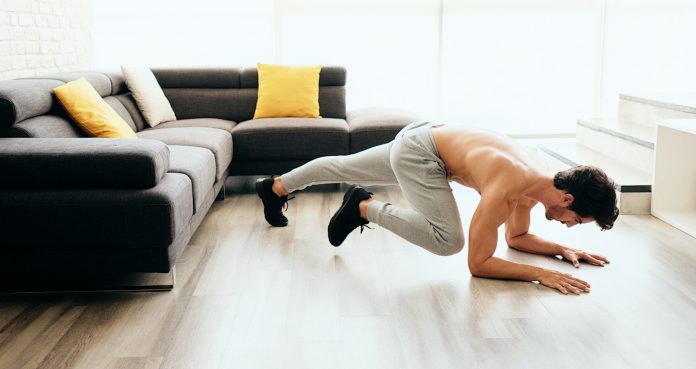
Mountain Climbers
What it does: This tests your hip mobility and core strength.
How to do it: This movement mimics mountain climbing. Think of the ground as your mountain. Start in pushup position, with the balls of your feet on the ground. Alternate driving your knees forward to their corresponding arms for 30 seconds. Keep your hips down for the entire motion.
How many? 2 sets of 30 seconds with 30 seconds rest in between.
Wall Sits
What it does: It tests your quads and can be done anywhere on the road. It’s a perfect hotel room exercise.
How: Stand a foot in front of a wall and sit down, back flat, as if you were sitting in an invisible chair.
Prescription: 2 sets of 30 seconds with 30 seconds rest between sets.
Pete Williams is a NASM-CPT and the author or co-author of several fitness books, including Core Performance and Every Day is Game Day. His work has appeared in publications such as Men’s Health, Men’s Journal, and USA Today.