
Tag: Bodybuilding
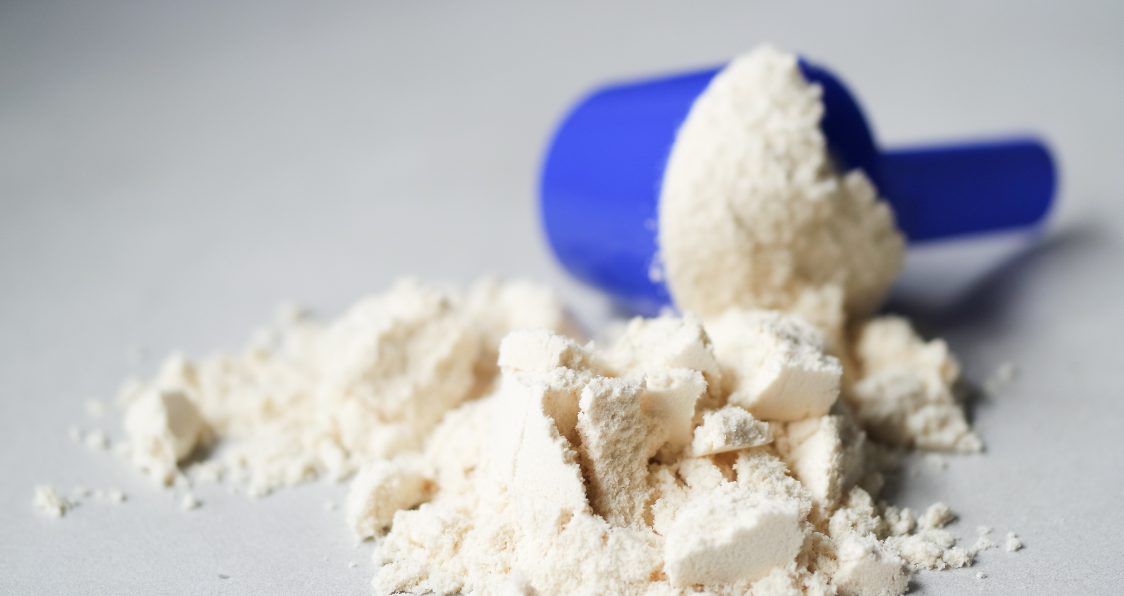
The Best Types Of Protein Powders Explained For Gains
What are the differences between the best protein powders?
We’ve come to a time in history where the impossible is now attainable, the insurmountable odds can be not climbed but conquered, and everyone is looking to be a special and unique snowflake. As sarcastic as that may sound, there’s certainly nothing wrong with wanting to improve yourself and become the best version who you are.
In fact, if you’re not trying your best to be a special and unique snowflake then you’re just not living your life the right way. You should want to be in great health, to feel as if you could jump over someone’s head or lift someone over your head. Exercise is paramount to that as well as building quality muscle to be able to perform such acts.
If you want to take your fitness to new levels then you’re going to have to put in the work not only in the gym, but in the kitchen as well. All too often people get the wrong idea about building muscle and making gains. A great many people believe that dirty bulking is the way to put on massive size, not realizing that they’re likely to put on an immense amount of fat in the process.
This is where making wise choices comes into play. The primary source of building and maintaining muscle is protein consumption. But sometimes getting the adequate amount of protein from food sources is just too hard.
This is where protein powders come into play.
People are always looking for the best protein powders on the market, but the reality is that in order to get exactly what you need from protein, you have to know what your choices are and what makes them the right source for you.
Whey Protein
First on the list of best protein powders is the classic whey protein. Coming from milk, whey is produced during the cheese making process, the liquid that separates from the curds. Whey is considered one of the best protein powders simply for it’s high protein content, but there are things to look out for with this particular kind of powder. It contains lactose which some people have trouble digesting, but is great for building muscle and aiding in recovery (1).
For those who suffer from lactose intolerance whey protein powder doesn’t just come in one form. Whey protein concentrate contains some lactose elements, but whey protein isolate contains very little due to the extra breakdown during the process.
Those without a problem will find whey to be a quickly digested protein. It contains branched-chain amino acids (BCAAs) which plays a major role in both muscle growth and recovery after a hard training session. Amino acid are absorbed into the bloodstream to generate the process of muscle protein synthesis which is the creation of new muscle.
Whey is one of the best protein powders because of its ability to be digested quickly.
Check out our list of the Best Protein Powders for great whey protein products!
Casein Protein
Casein protein powder shares similarities with whey protein as it is derived from milk. Casein unlike whey however is a protein that is digested more slowly. Because its digested slower than whey it means that the absorption of amino acids into the bloodstream is delayed. Though whey protein may have the edge over casein in terms of increasing muscle protein synthesis and strength, casein does have specific benefits (2).
It is still great in terms of muscle production and maintenance, however it is best consumed when you’re trying to restrict calorie intake. It allows for muscle maintenance and fat loss during a cut. It’s also great to consume casein protein before bed for better recovery as well as combating catabolism while you sleep, preserving and rebuilding your muscle mass after a hard training session.
Check out our list of the Best Casein Supplements for awesome overnight repair and support supplements!
Pea Protein
If you’re an individual with severe allergies in regards to dairy, then utilizing a pea protein powder is one of the best alternatives. Made from the high fiber legume the yellow split pea, the protein powder contains a ton of essential amino acids save for methionine. This is perhaps the biggest knock against pea protein as it’s not giving you all of the nutrients you would want out of a protein powder.
Nevertheless, pea protein does offer a nice balance. It’s absorbed in the blood stream slower than whey protein, but faster than casein. This effect can make it a great product to use in between meals to keep you satiated. Studies have also shown the individuals who utilize pea protein powders have similar muscular development to those who use whey (3). Other studies have also found that consuming pea protein can be beneficial for lowering blood pressure as well (4).
Check out our list of the Best Non-Dairy Protein Supplements for great plant-based options!
Wrap Up
So, what are the best protein powders out there? Well, the answer to that question is as simple as it is complicated. The bottom line is that these options can all be used together. Each protein powder has benefits that the others don’t. Mixing and matching is the best solution to seeing overall and consistent gains.
What do you think are the best protein powders? Let us know in the comments below. Also, be sure to follow Generation Iron on Facebook and Twitter.
*Images courtesy of Envato Elements.
References
West, D.; et al. (2017). “Whey Protein Supplementation Enhances Whole Body Protein Metabolism and Performance Recovery after Resistance Exercises: A Double-Blind Crossover Study”. (source)
Tipton, K.; et al. (2004). “Ingestion of Casein and Whey Proteins Result in Muscle Anabolism after Resistance Exercise”. (source)
Babault, N.; et al. (2015). “Pea proteins oral supplementation promotes muscle thickness gains during resistance training: a double-blind, randomized, Placebo-controlled clinical trial vs. Whey protein”. (source)
Li, H.; et al. (2011). “Blood pressure lowering effect of a pea protein hydrolysate in hypertensive rats and humans”. (source)

Brandon Hendrickson Introduces New NFT To Train In The Metaverse
The emergence of NFTs and the Metaverse are branching out into many areas and that includes fitness!
Brandon Hendrickson is the class of the Men’s Physique division in bodybuilding. He is a three-time Olympia champion and will enter this year’s competition as the favorite once again. Now, Hendrickson is venturing out into the Metaverse by launching his first NFT collection.
Power Shakers NFT is a collection that allows followers to reach their fitness goals and achievements. By owning this collection, followers will be able to workout online with different instructors while earning passive income. There are multiple ways that members can train. Also, they will have access to a private application that calculates and distributes Power Powder tokens.
The Power Shakers website shared its mission and some perks that members will receive when they join.
“Power Shaker NFT utility is where owners receive a physical piece of art that matches the NFT they purchase; unique access to events, exclusive memberships, or future use in the Metaverse.
Our NFT itself, is the key that opens the doors, is a membership card to an exclusive card. By joining us today, you choose to create the future you deserve.”
Brandon Hendrickson won the 2018 Olympia to gain his first victory at the biggest competition in bodybuilding. After being defeated in 2019, Hendrickson won back-to-back titles in 2020 and 2021. Now, he is focused on completing the three-peat in December.
Members who want to join Power Shakers will have a chance to follow certain workouts by Hendrickson and other fitness stars. This is a craze that is growing quickly and now, fitness and working out is beginning to make its way to the Metaverse and NFTs.
For more news and updates, follow Generation Iron on Facebook, Twitter, and Instagram.
Hunter Labrada Shows Off Massive Back Gains Achieved In Nine Months
Hunter Labrada has put in some huge work since the 2021 Chicago Pro.
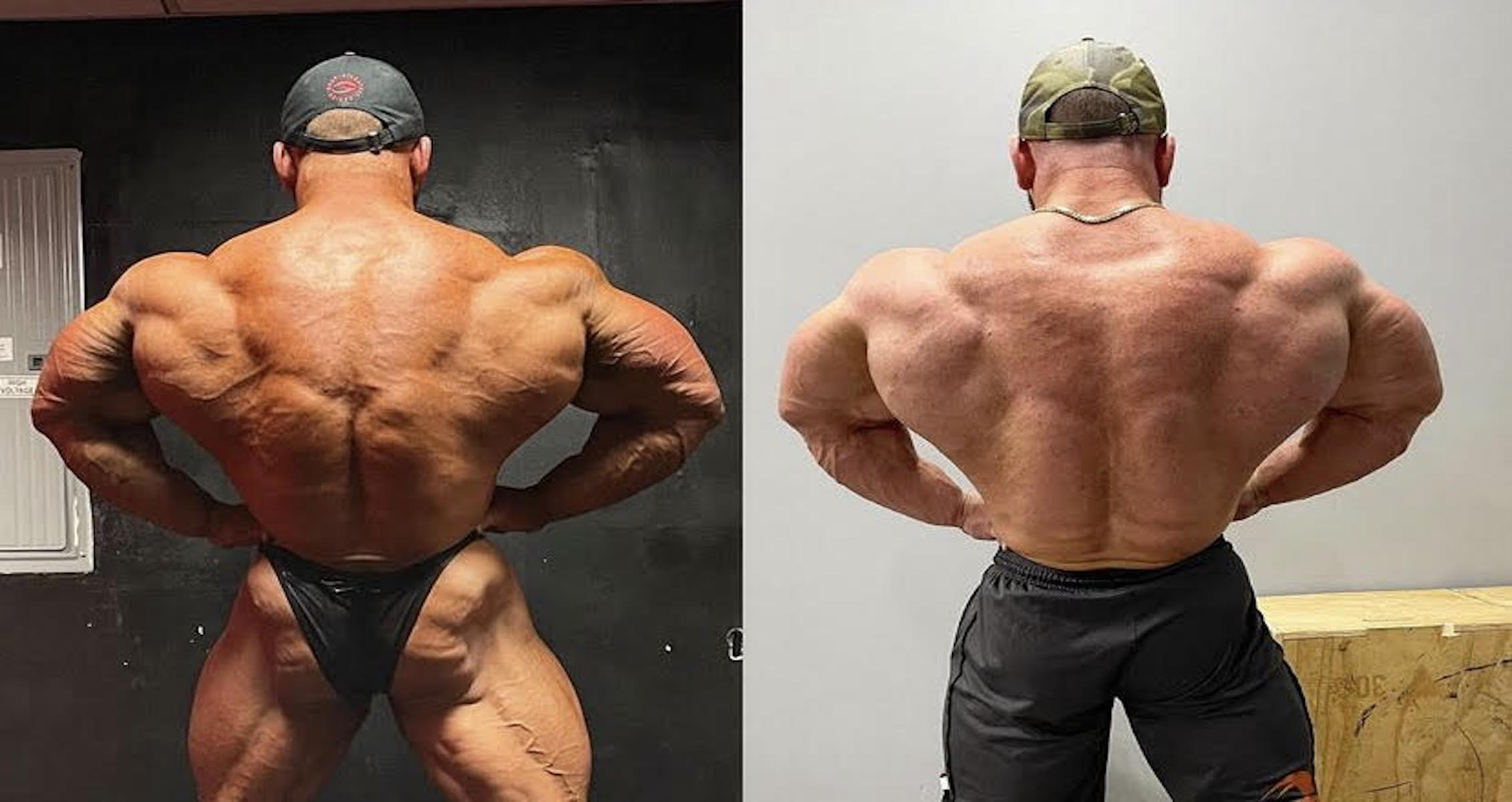
Hunter Labrada has been on a tear putting on size in many ways over the course of the season. He has his sights set on the 2022 Olympia competition and it showed in a recent physique update. Labrada shared side-by-side photos of his back gains and it is visible in his lower lats.
Labrada last competed in the 2021 Olympia back in September where he finished fourth. The picture on the left in his latest Instagram post shows his back during his victory at the 2021 Chicago Pro. This is the progression that has been made from July 2021 to March 2022.
“July 25th 2021 vs. March 23rd, 2022–1 day after Chicago vs this offseason–252lbs vs 282lbs–Still have close to 5 months to continue to grow before the ⭕️ prep starts, and still have PLENTY of bullets left in the gun to do so?”
Hunter Labrada has put on 31 pounds since the Chicago Pro. He shared that his bodyweight during the competition was 251 pounds compared to 282 pounds currently. This is great progression especially with five months left of bulking before he begins preparing for the Olympia in December.
Labrada has put some serious effort into building his back and this is a way that he can gain an advantage on the field. He made his pro debut in 2020 and has already made his way near the top of Men’s Open bodybuilding. He finished eighth at his first Olympia in 2020 and jumped up four spots in 2021. Labrada is one of the best, young stars in the sport and will look to contend with the likes of Brandon Curry, Hadi Choopan, and of course Big Ramy, who is the reigning two-time champion.
At this pace, Labrada will show up with more mass than he did in 2021. He has built muscle across his entire back and has made sure to hit his lower lats using different sets of workouts.
Hunter Labrada is the son of bodybuilding great Lee Labrada. The sport is in his blood and he has been around it his entire life. Because of this, he understands how it works and what the training regimens must look like. It seems as though Labrada is hitting all of them where he needs.
For more news and updates, follow Generation Iron on Facebook, Twitter, and Instagram.
How To Stick To A Diet, Lose Weight and Keep It Off
How To Have A Successful Weight Loss Transformation
Most of the people who join a gym after a sudden rush of motivation strike them soon get off the bandwagon because of a variety of reasons. Before you get a gym membership, you need to understand that a physique transformation takes time and you can’t ‘hack’ your way to weight loss.
In this article, we’ll talk about why the fit-life beginners can’t follow a diet, lose and/or keep off weight. Treat the points below as principles for fat loss, and you’ll be on your way to achieving your dream physique.
Sticking To A Diet
Design a Customized Nutrition Program
One of the biggest and the most common errors fitness noobs make is that they follow generic weight loss programs available on the internet that are usually made (and sold) by self-proclaimed fitness experts.
Know Your Macros
If you’ve never counted calories before, it’s time you get used to tracking your macros. It’s not nearly as intimidating as it might sound. Apps like MyFitnessPal make keeping track of your food a walk in the park. Get in the habit of reading labels before buying packaged food.
You’re setting yourself up for failure if the diet doesn’t match your lifestyle. If you can’t live without your favorite weekly pizza (there is nothing wrong with that, btw), you should stay away from a program that asks you to look away every time you’re passing by a Domino’s.
Best Way To Lose Weight
No matter how strict, well calculated or fancy your diet is, if you want to lose a considerable amount of weight, you need to have a form of exercise in your program. Most people make the mistake of joining a gym even though they hate training.
You aren’t bound to running on a treadmill or performing burpees. In fitness, many different paths can lead to the same destination. Join a physical activity that you like doing and stick with it. It could be a dance class, swimming, tennis or even ax throwing.
Accountability
You need to have accountability in one form or the other if you’re serious about losing weight. Peer-pressure can be an incredibly effective tool in shedding fat. Most people drop out of a weight loss program because they don’t have to be answerable to anyone for their failure.
As soon as you decide on getting rid of the spare tire, share your goal with at least one confidant. Brownie points if you can get that person to join the gym with you. Share your transformation goal on social media if you don’t have anyone in your immediate circle to keep you accountable.
Have a Target AND a Deadline
Your fitness journey doesn’t end at losing weight. You have to make sure that it doesn’t come back as is the case with many people who join the fit lifestyle. Remember – you either go forward or backward in your fitness journey – there is no staying put.
Once you’ve reached your weight goal, set a new target for yourself. It could be gaining 5lb of lean muscle mass in a year or running a marathon. You have to be constantly shocking your body to remain in the best shape.
What is your current fitness goal? Let us know in the comments below. Also, be sure to follow Generation Iron on Facebook and Twitter.

Use The Dumbbell Pullover For Monster Chest & Back Gains
A classic to build your chest and back.
It’s an exercise that many people seem to leave out of their routines these days; the dumbbell pullover. Since bodybuilding and fitness became a part of popular culture, training and developing the chest muscles have always been considered the most important muscle to be worked on for the adult male. It’s practically the symbol of manliness anywhere you go. But what is sometimes forgotten about the dumbbell pullover is also the idea of the back and how this exercise can improve both chest and back gains.
So, why the argument for the dumbbell pullover? Well, when you have all the old school pros swearing by the exercise then it may be time to take notice. Frank Zane, Dorian Yates, Ronnie Coleman, and Arnold Schwarzenegger have all sung the praises of this all-time classic. Besides working the chest, all these top bodybuilders have claimed to receive great back gains from the exercise, particularly the lats. The range of motion you can get with this exercise effectively works the entire upper body ensuring some solid gains.
You may be wondering about the rumor that this classic workout can do some serious damage to your shoulders. That may be true when you first start out, particularly when you don’t have the form down and you’re using considerable weight. But all in all, with controlled movements and light to moderate weight, especially for beginners, you won’t be putting too much stress on your shoulders when performing the movement. It’s all about technique, which we will get to shortly.
Let’s dive into the dumbbell pullover and see why this exercise is so great. There are tons of reasons why this should be in your routine and we’ll break down for you all of those benefits you want to see most and why this should absolutely be a part of your overall routine.
Muscles Worked & Benefits Of The Dumbbell Pullover
For the dumbbell pullover, this exercise works multiple muscles, mainly your lats and chest. But what you will see with something like this are secondary muscles that will get great work done as well. Those arm muscles, more specifically your triceps, will see work get done as this muscle works to stabilize your arm and provide the best for this movement. But on the whole, this is effective for building your lats and chest.
Those seeking great benefits will notice that this exercise can provide for quite a few. You want an exercise that will do more than just build muscle, although that is highly important. But something like the dumbbell pullover can do this and much more and is a great way to see gains while also supporting your physical health and improving other lifts.
Benefits of the dumbbell pullover include:
Building muscle: This exercise will work to build strength and size in your back and chest by working those muscles, increasing resistance, and giving them a chance to grow. All in all, this is a great exercise for building sports specific and functional muscle.
Work secondary and stabilizer muscles: With this exercise working secondary muscles, you will see those smaller, often forgotten stabilizer muscles get good work done. This will only enhance your overall gains, even if they aren’t the ones to traditionally make a physique pop.
Increase flexibility and mobility: Working with this exercise and having your shoulder be a pivotal point of movement, you improve the range of motion while also increase flexibility and mobility for the best gains possible.
Enhance stability: With increased muscle and better flexibility and mobility, you start to build all-around gains leading to more stability. Plus, an increase in chest and back strength work for full body stability as these are obviously two large muscles.
How Best To Perform The Dumbbell Pullover
Here are the steps for performing the dumbbell pullover effectively (1). It is important that you work to perform this with the best technique so you see great gains while also keeping yourself safe from injury, or at the very least unwanted pain.
Lie flat on a bench with your feet firmly planted on the ground in front of you. Grab your desired dumbbell of choice.
Engage your core and lift the dumbbell so it is above your chest. Be sure to keep your feet as firm on the ground as possible.
When ready, gently lower the dumbbell over your head, keeping your core engaged and a slight bend in the elbow, although your arms will be almost straight.
Once the weight is near your ears, reverse the movement and bring the weight back over your chest.
Repeat for your desired number of sets and reps.
Dumbbell Pullover Alternatives
When it comes to a great alternative, what you need most are those exercises that will give you similar gains but those which will diversify your workout. For alternatives to the dumbbell pullover, what you will find are those exercises that will work your back and chest so you see great gains all around.
Dumbbell pullover alternatives include:
These are just to name a few, but by looking into other alternatives, you can structure a good training plan and one that will work well for your gains. Plus, this will keep those workouts as engaging as possible so you never grow bored.
Check out our list of the Best Dumbbells for more great lifting products!
Wrap Up
The dumbbell pullover is a fantastic exercise to see great gains and can work wonders for you and all your goals. An effective exercise to build chest and back strength, what you will find is other muscles worked that can aid in your overall aesthetic and physical wellbeing. By performing this, or any of the great dumbbell pullover alternatives you will find, you start to give yourself the best chance at improving strength, size, flexibility, mobility, and much more. Consider the dumbbell pullover today and see what it can do for all your goals.
Let us know what you think in the comments below. Also, be sure to follow Generation Iron on Facebook, Twitter, and Instagram.
*Images courtesy of Envato
Reference
Leavy, C. (2004). “Dumbbell Pullover”. (source)
Jay Cutler Broke Down Former Bodybuilding Diets That Included 140 Egg Whites And Four Pounds Of Meat Daily
Jay Cutler recently discussed his crazy diet plans during his bodybuilding career.
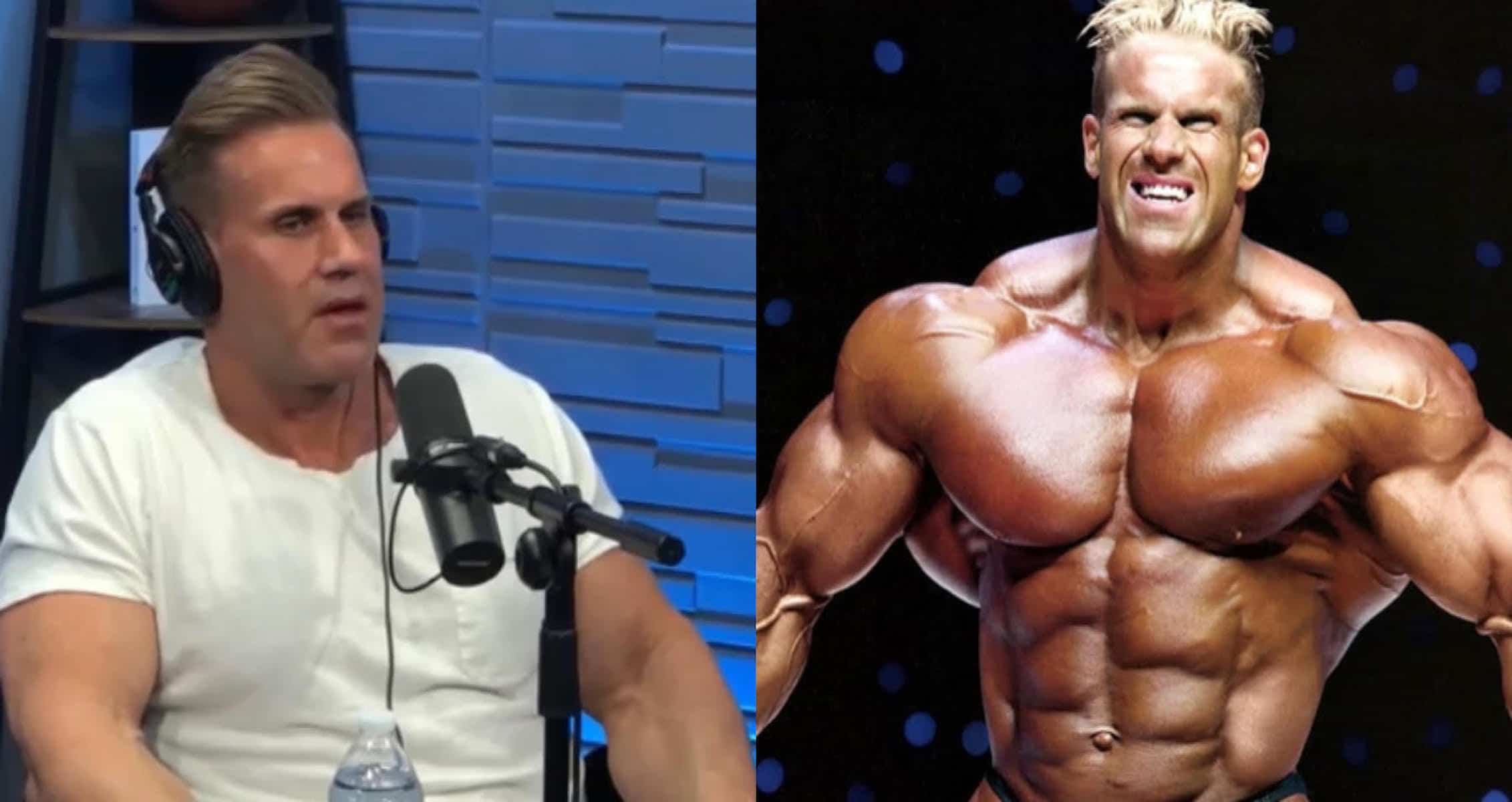
Jay Cutler is a four-time Olympia champion and is known as one of the best of all-time. This means that he has put together many training programs and diet plans to build that championship physique. In a recent interview, Cutler shared some wisdom on what to make in the kitchen and also shared some of his craziest diet plans during his career.
Cutler joined The Michael Sartain Podcast, where he was able to discuss all things bodybuilding. This is where Cutler revealed that it is all about the diet when preparing for a competition such as the Olympia.
For Cutler, this included a massive amount of eggs and even purchasing a cow to keep in his freezer.
“I bought a cow from the butcher. I was living in a place called Spencer, Massachusetts. I had a local butcher there so I’d actually buy all the meat and I would have two freezers. So, what I would do is I would buy the chicken and break it all down into two-pound bags and freeze it.”
“The food I was eating six to seven times a day. I was eating upwards of four pounds of meat a day. You know, it was just every two hours like clockwork.”
When following such an intense diet plan, it is not always easy to stay motivated. Jay Cutler received this motivation from watching some of the other greats during his time. He mentioned growing up watching the all-time greats such as Arnold Schwarzenegger, Lee Haney, and Dorian Yates.
Once he was in his prime, Cutler battle with Ronnie Coleman, who won eight consecutive Olympia titles from 1998-2005. Cutler ended his reign by taking the crown in 2006.
This is when Cutler began perfecting his diets. In retirement, he admitted to not enjoying food as much but he still features plenty of eggs in his diet.
“I don’t want to have steak. I’m not a big steak eater at 44 now. I tend to eat some sushi but I’m limited even on that just because I know a lot of sushi rice has a ton of sugar. I might eat some plain fish or whatever else but there’s nothing else that excites me.
I still, I drink the egg whites. That’s the difference between back then until now. They didn’t have pasteurized egg whites. Now you can buy the cartons and you can drink them. It’s actually a very good source of protein instead of frying them up.”
Jay Cutler used to spend a large amount of time preparing his eggs because of the sheer amount that he would eat.
“I’m not going to lie, there was a lot of diets I ate 140 egg whites a day. So I was cracking eggs non-stop. I remember sitting cracking eggs for an hour in the morning and I would put everything in Tupperware containers. I would just dump out. I was eating thirty egg whites a meal then.”
This is the commitment that it takes bodybuilders to get to their highest level. Jay Cutler is a perfect example of discipline, talent, and motivation needed to become champion of the Olympia. To this day, he continues to share methods that he used to use during his time on stage.
For more news and updates, follow Generation Iron on Facebook, Twitter, and Instagram.

Natural Bodybuilder Mitch Jarvis Outlines Training Volume For Optimal Recovery
Image via Instagram @mitchjarv
PNBA Pro Mitch Jarvis reduces his workout volume for adequate recovery.
A dilemma with working out is finding the right training volume that maximizes muscle growth but facilitates adequate recovery. And professional natural bodybuilder Mitch Jarvis concurs. Mitch Jarvis is a Men’s Bodybuilding competitor for the International Natural Bodybuilding Association (INBA)/Professional Natural Bodybuilding Association (PNBA) and United Kingdom Drug Free Bodybuilding Association (UKDFBA). He was the runner-up at the PNBA World Championships and a UKDFBA champion in 2021. And in 2020, he was a UKDBFA Overall champion.
To optimize recovery, Mitch Jarvis has reduced his training volume from five days a week to four days a week. He noticed that his body wasn’t getting enough rest lifting five days a week. On social media, Jarvis stated,
“I’ve changed up my split this week so that I’m only training 4 x per week. Body wasn’t recovering from 5”
Below you can see Jarvis performing deadlifts.
https://www.instagram.com/tv/CbkHVpqDeLS/?utm_source=ig_web_copy_link
Training Volume and Recovery
Adequate training volume is imperative for maximizing muscle growth, but so is recovery. So how much volume should you do? The simple answer is enough to grow muscle but not too much that it causes overtraining.
Although doing more seems like it can yield more significant results, often, less is more when it comes to training. Doing too much volume will only hinder your progress because recovery is essential for optimal results.
You should give each muscle group a rest from training. For example, if you’re on a split routine, you should rotate between the muscle groups you train each day to give your body plenty of time to recuperate.
And you should give your body complete rest from training at least one day a week, but it can be beneficial to take more days off. Even if you’re targeting a different muscle group each day, your body still needs time to rest. For example, Mitch Jarvis has learned that his body wasn’t recovering well from training five days a week, so he reduced his training volume to four days a week.
Training Volume Per Workout
How many days you rest versus how many days you lift will also depend on the volume you’re doing per workout. For example, if you’re training each muscle group with heavy volume each workout – exercises, reps, sets – it will be beneficial to implement more rest days each week. Conversely, if you’re doing lower volume workouts, you can work out more often throughout the week and train each muscle group more often.
For example, you will typically only do 1-2 exercises per muscle group with full-body workouts, which means you can work out each muscle group more times throughout the week. However, you usually do many movements in a given workout with split routines. So you’ll need more time to grow and repair muscle tissue between training the same muscle group again.
Recovery for the Natural Bodybuilder
As a natural bodybuilder, it’s even more important to train smart and hard. Natural bodybuilders rely only on intelligent training and nutrition to put their bodies in peak condition for shows. In addition, steroids and performance-enhancing drugs will allow your body to do more volume than it would otherwise be capable.
Recap
Enough training volume is vital for muscle growth; however, ample rest time is essential. So if you’re struggling to recover and build muscle from workouts, try reducing your workout volume.
Follow us on Instagram, Facebook, and Twitter for more tips from the best natural physiques!
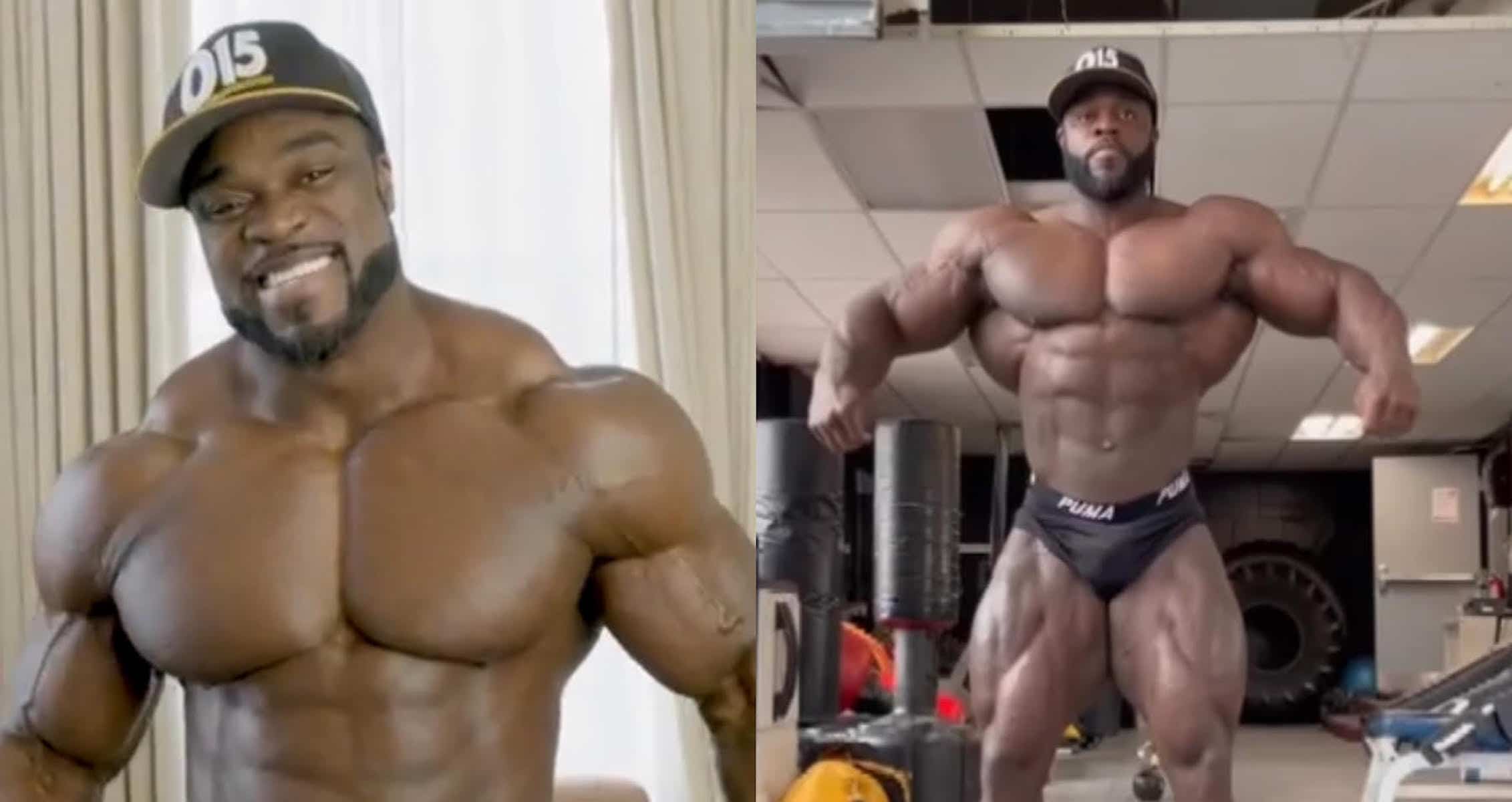
Brandon Curry Shares Full Day Of Eating During Olympia Prep
Current Arnold Classic champ Brandon Curry is preparing for a big showing at the 2022 Olympia.
Brandon Curry continues to be one of the best bodybuilders in the Men’s Open division. As he prepares for the 2022 Olympia in December, Curry recently took viewers through a full day of eating to share his Olympia diet plan.
Curry stepped on stage during the Arnold Classic in March as the favorite to take home the prize. He ended up as champion and this set the stage for a big season full of preparation to get back to the very top of the sport. Curry was named Mr. Olympia in 2019 before finishing as the runner-up in back-to-back years to Big Ramy.
Brandon Curry was featured in an interview on Men’s Health’s YouTube page where he laid out his full diet plan during preparation. The Olympia is set to return to Las Vegas from Dec. 15-18.
Brandon Curry Diet Plan
Brandon Curry began this interview by discussing the importance of this Olympia. With his recent Arnold Classic victory, Curry is aiming to take home the two biggest bodybuilding titles in one year. This would be the second time in his career that he would accomplish that feat.
Curry discussed his methods when figuring out his meal plan and it does not consist of counting calories. Instead, he finds it important to measure out his portions on a scale.
“Everything is measured by scale weight. So, I mean, anywhere from 200 grams on the scale to 200 grams of protein per meal and then for carbohydrates, that can go all the way up to 400 grams to all the way down to nothing in some meals.”
Meal 1
350 grams potatoes
200-220 grams chicken
2-3 eggs
Meal 2 – Pre-Workout
Chicken
200-300 grams rice
Meal 3 – Post Workout
Salmon or steak
250 grams sweet potatoes o greens
Meal 4
220 grams chicken
200-250 grams rice
Meal 5
220 grams salmon or steak
salad
Meal 6
220 grams fish
salad
200 grams rice (optional)
There are some variables within this diet that can change. Brandon Curry explained how he will change some aspects depending on where he is in training. This includes staying away from fiber when he is high on carbs and opting for a lean protein once he is further into his preparation.
“Typically when I am high on the carbs, I stay away from the fiber for digestion. I don’t want to be too full. The fiber slows everything down. Fullness is the enemy when you’re trying to get in a lot of calories.”
And of course, he ended by discussing what a typical cheat meal looks like. Curry admitted to indulging in a burger, French fries, and an apple pie on certain occasions. While he is preparing for the Olympia, his cheat meal will usually be sushi.
The calendar has turned to April and that means the Olympia is about eight months away. Brandon Curry knows what it takes to be on top of his game and that is what fans can expect come December.
For more news and updates, follow Generation Iron on Facebook, Twitter, and Instagram.
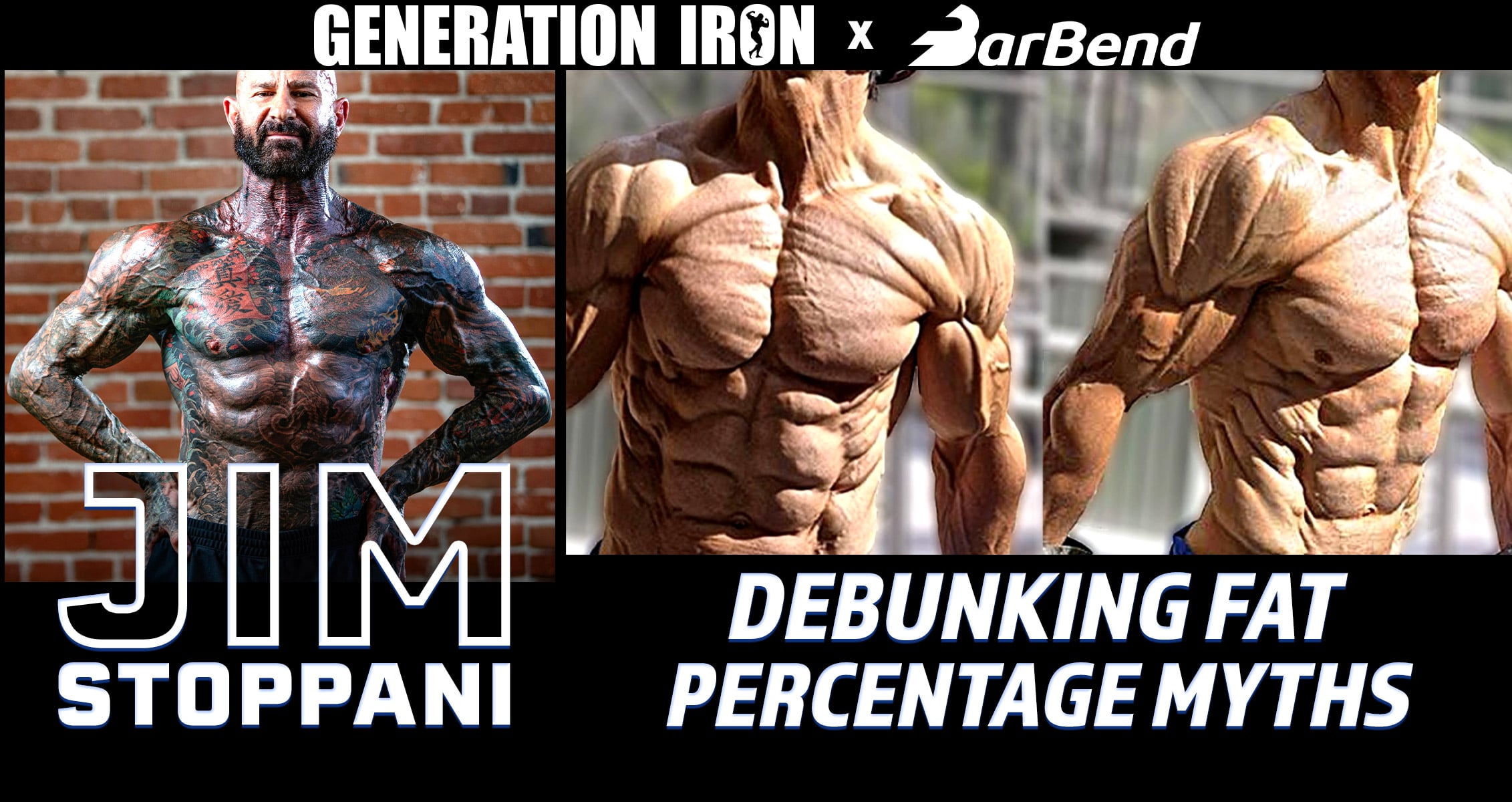
Jim Stoppani Debunks The Biggest Body Fat Percentage Myths
[embedded content]
Jim Stoppani explains body fat percentage realities for athletes vs average individuals.
Ronnie Coleman once stated that during his prime he held under 1% body fat. Many accused this as being a lie. That it’s impossible to bring your body fat percentage lower than three or four percent due to vital organ fats your body needs to function. But in the world of extremes such as bodybuilding, there are athletes who truly aim to reach these kind of goals. Is it really possible? In our latest GI Exclusive interview partnered with Barbend, Jim Stoppani debunks the biggest myths about body fat percentage and the real possibilities (and dangers) of extreme fat loss.
In the world of bodybuilding, getting as conditioned and shredded as possible is always the ultimate goal when stepping on stage. The hard work put into sculpting a physique can be shown best without soft fat hiding the “goods” so to speak. But not only is the general act of “cutting” for a competition dangerous, having unrealistic goals of extreme low body fat percentages is unhealthy as well. As an athlete, there’s nothing wrong with wanting to look conditioned – but where is the real line? How low can you go and stay healthy?
And even when opening up to the general public – the expectations on how a person “should” look has led to a variety of eating disorders and body dysmorphia. That’s why we connected with Jim Stoppani to talk about the real facts behind body fat percentage, what’s realistic and what myths we can debunk here and now. Let’s jump into it.
What is a normal body fat percentage range?
Body fat percentage is the relative amount of fat you are holding on your body compared to your overall weight and size. That’s why we speak in terms of percentages rather than specific units of measurements. Depending on your height and overall weight – the ideal numbers can be different.
So when it comes specifically to body fat percentage – the healthy amount is often much higher than individuals seem to realize. Jim Stoppani explains that the average healthy range of body fat tends to be somewhere between 15-20%. These values shift depending on if you are a man or a woman. Women tend to carry more body fat genetically.
Jim Stoppani, however, land squarely at 5% body fat typically. This is due to his consistent and fitness focused lifestyle. As you can see, that’s a big gap from the typical healthy average. And it’s this kind of gap that can lead an average non-athlete individual to expect a lower number. Jim Stoppani wants to clear the air for those who focus to heavily on their body fat percentage. If you are in a 15-20% range, don’t worry. You’re not fat. And it’s not a sign, generally, that you are unhealthy.
Could Ronnie Coleman’s below 1% body fat claims be true?
It’s impossible to know whether or not Ronnie Coleman’s past statement about being below 1% is true. However, it is possible despite what many would have you believe. Typically, it’s understood that an athlete cannot go below 3-4% body fat due to the vital fat your organs need to function. This is true. But that doesn’t mean there isn’t a way to bring that percentage lower.
Jim Stoppani explains that Ronnie Coleman, theoretically, could have gotten his body fat down to below 1%. However, to do that he would have had to turn to some serious drugs. No only that, but the very act of burning such vital fat is extremely unhealthy and dangerous. So yes, it is possible. But no, you shouldn’t aim for such a goal.
Jim Stoppani can’t speak for Ronnie Coleman, but he does have a fair understanding about pro bodybuilding. He reminds us that it’s an extreme sport and we’ve seen athletes go to extreme measures to succeed. Ronnie himself shattered the barrier of just how massive and shredded a bodybuilder could be on stage. So it’s not beyond reason to think he would have pushed hard to some dangerous areas to bring his body fat down extremely low as well.
Ultimately, this is all speculation. We can’t determine the validity or the actions of Ronnie Coleman regarding his body fat claims. But it is important to know the truth. While it’s not naturally possible, there are ill-advised ways to bring your body fat below 3%.
When should you worry about having too high body fat?
So how much fat is too much fat? When should you start actually worrying about that percentage number as an average non-athlete individual? Jim Stoppani explains that you should only be worried if you are over 30% body fat. That’s when you are considered obese. Anything below that should not be a worry from a general health standpoint. Unless you are trying desperately to look muscular and shredded – don’t get too bent out of shape over a 16% or 18% body fat level.
Wrap Up
Whether you are a competitive bodybuilder or just a fan, it’s easy to get sucked into the alternate reality of body fat percentages in bodybuilding. However, it’s important to remember that there is a wide difference between average healthy body fat percentages and what pro athletes do (and risk) to be the best in the world.
You can watch Jim Stoppani explain in detail, and debunk some common misconceptions, in our latest GI Exclusive interview segment above.
Top 5 Tips For Keeping Up With Your Cardio Indoors
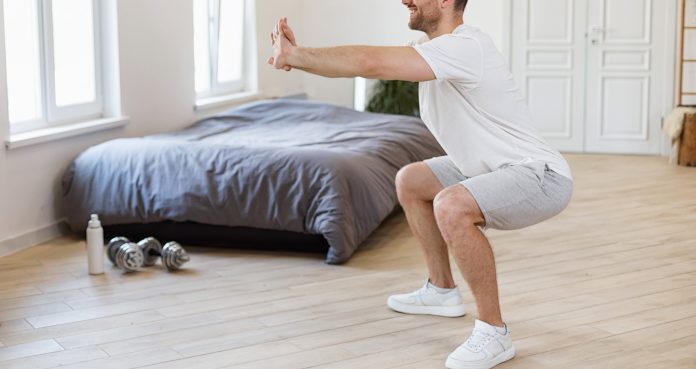
There are ways to keep up with your cardio while working out at home.
Cardio might not be the most appealing type of exercise in the world, but it’s an important part of a healthy and well-rounded exercise routine. Keeping with your cardio can be a burden, but there are ways you can incorporate it into your daily workouts to make it more manageable.
If you’re still working from home, this is a great time to think about how you could incorporate exercise throughout the day since you no longer have going to the office taking up so much of your time.
Tip #1: The kettlebell is your friend.
Weight is your best friend when it comes to doing indoor cardio. Since you don’t have that much space to move around, the best trick is to utilize weights to force your body to break a sweat. The kettlebell is one of the best workout tools in this respect. You can do rapid kettlebell swings to get your heart rate up while standing in living room watching TV or on a Zoom call.
Doing twists while holding a kettlebell, when done rapidly, can also increase your cardio and help you lose weight! If you want to get serious about doing indoor cardio, definitely make sure you have one of these on hand, or an equivalent weighted tool you prefer like a medicine ball.
Tip #2: Sneak cardio into your strength training.
If you’re one of those people that absolutely dreads doing cardio, there are ways you can sneak cardio exercises into your strength training workouts. Simple modifications to common workouts are key. You could try doing five minutes of HIIT in between exercises as a way of getting cardio in while continuing to do whatever workout you normally do and enjoy.
Tip #3: Try jumping jacks, jump rope, and other ways of working out that don’t use equipment.
One of the biggest challenges of doing cardio at home is that — if you don’t have a home gym — you don’t have access to any of the fitness equipment like treadmills or rowing machines that make indoor cardio a breeze. You can still get cardio in at home with some tried and true classics like the jump rope.
Make a commitment to do fifteen minutes of jumping jacks before you start your day or before you go to bed. A jump rope is a cheap and easy way to do cardio in your house whenever you have the time. Remember, it’s the man that makes the workout, not the equipment.
Tip #4: High knees will help you break a sweat.
High knees are a cardio fundamental. It gets the blood pumping and you can do it pretty much anywhere. Plus, it burns fat in a pretty fast amount of time, so as long as you do it rapidly and with intensity you don’t even have to do it that long. Better yet, do it in small but intense bursts throughout the day to burn the most fat.
Tip #5: Don’t rely too much on HIIT for cardio, since it will disrupt your gains in strength training.
Lots of people choose HIIT as their weapon of choice when it comes to getting cardio in and it’s easy to see why. It’s quick, effective, and it gets the job done. But HIIT workouts can actually slim you down and decrease your gains from strength training since the exercises are designed to make your body more lean. If you’re trying to do cardio without sacrificing gains, make sure to not overdose on HIIT.