
Tag: Bodybuilding
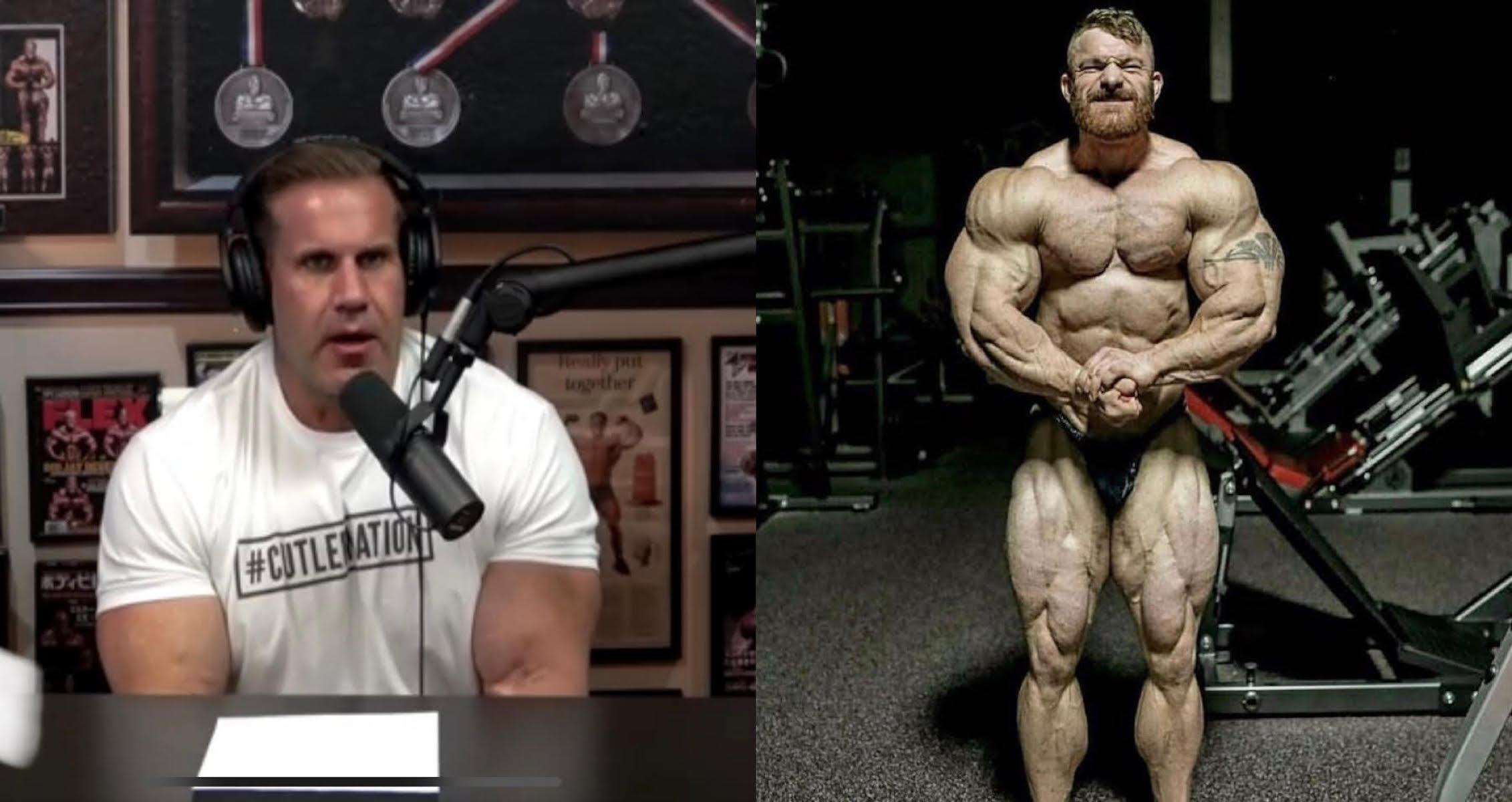
Jay Cutler On Flex Lewis’ Olympia Status: ‘I Think He Definitely Deserves A Special Invitation’
Jay Cutler believes Flex Lewis has earned the right to compete at the Olympia.
Jay Cutler knows a thing or two about the Olympia competition. When he speaks on the subject, people listen and he recently weighed in on the controversy surrounding Flex Lewis‘ status for the 2022 show. Cutler believes that Flewis has earned the right to be given a special invitation come December.
There is still plenty of time for Lewis to gain qualification or receive an invitation. The conversation has sparked already and many do not understand why Lewis is not in just yet. Lewis has a lifetime invitation to compete at the Olympia but only in the 212 division, which he has won seven times in his career. He has since switched to Men’s Open.
Flex Lewis received a special invite to compete at the 2020 Olympia. He was forced to miss this show because of an injury that was not revealed. Lewis wanted to return in 2021 but personal issues kept him off the stage. Now, he will have to work his way back in 2022.
Jay Cutler, who is a four-time Olympia champion, weighed in on this topic during a recent episode of Cutler Cast. This is a podcast where Cutler discusses the recent topics in bodybuilding with guests. In this episode, he discussed Lewis’ current situation and how important it would be if he was able to compete this year.
“They gave him the invite two years ago. He couldn’t do it, he had health issues or whatever. I understand; he’s a seven-time 212, and we always talk about like, I hate saying Mr. Olympia because it’s confusing for people right? People say he’s a seven-time Mr. Olympia, but it’s totally different. He won his class, it’s a different class, it’s not the open Mr. Olympia. I think he definitely deserves a special invitation.”
Jay Cutler compared the current situation surrounding Flex Lewis to Kai Greene, who received many invitations over the years but has turned them all down. Cutler explains how this should be Lewis’ last invitation before he must earn the right by winning a show.
“I feel that if he does not compete this year, they should not give him another one. They gave one to Kai Greene for years and he just wouldn’t take it. If anyone deserves it, it’s him.”
The question remains, how would Flex Lewis fare after years away from the stage? Especially in Men’s Open. While it is still just February, Lewis has a chance to earn qualification to the Olympia and answer the question. Until then, he can still receive an invitation at some point.
For more news and updates, follow Generation Iron on Facebook, Twitter, and Instagram.
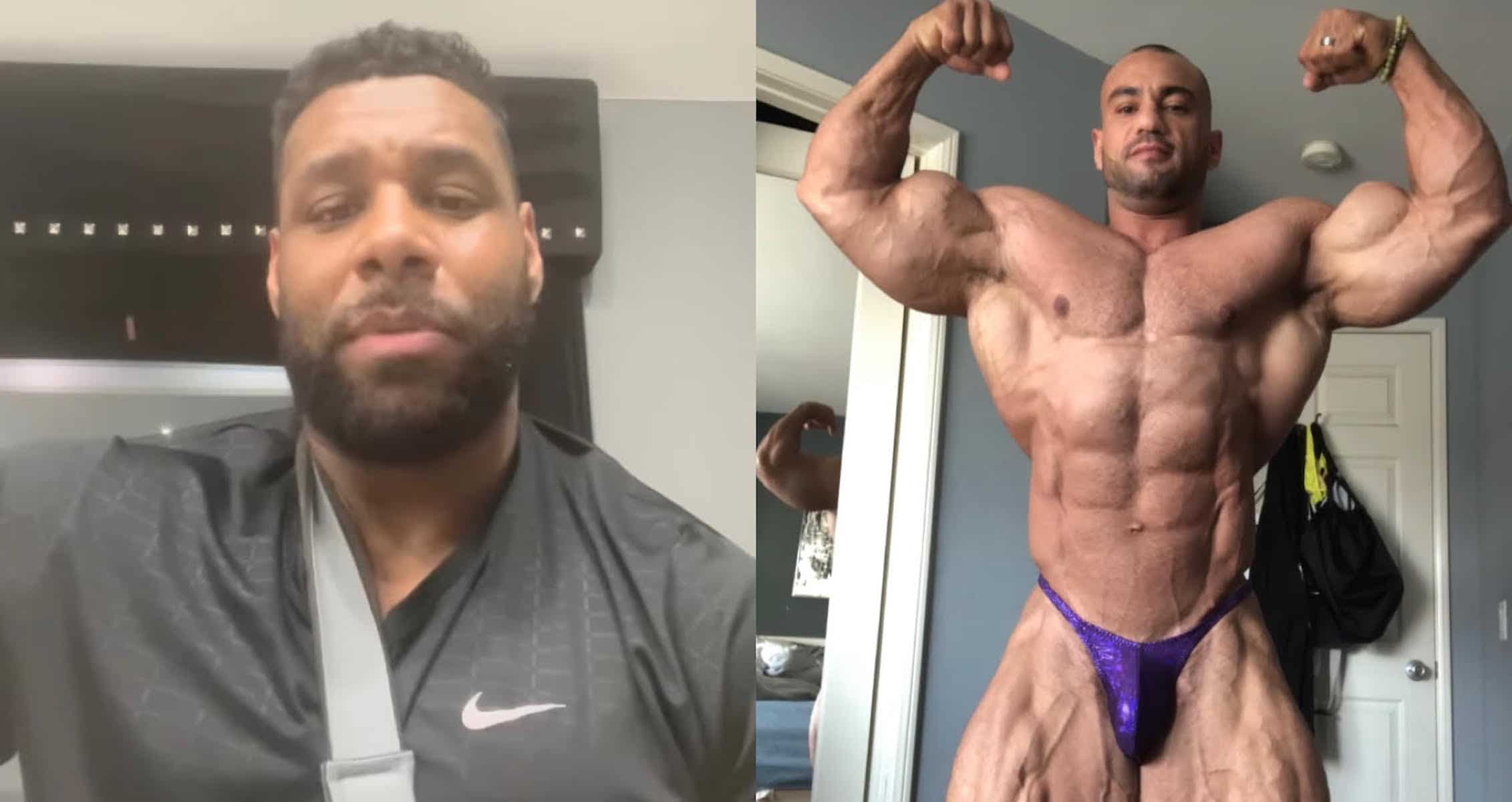
Nathan De Asha And Mohamed Shaaban To Miss Arnold Classic With Injuries
The roster for the Arnold Classic has taken another hit.
The 2022 Arnold Classic is less than four weeks away and the roster has taken another hit. Nathan De Asha and Mohamed Shaaban have announced that they will miss the event with different injuries. Both bodybuilders took to Instagram to make their announcements on Monday.
The Arnold Classic is scheduled for March 3-6 in Columbus, OH. The event will return to the beginning of the year after being pushed to September in 2021 due to the pandemic. After preparing for the competition, De Asha and Shaaban become the second and third athletes to with draw.
Rafael Brandão made the decision to pull his name out of the Arnold Classic two weeks ago. The field began with 14 competitors and it is now down to 11 as the competition creeps closer.
Nathan De Asha
Nathan De Asha is coming off a strong showing during the 2021 season. This includes three shows and a victory during the Europa Pro Championships. He also finished the year with a win at the 2021 Yamamoto Cup. Heading into 2022, there was plenty of hype surrounding De Asha but that has been put on hold.
De Asha announced that he has suffered a torn bicep and will be forced to miss the Arnold Classic.
“About two-weeks ago I was doing a shoot in the gym. Trained biceps and felt a small pull, and thought, ‘ooh that feels a little bit funny’. A little bit strange. Went with my friends and my family to a center, and then it pulled again, and it just felt a little bit sore, a little bit hard. So, I phoned the doctor, and went to see the doctor on Monday or it was Wednesday. It wasn’t really bruised or nothing, he said to me I had a small tear in the bicep.”
Mohamed Shaaban
Shortly after De Asha, Mohamed Shaaban shared a social media post explaining his current situation. He is suffering from bulging discs in his back that can become herniated if not properly treated. Because of this, Shaaban must pause training and will be unable to compete at the Arnold Classic.
Shaaban believes that this will be fixed and he can return to the stage. In 2021, Shaaban competed four times, including two consecutive second-place finishes. He won silver at the California Pro and Puerto Rico Pro. Shaaban finished his year with a 10th place finish at the Olympia.
“There’s been a few post out there and people messaging me about the Arnold classic ohio.
It’s with deep sadness that I have to inform everyone that I will not be able to compete in the Arnold 2022.
I’ve attached my MRI results, along with my doctors notes/video explaining my results for those that do not understand.
This has been a pain that I’ve dealt with since before the Olympia of last year. I tried my best to push through, but after several doctor visits in Egypt and California, my doctors believes that it is best I sit this out and fully recover or else I won’t able to compete in the future.”
Mohamed Shaaban shared information from his doctor and MRI results. It explained that he has straightening of the cervical spine lordosis along with disc disease in the cervical spine. This is especially hitting the C4-C5 to C6-C7 region.
2022 Arnold Classic Lineup
William Bonac (Netherlands)
Maxx Charles (United States)
Brandon Curry (United States)
Samson Dauda (United Kingdom)
Regan Grimes (Canada)
Steve Kuclo (United States)
Cedric McMillan (United States)
Fabio Giga Rezende (Brazil)
Justin Rodriguez (United States)
Brett Wilkin (United States)
Akim Williams (United States)
For more news and updates, follow Generation Iron on Facebook, Twitter, and Instagram.
Why The Cable Front Raise Is An Efficient Delt Exercise
A complete guide to a great exercise in the cable front raise.
We often look to those free weights exercises to boost growth in all our muscles, but the cable front raise is not one to ignore. Using cable machines, and other machines for that matter, will enhance our gains in a different way by providing for more support and the ability lift more weight as a result. Machines and cables allow for increased time under tension, thus building your muscles and giving you the most effective workout possible. With plenty of exercises to perform, you get the best of both worlds with an exercise like the cable front raise.
Working our shoulders are important for these are pivotal points of attachment and support for our arms to our trunks. By working our shoulders as effectively as we can, we start to build strength for sport specific movements while also working on posture, balance, and improving everyday activities. The right approach with something like cable machines can better help us tackle our gains for the better.
Let’s take a look at the cable front raise and see what makes this exercise so great. As an efficient delt exercise, we’ll get into what it is, what muscles get worked, the benefits around it, and how best to perform it so you can see those great gains you want most.
What Is The Cable Front Raise?
The cable front raise is an isolation exercise designed to target your delts so you see great growth. One nice component to this exercise is that given the nature of the movement, you can work weak or unstable muscles around your delts without fear of further injury, thus progressing your gains forward. You can perform this exercise with a handle or attachment for both hands to be used at the same time, or something more unilateral to work each delt individually.
Muscles Worked
The primary muscle targeted with the cable front raise are your delts, however, other muscles do get a little work given the nature of the movement. Your upper and lower back, forearms, and a portion of your upper chest will be required to help with the movements, although you may not see substantial growth like in your delts.
Benefits Of Cable Front Raise
The benefits around the cable front raise include a host of valuable advantages to make you include this in your workout. From strength, size, aesthetic, and more, this is definitely not something to take away from your routine.
Benefits of the cable front raise include:
Better shoulder development: By working your entire delt muscle, you start to build overall shoulder development to see those gains take shape and allow yourself to feel strong and stable.
Increased strength and size: Working these muscles to the point where they will grow, you will get stronger and your shoulders will get bigger for overall better strength and size (1).
Improved posture: Our shoulders are important for our posture and by working them, you start to build better overall support for our postural needs (2).
Reduced risk of injury: Working those stabilizer muscles surrounding the main delt muscles, you build them up so they better can handle an increased load as you look to reduce your risk of injury.
Use a cable machine: Using machines can benefit you in the long run and allow for the best when it comes to adding time under tension and other useful resistance with your exercises.
Plenty of variations: This exercise has plenty of variations to diversify and add variety to your workout so you only see effective gains without sacrificing anything.
Promote upper body aesthetic: You want to look good and working with those stronger, more rounded shoulders will only make your aesthetic pop even more.
How To Perform It
Here are the steps for performing the cable front raise. Form is key and you want to make sure a focus is on technique to see effective growth and limited risk of injury.
Set your desired handle and weight on the pulley machine.
Facing away from the machine, grab the handle with your palms facing down. Once in your starting position, engage your core and set your feet so you feel planted on the ground.
When ready, lift your arms as if performing a traditional front raise exercise. Your arms will be parallel to the floor at the top. You can have a slight bend in the elbow as well to help with form and control.
With a controlled motion, lower back to the starting position.
Repeat for your desired number of sets and reps.
Cable Front Raise Alternatives
Aside from this great exercise in the cable front raise, knowing what alternative exercises will work best for you can greatly improve all your gains. By opening yourself up to the possibility of alternative exercises, you start to add variety into your workout so you see those gains you want most while still challenging the targeted muscle group.
Alternative exercises to the cable front raise include:
Barbell Shoulder Press
Dumbbell Front Raise
Kettlebell Angled Press
Shoulder Press Machine
Arnold Press
Incline Dumbbell Front Raise
Best Exercises To Pair With
Along with alternatives exercises, knowing which exercises pair well with the cable front raise will allow you to build those shoulders and other upper body muscles so you see great gains to strength, size, and aesthetic. Mixing in those great boulder shoulder workouts will prove most effective. Exercises like the cable upright row and Viking press have the ability to push you through a serious workout. Lateral raises will help target your delts and build both sport specific and functional strength (3).
Wrap Up
The cable front raise is a great exercise to build those delts so you see only the best gains. Working on form and putting an emphasis on the amount of resistance will better prepare you for what comes your way. Give this exercise a try and see what it can do for all your gains as you seek the best for your shoulder and overall delt development gains.
Let us know what you think in the comments below. Also, be sure to follow Generation Iron on Facebook, Twitter, and Instagram.
*Images courtesy of Envato
References
Lopes, J.; et al. (2019). “Effects of training with elastic resistance versus conventional resistance on muscular strength: A systematic review and meta-analysis”. (source)
Lee, D.; et al. (2017). “Changes in rounded shoulder posture and forward head posture according to exercise methods”. (source)
Stiggins, C.; et al. (1987). “Side lateral raises”. (source)
6 Reasons Why Bodybuilders are More Ripped Than Powerlifters
Reasons Why Bodybuilders are More Ripped Than Powerlifters
Although bodybuilding and powerlifting revolve around lifting weights, the goals of these sports are different. The different end objectives cause the athletes from these sports to have vastly diverse physiques.
While the bodybuilders have ripped physiques with a focus on muscle aesthetics and symmetry, the powerlifters are usually heavier and don’t show much muscle definition. In this article, we’ll try to understand what causes this disparity.
Different Goals
A bodybuilder’s goal is to build muscle mass and a powerlifter focuses on lifting heavier weights. The different goals need both types of athletes to follow different types of training routines.
Bodybuilders use training splits to work one or two muscle groups in a day and will often wait a week before training the same muscle group again. Powerlifters, on the other hand, focus on the three basic lifts – squats, deadlifts and squats and might even perform them every day.
Time Under Tension
The main objective of powerlifters is to move big weights and they try doing it as quickly as possible so it doesn’t put unnecessary tension on their muscles and joints. Bodybuilders lift weights to break their muscle tissue so it can grow back bigger and stronger.
The bodybuilders experiment with the time under tension and change it up to shock their muscles. Bodybuilders take shorter rest times between sets to annihilate their muscles while the powerlifters don’t start the next set until they have recovered from the fatigue.
Nutrition Programs
Bodybuilders follow nutrition plans which take into account their micro and macronutrients. Protein, carbs, and fats play a big role in a bodybuilder’s diet, whereas the powerlifters usually focus on meeting their daily calorie goals.
Bodybuilders stick to a strict diet and might even follow diets like keto, intermediate fasting, IIFYM, etc. Powerlifters don’t hold themselves back from any type of food if their daily calorie limit allows it. In short, a powerlifter’s normal meal could well be a bodybuilder’s cheat meal.
Higher Reps and Chasing the Pump
Powerlifters stick to lifting big weights for a smaller number of reps as their goal is to set a 1RM in a powerlifting meet. In their training, powerlifters at max could perform 5-10 reps on an exercise.
Bodybuilders use muscle hypertrophy to grow their muscles which usually makes them do 8-15 reps in every set. Bodybuilders are known to be chasers of muscle pumps and use techniques like mind-muscle connection and visualization to achieve it.
Hitting Failure and Advanced Training Principles
Bodybuilders try to hit muscle failure in every exercise and the powerlifters might train to muscle failure only when they are working on their conditioning. Hitting failure fills the muscles with blood and lactic acid which makes the muscles grow bigger and fuller which is primarily the goal of a bodybuilder.
Bodybuilders also use advanced training techniques like supersets, drop-sets, blood flow restriction training (BFR), intraset stretching and many more to torcher their muscles into growing.
Use of Machines
Bodybuilders like to use machines in their workouts to isolate their muscles and train for muscle conditioning. The powerlifter’s gyms are usually bare bone as they focus on squats, deadlifts, and bench presses.
A powerlifter will majorly perform compound movements in his workouts whereas a bodybuilder will have a combination of compound and isolation exercises in his training routine.
Are you a bodybuilder or a powerlifter? Let us know in the comments below. Also, be sure to follow Generation Iron on Facebook and Twitter.
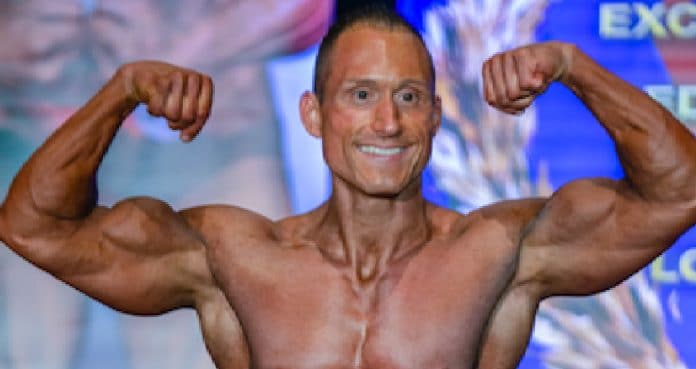
Natural Bodybuilder Christian Schneider Dishes Out How Much Muscle You Can Build Naturally
Men’s Bodybuilding Natural Olympia competitor Christian Schneider details how much muscle mass you can build each year naturally.
Many lifters want to know: how much muscle mass can you gain? Whether you’re new to lifting or an advanced lifter, it will determine how much muscle you can build each year. Also, the genetics you innately have will play a role in the amount of muscle you’ll be capable of growing too. Then, of course, your diet and training regimen are also critical factors. However, according to a Natural Olympia Men’s Bodybuilding competitor, Christian Schneider, there is a timeline for the amount of muscle mass you can expect to gain each year as a weightlifter. In an Instagram (IG) post on Jan 28, 2022, Schneider claimed:
“As a newcomer to training, you can still build muscles quickly and so it is quite possible to gain 9-12 kg in the first year [sic]
In the second year the whole thing is halved and you build up a little slower and less [sic] The following year you can still expect a good increase of 2-3 kg
From the 4th and 5th year it will usually only be 300-800g per year. That doesn’t sound like much, but after 10 years that’s a good 5 kg of pure muscle mass [sic]”
In the IG post, Christian Schneider continued to say that he doesn’t believe in genetic potential. Although, he admits that genetics play a part in the amount of muscle you can build, along with dedication and discipline. Schneider said, “Continuity is the magic word and the key to success. Muscle building takes time and doesn’t happen overnight.” He also noted, “The longer you train, the less muscle mass you can build.”
You can see Schneider’s full IG post explaining in detail how long it takes to build muscle naturally below.
https://www.instagram.com/p/CZSD6DeDp8w/?utm_source=ig_web_copy_link
Who Is Christian Schneider?
Christian Schneider is a German natural bodybuilder who competes in the Men’s Bodybuilding division. He’s been a natural bodybuilding athlete for over ten years. Schneider started bodybuilding in 2004, and his first competition took place in 2008. At INBA PNBA’s 2021 Natural Olympia in the Men’s Bodybuilding division, he placed in the top ten coming in seventh.
Although he placed well at the most significant natural bodybuilding event – Natural Olympia – one of his favorite moments was at an INBA World Championships competition in Greece. He earned his pro card and celebrated with the German Natural Bodybuilding and Fitness (GNBF) team.
Schneider competes in natural bodybuilding because it’s his passion, and he wants to remain free from the side effects of doping and sustain his health through age. He’s also a coach who works with competitive athletes and the general population looking to get into shape.
Natural Bodybuilding
As a natural bodybuilder, your only option is to build muscle naturally. Supposing you want to maintain eligibility for natural bodybuilding competitions, of course. Natural bodybuilding leagues like the INBA PNBA protect their athletes from the harm of drugs. And they make competition fair by banning drugs from competition. All INBA PNBA athletes must adhere to the World Anti-Doping Agency (WADA) standards (especially if contenders want to be considered for a multi-media contract with Iron Man Magazine).
Follow us on Instagram, Facebook, and Twitter for more fitness knowledge from natural bodybuilders!
Can You See Bodybuilding Gains Without Using Supplements?
The possibility of seeing real gains without using bodybuilding supplements.
We all know that taking supplements can greatly improve all areas of your bodybuilding gains. But is it possible to see gains without using them? The answer is yes, of course you can see gains without using supplements. But throughout this piece we’ll explain why supplements can be beneficial and why it would be best to not totally ditch your supplements. Seeing gains requires diligence and hard work, with or without supplements, but sometimes that extra boost can be exactly what we need to see some really effective gains.
Most of us are familiar with those popular supplements taken to enhance training, performance, health, and wellness, and with more and more supplements coming to the fold, it can be easy to just ditch them all. As ironic as that may seem, the more choices we have, the harder the decision, and ultimately, we start to shy away. But if we embrace the options and open up to the fact that there are so many options out there, we can better help ourselves and in the end, our gains.
So, whether it be a protein powder, pre-workout, fat burner, multivitamin, creatine, or any other supplement out there, each has respective benefits to give you better overall quality of life and improve your training and performance for the best results. Your gains matter and supplements are there to help you.
Let’s take a look at bodybuilding without supplements. While it is of course possible, knowing what can happen when you use and when you don’t use supplements may just help you make up your mind for that easier decision.
Potential Challenges You May Face
For those who don’t use supplements, there are some potential challenges you may face when it comes to seeing and building gains. First off, your protein intake is important and without supplements, you may start to lack some of that vital intake. Protein is the building block of all muscle and without it, you will struggle to build muscle and in effect gains.
You may also start to lose out on vitamins and minerals and while you can get these from whole foods and a healthy diet, what will happen is that you may start to be deficient in one, or a few, if your diet doesn’t reflect that intake. Other benefits you receive from supplements like energy and focus may also start to lack as well.
Building Gains Without Supplements Through…
Training
For training, if you stick to a good routine full of resistance exercises and HIIT workouts, you will effectively build and keep on gains (1). Sticking to a regular schedule is key though for this will ensure consistency and will keep your muscles working more regularly. Increasing time under tension and working to optimize your full range of motion is vital in that this will work your muscles beyond belief and help you see that progress you want to see most.
Nutrition
Your diet needs to reflect those gains you want to see as well as ensuring the proper intake of protein, carbs, and fat to give you that all important balance of macronutrients so you will operate at full capacity (2). On top of this, a healthy diet will keep you full of those vitamins and minerals needed to thrive on a daily basis so you only see the gains you want most. This will also ensure your health stays at an all-time high. In order to see gains through your diet, without supplements that is, eating clean, whole foods is the key, and unfortunately, that may mean taking away those sweet treats you know and love.
Sleep
Sleep is vital and putting a priority on this is absolutely imperative. This is the time we can recharge and rest in efforts to tackle the long day ahead. But this is also a time to let our muscles grow and recover (3). Plus, who doesn’t love a good sleep, especially if it is helping you see gains.
Why Not Take Supplements
Supplements can get expensive, so the argument to not take them is valid. With so many options, and each competitor trying to get your support, there are those lower priced options out there but how trustworthy is the product. Using a product with premium ingredients can get expensive and sometimes we just can’t afford to spend a fortune on supplements.
What Quality Supplements Can Do For Your Bodybuilding Gains
However, if you buy quality supplements, these have the ability to take your gains to new heights. Packed with only the best ingredients, what you will find is these are certainly helpful in seeing gains. While it is possible to go without, why put yourself through that? Let’s break down a few of these so we know exactly the kind of benefits you will get.
If you take something like a protein powder, this will pump you with that all important protein so you see those gains you want most. Helping with muscle growth, recovery, and weight loss, this is a great supplement to take. Pre-workouts will help with those energy boosts and for those struggling to kickstart a workout, why not rely on this product to keep you energized and focused? Then there’s a multivitamin. Those vitamins and minerals you may be missing are covered with this trusty supplement able to help improve your overall health and wellness.
Wrap Up
While it is possible to see bodybuilding gains without supplements, why put yourself through that? Sure, they can get expensive, but it is possible to find quality products at an affordable price, it just takes knowing where to look. Ultimately, supplements have potential to let those gains soar, so you see the best outcomes possible for your training and performance. Don’t let your gains suffer and check out some awesome products today.
Let us know what you think in the comments below. Also, be sure to follow Generation Iron on Facebook, Twitter, and Instagram.
*Images courtesy of Envato
References
Westcott, W. (2012). “Resistance training is medicine: effects of strength training on health”. (source)
Lambert, C.; et al. (2004). “Macronutrient considerations for the sport of bodybuilding”. (source)
Dattilo, M.; et al. (2011). “Sleep and muscle recovery: endocrinological and molecular basis for a new and promising hypothesis”. (source)
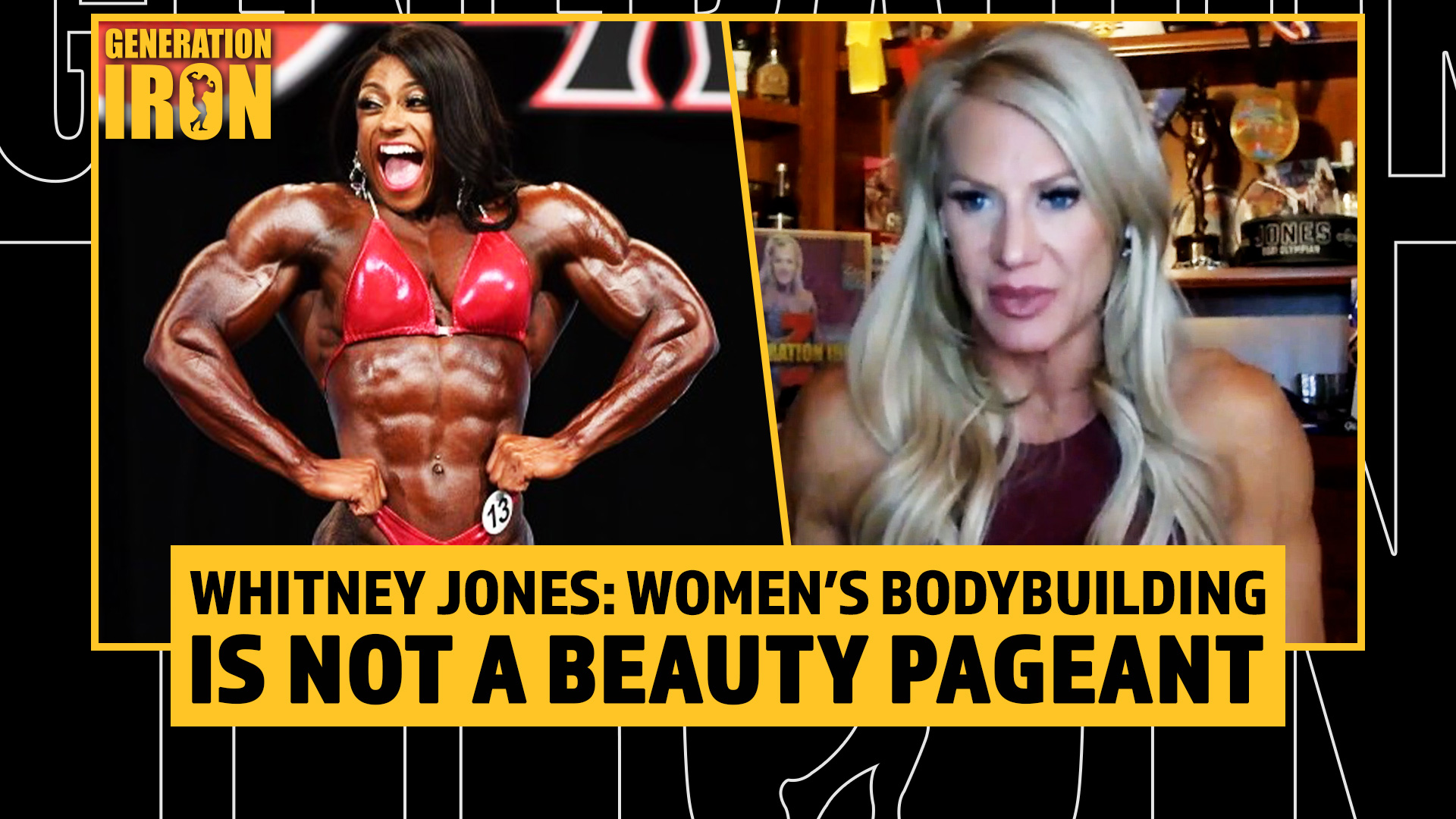
Whitney Jones: Women’s Bodybuilding Is NOT A Beauty Pageant
[embedded content]
Whitney Jones talks about the temporary disappearance of Women’s Bodybuilding from the Olympia… and how femininity should not matter for the division.
Ever since the early days of Bev Francis in the Women’s Open Bodybuilding division, the debate about femininity in the division has raged on. Francis famously battled back and forth each year attempting to attain what the judges wanted. Did she need to lean out or get bigger? The expectations seemed to constantly change. This issue continued ultimately until the Olympia weekend decided to stop holding the Ms. Olympia competition. It returned in 2020 after a six year hiatus. In our latest GI Exclusive interview, Fitness Olympia champion Whitney Jones explains how Women’s Bodybuilding should never be considered a beauty pageant.
Women’s Open Bodybuilding has a problem. Or at least, it had a problem for many decades. Perhaps even since its introduction into the sport. The problem seems two-fold, though both are related. The division can’t seem to get enough competitors (or audience) to engage. Secondly, there is a constant debate on the “femininity” of the physiques in the division.
During our conversation with Whitney Jones, we asked for her thoughts on female bodybuilding as a whole, and the six year forced hiatus that Women’s Open Bodybuilding took away from the Ms. Olympia. Whether it’s on or off the stage, it seems that physique expectations are different for women bodybuilders. There have been many pro bodybuilders who have outright stated that they are not interested in female bodybuilding at all. Why?
Whitney Jones isn’t surprised, but continues to believe that there is a bright future for the Women’s Open division and all female bodybuilding divisions. During our interview, she discusses how ever since she was young, she received comments for her muscular physique. Muscles are deemed “manly” and not something that women should push too far. While that mentality may be changing as culture becomes more “woke” – there are still many who believe that Women’s Open bodybuilding needs to maintain a femininity within the physiques presented on stage.
Whitney Jones doesn’t agree with this. In fact, she outright states that bodybuilding is not a beauty pageant – it’s a physique pageant. The female physiques on stage should be judged exactly even with the men physiques on stage. It’s not about how pretty a woman is. It’s about how perfectly sculpted a woman’s physique is.
Luckily, current Mr. Olympia owner Jake Wood seems to agree. Before owning the Mr. Olympia brand, he ensured that his Wings of Strength competitions always held Women’s Open bodybuilding – even during the six year hiatus away from Olympia weekend. Upon purchasing the Olympia brand, he immediately brought back Ms. Olympia.
Things are looking up for the division for the first time in nearly a decade. But the question remains, will the will of the people (particularly men) be more open minded about the division? Will they help bring a bigger audience and more support to a division that nearly died? That remains to be seen.
With more divisions than ever, women are able to choose which size they want. Much like Men’s Open – most people do not want to be a mass monster. So both Men’s Open and Women’s Open often contain the least number of active pro bodybuilders. For an already struggling division such as Women’s Open, this can create a harder uphill battle.
Whitney Jones isn’t worried – particularly because of the current (and two-time) Ms. Olympia champion Andrea Shaw. She is an excellent ambassador for the sport and truly showcases the excellence that can be achieved in the division. She also holds fantastic charisma. Perhaps this will inspire more to enter the division and excite audience members who have been sleeping on it the past decade.
You can watch Whitney Jones’ full comments on Women’s Open Bodybuilding and femininity in the sport in our latest GI Exclusive interview segment above!
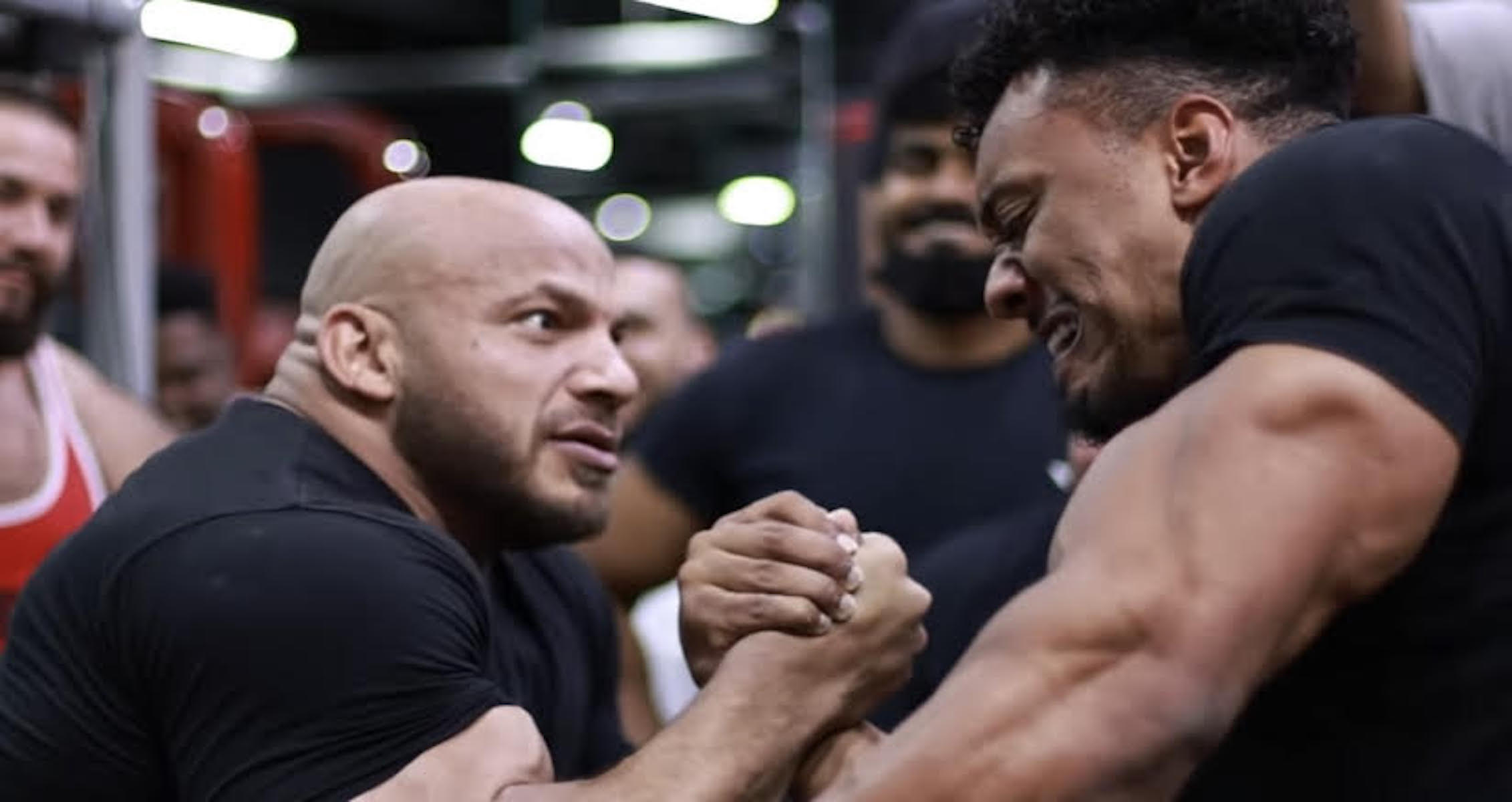
Big Ramy Takes On Larry Wheels In Arm Wrestling Match
Two-time Olympia champion Big Ramy recently took down Larry Wheels in an arm wrestling match.
There are few things more entertaining than two behemoths putting on a show to determine who is stronger. That is what happened when Larry Wheels took on Big Ramy in an arm wrestling match recently. In the end, it was the two-time Mr. Olympia who came out on top.
Wheels shared the video to his Instagram page. The powerlifter has gained three million followers on the social media platform and they were recently given a treat with this competition.
Big Ramy and Larry Wheels have built two of the best physiques in the world and have done it in different ways. Big Ramy has spent his career building a massive physique to win titles on the bodybuilding stage. That is exactly what he has done after winning the 2020 and 2021 Olympia titles in Orlando. He will look to make it three in a row in December as the competition moves back to Las Vegas.
Wheels has dabbled in many areas over the course of his career. He has recently returned to powerlifting and setting some new personal records in the gym. His strength is only increasing despite his other paths.
In recent months, Wheels has tried his hand at arm wrestling. He began with two losses to Aleksandr “Schoolboy” Toproll before squaring off with Brandon Allen. Wheels took the early rounds of the match before Allen was able to take over. In this recent video against Big Ramy, it seems as though Wheels was overmatched from the start.
Big Ramy is seen looking comfortable from the early moments of the video and even cracks a smile. It did not look like he was applying full pressure early on. Wheels is struggling to take down Big Ramy and is later defeated when Big Ramy decides to turn it on.
It was interesting to see Big Ramy participate in something like this given the risk of injury. As a bodybuilder, he is on special diets and workout plans all year round in order to be ready for competition. Larry Wheels has been training as a powerlifter and keeps his strength at a high. At the time of the arm wrestling match, Big Ramy was around 340 pounds, which is his offseason weight. Wheels usually weighs around 245-300 pounds given his current goals.
Larry Wheels will continue to put on a show when he hits the gym while focusing on arm wrestling. If he continues to take on or train with athletes like Big Ramy, it will be must-see action.
For more news and updates, follow Generation Iron on Facebook, Twitter, and Instagram.
Everything You Need To Know About The Anterior Pelvic Tilt And 6 Ways To Fix It
6 Ways to Fix the Anterior Pelvic Tilt
With the rise in desk jobs, the pelvic tilt is one of the most common occurrences. Some people don’t even realize they have a pelvic tilt until shown proof. There are three forms of pelvic tilt – anterior, posterior and lateral pelvic tilts.
In this article, we’ll be focusing on the anterior pelvic tilt (APT) which is also the most common form of pelvic disorders. The pelvis helps you in walking, running and lifting weights off the ground.
Understanding Anterior Pelvic Tilt
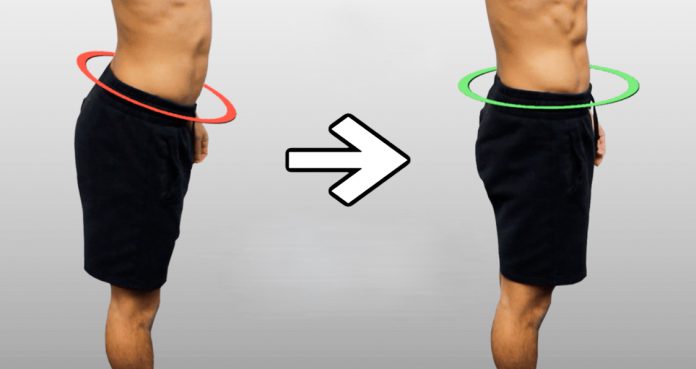
APT is when the front of the pelvis drops in relation to the back of the pelvis. It happens when the hip extensors extend and the hip flexors shorten. Anterior pelvic tilt (also known as lordosis, lumbar lordosis, and lumbar hyperlordosis) can also cause a height loss of 0.5-2.5 inches.
An APT occurs when your pelvis is rotated forwards which forces your spine to curve. APT which goes unfixed for a long time can lead to weak glutes and abdominal muscles. It can also cause lower back pain, hip and knee pain, and an incorrect posture.
Ways to Fix the Anterior Pelvic Tilt
Strengthen Your Abs
Pelvic tilts can be the result of weak abdominal muscles. Exercises like the leg lower drill, dead bugs and reverse crunches are a good way to work on your APT. Breathing during these exercises need to be controlled and focused on fixing your pelvic tilt.
While exhaling during the ab exercise, push your ribs downs and push your hips forward. The exhaling shouldn’t be sharp but eccentric. Maintain a mind-muscle connection with your pelvis and the abs throughout all the exercises.
Hip Thrusts
Hip thrusts can be an incredibly effective exercise in bringing the front and the back of your pelvis in a single line. While performing the thrusts focus on keeping your spine in a neutral position.
Lie down with your knees bent and feet placed flat on the floor. Push your heels into the floor as you lift your pelvis up off the floor until your upper body and thighs form a straight line. Keep your glutes and abs flexed as you hold the position for a couple of seconds before returning to the starting position.
Don’t Sleep on Your Stomach
Most people while sleeping on their stomachs use a pillow which naturally extends the front pelvis. Sleeping in this position for extended hours can make the APT your default posture.
Sleeping on the belly is a strict no if you’re already suffering from APT. The transition from sleeping on your stomach to the sides or on the back can take some time but it’ll be worth it when you see the change in your posture.
Correct Your Posture
If you correct your posture, you’ve already won half the battle. Always monitoring your standing stance can take some time getting used to but can save your joints and muscles a lot of unnecessary stress and tension.
If you’re standing all day, avoid slipping into ATP by switching your standing position as standing in the same posture can be tiresome for your spine. If you’re standing on your right leg and get tired, switch to your left leg and then stand evenly on both your legs before going back to your right leg.
Half-Kneeling Hip Flexor Stretch
Half-kneeling hip flexor stretch is a great exercise to fix your APT as you can change the range of the movement according to the tilt in your back. This exercise will help relax the hip flexors and increase your hip flexibility.
Kneel down on an exercise mat and lunge with your right leg while your left knee rests on the floor. Bring your pelvis forward by tightening your glutes and abs. Lean forward from your right leg until you feel the tension in the hip flexor and inner thigh of your right leg. Hold the position for 30 seconds and complete the recommended reps. Repeat on the other leg.
Pelvic Tilts
The range of motion is the differentiating factor between the pelvic tilts and the hip thrusts. In the pelvic tilts, you will pull the anterior pelvis in before pushing up with the spine whereas in the hip thrusts the main motion is to push up the hips while maintaining the spine in a straight line.
Pull your belly button in toward your spine and then push your pelvis up toward the ceiling. Contract your hips and glutes as you lift your pelvis and hold the position for five seconds.
Are you suffering from APT? Let us know in the comments below. Also, be sure to follow Generation Iron on Facebook and Twitter.
5 Advantages of Lifting Lighter Weight
Light weight baby.
You’re a bodybuilder, or something like it. You don’t want to lift light, right? While your initial answer maybe yes, there’s something to be said for the other side. Sure, conventional wisdom tells you lifting heavy weights will recruit more muscle fibers and get you bigger, but what if you told you that lifting lighter weights to failure can produce comparable results in size and strength as well as adding range of motion to your set routine. Still don’t believe us, read on.
More strain on the intended target
Lighter weights means the intended muscles do all the work. When you lift with more weight than you can handle you tend to lose form and use momentum instead of putting the intended strain on the muscle. How many times have you seen guys curling heavy barbells only to turn into a back workout, exactly. Try staying with weight you can actually lift with perfect form.
Hypertrophy
Going back to the first point, when you lift weights suitable for the intended body part, it tends to build more hypotrophy gains in the muscles you want to grow. Hypertrophy is the enlargement of an organ tissue from the increase in size of its cells.
Better Range of motion
Lighter loads allow for the exercise to be performed through the full range of motion. Lifting heavier weights tends to shorten the range of motion, not fully taking advantage of the intended movement. In a study published in the January 2014 issue of Journal of strength and Conditioning Research, it was found that after 12 weeks of strength training with full range of motion, the strength and size of their muscles were greater than those observed in the group that used movements with a shorter range of motion.
Growth
In a game changing study published by the Journal of Applied Physiology, researchers at McMaster University found that effort, not load, increases muscle growth. This means dispels the previous myth that hypotrophy only occurs with heavyweights. Subjects that lifted lighter weight until failure gained just as much size and strength as the subjects who pushed big weight.
The study also found testosterone and growth hormones elevated just as much in subjects that lifted lower weight to failure as those that hoisted bigger weight with less reps.
In short, both lightweight and heavyweight can beneficial in size and strength, it just depends how you use them. We’re not saying you can’t max out on a set with less than ideal form, just don’t think it’s the only way to achieve your goals. Use lighter weights on days your feeling sluggish or to top off your daily routine and you’ll be surprised at the results.
Hit us up in the comments section below and let us know what you think about light weight routines. Do they have their place in bodybuilding or is it no guts no glory?
Let us know by hitting up our comments below or head on over to our official Facebook and Twitter.