
Tag: Bodybuilding
What Are Some Of The Best Bodybuilding Snacks?
The best bodybuilding snacks will allow you to grab on-the-go options, or simply a light and tasty meal, in between those hard workouts.
When it comes to our bodybuilding goals, we know what to eat and most likely we also know when to it. It is important for us to get the most out of our meals as we look to power through those hard workouts and fuel our everyday lives. Breakfast, lunch, and dinner are of course important as we look forward to these meals every single day, but three meals just doesn’t cut it when we’re looking to see that desired growth and shredded physique. Bodybuilding snacks can help us get to where we want to be by providing nutrients and calories to fuel us without feeling the need for a massive meal. Also, those of us on the go can greatly benefit from a high-quality snack as we look complete a proper nutrition routine while still getting things done.
Let’s take a look at some of the best bodybuilding snacks to enjoy while either on the go, or simply sitting at home for some down time. Keeping our bodies primed and ready to tackle any workout that comes our way can greatly influence our gains and knowing what to eat, especially for a small, but hearty snack, is what we need most to succeed to the fullest extent.
Benefits Of Bodybuilding Snacks
Bodybuilding snacks will work to provide a host of benefits so your gains never suffer. Eating a large meal constantly can be a pain, and sometimes we just want something small to curb our hunger. Enter bodybuilding snacks, and you won’t be disappointed with what they can do.
Benefits of bodybuilding snacks include:
Provide great nutrients: Bodybuilding snacks can provide for great nutrients which is exactly what you need to pump you with those essentials so you don’t suffer a deficiency and your body runs smoothly (1).
Convenient option: For those on the go needs or something with little preparation required, this is a great option.
Curb your appetite: Snacks can curb your appetite without feeling too full or that you need some big meal to continue on with your day.
Easy and simple variations: With little prep and no hassle to make, you can change the recipe and offer slight variations here and there to really help yourself.
What To Look For
When looking at bodybuilding snacks, it is important to look at a few factors. Look into the amount of macronutrients because these are essential for fueling performance and everyday activities (2). Some carbs might be nice for energy and with more protein, you can work to fuel growth and recovery (3).
Also, consider the time it takes to make. If you have more time to prepare, you can get a little more elaborate with your choices. This is the best time to see what you prefer. Look into those options you know you will like because you want to enjoy everything you put into your body.
Best Bodybuilding Snacks
Smoothie: A smoothie is a great way for you get fruit and vegetables into your diet while also tasting great. The right protein powder can add adequate amounts of protein while offering nice texture to this shake.
Protein Bars: Nothing beats a great tasting protein bar, and especially one that is low in calories and sugar but high in protein. Having the right protein bar in your routine can taste great and give you real benefits like feeling full.
Deli Wrap: A deli wrap will be light but still allow for protein and carbs to come into play. Plus, any condiments or toppings can add a delicious flavor and put fruits and vegetables into your body.
Handful Of Nuts: A handful of nuts can deliver healthy fats which can benefit your everyday life and athletic performance. Choosing which nuts you prefer can be fun as you taste test them and create your own sort of trail mix that can be an easy and convenient grab-and-go option.
Bananas & Peanut Butter: We all love bananas and peanut butter and this can be a great way to get potassium and healthy fats into your routine. Also, if you want to add a piece of bread into the mix, this can be a great idea too.
Featured Protein Supplement For Growth & Satiety
When it comes to a good bodybuilding snack, something like a smoothie is an awesome choice. But having the right protein powder to toss into your smoothie can be a game-changer. The right protein powder will work to enhance muscle growth and help with your recovery needs so you can bounce back faster and with more energy (4). This protein supplement from Transparent Labs is one to definitely try for it can seriously boost all your gains in a clean and effective way.
Code GENIRON10 For 10% Off
Transparent Labs 100% Grass-Fed Whey Protein Isolate is organic, non-GMO, and gluten-free, boasting a great formula for a top protein powder. With nothing artificial added, this is a clean protein that is easier on your stomach.
Transparent Labs 100% Grass-Fed Whey Protein Isolate boasts an impressive array of eco-friendly accomplishments as a solid protein powder for men to boost lean muscle growth. It’s organic, non-GMO, and gluten-free. There are no artificial sweeteners — a rarity in a world full of whey protein powder, which are almost always filled with chemical flavorings to disguise the chalkiness of protein. There are also no artificial colorings or preservatives added. If you have a sensitive stomach, allergies, or just care about the environment, this is an excellent choice for you and your body weight goals and is easy to digest compared to a whey concentrate.
Use the promo code GENIRON10 for 10% off! Check out our individual review for Transparent Labs 100% Grass-Fed Whey Protein Isolate here!
Check out our list of the Best Protein Powders for more great protein supplements!
Wrap Up
The best bodybuilding snacks can work to add into your diet those convenient options so you see the results you want most. By offering great nutrients, tasting great, and proving simple to make, bodybuilding snacks are certainly what you need to place into your diet to feel full and to fuel your workouts and performance. Give some of these ideas a try and see which ones work best for you as you continue your quest for that desired physique.
Let us know what you think in the comments below. Also, be sure to follow Generation Iron on Facebook, Twitter, and Instagram.
*Images courtesy of Envato
References
Iraki, J.; Fitschen, P.; Espinar, S.; Helms, E. (2019). “Nutrition Recommendations for Bodybuilders in the Off-Season: A Narrative Review”. (source)
Lambert, C.; Frank, L.; Evans, W. (2004). “Macronutrient considerations for the sport of bodybuilding”. (source)
Stark, M.; Lukaszuk, J.; Prawitz, A.; Salacinski, A. (2012). “Protein timing and its effects of muscular hypertrophy and strength in individuals engaged in weight-training”. (source)
Pasiakos, S.; Lieberman, H.; McLellan, T. (2014). “Effects of protein supplements on muscle damage, soreness and recovery of muscle function and physical performance: a systematic review”. (source)
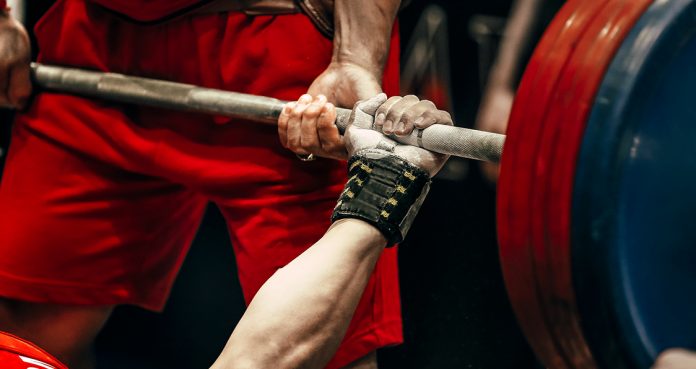
Stop Making These Fatal Bench Press Mistakes
Most-Common Bench Press Mistakes Which Lead To Injuries
The bench press is one of the most popular exercises and is one-third of the three big compound lifts (deadlifts and squats being the other two). It also happens to be one of the first exercises people learn to perform when they start working out.
The gym bros use the bench to compete for the strongest-bro title. While the bench press is widely performed across gyms in the entire world, it’s also arguably responsible for causing the highest number of injuries.
Keeping Your Elbows Flared Out
Most people believe that to target their chest optimally they need to keep their elbows flared out. By doing it, they make the mistake of keeping their upper arms parallel to the barbell while performing the bench press.
You need to remember that your shoulder rotator cuffs are one of the stiffest muscle groups and don’t have much mobility. Make sure you’re keeping your elbows tucked in while performing the bench presses to eliminate unnecessary tension from the rotator cuffs.
Not Arching The Back
Bench pressing isn’t as simple as lying down on a bench and lifting the barbell for a few reps. You need to follow proper form to get the most out of the exercise while keeping the chances of an injury at a bare minimum.
You need to arch your back as you lie down on the bench. The arch should be big enough that your hand can pass between your back and the bench. Lying down with your back flat against the bench can take the tension off the chest and put it on the back.
Grabbing The Barbell With Too-Wide A Grip
Some people have the misconception that grabbing the barbell with the widest grip will have the most impact on their pectoral muscles. Having too-wide a grip does nothing more than putting needless tension on your rotator cuffs.
People worry that holding the barbell with too close a grip will target their triceps instead of their pecs. To target your chest optimally, grab the barbell with a slightly wider than shoulder-width grip.
Forgetting The Feet
One of the most overlooked aspects of bench pressing is the feet placement. You can generate a lot of power through your legs which can assist you in the bench press. Many people make the mistake of elevating their heels and keeping their toes floored or tapping their feet as they lift the weights while benching.
Having your feet placed flat on the floor and your legs spread to shoulder-width is essential in a solid bench press routine. By not driving through your feet and legs, you are leaving a lot of gains on the table.
Bouncing The Bar Off The Chest
In the veil of following a full range of motion, many people bounce the bar off their chest while benching. Bouncing the bar off the chest is one of the most common practices and has more disadvantages than benefits.
In the effort of lifting heavy weights by bouncing it off your chest, you can do some serious damage to your ribs. The spring-action can also limit your mind-muscle connection as your primary goal shifts to moving the weights for reps.
Also, if you’re bouncing the bar off the chest and still have to use a spotter, it’s a classic case of ego lifting. Check your ego at the door before you get to bench pressing as it has probably sent the most number of people to the hospital as compared to the other exercises.
How much do you bench? Let us know in the comments below. Also, be sure to follow Generation Iron on Facebook, Twitter, and Instagram.
Header image courtesy of Envato Elements.
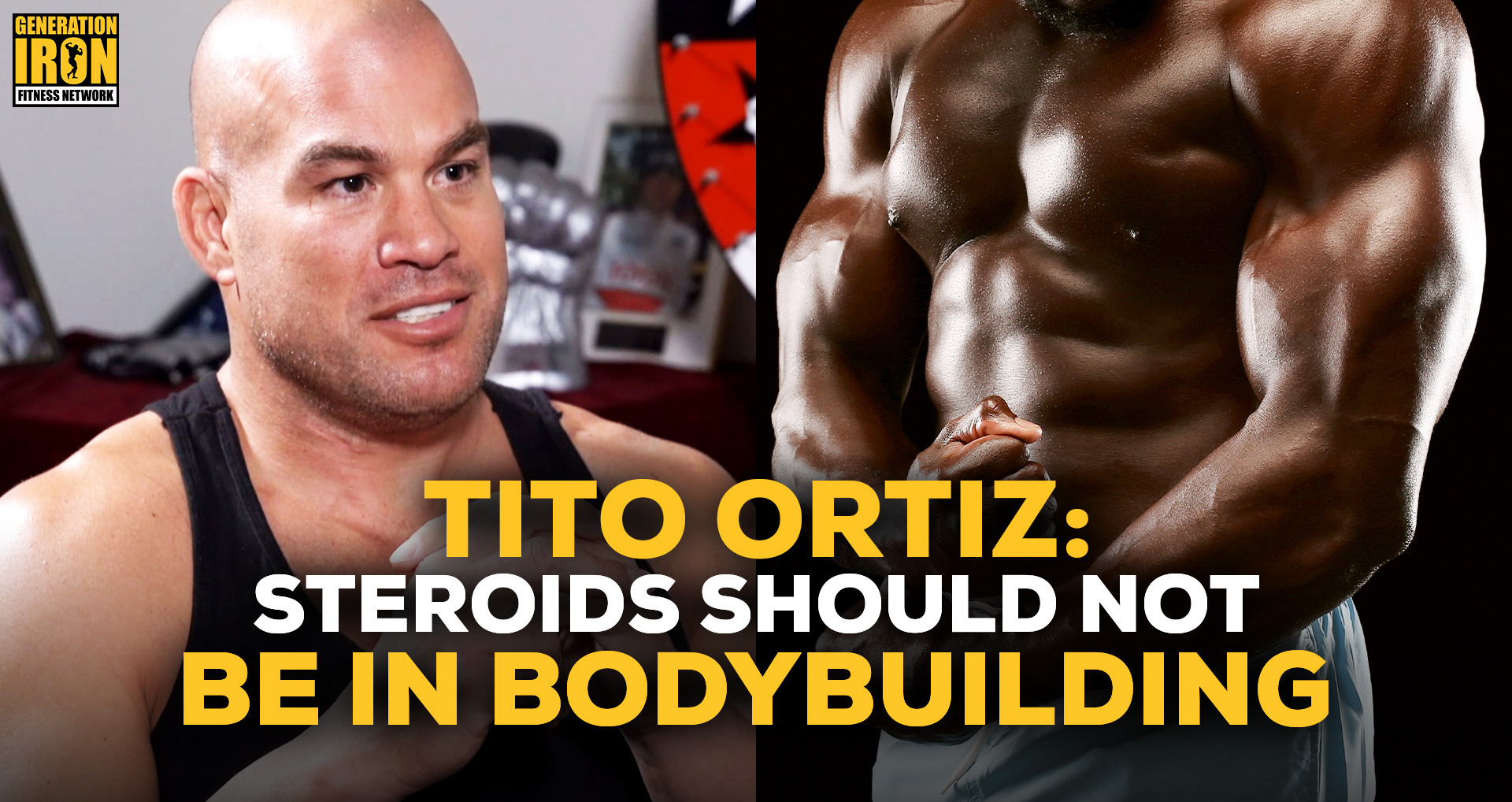
Tito Ortiz: Bodybuilders On Steroids Look Like “Skinny Broken Down Old Men” By Age 60
Tito Ortiz believes steroids should not be allowed in bodybuilding or any other sport.
Bodybuilding often gets criticized in the mainstream media for steroid use and lack of testing in the sport. Yet it’s important to note that other sports have their own problems with steroids – even with testing. MMA in particular has various federations that drug test their athletes – and there have been multiple times where an athlete has failed. The sad truth is that many athletes across all sports find ways to game the system. That’s why when we spoke with UFC Hall Of Famer Tito Ortiz, we wanted to get his opinion on drug testing in not only bodybuilding but sports overall. In our latest GI Exclusive interview, Tito Ortiz explains why he thinks steroids have no place in any sports including bodybuilding.
Tito Ortiz is a powerhouse name in the MMA world. He is best known for his time in the UFC, where he is a former Light Heavyweight Champion, having held the title from April 14, 2000 to September 26, 2003. Ortiz was one of the MMA’s early stars and ultimately became the biggest pay-per-view draw of 2006 for his fights with Chuck Liddell, Forrest Griffin, and Ken Shamrock.
We asked Tito Ortiz if he felt steroids and other performance enhancing drugs had a place in MMA and other sports. Without deliberation, Ortiz made it clear he was against steroids and PEDs in any sport. He finds it to give athletes a disadvantage and ultimately a health risk that isn’t worth it.
It might be easier to hold that opinion for a sport like MMA – where strength is a major factor in the competition. If you use PEDs to become stronger than someone in a fight, that can certainly be seen as unfair. But what about bodybuilding? A sport that is about the judgement of a physique and not a face off of physical ability. Does Ortiz draw a line for certain sports and not others?
We use an example here of testosterone. If a bodybuilder is naturally testosterone deficient compared to another – it could perhaps be considered more fair to allow PEDs so that the athlete can get an even chance against a genetically gifted bodybuilder. Tito Ortiz doesn’t agree. He thinks that an athlete needs to be aware of what they are getting into when they dedicate their life into a sport. If a bodybuilder cannot step up and try to fill that gap without the use of drugs – perhaps that’s just their lot in life.
Tito Ortiz further explains the kinds of risks that bodybuilders take when they decide to use PEDs and steroids to enhance their physique. He thinks there is a risk of young people watching bodybuilding or any other sport and idolizing steroids. That risk is not seeing the long game. They only look at the big bodybuilders or the powerful athletes. They don’t see the aftermath in their later years. Ortiz goes on to say that most bodybuilders who use PEDs in their prime look like “skinny broken down old men” by the time they hit sixty.
Do you agree with Tito Ortiz’s take on bodybuilding and steroids? Watch his full comments in our GI Exclusive interview segment above and let us know your thoughts!
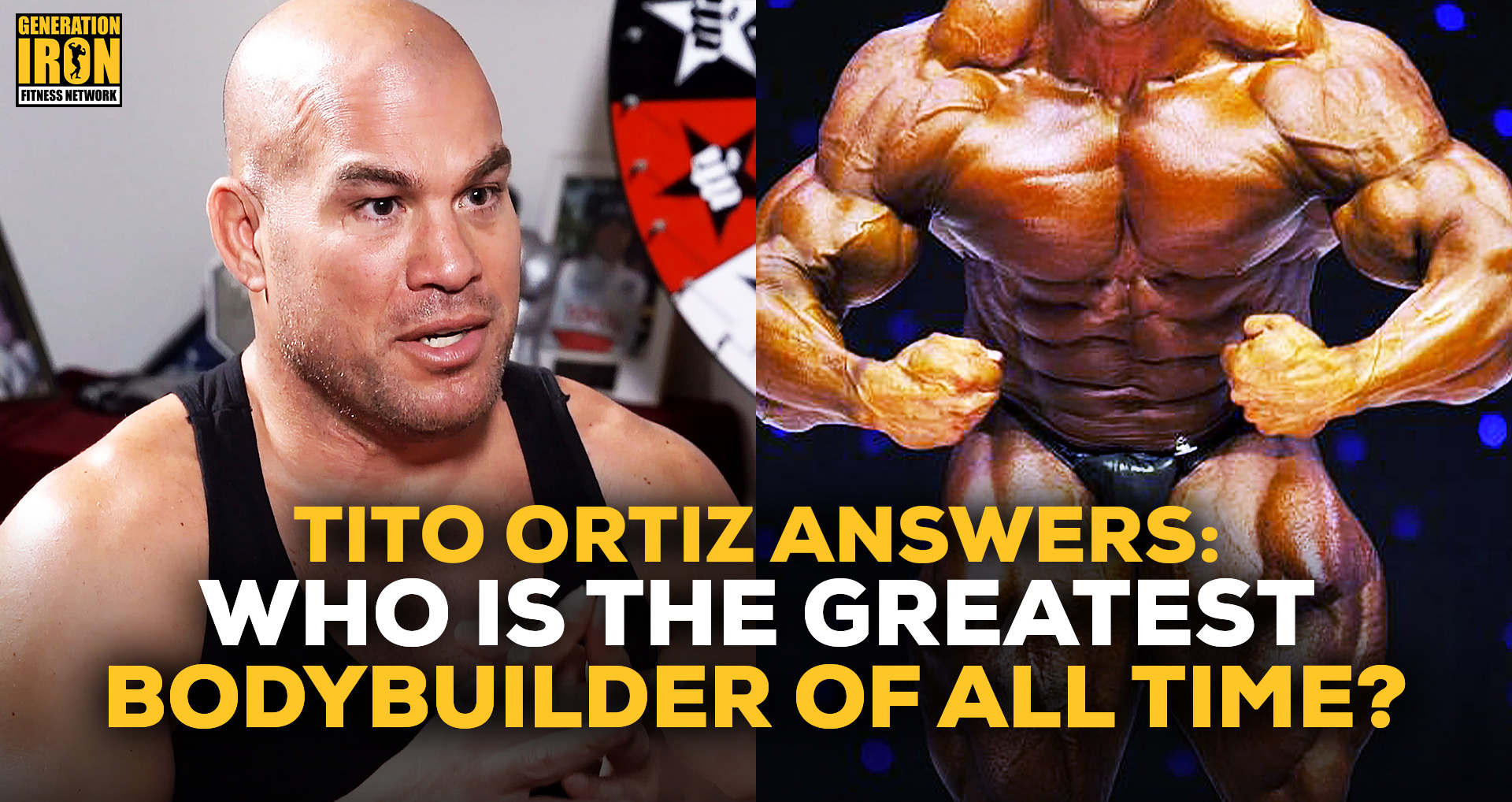
Tito Ortiz Answers: Who Is The Greatest Bodybuilder Of All Time?
Tito Ortiz reveals his involvement and passion for bodybuilding, how it’s poised for a big comeback, and makes his pick for greatest bodybuilder of all time.
While Tito Ortiz is first and foremost a top tier MMA fighter, he has a deep respect, passion, and involvement with the sport of bodybuilding. Bodybuilding was the initial foundation that led Ortiz towards MMA in the first place – though he didn’t even know it was called bodybuilding at the time. He just wanted to get big. And he still holds a fire in his heart for the athletes in bodybuilding who keep pursuing that dream. So what does he think of the current state of the sport? In our latest GI Exclusive interview, Tito Ortiz explains why he thinks bodybuilding is going to make a big comeback and also makes his pick on who is the greatest bodybuilder in history.
Tito Ortiz might not hold a mass monster physique, but his love and passion for getting big has been with him since he was a teenage. It’s what ultimately led him towards mixed martial arts – a path that would take him towards being one of the top fighters in MMA. Even though his life became about MMA, he never left bodybuilding behind. Ortiz currently works with a consulting firm for bodybuilding where he helps young bodybuilders learn how to market themselves. An important part of any sport to bring more eyeballs on the competitions and thus bring more mainstream attention (and cash) to an athlete or league.
Tito Ortiz is a man who keeps watch on the bodybuilding world just as much as he focuses on his MMA career. Given that level of passion for bodybuilding, what does he think of the current state of the sport? Many have expressed that the quality of physiques is going downhill compared to decades past. Does Ortiz agree? He couldn’t think that it’s farther from the truth and he points more towards statistics to prove his point.
Tito Ortiz actually believes that bodybuilding is in the process of making a comeback (which of course implies that he at least thinks at some point it went downhill). He points towards how the Olympia and many other major competitions grow in size every year. Perhaps people verbally complain about the physiques being lower quality – but the attendance seems to argue the opposite. Or perhaps, that the change is minuscule compared to how many people find the sport as whole entertaining to watch.
Perhaps the fans arguing for a chance is a part of the beginning for some sort of comeback. With the introduction of the Classic Physique division a few years ago and its continued success – we might just be too close to the action to realize a long term progression that signals bodybuilding will be bigger than ever in the coming decade.
We decided to end off our conversation with Tito Ortiz about bodybuilding by rewinding and looking to the past. Who was the greatest bodybuilder in the history of the sport? Tito Ortiz jumps right over usual picks such as Ronnie Coleman or Lee Haney – and goes for the old school original choice. Ortiz thinks Arnold Schwarzenegger is the greatest of all time. This is when you consider the big picture of everything he accomplished. He is arguable the only bonafide bodybuilding mainstream celebrity. That kind of success legitimized the sport and put it into the spotlight. And to Ortiz, that makes him the greatest of all time.
You can watch Tito Ortiz’s full comments on bodybuilding in or latest GI Exclusive interview segment above.
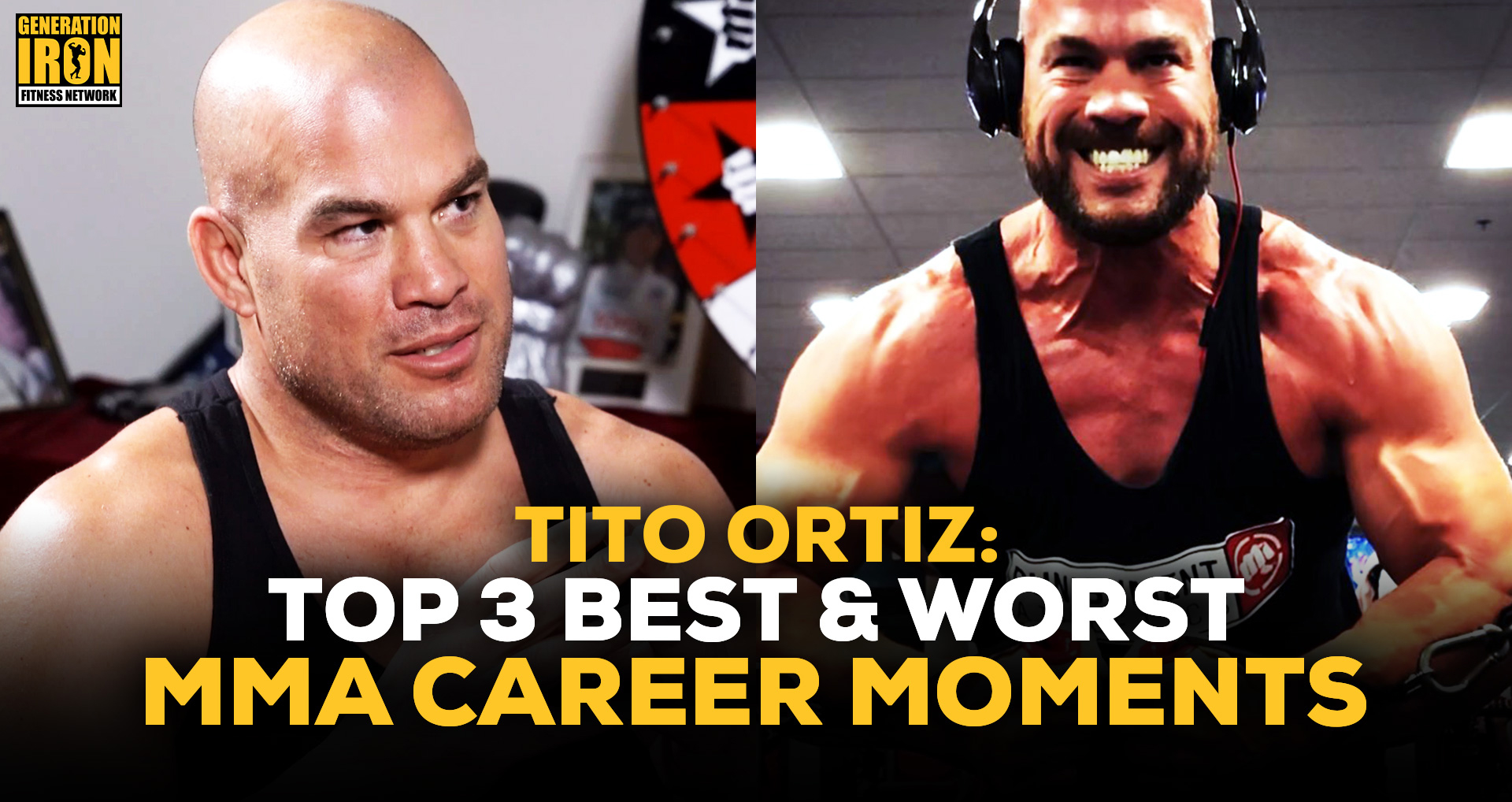
Tito Ortiz: The Top 3 Best & Worst Moments Of His MMA Career
Tito Ortiz looks back at both the biggest highs and lowest lows of MMA fighting career.
Life is full of highs and lows. Not surprisingly, the bigger risk you take the bigger the reward. It doesn’t come without a few blemishes upon looking back. These kinds of risks are necessary for pro athletes who want to become the best. This holds true for Tito Ortiz. You don’t become a champion MMA fighter without making a few mistakes along the way. In our latest GI Exclusive interview, Tito Ortiz breaks down the top three best and worst moments of his MMA fighting career.
While Tito Ortiz isn’t done fighting just yet, he has lived a full and exciting life as a MMA fighter. That’s why we asked him to look back at his full career and recount the highest highs and the lowest lows of his career. You can’t have the highs without the lows. And for pro athletes, failures often lead to learning and experience. They help build a competitor into the champion they will one day become.
So it seems fitting that Tito Ortiz starts off by listing his failures. He mentions this is to end on a high note but one can’t help but think it’s also because the lows truly do teach us how to become more successful. As we bounce back and learn from hindsight – we become stronger as a result.
For Ortiz, the lows truly hit hard. He mentions losing his title to Randy Couture, wearing a t-shirt that stated, “Dana’s my bitch,” and most painful of all – being accused of physical assault against his former girlfriend. Eventually the accusation was recanted – but the firestorm the indecent brought upon him and his family was a fight that no amount of MMA training could prepare him for.
And family is a big word for Tito Ortiz – as it ends up taking two whole picks for his greatest moments in his MMA career. Ortiz starts by describing the high of becoming a champion. This is a moment one certainly saw coming on his list of top 3 best career highs. He followed it up with the birth of his fist son and his final pick of the life he was able to give his children. To Ortiz, seeing his family provided for through his passion of fighting is a gift no championship title can overcome.
You can watch Tito Ortiz go into detail about his darkest low moments and his powerful high moments in our latest GI Exclusive interview segment above.
*Header image courtesy of Instagram
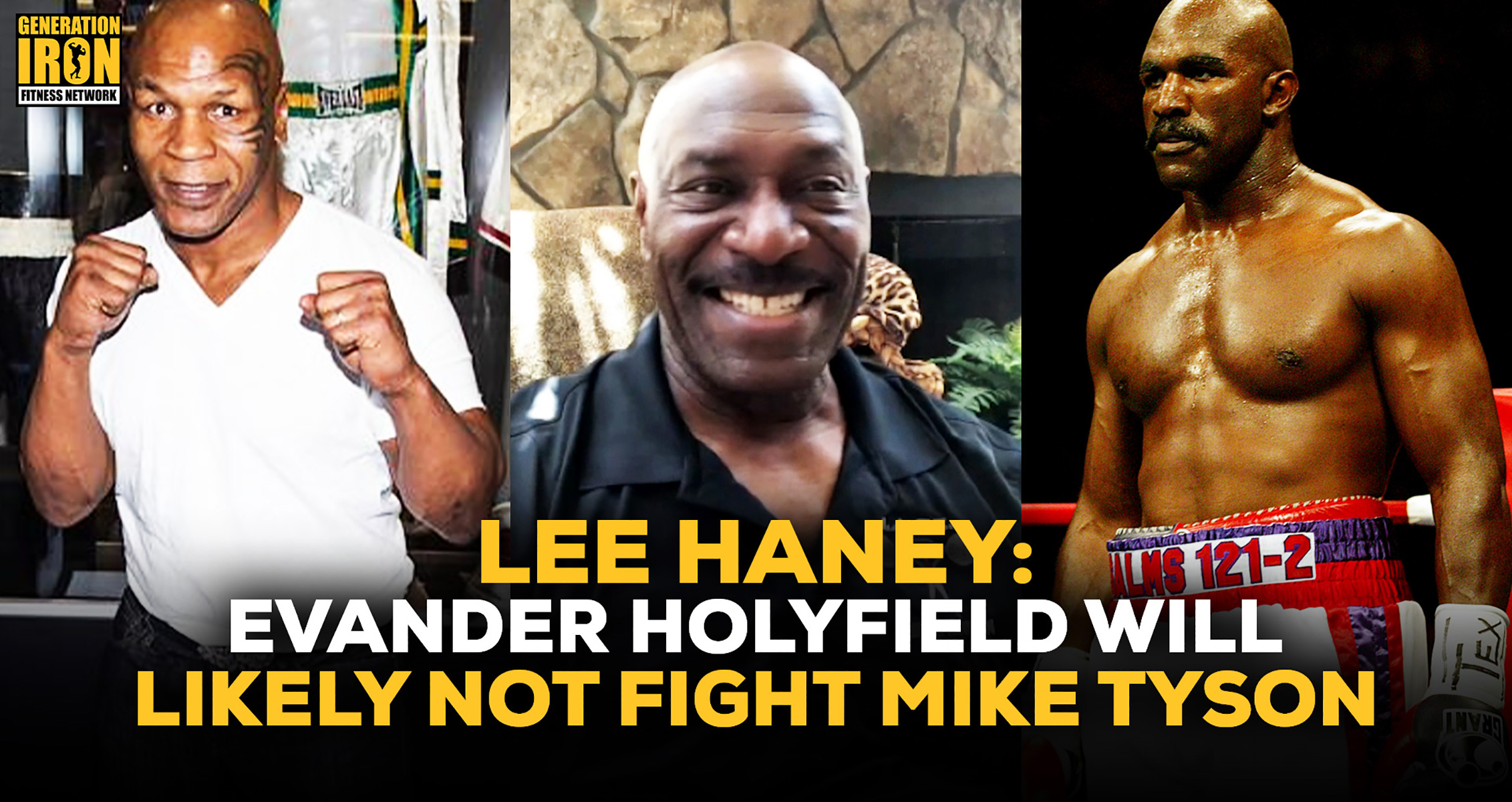
Lee Haney: Evander Holyfield Claims He Will Not Comeback To Fight Mike Tyson
Evander Holyfield told Lee Haney he doesn’t plan on fighting Mike Tyson… but is it true?
While Lee Haney is best known as a world record holding 8x Mr. Olympia champion, he also spent some time training boxing legend Evander Holyfield. In fact, he still occasionally keeps up with Holyfield to this day. As rumors continue to swirl about Mike Tyson fighting Holyfield in a future bout – we wanted to know if Haney could provide any clarity on the situation. In our latest GI Exclusive interview, Lee Haney talks about training Evander Holyfield and the unlikely chance he will fight Mike Tyson.
Evander Holyfield and Mike Tyson are two legendary boxers in their own right. So it’s no surprise that excitement grew once rumors released claiming that these two icons of the sport might potentially face off in the ring. As of this writing, there has been no confirmation that this match will happen.
That doesn’t mean that Mike Tyson hasn’t been teasing the fans a bit. In a recent interview on The Dan Patrick Show, Tyson alluded to the rumored fight being still very much a possibility. “[Holyfield is] on the table, but I guess the people wanted Roy,” said Tyson during the interview.
Roy of course is reference to Mike Tyson’s recent national press tour as he promotes his exhibition match versus Roy Jones Jr. on Triller pay per view.
But while Tyson claims that fighting Evander Holyfield is on the table, Lee Haney has words that paint a different picture. Haney was a personal trainer for Evander Holyfield during a period where the boxer was trying to put on more pounds of muscle. Haney has remained in occasional contact with Holyfield ever since.
Once rumors grew about Mike Tyson facing off against Evander Holyfield, Lee Haney reached out to Holyfield in an attempt to get confirmation. Holyfield quickly denied the fight, saying he had nothing to do with it.
Of course, Lee Haney also admits that perhaps Holyfield is working in secret in order to keep an element of surprise. Perhaps this rumored fight is such a high profile occasion that Holyfield is keeping his cards close to the chest until the right moment.
Lee Haney also goes into detail about his time training Evander Holyfield and shares some interesting anecdotes from a very different time in both the sport of boxing and bodybuilding.
You can watch Lee Haney’s full comments on Evander Holyfield in the GI Exclusive interview segment above!
*Image courtesy of John Kloepper and Steve Lott. Changes made to combine header image. CC BY-SA 3.0
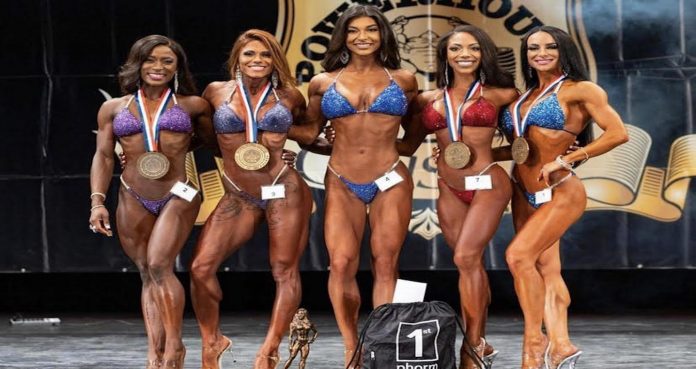
Powerhouse Pro Bikini Classic 2021 Results
Lauralie Chapados wins Bikini at the Powerhouse Pro Bikini Classic 2021.
The Powerhouse Pro Bikini Classic 2021 took place on Saturday in Ypsilanti, MI. This was another chance for some of the top Bikini competitors in the sport to gain qualification to the 2021 Olympia. In the end, it was Lauralie Chapados who was able to take home yet another victory.
This is not the first victory for Chapados this year. She finished first in Bikini in the 2021 Chicago Pro back in July. In August, Chapados placed fourth in the 2021 Tampa Pro. Now, she picked up yet another victory and is continuing to gain momentum heading toward the biggest competition of the year.
There were two divisions in this competition with winners gaining qualification to the 2021 Olympia. The full results have been announced and can be seen below.
Pro Bikini Classic 2021: All Division Winners
Bikini: Lauralie Chapados
Bikini Masters 40+: Angela Ruscili
Pro Bikini Classic 2021 Results
Bikini
First Place – Lauralie Chapados
Second Place – Lucia Malavaze
Third Place – Reijuana Harley
Fourth Place – Vania Auguste
Fifth Place – Lauren Adams
Sixth Place – Maia Gordon
Bikini Masters 40+
First Place – Angela Ruscili
Second Place – Pamela John
Third Place – Shonte Turner
Fourth Place – Cynthia Joyner
Official Score Cards
Generation Iron wishes to congratulate all the great athletes who earned a win at the Powerhouse Pro Bikini Classic 2021. Make sure to check out our full IFBB Pro results page from this year and previous years right here to catch up on any action you may have missed!
Greg has covered the four major sports for six years and has been featured on sites such as Sports Illustrated, Fox Sports, SB Nation, NJ.com, and FanSided. Now, he is transitioning into the world of bodybuilding and strength sports.

2021 Rising Phoenix & Arizona Pro Results
Here are the full results from the 2021 Arizona Pro.
The 2021 Rising Phoenix & Arizona Pro took place over the weekend at the Talking Stick Resort in Scottsdale, AZ. This was another chance for some of the top competitors to qualify for the 2021 Olympia.
The Arizona Pro was made up of some of the top women competitors gathering to put on an incredible show. In the end, there was plenty to watch and admire in an elite competition.
There were a total of eight divisions at the event with all winners gaining qualification to the biggest competition of the year. The results are beginning to be announced and will be updated as they come out. Here are the winners from the 2021 Arizona Pro.
2021 Arizona Pro: All Division Winners
Women’s Bodybuilding:
Women’s Physique: Melissa Teich
Figure:
Wellness:
Bikini:
Fitness:
Women’s Bikini Masters:
Women’s Figure Masters:
2021 Arizona Pro Breakdown
Women’s Bodybuilding
Results coming soon
First Place –
Second Place –
Third Place –
Fourth Place –
Fifth Place –
Sixth Place
Women’s Physique
First Place – Melissa Teich
Second Place – Tomefafa Ameko
Third Place – Jodi Lyons
Fourth Place – Alexis Sullivan
Fifth Place – Katherine Hall
Sixth Place – Maria Liberman
Figure
Results coming soon
First Place –
Second Place –
Third Place –
Fourth Place –
Fifth Place –
Sixth Place –
Wellness
Results coming soon
First Place –
Second Place –
Third Place –
Fourth Place –
Fifth Place –
Sixth Place –
Bikini
Results coming soon
First Place –
Second Place –
Third Place –
Fourth Place –
Fifth Place –
Sixth Place –
Fitness
Results coming soon
First Place –
Second Place –
Third Place –
Fourth Place –
Fifth Place –
Sixth Place –
Women’s Bikini Masters
Results coming soon
First Place –
Second Place –
Third Place –
Fourth Place –
Fifth Place –
Sixth Place –
Women’s Figure Masters
Results coming soon
First Place –
Second Place –
Third Place –
Fourth Place –
Fifth Place –
Sixth Place –
Generation Iron wishes to congratulate all the great athletes who earned a win at the 2021 Arizona Pro. Make sure to check out our full IFBB Pro results page from this year and previous years right here to catch up on any action you may have missed!
Greg has covered the four major sports for six years and has been featured on sites such as Sports Illustrated, Fox Sports, SB Nation, NJ.com, and FanSided. Now, he is transitioning into the world of bodybuilding and strength sports.
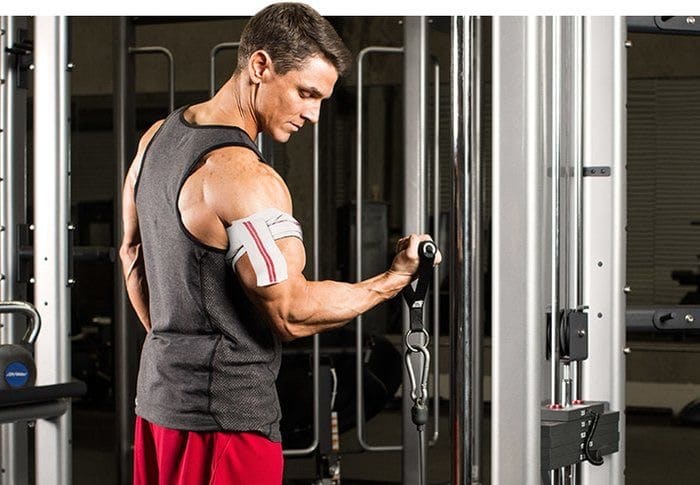
The Ultimate Guide To Blood Flow Restriction Training (BFR Calf Workouts Included)
Everything you need to know about blood flow restriction training
There comes a point in every lifter’s life when he cannot seem to make any progress, no matter how hard he tries. The plateau can cause despair and confusion in his ongoing struggle. Most people can relate to the scene, but not the pros. Pros incorporate advanced training techniques in their training routines, and so should you.
What are advanced training techniques?
We are glad you asked.
Follow the same exercises long enough, and your muscles will catch up to your training style. As soon as your body gets used to your workouts, it will stop responding, and your gains will begin to taper off. You will then need to shock your muscles to stimulate muscle growth and break through the overhead ceiling.
Enter advanced training techniques.
Advanced training techniques shock your muscles by adding variety and increasing the intensity of your workouts. Most advanced techniques overload your muscles by increasing your muscle’s TuT (time under tension).
Also Read: How To Increase The Time Under Tension To Maximize Your Gains
Types of Advanced Training Techniques
1. Superset
A superset is when you perform two or more exercises in succession without any rest. It could include training agonist and antagonistic muscles groups.
Related Read: Best Supersets to Build Muscle
2. Dropset
It includes progressively decreasing resistance after every set (with no rest in between) until you hit failure.
3. Intraset Stretching
The intraset stretching technique includes holding resistance at the ‘stretched’ position after you have completed the desired number of reps of an exercise. After pausing at the bottom of the movement for 10-15 seconds, you then perform the same number of repetitions you did previously without racking the weight.
4. Negatives
While performing negatives, your training partner (or coach) helps you through the concentric phase of the exercise so that you can perform additional reps on the eccentric part of the motion. Lower the weight in a slow and controlled manner while performing negatives.
5. Rest-Pause
Perform as many reps as possible, rest for a few seconds, then perform additional repetitions. Repeat until you hit absolute muscle failure.
While most advanced techniques make you lift heavy or increase your muscle’s TuT, blood flow restriction training does things differently.
Pre-Requisites For Advanced Training Techniques
1. They Are Not For Everyone
They are called ‘advanced’ training techniques for a reason. If you are a beginner or an intermediate lifter, you should stick to orthodox bodybuilding exercises. Only think about adding an advanced training technique to your routine when you have milked the good old lifts.
Years of experience in the gym and knowledge of the body are needed to make the most of ATTs. They get you the best results when orchestrated with strategically planned regimens.
2. Don’t Push Yourself Too Hard
Many novice lifters are too hard on themselves when they can’t budge the needle in the right direction. They throw logic and reasoning out of the window and try to add as many ATTs as they can possibly think of in their workouts.
Several techniques (like BFR) should be used during planned overreaching, whereas techniques like prioritization can be followed throughout the year.
Remember: going crazy with ATTs can stagnate progress as it increases the risk of overtraining and injury.
3. Switch Them Up
Follow the same advanced training techniques for too long, and you’ll end up where you started. We understand that you love dropsets, but if you don’t want them to lose their charm, you shouldn’t perform them at the end of every set. Treat ATTs like creatine. Cycle them to get the best results.
Blood Flow Restriction Training
Blood flow restriction (BFR) training is also known as occlusion training, hypoxic training, KAATSU, and ischaemic training. BFR training includes restricting blood flow to your target muscle groups for building strength and size.
How Blood Flow Restriction Training Helps In Building Muscle
BFR training cuffs hinder the flow of oxygenated blood to the target muscles and prevents deoxygenated blood from returning out.
It forces blood to stay inside your target muscles throughout the set resulting in a nasty pump.
This process creates a by-product accumulation effect and induces an oxygen-low muscle state. It stimulates anaerobic adaptations that are favorable for muscle growth.
Blood flow restriction training causes a swelling effect on muscles and a buildup of metabolites, such as lactic acid, that stimulate muscle growth.
The direct fatigue to muscles caused by the bands forces the nervous system to recruit fast-twitch muscle fibers. These fast-twitch fibers have the highest capacity to grow.
But isn’t restricting blood flow to a muscle bad?
Well, it is bad if you are restricting blood flow for long periods. A typical BFR set does not last longer than 60-seconds, so we are good here. BFR of veins increases your blood’s lactate concentration. It helps you work out at a lower intensity while giving the feeling of a much harder workout.
Yes, there are mind games at work here too. When your brain thinks your body is experiencing a physical challenge, it signals the pituitary gland to release more growth hormones. GH (growth hormones) are responsible for building muscle mass and strength.
To put all BFR safety worries to rest, St. Mary’s University conducted a study. The research found that compared with low-load training, low-load BFR training is more effective, tolerable, and therefore a potential clinical rehabilitation tool.
Another study concluded that BFR training led to no prolonged reduction in muscle function or increase in indications of muscle damage in blood tests.
Benefits of Blood Flow Restriction Training
Improves strength.
Better muscular hypertrophy.
Increases aerobic capacity.
Different Types of Blood Flow Restriction Training Equipment
1. KAATSU Device
Have you ever seen a bro walking around with cuffs in the gym? No, he is no Christian Grey looking for his Anastasia Steele. Those cuffs are known as KAATSU devices. These cuffs are specialized BFR training tools used to restrict venous blood flow.
2. Pressure Cuff
If you want to take your BFR training a step further, you should invest in a pair of pressure cuffs. With this BFR equipment, you can dial in the exact amount of pressure you want around your muscles. We recommend this to people who know what they are doing.
3. Knee and Elbow Wraps
Blood flow restriction training on a budget doesn’t get better than this. Knee and elbow wraps are incredibly effective substitutes for dedicated BFR equipment.
Which type of band should you use?
A 2012 study of 116 people indicated a measurable difference in using narrow and wide cuffs in BFR training. Wide BFR cuffs restrict flow at a lower pressure and can be less effective than narrow cuffs. BFR training is all about chasing the pump, and you will have to try different bands tied at varying pressures to find out what works best for you.
Most Common Mistakes While Blood Flow Restriction Training
1. Tying The Bands At The Wrong Place
While BFR training, you should only wrap at the top of the arm or leg. You can wrap your arms for a shoulder or chest workout and your legs for a glute workout.
According to research, compared to a 13+ cm cuff, a 5-9 cm cuff reduces the risk of occluding the arteries. For the same reason, if you are using knee or elbow wraps for BFR training, you should wrap them at the top of your limbs in a layered manner rather than a spiral down the arm or leg.
2. Your Blood Flow Restriction Bands Are Too Tight
Some people make the mistake of tying the bands too tight. Overly tight bands/cuffs could lead to a restriction of both – arteries and veins. Here is a high school biology lesson for you:
Arteries – bring blood to muscles.
Veins – take blood away.
For a maximal swelling response, you want blood coming to the muscles and staying there. Meaning – you want the arteries to work just fine but restrict the veins.
In fact, there is evidence that if you occlude both arteries and veins, you might end up decreasing muscle growth at the site wrapped.
You can solve this problem by modifying perceived pressure on blood flow during BFR training. Wrap your muscles at a perceived pressure ranging between 0-10, with 10 being the tightest.
Perceived pressure of 7 out of 10 for legs and 6 out of 10 for arms provide the best result. A 10 out of 10 perceived pressure will result in total restriction of both – arteries and veins.
3. Skipping Warm-Ups and Cool-Downs
Before you begin your BFR workout, you should perform a light warm-up of around five minutes (walking or cycling), followed by 15 unwrapped reps with the weight you will use for your first BFR set. Doing this routine will get your blood pumping.
After your blood flow restriction exercise, you should take off your cuffs/wraps and stretch out your muscles. Stretching can help flush out the built-up lactic acid in your muscles.
4. Going Too Heavy
Perform a blood flow restriction set at the same intensity as a normal warm-up set. You don’t need to be lifting more than 30-50% of your one-rep max (1RM) while performing any BFR exercise. Going heavier than this will only sabotage your form and won’t add anything to the bottom line.
The primary advantage of BFR is that it can help increase muscle size while training at low intensities. A study shows that training at 40% of your 1RM can be the sweet spot for blood flow restriction training. Going heavier than this does not increase muscle fiber recruitment.
5. Performing BFR Training Every Day
Although blood flow restriction training causes greater fatigue immediately after a training session, there are no increases in muscle damage or declines 24 hours later.
Since this type of training has low recovery demands as compared to high-intensity training, it can be followed on alternate days. A study found that 2-3 days of BFR training per week is best for gains in strength and muscle.
6. Not Training To Failure
Blood flow restriction training recruits the larger, fast-twitch muscle fibers. These fibers are either activated by heavy resistance or fatigue. Research shows that the closer you get to muscular failure, the greater is the fast-twitch muscle-fiber recruitment. So, training to failure in low-intensity conditions is necessary for optimal muscle fiber recruitment while performing BFR training.
Blood Flow Restriction Calf Workout
Calves are one of the most stubborn muscle groups. Since you use your calves throughout the day, they are accustomed to taking a beating and might not respond to your vanilla calf workouts. BFR calf workouts help trap the blood inside your calves during your sets. The pump can provide the necessary stimulus required for turning your calves into full-grown bulls.
1. BFR Calf Resistance Training Routine
a) Standing Calf Raise
1 Set – 30 Reps (20-30% of your 1RM)
30-seconds rest
3 Sets – 15 Reps (30-40% of your 1RM)
30-second rest after each of the three sets
b) Seated Calf Raise
1 Set – 30 Reps (20-30% of your 1RM)
30-seconds rest
3 Sets – 15 Reps (30-40% of your 1RM)
30-second rest after each set
The beauty of BFR training is that it can take your gains to the next level while making minor adjustments to your existing routine. You don’t need to be doing weird and complicated exercises for breaking the plateau.
2. BFR Walk Training For Calve
Walk at a brisk pace for 3 minutes
Rest for 1 minute
Repeat 4 times for a total of 20 minutes
You don’t have to be a bodybuilder to make the most of BFR calf training. Research shows that walking while wearing BFR bands can result in increased muscle size in the thighs and lower legs.
You could perform the second calf workout on a treadmill or out in the open. Using a treadmill gives you the option to add resistance by walking on an incline.
Most people make the mistake of placing the BFR cuffs just below or above their knees while training calves. There are superficial nerves in these areas, and wearing bands too close to the joints increases the risk of causing nerve damage.
While training lower or upper legs, BFR bands should be placed at the top of the thighs.
Conclusion
Blood flow restriction training can help increase muscle growth as a standalone training routine and even as part of your regular training program. We recommend using BFR training on a light recovery day or for annihilation at the end of a workout.
BFR training can be a godsend for people recovering from an injury. This advanced training principle causes very little muscle damage and can be used during de-loading periods to supplement as much as 60 percent of the high-intensity workload.
Do you use blood flow restriction technique in your workouts?
Let us know in the comments below. Also, be sure to follow Generation Iron on Facebook, Twitter, and Instagram.
Double Up: A New Way To Build Even More Upper Body Mass Twice A Week
Taboo no more.
We all want a big chest. There are few things in this world that speaks for themselves like walking into a room with gorilla like pecs. While many of you guys will chalk it up to gear and supplements, the truth is you have to put in the hard work. But even with the intention there, are you maximizing your training to let your hard work show?
Training chest twice a week is a great way to add size, strength, and aesthetics to your upper body, but a lot of builders hit both days on the same note. Training heavy that first day is highly recommended but if you think you can go HAM on the second day you’re in for a rude awakening. It’s called surgery. We’re going to show you how to hit that second chest day off the week with trisets and giant sets that will have your heart racing and muscles twitching in no time.
Triset 1
Hammer strength banded flat chest press (4 sets of 10, rest 15 secs)
Contract for a half of a second at the top of every rep, and limit the range of motion at the bottom of this movement. Really work the top half, because you want to keep as much tension on the pecs as possible.
If you find the exercise to be too rough on the shoulders, try it without the resistance band.
Dumbbell side lateral raise (4 sets of 15, rest 60 seconds).
*Go straight from one exercise to the other for a Giant set.
With this exercise you want to concentrate on being strict in your movements. Put your ego aside and go to lower weights if you have but make sure you keep perfect form for all 15 reps… yes, even the last ones.
[embedded content]
Single arm high row – 4 sets of 10, rest 15 seconds – Both sides
You want a full range of motion with a stretch at the top and a slight flexing of the lats and scapular retractors in contracted positions.
[embedded content]
TRISET 2
Single arm dumbbell row – 3 sets of 10 reps, 15 seconds rest.
Complete this exercise with a full range of motion, giving you a squeeze at the top and a stretch at the bottom, letting your shoulder blade rotate and your rib cage..
Cable Crossover – 3 sets of 10-15 reps, 15 sec rest
Keep in mind that throughout the movement, the arms and torso should remain stationary; the movement should only occur at the shoulder join. You can hit different muscles by varying the point in front of you where your arms meet.
Prone-Incline dumbbell rear delt raise – 3 sets of 20, rest 120 secs
This last set will knock your socks off and give you that hurt so good you’re looking for. Remember to keep strict form, locking your core and hips – go through the full range of motion to truly feel the burn, no cheating.
Well there you have it, your second day upper body workout. This should give you the work you need to maximize that raging chest as well as keeping you injury free by being the Ying to the heavy day Yang.