
Tag: Bodybuilding
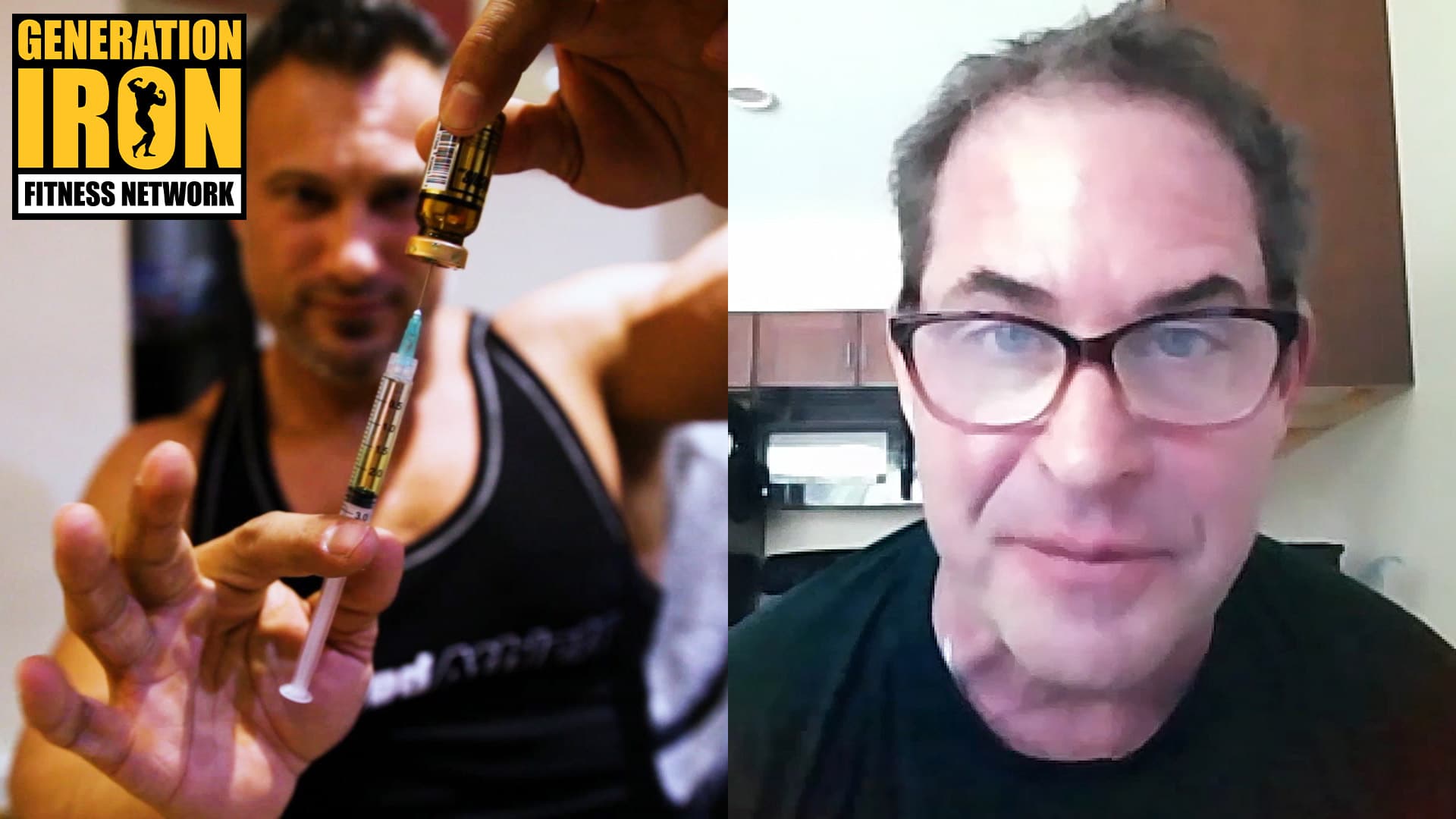
INTERVIEW: The Anabolic Doc Wants To Debate Tony Huge & Debunk His Steroid Claims
[embedded content]
Dr. Thomas O’Connor, aka The Anabolic Doc, is willing to go toe-to-toe with Tony Huge and disprove his pro steroid claims.
Throughout the years of developing films in the bodybuilding, strength sports, and fitness world – we’ve had the pleasure of connecting with Dr. Thomas O’Connor for many projects. Known in bodybuilding as The Anabolic Doc, O’Connor is a medical doctor and expert on Testosteronology. This is a medical specialty that offers comprehensive and personalized medical services for men on androgens.
O’Connor has appeared in multiple Generation Iron films including Enhanced and Enhanced 2 The Max. He often criticized and disagreed with the controversial claims of Tony Huge. For these films, both Tony Huge and Dr. O’Connor’s interviews were conducted separately. They’ve never had a chance to discuss their conflicting beliefs in the same room… but it seems like that will soon change. In our latest GI Exclusive interview, The Anabolic Doc opens up about wanted to debate Tony Huge directly and debunk Tony’s controversial claims about steroids.
It’s been over a year since we last connected with Dr. Thomas O’Connor, aka The Anabolic Doc. Since then, Dr. O’Connor appeared in a National Geographic limited series that explored the underworld of steroid use. Tony Huge, a controversial self proclaimed underground PED scientist, also appeared in the National Geographic program. This is a third time they’ve appeared in a film or TV show together – followed by our films Enhanced and Enhanced 2 The Max.
During our latest video interview with the Anabolic Doc, we discussed the National Geographic show and O’Connor’s thoughts on working on yet another project involving Tony Huge. O’Connor admitted that he felt his services were underutilized in the series. He understood that he was not the star of the program – but found that ultimately Tony Huge was featured far more. National Geographic seemed more interested in showing the danger and excitement of underground steroids. This caused O’Connor to come across, as he put it, like “the angry white man.”
In The Anabolic Doc’s opinion, National Geographic essentially released a promotional video for Tony Huge and underground steroids while offering much less impactful information about the true dangers of long term use.
That’s why we then suggested that the Anabolic Doc and Tony Huge should have a direct debate on the Generation Iron Network.
While Dr. O’Connor and Tony Huge have now appeared in three different projects together – they’ve never actually been in the same room during those films and shows. Vlad Yudin asked O’Connor if he would be open to directly debating Tony Huge. O’Connor was happy to oblige.
“I’d love to do it. If he [Toney Huge] has the balls to do it. He might not have the balls to do it,” Dr. Thomas O’Connor stated in our interview. He continued:
“It would be super awesome because it would get tons of millions and millions of views and I would be able to sell what I sell. Which is my information and love and care and knowledge to limit steroid use by young men. I would love to do it.”
The Anabolic Doc has always positioned himself as a doctor who empathizes and loves bodybuilding and strength sports. But he also is honest about the very real dangers of long time steroid abuse. He has always made it his mission to help any bodybuilder or strength athlete without discrimination. He wants to empathize with their passion and design to succeed while also opening their eyes to the true risk and permanent damage they might accrue due to their choices.
Conversely, Tony Huge has made it his mission to publicly inform bodybuilders and strength athletes of the benefits of steroids. According to Huge, steroids are not unhealthy and the long term effects are overblown. He feels that steroid use can be the next step in humanity’s evolution. He thinks doctors such as The Anabolic Doc are simply part of a conspiracy to limit information on steroids and keep it from becoming legalized.
This clash of beliefs would certainly be exciting to watch in a debate format – as both Dr. O’Connor and Tony Huge state to have evidence to back their claims. To see them directly challenge each other’s evidence would be a site to behold. Stay tuned to the Generation Iron Fitness Network for updates as we plan to make this debate a reality.
For now – you can watch The Anabolic Doc share his opinion on Tony Huge and his desire to debate him in our latest GI Exclusive interview segment above!
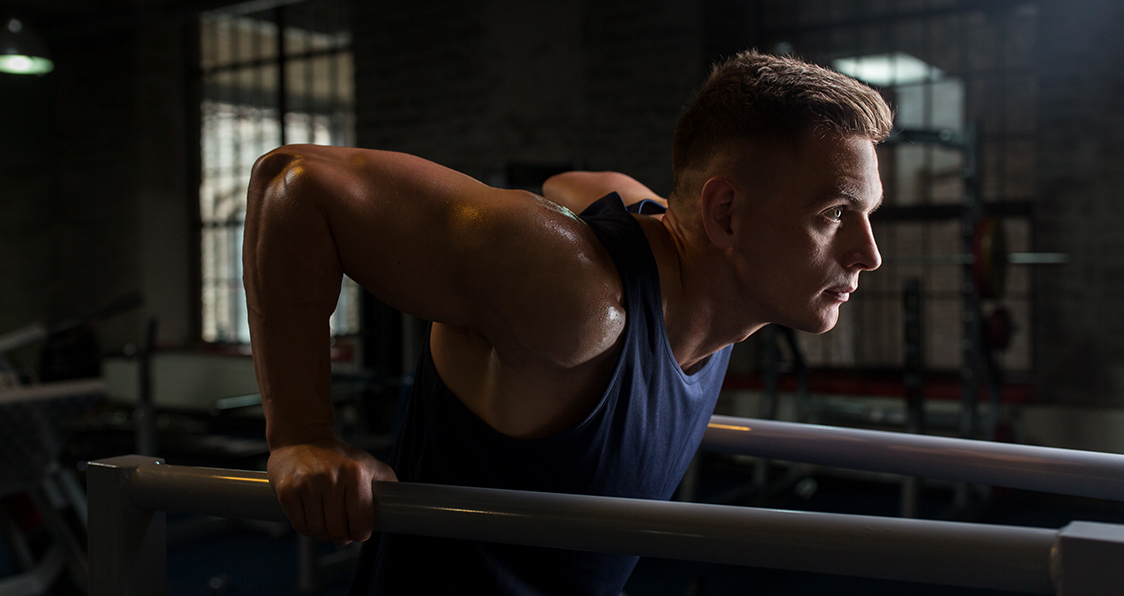
Want The Ultimate Upper Body? Dips And Pull Ups Are The Trick
Never overlook these exercises.
Building an aesthetic physique is a goal that every bodybuilder should aspire to. Not everyone is capable of packing on as much muscle as a Phil Heath or a Kai Greene. Most people will only reach a certain level of muscle growth. If you’re a fan of mass monsters and wish to aspire to that body type, go for it. Track your macros closely, get that pump and get some gains. But if you’re genetically incapable of doing such a thing, which let’s face it most of are, then you’re probably going to have to settle for building an aesthetic, if not massively muscled, physique.
For most men and some women, building the upper body is a priority, not solely for aesthetics but for functional strength as well. Core strength is paramount for any athlete. Whether you’re looking to swing a golf club or build a massive chest, the core of your body plays a major role in perform the even the most simplest of actions.
The core of your body is like an engine and working it can improve upon your overall fitness. But since building muscle is definitely your priority, you should definitely use these two methods for building a strong upper body: dips and pull ups.
What makes these two so special? Well let’s dissect it.
Works Multiple Muscle Groups
Dips and pull ups are great for working more than one muscle group. The dip is essentially a pushing exercise that can not only work your chest, but your triceps and delts as well. The pull up works your back, specifically the lats in the upper quadrant. Pull ups are also great for working your biceps. The whole key to maximizing the potential of each exercise is to utilize proper form and technique.
If you swing your legs while doing pull ups to much of the focus will be shifted to your arms doing all the work rather than your lats. By focusing on keeping your legs steady it can essentially work your lower body as well. The dips can work your chest from different angles and, depending on how deep your reps are, can either completely focus on your pecs or multiple different muscle groups for an overall upper body workout.
[embedded content]
They Are Versatile
As athletes we are always looking to master a particular workout or technique. With pull ups and dips, the possibility of mastery near impossible. What does that mean exactly? Well, of course it’s possible to master the form and technique of the exercises, but they’re also very versatile.
If bodyweight dips and pull ups start to lose their luster, then you can always switch to using chains or a weighted vest or belt to further challenge yourself. Once your strength level grows you can challenge yourself by setting personal rep records. No matter how you look at it, there are always different ways to make pull ups and dips new and fresh.
Are dips and pull ups apart of your workout regimen? Let us know in the comments and forums. Also, be sure to follow Generation Iron on Facebook and Twitter.
The Ultimate Guide to Progressive Overload
How To Progress Your Training Without Lifting Heavier
Adding more weight to each and every one of your lifts is often seen as the ultimate method for progressively overloading your training.
However, there are other methods of progressive overload that can be used in order to advance your training and continuously build strength and size.
Sometimes, lifting a heavier weight is simply not possible. You may have been experiencing great progress with your strength and then all of a sudden you hit a wall.
This article will provide 3 different methods that you can use to keep you moving in the right direction when you find that you cannot add any more weight.
Progressive Overload Principles
Progressive overload is the process of gradually placing more stress on the body to ensure that it continues to adapt and improve (1).
The principle behind progressive overload is that, after a while, the body becomes accustomed to the training stimulus and has adapted to the point where it can comfortably deal with it.
Because the body is able to cope with the training stimulus, the rate of adaptation slows and may even cease.
Increasing the amount of stress that the body is exposed to will cause the body to begin adapting once again.
3 Progressive Overload Methods
Increasing the load that you are lifting is one way of increasing stress, however, there are other methods that are equally as effective and can be particularly useful for those who have reached a plateau.
1) Increase Rep Range
Firstly, it’s important to recognize that you can complete more repetitions than is thought “conventional.”
For example, some strength-focused individuals swear by sets of 5 x 5 and would argue that completing more than 5 reps is not of great benefit.
However, one of the most effective methods of progressive overload is increasing the number of reps.
Let’s say you are following a program that incorporates 5 x 5 strength sets and you have been using the same weight for a few weeks. By now, 5 reps at this weight is very doable.
Therefore, it is absolutely fine to add in an extra rep or two, if you can manage. Within a few weeks, you may find that you can complete 8-9 reps at this weight.
The load doesn’t change at all with this method; use the same weight with each session and look to perform extra reps.
Adding reps to each session will evidently make the exercise more challenging and apply a greater amount of stress to the body which will consequently force it to increase in strength.
The general understanding over the years with rep ranges is that 1-5 reps are best for strength development (2), 6-12 for hypertrophy and 12+ for endurance.
While it is true that adding on additional reps may take you out of the specific rep range for strength or hypertrophy, it is in no way detrimental.
In fact, a number of well-renowned strength programs use sets of 15 or more to improve both strength and muscular size.
Remember that to bring about significant change, the goal is to increase the amount of stress that the body experiences. Therefore, moving out of a specific rep range is of secondary importance.
Using a higher number of reps is not only a great way to increase the amount of stress but it can also serve to vary training sessions and keep them interesting.
While adding reps is an effective method of progressive overload, adding reps indefinitely is perhaps not the best method.
By all means, add reps up to a certain point but avoid indefinitely adding reps. Instead, it may be more appropriate to add more weight or use other progressive overload methods.
A good rule of thumb if using the high rep approach is once you can comfortably perform sets of 12 reps over 2 consecutive workouts, add either 5% more for upper body exercises or 10% more for lower body exercises.
This method will ensure you stay within the rep range for hypertrophy and still apply progressive overload in an effective manner.
2) Increase Sets
Another simple progressive overload method is to increase the number of sets you perform for each exercise.
In a similar way to increased reps, increasing the number of sets will add more stress to the working muscles which will force them to adapt.
Volume is a crucial factor in hypertrophy (3) and also for testosterone and human growth hormone production – therefore, it should be a key consideration in all hypertrophy training programs.
There are many training programs that utilize high sets in – some good examples are German Volume Training (GVT), Gironda’s 8 x 8 and FST-7.
German volume training is an extreme example of high set training as the program focuses on 10 sets of 10 reps with many of the exercises.
Meanwhile, Gironda’s program uses 8 sets of 8 reps while the FST-7 concentrates on 7 sets of 10-12 reps.
While these types of programs may be effective, it is important to note that they are unsuitable for beginners & novices and should only be used by those who are at an advanced level.
The reason for this is that firstly, beginners do not need this kind of volume in order to make significant adaptations in strength and size.
For beginners, making progress is fairly straightforward as their body has never experienced a strength training stimulus previously. Therefore, a small amount of stress can bring about large changes (4).
Secondly, if too much stress is applied, overtraining is a distinct possibility. Overtraining occurs when training volume is too high and the body is unable to deal with the associated stress.
Not only will the body fail to adapt and improve, regressions in performance, strength & size may occur. In addition, a greater level of tiredness & fatigue may be experienced.
Those who have trained for a prolonged time period are best suited for these types of programs as their body is already highly conditioned and can, therefore, more effectively deal with the training stimulus.
For beginners, it is absolutely fine to add a set or two to their exercises and use this as a method of progressive overload, however, extreme set workouts should be avoided.
3) Reduce Rest Periods
For those of you who use a stopwatch and time your rest periods between sets, consider this final method of progressive overload.
The amount of rest that is taken between sets is dependent on the weight lifted and the number of repetitions performed.
For strength work (1-5 reps), the recommendation is to rest for 3-5 minutes between sets while for hypertrophy (6-12 reps) the rest period is shortened to 1-2 minutes.
By reducing the rest periods between sets, the body begins consequent sets in a below optimal state as the shorter time period does not allow the body to fully recover.
Lactate levels and hydrogen ions numbers may be slightly elevated and pH levels may not have normalized which means that you carry over some fatigue into the following sets (5).
Performing sets in this state once again places a greater amount of stress on the body and therefore leads to incremental adaptations to strength & size.
Progressive Overload Applications
While all 3 of these methods are undoubtedly effective for bringing about significant change, they should not all be utilized at the same time.
As discussed earlier, overtraining is a possibility if the level of applied stress is too high. Adding sets, reps and reducing rest periods simultaneously will add excessive stress.
Instead, focus on one method at a time and use this method until you begin to see progress slow or stall. Once you have reached this point, switch to another method and repeat the process.
Finally, it is vital that you understand that overloading the body must be gradually progressive.
This may seem like an obvious statement to make, however, far too often individuals attempt to progress too quickly and end up overtraining.
Progressing too quickly can predispose you to overtraining. Once again, this comes down to the fact that the body is unable to deal with rapidly increasing demands and stresses.
In the same way that it is important that you are gradual with increasing weight increments, be gradual with adding sets, reps and reducing rest time.
Instead of attempting to add 5 reps immediately, focus on just 1 or 2 more reps each session. Similarly, start by just adding 1 set to each exercise rather than adding 3 or 4.
Final Word
It is very possible to make substantial progress with your strength training without focusing solely on the amount of weight you are lifting.
Gradually adding sets, reps and reducing rest periods will effectively add the stress required to bring about desired changes in strength and size.
References:
1-Lorenz, Daniel S.; Reiman, Michael P.; Walker, John C. (2010-11). “Periodization”. Sports Health. 2 (6): 509–518. doi:10.1177/1941738110375910. ISSN 1941-7381. PMC 3438871. PMID 23015982.
2-Schoenfeld, Brad J.; Grgic, Jozo; Ogborn, Dan; Krieger, James W. (2017-12). “Strength and Hypertrophy Adaptations Between Low- vs. High-Load Resistance Training: A Systematic Review and Meta-analysis”. Journal of Strength and Conditioning Research. 31 (12): 3508–3523. doi:10.1519/JSC.0000000000002200. ISSN 1533-4287. PMID 28834797.
3-Schoenfeld, Brad J.; Contreras, Bret; Krieger, James; Grgic, Jozo; Delcastillo, Kenneth; Belliard, Ramon; Alto, Andrew (01 2019). “Resistance Training Volume Enhances Muscle Hypertrophy but Not Strength in Trained Men”. Medicine and Science in Sports and Exercise. 51 (1): 94–103. doi:10.1249/MSS.0000000000001764. ISSN 1530-0315. PMC 6303131. PMID 30153194.
4-Baker, J. S.; Davies, B.; Cooper, S. M.; Wong, D. P.; Buchan, D. S.; Kilgore, L. (2013). “Strength and Body Composition Changes in Recreationally Strength-Trained Individuals: Comparison of One versus Three Sets Resistance-Training Programmes”. BioMed Research International. 2013. doi:10.1155/2013/615901. ISSN 2314-6133. PMC 3780552. PMID 24083231.
5-Rahimi, Rahman (December 1, 2005). “Effect of Different Rest Intervals on the Exercise Volume Completed During Squat Bouts”. Journal of Sports Science & Medicine. 4 (4): 361–366. ISSN 1303-2968. PMC 3899651. PMID 24501549.
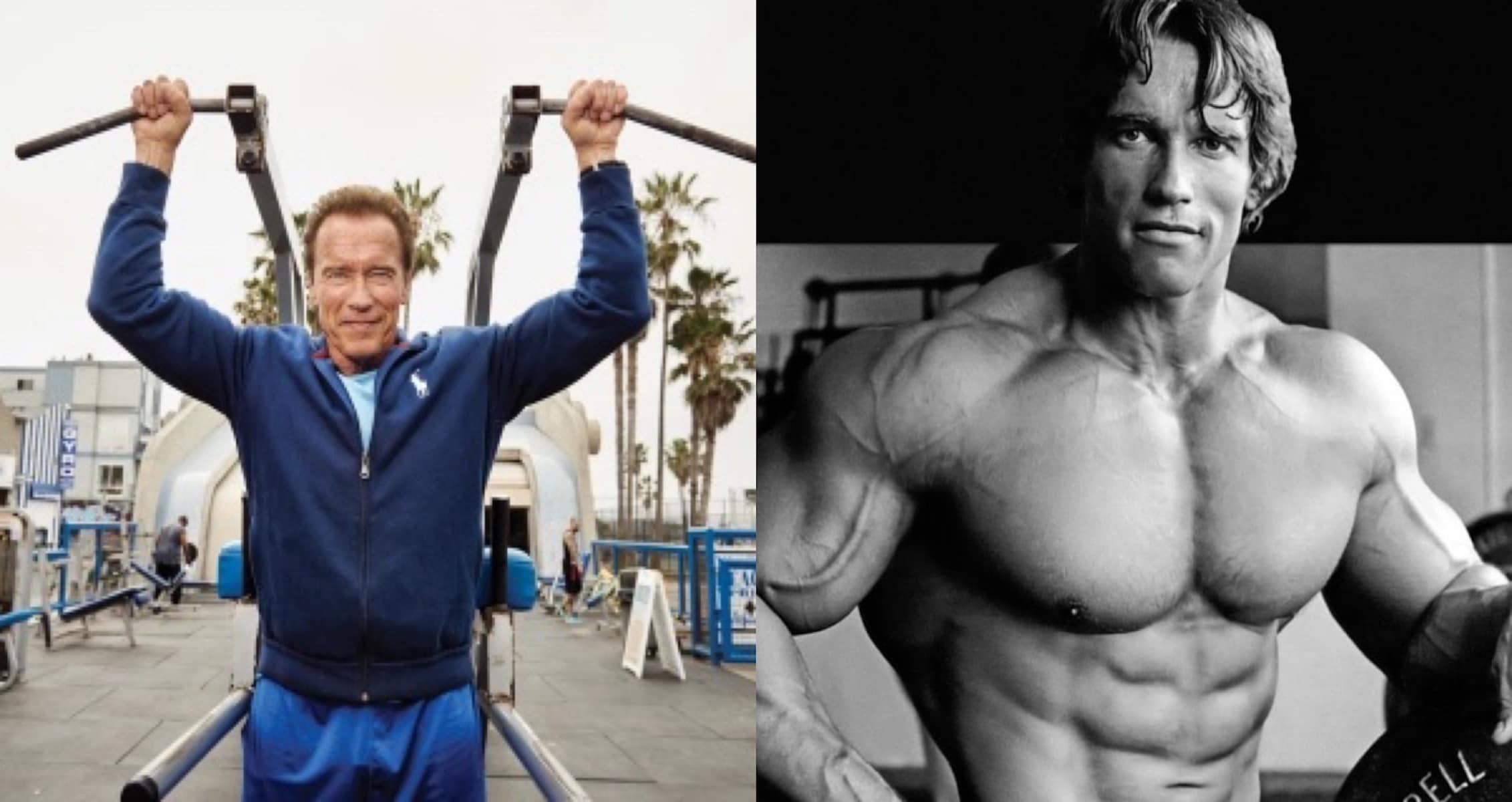
Arnold Schwarzenegger Gives Advice To Guide Anyone Getting Into Weightlifting
Arnold Schwarzenegger provided advice in his recent newsletter.
If you are a person who is looking to get into weightlifting, it might be wise to listen to the greatest bodybuilder of all-time. Arnold Schwarzenegger recently shared some advice to anyone looking to get into weightlifting in his newsletter.
Schwarzenegger began his writeup by mentioning a charity contest going on where anyone who donates to “After School All Stars” will have a chance to attend an outdoor party at his house. Schwarzenegger then spoke further on the recent controversy surrounding his comments about COVID-19 and mask wearers.
After addressing certain issues and topics, Schwarzenegger answered some fans questions. One wrote: Do you have any advice for a girl getting into weightlifting? Schwarzenegger began by stating that gender does not matter in weightlifting and it is for everyone.
“I would have the same advice for you as I do for any boy!” Schwarzenegger said.
“First of all, don’t get discouraged because of your gender because, remember, fitness is for everyone. If anyone gives you crap about it, let your lifting do the talking. If you want to just start lifting to feel better, take it one step at a time, start with lower weights and really focus on your technique. Slow and controlled. Don’t worry about the fancy exercises you see on Instagram either, stick with the basic lifts like the squat, deadlift and press until you master them. After a while you’ll see yourself getting better and stronger, and before you know it you’ll be deadlifting more than all the guys in the gym.”
Arnold Schwarzenegger came to the United States from Austria and quickly made a name for himself as a bodybuilder. He was inspired by the Olympics and became a force in the sport. Schwarzenegger is a three-time Mr. Universe and is a seven-time Olympia champion.
Schwarzenegger referenced some questions that must be answered before beginning weightlifting. It all begins with your goal and passion.
“It really depends on what type of weightlifting you want to do. Do you want to lift to just feel better and look better, or do you want to get into powerlifting, or are you inspired by the Olympics and want to start Olympic lifting? They’re all good options.”
Schwarzenegger continued to speak on his inspiration and the impact that the Olympics had on him during his early days of training.
“If you are like me and you were inspired by the Olympics and you loved watching these men and women do their lifts, read about Kate Nye. Until 2014, she was trying to make it into the Olympics in gymnastics. She didn’t achieve that dream, but only 5 years after she started weightlifting, she had the United States’ best result in over 20 years by winning the silver medal in Tokyo. She overcame some tremendous mental health struggles, and I hope she inspires you, because she definitely inspires me.”
Arnold Schwarzenegger has plenty of experience as both a bodybuilder and powerlifter. He was extremely successful and is still willing to help the next generation. His advice is simple — focus on technique and do not overexert yourself. Focus on basic movements and not the advanced and difficult lifts seen on social media.
For more news and updates, follow Generation Iron on Facebook, Twitter, and Instagram.
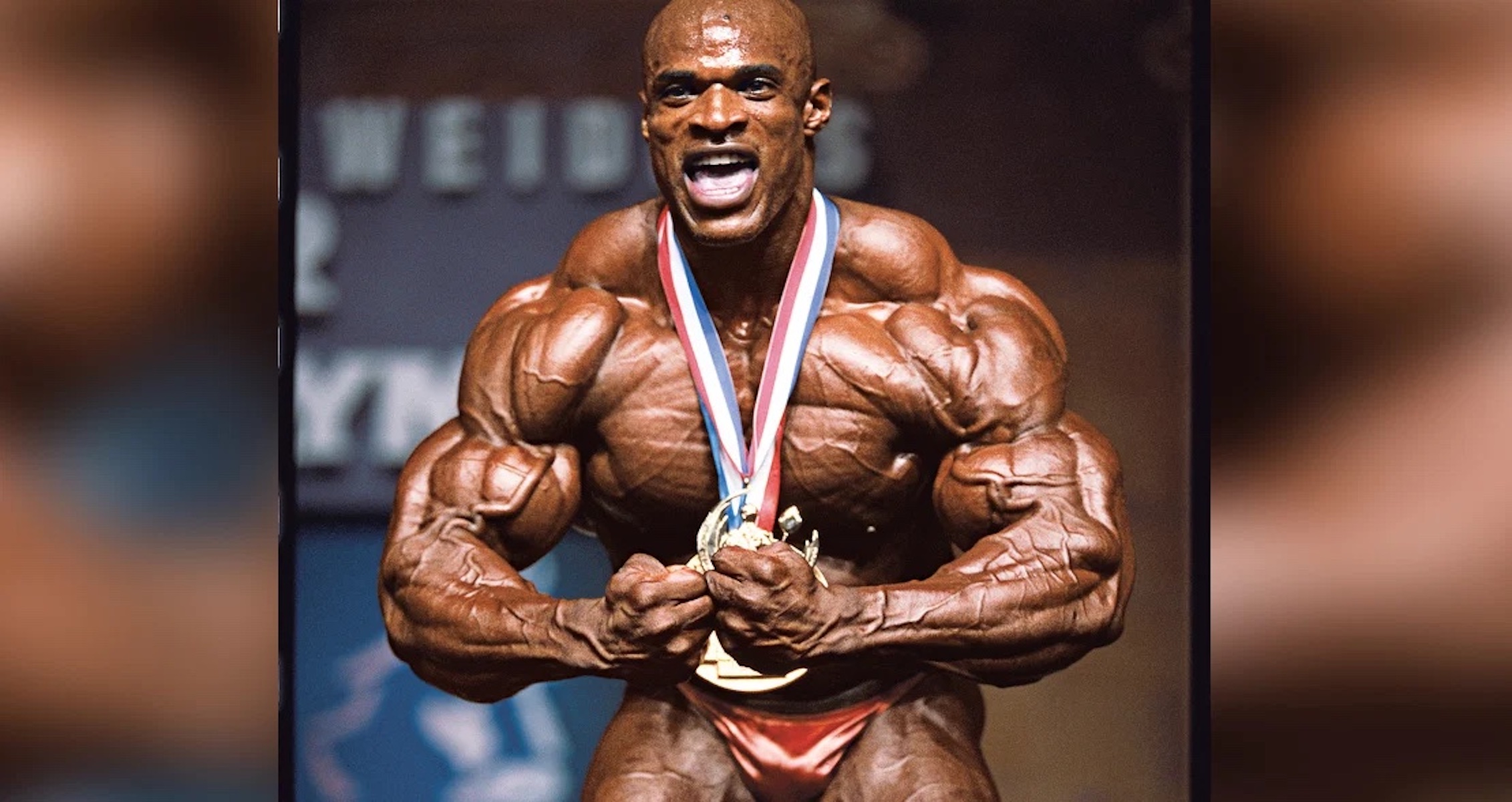
Ronnie Coleman Believes Diuretics Should Be Banned: ‘They Will Kill You’
Ronnie Coleman spoke out about the issue in a recent interview.
Ronnie Coleman is a legendary name in the spot of bodybuilding. He is considered to be one of the best to ever step on stage so he draws much attention when he speaks on certain topics. In a recent interview, Coleman took a stand on the issue of diuretics in bodybuilding.
The use of diuretics is common in bodybuilding. This is a tactic used to dehydrate the body and allow muscles to pop more on stage. However, it could have some serious side effects and that is what Coleman explain in his interview. He highlighted his process prior to the 2001 Olympia, where he thought he was going to die.
“The one that stands out the most to me is ’01, where I was totally dehydrated the day of the show, and I was thinking I was going to die. That stands out to me more than any other show because I was on my way to the hospital and Chad (Nicholls) called me and said ‘Don’t do that,” Coleman said.
“I wasn’t cramping or nothing, I was just exhausted, tired. I didn’t have no energy. When I went to get out of bed, I couldn’t hardly get out of bed because I was so exhausted and tired. I went to try to walk around a little bit, and I didn’t have no energy to walk around. I was like ‘Man, I’m out of it. Ain’t no way I can compete like this.’”
Ronnie Coleman won eight-straight Olympia’s from 1998-2005. He was dethroned in 2006 when he finished second to Jay Cutler. The 2001 competition sticks out the most because of how he felt physically before. Coleman was told to hydrate before the competition — even if it would impact his performance on stage.
This helped Coleman feel better physically. Because of this experience, Coleman believes that competitors should be tested for different diuretics and they should be banned from the sport all together.
“Those diuretics are dangerous. They will kill you, as we’ve seen in the past. I think it’s mostly all about the diuretics, so I think if they brought diuretic testing back, that would solve the problem.”
Coleman knows a thing or two about Olympia’s so he gave some insight on the upcoming event. Big Ramy took home the title in the 2020 Olympia and will look to make it two in a row this year. Coleman is one of the believers that says Big Ramy will be difficult to defeat.
“It’s going to be real hard (to beat Ramy), especially after you done won one and you now have the formula. I think it’s going to be real hard. Plus he’s a big guy and nine times out of ten they’re looking for the biggest guy to be Mr. Olympia,” Coleman said.
“He figured out how to manipulate the water, that’s what it’s all about… I think Ramy’s a shoe-in.”
Ronnie Coleman is the latest to speak out on the controversial issue of diuretics in bodybuilding. There has been a string of recent deaths in the bodybuilding world and while there have not been many causes revealed, diuretics has been a discussion. Coleman believes that the sport can benefit from getting rid of them all together.
For more news and updates, follow Generation Iron on Facebook, Twitter, and Instagram.

Ryan Crowley On The Trauma Of His Pec Tear: “The Worst Pain I’ve Ever Felt”
Ryan Crowley reflects on his pec tear injury, his recovery, and how the incident was both physically and mentally traumatizing. In March of 2021, Ryan Crowley went viral due to a video of him suffering a pec tear injury while training with Larry Wheels. Since then he has been on the long road to recovery…

Benefits of Trap Bar Deadlifts For Bodybuilders
The trap bar is one specialty bar you need to add to your workouts.
The trap bar, also called the hex bar given its shape, it an amazing piece of equipment in the gym that some people may not know about. Considered one of the smartest inventions for gym equipment in the past few decades, this bar offers a great alternative to the traditional barbell. As a safer option for fitness junkies and gym-goers of all skill levels, the trap bar can be found in most gyms and the benefits are incredible.
The trap bar deadlift is an exercise that anyone of any skill level can do to get the most out of their deadlifts without the added stress and strain of a conventional one. As an extremely beneficial exercise, the trap bar deadlifts will work to build strength and explosive power while also limited the risk of injury.
As a complex movement, the deadlift requires the use of so many different muscles and joints with the proper coordination, balance, and technique for maximum benefit. But the trap bar allows for a more stable lift without sacrificing any of the gains a deadlift can provide (1). After hearing what the trap bar has to offer, the choice between a traditional deadlift and a trap bar deadlift may become that much easier for you.
Trap Bar Deadlifts Vs. Traditional Deadlift
A traditional deadlift is one of the big three powerlifting exercises and can greatly improve your muscle growth with a host of other benefits. The traditional deadlift uses a barbell while the trap bar deadlift, of course, uses the trap bar and while there are similarities, the differences are enough to potentially change your mind. Both exercises require lifting heavy weights off the floor in a hinge pattern with similar movements to achieve muscle growth.
The barbell deadlift, however, has a slightly greater peak in the spine and hips, while the trap bar deadlift has a larger peak knee movement. The trap bar deadlift has more squat-like elements than the barbell deadlift, but similar to the barbell deadlift, it has twice as high of the demand on the glutes, hamstrings, and quads with a similar range of motion to the barbell deadlift. The barbell deadlift may exhibit higher activation of the hamstrings, spine, and biceps (2), while the trap bar deadlift can be higher for your quads. It is a preference, for those closely linked to powerlifting would most likely choose the barbell deadlift, but the overall benefits of the trap bar deadlift are now something to consider.
Benefits Of A Trap Bar Deadlift
Safer Alternative
With the trap bar deadlift, the weight is centered within the body as opposed to in front of it which creates a great balanced position to keep strain off of your lower back. It also requires slightly less range of motion since it is higher off the ground also reducing the risk of injury. The trap bar deadlift is great for beginners to build strength quickly and execute solid form as well as for more established athletes looking for a safer way to get the benefits of a deadlift without the added risk of a more conventional one.
Lower Body Builder
Hitting your hamstrings, glutes, and quads, the trap bar deadlift is a great way to build lower body strength. With more of a squat-like movement than a traditional deadlift, your quads will be fired up increasing muscular growth and muscular endurance. It also increases the amount of mechanical tension provided which is the amount of weight lifted and its impact on muscle growth (3). As a safer alternative, you can lift more weight and increase your capacity for lower body muscle growth.
Promotes Explosive Power
With more weight and a shorter distance to lift, you can increase your power output resulting in a higher level of power and explosiveness (4). This is great for athletes whose sports require a certain level of power to generate high performance, or for gym-goers looking to gain benefits for other exercises requiring a certain level of power to perform them.
Solid Transfer To Other Sports
For powerlifters and strongmen, the trap bar deadlift is a great exercise to diversify pulling strength without risking the lower back. Athletes in more formal sports can increase their jumping abilities and improve their athletic stances for more balance and support. As a safe alternative to the traditional deadlift, the trap bar deadlift is a great exercise to maximize their performance and stay physically healthy in the process.
How To Do A Trap Bar Deadlift
The starting position begins with you standing in the middle of the trap bar. With a flat back and tight core, bend your knees and grab the handles with your arms extended. There will be a slight pull on your hamstrings before you begin to drive. Pull the bar upwards and extend your hips and knees while squeezing your glutes. Keep your back in the same neutral position and reverse back down to the starting position.
Wrap Up
For those who love to deadlift, it is a great exercise and a staple in the world of powerlifting. But the constant strain on your lower back and the increased risk of injury can be something everyone wants to avoid. The trap bar deadlift is one of those exercises that is great to minimize the risk while also getting every benefit that a traditional deadlift provides. As a safe alternative to increase lower body strength and promote explosive power, the trap bar deadlift is something to heavily consider incorporating into your daily workouts. Check out other exercises to do with a trap bar and elevate your overall performance to the next level.
Let us know what you think in the comments below. Also, be sure to follow Generation Iron on Facebook, Twitter, and Instagram.
*Images courtesy of Envato
References
Gentry, Mike; Pratt, David; Caterisano, Tony (1987). “Introducing the Trap Bar”. (source)
Andersen, Vidar; Fimland, Marius S.; Mo, Dag-Andre; Iversen, Vegard M.; Vederhus, Torbjorn; Rockland Hellebo, Lars R.; Nordaune, Kristina I.; Saeterbakken, Atle H. (2018). “Electromyographic Comparison of Barbell Deadlift, Hex Bar Deadlift, and Hip Thrust Exercises: A Cross-Over Study”. (source)
Schoenfeld, Brad J. (2010). “The mechanisms of muscle hypertrophy and their application to resistance training”. (source)
Camara, Kevin D.; Coburn, Jared W.; Dunnick, Dustin D.; Brown, Lee E.; Costa, Pablo B.; Galpin, Andrew J. (2016). “An Examination Of Muscle Activation And Power Characteristics While Performing The Deadlift Exercise With Straight And Hexagonal Barbells”. (source)
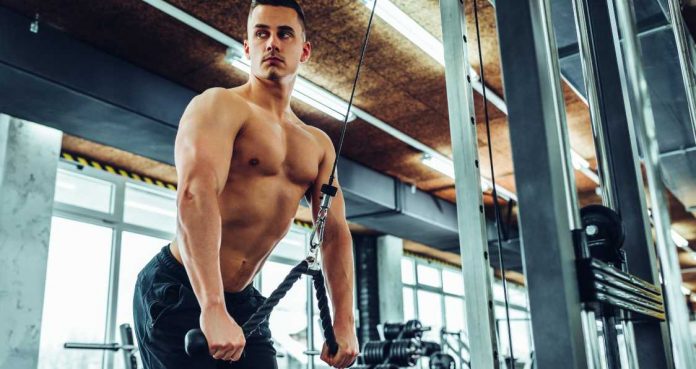
Best Bodyweight Triceps Workout For Horseshoe-Shaped Arms
Get those arms to pop and show your triceps some love with these bodyweight triceps workouts.
We often focus so much on our pecs, biceps, and abs, that we leave out one crucial spot: the triceps. That definition is just as much the back of the arms as it is the front. That horseshoe-shaped muscle is every bodybuilder, gymgoer, and athlete’s dream, but it requires more than just curls and the bench for exercises. Targeting your these is critical to seeing big gains and loving how your arms look, sleeves or no sleeves from some of the best bodyweight exercises.
It is important to note that aesthetic is just half the battle. What healthy and huge arms can do is balance out and stabilize the bicep giving your body that much needed equilibrium you may not even notice. Much of the pain people suffer is from an imbalance between the biceps and triceps and through constant training and recovery, this pain will subside from repeated workouts with some of the best bodyweight exercises.
Your triceps make up two-thirds of your arm, so stop neglecting them and let that hard work you put into your biceps show. Many of these exercises below will target multiple muscles so the overall benefit is great to not only your arms, but other important muscles as well. Add to your growth and overall wellness with these 7 bodyweight triceps workouts.
Narrow-Grip Pushups
A slight variation on a standard pushup, narrow-grip pushups are slightly closer to the midline of your body, therefore using your triceps much more. Using explosive movements for power, or slower ones for size, these are some of the best bodyweight exercises to get the arms fired up.
To begin, place your hands under your chest closer than shoulder-width apart. Lower your body by bending your elbows but keep them tucked close to your torso. Remember to keep a tight core and flat back. Using your triceps and pecs, push your body back up and repeat.
Bench Dips
Bench dips are perfect for muscle definition and tone, increasing strength in the upper body. Bench dips are great because you can use a bench, chair, and even a low table for these bodyweight exercises and the push motion to build the upper arms and strong triceps.
With your hands on the edge of a bench (or whatever you’ve chosen to use), sit with your legs out in front of you. With your elbows tight to your sides, lower to the ground bending your arms at 90 degrees. Push back up, locking your elbows at the top.
Plank-To-Pushup
The plank-to-pushup is a great all-around exercise for it combines to target the triceps, pecs, shoulders, and abs. Not only can this exercise build overall arm strength, but it can increase shoulder mobility as well from some of the best bodyweight exercises with extension for a solid workout derived from push ups for strong triceps.
Start in a plank position with your forearms under your shoulders. Driving from the ground, use your triceps to get onto the palms of each hand, driving head first up. Drop back to your forearms into a plank position and repeat for the best results from this triceps exercise and upper arm burner.
Pike Pushup
The pike pushup is an interesting variation of the pushup and is highly effective in building upper body strength. It can also improve focus and balance given its level of difficulty as a bodyweight movement taken from push ups.
The starting position for the pike pushup is the downward dog position with your hips up and each arm extended out and down. Bending your elbows, allowing them to flare out slightly, lower your head to the ground. Push back through each arm past your head to return to the starting position of downward dog.
Press Up
The press up begins in the cobra position, on your stomach with your hands shoulder-width apart and hips down. Drive into the ground and start to straighten your arms which will raise your upper body. The key is to maintain tension in the arms to get the maximum benefit. Lower the upper body to return to the starting position and repeat for the best results for your muscles.
Diamond Pushup
Diamond pushups are considered one of the best push-ups for triceps for it is effective and forces much of the work. Slightly different than the narrow-grip pushups in hand placement, diamond pushups are also great for chest and shoulder muscle development to help stay on top of your training.
Begin in a pushup position with your hands placed under your chest forming a diamond. With a tight core and flat back, lower to the ground, keeping your elbows tight to your body. It is important to not flare your arms out with this exercise and keep a straight back.
Triceps Bodyweight Extension
Another variation of a plank, this triceps extension exercise is great for building not only core strength but also pumping up those triceps.
This exercise requires a bar, rope, or at least something that allows you to hold onto with room to duck under that will add resistance. Grip the bar overhand and with a sturdy core, assume a plank position with a straight back. Bend your elbows and duck under the bar. Push your body back to the plank position as you straighten your elbows and repeat the process of the triceps extension.
Wrap Up
Try these exercises as you look to make big gains in the gym or wherever your workouts take you. Having triceps that pop are key to getting that horseshoe-shape arm and balancing out the chest and bicep. Stop overlooking this vital muscle that will help you both aesthetically and athletically look good and feel great. Give yourself the benefits of performing daily functions efficiently and effectively, while also owning every aspect of your strength building experience.
What are your favorite triceps workouts?
Let us know in the comments below. Also, be sure to follow Generation Iron on Facebook, Twitter, and Instagram.
*Images courtesy of Envato
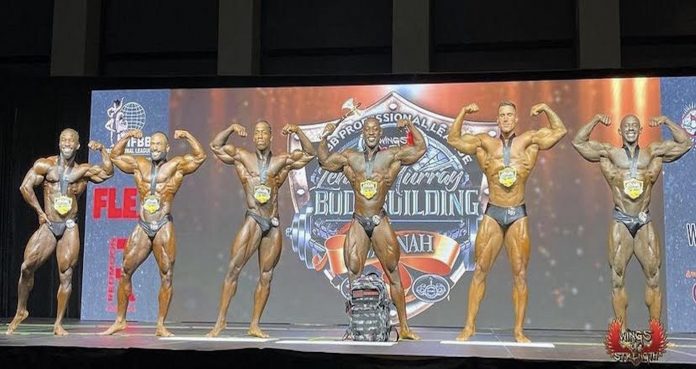
2021 Lenda Murray Bodybuilding Savannah Pro Results
Tommy Clark took home the prize in Classic Physique.
The 2021 Lenda Murray Bodybuilding Savannah Pro took place on Sept. 4 in Savannah, GA. This was another chance for competitors to gain qualification to the 2021 Olympia during the bodybuilding season. Tommy Clark headlined the event by taking home the prize in Classic Physique.
Lenda Murray was the host of the event and there was plenty to watch. This was Clark’s first victory and he will now have a chance to compete at the Olympia for the first time in his career. Clark recently placed seventh in Men’s Physique at the 2020 New York Pro.
There were a total of three events with winners trying to earn qualification to the best event of the year. Classic Physique, Figure, and Women’s Bodybuilding competitors gathered and put on a show that ended up being exciting and worth the wait.
The full results have been announced and the prize money has been given out. There was $5,000 given out to the Classic Physique and Figure winners while the Women’s Bodybuilding got $6,000. Check out our full breakdown of the 2021 Lenda Murray Bodybuilding Savannah Pro results below.
2021 Lenda Murray Bodybuilding Savannah Pro: All Division Winners
A quick breakdown of the winners in each division from the 2021 Savannah Pro Bodybuilding. All winners are now automatically qualified to compete in the Olympia 2021.
Classic Physique: Tommy Clark
Women’s Bodybuilding: Reshanna Boswell
Figure: Stephanie Gibson
2021 Lenda Murray Savannah Bodybuilding Pro Breakdown
Classic Physique
First Place – Tommy Clark
Second Place – Barry Hulbert
Third Place – Brady Barnes
Fourth Place – Amit Roy
Fifth Place – Julius Page
Sixth Place – Damion Ricketts
Women’s Bodybuilding Results
First Place – Reshanna Boswell
Second Place – Janeen Lankowski
Third Place – Jeanie Welker
Fourth Place – Lisa Kudrey
Fifth Place – Shannon Perdikis
Sixth Place – Nicki Chartrand
Figure
First Place – Stephanie Gibson
Second Place – Sandra Grajales
Third Place – Jossie Nathali Alarcon
Fourth Place – Autumn Cleveland
Fifth Place – Tiffani Lapoint
Sixth Place – Melissa Brodsky
Official Score Cards
Generation Iron wishes to congratulate all the great athletes who earned a win at the 2021 Savannah Bodybuilding Pro. Make sure to check out our full IFBB Pro results page from this year and previous years right here to catch up on any action you may have missed!
Greg has covered the four major sports for six years and has been featured on sites such as Sports Illustrated, Fox Sports, SB Nation, NJ.com, and FanSided. Now, he is transitioning into the world of bodybuilding and strength sports.
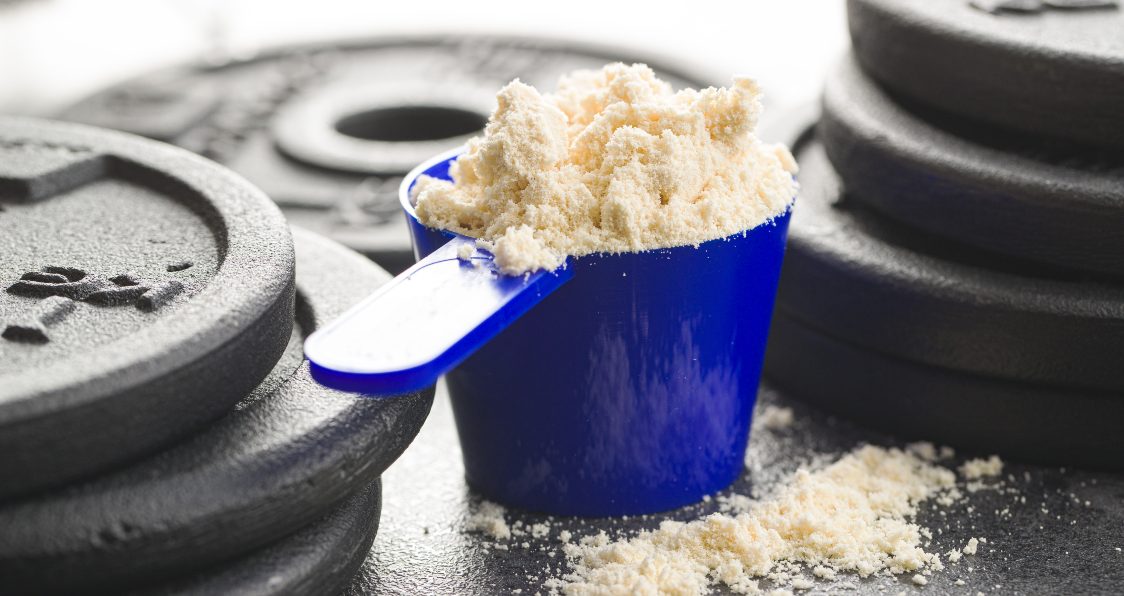
How To Enhance Offseason Bodybuilding Goals For Competition Results
When looking towards the offseason, preparing for competitions requires a set schedule and plenty of workouts.
The offseason can be a daunting time. We’ve gone through our competition prep and routines and fell into a great rhythm while seeing the results we worked so hard for. But then it ends and the offseason can begin. It’s challenging for a number of reasons, but the main one being we probably just want a break. We want to decompress, give our bodies rest, and allow our minds to wander and focus on something else. While binge watching all the shows we missed or doing fun activities we hadn’t had time to do seems appealing, the offseason is the perfect time to buckle down and really get ourselves one step closer to a podium spot.
This time is perfect for bulking up and putting on that mass without worrying about symmetry and having to have everything be perfect. It’s as though we can look forward to a workout and treat it as just that: a workout. Not worrying about measurements, certain weights, specific exercises, and any of the specially designed programs we’ve instilled in ourselves. This time can be about doing what we love doing and that is working out and seeing huge gains. Capitalizing on what we’ve already accomplished should be motivation enough to really bite down and get this work done.
Let’s look at some of the best ways to capitalize on our gains this offseason to really be effective in the long run. These will help in a number of ways by helping set goals, keeping us on track, aiding in our overall health and wellness, and of course, really targeting a shredded physique we all know and love.
Best Ways To Enhance Offseason Goals
Make A Realistic Plan & Stick With It
Something that can work to our benefit yet still be a flaw is the amount of plans and goals we set for ourselves. The benefit to this is that it shows our drive and determination to be great, always looking ahead to the next best thing. This can be a flaw when it becomes overwhelming and none of those goals are achieved. Making a realistic plan of goals can help keep us on track and allow us to actually stick with it so we are able to capitalize on all of those benefits we wish to see most. Writing everything down is almost like writing a contract to ourselves and allows us to stay accountable to our goals and gains.
Work On Building Strength & Add More Intense Methods
Building strength is the fun part about the offseason without having to worry about specifics and getting bogged down in the details. The offseason is the perfect time to attack those muscles to start to see growth, and even some personal records. Adding more intense techniques like drops sets and added time under tension, as well as cardio routines involving high-intensity interval training, can really help when it comes to seeing that muscle growth. Finding a good strength-based program can be more than helpful and looking into professional bodybuilders’ workouts can provide some helpful tips as to how to safely and effectively see great gains.
Look Into High Quality Supplements
Supplements can be your best friends during the offseason, especially high quality and worthwhile supplements to your gains. These supplements can promote serious growth, work on building a seriously stellar physique, and boost your health and wellness. Everything from a protein supplement, to a mass gainer, a pre-workout, and fat burner, all will work to help you achieve your goals. Putting a multivitamin and an omega-3 supplement can keep you healthy as you put your body through some serious training.
Check out our list of the Best Offseason Supplements here!
Focus On Nutrition
Offseason or not, nutrition is always on the forefront of our minds. But the fun part about the offseason is that you can use this time as a trial and error period when it comes to foods. During competition season, you have your own routine to follow because you know it works, but during the offseason this is a great time to try out new recipes and new foods to see just what these can do for your goals. Adding some diversity will make nutrition more fun in the long run.
Set A Date To Start Cutting & Prepping
Set a date where you intend to work towards until you start cutting and prepping. This will give you a deadline for accountability and also work to get you ready for those competitions so you are able to stick to a good routine and schedule as you get closer. It can be a set day or a rough timeline, but having a date in mind will really work to keep you on schedule and seeing those gains.
Relax & Enjoy What You Love Doing
Take this time to enjoy working out. You are in the sport for a reason and that is because you love staying fit, working hard, and looking good. But when competitions roll around, the anxiety of it all can be fun but also overwhelming. Using this time to enjoy your craft and better yourself will be something really enjoyable in the long run and you will remember why you do what you do: for the love of bodybuilding and pushing yourself to the limit.
Wrap Up
Approaching the offseason can be daunting. But you aren’t alone in that. Every athlete will hit an offseason point and how you handle it will go a long way. Setting realistic goals and finding a good plan is a solid start, but enhancing your nutrition and supplementation can really give you the edge when it comes to bulking and giving you serious strength-building benefits. The most important thing is to work hard but also remember why you do what you do. The love of the sport is a powerful thing and getting caught up in the logistics of measurements and numbers can be overwhelming at times. Look forward to the road ahead and remember why you do the sport in the first place.
Let us know what you think in the comments below. Also, be sure to follow Generation Iron on Facebook, Twitter, and Instagram.
*Images courtesy of Envato