
 All Posts By Presser
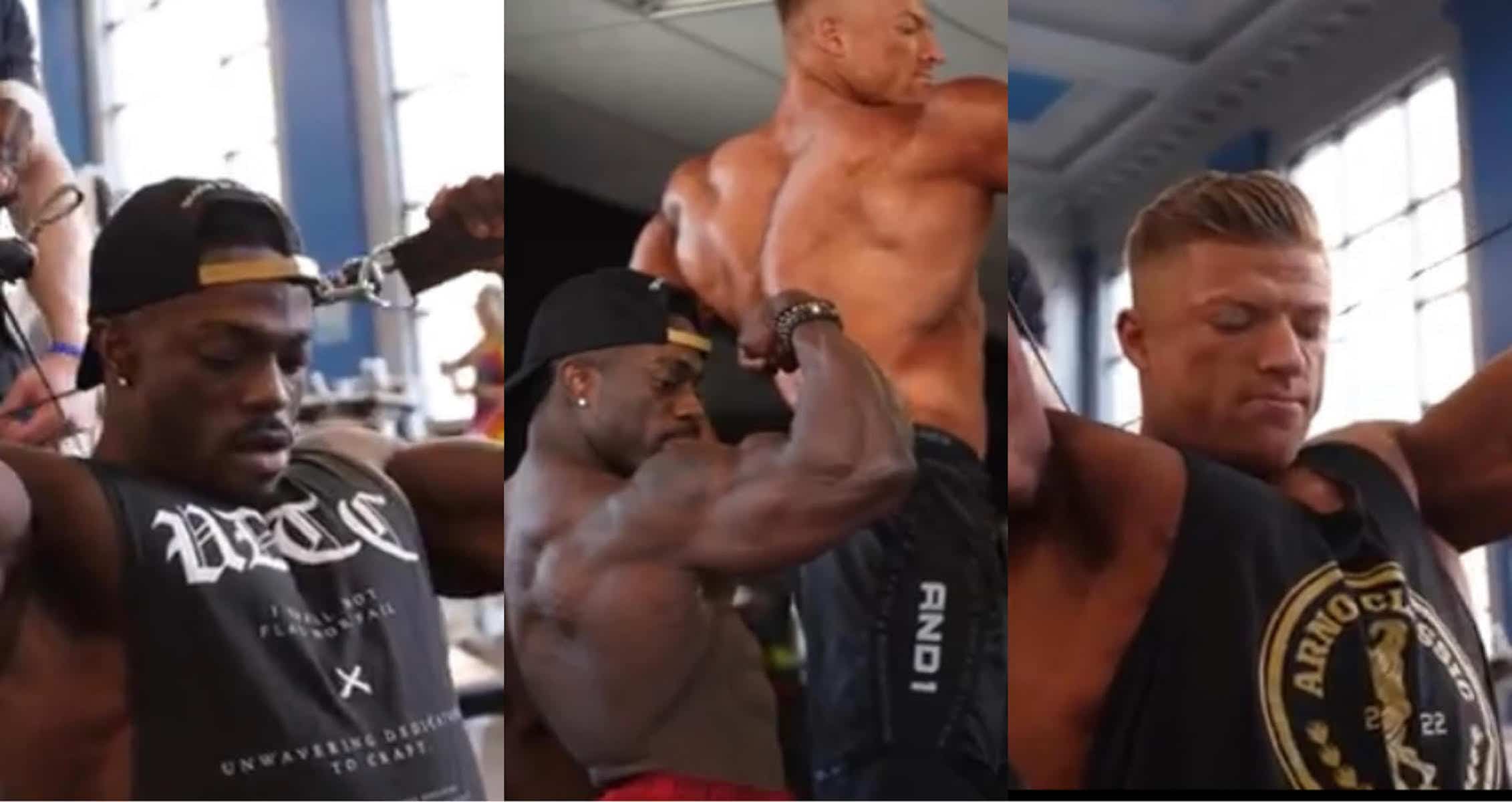
Terrence Ruffin And Urs Kalecinski Get Together For Massive Arm Workout
Terrence Ruffin and Urs Kalecinski continue to be contenders in Classic Physique and showed off a massive arm day.
Classic Physique has quickly turned into one of the most popular divisions in bodybuilding. The talent has gone beyond three-time Olympia champion Chris Bumstead. There are many who can contend on a year-to-year basis and this is why Classic Physique has a chance to take over the sport. Recently, two titans of the division, Terrence Ruffin and Urs Kalecinski, got together for a massive arm workout.
Ruffin is coming off his second-consecutive Arnold Classic title. Kalecinski was crowned champion at the 2022 Boston Pro. It is likely that both competitors will now focus on Olympia prep after top-five finishes in 2021 — Ruffin (runner-up) and Kalecinski (4th).
The workout video was shared to Terrence Ruffin’s YouTube page. Along with Urs Kalecinski, there was a huge workout put in at The Pro’s Gym in Columbus, OH.
“We got goals — Olympia December 2022, and I’m really excited to start making the improvements I need to make to be at my best at that show,” Ruffin said.
Terrence Ruffin and Urs Kalecinski kept it short and simple during this workout. It began with cable lateral raises to warmup. The bodybuilders did not reveal the number of sets or reps they completed during this workout.
The duo continued with triceps extensions. This exercise looked like an overhead cable triceps extension. This is because Ruffin and Kalecinski kept their elbows in front of their bodies and their arms were parallel to the floor. The workout ended with a superset of chest-supported biceps curl and seated biceps curl. The final set included a drop set on each exercise along with a static hold on seated bicep curls. And of course, the workout cannot be completed without a posing session where the bodybuilders conditioned their muscles for competition.
Bodybuilding in all divisions is about mass but Classic Physique includes other elements as well. They focus on conditioning along with symmetry of the muscles, including V-taper and a marrow waist.
Terrence Ruffin and Urs Kalecinski are reasons why Classic Physique is in an incredible spot moving forward. After victories this season, the sights are set on the 2022 Olympia, which will take place from Dec. 16-18 in Las Vegas. This workout is one example of the work that is being put in already.
For more news and updates, follow Generation Iron on Facebook, Twitter, and Instagram.
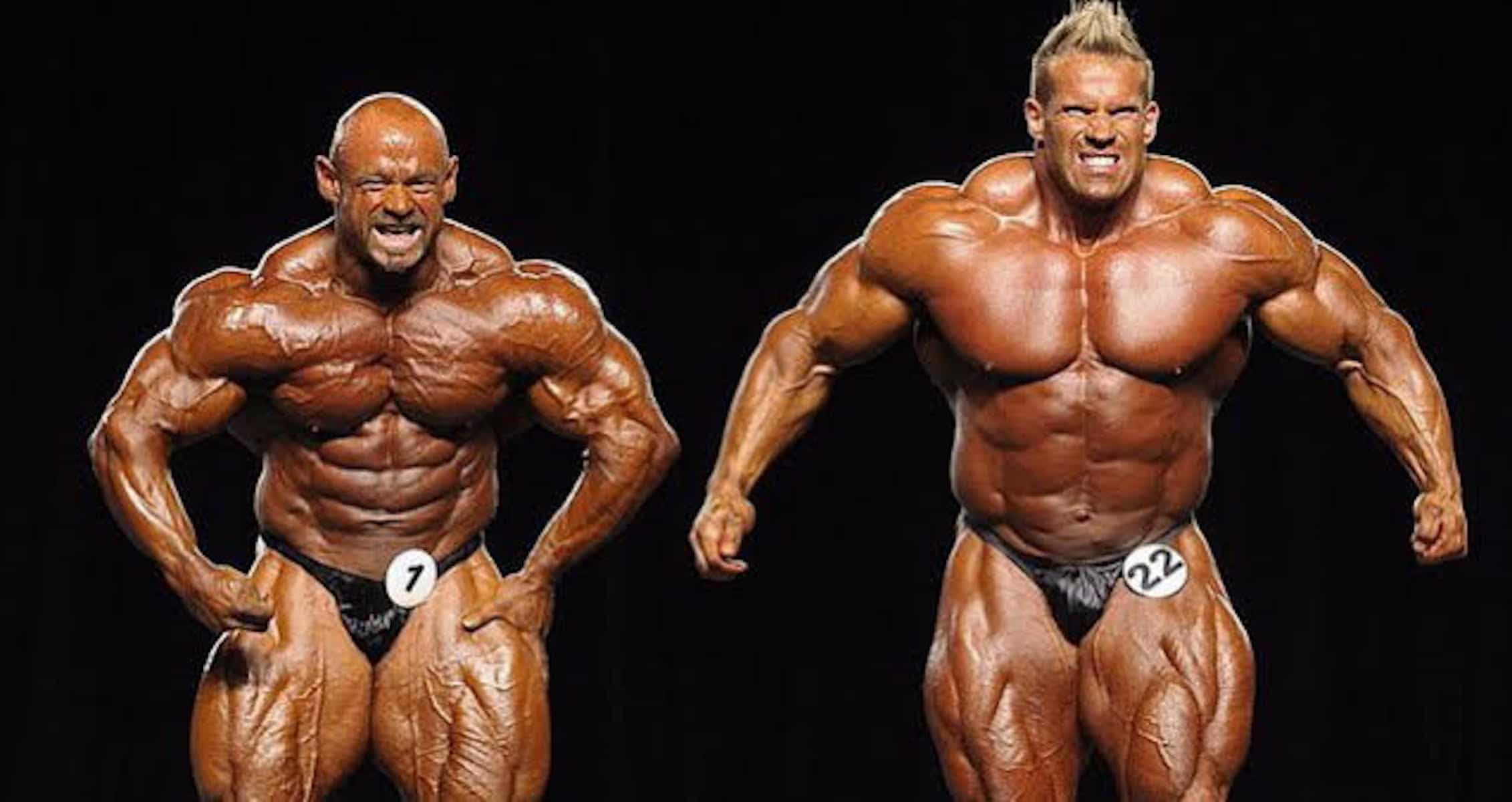
Branch Warren Defeated Reigning Champion Dexter Jackson In 2009 Olympia, Lost To Jay Cutler: ‘I Would Of Rather Got Third’
Jay Cutler recently sat down with Branch Warren, who he defeated at the 2009 Olympia.
It is the age-old question, would you rather lose a close game in the championship or get blown out early? Answers will be different depending on who you ask but in the case of Branch Warren, he would have rather come in third in the 2009 Olympia rather than runner-up to Jay Cutler.
On a recent episode of Cutler Cast, Warren decided to sit down with the man who defeated him at the Olympia in 2009. At this time, Cutler had already solidified himself as one of the best bodybuilders in the world and will be known as one of the best ever. He was crowned champion in 2006 and 2007 before Dexter Jackson dethroned him in 2008.
When Jackson was announced this, Warren was confident that he was going to win the show.
“I would of rather got third,” warren said.
You know, they called me, they called your name one, and I got second. It’s the worst though. Getting second place at Olympia is the worse. People saying, ‘oh that’s awesome’ and saying, ‘no that sucks. The second place in Mr. Olympia is the worst place in all of bodybuilding because you’re one small step from the grand prize but you didn’t make it.”
At the 2009 competition, Warren went through his emotions as the results were being announced.
“I remember they called Dexter in third place, and I’m like ‘oh shit I’m about to become Mr. Olympia. Then, I’m like I beat Mr. Olympia and I still haven’t won the show yet how does that happen.”
Branch Warren believes that he entered the 2009 Olympia at his absolute best. Jay Cutler agreed with this notion but also made the necessary improvements needed to get back on top.
During his reign, Cutler was a mass monster. This is when bodybuilding really started focusing on overall size, along with conditioning. This might have played a factor in the 2009 show.
“People say that because, first of all I was 242, and you were almost 260 at the show. Bigger is better in bodybuilding. You get two guys that are equal in conditioning, or close in conditioning, the bigger guy usually wins. That’s just the way it is.”
Branch Warren was an elite bodybuilder during his career and he was able to go toe-to-toe with the likes of Cutler and Jackson. The 2009 Olympia is one that will stick with him and also one that will be remembered by fans for the pure excitement of the top three competitors.
For more news and updates, follow Generation Iron on Facebook, Twitter, and Instagram.

Cable Upright Row: Technique, Benefits, and Variations
Build monster shoulders with the cable upright row.
Beefy shoulders and traps are a trademark of a solid V-taper. While most people want to build round and ripped shoulders, only a few lifters ever achieve the goal.
Bodybuilding is a game of illusions, and broad and thick shoulders can make your waist look smaller and tighter. However, building boulder shoulders is easier said than done.
Shoulders can be a tricky muscle group to train. Most deltoid exercises focus on one of the three shoulder heads and mainly work on improving muscle definition. However, the cable upright row is one of the few compound shoulder exercises that activate muscle groups across your shoulders and upper back and help build muscle mass and definition.
The cable upright row is a variation of the barbell upright row that utilizes the cable pulley machine to ensure constant tension on the target muscles throughout the exercise.
There are two main types of pulling exercises — horizontal and vertical. While both types of movements usually deal with building a thick and wide back, the cable upright row is a vertical pulling exercise that trains your shoulders.
The cable upright row is one of the few vertical pulling exercises where you pull the weight from in front of your thighs towards your shoulders. Generally, the back-focused vertical pulling exercises involve pulling an overhead bar towards your chest.
Notably, the cable upright row can be potentially dangerous for the shoulders, especially for people dealing with injuries. You need to perform the exercise with a perfect form to avoid injury and ensure you are not leaving gains on the table.
Muscles Worked
The cable upright row is a functional (multi-joint) movement and targets the following muscle groups:
1. Trapezius
Traps are the primary target muscle group of this exercise. They aid in pulling the barbell upwards towards your shoulders by employing a shrugging motion. Following a full range of motion while performing the lift will help achieve optimal trap recruitment and activation.
2. Deltoids
You will be engaging all three deltoid heads (anterior, medial, and posterior) while performing the cable upright row. If you do not feel tension in your delts and traps while doing the exercise, check your form or try using lighter weight.
3. Biceps
Your biceps are engaged in the first half of the movement. Additionally, you might be able to pause and contract your biceps at the top if you are using a relatively light weight. Biceps brachii and brachialis are the upper arm muscles recruited in the exercise.
4. Upper Back
While performing the cable upright row, you will be maintaining a rigid upright stance throughout the exercise. The movement involves pulling the weight up and back to keep it close to the body. Hence, the upper back contracts and is engaged in the lift.
5. Forearms
Grip strength is one of the most overlooked aspects of the cable upright row. If you do not have strong forearms, you’ll not be able to lift heavy. Furthermore, a weak grip will automatically force you into focusing all your attention on holding onto the bar and not letting it slip, deviating you from establishing a mind-muscle connection with the primary muscle group.
While secondary muscle groups like biceps and forearms might kick-in in the first half of the lift, your shoulders are solely responsible for the second half (from your waistline to your shoulders).
6. Core
You’ll be engaging your core while performing the cable upright row as it will help maintain an upright torso throughout the exercise. People with weaker cores usually swing back and forth to lift the weight towards their shoulders.
Benefits of Cable Upright Row
The cable upright row is an incredibly effective exercise to build your shoulder size and strength. Here are a few benefits of the compound lift:
1. Reduces Odds of an Injury
The cable upright row is a variation of the conventional barbell upright row. Using a cable while performing the lift removes some moving parts from the equation and puts less strain on your shoulders, elbows, and bicep tendons.
The cable upright row is a great exercise for people dealing with injuries and can be used for muscle rehab.
2. Builds Core Strength
You’ll feel your core engage the moment you assume the starting position. Your midriff will help you maintain posture throughout the exercise.
Pulling the weight upwards towards your shoulders while maintaining a still and upright torso requires stability in your abs, glutes, and lower back.
3. Unique Movement Pattern Builds Upper Body Strength
The upright row is one of the few exercises that require you to pull weight while keeping it close to your body. The unfamiliar movement pattern helps build strength and improves your muscle coordination.
Making the upright row a part of your exercise arsenal will make you stronger in other compound exercises like snatch, clean and press, clean and jerk, and power clean.
Related: Isolation Vs. Compound Exercises: Strength, Weight Loss & More
4. Improves Shoulder Strength and Functionality
The upright row puts your shoulder joints through a full range of motion, strengthening them for functional activities. Performing the exercise regularly reduces the risk of shoulder injuries. [1]
Cable Upright Row Technique
Here is how to perform the cable upright row:
[embedded content]
Attach a straight bar to a cable pulley set at the lowest setting possible.
Grab the handle with a shoulder-width pronated grip (palms facing inwards). Keep your shoulders tight and pinched back.
Assume the starting position by standing upright with a shoulder-width stance and holding the bar in front of your thighs.
Squeeze your core, glutes, and quads to maintain rigid legs for the duration of the set.
Maintain a neutral head and neck position throughout the exercise.
While leading with your elbows, pull the bar towards the ceiling while keeping it close to your body.
Pause and contract at the top of the movement.
Slowly return to the starting position.
To maintain constant tension on your muscles, make sure the weight does not rack at the bottom.
Repeat for recommended reps.
Tips
Make the most of the cable upright row with the following tips:
While performing the exercise, most lifters make the mistake of raising their elbows and hands higher than their shoulder level. Doing so takes off the tension from your shoulders and puts it on your arms. Additionally, it can cause impingement, which is a condition that reduces your shoulders’ range of motion.
The upright row can put unnecessary strain on your wrists if you hold the bar with an incorrect grip. Shoulder-width grip is recommended for wrist and shoulder safety. Furthermore, a wide grip also increases the activation of deltoid and trapezius muscles.
Make sure you are not using momentum by swinging back and forth while performing the lift. Doing so can strain your lower back and take the tension away from your shoulders.
Lifting heavier than you can handle can lead to injuries. The shoulder joint involves a very complex mechanism. Shoulder injuries can severely impact your exercise goals while also being slow to heal.
If the straight bar version of the upright row is harsh on your wrists or shoulders, you could experiment with a rope or V-handle bar attachment.
Your chin should remain tucked throughout the movement as if you were holding an egg under your chin.
Variations
Here are a few variations of the cable upright row that you can add to your exercise arsenal:
1. Dumbbell Upright Row
[embedded content]
In this upright row variation, you will be using a pair of dumbbells instead of the cable pulley machine. Dumbbell upright rows require greater stabilizer and core recruitment as you need to balance both dumbbells as you pull them towards your shoulders.
2. Barbell Upright Row
[embedded content]
The barbell upright row is arguably the most popular upright row variation. Grab a bar with a shoulder-width overhand grip and lift it while driving through your elbows.
3. Kettlebell Upright Row
[embedded content]
The kettlebell upright row should be performed with a lighter weight as a close grip on this exercise can lead to shoulder impingement. Grab a kettlebell with both hands, and pull it towards your shoulders while keeping your arms close to your body.
Tip: If you are a beginner, you should opt for an upright row variation that allows you to maintain a wide grip.
4. Snatch-Grip Upright Row
[embedded content]
The snatch-grip upright row is performed using a barbell. You will be grabbing the bar with a snatch grip (extremely wide). At the start of the exercise, your arms should be extended straight, and the bar should rest in your hip crease.
This is one of the riskiest upright row variations and should be done with utmost care. Make sure you are not using a jerking motion to lift the barbell towards your chin, as it can lead to a lower back and shoulder injury.
The exercise will help improve your snatch technique and isolate and strengthen the traps.
5. Single-Arm Upright Row
[embedded content]
The single-arm upright row can either be performed with a dumbbell or kettlebell. Since it is a unilateral exercise, it can help fix muscle imbalances and improve conditioning and strength.
6. Resistance Band Upright Row
[embedded content]
If you are a beginner, you cannot go wrong with the resistance band upright row. It is a low-risk upright row alternative that will prime you for the free-weight exercises.
Stand on a resistance band and hold the handles with an overhand grip. Your arms should be resting against your thighs at the starting position. Keep your hands shoulder-width apart throughout the exercise to reduce the chances of shoulder impingement.
Alternatives
People dealing with shoulder injuries can have a tough time performing the cable upright row. If you are one such individual, you can get similar benefits by adding the following alternatives to your training regimen:
1. Inverted Row
The inverted row is one of the most underrated bodyweight exercises. It works your core, hams, glutes, upper body, including traps, posterior delts, biceps, forearms, lats, and rhomboids.
How to perform inverted row:
[embedded content]
Stand in front of a squat rack or Smith machine.
Set the bar at waist height.
Get under the bar and lie on the floor so that the bar is directly above your chest.
Reach up for the bar and grab it with a shoulder-wide overhand grip.
At the starting position, your arms should be fully extended, and your body should be suspended or just off the floor, with your heels being the only body part in contact with the floor.
Pull yourself towards the bar, leading with your chest.
Pause at the top and contract your lats and shoulder blades.
Slowly return to the starting position.
Repeat for reps.
2. Barbell Bent-Over Row
The traditional barbell row trains many of the same muscles but from different angles and to varying degrees. While an upright vertical row puts most of the tension on your shoulders, a bent-over vertical row focuses on your lats.
How to perform barbell bent-over row:
[embedded content]
Get into the starting position by holding a barbell with a shoulder-wide overhand grip and hinging forward until your torso is roughly parallel with the floor.
While driving with your elbows, pull the barbell towards your abdomen.
The bar should be a few inches away from your belly button at the top. Pause and contract your lats and shoulder blades at this position.
Slowly return to the starting position.
Repeat for recommended reps.
3. Snatch Pull
The snatch pull is arguably the hardest exercise on the list. The exercise involves using power from the lower body to row the barbell upward.
How to perform snatch pull:
[embedded content]
Stand with your feet hip-width apart.
Grab the barbell with a snatch grip.
Once the start position is set tight, push through your legs to lift the bar off the floor.
When the bar reaches your hip level, make strong hip contact and rapidly extend your hips and legs.
Pull your elbows up and back as your ankles, knees, and hips drive you to full extension.
Aim to lift the barbell to your chest but not any higher.
Slowly return to the starting position.
Repeat for reps.
Wrapping Up
The cable upright row is one of those exercises that look super easy but will smoke you by the time you are done with it. To make the most of the exercise, prioritize form over lifting heavy.
Using different variations of the exercise will ensure you do not hit a plateau and have something to look forward to in every workout. Best of luck!
References
Trivisonno A, Laffan M, Giuliani H, et al. The influence of age on the recovery from worksite resistance exercise in career firefighters. Exp Gerontol. 2021;152:111467. doi:10.1016/j.exger.2021.111467
The Best Whey Protein Vs. Top Plant-Based: A Comparison
Get the facts on the best whey protein powder vs. those top-rated plant-based proteins.
Protein powders are essential in our daily routine but finding the best whey protein vs. top plant-based powders can be challenging. The first problem is deciding on if you want a whey protein supplement or one that is plant-based. This is dependent on your goals and dietary lifestyle. Then it just comes down to the brand and your preference on what you hope to see from your workouts, diet, and supplementation.
Protein powders on the whole can aid in things like muscle growth and protein synthesis, enhanced recovery and reduced muscle soreness, and overall weight loss and management goals, and even weight gain for those looking. With so many options out there, the chance for you to see serious gains has never been more accessible.
Let’s take a look at the best whey protein vs. top plant-based ones and get a sense for how these differ. While there are plenty of similarities, for they are both great protein sources at the end of the day, what you will find are subtle differences that may make you consider one over the other. Plus, we’ll break down two proteins off our list of the Best Protein Powders so you can compare and contrast amongst a whey protein and plant-based one.
Why You Would Choose Whey Protein
For whey protein, there are those two forms that exist to pay attention to. Whey concentrate is typically for those looking to bulk, or who don’t have a preference on the number of carbs and fat included. Whey concentrate will have more carbs and fat than isolate which is why for those in a bulking phase, or for those trying to gain weight, this is preferred.
As for whey isolate, this is great for those looking to slim down and lose weight. This is because whey isolate is a more filtered form of whey, thus shedding some carbs and fats, if not all, and leaving you with an almost pure protein source.
Whey protein is a great protein for those looking to boost muscle growth, aid in recovery, and stay full. Since protein is the building block of all muscle, muscle protein synthesis is bound to happen as you look to increase strength, assist in those recovery and muscle soreness goals, and lose body fat (1,2,3).
Why Choose Plant-Based Protein
Plant-based proteins come from sources like pea protein, brown rice protein, soy protein, and chia seeds, among others. Like whey protein, you will find similar benefits to this type of protein including muscle growth, weight loss, and recovery assistance (4,5).
However, people choose to use plant-based proteins if they have a sensitivity to dairy. This intolerance can cause stomach discomfort and digestive stress, but a vegan protein can alleviate these uncomfortable feelings and work to provide great benefits.
Compare & Contrast The Best Whey Protein Vs. Top Plant-Based
We wanted to share two great protein powders, one whey protein and plant-based protein, so you could see the options out there. We’ve also broken down key aspects of these proteins (calories, protein, carbs, etc.) so you can compare and contrast amongst each respective supplement.
Whey Protein Powder
The market for whey protein is incredibly saturated, but we wanted to share a great option with you so you know exactly what to look for. Your goals will determine what kind of whey protein you choose, and as mentioned above, those looking to bulk will look towards whey concentrate and those looking to lean out will focus in on a whey isolate.
Transparent Labs 100% Grass-Fed Whey Protein Isolate
Code GENIRON10 For 10% Off
Transparent Labs 100% Grass-Fed Whey Protein Isolate is organic, non-GMO, and gluten-free, boasting a great formula for a top protein powder. With nothing artificial added, this is a clean protein that is easier on your stomach.
Transparent Labs 100% Grass-Fed Whey Protein Isolate is a great whey protein isolate with 28g of protein and just 120 calories. Along with this, you will find 1g of carbs, 0.5g of fat, and less than 1g of sugar. With nothing artificial added, this protein is great for muscle growth, recovery, and aiding in those weight loss and management goals. Transparent Labs is an honest company who knows what athletes need and seek to make only the cleanest supplements.
Price: $59.00
Plant-Based Powder
Similar to the whey protein market, many companies have jumped in on the vegan and plant-based craze, so it is important you know what a good company and a good protein powder look like. While it may be hard to decide if you are new to vegan powders, considering what source you want (i.e. brown rice, pea, etc.) can make your decision a little easier.
National Bodybuilding Co. Full Prep Vegan
National Bodybuilding Co. Full Prep Vegan is designed for bodybuilders to hit their goals faster. A 100% natural and organic powder, this will work for a number of benefits like muscle growth and recovery, as well as enhancing overall performance.
National Bodybuilding Co. Full Prep Vegan Protein is designed to help bodybuilders progress faster in the gym and with their vegan goals. Using rice and pea protein, this works to increase the rate of muscle protein synthesis, optimize nutrient utilization, boost metabolic efficiency, and enhance athletic performance. With 20.5g of protein at just 117 calories, this protein is a very nice option.
Price: $40.00
Nutrition Comparison
Let’s take a look at some of the essential elements of the nutrition label for each of these respective products so you can compare actual numbers. With one being whey protein and the other a mix of rice and pea protein, this is a great way to compare two reputable brands and two amazing protein powders.
Transparent Labs 100% Whey Protein Isolate
National Bodybuilding Co. Full Prep Vegan
Calories
120
117
Protein
28g
20.5g
Carbs
1g
2g
Fat
0g
3g
Sugar
Less than 1g
0g
Servings Per Container
30
20
Serving Size
1 Scoop
1 Scoop
Price
$59.99
$40.00
Price Per Serving
$1.99
$2.00
Check out our list of the Best Protein Powders for more great protein supplements!
Wrap Up
Finding the best whey protein vs. top plant-based protein can be difficult, but as a worthwhile and effective supplement, it is a task absolutely worth taking on. What you will find with these supplements are powerful products designed to increase muscle growth and aid in recovery while working towards those weight loss and management goals. These proteins will work wonders for you regardless of your choice so look into either a whey protein or plant-based one today and see what these can do for all your goals.
Generation Iron may receive commissions on purchases made through our links. See our disclosure page for more information.
Let us know what you think in the comments below. Also, be sure to follow Generation Iron on Facebook, Twitter, and Instagram.
*Images courtesy of Envato
References
Devries, M.; et al. (2015). “Supplemental protein in support of muscle mass and health: advantage whey”. (source)
Davies, R.; et al. (2018). “The Effect of Whey Protein Supplementation on the Temporal Recovery of Muscle Function Following Resistance Training: A Systematic Review and Meta-Analysis”. (source)
Frestedt, J.; et al. (2008). “A whey-protein supplement increases fat loss and spares lean muscle in obese subjects: a randomized human clinical study”. (source)
Babault, N.; et al. (2015). “Pea protein oral supplementation promotes muscle thickness gains during resistance training: a double-blind, randomized, Placebo-controlled clinical trial vs. Whey protein”. (source)
Joy, J.; et al. (2013). “The effects of 8 weeks of whey or rice protein supplementation on body composition and exercise performance”. (source)
Zac Aynsley: The Best Drive In Bodybuilding
Zac Aynsley has a future in long drive after a 425-yard drive at Morpeth Golf Club.
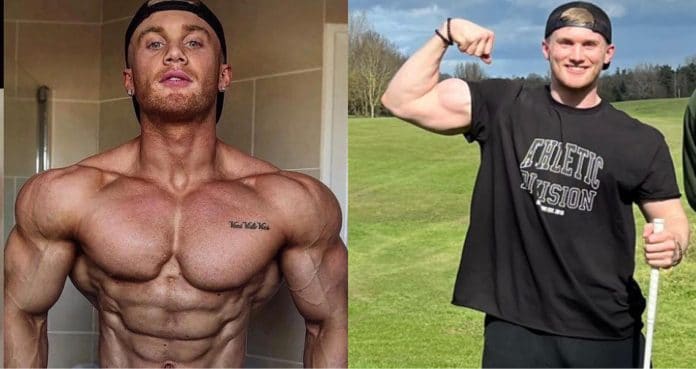
Zac Aynsley is a British model and bodybuilder known for his massive biceps and incredible physique. He might be able to add his long drive on the golf course soon enough.
Aynsley was recently playing a round of golf at the Morpeth Golf Club in the United Kingdom when he decided to air it out with his driver. Aynsley stepped up to the fifth tee and sent a drive 425 yards to the green. Head greenskeeper John Scurfield, along with Aynsley’s team and three other witnesses, saw the incredible shot live.
Morpeth is a golf club that has been open since 1906. In 116 years, Aynsley is the only person to ever reach the green on this hole in one shot.
Aynsley used a 7.5 degree face on a 2x stiff shaft when he made the shot. Aynsley had a long-drive driver in his bag but decided to use a legal club. He took his shot from 25 yards closer than the competition tees, which are 450 yards out. Aynsley thought that this would be a bit out of range with the legal club that he used.
Zac Aynsley played golf growing up but it took a backseat to fitness once he began training. Now, he only plays casually for fun but it is clear that he has not lost his swing. Aynsley’s strength has translated into his golf game and this could lead to a new venture.
After seeing how far he can hit a ball now, Aynsley might contemplate taking up long drive. This would be a chance to take on some of the world’s best long-drive golfers to put on a show for the public.
“Everyone likes to see people hit a ball far but when you hit it over 400 yards, it’s just insane. It really is incredibly rare to see anyone hit a ball like this. It really is entertaining to see.”
Zac Aynsley grew up suffering from depression and anxiety. He was able to overcome issues within his diet and become successful in the fitness industry. The story of Aynsley is incredible and he has built a massive social media following because of it. Aynsley has appeared on many TV shows, along with magazine and book covers.
You can watch Zac Aynsley’s epic drive below:
[embedded content]
Aynsley has a plan to bring the world’s best long-drive champions to Morpeth Golf Club for a competition. This would put on a show for the public and see how they all stack up. This would be an entertaining event for both the fans and golfers.
For more news and updates, follow Generation Iron on Facebook, Twitter, and Instagram.
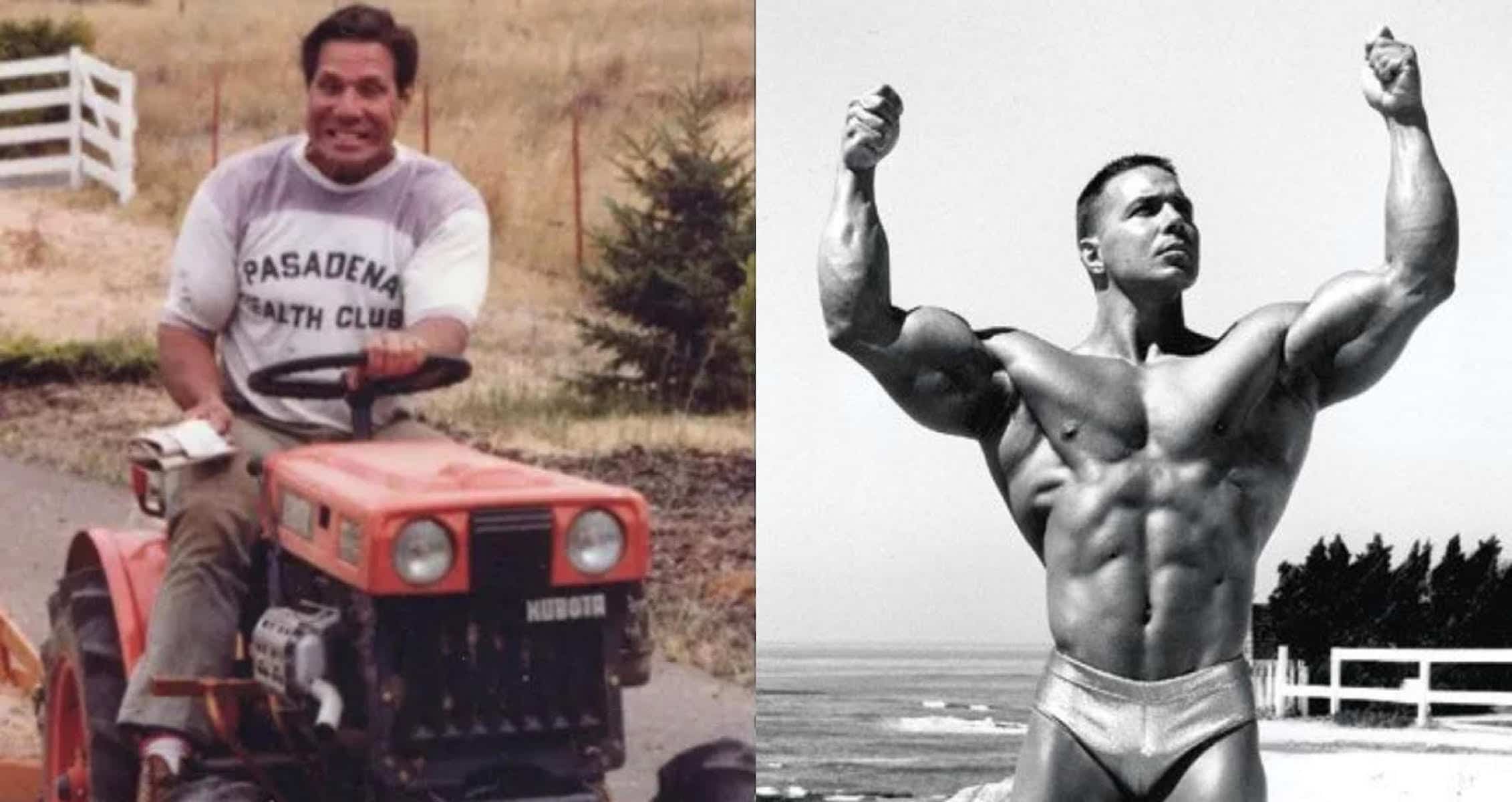
Bodybuilding Legend Bill Pearl Recovering From Back Surgery After Scary Accident Involving Riding Mower
91-year-old Bill Pearl was in a dangerous accident when he flipped on his Craftsman riding mower.
Bodybuilding legend Bill Pearl enjoyed great success over the course of his career on stage. At 91 years old, Pearl remains active in retirement and enjoys doing daily tasks to keep living a healthy lifestyle. Recently, Pearl was working outside and had a scary accident that left his face down under his Craftmans riding mower.
A recent Facebook post shared a story of the accident. Pearl was working outside when his riding mower got caught in the grass. After backing it up, the mower flipped and landed on Pearl’s back. After help was called, the mower was removed from Pearl’s back without any further damage. At the hospital, X-Rays revealed that Pearl suffered fractures in his back and required surgery.
Bill Pearl has recovered from his operation and will be able to return home soon.
“The article I just posted was prepared by Bill on Tuesday morning. It had rained the night before, but the sun had come out, and he decided to go up the hill and mow around the barn. He was using the smaller Craftsman riding mower and it got stuck on a squirrel mound, so he put it in reverse to back off of it and it kind of jumped, and being close to an embankment, rolled over the edge and came to rest against the barn, on top of Bill’s back.”
Bill Pearl began competing on stage in 1952 and enjoyed great success early on. Over the course of his career, Pearl won multiple Mr. Universe titles, along with Mr. America and Mr. USA. During his final Mr. Universe victory, Pearl defeated the likes of Frank Zane and Sergio Oliva.
Pearl retired from competition in 1971 but continued to make goes posting appearances until 1989. He has also written many books on fitness and continued his passion and love for bodybuilding even in retirement.
“after x-Rays a cat scan and an mri, a neurologist determined that he had a compression fracture of his t-10 vertebrae, among other things.
he was scheduled for surgery the next day. he endured six hours of very complicated surgery and praise the lord, he is resting un comfortably in the hospital, and should be home in a few days.
it may be awhile ’til he can sit at a computer again, but he’ll be back !!! we have many friends and family to thank fo their prayers and good wishes, we are so grateful.”
Bill Pearl continues to live an active life at 91 years old and nothing is going to change that. he is expected to recover and will be able to do so in the comforts of his own home.
For more news and updates, follow Generation Iron on Facebook, Twitter, and Instagram.
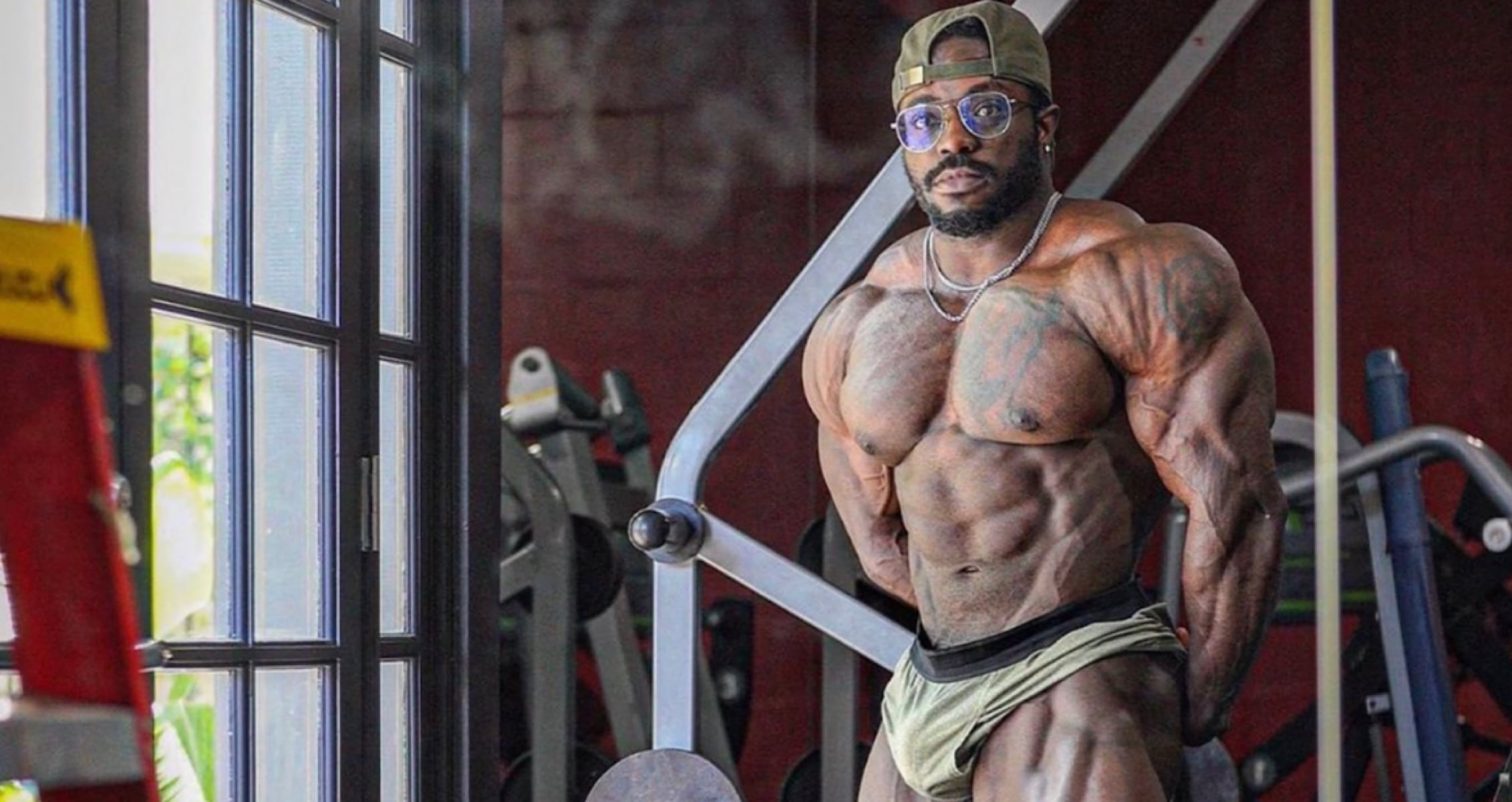
Terrence Ruffin Looks Incredibly Shredded in Recent Update
Terrence Ruffin is looking extra shredded in recent physique update.
Terrence Ruffin is looking incredibly shredded a month after his important Arnold Classic victory. Ruffin showcased a truly impressive stage ready physique a month after his victory at the first big bodybuilding show of the season.
Despite the Arnold Classic 2022 being over a month ago, Terrence Ruffin is still looking incredibly shredded after his big win. So many winners can find themselves content with their work and push themselves to start their bulk again to prepare for a future show, in this case the Olympia. But it appears that Ruffin isn’t subscribing to that particular practice. Instead the Arnold Classic Physique champion is apparently in some absolutely jacked and diced condition.
The Arnold Classic champion was once again able to assert his dominance on the field. Namely Terrence Ruffin was able to once again out duel former Arnold Classic and Olympia Classic Physique champion Breon Ansley. At this point Ruffin has proved himself as the top contender for Chris Bumstead’s Olympia crown. At this point it’s clear that Ruffin is the only person capable of challenging Bumstead.
Ahead of his Arnold Classic victory Terrence Ruffin was looking like a world beater. It was clear that he was the front runner and rightly so. He showed a well balanced physique with impressive musculature and symmetry.
Couple weeks before the @arnoldsports show. I was little nervous being around 10lbs lighter than normal but that’s when you just trust what you see and in your team.
Still Shredded
A recent update to his Instagram showed just how incredible Terrence Ruffin appears a month after his victory. His current form is so impressive in fact that Ruffin could step on stage and potentially dominate anyone in the division.
Physique Update: currently 187lbs
Just following the plan @hyacine_nassir and @hypertrophycoach have laid out for me.
With several months to go until the 2022 Olympia, Terrence Ruffin has plenty of time to make solid improvements that will keep Chris Bumstead on notice.
For more news and updates, follow Generation Iron on Facebook, Twitter, and Instagram.
News and Editorial Writer at Generation Iron, Jonathan Salmon is a writer, martial arts instructor, and geek culture enthusiast. Check out his YouTube, Instagram, Twitter, Facebook, and Sound Cloud for in-depth MMA analysis.

4 Awful Strength Training Mistakes You’re Making That Cost You Muscle
Have you been working out for a while now but have seemed to hit a plateau? Perhaps, it’s because you’re making one of the common muscle growth mistakes below.
Initially, when you start working out, you may see a lot of muscle development. That’s due to the “newbie” gains everyone sees when they’re not used to lifting weights. Unfortunately, many people eventually stall out after this initial beginner phase. They’re in the gym consistently, yet they’re not moving the needle forward when it comes to making actual progress.
If that’s you, fortunately, it’s an easy fix once you cut these mistakes out below.
1. Not following a plan
If you’re going into the gym and doing random workouts every time, then you’re missing out on muscle for sure. It may seem beneficial to mix up your workouts as often as possible, but it’s actually counterproductive. A lot of the progress you’ll get from the gym comes from a structured and strategic plan (1).
random actions lead to random results.
Some people may not know which workouts to do, so they just go into the gym and pick movements on the fly, or maybe they’ve heard of the term “muscle confusion” which means that you want to mix up your movements for your body to continue to grow without adapting to the same movement.
Although part of this is true, you don’t want to mix up your movements as often as claimed. Yes, your body will eventually adapt to the workouts you’re doing, which is why it’s good to switch up your workouts periodically. However, it takes time before your body adapts and you’ll want to utilize this time to maximize muscle growth.
Master a Few Key Movements
Muscle growth is the byproduct of how strong you’re getting. The stronger you are, the more muscle you’ll have. And for you to get really strong on a movement, you’ll need to stick with the same exercise for enough time to build adequate strength. For your body to grow, you’ll want to master just a few key movements and stick to those same movements for 6-8 weeks. That’s the sweet spot.
That’s enough time for you to build as much strength and muscle as possible targeting key muscle groups, while also not too long for your body to become stagnant to the movements. After about 6-8 weeks though, you’ll want to switch up your movements to target muscle you aren’t hitting and to make sure your body doesn’t become too accustomed to the same movements.
Of course, it’s important that you mainly do compound movements, including barbell shoulder press and barbell squats for the best results.
2. Not tracking your workouts
Not only do you want to follow a training plan, but you also want to track the workouts you’re doing. This is important. You don’t want to go into the gym every time not knowing the weight, reps, and sets you did the time before. This makes your workout regimen disorganized and leads to less muscle growth.
That’s because you won’t be able to push yourself to your fullest capability if you aren’t doing weight and reps you should be doing necessary for muscle growth. Without knowing what you did in your prior workouts, you’re leaving muscle on the table. If you bench pressed 225 pounds for 5 reps last time, but you didn’t log it so you don’t remember, and this time you only bench pressed 215 pounds for 5 reps, it’s going to be much harder to build muscle.
We recommend you log your workouts through a notepad or training app. Just using a fitness tracker is linked to an increase in activity (2). This will ensure you remember everything you did in your workouts so that you can build a Greek God/Goddess physique.
When it comes to muscle growth, every rep, set, and weight you use is vital, especially if you’re past your “newbie” gains. Your muscle only grows when you place a stimulus on it greater than what it’s used to.
3. Omitting the progressive overload principle
According to legend, there was a fella named Milo of Croton who was a champion wrestler of ancient Greece; he was known for his incredible strength and athleticism. One day when he was roaming the hills of Italy, he stumbled upon mankind’s greatest secret to muscle growth. He found a calf near his home and decided to carry it on his shoulders every day for four years. Each day, the calf got bigger until it grew to a full-blown bull. Since the weight Milo carried increased each day — due to the growth of the calf — he became incredibly strong and muscular. This is all because of the potent effects of the progressive overload principle.
Tracking your workouts go hand in hand with this principle. Basically, the progressive overload principle is increasing the overload you place on your muscle.
In order for your muscle to grow, it must be forced to adapt to a tension it has not yet experienced.
You can do this by increasing the reps, sets, or weight (or the size of your pet you haul around town) (3). For example, if the previous time you did barbell bench press you did 3 sets of 225 pounds for 5 reps, next time you do them you’ll want to aim for 6+ reps with 225 pounds, or you’ll want to increase the weight to 230 pounds.
Of course, if you don’t track your workouts, you won’t be able to practice the progressive overload principle though.
4. Doing too much volume
This may sound contrary, but the reason doing too much volume is bad for muscle growth is twofold. For one, you risk overtraining and not getting the recovery your body needs to grow. For two, typically, when you’re doing too much volume it means you aren’t doing enough weight and focusing on strength. As aforementioned, how strong you are is directly related to how much muscle you have.
So you don’t want to focus on doing more volume for your muscle to grow, you’ll want to focus on getting stronger. And when you’re focusing on strength, you’ll want to keep your volume lower. That’s because for you to use the most weight you’re capable of using each set, you won’t be able to do too many reps or sets.
Training for volume has its time and place and is especially beneficial for bodybuilders and for that final layer of muscle that you want, but it’s not where the majority of your muscle growth comes from. It comes from strength training.
Funny enough, this study shows that high volume training and low volume training provide similar improvements in body composition (4).
There are sarcoplasmic muscle growth and myofibril muscle growth. Myofibril muscle growth gives you the bulk of your muscle and builds dense muscle. It comes from strength training. The last 10-20% of muscle growth comes from training for volume — sarcoplasmic muscle growth. You’ll mainly want to focus on myofibril muscle growth for a well-developed and athletic physique.
In order to do this, I recommend you lift weights in the 5-8 rep range and do 2-4 sets per exercise. This will ensure that you’re using heavy enough weight to spark muscle growth while making sure you’re able to push yourself each set and not overtrain.
Conclusion
After your beginner gains start to stagnate, many lifters plateau since they’re making one of the common mistakes above. Cut these lifting mistakes out and your body will continue to grow again.
For optimal muscle growth, it’s important to follow a structured workout plan, track your workouts, increase the weight you lift as often as possible, and not overload your muscles with too much volume.
Follow us on Instagram, Facebook, and Twitter for more training tips.
References
1 – Strategic Planning: Why It Makes a Difference, and How to Do It. (2009). Journal of oncology practice, 5(3), 139–143. https://doi.org/10.1200/JOP.0936501
2 – Laranjo L, Ding D, Heleno B, et alDo smartphone applications and activity trackers increase physical activity in adults? Systematic review, meta-analysis and metaregressionBritish Journal of Sports Medicine Published Online First: 21 December 2020. doi:10.1136/bjsports-2020-102892
3 – Evans JW (2019) Periodized Resistance Training for Enhancing Skeletal Muscle Hypertrophy and Strength: A Mini-Review. Front. Physiol.10:13. doi: 10.3389/fphys.2019.00013
4 – Thomas, M. H., & Burns, S. P. (2016). Increasing Lean Mass and Strength: A Comparison of High Frequency Strength Training to Lower Frequency Strength Training. International journal of exercise science, 9(2), 159–167.
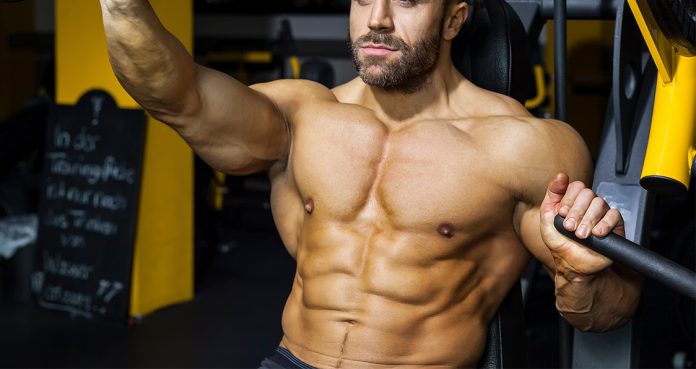
How To Get A Better Chest Day Pump
Tips for a Better Chest Day Pump
Almost all men who workout desire a wider chest. A broader and fuller chest can make you stand out of the crowd other than the fact that it adds a dash of masculinity to your personality.
A muscle pump is critical to the development of your muscles. The pump is when blood rushes to your working muscles and carries lactic acid and nutrients along with it. Developing your chest can be hard if you’re unable to recruit all your pectoral muscles during your workouts.
Pre-Exhaust Your Pecs
Most people start their chest workouts with the good old barbell bench press. While there is no denying the fact the bench press is a great exercise, performing an isolation exercise like the cable flyes can result in a better chest pump.
Performing the cable flyes at the beginning of your workouts will exhaust your pecs and you won’t have to lift as big weights as compared to what you would’ve to lift if you started off with the bench press.
Use a Pre-Workout Supplement
Pre-workout supplements can be incredibly effective in helping you get a pec pump during your workout. Pre-workout supplements have ingredients like nitric oxide, beta alanine, caffeine, beetroot extract, etc. which can help in achieving and amplifying muscles pumps.
Not only will the pre-workout supplement help you get a muscle-ripping pump but will also improve the quality of your workout by delaying fatigue, improving your focus and mind-muscle connection.
Add Isolation Exercises To The Mix
Compound (multi-joint) exercises like the bench or dumbbell presses are great at building muscle mass and strength. On the other hand, isolation (single-joint) exercises like pec deck fly, cables, chest machines are effective in getting you a better muscle pump and developing muscle conditioning.
Make sure you don’t rely too heavily on the isolation exercises as they might feel easier and quicker to perform. Maintain the right balance between compound and isolation movements to get the best of both worlds.
Increase Intensity and Change Rep Tempos
If you’ve been performing the 5 exercises of 3 set and 12 reps training routine and are not getting a muscle pump anymore, it’s time to spice things up. Pump your workout intensity by performing higher reps (15-20) to take your workouts to the next level.
Changing your rep tempos can also help in inducing better and nastier muscle pumps. An example of the rep tempos could be to slow down the negatives (eccentric movement) and fasten up the positive (concentric movement).
Use Advanced Training Techniques
Hitting a plateau can be one of the biggest factors for not getting a pump. Using advanced training techniques like the supersets, drop sets, intraset stretching, etc. can be an incredibly effective way of breaking through the overhead glass ceiling.
Try to incorporate at least one advanced training techniques in your workouts for getting a muscle-scorching pump. There are numerous training techniques to keep you entertained while ensuring muscle growth and development.
Which is your favorite chest exercise? Let us know in the comments below. Also, be sure to follow Generation Iron on Facebook and Twitter.
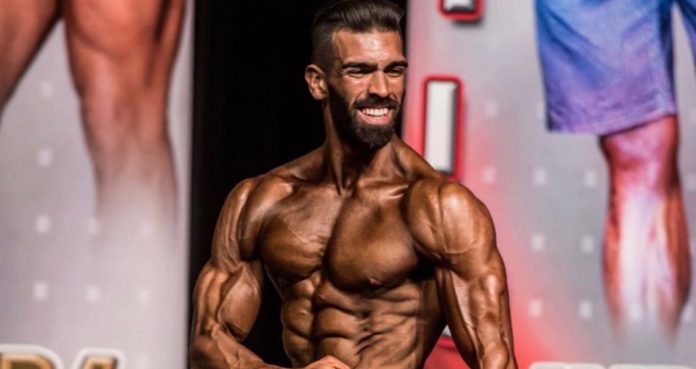
Natural Bodybuilder Joseph Ortiz Shed Light on Body Dysmorphia Post-Competition
Image via Instagram @fit_fluential
Former Natural Olympia Men’s Physique champ shares how to have a healthy relationship with food and your body post-competition.
It’s unrealistic to maintain bodybuilders’ body fat levels as they perform during a show. Gaining weight and body fat back after competition can take a toll on bodybuilders’ mental health, though. It’s easy for them to develop body dysmorphia when incorporating more foods and not being as shredded as when they walked across the stage. International Natural Bodybuilding Association (INBA)/Professional Natural Bodybuilding Association (PNBA) natural bodybuilder Joseph Ortiz shed light on many bodybuilding competitors’ struggle with food and their body image post-competition.
Joseph Ortiz was the Men’s Physique champion at the 2019 Natural Olympia. He knows that it’s easy to have an unhealthy body image in the sport of bodybuilding after the competition. And that competitors can be too hard on themselves for the extra fat they’ve gained from incorporating more foods.
In a social media post on December 27, 2021, Ortiz was vocal about bodybuilders’ struggle after shows. He voiced:
“A good handful of competitors struggle to maintain a healthy relationship with food and their physique after their competition is over. Once the body fat % starts to trickle up they begin to beat themselves up, some can even develop body dysmorphia.”
Body Dysmorphia in Bodybuilding
Body dysmorphia is a mental illness when you have excessive shame over your body image. Even when you could be outstanding and healthy on the outside, someone with body dysmorphia only recognizes their flaws obsessively.
Many athletes suffer from bigorexia in bodybuilding, which is muscle dysmorphia – constantly thinking about building muscle. (1) This is no surprise since to do well in bodybuilding shows, often, more muscle is better. However, bodybuilders can battle this mental illness with the right strategies.
Prevent Body Dysmorphia With a Healthy Relationship With Food and Body Fat Post-Competition
After bodybuilding shows, Joseph Ortiz suggests a few strategies for healthy relationships with food and body fat. Below is what Joseph Ortiz recommends.
Prepare yourself before starting a cut that weight gain after shows is normal, healthy, and necessary.
Have the proper plan in place for a reverse diet after your show so that weight gain is controlled and moderate.
Know that if you go overboard with the weight gain, it can be lost and isn’t going to stick around forever if you don’t let it.
It’s absolutely OK to seek professional help (therapist) if needed.
Joseph Ortiz states that it’s essential to recognize that weight gain is normal and healthy after the competition. He recommends you have a plan to gain weight in a controlled manner. He also says that weight gain can be lost. And there’s nothing to be ashamed of if you need professional help.
Below you can see Ortiz’s full Instagram post.
https://www.instagram.com/p/CXz8_9gr2qQ/?utm_source=ig_web_copy_link
Recap
Body dysmorphia is a mental illness that is a negative obsessive thought pattern over your body image. And it’s common in bodybuilding, especially after a competition. However, gaining weight after a bodybuilding show is entirely normal and healthy. Have a plan in place, and don’t feel embarrassed if you need to seek professional help.
Share this on Instagram, Facebook, and Twitter to help people struggling with body dysmorphia!
Reference
Mosley P. E. (2009). Bigorexia: bodybuilding and muscle dysmorphia. European eating disorders review : the journal of the Eating Disorders Association, 17(3), 191–198. https://doi.org/10.1002/erv.897