
 All Posts By Presser

Brandon Hendrickson Introduces New NFT To Train In The Metaverse
The emergence of NFTs and the Metaverse are branching out into many areas and that includes fitness!
Brandon Hendrickson is the class of the Men’s Physique division in bodybuilding. He is a three-time Olympia champion and will enter this year’s competition as the favorite once again. Now, Hendrickson is venturing out into the Metaverse by launching his first NFT collection.
Power Shakers NFT is a collection that allows followers to reach their fitness goals and achievements. By owning this collection, followers will be able to workout online with different instructors while earning passive income. There are multiple ways that members can train. Also, they will have access to a private application that calculates and distributes Power Powder tokens.
The Power Shakers website shared its mission and some perks that members will receive when they join.
“Power Shaker NFT utility is where owners receive a physical piece of art that matches the NFT they purchase; unique access to events, exclusive memberships, or future use in the Metaverse.
Our NFT itself, is the key that opens the doors, is a membership card to an exclusive card. By joining us today, you choose to create the future you deserve.”
Brandon Hendrickson won the 2018 Olympia to gain his first victory at the biggest competition in bodybuilding. After being defeated in 2019, Hendrickson won back-to-back titles in 2020 and 2021. Now, he is focused on completing the three-peat in December.
Members who want to join Power Shakers will have a chance to follow certain workouts by Hendrickson and other fitness stars. This is a craze that is growing quickly and now, fitness and working out is beginning to make its way to the Metaverse and NFTs.
For more news and updates, follow Generation Iron on Facebook, Twitter, and Instagram.
Hunter Labrada Shows Off Massive Back Gains Achieved In Nine Months
Hunter Labrada has put in some huge work since the 2021 Chicago Pro.
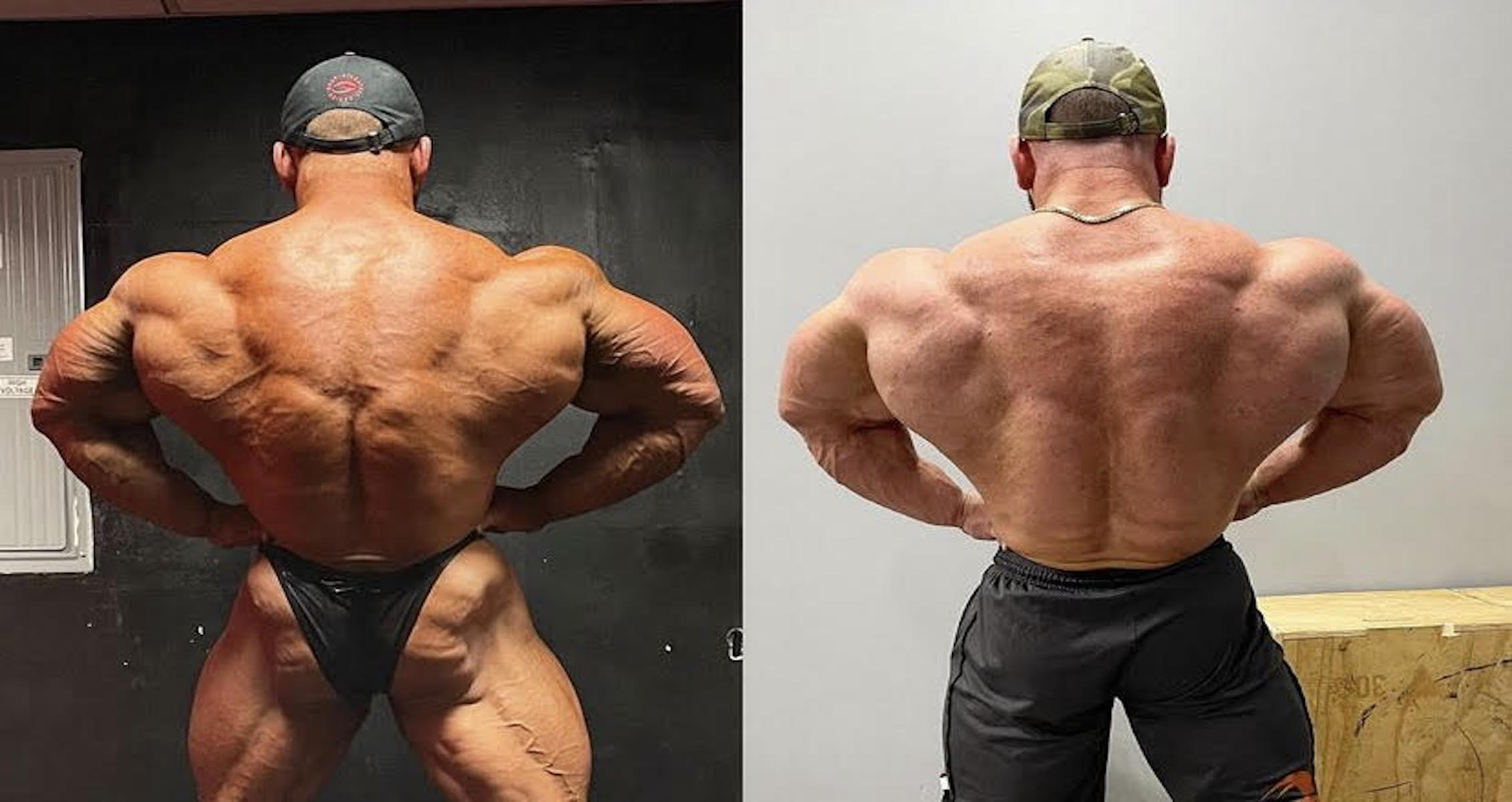
Hunter Labrada has been on a tear putting on size in many ways over the course of the season. He has his sights set on the 2022 Olympia competition and it showed in a recent physique update. Labrada shared side-by-side photos of his back gains and it is visible in his lower lats.
Labrada last competed in the 2021 Olympia back in September where he finished fourth. The picture on the left in his latest Instagram post shows his back during his victory at the 2021 Chicago Pro. This is the progression that has been made from July 2021 to March 2022.
“July 25th 2021 vs. March 23rd, 2022–1 day after Chicago vs this offseason–252lbs vs 282lbs–Still have close to 5 months to continue to grow before the ⭕️ prep starts, and still have PLENTY of bullets left in the gun to do so?”
Hunter Labrada has put on 31 pounds since the Chicago Pro. He shared that his bodyweight during the competition was 251 pounds compared to 282 pounds currently. This is great progression especially with five months left of bulking before he begins preparing for the Olympia in December.
Labrada has put some serious effort into building his back and this is a way that he can gain an advantage on the field. He made his pro debut in 2020 and has already made his way near the top of Men’s Open bodybuilding. He finished eighth at his first Olympia in 2020 and jumped up four spots in 2021. Labrada is one of the best, young stars in the sport and will look to contend with the likes of Brandon Curry, Hadi Choopan, and of course Big Ramy, who is the reigning two-time champion.
At this pace, Labrada will show up with more mass than he did in 2021. He has built muscle across his entire back and has made sure to hit his lower lats using different sets of workouts.
Hunter Labrada is the son of bodybuilding great Lee Labrada. The sport is in his blood and he has been around it his entire life. Because of this, he understands how it works and what the training regimens must look like. It seems as though Labrada is hitting all of them where he needs.
For more news and updates, follow Generation Iron on Facebook, Twitter, and Instagram.
Terry Crews Profile & Stats
The biography, life, and accomplishments of Terry Crews
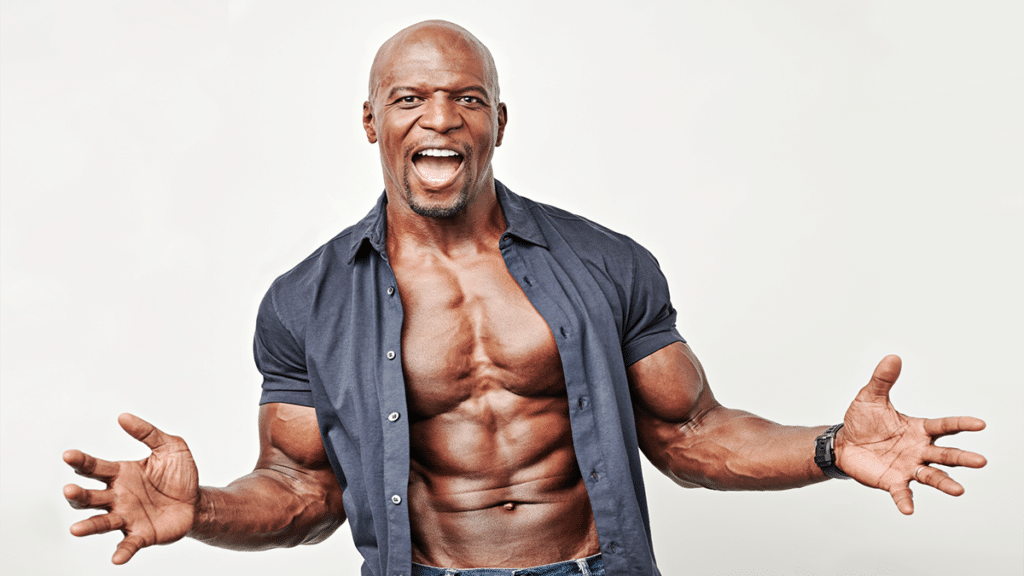
Terry Crews is an American actor, anchor, and former NFL player. He has starred in many movies and comedy shows and hosted a reality TV show. Crews is best known for his roles in the sitcom “Everybody Hates Chris” and “The Expendables” movie franchise.
Below is a complete breakdown of Terry Crews’ profile, stats, biography, training, and diet regimens.
Full Name: Terry Alan Crews
Weight
Height
Date Of Birth
235-245 lbs
6’2″
30/7/1968
Professional
Era
Nationality
Actors, Former NFL Player
1990
American
Biography
Born on Jul. 30, 1968, Terry Crews grew up in Flint, Michigan, in a strict religious environment. Although Crews earned a scholarship in Art Excellence, his passion for football took over, and he started playing as a defensive end (linebacker) for the WMU Broncos.
Terry Crew’s performance earned him and his team the All-Conference honors and the 1988 Mid-American Conference Championship title.
During his six-year pro football career (1991-1997), Terry played for some of the top NFL teams, including Los Angeles Rams, Washington Redskins, Philadelphia Eagles, and the San Diego Chargers.
Beginning of the Acting Chapter
After he retired from the NFL, Crews moved to LA in 1997 to look for work in the film industry. His first film “Young Boys Incorporated” came out in 1998, which he had co-produced.
Terry Crews debuted in Hollywood in 2000 with the Arnold Schwarzenegger movie “The 6th Day.”
Although Crews sported a jacked physique throughout his football and acting career, he mostly appeared in comedy movies and shows until 2009. He received acclaim as an action star in the big-star cast action movie “The Expendables” in 2010.
Terry Crews also found success in an unexpected place — TV commercials. His TV commercials for Old Spice have a cult following of their own.
In his autobiography “Manhood: How to Be a Better Man or Just Live with One’ released in 2014, Crews writes about his long-lasting addiction to pornography, which he beat through rehabilitation in 2010.
Training
Terry Crews uses his experience from his football days and knowledge gained from years of training in the gym to devise his workout regimen.
“I will always consider myself an athlete. My workouts are about survival, longevity strength, and endurance. I realized working out should be about getting smarter as well as stronger.” — Terry Crews
Terry Crews Workout Principles
The former NFL star adheres to the following training principles to make the most of his workouts:
1. Focus on Functionality
Terry Crews believes that your training should improve your functionality and make you look like a pro athlete. According to him, lifting big weights is of no use if you cannot use the strength to improve your day-to-day functioning.
2. Don’t Rule out Cardio
Terry’s low body fat percentage is the result of performing six 30-45 minute cardio sessions every week. Regular aerobic exercise can help improve your cardiovascular health, regulate blood sugar, body weight, lower blood pressure, and reduce asthma symptoms. (1)(2)
3. Perform Multi-Joint Exercises
Crews is a fan of functional movement like the power clean, deadlifts, and squat as they can help build muscle mass, strength, and thickness in muscles while improving overall body functionality.
4. Go Heavy or Go Homes
The Expendables star believes in lifting heavy in the gym as it can aid in ramping up your natural testosterone production. He believes lifting heavy is especially important for men in their 40s and 50s.
However, Crews is not a proponent of 1RM (one-rep max). He advises lifting a weight that can help you hit muscle failure with 3-5 reps while performing the movement with a correct form.
Monday: Shoulders and Arms
Upright Barbell Row: 1 set of 5-6 reps
Power Clean: 1 set of 5-6 reps
Romanian Deadlift: 1 set of 6 reps
Front Dumbbell Raise: 1 set of 10 reps
Arnold Dumbbell Press: 1 set of 10 reps
Side Lateral Raise: 1 set of 10 reps
Reverse Fly: 1 set of 10 reps
Hammer Curl: 4 sets of 10 reps, 30-sec rest
Crunch: 1 set to failure, 30-sec rest
Hanging Leg Raise: 1 set to failure, 30-sec rest
Treadmill: 30 min (3.5 mi at 7 mph)
Tuesday: Back and Cardio
Barbell Deadlift: 4 sets of 10, 8, 6, 4 reps, 30-sec rest
Pull-Up: 4 sets of 10, 8, 6, 4 reps, 30-sec rest
Rocky Pull-Up/Pull-down: 1 set of 15 reps, 30-sec rest
Side-to-Side Chin-Up: 1 set of 6 reps
Reverse-Grip Bent-Over Row: 4 sets of 10 reps, 30-sec rest
Smith Machine Bent-Over Row: 4 sets of 10, 8, 6, 4, 30-sec rest
Seated Cable Row: 4 sets of 10 reps, 30-sec rest
Treadmill: 30 min (3.5 mi at 7 mph)
Wednesday: Cardio
Treadmill: 45 min (5 mi at 7 mph)
Thursday: Chest, Arms, Abs, and Cardio
Power Clean and Jerk: 4 sets of 6 reps
Barbell Bench Press: 4 sets of 8-10 reps
Incline Bench Press: 4 sets of 8-10 reps
Dumbbell Fly: 4 sets of 10 reps
Biceps Curl: 4 sets of 10 reps
Bar Dips: 2 sets of 10 reps
Push-up: 4 sets of 15 reps
Leg Raise: 4 sets of 6-8 reps
Treadmill: 30 minutes (3.5 miles at 7mph)
Friday: Legs, Abs, Triceps, and Cardio
Barbell Squat: 4 sets of 10, 8, 6, 4 reps, 30-sec rest
Leg Press: 4 sets of 10 reps
Standing Calf Raise: 4 sets of 10 reps
Hack Squat: 4 sets of 10 reps
Close Grip Barbell Bench Press: 4 sets of 10, 8, 6, 4 reps, 30-sec rest
Leg Extension: 4 sets of 10 reps, 30-sec rest
Crunch: 1 set until failure, 30-sec rest
Hanging Leg Raise: 1 set until failure, 30-sec rest
Treadmill: 30 min (3.5 mi at 7 mph)
Saturday: Cardio
Treadmill: 30 min (3.5 mi at 7 mph)
Sunday: Optional Day Off or Cardio
Treadmill: 30 min (3.5 mi at 7 mph)
Nutrition
Terry Crews likes to stay in a photoshoot-ready shape throughout the year. He has found that an IF (intermittent fasting) diet is the best way of maintaining his conditioning.
The 16/8 regime is the most popular IF diet that involves not eating anything for 16 hours and meeting your daily calorie goals in an eight-hour window.
Crews only drinks green tea and amino acids during his fasting periods. While green tea is a great anti-oxidant and helps keep your metabolism kicking, amino acids ensure that you are not burning muscle as a source of fuel.
Meal 1:
Apple
Vitamin shakes
Meal 2:
Protein shake
Meal 3:
Granola
Yogurt
Meal 4:
Chicken
Salad
Omelet
Bacon
Protein shake
Meal 5:
Protein shake
Meal 6
Cheesecake/Pudding/Pie/Pinkberry
Supplements
Terry Crews uses the following supplements to make his post-workout recovery more efficient and improve overall health:
1. Multivitamins
2 Amino Acids
3. Whey Protein
References
Yang, Z., Scott, C.A., Mao, C. et al. Resistance Exercise Versus Aerobic Exercise for Type 2 Diabetes: A Systematic Review and Meta-Analysis. Sports Med 44, 487–499 (2014). https://doi.org/10.1007/s40279-013-0128-8
Donnelly, J.E., Honas, J.J., Smith, B.K., Mayo, M.S., Gibson, C.A., Sullivan, D.K., Lee, J., Herrmann, S.D., Lambourne, K. and Washburn, R.A. (2013), Aerobic exercise alone results in clinically significant weight loss for men and women: Midwest exercise trial 2. Obesity, 21: E219-E228. https://doi.org/10.1002/oby.20145
8 Ways to Build Muscle Faster
8 Ways to Build Muscle Faster
If you’re reading this in hopes of finding some new pill or fad diet to help you build muscle as fast and easily as humanly possible, stop here and save yourself the time. But…if you’re no stranger to hard work and want to figure out how to get the most of your training for noticeable gains, keep reading.
Follow these eight guidelines to build muscle fast…and keep it on for the long haul.
The 8 Methods
Prioritize your sleep
Grab the low hanging fruit and do this immediately. Eight hours every night is ideal.
If you’re like most people, you’re probably not getting enough sleep. And most people who are sleep deprived don’t even know it. They think they feel fine, but they’re actually just used to operating at a low level of energy. Try this:
Get a good mattress and pillow. In an ideal world, you’re sleeping about 8 hours every night. That’s 1/3 of your life. If you’re spending that much time doing something, why not invest in it and get yourself a great mattress/pillow? The better you sleep, the better you recover. The better you recover, the more muscle you gain. Period.
Turn the lights off 30-60 minutes before you go to bed. Dim the lights or turn them off completely so you’re not completely wired before hitting the pillow.
Leave your phone out of the bedroom. This one works wonders and if you’re not doing this already, I promise you it’s a game changer. When we have our phones with us, we’re going to use them. Bedtime is for sleeping, not scrolling. Leave your phone elsewhere.
Have protein with every meal
I’m preaching to the choir here, but it goes without saying that you can’t build muscle without protein. Whether or not you’re keeping track of your food, aim to have a protein source with every meal. It’s a simple (and super effective) way to ensure you’re getting adequate protein in your diet.
Get your carbs in!
What’s the point of training if you can’t eat carbs? Sorry keto-enthusiasts, but I love my pizza. Depending on how long you train and how you respond to certain types of foods, you may want to emphasize carbs before, during, and/or after your workouts.
Any performance benefit derived from consuming carbohydrates before exercise is likely a result of increased glycogen storage (2). In addition to fueling before your workouts, you can use a carb and protein-based drink during your workouts to maintain your glycogen levels. And of course, having carbs with protein after your workouts will help your muscles recover.
Set strength goals
It’s one thing to go to the gym for a quick pump or to break a sweat. It’s another thing to go to the gym with a specific goal in mind. That’s the difference between working out and training. Working out is random, kind of like driving blindfolded. Training serves a purpose and treats every individual session as a “building block” to your ultimate goal.
Setting strength goals gives your workouts meaning and intensity. If you go to the gym and you know you have to lift “x” amount of weight, you’re going to work a lot harder than if you were just winging it.
Set strength goals by using “indicator lifts” to measure your progress.
These lifts act as measuring tools to ensure you’re making gains and your program is actually working. For example, if your goal is to get a bigger chest and bigger triceps, set a bench press goal. Find out how heavy you can bench for 5 reps on Day 1 then set a goal for how much you want to bench after 10-12 weeks. This way you can work backwards and figure out what you need to do week by week to reach your ultimate goal.
You can choose whichever strength goals you want. The idea is to set them and give your workouts meaning and intensity.
Have a protein shake before and after your workouts
I borrowed this little tip from Christian Thibaudeau, who borrowed it from none other than Dr. John Berardi (founder and co-owner of Precision Nutrition). So, I guess you could say it’s coming from credible sources.
It was commonly believed you had to gorge as much food as possible post-workout to increase the effects of protein synthesis. While post-workout recovery is obviously important, pre-workout nutrition is just as essential to maximizing muscle recovery.
The idea is to have a protein shake (usually 25-30g per serving) immediately before your workout to flood the bloodstream with amino acids and glucose. As well as one post-workout shake after each workout to jumpstart the recovery process (1).
Personally, this has worked wonders. But with that being said, I’m just some dude on the internet. Take it for what it is and always consult with your doctor and/or dietitian before making any drastic changes to your diet.
Weigh yourself daily
Weighing yourself daily is a simple way to gather objective data. The idea isn’t to weigh yourself every day and develop an over-obsession with your bodyweight. It’s to accumulate a weekly average.
Since muscle is denser than fat (and since you’ll likely gain a bit of fat to go along with the increase in muscle mass), your bodyweight will increase when you gain muscle.
A lot of my clients who have weight gain or weight loss goals weigh themselves daily and plug into their own spreadsheet. The spreadsheet accumulates a weekly average, so they know if they’re going in the right direction with their diet and training.
If your goal is to gain muscle and your weekly average is increasing, awesome. But if you’re trying to gain muscle and your weekly average isn’t moving (or is going down), you need to adjust your program and/or your diet.
Do something completely different
When it comes to getting stronger, it’s all about maximal tension. When it comes to building muscle, you need to use variety.
Think back to the last time you didn’t do 3 sets of 10 dumbbell curls on arm day. Or 3 sets of 10 everything.
Your muscles need to adapt to different stresses in order to grow. If you’ve been the same shit for as long as you can remember, you need to change things up.
You can change the order of your workouts by doing “pre-exhaust sets” with isolation exercises before your main lifts. You can do more reps with lighter weights, or fewer reps with heavier weights. You can try new exercises that you haven’t done before.
Most people tend to favour their strengths and do what they’re good at in the gym. This causes a lot of lifters to go through the motions in their training and follow the same routine week after week with no progress to show for it.
If you want to build muscle fast and efficiently, do something completely different.
Track your food
If your goal is to build muscle, two things need to be accounted for: calories and protein. And if you don’t know how much of each you’re consuming, you’re leaving things up to chance.
No you don’t need to keep a food journal, but it helps. If you’ve never done it before, try tracking everything you eat for 30 days. If it’s helping you adhere to your calorie and macronutrient targets, awesome. If you think it’s a pain in the ass after a month, at least you’ll have a better understanding of what and how much you’re eating consistently. And whether or not you’re actually eating the amount you need to gain muscle. Because guess what? Most people who think they’re eating enough are really eating like birds.
Summary
Long-term consistency always beats short-term intensity. It’s always more impressive to maintain progress, rather than acquire it as fast as possible. Real progress takes time. But it’s always nice to see the fruits of your labour after a few weeks and get motivated. Try practicing these habits consistently you will gain muscle faster. Keep practicing them afterwards and you’ll hold on to that muscle mass, and continue to build more.
References
Black Book of Training Secrets; Christian Thibaudeau
Coyle EF, Coggan AR, Hemmert MK, Lowe RC, Walters TJ
J Appl Physiol (1985). 1985 Aug; 59(2):429-33.
How To Stick To A Diet, Lose Weight and Keep It Off
How To Have A Successful Weight Loss Transformation
Most of the people who join a gym after a sudden rush of motivation strike them soon get off the bandwagon because of a variety of reasons. Before you get a gym membership, you need to understand that a physique transformation takes time and you can’t ‘hack’ your way to weight loss.
In this article, we’ll talk about why the fit-life beginners can’t follow a diet, lose and/or keep off weight. Treat the points below as principles for fat loss, and you’ll be on your way to achieving your dream physique.
Sticking To A Diet
Design a Customized Nutrition Program
One of the biggest and the most common errors fitness noobs make is that they follow generic weight loss programs available on the internet that are usually made (and sold) by self-proclaimed fitness experts.
Know Your Macros
If you’ve never counted calories before, it’s time you get used to tracking your macros. It’s not nearly as intimidating as it might sound. Apps like MyFitnessPal make keeping track of your food a walk in the park. Get in the habit of reading labels before buying packaged food.
You’re setting yourself up for failure if the diet doesn’t match your lifestyle. If you can’t live without your favorite weekly pizza (there is nothing wrong with that, btw), you should stay away from a program that asks you to look away every time you’re passing by a Domino’s.
Best Way To Lose Weight
No matter how strict, well calculated or fancy your diet is, if you want to lose a considerable amount of weight, you need to have a form of exercise in your program. Most people make the mistake of joining a gym even though they hate training.
You aren’t bound to running on a treadmill or performing burpees. In fitness, many different paths can lead to the same destination. Join a physical activity that you like doing and stick with it. It could be a dance class, swimming, tennis or even ax throwing.
Accountability
You need to have accountability in one form or the other if you’re serious about losing weight. Peer-pressure can be an incredibly effective tool in shedding fat. Most people drop out of a weight loss program because they don’t have to be answerable to anyone for their failure.
As soon as you decide on getting rid of the spare tire, share your goal with at least one confidant. Brownie points if you can get that person to join the gym with you. Share your transformation goal on social media if you don’t have anyone in your immediate circle to keep you accountable.
Have a Target AND a Deadline
Your fitness journey doesn’t end at losing weight. You have to make sure that it doesn’t come back as is the case with many people who join the fit lifestyle. Remember – you either go forward or backward in your fitness journey – there is no staying put.
Once you’ve reached your weight goal, set a new target for yourself. It could be gaining 5lb of lean muscle mass in a year or running a marathon. You have to be constantly shocking your body to remain in the best shape.
What is your current fitness goal? Let us know in the comments below. Also, be sure to follow Generation Iron on Facebook and Twitter.

Use The Dumbbell Pullover For Monster Chest & Back Gains
A classic to build your chest and back.
It’s an exercise that many people seem to leave out of their routines these days; the dumbbell pullover. Since bodybuilding and fitness became a part of popular culture, training and developing the chest muscles have always been considered the most important muscle to be worked on for the adult male. It’s practically the symbol of manliness anywhere you go. But what is sometimes forgotten about the dumbbell pullover is also the idea of the back and how this exercise can improve both chest and back gains.
So, why the argument for the dumbbell pullover? Well, when you have all the old school pros swearing by the exercise then it may be time to take notice. Frank Zane, Dorian Yates, Ronnie Coleman, and Arnold Schwarzenegger have all sung the praises of this all-time classic. Besides working the chest, all these top bodybuilders have claimed to receive great back gains from the exercise, particularly the lats. The range of motion you can get with this exercise effectively works the entire upper body ensuring some solid gains.
You may be wondering about the rumor that this classic workout can do some serious damage to your shoulders. That may be true when you first start out, particularly when you don’t have the form down and you’re using considerable weight. But all in all, with controlled movements and light to moderate weight, especially for beginners, you won’t be putting too much stress on your shoulders when performing the movement. It’s all about technique, which we will get to shortly.
Let’s dive into the dumbbell pullover and see why this exercise is so great. There are tons of reasons why this should be in your routine and we’ll break down for you all of those benefits you want to see most and why this should absolutely be a part of your overall routine.
Muscles Worked & Benefits Of The Dumbbell Pullover
For the dumbbell pullover, this exercise works multiple muscles, mainly your lats and chest. But what you will see with something like this are secondary muscles that will get great work done as well. Those arm muscles, more specifically your triceps, will see work get done as this muscle works to stabilize your arm and provide the best for this movement. But on the whole, this is effective for building your lats and chest.
Those seeking great benefits will notice that this exercise can provide for quite a few. You want an exercise that will do more than just build muscle, although that is highly important. But something like the dumbbell pullover can do this and much more and is a great way to see gains while also supporting your physical health and improving other lifts.
Benefits of the dumbbell pullover include:
Building muscle: This exercise will work to build strength and size in your back and chest by working those muscles, increasing resistance, and giving them a chance to grow. All in all, this is a great exercise for building sports specific and functional muscle.
Work secondary and stabilizer muscles: With this exercise working secondary muscles, you will see those smaller, often forgotten stabilizer muscles get good work done. This will only enhance your overall gains, even if they aren’t the ones to traditionally make a physique pop.
Increase flexibility and mobility: Working with this exercise and having your shoulder be a pivotal point of movement, you improve the range of motion while also increase flexibility and mobility for the best gains possible.
Enhance stability: With increased muscle and better flexibility and mobility, you start to build all-around gains leading to more stability. Plus, an increase in chest and back strength work for full body stability as these are obviously two large muscles.
How Best To Perform The Dumbbell Pullover
Here are the steps for performing the dumbbell pullover effectively (1). It is important that you work to perform this with the best technique so you see great gains while also keeping yourself safe from injury, or at the very least unwanted pain.
Lie flat on a bench with your feet firmly planted on the ground in front of you. Grab your desired dumbbell of choice.
Engage your core and lift the dumbbell so it is above your chest. Be sure to keep your feet as firm on the ground as possible.
When ready, gently lower the dumbbell over your head, keeping your core engaged and a slight bend in the elbow, although your arms will be almost straight.
Once the weight is near your ears, reverse the movement and bring the weight back over your chest.
Repeat for your desired number of sets and reps.
Dumbbell Pullover Alternatives
When it comes to a great alternative, what you need most are those exercises that will give you similar gains but those which will diversify your workout. For alternatives to the dumbbell pullover, what you will find are those exercises that will work your back and chest so you see great gains all around.
Dumbbell pullover alternatives include:
These are just to name a few, but by looking into other alternatives, you can structure a good training plan and one that will work well for your gains. Plus, this will keep those workouts as engaging as possible so you never grow bored.
Check out our list of the Best Dumbbells for more great lifting products!
Wrap Up
The dumbbell pullover is a fantastic exercise to see great gains and can work wonders for you and all your goals. An effective exercise to build chest and back strength, what you will find is other muscles worked that can aid in your overall aesthetic and physical wellbeing. By performing this, or any of the great dumbbell pullover alternatives you will find, you start to give yourself the best chance at improving strength, size, flexibility, mobility, and much more. Consider the dumbbell pullover today and see what it can do for all your goals.
Let us know what you think in the comments below. Also, be sure to follow Generation Iron on Facebook, Twitter, and Instagram.
*Images courtesy of Envato
Reference
Leavy, C. (2004). “Dumbbell Pullover”. (source)
Jay Cutler Broke Down Former Bodybuilding Diets That Included 140 Egg Whites And Four Pounds Of Meat Daily
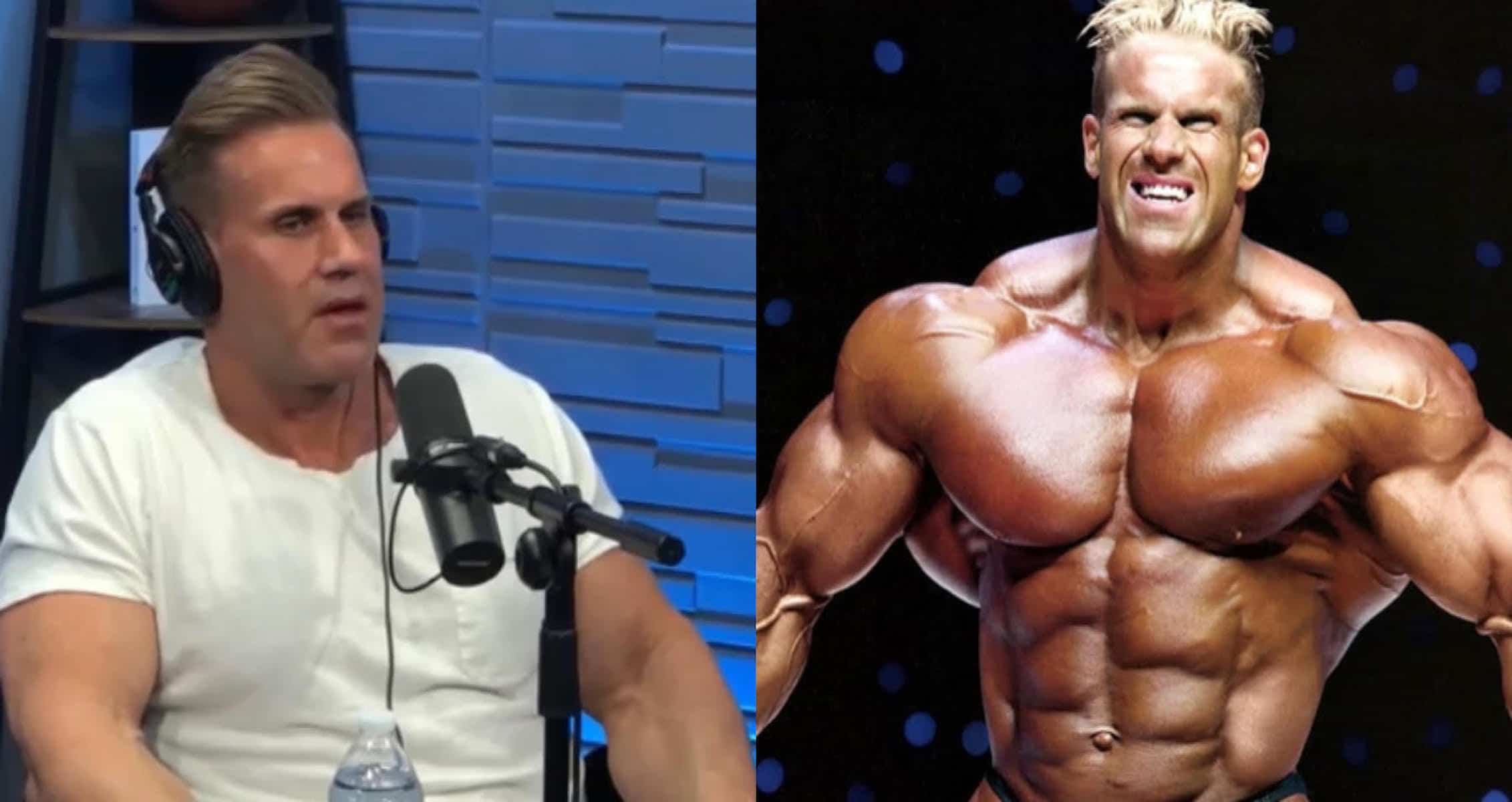
Jay Cutler recently discussed his crazy diet plans during his bodybuilding career.
Jay Cutler is a four-time Olympia champion and is known as one of the best of all-time. This means that he has put together many training programs and diet plans to build that championship physique. In a recent interview, Cutler shared some wisdom on what to make in the kitchen and also shared some of his craziest diet plans during his career.
Cutler joined The Michael Sartain Podcast, where he was able to discuss all things bodybuilding. This is where Cutler revealed that it is all about the diet when preparing for a competition such as the Olympia.
For Cutler, this included a massive amount of eggs and even purchasing a cow to keep in his freezer.
“I bought a cow from the butcher. I was living in a place called Spencer, Massachusetts. I had a local butcher there so I’d actually buy all the meat and I would have two freezers. So, what I would do is I would buy the chicken and break it all down into two-pound bags and freeze it.”
“The food I was eating six to seven times a day. I was eating upwards of four pounds of meat a day. You know, it was just every two hours like clockwork.”
When following such an intense diet plan, it is not always easy to stay motivated. Jay Cutler received this motivation from watching some of the other greats during his time. He mentioned growing up watching the all-time greats such as Arnold Schwarzenegger, Lee Haney, and Dorian Yates.
Once he was in his prime, Cutler battle with Ronnie Coleman, who won eight consecutive Olympia titles from 1998-2005. Cutler ended his reign by taking the crown in 2006.
This is when Cutler began perfecting his diets. In retirement, he admitted to not enjoying food as much but he still features plenty of eggs in his diet.
“I don’t want to have steak. I’m not a big steak eater at 44 now. I tend to eat some sushi but I’m limited even on that just because I know a lot of sushi rice has a ton of sugar. I might eat some plain fish or whatever else but there’s nothing else that excites me.
I still, I drink the egg whites. That’s the difference between back then until now. They didn’t have pasteurized egg whites. Now you can buy the cartons and you can drink them. It’s actually a very good source of protein instead of frying them up.”
Jay Cutler used to spend a large amount of time preparing his eggs because of the sheer amount that he would eat.
“I’m not going to lie, there was a lot of diets I ate 140 egg whites a day. So I was cracking eggs non-stop. I remember sitting cracking eggs for an hour in the morning and I would put everything in Tupperware containers. I would just dump out. I was eating thirty egg whites a meal then.”
This is the commitment that it takes bodybuilders to get to their highest level. Jay Cutler is a perfect example of discipline, talent, and motivation needed to become champion of the Olympia. To this day, he continues to share methods that he used to use during his time on stage.
For more news and updates, follow Generation Iron on Facebook, Twitter, and Instagram.

Natural Bodybuilder Mitch Jarvis Outlines Training Volume For Optimal Recovery
Image via Instagram @mitchjarv
PNBA Pro Mitch Jarvis reduces his workout volume for adequate recovery.
A dilemma with working out is finding the right training volume that maximizes muscle growth but facilitates adequate recovery. And professional natural bodybuilder Mitch Jarvis concurs. Mitch Jarvis is a Men’s Bodybuilding competitor for the International Natural Bodybuilding Association (INBA)/Professional Natural Bodybuilding Association (PNBA) and United Kingdom Drug Free Bodybuilding Association (UKDFBA). He was the runner-up at the PNBA World Championships and a UKDFBA champion in 2021. And in 2020, he was a UKDBFA Overall champion.
To optimize recovery, Mitch Jarvis has reduced his training volume from five days a week to four days a week. He noticed that his body wasn’t getting enough rest lifting five days a week. On social media, Jarvis stated,
“I’ve changed up my split this week so that I’m only training 4 x per week. Body wasn’t recovering from 5”
Below you can see Jarvis performing deadlifts.
https://www.instagram.com/tv/CbkHVpqDeLS/?utm_source=ig_web_copy_link
Training Volume and Recovery
Adequate training volume is imperative for maximizing muscle growth, but so is recovery. So how much volume should you do? The simple answer is enough to grow muscle but not too much that it causes overtraining.
Although doing more seems like it can yield more significant results, often, less is more when it comes to training. Doing too much volume will only hinder your progress because recovery is essential for optimal results.
You should give each muscle group a rest from training. For example, if you’re on a split routine, you should rotate between the muscle groups you train each day to give your body plenty of time to recuperate.
And you should give your body complete rest from training at least one day a week, but it can be beneficial to take more days off. Even if you’re targeting a different muscle group each day, your body still needs time to rest. For example, Mitch Jarvis has learned that his body wasn’t recovering well from training five days a week, so he reduced his training volume to four days a week.
Training Volume Per Workout
How many days you rest versus how many days you lift will also depend on the volume you’re doing per workout. For example, if you’re training each muscle group with heavy volume each workout – exercises, reps, sets – it will be beneficial to implement more rest days each week. Conversely, if you’re doing lower volume workouts, you can work out more often throughout the week and train each muscle group more often.
For example, you will typically only do 1-2 exercises per muscle group with full-body workouts, which means you can work out each muscle group more times throughout the week. However, you usually do many movements in a given workout with split routines. So you’ll need more time to grow and repair muscle tissue between training the same muscle group again.
Recovery for the Natural Bodybuilder
As a natural bodybuilder, it’s even more important to train smart and hard. Natural bodybuilders rely only on intelligent training and nutrition to put their bodies in peak condition for shows. In addition, steroids and performance-enhancing drugs will allow your body to do more volume than it would otherwise be capable.
Recap
Enough training volume is vital for muscle growth; however, ample rest time is essential. So if you’re struggling to recover and build muscle from workouts, try reducing your workout volume.
Follow us on Instagram, Facebook, and Twitter for more tips from the best natural physiques!
Yarishna Ayala Profile & Stats
The biography, life, and accomplishments of Yarishna Ayala
Photo via @yarishna Instagram
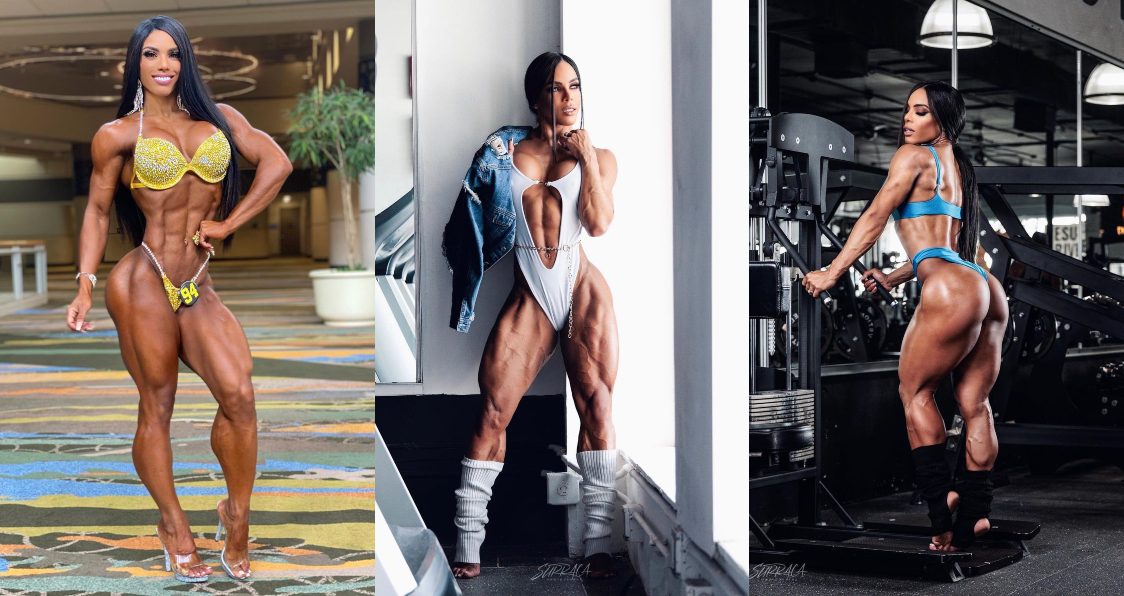
Yarishna Ayala is a professional bodybuilder and social media influencer with a great physique. Always working on her body and seeking to perform at a high level, Yarishna seeks to inspire others to get the most out of their potential.
Below is a complete breakdown of Yarishna Ayala’s profile, stats, biography, training and diet regimens.
Full Name: Yarishna Ayala
Weight
Height
Date Of Birth
125-135 lbs.
5’5”
05/09/1992
Profession
Era
Nationality
Bodybuilder, Social Media Influencer
2010
Puerto Rican
Photo via @yarishna Instagram
Biography
Yarishna Ayala was born in Puerto Rico and as she got older, she began to question what was next in her life. She had just competed in a reality dance competition and felt there was no direction after that. But she didn’t give up and hired a personal trainer to help get her on track physically. As she progressed, she was instantly taken and wanted to continue in this field.
She first competed in 2013 and would eventually earn her pro card. With numerous appearances at bodybuilding shows, she began to see the reality of competing at a professional level. As time went on, she garnered attention on social media and became a fitness icon as well.
Now a professional bodybuilder and social media influencer, Yarishna uses her platform to inspire others so they too can see great gains to their health and fitness like she does.
Photo via @yarishna Instagram
Training
For her training, Yarishna works out around 6 days per week in efforts to stay on top of everything. She will find a balance of lifting weights and cardio to round out a great routine and always seeks to maximize her workout plan as best she can.
This workout is a great lower body workout to fire up those legs and build those stabilizing muscles when looking to improve on bigger lifts.
Lower Body Workout
Barbell Skater Squats
Deadlift
Hack Squat
Leg Press
Hamstring Curls
Leg Extension
Barbell Hip Thrust
Barbell Bench Lunge
Nutrition
Like all competitive bodybuilders and athletes, Yarishna eats clean and only works to include protein, carbs, and healthy fats in her diet. Important foods include oats, sweet potato, eggs, chicken, fish, and assorted fruits and vegetables. Her nutrition plan works in tandem with a great supplementation routine.
Photo via @yarishna Instagram
Supplementation
While Yarishna has her own supplements of choice, knowing which supplements out there can benefit you are important to know for your personal gains. A fat burner is a great supplement to use for it can burn stored fat, suppress your appetite and cravings, and boost your metabolism to burn more calories in efforts to see those weight loss goals.
Competition History
2016 Pittsburgh Pro, 14th
2015 Tampa Pro, 16th
2015 Puerto Rico Pro, 9th
2015 New York Pro, 16th
2014 Irongames Pro Bikini, 7th
2014 Europa Phoenix, 7th
2014 Patriots Pro Bikini, 8th
2014 Toronto Pro, 8th
2014 New York Pro, 16th
2014 Pittsburgh Pro, 13th
2013 Valenti Gold Cup Pro, 7th
2013 Tampa Pro, 8th
2013 NPC Junior National Championships, 1st
2013 NPC New York State Grand Prix, 3rd
2013 Central American and Caribbean Games, 2nd
2013 Tony Roman Bodybuilding, 1st
2013 Ms. And Mr. Puerto Rico, 1st
2013 Unique Fitness Classic, 1st
Brandon Curry Shares Full Day Of Eating During Olympia Prep
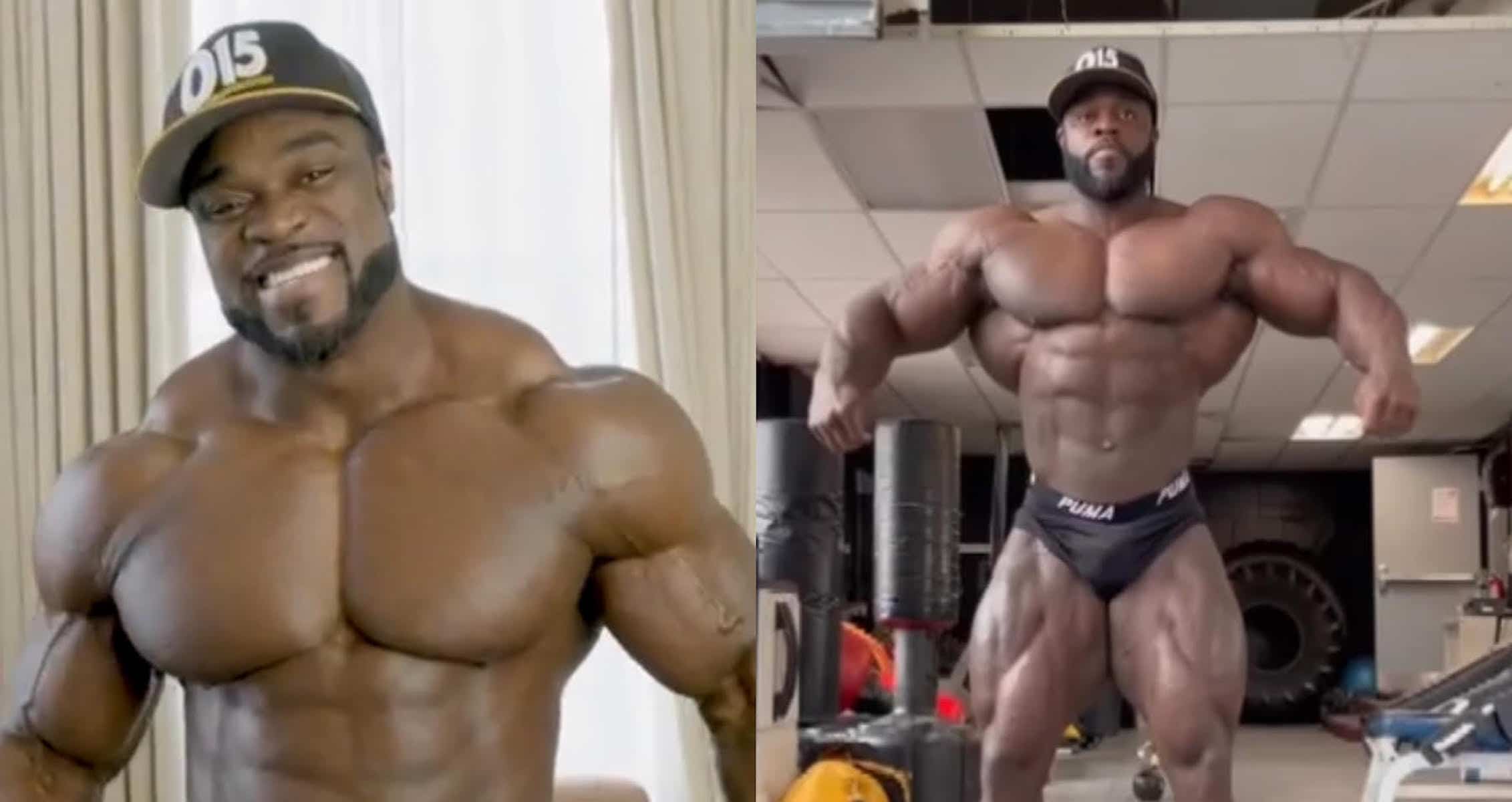
Current Arnold Classic champ Brandon Curry is preparing for a big showing at the 2022 Olympia.
Brandon Curry continues to be one of the best bodybuilders in the Men’s Open division. As he prepares for the 2022 Olympia in December, Curry recently took viewers through a full day of eating to share his Olympia diet plan.
Curry stepped on stage during the Arnold Classic in March as the favorite to take home the prize. He ended up as champion and this set the stage for a big season full of preparation to get back to the very top of the sport. Curry was named Mr. Olympia in 2019 before finishing as the runner-up in back-to-back years to Big Ramy.
Brandon Curry was featured in an interview on Men’s Health’s YouTube page where he laid out his full diet plan during preparation. The Olympia is set to return to Las Vegas from Dec. 15-18.
Brandon Curry Diet Plan
Brandon Curry began this interview by discussing the importance of this Olympia. With his recent Arnold Classic victory, Curry is aiming to take home the two biggest bodybuilding titles in one year. This would be the second time in his career that he would accomplish that feat.
Curry discussed his methods when figuring out his meal plan and it does not consist of counting calories. Instead, he finds it important to measure out his portions on a scale.
“Everything is measured by scale weight. So, I mean, anywhere from 200 grams on the scale to 200 grams of protein per meal and then for carbohydrates, that can go all the way up to 400 grams to all the way down to nothing in some meals.”
Meal 1
350 grams potatoes
200-220 grams chicken
2-3 eggs
Meal 2 – Pre-Workout
Chicken
200-300 grams rice
Meal 3 – Post Workout
Salmon or steak
250 grams sweet potatoes o greens
Meal 4
220 grams chicken
200-250 grams rice
Meal 5
220 grams salmon or steak
salad
Meal 6
220 grams fish
salad
200 grams rice (optional)
There are some variables within this diet that can change. Brandon Curry explained how he will change some aspects depending on where he is in training. This includes staying away from fiber when he is high on carbs and opting for a lean protein once he is further into his preparation.
“Typically when I am high on the carbs, I stay away from the fiber for digestion. I don’t want to be too full. The fiber slows everything down. Fullness is the enemy when you’re trying to get in a lot of calories.”
And of course, he ended by discussing what a typical cheat meal looks like. Curry admitted to indulging in a burger, French fries, and an apple pie on certain occasions. While he is preparing for the Olympia, his cheat meal will usually be sushi.
The calendar has turned to April and that means the Olympia is about eight months away. Brandon Curry knows what it takes to be on top of his game and that is what fans can expect come December.
For more news and updates, follow Generation Iron on Facebook, Twitter, and Instagram.