
 All Posts By Presser

Canelo Alvarez Knocks Out Caleb Plant, Plus UFC 268 Results
Who took home victories in tonight’s boxing and UFC fights?
Canelo Alvarez versus Caleb Plant isn’t your average boxing match. In fact, it’s the first of its kind. Never in the history of boxing has there been a unified Super Middleweight Champion of the world. Canelo and Plant are set to battle for the right to call themselves unified champion.
On the same night UFC welterweight champion Kamaru Usman is set to defend his title for the second time against Colby Covington in a rematch. UFC 268 will also feature another rematch between Rose Namajunas and Zhang Weili.
The Results
Canelo Alvarez vs Caleb Plant
Canelo Alvarez knocks out Caleb Plant in round 11.
Kamaru Usman vs Colby Covington
TBA
Rose Namajunas vs Weili Zhang
Rose Namajunas defeated Weili Zhang by unanimous decision.
Did you watch the fights tonight?
For more news and updates, follow Generation Iron on Facebook, Twitter, and Instagram.
News and Editorial Writer at Generation Iron, Jonathan Salmon is a writer, martial arts instructor, and geek culture enthusiast. Check out his YouTube, Instagram, Twitter, Facebook, and Sound Cloud for in-depth MMA analysis.
The GI Team is here to provide top news and original content for the new generation. The generation of bodybuilders who are pushing the sport to bigger and better places. Join The Movement. Become a part of Generation Iron!

2021 EVLS Prague Pro Results
Who will win Men’s Open during 2021 EVLS Prague Pro?
The 2021 EVLS Prague Pro took place on Saturday and it was highlighted by the Men’s Open. Some of the top competitors in the world gathered in the Czech Republic to gain that automatic qualifier to the 2022 Olympia. This event is set to take place in December 2022 in Las Vegas.
Regan Grimes already has his qualification for the biggest event of the year but he was quickly back on stage during the Prague Pro. Grimes was victorious during the 2021 KO Pro Egypt just one week ago but felt a need to get back on stage. Grimes has looked incredible during post-Olympia competitions and this could be because of a change made with his coach.
Grimes was a name to watch coming into the show, along with Nathan De Asha. It has been a bit of a tough go for De Asha when it comes to travel but he was able to get on stage during the Prague Pro. He has three victories so far in 2021. De Asha has been providing physique updates so it was not a surprise to see his performance on Saturday.
Samson Dauda was also quickly back on stage after appearing in Egypt last week. He finished third at the event, behind Grimes and Mohamed Shaaban. Dauda wasted no time getting back on stage. Rafael Brandao made his return to competition and it will be interesting to see the course of action he takes moving forward.
There were six divisions in total where winners would qualify for the 2022 Olympia. The full results have been announced and the winners have claimed their prizes. Check out the full breakdown, along with scorecards, from each event below!
2021 EVLS Prague Pro: All Division Winners
Men’s Open:
Men’s 212: Ahmad Ashkanani
Classic Physique:
Men’s Physique:
Bikini:
Figure:
2021 EVLS Prague Pro Breakdown
Men’s Open
Results coming soon!
First Place –
Second Place –
Third Place –
Fourth Place –
Fifth Place –
Sixth Place –
Men’s 212
Full results coming soon!
First Place – Ahmad Ashkanani
Second Place –
Third Place –
Fourth Place –
Fifth Place –
Sixth Place –
Classic Physique
Results coming soon!
First Place –
Second Place –
Third Place –
Fourth Place –
Fifth Place –
Sixth Place –
Men’s Physique
Results coming soon!
First Place –
Second Place –
Third Place –
Fourth Place –
Fifth Place –
Sixth Place –
Bikini
Results coming soon!
First Place –
Second Place –
Third Place –
Fourth Place –
Fifth Place –
Sixth Place –
Figure
Results coming soon!
First Place –
Second Place –
Third Place –
Fourth Place –
Fifth Place –
Sixth Place –
Generation Iron wishes to congratulate all the great athletes who earned a win at the 2021 EVLS Prague Pro. Make sure to check out our full IFBB Pro results page from this year and previous years right here to catch up on any action you may have missed!
For more news and updates, follow Generation Iron on Facebook, Twitter, and Instagram.
Greg has covered the four major sports for six years and has been featured on sites such as Sports Illustrated, Fox Sports, SB Nation, NJ.com, and FanSided. Now, he is transitioning into the world of bodybuilding and strength sports.
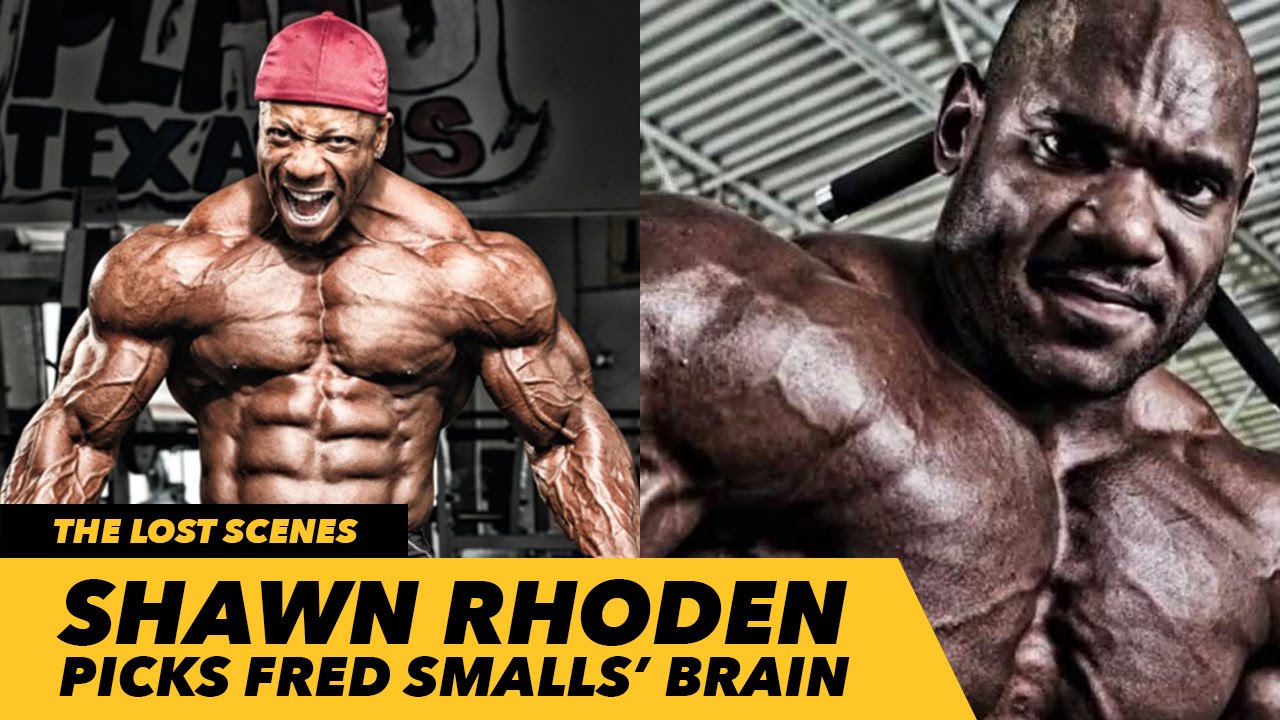
THROWBACK: Shawn Rhoden Picks Fred Smalls’ Brain
[embedded content]
Shawn and Biggie are two friends that go way back.
NOTE: This is an archived video reposted in tribute to the late Shawn Rhoden – who passed away on November 6th, 2021.
Shawn Rhoden is at it again. The bodybuilder took over the mic and interviewed some of the most talented competitors in the game. One such athlete is the underrated Fred “Biggie” Smalls, one of Flexatron’s old friends and a talented bodybuilder in his own right. Shawn Rhoden got some updates on Fred’s plans for 2015 and what things we can expect from the talented competitor.
You can also check out our complete video catalog by hitting up our Episodes tab right here on our site. Also, be sure to follow us on Facebook and Twitter as well as subscribe to our YouTube channel for exclusive updates.
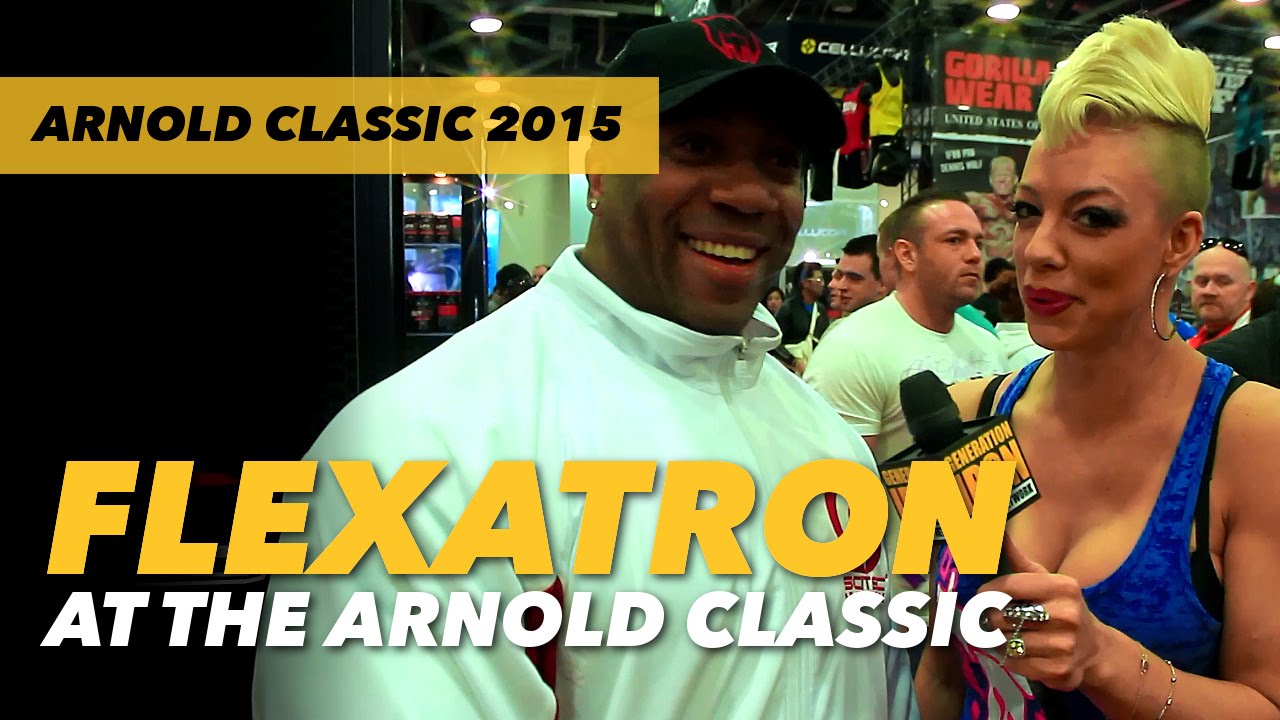
WATCH FLEXATRON AT THE ARNOLD CLASSIC 2015
[embedded content]
What’s next for Shawn Rhoden in 2015?
NOTE: This is an archived video reposted in tribute to the late Shawn Rhoden – who passed away on November 6th, 2021.
If you haven’t noticed, Shawn Rhoden has been hanging out with us all weekend at the Arnold Sports Festival – grabbing interviews and hanging out with the fans at the expo. We also took the opportunity to grab an interview with the powerful Flexatron himself about what’s in store for 2015. Will he be fully prepared to gun for the #1 spot at the next Mr. Olympia? Find out in this exclusive video above.
You can also subscribe to our official YouTube channel to keep getting updates about everything at the Arnold Sports Festival 2015.
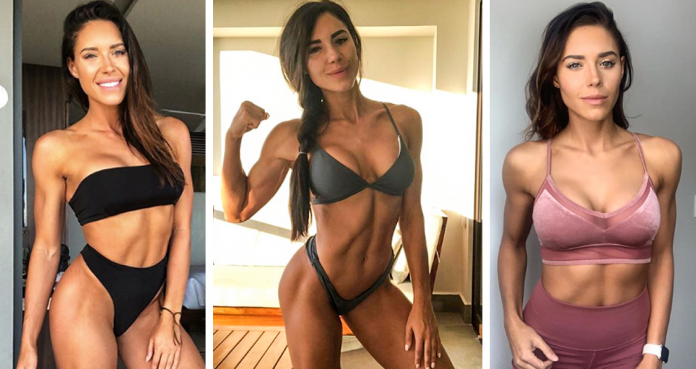
Gym Crush – Kelsey Wells
Kelsey Wells – The Dream Girl
For the uninformed and uninitiated, Kelsey Wells is an Instagram fitness celebrity with 2.5 million followers. Kelsey’s incredible physique and her story are an inspiration for all her followers.
Wells is a fitness celebrity, trainer, mom, and wife, and she’s a star in all her roles. Working with people like Kayla Itsines, Kelsey built a fitness empire for herself with her Instagram photos, videos, and inspirational quotes.
Kelsey’s beginning in the fitness world was far from typical. Wells wasn’t always a fan of exercising. While she spent her early days playing sports, working out became a chore after finishing school.
All of this was about to change when she gave birth to her son. Kelsey returned to the iron paradise and started lifting weights to combat post-partum depression. Since then, her love for fitness and her influence as an online model and coach have grown immensely.
The Change Was Almost Immediate
Training and staying in shape helped Kelsey vent her negative emotions. Seeing her physical progress and transformation was the icing on the cake. Wells took it upon herself to learn more about fitness and started researching more advanced topics about nutrition.
Soon after following a diet plan, Kelsey realized that the food she ate could greatly impact her mood and how she felt overall. As a result, she revamped her diet plan from scratch, and it’s when the biggest improvements followed.
The Best Shape Of Her Life
While following a regular training and diet plan, Wells felt better than ever and her physique improved by leaps and bounds. When Kelsey returned to weighing 140lbs (her pre-pregnancy weight), her body composition was completely different due to weight training.
Kelsey’s transformation gave her the courage to inspire others to take charge of their bodies and life. Wells opened a social media account where she started posting pictures of her transformation.
Inspiring Others
Along with her transformation pictures, Kelsey posts quotes from her fitness journey (a practice she still follows). Her follower count grew as more and more people resonated with her story and she became a star, especially amongst other mothers who face post-pregnancy depression.
It wasn’t long after this that Kelsey turned into a fitness guru. She seized the opportunity and opened her online coaching business along with other businesses. Kelsey has now turned into a successful entrepreneur and a fitness icon.
Get Fit The Kelsey Way
If you’re a digger for new workouts, make sure you give Kelsey a follow on Instagram. She posts her workouts regularly on the gram for her fans to follow. Wells relies more on strength training as compared to cardio for maintaining her toned physique.
When was the last time you saw someone who could rock both these attires so effortlessly? We are a fan of Kelsey’s and wish her the best for her future endeavors in and outside the fitness industry.
Who is your gym crush?
Let us know in the comments below. Also, be sure to follow Generation Iron on Facebook, Twitter, and Instagram.
Common Periodization Models And Understanding When To Use Them
Periodization for Maximizing Progress
Not to be confused with renaissance periodization, periodization is simply a form of resistance training that is used by athletes and gym goers alike.
For decades, periodization has been seen as the ultimate programming method for bringing about optimal strength adaptations.
In the fitness industry, it is very rare that something radically new is introduced – especially in terms of programming.
Scientific studies are constantly moulding our understanding of physical training and while specific strength training methods may adapt to reflect these findings, the fundamental principles of periodization remain.
These principles have remained steadfast throughout the years and will continue in the years to come.
Undoubtedly, there will always be small tweaks to align with demands, requirements and current niches but this is not a negative thing.
It is this continually progression that prevents the fitness industry from becoming idle. It is crucial that these tweaks takes place to align with the most recent research.
With so many different training techniques, it can all become very convoluted. However, by taking a step back it becomes very clear that having many training options is actually of great benefit.
The array of choices that are available allow you to select a program that is most specific to your goals, needs, preferences and requirements.
In addition to this, it also provides an insight into the reasons behind why trainers often program in a variety of different ways.
For example, many of you have likely read about Jim Wendler’s 5/3/1 method. However, have you ever considered why exactly Wendler used this approach?
It is possible to learn a great deal about programming and get to grips with many different methods of strength training. The importance of personal growth is often overlooked.
If you are looking to achieve a specific goal or training adaptation, it’s likely that it has tested, studied and applied before.
This article will present and analyze 3 of the most common forms of training periodization (1). It will help you grasp the structure of each method and understand when to apply it to your training.
For those of you who are intermediate or advanced lifters, the likelihood is that you have inadvertently been using these methods from day one.
The History of Periodization
Our understanding of periodization originates from the general adaptation syndrome (GAS) theory (2) which was constructed in the 1950’s.
In the GAS theory, when the body experiences a new stimulus (such as strength training), there are 3 associated phases – alarm, resistance and exhaustion.
The alarm phase refers to the initial shock associated with the new stimulus. Delayed onset muscle soreness (or DOMS) is an excellent example of this.
Resistance is the adaptation to the stimulus. In the phase, the body adapts to become stronger and can consequently deal with the stimulus more efficiently.
Exhaustion is experienced when the body can no longer deal with the stimulus that it is being exposed to. In other words, this is overtraining which leads to a decrease in performance.
Ideally, the goal is to stay within the resistance phase for as long as possible. Doing so will maintain optimal performance and consequently cause maximal adaptation.
The methods utilized in periodization aim to keep the individual in this resistance phase for the greatest period of time possible.
Your previous training experience, activity levels and goals will all combine to determine which periodization model you should follow.
Understanding Periodization Cycles
There are a couple of periodization terms referring to specific timeframes that you should be aware of.
The majority of periodized strength programs can be broken down into macrocycles, mesocycles and microcycles.
Typically, macrocycles are annual, mesocycles are monthly and microcycles are weekly blocks of training.
Be aware that the length of time of both the mesocycle and microcycle can vary depending on the coach, model and season.
1) Linear Progression Periodization
The most commonly used periodization model by a distance. If you remember back to when you first started strength training, it’s likely you followed a linear progression model.
This annual model looks to gradually increase the demand and intensity while simultaneously decreasing volume over a prolonged time period.
The principle behind this model is to progress in one variable and build up to a peak. This is typically done by following the progressive overload principle.
Following this model is ideal for those looking to build strength and lay a solid foundation. The reason it is often used by novices is that it is very simple to understand and implement (3).
Not only is it simplistic, it is undoubtedly effective.
So when should linear periodization be used?
For those who are working up to a competition or event, a linear progression program is recommended.
Training will allow for steady, consistent progress and allow the individual to reach a peak in time for the competition or event.
For example, if an individual is training for a long distance running event in a years time, training can be tailored to gradually progress to avoid overtraining and peak in time for the event.
As mentioned, this form of periodization is ideal for beginners. Many beginners will not be able to follow more advanced training methods and therefore, a linear program is most appropriate for their needs and experience.
Finally, periodized programs are useful for athletes who participate in a short season sport or have multiple competitions in quick succession.
As with the running event, the program allows for a gradual build up in time for the season or competition.
2) Non Linear / Undulating Periodization
Unlike linear programs, this periodized program constantly varies in terms of stimulus over a number of cycles (4).
Non-linear / undulating programs also focus on gradually increasing a number of variables whereas linear programs only focus on one.
Variables that are commonly manipulated during these types of programs are exercise, intensity, volume and training adaptation. These manipulations can be programmed daily, weekly or bi-weekly.
There is no doubt that training programs that follow an undulating pattern are much more advanced than linear progression programs and they are often used by advanced lifters / athletes.
They are a superb method of simultaneously training multiple variables. For example, strength may be trained in the first session, power in the second, and endurance in the third.
When should the non-linear / undulating approach be taken?
Well, as mentioned, the model is ideal for those who are at an advanced level. Those who have more than 2 years training experience may benefit from the consistent variable manipulation.
After a period of time, the body becomes accustomed to the stresses of strength training and a plateau may be reached. Juggling training variables may help to move beyond any training plateau.
Secondly, those who participate in a sport which involves long seasons may be suited to an undulating program.
During the course of a full season, an athlete has to be capable of performing optimally across a number of variables.
Constantly changing the focus of training, will prevent overtraining of one variable and will instead maintain equilibrium across a range of variables.
3) Block Periodization
While the previous periodization styles have been around for a long time, block periodization is relatively “new”.
With block periodization, training periods typically last 2-4 weeks and each block focuses on three individual phases, all which vary in intensity (5).
The phases are accumulation (50-75%), transmutation (75-90%) and realization (90%).
The purpose of these individual blocks is to ensure that the athlete stays at a peak level for the longest time possible.
Since training for many sports involves long durations and multiple peaks, block periodization is seen as ideal.
Block periodization also allows the athletes to focus on sport specific adaptations that they require for their particular sport.
For example, an athlete that doesn’t need to build significant muscle size for their sport, will not train for it.
Those looking to maintain athleticism over a prolonged time period should consider utilizing block periodization.
Regularly working on sport-specific variables will facilitate improvements in how the athlete performs in the sport, while minimizing the risk of burnout.
When should block periodization be applied?
There are a number of sports that have multiple peaks throughout the season. Athletes that participate in a sport which involves multiple competitions should adopt a block periodized program.
The most important considerations to be made with block style periodization is the athlete’s needs and order of the blocks.
The blocks should be rotated appropriately to align with the athlete’s schedule and upcoming competitions. If done correctly, the athlete be suitably primed for competition.
Final Word
There are a number of periodization styles that can be applied to bring about optimal adaptations. It is critical however that the sport, athlete’s training history, experience, needs and preferences are all considered when selecting a periodized model.
For more news and updates, follow Generation Iron on Facebook, Twitter, and Instagram.
References:
1-Lorenz, Daniel; Morrison, Scot (2015-11). “CURRENT CONCEPTS IN PERIODIZATION OF STRENGTH AND CONDITIONING FOR THE SPORTS PHYSICAL THERAPIST”. International Journal of Sports Physical Therapy. 10 (6): 734–747. ISSN 2159-2896. PMC 4637911. PMID 26618056.
2-Selye, Hans (June 17, 1950). “Stress and the General Adaptation Syndrome”. British Medical Journal. 1 (4667): 1383–1392. ISSN 0007-1447. PMC 2038162. PMID 15426759.
3-Miranda, Fabrício; Simão, Roberto; Rhea, Matthew; Bunker, Derek; Prestes, Jonato; Leite, Richard Diego; Miranda, Humberto; de Salles, Belmiro Freitas; Novaes, Jefferson (2011-7). “Effects of linear vs. daily undulatory periodized resistance training on maximal and submaximal strength gains”. Journal of Strength and Conditioning Research. 25 (7): 1824–1830. doi:10.1519/JSC.0b013e3181e7ff75. ISSN 1533-4287. PMID 21499134.
4-Lorenz, Daniel S.; Reiman, Michael P.; Walker, John C. (2010-11). “Periodization”. Sports Health. 2 (6): 509–518. doi:10.1177/1941738110375910. ISSN 1941-7381. PMC 3438871. PMID 23015982.
5-Issurin, V. (2008-3). “Block periodization versus traditional training theory: a review”. The Journal of Sports Medicine and Physical Fitness. 48 (1): 65–75. ISSN 0022-4707. PMID 18212712.
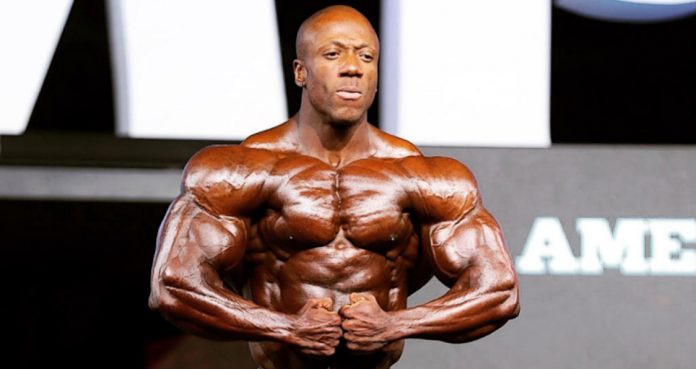
Former Mr. Olympia Shawn Rhoden Reportedly Dead At 46 Years Old
Pro bodybuilder and former Mr. Olympia champion Shawn Rhoden has died.
More sad news has hit the bodybuilding world in already tragic year – pro bodybuilder and former Mr. Olympia champion Shawn Rhoden has reportedly died of a heart attack. He was 46 years old. The pro bodybuilder was a modern legend in the sport who also faced serious controversy in the years after winning the Mr. Olympia in 2018.
Very little information has been revealed at the time of this writing. But sources close to Generation Iron have reported that Shawn Rhoden suffered a fatal heart attack. Posts on social media from fellow athletes, experts, and fans have begun to pour out Saturday morning for the late pro bodybuilder.
An aspiring soccer player in his early teens, Shawn Rhoden discovered bodybuilding in 1992. One of his earliest inspirations was the former Mr. Universe champion Yohnnie Shambourger. Rhoden entered into his amateur bodybuilding career – only to face several injuries that pulled him out of competing. Shortly after, his father passed away.
The combination of these two events led to Shawn Rhoden developing an addiction to alcohol – completely derailing any chance of returning to a career of competitive bodybuilding. However, after putting much work into slow recovery, he returned to the sport and eventually earned his IFBB Pro card in 2010.
Shawn Rhoden placed 11th at his Mr. Olympia debut in 2011. Just one year later he rose up to third place. From that moment on, Rhoden remained in the top five at the Mr. Olympia competition year after year. He was seen as a serious threat to the title and was well known and respected for his smaller more aesthetic physique compared to the “mass monster” body types of his fellow competitors.
In 2018, Shawn Rhoden defeated Phil Heath in the Mr. Olympia. He was 43 years old – making him the oldest bodybuilder to ever win the title. His win was also notable for being the first person to dethrone Heath, who had won seven straight titles in a row and was looking to tie the world record of eight championship victories.
Leading up to his Mr. Olympia victory, a documentary was filmed chronicling his training and prep leading up to the competition titled Flexatron: Becoming Shawn Rhoden. The documentary also dove deep into his past exploring his upbringing, his series of injuries, the tragic passing of his father, and his alcohol dependence. Generation Iron distributed the film in 2019, releasing less than one year after his Mr. Olympia victory.
In July 2019, Shawn Rhoden was accused of sexually assaulting a fellow female bodybuilder at a hotel in Salt Lake City, Utah. The accusations claimed the events took place in October 2018 – very shortly after his Mr. Olympia win. He was formally charged in July of 2019. Shortly after the official charge, American Media Inc (AMI) issued a statement officially banning Rhoden from competing at the Mr. Olympia competition. This decision was to be reconsidered upon the conclusion of legal proceedings. Up until his passing, the accusations against Shawn Rhoden were never proven nor cleared.
Despite controversy, Shawn Rhoden was seen as a legend in the sport by many fans and athletes in the community. His excellent conditioning and near-Classic Physique made him a unique standout representing an older era of the sport. He is one of only 17 competitors to ever win a Mr. Olympia title.
The bodybuilding community has already begun an outpour of condolences via social media:
This is still a developing story. Generation Iron will continue to update as more information becomes available. The entire Generation Iron staff sends condolences to friends and family of Shawn Rhoden during this tragic time.
How Knee Sleeves Help Bodybuilders Stay Physically Healthy
The right equipment can save you a lot of pain.
We constantly put our muscles and joints under serious amounts of stress but knee sleeves can actually be a great alleviation tool. As bodybuilders, finding the perfectly sculpted physique requires hard work and serious dedication, does it not? With that comes a sense of pressure, both internal and external, to compete and be the best. Lifting massive amounts of weight to see our desired gains, while also moving with efficiency simply starts to beat up our joints and can lead us down a road we just don’t want to go.
Enter knee sleeves, a great piece of equipment to provide for comfort and support for those valuable, and often times vulnerable, joints to keep us as healthy and safe as possible during those big lifts. The right knee sleeve will prove to be a useful tool as you seek to alleviate much of the load that those heavy lifts cause. And as athletes seeking the most for balance and symmetry, protecting your entire body equally seems like a no brainer.
Let’s take a look at knee sleeves and their role in helping bodybuilders really achieve success. We’ll talk benefits. We’ll talk finding the right sleeve. We’ll talk why it matters for bodybuilders. And most importantly, we’ll give you some amazing options so you don’t have to sift through websites to find the right one. Your answers are below so let’s get into it.
Benefits Of Knee Sleeves For Bodybuilders
Knee sleeves have tons of benefits for athletes of all sports, but especially for those working with heavy weight and explosive movements. At the end of the day, a great knee sleeve will promote confidence in your lifts so you feel as though you can push it to the next level without hurting yourself, or something worse.
Benefits of a quality knee sleeve include:
Compression and comfort: Work to add nice compression with a comfortable feel to reduce pain and decrease swelling.
Support your muscles and joints: Knee sleeves will support your muscles and decrease muscular vibrations to help fight fatigue and improve athletic performance.
Prevent injury and unwanted pain: Protect those vulnerable joints from pain and unwanted soreness keeping you free from dreaded injuries (1).
Better recovery: By promoting better workouts, healthy oxygen and blood flow, and less lactic acid build-up, your recovery is even more heightened for faster bounce back.
Choosing The Best Bodybuilding Knee Sleeve
Like most equipment, choosing the best knee sleeve can be a challenge. Going into the search, having a rough idea of what you want in terms of size and level of comfort can help narrow down your search.
When it comes to size, typically knee sleeves come in 3mm, 5mm, and 7mm. A 3mm knee sleeve is typically best for those endurance athletes as it is lighter and can help with better movements. Those 5mm and 7mm knee sleeves are most likely more in line with what a bodybuilder needs for they are thicker to provide for better support, while still being functional enough to move if need be. A 7mm may be more for those heavy lifters, so getting into powerlifting territory, but a 5mm knee sleeve should be exactly what a bodybuilder needs for both support and comfort.
Other factors to consider for a bodybuilding knee sleeve are whether or not you want padding, which can add comfort but affect mobility, the type of material used to maximize comfort as best you can, and the fit in terms of how tight you want your sleeve to not restrict movement, but still offer a snug, supported feel (2).
Knowing When To Use Them
Often times, the question comes up of when to use a knee sleeve. If you are just starting out with bodybuilding, you most likely don’t need a sleeve for the amount of weight isn’t as stressful as it will get to be. However, if you have existing knee problems then a sleeve may be a good bet to help keep you as healthy as possible. You also want to be conscious of becoming reliant on a sleeve. Working on proper form and maximizing your technique without a knee sleeve can help prevent any of those unwanted injuries that may unfortunately arise and not keep you so dependent on using a knee sleeve.
Bodybuilders & Knee Sleeves
So, for us bodybuilders, a knee sleeve can help us greatly. In terms of our workouts, we tend to push our bodies to the absolute max and having that extra support is something we just absolutely need (3). While we look to build a sculpted physique, fix any imbalances, and push ourselves to the max, knowing we have the tools to help get things done is exactly what we need to give ourselves the best support for all those bodybuilding wants.
The Best Bodybuilding Knee Sleeves
As promised, we wanted to share some awesome knee sleeves that are well-designed and can offer only the best in terms of overall comfort and support. SBD offers two great options in 5mm and 7mm so you can tackle any of your lifting wants with ease. Two great options, they are competition approved and designed to minimize risk and maximize performance. Mava Sports and Rehband offer two other great options perfect for tackling those movement needs and giving you the best in terms of overall support.
Check out our list of the Best Knee Sleeves for more great products!
Wrap Up
Knee sleeves are one of those luxuries afforded to us bodybuilders for their ability to greatly impact all of our gains and offer comfort and support to any of our lifts. While we seek to improve in all areas of our training and performance, having things like knee sleeves can be comforting in knowing the more we lift, the more protection we indeed have. Check out a great pair of knee sleeves and see what this great piece of equipment can do for your bodybuilding goals.
Let us know what you think in the comments below. Also, be sure to follow Generation Iron on Facebook, Twitter, and Instagram.
*Images courtesy of Envato
References
Aasa, U.; et al. (2016). “Injuries among weightlifters and powerlifters: a systematic review”. (source)
Machek, S.; et al. (2021). “Neoprene Knee Sleeves of Varying Tightness Augment Barbell Squat One Repetition Maximum Performance Without Improving Other Indices of Muscular Strength, Power, or Endurance”. (source)
Sharif, N.; et al. (2017). “Biomechanical and functional efficacy of knee sleeves: A literature review”. (source)
Larry Wheels Shares Exercise To Build A Massive Back
Larry Wheels recently posted a video of a workout to build a huge back.
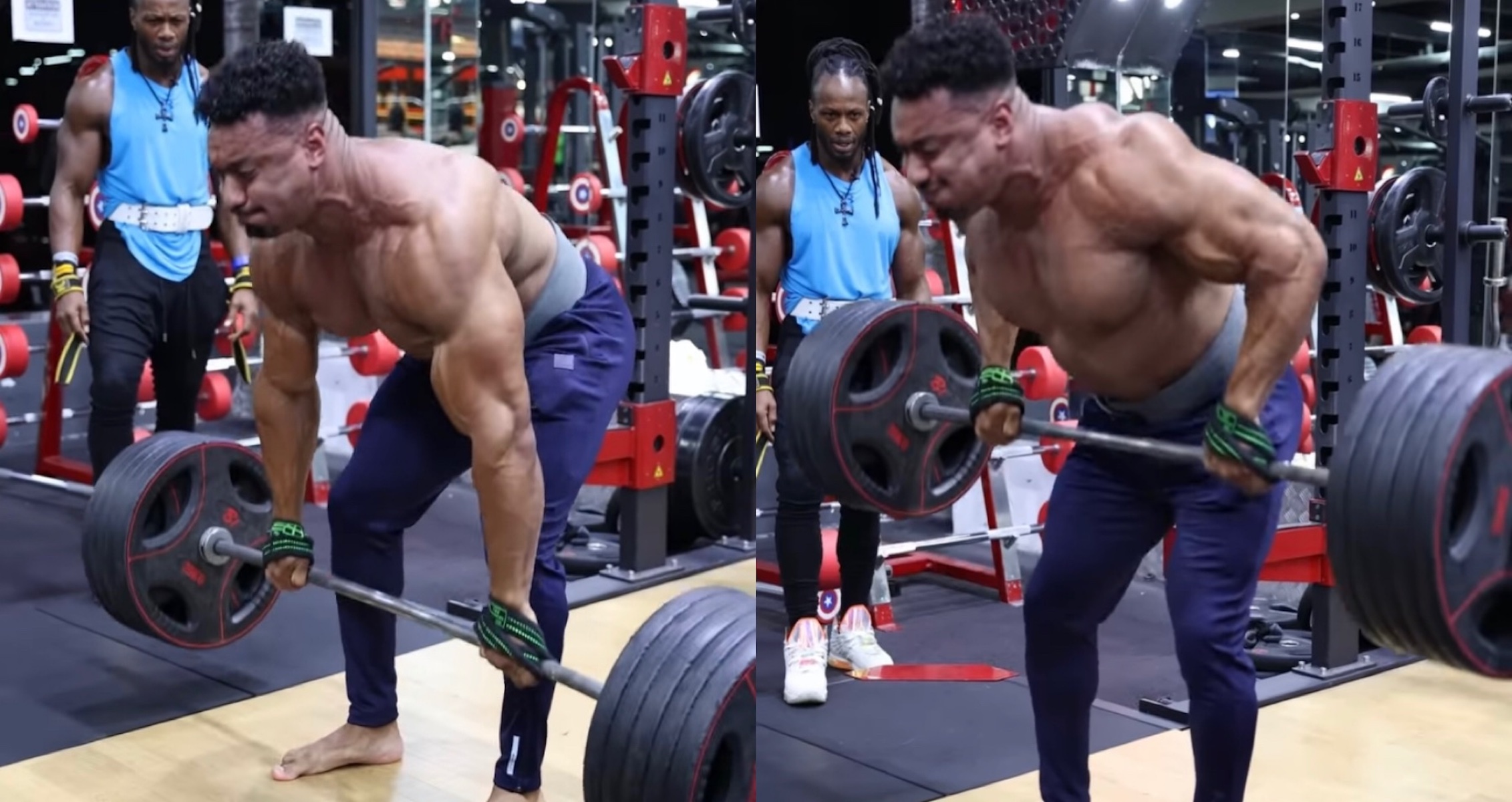
Larry Wheels is a well-known powerlifter who is seen moving huge weight in the gym during workouts. Recently, Wheels shared a video to Instagram performing a 220kg (485lb) back row.
In his caption, Wheels claims this is the best workout to develop a huge back. In the video, Wheels is seen moving the large weight up to his stomach and returning it to the floor at a rapid pace. He is making the lift look easy despite the incredible amount of weight.
“485lbs/220kg rows for reps develop a huge thick back.@ulissesworld@teampersonalrecord for the straps I’m using!”
Larry Wheels has been putting up some huge numbers in the gym. Just a week ago, he set a new PR with a 140lb shoulder press for 17 reps. He has also shown big numbers performing an overhead press. Wheels is also known for his massive squats.
In September, Wheels set a new personal best with a 950lb squat. This came one week before he suffered a quad injury performing the same lift. Wheels was seen dropping the huge weight off his back after his quad seemed to pop. This forced him to take some time off but he quickly returning to the gym.
Wheels has been putting up some huge numbers because of his work as a powerlifter but has also dabbled in the sport of arm wrestling. This was a venture that did not last long but Wheels had some big-time matchups against the likes of Schoolboy. While Wheels has made his return to powerlifting, he plans to compete in arm wrestling once again.
Larry Wheels announced he will be taking on powerlifter Brandon Allen in an arm-wrestling match. This will take place on CoreSports.world in December. Wheels will not be the only high-profile athlete appearing at the event as both Hafthor Bjornsson and Devon Larratt will be present.
This is a chance for Wheels to compete against an athlete who has a similar background. This will be an exciting match because of the preparation done by the two competitors. There is a chance that this is an even match that makes for some must-see action.
One thing we do know is that Larry Wheels is known for his trend of setting different personal records in the gym. That has continued recently and he is continuing to share some workouts to build up different body parts.
For more news and updates, follow Generation Iron on Facebook, Twitter, and Instagram.
Eddie Hall Raises Charity Wager To Hafthor Bjornsson to $200,000
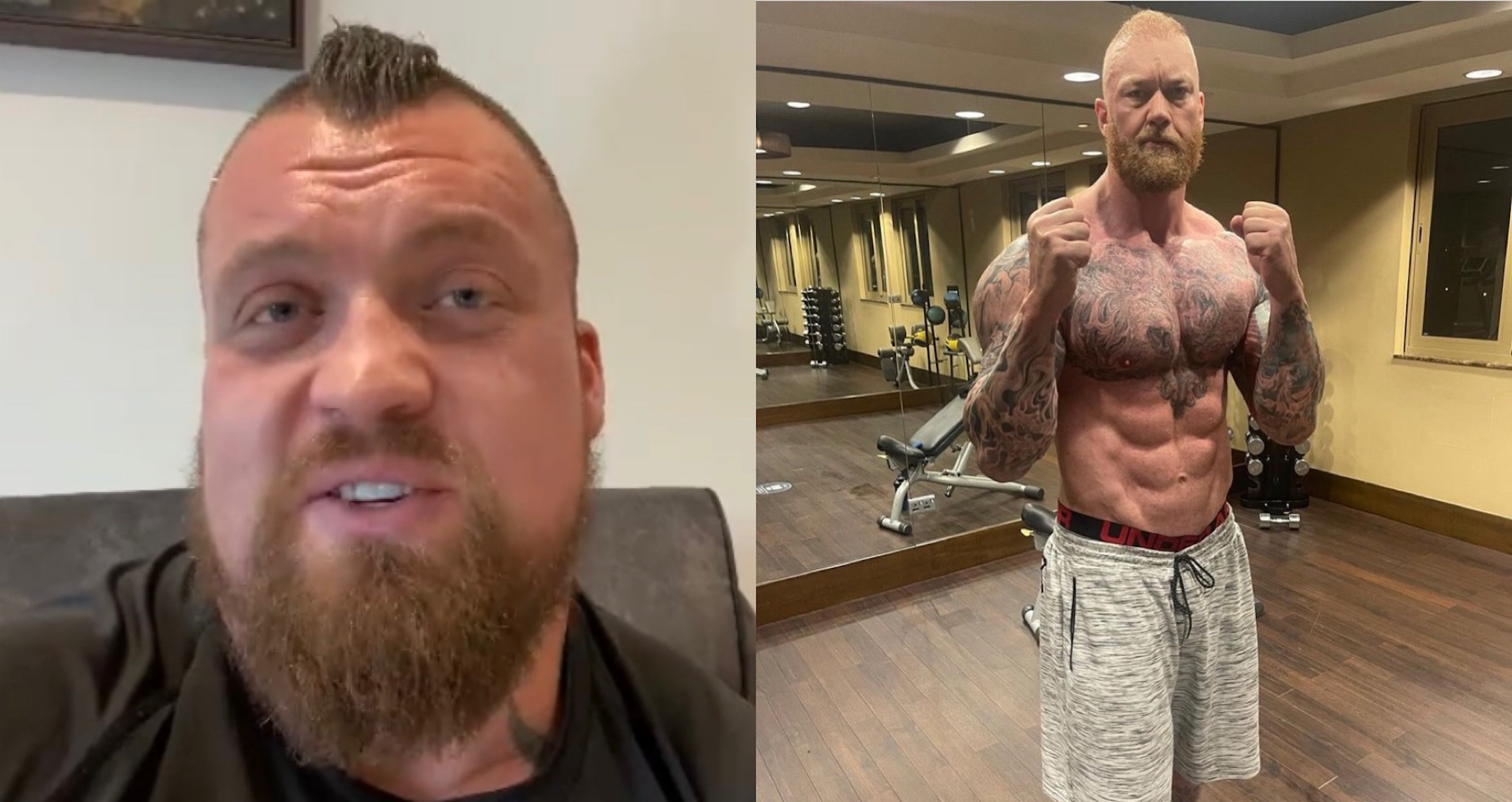
Eddie Hall has now raised his offer to Hafthor Bjornsson to $200,000.
The boxing match between Eddie Hall and Hafthor Bjornsson has plenty of hype and there is not even a date set yet. This began with plenty of personal history but the stakes have been raised in recent weeks. Now, Hall is willing to offer $200,000 for a charity match against Bjornsson.
This began with an original offer of $100,000 from Hall. This money would be donated by the loser of the fight to the charity of choice of the winner. This adds another exciting dynamic to a boxing match that has been a long time coming.In a recent Instagram post, Hall doubled his original offer.
“Well, it’s been over a week and he’s ignored me, and I’ve heard from a mutual friend that he doesn’t want to do the deal because he’s scared to lose. Which, I don’t blame him. So, I want to make this a bit easier for you Thor, and please everyone put pressure on him now. So the new deal is, if I beat you, you have to pay $100,000 to my choice of charity. If you beat me, I will pay $200,000 to your choice of charity.”
“Come on now, don’t ignore me, this is for charity. We’ll get the promoter to put it right into the contract, so there’s no getting out of it. So everyone put pressure on Thor, and don’t ignore me again. Let’s pull the deal on this, let’s do something good for charity.”
During his video, Hall mentions that be believes Bjornsson did not accept his offer because of a fear of losing. Because of this, he raised the stakes to try and persuade the strongman turned boxer to accept the challenge.
Eddie Hall suffered a torn tricep that kept him out of the original fight scheduled for September. This allowed Devon Larratt to step in his place and take on Hafthor Bjornsson. The two have been linked for years now in the sport of strongman. This is because of deadlift world records and World’s Strongest Man competitions. Now, the two have a chance to meet in the ring to see who is the better boxer.
Hafthor Bjornsson has more experience in the ring under his belt but Eddie Hall has been training through his injury. Now that he is back to seriously gearing up to take on Bjornsson, he has made it clear that a wager for charity is on the table.
For more news and updates, follow Generation Iron on Facebook, Twitter, and Instagram.