
 All Posts By Muscle Insider
Board Certified PHD
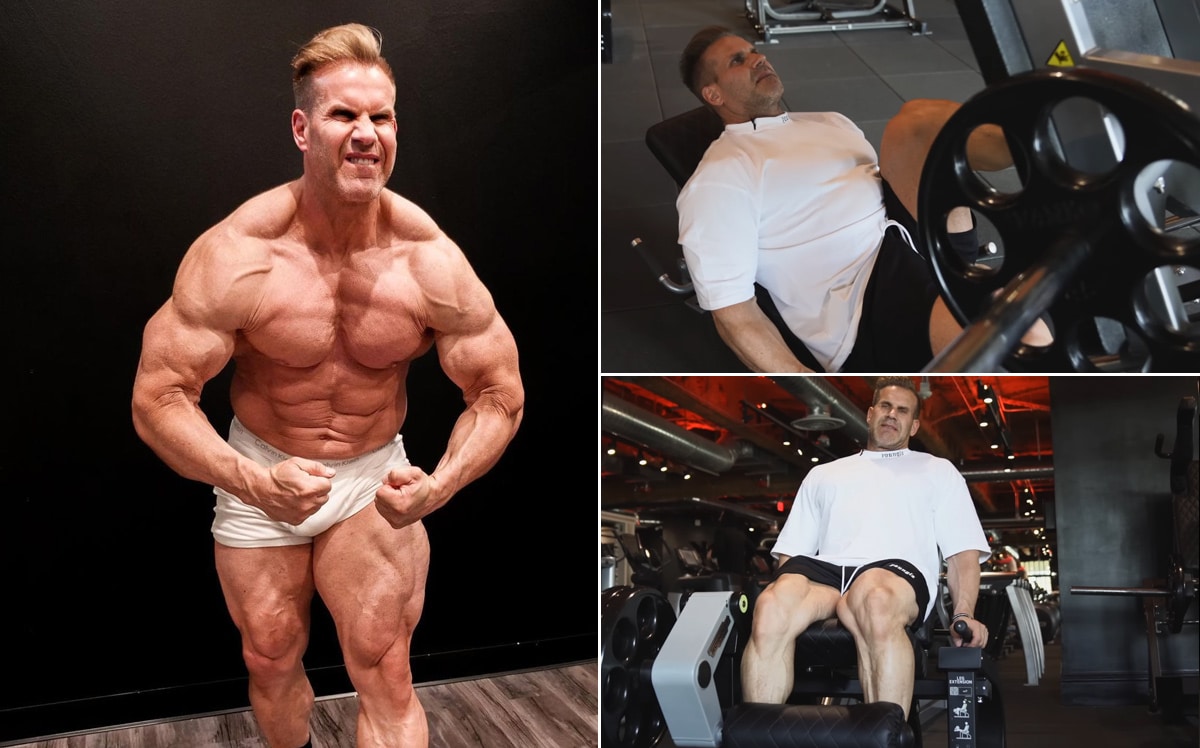
Jay Cutler Smashes High-Volume Leg Pump Workout for Mass Gain
Bodybuilding legend Jay Cutler is back with another brutal workout demonstration. In a recent JayCutlerTV YouTube video, Cutler showcased a blood-pumping legs training session where he focused on building mass.
A pioneer and mainstay of the IFBB Pro League Men’s Open division, Cutler dominated his class with a combination of muscularity, detail, conditioning, and sheer willpower. Having dethroned ‘The King’ Ronnie Coleman in 2006, Cutler proved himself on the sport’s brightest stage. He remains the only man in the history of the Open class to ever win back an Olympia title that was lost, which he accomplished in 2009 after he was dethroned by Dexter Jackson the year prior.
In addition to his four Mr. Olympia titles (2006, 2007, 2009, 2010), the Massachusetts native won the Arnold Classic three times (2002, 2003, 2004). Following his epic rivalry with Coleman, Cutler remains an esteemed member of the bodybuilding community today.
Late last year, Jay Cutler announced that he was transforming his physique for a ‘fit for 50’ challenge. While fans thought he was teasing a comeback, Cutler later made it clear he had no intention of stepping foot on a competitive bodybuilding stage.
Documenting his latest physique goal, Cutler has offered fans an inside look into his preparations. He’s targeting 6-8% body fat during this transformation but also plans to add mass and lean out without the use of bulking diets. In his latest offering, the former Mr. Olympia detailed a brutal leg-day training session.
Jay Cutler Ponders Post-Training Thoughts, Fit for 50 Challenge, and Having ‘No Real Goal’
Check out Cutler’s leg workout below:
Leg Curl Machine – 2 warmup sets, three working sets, pyramiding the weight up peak set 180 pounds
Standing Leg Curl Machine (alternating) – 1 working set
Stiff leg Deadlift w/dumbbell – 3 sets 10-12 reps pyramiding the weight up
Walking Lunge w/Barbell – 8-10 reps per leg
Leg Extension Machine – 2 sets reps until he gets a pump
Inverted Leg press – 3 sets 10-12 reps
Unilateral Leg press Machine – 2 sets 10-12 reps
Roger Squat machine – 2 sets 9-12 reps
Cutler highlighted that the session mainly focused on quad and hamstring development.
“It will be quads and hamstrings today, we’re going to start with hamstrings, but I want to thank everyone for following along on YouTube. It’s been really firing off lately. We got a lot of great things coming in the works. Obviously, I’m doing this crazy transformation right now and it’s working really well.
I’m about eight weeks out on Saturday, so today is Thursday. So I’ll be close now but I was saying yesterday, it’s not going to end there. I’m never going to be satisfied. This is kind of just like a goal as far as getting my body primed and ready to go. I don’t know how long this final outcome is going to be but if we get passed my birthday which is eight weeks away and the challenge still moves forward and I think it’s going to drag a lot of people into it, I know it’s giving people a lot of motivation. That’s all you can ask for. There’s no real goal. I’m not getting back on stage,” said Jay Cutler.
After completing the workout routine, Cutler said he judges many of his sessions based on the pump he receives.
“We’re rolling into the next decade of my life man. I just wanted to do something really cool. I know a lot of you guys have been riding with me for a long time so I want to thank you for that.”
“We just finished legs, it was an awesome workout. Every day is progression. The pumps are getting better and that’s kind of the key. I always talk about how I judge all the workouts by the pump. As we get closer now, like I said, eight weeks this weekend, and we’re right in it now,” Cutler shared.
Cutler has kept a furious training pace since announcing his transformation. Fortunately for fans, many of his workouts have been published online. The last time the four-time Mr. Olympia tackled a session, he showed off an effective arm-building hypertrophy workout. In a separate undertaking, he revealed a few tips for building abs with summer on its way.
Jay Cutler continues to inspire fans with his dedication to fitness in retirement. His latest leg workout is a tough but effective way to build lower-body strength and muscle.
You can watch the full video below from the JayCutlerTV YouTube channel:
RELATED: Jay Cutler Calls Out Steroid Stigma in Film Industry, ‘Figures’ The Rock Is on TRT
Published: 15 June, 2023 | 9:13 AM EDT

Powerlifting Vs Power Building: Find Out the Big Difference and When to Shift Between the Two
Powerlifting and power building are two distinct forms of weightlifting with different goals and techniques. While powerlifting is focused on maximizing strength, power building is more about increasing muscle size and aesthetics.
In this article, we will explore the differences between these two forms of weightlifting and discuss when it’s best to switch from one to the other. We will also look at some tips for making the transition easier and more successful.
What is Powerlifting?
Powerlifting is a strength sport that consists of three main lifts: the squat, bench press, and deadlift. Powerlifters often use lower-weight loads and perform multiple reps to increase their strength.
For example, some powerlifters might squat 225 lbs for 10 repetitions using a sumo stance (the wide-legged stance most people know when performing the squat). The number of repetitions performed in each lift can vary from 1-5 depending on the lifter’s goals or experience level. When powerlifters compete against one another, their squat and bench press maxes are often considered. Powerlifters typically wear supportive, high-quality gear and lifting shoes with a flat springy sole.
The gear helps to prevent injuries when lifting heavy loads and provides needed support for the body. Powerlifters often have a platform (a triangular wooden frame) welded to the back of the squat rack, which they use during squats to help balance themselves during heavy sets. Bench pressing can be performed in the squat rack or on a bench.
Why Squat Racks?
Squat racks are easier and safer because you can use them without worrying about getting the bar in your eyes or having it come forward and hit you in the head. Trap bar training (“dual-opposition training”) is often done with a trap bar attached to pegs on both sides of a squat rack to grant more stability than any one-handed implement. It also permits more freedom of movement than an Olympic lifting apparatus since there are no cross handles for precise bar positioning.
Proper Powerlifting Strategies
In use, it is placed in front of the lifter at a distance from each end, and the lifter grasps it with an overhand grip. The lifter’s hands are placed just outside shoulder width, elbows slightly bent, and feet shoulder-width apart. The bar is lifted by pushing underneath its middle (the area right under the hands) with the feet while keeping both feet flat on the ground, effectively raising it without moving them laterally one iota. The bar should be pulled upwards until a slight tension can be felt in both triceps and biceps. A common variant of this movement is the shoulder press, which uses more weight and involves a greater range of motion.
The barbell shoulder press is performed by grasping a barbell with hands just outside shoulder width and then thrusting the body backward, raising the weight off the ground until the arms are straight. The movement is stopped when a slight tension can be felt in both triceps and biceps.
Power Building for bodybuilders is an essential component of any successful bodybuilding routine. It combines strength training, endurance training, and nutrition to maximize muscle growth and strength gains. Power Building for bodybuilders focuses on developing the core lifts such as squats, bench presses, deadlifts, and overhead presses.
It also includes exercises that target specific muscle groups such as biceps and triceps. Proper nutrition is also an important factor in power building for bodybuilders as it helps to fuel the muscles with the necessary nutrients for optimal performance. With a well-rounded program that combines all these elements, bodybuilders can achieve their goals of gaining strength and size while maintaining a healthy lifestyle.
The Power Building program is used by strength and conditioning coaches to develop muscle mass, strength, explosiveness, and body composition in athletes. This program can also be used for weightlifters seeking increased performance in the weight room. The program is split into three phases. The first phase lasts 8 weeks, the second lasts 16 weeks, and the third lasts 20 weeks. This program aims to help increase muscle mass, improve strength, and reduce body fat.
Must Read: Post Cycle Therapy Vs. B&C: Which is Best for You?
Phase One
This phase lasts 8 weeks. Each workout routine is divided into three movements: push, pull, and squats. You will always do two sets for each exercise, except push presses which are done as a single set. The first week will begin with two exercises for each muscle group and decrease to one exercise per muscle group by week four.
Then you will be back up to two exercises again by week eight before continuing from there with 1 movement per day until the end of Phase 3.Phase 1: Starting StrengthWeek 1-2Push Presses: 3 sets of 8 Push Ups Pull-Ups: 3 sets of 12 chin ups/dips Squats: 3 sets of 15, 10 reps Deadlifts: 3 sets of 10 reps Standing Military Presses (3-sec hold at top): 6 sets of 6 reps each week.
Week 3-4Push Presses: 4 sets of 8 Push Ups Pull-Ups: 4 sets of 12 chin ups/dips Squats: 4 sets of 15, 10 reps Deadlifts: 4 sets of 10 reps Standing Military Presses (3-sec hold at top): 8 sets of 6 reps each week
Phase 2
Starting Strength , then adding weight each weekWeek 5-6Push Presses: 5 sets of 8 Push Ups Pull-Ups: 5 sets of 12 chin ups/dips Squats: 5 sets of 15, 10 reps Deadlifts: 5 sets of 10 reps Standing Military Presses (3 sec hold at top): 10 sets of 6 reps each weekWeek 7-8Push Presses: 6 sets of 8 Push Ups Pull-Ups: 6 sets of 12 chin ups/dips Squats: 6 sets of 15, 10 reps Deadlifts: 6 sets of 10 reps Standing Military Presses (3 sec hold at top): 12 sets of 6 reps each weekWeek 9-10Push Presses: 7 sets of 8 Push Ups Pull-Ups: 7 sets of 12 chin ups/dips Squats: 7 sets of 15, 10 reps Deadlifts: 7 sets of 10 reps Standing Military Presses (3 sec hold at top): 14 sets of 6 reps each week.
Strength in Powerlifting
Bodybuilding is a sport that requires a lot of strength and power. Powerlifting is an important part of bodybuilding, as it helps to build muscle and increase strength. But how are bodybuilders able to power lift frequently? The answer lies in their training techniques and their dedication to the sport.
Bodybuilders use a variety of exercises and techniques to be able to power lift frequently. They focus on building strength by doing compound exercises such as squats, deadlifts, bench presses, and overhead presses. They also ensure they get enough rest between workouts so their muscles can recover properly.
Additionally, they eat a diet high in protein and other nutrients that help build muscle mass quickly. All these factors combined help them be able to power frequently lift without feeling tired or overworked.
Why Powerlifting Alone Cannot Build A Strong Body
Bodybuilders have high levels of testosterone, which is a muscle-building hormone. They also make sure they get enough rest. Bodybuilding is an effective way of building muscle mass quickly because it puts people in an anabolic state, where their body is not breaking down or being used up for energy. This means that regardless of the time spent on training, the bodybuilder will still grow and maintain muscle mass. Many studies show this to be true, and athletes using those techniques can achieve their goals faster than those who don’t regularly use them.
Powerlifting is essential to bodybuilding and can help you reach your goals faster. It is a great way to build strength and muscle mass while improving your fitness.
Powerlifting tips can help you maximize your gains and reach your desired physique if you are a bodybuilder. Here are some powerlifting tips to help you get the most out of your workouts and stay safe while lifting weights.
If you haven’t done powerlifting before, prepare by doing some simple strength training exercises. Try kettlebell swings, pushups, or pull-ups. Also, don’t forget to stretch before and after your workouts. Focus on a limited number of exercises per body part and work those different muscles in each workout. For example, do bench presses Wednesdays and deadlifts Fridays to target the chest and back, respectively, at the same time each week.
Alternating Between Different Muscles
On Saturday, alternate between one-arm barbell rows for the back muscles with squats for quadriceps muscles such as legs. Work out for about 30 minutes before taking a break for about 10-15 minutes. If you must take longer than 15 minutes, do it in two 5-minute sessions. Aim to do your exercise within 4-6 reps per set. This allows you to use heavier weights and build muscle over time without burning out quickly. Do not work the same body part two days in a row (unless it’s a rest day). For example, you should not work your chest on Wednesday and again on Friday, as this will cause muscular imbalance and overcompensation.
Perform one set for each muscle group, working each muscle once or twice per week. You should take a day off every week to allow muscles to recover and build strength.
For those looking to get into the fitness world, there is often a debate between building muscle and powerlifting. While both have advantages, deciding which is right for you can be difficult. That’s why it’s important to understand the differences and how they can be used together to achieve your fitness goals. By understanding the differences between building muscle and powerlifting, you can find a balance that works for you and helps you reach your goals faster.
The Science Behind Building Muscle
Building muscle is a process where your body slowly builds up the size of individual muscle fibers. This process can take anywhere from 8-12 weeks, but most people see their results after 6-8 weeks. Building muscle is to increase your overall strength and build a toned physique rather than adding pounds of weight to your muscles.
Muscles are built by creating microscopic tears in the muscle fiber, which are then repaired by satellite cells. For this growth to happen, you need a lot of protein and carbohydrates to feed your muscles while they recover from workouts. I’m doing this for many reasons.
Powerlifting is a strength-based sport that requires skill, technique, and dedication. It is a great way for professional bodybuilders to stay in shape and increase their muscle mass. Powerlifting can help pro bodybuilders reach their goals faster by increasing their strength and endurance. It also helps them build muscle mass quicker than traditional weight-lifting exercises.
Powerlifting For Pro Bodybuilders
Powerlifting by pro bodybuilders can be an effective way to achieve the desired fitness level, as it allows them to lift heavier weights than they would normally do with traditional weight-lifting exercises. Additionally, powerlifting helps pro bodybuilders develop more explosive power, which can help them in competitions. Furthermore, powerlifting can also help improve coordination and balance, which are important skills for any athlete.
Weightlifting is a sport; to achieve the best performance possible, it requires specific training and diet. Bodybuilders often choose weightlifting to improve their lower body strength which helps them lift more weight than they would be able to with bodybuilding exercises. Additionally, weightlifting helps pro bodybuilders develop more endurance and power while using less energy.
Powerlifters compete against each other in timed events where the object is to either complete a certain amount of repetitions with a specific amount of weight or move the barbell from point A to point B with maximum intensity. While this type of training is similar to that of bodybuilding, those who compete in powerlifting don’t have to build up their muscles through progressive resistance training. as they are not concerned with aesthetics.
By contrast, powerlifters compete in events from a squat to a bench press, where the object is to lift as much weight as possible and most efficiently. They might have a maximum weight of 25kg for the squat and 165kg for the bench press. They will finish those events by completing one repetition or moving their bodies from point A to point B with maximum intensity, respectively.
Related Article: Olympic Lifting: 25 Strategies That Work
The Big Difference
Powerlifters train similarly to bodybuilders by increasing their muscle mass through progressive resistance training over time by lifting heavier weights to hit intense lifts like squats and benches regularly. Athletes often have a challenge to complete within a certain time limit, such as deadlifting 250 pounds within 30 seconds or completing 20 pull-ups in 2 minutes. In these cases, the athlete would compete by completing one repetition of the event or moving their body from point A to point B with maximum intensity respectively.
Reverse Pyramid Training is most commonly used in powerlifting and Strongman competitions. Athletes will repeat the same weight for four sets of five repetitions at 80% of their 1rm with short rest periods between each set, also known as a “reverse pyramid.”Powerlifters will complete a bench press workout consisting of three sets with 8-12 repetitions at 70% of their 1rm with short rest periods between each set; this is also known as a “reverse pyramid” bench press. What are the benefits of reverse pyramid training?
Benefits for Athletes
The athlete will experience a greater training effect due to their system’s ability to recover from each successive set; as they progress in strength, they can perform each set with more weight and volume, rather than starting at 100% of their 1rm and working down.- As the load increases throughout the workout, so does intensity. Athletes typically do not feel as much fatigue towards the end of a workout as if they did not take rest periods between sets. Reverse pyramid workouts that target hypertrophy typically last around 45 minutes and have anywhere from 10 to 20 sets. Rest periods between sets typically last about 30 seconds, but athletes should take rests as long as needed.
Building more muscle through powerlifting and dieting can be a daunting task. But with the right knowledge and dedication, anyone can do it. Powerlifting is an effective way to build strength, while proper nutrition is essential for muscle growth. This article will discuss the best practices for powerlifting and dieting to help you build muscle mass quickly and effectively. We will also discuss combining these two disciplines to maximize your gains.
Powerlifting
Powerlifting is a strength sport where you perform repetitive and standardized holds at maximal weights. Throughout the competition, the athlete or lifter will try to accumulate as much weight as possible on their back while completing the most repetitions. There are currently three total powerlifting disciplines: Olympic lifting, strongman lifting, and powerlifting.
Each of these three disciplines consists of six lifts: The squat, deadlift, bench press, shoulder press (deltoid), military press (latissimus dorsi), and pull-up. An individual could compete in one or all three disciplines. Olympic lifting is a sport where athletes attempt to lift as much weight as possible using different techniques.
Olympic Events to Powerlift
There are two Olympic lifting events: the snatch and the clean and jerk. The snatch is performed when an athlete, starting from a dead stop, continuously lifts a barbell from the floor to overhead by contracting both arms above their head. The clean and jerk are performed when an athlete cleans a barbell (grabs it with one hand), then jerks it overhead with both arms at once by contracting their legs behind them.
Strongman competition involves strongmen performing feats of strength in various implements, including stone lifting, tire flipping, keg holding, and sandbag carrying. There are two Olympic lifting events: the snatch and the clean and jerk. The snatch is performed when an athlete, starting from a dead stop, continuously lifts a barbell from the floor to overhead by contracting both arms above their head.
The clean and jerk are performed when an athlete cleans a barbell (grabs it with one hand), then jerks it overhead with both arms at once by contracting their legs behind them. Strongman competition involves strongmen performing feats of strength, usually related to using various types of barbells.
Overall
Strongman competitions have no weight limit; strongmen often compete in feats requiring extremely heavy weights. Power clean The power clean is a variation of the clean and jerk, where athletes explosively push themselves upwards from a squatting position by extending their knees and hips while simultaneously bringing the bar into their hips with an overhand grip.
Read More: Benefits of Breathing Squats on Muscle Growth
The 9 Best Morning Stretches for Men
Most exercisers have heard the expression “use it or lose it” many times. These five little words describe how your fitness and strength quickly decrease if you discontinue training. While your body will barely register a break of a week or two, skip the gym for three weeks or more, and your muscles will shrink, and you’ll lose strength and conditioning.
Take a long enough break, and your body will eventually end up back where you started – weak and out of shape. Sadly, you cannot store fitness.
The concept of use it or lose also applies to flexibility, which describes the range of movement at a joint or joints. In the same way that your muscles weaken from lack of use, they can also get shorter and tighter. This is especially true for sedentary people who spend long periods sitting.
Tight muscles can have an adverse effect on your performance and appearance. They’re less contractile, pull you into poor posture, and are more prone to injury.
Poor flexibility can even hurt your muscle-building gains. For example, tight pecs will stop you from using such a big range of movement during your chest workout, making your training less effective. Tight quads and hammies will prevent you from squatting to parallel and beyond, robbing you of the leg gains you crave.
The good news is that flexibility is very trainable, and you can restore lost muscle elasticity in less than 15 minutes a day.
In this article, we reveal the best stretches for men, presented to you in an easy-to-follow morning routine.
The Nine Best Morning Stretches for Men
These are the most important stretches for men. Do each one for 30-60 seconds to create a morning stretching routine that takes about 15 minutes to complete. If any of these exercises feel particularly difficult, find time to repeat them elsewhere during your day, as those are the muscles probably that need your attention.
1. Standing arms overhead stretch
Muscles targeted: Latissimus dorsi, deltoids, pectoralis major.
Every good workout starts with a warm-up, and this stretching routine is no different. This simple stretch is designed to gently wake up your muscles and loosen up your upper body. Use this time to get your head in the game, practice your breathing, and prepare yourself for the stretches that follow.
Steps:
Stand with your feet together, arms by your sides. Your legs should be straight but not locked.
Interlace your fingers. Gently pull your shoulders down and back and engage your core.
Raise your arms above your head so your biceps are next to your ears. Press the palms of your hands up toward the ceiling.
Hold this position for 30-60 seconds, and then slowly lower your arms and relax.
Tips:
Sway gently from side to side to increase the stretch.
Plant your feet firmly, and imagine you are pushing the floor away with your legs.
Take care not to overextend your lower back.
2. Cat/cow
Muscles targeted: Upper and lower back.
Cat/cow is a classic yoga exercise that’s great for mobilizing your entire spine. Having just woken up, your back may feel stiff, a problem made worse by prolonged sitting. This exercise gets your lumbar, thoracic, and cervical spine moving, leaving your back feeling flexible and mobile.
Steps:
Kneel on all fours with your arms straight, shoulders over your hands, and hips over your knees. Pull your shoulders down and back and engage your core.
Lift the middle of your back up toward the ceiling as you lower your head down toward the floor. Imagine you are an angry cat.
Next, lift your head and tailbone while lowering your abdomen down toward the floor, like a milk-laden cow.
Slowly and smoothly alternate between these two positions for 30-60 seconds or 6-12 reps.
Tips:
Kneel on a folded exercise mat for comfort.
Exhale as your flex your spine, and inhale as you lift your chest.
Make sure your fingers are pointing forward and your elbows are rotated backward and into your sides for best results.
3. Low lunge
Muscles targeted: Hip flexors, rectus abdominis.
The low lunge is designed to stretch the front of your hips and abs. These muscles are often tight because of prolonged sitting. Also known as a runner’s lunge, this exercise is good for everyone, especially athletes, and will help make your hips feel looser and more mobile.
Steps:
Kneel on the floor and take a step forward so your front shin is vertical. Pull your shoulders back and down and engage your core.
Ease your weight forward to extend your hip. Move your rear knee further back to achieve a deeper stretch.
Keep your torso upright and even lean back slightly to lengthen your abs more.
Hold for 30-60 seconds, and then switch sides.
Tips:
Place your rear knee on a folded exercise mat or foam pad for comfort.
Link your hands behind your hips to open your chest and increase the stretch.
Do not twist your pelvis, as doing so makes this stretch less effective.
4. Seated adductor stretch
Muscles targeted: Adductor longus, brevis, and magnus.
The adductors are your inner thigh and groin muscles. Adductor/groin strains are very common, especially among athletes. Prolonged sitting puts these critical muscles into a chronically shortened position, which is why most men have tight adductors and hips.
Steps:
Sit on the floor in good posture. Bend your legs and place the soles of your feet together. Lightly grip your ankles and rest your elbows on your knees.
Using your elbows for assistance, gently press your knees out and down toward the floor.
Hold for 30-60 seconds and then release.
Tips:
Sit on a raised platform, e.g., a yoga block, if you cannot keep your lower back straight.
Hinge forward from your hips to increase the stretch.
Keep your chest up and open throughout; do not slouch.
5. Supine figure-four stretch
Muscles targeted: Gluteus maximus, piriformis, hip adductors.
The stretch hits your glutes and outer hips and thighs. These areas are notoriously hard to stretch, and tightness in this region can cause hip and knee dysfunction. This is a common site of tightness for runners and active people, as these muscles often have to act as stabilizers.
Steps:
Lie on your back with your legs bent and feet flat on the floor.
Cross your left ankle over your right knee.
Hold on behind your right knee and gently pull it toward you.
Hold for 30-60 seconds, and then relax.
Switch sides and repeat.
Tips:
Keep your head and shoulders on the floor throughout.
Push your knee outward to open your hips and intensify the stretch.
Don’t worry if this exercise is hard – that’s perfectly normal!
6. Assisted hamstring stretch
Muscles targeted: Hamstrings.
If there is one muscle you can almost guarantee will be tight in most men, it’s the hamstrings. This long, powerful muscle group is often kept in a flexed, shortened position, invariable leading to tightness. Spend extra time on your hamstrings if you cannot get your leg vertical during the following exercise.
Steps:
Lie on your back with your legs bent. Loop a belt, yoga strap, or resistance band over one foot and straighten your leg.
Use your arms to gently pull your leg up until you feel a stretch in the hamstrings at the back of your thigh.
Relax and hold for 30-60 seconds.
Switch legs and repeat.
Tips:
Rest your head on a pillow for comfort.
No strap? Clasp your hands around the back of your knee instead.
Bend your knee slightly to make this exercise a little easier.
7. Prone quadriceps stretch
Muscles targeted: Quadriceps, hip flexors.
Most quadriceps stretches involve standing on one leg. While can be effective, your balance may determine how well you are able to stretch your quads. This exercise requires no such balance and ensures your hips and thighs remain in optimal alignment.
Steps:
Lie on your front with your legs straight and your head resting on your folded arms.
Bend one leg and reach back to grip your ankle.
Gently pull your foot into your butt and hold for 30-60 seconds.
Relax, release, and swap legs.
Tips:
Wrap a belt or yoga strap around your ankle if you cannot reach it comfortably.
Place a folded mat under your hips for comfort.
Do not hold into your toes or foot, as this puts unnecessary strain on your ankle joint.
8. Standing calf stretch
Muscles targeted: Gastrocnemius, soleus.
Tight calves can have a profound effect on how you walk and run and can even contribute to knee, hip, and lower back pain. The good news is that the calves are also one of the easiest muscles to stretch, and all you need is a step to do it!
Steps:
Stand with the balls of your feet on the edge of a stable step. Use your arms for balance as required.
Keeping your legs straight, lower your heels down below the edge of the step to get a good stretch in your calves.
Hold for 30-60 seconds, and then relax.
Tips:
Shift your weight onto one leg to stretch one calf at a time.
Bend your knees slightly to emphasize your soleus or lower calf.
Turn your foot in or out to hit the different heads of your calf muscles.
9. Doorway chest stretch
Muscles targeted: Pectoralis major, anterior deltoids.
Like the hamstrings, most people have tight pecs – especially men. All that bench pressing and sitting at a desk means the pecs or often short, which can wreak havoc on your shoulder health and posture. So, if you’ve only got a few minutes to stretch, you should spend that time on your hammies and pecs. This will fix two of the most common flexibility problem areas.
Steps:
Stand in an open doorway. Place your forearms and elbows on the vertical frames, upper arms parallel to the floor.
Adopt a staggered stance.
Pulling your shoulders down and back, push your chest between your arms to stretch your chest.
Hold for 30-60 seconds, and then relax.
Tips:
You can also do this exercise in the corner of a room if no doorway is available.
Raise and lower your arms to hit different parts of your chest.
Stretch one side at a time to detect and fix left-to-right flexibility imbalances.
Stretching Guidelines and Tips for Men
Stretching is good for everybody’s body, but it’s especially critical for men. Women tend to be more flexible than men because a) their bodies produce more of the hormone relaxin, which enhances muscle elasticity, and b) they’re more likely to have done dance, gymnastics, or yoga, all of which promote flexibility.
With less elastin and an athletic history focused more on strength than suppleness, men tend to suffer from muscle tightness more than women. Poor flexibility is then made worse by prolonged sitting and other sedentary activities.
Because they’ve got poor flexibility, men are often reticent to stretch. That’s why you won’t see many guys stretching at your local gym. No man wants to be seen struggling to touch his toes!
And that’s where the morning stretches in this article come in; you can do them at home, working on your flexibility in private and comfort.
But you must stretch correctly to get the most from your new morning routine. Like lifting weights, there is a right way and a wrong way to perform any stretching exercise. Invariably, the right way produces rapid results, while the wrong way is a waste of time and energy.
Follow these guidelines to get the most from every stretch you do.
1. Ease into each stretch
Because of sensory organs called muscle spindles, when you stretch a muscle too quickly, its initial response is to contract and shorten. This is a self-preservation mechanism designed to prevent overstretching and injury.
However, if you stretch slowly, those same spindles tell your muscles to relax and lengthen.
To avoid triggering the so-called stretch-shortening reflex, you must ease into each stretch and then wait for the muscle to relax. After 10-20 seconds, you’ll feel the tension leave your muscles so you can stretch a little further.
Repeat this stretch/wait/relax/stretch sequence several times for optimal results.
2. Breathe slow, quiet, and deep
While you probably don’t need to be told to breathe, how you inhale and exhale can determine how effective your stretches are. To maximize flexibility, you need to work with your parasympathetic nervous system, which is responsible for energy conservation and relaxation.
Rapid, shallow breathing sends stress signals to your muscles, readying them for activity. It fires up your sympathetic nervous system, which is linked to energy expenditure. As a result, your muscles tighten up and are less receptive to stretching.
In contrast, slow, quiet, deep breaths tell your muscles that it’s okay to relax, making your stretches more effective. Breathe in for 4-6 seconds and out for the same. Focus on breathing into your abdomen and not your chest. Nasal and not mouth breathing may also help promote relaxation.
3. Don’t bounce or jerk
While you might have seen athletes warming up with bouncy, jerky ballistic stretches, these have no place in your morning flexibility routine. Ballistic stretches are somewhat dangerous and won’t do much for muscle relaxation or long-term flexibility. Instead, they trigger the stretch-shortening reflex discussed in point number one.
So, no bouncing or jerking while you stretch. Instead, make your movements slow, smooth, and deliberate.
4. Ease off if your muscles shake or burn
Bodybuilders like to say, “no pain, no gain,” but the opposite is true when it comes to stretching. Forcing your muscles to stretch further than comfortable will make them contract and tighten up.
Shaking or burning suggests you have extended your muscles beyond their current limit and should ease off to avoid injury.
5. Don’t forget about your posture
It’s all too easy to put all your focus on the muscles you are stretching and completely forget about all your other muscles and joints. For example, you can slouch while stretching your hamstrings or push your head forward while working on your pecs.
While most of your attention SHOULD be on the muscle you’re stretching, don’t forget about the rest of your body. Make sure your posture is as good as it can be. In most cases, this will make your stretches even more effective.
6. Visualize your muscles lengthening
Exercisers often talk about the importance of the mind-muscle connection. This is the term used to describe the ability to feel what muscles you are exercising. Visualizing your muscles working can help strengthen the mind-muscle connection, often resulting in better workouts and faster progress.
You can use the same technique to enhance your flexibility. Imagine you’re your muscles relaxing and lengthening like warmed clay. Picture your relaxed breaths traveling into the muscle you’re stretching. See the tension leaving your muscles so you can ease into a deeper stretch.
While these techniques will take practice to master, combined with your controlled breathing, they’ll make stretching much more effective.
7. Be consistent
Your muscles will soon shorten if you don’t stretch them regularly. Your body is incredibly adaptive, and spending long periods sitting will make your muscles tighten up. Sit in a chair for four hours straight, and you’ll feel these muscle-shortening effects for yourself.
So, if you want to improve your flexibility and stop being so tight, you need to commit to regular stretching. Not a couple of times a week, but every day.
Adopting a morning stretching routine is one of the best ways to do this, as it will soon become a habit and something you do automatically, like brushing your teeth or having breakfast. So, stretch every day to fix your flexibility.
Related: Seven Tips for More Consistent Workouts
Morning Stretches FAQs
Do you have a question about morning stretches for men or flexibility training in general? No problem, because we’ve got the answers!
1. Do I need to warm up before my morning stretching routine?
Providing you don’t stretch too far too fast, you probably don’t need to warm up before doing this morning mobility routine. Just start off gently and only increase the stretch as your muscles begin to relax.
Also, the order of the stretches is such that each one prepares you for what comes next. Finally, ease off if any of the stretches feel uncomfortable or painful.
That said, if you’ve got time to do a few minutes of light cardio before stretching, it certainly won’t do you any harm, as warm muscles usually stretch more readily.
2. Do I need to do all nine stretches in my morning routine?
Between them, these nine stretches target all your major muscle groups. However, it’s common for some muscles to be tighter than others, while some muscle groups may already be sufficiently flexible.
If you can’t feel a stretch, this suggests that the target muscle is as flexible as it needs to be, so you can probably skip it for now. However, do all the stretches occasionally to determine if anything has tightened up.
3. Do I have to do all these stretches in one go?
While this morning stretching routine should take no more than 15 minutes to complete, we understand that may be too long for some people, especially if you are rushing to get ready for work or school.
If you cannot find a spare 15 minutes to complete this routine, consider breaking it into thirds and doing it throughout your day. For example, do the first three exercises on rising, the next three when you get home from work, and the final three before bed.
Alternatively, you could do one stretch every hour or so to break up your working day.
While these approaches may not be quite as effective as a morning stretching routine, any stretching is better than none.
4. Can I do this routine more than once a day?
Providing you don’t go too aggressively, you can stretch several times a day without ill effects. In fact, the more often you stretch, the quicker your flexibility will improve. So, if you’ve got the time, feel free to stretch two or three times per day.
Alternatively, you could run through the routine once and then pepper your day with short bouts of stretching to keep on top of your flexibility training. This is a good option for desk warriors who tighten up as their workday progresses.
5. Can I stretch for longer than 30-60 seconds?
By all means, hold your stretches for longer, e.g., 2-3 minutes. However, you may find it more comfortable if you work in sets and reps, e.g., stretch for 30 seconds, relax for a breath or two, and repeat 4-6 times. This is usually more enjoyable than staying in the same position for a long time. However, you should endeavor to stretch a little deeper each time as your muscles lengthen and relax.
Related: Calories Burned Stretching Calculator
Wrapping Up
Some fitness experts believe that stretching is a waste of time. They’re quick to suggest it has no measurable effect on performance or risk of injury.
However, decades of anecdotal evidence suggests that regular stretching can be incredibly beneficial, especially for people who spend a lot of time locked into a fixed position, e.g., office workers. Not only that, it feels good!
Tight muscles often feel tender and painful, and the obvious antidote is to stretch more.
So, don’t worry about the naysayers; stretching will invariably do more good than harm, and it’s definitely not a waste of time. In fact, in terms of posture, mobility, and joint health, it’s probably one of the best things you can do.
Flex Lewis Shares Top 3 Movements to Build Olympia-Worthy Chest: “Control Is Key”
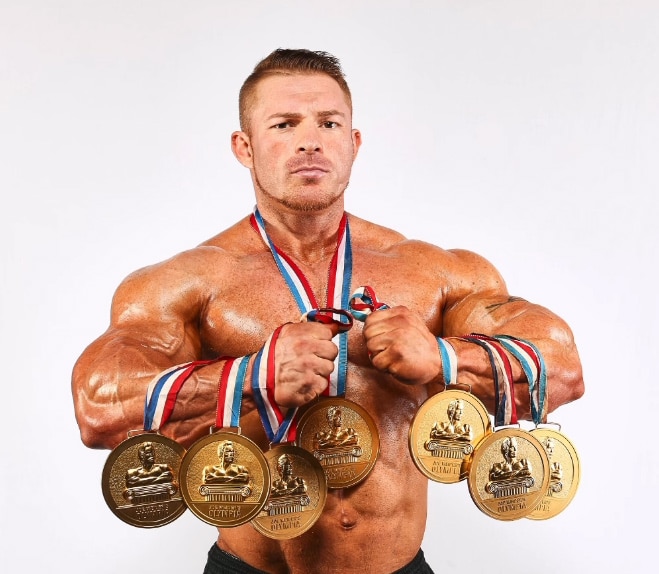
Welsh bodybuilding legend Flex Lewis presented arguably one of the best physiques of all time in the Men’s 212 category during his best days of competition. While he no longer competes, he’s revered for educating fans on a range of topics related to bodybuilding. In a recent Instagram post, Lewis shared his top three movements for building an Olympia-worthy chest.
Flex Lewis’ passion for bodybuilding was discovered early in his teenage years after taking inspiration from icons Tom Platz and seven-time Mr. Olympia Arnold Schwarzenegger. He made a name for himself on the UK regional circuit before joining the IFBB Pro League.
While he was well respected for his overall look, he was renowned for his insane arm development. After placing runner-up in the Men’s 212 event at the 2011 Mr. Olympia, Lewis secured the coveted title before the division limit was raised to 212 pounds the next year.
Lewis enjoyed a dominant run at the top as he managed to ward off budding talent and became a seven-time 212 Olympia champion. What’s more impressive is the fact he went essentially undefeated from 2012 to 2018, winning every show he participated in. Although he flirted with the idea of switching to the Open, he decided against it and hung up his posing trunks following a final win at the 2018 Mr. Olympia.
Flex Lewis / Instagram
In July 2022, Lewis reported positive findings after receiving the results of his blood work. He gave fans a look into his downsized physique at a lean 210 pounds post-retirement and revealed he’d start TRT (testosterone replacement therapy). Then, he delivered another impressive physique update after getting on TRT.
As far as training goes, Lewis showed off his gigantic biceps and triceps in an intense arms workout session last November. He followed up with a collaborative quads training session with rising Men’s Open sensation Andrew Jacked weeks later. The pair got together for a heavy back workout in prep for the 2022 Mr. Olympia as well.
Flex Lewis left the fans in awe of his jacked physique with an update where he tipped the scales at 200 pounds earlier this year. He laid out an updated diet and training program he’s using to pack on muscle after dropping 60 pounds.
There has been speculation about whether Lewis would ever return to competition given his high fitness levels. He left the door open for a potential comeback but mentioned a caveat: that he’s rewarded with seven-figure prize money.
Flex Lewis shares the top 3 movements to build an Olympia-worthy chest
In a recent Instagram post, Flex Lewis shared his top three movements to build a muscular chest fit for an Olympia champion.
Lewis discussed the reloaded vertical chest press as his first movement of choice.
“Exercise number one is the reloaded vertical chest press,” said Lewis. “As I preach many times, foundation is key. You find the height of the seat in accordance with your biomechanics. So, what I try to do is line up my chest with the handles, get a little bit closer range. People will say you’re incorporating triceps. I’ve been doing this a long time. There’s ways of me trying to switch off that button but the wider you go the less triceps you’re going to hit. Pinching myself against the pad and my shoulder blades. I’m not squirming in the chair, plain motion. Chest up high squeeze at the top.”
His next movement is the reloaded incline fly.
“Exercise number two is the reloaded incline fly. This is pretty much as close to a dumbbell fly as a machine can be. Chest up high, I’m arching my body. There’s a little definitive distance between the lower of my back and the pad on my shoulder blades firmly on the pad, full stretch at the bottom. Contraction with the flys all the way through squeezing at the top, opening them up, controlling the weight. Ninety degrees and up again. You can open your hands up or close them out depending on your preference and what you’re trying to achieve during the workout.”
Finally, Lewis detailed using an incline chest press machine effectively.
“Exercise number three is one of the GOATs, it’s one of the old Flex piece, this is [incline chest press machine]. Chest up high, feet in a solid foundational position and we’re going to drive through squeezing at the top. As you can see I’ve got a suicide grip which is something I don’t advise but this is how I train and feel best. Contraction all the time, control is key.”
Flex Lewis opened up on his steroid use during his prime last month. He backed himself to come out on top of a hypothetical matchup with 2022 Mr. Olympia Hadi Choopan and runner-up Derek Lunsford if he decided to make a comeback. Then, he teamed up with four-time Classic Physique Olympia champion Chris Bumstead for a brutal back workout weeks ago.
Lewis laid out the secrets to his training, diet, and recovery protocols earlier this month. He also revealed his plans to take on a body transformation challenge for his 40th birthday. In addition, he recently listed his top three movements for building the triceps last month.
RELATED: Shaun Clarida Plans to Break Flex Lewis 212 Olympia Record, Says Nick Walker’s ‘Streamlined’ Look Cost Him
Given his ability to remain on top for so long as a 212 competitor, when Lewis offers insight for building a muscle group, fans listen.
Published: 14 June, 2023 | 11:35 PM EDT
Mitchell Hooper Reveals His Anabolic Protein Shake, Pre-Workout Slushy & Supplement Stack to Win World’s Strongest Man
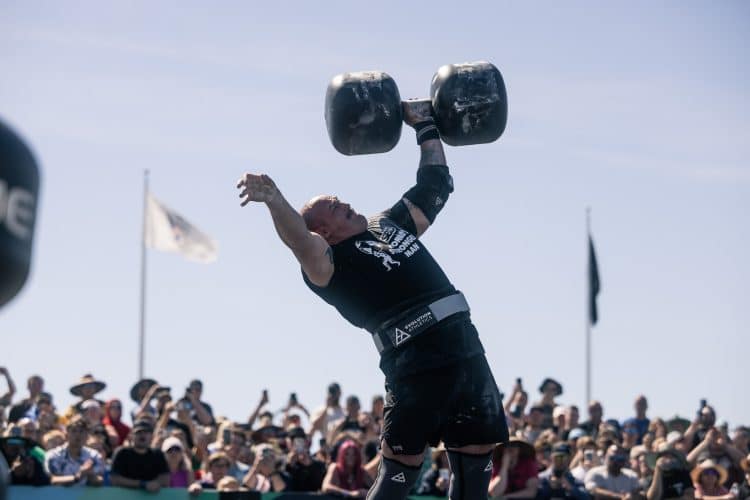
Canadian strongman Mitchell Hooper has enjoyed a stellar run at the highest level of the sport. Although he’s been competing for only one year, he’s already claimed the most prestigious title, the 2023 World’s Strongest Man. He was able to achieve this due to multiple factors. So, in a recent video uploaded on his YouTube channel, Hooper revealed the anabolic protein shake, pre-workout slushy, and the supplement stack he used to win the WSM.
Mitchell Hooper first emerged as a budding Strongman athlete when he got the chance to compete at the 2022 World’s Strongest Man competition after the withdrawal of Rauno Heinla. Despite not competing at all beforehand, Hooper displayed unreal strength to come out on top of the qualifying group stages over veteran Brian Shaw. Next, he rounded up the top three at the 2022 Shaw Classic and followed up by handily dispatching the competition to win the 2022 Arnold Pro Strongman World Series UK.
Hooper continued to work hard in the off-season and returned triumphant at the Giants Live 2022 World Tour Finals. Then, he set his sights on the 2022 Rogue Invitational. Hooper ended up taking the bronze medal, but also left the fans stunned with his freakish strength, having set a new World Record on the Dinnie Stones Hold.
Earlier this year, Hooper got back in the winning column with a strong performance at the 2023 Australia’s Strongest International competition. A few days after the victory, he scored a new PR of 420-kg (925.9-lb) on the raw deadlift in training. His workouts kept amping up as he demolished an insane 770-kg (1,697.6-lb) raw leg press for eight reps in prep for the 2023 Arnold Strongman Classic. His training yielded him the outcome he wanted as he won the top prize at the aforementioned show three months ago.
Mitchell Hooper / Courtesy of World’s Strongest Man
Mitchell Hooper went up against a stacked lineup of proven veterans and fellow rising stars at the 2023 World’s Strongest Man two months ago. He established his lead early and got the biggest win of his career in only his second WSM appearance. Following the impressive win, he called for the development of a comprehensive ruleset for the show.
The 27-year-old detailed some of his ‘non-negotiable’ supplements and gave his take on how alcohol and sugar can affect recovery last month. While there are risks to overusing either substance, Hooper believes moderate consumption of sugar and alcohol won’t derail progress in the training room. Instead, they can be much more beneficial in regard to relaxing before a big day.
Even after the 2023 WSM win, Hooper is still boasting his crazy endurance levels. So, he performed a huge 465-lb (211-kg) squat for 20 reps to level up his conditioning. Then, he broke bodybuilding icon Tom Platz’s 1992 legendary squat record by performing 24 reps of 525 pounds.
Mitchell Hooper reveals supplement stack that won him the World’s Strongest Man
In a recent YouTube video, Mitchell Hooper shared the supplement stack that helped him secure the 2023 WSM and Arnold Classic titles.
Hooper listed whey protein, pre-workout, weight gainer, and creatine as part of his supplement stack.
“I’ll start with my bread and butter which is whey protein,” said Hooper. “That’s obviously going to help you recover and it’s a really quick and easy way for you to get your protein.
“Second thing that’s a mandatory in my stack is my pre-workout… It’s one of those things I don’t find a necessity but it’s certainly something that helps you when it comes to energy.”
“Next in my stack is a bit of weight gainer.”
“And the last thing on my stack is creatine. I have said this time and time again. Creatine is the number one most important thing you need to get the most out of your training.”
“This is the stack used to win World’s Strongest Man and to win the Arnold.”
Mitchell Hooper (Credit: Todd Burandt / World’s Strongest Man)
Hooper shares his staple anabolic protein shake & pre-workout slushy
Hooper revealed his morning protein shake to build muscle along with the ice-cold pre-workout smoothie he consumes to energize himself.
“At the moment, we’re in prep for Royal Albert Hall. I’m losing a bit of weight being a bit fitter so we’re going berries.”
Anabolic protein shake:
2 scoops of Diesel Mint Chip Whey Isolate
1 cup skim milk
2 scoops creatine (10g)
About a cup of Frozen mixed berries
Peanut butter (optional)
Chocolate chips (optional)
Macro Breakdown: 60g protein, 28g carbs, 1g fat.
Pre-workout slushy:
Water
1 and a half scoop of ALTRD State (pre-workout)
1 scoop iPREP
Vitamin C
Cubed ice
Mitchell Hooper challenged himself by taking on strongman icon Eddie Hall’s renowned ‘Death by Deadlift’ set last month. He used slightly heavier plates, a lifting belt, and lifting straps to perform the exhausting set. Although he couldn’t level Hall’s record, he indicated plans to try out the challenge again in the near future.
Hooper’s latest offering provides insight into the preparations of the World’s Strongest Man and will motivate fitness fans to try out similar supplements in their training.
You can watch the full video below.
Discover comprehensive coverage of the 2023 World’s Strongest Man competition at our WSM coverage hub, featuring exclusive interviews, final results, event recaps and in-depth analysis: FitnessVolt.com/wsm
Published: 14 June, 2023 | 6:08 PM EDT
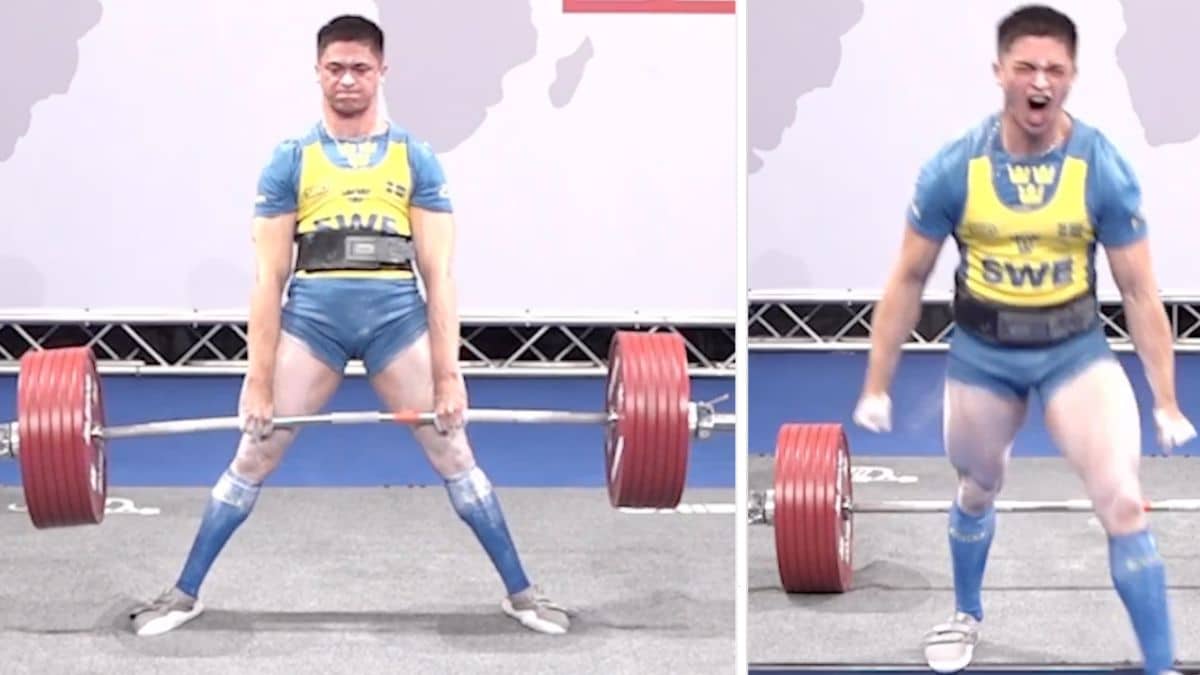
22-YO Carl Johansson (74KG) Sets 328-kg (723.1-lb) Deadlift World Record at 2023 IPF World Classic Open Powerlifting Championships
The first major upset at the 2023 IPF World Classic Powerlifting Championships happened in the men’s 74-kilogram weight class. Coming into the competition, the 3x IPF World Champion Taylor Atwood was the biggest favorite once again. However, the 22-year-old Carl Johansson surprised everyone and dethroned one of the greatest powerlifters in history. In addition, Carl also set a new 328-kilogram (723.1 pounds) raw Deadlift IPF Open World Record.
Carl Johansson broke a deadlift record that stood for six years as Kjell Egil Bakkelund pulled 322 kilograms (709.9 pounds) at the 2017 IPF World Classic Powerlifting Championships. In addition, seeing how Carl is a Junior powerlifter due to his age, breaking World Records in the Open age class made him very emotional. Numerous other elite powerlifters were also impressed by Carl’s achievement, as Jesus Olivares, Jonathan Cayco, and Russel Orhii were just some of the names that praised the young athlete.
Watch the lift here:
Related: Brian Le (66KG) Scores 300.5-kg (662.5-lb) Raw Deadlift World Record at 2023 IPF World Classic Powerlifting Championships
Carl Johansson’s Full Performance
Carl Johansson was actually tied for first place with Monigatti Timothy since both had the same Total. However, Carl won on a tie-breaker due to his bodyweight being lower than Monigatti. Carl weighed in at 73.65 kilograms (162.4 pounds), while Monigatti came in 0.20 kilograms (0.44 pounds) heavier.
As for Carl Johansson’s performance, he successfully completed all nine of his attempts, setting new competition PRs in all events. In addition, Carl also set new Deadlift & Total IPF Junior World Records.
Squat
252.5 kilograms (556.7 pounds)
262.5 kilograms (578.7 pounds)
267.5 kilograms (589.7 pounds) — Competition PR
Bench Press
170 kilograms (374.8 pounds)
177.5 kilograms (391.3 pounds)
182.5 kilograms (402.3 pounds) — Competition PR
Deadlift
305 kilograms (672.4 pounds)
320 kilograms (705.5 pounds)
328 kilograms (723.1 pounds) — Open & Junior IPF World Record
Total — 778 kilograms (1,715.2 pounds) — Junior World Record
Related: Heather Connor (47KG) Scores 200-kg (440.9-lb) Raw Deadlift World Record at 2023 IPF World Classic Powerlifting Championships
Carl Johansson’s Competition History
Personal Bests
Equip
Squat
Bench
Deadlift
Total
Dots
Raw
575.4
391.3
575.4
1663.4
546.96
Single-ply
463
319.7
463
1300.7
415.17
Competition Results
Place
Fed
Date
Competition
Division
Total
Dots
1
SSF
2023-02-02
SM Klassisk Styrkelyft
Open
1663.4
546.96
Location
Sweden
Competition
SM Klassisk Styrkelyft
Division
Open
Age
22
Equipment
Raw
Class
163.1
Weight
162.7
Squat
575.4
Bench
391.3
Deadlift
696.7
GLP
110.92
1
EPF
2022-11-25
European Classic Powerlifting Championships
Juniors
1611.6
531.38
Location
Poland
Competition
European Classic Powerlifting Championships
Division
Juniors
Age
22
Equipment
Raw
Class
163.1
Weight
162
Squat
518.1
545.6
556.7
556.7
Bench
352.7
369.3
374.8
374.8
Deadlift
595.2
617.3
680.1
680.1
GLP
107.7
1
IPF
2022-08-31
World Junior Classic Powerlifting Championships
Juniors
1581.8
521.29
Location
Turkey
Competition
World Junior Classic Powerlifting Championships
Division
Juniors
Age
21
Equipment
Raw
Class
163.1
Weight
162.1
Squat
512.6
540.1
551.2
551.2
Bench
347.2
358.3
369.3
369.3
Deadlift
622.8
650.4
661.4
661.4
GLP
105.67
1
SSF
2022-08-29
VM Junior Klassisk Styrkelyft
Juniors
1581.8
521.29
Location
Sweden
Competition
VM Junior Klassisk Styrkelyft
Division
Juniors
Age
21
Equipment
Raw
Class
163.1
Weight
162.1
Squat
551.2
Bench
369.3
Deadlift
661.4
GLP
105.67
3
IPF
2021-09-23
World Classic Powerlifting Championships
Juniors
1548.7
512.17
Location
Sweden
Competition
World Classic Powerlifting Championships
Division
Juniors
Age
20
Equipment
Raw
Class
163.1
Weight
161.3
Squat
507.1
534.6
-545.6
534.6
Bench
341.7
352.7
358.3
358.3
Deadlift
589.7
622.8
655.9
655.9
GLP
103.75
1
SSF
2020-09-05
Serie 3 Kungsbacka
Open
1482.6
486.87
Location
Sweden
Competition
Serie 3 Kungsbacka
Division
Open
Age
19
Equipment
Raw
Class
163.1
Weight
163
Squat
485
501.6
-518.1
501.6
Bench
336.2
352.7
363.8
363.8
Deadlift
573.2
617.3
-639.3
617.3
GLP
98.76
1
SSF
2020-02-14
Junior SM Klassisk Styrkelyft
Juniors
1422
471.14
Location
Sweden
Competition
Junior SM Klassisk Styrkelyft
Division
Juniors
Age
19
Equipment
Raw
Class
163.1
Weight
160.8
Squat
507.1
Bench
319.7
Deadlift
595.2
GLP
95.4
1
SSF
2019-09-07
DM Klassisk Bänkpress VGSF
Open
336.2
111.29
Location
Sweden
Competition
DM Klassisk Bänkpress VGSF
Division
Open
Age
18
Equipment
Raw
Class
163.1
Weight
161
Bench
336.2
GLP
81.89
4
SSF
2019-06-27
SM Klassisk Styrkelyft
Open
1344.8
446.19
Location
Sweden
Competition
SM Klassisk Styrkelyft
Division
Open
Age
18
Equipment
Raw
Class
163.1
Weight
160.5
Squat
485
Bench
330.7
Deadlift
529.1
GLP
90.32
4
SSF
2019-04-27
U/J/V-SM Klassisk Styrkelyft
Juniors
1411
451.62
Location
Sweden
Competition
U/J/V-SM Klassisk Styrkelyft
Division
Juniors
Age
18
Equipment
Raw
Class
183
Weight
169.8
Squat
496
Bench
330.7
Deadlift
584.2
GLP
92.05
1
SSF
2018-11-16
DM KL SL VGSF
Juniors
1300.7
415.17
Location
Sweden
Competition
DM KL SL VGSF
Division
Juniors
Age
18
Equipment
Single-ply
Class
183
Weight
170.5
Squat
463
Bench
319.7
Deadlift
518.1
GLP
71.09
1
SSF
2018-09-08
DM i Klassisk Bänkpress Västra Götaland SDF
Sub-Juniors
325.2
104.29
Location
Sweden
Competition
DM i Klassisk Bänkpress Västra Götaland SDF
Division
Sub-Juniors
Age
17
Equipment
Raw
Class
183
Weight
169.2
Bench
325.2
GLP
77.16
Data Source: Open Powerlifting. Last Updated: April 12, 2023
Analyze Lifts
Carl Johansson has now taken part in a total of 13 sanctioned competitions and won 10 of them. The 2023 IPF World Classic Open Powerlifting Championships marked his biggest victory so far. However, he tasted success beforehand as well, having won the IPF Junior World and EPF Junior European Championships in 2022.
Every feat of strength has something that makes it unique and special which is the case with Carl Johansson’s victory at the 2023 IPF Worlds. He had the satisfaction of setting a new World Record, but also beating Taylor Atwood which not many athletes have experienced. In addition, seeing how Carl is just 22-years-old, it is clear that he will become a staple in the powerlifting community for many years to come.
Published: 14 June, 2023 | 2:24 PM EDT
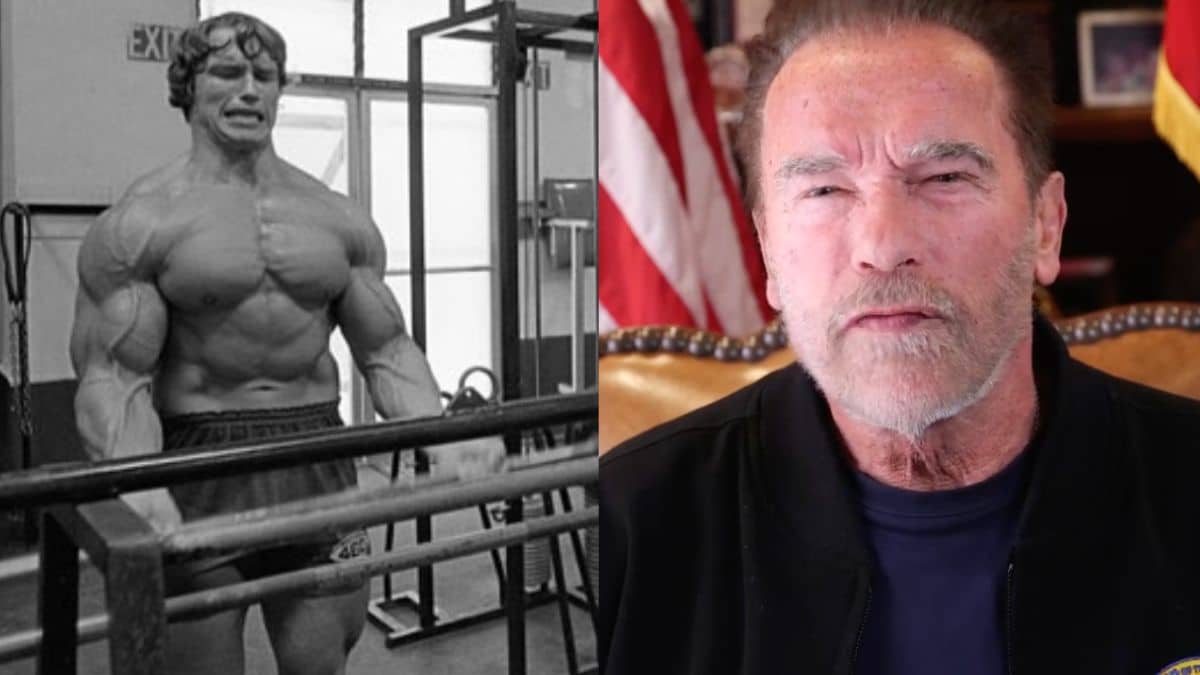
Arnold Schwarzenegger Reveals Personal ‘Mecca of Weightlifting’ in Austria During Netflix Series
Arnold Schwarzenegger certainly came from humble beginnings as represented in his latest Netflix documentary, Arnold. During an episode, the bodybuilding legend looked back on a gym he called the ‘mecca of weightlifting’ while building his physique in Austria.
In the 1970s, Schwarzenegger proved he was ahead of his time with a massive chest, huge arms, broad shoulders, and a narrow waist. While competing actively, he shared the stage with several icons such as three-time Mr. Olympias Sergio Oliva and Frank Zane. Before his time was up in bodybuilding, Schwarzenegger had already amassed seven Mr. Olympia titles.
In addition to his bodybuilding journey, Schwarzenegger established himself as a famous actor. With lead roles in The Terminator franchise, it didn’t take long for the Austrian native’s popularity to skyrocket. Even though he also governed the state of California, the 75-year-old’s focus as of late has remained on acting and staying fit.
Schwarzenegger routinely offers training advice and wellness tips in his Daily Pump Newsletter. Late last month, he opened up about how grip strength is one of the best indicators of long-lasting health. He offered a number of tests and a circuit longevity-inspired training routine.
Arnold Schwarzenegger Discusses Austria Gym He Used Before Moving to North America
Schwarzenegger acknowledged that Gold’s Gym was one of his favorites, but he named the Athletik Union Graz in Austria as his first mecca of weightlifting.
“This weightlifting club became for me, the mecca. I became addicted to it and so I went there everyday.”
“When I walked into this gym [In Austria], there was this wall made of wood, I took a piece of chalk, and I would write down, biceps, triceps, brust, rucken, so I would do a set of biceps curls. And I will write down next to this one line, then another line, then another line, then another line, next one, flyes on the bench, and I know when I did my 20 sets of a specific exercise. After three hours of training, this whole thing would be full of sets that I’ve done to get to that goal that I want to go,” Arnold Schwarzenegger shared.
Schwarzenegger has been honest about his physique since his days of competing in a pair of posing trunks. In a recent interview with The Hollywood Reporter, Schwarzenegger said he hopes to live forever and has found it difficult to accept his body in retirement given his former status as the world’s best-built man.
As for PEDs, it’s not common to hear Schwarzenegger discuss the subject, however, he gave fans an idea of what his Mr. Olympia-winning cycle was a few weeks ago. According to Arnie, he used a combination of testosterone and Dianabol en route to securing his name in the bodybuilding history books.
RELATED: Arnold Schwarzenegger Shares 4 Ways to Strengthen Your Routine
Despite his busy schedule, Arnold Schwarzenegger doesn’t appear to be slowing down considering his latest offerings to Netflix. Schwarzenegger has honed his physique in various gyms around the world. Yet none of them can compare to the humble home gym in Austria, where his passion for fitness was ignited and nurtured.
Published: 14 June, 2023 | 1:22 PM EDT
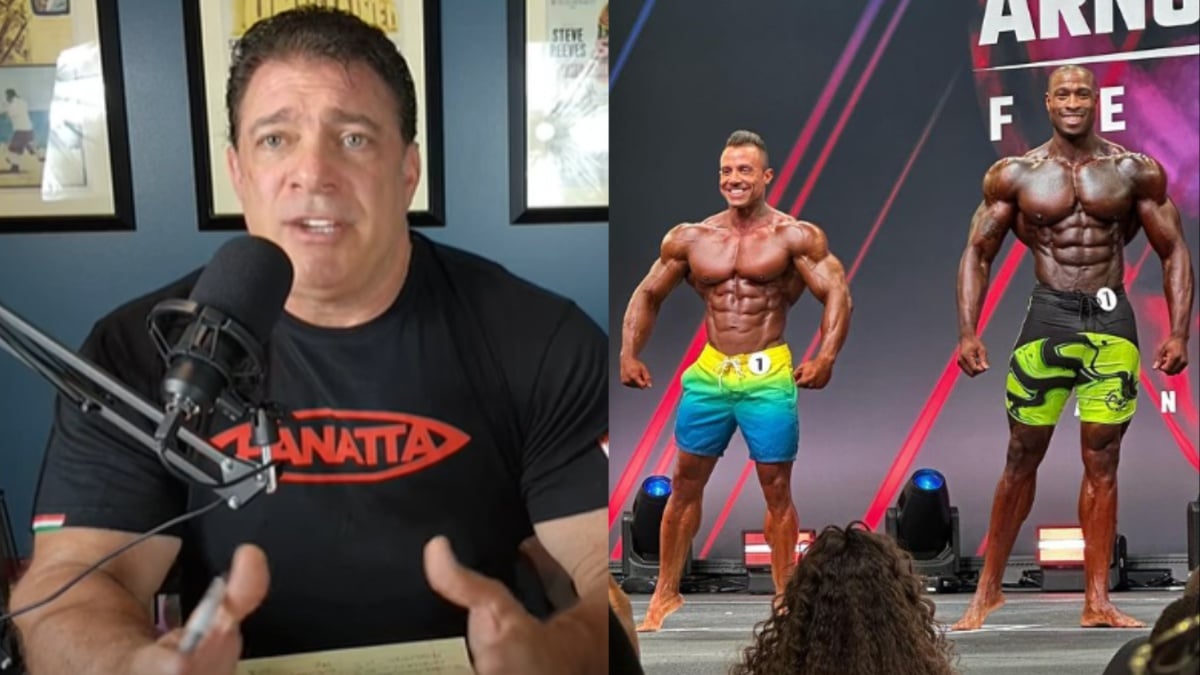
Bob Cicherillo Clears Air on Men’s Physique Rules, Says Leg Training is Still Needed for Proportions
Bob Cicherillo is the latest to give his opinion on the new height/weight restrictions announced by the IFBB Pro League for the Men’s Physique division. In a recent Voice of Bodybuilding Podcast, Cicherillo said the new statutes will not result in Men’s Physique competitors ignoring leg training because their physiques would appear imbalanced.
Whether it’s judging a contest or providing guidelines on examining a physique, Cicherillo understands the sport on a deep level. He has served as an announcer at several contests for well over a decade. He is also the commentator for the prestigious Arnold Classic and Mr. Olympia competitions.
Earlier this week, new rules for the Men’s Physique category were revealed by IFBB Vice President Tyler Manion. The regulations are expected to go into effect at the first show following the 2023 Mr. Olympia competition scheduled for Nov. 2-5 in Orlando, Florida. Due to concerns about muscularity and size, the organization has decided to implement a height and weight cap restriction, however, exact details have yet to be made available.
Given the significance of this recent change, the bodybuilding community is unsure how it will affect the growing division. According to Cicherilo, Dave Palumbo of RxMuscle believes these new measures would discourage Men’s Physique athletes from training legs in order to make the weight cap. Unlike Palumbo, Cicherillo favors the rule change and explains why below.
“I Think This Is a Great Move,” Says Bob Cicherillo on The New Size Restrictions Put on Men’s Physique Division
Cicherillo said bodies in the Men’s Physique category are ‘getting a little bit out of hand.’ He argued they are beginning to resemble the size of Classic Physique competitors.
“The rules change is that there will now be a weight restriction added to the heights. Most people are wondering what that meant. Well, up until this point it’s just been height. Classic has been weight and height. There’s a ratio we use since its inception so for a few years right now. So, the time has come to bring it back because the physiques are getting a little bit out of hand. They’re starting to look a little to close to the Classic Physique guys. We need to keep a separation of church and state when it comes to different physiques in different divisions.”
“I think this is a great move because you got to have some parameters for keeping physiques, where you want them per the division. If they start to look like bodybuilders in board shorts, this is not what we’re looking for. It has to have a certain level that really you can’t get by that’s when the height and the weight restriction comes in. Now, I did see a few other things going on this past week.”
Bob believes the new restrictions have merit. And while it’s true that legs aren’t directly judged in Men’s Physique contests, Cicherillo explained that they are part of an overall package.
“Dave Palumbo on his podcast, gave his two cents, he thought it was a terrible idea. Didn’t particularly care for it, thought it was going to be a mistake. He felt as though, I thought this was a little weird myself, that this would impact the physiques. That the guys just wouldn’t train legs anymore. Go figure the logic on that one. But he explained that they don’t actually judge the legs. It makes no sense whatsoever, but I’m actually going to get to the point on this one and tell you why it’s a very good idea.”
Cicherillo said size restrictions worked great in Classic Physique, which has come to rival the popularity of the Men’s Open. In addition, Cicherillo highlighted that fans online have discussed potential limits on other classes such as Women’s Physique and Women’s Bodybuilding.
“Number one: again, you need a cap on the type of physique that we’re looking for. That said, a height, weight restriction, okay, a ratio, just like in Classic will keep people under a certain look. Just by virtue that they can’t be too big or they’ll be over the weight limit. This worked very successfully in Classic Physique. Arguably our most successful division up until this point, even a rival for the Men’s Open in some shows.”
“That said, I also offer a little bit more than I think we need to take a look at in the pro league in particular, and the pro league will need to take a look at in the next few years or so. While this is a great start, I also think that we’ve had to now take it back a notch on many divisions, not just Men’s Physique, Men’s Physique has gotten a little bit too muscular, Women’s Physique a lot of chatter out there that that’s becoming Women’s Bodybuilding. Women’s Bodybuilding completely out of control and even Men’s Bodybuilding for that matter, a lot of people complaining and wishing it goes back to the 90s.”
Simply put, Bob Cicherillo doesn’t believe Men’s Physique athletes will stop training legs because their physiques will appear imbalanced on stage. He said he’s seen Men’s Physique athletes lose shows because their legs are disproportionate to their upper bodies.
“This is not going to result in people not training legs. Actually, he did say something else I wanted to address, that the legs aren’t being judged. While that may be inherently true, yes they do have board shorts on if you notice, the board shorts have changed significantly from 10 years ago when we had this division added in. They’re not wearing the big giant board shorts anymore as it would be. The shorts are much slimmer, smaller, and hug the legs a little more.”
“I’ve seen Men’s Physique guys lose shows because their legs are too small. How do you ask? Because you can blatantly see it on stage, if you got little pencils sticking out there for calves, your upper body looks huge, you’re not in proportion. You’re not going to get a score for that but you are being judged on the entire physique and the presentation of your physique.”
“I disagree that anybody is going to stop training legs to make the weight,” added Bob Cicherillo.
Cicherillo has also given his opinion on other bodybuilding divisions. In May, some in the sport called for an end to Men’s 212 Bodybuilding. Given the success Derek Lunsford and Hadi Choopan enjoyed at the last Mr. Olympia, some believe there’s some truth to that argument. However, Cicherillo said ‘only an idiot’ would get rid of the 212 division.
Bob Cicherillo believes the new height/weight restrictions for Men’s Physique will help keep the division true to its roots, while also ensuring that competitors do not neglect their leg training. Only time will tell how the new rules will be received by the bodybuilding community, but Cicherillo is confident they are a step in the right direction.
RELATED: Men’s Physique Competitor Ryan Terry Shares Muscle-Building 1874-Calorie Protein Shake
You can watch the full video below from the Voice of Bodybuilding YouTube channel:
Published: 14 June, 2023 | 11:38 AM EDT
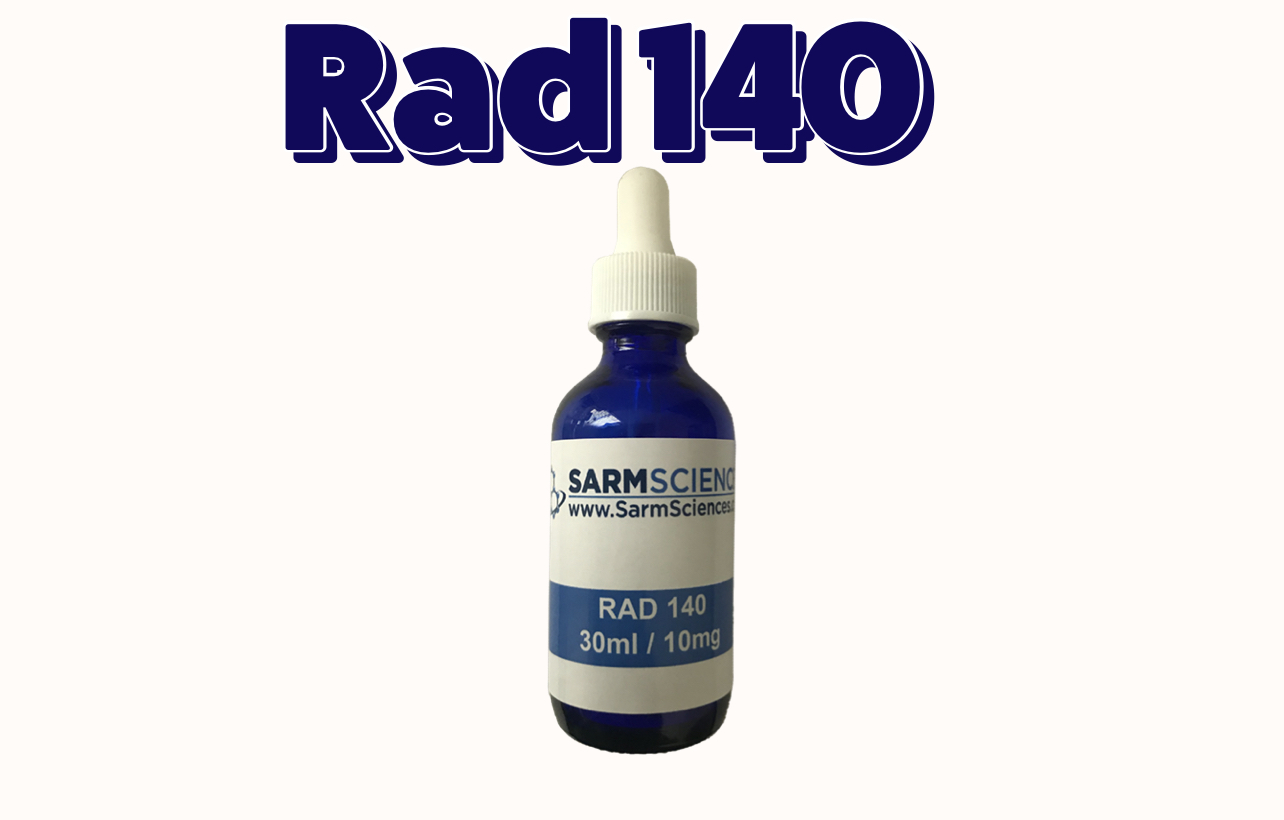
A Closer Look at SARM Sciences’ RAD 140 and Why It’s a Customer Favorite at MuscleChemAdvancedSupps.com
A Closer Look at SARM Sciences’ RAD 140 and Why It’s a Customer Favorite at MuscleChemAdvancedSupps.com In the world of fitness and bodybuilding, selective androgen receptor modulators (SARMs) have gained popularity as powerful compounds that offer the potential benefits of anabolic steroids with fewer side effects. Among the various SARMs available, RAD 140 from SARM…
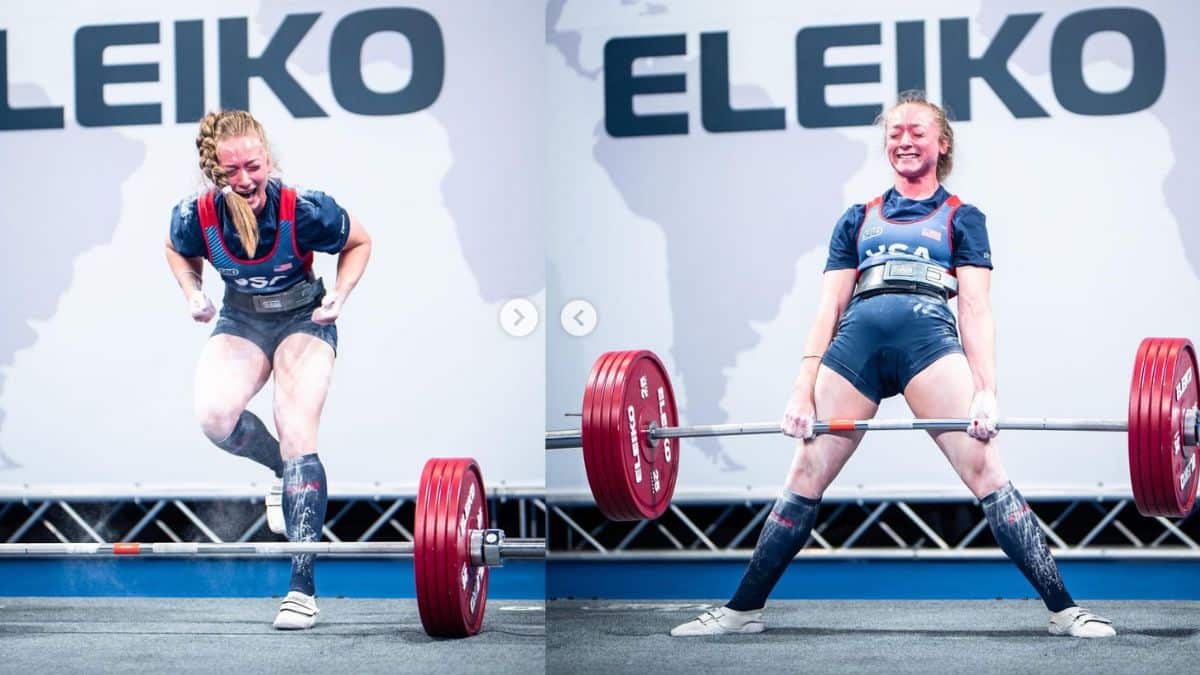
Natalie Richards (57KG) Sets 512.5-kg (1,129.9-lb) Raw Total World Record at 2023 IPF World Classic Powerlifting Championships
Natalie Richards rose onto the elite powerlifting scene near the end of 2022, having put up a Total heavier than 500 kilograms (1,102.3 pounds) for the first time in her career. However, just over half a year has passed since, and Natalie has already improved quite a bit. She displayed her new and improved shape at the 2023 IPF World Classic Open Powerlifting Championships, which are taking place from June 11-18, in Valletta, Malta. Despite making her debut, Natalie accumulated a Total of 512.5 kilograms (1,129.9 pounds), setting a new IPF World Record and winning the 57-kilogram weight class.
The previous U57KG IPF World Record holder was Jade Jacob, as the French representative put up a Total of 503.5 kilograms (1,110 pounds) at the 2023 IPF Sheffield Powerlifting Championships. She set this record just a few months ago and was thus the main favorite for the title at the 2023 IPF World Classic Open Powerlifting Championships. However, Natalie Richards outperformed everyone with her impressive performance, including Jade Jacob, who ended up in second place.
Related: Heather Connor (47KG) Scores 200-kg (440.9-lb) Raw Deadlift World Record at 2023 IPF World Classic Powerlifting Championships
Natalie Richards’ Full Performance
Weighing in at 55.80 kilograms (123 pounds), Natalie Richards turned out to be one of the lightest athletes among almost 30 competitors in her weight class. Additionally, Natalie did not miss any of her nine attempts, which indicates that each lift was meticulously planned.
Natalie Richards set new competition PRs in all events except the bench press. Moreover, her bench press was exactly equal to her competition PR which she set last year.
Squat
165 kilograms (363.8 pounds)
172.5 kilograms (380.3 pounds)
180 kilograms (396.8 pounds) — Competition PR
Bench Press
97.5 kilograms (215 pounds)
105 kilograms (231.5 pounds)
107.5 kilograms (237 pounds)
Deadlift
200 kilograms (440.9 pounds)
215 kilograms (474 pounds)
225 kilograms (496 pounds) — Competition PR
Total — 512.5 kilograms (1,129.9 pounds) — U57KG IPF World Record & Competition PR
Watch all the lifts here:
Related: Tiffany Chapon (47KG) Sets 99.5-kg (219.4-lb) Bench Press World Record at 2023 IPF World Classic Powerlifting Championships
Natalie Richards’ Competition History
Personal Bests
Equip
Squat
Bench
Deadlift
Total
Dots
Raw
393.5
237
393.5
1105.6
578.84
Competition Results
Place
Fed
Date
Competition
Division
Total
Dots
1
AMP
2023-02-24
Classic National Championship
FR-O
1105.6
578.84
Location
USA-TX
Competition
Classic National Championship
Division
FR-O
Age
~24.5
Equipment
Raw
Class
125.7
Weight
124.3
Squat
352.7
369.3
385.8
385.8
Bench
215
231.5
-242.5
231.5
Deadlift
436.5
463
488.3
488.3
GLP
118.64
1
AMP
2022-11-05
Power Partners Championships
FR-O
429.9
219.39
Location
USA-TN
Competition
Power Partners Championships
Division
FR-O
Age
~23.5
Equipment
Raw
Class
138.9
Weight
129.2
Squat
143.3
143.3
Bench
143.3
143.3
Deadlift
143.3
143.3
GLP
44.81
1
USAPL
2022-10-15
Carolina Primetime
FR-O
1104.5
571.7
Location
USA-SC
Competition
Carolina Primetime
Division
FR-O
Age
~23.5
Equipment
Raw
Weight
126.4
Squat
358.3
380.3
393.5
393.5
Bench
203.9
226
237
237
Deadlift
407.9
451.9
474
474
GLP
116.98
DQ
USAPL
2022-06-08
Mega Nationals
FR-O
Location
USA-NV
Competition
Mega Nationals
Division
FR-O
Age
~23.5
Equipment
Raw
Class
132.3
Weight
127.2
Squat
358.3
374.8
-391.3
374.8
Bench
215
226
231.5
231.5
Deadlift
-463
-463
-474
2
USAPL
2021-12-04
Virginia Pro
FR-Jr
1069.2
561.18
Location
USA-VA
Competition
Virginia Pro
Division
FR-Jr
Age
~22.5
Equipment
Raw
Weight
123.8
Squat
358.3
369.3
380.3
380.3
Bench
203.9
215
220.5
220.5
Deadlift
418.9
451.9
468.5
468.5
GLP
115.07
1
USAPL
2021-06-12
Carolina Primetime
FR-Jr
1036.2
544.14
Location
USA-SC
Competition
Carolina Primetime
Division
FR-Jr
Age
~22.5
Equipment
Raw
Class
125.7
Weight
123.7
Squat
341.7
352.7
369.3
369.3
Bench
198.4
209.4
215
215
Deadlift
418.9
440.9
451.9
451.9
GLP
111.59
1
USAPL
2021-06-12
Carolina Primetime
FR-O
1036.2
544.14
Location
USA-SC
Competition
Carolina Primetime
Division
FR-O
Age
~22.5
Equipment
Raw
Class
125.7
Weight
123.7
Squat
341.7
352.7
369.3
369.3
Bench
198.4
209.4
215
215
Deadlift
418.9
440.9
451.9
451.9
GLP
111.59
1
USAPL
2020-12-13
SC State Championship
FR-Jr
970
512.44
Location
USA-SC
Competition
SC State Championship
Division
FR-Jr
Age
~21.5
Equipment
Raw
Class
125.7
Weight
122.6
Squat
330.7
352.7
369.3
369.3
Bench
187.4
198.4
-209.4
198.4
Deadlift
363.8
-396.8
402.3
402.3
GLP
105.19
1
USAPL
2020-12-13
SC State Championship
FR-O
970
512.44
Location
USA-SC
Competition
SC State Championship
Division
FR-O
Age
~21.5
Equipment
Raw
Class
125.7
Weight
122.6
Squat
330.7
352.7
369.3
369.3
Bench
187.4
198.4
-209.4
198.4
Deadlift
363.8
-396.8
402.3
402.3
GLP
105.19
1
USAPL
2020-06-20
North Carolina Quailifier
FR-O
865.3
453.35
Location
USA-NC
Competition
North Carolina Quailifier
Division
FR-O
Age
~21.5
Equipment
Raw
Class
125.7
Weight
124.1
Squat
314.2
330.7
347.2
347.2
Bench
165.3
176.4
-187.4
176.4
Deadlift
314.2
341.7
-374.8
341.7
GLP
92.93
1
USAPL
2019-11-02
Fall Festival of Power
FR-Jr
771.6
410.84
Location
USA-NC
Competition
Fall Festival of Power
Division
FR-Jr
Age
~20.5
Equipment
Raw
Class
125.7
Weight
121.1
Squat
281.1
303.1
-314.2
303.1
Bench
154.3
165.3
170.9
170.9
Deadlift
275.6
286.6
297.6
297.6
GLP
84.45
1
USAPL
2019-11-02
Fall Festival of Power
FR-O
771.6
410.84
Location
USA-NC
Competition
Fall Festival of Power
Division
FR-O
Age
~20.5
Equipment
Raw
Class
125.7
Weight
121.1
Squat
281.1
303.1
-314.2
303.1
Bench
154.3
165.3
170.9
170.9
Deadlift
275.6
286.6
297.6
297.6
GLP
84.45
Data Source: Open Powerlifting. Last Updated: April 12, 2023
Analyze Lifts
Natalie Richards had her first sanctioned powerlifting appearance in November of 2019. So, it took her less than four years and 13 sanctioned competitions to become an IPF World Champion and World Record holder. In addition, she achieved a significant milestone by securing her 11th victory at the 2023 IPF Worlds. This remarkable accomplishment is truly impressive, especially when considering that she has only encountered defeat in two competitions throughout her entire career.
With the win at the 2023 IPF World Classic Open Powerlifting Championships Natalie Richards secured a place at the 2023 IPF Sheffield Powerlifting Championships. She has expressed a great desire to appear in this competition on Instagram. So, it is evident that she will be even more motivated for her future endeavors from now on.
Published: 14 June, 2023 | 9:17 AM EDT