
 All Posts By Muscle Insider
Board Certified PHD
Build a Better Butt: Three Glute Workouts for Women
For years, six-pack abs were the fitness-fashion must-have. Actors, pop stars, athletes, B-listers – everyone had shredded abs and was happy to show them off. Entire workout programs revolved around getting a washboard stomach, and abs training exercise machines were on everyone’s Christmas list.
While ripped abs are still popular, they’ve been somewhat overshadowed by another muscle group – the glutes. Since the Kardashians hit the big time, glutes have become the fitness accessory that no woman can be seen without.
Unfortunately, prolonged sitting means that a lot of women’s glutes are flat, soft, and weak instead of rounded, strong, and firm. Glute amnesia is the term often used to describe how some people have literally forgotten how to contract their butts.
The good news is that the glutes are highly trainable and will quickly respond to regular workouts. You don’t even need a fancy gym to train your glutes – bodyweight and freeweight exercises can be very effective. When it comes to glute training, consistency is the key.
In this article, we share three tried-and-tested glute workouts for women. And yes, men can do them too!
Glute Anatomy Basics
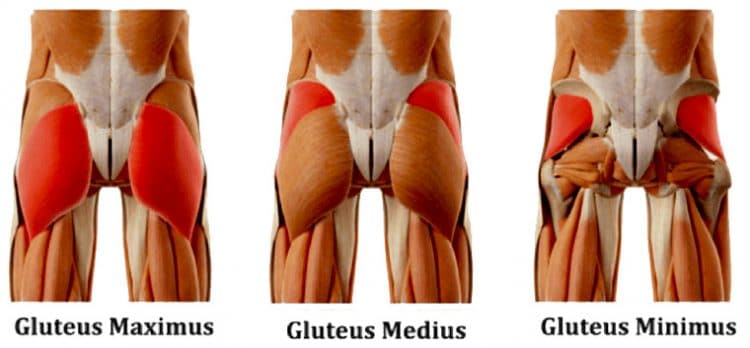
When most people mention their glutes, they’re talking about their gluteus maximus. However, there are three glute muscles, each of which deserves your attention if you want to develop a muscular, aesthetically pleasing butt.
Gluteus maximus
The gluteus maximus is the most prominent muscle in the human body. It’s also potentially the strongest. Located on the rear and lateral aspect of your hips, the functions of the gluteus maximus are:
Hip extension
Hip abduction (superior/upper fibers)
Hip adduction (inferior/lower fibers)
Hip lateral rotation
Gluteus medius
The gluteus medius is found near the iliac crest of the pelvis, above and under the gluteus maximus. It works alongside the gluteus maximus and also has some additional functions of its own, too:
Hip abduction
Hip rotation
Pelvis stabilization
Gluteus minimus
The gluteus minimus is a small, triangular muscle located toward the back of the hip. Gluteus minimus also works with the gluteus maximus, but has some additional functions:
Hip abduction
Hip medial rotation
Pelvis stabilization
Bonus glute muscle: Tensor fascia latae
The tensor fascia latae, or TFL, is part of the glute complex, even though gluteus isn’t part of its name. The TFL a biaxial muscle, meaning it crosses two joints – the hip and the knee. As part of the glute group, TFL plays an essential role in the following:
Hip internal rotation
Hip abduction
Pelvis stabilization
To develop your best ever butt, you must pay attention to all the glute muscles. So, while the gluteus maximus is the biggest muscle in the glute complex, the other muscles also deserve your attention. After all, they’re vital for hip stability and performance. That’s why we’ve included a variety of exercises in the following glute workouts for women.
The Benefits of Glute Training for Women
Weak glutes are a modern-day epidemic. Prolonged sitting for work and leisure means that many people have feeble, flat, soft, underdeveloped glutes. Most women train their glutes because they want a better-looking butt. While this is no bad thing, there are several additional benefits to working your glutes hard and often.
These benefits include:
Less lower back pain
Back pain is a common problem affecting a significant percentage of adult women, and a lot of back pain is caused by weak glutes. If your glutes are weak, much of the work they should do falls on your lower back, e.g., bending and lifting objects off the floor. Stronger glutes mean less stress on your lower back and a lower risk of back pain.
Glute-related lower back pain is especially common during pregnancy, as the shift in your center of gravity pulls you forward, and you’ll need strong glutes to counter this effect. Stronger glutes will also help stabilize your sacroiliac (SI) joint, which is another common cause of lower back pain for women.
In many cases, stronger glutes are the most effective way to prevent and treat lower back pain – with your doctor’s approval, of course.
Better posture
Posture is the alignment of your joints, which can be good or bad. Good posture puts minimal stress on your joints, ligaments, and muscles and is very efficient. In contrast, poor posture puts far more pressure on your joints and connective tissue and is very inefficient. Poor posture can lead to muscle tension, fatigue, and chronic pain.
Weak glutes can affect the alignment and position of your lumbar spine or lower back. It can also reduce pelvic stability. Stronger glutes can help prevent common postural problems such as hyperlordosis or an over-arched lower back.
A better-looking butt
While training your glutes has a lot of functional benefits, there is no denying the aesthetic appeal of a strong, firm, muscular butt. Great-looking butts don’t happen by accident; if you want a rear you can be proud of, you must train it hard, often, and consistently.
Increased hip and knee stability
The hip is a very mobile ball and socket joint capable of a wide range of movements, including flexion, extension, medial and lateral rotation, abduction and adduction. However, that mobility comes at a price – reduced stability.
While increased mobility is generally a good thing, uncontrolled movement of the hip can cause hip pain and injuries and even affect your knees. For example, if your hips cave in while you are walking or running, you may experience pain in the medial part of your knees.
Strengthening the muscles around your hips will enhance joint stability and function, leading to more efficient movements and a lower risk of hip and knee pain.
Three Glute Workouts for Women
Here are your three glute workouts for women. But, before doing any of them, you must prepare your joints and muscles for what you’re about to do by warming up. Start with 5-10 minutes of easy cardio, e.g., air bike, rower, jogging, or jumping rope, followed by a few dynamic mobility and flexibility exercises for knees, hips, and lower back.
A ten-minute warm-up can save you months of lost training caused by an otherwise avoidable injury, so don’t skip it.
Ready? Then let’s get to work!
Bodyweight-Only Glute Workout
No time to go to the gym? Prefer home workouts? No problem! You can train your glutes almost using just your body weight. Do this workout at home, in your hotel room, in your garden, at the park – anywhere you want!
#
Exercise
Sets
Reps
Recovery
1
Glute bridge marches
2-4
12-20
60-90 seconds
2
Prisoner good-mornings
2-4
12-20
60-90 seconds
3
Frog pumps
2-4
12-20
60-90 seconds
4
Reverse lunges
2-4
12-20 per leg
60-90 seconds
5
Side leg raises
2-4
12-20 per leg
60-90 seconds
1. Glute bridge marches
Target muscles: Gluteus maximus, hamstrings, core.
Steps:
Lie on your back with your legs bent and feet flat. Brace your abs. Drive your feet into the floor and push your hips up so your knees, hips, and shoulders form a straight line.
Without lowering your hips, lift one leg up and push your knee up toward the ceiling.
Lower your foot to the floor, swap legs, and repeat.
Continue alternating legs for the prescribed number of reps.
2. Prisoner good-mornings
Target muscles: Gluteus maximus, hamstrings, core.
Steps:
Stand with your feet about hip-width apart. Bend your knees slightly.
Place your hands behind your head and push your elbows back to open your chest. Brace your core.
Hinging from your hips, lean as far forward as possible without rounding your lower back. Push your butt backward as you lean.
Drive your hips forward and stand up.
That’s one rep – keep going!
3. Frog pumps
Target muscles: Gluteus maximus, gluteus minimus, gluteus medius, hip abductors, hamstrings, core.
Lie on your back with your legs bent and the soles of your feet pressed together.
Push your knees apart.
Drive the outside of your feet into the floor and lift your hips up to form a straight line with your knees and shoulders.
Lower your butt back down to the floor and repeat.
Read more: Frog Pumps Exercise Guide: How To, Benefits, Muscles Worked, and Variations
4. Reverse lunges
Target muscles: Gluteus maximus, hamstrings, quadriceps, core.
Steps:
Stand with your feet together and your arms by your sides. Pull your shoulders down and back, and brace your core.
Take a large step backward, bend your legs, and lower your rearmost knee down to within an inch of the floor. Lean forward slightly to increase glute engagement.
Push off your back leg, bring your feet back together, and repeat on the opposite side.
Alternate legs for the required number of reps.
5. Side leg raises
Target muscles: Gluteus maximus, gluteus minimus, gluteus medius.
Steps:
Lie on your side so your body is straight and your head is resting on your outstretched arm.
Raise your uppermost leg to about 45 degrees, turning your hip slightly inward to maximize glute engagement.
Lower your leg and repeat.
Roll over and do the same number of reps on the other side.
You can make this exercise more challenging by putting a booty band around your knees or wearing an ankle weight.
Freeweight Glute Workout
Freeweights provide a low-tech way to overload your glutes and build more strength. Barbells and dumbbells are available at almost every gym. They are also ideal for home workouts as they’re cheap, compact, and easy to store between workouts.
#
Exercise
Sets
Reps
Recovery
1
Barbell Romanian deadlift
2-4
12-20
60-90 seconds
2
Barbell hip thrust
2-4
12-20
60-90 seconds
3
Dumbbell side leg raise
2-4
12-20 per leg
60-90 seconds
4
Dumbbell high step-up
2-4
12-20 per leg
60-90 seconds
5
Dumbbell sumo squat
2-4
12-20
60-90 seconds
1. Barbell Romanian deadlift
Target muscles: Gluteus maximus, hamstrings, core.
Hold a barbell in front of your hips with a double overhand grip. Stand with your feet hip-width apart, knees slightly bent.
Pull your shoulders back and down and brace your core.
Push your hips back and hinge forward, lowering the bar down your legs.
Descend as far as you can without rounding your lower back.
Push your hips forward, stand back up, and repeat.
2. Barbell hip thrust
Target muscles: Gluteus maximus, hamstrings, core.
Sit on the floor with your back against a sturdy bench. Rest and hold a barbell across your hips. Use a folded mat or squat par pad for comfort if required.
Push down with your feet and lift your hips up to form a straight line between your knees and shoulders.
Lower your butt back down to lightly touch the floor and repeat.
3. Dumbbell side leg raise
Target muscles: Gluteus maximus, gluteus minimus, gluteus medius.
Lie on your side with your legs straight and your head resting on your lowermost arm.
Hold a dumbbell in your other hand and rest it on your uppermost thigh.
Raise your top leg to about 45 degrees, lower it, and repeat.
The further down your thigh you hold the weight, the more challenging this exercise becomes.
On completion, roll over and do the same number of reps on the opposite leg.
4. Dumbbell high step-up
Target muscles: Gluteus maximus, hamstrings, quadriceps, core.
Hold a dumbbell in each hand, arms by your sides. Stand in front of a bench or step that’s about knee height.
Place one foot on the top of the platform, drive your foot down, and step up. Try not to push off with your trailing leg.
Step back down, switch legs, and repeat.
Continue alternating legs for the duration of your set.
5. Dumbbell sumo squat
Target muscles: Gluteus maximus, hamstrings, quadriceps, core.
Stand with your feet about 1.5 shoulder widths apart, toes turned slightly outward.
Hold a single dumbbell in front of your hips.
Pushing your knee outward, squat down as deeply as possible without rounding your lower back. Keep your weight on your heels to maximize glute engagement.
Drive your feet into the floor and stand back up.
Continue for the prescribed number of reps.
Gym Glute Workout for Women
Having access to a gym means there are lots of ways to train your glutes. In fact, there are so many choices that it can be hard to know where to start! Keep your training on track with this tried-and-tested gym-based glute workout.
#
Exercise
Sets
Reps
Recovery
1
Barbell booty band back squat
2-4
12-20
60-90 seconds
2
Cable machine pull-throughs
2-4
12-20
60-90 seconds
3
Dumbbell single-leg Romanian deadlift
2-4
12-20 per leg
60-90 seconds
4
Cable hip abduction
2-4
12-20 per leg
60-90 seconds
5
Barbell glute march
2-4
12-20
60-90 seconds
6
Reverse hypers
2-4
12-20
60-90 seconds
1. Barbell booty band back squat
Target muscles: Gluteus maximus, gluteus minimus, gluteus medius, hamstrings, quadriceps, core.
Put a booty band around your knees. Rest and hold a barbell across your upper back. Step out so your feet are about shoulder-width apart. Push your knees out against the resistance offered by the band.
Bend your knees and squat down until your thighs are roughly parallel to the floor. Keep pushing your knees outward. Do not round your lower back.
Stand back up and repeat.
2. Cable machine pull-throughs
Target muscles: Gluteus maximus, hamstrings, core.
Attach a rope handle to a low pulley machine.
Stand astride the cable with your back to the machine. Hold the handle in both hands in front of your hips. Take 1-2 steps forward to tension the cable.
Push your hips back and lean forward, reaching back and through your legs.
Drive your hips forward and stand up straight.
Continue for the prescribed number of reps.
You can also do this exercise with a resistance band.
3. Dumbbell single-leg Romanian deadlift
Target muscles: Gluteus maximus, hamstrings, core.
Hold a dumbbell in one hand and stand with your feet together.
Shift your weight over onto one leg. Bend your supporting knee slightly.
Hinging from your hips, lean forward and lower the weight down toward the floor. Extend your non-weight-bearing leg out behind you for balance.
Stand back up and repeat.
Use your non-working arm for support if required.
Switch legs and do the same number of reps on the other side.
4. Cable hip abduction
Target muscles: Gluteus maximus, gluteus minimus, gluteus medius.
Wrap a strap around your ankle and attach it to a low pulley machine.
Stand sideways onto the weight stack with your working leg furthest from the weight stack. Hold the machine for balance. Brace your core.
Keeping your leg straight, lift your foot out to the side, taking care not to twist your hips.
Lower your leg and repeat.
Do the same number of reps on both sides.
5. Barbell glute march
Target muscles: Gluteus maximus, hamstrings, core.
Lie on the floor with your legs bent and feet flat. Rest and hold a barbell across your hips. Use a folded mat or squat bar pad for comfort if required.
Drive your feet into the floor and raise your hips so they form a straight line with your knees and shoulders.
Keeping your hips up, extend your right leg.
Lower your foot back to the floor, swap legs, and repeat.
Continue alternating legs for the prescribed number of reps.
6. Reverse hypers
Target muscles: Gluteus maximus, hamstrings, core.
Lie on the machine so your hips are in line with the lever arm pivot point. Place your lower legs behind the restraint. Hold onto the support handles.
Extend your hips and legs out behind you, taking care not to hyperextend your spine.
Lower your legs and repeat.
No reverse hyper machine at your gym? Don’t worry; you can also do this exercise with a regular workout bench, like this:
Glute Workouts for Women – FAQs
Do you have a question about these workouts or glute training for women in general? No problem, because we’ve got the answers!
1. How often can I train my glutes?
While it might be tempting to train your glutes more often, 2-3 workouts per week should be sufficient for most women. Muscles take on average 48-72 hours to recover between workouts, so training them more often could impede rather than accelerate your progress.
So, train your glutes every 2-3 days for best results, e.g., Monday, Wednesday, and Friday, or Monday and Thursday.
2. Will these exercises and workouts fix my violin hips?
Violin hips, aka hip dips, are where your lower glutes/upper thighs curve slightly inward. Contrary to what a lot of influencers believe, this is NOT something that can be fixed with exercise or diet and is caused by your bone structure. Hip dips are perfectly natural and not something you need to try and alter.
While training your glutes will enhance your general butt shape, your hip dips are here to stay. So, don’t worry about them, and focus on the things you can control instead.
3. Do I have to stick to the 12-20 rep range?
To build maximal strength, you must train using heavy weights and low reps, typically 1-5 per set with 85% or more of your one-repetition maximum. However, if you aren’t training for strength, it really doesn’t matter how many reps you do per set.
In fact, studies suggest that you can perform anywhere from 5 to 35 reps per set and still make progress (1). Almost any rep count will work if you take your set close to failure.
12-20 is just a general guideline, and you can do eight, ten, twenty, or thirty reps per set if you wish.
4. What is the best diet to build a better butt?
Building a bigger, stronger butt is a type of hypertrophy training, better known as bodybuilding. As such, you’ll need to provide your body with the energy it needs for your workouts as well as muscle growth and repair.
Invariably, this means eating a slight calorie surplus, consuming enough protein, and eating mostly natural, clean foods.
It’s beyond the scope of this article to provide you with a diet to follow, but you can find all the information you need to write your own healthy eating plan in this step-by-step guide.
5. Can I just do core workouts to get in shape?
Your glutes are just a small selection of the 600+ muscles that make up the human body. Trying to get in shape by just training your glutes is like trying to keep your car running by only ever checking the tire pressure!
While these glute workouts will certainly help, you need to train the rest of your body if you want to be in good shape. That means including upper body, cardio, and core training in your weekly workout schedule.
Glute training IS undoubtedly important, but it’s just one of the things you need to do to be fit and healthy.
Glute Workouts – Closing Thoughts
Whether you are training for better health, improved athletic performance, or want to look your best, glute training can help. Unfortunately, many women have weak, soft glutes, often because they spend too much time sitting.
Use these workouts to sculpt your perfect butt. However, remember that while the glutes ARE important, the rest of your body deserves the same amount of care and attention. Nature abhors imbalances, and going all glutes all the time will probably cause more problems that it cures.
More Glute Workouts:
Rocky Star Dolph Lundgren Discloses 8-Year Cancer Battle: Suspects Steroids Are to Blame
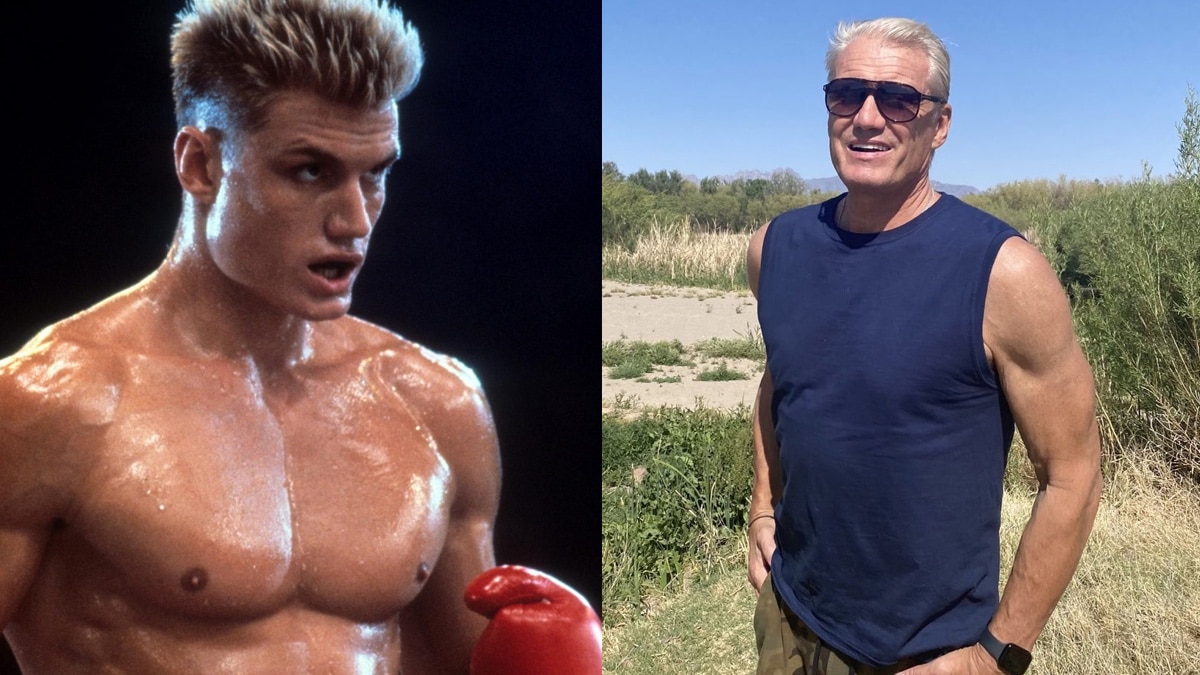
Swedish actor, filmmaker and martial artist Dolph Lundgren is well known across the world for his roles in action movies of the 1980s and 1990s era. With a dashing personality that best suited a Viking, Lundgren fit in the idea of an action star really well at the time. In a shocking revelation, the 65-year-old actor has stated that he has been fighting with cancer for eight years now.
Lundgren visited the In Depth With Graham Bensinger show recently. During the conversation, The Rocky IV star said he was diagnosed with cancer in 2015. He continues to fight with it and has undergone several treatments to keep it in check.
“They found a tumor. They didn’t know what it was – just a tumor in my kidney. And they took it out here in LA in 2015 but then they did a biopsy and it was cancerous,” Lundgren said.
The next few years were the toughest of Dolph Lundgren’s life as he had to deal with cancer and live with the constant fear of losing the most precious gift of life. However, he sought different treatments, fought through the disease and paved the way to near full recovery.
Dolph Lundgren shares a detailed account of his battle with cancer
The Rocky IV actor continued to do the scans every six months to track his health after the initial battle but the cancer had grown back in 2020. He underwent a surgery to remove the tumors. In the video clip recorded a day after the surgery, Lundgren said:
“It’s the day after my surgery. They took out one tumor, then they took out another two they found and another three small ones. Hopefully it’s cleaned out. If it dies, it dies!”
Lundgren never lost hope and kept the fighting spirit alive. The final sentence, ‘if it dies, it dies’, is a famous dialogue from the movie Rocky IV and only shows the Swede’s resolve to keep fighting.
In addition to the tumors in the kidneys, Lundgren had developed a ‘lemon-sized’ tumor in the liver which the doctors said they could not take out.
“If they can’t take it out, that means you have to do systemic therapy. But then I started to get side effects, I got diarrhea and I lost a lot of weight.”
The doctors gave him a maximum two to three years to live but Lundgren sought a second opinion and additional treatment to curb the decline. Under Santa Monica-based oncologist Dr. Alexandra Drakaki’s guidance, Dolph Lundgren went through another round of biopsy. The procedure helped uncover the mutation which allowed him to heal through medication.
“So 2022 is watching these medications do their thing and finally, the thing had shrunk by 90 percent. Now I am in the process of taking out the remaining scar tissue of these tumors,” Lundgren revealed.
He continued:
“The prognosis is that hopefully when they take these out, there’s no cancer activity and the medication I am taking is going to suppress everything else.”
‘Drago’ ponders over the potential causes of cancer
Dolph Lundgren is not sure what led his body to get cancer. He had an on and off relationship with steroids in the 1980s and 1990s depending upon the kind of physique his roles demanded.
“I tried steroids back in the 1980s, 1990s… I don’t know if it has anything to do with cancer. Of course it struck me it could have had something to do with it.”
Lundgren feels that neglecting health could be one of the reasons why people get cancer. Although he does not blame steroids for causing it, he feels that there could be a correlation between steroid use and cancer.
“Maybe it’s just me but you kind of blame yourself to some degree for it. I think maybe, there is some connection between testosterone therapy, HGH therapy and cancer in some people.”
Lundgren is on his way to full recovery. While nobody should have to deal with the health issue as serious as cancer, every grey cloud has a silver lining. The cancer taught the Rocky IV star to appreciate life more as he said:
“You know, you appreciate life a lot more. You appreciate every day. Every day I can be with people I love. You just appreciate being lucky enough to be alive and appreciate every moment there is.”
‘Drago’s’ secret battle with cancer is nearing its end. Fitness Volt wishes Dolph Lundgren a healthy and happy life.
You can watch the interview clips of Dolph Lundgren detailing his battle with cancer here, courtesy of Graham Bensinger’s YouTube channel:
Published: 11 May, 2023 | 1:52 AM EDT
Intermittent Fasting and Liver Health: The Surprising Benefits You Must Know About
Did you know intermittent fasting can also improve your liver health?
In this article, we explore the connection between intermittent fasting and liver health, understand the benefits of intermittent fasting on the liver, and present our conclusions based on scientific facts. So hop on as we begin our journey into intermittent fasting and its effects on liver health.
Intermittent Fasting and Health Benefits
For the uninitiated, intermittent fasting involves cycling between periods of fasting and eating. This abstinence period is known as the fasting window. Few practice it daily by staying away from calories for several hours each day, and the others do not eat anything for a couple of days or more each week. After the fast gets over, you are supposed to consume your daily requirement of calories in what is known as the feeding window.
Owing to its popularity, multiple intermittent fasting schedules have been devised. The most popular ones are 16/8, where you fast for 16 hours and eat in the remaining eight-hour window; the 5/2 approach, where you eat normally for five days a week and limit calorie intake to 500-600 calories on two non-consecutive days; and One Meal A Day fasting, where you fast for the entire day, and only have one meal at the end of the day.
There are other, more demanding intermittent fasting plans, too. If you are a hardened dieter, you could try a 3-day fast or even a monk fast, where you fast for 36 hours. Based on the schedule you follow, there are many amazing benefits that you can accrue from intermittent fasting. Here are some of them:
Weight loss
Reduction in insulin resistance [1]
Possible cancer prevention (though not yet proven)
Improvement in heart health [2]
Brain health improvement and prevention of neuro-diseases like Alzheimer’s
Anti-aging effects [3]
Reduction in chronic inflammation [4]
Of all the benefits of intermittent fasting, the most sought-after is weight loss. Many people who have given up on traditional dieting find new hope in intermittent fasting. It is recommended that they start with a light fasting schedule, possibly 12/12, and gradually work toward more demanding IF routines like OMAD or Alternate Day Fasting.
Liver’s Role in the Body
The liver is the body’s largest solid internal organ and performs several crucial functions. It is responsible for processing nutrients from food, producing bile to help with digestion, playing an important role in regulating blood sugar levels in the body, and removing waste and toxins from the blood. It is also responsible for medication breakdown and storing minerals and vitamins in the body. If the liver does not function optimally, it can lead to health issues like fatty liver, cirrhosis, and hepatitis.
Relation Between Fatty Liver and Cellular Mitochondria
Much research has been done on the potential benefits of intermittent fasting on animal health and mitochondrial functioning. Mitochondria are cellular components that are responsible for the metabolism of energy. Before moving into this topic, it is important to note that most studies on IF and mitochondria have been done on animals. Hence, no definitive claims can be made that it will be observable in humans too.
Scientists believe improper mitochondrial functioning plays a huge role in non-alcoholic fatty liver disease. This theory is based on the fact that the mitochondria are responsible for the metabolism of fatty acids. NAFLD is partly caused by improper fat metabolism, where the fat ends up in the liver.
Intermittent Fasting and Fatty Liver
A systematic review and meta-analysis done in 2021, published in Frontiers of Nutrition, discovered that intermittent fasting could reduce liver enzymes in people with fatty liver disease. [5]
In this meta-analysis, most of the studies were conducted on participants observing Ramadan fasting, a close replication of the 16/8 fasting regime, where you fast for 16 hours and eat your food in the remaining eight-hour window.
Another 2021 systemic review and meta-analysis published in Diabetes Research And Clinical Practice confirmed the positive relationship between Ramadan fasting and decreased liver enzyme levels. [6]
Again, there was a 2019 randomized controlled trial by Scientific Reports that found that alternate-day fasting (with participants following 18/6 fasting every other day and eating 70% of usual food intake on the fasting days) reduced the enzyme levels in the liver, and also improved some markers of liver scarring and liver fat accumulation. [7]
In all the above studies, we cannot say with certainty that the results achieved by following the fasting protocols were independent of the weight loss that participants experienced. It has only been suggested (not proven yet) that intermittent fasting can improve the liver’s health independent of calorie restriction/weight loss because IF changes how our bodies utilize energy, favoring fat metabolism.
These results are encouraging, and you can certainly try intermittent fasting to beat non-alcoholic fatty liver disease, provided you also consider other things like diet optimization, physical activity, and strategic supplementation.
Intermittent Fasting, Liver Health, and Diabetes Prevention
In 2020, Australian researchers used modern analytical tools to try and understand how intermittent fasting works and its association with the liver to help prevent diseases. A study on mice found that 12 hours of daily intermittent fasting for 30 days reduced liver mass significantly and improved blood glucose levels. [8]
By studying the effect of proteins on mice’s liver, which can be suitable human biological models, scientists have come to a better conclusion about how fasting can reprogram liver proteins. The researchers found that the HNF4 protein is responsible for the regulation of a large number of proteins and that it plays a role in intermittent fasting.
Dr. Larance, who headed the research, says, “For the first time, we showed that HNF4-(alpha) is inhibited during intermittent fasting. This has downstream consequences, such as lowering the abundance of blood proteins in inflammation or affecting bile synthesis. This helps explain some of the previously known facts about intermittent fasting.”
During the study, it was also discovered that alternate-day fasting was responsible for changing the metabolism of fatty acids in the liver. This is vital knowledge that can be applied to find improvements in glucose tolerance and diabetes regulation.
Besides this, intermittent fasting can also reduce liver inflammation, thereby helping prevent liver diseases like fatty liver and liver cancer.
Tips For Maintaining a Healthy Liver
The liver is undoubtedly one of the most important organs in the body. If the liver stops working, toxins accumulate in the body, food cannot be digested, and medications will never leave the bloodstream. Here are some ways in which you can care for your liver.
Limit or Stop Alcohol Consumption
You are mistaken if you think only people with severe alcohol addiction get liver diseases like liver cirrhosis. Even 4 ounces of hard liquor (for men) and 2 ounces (for women) can start to scar your liver. Hence, highly regulate or abstain from alcohol. It is your best shot at avoiding liver disease.
Wash Vegetables and Avoid Toxins
Any vegetables you buy from the local market must be washed thoroughly before cooking. These vegetables have toxic chemicals sprayed on them to make them look fresh, which can have disastrous consequences for your liver’s health.
Prevent Hepatitis A, B, and C
Hepatitis A and B are viral liver diseases. Get yourself immunized if you think you may be at risk. Hepatitis B and C can become chronic and destroy the liver. They are transmitted through blood and other body fluids, so practice safe sex. Hepatitis A is spread through contaminated water and food, so wash your hands thoroughly as a safety practice.
Keep an Eye Out for Medications and Herbs
Many medications and drugs can be toxic to the liver. Please do your research thoroughly before taking any medicines.
Exercise and Eat Right
Keep fatty liver disease at bay by exercising regularly to avoid obesity. Also, eat the right kind of food.
How to Incorporate Intermittent Fasting into Your Schedule for a Healthy Liver?
If you want to assimilate intermittent fasting into your lifestyle to boost your liver health, you must start small. Begin with 12/12 fasting, where you fast for 12 hours and eat in the remaining 12-hour window. This method is great for the initial week of intermittent fasting. Gradually, you can work up to 14/ 10 fasting, fasting for 14 hours daily and eating your meals in the remaining 10-hour window.
Once you get used to 14/10 fasting, ramping up the fasting hours is easy. Attempt 16/8 fasting at this point, where you fast for 16 straight hours daily and consume all your meals in the remaining nine hours. After you are comfortable with the 16/8 regimen and have been practicing it for a few weeks, you should take it a notch higher, especially as the good results start showing.
Experienced intermittent fasters can easily do the “One Meal A Day” (OMAD) plan, where you eat only one meal daily and fast for the remaining time. Some graduate to a three-day fast or monk fast after doing OMAD for some time.
Frequently Asked Questions
What are the warning signs that your liver is not alright?
Here are the telltale signs that something is wrong with your liver:
Jaundice, yellowing of the eyes and skin
Pain and distention of the abdomen
Swelling in the lower legs
Forgetfulness and confusion
Dark colored urine
Pale colored stool
What foods are good for the liver?
Many foods have specific antioxidants and compounds that support liver function and repair. You can have blueberries, fatty fish, grapefruit, cranberries, olive oil, and broccoli.
What can I drink tea to flush my liver?
It is not possible to completely flush the liver. However, you can have beverages rich in antioxidants like tea, coffee, and beetroot juice to detoxify as much as possible.
Conclusion
Intermittent fasting comes with a host of benefits, including improved liver health. Studies have shown that it can prevent fatty liver disease. It also helps the liver maintain insulin levels and prevent type 2 diabetes. Intermittent fasting, according to studies, can also improve insulin sensitivity, reduce inflammation in the liver, and reduce liver fat.
Note: The content on Fitness Volt is for informative purposes only and should not be taken as medical advice to diagnose, prevent, or treat health problems. If you’re suffering from a health issue, are pregnant, or are under 18 years old, you should consult your physician before starting any new supplement, nutrition, or fitness routine.0
References
Sathananthan, Matheni, et al. “Six And 12 Weeks of Caloric Restriction Increases Β Cell Function and Lowers Fasting and Postprandial Glucose Concentrations in People With Type 2 Diabetes.” OUP Academic, 1 Sept. 2015, https://doi.org/10.3945/jn.115.210617.
Mani, Kartik, et al. “Lysosomes Mediate Benefits of Intermittent Fasting in Cardiometabolic Disease: The Janitor Is the Undercover Boss.” PubMed Central (PMC), 14 Sept. 2018, https://doi.org/10.1002/cphy.c180005.
Alirezaei, Mehrdad, et al. “Short-term Fasting Induces Profound Neuronal Autophagy.” PubMed Central (PMC), 14 Aug. 2010, https://doi.org/10.4161/auto.6.6.12376.
Alam, Iftikhar, et al. “Recurrent Circadian Fasting (RCF) Improves Blood Pressure, Biomarkers of Cardiometabolic Risk and Regulates Inflammation in Men.” PubMed Central (PMC), 19 Aug. 2019, https://doi.org/10.1186/s12967-019-2007-z.
Yin, Cong, et al. “Effect of Intermittent Fasting on Non-Alcoholic Fatty Liver Disease: Systematic Review and Meta-Analysis.” Frontiers, 11 June 2021, https://doi.org/10.3389/fnut.2021.709683.
“The Effects of Ramadan Intermittent Fasting on Liver Function in Healthy Adults: A Systematic Review, Meta-analysis, and Meta-regression.” The Effects of Ramadan Intermittent Fasting on Liver Function in Healthy Adults: A Systematic Review, Meta-analysis, and Meta-regression – ScienceDirect, 14 July 2021, https://doi.org/10.1016/j.diabres.2021.108951.
Johari, Muhammad Izzad, et al. “A Randomised Controlled Trial on the Effectiveness and Adherence of Modified Alternate-day Calorie Restriction in Improving Activity of Non-Alcoholic Fatty Liver Disease – Scientific Reports.” Nature, 2 Aug. 2019, https://doi.org/10.1038/s41598-019-47763-8.
Ma, Jianbo, et al. “Effects of Intermittent Fasting on Liver Physiology and Metabolism in Mice.” PubMed Central (PMC), 5 July 2021, https://doi.org/10.3892/etm.2021.10382.
6x Figure Olympia Cydney Gillon Shares Ab Workout & Tips
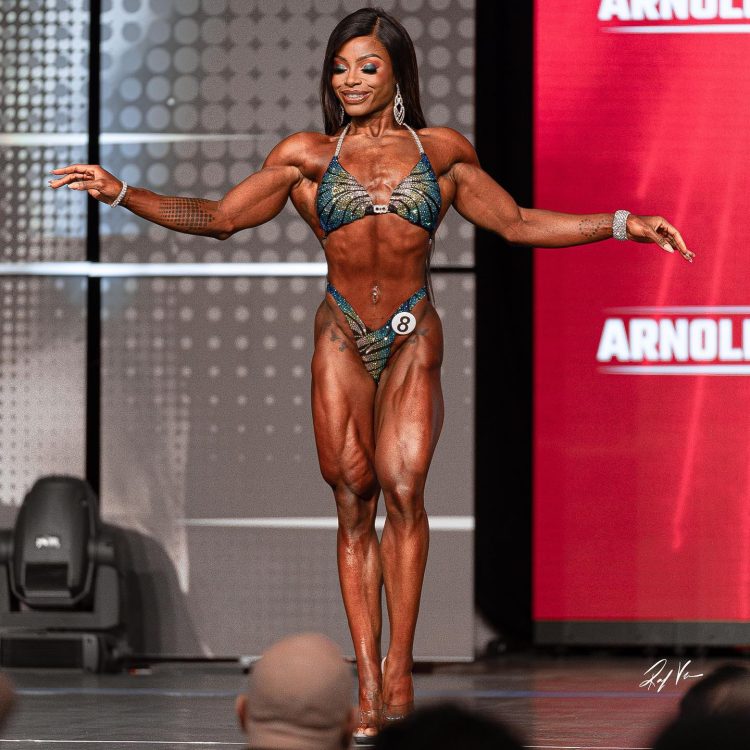
American bodybuilder Cydney Gillon is one of the most decorated athletes in the history of the sport. The IFBB Figure veteran has been a mainstay in competitions for over a decade. In a recent Instagram post, Gillon shared the ab workout she likes to utilize as well as some crucial tips on performing each movement properly.
Cydney Gillon first made a name for herself with her stellar muscle shape, balance, and overall symmetry in the Figure division after a strong performance at the 2013 Toronto Pro Supershow. She earned an invite to the Olympia competition the following year in 2014, where she placed in the top ten in her maiden outing. She continued to work her way up over the years and won a handful of shows, such as the 2015 Wings of Strength Chicago Pro, the 2016 Pittsburgh Pro, and the 2017 Rising Phoenix Arizona Pro.
Gillon finally secured the coveted Sandow trophy by dethroning former two-time Olympia champ Latorya Watts in 2017. Once she took the throne, Gillon went on a rampage that saw her defend the title successfully five times in a row. Besides the Olympia, Gillon narrowly missed out on winning the Arnold Sports Festival to Candice Lewis-Carter on two occasions. Eventually, she won her first ASF show in 2019.
Cydney Gillon via @victusography
The 31-year-old created history after dominating the competition at the 2021 Mr. Olympia to become the winningest athlete in the division. Last season, Gillon returned to the Arnold Sports Festival and came out victorious over fellow standouts Jessica Reyes Padilla, Lola Montez, and Natalia Soltero. Then, she stunned the fans with an impressive package on stage at the 2022 Mr. Olympia last December. Padilla presented a tough challenge but failed to topple the dominant champion. Gillon further extended her lead and added the sixth Olympia title under her belt.
Gillon regularly offers insight into her training methods on her social media accounts. She revealed her unique mindset on cheat meals that helped her avoid burnout while staying on track with strict diets. While she follows a clean diet year-round, she believes in using ‘food festivals’ for cheat meals, where she eats what she wants.
Cydney Gillon shares ab workout & tips
Cydney Gillon shared the ab workout she utilizes every week to get her midsection ready for the stage along with some crucial tips to maximize the results of each movement.
“What does my ab workout look like??
” she wrote.
“Here are 3 of the movements I like to toss in every week.”
Foam Roller Crunches
Plank Knee Taps
Planks
Tips:
“Exercise 1: There should be Zero strain in your neck. Make sure your hand is properly supported and you aren’t bending your neck versus using your abs
Exercise 2: Great if done efficiently. The core should be tight the entire time and the knees should not collapse to the floor. Plank first, drive knees down and right back up for each rep. This variation is good if your hip flexors are zapped from leg lifts or leg day
Exercise 3: Make sure your core remains engaged and try to make sure you don’t rock forward to your shoulders when the abs begin to fatigue. Start with a short count then work your way up.”
https://www.instagram.com/p/Cr_Ie4IuRUt/
Cydney Gillon provided some of her best tips for budding bodybuilding competitors three months ago. She encouraged practicing self-love to make the experience positive and stressed the importance of being accountable for the work you put in.
RELATED: Female Bodybuilders Dana Linn Bailey and Kristen Nun Share Intense Arm Workout
Gillon leads the list of the most Figure Olympia wins in history with six. Based on her latest update, she has no intentions of slowing down anytime soon and will look to win gold again at 2023 Mr. Olympia later this year.
Published: 10 May, 2023 | 11:58 PM EDT
How Much Is A Squat Rack?
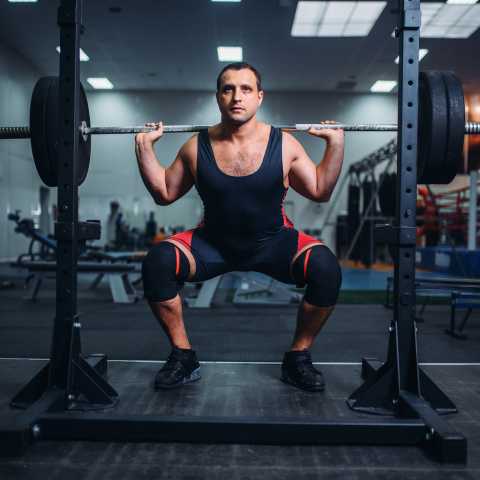
The squat rack is a quintessential piece of gym equipment beloved by all serious lifters. And if you frequently work out at home, it’s one that’s worth investing in, considering multiple compound exercises center around a squat rack.
In addition, you’re going to be banging around a bunch of weight on it, meaning you can’t get away with a subpar squat rack. You need one that’s going to enable you to lift heavy and do it safely.
We know, we know. That’s great and all, but the pressing question on your mind is: How much will a squat rack cost?
The good news is that there is now a range of quality squat racks for different purposes and situations. This article will go over what to look for in a squat rack and how much it’s going to cost.
What Is A Squat Rack?
Now, before purchasing one, if you’re unfamiliar with gym equipment, you probably first want to answer the question: What is a squat rack?
A squat rack is a vital piece of gym equipment that allows you to rack a barbell, which means you can securely place the barbell at various heights. By racking the barbell at different heights, you can place the barbell in various positions for different exercises.
For example, you can raise it up when performing a squat, and lower it down when putting weights on it before moving into deadlifts.
This drastically increases the amount of weight you can use when lifting. Think about it like this: You can get a barbell up to your shoulders, but can you get a barbell with 4 plates raised up to your shoulders?
Most likely not, and thanks to a squat rack, you don’t have to try.
Many squat racks also have safety bars in place to offer protection when you’re using heavy weights. Other simple additions may include:
Weight storage
Pull up bar
Landmine attachment
Various squat rack attachments (dip bars, pulley systems, etc.)
What Do You Use A Squat Rack For?
A squat rack can be used for an assortment of exercises. Some of the most common examples are:
Squats
Overhead Press
Rack Pull
You can add several different attachments, such as dip bars and pull-up bars, enabling it to be a central piece of gym equipment for your workout split.
How Much Is A Squat Rack?
Like almost all other major purchases, a squat rack’s cost can vary largely. If you are on a very tight budget, you could find something for around $300 that’s “good enough” to do the job.
On the upper end, you could easily dish out $3,000-$4,000 for the best of the best. That said, most home gyms can add a quality rack for $500-$800.
You can find some for as low as $300, which would be adequate for new lifters who aren’t lifting as much weight.
What Determines The Price Of A Squat Rack?
If all squat racks do the same thing, you may be wondering why their cost can vary so significantly. One of the major factors is the squat rack’s weight, which implies more material is used.
Thinner steel is obviously going to be cheaper than thicker steel. This is why buying a cheap rack isn’t always a great idea, as they can break or significantly lose stability.
Craftsmanship is another major proponent. A squat stand can’t just be randomly put together as it must withstand a lot of weight being pushed around. Welds can easily deteriorate, drastically decreasing a squat stand’s safety and durability.
Name brand will also play a role to some degree. Buying a squat stand from Rogue will likely cost more than an Amazon brand, even if it is of the same quality. This is similar to buying shoes or clothes and is just the way it is.
When buying a known brand, people are willing to pay more as they know they are getting a top-quality product, which goes a long way when you’re spending a decent amount of money.
What Are The Different Types of Squat Racks & Prices?
When looking at what squat rack to buy, you’ll find that there’s more than just one style to buy. We’re going to go over the different style of squat racks as well as their advantages and disadvantages.
Here’s a look at what the different types of squat racks cost.
Prices:
Here’s a look at squat rack price ranges for low, medium, and high price points.
The lowest price for a basic squat rack is around $300-$400.
The median range is $500-$800.
The upper end of the price range budget is $1,000+.
Power Racks:
Power racks are the largest and most sturdy of the different squat racks. They will come with 4, or even 6, thick upright bars. What makes a power rack different from a half rack is the fact that 4 bars are placed in a large square, allowing the lifter to stand inside it.
Because the support beams are spaced out, they are significantly more sturdy than other types of squat racks. So much so that unless you’re lifting 400 pounds, you could probably even get away with not securing it. However, you should still secure it (safety first), and always check it before using it.
One power rack that stands out to us is the Force USA MyRack. Its base price is just under $500, making it very affordable. And despite its reasonable price point, it still comes with large 4″ uprights.
Further, it’s designed so you can easily add over 20 attachments, such as a lat pull-down. This is ideal, as you can truly turn your squat rack into a piece of equipment that enables you to get in a complete workout.
Our Top Pick
The Force USA MyRack Power Rack is the first truly custom power rack system of its kind. Configure your modular base rack with your choice of 20 attachments…
Half Racks:
Half racks are similar to power racks, except the spacing between the front and back bars is much closer, about half the distance, if not more.
That said, the bottom legs still come out far, so you don’t save that much room. The price for half racks and power racks are similar, so it’s hard to say what advantages they have.
Wall Mounted Squat Racks:
Wall mounted racks are an awesome choice for those with limited space. A wall mounted squat rack has two upright beams attached to a mounting system drilled into the wall.
The space between the wall and upright beams is generally minimal to save as much space as possible. One drawback of a wall mounted rack is you must have good construction skills or hire someone to install the majority of wall mounted racks.
As these are drilled into the wall, they must be able to remain sturdy, as they’ll get banged around a lot. PRx Fold-In ONE Rack is a great wall mounted squat rack that comes in just under $500.
Squat Stands:
Squat stands are basic squat racks, and these will be your cheapest option. And, as you have likely guessed, this will be your least sturdy choice. In addition, these are generally the least versatile as well.
These are composed of two upright beams, which have supports going out. You rack your barbell on these two upright beams. While these may be a bit unsteady, we know some serious lifters who use a lot of weight with a squat stand.
In addition, because these are so light, they can be used easily. The weight is in the center, negating the need to secure them to the ground. The Body-Solid Pro Clubline Squat Stand is a great squat stand option, as it has a 1000-pound weight capacity and is perfect for smaller spaces.
Want to learn more about squat stands and how they compare to half racks and full racks? You can find out more in our article comparing squat stands vs. half racks vs. full power racks.
Folding Racks:
Similar to wall-mounted squat racks, a foldable squat rack is also secured to your wall. However, folding racks are typically on hinges that allow the front uprights to fold back against the wall. In total, these may only protrude 6 inches off the wall when not in use.
Interested in folding racks? Our article featuring the 8 Best Folding Racks For Home Gyms can help you find the best one for your lifting needs.
Combo Racks:
Combo racks combine a bench press stand with a squat rack. In reality, you can use most squat racks to bench press anyways, so this is only important for those with massive benches that need more stability.
Now that you have a good understanding of the different types of squat racks, check out these 10 Best Squat Rack Options to find the perfect one for you.
Features Your Squat Rack Should Have
When buying a squat rack, here is what you want to have:
Safety Arms
J-Hooks
Large range of J-Hook attachment points
7-12 gauge steel frame (7 gauge is used in most commercial gyms, and 12-gauge is tough enough for just about anyone)
Upright dimensions:- 2X2″ is what most lower-quality squat racks use- 2X3″ is great for most home gym needs- 3X3″ is about as beefy as they come
Additional Equipment You Need For Your Squat Rack
While a squat rack is your central piece of equipment, it’s not the only piece of equipment you need. To fully utilize a squat rack, you’ll need two other pieces of equipment that are mandatory:
Barbell
Weight Plates
Check out these 15 Best Barbells to pick the best barbell for your home gym. In addition, there are other pieces of equipment that you may want to consider adding to your squat rack to expand your exercise options.
These include a landmine attachment, pull up bar, dip bar, and various other barbells, like a safety squat bar. These aren’t necessary additions, but if you can get to a place where you can also do pull ups and dips using your squat rack, it’s only going to increase its usefulness.
Why You Need a Squat Rack
Wondering why you even need to invest in a squat rack? For one, it allows you to complete a full range of exercises at your home, which is convenient and ensures you get in an awesome workout.
Two, you can buy one that fits all of your needs.
And three, having home gym equipment can make lifting significantly more consistent. Don’t feel like driving 20 minutes to the gym and back home after? How about you walk downstairs to your squat rack instead?
Squat Rack Costs FAQs
Any remaining squat rack questions? Let’s answer them here.
How much does a decent squat rack cost?
Expect to pay $500-800 for a mid-range rack.
Are squat racks worth it?
Squat racks are absolutely worth it. They significantly increase the amount of exercise you can perform.
Are cheap squat racks safe?
That all depends on the amount of weight you’re lifting. The video below reviewed the cheapest squat rack that could be found at $109, and interestingly, the reviewer actually found it performed decently when lifting less than 200 pounds.
Rich Gaspari Calls Out Bodybuilders Neglecting Calves: ‘Seems Calf Isn’t As Important Today’
Bodybuilding veteran Rich Gaspari has been at odds with the modern competitors of the Men’s Open division. In a recent post made on Instagram, Gaspari called out contemporary bodybuilders for neglecting calf muscle development.
Retired bodybuilder Rich Gaspari made a name for himself with his insane muscle mass, definition, and conditioning as a Men’s Open competitor. He’s widely credited for pioneering the division’s focus on striated glute muscles. In his heyday, Gaspari cemented his status as one of the most consistent athletes in the game. While he didn’t win the Mr. Olympia title, he took silver thrice and went up against the likes of eight-time champ Lee Haney and six-time winner Dorian Yates. He hung up his posing trunks in 1996 and got inducted into the IFBB Hall of Fame in 2004.
Gaspari isn’t fully convinced by the Open division’s evolution over the last few years. He called on reigning Mr. Olympia Hadi Choopan to work on his conditioning and bring back a drier more defined look as seen in generations prior. Earlier this year, Gaspari fired shots at the Open competitors for relying on drugs too heavily. He claimed mass monsters depend on using enormous amounts of steroids instead of focusing on quality training.
Three months ago, Gaspari opened up about his use of peptides to slow down the aging process. He listed different kinds of peptides that helped boost natural GH (growth hormone) levels. He also identified legendary bodybuilder Phil Heath’s reign as the turning point for conditioning requirements in the Open category. Then, he stressed the importance of maintaining proper nutrition to pack on the pounds.
Along with a solid diet, Gaspari encouraged his fans to push their limits in the training room months ago. He detailed some intensity techniques that were sure to leave anyone exhausted. The 59-year-old revealed he’d been using TRT (testosterone replacement therapy) for about 10 years. He gave his take on the benefits he derives from the substance and recommended getting blood work done regularly to minimize the risk of any side effects.
Rich Gaspari calls out bodybuilders for neglecting calves
In a recent Instagram post, Rich Gaspari took aim at modern bodybuilders for not paying enough attention to their calf muscle development. He shared some general tips for building muscle in the area.
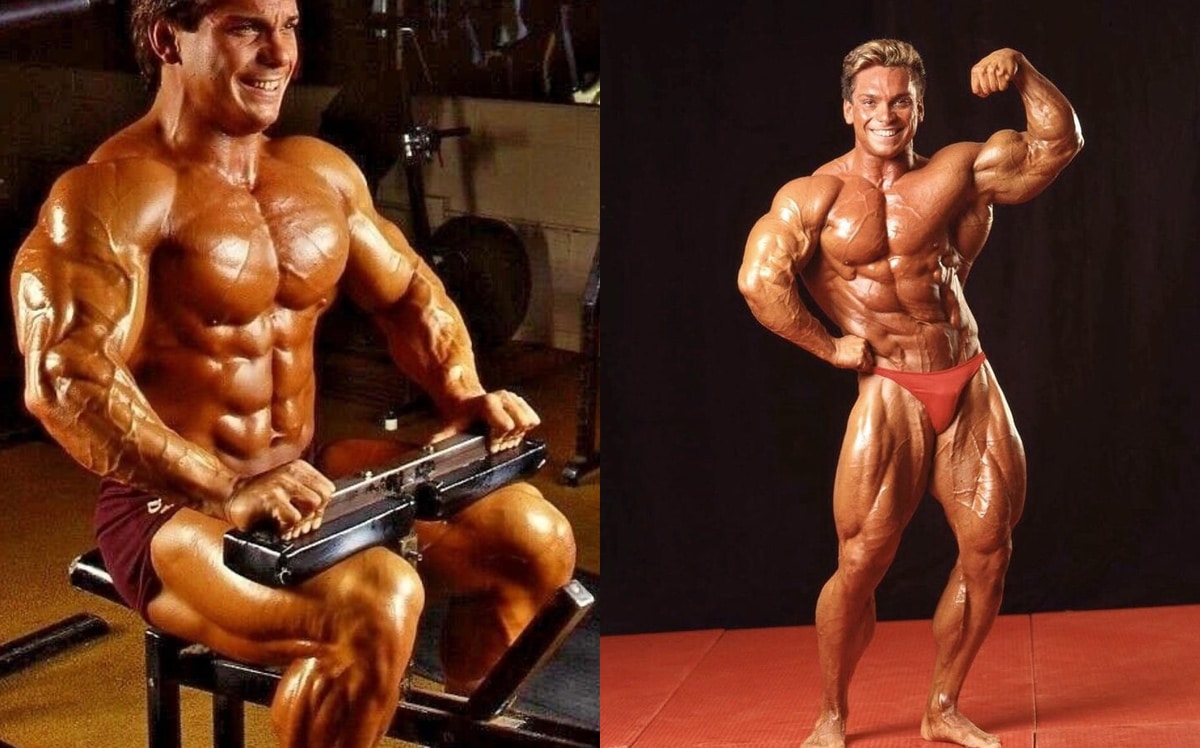
“Seems today the calf muscle is not as important to train and many of todays Bodybuilders neglect calves,” he wrote. “As you see I trained calves heavy and hard. It was an important muscle back in the 80’s And 90’s. I would train them 3 times a week with high reps of 15-20 and heavy. Calves can take a lot to grow.”
Rich Gaspari lauded the Classic Physique competitors for preserving the essence of bodybuilding as an art form last month. He argued the same quality is not found in Open events. A week later, Gaspari promoted the use of TRT and weighed in on the recent Telehealth law proposal by the DEA (Drug Enforcement Administration) last month.
Gaspari pushed back on the excessive use of steroids for competition earlier this week. He detailed the health risks that come along with gear use but conceded it was an inevitable part of the sport.
RELATED: ‘Athletes Don’t Focus on Calves Anymore?’: Rich Gaspari Shares Calf Exercise for Muscle Growth
His latest offering could help bring more awareness to the importance of developing strong calves to match an overall physique.
Published: 10 May, 2023 | 7:08 PM EDT
Weightlifter Li Dayin (89KG) Scores New Snatch & Total World Records at 2023 Asian Championships
The 2023 Asian Powerlifting Championships in Jinju, South Korea, are in full swing from May 5-13, and it seems like China is dominating the competition with their impressive performance. This is in large part to Li Dayin, China’s starboy, as he just put up one of the greatest showings in history. Dayin is no stranger to mind-blowing feats, but he has surpassed the expectation with new Snatch and Total World Records in the 89-kilogram weight class.
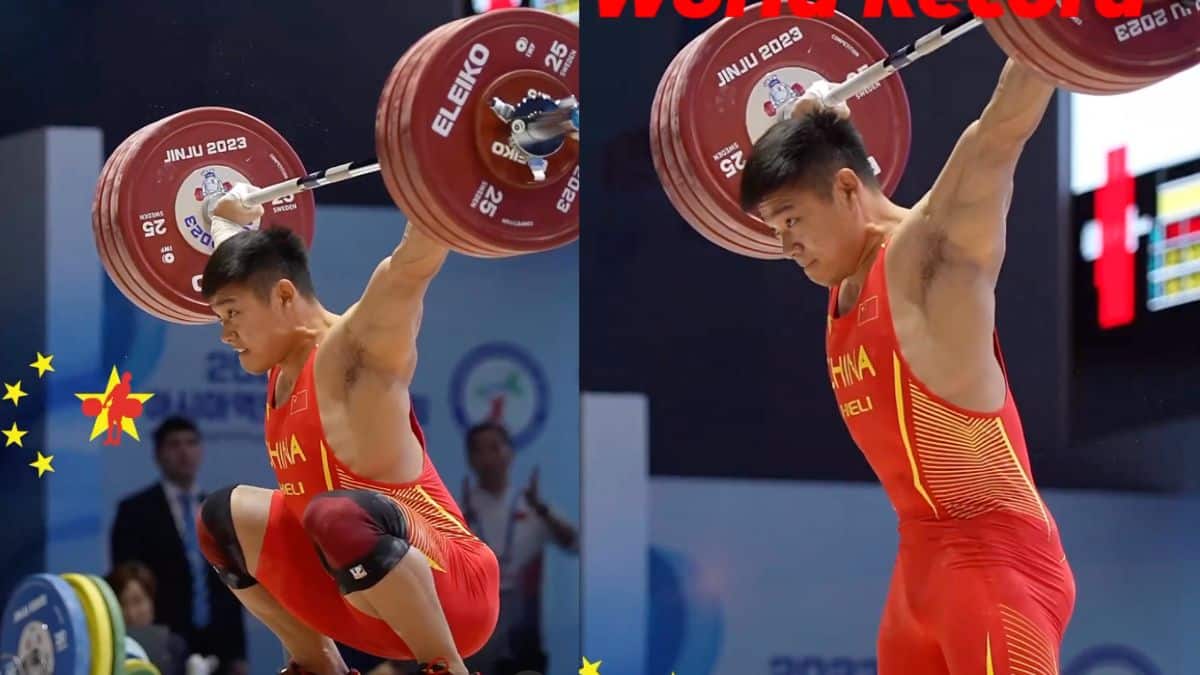
Starting off with the Snatch, Li Dayin opened up with 171 kilograms (377 pounds) for his first out of three attempts. Obviously, he completed the lift with ease and moved on to 176 kilograms (388 pounds) for his second attempt. After making easy work of his second attempt as well, Li Dayin then crushed 180 kilograms (396.8 pounds) for his final attempt, setting a new World Record.
No one held the World Record before Li Dayin, as he is the first man to cross the “World Standard” mark of 179 kilograms (394.6 pounds).
Watch the snatch here:
Related: Weightlifter Liao Guifang (71KG) Sets Two New World Records at 2023 Asian Weightlifting Championships
Li Dayin’s second event was the Clean & Jerk. He opened up with a massive weight of 205 kilograms (451.9 pounds) and moved on to 216 kilograms (476.2 pounds) for the second attempt. However, Li was not successful in locking out the massive weight. Regardless, he still had the third attempt available where he managed to Clean & Jerk 216 kilograms (476.2 pounds).
Li Dayin ended up with a Total of 396 kilograms (873 pounds), which is a new World Record as well. The previous Total World Record was held by Karlos Nasar. It stood at 395 kilograms (870.8 pounds), as Nasar set it at the 2023 European Weightlifting Championships.
Li Dayin’s Full Performance
Snatch: 180 kilograms (396.8 pounds) — U89KG World Record
Clean & Jerk: 216 kilograms (476.2 pounds)
Total: 396 kilograms (873 pounds) — U89KG World Record
2023 Asian Weightlifting Championships U89KG Podium Finishers
Li Dayin — 396 kilograms (873 pounds)
Tian Tao — 387 kilograms (853.2 pounds)
Mir Mostafa Javadi — 364 kilograms (802.4 pounds)
Related: Weightlifter Karlos Nasar (89KG) Clean & Jerk 220-kg (485-lb) For a New Senior And Junior World Records
Despite the fact that Li Dayin is still only 25 years old, he has made an immeasurable impact on the sport of weightlifting. His most notable achievements are winning the 2022 World Weightlifting Championships, and the 2019 & 2023 Asian Weightlifting Championship. He has also set numerous World Records over the years.
Li Dayin previously competed in the 81-kilogram weight class, but his jump to the 89-kilogram weight class has proven to be the right choice now. With another victory and some more World Records under his belt, Li Dayin is charging towards the 2024 Paris Olympics, where he would like to claim his first medal.
Published: 10 May, 2023 | 6:26 PM EDT
Flex Lewis and Strongman Eddie Hall Destroy Brutal Arm Workout & Share Physique Updates
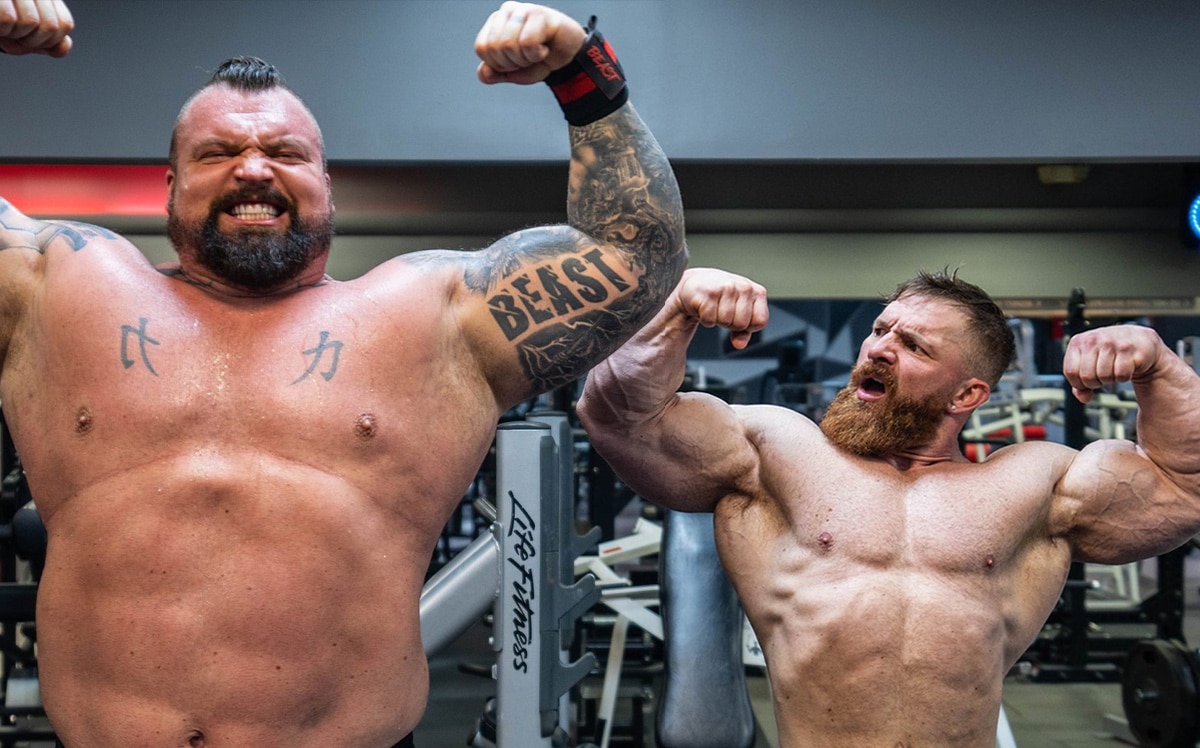
Known for some of the biggest biceps and triceps the 212 division has seen, Flex Lewis joined strongman Eddie Hall for a vicious arm workout. During the YouTube collaboration, Lewis guided Hall through a four-exercise routine that focused on technique and proper form.
Having led a career lasting over a decade in the IFBB Pro League, Flex Lewis separated himself from his peers with shocking muscle volume and granite conditioning. Employing grit and sheer determination, Lewis would capture a total of seven 212 Olympia titles consecutively. He proved himself against some of the division’s top names, such as Derek Lunsford, Shaun Clarida, and Jose Raymond.
Even though Lewis has redirected his focus away from bodybuilding, he still loves the sport and what it stands for. He routinely shares unique and thought-provoking training tips and sessions online. Given the footprint he left on the 212 division, fans listen when Lewis has something to say regarding exercise.
Eddie Hall, on the other hand, is a famous strongman competitor who built his career having attained a number of accolades and records. Hall was the 2017 World’s Strongest Man winner and temporarily held the all-time world deadlifting record of 500 kilograms until his nemesis Hafthor Bjornsson broke it with 501 kilograms in 2020.
In their latest undertaking, Lewis and Hall joined hands for a demanding arm workout, where the former seven-time 212 Olympia offered the strongman legend pointers on growing the biceps/triceps.
Flex Lewis & Eddie Hall Arm Workout List
“I think we’re going to smash arms — biceps and triceps — I’ve actually not done an arms session in a bodybuilding format yet, so this will be a good one,” said Eddie Hall.
After pushing through multiple sets of cable triceps pushdowns, Lewis gave his thoughts on training with Hall.
“Whatever you go from there, you already got 3 or 400 reps and this is – fu** I don’t care who it is, I’ve trained with Brian Shaw, a lot of strongmen, it’s just a different style of training,” said Lewis.
Next, the duo moved on to incline dumbbell skull crushers.
“Try and get your neutral grip, and fire in a really good stretch, I come off my shoulders, but start off with the front delts but then gradually take it as far back as you can,” explained Lewis.
Flex and Eddie followed up the session with machine triceps extensions.
For their final movement, Lewis and Hall performed a few sets of dumbbell biceps curls, a common staple in most arm workouts.
“Well, what you’re trying to do is just neutral to the side, pinky up, pinky up as much as you can and squeeze and just think of cupping like you’ve got nothing there right now, you’re just trying to squeeze like a nut in between, squeeze that gap. You’re trying to squeeze that bicep as much as you can.”
“Power, hit the neutral button, come up, and squeeze and slow down on the descent,” added Lewis. “Turn that wrist [to maximize the contraction].”
“He’s put more size on me in 30 minutes than I would have in two hours, to be honest,” said Hall.
“He’s the only guy probably in 10 years plus to see my top off, am I right?” said Flex Lewis.
After the two pushed each other throughout the session, the pump covers came off, and Lewis still appears to be in fantastic shape despite retiring one year ago. In a special one-on-one sit down with Steve Kuclo, Lewis said he would only follow through with a competitive return for a seven-figure deal.
Meanwhile, Eddie Hall continues to train while creating YouTube content. The last time fans heard from ‘The Beast,’ he took part in a fun reaction video where he offered his two cents on a handful of crazy gym fails.
Given the latest collaboration, it’s safe to say Flex Lewis hasn’t completely shut the door on a possible return. As for Hall, he’s appreciative of the techniques Lewis shared because they differ from the methods he would often use in strongman.
RELATED: Flex Lewis Gives Inside Look of his Stem Cell Treatment and ‘Path of Recovery’
Watch the full YouTube video from Flex Lewis’ channel below:
Published: 10 May, 2023 | 5:31 PM EDT

Powerlifter Daria Rusanenko (84KG) Sets 276-kg (608.5-lb) Equipped Squat IPF World Record
Born in 2001, Daria Rusanenko is a rising star in powerlifting and already one of the strongest women in the equipped division. She has already left her mark in the sport, but being young and hungry, she still keeps improving with every appearance. Most recently, Daria took part in the 2023 EPF European Open, Junior & Sub-Junior Equipped Powerlifting Championships, which was held from May 2-7, in Thisted, Denmark. It is here that Daria managed to set a new 276-kilogram (608.5-pound) equipped squat IPF World Record in the 84-kilogram weight class.
Daria Rusanenko was by far the lightest woman in her weight class with a bodyweight of 77.17 kilograms (169.8 pounds). However, that did not stop her from putting up the heaviest equipped squat the 84-kilogram weight class has ever seen.
Daria Rusanenko only needed two attempts to break the IPF World Record. She first warmed up with a lift of 260 kilograms (573.2 pounds). Already on the second attempt, Daria lifted 276 kilograms (608.5 pounds) and set a new record. In addition, Daria did not even go for her third attempt, which could have been even heavier.
The previous U84KG IPF Equipped Squat World Record was also held by Daria Rusanenko. It stood at 275.5 kilograms (607.4 pounds), which she set at the 2022 IPF World Open Equipped Powerlifting Championships.
Watch the squat here:
Related: Powerlifter Sonja Stefanie Krüger (76KG) Scores a 280.5-kg (618.4-lb) Squat World Record at 2022 IPF Equipped Worlds
Daria Rusanenko’s Full Performance
Despite a very promising start, Daria Rusanenko did not have luck in the remainder of the competition. She was unsuccessful in her final bench press attempt, as well as two of her deadlift attempts. However, she still managed to clinch a third-place finish behind Soerlie Heranger Anna and Timmers Ankie.
Squat
260 kilograms (573.2 pounds)
276 kilograms (608.5 pounds) — U84KG IPF Equipped World Record
Did Not Attempt
Bench Press
145 kilograms (319.7 pounds)
150 kilograms (330.7 pounds)
Unsuccessful — 155 kilograms (341.7 pounds)
Deadlift
200 kilograms (440.9 pounds)
Unsuccessful — 215 kilograms (474 pounds)
Unsuccessful — 215 kilograms (474 pounds)
Total — 626 kilograms (1,380.1 pounds)
Watch all lifts here:
Related: Powerlifter Sen Yang (120KG) Sets a New 440.5-kg (971.1-lb) Equipped IPF Squat World Record
Personal Bests
Equip
Squat
Bench
Deadlift
Total
Dots
Single-ply
607.4
330.7
607.4
1417.6
605.79
Raw
347.2
192.9
347.2
881.8
404.02
Competition Results
Place
Fed
Date
Competition
Division
Total
Dots
3
IPF
2022-11-14
World Open Equipped Powerlifting Championships
Open
1417.6
605.79
Location
Denmark
Competition
World Open Equipped Powerlifting Championships
Division
Open
Age
21
Equipment
Single-ply
Class
185.2
Weight
176.4
Squat
573.2
607.4
-629.4
607.4
Bench
-330.7
330.7
-347.2
330.7
Deadlift
451.9
479.5
-496
479.5
GLP
103.15
6
IPF
2022-07-08
World Games
Super
1322.8
580.14
Location
USA-AL
Competition
World Games
Division
Super
Age
21
Equipment
Single-ply
Class
167.6
Weight
167.7
Squat
562.2
584.2
-607.4
584.2
Bench
-308.6
308.6
-325.2
308.6
Deadlift
429.9
-457.5
-457.5
429.9
GLP
98.42
3
IPF
2021-11-08
World Powerlifting Championships
Open
1383.4
598.27
Location
Norway
Competition
World Powerlifting Championships
Division
Open
Age
20
Equipment
Single-ply
Class
185.2
Weight
172.3
Squat
551.2
584.2
-604.1
584.2
Bench
-330.7
-330.7
330.7
330.7
Deadlift
418.9
-451.9
468.5
468.5
GLP
101.69
2
EPF
2021-08-03
European Open Juniors & Sub-Juniors Powerlifting Championships
Open
1328.3
582.79
Location
Czechia
Competition
European Open Juniors & Sub-Juniors Powerlifting Championships
Division
Open
Age
20
Equipment
Single-ply
Class
167.6
Weight
167.5
Squat
518.1
529.1
556.7
556.7
Bench
-314.2
314.2
330.7
330.7
Deadlift
407.9
440.9
-468.5
440.9
GLP
98.86
1
UkrainePF
2021-04-22
Ukrainian Powerlifting Championships
Open
1333.8
578.52
Location
Ukraine
Competition
Ukrainian Powerlifting Championships
Division
Open
Age
20
Equipment
Single-ply
Class
185.2
Weight
171.3
Squat
529.1
567.7
-584.2
567.7
Bench
314.2
-336.2
-336.2
314.2
Deadlift
407.9
440.9
451.9
451.9
GLP
98.29
1
UkrainePF
2020-07-24
Ukrainian Powerlifting Championships
Open
1251.1
540.54
Location
Ukraine
Competition
Ukrainian Powerlifting Championships
Division
Open
Age
19
Equipment
Single-ply
Class
185.2
Weight
172.6
Squat
529.1
Bench
308.6
Deadlift
413.4
GLP
91.89
11
IPF
2019-11-18
World Powerlifting Championships
Open
1190.5
516.81
Location
UAE
Competition
World Powerlifting Championships
Division
Open
Age
18
Equipment
Single-ply
Class
185.2
Weight
171
Squat
496
-534.6
-551.2
496
Bench
275.6
297.6
-308.6
297.6
Deadlift
363.8
396.8
-429.9
396.8
GLP
87.8
1
IPF
2019-08-26
World Juniors & Sub-Juniors Championships
Sub-Juniors
1196
541.6
Location
Canada-SK
Competition
World Juniors & Sub-Juniors Championships
Division
Sub-Juniors
Age
18
Equipment
Single-ply
Class
158.7
Weight
157.9
Squat
474
508.2
529.1
529.1
Bench
275.6
-292.1
-292.1
275.6
Deadlift
352.7
391.3
-424.4
391.3
GLP
91.52
1
UkrainePF
2019-06-26
Ukrainian Powerlifting Championships
Open
1157.4
514.63
Location
Ukraine
Competition
Ukrainian Powerlifting Championships
Division
Open
Age
18
Equipment
Single-ply
Class
185.2
Weight
163.4
Squat
496
Bench
297.6
Deadlift
363.8
GLP
87.15
2
IPF
2019-06-04
World Classic Powerlifting Championships
Sub-Juniors
881.8
404.02
Location
Sweden
Competition
World Classic Powerlifting Championships
Division
Sub-Juniors
Age
18
Equipment
Raw
Class
158.7
Weight
154.7
Squat
325.2
347.2
-363.8
347.2
Bench
176.4
187.4
192.9
192.9
Deadlift
308.6
330.7
341.7
341.7
GLP
82.12
2
IPF
2019-05-18
World Bench Press Championships
Sub-Juniors
281.1
127.05
Location
Japan
Competition
World Bench Press Championships
Division
Sub-Juniors
Age
18
Equipment
Single-ply
Class
158.7
Weight
158.5
Bench
264.6
281.1
-308.6
281.1
GLP
71.39
1
EPF
2019-05-04
European Equipped Powerlifting Championships
Sub-Juniors
1168.4
529.2
Location
Czechia
Competition
European Equipped Powerlifting Championships
Division
Sub-Juniors
Age
18
Equipment
Single-ply
Class
158.7
Weight
157.9
Squat
440.9
474
490.5
490.5
Bench
259
-275.6
275.6
275.6
Deadlift
363.8
385.8
402.3
402.3
GLP
89.43
3
EPF
2018-05-06
European Womens Championships
Sub-Juniors
1036.2
477.33
Location
Czechia
Competition
European Womens Championships
Division
Sub-Juniors
Age
17
Equipment
Single-ply
Class
158.7
Weight
153.2
Squat
440.9
457.5
-468.5
457.5
Bench
-231.5
-231.5
231.5
231.5
Deadlift
347.2
-374.8
-380.3
347.2
GLP
80.51
1
UkrainePF
2018-03-13
Ukrainian Classic Powerlifting Championships
Sub-Juniors
773.8
364.12
Location
Ukraine
Competition
Ukrainian Classic Powerlifting Championships
Division
Sub-Juniors
Age
16
Equipment
Raw
Class
158.7
Weight
147.6
Squat
293.2
Bench
177.5
Deadlift
303.1
GLP
73.99
2
UkrainePF
2018-02-22
Ukrainian Powerlifting Championships
Sub-Juniors
1037.3
495.38
Location
Ukraine
Competition
Ukrainian Powerlifting Championships
Division
Sub-Juniors
Age
16
Equipment
Single-ply
Class
158.7
Weight
143.9
Squat
440.9
Bench
220.5
Deadlift
375.9
GLP
83.29
2
IPF
2017-08-28
World Sub-Juniors & Juniors Powerlifting Championships
Sub-Juniors
1019.6
500.49
Location
USA
Competition
World Sub-Juniors & Juniors Powerlifting Championships
Division
Sub-Juniors
Age
16
Equipment
Single-ply
Class
138.9
Weight
137.5
Squat
418.9
435.4
-446.4
435.4
Bench
198.4
209.4
215
215
Deadlift
319.7
347.2
369.3
369.3
GLP
83.98
2
IPF
2017-06-14
World Classic Powerlifting Championships
Sub-Juniors
799.2
395.49
Location
Belarus
Competition
World Classic Powerlifting Championships
Division
Sub-Juniors
Age
16
Equipment
Raw
Class
138.9
Weight
135.7
Squat
292.1
308.6
-321.9
308.6
Bench
159.8
165.3
170.9
170.9
Deadlift
286.6
308.6
319.7
319.7
GLP
80.53
1
EPF
2017-05-08
European Equipped Powerlifting Championships
Sub-Juniors
959
473.12
Location
Spain
Competition
European Equipped Powerlifting Championships
Division
Sub-Juniors
Age
16
Equipment
Single-ply
Class
138.9
Weight
136.4
Squat
380.3
402.3
424.4
424.4
Bench
-181.9
181.9
198.4
198.4
Deadlift
314.2
336.2
-347.2
336.2
GLP
79.36
1
EPF
2017-03-12
European Classic Powerlifting Championships
Sub-Juniors
783.7
392.44
Location
Denmark
Competition
European Classic Powerlifting Championships
Division
Sub-Juniors
Age
15
Equipment
Raw
Class
138.9
Weight
133.2
Squat
281.1
304.2
-321.9
304.2
Bench
165.3
-170.9
-170.9
165.3
Deadlift
275.6
297.6
314.2
314.2
GLP
79.99
6
IPF
2016-09-03
World Sub-Juniors & Juniors Powerlifting Championships
Sub-Juniors
870.8
443.05
Location
Poland
Competition
World Sub-Juniors & Juniors Powerlifting Championships
Division
Sub-Juniors
Age
15
Equipment
Single-ply
Class
138.9
Weight
129.9
Squat
352.7
374.8
396.8
396.8
Bench
181.9
-192.9
-192.9
181.9
Deadlift
292.1
-308.6
-308.6
292.1
GLP
74.19
1
UkrainePF
2016-05-26
Donetsk Classic Powerlifting Championships
Sub-Juniors
749.6
378.1
Location
Ukraine
Competition
Donetsk Classic Powerlifting Championships
Division
Sub-Juniors
Age
15
Equipment
Raw
Class
138.9
Weight
131.6
Squat
286.6
Bench
176.4
Deadlift
286.6
GLP
77.12
1
UkrainePF
2016-05-26
Donetsk Classic Bench Press Championships
Sub-Juniors
177.5
88.77
Location
Ukraine
Competition
Donetsk Classic Bench Press Championships
Division
Sub-Juniors
Age
15
Equipment
Raw
Class
138.9
Weight
133.4
Bench
177.5
GLP
68.8
1
UkrainePF
2016-02-13
Ukrainian Powerlifting Championship
Sub-Juniors
815.7
408.88
Location
Ukraine
Competition
Ukrainian Powerlifting Championship
Division
Sub-Juniors
Age
14
Equipment
Single-ply
Class
138.9
Weight
132.9
Squat
352.7
Bench
176.4
Deadlift
286.6
GLP
68.52
2
UkrainePF
2015-11-21
Ukraine Schools Powerlifting Championships
Teen 14-15
611.8
321.35
Location
Ukraine
Competition
Ukraine Schools Powerlifting Championships
Division
Teen 14-15
Age
14
Equipment
Raw
Class
125.7
Weight
123.6
Squat
242.5
Bench
143.3
Deadlift
226
GLP
65.9
1
UkrainePF
2015-10-07
Donetsk Powerlifting Championships
Sub-Juniors
727.5
379.39
Location
Ukraine
Competition
Donetsk Powerlifting Championships
Division
Sub-Juniors
Age
14
Equipment
Single-ply
Class
125.7
Weight
125
Squat
330.7
Bench
154.3
Deadlift
242.5
GLP
63.47
1
UkrainePF
2015-10-07
Donetsk Powerlifting Championships
Open
727.5
379.39
Location
Ukraine
Competition
Donetsk Powerlifting Championships
Division
Open
Age
14
Equipment
Single-ply
Class
125.7
Weight
125
Squat
330.7
Bench
154.3
Deadlift
242.5
GLP
63.47
1
UkrainePF
2015-05-18
Donetsk Classic Bench Press Championships
Sub-Juniors
121.3
64.84
Location
Ukraine
Competition
Donetsk Classic Bench Press Championships
Division
Sub-Juniors
Age
14
Equipment
Raw
Class
125.7
Weight
120.4
Bench
121.3
GLP
50.53
1
UkrainePF
2015-05-18
Donetsk Classic Bench Press Championships
Open
121.3
64.84
Location
Ukraine
Competition
Donetsk Classic Bench Press Championships
Division
Open
Age
14
Equipment
Raw
Class
125.7
Weight
120.4
Bench
121.3
GLP
50.53
1
UkrainePF
2015-02-02
Ukrainian Sub-Juniors Powerlifting Championship
Sub-Juniors
661.4
353.23
Location
Ukraine
Competition
Ukrainian Sub-Juniors Powerlifting Championship
Division
Sub-Juniors
Age
13
Equipment
Single-ply
Class
125.7
Weight
120.6
Squat
286.6
Bench
121.3
Deadlift
253.5
GLP
59.05
1
UkrainePF
2015-01-03
Donetsk Powerlifting Championships
Sub-Juniors
573.2
305.38
Location
Ukraine
Competition
Donetsk Powerlifting Championships
Division
Sub-Juniors
Age
13
Equipment
Single-ply
Class
125.7
Weight
121
Squat
242.5
Bench
110.2
Deadlift
220.5
GLP
51.05
Data Source: Open Powerlifting. Last Updated: April 12, 2023
Analyze Lifts
Daria Rusanenko began competing in powerlifting at just 13-years-old back in 2015. So, despite still being extremely young, she already has almost a decade of experience. In that time, Daria took part in 30 sanctioned competitions and won 17 of them. Her greatest victories were the 2017 & 2019 EPF European Equipped Powerlifting Championships.
Daria Rusanenko wanted to claim her third EPF European Championship title now, but she still walked away with a new World Record. In fact, if only one of the two deadlift attempts she missed was successful, Daria would have walked away with a gold medal. However, there is still a lot more title for her to reclaim this title in the future.
Published: 10 May, 2023 | 2:39 PM EDT
Natha De Asha Targets Goals for 2023 Olympia & Showdown With Samson Dauda: ‘I’m Heavier I’ve Ever Been’
UK-based Men’s Open powerhouse Nathan De Asha is mapping out his respective 2023 bodybuilding season. In an interview with Muscular Development, De Asha discussed training, injuries, diet, Samson Dauda, and his game plan for qualifying for this year’s Mr. Olympia.
“Yeah, I’ll be fuc**ng rock hard, I’ll be fuc**ng rock hard [If I meet Samson Dauda again],” De Asha shared discussing this year’s Olympia contest.
Despite his recent hiatus, Nathan De Asha is a proven force as a Men’s Open competitor courtesy of his massive arms, popping chest, and capped shoulders. He enjoyed a stellar 2021 season which saw him claim back-to-back titles at the Europa Pro Championships and Arnold Classic UK. En route to earning gold in the U.K., De Asha defeated a lesser-known Samson Dauda, who has since gone on to find great success in the league.
De Asha’s momentum in Europe wouldn’t stop in his native country as he made an appearance at the 2021 Yamamoto Cup, once again laying claim to the top prize, and in the process, outpointing bronze-finisher Samson Dauda as well as runner-up Roelly ‘The Beast’ Winklaar on the scorecards.
While De Asha has been nursing a pair of shoulder injuries for some time, it appears a comeback is on the horizon this year. The Open bodybuilding star joined Giles Thomas for an honest interview about where he intends to take his career in the coming months.
Nathan De Asha Lays Out Aggressive 2023 Mr. Olympia Campaign; Talks Battling Samson Dauda
De Asha’s goal is to win a number of pro shows in Europe to prevent other contenders from making their way to the Olympia stage.
“All these new pros coming through… saying the old guard is gone, my intention this year is to get all these new apparently top five Olympias, take their fuc**ng Olympia spots away. So I’m going to Spain, few Brazilians are going, I’ll beat them. Go to Spain and hopefully go to Italy and see where we’re at, maybe France also, one of them, maybe one or two of them.”
Even though he’s been away from competition for only one year, De Asha is convinced fans and competitors have forgotten the physique he’s capable of crafting. He added that he’s happier and the heaviest he’s ever been in the 2023 off-season.
“People think I’ve been gone for years in this sport, I’ve only missed a year. I’ve missed one year you know what I mean. People think you’re never coming back but I’m here to show them it’s possible. And you know obviously, all the guys… I’ll just smoke them again mate, it’s just one of those things. I think people forget what I can bring.”
“I’m happy and heavier I’ve ever been before,” said De Asha. “I don’t like him as a person but I like his physique I’ll be honest. I don’t like him as a person but you have to like his physique. I was a bit mad the way – I don’t understand the judging to be totally honest at the Arnold. Why? I don’t see why Nick Walker got second if Samson won it, you should have put Andrew Jacked second, I would have anyway.”
“Seeing him doing well for himself, I congratulate him it’s probably the best Samson I’ve seen on stage, probably the biggest I’ve seen him, 290 pounds or something – absolutely massive. He and Milos are doing great things together. Hopefully, he can bring it to the Olympia this year,” added De Asha.
De Asha Address Bicep Tears, Training Details & Diet
De Asha revealed his training intensity will ramp up at the end of May. He’s been careful during training sessions to avoid additional injuries.
“We been like training end of May, June, started getting back to training hoping we can qualify this year’s Olympia. We know we can qualify doing a late show. Obviously thought of Patrick Jordan, he got behind me and told me things to do. I’ve been to the Pinatta studios and they got some new machines. They have this new incline biceps curl, didn’t like it,” added De Asha. “I was careful, I felt my ankle, literally felt like I snapped me arm, I said I’m not happy, it’s sore, it’s sore. They keep telling me to go through, go through. Kept on trying to do that shit, and came home the next day in agony.”
Despite some depression, De Asha said he’s gotten over his injuries and is determined not to let the adversity affect his mental outlook.
“Yeah it was a big deal [to overcome that injury] but I never took it serious. A lot of these guys, their heads go because that’s all he got mate. They take it so serious. For me, I’m good at it, and its something I like doing. A lot of guys take it serious and it gets to them. I’m not going to lie I was depressed because I didn’t go to the Olympia the year before, I didn’t believe I would have been the strongest at Olympia, and then I was like, ‘Fu** I should have done it,’ and this and that. But that year, 2021, was more about the money rather than placing in the Olympia.”
As far as nutrition is concerned, De Asha plans to start taking his diet more seriously in July.
“I need a bit more work but it’s coming. I just got to keep plugging a lot. I think I start dieting in July probably.”
One of the last times fans heard from De Asha, he discussed the controversial compound trenbolone. The popular drug has become a common tool used in the fitness and bodybuilding sectors. Despite its reputation for altering the mood, De Asha prefers the powerful compound because it makes him feel stronger year-round.
With a constantly changing Men’s Open division, Nathan De Asha would certainly be a wildcard should he qualify for the 2023 Mr. Olympia. Given his history with Samson Dauda, fans would love nothing more than to see the two square off on stage again.
RELATED: Nathan De Asha Tests Himself With A Killer Shoulder Workout
Watch the full YouTube video from the Muscular Development YouTube channel:
Published: 10 May, 2023 | 1:48 PM EDT