
 All Posts By Muscle Insider
Board Certified PHD
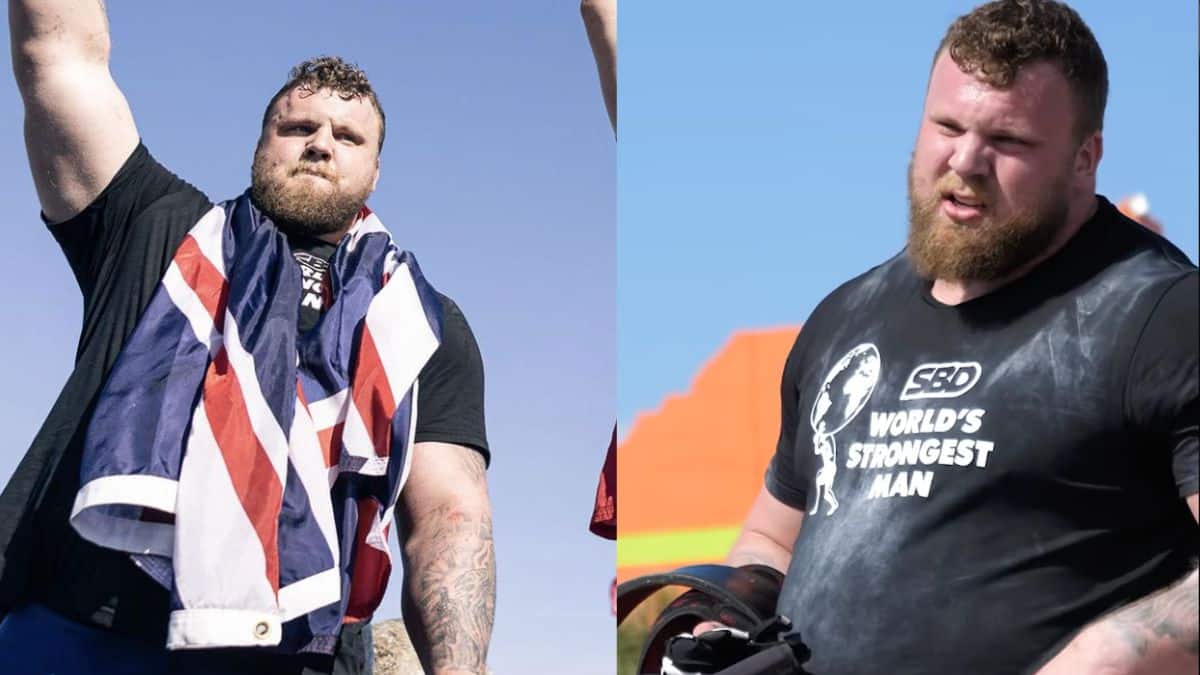
Tom Stoltman Reacts To Second Place Finish at 2023 WSM: ‘I Gave Everything I Had This Year’
The past two years in Strongman were defined by just a few names, the most notable being Tom Stoltman. The Scottish athlete was crowned as the World’s Strongest Man in both 2021 and 2022, joining the elite club of those who have managed to defend their title. In addition, Tom Stoltman was aiming to win his third consecutive title at the 2023 World’s Strongest Man contest, which took place on April 19-23, in Myrtle Beach, South Carolina. This would make him the first athlete with three wins in a row since Magnús Ver Magnússon achieved the same in 1991. However, Tom came just short of the title this year, having to satisfy himself with a second-place finish.
Tom Stoltman was fired up going into the finals of the 2023 World’s Strongest Man, as the scheduled events looked great for him. So, finishing day one of the finals, which featured the Shield Carry, Deadlift, and Fingal’s Fingers, Tom sat in second place, just one point behind Mitchell Hooper. This seemed like a perfect situation for Tom Stoltman, since the second day of the finals was supposed to feature the events which are in his favor.
The second day of the 2023 World’s Strongest Man finals started with the Max Dumbbell event. This was the worst out of the three events for Tom, but he still had some hope. Mitchell Hooper, his rival, has previously displayed quite poor performances in this event. Therefore, it was expected that Tom would place higher than him this time around. However, in a shocking and amazing display, Hooper tied for first place in the event, while Tom got stuck in a four-man tie for third place. Due to this, Hooper extended the lead to 4 points.
Tom Stoltman still had hope, as the second event was the Bus Pull, which usually suits the bigger guys like Tom better than those of Hooper’s build. In turn, Tom performed extremely well, beating six of the athletes with two more yet to come. However, in an unbelievable turn of events, Evan Singleton clocked the exact same time of 32.27 seconds and Tom once again had to share points. In addition, Hooper once again surprised everyone and won his fourth event of the 2023 World’s Strongest Man finals.
The final event was the Atlas Stones, Tom Stolmans’s dearest event. However, even though everyone knew that Tom was going to win, it was almost impossible to catch up on Hopper’s lead of 5.5 points. Hooper also put in a great performance, winning the competition overall as well.
Tom Stoltman’s 2023 World’s Strongest Man Performance
Qualifying
Loading Race: 5 in 43.84 s (Second-Place)
Deadlift Machine: 6 reps (Tied-Second)
Log Ladder: 5 in 41.56 s (First-Place)
Conan’s Wheel: 598 ° (Sixth-Place)
Kettlebell Toss: 6 in 21.99 s (Third-Place)
Stone-Off: 3 stones (Won / Qualified)
Finals
Reign Shield Carry: 63.15 m (Second-Place)
Knaack Deadlift: 6 reps (Fifth-Place)
Fingal’s Fingers: 5 in 39.36 s (First-Place)
Max Dumbbell: 132 kg (Tied-Third)
Bus Pull: 32.27 s (Tied-Second)
Atlas Stones: 5 in 33.26 s (First-Place)
Related: Exclusive: Tom Stoltman Believes He Could Win Six WSM Titles to Become The Winningest Strongman Ever
Despite the fact that Tom Stoltman did not win his third title this year, he is still satisfied with what he has accomplished. This was his fourth podium placement in the final four years, but it is even more special since many people doubted him after the 2023 Arnold Strongman Classic.
“I gave everything I had this year! Hitting the big dumbbell was a personal goal for myself and been consistent throughout. I’m very proud.”
Tom Stoltman has previously talked about his goals for the future, which include a 505-kilogram (1,113.3-pound) deadlift, as well as more WSM titles. It’s uncertain what path his career will take in the future, but we hope that losing his WSM title doesn’t have a negative impact on him.
Discover comprehensive coverage of the 2023 World’s Strongest Man competition at our WSM coverage hub, featuring exclusive interviews, final results, event recaps and in-depth analysis: FitnessVolt.com/wsm
Published: 25 April, 2023 | 9:28 AM EDT
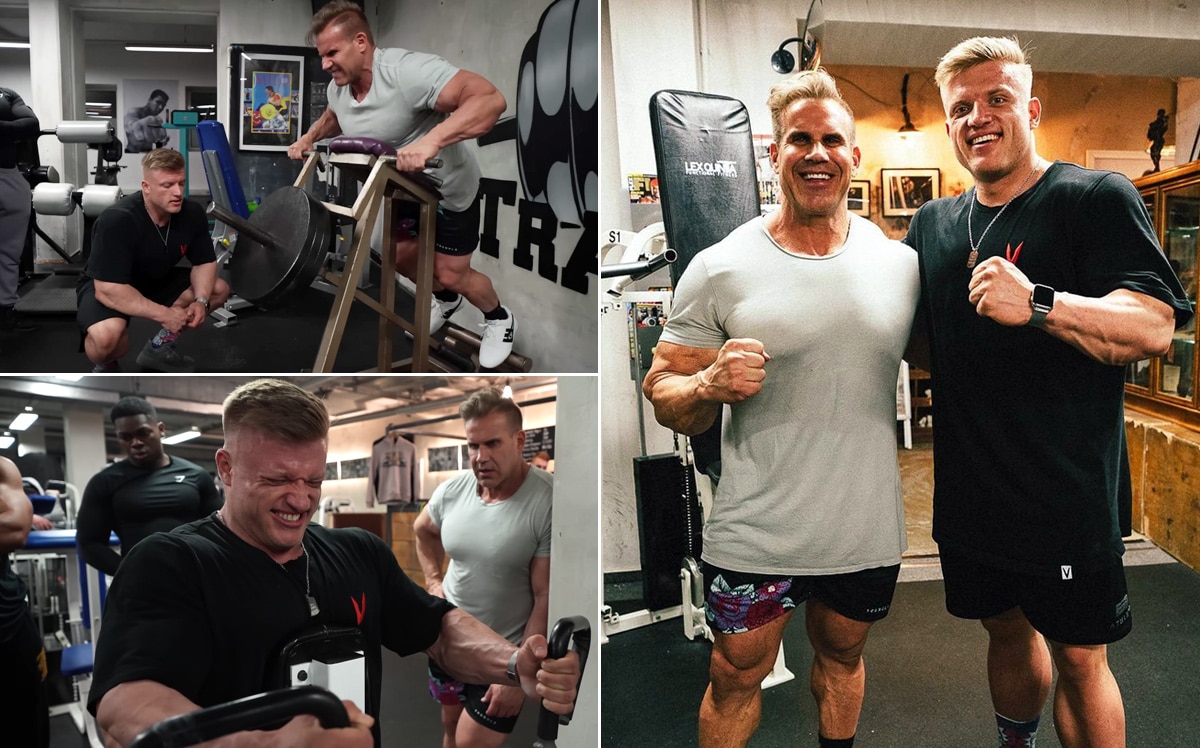
Urs Kalecinski And Jay Cutler Wreck A Potent Back Workout
Urs Kalecinski is leaving no opportunity to learn from the greats and recently partnered with Jay Cutler for an off-season back workout in Germany. Kalecinski is Germany’s flag bearer in the IFBB Pro League’s Classic Physique division. His emergence in the top end of the division has been astonishing and quick. After a few respectable performances, ‘The Miracle Bear’ finished the 2021 competitive season with a surprising 4th place finish at his Olympia debut.
He kicked off 2022 with a third spot at the 2022 Arnold Classic and secured a win at the 2022 Boston Pro, earning direct qualification to the 2022 Olympia. He also competed at the 2022 Kuwait Classic Pro to bag another win and walked away with a third-place finish at the 2022 Olympia.
Kalecinski last competed at the 2023 Arnold Classic Physique and managed to get a runner-up finish in spite of having to deal with food poisoning a few days before the show. He is now working relentlessly to build a more refined version of his body for the next competitive season.
Recently, he partnered with legendary bodybuilder Jay Cutler for a training session. A 4-time Mr. Olympia, Cutler is revered for his mindful approach to training. As a result, he was able to lead a much healthier life in retirement without having to put up with the consequences of an arduous bodybuilding lifestyle. He has accustomed well to the age of the internet and social media and remains one of the most prominent voices of the sport.
Cutler and Kalecinski did a back workout together. So let’s delve into the magical world of bodybuilding and see how they maintain their impeccable physiques with training.
Urs Kalecinski and Jay Cutler go through a back workout
The back workout was Kalecinski and Cutler’s second joint training session with each other. They partnered for a shoulder workout back in December 2022. Reminiscing the experience, Cutler stated:
“Last time we trained together… you were very depleted and it was one week out (of the 2023 Arnold Classic). So now we’re actually spending time together when we’re both in our off-season because I start my transformation on May 1st.”
With that, the duo jumped into the workout and pushed each other to do better throughout the session.
Lat Pulldowns
Cutler and his companion commenced the training session with lat pulldowns for stimulating the latissimus dorsi muscles. The duo worked with a plate-loaded iso-lateral machine to warm up the upper body posterior muscles and executed a few sets.
Bent Over Dumbbell Rows
Performing this compound movement is a crucial component of developing mass and strength in the upper posterior muscles. Bent over dumbbell rows engage all the pulling muscles and help with complete back development.
The bodybuilder duo pushed through some heavy sets of the movement as The Miracle Bear could not help but marvel at Cutler’s infectious enthusiasm.
“I love his work ethic. Close to 50 and still don’t give a s***” Urs Kalecinski exclaimed.
Machine Pullovers
This variation of pullovers has similar benefits as the cable pullovers. It has several benefits like improved mind-muscle connection, trunk and scapular stability, increased strength and muscle hypertrophy. Pullovers primarily work the lats and pectoral muscles. Cutler has spoken about the efficacy of pullovers for back development on many occasions. While Explaining the benefits of this exercise this time, Jay Cutler said:
“This is an ideal exercise to really bring out the v-taper which a lot of gyms don’t have.”
Cutler and Kalecinski absolutely wrecked some heavy sets of pullovers on a selectorized machine to bring that v-taper out and took to the next exercise.
While chatting with Urs and his associates during the workout, Cutler opined that Urs can definitely become an Olympia champion in future. He further stated that even if he doesn’t win right now, Urs is a fan favorite and has already captured the sport fans’ imagination.
“All it takes is for him to deserve it even if he doesn’t win or if he’s already winning. What I mean is he’s right there, he’s a fan favorite and if he spends more time in the US, he’s gonna dominate the US market too with popularity. He just needs to be there more,” Jay Cutler said.
He added:
“Here I see it. This is the first time I came to Germany for this interaction and every fan was there for him. I said who’s the best bodybuilder in Germany and they say Urs! And for that not to be an Open guy is a different world for me.”
T-Bar Rows
This compound movement contributes significantly to building a thick back. T-Bar row is a complete back exercise that works all the pulling muscles in the back. Cutler and Kalecinski cranked out a few high-volume sets of this exercise to stimulate the back muscles more before taking to the next movement.
Seated Machine Rows
The training partners next performed a few sets of machine seated rows to work the back muscles. It is an excellent way to build the back as stabilization is not required to perform the movement. Seated machine rows work all the major muscles like latissimus dorsi, rhomboids, erector spinae and trapezius. After going through some grueling sets of the movement, Cutler and Kalecinski worked with a vertical pulling movement next.
Bent Over Cable Straight Arm Pulldowns
The duo wrapped up the training session by getting some solid sets of this exercise under the belt. Straight arm pulldowns stimulate the latissimus dorsi, posterior deltoids, triceps brachii and teres minor muscles. Additionally, they activate the levator scapulae during the eccentric phase of the movement.
After performing a few sets of the movement, Jay Cutler and Urs Kalecinski called it a day in the gym.
The workout included following exercises:
Jay Cutler and Urs Kalecinski forced themselves to come to the gym in spite of having been through a tiring long day. Their growth and success can be attributed to the mindset of discipline and consistency. The 2023 competitive season is getting closer and looking at the intensity in training, we can certainly expect big things.
You can watch the full workout video here, courtesy of Urs Kalecinski’s personal YouTube channel:
Published: 25 April, 2023 | 8:48 AM EDT
7 Best Vegan Protein Powders (In 2023)
Vegan protein powders have been widely available for several years. Yet, they have acquired a reputation for bad taste, poor mixability, and a generally unpleasant experience. Fortunately, a new generation of vegan protein powders is putting that all in the past. The best vegan protein powders now provide a great taste, excellent mixability, and quality nutrients that rival the best whey protein on the market.
In this article, we highlight the seven best vegan protein powders on the current market, separated by category. We’ll also delve into the benefits of switching to a vegan protein powder and what to look for when shopping for plant-based protein powders.
KOS Vegan
Ingredients
5.0
Protein
5.0
Overall Score
5.0
SFS Muscle Pick
Kaged Plantein
Ingredients
5.0
Protein
5.0
Overall Score
5.0
SFS Organic Pick
Orgain Organic
Ingredients
5.0
Protein
5.0
Overall Score
5.0
**There may be affiliate links in this post where we might receive a small commission on purchases you make. We only recommend products we think you will find valuable.**
7 Best Vegan Protein Powders
Overall Best Vegan Protein Powder: KOS Vegan Protein Powder
Best Vegan Protein Powder For Muscle Gain: Kaged Plantein
Best Organic Vegan Protein Powder: Orgain Organic Protein
Best Tasting Vegan Protein Powder: Swolverine Plant Protein
Best Unflavored Vegan Protein Powder: Naked Pea
Best Vegan Protein Powder For Weight Loss: Ritual Essential Protein
Best Vegan Protein Powder With Greens: Vega Protein and Greens
Ingredients
5.0
Protein
5.0
Overall Score: 5.0
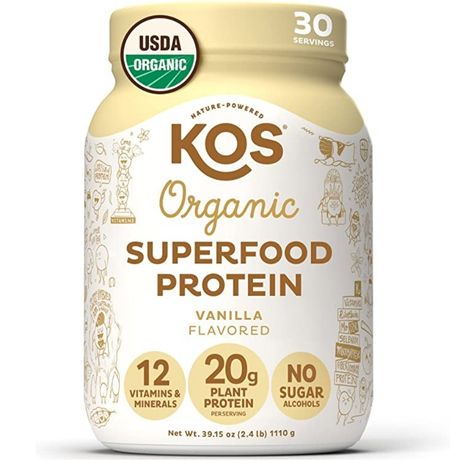
KOS Vegan Protein Powder combines a blend of five different types of plant-based protein to ensure that you get a full complement of amino acids. Those protein sources are Pea, Flax Seed, Quinoa, Pumpkin Seed & Chia Seeds.
Digestive enzymes such as amylase and protease are included to improve digestion. There is also a proprietary digestive enzyme blend called DigeSEB. DigeSEB helps digestion & assists the body in maximizing absorption.
You also get a dozen vitamins and minerals to ensure you are getting a complete nutritional profile.
There are 20 grams of protein in every serving of KOS Vegan Protein Powder, for a total energy count of 170 calories. It is available in the following flavors:
Vanilla, chocolate
Unflavored
Blueberry muffin
Salted caramel
Peanut butter
Chocolate chip mint
To create these flavors, KOS uses organic Peruvian cacao, Himalayan salt, organic coconut milk, stevia & monk fruit. Almost every ingredient is certified organic and free of gluten, dairy, soy, hormones, artificial sweeteners, colors, and GMOs.
KOS Vegan Protein Powder is not the best mixing vegan powder on the market, so you will probably want to use a blender to create your protein shake. However, the taste is very good across all flavors.
Pros
+Blend of 5 types of vegan protein
+Great tasting flavors
+Digestive support
Cons
-Doesn’t mix overly well
Overall Best Vegan Protein Powder
This USDA Organic vegan protein powder has a 5 protein blend of Pea, Flax Seed, Quinoa, Pumpkin Seed & Chia Seed + essential vitamins & minerals. Healthier than whey protein powder for both your body and the environment…
2. Best Vegan Protein Powder For Muscle Gain: Kaged Plantein
Ingredients
5.0
Protein
5.0
Overall Score: 5.0
Kaged Plantein is a pea protein isolate powder that delivers 25 grams of protein per serving. You also get 4.5 grams of branched-chain amino acids and just a single gram of sugar.
Kaged Nutrition boldly claims that this is the best-tasting plant-based protein powder you will find, or they will give you your money back. They’ve used a blend of coconut MCT oil and organic quinoa to produce a smooth, creamy protein smoothie.
The pea protein isolate used in this product is 86% pure protein content. That is much higher than you usually get with a vegan protein powder. It also provides all nine essential amino acids.
Plantein also includes ingredient-optimized technology that increases the surface area of the protein. This significantly increases amino acid absorption and utilization.
Plantein comes in three flavors:
Peanut Butter Cookie
Banana Bread
Cinnamon Roll
Reviews on the flavors are mixed, with some complaining that they are too sweet. Some people also mentioned a strong aftertaste from the Peanut Butter cookie flavor. This product is 3rd party tested for purity and potency and guaranteed to be banned substance free.
Pros
+25 grams of pea isolate protein
+4.5 grams bcaas
+Creamy texture
+3rd party tested
+Ingredient-optimized technology to boost bioavailability
Cons
-The taste may be too sweet for some people
Best Vegan Protein Powder For Muscle Gain
One of the best tasting and most complete plant protein formulas available anywhere, Plantein™ sets a new standard for plant-based performance nutrition, and it’s going to change the way you think about vegan protein…
Ingredients
5.0
Protein
5.0
Overall Score: 5.0
Orgain Organic Protein combines 18 research-supported ingredients to deliver a complete nutrient profile. You get 21 grams of protein per serving, a blend of organic pea protein powder, chia seed, and brown rice protein.
There is no gluten, soy, lactose, or dairy, and the product is non-GMO. Orgain protein is also free of artificial flavors and preservatives.
Orgain has become very popular and enjoys high ratings on Amazon. That’s largely because it includes a range of superfoods, such as sprouted grains, sprouted seeds, and beans, and spices, including turmeric, ginger, and garlic.
Orgain provides one of the widest offerings of flavors on the vegan protein market. The range includes Creamy Chocolate Fudge, Chocolate Coconut, Chocolate Caramel Sea Salt, Chocolate Peanut Butter, Peanut Butter, Vanilla Bean, Iced Coffee, Pumpkin Spice, Cookies and Cream, and Natural Unflavored.
The general reviewer consensus is that the flavors are tasty, they mix well, and they don’t have any nasty aftertaste. Some reviewers did, however, mention a chalky texture with some flavors, such as Vanilla Bean and Iced Coffee.
Pros
+Blend of three types of organic plant-based protein
+21 grams of protein per serving
+18 research-backed ingredients
+Wide range of flavors
Cons
-Not 3rd party tested
Best Organic Vegan Protein Powder
This organic plant-based protein powder serves up 21g of vegan protein and only 150 calories in every serving. Fuel your body with clean, organic nutrition with a complete amino acid profile, no added sugar…
Ingredients
5.0
Protein
5.0
Overall Score: 5.0
Swolverine Plant Protein combines Pea Protein Isolate and Pumpkin Seed Protein to deliver 22 grams of protein with every 34-gram serving. Studies show that pea protein competes with whey in terms of its ability to stimulate protein synthesis.
Pumpkin seeds also provide a rich source of omega-3 fatty acids to provide anti-inflammatory benefits. In fact, you get an ideal 3:1 balance of Omega-6 to Omega-3 fatty acids in Swolverine Plant Protein.
You also get a 1-gram serving of inulin from chicory root with every serving of Swolverine. Inulin is a prebiotic fiber that improves digestive health and balances gut bacteria.
To further boost the nutritional firepower of this supplement, there is also a wide range of vitamins, minerals, and antioxidants, including magnesium, phosphorous, iron, calcium, selenium, manganese, zinc, and copper.
Swolverine Plant Protein is available in Chocolate Cake and Salted Caramel flavors. They both taste amazing, with no aftertaste and great mixability.
Pros
+22 grams of protein from peas and pumpkins
+Rick in vitamins, minerals, and antioxidants
+Great tasting
+Mixes well
Cons
-Expensive
Best Tasting Vegan Protein Powder
Swolverine’s Plant Protein is the perfect mix of high-quality vegan protein, to provide the nutrients you need to power your performance. Made with Pea Protein Isolate and Pumpkin Seed Protein, this smooth…
5. Best Unflavored Vegan Protein Powder: Naked Pea
Ingredients
5.0
Protein
5.0
Overall Score: 5.0
Naked Pea is a pared-back, minimalistic plant-based protein that delivers big in terms of nutrient value. You get 27 grams of protein, which is very high when discussing vegan protein powders.
That protein comes from yellow peas, which is one of the few plant-based protein sources that contains a complete amino acid profile.
The plain unflavored version is ideal when you want to add your vegan protein powder to other recipes. There are options for vanilla and chocolate versions as well, but, to be honest, they are not the best, as they both produce quite a strong aftertaste.
This product is 3rd party tested for banned substances, and Naked Nutrition undertakes in-house testing for heavy metals.
Pros
+27 grams of protein per serving
+3rd party tested
+Complete amino acid profile from yellow peas
+Unflavored is great for mixing into baked goods
Cons
-Does not taste very good
Best Unflavored Vegan Protein Powder
Naked Pea has only one ingredient: Pea protein extracted from yellow split peas grown on US and Canadian farms. Pea protein is easily absorbed by the body, making it an excellent plant-based alternative to whey protein…
Ingredients
5.0
Protein
5.0
Overall Score: 5.0
Ritual Essentials was created in 2016 with a line of clean, science-backed supplements targeted toward women. They have recently added plant-based protein powders to their lineup. The company is dedicated to transparency, giving you the ability to trace every ingredient back to its source on its website.
There are three Ritual Essential Protein powder products:
All three versions provide 20 grams of protein, with the difference coming down to added ingredients. The Daily Shake 18+ adds 150 grams of choline, along with calcium, iron, sodium, and l-methionine (an essential amino acid needed for tissue repair). This product is designed to support lean muscle growth and exercise recovery.
With an average energy count of 115 calories, all three Ritual Essential vegan protein powders are effective weight-loss supplements.
The Daily Shake 50+ is intended for women in the 50+ age bracket and includes 370 mg of calcium to help support the maintenance of muscle mass. Daily Shake Pregnancy and Postpartum provides 250 mg of choline, along with 20 grams of protein, to support the increased nutrient demands during pregnancy and lactation.
The protein used here comes from organic yellow peas. They are sourced from a farm in Wisconsin that uses regenerative farming practices. Other ingredients are natural vanilla, sugarcane, monk fruit (for flavoring), salt, sunflower lecithin, organic coconut oil, and xanthan gum.
All Ritual Essentials protein powders are 3rd party tested for more than 250 substances banned in competitive sporting competitions.
Pros
+Low calorie count
+Uses organic yellow peas as its protein source
+3rd party tested
Cons
-Relatively expensive
Best Vegan Protein Powder For Weight Loss
Essential Protein is soy-free, gluten-free, vegan-friendly, and it’s formulated without GMOs, stevia, sugar or sugar alcohols, and artificial colors, flavors, or sweeteners…
Ingredients
5.0
Protein
5.0
Overall Score: 5.0
Vega Protein and Greens set itself apart in the vegan protein market by including a range of greens that you don’t usually see in a protein powder.
These include alfalfa grass powder, kale, and broccoli. These ensure that you get a good dose of vitamins and minerals. For example, it provides 20% of your DV for Vitamin K.
In terms of protein, you get 20 grams of plant-based protein from a combination of peas and organic brown rice. There is no added sugar, with the flavoring coming from stevia leaf extract.
In fact, Vega Protein and Greens is certified Keto friendly. It’s got just 4 grams of carbs per serving and is gluten-free, containing no whey products. You will not find any artificial flavors or preservatives in this product.
Vega Proteins and Greens is available in 7 flavors: Vanilla, Chocolate, Berry, Salted Caramel, Coconut Almond, Tropical, or Plain Unsweetened. All flavors have good mixability, and the taste gets good marks across all flavors. None of them are other too sweet or too intense. The plain unsweetened version goes well with any baked goods.
Vega is known to 3rd party test some of its supplements but does not specifically state that their Proteins and Greens protein powder is part of that process.
They do, however, undertake stringent in-house testing. So, even though Vega proteins and Greens is made in a factory that also manufactures products containing milk, egg, and soy, you can be confident that this is a clean plant-based product.
Pros
+Contains a range of greens
+High in Vitamin K
+20 grams of pea / brown rice protein
+Mixes well
Cons
-Unclear whether this product is 3rd party tested
Best Vegan Protein Powder With Greens
Add extra greens and protein to your daily routine without skipping a beat with Vega® Protein and Greens. Each scoop is stacked with kale, alfalfa, broccoli and spinach, plus 20g of plant-based protein…
What is Vegan Protein powder?
Vegan protein powder is a dietary supplement that provides a plant-based source of protein. It is designed for people following a vegan or plant-based diet who may have difficulty obtaining adequate protein from animal-based sources.
Vegan protein powder is made from a variety of plant-based protein sources, such as peas, soy, rice, and hemp, and is typically processed into a fine powder that can be easily added to shakes, smoothies, and other food and beverage items.
Vegan protein powder is a convenient and versatile way to increase your protein intake amount and can be useful for those who are looking to build muscle, recover from workouts, or support overall health. Some vegan protein powders also contain added vitamins, minerals, and other nutrients to provide a well-rounded dietary supplement.
Benefits of Vegan Protein Powder:
People’s reasons for choosing a vegan protein powder are varied. Whether it’s for ethical, environmental, or health reasons, there is no denying that solid research supports the benefits of making the switch. Here are five of them.
1. Environmentally friendly
The production of animal-based protein sources, such as meat and dairy, significantly contributes to greenhouse gas emissions, deforestation, and other environmental degradation. In comparison, plant-based protein sources, such as peas, soy, and rice, require fewer resources and generate fewer emissions to produce.¹
Additionally, many vegan protein powders are made from sustainably grown, non-GMO ingredients and are packaged in environmentally-friendly containers, which can further reduce their environmental impact.
It is also important to consider the production practices and sourcing methods of the vegan protein powder, as some companies may use unsustainable or environmentally-harmful practices. Choosing a vegan protein powder that is made from sustainably-sourced ingredients and produced using environmentally-friendly methods can further reduce its environmental impact.
2. Reduced risk of chronic diseases
Some studies have suggested that a plant-based diet, which includes vegan protein powders, may be associated with a reduced risk of certain chronic diseases, such as type 2 diabetes, heart disease, and certain types of cancer.
Studies have shown that plant-based diets are linked with a lower risk of heart disease. Additionally, plant-based protein sources, such as soy, peas, and nuts, have been shown to have a cholesterol-lowering effect, which can help reduce the risk of heart disease.²
This may be partly because plant-based diets are typically higher in fiber, antioxidants, and other beneficial nutrients and lower in saturated fat and cholesterol than animal-based diets. Additionally, some plant-based protein sources, such as legumes, nuts, and seeds, contain beneficial phytochemicals that may have anti-inflammatory and antioxidant effects.
It is important to consider the quality and composition of the vegan protein powder, as well as the rest of your diet, when evaluating its impact on chronic disease risk. Some vegan protein powders may contain added sugars, artificial sweeteners, or other ingredients that may not benefit your health, so it is important to choose a high-quality vegan protein powder with minimal added ingredients.
3. Increase lean muscle mass
Vegan protein powders can help increase lean muscle mass when combined with regular strength training and a balanced diet. Protein is a crucial nutrient for building and repairing muscle, and vegan protein powders can provide a convenient and plant-based source of protein to support muscle growth and recovery.³
To increase lean muscle mass, it is important to consume enough protein to support your muscle-building goals and to engage in regular strength training exercises. A balanced diet that includes a number of protein sources, such as nuts, legumes, and seeds, as well as other essential nutrients, is recommended to support optimal muscle growth and recovery.
In addition to consuming an adequate amount of quality protein, here are three other things you need to do to increase lean muscle mass:
Resistance Training: Resistance training, such as weightlifting or bodyweight exercises, is the most important factor in building muscle. It is necessary to stimulate muscle growth and promote lean muscle gains.
Adequate Calorie Intake: Consuming enough calories is important to support muscle growth and recovery. Try to consume a balanced diet that includes a sufficient amount of carbohydrates, protein, and healthy fats to support your muscle-building goals.
Adequate Sleep: Sleep is important for muscle recovery and growth. Plan on getting at least 7-9 hours of sleep per night to support your muscle-building goals.
4. Complete gaps in nutrition
Vegan protein powders can help complete gaps in nutrition by providing a convenient and plant-based source of protein, as well as other essential vitamins and minerals. Some vegan protein powders are fortified with additional nutrients, such as iron, calcium, and vitamin B12, which can be more difficult to obtain from a plant-based diet.
For people following a vegan or plant-based diet, vegan protein powders can be a useful tool for ensuring adequate protein intake and supporting overall health. Some vegan protein powders are made from high-quality plant-based protein sources, such as peas, soy, or brown rice, which are good sources of essential amino acids and other nutrients.
5. Lower risk of allergens
Vegan protein powders can lower the risk of allergens by providing a plant-based alternative to animal-based protein sources, which are common allergens for many people. Some of the most commonly used forms of vegan protein powder, such as pea, soy, and rice protein, are considered hypoallergenic, which means there’s a smaller likelihood of causing an allergic reaction compared to animal-based protein sources.⁴
Some vegan protein powders are free from other common allergens, such as gluten, dairy, and nuts, which can further reduce the risk of allergens for individuals with food sensitivities.
It is important to consider the quality and composition of the vegan protein powder, as well as the presence of other allergens, when choosing a vegan protein powder to lower the risk of allergens. Reading the ingredients list and checking for certifications, such as non-GMO or gluten-free, can also help ensure that the vegan protein powder is free from common allergens.
Side Effects of vegan protein powder
Some common side effects of vegan protein powder include:
Digestive Issues: Some people may experience digestive discomforts, such as bloating, gas, or diarrhea when consuming large amounts of vegan protein powder, especially if they are not used to consuming large amounts of plant-based protein.
Allergic Reactions: Some individuals may experience an allergic reaction to one or more of the ingredients in the vegan protein powder, such as soy, gluten, or nuts.
Kidney Stress: High levels of protein, especially from supplements, can put stress on the kidneys and may not be recommended for people with kidney problems.
Interactions with Medications: Some vegan protein powders may interact with certain medications, such as blood thinners, and may not be recommended for people taking these medications.
Nutritional Deficiencies: Some vegan protein powders may not supply a complete profile of essential amino acids and other nutrients and may not be appropriate for those with specific dietary needs.
What to look for when buying vegan protein powder:
When buying vegan protein powder, there are a number of factors to consider to make sure you are choosing a high-quality product that meets your dietary needs and goals. Here are seven key things to look for when buying vegan protein powder:
1. Type
When buying vegan protein powder, it is important to consider the quality and composition of the protein source to ensure it meets your dietary needs and goals. Here are some types of protein to look for when buying vegan protein powder:
Pea Protein: Pea protein is a complete plant-based protein source high in essential amino acids and easy to digest. It is a good choice for individuals sensitive to soy or dairy protein.
Soy Protein: Soy protein is also a complete plant-based protein source high in essential amino acids and has been shown to support muscle growth and recovery.
Brown Rice Protein: Brown rice protein is a protein source that is high in essential amino acids and is considered hypoallergenic. It is a good choice for individuals with food sensitivities or allergies.
Hemp Protein: Hemp protein is a plant-based protein source that is high in essential amino acids and is also a good source of fiber, healthy fats, and other nutrients.
Blends: Some vegan protein powders are made from a blend of different plant-based protein sources, such as pea, soy, and brown rice, to provide a complete profile of essential amino acids.
2. Taste
Taste is an important factor when buying a vegan protein powder because it can impact your overall enjoyment and likelihood of continuing to use the product. If the taste of the vegan protein powder is unpleasant or has an aftertaste, you’ll be less likely to use it regularly, which can impact its effectiveness and the benefits you receive.
The taste of the vegan protein powder can also impact your willingness to mix it into other foods and drinks, such as smoothies, oatmeal, or baked goods. A vegan protein powder with a good taste and mixability can make it easier to incorporate into your diet and help ensure you are getting the recommended amount of protein to support your health and wellness goals.
3. Use
It is important to consider your use and purpose for taking vegan protein powder when buying it because different vegan protein powders may have different benefits and characteristics that are best suited for different uses and purposes.
Muscle Building and Recovery: If your primary goal is to support muscle building and recovery, you may want to look for a vegan protein powder that is high in essential amino acids and has a complete protein profile.
Weight Management: If you are looking to support weight management, you may want to look for a vegan protein powder that is low in calories, carbohydrates, and fat and provides a high-quality source of protein.
Allergen-Free: If you have food sensitivities or allergies, you may want to look for a vegan protein powder free from common allergens, such as dairy, gluten, and nuts.
Convenience: If you are looking for a convenient way to increase your protein intake, you may want to find a vegan protein powder that is easy to mix and has a good taste and texture.
Nutritional Deficiencies: If you have specific nutritional needs, such as low iron or calcium, you may want a vegan protein powder fortified with additional vitamins and minerals.
4. Protein Amount
When buying a vegan protein powder, it is important to consider the protein amount to ensure that you are getting enough protein to support your health and wellness goals. The recommended daily amount of protein varies based on age, sex, and physical activity level, so it is important to consider your individual needs when choosing a vegan protein powder.
Some vegan protein powders may not provide a high enough amount of protein per serving, so it is important to choose a vegan protein powder that provides a sufficient amount of protein per serving to meet your needs.
5. Testing/transparency
A company that tests its products and is transparent about its ingredients and manufacturing processes is more likely to produce a high-quality, safe product that meets your dietary needs and goals.
Testing and transparency can help ensure that the vegan protein powder contains the amount of protein and other nutrients listed on the label and that it is free from harmful contaminants, such as heavy metals or bacteria. It can also provide information about the source of the protein and other ingredients, which can impact the quality and safety of the product.
Transparency about the company’s manufacturing processes, such as whether they use non-GMO ingredients or follow organic farming practices, can provide valuable information about the environmental impact of the product and the values of the company.
6. Price
When buying a vegan protein powder, rather than just going for the cheapest product, it is important to consider the price in terms of the quality of ingredients, protein content, brand, serving size, and availability. These factors can impact the overall value and affordability of the product.
7. Reviews
Reading user reviews can also help you identify any potential issues or concerns with the product, such as side effects, allergen sensitivities, or ingredient quality. This information can help you decide about vegan protein powder and whether it is the right product.
Additionally, user reviews can provide information about the company’s customer service and shipping practices, impacting the overall customer experience.
Vegan Protein Powder FAQs
Are vegan protein powders good for you?
Vegan protein powders can be a good source of protein for individuals following a vegan diet, as they provide a plant-based alternative to animal-based protein sources. However, like any dietary supplement, it is important to consider the quality and composition of the vegan protein powder before incorporating it into your diet.
What is the best kind of vegan protein powder?
The best kind of vegan protein powder depends on individual factors such as personal taste, dietary restrictions, and health goals. Here are some of the most commonly used forms of vegan protein powder:
Pea protein: Pea protein is a high-quality plant-based protein that is easy to digest and contains a complete amino acid profile. It is a good choice for individuals who want a protein powder low in allergens and gentle on the digestive system.
Soy protein: Soy protein is another common form of vegan protein powder that is a complete protein source and contains all nine essential amino acids. However, some individuals may have a sensitivity to soy, so it is important to consider personal dietary restrictions before choosing this form of protein powder.
Rice protein: Rice protein is a plant-based protein powder that is easy to digest and hypoallergenic, making it a good choice for individuals with food sensitivities. Rice protein is a complete protein source, but it is lower in some essential amino acids compared to other forms of vegan protein powder.
Hemp protein: Hemp protein is a plant-based protein powder high in fiber and contains a complete amino acid profile. It is also a great source of essential fatty acids, making it a nutritious choice for individuals following a vegan diet.
Can you build muscle with vegan protein powder?
Yes, it is possible to build muscle with vegan protein powder. Vegan protein powders can provide a convenient and plant-based alternative to animal-based protein sources.
Vegan protein powders, when combined with regular strength training and a balanced diet, can help support muscle growth and recovery. It is important to choose a high-quality vegan protein powder that contains a complete amino acid profile, as this is necessary for optimal muscle recovery and growth.
Can you take vegan protein powder every day?
Yes, you can take vegan protein powder every day as part of a balanced diet. Vegan protein powder can be a convenient addition to your daily protein intake, which is an essential nutrient for building and repairing muscle, as well as supporting overall health.
Is plant-based protein better for you than animal proteins?
Whether plant-based protein is better for you than animal protein is a matter of personal preference and individual health needs. Both plant-based and animal-based protein sources have their own unique benefits and drawbacks, and the best decision for you will depend on your individual dietary needs and goals.
Plant-based protein sources, such as nuts, legumes, and seeds, are often lower in saturated fat and higher in fiber, antioxidants, and other nutrients, compared to animal-based protein sources. Additionally, plant-based protein sources are a good choice for individuals who are looking to reduce their carbon footprint or who follow a vegan or vegetarian diet.
Animal-based protein sources, such as meat, dairy, and eggs, are typically higher in certain essential amino acids and vitamins, such as iron and vitamin B12, which can be more difficult to obtain from a plant-based diet. Animal-based protein sources are also typically more calorie-dense, which can be beneficial for individuals who are looking to build muscle or increase their overall calorie intake.
Summary
A top-quality vegan protein powder is low in saturated fat, high in fiber, and provides a complete amino acid profile. It also mixes well and tastes good. In this article, we’ve reviewed the seven best vegan protein powders available today and given research-backed evidence to support switching to vegan protein. Our best-rated vegan protein powder is KOS Vegan Protein Powder, which provides 20 grams of protein per serving from a blend of Pea, Flax Seed, Quinoa, Pumpkin Seed & Chia Seed.
If you’re interested in more vegan supplements, check out our articles on the best vegan protein bars and best vegan multivitamins.
References
Lynch H, Johnston C, Wharton C. Plant-Based Diets: Considerations for Environmental Impact, Protein Quality, and Exercise Performance. Nutrients. 2018 Dec 1;10(12):1841. doi: 10.3390/nu10121841. PMID: 30513704; PMCID: PMC6316289.
Weston LJ, Kim H, Talegawkar SA, Tucker KL, Correa A, Rebholz CM. Plant-based diets and incident cardiovascular disease and all-cause mortality in African Americans: A cohort study. PLoS Med. 2022 Jan 5;19(1):e1003863. doi: 10.1371/journal.pmed.1003863. PMID: 34986145; PMCID: PMC8730418.
Lim MT, Pan BJ, Toh DWK, Sutanto CN, Kim JE. Animal Protein versus Plant Protein in Supporting Lean Mass and Muscle Strength: A Systematic Review and Meta-Analysis of Randomized Controlled Trials. Nutrients. 2021 Feb 18;13(2):661. doi: 10.3390/nu13020661. PMID: 33670701; PMCID: PMC7926405.
Blackburn K, N’jai AU, Dearman RJ, Kimber I, Gerberick GF. Respiratory allergenic potential of plant-derived proteins: Understanding the relationship between exposure and potency for risk assessments. Crit Rev Toxicol. 2015;45(9):799-811. doi: 10.3109/10408444.2015.1067876. Epub 2015 Nov 13. PMID: 26565768.
Rocking Plank Guide: Muscles Worked, How-To, Benefits, and Alternatives
Planks are one of the most popular core exercises on the planet. Not so long ago, if you wanted to work your abs, you did crunches and sit-ups. However, those exercises gradually fell out of favor, and the plank took over.
This history of planks is long and storied, and there are examples of planks in yoga, Pilates, and other traditional workout methods.
Fast forward to the 21st century, and now there are online plank challenges, plank workout apps, and competitive planking is a thing. Did you know that the Guinness World Record for holding a continuous plank is a staggering 9 ½ hours!
While planks are undoubtedly an effective exercise, some people find them boring. After all, planks are an isometric exercise, meaning you contract your muscles without moving. So, instead of planking for reps, you just maintain your position for longer and longer durations.
Getting good at planks means you could be doing them for several minutes at a time, which is neither efficient nor very interesting. It’s no wonder that planks can seem dull.
The good news is that you don’t have to limit your core workouts to the same old static plank. There are several variations and alternatives you can use to make your training more time-efficient and interesting.
In this article, we take a look at rocking planks, explaining why and how to do this great bodyweight core exercise.
Rocking Plank – Muscles Worked
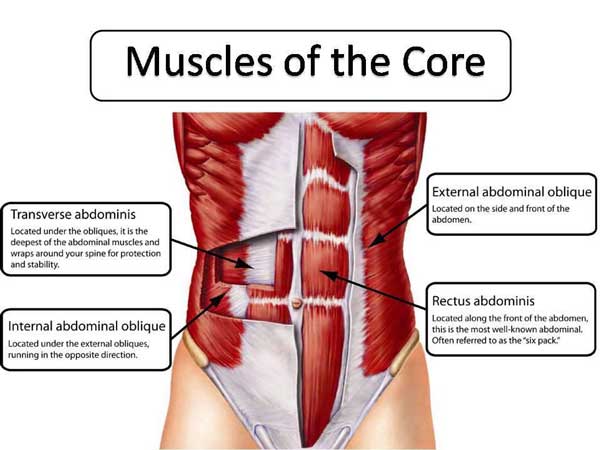
Rocking planks are a core exercise, and core is the collective term for the muscles of your midsection. However, they also involve several other muscles. The main muscles developed by rocking planks are:
Rectus abdominis
The rectus abdominis is the long, flat muscle on the front of your abdomen. Its functions are flexion and lateral flexion of your spine. It’s also involved in the compression of the abdominal contents. During rocking planks, the rectus abdominis works to stop your lumbar spine from extending.
Transverse abdominis
Where the rectus abdominis runs vertically up your abdomen, the transverse abdominis runs around it horizontally. Known as the TVA for short, this weightlifting belt-like muscle encircles your midsection and, when it contracts, squeezes inward to create intra-abdominal pressure (IAP). IAP supports your lumbar spine and prevents unwanted movement.
Obliques
The obliques are basically your waist muscles. There are two sets of oblique muscles – internal and external – which work together to rotate and laterally flex your spine. The obliques act as stabilizers during rocking planks, preventing any unwanted side-to-side movement.
Erector spinae
The erector spinae are the muscles of your lower back that work to prevent unwanted movement during rocking planks. However, if you do rocking planks correctly, you should not be able to feel these muscles working.
Quadratus lumborum
Known as the QL for short, these muscles lie beneath your obliques and are involved in lateral flexion and stabilization of your lumbar spine. While you can’t see your QL muscles, you may feel them working during rocking planks.
Deltoids
While rocking planks are undeniably a core exercise, your upper body will also get a workout. The rocking motion hits your deltoids, which are your shoulder muscles.
Done correctly, rocking planks involve many other muscles and muscle groups, including your quadriceps, calves, lats, and glutes. However, these muscles aren’t working particularly hard, so they won’t get much benefit from this exercise.
How to Do Rocking Planks
Get more from rocking planks while keeping your risk of injury to a minimum by following these guidelines:
Kneel down and place your forearms on the floor. Brace your core and pull your shoulders down and back.
Walk your feet back so your body is straight. Your shoulders should be over your elbows.
Point your toes and shift your weight forward, lowering your shoulders down toward your hands.
Push back with your arms and return to your starting position.
Continue for the desired number of reps.
Pro Tips:
Place your elbows on a folded exercise mat or foam pad for comfort.
Keep your core braced but do not hold your breath during this exercise.
Keep your forearms parallel or clasp your hands together as preferred.
Make this exercise harder by wearing a weighted vest.
The larger your movements, the more demanding this exercise becomes. Adjust your range of motion based on your core strength.
Rocking Plank Benefits and Drawbacks
Not sure if rocking planks deserve a place in your workouts? Consider these benefits and then decide!
No equipment required
Rocking planks are an excuse-free exercise that you can do anywhere and anytime. With no equipment required, you can do this exercise at home, in your hotel room, or anywhere else you have enough space to lie down.
Count reps instead of time
No watch or timer app? No problem! Instead of working your core for a fixed duration with stationary planks, rocking planks are done for reps. Do sets of straight reps, and don’t worry about how long you’ve been planking for.
More challenging than regular planks
Rocking planks increase the length of your support base, making them more challenging than stationary planks. However, because they’re done for reps, the tension on your muscles is not constant. In this way, rocking planks are more like an isotonic than an isometric exercise.
While rocking planks are a mostly beneficial exercise, there are also a few drawbacks to consider:
Increased shoulder stress
Rocking planks are a core exercise, but you’ll also be working your shoulders. Depending on how far you shift your weight forward, this could put undue stress on your shoulder joints. Perform this exercise with caution if you have a history of shoulder pain.
Increased lower back stress
Planks are perfectly safe if you maintain a neutral (slightly arched) spine. However, if you hyperextend your spine, you could experience back pain. Because rocking planks are more demanding than regular planks, you may find your core muscles fatigue faster, making it harder to maintain a neutral spine. Brace your core muscles hard to prevent this problem.
7 Rocking Plank Variations and Alternatives
Rocking planks are a highly effective core exercise, but that doesn’t mean you need to do them all the time. There are several variations and alternatives you can use to keep your workouts productive and interesting:
1. Body saw
While rocking planks are undeniably harder than stationary planks, your range of motion is limited by your ankle mobility. With body saws, you are free to move further, putting more tension on the target muscles. This exercise is significantly more intense than rocking planks, so proceed with caution!
Steps:
Adopt the plank position with your feet resting on a gym towel or sliding discs. Alternatively, you can take your shoes off and do this exercise in your socks. Brace your core.
Push yourself backward and slide your feet away from your arms. Do not allow your lower back to hyperextend.
Pull yourself forward again and repeat.
Muscles Targeted:
Primary: Core.
Secondary: Deltoids, latissimus dorsi.
Benefits:
A low-tech but high-effect bodyweight core exercise.
More strenuous than rocking planks, so suitable for more experienced exercisers.
Do this exercise anywhere you have a smooth surface to slide on.
Tips:
Do this exercise from the push-up position for a more intense workout.
Adjust your range of motion according to your core strength. The further you slide your feet, the harder the exercise becomes.
You can also do this exercise with your feet in a suspension trainer:
2. Stability ball stir the pot
Rocking planks primarily work your rectus abdominus. While your obliques are involved, they mostly work in a supporting role. With the stability ball stir-the-pot exercise, the obliques get promoted and have much more work to do.
Steps:
Place a stability ball on the floor and kneel behind it. Place your forearms on the ball and then walk your feet out and back into the plank position. Brace your core.
Keeping your body straight, make circles with your arms. Go clockwise and counterclockwise.
Continue for the desired number of reps and then rest.
Muscles Targeted:
Primary: Core.
Secondary: Deltoids.
Benefits:
The obliques get more of a workout.
More demanding than rocking planks.
A functional and effective core exercise.
Tips:
Dust your forearms with lifting chalk to stop them from sliding off the ball.
Bend your legs and rest on your knees to make this exercise easier.
Raise your feet to make this exercise more challenging:
3. Ab wheel rollouts
Rocking planks increase the length of your support base, but not by much. Once you are strong enough to do a dozen or so rocking planks in good form, you should be ready for a new challenge. Ab wheel rollouts are an excellent option and one of the best anterior core exercises you can do.
Steps:
Kneel down and place your ab wheel in front of your knees. Brace your core and straighten your arms.
Without hyperextending your lumbar spine, push the wheel away from you and lower your chest toward the floor. Go as far as you can without losing your neutral spine.
Pull the wheel back into your knees and then repeat.
Muscles Targeted:
Primary: Core.
Secondary: Deltoids, latissimus dorsi.
Benefits:
A challenging movement for more experienced exercisers.
Low-tech but high-effect.
Ab wheels are cheap and readily available.
Tips:
No ab wheel? You can also do this exercise with a barbell.
Wear a weighted vest to make this exercise harder.
Progress to doing this exercise from standing:
4. Walkouts
Walkouts are like ab wheel rollouts, but you don’t need any equipment to do them. They work the same muscles as rocking planks, but the distance between your feet and hands is greater, so they’re a little more challenging. Kick your core workout up a level with walkouts.
Steps:
Stand with your feet together, arms by your sides. Brace your abs.
Hinging from your hips, lean forward and place your hands on the floor.
Taking small steps, walk your hands forward as far as you can while maintaining a neutral spine.
Hold the extended position for a couple of seconds.
Without relaxing your core, walk your hands back toward your feet and stand up.
Continue for the required number of reps.
Muscles Targeted:
Primary: Core.
Secondary: Deltoids, triceps.
Benefits:
A very challenging bodyweight core move that’s ideal for more experienced exercisers.
No equipment required, so ideal for home workouts.
A significant step up from rocking planks.
Tips:
Stop your set if you cannot maintain core stability or start to feel this exercise in your lower back more than your abs.
The further you walk your hands beyond your shoulders, the harder this exercise becomes.
You can also do this exercise from kneeling.
5. Inchworm
Inch worms are very similar to walkouts. However, instead of walking your hands backward to return to the standing position, you move your feet forward to meet your hands. This makes inchworms ideal for outdoor workouts or when training in spacious gyms.
Steps:
Stand with your feet together, core braced, and arms by your sides.
Hinging from your hips, lean forward and place your hands on the floor.
Walk your hands forward as far as you can while maintaining your core stability.
Still bracing, and bending your knees as little as possible, walk your feet up to your hands.
Without standing up, start walking your hands forward into another rep.
Muscles Targeted:
Primary: Core.
Secondary: Deltoids, triceps.
Benefits:
Tips:
Walk your hands as far forward as you wish. The further your hands are from your feet, the harder this exercise becomes.
Take care not to move your hands so far forward that you feel this exercise in your lower back.
Bend your knees as you lean forward if your hamstrings are tight.
6. High bird dog
Bird dogs are so-called because, when you do them, you look a little like a hunting dog pointing at its fallen prey. Regular bird dogs are performed from kneeling and are a great exercise for beginners. However, the high bird dog is much more challenging and an excellent core strengthener for more experienced exercisers.
Steps:
Adopt the push-up with your arms, legs, and body straight. Brace your core.
Keeping your hips and shoulders level, lift your left hand and right foot so they are roughly parallel to the ground.
Hold this position for 3-5 seconds.
Lower your arm and leg, and then repeat on the opposite side.
Continue alternating sides for the duration of your set.
Muscles Targeted:
Primary: Core.
Secondary: Deltoids, triceps.
Benefits:
A very challenging bodyweight core exercise.
Increased oblique engagement.
A good exercise for developing better balance.
Tips:
Take care not to hyperextend your lumbar spine, as doing so could cause lower back pain and injury.
Make this exercise harder by moving your arms forward to extend your base of support.
You can also do this exercise with your legs bent and knees hovering a few inches off the floor, which is called the bear plank bird dog:
7. Kneeling overhead Pallof press
The horizontal Pallof press is a proven core anti-rotation exercise. However, the overhead version is more similar to rocking planks. Because weights are involved, you can easily make this exercise harder or easier according to your needs and goals. However, you should start with a light load because this exercise is harder than it looks.
Steps:
Attach a rope handle to a pulley machine set to about waist height.
Core braced, kneel with your back to the pulley and hold one end of the rope handle in each hand at shoulder level.
Keeping your torso upright, extend your arms overhead.
Lower the handles back to your shoulders and repeat.
Muscles Targeted:
Primary: Core.
Secondary: Deltoids, triceps.
Benefits:
Infinitely scalable by adjusting the weight.
An excellent exercise for all levels of fitness.
Easier to progress/regress than most bodyweight core exercises.
Tips:
Kneel on a folded exercise mat or foam pad for comfort.
This exercise can also be done standing, making it more challenging, but it may also increase lower back stress.
You can also do this exercise with a resistance band:
Rocking Plank FAQs
Do you have a question about rocking planks or core training in general? No problem, because we’ve got the answers!
1. Will rocking planks give me six-pack abs?
While rocking planks will undoubtedly strengthen your rectus abdominis or six-pack muscle, they won’t necessarily give you a visible six-pack. Getting a six-pack involves lowering your body fat percentage so the outline of your abs shows through. For men, this usually means getting your body fat down to ten percent or less. Women typically need to hit 15% or lower.
As such, you’ll need to pay equal attention to your diet and your workouts if you want to get a six-pack.
Read more about training and eating for six-pack abs here.
2. Rocking planks hurt my lower back – what gives?
While rocking planks are generally safe, they could cause back pain if you let your hips drop or hyperextend your lumbar spine. Keeping your core brace will help prevent this problem, as will paying attention to your form.
However, if you still experience discomfort and pain during this exercise, it could be that your core muscles are too weak to fully support your lower back. In this case, choose a less demanding exercise, such as regular planks, and use them to build up your strength until you’re ready to try rocking planks again.
Either way, do not ignore pain, as it’s your body’s way of telling you something is wrong. Working through pain invariably makes things worse.
3. Should I train my abs every day?
While training your abs every day might be tempting, it’s probably not a good idea. Exercises like rocking planks cause micro trauma to your core muscles, which is the trigger for them to get stronger. However, the rebuilding process takes time, so you need to let your muscles to rest and recover so this can occur.
So, it’s generally best to limit your abs workouts to 2-3 times per week. This provides a good balance between work and rest. Training your abs every day could result in overtraining and inhibit rather than speed up your progress.
4. How many reps and sets of rocking planks should I do?
The answer to this question is, how many reps CAN you do? Because rocking planks are a bodyweight exercise, their difficulty depends on things like your weight and limb length, so some people will find them harder than others.
So, it’s up to you to determine how many reps to do. Perform the exercise until you feel the target muscles starting to fatigue. Then, over the coming weeks, gradually try to do more reps.
Regarding sets, 2-4 should be sufficient for most exercisers. If you feel you need to do more than four sets, you are either not working hard enough or are resting too long between sets. Try to fatigue your muscles in three sets to make your workouts more time-efficient.
5. Are rocking planks safe?
Performed correctly, rocking planks are a relatively safe exercise. Unlike crunches and sit-ups, they involve no significant movement of your spine, so they’re very lower back-friendly. However, if you lose core stability and hyperextend your lumbar spine, rocking planks could cause injury.
That said, if your technique is good and you stop your set before your form begins to deteriorate, rocking planks should be no more dangerous than regular planks.
Rocking Plank Guide – Wrapping Up
There is no denying the popularity and effectiveness of regular planks. They’re simple, accessible, and safe. That said, like most exercises, if you do them too often, planks can soon become boring and lose some of their benefits.
While you could just plank for longer, you’ll probably get better results from your workouts if you use some different exercises in your core workouts.
Rocking planks are a logical progression from regular planks and a simple way to take your core workouts to a new level.
Try them – you’re going to like them!
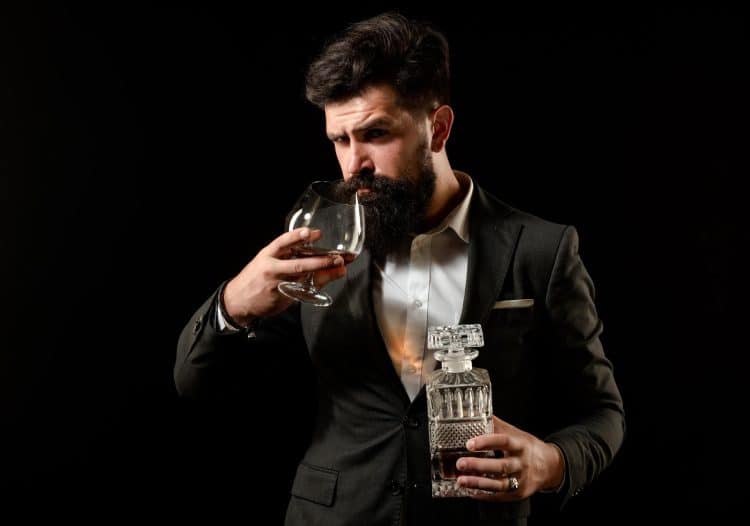
Does Alcohol Break a Fast? — The Ultimate Intermittent Fasting and Alcohol Guide
It seems that everyone you know is into intermittent fasting. However, before you start on a fasting plan to achieve your fitness goals, there are a few things you have to consider. If you enjoy alcohol and cannot do without a glass or two of your favorite spirit, you may wonder whether alcohol consumption breaks a fast.
Intermittent fasting is restrictive and centers around fasting and eating periods where you can only consume calories during a specific eating window. The results of intermittent fasting depend on your adherence to the schedule and your body’s metabolism. Depending on your chosen intermittent fasting diet plan (such as 16/8 or 5/2), this may involve abstaining from food for several hours in the morning or delaying lunch until later in the day. The benefits of intermittent fasting are well-known and documented.
Now, the fasting aspect of IF involves several questions regarding what you can or cannot eat or drink and when. Luckily, water and unsweetened coffee are okay. However, alcohol is a different beast altogether.
Firstly, drinking on an empty stomach (which will be the case when you come out of a fasted state) is not a good idea. Again, your love for cocktails at all hours of the day can disrupt your weight loss progress, mangle your sleep cycle, and make it difficult to adhere to the fasting plan.
However, all that being said, there are some ways in which you can fit in alcohol intake with intermittent fasting. Here’s all you need to know about drinking alcohol while practicing intermittent fasting.
Note: The content on Fitness Volt is for informative purposes only and should not be taken as medical advice to diagnose, prevent, or treat health problems. If you’re suffering from a health issue, are pregnant, or are under 18 years old, you should consult your physician before starting any new supplement, nutrition, or fitness routine.
Can You Drink Alcohol While Intermittent Fasting?
This is certainly the first query regarding alcohol consumption during intermittent fasting. To answer this question, you must take a few facts into account. One gram of alcohol has seven calories. This is more than sugar and a little less than a gram of fat. Now we know that calorie consumption during fasting windows is a strict no-no. This means that you cannot have alcohol while you are in your fasting period.
But can you sneak in a drink or two in your feeding window? The short answer to this is yes. However, you must consider a few things.
Firstly, you must not drink on an empty stomach. This is because, on an empty stomach, alcohol is absorbed more rapidly, leading to a faster onset of intoxication. Also, if you have your drinks before meals, you could get severe dehydration. These are also why it is not a good idea to break your fast with a glass of alcohol.
Secondly, alcohol can make you hungry, leading to higher calorie consumption. [1]
People follow IF mainly for weight loss. Now, if you drink alcohol, it also makes you hungry. Excess snacking following a drink can offset the calorie deficit you painstakingly achieve.
Thirdly, alcohol is a high-calorie drink. The calories in your drinks can be easy to miss if you do not keep a check on how many glasses you are knocking back. These calories will add up, ultimately leading to unwanted weight gain.
It is important to remember that calories in alcohol are called “empty calories,” meaning that they do not have any nutritional value or provide any health benefits.
So, Will Alcohol Break a Fast?
If you want a short answer to this, it is yes. Alcohol will break your fast if you consume it during your fasting period. During the fasting interval, you are not allowed to eat or drink anything that has calories, and alcohol does have calories.
Will Intermittent Fasting Results Be Affected By Alcohol Consumption?
In terms of weight loss, it is the quantity of alcohol that will matter in the end. Studies have shown that a moderate intake of alcohol does not affect your weight. [2]
However, if you are a heavy drinker, alcohol intake will promote obesity and weight gain. [3]
If you want to make the most of IF, we recommend limiting alcohol intake to feeding windows and drinking in moderation.
Benefits of Intermittent Fasting
Here are the benefits you can derive from intermittent fasting so that you stay motivated to reduce your alcohol intake:
Reduces Inflammation
IF helps reduce inflammation. Alcohol’s influence on inflammation will depend on the amount of alcohol you consume. While moderate alcohol intake is known to curb inflammation, excessive drinking promotes it. [4]
Fat Oxidation
Intermittent fasting enhances fat oxidation, thereby burning the excess fat stored in your body. However, alcohol, conversely, acts as a fat oxidation inhibitor and ultimately creates a fat surplus. [5, 6]
The non-oxidized fat usually gets dumped around your midsection, creating a “beer belly.” Hence, if you are chasing a perfect body, think twice before reaching for a glass of alcohol.
Brain Health
Intermittent fasting has been shown to increase brain health by increasing brain cell lifespan. [7]
Excessive alcohol consumption can lead to brain damage. IF is also credited with cellular repair throughout the body, not just in the brain. Excess alcohol acts as a toxin and hinders cell repair, even provoking DNA damage in various organs. [8, 9]
Liver Function
One of the benefits of intermittent fasting is improved liver function. But alcohol intake in excessive amounts will overburden your liver, especially if you are drinking on an empty stomach. This is counterproductive. [10]
So, is it wise to drink alcohol with intermittent fasting? No! But the key here is drinking in moderation. If you are inconsiderate of your drinking habits, alcohol can detract from the benefits of intermittent fasting. An occasional glass or two of alcohol could help you relax, but if you drink excessively, it will work against you.
How is Alcohol Beneficial to Health?
There are certain biologically active compounds called polyphenols in alcoholic beverages. Polyphenols belong to the plant composite category, offering various health benefits. One of the most important of these is the antioxidant property, which helps neutralize free radicals in the body. Free radicals cause DNA and cellular damage and are linked to illness and disease. [11]
One of the best ways to halt free radical damage is to have polyphenols in food and drink. This is why doctors tell you to have antioxidants in your diet. Alcohol has a lot of polyphenols.
Alcoholic Beverages Rich in Polyphenols
Here are some alcoholic beverages rich in polyphenols:
Wine
Many berries and fruits, like grapes, have polyphenols. Wine is made of grapes and has a high concentration of polyphenols. Red wine is obtained from the whole grape, which includes the seeds and the skin, while white wine is produced sans skin. Champagne, on the other hand, is obtained from blending red and white grapes without skin contact.
Red wine, macerated with seeds and skin for many weeks, has a 30-fold concentration of polyphenols compared to sparkling or white wine. One of the chief “fighters” against free radicals is a compound known as resveratrol. It is obtained from grape skins. Hence, red wine can be beneficial. If wine is consumed with a meal, it can decrease after-meal spikes in glucose and lipids.
Whiskey
Whiskey has many types of polyphenols. These have gone through oxidation in a long, drawn-out aging process and are obtained from compounds in oakwood barrels called ellagitannins. Commercial whiskey contains many polyphenols, while aged whiskey has a similar polyphenol content as wine.
Studies and human trials have shown that whiskey consumption in moderation increases the cholesterol efflux capacity, which in other words, is the ability of the body to remove cholesterol from cells. [12]
Beer
Beer has many polyphenols produced from hops and malts and found in the haze formation in the finished beer. Darker beers have as many polyphenols as red wine, which is prolific. A randomized trial was conducted on the effects of beer polyphenols in male subjects with a high risk of cardiovascular disease. The trial results showed that the polyphenols in beer reduced the inflammatory health biomarkers. [13]
How Much Alcohol is Safe to Drink?
It is always recommended to drink alcohol in moderation. Moderate consumption for men is two drinks a day, while for women, it is one. Fourteen grams of pure ethanol make up one standard drink. Hence, for women, 12.5 grams of alcohol per day is standard, whereas it is 25 grams for men.
The majority of red wines have 12.5% ethanol. This means an optimal amount of 3 ounces of wine for women and 6 ounces for men daily.
Is There a “Good” Choice of Alcohol for Intermittent Fasting?
While there are no good or bad alcohol choices for IF, you should concentrate on the number of calories in your drink. Here is a possible list of the best alcohols for intermittent fasting:
White wine
Red wine
Dry Vermouth
Light beer
Champagne
Limit the intake of certain types of alcoholic drinks like:
Regular beer
Craft beer
Sweet wine
Sugary cocktails
High-calorie drinks like pina colada
How to Consume Alcohol Correctly?
Here are some tips on consuming alcohol:
You should have the beverage of your choice with or after a meal. Otherwise, it may cause blood glucose levels to rise.
Avoid binge drinking.
Prefer red wine over other drinks.
If you prefer champagne, go for dry wine or brut. Avoid sweet wines.
Drink a glass of water after every drink.
Do not drink cocktails or alcohol mixes.
FAQs
1. What happens when you drink during fasting?
As alcohol has calories, if you drink during fasting, it will break your fast and also may prevent cellular repair processes.
2. Is it better to break a fast with alcohol?
Consuming alcohol immediately after a fasting period results in quicker absorption, which can induce a faster onset of intoxication. You may also be at an increased risk of severe dehydration if you drink before meals. Hence, the best thing to do is to have your drink with or after a meal. For these reasons, it is not a good idea to break a fast with alcohol.
3. What drinks are safe for fasting?
During fasting, you can have plain or carbonated water, coffee, unsweetened tea, diluted apple cider vinegar, bone broth, and lemon water.
Conclusion
If your primary goal from fasting is improved metabolic health and weight loss, consuming alcohol during fasting periods is a no-no. You can have it in your feeding windows. However, remember that alcohol has calories, and depending on your drink type, it can impact your weight loss process. If you choose to drink, please stick to dry, low-alcohol wine and hard spirits and pour in sparkling water to limit sugar intake and excess calories.
References
“Short-Term Effects of Alcohol on Appetite in Humans. Effects of Context and Restrained Eating – PubMed.” PubMed, 1 Dec. 2010, https://doi.org/10.1016/j.appet.2010.09.005.
“Effects of Moderate Consumption of White Wine on Weight Loss in Overweight and Obese Subjects – PubMed.” PubMed, 1 Nov. 2004, https://doi.org/10.1038/sj.ijo.0802786.
“Alcohol, Body Weight, and Weight Gain in Middle-aged Men – PubMed.” PubMed, 1 May 2003, https://doi.org/10.1093/ajcn/77.5.1312.
“Effect of Alcohol Consumption on Systemic Markers of Inflammation – PubMed.” PubMed, 10 Mar. 2001, https://doi.org/10.1016/S0140-6736(00)04170-2.
“Effects of Intermittent Fasting on Cardiometabolic Health: An Energy Metabolism Perspective – PubMed.” PubMed, 23 Jan. 2022, https://doi.org/10.3390/nu14030489.
“Is Alcohol Consumption a Risk Factor for Weight Gain and Obesity? – PubMed.” PubMed, 1 Jan. 2005, https://doi.org/10.1080/10408360590913542.
Martin, Bronwen, et al. “Caloric Restriction and Intermittent Fasting: Two Potential Diets for Successful Brain Aging.” PubMed Central (PMC), 8 Aug. 2006, https://doi.org/10.1016/j.arr.2006.04.002.
“The Neuropathology of Alcohol-related Brain Damage – PubMed.” PubMed, 1 Apr. 2009, https://doi.org/10.1093/alcalc/agn102.
“DNA Damage, DNA Repair, and Alcohol Toxicity–a Review – PubMed.” PubMed, 1 Sept. 1997, pubmed.ncbi.nlm.nih.gov/9309320.
“The Effects of Ramadan Intermittent Fasting on Liver Function in Healthy Adults: A Systematic Review, Meta-analysis, and Meta-regression – PubMed.” PubMed, 1 Aug. 2021, https://doi.org/10.1016/j.diabres.2021.108951.
“Cardioprotection With Alcohol: Role of Both Alcohol and Polyphenolic Antioxidants – PubMed.” PubMed, 1 May 2002, https://doi.org/10.1111/j.1749-6632.2002.tb02911.x.
Duthie, GG, et al. “The Effect of Whisky and Wine Consumption on Total Phenol Content and Antioxidant Capacity of Plasma From Healthy Volunteers – European Journal of Clinical Nutrition.” Nature, 30 Sept. 1998, https://doi.org/10.1038/sj.ejcn.1600635.
“Effects of Alcohol and Polyphenols From Beer on Atherosclerotic Biomarkers in High Cardiovascular Risk Men: A Randomized Feeding Trial – PubMed.” PubMed, 1 Jan. 2015, https://doi.org/10.1016/j.numecd.2014.07.008.
The Rock Shares ‘Intense and Controlled’ Chest & Back Workout: ‘Focused and Slow’
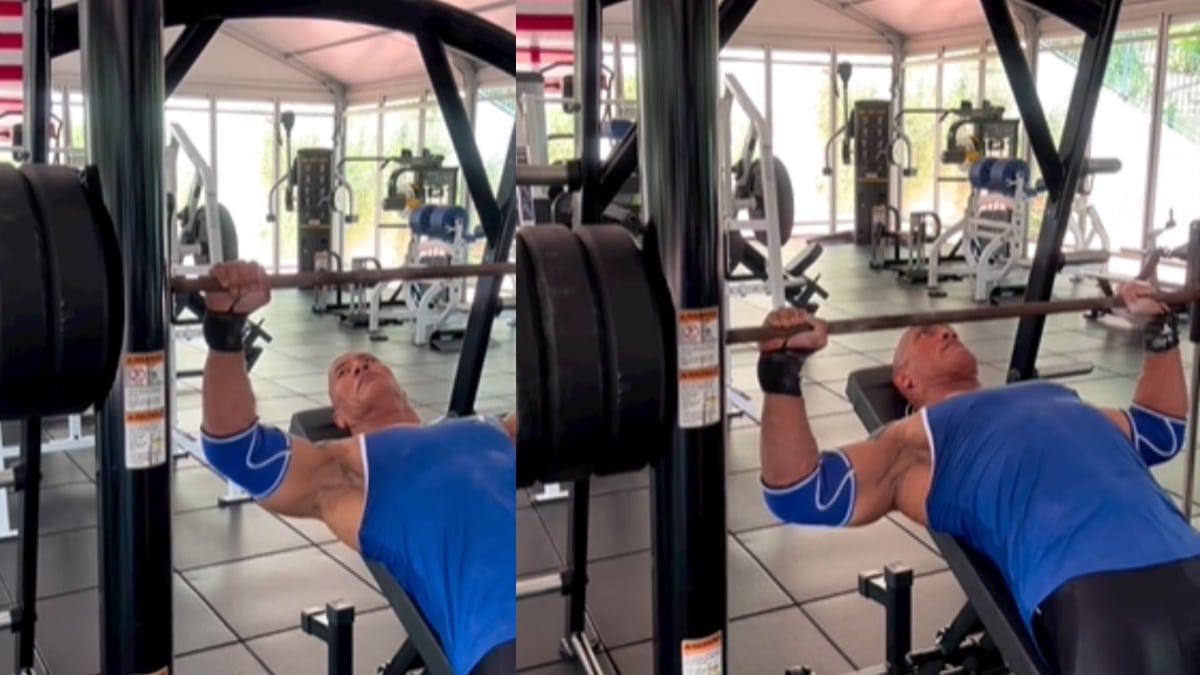
Dwayne ‘The Rock’ Johnson makes the most of his workouts despite a busy schedule. In his latest gym visit, The Rock shared a brutal training session of 275-pound Smith machine incline bench presses for reps.
As a former professional wrestler for major organizations such as the WWE and WWF, The Rock’s brand and name recognition quickly grew following his transition into acting. With a role in Marvel’s standalone success, Black Adam, and many other ventures, The Rock’s entertainment projects have totaled more than $3 billion in the United States.
The Rock lives by his motto of being the hardest worker in the room. He regularly showcases grueling workouts online and pushes the pace regardless of the time. From brutal chest and upper body training sessions to ‘killer leg day finishers,’ Johnson attacks his schedule with maximum intensity, which he credits for helping him maintain such an impressive physique.
In a recent Instagram post, The Rock demonstrated how he finishes a chest and back training session with Smith machine incline bench presses. He offered tips for avoiding shoulder stress during the movement.
The Rock Pushes Through 275-Lb Smith Machine Incline Bench Press for Reps
Check out The Rock’s latest chest and back workout below:
“Saturday morning chest & back training
Good ‘mental inventory’ day after a crazy busy week.Man I needed it
Smith machine incline I do towards the end of my chest workout when my chest is fatigued.Not too heavy.275LBS
Be mindful as to how far you bring the weight down to mitigate that stress on your shoulders (I had complete shoulder reconstruction surgery – you don’t want that fun pain in your life, so take my advice)Focused, slow & controlled.3 second negatives.Intense and controlled.
Give it a try and have a productive weekend (and fun;) my friends.
~ dj” The Rock posted.
Johnson prefers not to overload the shoulders with weight as he’s undergone shoulder reconstruction surgery. Instead, he utilizes lighter weight and slows down his reps to maximize the pump with time under tension.
In addition to training sessions, The Rock likes to show off massive cheat meals, which he typically consumes on leg days. Some of his more notable meals included burgers from the In-N-Out fast food chain and his signature ‘power-packed’ breakfast consisting of steak, eggs, oatmeal, and five peanut butter and jelly sandwiches.
The Rock’s famous cheat meals even got the attention of influencer Brian Johnson, well-known as Liver King. Earlier this month, Liver King showed off a ‘Goddam* overdue’ donuts and pizza cheat meal of his own. Following Liver King’s steroid scandal last year, podcast host Joe Rogan suggested that The Rock now come clean about his alleged use.
RELATED: The Rock Shares 2:30 A.M. ‘Burning Superset Workout’: ‘Stretch & Elongate Those Lat Fibers’
Despite a non-stop schedule, The Rock doesn’t appear to be slowing down at his home gym Iron Paradise. When performing his latest lift, he encourages using lighter weights to avoid over-stressing the shoulders.
Published: 25 April, 2023 | 12:30 AM EDT
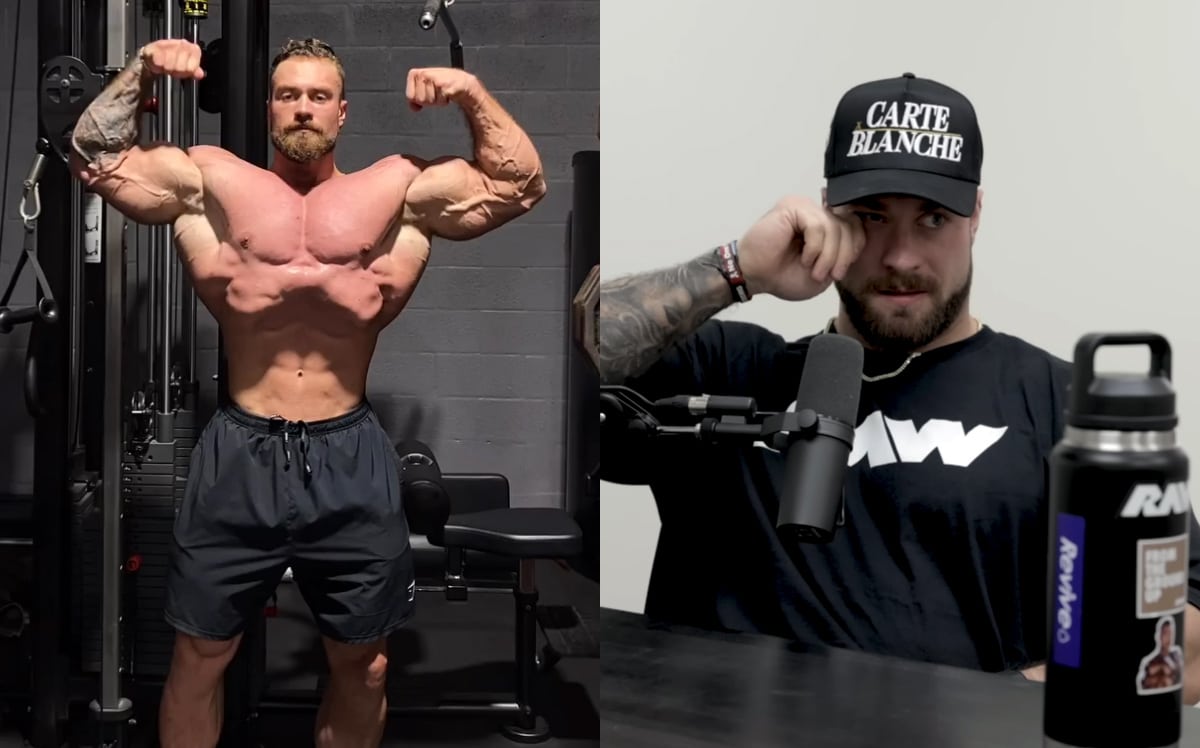
Chris Bumstead: “I Brought My PEDs Down & It Allowed Me to Have to Train Harder”
Classic Physique star Chris Bumstead revealed some surprising details about his 2023 Olympia preparations. In a recent The Raw U. Podcast, Bumstead shared that he decreased his performance-enhancing drug (PED) use, which has allowed him to train harder in the current off-season.
“I just enjoy training hard when I’m in it and getting strong, so luckily that hasn’t changed,” shared Bumstead.
Bumstead first claimed the Classic Physique Olympia title in 2019 and has continued to display improvements to his physique year after year. Last December, it was revealed that Bumstead would no longer be working alongside Open class standout Iain Valliere. With 12 weeks until the 2022 Mr. Olympia competition, the 28-year-old joined forces with Hany Rambod, who is known for his innovative FST-7 training program.
Cbum shared his shredding diet weeks before taking to the stage last year. Ultimately, his efforts paid off as he handily won another Classic Physique Olympia title. After taking a victory lap, Bumstead explained that he overcame adversity after posing on stage with a torn bicep.
In a recent Don’t Be Sour Podcast, the four-time champ took an honest look at his future in the sport. He said his fear of losing is what motivates him to stay on top. While there have been talks of his eventual retirement, Bumstead made it clear that he won’t consider the possibility until after winning another Olympia. To shed some light on his PED use and diet plan for his next title defense, he joined Brett Wilkin for an interview.
Chris Bumstead Says ‘He’s Lowered PED Usage’ And Still ‘Pushes Really Hard’
In a show of transparency, Bumstead said he’s ‘brought his PEDs down’ and it’s enabled him to push harder during training sessions.
“It’s honestly been the exact same to be completely transparent, I brought my PEDs down and it allowed me to have to train harder. When I do, if anything, it now gives me that three months after a show to really just relax and let my body recover because I’m not anxiously being like, ‘I need to be huge.’ So, I need every second I have, I’m like, I can take the time off, relax, get into it.”
“I’ve been able to lower my PED usage from when I was younger even and still push really hard and it just keeps me under my weight cap; I still have a few pounds to play with I’m not dying to make weight like some people.”
Bumstead believes his muscle density has improved and shared that his trainer Hany Rambod doesn’t want him to bulk to 265 pounds in the off-season anymore.
“But when I got my pro card as a heavyweight bodybuilder I weighed 219 pounds or something and now I’m on stage at 240, 239 – so it’s taken me that long to put on like 20 pounds of muscle and it doesn’t really show too much on my frame, because I have a big frame but when you see comparison shots my density has gotten a lot better. But this is the first year, and I am looking forward to this and I was speaking with Hany [Rambod] and he was like, ‘We are not getting you up to 265 anymore this year.’
Bumstead Reveals 2023 Olympia Plan, Says Hany Rambod Wants Him to Compete ‘Much Leaner’
Given Bumstead’s muscle maturity and size, Rambod believes it would be best to exit the off-season at around 255-258 pounds.
“That’s only 25 pounds over my weight cap at what I typically compete at but I still want to be less than that. You have the muscle maturity and the size, we’ll keep you at 255, 258 – like much leaner, but hopefully try and get the same amount of mass on and when you diet down it will be really easy for you to get really lean because you’re not coming from such a high body fat point. My body can put on body fat pretty easily. That’s the goal this year. I’m not happy about that because I don’t like eating,” Chris Bumstead said.
“I’m already just beginning my off-season now barely eating like over 4,000 calories and I’m like, ‘Oh man, fu** I got to eat again?’ You know, it’s already there. So that’s definitely a benefit of Classic Physique this year and it will be interesting to see how it goes, hopefully, it makes me come in the best condition I’ve ever come to because I can get there earlier and slowly lean into it instead of crushing myself at the end of a prep like I’ve had to in the past just to make that weight but it’s not really a big difference. My training has definitely gotten better. Something I’ve at least gotten better with at least YouTube and this is I can just turn it on and off in like seconds.”
With off-season preparations underway, Cbum has opened up about his nutrition in detail. Earlier this month, Bumstead checked in with fans at 253 pounds and showed off a 3,500-calorie meal plan. Additionally, he’s offered glimpses into his training with a recent back-building workout.
RELATED: Larry Wheels on Chris Bumstead & Move to Classic Physique: ‘My Coach Said I Can Be Competitive With Just TRT’
Bumstead will aim to make it five Classic Physique titles later this year at 2023 Olympia, where he’ll rematch the newly minted Arnold Classic champion Ramon Queiroz.
Published: 24 April, 2023 | 6:30 PM EDT
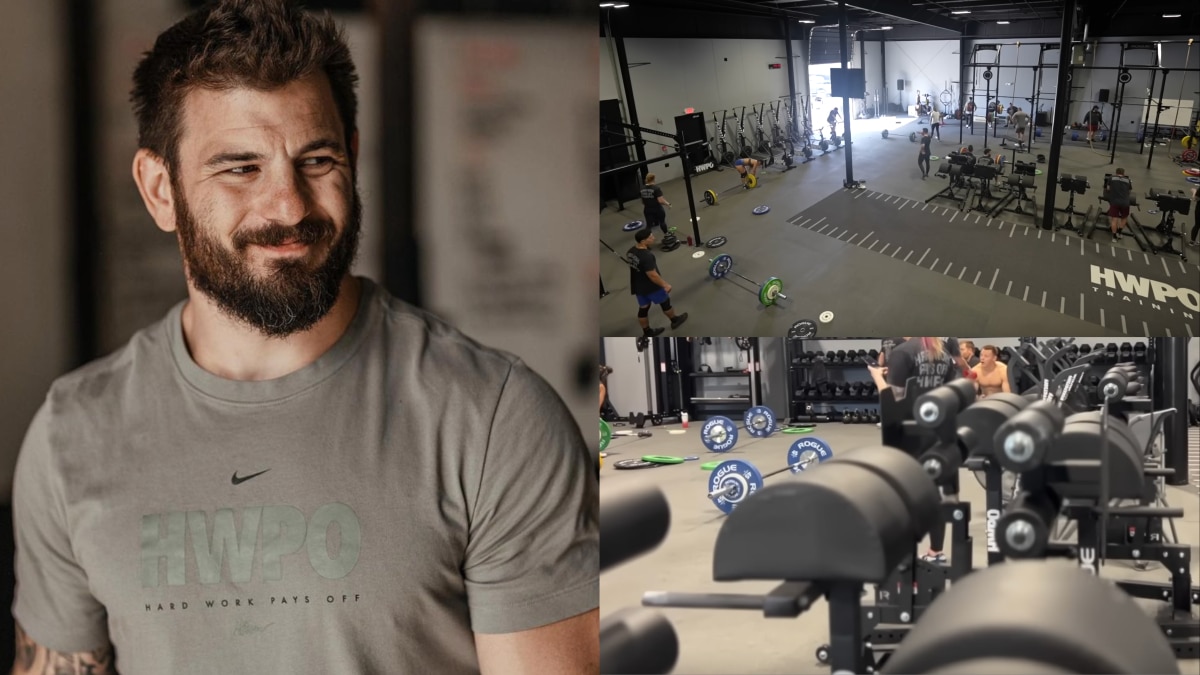
A Look Into the Incredible New Mat Fraser’s HWPO CrossFit Gym
Canadian-American CrossFit icon Mat Fraser has cemented his status as one of the most decorated athletes in the history of the sport. However, to achieve this Mat had to utilize some specific gym equipment and at one point decided to build his own gym. So, in a recent video posted on YouTube, social media fitness influencer Craig Richey of TeamRICHEY gave fans a look into Fraser’s incredible new and improved HWPO CrossFit Gym in Burlington, Vermont.
Mat Fraser grew up with a passion for fitness. He first started out with Olympic weightlifting, quickly becoming a junior national champion before transitioning to CrossFit in 2014. His potential was evident from the start, since he took silver in his 2014 CrossFit Games debut, falling short of four-time champ Rich Froning Jr. The next year, Fraser turned in an even stronger performance, but could not do enough to get gold ahead of Ben Smith. Fraser returned with a vengeance in 2016 and finally secured his first CrossFit title. He successfully defended the title four times in a row before moving on from professional competitions as the most accomplished men’s athlete in the sport.
In Jun. 2021, Fraser laid out the diet regimen he used to get in shape for the CrossFit contests throughout his career. He started the day with light foods such as yogurt, granola, and a cup of coffee and consumed a ton of carbs to stay energized for training. However, during his run, Fraser also battled a major back injury that put his athletic ambitions at risk. He covered this topic as well, opening up about how he overcame the hurdle and reached new heights.
Although Fraser retired years ago, he continues to train hard at his home gym to this day. So, not long after retiring, Mat crushed a brutal cardio workout while showing off his training facility in July 2021. Then, he smoked a heavy 540-lb deadlift to achieve a new PR. After some workouts, Fraser offered a tour of his 1,000 square feet home gym to the public. It consisted of several cardio machines, a custom rig, and more equipment needed for CrossFit training.
Due to everything that he accomplished in his career, Fraser was also frequently compared to other elite CrossFit athletes. So, a renowned endurance coach, Chris Hinshaw, gave his take on how Fraser lined up as a competitor against Froning, having coached both of them. Hinshaw lauded Fraser’s smart mindset in analyzing every competition and devising a game plan that fits his needs the best.
Mat Fraser also received some publicity after launching a book named after his signature phrase ‘Hard Work Pays Off,’ called HWPO: Train. Eat. Sleep. Repeat. Besides his life story, Fraser provided a range of workout routines, meal plans, and his expertise in fitness. In May 2022, he motivated members of a CrossFit-partnered sober community on getting sober with his life stories, thus revealing additional detail about his life. Fraser stated how he gave up his alcohol addiction and channeled his addictive personality in a positive manner.
As a coach, Fraser now offers his years of experience in the sport to budding contenders. His most notable success as a coach was guiding Mal O’Brien to silver at the 2022 NOBULL CrossFit Games. Mat then revealed a list of six contenders he took under his wing at the 2023 HWPO Club for the season last September.
A Look into the New HWPO CrossFit Gym of Mat Fraser
In a recent YouTube video, TeamRICHEY gave fans a look into the incredible new HWPO CrossFit Gym of Mat Fraser in Vermont.
The new facility covers 11,500 square feet in total with 6,500 square feet reserved for gym space and 5,000 square feet for office. It features a solid training floor, studio space for content creation, a kitchen, an athlete lounge for relaxing with a recovery zone, two ice barrels for cold therapy, and a sauna.
The gym area included several SkiERGs and BikeERGs which are crucial machines in CrossFit. There’s also a dedicated strength and conditioning zone with a 55-foot-long strip of gym turf for drills and sled pulls, along with a rig which is made up of two 15-foot-tall uprights. A balcony area was installed for the coaches to observe the athletes from a bird’s eye view.
“Basically just wanted to create the perfect space,” said Fraser.
“We are waiting on the new Rogue air runners. They’re just on back order. Bodybuilding is on the back corner there, cables, lat pull down, cable crossover, dumbbells, kettlebells.”
“We knew the space is a little bit bigger so if you’re snatching over on this side of the gym, we don’t want you lugging weight. So, every weight tree has one full complete competition set of weights. You grab your bars, grab your weights stack, and roll to wherever you want in the gym.”
“We haven’t hung or set up everything yet because we want to see where things are going to kind of live and where they will naturally flow best.”
Mat Fraser teamed up with Olympic weightlifting coaching members from Catalyst Athletics for his HWPO team last September. The staff will help the athletes, including, Mal O’Brien, Jayson Hopper, and Katrin Davíðsdóttir improve their performance for CrossFit competitions. They now also have the adequate facilities to conduct all the programs needed in coaching some future CrossFit champions.
You can watch the full video below.
Published: 24 April, 2023 | 4:59 PM EDT

Bodybuilding Legend Ronnie Coleman Selling House for $495K After 26-Year Residence
Bodybuilding icon Ronnie Coleman is ready for a housing upgrade. In a recent Instagram post, Coleman revealed that he’s selling his Arlington, Texas residence valued at $495,000 following requests from his wife for a bigger home.
During the 2000s, Coleman dominated at the top of the Men’s Open division with unparalleled mass and conditioning. He competed against a number of high-profile threats like four-time Arnold Classic winner Flex Wheeler, rival Jay Cutler, and Kevin Levrone. Before calling it a career, Coleman captured eight Mr. Olympia titles, an all-time record he shares with Lee Haney.
Even though he’s long stepped away from competing, Coleman follows the sport closely. Looking at the Men’s Open landscape this year, ‘The King’ recently predicted that Derek Lunsford will defeat the reigning champion Hadi Choopan when they meet in Orlando, Florida for 2023 Mr. Olympia.
In retirement, Coleman has suffered from several health issues but still trains with discipline. He shows off workouts to motivate his fanbase and also runs a popular YouTube channel with nearly 1.7 million subscribers. With family life taking center stage for Coleman, the 58-year-old decided to list his house in Arlington, Texas.
Ronnie Coleman Selling Texas Home for Almost Half-Million After 26 Years
According to the American real estate company Zillow, Coleman’s house is going for $495,000.
Check out Coleman’s statement below:
“After 26 years in my lovely home, I am finally selling it to move into a bigger house for my bigger family. I’m hoping someone else falls in love with it the way I fell in love with it. I had planned to stay forever but my wife wanted a bigger house for our growing girls. You know what they say, “Happy wife Happy life” plus the time is now. This house has the best gym ever and the best living accommodations ever. We just installed a brand new Jacuzzi that the girls adore. So come on out for a visit if someone wants to purchase a little bit of history. The trophy case is definitely off the chain and one of the highlights of this resident.” Ronnie Coleman wrote.
Coleman’s house is a three-bathroom, five-bedroom with a home gym installed. While competing actively, Coleman utilized the local Metroflex Gym for heavier training sessions. Coleman often used his home gym for cardio at his leisure.
RELATED: Ronnie Coleman: ‘Flex Wheeler Is Pretty Much the Reason Why I First Won The Olympia’
As far as his health is concerned, Coleman continues to show promise. In a recent interview with Giles Thomas, Coleman explained how stem cell treatments have saved his life. He hopes the injections every four months will allow him to one day walk again unassisted.
Published: 24 April, 2023 | 1:46 PM EDT
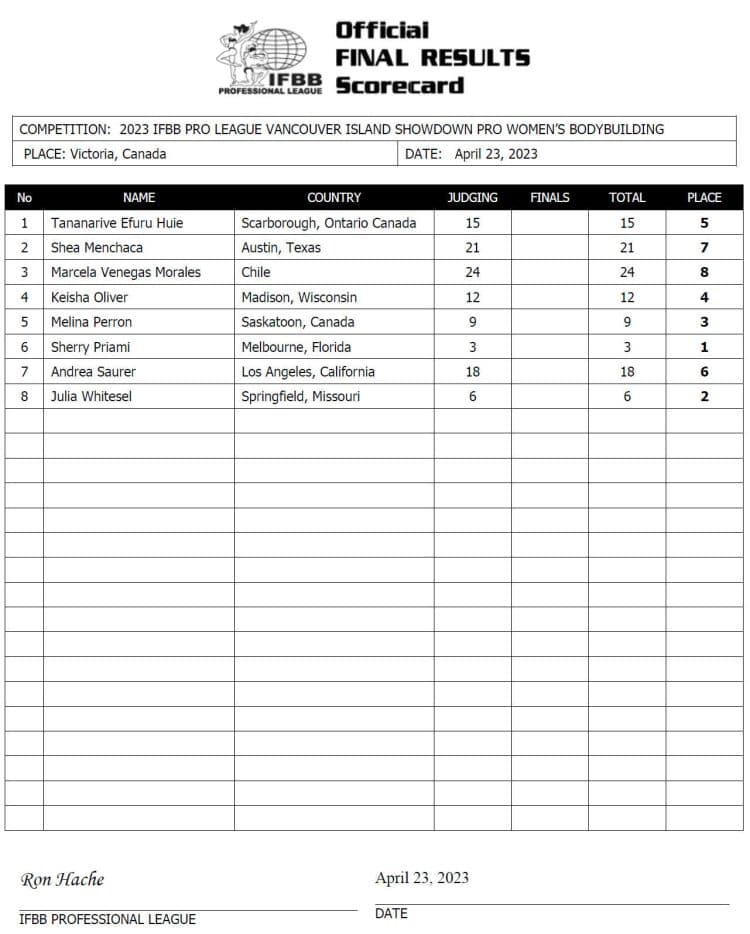
2023 Vancouver Island Showdown Pro Results and Scorecards
The 2023 Vancouver Island Show took place this weekend (April 23) in Victoria, British Columbia, Canada, and featured three bodybuilding divisions: Women’s Bodybuilding, Wellness, and Women’s Physique. This show served as a qualifier for the 2023 Mr. Olympia competition.
Unlike last year, there are fewer months to qualify for the Olympia contest. Bodybuilders have until October 9 to earn a respective invite. While the point system was used in 2022, it’s been removed; therefore, athletes must win a pro show for guaranteed passage to the sport’s biggest show of the year.
The top three finishers from last year’s Olympia (2022) in the Women’s Physique, Wellness, and Women’s Bodybuilding divisions are automatically invited back to this year’s edition of the event. Fans have already named a few Women’s Bodybuilding favorites for this weekend. Sherry Priami always brings a shredded physique and if she compliments her look with added size, she has a shot at gold. In addition, fans expect action from contenders Keisha Oliver and Julie Whitesel.
2023 Vancouver Island Show Winners
Women’s Bodybuilding: Sherry Priami
Women’s Physique: Anne-Lorraine Mohn
Wellness: Kassandra Gillis
2023 Vancouver Island Show Results
Women’s Bodybuilding
Winner — Sherry Priami
Second Place — Julia Whitesel
Third Place — Melina Perron
Fourth Place — Keisha Oliver
Fifth Place — Tananarive Efuru Huie
Sixth Place — Andrea Saurer
Seventh Place — Shea Menchaca
Eighth Place — Marcela Venegas Morales
Women’s Physique
Winner — Anne-Lorraine Mohn
Second Place — Emilija Martic
Third Place — Michele Steeves
Fourth Place — Lisa Kudrey
Fifth Place — Alejandra Chacon Velazquez
Wellness
Winner — Kassandra Gillis
Second Place — Jennifer Zollars
Third Place — Nicollette Burns
2023 Vancouver Island Show Scorecards
Fitness Volt congratulates the winners!
Published: 24 April, 2023 | 1:03 PM EDT