
Muscle Chemistry Archive
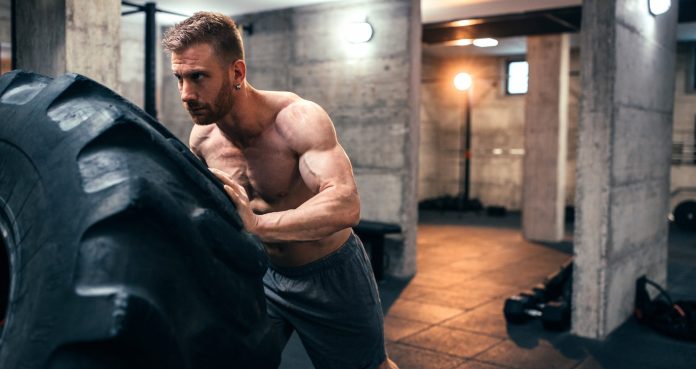
Benefits Of Circuit Style Training For Your Bodybuilding Goals
Circuit style training can improve all of your bodybuilding goals while saving you time for an efficient workout.
While we all love working out, sometimes our workout tend to be longer than we would like. The benefits of a good workout can get our energy up and improve our mindset while promoting positive gains, but dragging on a workout can be a burden on our already busy schedules. Circuit style training is one way to boost growth, get our metabolisms going, and save us time in the gym while still providing for a great workout.
Lifting big weights can also be incorporated into a circuit style workout, but of course that all depends on your goals. If you are going for max reps or sheer strength, then sticking with a few exercises to promote those big lifts is a must. But for those looking to shred and boost athletic performance, circuit style training is a great way to accomplish that.
What Is Circuit Training?
Circuit training is a style of workout performed with different exercises at a higher intensity and less rest between each station or exercise. This allows more muscle groups to be targeted as well as a way to elevate your heart rate to really get you working hard (1). Some people prefer a recovery that allows for proper rest, which could include stretching or simply catching your breath, while others prefer an active recovery, being lightly jogging in place or keeping your heart rate up with other forms of movements.
By working many multiple muscle groups, you will be able to have a longer workout. Switching off between two exercises can fatigue those muscles quickly, but circuit style training is something that can be done over a longer period of time with maximum gains while still providing a shorter time in the gym overall. The beauty of circuit style training is that it can be done in one long circuit, or broken up to target specific movements or muscle groups depending on your goals.
Benefits Of Circuit Training
Combine Strength & Cardio
Circuit style training allows you to combine heavy lifting with high intensity work to improve both strength and cardio. The constant movement will work to get those many muscle groups to failure while also promoting endurance building and an increased aerobic capacity (2). This can lead to an increase in overall athletic ability and functional movements for any sport, competition, or other training style. Putting in big lifts will keep you working on sheer strength and combining that with constant movement will only keep your heart rate high and your lungs fired up.
Boost Metabolism & Burn Fat
This can kickstart your metabolism into a serious fat burning machine. With an elevated heart rate, this exercise will work to really promote calorie burn resulting in you needing more energy to sustain in the workout (3). Relying on excess stores will get your metabolism going and burning through those stubborn fat stores so you see great results. Burning off that stubborn fat can lead to that desired shredded physique you work so hard for.
Promotes Time Efficiency & Effectiveness
By combining multiple exercises into a more intense, higher efficiency workout, you are able to save time in the gym and work to build more effective movements. While being in the gym is something we all love, for the feeling of bettering ourselves in amazing, it can be a burden on our busy lives. Work to eliminate all the excuses of working out by doing what you can to save time and maximize those gains.
Supports Full Body Workout Without Boredom
The monotony of working out can also be challenging and something we desperately want to avoid and circuit style training can offer a new full body workout that can eliminate any boredom that may arise. The great part about this style of training is that you can work your lower body and upper body to provide for great benefits all while keeping that heart rate elevated. Added bonuses like increased range of motion and flexibility will be enhanced by strengthening often times missed stabilizer muscles and a good stretching routine after your workout will only enhance that. Don’t let a boring workout cause you to just move through the motions and really work to promote gains with something new like circuit style training.
How To Design A Good Training Plan
Identifying your goals is the number one place to start. Knowing exactly what you want out of a workout can work to target specific areas of interest for your gains while keeping you engaged in forming that plan. Focusing on your strengths and weaknesses can also promote a solid understanding of what you need to develop further or areas you may need to improve. Once you have this nailed down, look into plans others promote and feel free to mix and match to see exactly what will work for you. You can always swap in and out to cause muscle confusion and to always have a new workout that keeps you having fun while making huge gains.
Wrap Up
Circuit style training is a great way to promote a full body workout while also saving time and allowing you freedom for other things you love. We all need a workout but it is important to make sure it fits with your lifestyle. The benefits of circuit style training will promote great gains to your strength and cardio while also working on shedding that unwanted fat to give you that desired physique you work so hard for. The bonus is that it is time efficient and can promote full body functionality. Look into adopting a good plan for you to see just how this can benefit your lifestyle and keep you from the boredom of the same old workout. You won’t be disappointed with the results!
Let us know what you think in the comments below. Also, be sure to follow Generation Iron on Facebook, Twitter, and Instagram.
*Images courtesy of Envato
References
Klika, Brett (2013). “High-Intensity Circuit Training Using Body Weight: Maximum Results With Minimal Investment”. (source)
Wilke, Jan; Kaiser, Stefanie; Niederer, Daniel; Kalo, Kristin; et al. (2018). “Effects of high-intensity functional circuit training on motor function and sport motivation in healthy, inactive adults”. (source)
Nunez, Tony P.; Amorim, Fabiano T.; Beltz, Nicholas M.; Mermier, Christine M.; et al. (2020). “Metabolic effects of two high-intensity circuit training protocols: Does sequence matter?”. (source)

Train Your Inner Chest With This Unique Workout
A unique technique for building your inner chest.
When it comes to training the chest many beginners tackle the issue the wrong way. Some just hit the bench press over and over thinking that it’ll give them the size and definition they seek. Now, that’s not to say that the bench press is the wrong way to go, but it’s definitely not the only exercise you should be doing to build a well defined chest. Though the bench is definitely going to help, it won’t exactly do wonders for all the muscles in your pecs, particularly the inner chest.
We should take a moment to understand the importance of innovation. If we truly wish to develop ourselves into the absolute perfect form we must consider that doing things the same way over and over again can do a number of things. It can teach us to train our bodies in the correct way, giving us a firm foundation that will allow us to continue seeing results. It can also lend itself to restrictive thinking.
Mindset is an important aspect of proper training. If you’ve trained for long enough then you undoubtedly know of the concept of the mind-muscle connection. In order to activate specific muscle groups and get all the muscle fibers firing on all cylinders it’s imperative that we focus all of our mental capacity and attention on what’s being worked. Simply heading to the gym and thinking about the bench press as our sole method for chest training will automatically lead us down a dogmatic mindset, one that closes us off to the countless possibilities.
So if we’re talking about training the chest it can’t just be viewed as the massive slab of muscle that can only be activated in one particular way. Instead we must aim to look at the chest with a broader scope in mind. While we have the outer chest the determines the width of the pec muscle group, there is also the inner chest to consider in order to really bring everything together.
The inner chest is perhaps one of the harder parts of the pecs to develop. With most guys emphasizing building up the width and size of the pecs they often neglect building up the inner walls of the pecs. If a person contracts properly during a bench press or dumbbell flyes they should be able to isolate the tension through the mind muscle connection.
Why train inner chest separate?
So why exactly should we be aiming to train the inner chest in the first place? The reality is that hitting plateaus are all too common in bodybuilding. Every individual, specifically those who have been injured before, marry themselves to an idea, a specific way of training that has always worked for them. While there are some people who rarely have to worry about plateaus, the vast majority must face the reality that doing things the same way can only carry them so far.
Training the inner chest with specific, targeted exercises is only going to further help to bring your chest to the next level, which should always be your goal as a bodybuilder. Whether you’re a top bodybuilder or a novice looking to continue to grow your knowledge, by looking to try new methods of training it means you’re more willing to have an open mind.
There’s nothing worse then closing your mind off to the possibilities. Doing so can only mean doom in your continued journeys as a bodybuilder. If you’re willing to open you mind to one method, then it means you’re willing to open your mind to another. Experimentation after all is a major key to how bodybuilders have gained such success. Trial and error is no doubt a major component to ultimate success.
What method can be tried for better inner chest development?
So far we’ve spoken on the mindset portion of this training method, but not the actual method itself. Activating the inner chest isn’t something you can just do with some dumbbell flyes and call it a day. The requirement is that you’ll have to perform a unique movement that isolates the particular area you wish to grow.
For those looking to attack the inner chest exclusively then there’s an exercise that’s sure to shred the muscle group into shape.
Jeff Cavaliere of Athlean-X fame has gained a ton of popularity in the last several years. As a physical therapist and strength and conditioning coach for some of the greatest athletes in the world, Cavaliere is a man who has garnered a ton of respect in the fitness industry and highly sought after for his expertise.
Cavaliere is the just the kind of man who would sit, contemplate and analyze the chest muscle group to find the solution to a problem few individuals have the answer for. Rather than simply relying on science or experience alone, Cavaliere does his best to combine the two thought processes in order to create something truly unique.
Cavaliere has an exercise that is sure to get the inner chest looking well defined and in the kind of shape that any guy would dream to have. Take a look at Jeff’s unique approach to building up not only the inner chest, but the upper portion of the muscle group as well.
[embedded content]
What is the crossover shrug?
Essentially the crossover shrug works very similar to the dumbbell shrug used to train the traps. But like everything else, the devil is in the details and by rotating the dumbbell inward to activate the inner chest muscles and shrugging with the weight, the movement targets different pec muscle fibers than the regular shrug.
What are the benefits to training this way?
By using this unique method of training we’re able to see that the muscles in the chest can be attacked from different angles. This kind of additional work will likely aid in building up the entirety of the chest and not just simply the inner walls of the pecs.
How should you incorporate this method in your training?
It’s an exercise that can be used as supplementary movement on chest day. Rather than chest hitting flyes, dips, or bench for your chest, this movement can be used as an additional set to give that last bit of work to the muscle on chest day.
For the first few times utilizing this additional movement it would be wise to add in the crossover shrug as a superset to burnout the muscle. Performing one set of this movement on both sides would be ideal. As you become more advanced with the movement and your body begins to adapt, try adding in multiple supersets (either after the main movement or at the end of training) as a means to really punish the muscles into growth.
What’s your opinion on this unique exercise? Do you think it’ll get your pecs into top form?
For more news and updates, follow Generation Iron on Facebook, Twitter, and Instagram.
Managing Editor at Generation Iron, Jonathan Salmon is a writer, martial arts instructor, and geek culture enthusiast. Check out his Instagram, Twitter and Facebook to keep up with his antics.

How to Optimize Meal Timing for Gaining or Cutting
Introduction
Meal timing is something that you are bound to have heard about at one point or another during your training career. At some point, one of your friends or maybe a gym veteran has spoken to you about drinking a shake post-workout to start promoting recovery and muscle growth or getting protein in every few hours to stave off catabolism. Those are both forms of nutrient timing that are used for a specific purpose.
In more practical terms, nutrient timing is how you can bring out the full capacity of a diet. While alone it doesn’t account for a huge portion of your results (maybe about 10%), proper timing along with a well-calculated plan will see you outperforming your peers at the gym that just focus on calories. Typically there are two ways I like to use nutrient timing with my clients:
1) As a way to build adherence with new clients (i.e scheduling meals at times they’re more likely to not miss or overeat)
2) As a way to improve the results of an advanced client during gaining or cutting phases
The Goal of Nutrient/Meal Timing
The goal of proper meal timing is not just about splitting calories up during the day. If you’re at a high level, you’re using trying to get the most results possible; and without knowing how to split up your macros appropriately you can be leaving gains on the table.
When creating a plan for your day, the first thing we need to do is set meals around when you wake up, train, and go to bed. The meals around these events will have the most variation, whether from the total amount of calories you are eating or the specific macronutrient breakdown.
Through these variations, we can cut hunger during a caloric deficit; make it easier to get all your food in during gaining phases; or manage things like insulin resistance in general populations [1].
How to Use Nutrient Timing to Your Advantage
The first way anyone can use nutrient/meal timing to their advantage is simply by splitting the total amount of protein they consume equally across all meals. We want to do this because while protein will almost always be used for various processes within the body, only a certain amount of it can be used effectively for muscle protein synthesis.
A simple and effective way to split protein is to divide it equally across all meals, though if that causes your macros to be awkward numbers your best bet would be to increase the protein consumption post-workout and at your last evening meal. The higher protein post-workout can help to drive a positive net protein balance especially after very taxing workouts while increasing protein at a regular meal will help to increase satiety – this is an especially powerful tool during cuts where caloric deficits will surely drive hunger up.
To contrast that last point, you can also use meal timing during a gaining phase to push most of your caloric intake around workouts or times where hunger levels are very high to avoid having to inevitably force-feed yourself to stay on track.
Here is how we can look at meal timing to optimize workouts:
Pre-Workout
Your goal with your pre-workout meal is to be able to fill glycogen stores maximally to fuel your workout. As I’ve mentioned in previous articles, you are in the gym to lift and to gain or preserve muscle mass, to that end, you want to always make sure that your pre-workout nutrition is centered around improving the performance of your workout.
Carbohydrates intake pre-workout will most likely be your second biggest consumption of carbs during the day (the biggest being post-workout), however, that isn’t the only nutrient you need to be eating. Your protein intake pre-workout will also have a twofold effect; the first being an increase in serum amino acids causing a positive net protein balance. The second being a pro-anabolic response resulting from ingesting at least 20g of whey protein before exercising [2,3]. It also seems that through these mechanisms, there are sufficient circulating nutrients to maximally stimulate protein synthesis right after the workout is complete.
One caveat to this is that eating within a short amount of time pre-workout might have the opposite effect on performance since digestion will take precedence. A trick here would be to try and aim to have your pre-workout meal 2 – 3 hours before training. Additionally, try to reduce the amount of fiber and fats that this meal contains and instead consume simple carbohydrates and protein. Fats and dietary fiber will slow down digestion and delay the time it takes for these nutrients to reach their destination [4]. Smaller meal sizes and quickly digesting carbs are your friends here.
Intra-Workout
While most people think that their intra-workout nutrition is going to make or break their results, the vast majority of lifters do not really need it. The exceptions to this rule are those are a very high level of lifting that train hard for well over an hour on average. The types of lifters that I’ve seen intra-workout nutrition make a difference for are high-level bodybuilders, Olympic lifters, powerlifters, and some CrossFit athletes training multiple times per day. Unless you fall into this category or are competing in a sport that requires a full-day event (a soccer tournament or Brazilian jiu-jitsu competition for example), chances are you might be better off saving the calories for your meals.
However, if you do fall into this category the rules are pretty simple: In lifting sports, choose rapidly digesting carbohydrates and protein (high glycemic carbs or powders work great here), to maintain steady blood sugar and stay anti-catabolic. For team sports or non-lifting sports carbohydrates and electrolytes will generally be the priority during the event, and protein ingestion to stave off catabolism and improve recovery will become the priority towards the end.
Lunch bodybuilders, chicken breast with vegetables and rice, water
Post-Workout
Here is where most lifters focus their nutrient timing efforts. Now, I will preface this part by saying that research does not strongly support a post-workout anabolic window, but that doesn’t mean that there aren’t other reasons for optimizing your post-workout nutrition.
One of the main attributes of post-workout nutrition is carbohydrate intake. Something that I picked up from the guys at Renaissance Periodization has to do with putting 35% of your daily carb allowance at your post-workout meal. Research has shown that muscles become more sensitive to insulin and therefore to glucose absorption post-training which creates an optimal opportunity to ingest a larger amount of carbohydrates – this is especially helpful for those that tend to put on body fat easily during a gaining phase [1]. Some people will also talk about needing to ingest carbohydrates post-workout to quickly resynthesize glycogen stores or to become more anabolic, however that research is divided. On the one hand, you do utilize stored glycogen to fuel intense workouts, but we’ve also seen that it is rare to completely deplete glycogen, and athletes only drinking water post-workout can replenish glycogen up to 75% within 6 hours, but it is true that ingesting carbs would replete up to 91% [5]. In addition, some research has also suggested that adding carbohydrates to a protein dose of 20-25g has no added stimulus to muscle protein synthesis [6].
Now even though it’s sad to find out that your post-workout nutrition is important but not necessarily in the way you might have wanted, it’s important to note that the benefits surrounding absorption of nutrients post-workout is still viable and should be the focus.
Final Word
Right now you’re probably saying to yourself:
“Alright, so then what’s the point of all this, James?”
Glad you asked.
Here’s what you should take away from this: Your lifting is stimulating enough to trigger anabolic responses and protein synthesis (i.e get jacked) however, the nutrition side of things might seem complicated, but it isn’t – we just want it to work synergistically with our lifting. The first rule is to figure out how many calories you need to eat, then I like to focus on my pre-workout and post-workout meals because while the pre-workout meal will be smaller, they both have the same goal: easy and quick digesting carbohydrates and protein with minimal fiber and fat. A good rule of thumb is 25% Carbs pre-workout and roughly 35% post-workout (see Renaissance Periodization for more detail). After that the rest of your meals should be split with your goal in mind; if you’re bulking then try and fit more food during times when your hunger levels are high to avoid needing to force-feed (even splits here don’t work super well). If you’re cutting, then try and stick more of your fats and fiber later in the day and especially at your last meal since these are the most satiating nutrients, and in this way, you can avoid having to fight hunger and improve your ability to sleep restfully.
If you like what you read and want to learn even more right in your inbox, click HERE to subscribe to my newsletter and get a free transformation checklist while you’re at it.
References:
[1] Ivy, J. L. “Glycogen resynthesis after exercise: effect of carbohydrate intake.” International journal of sports medicine 19, no. S 2 (1998): S142-S145.
[2] Tipton, Kevin D., Blake B. Rasmussen, Sharon L. Miller, Steven E. Wolf, Sharla K. Owens-Stovall, Bart E. Petrini, and Robert R. Wolfe. “Timing of amino acid-carbohydrate ingestion alters anabolic response of muscle to resistance exercise.” American Journal of Physiology-Endocrinology And Metabolism (2001).
[3] Tipton, Kevin D., Tabatha A. Elliott, Melanie G. Cree, Steven E. Wolf, Arthur P. Sanford, and Robert R. Wolfe. “Ingestion of casein and whey proteins result in muscle anabolism after resistance exercise.” Medicine & Science in Sports & Exercise 36, no. 12 (2004): 2073-2081.
[4] Lattimer, James M., and Mark D. Haub. “Effects of dietary fiber and its components on metabolic health.” Nutrients 2, no. 12 (2010): 1266-1289.
[5] Pascoe, David D., David L. Costill, William J. Fink, Robert A. Robergs, and Jeffrey J. Zachwieja. “Glycogen resynthesis in skeletal muscle following resistive exercise.” Medicine and science in sports and exercise 25, no. 3 (1993): 349-354.
[6] Figueiredo, Vandre C., Michelle M. Farnfield, Megan LR Ross, Petra Gran, Shona L. Halson, Jonathan M. Peake, David Cameron-Smith, and James F. Markworth. “The effect of carbohydrate ingestion following eccentric resistance exercise on AKT/mTOR and ERK pathways: a randomized, double-blinded, crossover study.” International journal of sports nutrition and exercise metabolism 29, no. 6 (2019): 664-670.
Boirie, Y., Dangin, M., Gachon, P., Vasson, M. P., Maubois, J. L., & Beaufrère, B. (1997). Slow and fast dietary proteins differently modulate postprandial protein accretion. Proceedings of the National Academy of Sciences, 94(26), 14930-14935.
Lemon, P. W., Berardi, J. M., & Noreen, E. E. (2002). The role of protein and amino acid supplements in the athlete’s diet: does type or timing of ingestion matter?. Current sports medicine reports, 1(4), 214-221.
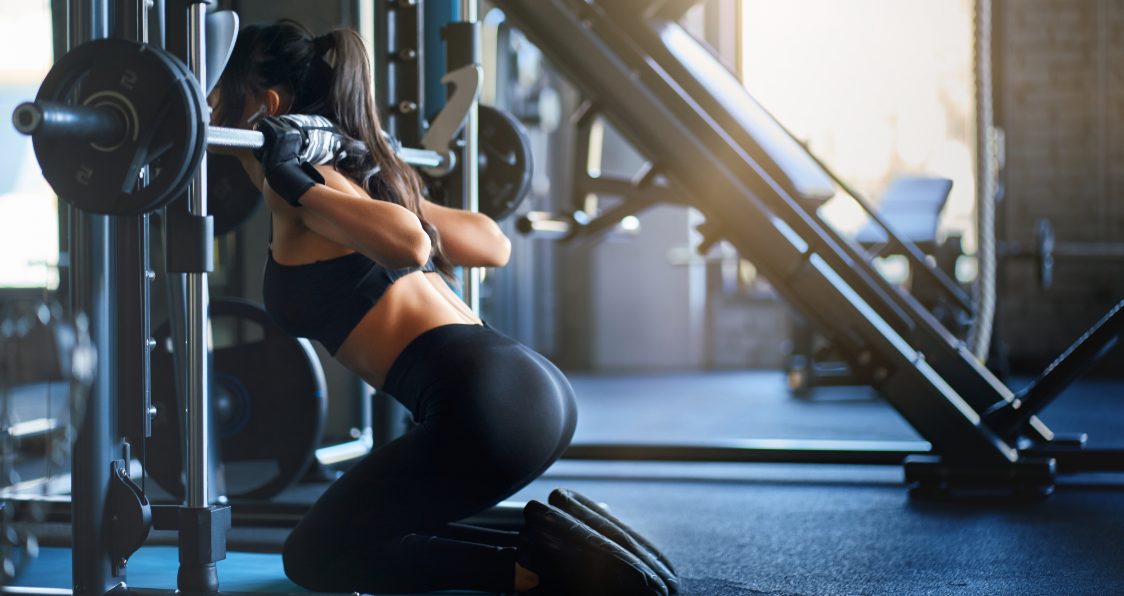
How The Kneeling Squat Focuses On Glute Strength
The kneeling squat is a great exercise to build lower body and glute strength while protecting those vulnerable knees.
The kneeling squat is a great variation to the traditional squat and will work to really build lower body strength with a host of other benefits. We all know we need some sort of a squat in our routine and often times the traditional squat is a lot on our body. Finding a safe and effective alternative can work to develop strength, power, and stability while still giving us great foundational support for sport specific and functional strength. Without it, our training and performance can suffer and that’s something we just don’t want or need.
Let’s check out this great exercise in the kneeling squat and see what it’s all about. From what it is, to muscles worked, the great benefits, and how to perform it, you will be well on your way to tackling any lift that comes your way by building a great foundation for lower body strength.
What Is The Kneeling Squat?
The kneeling squat shares all the same characteristics of a traditional back squat but does so by protecting your knees. Since the barbell back squat is one of the best strength building exercises and one of the big three powerlifts, the benefits of having a squat in your workout routine is undeniable. The kneeling squat is versatile and can be done anywhere, with or without equipment, although with equipment will surely enhance those gains. Kneeling squats are perfect for those you may struggle with glute engagement during a traditional squat in order to help establish better mind-muscle connection and form to tackle any lift that comes your way (1).
Muscles Worked
The kneeling squat is a great lower body builder and one to definitely not overlook. As a great form of a squat, this will work your quads and hamstrings as they are required throughout the entire movement. With the bend followed by the upward movement, you rely on these muscles for the full range of motion. Your glutes get some serious work done, both the gluteus maximus and the gluteus medius. Responsible for assisting the movement and providing stability, this is big bonus with this exercise. Depending on if you use a barbell or dumbbells, your arms may get work done with the dumbbells given the way you have to hold them.
Benefits Of The Kneeling Squat
The benefits of this exercise are great and should absolutely not be ignored, for they can really work for lower body strength and functionality as you seek gains with other big lifts. Benefits include:
Strengthening lower body muscles: This is a great exercise for working your glutes, quads, and hamstrings (2).
Activate glutes: Really work to activate glutes to enhance strength and valuable stability needed on other big lifts (3).
Develop power and stability: Like any good lower body exercise, this can really enhance all areas of your power and stability to aid in sport specific movements and those more functional ones.
Low impact on your knees: A great variation to the squat that works to protect your knees (4).
Allow for higher reps: Being in a slightly different, less vulnerable position, this will work to allow for higher reps to maximize hypertrophy.
Good for rehab: Work to bounce back from an injury or soreness while still working on strengthening those lower body muscles.
How To Perform It
Here are the steps for performing the kneeling squat:
Begin in a kneeling position with your knees around shoulder width apart, similar to a regular squat. Place the bar on your back, just above your shoulder blades.
With your back straight and core tight, slowly lower into a squat until your glutes touch your heels.
As you drive back to the starting position, extend your pelvis forward similar to a deadlift and make sure to squeeze your glutes at the top.
Reset and repeat for your desired amount of reps.
Alternative Exercises
Knowing some great alternatives can help add variety to your workout while still aiding in that valuable growth and other benefits of a squatting exercise. Here are some great alternatives to try:
Kneeling squats with dumbbells
Kneeling squats with resistance bands
Kneeling squat jump
Box squat
Goblet squat
Featured Supplement
When it comes to any exercise, we want to start building up our supplementation shelf to reflect all of our hard earned gains. For something like this exercise, looking to a creatine supplement can make sure we give our bodies the proper fuel they need to thrive and build that desired muscle. Creatine will work to build muscle and allow for that sculpted physique to start to take shape and it is no wonder why so many have gravitated towards this supplement. Let’s check out a great creatine product from Transparent Labs that can boost all your gains.
Transparent Labs StrengthSeries Creatine HMB
Transparent Labs StrengthSeries Creatine HMB is well worth the price and is one of the best creatine products for pure creatine. It has no added artificial flavors, fillers, preservatives, or coloring, which means the body isn’t wasting energy metabolizing useless chemicals — just pure creatine. Transparent Labs creatine is infused with HMB, or β-Hydroxy β-Methylbutyrate, which has been proven to increase muscle strength and lean body mass while decreasing fat mass. At a good price, this is a one of the best creatine products to buy for athletes.
Price: $39.00/ 30 servings
Click here for the best price
Use the promo code GENIRON10 for 10% off! Check out our individual review for Transparent Labs StrengthSeries Creatine HMB here!
Check out our list of the Best Creatine Supplements for more great muscle building products!
Wrap Up
The kneeling squat is the perfect squatting variation to allow for continued growth while still giving you the benefit of working on strength and glute activation for all your desired gains. Since we all need a good squat in our routine, it is important to know what is out there so we can still see the gains we want most. Give the kneeling squat exercise a try and see what this can do for all of your gains today.
Let us know what you think in the comments below. Also, be sure to follow Generation Iron on Facebook, Twitter, and Instagram.
*Images courtesy of Transparent Labs and Envato
References
Del Vecchio, Luke; Daewoud, Hays; Green, Shannon (2018). “The health and performance benefits of the squat, deadlift, and bench press”. (source)
Lucero, Rhys A. J.; Fry, Andrew C.; LeRoux, Christopher D.; Hermes, Matthew J. (2019). “Relationships between barbell squat strength and weightlifting performance”. (source)
Neto, Walter K.; Soares, Enrico G.; Vieira, Thais L.; Aguiar, Rodolfo; et al. (2020). “Gluteus Maximus Activation during Common Strength and Hypertrophy Exercises: A Systematic Review”. (source)
Chandler, T. J.; Wilson, G. D.; Stone, M. H. (1989). “The effect of the squat exercise on knee stability”. (source)

2021 Olympia List of Qualified Competitors
Who has qualified for the 2021 Olympia?
The 2021 Olympia isn’t right around the corner which is good news for those who haven’t qualified. The event has been set for October which gives a laundry list of competitors the time to get their body’s in shape and earn points by competing at other shows.
With the Arnold Classic set for September, right before the Olympia, competitors will have the chance to earn their spots at the big show. Currently the points breakdown is as follows.
Athletes still have time to qualify for the 2021 Olympia. Below is a list of the current qualified competitors and the athletes who need to rack up points in order to earn their spot.
Men’s Open Bodybuilding
QUALIFIED
James Hollingshead (UK)Regan Grimes (Canada)Mamdouh Elssbiay (Egypt)Brandon Curry (USA)Phil Heath (USA)Hadi Choopan (Iran)William Bonac (Netherlands)Justin Rodriguez (USA)Nicholas Walker (USA)Patrick Moore (USA)
POINTS (top 3 qualify)Mokhamed El Eman (Russia), 15Hassan Mostafa (Egypt), 10Dorian Haywood (USA), 8Vlad Sukhourchko (Ukraine), 6Theo Leguerrier (France), 6Mohamed Shaaban (Egypt), 4Marc Hector (UK), 3Blessing Awodibu (Ireland), 3Lionel Beyeke (France), 3Jamie Christian-Johal (UK), 2Carlos Chapa (USA), 1Eddie Bracamontes (USA), 1
Men’s 212
QUALIFIEDAngel Calderon Frias (Spain)Shaun Clarida (USA)Kamal Elgargni (Libya)George Peterson (USA)Derek Lunsford (USA)Ahmad Ashkanani (Kuwait)Tonio Burton (USA)Nathan Epler (USA)
POINTS (top 3 qualify)John Jewett (USA), 11Radoslav Angelov (Bulgaria), 10Noel Adame (USA), 8Derik Oslan (USA), 6Naser Mohammad (Kuwait), 5Justin Randall (USA), 5Zoran Kolevski (Madedonia), 4Steve Benthin (Germany), 3Diogo Nunes (Portugal), 3James Llewellin (UK), 2Bryan Balzano (USA), 2Paul Latham (UK), 1
Classic Physique
QUALIFIEDLaszlo Kiraly (Hungary)Peter Molnar (Hungary)Courage Opara (USA)Chris Bumstead (Canada)Breon Ansley (USA)Divine Wilson (USA)Dani Younan (USA)George Kawalawu (USA)Zeek Andrews (USA)
POINTS (top 5 qualify)Tommy Clark (USA), 13Terrence Ruffin (USA), 12Sabur Favors (USA), 12Alex Cambronero (Costa Rica), 10Bryan Jones (USA), 9Mike Sommerfeld (Germany), 5Vahid Badpei (Iran), 5Christopher Hunte (USA), 5Michael Daboul (UK), 4Mikhail Timoshin (Russia), 4Jonathan Pelkey (USA), 4Dimitrii Vorotyntsev (Russia), 4Michael Bell (USA), 4Shane Cullen (Ireland), 3Mohamed Amine Fakhfakh (Tunisia), 3Jarek Crew (USA), 3Marco Ruz (France), 3Arturo Mendez (USA), 3Jonathan Lofthouse (UK), 2Roman Khaliulin (Russia), 2Tomas Adame-Hernandez (USA), 2Traveon Daniels (USA), 2Brandon Kidd (USA), 2Omar Bautista (USA), 2Joseph Wahlberg (USA), 2
Men’s Physique
QUALIFIEDAbisai Pietersz (Netherlands)Riccardo Croci (Italy)Carlos DeOliveira (Brazil)Brandon Hendrickson (USA)Raymont Edmonds (USA)Khali Quartey (USA)Antoine McNeill (USA)Corey Morris (USA)Kyron Holden (USA)Erin Banks (USA)Micah Thomas Jr (USA)Arya Saffaie (USA)Rodrigue Chesnier (France)Jahvair Mullings (USA)Daniel Ammons (USA)
POINTS (top 5 qualify)Jeremy Potvin (USA), 10Luca Bioli (Italy), 9Andrei Marius Lincan (Romania), 9Clarence McSpadden Jr (USA), 9Thomas Kunz (Switzerland), 8Ismael Dominguez (Mexico), 8Emanual Hunter (USA), 7George Brown (USA), 6Reuben Glass (USA), 6Ashley Patillo (USA), 6Diogo Montenegro (Brazil), 5Mike Stripling (USA), 5Joseph Lee (USA), 5Anthony Gilkes (USA), 5Wellington Rodriguez (Brazil), 4Edvan Palmeira (Brazil), 4Ahmed Abdelgalil (Egypt), 4Evan Kanu (USA), 4Matthew Greggo (USA), 4Daniel Stull (USA), 4Mehdi Kabbadj (USA), 4Andrea Mosti (Italy), 3Vinicius Viera Lima (Brazil), 3Antonio Smothers (USA), 3Zach Savioe (USA), 3Michael Mperey (USA), 3Maxime Parisi (France), 2Denis Gusev (Russia), 2Pedro Lima (Brazil), 2Alex Newell (USA), 2Antoine Williams (USA), 2Jonathan Jimenez (USA), 2
Ms. Olympia (Women’s Bodybuilding)
QUALIFIEDVirginia Sanchez (Spain)Andrea Shaw (USA)Margie Martin (USA)Helle Trevino (USA)MayLa Ash (USA)Irene Anderson (Sweden)Leah Dennie (USA)
POINTS (top 3 qualify)Monique Jones (USA), 9Aleesha Young (USA), 8LaDawn McKay (USA), 8Tamara Makar (UK), 7Monica Gioiosa (Italy), 6Anne Sheehan (USA), 6Margita Zamolova (Czech Republic), 5Wendy Sanchez (USA), 5Mona Poursaleh (Canada), 4Anastasia Korableva (Russia), 3
Fitness
QUALIFIEDAurika Tyrgale (USA)Missy Truscott (USA)Oksana Grishina (Russia)Whitney Jones (USA)Ariel Khadr (USA)Jaclyn Baker (USA)
POINTS (top 3 qualify)Layla Mikayla (USA), 6Rene L. Brosch (USA), 5Debbie Fowler (USA), 5Sally Kendall-Williams (USA), 4Jobie Goodro (USA), 3Alison Burns (USA), 3Missy Khasawneh (USA), 2
Figure
QUALIFIEDWendy Fortino (USA)Julia Heerenveen (Netherlands)Carly Starling-Horrell (USA)Cydney Gillon (USA)Natalia Soltero (Mexico)Nadia Wyatt (USA)Nicole Zenobia Graham (USA)Latorya Watts (USA)Bojana Vasiljevic (USA)Maria Luisa Baeza Diaz (USA)
POINTS (top 3 qualify)Shelace Shoemaker (USA), 12Latoyia Farley (USA), 12Christine Stearns (USA), 8Heather Dees (USA), 7Desiree Alferes (USA), 7Anna Banks (Poland), 6Jessica Huete (USA), 6Bahar Ayra (Germany), 5Ivana Ivusic (USA), 4Veronica Gallego (Spain), 4Julia V. Waring (USA), 4Rachel Shoemake (USA), 3Autumn Cleveland (USA), 3Shanice Abrams (USA), 3Catherine Lavoie (Canada), 2Queren Pacheco (Mexico), 2Rori Ross (USA), 1Jill Braxmeyer (USA), 1Rita Villarreal (USA), 1
Bikini
QUALIFIEDStine Hansen (Denmark)Lucia Malavaze (USA)Jourdanne Lee (USA)Francesca Stoico (Italy)Emily Plajer (USA)Angelica Teixeira (USA)Jennifer Ronzitti (USA)Janet Layug (USA)Ashley Kaltwasser (USA)Elisa Pecini (Brazil)Melissa Carver (Australia)Lauren Dannenmiller (USA)Ashlyn Little (USA)Gabrielle Messias (USA)Romina Basualdo (USA)Alessia Facchin (Italy)Chenqi Liu (China)
POINTS (top 5 qualify)Ashlyn Brown (USA), 14Jennifer Dorie (Canada), 12Shelby Pierce (USA), 12Eli Fernandez (Mexico), 12Etila Santiago Santos (Brazil), 11Jimi Marley (USA), 11Jessica Wilson (USA), 10Hannah Ranfranz (USA), 9Daraja Hill (USA), 9Lauralie Chapados (Canada), 9Svetlana Elina (Russia), 8Eszter Oczella (Hungary), 8Sierra Swann (USA), 7Carolina Collazos (USA), 7Phoebe Hagan (UK), 5Allison Testu (France), 5Chloe Margraitner (Switzerland), 5Aleksandra Banda (Australia), 5Cory Hageman (USA), 5Ottavia Mazza (Italy), 4Jessica Johnson (Australia), 4Alyssa Blessing (USA), 4Christina Heath (USA), 4Jade Kelsie Wolfenden (UK), 3Carla Garthwaite (USA), 3Haley Houdyshell (USA), 3Noora Mahonen (Finland), 3Jasmine Gonzalez (USA), 3Breena Martinez (USA), 3Stephanie Kalms (Australia), 3Rudy Guerrero (USA), 3Sonia Lewis (USA), 3Elizabeth Yisrael (USA), 2Sethia Daigle (USA), 2Ivana Escandar Fernandez (Spain), 2Beatriz Biscaia (Portugal), 2Adrianna Kaczmarek (Poland), 2Claire Bonaccorso (Australia), 2Jessica Dolias (USA), 2Hope Harper (USA), 2Emily Plajer (USA), 2Trisha Green (USA), 2
Women’s Physique
QUALIFIEDLenka Ferencukova (Czech Republic)Caroline Alves Dos Santos (Brazil)Emily Renee Schubert (USA)Melissa Teich (USA)Sarah Villegas (USA)Shanique Grant (USA)Natalia Abraham Coelho (USA)Barbara Menage (France)Ivie Rhein (USA)Carli Terepka (USA)Alyssa Kiessling (USA)Ana Harias (USA)
POINTS (top 3 qualify)Elizabeth Bradshaw (USA), 8Sheronica Henton (USA), 8Yuni Kim (South Korea), 7Sheena Washington (USA), 7Oana Marinescu (Spain), 6Patricia Vezirian (USA), 6Julia Whitesel (USA), 6Claudia Arroyo (USA), 5Corinne Ingman (UK), 4Jeanette Johanson (Sweden), 4Brooke Walker (USA), 4Priscila Reis (Brazil), 3Modesta Halby (Denmark), 3Jennifer Faccinto (USA), 3Jeannea Burritt (USA), 2Claudia Diaz (USA), 2Lorraine Gonzalez (USA), 2Amy Ramsel (USA), 2Bian Ruiying (China), 1Teresa Brooks (USA), 1Laura Richards (USA), 1Victoria Flores (USA), 1
Wellness
QUALIFIEDFrancielle Mattos (Brazil)Angela Borges (Brazil)Gisele Machado (Brazil)Maria Paulette (Spain)Yarishna Ayala (USA)Isabelle Nunes (Brazil)Sunny Andrews (USA)
POINTS (top 3 qualify)Renee Harshey (USA), 9Amanda Rezende (Brazil), 7Devone Martin (USA), 7Helena Ordonez (Spain), 5Lorena Ragusa (USA), 5Minna Pajulahti (Finland), 4Susana Rodriguez (Brazil), 3Dani Balbino (Brazil), 2Devyn Cambre (USA), 2Julia Chitarra (Brazil), 1Bruna Ferraz (USA), 1
Who will make the cut?
For more news and updates, follow Generation Iron on Facebook, Twitter, and Instagram.
Managing Editor at Generation Iron, Jonathan Salmon is a writer, martial arts instructor, and geek culture enthusiast. Check out his YouTube, Instagram, Twitter, Facebook, and Sound Cloud for in-depth MMA analysis.
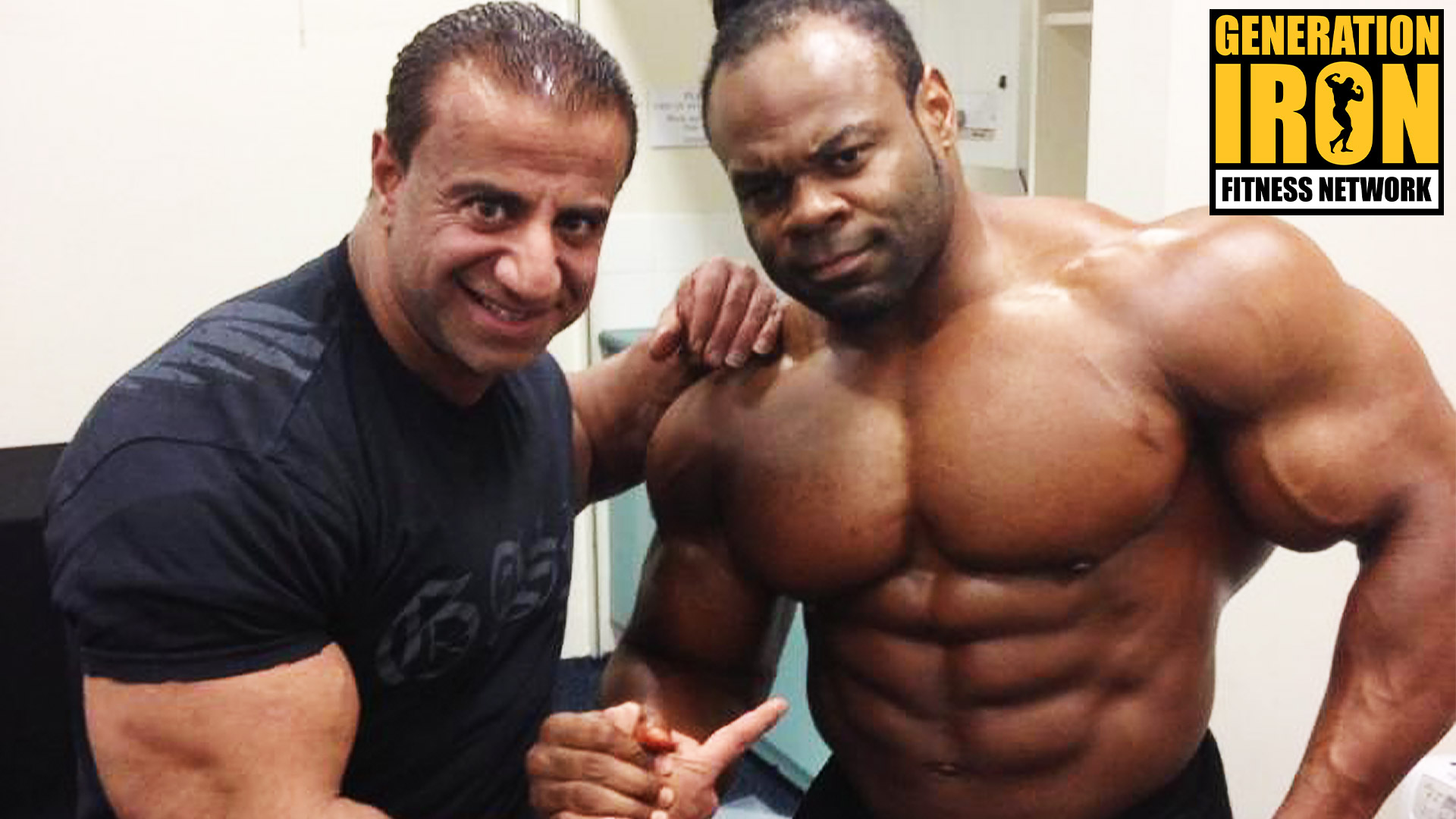
George Farah: Kai Greene Has Never, Ever, Ever Used Insulin
[embedded content]
George Farah uses Kai Greene as an example to debunk the recent myth that insulin is needed to build a top level mass monster physique.
Last week, we went into detail with George Farah about his thoughts on insulin use in bodybuilding. It’s a topic that he has spoken about before and only seems to have become more strongly against insulin a year later. In this new segment, we discuss further with Farah whether it’s possible to be healthy as a top level pro bodybuilder. Farah certainly thinks it does – and uses Kai Greene as an example. In our latest GI Exclusive, George Farah claims that Kai Greene has never used insulin to build his massive physique.
There is a persistent rumor in the world of bodybuilding regarding insulin. That rumor is many of the pros use this drug to further enhanced their physiques to the next level. This inspires younger bodybuilders to do the same – thinking it’s necessary to succeed at the top level of the sport.
George Farah couldn’t disagree with these rumors more. He is sternly against the use of insulin in bodybuilding. He also thinks it’s dangerous for coaches such as Milos Sarcev to promote them. In fact, Farah believes that it’s incorrect to assume pro bodybuilders must be unhealthy to succeed. It’s a bad thought he’s seeing trend in bodybuilding. It’s causing bodybuilders to make unhealthy decisions. He thinks it’s the reason we have seen so many bodybuilders pass away too soon.
George Farah is a legendary coach in the sport. He has trained many bodybuilders who have stood tall as top tier bodybuilders at the Mr. Olympia. Athletes like Branch Warren and Kai Greene. He uses his experience to definitely tell people today – abusing drugs and using insulin are not necessary. Why? Because these legendary greats he trained didn’t use insulin at all.
The entire topic gets George Farah very passionate. He loves bodybuilding. And he loves the people in bodybuilding. He hates to see them make choices that they can’t take back years down the road.
“You’re gonna tell me Kai’s not a freak? I can put my hand on anything you want and swear to you that Kai never touched insulin,” George Farah states in our interview. He goes on:
“As long as I’ve known him. We’ve been eleven years together. Never, ever, ever. Do you understand what I’m saying? He’s walking around 300 pounds shredded. So you’re not going to duplicate this because you don’t have the genetics or you don’t have the heart or work ethic. Like Branch or all of these guys. Branch used to have no genetics but he proved to everybody hard work can make it. Guess what? Branch never used insulin. Never. Never!”
If you watch George Farah in our interview above – you can see how fired up he’s getting about this. In his later years, Farah has become increasingly more focused on health in bodybuilding. After a cancer scare that he survived and recovered from – he’s seen life through a different lens. You only live once. Bodybuilding is not worth dying over.
You can watch George Farah go into full detail about health in bodybuilding by watching our latest GI Exclusive interview segment above!
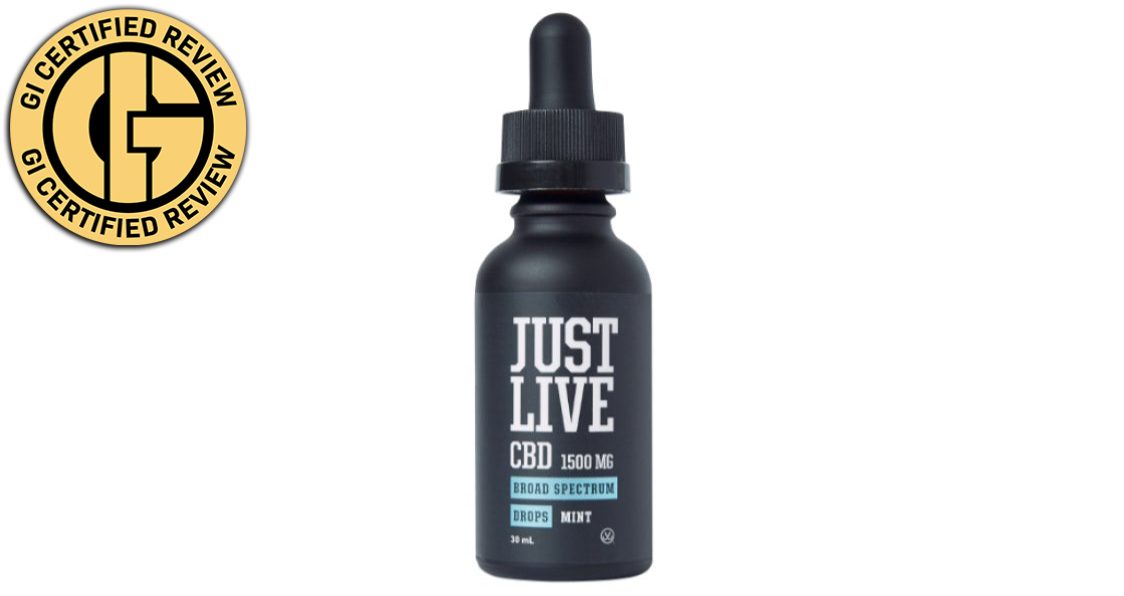
Just Live Broad Spectrum 1,500mg CBD Mint Drops Review
This CBD tincture is perfect for tackling all of your recovery and relaxation needs.
Product Overview
We all know we need an effective supplement to help with repair and recovery and finding that can be challenging. However, CBD has grown in immense popularity over the years and is a seriously effective supplement for making or breaking our gains. The CBD industry is hot right now and with its great benefits towards pain relief and recovery, it is no wonder why athletes have flocked to this supplement for all of their training, performance, health, and wellness goals. Just Live Broad Spectrum CBD Mint Drops are the supplement you need right now in order to boost all areas of recovery and relaxation so you prioritize what matters most to you, being your goals.
No matter the form you prefer, CBD comes in a variety of ways to take from tinctures, topicals, gummies, vapes, and a host of others. While this industry is hot and the market is becoming more and more saturated with products, it can be hard to determine who is full of it and who is producing the top supplements. Just Live knows that athletes deserve the best and seeks to bring the best when it comes to recovery, relaxation, and relief. This mint drops tincture is a perfect product for you to help get you to where you want to be.
Shop at Just Live
Just Live is on a mission to design and produce the best CBD supplements around so everyone can benefit from a high quality product for whatever their intended goals may be. By partnering with the industry’s most reputable and reliable CBD partners, Just Live does its diligence to ensure all ingredients and processing practices meet the standards that athletes everywhere deserve. Organic growing means every seed is hand-planted and carefully grown with no use of pesticides, additives, or artificial lighting and that the extraction process allows for different techniques to be used to ensure potency and purity. Just Live understands what it takes for people to succeed and having an amazing supplement by your side is one step closer to that success.
Just Live Broad Spectrum 1,500mg CBD Mint Drops Highlights
Just Live Broad Spectrum CBD Mint Drops are a fresh way to consume a high strength tincture designed to help with all recovery and relaxation needs after daily exercise or activity. With a 1,500mg Broad Spectrum blend of active cannabinoids, this concentrated, all natural tincture contains zero THC and can work to promote a sense of calm, enhance physical and mental wellbeing, provide relief associated with normal exercise and daily activity, offer a beneficial sense of rest and relaxation, and enhance everyday wellness. Combined with MCT oil, this will help your body metabolize the cannabinoids and allow these powerful ingredients to hit your body faster and harder for optimal results (1). With a great mint flavor and a strong dose of CBD, you can’t go wrong with this CBD tincture.
Ingredients
THC-Free Cannabidiol
This CBD is all-natural with no genetically modified organisms or THC to ruin this great product. Being traceable from seed to sell and third party tested ensures you know exactly where this sole ingredient is coming from.
Cannabidiol (CBD) is one of over 113 cannabinoids found in the cannabis plant and all Just Live products are made from CBD from hemp, which has a much higher percentage of CBD. It can help promote calm, enhance physical and mental wellbeing, aid in relief and recovery from exercise, and enhance rest and relaxation (2,3).
Type Of Application
Tincture
CBD Dosage
1,500mg
Best Way To Take/Use
Take 1 full dropper every six hours as needed. Place under tongue and swallow.
Price, Flavors & Effectiveness
Just Live Broad Spectrum 1,500mg CBD Mint Drops are perfect for all of your recovery and relief goals no matter the level of activity. This 30mL bottle holds 30 servings with a serving size being 1mL, or one full dropper. A great mint flavor offers a refreshing taste that all will love.
Pros
Concentrated, all-natural, and non-THC
Great benefit for recovery, relaxation, and a host of others
Traceable ingredients and third party tested
Great mint flavor
Cons
Premium priced option
Only available directly from their website
Price: $99.99
Just Live also offers a few other selections of Broad Spectrum Mint Drops with dosages being 300mg, 750mg, and 3,000mg with prices ranging from $29.99 to $149.99. Check them out here!
Featured Just Live Athlete
Travis Pastrana
Travis Pastrana is a Just Live ambassador and seriously accomplished athlete, constantly pushing the boundaries when it comes to anything with wheels. He has multiple Motocross championship wins, a number of gold medals at the X Games and similar events, and has done incredible stunts that should defy what is humanly possible. Pastrana uses Just Live products because they work for all his muscle aches and pains and provide a sense of recovery and relaxation that he needs, especially with such a crazy lifestyle.
Check out our list of the Best CBD Supplements for more awesome CBD products!
Overall Value
Just Live Broad Spectrum 1,500mg CBD Mint Drops are exactly what you need for all your recovery, pain relief, and relaxation goals. When it comes to CBD, you need to have a great supplement backing you and Just Live produces only the best supplements to help athletes power through. What you are really getting is a clean and effective CBD product with traceable ingredients and a great flavor from a company who prides themselves on producing only the best. Check out Just Live Broad Spectrum 1,500mg CBD Mint Drops today and work on getting your recovery and relief back on track.
Try Just Live Broad Spectrum 1,500mg CBD Mint Drops Today
Generation Iron may receive commissions on purchases made through our links. See our disclosure page for more information.
Let us know what you think in the comments below. Also, be sure to follow Generation Iron on Facebook, Twitter, and Instagram.
*Images courtesy of Just Live, Travis Pastrana Instagram and Envato
References
Izgelov, Dvora; Shmoeli, Eliyahu; Domb, Abraham J.; Hoffman, Amnon (2020). “The effect of medium chain and long chain triglycerides incorporated in self-nano emulsifying drug delivery systems on oral absorption of cannabinoids in rats”. (source)
Boyaji, Shafik; Merkow, Justin; Elman, R. N. M.; Kaye, Alan D.; Yong, R. J.; Urman, Richard D. (2020). “The Role of Cannabidiol (CBD) in Chronic Pain Management: An Assessment of Current Evidence”. (source)
Grinspoon, Peter MD (2018). “Cannabidiol (CBD)- what we know and what we don’t”. (source)
How To Increase The Time Under Tension To Maximize Your Gains
Increase The Time Under Tension With These Steps
Time under tension (or TuT) plays a vital role in muscle development. As the name suggests, TuT is the amount of time your muscle is put under tension while performing resistance exercises.
Your muscle tissues break while you lift weights and increasing the time under tension can add to the effect as the challenge for the muscles under focus increases. An increase in TuT can set the ground for your muscles to recover stronger, bigger and better.
Change the Rep Tempo
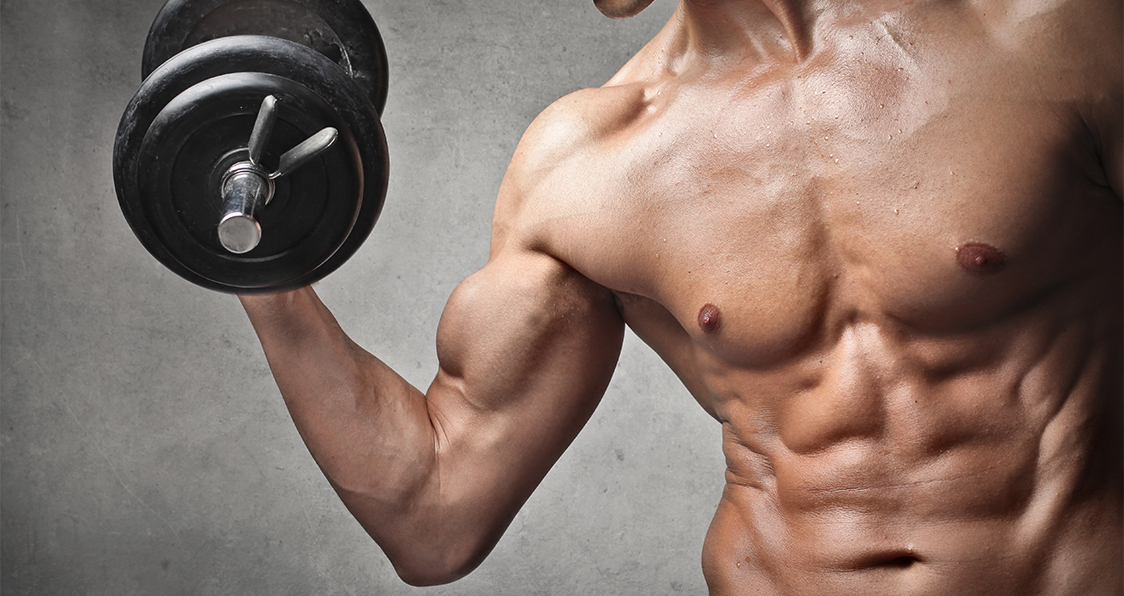
One of the most effective ways to increase the time under tension and annihilate your muscles is to change the rep tempo. For example, if you take one second to lower the dumbbell, one second to curl, and no rest at top and bottom while performing a dumbbell bicep curl, you are spending almost 3-4 seconds while completing a repetition.
You can modify the rep tempo by taking three seconds to lower, two to lift, and one second of rest each at the top and the bottom of the repetition. By the end of the exercise, your muscles will be under tension for 7-8 seconds as compared to the 3-4 seconds mentioned above. Your muscles will be asking you for mercy by the end of the set.
Increase The Number of Repetitions
There is more than one way to skin the cat when it comes to changing the time under tension while resistance training. Increasing the number of repetitions in every exercise you perform is another popular way of making the muscles do more work.
Increasing the TuT will help you in establishing a better mind-muscle connection. Don’t be surprised if you get the best pump of your life as you increase the TuT. Your muscles will be filled with blood and lactic acid as you add to the load on your muscles with the techniques mentioned in the article.
Hold the Rep at Top and Bottom
Holding the reps at the top and bottom of the movement can be a great way of increasing the time under tension and amplifying the muscle pumps. As you pause at the top and bottom, you should squeeze the living hell out of your muscles.
Make sure you don’t convert the pause into rest by overstaying your welcome. You should pause at the top and bottom for not more than two seconds. The purpose of the hold is to increase the TuT and not to give your muscles relief.
Use Advanced Training Techniques
Almost all the advanced training techniques increase the time under tension. The increased TuT is also a reason you get the muscle-ripping pumps while performing one of the advanced training techniques.
Some of the techniques you can try to increase the time under tension are rest-pause sets, intraset stretching, drop sets, forced reps, and negatives. You’ll need a spotter on exercises with forced reps and negatives and it’s important you practice safe measure while performing these sets as a small mistake can lead to an injury.
Follow a full range of motion while performing all the exercises and focus on contracting your muscles with every rep to make the most of your workouts. Don’t rush through the exercises as the pump gets intense. Work with the pain and hit your exercises to complete muscle failure.
Header image courtesy of Envato Elements
Do you use supplements? Let us know in the comments below. Also, be sure to follow Generation Iron on Facebook and Twitter.

Incorporating The Inverted Row Into Your At Home Workouts
A Versatile And Functional Back Exercise That Develops Strength and Size
Rowing exercises are one of the best exercises that can be done to maximize back strength and size development.
There are a number of different rowing exercises to choose from such as the barbell bent row, seated row, dumbbell rows, upright row, and the inverted row.
While all of these have their unique benefits, the inverted row is the variation that can be performed at home without having to rely on having plenty of equipment.
This article will begin by providing information on the inverted row, rowing technique, benefits, and muscles worked. It will also provide a number of inverted row methods and variations.
The Inverted Row Technique
In order to effectively perform the inverted row, run through the following five steps:
Begin by gripping the object (i.e. TRX, sheet, bar) ensuring that the hands are slightly wider than shoulder-width and the arms are fully extended
Walk your feet forward and continue to do so until you are leaning backward at an approximate 45-degree angle
Keep the body entirely straight by engaging the core and pull the shoulder back and down
Pull hard to bring the body up towards the object ensuring that the shoulders stay down and the elbows stay tight to the sides
Squeeze tightly between the shoulder blades and then return to the starting position by reversing the movement in a controlled manner
Inverted Row Muscles Worked
As mentioned, any rowing exercise will highly activate a number of muscles in the back. However, there are a number of other pulling muscles that are worked.
The muscles worked during an inverted row include:
Latissimus Dorsi
Trapezius
Rhomboids
Posterior Deltoids
Scapular Stabilizers
Biceps
Forearm Extensors
Core Musculature
While the lats and trap play the largest role in the row, the rhomboids, posterior deltoids, and scapular stabilizers assist in terms of providing pulling power and joint stability (1).
The biceps contract powerfully to cause flexion at the elbow joints while the forearm extensors ensure that a tight grip is maintained throughout.
Finally, the core muscles maintain a strong contraction throughout to provide the body with stability.
How To Perform The Inverted Row At Home
One of the best things about the inverted row is its versatility. There are a number of pieces of kit that can be used to perform the inverted row.
The following sections will provide three popular and convenient methods for performing the inverted row at home.
1) TRX Inverted Row
The TRX is a suspension trainer that is not only extremely functional but also very simple to use at home or when traveling.
To build strength, the TRX uses your own bodyweight and gravity. The TRX is basically a set of adjustable straps and handles which allow you to perform a range of upper, lower, and core exercises.
It can be attached to door frames, hooked around tree branches, or an appropriate sturdy structure that can be found allowing you to workout pretty much anywhere.
To perform the inverted row, begin by attaching the TRX to an anchor point and adjust the straps. From there, grab the handles and lean back to a 45-degree angle and complete the rowing action.
2) Sheet Inverted Row
An even more basic set-up for the inverted row involves using a bedsheet and a door frame.
Simply tie a knot at the end of the bedsheet, pass it over the top of the door, and then close the door tight. The knot will serve as an anchor and prevent the sheet from sliding.
Once the sheet is anchored, grip the bedsheet with both hands ensuring that the hands are slightly wider than shoulder-width and then row.
A big benefit associated with this variation is the impact it has on your grip. The sheet is inherently difficult to grasp tightly and, therefore, with regular practice, grip strength will improve.
3) Bar Inverted Row
This technique proves the versatility of the inverted row as all you really need for this final variation is a bar. This can literally be any bar – providing that is solidly fixed and runs horizontally.
Many outdoor gyms and parks have an array of bars that allow you to perform callisthenic exercises such as inverted rows.
Depending on the bar you are using, you may need to lift the feet off the floor to increase the lean angle. To do this, elevate the feet by placing them on another object such as a bench or a box.
Inverted Row Variations
For those who are at an intermediate or advanced stage of training, it may be necessary to increase the challenge of the inverted row.
Therefore, this section will highlight a range of inverted row variations to try.
1) Feet-Elevated Inverted Row
As highlighted, lifting the feet from the floor increases the lean angle which makes the exercise a lot more demanding.
For this variation, simply place the feet on any stable object and complete the row as normal.
2) Single-Arm Inverted Row
While the unilateral variation of the inverted row is evidently more challenging on the back muscles, it is also extremely challenging in terms of core strength and stability.
With the bilateral row, the movement is symmetrical and balanced, however, by removing one hand from the equation, it becomes much more challenging to keep the body straight throughout.
3) Single-Arm Rotational Inverted Row
While the previous exercise requires you to prevent rotation, this variation allows rotation through the trunk.
Perform a standard single-arm inverted row, but this time, as you descend, twist the body and reach the hand down to touch the floor.
4) Weighted Inverted Row
One of the most effective methods of progressing the inverted row is to add weight. While some balance weights on the body, this is not recommended as they could fall and cause injury.
Instead, consider wearing a weight vest or a backpack with weights inside to add intensity to the row.
5) Eccentric Inverted Row
There are three different types of muscle contraction. When the muscle lengthens this is known as an eccentric contraction.
Therefore, this variation accentuates the eccentric phase of the inverted row. Complete the pull as normal, however, on the descent, slow down substantially and take three to five seconds to reach the bottom position.
6) Isometric Inverted Row
Another type of muscle contraction is an isometric contraction. This is where the muscle is in a contracted state, however, is neither shortening nor lengthening.
To perform an isometric inverted row, perform the pull and then hold the top position for three to five seconds before descending. During the hold, focus on squeezing the shoulder blades together tightly.
Inverted Row Progressions
When it comes to maximizing progress with the inverted row, there are a number of considerations that you need to make.
The first is in terms of progressive overload. Applying this training principle is vital if you desire to make serious progress with your training.
Progressive overload is simply increasing the intensity of the exercise over time. This forces the body to continually adapt and improve.
Applying progressive overload is easy in a gym setting where there is plenty of additional weight. However, with bodyweight exercises, it can be more challenging.
The first place to start is to consider the body angle. While decreasing the lean angle reduces the intensity, increasing the angle increases the difficulty.
Therefore, over time, gradually begin to increase the lean angle. You can even elevate the feet to increase the angle further.
Alternatively, you can consider performing some of the variations listed above. After all, research suggests making exercise alterations can effectively accelerate strength gains (2).
Inverted Row Training Volume
The inverted row can be performed using a wide range of sets, reps, and intensities. The loading scheme that you use depends on the goal that you currently have.
If your goal is to improve back strength, then it’s important that you focus on intense, low-rep work. Research has determined that this will lead to the most optimal strength progress (3).
However, there is an exception to the rule here. Beginners or those who have never performed the inverted row previously should begin with a lower intensity, even if their goal is strength-based.
Focus more on developing good technique before you start to add intensity to the exercise. This will ensure that you are performing the movement most effectively while also reducing injury risk.
For those who wish to improve muscle size, generally increasing the total training volume should be the priority. The sets and rep scheme that decide you use is of less significance (4).
Final Word
Generally, rowing exercises are excellent for developing the major muscles of the back such as the lats, traps, and rhomboids.
The inverted row is a particularly useful exercise as it is highly versatile and can conveniently be performed at home or outdoors.
Let us know what you think in the comments below. Also, be sure to follow Generation Iron on Facebook, Twitter, and Instagram.
References
1 – https://pubmed.ncbi.nlm.nih.gov/26422610/ Youdas, James W.; Keith, Julianne M.; Nonn, Danielle E.; Squires, Adam C.; Hollman, John H. (2016-07). “Activation of Spinal Stabilizers and Shoulder Complex Muscles During an Inverted Row Using a Portable Pull-up Device and Body Weight Resistance”. Journal of Strength and Conditioning Research. 30 (7): 1933–1941. doi:10.1519/JSC.0000000000001210. ISSN 1533-4287. PMID 26422610.
2 – https://pubmed.ncbi.nlm.nih.gov/24832974/ Fonseca, Rodrigo M.; Roschel, Hamilton; Tricoli, Valmor; de Souza, Eduardo O.; Wilson, Jacob M.; Laurentino, Gilberto C.; Aihara, André Y.; de Souza Leão, Alberto R.; Ugrinowitsch, Carlos (2014-11). “Changes in exercises are more effective than in loading schemes to improve muscle strength”. Journal of Strength and Conditioning Research. 28 (11): 3085–3092. doi:10.1519/JSC.0000000000000539. ISSN 1533-4287. PMID 24832974.
3 – https://www.ncbi.nlm.nih.gov/pmc/articles/PMC4562558/ Mangine, Gerald T; Hoffman, Jay R; Gonzalez, Adam M; Townsend, Jeremy R; Wells, Adam J; Jajtner, Adam R; Beyer, Kyle S; Boone, Carleigh H; Miramonti, Amelia A; Wang, Ran; LaMonica, Michael B (2015-08-13). “The effect of training volume and intensity on improvements in muscular strength and size in resistance-trained men”. Physiological Reports. 3 (8). doi:10.14814/phy2.12472. ISSN 2051-817X. PMC 4562558. PMID 26272733.
4 – https://pubmed.ncbi.nlm.nih.gov/28834797/ Schoenfeld, Brad J.; Grgic, Jozo; Ogborn, Dan; Krieger, James W. (2017-12). “Strength and Hypertrophy Adaptations Between Low- vs. High-Load Resistance Training: A Systematic Review and Meta-analysis”. Journal of Strength and Conditioning Research. 31 (12): 3508–3523. doi:10.1519/JSC.0000000000002200. ISSN 1533-4287. PMID 28834797.
5 Basic Yet Crucial Fat Loss Habits
5 Basic Yet Crucial Fat Loss Habits
Everybody wants a chiseled physique, but that can’t happen with blubber covering all your muscle. In other words, you need to get lean. And getting lean comes down to some key habits. Namely jumpstarting your fat loss. You don’t simply wake up with six pack abs, your perspective and behaviors have to change.
Here are some fat loss habits that you should practice to lose those inches. Let’s get into it.
1. Set realistic goals
One of the most complex parts of losing fat is starting. No seriously. Most people don’t lose any fat ever because they’re too afraid, hesitant, or wimpy to start. After you get started, you must stay committed and be relatively consistent. Losing weight has no shortcuts. You can’t starve yourself lean because those methods usually aren’t sustainable enough to see noticeable results long term.
So get stupid passionate about why you want to lose weight, but most importantly, set realistic goals.
Start with something realistic enough to be achieved. You can start by aiming to lose a pound or two however long that takes. Don’t worry about losing 15 or 20 pounds just yet.
Just focus on seeing 1 or 2 pounds shaved off the scale. It’ll be much more manageable. Furthermore, achieving small goals will motivate you to keep going. Don’t overlook this first step and aim for the stars. Professional bodybuilders and physique competitors start dieting for shows months before their competition and set realistic goals. They lose weight steadily. If the pros are doing it that way, you should too. You’re not so amazing that you can sustain double digit weight loss weekly.
2. Eat Nutritious Foods
Losing fat comes down to being in a caloric deficit which is burning fewer calories than you consume over time. Ideally, you’d also maintain adequate protein intake. The deficit will force your body to shave off calories from stored tissue. The protein intake will feed your muscle, so fat tissue is lost.
Achieving this is simple in theory, but the fitness industry has overcomplicated this and have coddled towards people’s desire for pleasure. How so?
You can’t go 2 seconds on any fitness page without seeing someone promote pop tarts, pizza, and donuts while dieting. Yes, you can consume all of these and still lose fat.
However, it’s simply not practical or optimal to do so in large amounts or frequencies.
Despite what many fitness pages will tell you, you can’t view foods as only macros to fit your deficit. All foods can fit your deficit, but some foods do a better job at it because they are more satiating while providing more vitamins/minerals for health, performance, and recovery. This should be common sense, but was somehow lost in our age of information overload.
So yes, monitor your calories, but you’ll find that eating mostly whole, minimally processed foods make this much easier. This includes foods like lean meats, seafood, fruits, veggies, and grains. Drinking plenty of fluids throughout the day and with your meal can help as well. This makes up the base of your habits.
The pizza, donuts, and pop tarts should be more of an afterthought not a priority. I know, growing up can feel hard.
3. Start Walking
Walking is the most underrated thing for fat loss. People often consider it ineffective or pointless. That’s nonsense. Steps are a gamechanger because they force you off a sedentary lifestyle. In addition, they ensure you’re burning additional calories beyond your gym session because if you only work out for an hour per day while sitting the rest of the day, your life is still quite sedentary.
But beyond merely burning extra calories, walking is also easy to implement. Many people can walk their dogs, play with their kids, or go on hikes.
Many of my clients report better moods as well. And if you want to get extra sciency on why steps are amazing for fat loss, it also mitigates your unconscious drop in NEAT.
You see, when you lose weight, your body conserves energy by being more selective with how much energy it uses. You burn fewer calories for the same movement because you’re getting lighter in addition to unconsciously performing fewer spontaneous movements.
Research finds you may fidget or blink less especially after significant weight loss. By intentionally walking, you’re able to offset this loss in energy expenditure. In fact, without walking, your weight loss can easily plateau which nobody likes.
So don’t overlook walking and get your steps in.
4. Appreciate the slow progress
Always remember that slow progress is still progress. Well, actually what many people perceive as slow progress is simply normal or expected progress. Dieters don’t realize this though because snake oil marketing has lead everyone to believe you’re supposed to lose 12 pounds every week when most people would be lucky to lose 3 pounds per week.
Most people should lose 1-2 pounds per week and that’s excellent. Excessive weight loss leads to muscle loss anyways, so you’re not in position to brag about your 8 pound weight loss if half of it is muscle loss.
Anyways, having clear expectations allows you to keep going and psychologically stick with your habits. This is key because the effectiveness of fat loss isn’t based on how powerful an approach is. Rather, it’s based on how long you can sustain an approach.
The accumulation of days being in a deficit is what gets people lean whether you’re in a big or small deficit on a day to daybases. In most cases, the tortoise does outrun the hare because the hare was an idiot and took a break instead of accumulating more progress.
So if you find yourself accumulating progress, keep going. Repeat your habits until you’re at the finish line. You can always keep going and adjust as needed. But if there’s one key habit to keep in mind, it’s to simply not give up. To do so, you have to be ok with any progress you get. It also takes time to see progress, so don’t forget to be patient.
5. Get Proper Sleep
Sleep is the most ignored activity that enhances weight loss. Not having enough sleep makes you feel tired and stressed. This leads to feeling hungry, skipping exercise, unknowingly moving less, and performing worse in the gym. Worst of all, not getting sufficient sleep screws up your partitioning ratio.
This is the ratio of body composition changes you experience between muscle and fat tissue. Research finds that insufficient sleep skews you to lose more muscle and retain more fat. The more sleep you get, the opposite happens. More muscle retained and more fat loss.
In fact, people who eat in a deficit, but get very little sleep still obviously lose weight thanks to the deficit, but end up losing far more muscle. This keeps you at the same body fat percentage or makes it worse on a smaller frame. So the scale might go down, but your body looks nowhere near your desired physique.
As for practical steps in repairing your insomniac like habits, most people will noticeably feel and look better by doing the following:
-Dedicate 7-8 hours of sleep every night
-Turn off electronics, especially screens 1 hour before bed
-Stretch, read, relax, journal, or anything you need to destress before enetering your bed
-Take melatonin if needed.
Go Crush Your Fat Loss
Fat loss really isn’t groundbreaking or complicated. Most people know some of the key basics needed. You have to eat fewer calories than you burn. You should be eating veggies. And you shouldn’t be sitting all day.
Most people suck at getting started, so set realistic expectations and just put in the dang work. Don’t read another article or listen to another podcast. You just need to take these habits and keep repeating them day in and day out.