
Tag: Bodybuilding
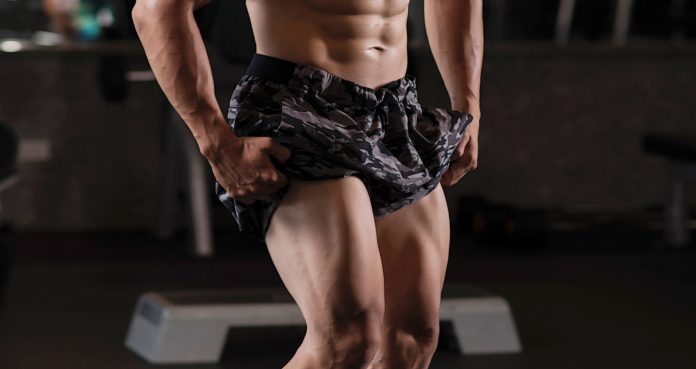
Three Unconventional Unilateral Exercises to Improve Leg Strength
Performing Unilaterals To Enhance Performance
As a beginner, due to the fact that the body is unaccustomed to the stimulus of strength training, deadlifting and squatting regularly will significantly and rapidly build full-body strength.However, as you become more highly conditioned it may be necessary to make a number of substantial changes to your training in order to continue hitting personal bests. Not only does the rate of strength improvement begin to slow over time but muscular imbalances may also be established if the focus is constantly on bilateral (two-limbed) exercise.Incorporating unilateral (single-limb) exercise into your training program can yield great benefits and allow you to surpass your squat and deadlifts PB’s.
Three Benefits of Unilateral Training
This first section will briefly highlight three substantial benefits associated with unilateral training that will ultimately allow you to perform heavy compound lifts more efficiently.
1) Eliminating Muscular Imbalances
Muscular imbalances are not uncommon and it is likely that everyone suffers from imbalances to one degree or another and there are a number of reasons why they develop.Firstly, everyone tends to have a dominant side – right or left. In everyday activities, exercise and sport, it is likely that one side is used more heavily than the other.As a result, the dominant side may increase in strength to a greater degree than the non-dominant side thus causing an imbalance between the right and lift side.While it is typically the case that the weaker side is the non-dominant side, be aware that this is not always the case and the dominant side may well be the weaker side.Another potential cause of an imbalance is injury. As a consequence of injury, often weakness and instability are apparent around the injured site (1). While rehabilitation exercises will help to restrengthen the injured site, an imbalance between sides may still remain.Furthermore, imbalances can become exacerbated by bilateral training. The stronger side can compensate for weakness on the other side and cause the imbalance to develop further.Imbalances need to be assessed and rectified through unilateral training as they may negatively affect performance and may even increase the risk of sustaining an injury.
2) Injury Prevention
Imbalances and weaknesses can significantly alter or interfere with exercise technique which can significantly impact performance.For example, during the squat, if the stronger side is compensating for weakness on the other side, the hips will likely significantly shift towards the stronger side (2).By strengthening the weaker side and correcting any muscular imbalance that exists, the way in which you move will become more efficient and technique will improve.Becoming more competent with your technique will allow you to lift a greater load which will increase the training stimulus and consequent rate of adaptation to the muscles.Stronger muscles will allow the body to cope with a greater amount of stress will also improve the function of joints thus reducing the injury risk.As touched on, having significant muscular imbalances can increase the risk of sustaining an injury, therefore, by reducing imbalances the risk of injury will be significantly lessened.
3) Enhanced Muscle Recruitment
Research comparing electrical activity of muscle during both unilateral and bilateral leg exercises has indicated that unilateral exercise activates muscle to a greater extent in comparison to bilateral exercise (3).Part of the reason for this is that when performing a unilateral exercise you have only one base of support whereas you have two during a bilateral movement. Having just a single base of support increases the instability of the exercise and therefore a large activation from a number of leg muscles is required to assist in stabilization.Not only does unilateral exercise require a greater activation from the lower extremities, the core must also activate more highly to enhance control and stability.Using a single-leg stance will strengthen all of these muscles in a highly functional way. Many everyday activities require you to maintain balance and stability while in a single-leg stance.Some examples that demonstrate this include walking, stepping up, running, sprinting, and changing direction.With this understanding, it is imperative that a number of unilateral strengthening exercises such as lunges, split squats and single-leg deadlifts and incorporated into our training programs.
Three Unilateral Exercises for Leg Strength
The following three unilateral exercises would not be seen as your conventional-type unilateral exercises, however, there is no denying their effectiveness.The following section will provide detail on the exercise, its uses, benefits, the required technique and how it should be programmed into your strength training.
1) Single-Leg Hip Extension with Hamstring Curl
Considering that the hamstrings control the extension of the hips and knee flexion, this exercise will effectively train the hamstring as it incorporates both of these movements.Furthermore, the use of the swiss ball will increase the need for stability which will place an additional demand on a number of stabilizing muscles.Improving the strength and function of the hamstrings will have a significant impact on the deadlift considering that the deadlift is a hamstring-dominant exercise.While this is undoubtedly an excellent accessory exercise for improving both the deadlift and squat, it is also highly recommended for runners as the exercise replicates the demands of road running.Be aware that this exercise is highly demanding on the hamstrings and therefore high repetitions may be something that you wish to avoid. Start with 2-3 sets of 6 reps per side and gradually increase the reps as the week’s progress.
Technique:
1) Lie flat on the floor and start by placing one foot on top of the swiss ball. Ensure that the heel is pressed into the ball and that the toes are pointed upward.2) Perform the hip extension by engaging the core and driving through the hips so that they lift from the floor and hold them in position. 3) Keeping the hips up, pull the ball in towards your glutes by bending the knee until it reaches a 90-degree angle.4) Briefly pause in this position before beginning to extend the knee and slowly return to the starting position all while keeping the glutes engaged.5) Once the leg has been fully extended, gradually drop the hips down until they return to the floor. Repeat this process until the prescribed number of reps have been completed.
2) Kettlebell Swap
When performing the squat and deadlift, the knees should be pushed wide and track over the toes while the feet remain stable. Some individuals find that, when they squat and deadlift, pronation occurs and the feet fold inward. This is something that should be avoided as far as possible as it can lead to injury (4).Allowing the ankles to pronate may place undue stress and strain on the knees and consequently make it more challenging to engage the glutes and lockout the hips. The kettlebell swap is an exercise that is highly recommended for those who experience this pronation of the foot during the squat and deadlift. The exercise places you in a single-leg position in order to improve balance and effectively build strength around the ankle joint.Regularly performing the kettlebell swap and strengthening the ankles and feet will not only work to prevent injury, it will also put you in a stronger and more stable position when squatting or deadlifting.In addition, in order to pass the kettlebell under control and to prevent swinging, the core muscles and a number of hip muscles must powerfully contract.If this exercise is new to you, consider starting with a light load (18-26lbs) and gradually increase the weight over time.The kettlebell swap can serve as an excellent warm-up activity or can be effectively paired with the squat or deadlift. Look to perform sets of 6 reps per side.Be aware that it is possible to use a dumbbell for this exercise if you do not have access to kettlebells.
Technique:
1) Start by standing tall while holding the kettlebell in your left hand. Keep the arm straight so that the weight hangs by the hip. Engage your core muscles, slowly lift one foot from the floor and find your balance.2) Under control, reach across the body with the left hand and pass the kettlebell to the right hand while maintaining a vertical trunk position and return the weight to the side of the hip.3) While still maintaining a core brace, pass the weight back to the left hand and returning to the starting position – this is one rep. 4) Continue to swap back and forth from left to right until you have completed the desired number of reps. Repeat the above steps again but this time starting with the weight in the right hand.
3) Offset Lateral Lunge
When it comes to leg development, often major muscles like the glutes, hamstrings, and quads are prioritized. The adductors can be overlooked yet they play such a crucial role in hip strength and mobility.Having adductors that are weak or tight can interfere with movement generated around the hips and can, therefore, impact deadlift and squatting ability.Lateral lunges are a superb resistance exercise that can be used to build strength in the adductors (as well as the quads and glutes).The lateral lunge is particularly effective as it simultaneously works the adductors of the leading leg and stretches the adductors of the trailing leg.To add a further challenge, using one kettlebell rather than two will decrease stability. If two kettlebells were to be used, the weights counterbalance each other and stability demands decrease.Using one kettlebell will increase the demands on core and lower extremity musculature as they work to increase stability and prevent any rotation or bending through the trunk.On a side note, you may wonder why a lunge exercise is considered a unilateral exercise specifically because both feet are placed in direct contact with the floor.When you review the demands and biomechanics of the exercise it becomes clear that the lunge is really a unilateral exercise (5).During the lunge (and lunge variations) it is the front leg that drives the movement and is exposed to a great amount of stress; the rear leg simply enhances stability and is not activated as highly during the movement.The offset lateral lunge is best used as an accessory exercise after completing sets of squat and deadlift. Keeping in mind that this is an accessory, extremely heavy loads should be avoided. Depending on your strength levels you may wish to start anywhere between 26 – 53 pounds.Look to complete sets of 8 – 12 reps per leg. For comprehensive hip development, consider pairing the lunge with a hip mobility exercise such as split stance adductor mobs.
Technique:
1) Start by standing tall and bringing the kettlebell up to the rack position. This is where the kettlebell is brought up to shoulder height and sits comfortably on the bent arm.2) Before stepping laterally, push the chest up and brace the core. Take a large step to the side which is not holding the weight and plant the foot.3) Bend the knee of the leading leg and drop your backside down towards your heel all while keeping the trailing leg straight – you should feel a significant adductor stretch in the trailing leg.4) Push hard through the heel of the leading leg to drive the body back up to standing. Imagine you are trying to drive your heel through the floor.5) Repeat until the prescribed number of reps has been completed then move the kettlebell to the other side and perform the same number of reps on the other side.
Final Word
Considering the impact that muscular imbalances can have on strength development and injury risk, a significant portion of your training program should be dedicated to unilateral exercise.If you aspire to improve your squat and deadlift performance, incorporating the three aforementioned unilateral exercises into your training is highly recommended.
References:
1 – Fulton, Jessica; Wright, Kathryn; Kelly, Margaret; Zebrosky, Britanee; Zanis, Matthew; Drvol, Corey; Butler, Robert (2014-10). “INJURY RISK IS ALTERED BY PREVIOUS INJURY: A SYSTEMATIC REVIEW OF THE LITERATURE AND PRESENTATION OF CAUSATIVE NEUROMUSCULAR FACTORS”. International Journal of Sports Physical Therapy. 9 (5): 583–595. ISSN 2159-2896. PMC 4196323. PMID 25328821.
2 – Myer, Gregory D.; Kushner, Adam M.; Brent, Jensen L.; Schoenfeld, Brad J.; Hugentobler, Jason; Lloyd, Rhodri S.; Vermeil, Al; Chu, Donald A.; Harbin, Jason; McGill, Stuart M. (December 1, 2014). “The back squat: A proposed assessment of functional deficits and technical factors that limit performance”. Strength and conditioning journal. 36 (6): 4–27. doi:10.1519/SSC.0000000000000103. ISSN 1524-1602. PMC 4262933. PMID 25506270.
3 –McCurdy, Kevin; O’Kelley, Erin; Kutz, Matt; Langford, George; Ernest, James; Torres, Marcos (2010-02). “Comparison of lower extremity EMG between the 2-leg squat and modified single-leg squat in female athletes”. Journal of Sport Rehabilitation. 19 (1): 57–70. doi:10.1123/jsr.19.1.57. ISSN 1056-6716. PMID 20231745.4 – Lee, Jong Dae; Koh, Da Hyun; Kim, Kyoung (2015-1). “The kinematics of the lower leg in the sagittal plane during downward squatting in persons with pronated feet”. Journal of Physical Therapy Science. 27 (1): 285–287. doi:10.1589/jpts.27.285. ISSN 0915-5287. PMC 4305583. PMID 25642092.
5 – Riemann, Bryan L.; Lapinski, Shelley; Smith, Lyndsay; Davies, George (2012-8). “Biomechanical Analysis of the Anterior Lunge During 4 External-Load Conditions”. Journal of Athletic Training. 47 (4): 372–378. ISSN 1062-6050. PMC 3396296. PMID 22889652.
Water Intake Calculator: Calculate Your Recommended H20 Intake
Hydration is huge and knowing how much water to drink can be a game changer inside and out of the gym.
We all know we need to drink to water. We hear it all the time and often times we just brush it off as something we know. But in reality, are we drinking enough despite this? For us bodybuilders and athletes, we always have a water bottle on us, but even then, the question of if we are drinking enough remains number one. The right amount of water intake can affect not only your workouts but also daily life and cannot and should not be ignored.
Let’s take a look at hydration and see why this matters so much. We always hear about it, but knowing the benefits and exactly what this can do for you can greatly affect your gains and give you the best chance at fully optimizing your performance.
Why Hydration Matters
For those of bodybuilders and other strength athletes who regularly partake in grueling workouts, we know how thirsty we get. Hydration matters and for good reason. Let’s take a look at some of the benefits of drinking plenty of water and why hydration ultimately matters.
Physical Performance: The right amount of hydration can reduce fatigue, enhance endurance, keep your muscles functioning properly, and even lower your heart rate, all contributing to improved physical performance for the best results (1).
Cognitive Function: Drinking enough water allows you to focus and have a clearer mind. When it comes to preventing headaches, enough water can prevent this from happening thus keeping you mentally sharp and free of pain (2).
Weight Loss: By always staying hydrated, you actually feel more full, thus decreasing your desire to snack and putting on unwanted weight. Drinking before meals is a great way to control your portions so you only eat what you need to.
Immune System: Water can flush out those nasty toxins and bacteria to support your immune system so you stay as healthy as possible without the fear of falling ill. A stronger immune system means less time out of the gym and more time seeing gains (3).
How To Tell If You Are Dehydrated
The feeling of dehydration is terrible. Plain and simple. We’ve all felt it before, that sluggish, drained feeling that most often ends with a terrible headache. Why put yourself through that? Common side effects of dehydration include things like thirst, dry skin, feeling dizzy or low on energy, and darker yellow urine (4). It’s clear that dehydration can negatively affect your workouts, so why even put yourself in that position? Working on optimizing hydration is exactly what you need in order to fully succeed both inside and out of the gym and stay as hydrated as possible.
Best Ways To Stay Hydrated
With our busy schedules, it can be tough to stay hydrated. You’re always running around, bouncing from place to place, running errands, or just consumed in work. By the time your workout comes along, you realize you’ve had maybe three sips of water. Not good enough. Always having a water bottle with you is an easy way to just take a drink here and there. Soon enough, the bottle is gone, you refill, and you’re off to the races again. For those who love caffeine, maybe try and limit the caffeinated beverages or find a good balance of water to caffeine. If you feel that drinking flat water doesn’t cut it, try flavored sparkling water or check out some awesome supplements to stay hydrated while having a great taste.
Water & Electrolytes
The relationship between water and electrolytes is important to know. We’ve all seen those bottles that have electrolytes mixed into the water. There’s a reason for that. Electrolytes are essential minerals in your body that provide benefits for a host of bodily functions. Things like muscle contractions and balancing pH levels are just a couple of examples. But of course, they also help us stay as hydrated as possible. Why electrolytes are so important is that they help distribute water throughout the body, making sure your muscles and other body parts have enough water to function properly, and of course, stay clear of dehydration (5).
Daily Hydration Chart
It should be said that depending on your exercise and activity level, you should drink more water than if you do not workout. Using things like how you feel and urine color are easy ways to gauge whether or not you are getting to a hydrated or dehydrated state.
Let’s take a look at an average daily H20 intake requirement chart from Harvard T.H. Chan School of Public Health so you get a better sense of what we mean (6).
Age (years)
Amount in Ounces
Amount in Cups
1-3
32
4
4-8
40
5
9-13
56-64
7-8
14-18
64-88
8-11
Men, 19 and older
104
13
Women, 19 and older
72
9
Pregnant Women
80
10
Breastfeeding Women
104
13
Best Supplement To Maximize Hydration
With so many supplements on the market, it can be challenging to decide which one will maximize your gains the most. While it may be obvious to drink water and stay hydrated, the right supplement can optimize hydration so you never suffer from negative side effects. A product loaded with BCAAs and electrolytes is a sure fire way to ensure dehydration never occurs.
Enhanced Labs EAA+
Enhanced EAA+ is a great supplement to aid in your desired muscle growth and workout needs. A serious strength building formula is designed with essential amino acids, nootropics, trace electrolytes, and minerals for a complete mass gainer.
EAA+ pairs branch chain amino acids (BCAAs) with essential amino acids (EAAs), nootropics, trace electrolytes and minerals to make it a complete mass gainer, strength builder, and ultimate hydration option. With high quality ingredients in an advanced formula, you get a seriously effective supplement able to help tackle any and all of your needs. With 10g of clinically dosed essential amino acids, great blends will maximize muscle growth and hydration with just 2-3 servings per day.
Wrap Up
Hydration is absolutely key in terms of working out and with our daily life. Staying hydrated and taking in the right amount of water will greatly affect all your gains and give you the best in terms of seeing that growth you want most. This daily intake graph will hopefully help as a starting point and always remember to keep a water bottle with you so you never have an excuse.
Let us know what you think in the comments below. Also, be sure to follow Generation Iron on Facebook, Twitter, and Instagram.
*Images courtesy of Envato
References
Popkin, B.; et al. (2010). “Water, Hydration and Health”. (source)
Grandjean, A.; et al. (2007). “Dehydration and cognitive performance”. (source)
UCI Susan Samueli Integrative Health Institute (2020). “Hydration for Immune System”. (source)
Shaheen, N.; et al. (2018). “Public knowledge of dehydration and fluid intake practices: variation by participants’ characteristics”. (source)
James, L.; et al. (2015). “Effect of Electrolyte Addition to Rehydration Drinks Consumed After Severe Fluid and Energy Restriction”. (source)
Harvard T.H. Chan School of Public Health. “Water”. (source)
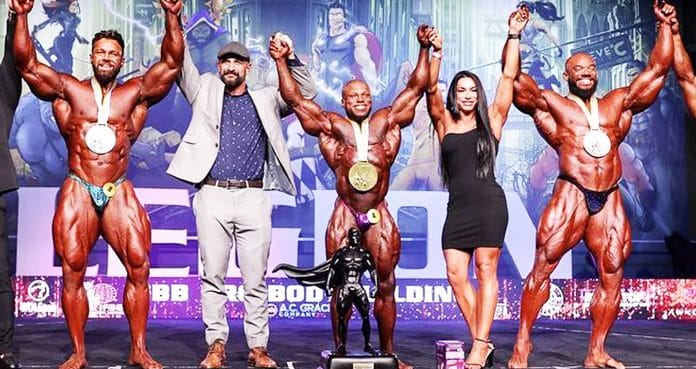
2021 Legion Sports Fest Pro Results
Shaun Clarida wins Men’s Open at the 2021 Legion Sports Fest Pro!
The 2021 Legion Sports Fest Pro was the next big bodybuilding event and it was headlined by Shaun Clarida taking home the prize in Men’s Open. Some of the top competitors in the world gathered to Reno, NV looking to gain qualification to the 2022 Olympia.
There was plenty of talent on stage on Sunday afternoon. In the Men’s Open division, the most exciting story was Shaun Clarida’s Men’s Open debut. Ultimately and seemingly against all odds – Clarida was victorious despite only weighing just under 175 pounds – much lighter than a typical Men’s Open competitor.
The first hint of Clarida’s path to victory was during the prejudging round – where he was placed center during the final callout – a sign the judges were comparing all competitors to Clarida’s physique. He later brought the victory home in the finals.
Shaun Clarida made his debut in the Men’s Open division on Sunday. He is coming off a second-place finish at the Olympia 212. Clarida won the event back in 2020 before finishing second to Derek Lunsford this year. Clarida displayed a strong physique with his usual mix of size and conditioning.
Clarida has his work cutout for him in this contest going up against the likes of XX and Regan Grimes. After a disappointing outing in the Olympia, Grimes hired a new coach and made immediate changes. This paid off as he displayed an even bigger physique that will only continue to improve. Sergio Oliva Jr. was also present at the event. He has turned into one of the best posers in the world.
Cedric McMillan made his return to action this weekend. McMillan missed time with an injury and was forced to sit out of the Arnold Classic but appeared on the broadcast. Maxx Charles and Patrick Moore added even more star power to the competition. There was plenty of size present on stage on Sunday and the event did not disappoint.
There were six events in total at the 2021 Legion Sports Fest Pro looking for an automatic bid to the Olympia. The full results have been announced and can be found below!
2021 Legion Sports Fest Pro: All Division Winners
Men’s Open: Shaun Clarida
Classic Physique:
Men’s Physique:
Fitness:
Bikini:
Women’s Physique:
2021 Legion Sports Fest Pro Breakdown
Men’s Open
First Place – Shaun Clarida
Second Place – Regan Grimes
Third Place – Sergio Oliva Jr.
Classic Physique
Coming Soon
First Place –
Second Place –
Third Place –
Fourth Place –
Fifth Place –
Sixth Place –
Men’s Physique
Coming Soon
First Place –
Second Place –
Third Place –
Fourth Place –
Fifth Place –
Sixth Place –
Fitness
Coming Soon
First Place –
Second Place –
Third Place –
Fourth Place –
Fifth Place –
Sixth Place –
Bikini
Coming Soon
First Place –
Second Place –
Third Place –
Fourth Place –
Fifth Place –
Sixth Place –
Women’s Physique
Coming Soon
First Place –
Second Place –
Third Place –
Fourth Place –
Fifth Place –
Sixth Place –
Generation Iron wishes to congratulate all the great athletes who earned a win at the 2021 Legion Sports Fest Pro. Make sure to check out our full IFBB Pro results page from this year and previous years right here to catch up on any action you may have missed!
Greg has covered the four major sports for six years and has been featured on sites such as Sports Illustrated, Fox Sports, SB Nation, NJ.com, and FanSided. Now, he is transitioning into the world of bodybuilding and strength sports.
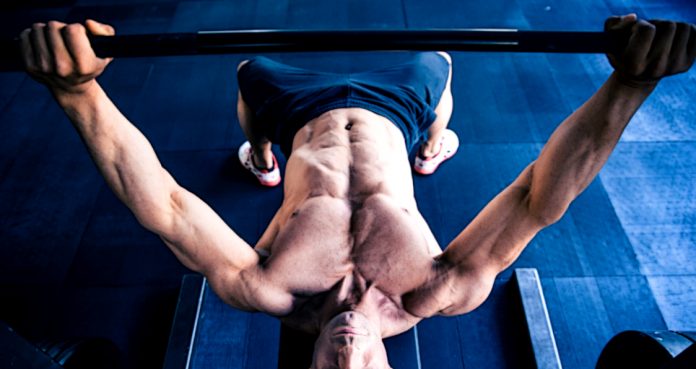
3 Ways To Build A Powerful Bench Press
Create A Goal Plan
When looking to improve any lift in the gym, or to achieve any goal in life, it is necessary to set out an effective plan that will guide you to success. As the well known saying goes, “fail to prepare, prepare to fail”.
Training Volume for Strength Gains
When it comes to benching improvements, benching once a week will simply not suffice, regardless of how many sets and reps are performed in one session.
By following the traditional 5 x 5 method, 25 reps will be completed. That’s 25 reps for the week which is undoubtedly insufficient if the goal is to improve bench press performance.
Instead of training the bench press once a week, it is worthwhile performing it more frequently. Not only will this increase training volume, which can lead to an increase in strength (1), but substantial time can be spent refining technique.
More substantial improvements will be made with an individual practicing multiple times each week than with an individual who practices sporadically.
Even something as simple as switching to benching 3 x 5, twice a week is of great benefit. While the total volume only increases by one set in comparison to 5 x 5, the quality of those sets will be much greater.
Because only 3 sets are being performed, as opposed to 5 sets, the workout volume decreases, the muscles are less fatigued, and therefore, the reps are much smoother.
Frequency is undoubtedly important, but so is the quality of the movement. For strength gains, precise, frequent reps are much superior to sporadic, substandard reps.
Ensuring that the training volume is correct is the first step. However, if a bench press improvements are still stagnant, there are 3 methods that should be employed.
1) Practice Frequently
As mentioned, focusing on the skill acquisition instead of the weight on the bar is an effective method of improving one’s technique.
Regularly benching will allow you to increase overall training volume and consequently allow you to push heavier weights as strength develops.
An effective method of practicing and upping training volume is to add 5-8 sets of 1-3 reps of bench into your training program. Ensure to use a lighter weight and focus on the movements.
By simply adding this in, you will complete 24 additional reps to your weekly training volume. In turn, this will enhance benching technique and strength capacity.
In terms of frequency, anywhere between 2-4 sessions per week would be enough. As referred to, it is possible to add in lighter-weight practice sets into an existing program, if necessary.
It is absolutely fine to tweak the program until you find the optimal combination of both intensity and frequency that brings about results.
2) Performing Effective Variations
If you have been benching for a number of years, it is likely that you have reached a training plateau before. A plateau is simply where progress seems to have stalled or ceased entirely.
One method that is particularly effective for moving beyond a training plateau is to use exercise variations. There are a vast number of variations for the majority of compound exercises.
For the novice, strength gains come easily. This is partly because their nervous system adapts rapidly to the new training stimulus which causes an increase in strength (2).
Frequency should take precedent for the novice and exercise variations are not necessarily required at this stage. Strength will rocket with frequent practice and patience.
However, over time, the body becomes more and more accustomed to the stresses of training and therefore, the rate of adaptation begins to slow as the body becomes more accustomed to the training stimulus.
As a result, increased frequency alone will not have a large muscle stimulating impact. It is at this stage that would be wise to consider bringing in exercise variations.
Studies show that exercise variance is more effective for improving muscular strength in trained individuals than traditional loading schemes (3).
There are a number of factors that should be considered when selecting appropriate variations for bench, or any other exercise for that matter.
The movements involved in the exercise should engage a great amount of muscle, allow for heavy loading and involve a large range of motion.
Keeping this in mind, it should be easy to see why an incline bench press is superior for building strength than a cable fly.
The movements involved in a cable fly may indeed allow for a greater range of motion, however, muscles activation is greater and more weight can be pressed with the incline bench.
With all exercise or sport-specific training, variations should be chosen based on improving a movement rather than strengthening a specific muscle group.
With this understanding, once again, the incline bench press trumps the cable fly. In order to develop benching ability, it is wise to select exercises that replicate the movement patterns of the conventional bench press.
A few examples of effective bench press variations include: decline bench, touch and go bench, pause bench, tempo bench, feet-up bench and slingshot bench.
3) Comprehensive Recovery
The effort that you put into tailoring and executing the perfect bench program will be in vain if adequate recovery from exercise is not prioritized.
There is much more to recovery than simply ensuring that rest days are scheduled into the week. Sleep, nutrition and hydration will all play a role and will therefore have an impact on how effectively you recover.
Firstly, proper nutrition is essential for bringing about changes in body composition. A calorie surplus is required for muscle gain – this is where you consume more calories per day than the body requires (4).
The additional calories are required to accelerate recovery and causes muscle fibers to increase in size.
It is recommended to track your daily calories when looking to add muscle size. This way you can be sure that enough calories are being consumed to cause growth. If you fail to track, you are shooting in the dark.
In addition to this, adequate protein should be consumed every day. Protein is also required in the recovery process from the stresses of strength training.
Failure to consume enough calories and protein each day will fail to bring about optimal muscle growth and strength gains.
The body needs time to recover from the everyday stresses and strains of life and it does so through sleep.
Requirements for sleep tend to vary from person to person, however, typically the recommendation is to aim for between 6-8 hours per night.
It may take a little trial and error to understand how much sleep your body really needs. Often, more sleep is better.
If you’re uncertain about whether or not you’re getting enough sleep, look to go to bed slightly earlier each night and assess if this has a positive impact on your performance in the gym.
Inadequate sleep has been found to hamper muscle building progress predominantly through reducing exercise performance (5).
Finally, hydration often has a bigger impact than many perceive. Drinking water regularly throughout the day can help to keep the body functioning optimally.
For many, hydration levels are not maintained throughout the day which can lead to poor performance in the gym (6). Drinking a vast amount during exercise is simply not enough.
It is important to space out water intake rather than drinking it all in a short time period. Look to be consistent with hydration on both training and rest day.
For those who are unsure how much water they should be drinking each day, aim for half your bodyweight in ounces. From that point, water intake can be steadily increased if necessary.
Proper nutrition, ample sleep and good hydration should not be seen as a privilege, rather an essential for developing strength and size.
If you are fully committed to improving in the gym, then you must be serious about the time spent outside of the gym too.
Final Word
While it is crucial that proper programming is in place, it is equally important to consider other factors that significantly influence strength gains. Appropriate nutrition, sleep, hydration and even genetics will all determine whether or not success is attained in the gym.
References:
1-Services, Department of Health & Human. “Resistance training – health benefits”. www.betterhealth.vic.gov.au.
2-Mangine, Gerald T.; Hoffman, Jay R.; Gonzalez, Adam M.; Townsend, Jeremy R.; Wells, Adam J.; Jajtner, Adam R.; Beyer, Kyle S.; Boone, Carleigh H.; Miramonti, Amelia A. (2015-8). “The effect of training volume and intensity on improvements in muscular strength and size in resistance-trained men”. Physiological Reports. 3 (8). doi:10.14814/phy2.12472. PMID 26272733.
3-pubmeddev; al, Fonseca RM , et. “Changes in exercises are more effective than in loading schemes to improve muscle strength. – PubMed – NCBI”.
4-Leaf, Alex; Antonio, Jose (2017). “The Effects of Overfeeding on Body Composition: The Role of Macronutrient Composition – A Narrative Review”. International Journal of Exercise Science. 10 (8): 1275. PMID 29399253.
5-pubmeddev; al, Knowles OE , et. “Inadequate sleep and muscle strength: Implications for resistance training. – PubMed – NCBI”.
6-pubmeddev; al, Judelson DA , et. “Hydration and muscular performance: does fluid balance affect strength, power and high-intensity endurance? – PubMed – NCBI”. www.ncbi.nlm.nih.gov.
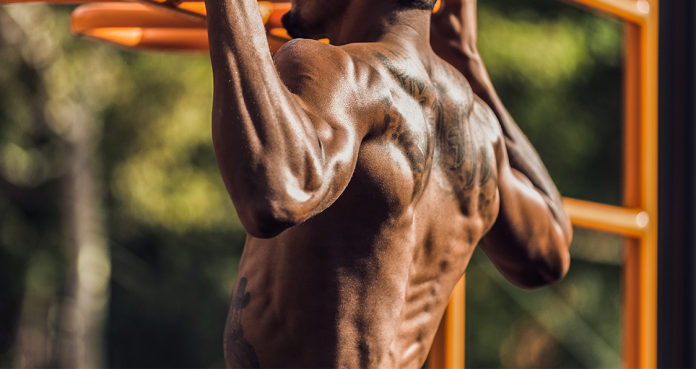
Build A Thick and Wide Cobra Back With This Workout
Build A Cobra Back With This Back Workout
Hitting the lat spread pose should look like you’re drawing curtains on the people standing behind you. Bodybuilding is a game of illusions, and a V-Taper can make you stand out by making your upper body look bigger and meaner.
An effective back workout should have a combination of isolation, compound, pulling, and pushing movements to target your lats optimally. We’ve designed a workout for you which will take your back gains to the next level.
Pull-Ups – 50 Reps
We took this tip from the Governator himself. Arnold used to perform 50 reps of pull-ups at the beginning of each back workout. Pull-ups are a great way of warming up your back and building the width in your lats.
You must hit your back from all the angles. Make sure you’re not just going through the motions. Squeeze and contract your muscles with every rep to make the most of the exercises.
T-Bar Rows – 3 Sets 12-15 Reps
The pulling movements help in building the width in your lats and the rowing lifts develop the thickness in the back. If you don’t have a T-Bar machine at your gym, you can use a barbell as the T-Bar by placing one end of the bar in a corner so it doesn’t move.
Most people make the mistake of standing upright or bending over too much while performing the T-Bar rows. Your torso should be forming a 45-degree angle with the floor throughout the exercise.
Superset
Wide-Grip Lat Pulldowns – 3 Sets 12-15 Reps
Straight Arm Cable Pulldowns – 3 Sets 12-15 Reps
While performing the wide-grip lat pulldowns, make sure you are not using momentum by swinging back and forth. Using the jerking movement takes off tension from your lats by recruiting your arms.
The straight arm cable pulldowns work the thickness of your back. Your elbows will be locked at an angle and your torso will be at a 45-degree angle with the floor. Keep your upper body stationary throughout the exercise.
Single-Arm Dumbbell Rows – 3 Sets 8-12 Reps
Dumbbell rows are a staple in the back workouts. Perform the dumbbell rows by placing one hand and knee on a flat bench while holding a dumbbell in the other hand, and the other foot on the floor.
While rowing the dumbbell, keep all the tension on your lats. If you feel stress building up in your biceps, it means you’re using momentum which is leading to the recruitment of the secondary muscles.
Superset
Barbell Pullovers – 3 Sets 12-15 Reps
Weighted Hyperextensions – 3 Sets 12-15 Reps
Barbell pullovers are one of the most underutilized back exercises. Perform the barbell pullovers by lying across a flat bench while holding a barbell above your chest. You need to keep your elbows locked so your arms are in a straight line. The barbell pullovers help in developing the V-taper. A broad back can make your shoulders look wider and the stomach thinner.
Developing the separation and conditioning in the lower back can be one of the trickiest things. You can perform the weighted hyperextensions by holding a barbell, weight plates or dumbbells in front of your chest.
Which is your favorite back exercise? Let us know in the comments below. Also, be sure to follow Generation Iron on Facebook, Twitter, and Instagram.
Header image courtesy of Envato Elements
2021 San Antonio Classic Results
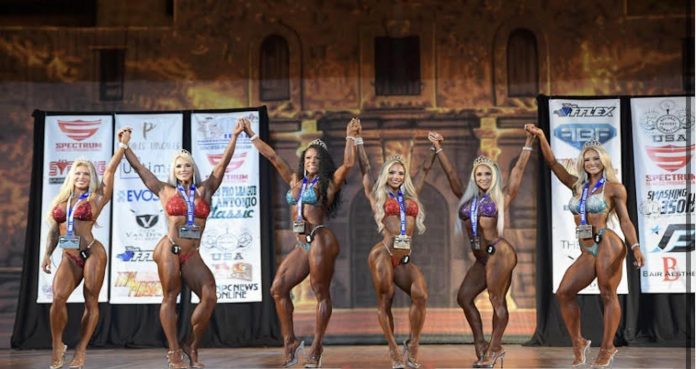
Isabelle Pereira Nunes wins Wellness at the 2021 San Antonio Classic!
The 2021 San Antonio Classic took place on Saturday and it was Isabelle Pereira Nunes who took home the prize in Wellness. Some of the top competitors in the division gathered in San Antonio to earn a victory and show what they can do on stage.
Nunes is two weeks removed from a third-place finish at the 2021 Olympia Wellness. This was the first Wellness competitor at the Olympia and Nunes was one of the top competitors. She qualified for the biggest competition of the year with a win at the Milwaukee Pro back in May. Nunes has taken the next step in Wellness and is an athlete to watch moving forward.
Lorena Ragusa finished second while Devyn Cambre took home bronze. Ragusa was another top-10 finisher at the Olympia as she finished ninth in Wellness. She competed multiple times this year with notable appearances at the Puerto Rico Pro and New York Pro.
Cambre has also gotten comfortable in the top five. She finished fourth at the Milwaukee Pro and fifth in Puerto Rico. This was a chance for Cambre to see where she stacks up and she looked impressive on stage in San Antonio.
The Wellness division featured some top competitors at the 2021 San Antonio Classic looking to take home the prize. The full results have been announced. Check out the full breakdown from the event below!
2021 San Antonio Classic Breakdown
Wellness
First Place – Isabelle Pereira Nunes
Second Place – Lorena Ragusa
Third Place – Devyn Cambre
Fourth Place – Kassandra Gillis
Fifth Place – Brooke Donnelly
Sixth Place – Haley Arnold
Seventh Place – Vicki Counts
Eighth Place – Celeste Morales
Ninth Place – Avis Evans
Tenth Place – Biance Siles
Official Score Card
Generation Iron wishes to congratulate all the great athletes who earned a win at the 2021 San Antonio Classic. Make sure to check out our full IFBB Pro results page from this year and previous years right here to catch up on any action you may have missed!
Greg has covered the four major sports for six years and has been featured on sites such as Sports Illustrated, Fox Sports, SB Nation, NJ.com, and FanSided. Now, he is transitioning into the world of bodybuilding and strength sports.
2021 Hurricane Pro Results
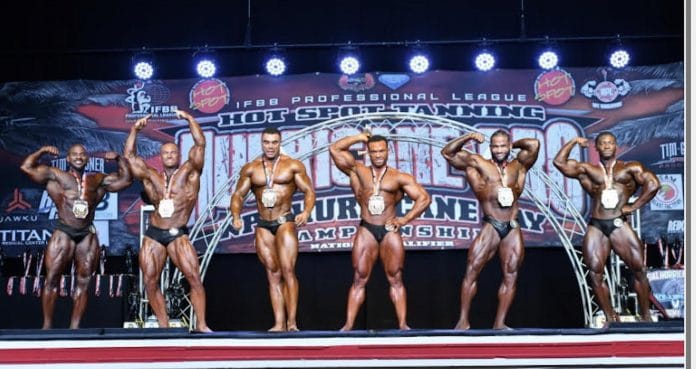
Alex Cambronero wins Classic Physique at the 2021 Hurricane Pro.
The Classic Physique division headlined the 2021 Hurricane Pro and it was Alex Cambronero who took home the title. This event saw many elite competitors gather to the Coliseum in St. Petersburg, FL to put on a strong show. This is one of the competitions where athletes looked to get back on stage post-Olympia hoping to build on some momentum.
Cambroneroheadlined Classic Physique as one of the best competitors in the show. Cambronero is the 2020 Arnold Classic champion and finished second in this year’s show. Cambronero is going off a sixth-place finish at the Olympia just three weeks ago. Cambronero headlined competitors from all divisions across the sport of bodybuilding.
This includes Lauren Dannenmiller, who earned a top-10 finish at the Olympia. The Bikini division was the largest at the show and Dannenmiller put on an impressive performance. Jourdanne Lee was also back on stage after making an appearance in Orlando.
The Men’s Physique and Figure divisions also featured some talent to watch. Autumn Cleveland and Sandra Grajales were some of the competitors to watch in Figure heading into the competition. The Hurricane Pro was a chance for athletes to get back on stage quickly following the Olympia.
There were a total of 10 divisions at the Hurricane Pro looking to take home prizes. The full results have been announced. Check out the full breakdown from the event below!
2021 Hurricane Pro: All Division Winners
Classic Physique: Alex Cambronero
Classic Physique Masters 40+: Tim Tevin
Men’s Physique: Daniel Ammons
Men’s Physique Masters 40+: Alex Woodson
Figure: Maria Luisa Diaz
Figure Masters 40+: Corrie Morales
Bikini: Jourdanne Lee
Bikini Masters 40+: Angela Ruscilli
Bikini Masters 50+: Angela Ruscilli
Bikini Masters 60+: Karen Small
2021 Hurricane Pro Breakdown
Classic Physique
First Place – Alex Cambronero
Second Place – Jordan Plantiko
Third Place – Runben Stouth
Fourth Place – Tyler Johnson
Fifth Place – Paul Kanu
Sixth Place – Jay Warren
Classic Physique Masters 40+
First Place – Tim Tevin
Second Place – Jim Holcomb
Men’s Physique
First Place – Daniel Ammons
Second Place – Alex Woodson
Third Place – Yasser Fernando Chala Blandon
Fourth Place – Benquil Marigny
Fifth Place – Xiaolong Hong
Sixth Place – Deke Walker
Men’s Physique Masters 40+
First Place – Alex Woodson
Second Place – Peter Burnett
Third Place – James Johnson
Fourth Place – Josh Cooperman
Fifth Place – Andre Anderson
Sixth Place – Jeffrey Cording
Figure
First Place – Maria Luisa Diaz
Second Place – Sandra Grajales
Third Place – Martina Yabekova
Fourth Place – Autumn Cleveland
Fifth Place – Maryam Bamdad
Sixth Place – Danielle Rose
Figure Masters 40+
First Place – Corrie Morales
Second Place – Lisa Vigliotti
Third Place – Bree Marsh
Fourth Place – Jessica Bowman
Fifth Place – Lisa Horrigan
Bikini
First Place – Jourdanne Lee
Second Place – Maria Julia da Silva de Lemos
Third Place – Lauren Dannenmiller
Fourth Place – Jessica Nicole Dollas
Fifth Place – Theresa Miller
Sixth Place – Maria Eugenia Vegas
Bikini Masters 40+
First Place – Angela Ruscilli
Second Place – Gina Sardina
Third Place – Belen Altamirano
Fourth Place – Myra Colcord
Fifth Place – Laura Tarbell
Sixth Place – Marcela Loaiza
Bikini Masters 50+
First Place – Angela Ruscilli
Second Place – Robin Graves
Third Place – Elizabeth Stanton
Fourth Place – Trisha Vonstetina
Fifth Place – Pamela John
Sixth Place – Veronica Slmon
Bikini Masters 60+
First Place – Karen Small
Second Place – Karen Robinson
Third Place – Laurie Dratch
Fourth Place – Helen Fritsch
Official Score Cards
Generation Iron wishes to congratulate all the great athletes who earned a win at the 2021 Hurricane Pro. Make sure to check out our full IFBB Pro results page from this year and previous years right here to catch up on any action you may have missed!
5 Landmine Exercises For A Shredded Body
The Best Landmine Exercises
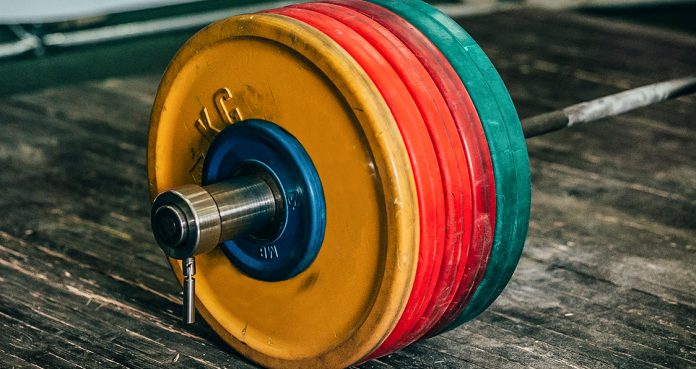
Landmines are one of the most underrated exercises. You could perform the landmines as a compound or unilateral lift to fix your strength or muscles imbalances. There is a variation of the landmines you can perform to train every muscle group.
The landmine exercises force you to use your muscle stabilizers which can help strengthen your core. In a landmine exercise, you place one end of a barbell in a corner where it doesn’t move or use a T-bar machine.
Landmine 180s
If you know about the landmine exercises, it’s probably because of the 180s. The 180s are arguably the most popular landmine exercise. 180s work your obliques and core and will set them on fire. Get in position by standing with a shoulder-width stance.
Extend your arms forward and grab the end of the barbell with both your hands. Your hands should be in front of your face at the starting position. Take a deep breath and rotate to the right side until the end of the barbell is at your waist level. Return to the starting position while breathing out and repeat on the left side.
Landmine Squats
If you’re someone who has back problems and can’t perform the orthodox squats with the barbell on your back, the landmines squats are a lifesaver for you. The landmine squats take off all the tension from your back and put them on your quads.
Stand with a shoulder-width stance and grab one end of the barbell with both your hands. Bend your arms at your elbows and place your hands in front of your chest. Inhale and perform a squat. Return to the starting position while breathing out. Repeat for recommended reps.
Single-Arm Bent Over Landmine Rows
Performing the bent-over rows on a landmine setup can turn the compound exercise into an isolation lift. You can perform the single-arm bent over landmine rows with your body parallel or perpendicular to the barbell.
Both the variations will give the barbell a different movement pattern and target your back uniquely. Make sure you’re not just going through the motions. Hold and contracts your muscles at the top of movement while performing each exercise.
Landmine Shoulder Press
Landmine presses are a killer shoulder exercise. You should make the exercise a part of your arsenal if you want to see some insane results. Most people make the mistake of using momentum by pushing through their legs while performing the landmine presses.
You need to keep a strict form to get the most out of this exercise. The jerking motions can reduce the tension on your shoulders and divert it to secondary muscles like your arms and legs.
Single-Leg Landmine Romanian Deadlifts
The single-leg landmine Romanian deadlifts might be one of the hardest compound exercises to perform. The main objective of the landmine RDLs is to put tension on your stationary leg while getting the maximum height with your back leg.
You don’t need to worry too much about touching the floor with the barbell. Stand perpendicular to the barbell (this will give you a similar feeling as the dumbbell RDLs) and place your feet right behind the end of the barbell. You should use your free arm to balance yourself without obsessing over which side your arm should point towards.
Have you ever tried one of these exercises? Let us know in the comments below. Also, be sure to follow Generation Iron on Facebook, Twitter, and Instagram.
Header image courtesy of Envato Elements
Pro Women’s Physique Competitor Jennifer Hernandez Has Reportedly Passed Away
Jennifer Hernandez, a Pro Women’s Physique bodybuilder, has died.
Tragic news has hit the bodybuilding world this weekend as early reports indicate that pro bodybuilder Jennifer Hernandez has passed away. Hernandez was a Pro Women’s Physique competitor. She was 58 years old. At the time of this writing, the cause of death has not been revealed.
While there has been no official announcement made by friends or family, sources close to Generation Iron have reported her passing. Many online have already started sharing the news and condolences on social media – including former pro bodybuilder and coach Dennis James.
“I’m still in shock and can’t believe we lost you Jen. Rest In Peace Jennifer Hernandez???You will be missed forever and always.”
Jennifer Hernandez was a talented Women’s Physique athlete who was last seen competing at the Tampa Pro 2021. Hernandez has been competing in bodybuilding since 2005 and earned her pro card in 2009 at the age of 47. More than a talented athlete – she was seen as an inspiration to many and a kind dear friend to those who knew her.
Jennifer Hernandez’s goal was to inspire and promote healthy lifestyle practices and fitness to the masses – focusing on a positive mindset and optimism toward achieving goals and believing in oneself. The mission statement on her personal website perfectly describes the kind of attitude she brought into bodybuilding:
“We all have the ability to shine bright like a star. We have the power to live life to our fullest potential. My goal is to teach the world one person at a time about cherishing yourself, your body, your spirit and pursuing your dreams.
Maintaining a healthy lifestyle with good nutrition, exercise and a positive mind set are the basic building blocks to being strong, confident, happy and successful.
I want to help you live a life filled with good health, positive energy, happiness and love by teaching you to make better lifestyle choices. Let’s spread more love and happiness in the world.
I am a role model, fitness competitor, personal trainer, teacher, competitor, mom, grandmother and leader.
I AM INSPIRED BY THE DESIRE TO INSPIRE YOU!”
While there has been no cause of death announced at this time, it seems her passing was sudden as here social media remained active up to one week ago.
News of Jennifer Hernandez’s passing is a hard pill to swallow after a very tragic year within the sport of bodybuilding. While seemingly unconnected, there have been many relatively young deaths of athletes in 2021 including George Peterson’s sudden and tragic passing days before the Mr. Olympia.
Hernandez’s death, like many others this past year, may have been due to a variety of reasons. Despite this, there has been a growing cry for better health conditions for the sport. Including Mr. Olympia owner Jake Wood who had made a comment advocating for better health practices put in place by leagues for pro bodybuilders. To be clear, there is no evidence that Jennifer Hernandez’s death was directly related to her bodybuilding lifestyle.
This story is still developing and Generation Iron Fitness Network will continue to provide updates as they become available. The entire Generation Iron staff would like to send condolences to friends and family during this difficult time.
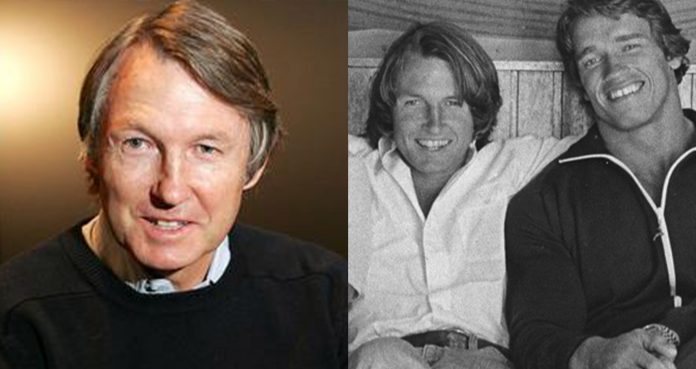
George Butler, ‘Pumping Iron’ Director And Producer, Has Died At 78
Pumping Iron director and producer George Butler has passed away.
George Butler, a bodybuilding icon and director of the classic documentary Pumping Iron has died at 78 years old. Butler and his films helped launch the careers of Arnold Schwarzenegger and Lou Ferrigno – while also bringing the sport of bodybuilding as a whole into the mainstream. He helped inspire multiple generations of fans and athletes to this day.
The news was acknowledged by Arnold Schwarzenegger on his official Instagram page – where he paid tribute to the iconic filmmaker. Sources claim that his health was in rapid decline over the past year. A specific cause of death has not been revealed at this time.
Arnold Schwarzenegger’s post on Instagram was brief – but also written within the image post included a more in-depth reaction and reflection on the man who helped bring his career into the spotlight.
Arnold Schwarzenegger’s Tribute To George Butler
“When I think about all of the people who were responsible for the growth of bodybuilding and the sport’s crossover to the mainstream, two of the first people to come to mind are, without any doubt, George Butler and Charles Gaines. ‘Pumping Iron’, the book and the movie, drew the general public in to our strange little niche sport and brought fitness – and the Austrian with an unpronounceable name and a funny accent – to the masses. I was saddened to hear the news of George’s passing. He was such a talent, he had a fantastic eye, and he was a force for the sport of bodybuilding and the fitness crusade. My thoughts are with his family.”
– Arnold Schwarzenegger
George Butler, Pumping Iron, and Bodybuilding
It’s hard to imagine a time before Pumping Iron. While the sport today is still niche in comparison to mainstream sports as a whole – there was a time when bodybuilding was so underground that no one even knew about it. Pumping Iron changed all of that. Not only did it help launch Arnold Schwarzenegger’s career into a blockbuster action icon – it brought bodybuilding into the mainstream and helped make the sport what it is today.
This is all thanks to George Butler, the man who produced and directed the film. Butler alongside his friend Charles Gaines, first published the book Pumping Iron introducing the world to a number of now bodybuilding legends such as the aforementioned Arnold Schwarzenegger, Lou Ferrigno, Ed Corney, Franco Columbu, and many more.
Shortly after the book was published, George Butler and Charles Gaines worked together to produce a documentary of the same name. The film focused on the 1975 Mr. Universe and Mr. Olympia competitions. As we all know now, the film primarily focused on Arnold Schwarzenegger battling for his sixth Mr. Olympia title. The film also posited Lou Ferrigno as his rival to knock him away from victory.
The inception of Pumping Iron started when George Butler, along with Charles Gaines, were assigned to cover niche sports – including bodybuilding. Butler met and spoke with Arnold Schwarzenegger who’s personality was so charismatic that Butler and Gaines conceived the idea of a book and film.
The rest, as they say, is history. Pumping Iron is now a pinnacle film in the sport’s history. This media company’s very existence is due in part to George Butler and Pumping Iron. Our original bodybuilding documentary film, Generation Iron, was a spiritual sequel and attempted to recapture the spirit but for the modern era of athletes. Generation Iron’s success paved the way for the entire GI media network – that has now been running since 2013.
George Butler’s Filmography
Pumping Iron (1977)
Pumping Iron II: The Women (1985)
In the Blood (1989)
The Endurance: Shackleton’s Legendary Antarctic Expedition (2000)
Shackleton’s Antarctic Adventure (2001)
Going Upriver (2004)
Roving Mars (2006)
The Lord God Bird (2008)
The Good Fight (2010)
Tiger, Tiger (2015)
Tiger, Tiger: The IMAX Experience
There are no words for how essential George Butler was to the world of bodybuilding. He has inspired millions of fans and athletes. He is part of the bedrock from which modern bodybuilding as it is today exists. The entire staff of Generation Iron sends condolences to the friends and family of George Butler.