
Tag: Bodybuilding
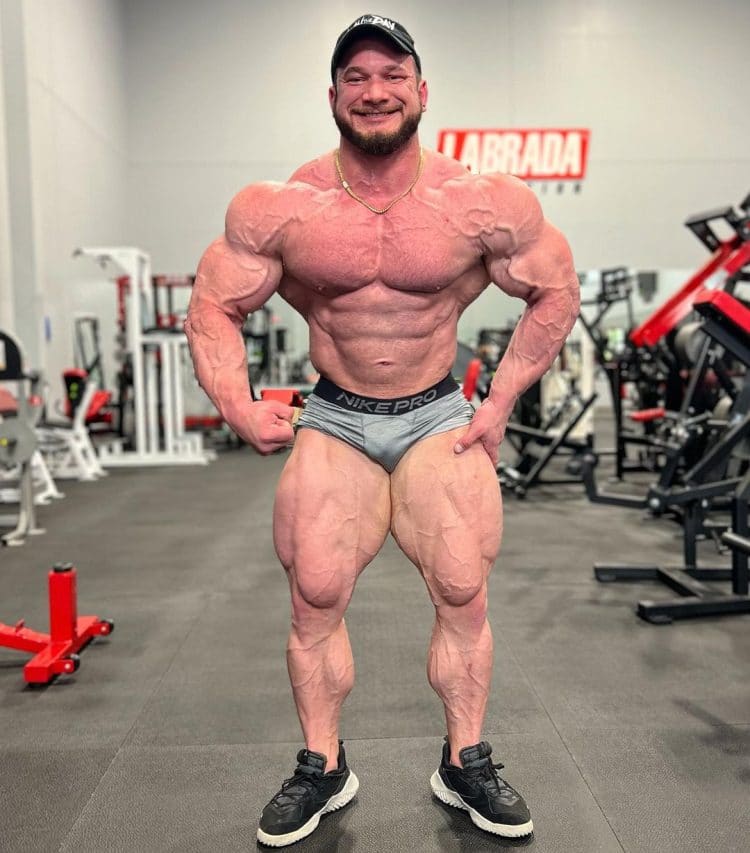
Hunter Labrada Shares Tips for Breaking Plateaus & Changes in Off-Season & Prep Training
American bodybuilder Hunter Labrada is on a mission to reassert himself in the mix of title contention after an uneventful Olympia showing. He did not get discouraged by the setback and got back to making the necessary changes. In a recent video posted on YouTube, Labrada shared his thoughts on how to break through plateaus and revealed the changes in his training in the off-season and prep.
Hunter Labrada, son of IFBB Hall of Famer Lee Labrada, entered the Men’s Open division as a legacy competitor in 2020. He dominated the competition at the Tampa Pro with his enormous muscle mass, size, and posing skills and took home the top prize in his maiden IFBB show. The win made way for him to join the lineup for Mr. Olympia, where he placed eighth in his first outing. He scored gold the following year at the 2021 Chicago Pro before improving his standing to fourth place at the 2021 Mr. Olympia.
Labrada’s latest appearance happened at the 2022 Mr. Olympia last December. He didn’t bring his best form on stage and dropped down to seventh place. Following the result, Labrada expressed his frustrations with his performance. His coach Ben Chow admitted he came in flatter than anticipated as there were troubles in timing his peak. Given that he was not in the top six, Labrada eyed competing in two shows for two reasons; to qualify for the Olympia contest and figure out his peak. He started a new diet and training routine for the off-season earlier this year.
Hunter Labrada via @hunterlabrada
Labrada regularly educates his fanbase on a variety of topics related to fitness and bodybuilding. He revealed his full day of eating along with the supplements he was consuming two months ago. Then, he followed up by offering tips on building lower body muscle and smoked a heavy leg workout. One of his biggest ambitions for the season is to lean out his midsection. He detailed three ways of using vacuums to enhance core control.
Last month, Labrada gave fans a look into his preparations for the upcoming guest posing appearances at the Emerald Cup and the Pittsburgh Pro. He weighed in at 283 pounds while fasting and listed the new diet he was utilizing to get ready for the shows.
Hunter Labrada shares tips on breaking through plateaus
In a recent video posted on YouTube, Hunter Labrada shared his thoughts on pushing past any point of stalled progress in the training room.
“If I am stuck on a set and I’ve gotten the same amount of reps more than two sessions in a row what I’m probably going to look to do is employ some kind of intensity technique or a plateau breaker if you will,” said Labrada. “That would probably be in that case the rest pause, doing it for as many reps as I can, which should be a tie for the amount of reps I got last week and the week before, taking 10 breaths resting 15ish seconds and then going as many as I can again aiming to get three or four more. Doing that a couple weeks in a row and then going back to building that straight set.”
Related: 4 Methods For Busting Through Lifting Plateaus
Labrada reveals the difference in training off-season and in prep
Labrada gave his take on the changes in training during the off-season and in prep.
“Not a damn thing. Regardless of the period of the year that I’m in whether it’s a contest prep, an off-season, a health phase, this that or another, I am still training the same way. Very much so logged progressive overload training. The only thing changing is the load and the volume so in the off-season obviously I’m stronger. I’m full of food, body fat’s a little higher, the load and volume might be a little higher although I’m very low volume even in the off-season as we go into the prep.
“The poundages will go down a bit because obviously strength takes a dip but the variable I like to play with a little more is reducing the volume. Heading into a prep I might be doing three working sets on half the exercises I’m doing and then two on others by the end of prep I might be down on two on a lot of them and even on legs days like down to one on most of the exercises.”
Hunter Labrada opened up on developing the gym and bodybuilding mindset last month. He encouraged the more experienced lifters to set realistic goals and allow themselves time to build the skill. A few weeks later, Labrada offered tips on growing weaker calves in a straightforward way. He also laid out a detox drink that helps boost gut health and improve digestion earlier this week.
His latest update will help fellow gym-goers and fitness enthusiasts get back on track for progress and adjust their training routine throughout the year accordingly.
You can watch the full video below.
Published: 7 May, 2023 | 2:23 PM EDT
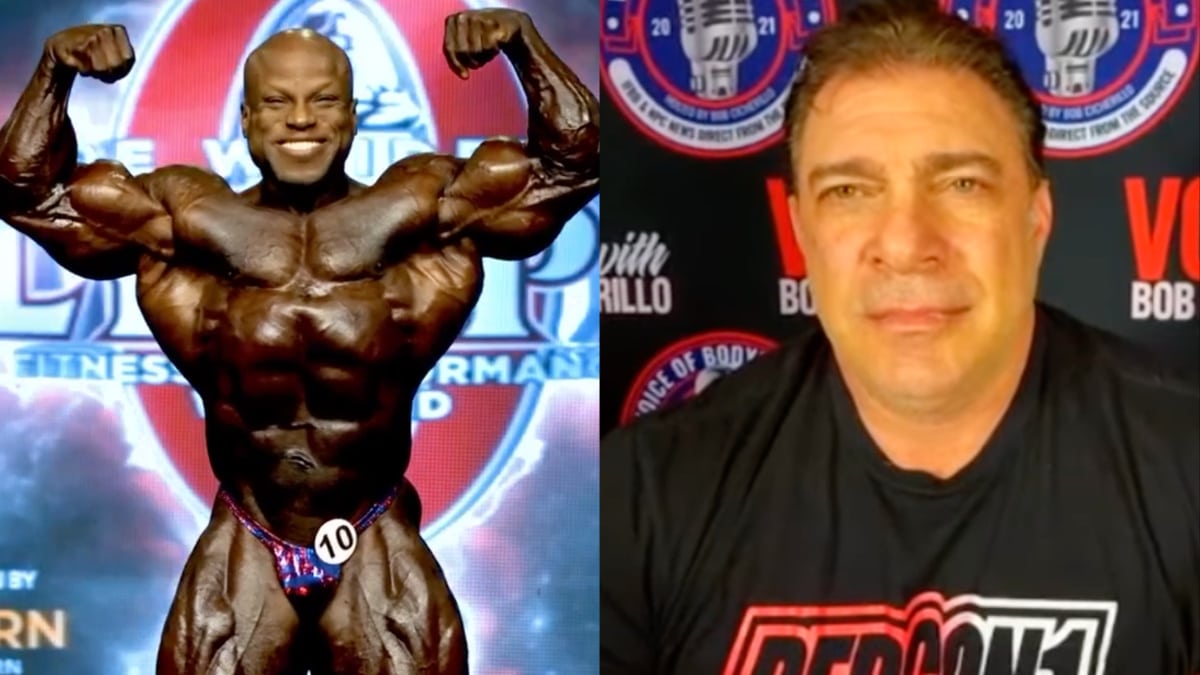
‘Only an Idiot Would Want to Get Rid of 212’: Bob Cicherillo Issues Fiery Response
IFBB Pro League athletes’ representative Bob Cicherillo is a revered analyst of the game known for his often hot takes. He isn’t afraid to ruffle some feathers no matter the topic at hand. In a recent video uploaded on YouTube, Cicherillo issued a fiery response against those calling for the end of the Men’s 212 division.
The Men’s 212 class was first introduced as the 210-pound division in 2008. The IFBB experimented with different weight caps before settling on the 212-pound mark in 2011. Since its inception, it has proven to be an increasingly popular category in the sport.
Numerous contenders have made their splash in other divisions, such as Former 212 competitor Hadi Choopan, who created history by winning the Men’s Open division at the 2022 Mr. Olympia. Former 212 Olympia champ Derek Lunsford switched to the Open group last year and scored silver at the Olympia.
There has been a movement questioning the validity of the 212 class in the wake of the success some contenders found in the Open. Bodybuilding veteran Lee Priest suggested that the league remove the category from the Olympia event and add the prize money to the Open section. He believes the top 212 contenders would be able to hold their own against the mass monsters based on the performance of Choopan, Lunsford, and former Olympia king Kamal Elgargni.
Men’s Open standout Iain Valliere isn’t a fan of the 212 either. He voiced his disapproval of the group and theorized contenders should work on developing their abilities to compete in the Open instead. On the other hand, Lunsford argued the 212 needed to stay based on the opportunities it provided athletes who were working their way up.
Bob Cicherillo issues a fiery message for those wanting the 212 division to end
In a recent YouTube video, Bob Cicherillo hit back at those calling for the elimination of the Men’s 212 division.
“There’s some people calling for the demise of the 212,” said Cicherillo. “Let me just clarify that. Those aren’t people those are idiots. Let’s get that clear. Only an idiot would want to get rid of a division that’s been so successful and provides history for people.”
“[212] gave the chance for Joses, Felix Lewis’, and everybody else that we can bring into the discussion an opportunity to turn professional, compete in an even level playing field against people that were within 10 pounds, not 50 or 70 pounds. It’s literally given careers to people. Ask these guys if they want to get rid of it. We provide a platform that people can literally go from one division, they outgrow it and go to another.”
“The Hadi Choopans and Derek Lunsfords, these are guys that were able to transition. If you’re that good god bless go to that but why would we want to get rid of it for the other 99% of guys who have done very well and again has provided contracts, guest postings, starting businesses, representing supplement companies. I’m sure Flex Lewis would have done very well in the Open but it’s a little more impressive when you’re a seven-time Olympia champion.
Bob Cicherillo faced heat for his criticism of former two-time Mr. Olympia Mamdouh ‘Big Ramy’ Elssbiay two months ago. He remained steadfast in his suggestions to the Egyptian to move on from professional competition and doubled down on it following the conclusion of the 2023 Arnold Classic. The pair made peace weeks later as Ramy indicated no plans to hang up his posing trunks just yet.
Cicherillo believes Ramy would compete at the upcoming 2023 Mr. Olympia. He backed Choopan to defeat fellow Open sensation Nick Walker at the event. However, he favored Samson Dauda to triumph over all after his Arnold Classic win.
The 57-year-old extended his support for Kamal Elgargni to add the 2023 Masters Olympia title under his belt last month. He’s confident the former 212 champ has what it takes to come out on top of the show without adding size.
The 212 division has enabled many contenders to make a name for themselves in bodybuilding and it’s hard to imagine what the sport would look like without it given its immense success.
You can watch the full video below.
Published: 7 May, 2023 | 12:33 PM EDT
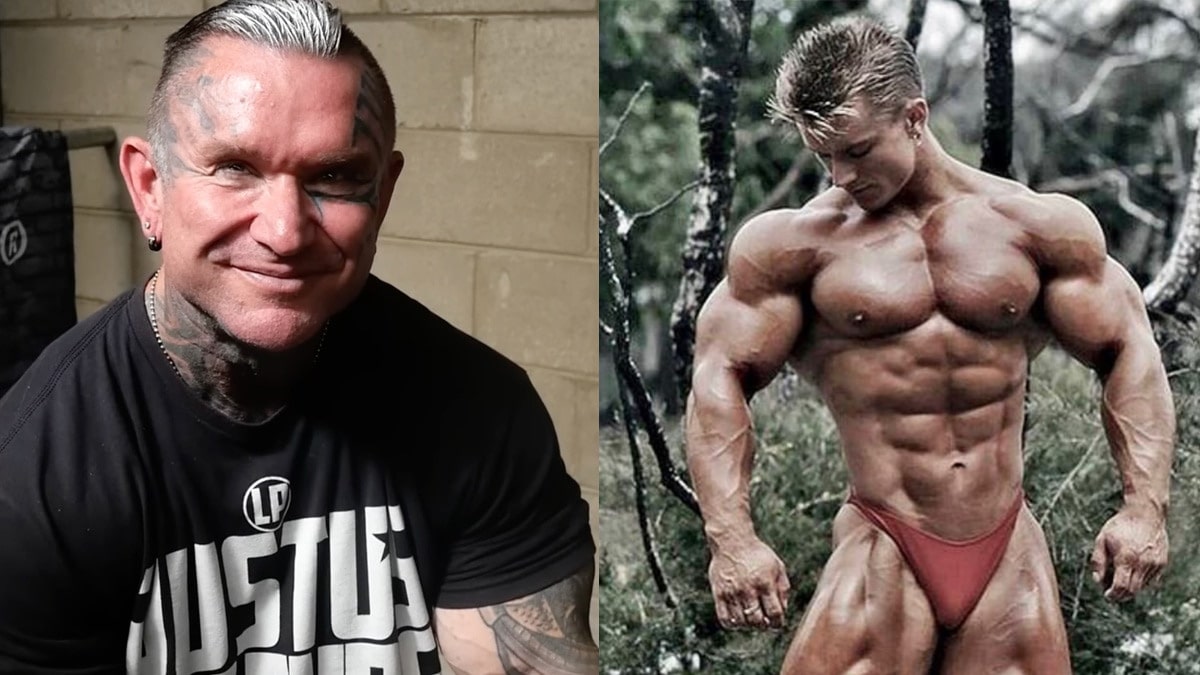
Lee Priest Reveals Changes in Training & Diet from His 20s to 50s
Australian bodybuilding veteran Lee Priest made a name for himself with his insane conditioning levels and longevity. He’s one of the few competitors who continued to perform even after stepping away from professional competition. In a recent video uploaded on YouTube, Priest shared the changes in his training and diet from when he was in his 20s to now that he’s in his 50s.
Lee Priest started his career in the IFBB Pro League as a Men’s Open contender in 1989. He became one of the youngest athletes to earn a Pro Card at the age of 20. Boasting gigantic arms with razor-sharp muscle detail, he worked his way up the ranks with frequent contest appearances. He secured an invite to the Mr. Olympia competition in 1997, where he placed sixth in his debut.
Priest was a regular feature of the Olympia shows with six participations between 1997 and 2003. While he did not win the Sandow trophy, he went up against the likes of eight-time champ Ronnie Coleman, six-time champ Dorian Yates, Shawn Ray, and four-time victor Jay Cutler. He scored his biggest win at the 2006 Ironman Pro and made his final IFBB appearance at the 2006 Grand Prix Australia.
Lee has not lost his passion for working out and maintains a high level of personal fitness. He opened up about taking Deca (Nandrolone) in his teenage years to build muscle and how he’s managed to retain it despite facing health challenges such as a neck injury last November. Then, he offered his expertise on performing the decline bench press for optimal chest muscle growth. He cautioned his fans against loading up too heavy as the decline motion could increase the risk of injuries.
Earlier this year, Priest gave fans a look into building gigantic forearms. He revealed he never trained the muscle group suggesting his refined forearms were down to genetics and overall training. He listed eight exercises that could help grow weak forearms. The 50-year-old went on the offensive against the Men’s 212 division a few months ago. He believes the 212 competitors could hold their own against some of the freakiest mass monsters of the Men’s Open class if they brought their best package.
Following the announcement of the returning 2023 Masters Olympia, Priest expressed a desire to complete the show had it not been for his chest atrophy. Two months ago, Priest laid out tips for effectively using preacher curls to maximize biceps gains and pump.
Priest weighed in on the Minnesota court’s ruling permitting transgender athletes to compete in women’s sports weeks ago. He bashed the decision for being unfair to women and urged the females to go on strike in protest.
Lee Priest reveals changes in his diet & training from his 20s to his 50s
In a recent YouTube video, Lee Priest shared how his training and diet protocols have changed over time from when he was in his 20s to now that he’s entering his 50s.
While he continues to train in a similar fashion, he needed to make some adjustments due to his injuries.
“The only thing that’s probably changed now is the weights,” said Priest. “Until I had this or the neck injury from the car accident, exactly the same. I’d still go as heavy as I could because I get good heavy days. But now with injuries I just gotta work around things. But overall still exactly the same as when I started really.”
“It’s good to focus on your form and also seated you can’t cheat as much and you can’t go as heavy. If you do have a back problem it’s probably easier to do it seated as well rather than just bending over but whatever feels comfortable for you. Don’t be one of those people where they go well he does them seated I have to do them seated when you could feel it better standing up. Everyone’s going to be different because their limbs are longer or shorter. That’s fine what works for you. I say do both if you can.
“[Recovery is] about the same really. I sometimes go sort of hard on leg still but not as heavy. I do a good amount of weight higher reps but really focus on the quads and it still might be sore for two or three days at the most after but still recover pretty quick as long as I’m getting the sleep, the food in. I can still train and not eat a lot of food and not sleep well and feel like sh*t.”
He theorized burning fat might be tougher but he manages to stay in good shape with cardio while being around 211-213 pounds currently.
“Now, maybe burning body fat gets harder as you get older. Metabolism might slow down but I still do lots of cardio so it’s good for burning fat and keeping healthy.”
“2 hours minimum of cardio. An hour in the morning and another in the afternoon. Then I’ll walk the dogs as well so anywhere between two to three hours a day.”
“I’m sitting around 96-97 kilos (211-213 pounds). It’s a comfortable weight. I’m not force feeding myself. Sometimes I only have two meals a day so I could probably go heavier but I can’t be bothered.”
Lee Priest voiced his disapproval of the qualification requirements for the 2023 Masters Olympia last month. He encouraged the organizers to raise the age criteria from 40 to 50+ with the condition that the athlete did not compete for at least two to three years.
Based on the latest update, it’s evident Priest continues to enjoy working out and leading a healthy lifestyle even without competition.
You can watch the full video below.
Published: 7 May, 2023 | 11:07 AM EDT
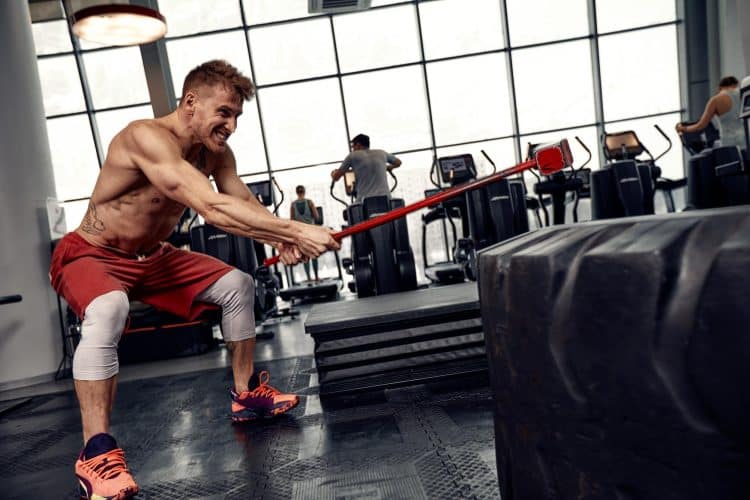
How to Avoid Fatigue: Tips for Post-Exercise Recovery!
Are you tired of being tired after a workout and dread that feeling of exhaustion that hits you like a ton of weights after hitting the gym? You’ve come to the right place.
Many people start exercising because they want to feel energetic and invigorated. However, working out has the exact opposite effect on some. They feel fatigued and drained after a workout and end up dragging their feet through the rest of the day. People that train late in the evening don’t have it any better, either. Exercise fatigue can make it hard to fall asleep.
Furthermore, training fatigue and exhaustion don’t discriminate between beginners and advanced lifters. It can plague the training experience of lifters across all experience levels. Depending on several factors, a lifter might experience fatigue immediately after a workout or the following day.
Chronic fatigue can hamper your ability to recover after a workout, which can impede your strength and muscle gain journey, inhibit your performance in upcoming workouts, and increase your risk of injury.
Contrary to what most lifters have come to believe, post-workout fatigue doesn’t have to be the norm. Making a few changes to your pre-training and post-workout regimen can reduce or even eliminate the feeling of exhaustion and help your body recover more efficiently.
In this article, we cover how to avoid fatigue, the most common reasons for fatigue after a workout, and what you can do to maximize your workout performance while powering up your post-workout recovery. So, put down that Red Bull, and listen up.
Reasons for Fatigue After a Workout
In contrast to the prevailing view held by most lifters, what you do immediately after a workout session is not the only factor responsible for a post-training crash. Multiple factors could be at play if you feel tired and exhausted after a training session. You must analyze your entire lifestyle to check where you are lacking. Here are the factors to consider while troubleshooting your post-exercise fatigue:
Training Intensity
Your training intensity has a significant impact on your post-workout experience. You’re more likely to experience fatigue after a high-intensity training regimen than after a low to moderate-intensity workout. HIIT (high-intensity interval training) workouts involve short bursts of high-intensity exercise followed by brief periods of rest or lower-intensity exercise.
Although the popularity of HIIT workouts is on the rise, only a few trainers know how to program HIIT sessions correctly to maximize results and limit post-training fatigue.
Additionally, lifters that are bumping up their training intensity are at higher odds of experiencing prolonged training fatigue. Trying new exercise programs, lifts, training methods, and advanced training principles can also lead to post-workout exhaustion.
How to avoid exercise fatigue due to high training intensity:
You must gradually increase your training intensity and limit your HIIT workouts to less than 45 minutes to restrict the risk of post-training fatigue. Furthermore, you must cut back your training frequency if you still experience fatigue after lowering your training intensity.
Caffeine
Caffeine, due to its energy, focus, and alertness-boosting capabilities, is the darling of the fitness community. Pre-workout supplements are loaded with caffeine to give you a solid punch of energy. Recently, the sports supplement market has witnessed a flood of energy drinks. Bros that don’t have the budget for a pre-workout supp or energy drinks usually throw down espresso shots to fire up for their training sessions.
However, caffeine is also notorious for causing post-workout crashes. The potency of a caffeine-loaded pre-workout supplement is directly proportional to the harshness of its post-workout crashes.
Plus, caffeine is a diuretic and can cause dehydration if consumed in large quantities, leading to fatigue and decreased athletic performance. It doesn’t end here; consuming too much caffeine can interfere with your sleep cycle, which can add to the feeling of exhaustion and fatigue.
How to avoid exercise fatigue due to caffeine:
If you cannot hit the gym without caffeine, you must regulate your dosage to avoid post-workout crashes. Furthermore, you could use a stim-free pre-workout supplement to get all the benefits of a pre-training sup, minus the crashes.
Dehydration
Proper hydration is crucial for optimal training performance and recovery. During a workout, your body sweats to regulate your body temperature. Dehydration strikes if you don’t drink enough fluids to replace the lost sweat, leading to a decrease in blood volume and blood pressure, which makes it harder for your heart to pump oxygen and nutrients to your muscles.
You’ll fatigue more quickly and often if your muscles don’t get enough oxygen and nutrients during a workout. Muscle cramps and stiffness are a couple of signs of dehydration, which can further lead to chronic fatigue. [1]
Furthermore, dehydration during a workout can cause your core body temperature to rise, which can lead to heat exhaustion or even heat stroke in severe cases.
How to avoid exercise fatigue due to dehydration:
You must keep yourself hydrated before, during, and after a workout. Plus, if you are an endurance athlete or sweat a lot during your training sesh, you must ensure you consume an appropriate amount of sodium and electrolytes to avoid dehydration. Sports drinks such as Gatorade are excellent for keeping you hydrated throughout an intense workout.
You must drink at least a gallon of water each day to keep yourself hydrated and limit the risk of dehydration. The American Council on Exercise recommends drinking 17-20 ounces of water 2-3 hours before exercise, 7-10 ounces every 10-20 minutes during exercise, and at least eight ounces of water within 30 minutes of exercise.
Low Blood Sugar
Your body uses stored glycogen as an energy source during your workouts. People following a calorie-restrictive diet are at a higher risk of exhausting their glycogen reserves during moderate to high-intensity workouts, which can cause low blood sugar and fatigue.
If your blood sugar levels drop too low, your body becomes incapable of producing enough glucose to fuel your muscles properly, leading to fatigue. Plus, low blood sugar can lower your insulin levels, reducing your ability to store glycogen. It leads to your muscles tiring more quickly during exercise, leading to fatigue.
How to avoid exercise fatigue due to low blood sugar:
Eat balanced meals before and after a workout to limit the risk of low blood sugar levels. The meals should contain high-quality complex carbohydrates to replenish your glycogen reserves and avoid fatigue. Additionally, you must eat a carbohydrate-rich snack during longer workouts to prevent low blood sugar.
Lack of Sleep
A lack of sleep can make you feel tired and lethargic, especially after a high-intensity workout. Many people get grumpy after a bad night’s sleep, which can hamper the quality of their workouts.
You must sleep seven to eight hours each night to ensure optimal time to recuperate between workouts. Sleep deprivation can cause overexertion, which can lead to chronic fatigue.
How to avoid exercise fatigue due to lack of sleep:
Sleeping in a cold room can help you doze off quickly and increase the time you spend in deep sleep, which can improve your recovery. You should avoid screens before bedtime and meditate to improve your sleep cycle. Using melatonin and magnesium supplements can also improve your sleep quality.
Poor Nutrition
A poor diet is one of the leading reasons for prolonged fatigue. For optimal functioning, your body requires multiple nutrients, including carbohydrates, proteins, fats, vitamins, and minerals. Not meeting your daily macro and micronutrient goals can lead to fatigue after exercise.
While a lack of carbohydrates can cause fatigue due to glycogen store depletion, protein deficiency can impair muscle growth and recovery. Improper fat intake can cause joint health issues.
How to avoid exercise fatigue due to poor nutrition:
Ensure that you meet your daily caloric needs and follow a macro and micronutrient-balanced diet to promote muscle and strength gain and limit fatigue. Seek expert help if you don’t know how to design a diet program, as it can significantly improve your energy levels.
Overtraining
Pushing too hard in the gym can lead to overtraining. It beats up your central nervous system, which limits your body’s ability to recover from your workouts. Prolonged workouts, using too many advanced training techniques, or increasing your workout volume and intensity disproportionality can lead to overtraining. [2]
Skipping rest days or not allowing your body enough rest between workouts is also a common cause of overtraining. Not only does overtraining cause chronic fatigue, but it also increases your risk of injury.
How to avoid exercise fatigue due to overtraining:
Diet and recovery are just as important as training, if not more. You must back up your workout regimen with a balanced diet and give your muscles enough time to recover between workouts. Lifters following an advanced training program should limit their workouts to five days a week and rest for the remaining two days.
Read also: Overtraining: How Much Exercise Is Too Much?
Medical Conditions
Medical conditions such as anemia, thyroid disorders, and chronic fatigue syndrome can lead to persistent fatigue and weakness, even with mild exercise. Furthermore, asthma, or chronic obstructive pulmonary disease (COPD), can cause shortness of breath and fatigue during exercise due to impaired lung function.
On the other hand, certain medications can also cause fatigue and weakness as a side effect. For example, beta-blockers, used to treat hypertension and heart conditions, can cause prolonged fatigue.
How to avoid exercise fatigue due to medical conditions:
You must get a doctor’s clearance before starting training if you are dealing with any medical conditions. Plus, you must also seek medical advice before bumping up your training intensity while on medication.
Tips To Reduce Post-Workout Fatigue
Here are some tips on how to avoid fatigue and exhaustion:
Active Recovery
Most hobbyist exercisers overlook the importance of active recovery in their training regimen. Active recovery after a workout can improve blood flow to your muscles, which can help deliver the necessary nutrients for recovery and limits the chances of fatigue. It also reduces muscle stiffness, lower the chances of delayed onset muscle soreness (DOMS), and lowers stress levels. [3]
Active recovery exercises like light jogging, cycling, rowing, and foam rolling are a must after high-intensity workouts. Your active recovery sessions should last between 20-30 minutes. You could also do stretching, mobility drills, or yoga at this time.
Rehydrate and Refuel
You must supply your muscles with the required nutrients to speed up your recovery process. However, rehydration and refueling should not be limited to post-workout. You must follow a balanced diet program to avoid chronic fatigue.
Reduce Stress
Stress reduction techniques can help reduce post-workout fatigue by calming the nervous system. These techniques can vary depending on an individual’s preferences and lifestyle. Some people might prefer playing video games to lower stress, whereas others might prefer listening to their favorite music.
Other popular stress-reducing techniques include deep breathing exercises, meditation, yoga, massage, or taking a warm bath. These techniques help lower cortisol levels, improve sleep quality, increase mental clarity, and reduce muscle tension. [4]
Listen To Your Body
Every individual is built differently, meaning we react to the same stimulus uniquely. An exerciser can have a higher stress appetite than their training partner. Hence, you must not try to copy other people around you. Follow a personalized diet and training program to achieve your objectives. Furthermore, constantly assess your health markers to ensure optimal recovery and reduce your risk of chronic fatigue.
Wrapping Up
Fatigue is a common occurrence among trainers that hampers performance and results in the gym. Dehydration, poor diet, sleep, low blood sugar levels, and overtraining are some of the common factors behind chronic fatigue.
You can uproot fatigue, improve your recovery, and reduce your risk of injury by using the tips mentioned in this article, including implementing active recovery, rehydrating and refueling, reducing stress, and modifying your training intensity according to your needs. Make sure that you seek medical clearance before starting to exercise if you are dealing with a medical condition. Best of luck!
References
Edwards AM, Noakes TD. Dehydration: cause of fatigue or sign of pacing in elite soccer? Sports Med. 2009;39(1):1-13. doi: 10.2165/00007256-200939010-00001. PMID: 19093692.
Kreher JB, Schwartz JB. Overtraining syndrome: a practical guide. Sports Health. 2012 Mar;4(2):128-38. doi: 10.1177/1941738111434406. PMID: 23016079; PMCID: PMC3435910.
Ortiz RO Jr, Sinclair Elder AJ, Elder CL, Dawes JJ. A Systematic Review on the Effectiveness of Active Recovery Interventions on Athletic Performance of Professional-, Collegiate-, and Competitive-Level Adult Athletes. J Strength Cond Res. 2019 Aug;33(8):2275-2287. doi: 10.1519/JSC.0000000000002589. PMID: 29742750.
Nag N, Yang X, Jelinek G, Neate S, Simpson-Yap S. Undertaking specific stress-reducing activities are associated with reduced fatigue and depression, and increased mastery, in people with multiple sclerosis. Mult Scler Relat Disord. 2022 Jun;62:103804. doi: 10.1016/j.msard.2022.103804. Epub 2022 Apr 12. PMID: 35461058.
2023 St. Louis Pro Results and Scorecards
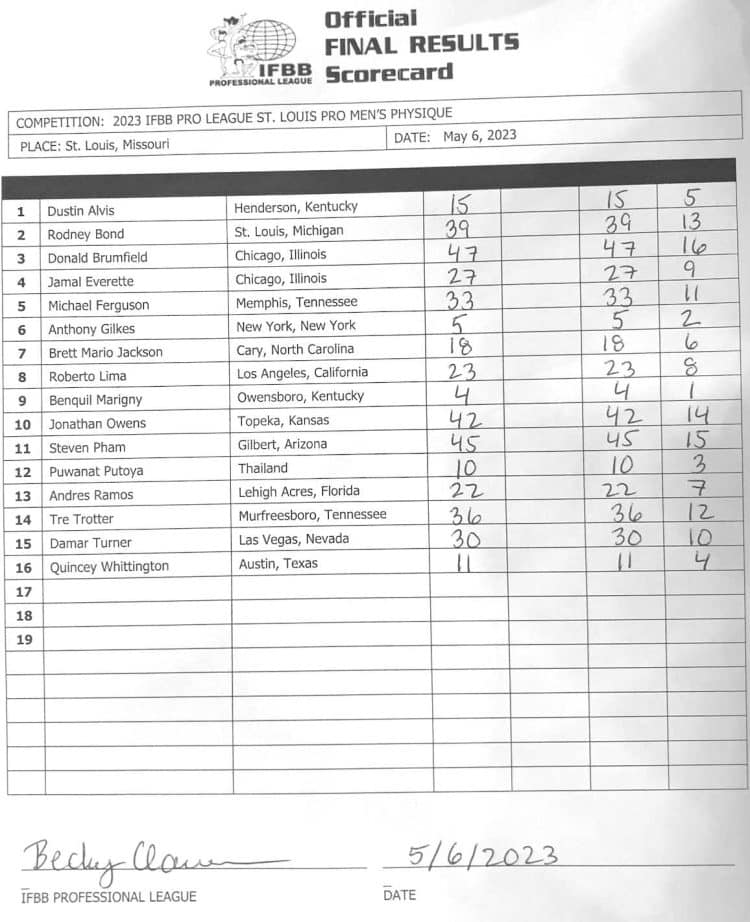
Men’s Physique and Women’s Physique contenders clashed over the weekend on May 6 at the 2023 1st Phorm St. Louis Pro. Featuring competitors in St. Louis, this show served as a qualifier for this year’s Mr. Olympia competition.
The 2023 Mr. Olympia contest takes place November 2-5 in Orlando, Florida inside the Orange County Convention Center. Athletes have until October 9 to qualify for the prestigious show. However, no competitors will be allowed entry based on points. The point system has been removed and bodybuilders must win a pro show to qualify.
With less time to earn an invite compared to 2022, athletes have a limited number of opportunities to guarantee their passage. Given the popularity of both categories this weekend, it turned out to be an extremely competitive affair.
2023 St. Louis Pro Winners
Men’s Physique: Benquil Marigny
Women’s Physique: Pamela Canfield
2023 St. Louis Pro Results
Men’s Physique
Winner — Benquil Marigny
Second Place — Anthony Gilkes
Third Place — Puwanat Putoya
Fourth Place — Quincey Whittington
Fifth Place — Dustin Alvis
Sixth Place — Brett Mario Jackson
Seventh Place — Andres Ramos
Eighth Place — Roberto Lima
Ninth Place — Jamal Everette
Tenth Place — Damar Turner
Women’s Physique
Winner — Pamela Canfield
Second Place — Emilija Martic
Third Place — Daniely Castilho
Fourth Place — Donna Williams
Fifth Place — Nadia Henriquez
Sixth Place — Elena Aviles Romero
Seventh Place — Marianne Von Gierke
Eighth Place — Marika Jones
Ninth Place — Jessica Belt
Tenth Place — Stacey A Lewis
2023 St. Louis Scorecards
2023 St Louis Men Physique Scorecard
2023 St Louis Women Physique Scorecard
Fitness Volt congratulates the winners!
Published: 7 May, 2023 | 2:06 AM EDT
Fouad Abiad, Hany Rambod Talk Nick Walker’s ‘Fuc**ng Crazy’ Mindset: ‘He Lives Bodybuilding 24/7’
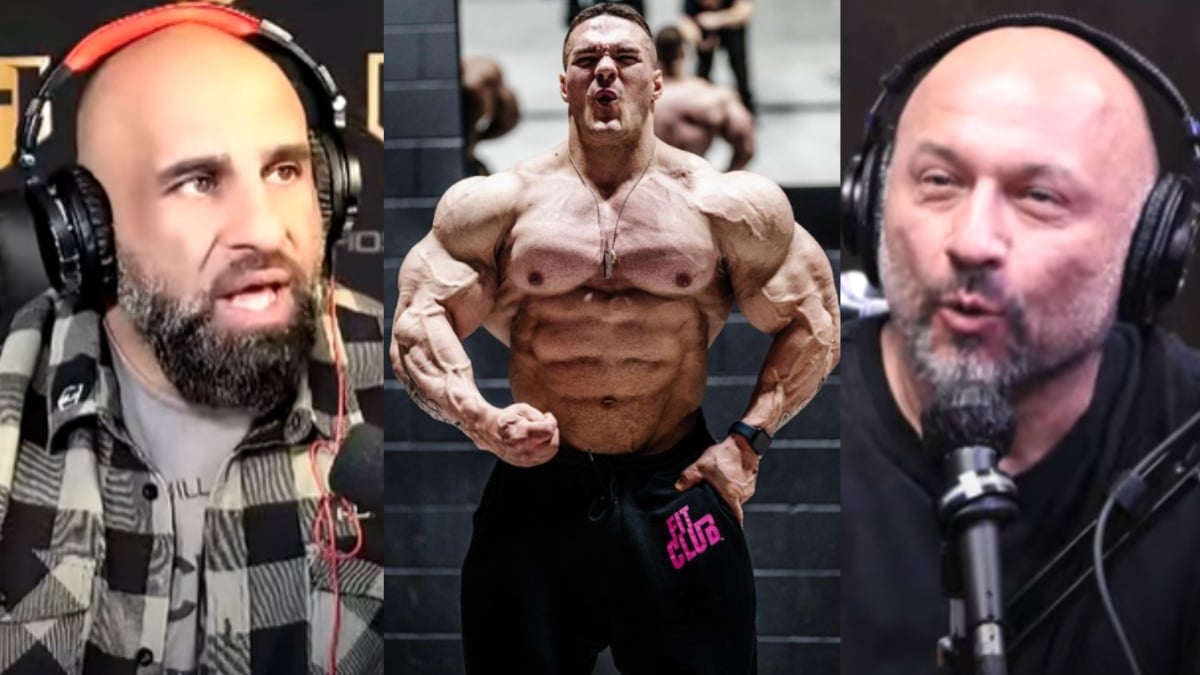
Hany Rambod and Fouad Abiad joined forces for a special sit-down discussion recently. On The Truth Podcast, Rambod and Abiad examined Nick Walker‘s championship mentality and overall impact on the IFBB Pro League Men’s Open division.
Nick Walker’s influence on the category was impossible to ignore from the moment he stepped on stage. In 2021, he gathered momentum with back-to-back victories at the New York Pro and Arnold Classic. In his first Mr. Olympia appearance, Walker proved his physique was more than just hype as he finished fifth.
Instead of defending his Arnold Classic title in 2022, Walker opted to make improvements on the sidelines, specifically to his waistline and v-taper. Before taking his talents to a second Mr. Olympia contest, Walker and Derek Lunsford stole the show at the 2022 Pittsburgh Pro, where they guest posed alongside Brandon Curry and Hunter Labrada.
Despite his status as the overwhelming favorite, Mamdouh ‘Big Ramy’ Elssbiay was unable to defend successfully. As a result, Hadi Choopan claimed the 2022 Mr. Olympia title with Lunsford and Walker leaving in second and third, respectively. Walker returned in March at the 2023 Arnold Classic but finished second behind Samson Dauda.
Even though he came up short in Ohio, Walker is confident months before his next Olympia. In a recent Mutant and the Mouth podcast, the 28-year-old made it clear he doesn’t think Choopan will repeat as champion. With the bodybuilding season picking up, Rambod and Abiad took a closer look at Nick Walker and his career trajectory.
Fouad Abiad and Hany Rambod on ‘Insane’ Nick Walker: ‘I Never Took His Confidence as Arrogance’
Abiad, who led a successful career himself, said he was shocked by Nick Walker’s determination and loyalty to the sport from the moment he met him.
“He can look at a lineup and really believe what he says when he says – some guys look at a lineup and they are like, ‘Yeah, I’m going to win.’ You’re thinking to yourself there’s no way you’re going to win. I feel like that’s disingenuous also, it’s great to be confident, but are you real with yourself? You know,” said Fouad Abiad.
“You have a relationship with Nick Walker, how do you feel about – what’s his personality do you feel compared to like an Iain?” asks Rambod.
“Here’s the thing, the first ever podcast I did with Nick was before I ever knew him and we did a one-on-one, and he was like, ‘I’m going to win the Mr. Olympia in two years.’ In my head, I was like this kid is fuc**ng crazy. But it was also what drew me to him, it didn’t seem arrogant. It just seemed like this kid’s got a lot of fuc**ng confidence, I don’t know if he’s insane but I like it, that’s kind of how I saw it,” replied Abiad.
“It was crazy for me to hear it. But then when he started competing and he won New York and then he fuc**ng won the Arnold, I’m like, ‘This kid could be fuc**ng right.’ That’s why I never took it as arrogance. I took it as a really firm belief in his own abilities.”
Given Walker’s accomplishments, Rambod believes the hype behind him was/is justified.
“I think that the bottom line is he’s backed it up,” said Rambod.
Rambod, Abiad Compare ‘WWE Character’ Blessing Awodibu & Nick Walker’s Mindsets
According to Abiad, Walker’s confidence is more genuine than Blessing Awodibu‘s. At times, Abiad suggested that ‘The Boogieman’ prefers to entertain whereas Walker is 100% committed to improving as a bodybuilder.
“On the flip side of that, do you feel Blessing does the same thing though, how is he different? Obviously, his placing isn’t there but because they’ve gone back and forth, he sounds very similar to that, but do you feel that it’s different and take aside the fact that he hasn’t been able to live up to that standard that he’s set. In general, do you feel like it was the same or that it was different?” asks Rambod.
“I hope Blessing doesn’t take any offense to this because I think Blessing is a very good bodybuilder. I think Nick lives bodybuilding 24/7 and nothing can interrupt that, not money, not girls, not work, nothing. It’s like, this is all I am here on earth to do, that’s Nick right? Blessing, is like, ‘I’m a really good bodybuilder and I think I can be great but I also like to be an entertainer.’ So, I think he’s playing a part to a certain degree. But also has a belief in himself.
But it’s not the same as Nick. At least from what he portrays, he’s not living the same way Nick is. Maybe this year, this last off season it looks like he’s made incredible progress, but more what I think Blessing is doing when he talks about winning Olympia, I think he’s kind of playing a WWE character to a certain degree,” added Abiad.
“Nick actually believes what he says, it’s not just an act.”
Following his second-place finish to Samson Dauda, Nick Walker has been open with fans about the outcome. He can understand why the judges favored Dauda’s package but underlined that his conditioning levels were enough to win on the scorecards. Walker later called for a revamp to the judging process and requested more transparency.
RELATED: Nick Walker Demolishes an Arduous Push Day Workout
Despite the setback, Nick Walker is focused on the 2023 Mr. Olympia competition, which is scheduled for November 2-5 in Orlando, Florida, where he will once again meet the two men who placed above him last year: Derek Lunsford and Hadi Choopan.
You can watch the full video below courtesy of Hany Rambod’s YouTube channel:
Published: 6 May, 2023 | 2:54 PM EDT
2023 Korea AGP Pro Classic Physique Results — Andrei Kozhokar Wins Title
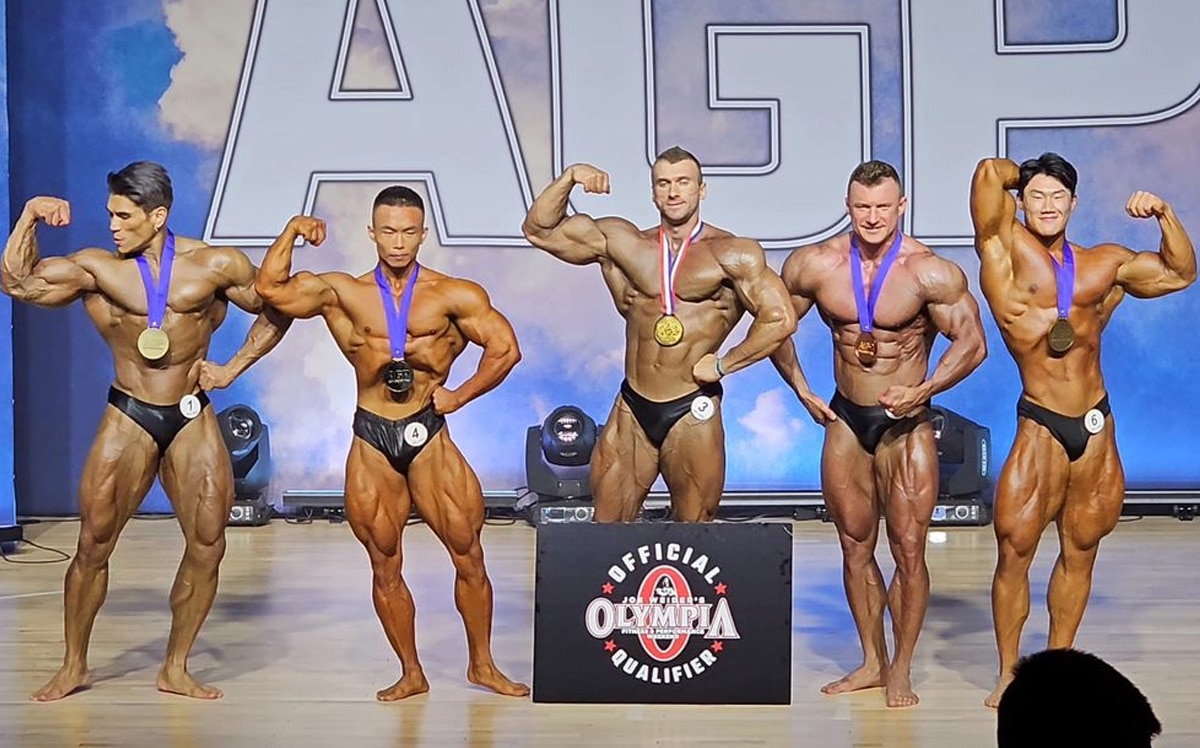
Gyeonggi State, Korea welcomed the 2023 Korea AGP Pro over the weekend on May 6. This show was an Olympia qualifier for later this year and featured competitors from the Classic Physique category.
The 2023 Mr. Olympia competition is set to take place November 2-5 in Orlando, Florida. Competitors have until October 9 to earn a respective invite to bodybuilding’s biggest competition of the year. As with all divisions outside of the Men’s Open, any athletes who finished in the top three at 2022 Olympia are automatically invited back to compete at this year’s edition of the contest.
Whoever emerges victorious this weekend will have the chance to face off against four-time Classic Physique Olympia king Chris Bumstead, who continues to make improvements year to year. With gold and a cash prize on the line, check out who won below:
2023 Korea AGP Pro Results
Classic Physique
Winner — Andrei Kozhokar
Second Place — Kai Liu
Third Place — Denis Romanov
Fourth Place — Terrence Teo Kok Hua
Fifth Place — Jun Young Yoon
2023 Korea AGP Pro Scorecard
Coming soon!
Fitness Volt congratulates the winner!
Published: 6 May, 2023 | 1:00 PM EDT
Chris Cormier Reflects on Gunter Schlierkamp Almost Defeating Ronnie Coleman at 2002 Mr. Olympia
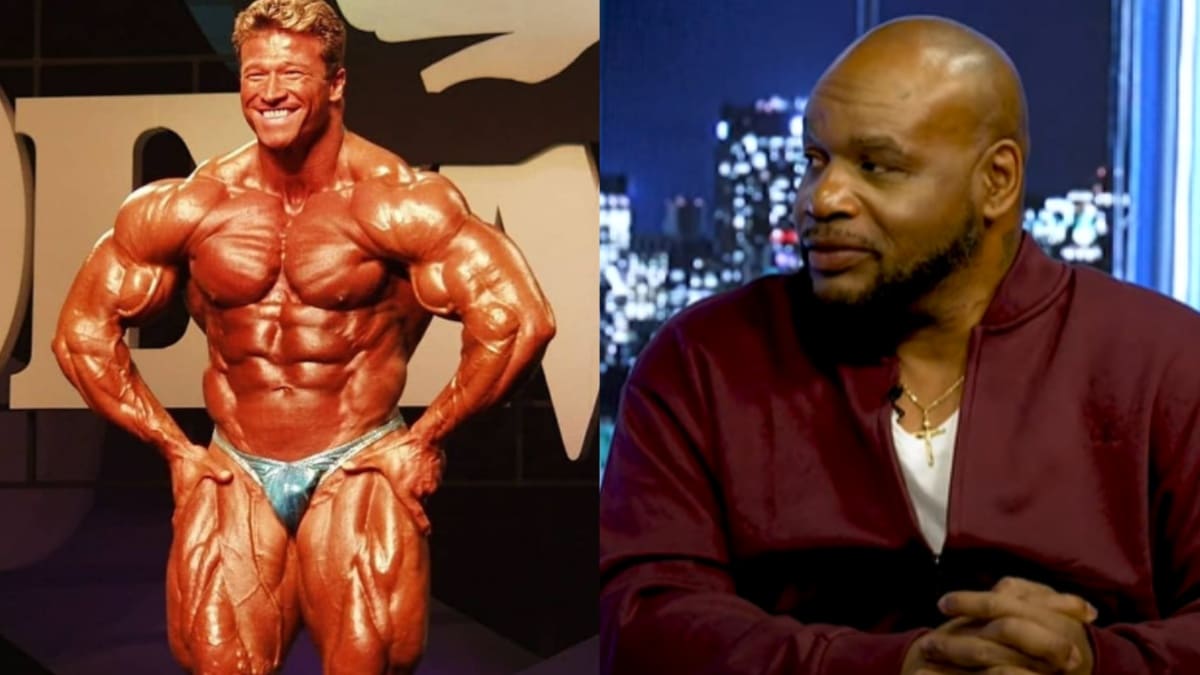
Bodybuilding veteran Chris Cormier was a mainstay in the IFBB Pro League during the 1990s and 2000s. In a recent Prime Time Muscle podcast, Cormier looked back on 2002 Mr. Olympia where Gunter Schlierkamp pushed Ronnie Coleman with one of his career’s best packages.
German pro Gunter Schlierkamp led a successful tenure lasting over 15 years. He was well respected in the industry for his size and muscularity as many predicted he would be a future Mr. Olympia winner assuming his conditioning was on par with his contemporaries. He shared the stage with several big names in the sport like Flex Wheeler, Cormier, Coleman, and Jay Cutler.
Having reflected on past Mr. Olympia competitions, Schlierkamp believes he could have placed higher at a few contests but said winners weren’t hand-picked. His remarks came after Kevin Levrone took part in The Menace Podcast with Dennis James. Levrone suspected that outside factors and politics played a role in which bodybuilders ultimately won gold and represented the brand.
In a trip down memory lane, Cormier relived his 2002 Mr. Olympia experience when Gunter Schlierkamp was leading the show ahead of Coleman during prejudging. While Schlierkamp finished fifth, Cormier said it was one of his best looks of all time.
Chris Cormier on Gunter Schlierkamp at 2002 Mr. Olympia: ‘Joe Weider Told Us He Was Giving Ronnie Trouble’
According to Chris Cormier, Joe Weider warned him that Gunter Schlierkamp was on track to challenge for gold in 2002. It should be noted that Gunter Schlierkamp defeated Coleman at the 2002 GNC Show of Strength
“We were in Amsterdam, competed in Europe, myself, Ronnie, all the crew, Dexter, we’re all there and we were a little tired we were coming from a little tour in Europe. Then, we were in Amsterdam, so we were eating the cookies, and I was eating the cookies. Yup. I was in good shape. I wasn’t worried about it. We went there to New Orleans, on our way there, Joe Weider was talking to someone at the time on the tour and expressed to us how good Gunter was looking and that he’s possibly going to be giving Ronnie some trouble – that he was in that good of shape.
Getting over to the show, you know, we were like, ‘Okay, so,’ but it’s still Gunter, it’s not like a killer. But we were still banking on beating him. And it was a lot of money at stake. We were going in there guns a-blazing also, King Kamali was also there. But he [Gunter Schlierkamp] was in great shape. They did the first call out, they called out Ronnie, they called out Gunter, and they called myself out. It was us three in that call out there.”
Looking back on the contest, Cormier said he, Coleman, and Gunter all won some shots. He highlighted that shape and aesthetics were highly favored by judges at the time.
“I think they had Gunter in first place after the symmetry round, so I’m pissed, I kind of go off on him about it after the prejudging, ‘How the hell you get first place in the symmetry round?’ I’m just kind of like, ‘What the hell is going on here?’ He and his wife at the time was going back and forth with me in the lobby, I was pissed, don’t be telling me you’re winning the symmetry round, come on man, you know you don’t deserve that shit.”
“I would win some shots, Gunter would win some shots, Ronnie would win, but at that time, it was a lot of shape and a lot of aesthetics going on in the judging and the flavor of that type of year. It just kind of hit everyone by surprise. Kevin Levrone jumped on the stage and congratulated him and was so happy for Hunter, because he thought in his mind, now the blood is in the water, now I can get Ronnie too. If Gunter can beat him, I could beat him. I was pissed till I got my check that day.”
Given Schlierkamp’s combination of size, fullness, and conditioning, Cormier and Olympia judge Terrick El Guindy agree it was one of his most complete packages to date.
“It was a good place from him but it was the time, coming from Europe and all that stuff, but I’m not going to take anything away from him because he did look good that day,” added Cormier.
“Joe Weider approached Chris Cormier and he said, ‘Gunter is looking incredible, Ronnie might be in trouble.’ What he was referring to is, I took a gander at this guy and his conditioning has never been this good and credit to Joe and Gunter, this is his best conditioning. So, I still think he needed to be more large on top. But, if you look at the hamstrings and the glutes, we had never seen that before from Gunter, and here he shows something different to the judges, to the audience, at this event in 2002,” El Guindy said.
“I think he changed dieticians and something, he did something a lot different. I know he was training with Charles Glass back in the day. He came in a lot different in that show. That was probably the peak show of his career,” Cormier shared.
The last time fans heard from Schlierkamp, he joined Dennis Wolf for a workout at 52. Fans were taken aback by his jacked biceps in retirement. Despite his ability to push the pace with some of the biggest mass monsters the sport has seen, Gunter appears happy with his downsized physique since stepping away from bodybuilding.
RELATED: History of Mr. Olympia
After reminiscing about 2002 Mr. Olympia, Cormier who placed third ahead of Gunter Schlierkamp, still believes the German native brought one his best physiques of all time.
You can watch the video below from the Olympia TV YouTube channel:
Published: 6 May, 2023 | 11:06 AM EDT
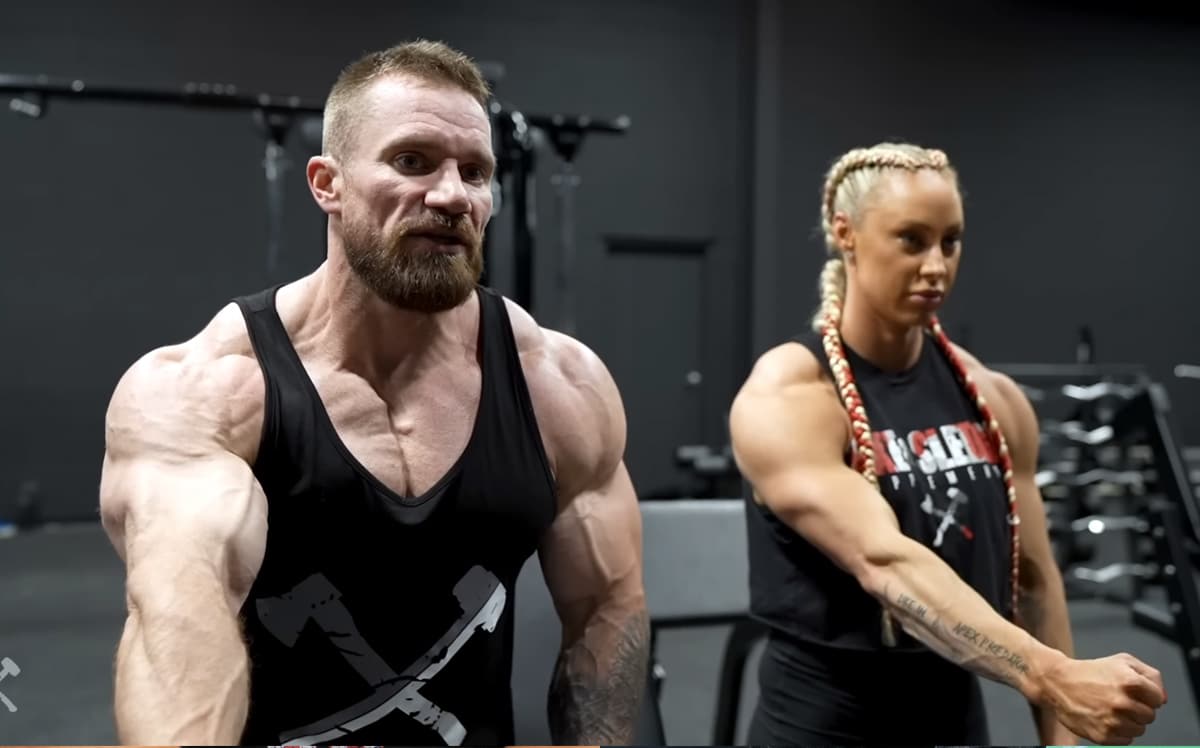
Seth Feroce Joins Missy Truscott To Build Hulking Shoulders
Veteran bodybuilder Seth Feroce is following an arduous training regime a decade after retirement. He recently partnered with Fitness Olympia winner Missy Truscott for a shoulder workout and posted the video on his YouTube channel.
Feroce competed in the 2000s era and he is a prominent voice in the sport of bodybuilding. A vocal critic of the bodybuilding lifestyle and steroid use in the sport, the 39-year-old has leaned in to high-intensity functional training in recent years to be able to do the physical activities he loves doing. However, he has reinserted weight training in the routine for complete development. In recent months, Seth Feroce has opened up about a health scare and also teased a return to the competitive stage. However, he is yet to update about the further developments.
Feroce partnered with IFBB Pro bodybuilder Missy Truscott for his recent shoulder training session. One of the foremost names in the IFBB Pro League’s fitness division, Truscott has a solid resume to boast about. She is a two-time Fitness Olympia winner and secured the wins at the 2020 and the 2022 Olympia.
Her two other Olympia appearances in 2019 and 2021 resulted in a runner-up finish. Truscott has never finished below the top two in any of the Pro shows she participated in. She has the 2021 Arnold Classic, the 2022 Boston Pro as well as the 2021 Legion Sports Fest Pro wins on her record.
Feroce acquainted Truscott with his training methods and shared some unique tips to get round and muscular shoulders. So let’s get straight to the business and see what Feroce has in store for us.
Seth Feroce and Missy Truscott collaborate for a shoulder workout
Seated Dumbbell Shoulder Press
The bodybuilders started off with the dumbbell shoulder press to work the anterior deltoid muscles. They pushed through some heavy sets of the exercise to pump the delts with blood and jumped into the next exercise.
Dumbbell Lateral Raises
Feroce and Truscott performed this exercise to work the lateral / medial delts. While anterior and posterior deltoids are activated during most pushing and pulling exercises, medial delts need specific exercises to get activated.
Feroce admitted that he had the habit of swaying his upper body during the lateral raises but addressed this problem by slightly modifying the technique. He explained:
“So I hug a tree so that my arms are like this (bent in the elbow to form a circle) and they come down so they wouldn’t be straight, they’d be bent. Then I just come up.”
This way, Feroce ensured that he was doing the exercise the right way. Additionally, he feels that keeping straight arms never appealed to him because he wanted to ‘get jacked’.
The 39-year-old always wanted to push himself beyond failure to make more gains. However, he wanted to find ways other than drop sets to go beyond failure. His pursuit led him to this technique:
“I would pick a weight and I would go to absolute failure with it and then I would cut that weight in half and do double the reps.”
“Say I’m doing the incline dumbbell press with the 140s and I get 15 reps, now I go do the 70s for 30 reps. It doesn’t matter how long I take to do it but I got to do those 30 reps.”
While this method may not be the perfect way to work for everyone, it has definitely worked for Feroce. The training partners annihilated some heavy sets of dumbbell lateral raises and moved on to the posterior deltoid muscles next.
Superset – Bent Over Dumbbell Lateral Raises and Bent Over Cable Rear Delt Rows
The duo took to this superset for working the posterior deltoids / rear delts. Rear deltoids are a small muscle group. While most people advise utilizing a full range of motion on the rear delt exercises, Feroce has a completely different lookout to work this muscle group. He explained his idea of working the rear delts using bent over lateral raises as an example.
“I found out that whenever I do the bent over dumbbell lateral raises out here like this (doing only partial reps at the bottom with approximately 40 percent range of motion) using heavier weights but a small movement, I just got them to fire up.”
Feroce is not a fan of doing six to eight reps of any exercise as he loves to get in more volume. Therefore he supersets the bent over dumbbell lateral raises with the face pulls – BUT with a twist.
Unlike the standard face pulls, Feroce bends over to this exercise so that his head is exactly between the arms.
“Then I pull down like I am doing the rear double biceps,” Seth Feroce said.
He added:
“So this is that movement right here and I pull with my rear delts that are already full of blood from getting engaged from the bent over dumbbell lateral raises. So I pull back right here, hang out here and beat the sh** out of my rear delts.”
Feroce and Truscott performed all the sets within this superset in rapid succession and minimal rest periods to activate the posterior deltoid muscles. After this they took to the final exercise of the day.
Alternating Dumbbell Front Raises
The duo chose this anterior delt movement as the finisher to this training session. Feroce found a unique technique for doing this exercise by simply trying out different arm positions to figure out the one position where the anterior delts looked most muscular.
“So I’m like how can I position myself so that I see this nasty feathered front delt and it comes into its most muscular…” Feroce stated.
He realized that the anterior delts were most engaged when the dumbbells were raised in front while bending forward at the hips. However, Feroce does perform both variations of front raises – bent over and upright.
Truscott and Feroce cranked out some solid sets of alternating dumbbell front raises and wrapped up the training session.
Overall, the workout consisted of following exercises:
You can watch the full workout video here, courtesy of Seth Feroce’s personal YouTube channel:
Published: 6 May, 2023 | 9:01 AM EDT

Powerlifter Bradon Gulch Attempts 525-lb Tom Platz Squat Challenge, Impresses with 21 Reps
Bodybuilding has produced many legends, but few have been as iconic as Tom Platz. Tom was, and is to this day, recognized for his incredible lower body workouts, which have proven to be quite effective considering the size of Platz’s legs. Tom became known as the “Quadfather” for good reason. His legs weren’t just a sight to behold, they were also incredibly strong, with some of his impressive feats still unmatched today. His quad muscles were the stuff of legend, and he rightly earned his place among the greats of bodybuilding and strength training. The most remarkable one was his 23-rep squat set with 525 pounds on the barbell. Platz completed this set in 1992, and ever since many world-class athletes have attempted to match it.
Everyone knows the best squatters usually come from powerlifting, which is why it’s no surprise to see a lot of them taking on the Tom Platz Challenge. Most recently, Bradon Gulch was the man who gave his maximum effort to achieve the incredible feat. In addition, he came extremely close to matching Tom Platz’s result, having performed only two reps less than him. So, after reaching his limit, Bradon ended up with a 21-rep 525-pound squat set.
Bradon Gulch utilized a pair of knee sleeves and a lifting belt to complete this set, making it raw by the majority of standards. In addition, Bradon is just 22-years-old, making his attempt even more impressive. He didn’t seem to struggle much until he hit his 18th rep, but he pushed through and managed to eke out three more. In the end, Bradon failed while attempting his 22 repetition, as he was not able to get up from the squatting position. After the spotters took the barbell from his back, Bradon fell back and decided to remain on the floor until the burning sensation in his legs started to dull.
Watch the lift here:
Related: Tom Platz Shows Off Shredded Quads in Latest Update at 67
Bradon Gulch isn’t the first elite powerlifter to tackle Tom Platz’s squat challenge. Joe Sullivan attempted the same challenge a year ago. In spite of being a World Record holder, Joe was only able to complete 20 repetitions, putting him behind Bradon.
The bodyweight of Tom Platz during his 23-rep 525-pound squat set was 198 pounds, while Bradon Gulch’s bodyweight was unknown at the time of the attempt. Just two weeks prior to his attempt, Bradon participated in a powerlifting competition, where he weighed 271.2 pounds.
It is also important to note that Bradon Gulch is focused on improving his one rep max on the squat and not improving his AMRAP sets. So, the heaviest official squat of his career came out to 705.4 pounds, which is significantly heavier than Platz’s reported PR of around 600 pounds. So, it all depends on one’s primary goals.
Overall, Bradon Gulch took part in 11 sanctioned powerlifting competitions, winning seven of them. Even though he has been competing for only two years, it is apparent that he will continue to improve for years to come.
Bradon Gulch’s Competition PR
Squat: 320 kilograms (705.4 pounds) — (2022 USAPL Liftmas Open)
Bench Press: 212.5 kilograms (468.4 pounds) — (2023 USAPL Arnold Pro Bench)
Deadlift: 300 kilograms (661.4 pounds) — (2022 USAPL Liftmas Open)
Total: 825 kilograms (1,818.8 pounds) — (2022 USAPL Liftmas Open)
Related: Leg Day Motivation: Tom Platz “I Was Willing To Die For It”
Bradon Gulch seems to be the closest man to Tom Platz’s record currently, as two reps don’t seem too far away. In addition, as explained earlier, if Bradon decides to work on his AMRAP instead of a One-Rep Max at some point, it is very likely that he would be able to surpass the 23 reps performed by Tom Platz.
Published: 5 May, 2023 | 3:22 PM EDT