
 All Posts By Presser
All-Time Best Back Exercises For the Perfect V-Taper
Best Exercises For Building A V-Taper
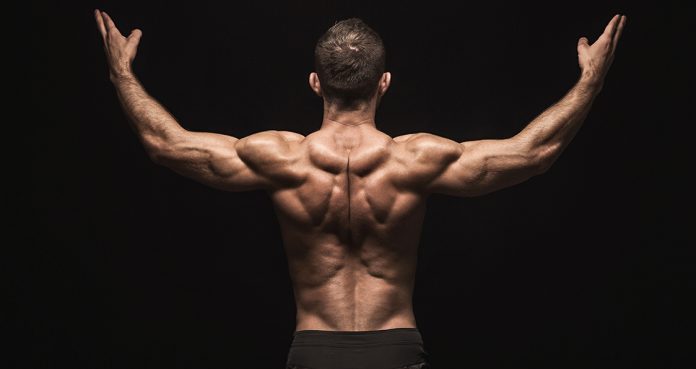
A V-taper is a result of a combination of factors and months, if not years, of hard work. Building a cobra back requires you to target your back from all angles and put equal focus on your upper, lower and middle back.
Just like us humans, all exercises aren’t created equal. A few exercises are more effective at building a wide and thick back than the others. You need to have a perfect mix of isolation and compound exercises in your back workouts to build the perfect V-taper.
Deadlifts
Deadlifts are the king of back exercises. It’s a compound (multi-joint) movement which can help in developing muscle mass, conditioning, and strength. Your goal while performing the deadlifts should be to lift heavier weights while keeping the rep-range low.
Not only will deadlifting help you in building your back but will also improve your core strength. A stronger core can result in better stabilizers which can help in performing all the other exercises.
Bent Over Single Arm Dumbbell Rows
Bent over dumbbell rows are a great exercise for developing your upper and middle back. Following a full range of motion while performing the exercises mentioned in the article is critical to ensuring you don’t leave any gains on the table.
Use accessories like the wrist straps to hold onto the weight. While performing the back exercises, your forearms are prone to giving up before your back. Using wrist straps can help you better focus on your back by eliminating your grip strength.
Lat-Pulldowns
While the rowing movements help in building the thickness in your back, pulldowns focus on the width. At the beginning of your back workouts, warm-up by performing 50 reps (in 2-3 sets) of the pull-ups.
Make sure you don’t use momentum by swinging back and forth to pull the bar to your chest. Maintain a strict form, and you’ll feel the wings growing out of your back. Just don’t go skydiving with your new wings.
Hyperextensions
The lower back is one of the most overlooked muscles when it comes to back training. The presence of a well-defined lower back can make or break a picture-perfect V-taper. Adjust the hyperextension machine so it doesn’t recruit your hams while performing the exercise.
If the bodyweight version of the hyperextensions is too easy for you, feel free to add resistance by using weights. Maintain a slight arch in your back throughout the exercise, and pause and contract your lower back at the top of the movement.
Seated Cable Rows
Seated cable rows target your middle back and can improve the separation in your back. Most people make the mistake of swinging back and forth while performing the seated cable rows.
Maintain the natural curvature of your back and push your chest out while performing the exercise. Contract your back as you bring the handle attachments of the pulley machine to your sides.
Which is your favorite back exercise? Let us know in the comments below. Also, be sure to follow Generation Iron on Facebook and Twitter.
*Header image courtesy of Envato Elements
Martyn Ford Says Fight With Iranian Hulk Canceled Because Of Concerns On “Mental Well-Being” And “Health And Safety Risks”
Martyn Ford shared some more information on social media about his cancelled fight with Iranian Hulk.
Martyn Ford revealed last week that his fight with the Iranian Hulk was canceled. What ford left out was an exact reasoning as to why this happened but framed Sajad Gharibi as the reason. This is something that did not sit well with Iranian Hulk as he fired back. Now, Ford is claiming that there were many concerns out of the ring.
Gharibi quickly responded following Ford’s video and shared that the cancellation came from Ford’s side. Because of this, Iranian Hulk was prepared to sue for a contract breach since it was not his decision to pull out of the fight.
Despite the back and forth between fighters, there was still no reason revealed and this left fans in the dark. Ford recently shed some light on his side via social media when one person asked point blank why the fight will not be happening.
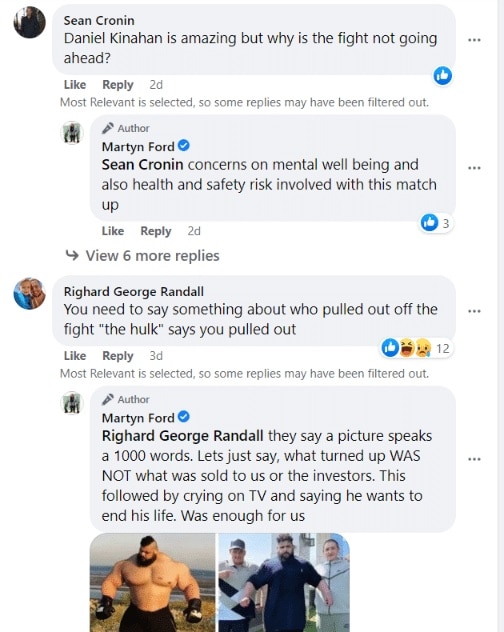
Martyn Ford responded that there were “concerns on mental well-being and also health and safety risk involved with this matchup.”
“They say a picture speaks a thousand words. Let’s just say, what they turned up WAS NOT what was sold to us by the investors. This followed up by crying on the TV and saying that he wants to end his life. Was enough for us.”
It seems as though the cancellation did indeed come from Ford’s side but they had reasons. He is referring to the television interview that recently came out of the Iranian Hulk explaining the relationship with his family following their stare down. Gharibi became emotional when discussing how his family reacted to the situation.
Ford also shared a picture of Iranian Hulk where he is looking significantly downsized. This was to be expected as he trains in different ways to prepare for a fight but the weight he lost is eye-opening and apparently was a cause for concern for Ford and his camp.
Despite the cancelled fight, Ford has continued to train and will likely step in the ring soon. In his original video, he revealed that it will not be on April 30 but the event is still on at the O2 Arena. The main event will feature a new fight that has not been shared yet.
Martyn Ford has recently shared some dream fights, including one with The Rock, but it is unknown who his next opponent will be. Ford has also been linked to Hafthor Bjornsson, following his victory over Eddie Hall.
As of now, we have a reason as to why the fight between Martyn Ford and Iranian Hulk was cancelled. What we do not know is if Iranian Hulk will respond once again or if they will ever step in the ring. Now, we will have to wait for Ford to announce his next opponent.
For more news and updates, follow Generation Iron on Facebook, Twitter, and Instagram.
2022 Golden State Pro Results
Ashley Kaltwasser and Jason Huynh were victorious during the 2022 Golden State Pro!
The 2022 Golden State Pro headlined a quiet week around the sport of bodybuilding. Sacramento was the host of the event that saw two more competitors punch their tickets to the 2022 Olympia. Ashley Kaltwasser took home the Bikini title while Jason Huynh won Men’s Physique.
Kaltwasser is coming off a busy 2021 campaign that saw her claim victories at the Pittsburgh Pro and Texas Pro. She was also the runner-up at the New York Pro. At the end of the season, Kaltwasser solidified her spot in Bikini by finishing third at the Olympia. Now, she will have a chance to prove once again that she is among the elite in the division.
Huynh has been consistent in Men’s Physique and will look to take the next step during the Olympia. He had two top-three finishes last season, including a victory at the Europa Phoenix. Huynh has competed in the Olympia over the last two years and will make it three in a row in December.
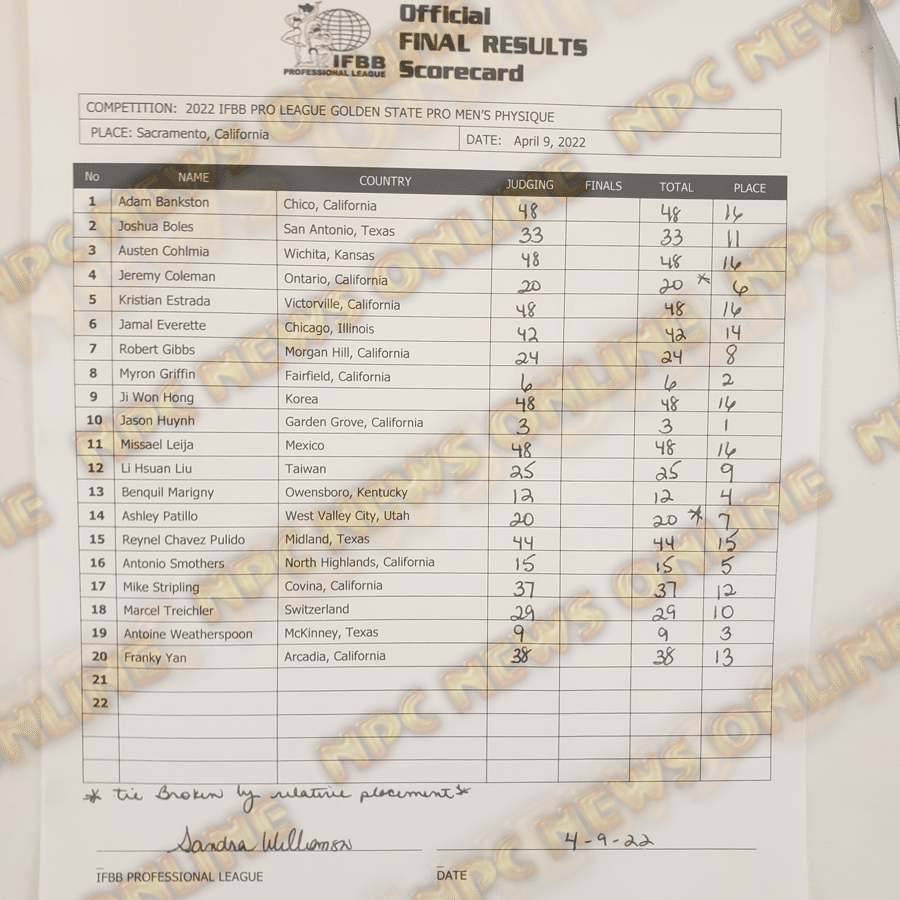
The full results rom the show have been announced as Kaltwasser and Huynh will not be able to prepare to appear in Las Vegas in December. The full results from the event can be found below along with official score cards!
2022 Golden State Pro: All Division Winners
Bikini: Ashley Kaltwasser
Men’s Physique: Jason Huynh
2022 Golden State Pro Breakdown
Bikini
First Place – Ashley Kaltwasser
Second Place – Lucia Malavaze
Third Place – Lawna Dunbar
Fourth Place – Vania Auguste
Fifth Place – Adair Libbrecht
Sixth Place – Ariel Barley
Seventh Place – Jodie Yunker
Eighth Place – Joy Sheppard
Ninth Place – Ashley Duncan
Tenth Place – Nittaya Kongthan
Men’s Physique
First Place – Jason Huynh
Second Place – Myron Griffin
Third Place – Antoine Witherspoon
Fourth Place – Benquil Marigny
Fifth Place – Antonio Smothers
Sixth Place – Jeremy Coleman
Seventh Place – Ashley Patillo
Eighth Place – Robert Gibbs
Ninth Place – Li Hsuan Liu
Tenth Place – Marcel Treichler
2022 Golden State Pro Official Score Cards
For more news and updates, follow Generation Iron on Facebook, Twitter, and Instagram.
Greg has covered the four major sports for six years and has been featured on sites such as Sports Illustrated, Fox Sports, SB Nation, NJ.com, and FanSided. Now, he is transitioning into the world of bodybuilding and strength sports.

5 Ways To Write a Great Training Program
5 Ways To Write a Great Training Program
Most people never see any progress in the gym because they don’t follow a well-designed training program. A customized training plan is the same thing for a physique transformation that code is for a website.
Writing a better training program can help a fitness rookie, advanced lifter or even a personal trainer. Once you know the ins and outs of how to design an effective training program, it’s almost like you’ve been handed the key to the Hogwarts of gains.
Start With Your Current Situation
One of the most common beginner’s mistake is that people want to begin at the pro training level. They want to be doing squats, deadlifts and military-style chin-ups from the first week.
Attempting something like this is similar to jumping on a treadmill that is running at a super-high-speed from a standstill. We all know how that ends. You’re most probably going to fall on your face and be thrown back with a few burns and sores.
Access your current fitness levels and take a test – if needed. You need to look at yourself critically but without being sadistic. Once you’ve ascertained your starting point and have made terms with it, things only get easier.
Figure Out The Best Training Style
You need to know your ‘Point B’ while designing an effective customized training program. After you have your fitness assessment, you have all you need to create a blueprint for your transformation.
People with prior training experience will do better at this stage. You need to know about different training techniques and how your muscles respond to them. Contrary to what most people think, there is no one-training-program-fits-all kind of a mass-market transformation solution.
You should spend some time at this stage researching about tried and tested training principles like DTP, Y3T, PH3, and many other programs by successful coaches. Brownie points if you have developed any such program of your own.
Keep Your Lifestyle in Mind
Your life shouldn’t be centered around your training program, it should be the other way round. If you’ve been skipping workouts in the past, you’re setting yourself up for failure by designing a 6-day training routine.
Remember – in fitness, many different paths can lead to the same destination. You have to choose the one you are comfortable following. Learn more about your preferences when it comes to the intensity (number of reps, sets, weights, duration of workouts) and once you know what works for you – stick with it.
Rapid Adaptability
You can’t write a 12-week fitness program and expect to get the exact results you set out for without having to make mid-way modifications. Many things can change over the course of the plan and you might not see the desired output.
You have to be on your toes when it comes to getting the most out of your training program. Adapting according to your progress can make all the difference in your transformation and this is why pro athletes have daily check-ins with their coaches when they’re prepping for contests.
Set mini-milestones and develop the habit of doing weekly reviews. If you’re not heading in the right direction at the right speed at the end of the week – make necessary changes.
What is your current fitness goal? Let us know in the comments below. Also, be sure to follow Generation Iron on Facebook and Twitter.
Should Lifters Go Keto for Performance and Gains?
Should Lifters Go Keto?
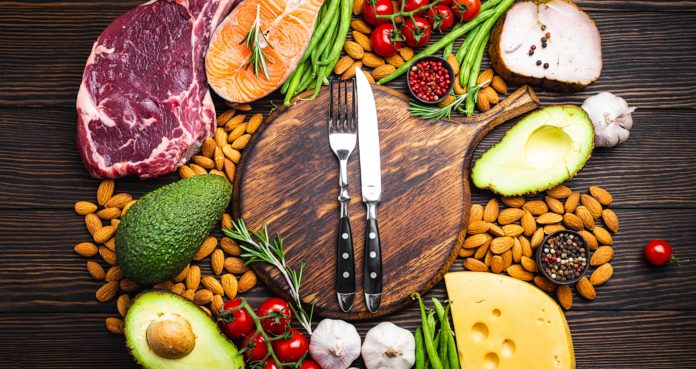
With low-carb diets currently prevailing, such as the ketogenic diet, it’s no wonder why lifters are sipping the kool-aid. But are diets that virtually eliminate an entire food group optimal for building muscle and performance?
Low-Carb and Keto Defined
Before we dive into what the research states regarding resistance training and low-carbohydrate diets, it’s vital that we define what a low-carb diet is. Without a universally agreed-upon objective definition, we’re left comparing against the Acceptable Macronutrient Distribution Ranges (AMDR). The AMDR is the intake range for a particular energy source associated with a reduced risk of chronic disease while providing essential nutrient intakes1.
The AMDR for carbohydrate intake in adults is 45-65% of total daily calories1; therefore, anything that falls short of this range is classified as a low-carb diet. Low-carb diets can be further categorized into non-ketogenic and ketogenic diets, with a carbohydrate composition of 50-150g and 50g or less, respectively2.
Albeit a subclass of low-carb diets, the ketogenic diet differs in its ability to produce a metabolic state called ketosis. To achieve ketosis, one needs to restrict carbohydrate intake to no more than 50g per day or ten percent of total daily calories (TDC) while maintaining a moderate protein intake (~20% of TDC) and ultra-high fat intake (~70% of TDC)2. Without sufficient glucose from carbohydrates, the body begins to break down fat stores for energy, a process known as fat oxidation. Consequently, ketone bodies start to appear in the bloodstream at higher rates than are usually seen in a non-ketogenic state2. Hence, the term ketosis.
Keto Diets and Body Composition
The fearmongering centered around carbohydrates most likely arose from the carbohydrate-insulin hypothesis touted by low-carb zealots, which basically states that carbs drive insulin, and insulin promotes fat storage3. While technically correct, the carbohydrate-insulin model overlooks the most critical variable driving fat metabolism – energy balance3.
In basic terms, energy balance refers to calories in and calories out. Regardless of the macronutrient composition, consuming more calories than are expended will inevitably produce weight gain. Conversely, expending more calories than are ingested will inevitably produce weight loss. No diet is exempt from this law.
A 2017 meta-analysis (study of studies) by Aragon and colleagues scrutinized all diets (from low-fat to low-carb/ketogenic and everything in between) and found that as long as calories and protein are equated between the diets being compared, no disparity exists between them for fat loss2.
So does this mean that lifters can follow low-carb and ketogenic diets for weight loss? Yes. Would it be optimal for building muscle? No.
Building muscle requires that a few criteria be satisfied. First, a caloric surplus must be achieved and consistently maintained. Next, at least 0.7-1.0 grams of protein per pound of bodyweight (1.6-2.2 g/kg) must be consumed to build and repair muscle tissue4. And lastly, resistance training must be performed to stimulate the anabolic process of muscle growth. A low-carb dieter should easily be able to meet these requirements, right? Not according to some recent studies.
An 8-week study by Vargas and colleagues randomly assigned subjects into a ketogenic diet group, a non-ketogenic diet group, and a control group5. All participants were instructed to eat 39 calories per kilogram of bodyweight to achieve a caloric surplus. Protein intake was equated at 2g/kg in both the keto diet and non-keto diet group. All subjects followed a supervised resistance training program. After eight weeks, lean body mass increased significantly in the non-ketogenic group but decreased in the ketogenic group.
A closer look at this study’s results reveals a drop in bodyweight and fat mass in the ketogenic group, indicating a failure to achieve and maintain a caloric surplus. This isn’t surprising given the satiating effects of low-carbohydrate and high- protein and fat diets, as referenced by several studies6-8.
Consider another study by Greene et al.. Researchers followed intermediate elite weightlifters and powerlifters on an ad libitum (unrestricted) conventional diet or ad libitum ketogenic diet over a three-month period9. Similar to Vargas’ findings, those following the ad libitum ketogenic diet lost significantly more body weight and lean body mass than the conventional group.
In case you’re still not convinced, take a look at a few more studies. Kysel and colleagues randomly assigned participants to a cyclical ketogenic reduction diet (CKD) and a nutritionally balanced reduction diet (RD)10. Protein intake was set at 1.6g/kg, which is sufficient in facilitating muscle growth4. All subjects were engaged in resistance training. Following the 8-week intervention, both groups lost significant body fat, not surprising given the caloric deficit, but the CDK group lost a considerable amount of lean mass.
Moreover, a group of researchers studied the effects of a ketogenic diet on body composition in trained females and found no changes in fat-free mass (muscle) in the keto group but favorable changes (increases) in the non-keto group11.
Keto Diets and Performance
Low-carb/keto diets may not be optimal for building muscle, but what about improving strength and power? So far, the data seems equivocal, with some studies showing a decrease in performance and others indicating no adverse effect9-14. In addition, a recent systematic review by Murphy and colleagues analyzed 16 studies that looked at the keto diet’s effect on power and strength compared to a mixed macronutrient diet15. Out of the 16 outcomes, three showed a decrease in performance, 11 showed no difference, and two showed an increase in performance.
However, if we step back and analyze the energy demands involved during certain resistance training phases, we may find our answer. Strength and power training performed in the low rep range (1-3 reps) rely heavily on the ATP-PC system. In contrast, higher rep ranges rely on glycogen stores and readily available glucose (carbohydrate). A lifter on a keto diet focusing solely on power development may not compromise their performance, but we can see how higher repetitions and volume (amount of work) seen in bodybuilding could pose a problem.
Final Thoughts
Although many purport a metabolic advantage to being in ketosis, there isn’t anything magical about it except the change in fuel utilization (fat instead of carbohydrate). Again, being in ketosis won’t circumvent the laws of thermodynamics – energy in/energy out. Therefore, it’s probably best to choose a sustainable diet, one you can adhere to long-term. Based on the overall data regarding the effects of ketogenic diets on performance and body composition, I would argue that it would probably be wise to keep your carbohydrates to optimize your gains in the gym.
References
Trumbo, P., Schlicker, S., Yates, A. A., Poos, M., & Food and Nutrition Board of the Institute of Medicine, The National Academies (2002). Dietary reference intakes for energy, carbohydrate, fiber, fat, fatty acids, cholesterol, protein, and amino acids. Journal of the American Dietetic Association, 102(11), 1621-1630. http://doi.org/10.1016/s0002-8223(02)90346-9
Aragon, A., et al. (2017). International society of sports nutrition position stand: diets and body composition. Journal of the International Society of Sports Nutrition, 14, 16. doi:10.1186/s12970-017-0174-y
Hall, K. D., Guyenet, S. J., & Leibel, R. L. (2018). The Carbohydrate-Insulin Model of Obesity Is Difficult to Reconcile With Current Evidence. JAMA Internal Medicine, 178(8), 1103. doi:10.1001/jamainternmed.2018.2920
Morton, R. W. et al. (2017). A systematic review, meta-analyses, and meta-regression of the effect of the protein supplementation on resistance training-induced gains in muscle mass and strength in healthy adults. British Journal of Sports Medicine. doi:10.1136/bjsports-2017-097608
Vargas, S., Romance, R., Bonilla, J. L., Galancho, I., Espinar, S., Kreider, R. B., & Benitez-Porres, J. (2018). Efficacy of ketogenic diet on body composition during resistance training in trained men: A randomized controlled trial. Journal of the International Society of Sports Nutrition, 15(1). doi:10/1186/s12970-018-0236-9
Weigle, D. S., Breen, P. A., Matthys, C. C., Callahan, H. S., Meeuws, K. E., Burden, V. R., & Purnell, J. Q. (2005). A high-protein diet induces sustained reductions in appetite, ad libitum caloric intake, and body weight despite compensatory changes in diurnal plasma leptin and gherkin concentrations. The American Journal of Clinical Nutrition, 82(1), 41-48. http://doi.org/10.1093/ajcn.82.1.41
Kephart, W., Pledge, C., Roberson, P., Mumford, P., Romero, M., Mobley, C., Martin, J., Young, K., Lowery, R., Wilson, J., Huggins, K., & Roberts, M. (2018). The three-month effects of a ketogenic diet on body composition, blood parameters, and performance metrics in crossfit trainees: A Pilot Study. Sports, 6(1), 1. http://doi.org/10.3390/sports6010001
Heatherly, A. J., Killen, L. G., Smith, A. F., Waldman, H. S., Hollingsworth, A., Seltmann, C. L., O’Neal, E. K. (2018). Effects of Ad libitum Low-Carbohydrate High-Fat Dieting in Middle-Age Male Runners. Medicine & Science in Sports & Exercise, 50(3), 570-579. http://doi.org/10.1249/mss.0000000000001477
Greene, D. A., Varley, B. J., Hartwig, T. B., Chapman, P., & Rigney, M. (2018). A low-carbohydrate ketogenic diet reduces body mass without compromising performance in powerlifting and olympic weightlifting athletes. Journal of Strength and Conditioning Research, 32(12), 3373-3382. http://doi.org/10.1519/jsc.000000000002904
Kysel, P., Haluzikova, D., Dolezalova, R. P., Lankova, I., Lacinova, Z. N., Kasperova, B. J., Trnovska, J. Hradkova, V., Mraz, M. S., Vilikus, Z. E., & Haluzik, M. (2020.). The influence of cyclical ketogenic reduction diet vs nutritionally balanced reduction diet on body composition, strength, and endurance performance in healthy young males: a randomized controlled trial. Nutrients, 12(9), 2832. http://doi.org/10.3390/nu12092832
Vargas, S., Petro, J. L., Romance, R., Kreider, R. B., Schoenfeld, B. J., Bonilla, D. A., Benitez-Porres, J. (2020). Effects of a ketogenic diet on body composition and strength in trained women. Journal of the International Society of Sports Nutrition, 17(1). http://doi.org/10.1186/s12970-020-00348-7.
Paoli, A., Grimaldi, K., Agostino, D., Cenci, L., Moro, T., Bianco, A., et al. (2012). Ketogenic diet does not affect strength performance in elite artistic gymnasts. Journal of the International Society of Sports Nutrition, 9(1). http://doi.org/10.1186/1150-2283-9-34
Sawyer, J. C., Wood, R. J., Davidson, P. W., Collins, S. M., Matthews, T. D., Gregory, S. M., & Paolone, V. J. (2013). Effects of a Short-Term Carbohydrate-Restricted Diet on Strength and Power Performance. Journal of Strength and Conditioning Research, 27(8), 2255–2262. https://doi.org/10.1519/jsc.0b013e31827da314
Wilson, J. M., Lowery, R. P., Roberts, M. D., Sharp, M. H., Joy, J. M., Shields, K. A., Partl, J. M., Volek, J. S., & D’Agostino, D. P. (2020). Effects of Ketogenic Dieting on Body Composition, Strength, Power, and Hormonal Profiles in Resistance Training Men. Journal of Strength and Conditioning Research, 34(12), 3463–3474. https://doi.org/10.1519/jsc.0000000000001935
Murphy, N. E., Carrigan, C. T., & Margolis, L. M. (2020). High-Fat Ketogenic Diets and Physical Performance: A Systematic Review. Advances in Nutrition. https://doi.org/10.1093/advances/nmaa101

Get The UFC 273 Fight Results Here Now!
Who won at UFC 273?
UFC 273 features some incredible match ups between some of the best fighters in the world. A featherweight battle between the divisional kingpin and a fan favorite all action fighter. A bantamweight title fight between two top champions each with a point to prove. And a welterweight showdown between a hungry veteran and an up and coming brash upstart.
Each match holds massive stakes. No fighter can afford to lose but there can only be a victor. Who won at UFC 273? Find out the results below now!
Results
Gilbert Burns vs Khamzat Chimaev
Khamzat Chamaev defeats Gilbert Burns by unanimous decision.
Aljamain Sterling vs Petr Yan
Aljamain Sterling defeats Petr Yan by split decision.
Alexander Volkanovski vs Korean Zombie
TBD
For more news and updates, follow Generation Iron on Facebook, Twitter, and Instagram.
News and Editorial Writer at Generation Iron, Jonathan Salmon is a writer, martial arts instructor, and geek culture enthusiast. Check out his YouTube, Instagram, Twitter, Facebook, and Sound Cloud for in-depth MMA analysis.
5 Reasons Why You’ve Stopped Gaining Muscle
Reasons Why You’ve Hit A Plateau
Not seeing gains even after working out regularly can be as frustrating as sex without climax. No matter how fun, exciting and tantalizing the process might be, you want to see the final result.
Everything is meaningless without the outcome because that’s why we start something in the first place. Enough with the sex references – let’s talk about the main reasons why you’re not seeing an improvement in your physique.
Mortifying Training Program
Most people make the mistake of following the same exercises over and over again. Why do we need new exercises, you ask? Remember how walking from a grocery store to the car with a handfull of bags felt hard for the first few times but became second nature by the 5-6th time?
This is exactly what happens with resistance training. Your muscles grow bigger and stronger when you perform new exercises. If you aren’t constantly shocking your muscles with new exercises and training techniques, your progress with halt.
Diet?
When people start working out, most of them see some gains irrespective of their diet and training programs. The progress with an unstructured approach makes them feel like all they need to do is lift a little iron and they’ll keep seeing gains for eternity – until they don’t.
If you haven’t already taken out the time to learn about a balanced diet, it’s time you should get familiar with macro and micronutrients and counting calories. Eating high carb and protein, and a fat-restricted diet should be your goal if you want to put on quality muscle mass.
Loving Thy Comfort Zone
Look around your gym and you’ll probably see someone lifting weights that they’ve been lifting for months. The irony is that these people are disappointed when they don’t see the needle budge in the right direction.
You should always plan on doing more than what you did the last time in the weight room. Nothing meaningful ever comes out of being inside your comfort zone. Once you start pushing yourself, you’ll realize how much your body is capable of.
Indiscipline
Being indisciplined is one of the biggest gains killers. Many people fail to realize this but it is called a training ‘program’ for a reason. Once you sign up for a transformation, you can’t afford to miss a single training session or meal.
You need to have a fixed training schedule – the time at which you reach the gym and how long you train for daily shouldn’t change depending on external variable factors like going out for dinner with friends and family or even work.
Being Wolverine
Although the number is too small, some people hit a plateau because they have been overtraining and don’t give enough time to their bodies for recovering and recuperating from their workouts.
Unlike Wolverine, you can’t recover from a training session just by looking at your sore muscles. For optimal recovery, your goal should be to sleep for at least 7-8 hours every night.
You should also consider using recovery supplements if you feel that your muscles are too sore for too long. If muscle gain is the lock, a balanced diet, training and recovery program is the key.
What is your current and goal body weight? Let us know in the comments below. Also, be sure to follow Generation Iron on Facebook and Twitter.

Will Too Much Protein Make My Kidneys Blow Up
Will too much protein destroy your kidneys?
Depending on who you ask (or at this point, who you follow on social media), you will probably see conflicting arguments on how much protein you should be consuming and if it’s even good for you. Anyone can cherry-pick information to sell you something, and chances are if the place you’re getting this information from also has a convenient and catchy diet label you should probably start checking for other red flags.
We’ve already seen how higher protein diets can improve lipid panels in competitive bodybuilding populations [1] that do not have any previous conditions, but there still seems to be this recurring worry that too much protein will negatively affect kidney function. Let’s dig into the research so we can keep you jacked and your kidneys safe, shall we?
So, This Whole Kidney Blowing up Thing..?
Alright, I may have been a little facetious with the title here but honestly, when I read the amount of crap that some people like to spew on eating too much protein I just have to turn it into a joke – because unless you’re part of a diseased population (which we’ll cover shortly), there’s very little to worry about.
The biomarker that most researchers and health professionals will use to determine kidney function is something called GFR (glomerular filtration rate) and even more common is the eGFR which is an estimate of that rate. This marker will let you know how hard the kidneys are working and if you are trending towards or already in various levels of chronic kidney disease (CKD). Something to consider as well is that many studies are testing for kidney hyperfiltration which would cause a rise in eGFR values, whereas CKD is caused by a decrease in GFR over time.
That being said, context is key and the population you test is very important, exercise alone has been widely shown to affect laboratory tests [2] to a certain degree depending on training level and type of activity. It should be considered as most people that look to consume higher-protein diets appropriately are exercising populations.
What is High-Protein Consumption and What is it Good for?
When we’re talking about high-protein we’re not talking about adding in that extra half scoop to your shake here. We’re talking about purposely aiming above RDA and looking to elicit a specific result. I don’t know if you have ever taken a look at the recommended daily allowance of protein, but it’s shockingly low at 0.8g/kg or roughly 0.36g/lbs of body weight. That means that for someone who is 100kg or 220lbs, their daily protein allowance should be 80g.
I think I’ll keep my gains instead, thank you very much.
I can hear the outcries already: “That RDA is for non-exercising, sedentary populations!”
Exactly, and that is the demographic that most of these studies for low-protein diets test on. For active, exercising populations such as the readers of Generation Iron, the recommendation is between 1.4 – 2.0/kg/d of protein, or between 0.63 – 0.9g/lbs/d [3] which is still pretty low. On average, most people are consuming closer to 0.8 – 1.2g/lbs/d.
In this case, higher-protein consumption would be anywhere above 0.9 – 1.2g/lbs/d which we’ve seen as having beneficial effects several times in research [4,5]. In fact, a 2014 paper published in the Journal of the International Society of Sports Nutrition in which resistance-trained participants consumed 4.4g/kg/d of protein (or 2g/lbs/d).
The high protein group was not only meant to be in a caloric surplus, but they ate on average 800kcal more than the control group coming only from protein and did not seem to gain any additional fat mass in comparison to the control group [6]. This finding is interesting because it also goes against the theory that “a calorie is just a calorie” as the authors put it.
Compare this to the study by Bray et al. in 2012 where the objective was to test the effects of overconsuming protein on weight gain, energy expenditure, and body composition. Right off the bat, the purpose of this study was to show that overconsuming protein led to weight gain and then compare that to the other variables.
The high-protein (HP) group in this study gained more weight than the low-protein (LP) group (3.16kg vs 6.51kg) which on paper looks to be in favor of the low-protein group, however, when you look at the rest of the data you can see that the HP group gained 3.18kg of lean mass while the LP group lost 0.70kg of lean mass.
So in reality, while it looks like eating more protein created an excess and therefore a weight gain, 50% of that gain came from lean body mass whereas over 90% of the extra calories in the LP group was stored as fat [7].
The benefits of eating a high-protein diet on gaining lean mass, controlling weight, and improving energy expenditure are pretty clear. Now, let’s get to the kidneys!
Okay Great, Eating Protein can get me Jacked & Lean, now What?
First off before you go off getting too excited about the previous section you need to answer some important questions:
1 – Do you have diabetes (Type I or II)?
2 – Do you already suffer from chronic kidney disease or only have one kidney?
3 – Have you ever had a heart attack?
The reason why these questions are important is that all of these conditions affect your kidney function and can therefore affect your long-term health when it comes to high-protein diets. If not, then let’s crush some theories!
If you’re not familiar with A. J. Miller, he is one of the first researchers to show a potential for kidney damage associated with protein consumption. This is where a lot of the reasoning behind protein being damaging to your kidneys comes from, but when we look closer at the study he conducted we can notice some pretty important details; the study was conducted in 1925 on rats whose left kidney was removed for the study to effectively double the load of the remaining kidney. Now, once again we need to come back to context: It’s pretty clear that if you’re missing a kidney you should not be eating a high-protein diet. In addition to a missing kidney, previous cardiac episodes also have an effect on the kidneys and after the first incident of a heart attack, eGFR declines at about double the rate annually compared to controls [8].
Have both kidneys and the ol’ ticker been working just fine? Awesome, you have nothing to worry about.
Seriously.
The effects of protein consumption on the kidneys of healthy adults are extremely oversold. So much so that “Neither the Institute of Medicine nor the WHO acknowledges that protein intake contributes to functional declines in renal function with age.” [9] Which is a great statement considering both of those organizations are very conservative in their recommendations.
Even slightly elevated levels of eGFR are rarely something to be concerned about* and the way eGFR is calculated only takes creatinine and age into account. It makes for an interesting argument for kidney function since creatinine levels can be altered due to activity levels, large quantities of animal protein consumption, creatine intake; all of which can increase eGFR independent of kidney function.
Final Word
After reviewing the literature on the subject and sifting through which populations are exposed to the most risk, we can conclude that unless you fall into those categories there is next to no risk involved with eating higher amounts of protein regularly. The variation in eGFR values a healthy trainee might see would most likely be caused more often by lifting and creatine consumption than an indicator of damaging the kidneys. It looks like the highest amount recorded in the literature had subjects eating roughly 2g/lbs/d which showed no adverse effects, but didn’t seem to improve body composition or lean mass by much. This goes to show that there is a point of diminishing returns as well when going too high in protein consumption. Unless your caloric intake is very high, or you have trouble with hunger, most lifters don’t need much more than 1.2g/lbs/day of protein to experience the upper-end of the physiological benefits. A higher consumption won’t result in any fat mass gain but doesn’t seem to promote any further gains.
Closing Quote
“Diets higher in plant and animal protein, independent of other dietary factors, are associated with cardiometabolic benefits, particularly improved central adiposity, with no apparent impairment of kidney function” (Berryman et al. 2016)
References:
De Moraes, W. M. A. M., Ana Erbęnia Pereira Mendes, Marcela Mota Moreira Lopes, and Fernanda Maria Machado Maia. “Protein overfeeding is associated with improved lipid and anthropometric profile thus lower malondialdehyde levels in resistance-trained athletes.” Int. J. Sports Sci 7, no. 2 (2017): 87-93.
Foran, Stacy E., Kent B. Lewandrowski, and Alexander Kratz. “Effects of exercise on laboratory test results.” Laboratory medicine 34, no. 10 (2003): 736-742.
Jäger, Ralf, Chad M. Kerksick, Bill I. Campbell, Paul J. Cribb, Shawn D. Wells, Tim M. Skwiat, Martin Purpura et al. “International society of sports nutrition position stand: protein and exercise.” Journal of the International Society of Sports Nutrition 14, no. 1 (2017): 1-25.
Antonio, Jose, Anya Ellerbroek, Tobin Silver, Steve Orris, Max Scheiner, Adriana Gonzalez, and Corey A. Peacock. “A high protein diet (3.4 g/kg/d) combined with a heavy resistance training program improves body composition in healthy trained men and women–a follow-up investigation.” Journal of the International Society of Sports Nutrition 12, no. 1 (2015): 39.
Antonio, Jose, and Anya Ellerbroek. “Case Reports on Well-Trained Bodybuilders: Two Years on a High Protein Diet.” Journal of Exercise Physiology Online 21, no. 1 (2018).
Antonio, Jose, Corey A. Peacock, Anya Ellerbroek, Brandon Fromhoff, and Tobin Silver. “The effects of consuming a high protein diet (4.4 g/kg/d) on body composition in resistance-trained individuals.” Journal of the International Society of Sports Nutrition 11, no. 1 (2014): 1-6.
Bray, George A., Steven R. Smith, Lilian de Jonge, Hui Xie, Jennifer Rood, Corby K. Martin, Marlene Most, Courtney Brock, Susan Mancuso, and Leanne M. Redman. “Effect of dietary protein content on weight gain, energy expenditure, and body composition during overeating: a randomized controlled trial.” Jama 307, no. 1 (2012): 47-55.
Esmeijer, Kevin, Johanna M. Geleijnse, Erik J. Giltay, Theo Stijnen, Friedo W. Dekker, Johan W. de Fijter, Daan Kromhout, and Ellen K. Hoogeveen. “Body-fat indicators and kidney function decline in older post-myocardial infarction patients: The Alpha Omega Cohort Study.” European journal of preventive cardiology 25, no. 1 (2018): 90-99.
Traylor, Daniel A., Stefan HM Gorissen, and Stuart M. Phillips. “Perspective: protein requirements and optimal intakes in aging: are we ready to recommend more than the recommended daily allowance?.” Advances in Nutrition 9, no. 3 (2018): 171-182.
Berryman, Claire E., Sanjiv Agarwal, Harris R. Lieberman, Victor L. Fulgoni III, and Stefan M. Pasiakos. “Diets higher in animal and plant protein are associated with lower adiposity and do not impair kidney function in US adults.” The American journal of clinical nutrition 104, no. 3 (2016): 743-749.

Fitness Model Courtney Tailor Allegedly Stabbed Boyfriend To Death In Miami Apartment
Courtney Tailor has been arrested and is being detained by police.
Courtney Tailor, whose real name is Courtney Clenney, has been detained by police after allegedly stabbing her boyfriend to death in their Miami apartment, according to The Sun.
Police responded to a 911 call on Sunday around 5 P.M. where 27-year-old Christian Obumseli was found with a stab wound in his shoulder. He was quickly taken to a hospital but succumbed to injuries. Police believe there was a physical altercation before the stabbing occurred.
“We know that there was a physical altercation between them before he was stabbed,” a Miami PD spokesperson said.
There are currently no charges against Tailor for the death of Obumseli. Tailor was found at the scene of the crime covered in blood. According to the report, she is being detained at a mental health facility after threatening to kill herself. There is no timetable on when she will be released but Florida’s Baker Act law allows law enforcement to commit a person for up to 72 hours.
TMZ shared a video of Tailor handcuffed and covered in blood on the floor of a luxury apartment. Tailor is wearing the same clothes that she wore during an Instagram live video earlier that day. She is wearing a black sports bra and sweatpants as she is talking to police while sitting on the floor.
Courtney Tailor may be best known as a fitness influencer with millions of followers (and her Only Fans account), but she is also a former amateur bodybuilder. She had competed in the NPC Bikini division for a small number of shows in 2016. Shortly after she moved onto pursuing a career as a fitness model. Tailor has built up a social media following of over 2 million on Instagram.
This is an ongoing investigation and updates will be provided as they are released. For more news and updates, follow Generation Iron on Facebook, Twitter, and Instagram.
Greg has covered the four major sports for six years and has been featured on sites such as Sports Illustrated, Fox Sports, SB Nation, NJ.com, and FanSided. Now, he is transitioning into the world of bodybuilding and strength sports.

Natural Bodybuilder Jenna Bidoglio’s Hack to Preserve Muscle: Fasted LISS Cardio
Image via Instagram @jennabiz19
INBA PNBA Figure competitor Jenna Bidologlio shares the benefits of adding fasted LISS cardio to your training regimen.
Fasting and cardio can have ample benefits for you. When many people think of fasted cardio, they instantly think of fat loss. However, the right kind of fasted cardio can have uses other than fat loss, such as helping you preserve muscle. International Natural Bodybuilding Association (INBA)/Professional Natural Bodybuilding Association (PNBA) athlete Jenna Bidoglio says fasted, low-intensity steady-state (LISS) cardio will give you many health benefits. Including reducing your recovery time.
Jenna Bidoglio competed in the Figure Open and Classic Figure divisions at INBA PNBA Mr. America 2021. She placed first place in the Classic Figure category and received third place in the Figure Open. She’s also an athletic trainer. In an Instagram (IG) post uploaded on February 20, 2022, Bioglio stated this about fasted LISS cardio:
“One reason is to elicit hunger. Fasted LISS(< 60% max hr) is helpful in instances where I need to push food and there is little or no hunger and especially no AM hunger.
Get into a parasympathetic state. Fasted LISS can help start the day in a rest and digest state instead of all stressed and rushing out. This can be beneficial for anyone who needs to lower stress mentally and systemically.
Fasted LISS has the added benefit of cardiovascular health while requiring little to no recovery so it shouldn’t have an effect on pushing strength gains. Some people benefit from keeping cardio separate from lifts and this can be a great option.”
Bidoglio also noted saving high-intensity interval training (HIIT) workouts for after eating.
Below is Jenna Bidoglio’s full post on the benefits of fasted LISS cardio.
https://www.instagram.com/p/CaOJ9STOW5H/?utm_source=ig_web_copy_link
Fasted LISS Preserves Muscle
So if you’re trying to build strength and muscle and find it hard to eat in the morning due to not being hungry, fasted LISS cardio can help ramp up your appetite.
It’s also beneficial for helping you gain strength. That’s because too much cardio can hinder your gains in the gym, but LISS cardio is at a low intensity. Therefore, it won’t impact your strength gains. Instead, it will help you burn additional calories and improve your cardiovascular health without impacting your recovery. Of course, this will help you preserve muscle because you’ll be able to add cardio to your plan without it affecting your lifts.
Conversely, too much intense cardio, such as high-intensity interval training cardio, can take longer to recover and make it hard to push weight in the gym. Also, it can raise your cortisol levels, which will also make it harder to recover from workouts.
INBA PNBA Mr. America 2021
In 2021, Bodligo placed well at Mr. America 2021, a competition that takes place a little before the Super Bowl of natural bodybuilding – Natural Olympia. The INBA PNBA has Mr. America 2022 set for July 2 in Dallas, TX.
Click here to view the INBA PNBA’s initial 2022 schedule.
Recap
Fasted LISS cardio will help you reduce stress and require little to no recovery compared to other forms of cardio. In return, you’ll build strength and preserve muscle.
Follow us on Instagram, Facebook, and Twitter for more fitness hacks from the best natural bodybuilders!