
 All Posts By Presser
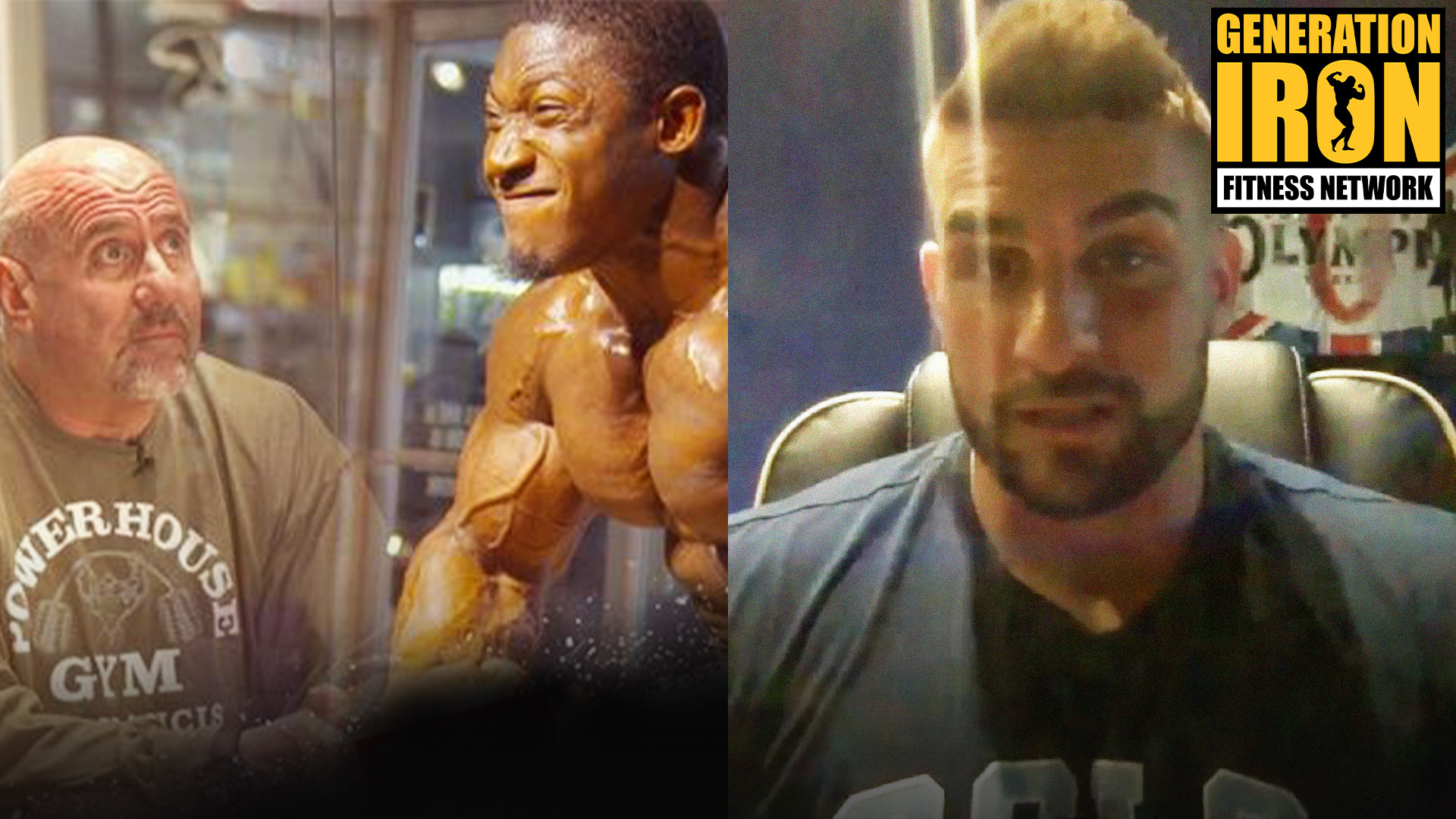
Ryan Terry: How Judges Feedback Can Do More Harm Than Good
[embedded content]
Ryan Terry warns of how relying too much on judges feedback might hurt your physique instead of help it.
Being a professional bodybuilder, Ryan Terry has had his fair share of competitions and interactions with the official judges. Being a subjective sport, there are times where an athlete might not agree with how he or she was scored. Terry knows this all too well throughout his years of competing. But ultimately, the judges are there for a reason and their advice should be heeded… that is unless it throws you off psychologically. In our latest GI Exclusive interview, Ryan Terry warns of the dangers of relying too heavily on judges feedback.
Pro bodybuilding is just as much a battle with yourself as it is against the other competitors. At the end of the day, there’s nothing you can do to make another person’s physique worse. All you can do is focus on improving yourself. In that regard, reassessing and adjusting your tactics is important. A bodybuilder needs to have an open mind in order to find new ways to improve. That’s where judges feedback can be helpful. It’s direct insight into the mind of the very people who score you on stage.
But Ryan Terry warns of relying too heavily on feedback from the judges. Terry actually recommends to sometimes avoid feedback (whether it be from judges or online comments). This might sound counter intuitive. Why would you not want valuable feedback?
The whole endeavor has to do more with the mind than the body. Terry notes that if you try too aggressively to meet the feedback given by judges, you might actually throw your entire training and prep off balance. If you’re constantly second guessing your own process – that doubt will eat away at your confidence. Losing that confidence can be a big blow against progress.
Does this mean you should ignore feedback entirely? Not necessarily. Perhaps it depends on knowing yourself and how you will react. Ryan Terry clearly prefers to keep certain feedback off the table so he can stay laser focused without white noise throwing off his direction. Others love feedback and finds that it actually helps provide direction. It’s something each up-and-coming bodybuilder needs to discover for his or herself.
A perfect example of this is Bev Francis. Famous in her heyday for having one of the best female physiques in the history of bodybuilding, her journey through the years is well chronicled. While she is a legend in the sport, she was also a sort of victim to too much feedback. At a time when Women’s Open bodybuilding was finding its identity, Bev Francis was constantly adjusting the kind of physique she held on her frame.
Whether it was due to direct feedback or simply assessing the winner the judges chose – Francis often found herself ping-ponging between needing to put on more mass and needing to look more feminine. Due to this, she never won a Ms. Olympia despite believing herself that she deserved it.
The Ms. Olympia and Women’s Open Bodybuilding of that time might be an extreme case. A time when judges themselves were unsure of what the division champion should look like year after year. But it’s a good example of how feedback can ultimately drag you around and make you lose sight of an overall direction.
Ryan Terry seems to suggest that all feedback, even from judges, should come with a grain of salt. You should know your body better than anyone, even the judges. So that should always be kept in mind when getting feedback.
You can watch Ryan Terry go into detail about his advice for up-and-coming bodybuilders in our latest GI Exclusive interview segment above!

Men’s Physique Competitor Andrew Noltemeyer In ICU After Being Hit By Car
Andrew Noltemeyer was involved in this accident on Wednesday.
Men’s Physique competitor Andrew Noltemeyer is in the ICU after being hit by a car on Wednesday while on foot.
IFBB Women’s Physique Pro Jada Beverly shared a post on Instagram asking for prayers for Noltemeyer. She mentions that he is going in for surgery today to repair two fractured legs. The accident happened sometime during the morning.
“Please pray for Andrew.
This is 28 year old physique competitor Andrew Noltemeyer was hit on foot by a car today. He is in surgery today for his badly fractured legs… He was hit only a few hours ago today September 28th…”
According to his Instagram page, Noltemeyer is an NPC competitor in the Men’s Physique division. He is also a fitness model and content creator.
Noltemeyer appeared in the 2020 NPC Championships, where he placed 11th in Men’s Physique Class C. He also finished 9th in Men’s Physique Class B at the NPC Natural Ohio back in 2014.
Jada Beverly earned her Pro Card back in 2019. She finished 10th at the Tampa Pro Women’s Physique this year and also appeared on stage at the Lenda Murray Savannah Pro. She earned 11th in Women’s Bodybuilding.
Generation Iron sends thoughts and prayers out to Andrew Noltemeyer during this time. This article will be updated as more information is confirmed and becomes available.For more news and updates, follow Generation Iron on Facebook, Twitter, and Instagram.
Greg has covered the four major sports for six years and has been featured on sites such as Sports Illustrated, Fox Sports, SB Nation, NJ.com, and FanSided. Now, he is transitioning into the world of bodybuilding and strength sports.
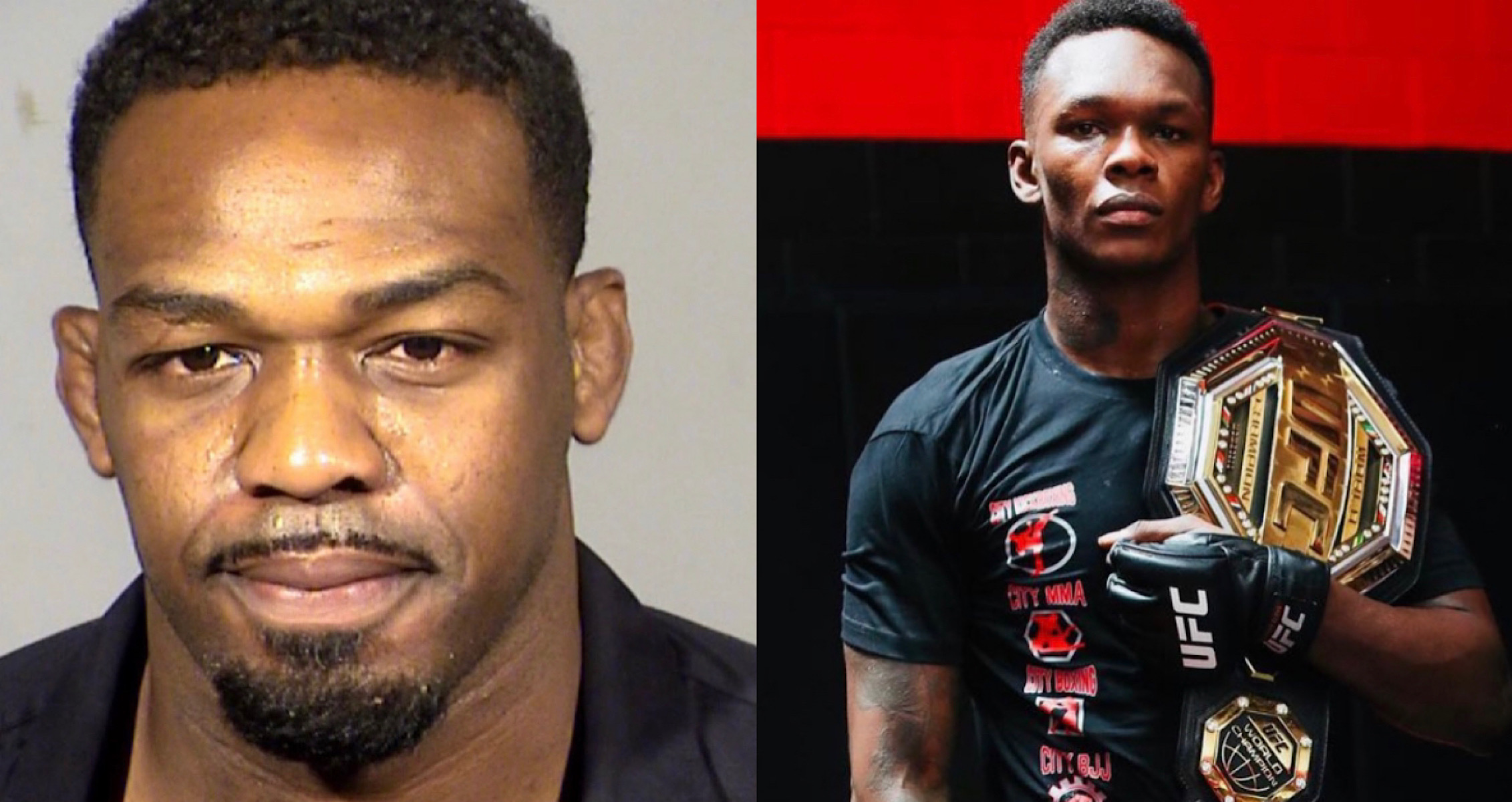
Jon Jones Arrest Details Revealed, Israel Adesanya Weighs In
More details arise in the Jon Jones arrest story and UFC champion Israel Adesanya weighs in.
It appears more details are coming out about the recent Jon Jones arrest. According to the arrest report the situation is far more complicated than it was first given credit. Israel Adesanya, the UFC middleweight champion and budding rival of Jones, had quite a bit to say about the incident.
The arrest of Jon Jones occurred in Las Vegas, Nevada. Jones was there as his first fight with multiple-time UFC title challenger Alexander Gufstafsson was inducted into the UFC Hall of Fame. What was meant to be a celebratory time for the talented UFC great would devolve in a truly embarrassing arrest for Jones.
A number of news outlets have reported on the former UFC light heavyweight champion’s arrest. But now details of the reason for the arrest and the entire incident are now coming to light. According to TMZ, Jon Jones was apparently very aggressive and violent during the arrest.
During his arrest, Jon Jones allegedly pulled his fiancee’s hair and then headbutted a police car, leaving a dent in the hood and chipping paint.
The Details
UFC middleweight champion Israel Adesanya recently weighed in on the harrowing incident. Adesanya pulled no punches in his own assessment of the situation and had some bold words to say about Jon Jones.
You can see the full arrest details and what Adesanya had to say in the Tweet below.
I’m sure y’all will give him “one more chance” lol. I swear I said he’s gonna fuck up again, he can’t help it. Now here we are. I’ve made mistakes in my time, I learn from them. I don’t think this is the first time this has happened in his house. But yea…posi vibez goiz ?✨ pic.twitter.com/i6i3N6O3s3
— Israel Adesanya (@stylebender) September 28, 2021
From the looks of things, Jon Jones has a bit more than just a drinking problem.
Some of the rash actions of Jon Jones have been captured in the past in the documentary The Hurt Business. It appears that the former UFC champion is still battling demons.
Do you think this latest incident should get Jon Jones released from the UFC?
For more news and updates, follow Generation Iron on Facebook, Twitter, and Instagram.
News and Editorial Writer at Generation Iron, Jonathan Salmon is a writer, martial arts instructor, and geek culture enthusiast. Check out his YouTube, Instagram, Twitter, Facebook, and Sound Cloud for in-depth MMA analysis.
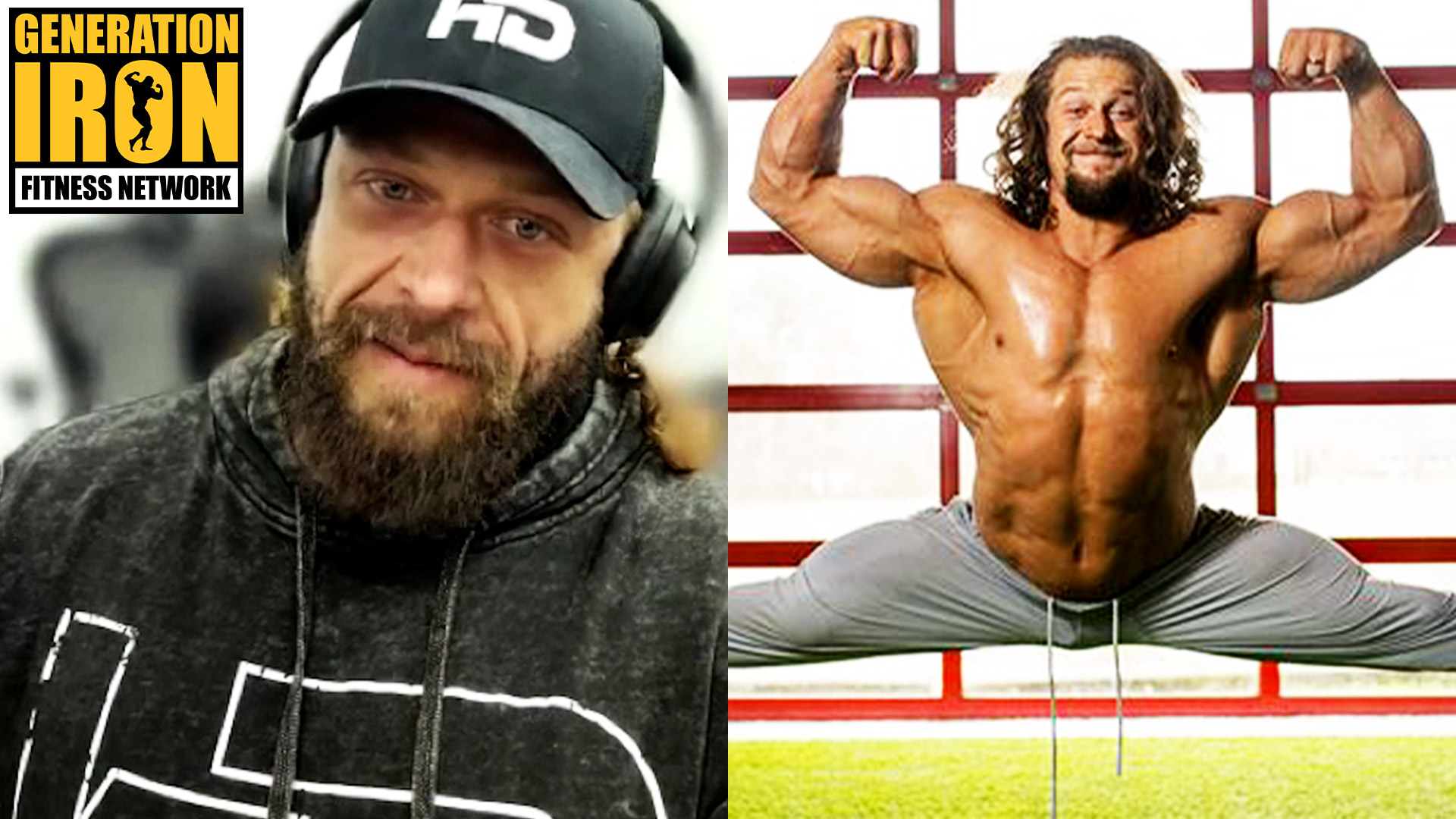
INTERVIEW: The Surprising Reality & Prep Behind Jujimufu’s Viral Stunt Videos
[embedded content]
Jujimufu discusses the origins of his viral videos and the long hours of prep that goes behind each one.
Bodybuilder and fitness athlete Jon Call might be better known in the bodybuilding world by his nickname – Jujimufu. He’s a massive a jacked bodybuilder best known for his viral videos that often involve impressive flexibility and timing. More recently, he has dedicated himself to competitive bodybuilding – bringing him even more media attention as his physique improves. Now that he’s competing, how do his viral stunts play into his prep and does he fear setting himself back due to injury? In our latest GI Exclusive interview, Jujimufu explains in detail his viral stunt origins, the work it takes to pull them off, and more!
Jujimufu is a rare kind of bodybuilder. He displays incredible acts of flexibility and motion. Not only that – but he also has a funny personality that he puts on full display. He brings more absurdism and fun into the bodybuilding world. It’s refreshing – so it’s no wonder why he’s amassed such a following over the years. Jujimufu was originally a viral bodybuilder who didn’t compete – but as of last year he has decided to put his hat into the ring. He’s been prepping for bodybuilding competitions and his already massive following is excited to see his new and improved physique.
During our conversation with Jujimufu, he explained to us that competition isn’t his end goal. He simply wants to give it a shot due to his love and passion for massive physiques. Ultimately, he is passionate about many forms of fitness including martial arts and gymnastic-type flips and tricks. So being a competitive bodybuilder isn’t the end goal – he’ll always want to dedicate himself toward the viral stunt videos he’s so well known for.
Speaking of his viral videos, we dug in deep exploring everything that goes on behind the short but popular stunt videos. Jujimufu explains the origins behind his viral status. Since a very young age he was in love with fitness. He has been training in martial arts since he was a teenager and transitioned that into gymnastic stunts such as the splits and flips we see today.
After succeeding as a functional athlete, he felt the desire to build more muscle and size. This began his journey towards a more bodybuilding lifestyle. Fast forward to today and Jujimufu caught eyes for having the physique of a bodybuilder but the nimble movements of a gymnast. It’s a combination you rarely ever see – and it helped him become an internet icon.
While his videos are usually short clips – Jujimufu reveals that there is a massive amount of prep work that goes behind each stunt. He often starts small – with a germ of an idea that he practices to see if it’s possible. As he practices, the idea becomes bigger and bigger. Eventually, it becomes a sort of short form stunt spectacular. It’s at this stage that he has to begin prepping the actual plan for the official video.
The prep for shooting the stunt might be a surprise to many. These aren’t videos he just records on the fly. He spends hours, even sometimes days, preparing for the shoot. He has to make sure the stunt is as safe as possible and also work to get all of the tools he needs to pull it off. This includes getting a small crew together to film – and often a collaborator athlete to bring even more fun and exposure to the clip.
All in all, Jujimufu explains that a one minute stunt video might take hours of prep before it’s done. If you include his earlier practice work – it’s actually a total of days of prep. In a sense, this explains the difference between someone like Jujimufu and the copy cats who just try a stunt on the fly. That’s where the unnecessary injuries happen that cause more conservative folks to worry about the growing trend of viral stunt videos.
Jujimufu is an athlete and doesn’t want to get hurt. So he makes sure to take his videos seriously like they were a job. That means prep time and lots of it. You can watch him explain his entire process in detail by watching our latest GI Exclusive interview segment above!
Combination Moves to Maximize Time and Gains
What is the best way to maximize your time while still seeing results?
So are you running short on time or have just entered a jam packed gym with no equipment available, well don’t sweat it!
I am here to help you, simply follow my amazing combo moves below to get in an awesome workout while still maximizing your time and gains.
Quads and Biceps
Decline Leg Press Superset With Unilateral DB Bicep Curls
The first move involves the quads and biceps, it would be best not to go heavy during these moves so form is kept strict
Position yourself in a decline leg press machine and at the same instance have a DB in each hand (which you will use to curl)
So perform 2 reps on the leg press, then without resting perform 1 rep of bicep curls (each arm). The reps will increase with each set.
Do not re-rack the leg press between reps, so ensure the weight is manageable (this will also help bring your core into play)
Set 1: 2 reps leg press: 1 rep bicep curl
Set 2: 4 reps leg press: 2 reps bicep curl
Set 3: 6 reps leg press: 3 reps bicep curl
Set 4: 8 reps leg press: 4 reps bicep curl
Set 5: 10 reps leg press: 6 reps bicep curl
As you become more proficient be sure to play around with the rep ranges
Calves and Shoulders
Seated Calf Raise With Bilateral Arnold Press
This move will involve your calf muscles and shoulders.
Again do not overload on the weight and keep it to approx. 40% of your maximum
Position yourself in a seated calf raise machine and at the same time position the dumbbells at shoulder height. You then perform 5 reps of
calf raises followed by 2 reps on the Arnold press.
Again the reps will increase with each set
Set 1: 5 reps calf raise: 2 reps Arnold press
Set 2: 10 reps calf raise: 4 reps Arnold press
Set 3: 15 reps calf raise: 6 reps Arnold press
Set 4: 20 reps calf raise: 8 reps Arnold press
Set 5: 25 reps calf raise: 10 reps Arnold press
Quads and Hamstrings
Lunges With a Step Up
This move can be done with an olympic bar or dumbbells.
You will begin by lunging with one leg, then immediately step up onto the platform with the same leg, the knee will be at a 90-degree angle. (Make sure you bring your other leg onto the platform also)
Then repeat by lunging and stepping up with the alternate leg.
Sets: 10: 1 rep for each movement
Eg:
Set 1: 1 rep left leg lunge: 1 rep left leg step up
Set 1: 1 rep right leg lunge: 1 rep right leg step up
Then repeat again accordingly.
Chest and Core
Swiss Ball Push-Up + Abs Pike
Assume a push-up position with your feet resting on the top of a stability (swiss) ball and your hands shoulder-width apart on the floor.
Then perform a push-up and as you rise back to the top of the push-up, pull your legs in toward your head, keeping them straight to make a pike position. (Your body should form a pyramid at the top of the pike position — not an L shape)
Then lower your legs back to parallel with the floor and drop back into the push-up position.
Set 1: 2 reps push ups: 1 rep pike
Set 2: 4 reps push ups: 2 reps pike
Set 3: 6 reps push ups: 3 reps pike
Set 4: 8 reps push ups: 4 reps pike
Set 5: 10 reps push ups: 6 reps pike
Lats and Abs and Biceps
Pull Ups To Hanging Leg Raises To Underhand Pull Ups
Perform as many wide grip pull-ups as you can in 1 minute with good form (getting your chin above the bar on each rep).
Then perform as many hanging leg raises in 1 minute
Then alternate your grip to perform underhand pull ups to target the biceps, and again as many as you can in 1 minute.
By the end of the routine you should have performed:
3 x 1minute wide grip pull ups
3 x 1 minute hanging leg raises
3 x 1 minute underhand pull ups
Chest and Back and Core
Push Ups To Renegade Row To Plank With Knee To Elbow
Begin by grabbing a couple of dumbbells or kettlebells.
Place these down and hold using a neutral grip as if you are about to row with them.
Begin in a plank position, then do a push up, followed by a renegade row, followed by knee to elbow
Sets: 10: 1 rep for each movement
Eg: 1 rep
1 push up
1 rep left side renegade row
1 rep right side renegade row
1 rep right side knee to elbow
1 rep left side knee to elbow
Then repeat again for 10 sets accordingly
Quads and Shoulders
The Thruster
I saved the best until last, this bad boy is a workout all on its own.
Set up an olympic bar with your desired weight which you are able to squat and shoulder press.
Then set up the bar in a front squat position, then as the move suggests, perform a front squat followed by a shoulder press.
Alternatively you can also use dumbbells for this move.
Sets: 10: 1 rep for each movement
Eg:
Set 1: 1 rep front squat: 1 rep shoulder press
Then repeat again accordingly for 10 sets
So there you have it, you have a conclusive way on how to beat traffic in the gym, or make the most of a gym which may have limited equipment. Either way you should have no excuse for not making the most of your workout.
Until next time, keep pumping!
Manny Pacquiao Announces Retirement From Boxing
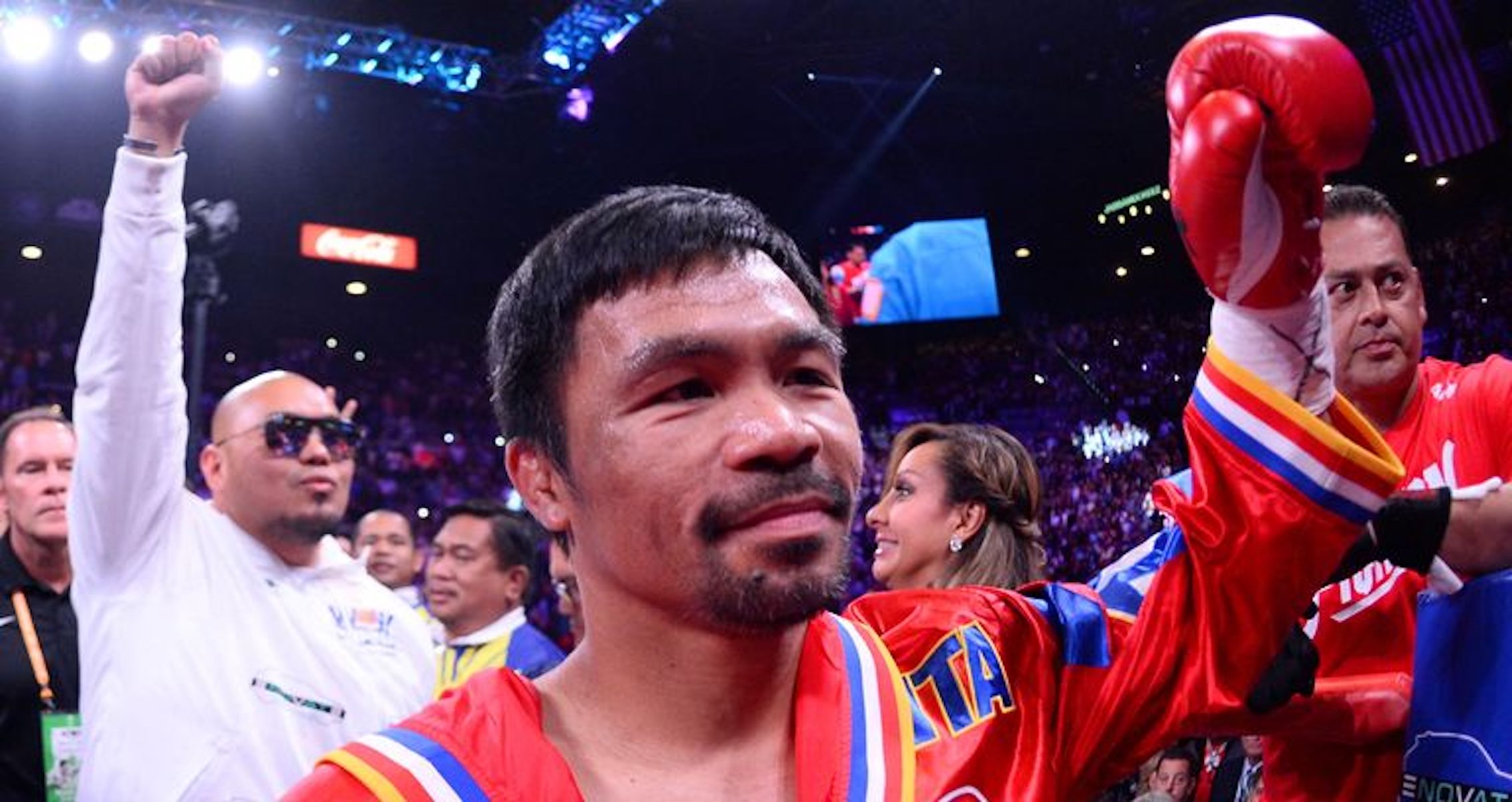
Legendary boxer Manny Pacquiao has decided to call it a career.
One of the legendary careers in boxing has come to an end. Manny Pacquiao has announced his retirement from the sport on Wednesday.
In a video posted on Facebook, the 42-year-old boxer shared some words on his career and what boxing has done for his life.
“As I hang up my boxing gloves, I would like to thank the whole world, especially the Filipino people for supporting Manny Pacquiao. Goodbye boxing. It is difficult for me to accept that my time as a boxer is over. Today I am announcing my retirement,” Pacquiao said in the video.
Manny Pacquiao enjoyed a career that spanned 26 years. In 72 fights, he finished 62-8-2. Out of 62 victories, Pacquiao picked up 39 knockouts and 23 by decision. He is a 12-time world champion. Pacquiao last fought in August when he was defeated by Yordenis Ugas. This was his first fight in nearly two years.
Pacquiao left the Philippines as a teenager and began his fighting career at 16 years old. He made his professional debut in 1995 as a junior flyweight and the rest is history. Pacquiao was one of the highest-paid athletes over the course of his career.
It is not surprising to see Pacquiao hang up the gloves as he has hinted at this for awhile now. He has since ventured into politics and recently accepted his political party’s nomination. Pacquiao will run for president of the Philippines in the May 2022 elections.
Manny Pacquiao will leave boxing with a legendary career as an influential athlete. His story began at a young age and turned into an inspirational one for all people. Pacquiao will continue to be in the spotlight, just in a different way. Either way, he will always be part of boxing and its history.
“Thank you for changing my life, when my family was desperate, you gave us hope, you gave me the chance to fight my way out of poverty,” Pacquiao said. “Because of you, I was able to inspire people all over the world. Because of you, I have been given the courage to change more lives. I will never forget what I have done and accomplished in my life that I can’t imagine. I just heard the final bell. The boxing is over.”
For more news and updates, follow Generation Iron on Facebook, Twitter, and Instagram.
The Differences Between the Squat and Deadlift
Comparing Muscle Recruitment and Exercise Benefits
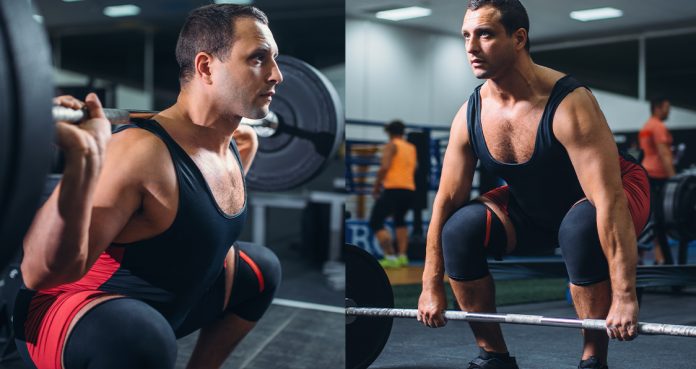
The deadlift and the squat are two foundational strength exercises that should be incorporated into the majority of training programs.The reason for this is simply due to the substantial impact that both exercises have on the body. Not only do both build full-body strength they can significantly impact hypertrophy and athletic performance.While regularly performing both will certainly improve strength and performance, it is important to recognize a number of differences that exist between both exercises.This article will review the squat and deadlift, the differences in muscle activation between the two and highlight a number of specific benefits associated with each exercise.
The Squat
This section will detail the muscles which are primarily worked in a back squat. Be aware that squatting variations will work specific muscles to a greater or lesser degree.The squatting movement pattern involves simultaneous flexion of the hips, knees, and ankles in order to drop the hips back and down towards the floor all while the trunk is held in an upright position.The squat movement pattern is commonly seen in sport which makes the squat (and squatting variations) fundamental for all athletes.There are three common squat variations – the back squat, front squat and overhead squat – all of which have their individual uses and benefits.
Muscles Worked in the Squat
Be aware that while the muscles listed below are predominantly lower extremity muscles, the squat should be considered a full-body exercise.
Quadriceps
A much greater demand is placed on the quads during a squat than in a deadlift. During the squat, the quads are highly activated due to the high degree of flexion that occurs at the knees.The front squat is an excellent squatting variation that targets the quads to an even greater extent (1).
Glutes
Meanwhile, the glutes are responsible for hip extension and play a pivotal role in the squat. They also work to enhance full-body stability, specifically at the deepest point of the squat.To maximize the engagement of the glutes, use a low bar back squat (2).
Hamstrings
The hamstrings play a secondary role in the squat as they contract to improve stability and assist during the eccentric (lowering) phase of the squat.They also work to maintain hip and knee joint stability as you power up and out of the squat.
Back Muscles
The spinal erectors, lats, traps, and rhomboids all play a role in keeping the trunk upright during the squat. They combine to keep the spine neutrally aligned and stable thus reducing injury risk.
Calves
The calves contract in order to keep the feet pinned to the floor, facilitate stability and assist in the drive phase. Improving calf strength will allow for greater plantarflexion and can lead to a more efficient squat (3).
Squatting Benefits
The following list of squatting benefits should by no means be considered comprehensive as there are a vast number of benefits associated with the squat.
1) Increased Leg Strength
Probably the most evident benefit associated with squatting is an improvement in leg muscle strength – specifically the quads and glutes.The squat recruits a vast number of lower extremity muscles and motor units which is what makes it such an effective leg strength developer.
2) Total Strength & Muscle Hypertrophy
The squat and deadlift are the two free-weight exercises where the greatest amount of load can be lifted. This makes both exercises key for improving full-body strength and size.It would be very difficult to replicate the demands of the squat and deadlift through other exercises and therefore, athletes should be regularly performing both.
3) Sport-Specific Exercise
The squat and it’s variations have close links with a range of sports. Powerlifters are required to back squat and weightlifters must be capable of performing the front and overhead squat to allow them to clean and snatch efficiently.Most athletes can benefit from utilizing all three squat variations as a combination of all three will comprehensively develop strength, movement, endurance, power, and fitness.
The Deadlift
In the same way with the squat, the deadlift has a number of variations that will work muscles in a slightly different fashion. This section is based on the conventional deadlift.While the movement patterns aren’t entirely dissimilar between the deadlift and squat, the most evident difference is the smaller degree of flexion that occurs at the knee joint.Because the legs are straighter in the deadlift, the hips start a lot higher. Consequently, the trunk of the body set in a more horizontal position and a greater emphasis is placed on hip flexion and extension.Three common deadlift variations that can be used to develop posterior chain strength are the conventional, sumo and trap bar deadlift.
Muscles Worked
As will become apparent, the deadlift works a number of the same muscles as the squat however, this is to a greater or lesser degree.The mechanics and action of the deadlift place the greatest amount of stress on posterior chain muscles which are the muscles that are found to the rear of the body.
Hamstrings
The hamstrings are more heavily targeted in the deadlift than in the squat. This is due to the reduced amount of knee flexion and consequent emphasis on hip extension.The hamstrings also work to stabilize the knee joint during the deadlift, as it does in the squat.
Glutes
The glutes are also responsible for driving hip extension at the top end of the deadlift. Lifters who have weak or inactive glutes may find that stress is placed on the lower back rather than the glutes.
Quadriceps
While the degree of knee flexion is reduced, the knees must still extend as the bar is lifted. The quads assist in the pull and work to enhance the stability of the movement. Both the sumo deadlift targets the quadriceps to a greater extent (4).
Back Muscles
As seen in the squat, a multitude of back muscles must contract in order to stabilize the spine and prevent spinal flexion, therefore, lowering the risk of sustaining a spinal injury.Failure to properly engage these muscles can lead to excessive spinal flexion and can lead to herniating a disc.
Calves
The calves will also contract during the deadlift to assist in power generation and will help to facilitate efficient knee and hip extension. In addition, the contraction of the calves will keep the body grounded and stable throughout the movement.
Deadlift Benefits
Regularly performing the deadlift can have an incredible impact on your overall strength, power, and fitness. This section will highlight four primary benefits associated with the deadlift.
1) Posterior Chain Development
As posterior chain muscles are simply all the muscles that can be found to the rear of the body. These muscles are responsible for generating the power required for athletic and powerful movements.Incorporating the deadlift into your train will develop the posterior chain, increase strength capacity, enhance muscle size and improve athletic performance.
2) More Athletic Hamstrings, Glutes & Back
The hamstrings, glutes, and back are the posterior chain muscles that are most influential in athletic movements and performance.By improving the strength and function of these muscles you may see an improvement in a number of actions such as running, jumping, and sprinting.
3) Full-Body Strength and Hypertrophy Gains
As reflected on, the deadlift brings about a range of physiological and neurological adaptations including an increase in muscle strength and size, however, this is not simply restricted to the posterior chain.The deadlift should really be considered a full-body exercise as it highly activates a range of muscles throughout the body which can lead to an increase in full-body strength and size.
4) Injury Prevention
A combination of all of the above benefits leads to a reduction in injury risk. Generally, improving the strength and function of a muscle will reduce the risk of sustaining a soft tissue injury.It is imperative that the deadlift is executed with proper technique however as poor technique can substantially increase the risk of injury (specifically to the spine).
Programming Considerations
The number of sets and reps that you should perform per exercise entirely depend on the component of fitness that you wish to develop as well as your level of competency.Both the squat and deadlift are programmed similarly, therefore, it is recommended to use the following set, reps, and weight guide in your training.Beginners:– 2-4 sets x 8-12 reps– Light to moderate loads– Focus on technique overweightMuscular Strength:– 4-8 sets x 1-3 reps– Heavy loads ( > 80% of 1 Rep Max)Muscular Hypertrophy– 4-8 sets x 6-12 reps– Moderate loads (60-80% of 1RM)Muscular Endurance– 2-4 sets x 12-20 reps– Light to moderate loads (< 60% of 1RM)
Final Word
It would be inappropriate to rate one exercise as more beneficial than the other as both have their unique uses, benefits, and characteristics. It is clear that both the squat and deadlift should be considered compulsory for the athlete as both exercises have a significant impact both have on strength, function, and performance.
References:
1 – Yavuz, Hasan Ulas; Erdağ, Deniz; Amca, Arif Mithat; Aritan, Serdar (2015). “Kinematic and EMG activities during front and back squat variations in maximum loads”. Journal of Sports Sciences. 33 (10): 1058–1066. doi:10.1080/02640414.2014.984240. ISSN 1466-447X. PMID 25630691.
2 -Glassbrook, Daniel J.; Helms, Eric R.; Brown, Scott R.; Storey, Adam G. (2017-09). “A Review of the Biomechanical Differences Between the High-Bar and Low-Bar Back-Squat”. Journal of Strength and Conditioning Research. 31 (9): 2618–2634. doi:10.1519/JSC.0000000000002007. ISSN 1533-4287. PMID 28570490.
3 – Kim, Si-Hyun; Kwon, Oh-Yun; Park, Kyue-Nam; Jeon, In-Cheol; Weon, Jong-Hyuck (April 7, 2015). “Lower Extremity Strength and the Range of Motion in Relation to Squat Depth”. Journal of Human Kinetics. 45: 59–69. doi:10.1515/hukin-2015-0007. ISSN 1640-5544. PMC 4415844. PMID 25964810.
4 – Escamilla, Rafael F.; Francisco, Anthony C.; Kayes, Andrew V.; Speer, Kevin P.; Moorman, Claude T. (2002-04). “An electromyographic analysis of sumo and conventional style deadlifts”. Medicine and Science in Sports and Exercise. 34 (4): 682–688. doi:10.1097/00005768-200204000-00019. ISSN 0195-9131. PMID 11932579.
Best Way To Create A Bodybuilding Diet For Great Gains
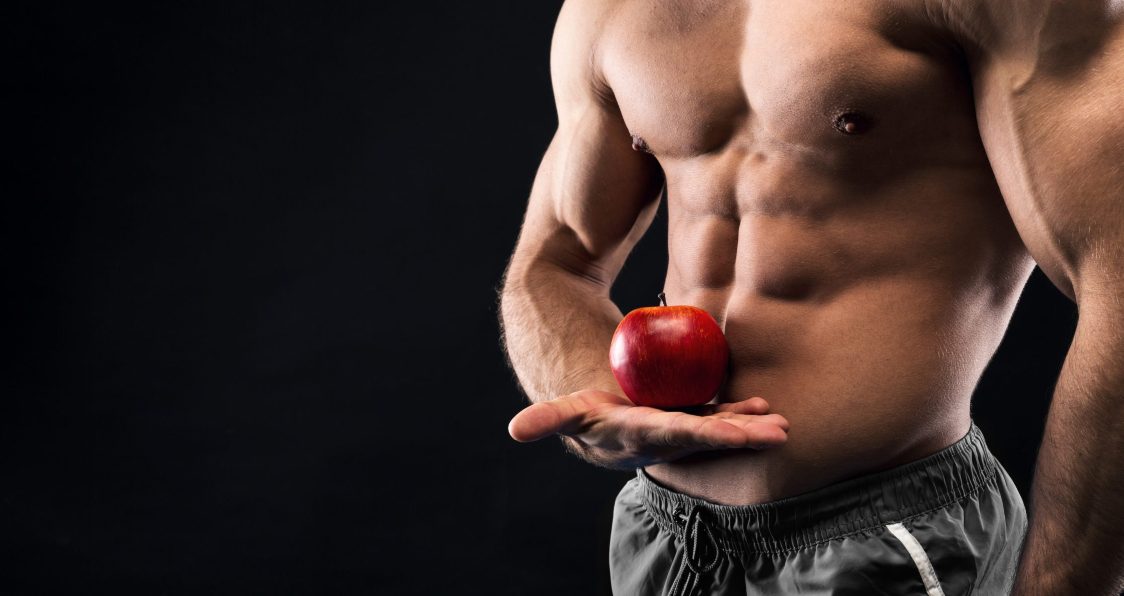
Having the right approach to nutrition is vital to getting that shredded aesthetic bodybuilders crave.
Most of us grind away in the gym and do our best to achieve that shredded physique. But only working out doesn’t lend itself to a proper shred. Sure, we may get bigger and stronger, but more definition starts in the kitchen and those of us bodybuilders looking to lean down need to know the proper tools in creating an effective bodybuilding diet. The right approach to food can allow us to enjoy it while also seeing our bodies come together.
Let’s take a look at some of the best ways to create a bodybuilding diet so you start to see the changes you want most. Knowing what to take but also what to avoid can be of equal importance and allow us to see those gains come to life. With that being our main goal, we should at least know the proper steps in how to get there.
Best Ways To Create A Bodybuilding Diet
While some of this you may already know, it never hurts to hear it again. Redundancy is a great way to keep it fresh in your mind so you actually make the changes you want to see.
1. Goals
Deciding on what exactly you are trying to get out of this is more than important because once you know your end goal, it will easier to get there. Goals can include things like calorie intake, amount of macronutrients needed, whether you are cutting or bulking, among others. Writing them down is an easy way to not forget.
2. Macronutrients
We hear this word all the time and it refers to the three essential sources of fuel for our bodies: carbs, fat, and protein. Each of these sources offers something our bodies want and need in order to thrive inside and out of the gym (1). Protein allows for muscle growth and enhanced recovery for faster bounce back. Carbs give us energy and keep us full for longer. And of course, fats are important for muscle-building hormones and play a role in the absorption of vitamins.
3. Timing
Knowing what to eat and when to eat is vital for your success. Strategically placing the right meals around your workouts will prove to be most effective as you seek the best for energy, growth, and repair. Eating often allows your metabolism to stay constantly working to burn calories so nothing can be stored for fat (2).
4. Meals
What you can eat may seem limited when looking to shed that unwanted fat and really tone out but at the end of the day, it is very much possible to enjoy every meal. Eating tons of greens will give you vitamins and minerals, keep you full, and offer a healthy dose of fiber. Plenty of protein is also imperative as you look to get the most out of every workout (3). Unfortunately, sugar must take a back seat for that can be a killer when trying to get the most bang for your buck.
5. Drink
Hydration is key. Be ready to drink plenty of water, especially on training days and paying attention to the color of your urine is an easy way to check on your hydration levels. Don’t let something like dehydration hurt your goals and find the easy things to tackle first (4). Carry a shaker bottle with you so you never have an excuse!
Top Supplements To Boost Gains
When it comes to supplementation, making sure the supplements you take line up with what you need is imperative. With so many supplements, it can be challenging to find the right ones and really work to maximize your gains. But with three of the staples being protein powder, intra-workouts, and pre-workouts, you absolutely cannot go wrong.
Enhanced Whey Protein Isolate
Code GENIRON For 15% Off
Enhanced Whey Protein Isolate is a high quality whey protein with just 110 calories and 25g protein. Fortified with DigeSEB digestive enzyme blend, this allows for better protein utilization in your body.
Enhanced Labs starts by selecting the highest quality whey proteins which undergo a series of sophisticated filtration processes to ‘isolate’ out excess fat and sugar. The final product is a complete protein containing no lactose and over 90% of pure protein per serving. Enhanced Whey is then fortified with the trademarked DigeSEB digestive enzyme blend for better protein utilization within the body. With 25g of protein at just 110 calories, this high quality whey is perfect for your muscle building and recovery goals.
Check out our individual review for Enhanced Protein Isolate here!
Enhanced Anabolic IV
Enhanced Anabolic IV is for those serious about building muscle and boosting recovery. With 23 highly effective ingredients, six blends work to tackle all of your needs.
Enhanced Labs Anabolic IV is a great BCAA supplement for those serious about muscle gains. Providing everything you need from a muscle-building and recovery supplement. Packed with 23 highly effective ingredients, this product can promote protein synthesis and decrease fatigue to keep your workouts as ferocious as they need to be to see great gains. This advanced formula has six blends to really deliver all of the benefits. They include: clinically dosed amino acid blend, nitric oxide blend, non-stimulant nootropic blend, electrolyte blend, B vitamin blend, and a fat oxidation and muscle insulin sensitivity blend.
Check out our individual review for Enhanced Anabolic IV here!
Enhanced Ramy’s Rage Stim Reloaded
Code GENIRON For 15% Off
Enhanced Ramy’s Rage Stim Reloaded is a smart 8-stim matrix to enhance energy and focus. A fully disclosed label provides transparency for their scientifically proven ingredients.
Ramy’s Rage Stim is different. It has a fully disclosed supplement facts panel, so you know exactly what you’re getting in each serving. Ramy’s Rage Stim contains full dosages of ingredients scientifically proven to boost energy levels, improve physical performance and enhance focus. Best of all, Ramy’s Rage Stim doesn’t contain mega dosages of caffeine so there is no crash. With a smart 8-stim matrix, all of your energy and focus enhancing needs are met with a great pre-workout. With 17 clinically dosed ingredients grouped into 4 synergistic matrixes, this pre-workout is perfect for boosting intensity.
Check out our individual review for Ramy’s Rage Stim Reloaded here!
Wrap Up
Putting together a bodybuilding diet can be challenging but it is absolutely possible. Forcing yourself to be accountable to yourself is imperative and can actually be beneficial in the long run when it comes to your overall goals as you will have someone to rely on. Take note of some of these tips and work on getting a great plan together because it is possible to achieve that shredded physique. It may just take a little time.
Let us know what you think in the comments below. Also, be sure to follow Generation Iron on Facebook, Twitter, and Instagram.
*Images courtesy of Envato
References
Lambert, C.; Frank, L.; Evans, W. (2004). “Macronutrient considerations for the sport of bodybuilding”. (source)
Paoli, A.; Tinsley, G.; Bianco, A.; Moro, T. (2019). “The Influence of Meal Frequency and Timing on Health in Humans: The Role of Fasting”. (source)
Leidy, H.; Clifton, P.; Astrup, A.; Wycherley, T.; et al. (2015). “The role of protein in weight loss and maintenance”. (source)
Popkin, B.; D’Anci, K.; Rosenberg, I. (2010). “Water, Hydration and Health”. (source)
4 Simple Rule To Stay Shredded On The Go
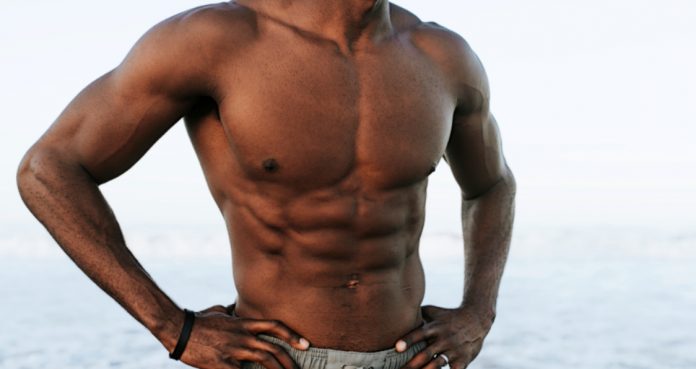
The road less traveled…can still get you ripped!
Not all of us have 9-5’s. In the bodybuilding world, and many other untraditional lifestyles, a large part of your time is spent on the road. But between rest stops, hotel food, alcohol, and late nights, how does one keep the shredded body you’ve worked so hard to gain? Simple, dedication. Celebrity trainer – and personal trainer to Kevin Hart – Ron “Boss” Everline – gives us some practical tips on how to stay shredded while you travel and we throw in a few tips of our own.
Tip#1: Be protein minded
A big reason many bodybuilders lose their gains on the road is because they simply aren’t getting enough protein. Try to plan your meals ahead of time and eat in as much as possible. Plan meals around things that you can get from supermarkets everywhere that don’t necessarily have to be cooked. Things like greek yogurt, rotisserie chicken, low sodium deli meat, cottage cheese, almond butter, etc. If you do have to eat out make sure you know the protein content of common menu items such as steak, fish, mashed potatoes, and asparagus. Apps like Myfitnesspal make this easy, even when you’re on the road. Probably the easiest way however is protein powder, which gives you a more precise account of what you’re putting into your body.
Tip#2: Come out with the bread down, and your hands up
Again, the changing into a new environment can often times trigger, “vacation mode.” You start cheating here and there, making excuses because you can’ get the grass fed steak you usually eat at 7 o’clock everyday, you let your guard down. Don’t let this happen to you. According to Everline you should stick to complex carbs like quinoa, brown rice, and sweet potatoes. If you do have simple carbs, use them sparingly and only on days before a big workout.
Tip#3: High quality H20
In the same wisdom of the legendary “Bobby Booshy”, high quality H20 is key. Practically, it’s one of the few things you’ll find all around the globe, and healthwise, it is THE staple. Although this seems like common knowledge, you’d be surprised at how easy it is to break our disciplines once transformed into a new environment. Everline recommends gradually building up from anywhere from 4 cups to 1 gallon per day. This will not only keep you hydrated after those “late nights” but helps brain and body function as a whole.
Tip#4: Reserve a hotel by a gym
Yes, we know. We could’ve just told you to use the gym hotel, but we can see the excuses coming from a mile away of why those just aren’t adequate. So plan ahead. If you know you’re going to a specific place at a specific time, find a specific gym chain that you know and trust and get your specific a$$ in there. Simple.
There you have it. 4 reasons why you have no one to blame but yourself for getting flabby on that latest business trip. Getting shredded and staying that way is no simple task, but it takes dedication and diligence to rule the day. When in doubt just remember, Protein, complex carbs, water, and…well, you’ll figure out the rest.
Have trouble staying shredded on the go? Let us know by hitting up our comments below or head on over to our official Facebook and Twitter.
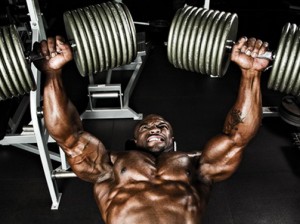
Eight Best Dumbbell Exercises for Your Chest
Here are the best dumbbell exercises to pump up your chest.
Dumbbells tend to get overlooked when it comes to working the chest. Guys tend to prefer a traditional barbell bench press and save the dumbbells for other body parts.
But dumbbells provide not only a tough chest workout but the added benefit of improving shoulder stability. Plus, you’re more likely to have access to dumbbells, whether at home or when working out of modest hotel gyms. Some research suggests dumbbells are easier on the elbow joints than barbells when working the chest.
Adjustable dumbbells, relatively unusual 15 years ago, now are commonplace and affordable, eliminating the need for an expensive, space-sucking rack of iron at home. Best of all dumbbells work for almost every lift. So, while kettlebells or barbells might be better for some lifts, dumbbells usually are an adequate substitute for those moves and preferable for others.
Of course, where the chest is involved, it helps to also have a bench, preferably an adjustable one. In this 30-minute dumbbell workout to build your chest, we’ll hammer through four sets of these eight moves in a circuit fashion, resting only briefly between sets, to produce maximum results with minimal time and equipment.
Pete Williams is a NASM certified personal trainer and the author or co-author of several books on performance and training.
1. Dumbbell Bench Press
What it does: This stabilizes your shoulders in addition to providing the same chest benefits as the traditional barbell bench press.
How to do it: Lying faceup on the bench, holding dumbbells at the outside edges of your shoulders, lift the dumbbells straight up over your chest. Lower the dumbbells together, touching the outside of your shoulders, then push them back up.
How many: 4 sets of 10 reps
2. Hang Snatch – 1 Arm
What it does: It’s a full-body exercise with power coming from the hips, but your chest is the unsung contributor of this move providing stability in the “catch” phase.
How to do it: Stand with feet shoulder-width apart while holding a dumbbell straight down in front of you. Keeping your back flat and chest up, push your hips back and down to lower the weight between your knees. Explode in one motion, extending the hips quickly and pulling the dumbbell straight up. When the weight reaches maximum height, drop your body underneath and catch it overhead. Lower back to starting position.
How many? 4 sets of 10 reps.
3. Dumbbell Incline Bench Press
What it does: It hits your chest at a different angle, forcing you to place more emphasis on your upper chest as well as the front of your shoulders.
How to do it: Lying face-up on a bench set at a 45-degree angle. Holding dumbbells at the outside edges of your shoulders, lift the dumbbells straight up over your chest. Lower the dumbbells, touching the outside of your shoulders, then push them back up.
How many? 4 sets of 10 reps.
4. Dumbbell Flys
What it does: Few movements so effectively challenge the pecs while also hitting the shoulders and biceps.
How to do it: Lying face-up on a flat bench, hold a pair of dumbbells over your chest with elbows slightly bent, palms facing each other. Separate the hands and lower the dumbbells to the sides until you feel a stretch in your chest. At the bottom of the movement, your palms should be facing the ceiling. Reverse the motion until you reach the starting point, a movement some liken to “hugging a barrel.”
How many? 4 sets of 10 reps.
5. Dumbbell Bench – One Arm
What it does: This builds strength in the shoulder and chest like a conventional dumbbell press while also placing more emphasis on stabilizing the shoulder.
How to do it: Lie on a bench with your left glute and left shoulder blade on the bench and right glute and right shoulder blade off the bench. Hold a dumbbell in your right hand and hold on to the bench with your left hand above your head. Lower the weight until your elbow is in line with your shoulder. Return to starting position. Continue for 10 reps and then switch sides.
How many? 4 sets of 10 reps per side.
6. One-Arm, One-Leg Dumbbell Row
What it does: This is a total body exercise but one that works the chest, too. You’ll get a stretch of the hamstrings and it also challenges the lats.
How to do it: Stand on one leg, gripping a stable surface in front of you (perhaps the dumbbell rack or bench) with one hand. Bend by dropping your chest and lifting the leg opposite your free hand. Grab a dumbbell with your free hand. Pull it to the side of your waist and then lower it. Do 10 and switch sides.
How many? 4 sets of 10 reps per side.
7. Bridge Chest Flys
What it does: By placing yourself in a bridged position, you target the pecs while getting the normal glute and hamstring benefits of the bridge.
How to do it: Lie on your back on the floor or a mat with knees bent and feet flat on the floor, holding dumbbells over your chest, palms facing each other. Squeeze your glutes and press the balls of your feet to the floor, creating a line from knee to shoulder. Lower weights and hips together, pausing at the bottom and then bridging back up as you bring the weights back together.
How many? 4 sets of 10 reps.
8. Alternating Dumbbell Bench Press
What it does: The alternating dumbbell press challenges the chest to stabilize more than a barbell bench.
How to do it: Lying faceup on a bench, holding dumbbells at the outside of your shoulders and with palms facing your thighs, lift both dumbbells over your chest. Keeping one arm straight, lower the other dumbbell, touch the outside of your shoulder, and push it back up. At the top of the movement, push farther with both hands, as if trying to punch the ceiling.
How many? 4 sets of 10 reps
For more news and updates, follow Generation Iron on Facebook, Twitter, and Instagram.