
 All Posts By Presser
Best Weightlifting Gloves With Wrist Support & Grip (Updated 2021)
Weightlifting gloves are great aids to your big lifts and can offer wrist support and grip so your gains never suffer.
Weightlifting gloves are popular workout tools for those who lift big or who seek the most protection for their hands. We wear gloves all of the time, whether it be cold weather, painting our house, or cleaning with certain products and your workouts in the gym should be no different. Wearing lifting gloves is a personal choice made by some to assist in their workout, but others feel it interferes with certain exercises and choose to not use them. It is all a preference on how you feel, your intended goals, and your scheduled workout.
We’ve put together a list of the Best Weightlifting Gloves for 2021 so you can have the best in terms of wrist support, grip, and overall comfort. Finding the right pair can be challenging but this list will hopefully help narrow down your search so you only get the best possible lifting gloves around.
Best Weightlifting Gloves For 2021
Best Lifting Gloves Overall
The best weightlifting gloves overall will offer great support and grip, while also being comfortable and providing ventilation for increased breathability that you want to see out of the best gym gloves.
Fit Vikings Workout Gloves
Fit Viking weightlifting gloves are designed to offer overall support and versatility by covering your palm but allowing for free finger and thumb movement. The enhanced grip will maintain a solid hold on the bar to keep you lifting big and for longer without the unwanted pain. An added 2 inch wide and 16 inch long wrist wrap provides for comfort and protection while encourages wrist support and an increased grip. Made from natural cow leather and a Velcro strap the stitching makes this a durable glove for any type of exercise.
Fit Vikings Workout Gloves are great for offering protection and enhanced grip with comfort and versatility for all your workouts.
Pros
The leather is a solid barrier between the bar and your hand
It does prevent sweating with nice ventilation
They will dry quickly and are fairly durable
Cons
The leather is thick so working to find a solid grip can be challenging
Depending on your hand size, the finger loops may feel uncomfortable
The Velcro wrist strap has rigid edges and may dig into your skin
Price: $16.99
Best Lifting Gloves For Bodybuilding
Bodybuilders should use the best gym gloves to greatly enhance all exercises, especially as you look to build perfect symmetry with weightlifting gloves with wrist support.
Harbinger Pro Weightlifting Gloves
Harbinger Pro Wrist Wrap weightlifting gloves comes with solid palm protection with integrated wrist wraps for wrist stabilization and increased strength benefits. The genuine leather palm is padded with resilient open-cell foam and vented to minimize sweat. Having your fingers free can help increase contact for a better grip and the wrap around thumb protection consists of leather. Double stitched for durability, this will minimize sweating and enhance protection for those big lifts.
Harbinger Pro Weightlifting Gloves offer a genuine leather palm with great cushioning and ventilation while still providing for awesome grip support.
Pros
The fit is great for a comfortable and snug feel
The high quality leather mixed with the wrist wraps make this a great value for a weightlifting glove
From a reputable company in Harbinger
Cons
Durability comes into question and the padding is thin
The palm vents don’t offer much breathability
Price: $24.99
Best Lifting Gloves For Wrist Support
While lifting gloves do support your hands, having that added wrist support can protect this vulnerable area from any potential pain or injury.
Portzon Weightlifting Gloves
Portzon weightlifting gloves offers these half finger outdoor gloves for ideal versatility. Having your fingers free, combined with a strong, durable glove, it reinforces wrist support, finger joints and provides for great flexibility and dexterity. Stitched well and breathable, the dual-layer synthetic leather palm offers a great grip and the Velcro strap allows for movement and dexterity for the best efficiency. The convenient hook and loop allows for easy size changes and an additional pad gives you added hand and knuckle protection.
Portzon Weightlifting Gloves are premium and durable material designed to provide comfort and breathability with mesh for a comfortable workout.
Pros
A comfortable design and a great grip
They provide for palm protection with the versatility of having your fingers free
Cons
Those with smaller to average sized hands may find this too big
They tend to be a little tight causing more sweating than desired
Price: $17.03
Best Lifting Gloves For Pull-Ups
Pull-ups are a great exercise to build strength and size and working with gloves to enhance support and grip will help you see your desired PRs with weightlifting gloves with wrist support.
Fit Active Weightlifting Workout Gloves
Fit Active Sports weightlifting gloves will offer full palm protection with the benefit of finger loops for versatility and dexterity. Covering the entire palm, the high quality material will prevent against injuries and blisters while also acting as a water resistant and durable material. The wrist strap is great for support and the silicon printed neoprene palm design offers a tight grip for any of those big lifts. Comfortable and breathable, these gloves have nice ventilation and are easy to adjust.
Fit Active Weightlifting Workout Gloves offer full palm protection with built-in wrist wraps for comfort and tightness for all your workouts.
Pros
The palms offer flexibility while staying durable
The wrist straps are great for added stability
Cons
Quality comes into question with some consumers and the fit may be slightly off
This causes the grip to be off and not as tight as advertised
Price: $19.95
Best Fingerless Lifting Gloves
Some gloves cover your fingers while others allow for free movement to provide for more functionality when it comes to certain exercises.
Mava Sports Cross Training Gloves
Mava Sports Cross Training Gloves have extra leather and silicone padding to offer the best protection from unwanted pain and blisters. Integrated wrist wraps offer nice support for all your lifts and a strong grip enhances comfort while giving you the best on the bar, dumbbell, or whatever equipment you’re using. Comfortable with nice ventilation, these gym gloves are perfect for those looking to go fingerless and have the best versatility in terms of movements.
Mava Sports Cross Training Gloves have extra leather and silicone padding with integrated wrist wraps for comfort and a strong grip.
Pros
Great design and fit for comfort and versatility
Minimalist design does reduce sweating and these offer good ventilation
Wrist wraps are perfect for that added wrist support
Cons
More length in the palms would be nice
Rough edges do require constant adjusting
Price: $14.99-$24.81
Best Lifting Gloves For CrossFit
Those who regularly engage in CrossFit should consider a pair of gym gloves to help tackle any workout the circuit throws your way.
Glofit Freedom Workout Gloves
Glofit Freedom workout gloves offers enhanced protection with a hollowed out back design perfect for breathability and freedom. These gloves have a cushioned pad with silica anti-slip points for increased friction and stability during movements. The double layer palm design enhances comfort and durability while also protecting your hands from abrasions. The hook and loop closure secures a nice fit and the Velcro wrist wraps adjust for personal comfort while not sacrificing support.
Glofit Freedom Workout Gloves are breathable and flexible with an adjustable wrist strap and convenient features so you can workout with ease.
Pros
They are comfortable, breathable, and flexible for your workout needs
The palm fabric lifts easy and provides for a good grip
Cons
Sizing may be slightly off and they may be too tight for comfort
Quality comes into question for some users as well
Price: $9.99-$14.99
Best Lifting Gloves For Women
While workout gloves for men and women are very similar, those geared towards women can offer slightly different benefits that will allow you to tackle all your gains.
SIMARI Workout Gloves
SIMARI weightlifting gloves offer full hand protection and wrist support with an added thick foam palm pad to act as a buffer for any high impact exercise. The palm is made from microfiber to provide for great durability, but the back of the hands are made of air mesh for breathability and comfort. The humanized design works to maximize comfort and functionality by providing sturdy wrist protection, reusable Velcro, soft sponge pads, and towels on the thumbs for easy on and off access while being lightweight and breathable. They are designed for power and are suitable for any type of workout.
SIMARI Workout Gloves fully protect your hands but are breathable and suitable for all workouts with their incredible wrist support.
Pros
Great for any workout and all experience levels
The nonslip grip and breathable fabric, coupled with the wrist support, make this a great glove
Cons
They don’t offer as much protection as advertised which is disappointing
Durability comes into question as the palm pad is very thin
Price: $9.98-$19.98
Benefits Of Weightlifting Gloves
When it comes to using weightlifting gloves, there are many benefits associated with them that can greatly impact all your gains. A comfortable pair will not only enhance your support and grip but make you feel confident as you lift that heavy weight. Benefits of the best gym gloves include:
Enhance grip: Work for better grip on the barbell or whatever weight you use to not overwork those muscles that don’t need to be used (1).
Provide support and stability: Give yourself the best chance when under so much weight to feel supported and stable using weightlifting gloves with wrist support (2).
Offer better comfort: Lifting without gloves can cause slight pain and gloves will provide comfort while still being versatile for all your goals.
Have quality ventilation: A good pair of lifting gloves will offer good ventilation so you don’t suffer from sweaty and uncomfortable hands.
Increase confidence: Having a good pair of gloves can increase your confidence as you feel more supported with all your lifting needs to hit those massive PRs you want most.
Finding The Right Weightlifting Gloves
The best gym gloves come in all kinds of material from cotton, to leather, to other synthetic materials and finding the one that is most comfortable for you in terms of both wearability and functionality is more than important before executing those big lifts. Some provide padded support while others do not and that can be a make or break when it comes to interference. Look into ones that will support your most popular lifts. If you are a powerlifter, look into specially designed gloves for your sport, but if you are an all around athlete, check out the more versatile lifting gloves to find what works best for you.
Lifting Straps Vs. Gloves
Lifting straps vs. gloves is a debate among those in the fitness world and for good reason. Both lifting straps and lifting gloves serve a very similar purpose with slight differences, however. For the most part, both of these work to provide support and assistance to your lifts, but they work in different ways. Lifting straps work best with heavier weight and are good for powerlifting as these will work in tandem to the grip you already have with your hands. They provide great wrist support and prevent the weight from dropping completely if you should slip (3,4).
Lifting gloves on the other hand will work best for bodybuilding and are better for lighter weight, since your grip is with your hands. What gloves can do is relieve pressure, prevent calluses, and stop blisters during weightlifting as a result of the tough feel of the bar. While this really comes down to preference, at the end of the day, those looking to relieve pain and offer the best for bodybuilding should highly consider weightlifting gloves as a top choice.
How We Choose
When choosing the best gym gloves we look at a number of factors. The quality and durability of the product comes down to material and the companies and brands on this list reflect that the most. Material also ties into how comfortable these are because you want your gloves to be sturdy, but also comfortable and versatile to work best for all your lifts. We then look at the design, for some have closed fingers and others allow more free movement with your fingers. This is really a preference on how you feel and what you are looking for most in a pair of lifting gloves. Lastly, we look at price. We know these products can get expensive and we seek the best lifting gloves around while still being at an affordable price.
FAQ Section
What are the best lifting gloves?
Fit Vikings Weightlifting Gloves. These gloves are designed to offer overall support and versatility by covering your palm but allowing for free finger and thumb movement. The enhanced grip will maintain a solid hold on the bar to keep you lifting big and for longer without the unwanted pain.
Are lifting straps better than weightlifting gloves?
This is all a preference on how you want to workout and what your intended goals are. Weightlifting gloves will work better for bodybuilding, whereas lifting straps may work best for powerlifting. At the end of the day, they will both work for your benefit.
Do I really need to use weightlifting gloves?
No, but they can really aid in your weightlifting goals greatly. By protecting yourself against calluses and blisters, and offering the best support and stability for those big lifts, you give yourself the best chance at seeing those gains you want most.
Wrap Up
Lifting gloves can be beneficial aids to your lifts and work to give you the most effective and safest workout possible. If you are someone new to lifting gloves, there may be a trial and error period but eventually you will find what works best for you. From grip support, wrist stabilization, and improving proper form, lifting gloves can work wonders for your workouts.
Generation Iron may receive commissions on purchases made through our links. See our disclosure page for more information.
Let us know what you think in the comments below. Also, be sure to follow Generation Iron on Facebook, Twitter, and Instagram.
References
Lee, J.; Sechachalam, S. (2016). “The Effect on Wrist Position on Grip Endurance and Grip Strength”. (source)
Buhman, D.; Cherry, J.; Bronkema-Orr, L.; Bishu, R. (2000). “Effects of glove, orientation, pressure, load, and handle on submaximal grasp force”. (source)
Cowan, J.; DeBeliso, M. (2017). “The Effects of Lifting Straps on Force Applied During the Power Clean”. (source)
Hori, N.; Chiu, L.; Kawamori, N. (2009). “Pulling movement in weightlifting exercises from a biomechanical standpoint”. (source)
The 8-Min Bench Press Warm-Up You Need
The 8-Min Bench Press Warm-Up You Need
The average person loves benching, but hates warming up. And that’s why they’re average.
They strut into the gym, do a few half-ass arm swings before slapping 135lbs onto the bar and pumping out some questionable reps.
Lack of preparation breeds a lack of results.And if you’re looking to bench bigger and feel better while doing so, a proper warm-up is non-negotiable.
Why you need to warm-up before benching:
• Maximize your strength potential. Warming up enhances your ability to display your strength by priming the central nervous system (CNS).
• Minimize your risk of injury. As you move through your warm-up, synovial fluid builds up between your joints and acts as a lubricant. Thus, reducing unwanted joint friction and “stiffness” while greatly minimizing your risk of injury.
• Increase muscle fibre recruitment. As noted, your warm-up is an opportunity to prime the CNS, which ultimately leads to greater muscle fibre recruitment. Your ability to push through the concentric phase of the bench press with maximal effort is a result of a primed nervous system. This can only be achieved through an optimal warm-up. Plus, warming up increases your joints’ range of motion. A greater range of motion means greater time under tension and a higher degree of muscle fibres at work.
• Increase core temperature and blood flow. Warming up enhances blood flow and increases core body temperature. It alsoimproves overall core function and stability, which increases your loading potential for the bench press. A stronger core means a stronger bench.
The 8-Min Bench Press Warm-Up (4 Steps)
Step 1: Foam Rolling/SMR (2 min)
Self-myofascial release (SMR) is a warm-up technique involving applied pressure to specific muscle tissues and can be used with a variety of tools including (but not limited to) the foam roller.
Foam rolling increases blood flow to the working muscles involved in your training session and, ultimately, gets you moving. This, in effect, raises your core temperature and primes your muscles for loading.
As Mike Boyle puts it, “When done regularly, foam rolling unties the knots in your muscles by breaking down the adhesions and helping to heal the tissues.”
Grab a foam roller and perform 10 slow rolls per side to the following areas:
• Lower back: Be sure to lay on your side so the roller is not placed directly on your spine. Rather, you want to roll out the muscles along the side of your lower back.
• Triceps: Keep your arm fairly straight and roll along the triceps, between your elbow and armpit.
Be sure to exhale as you apply pressure to these areas and focus on breathing throughout your sets.
Step 2: Mobility (2 min)
Mobility is your joints’ ability to actively move through their intended ranges of motion. Simply put, it’s flexibility in motion.
The bench press places high demand from a mobility-perspective on the thoracic spine (upper back) and shoulders. That said, mobilizing these areas should be an area of high priority during your warm-up.
Perform 10-15 reps per side for each of the following:
• Side Lying Windmill: The objective here is to keep your hips straight while rotating at the upper back and shoulders. Overtime, work to touch the floor as you reach overhead while keeping your arm straight.
• Banded Shoulder Dislocates: This acts as a mobility drill while also aiding in activation of the muscles surrounding the shoulders and upper back. Many Olympic lifters will perform this with a dowel, but the resistance band offers greater flexibility and added tension throughout the movement, making it a great precursor to the bench press.
Step 3: Activation (2 min)
Now it’s time to get the primary muscles involved in the bench press (triceps, upper back, core) activated and primed for loading.
Perform 2-3 sets of each of the following:
• Band Pull Apart: Holding a resistance band at shoulder-height with your arms straight, pull the band apart and focus on contracting your upper back muscles. Slowly bring your arms back to the center while keeping tension in the band throughout the entire set and repeat for 15-20 reps.
• Triceps Extension with Resistance Band: This is meant to increase blood flow to the primary movers of the bench press (the triceps) while preparing the elbows for loading. Do 15-20 reps.
• RKC Plank: The RKC or “hard-style” plank is one of the most effective exercises you can do to strengthen the deep, underlying muscles of the core. It involves maximally contracting every muscle in your body for 5-10 sec at a time while holding the standard plank position. After 5 sec, you “relax” your muscles and continue to hold the plank for 10 sec. Repeat this process 2-3 times for a total of 30-45 sec.
Step 4: CNS (2 min)
Your ability to display strength quickly is a result of priming your nervous system withdynamic and explosive movements prior to lifting. As already mentioned, doing so will increase your total muscle fibre recruitment and result in an explosive concentric phase of the bench press.
You’re not limited when it comes to dynamic movements to perform prior to benching. That said, it’s generally a safe bet to use exercises like explosive push-ups or ballistic throws since they closely mimic the movement of the bench press in a dynamic setting.
Choose one of the following and perform 3-5 reps for 2-3 sets (rest 30-45 sec between).
• Option 1: Med Ball Slam
• Option 2: Explosive Push-Ups
Summary: Putting It All Together
1. Foam roll lower back x 10 slow rolls per side.
2. Foam roll triceps x 10 slow rolls per side.
3. Side lying windmill x 10 per side.
4. Banded shoulder dislocates x 10.
5. Band pull apart x 15-20 for 2-3 sets.
6. Triceps extension x 15-20 for 2-3 sets.
7. RKC plank x 30-45 sec (5 sec pull, 10 sec regular hold, repeat).
8. Med ball slam or explosive push-up x 3-5 for 2-3 sets.
Prioritize your warm-up and make it a non-negotiable part of training. You’ll feel strongerand reap the rewards because of it.
Robert Timms Reveals That He Only Sleeps Three Hours Per Day & Explains Why
[embedded content]
For Robert Timms there are literally not enough hours in the day.
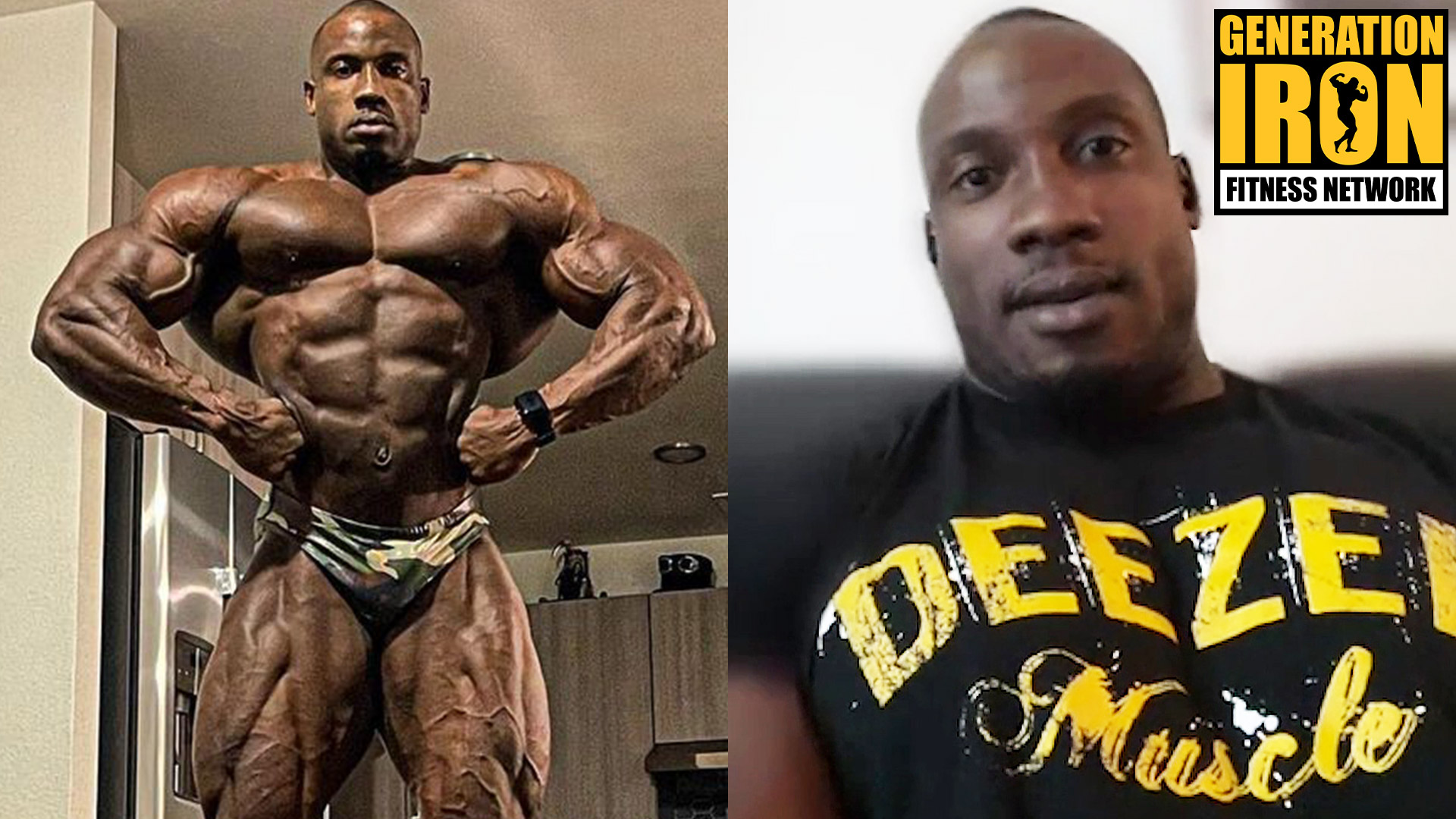
Robert Timms is a Classic Physique pro bodybuilder who is making waves in the sport. Most recently, Timms won the Texas Pro and shortly after posted incredible physique photos. It turned many heads and put him in the conversation to be a threat to Classic Physique Olympia champion Chris Bumstead. With such incredible improvements and success – the world may be shocked to learn that Timms only sleeps three hours per day. How does he do it without burning out? In our latest GI Exclusive, Robert Timms explains why he only sleeps three hours per day and how it affects his bodybuilding career.
Modern science has made one thing clear over the past many decades – getting enough sleep per day is extremely important to your health and well being. This fact is even more important to competitive bodybuilders. The body needs rest in order to repair and grow. The less a bodybuilder rests, the less optimal their muscle growth and conditioning will be.
Apparently, Robert Timms is the exception to this rule.
We connected with Robert Timms via video chat this month to discuss his bodybuilding prep in 2021, his future plans, and his thoughts on trending topics in the sport. During our discussion – he revealed that he only gets three hours of sleep per day. Every single day. His reasoning behind this is due to the various responsibilities he pursues in his daily life. He’s part time military, holds an additional full time job, and competes as a pro bodybuilder. For Robert Timms, there are quite literally not enough hours in a day to get everything done.
Robert Timms has broken down his daily routine into a rigorous schedule. In order to work his two jobs and stay on point with his deeply focused bodybuilding prep – he only schedules in three hours of sleep. He’s done this for so long that he’s simply used to it. He even said he would be scared to see what switching back to a full eight hours would do to his life.
So how does he pull it off without burning out? Robert Timms has no explanation. He understands completely that there is no scientific way he should be able to succeed with so little sleep. He doesn’t do it because he wants to. He does it because he has to. He needs his full time job and his part time job alongside bodybuilding. Not only this – but each one is his passion.
“During my preps I’m mostly running off of adrenaline,” Robert Timms states in our interview. He continues:
“So I’m running off of excitement… and honest to God it’s a blessing to be able to do what I do at this level and not get the full amount of sleep and work a full time job and work a part time job as well. That’s the only way I can explain it. Because there is no way that I should be able to do all of this and be able to produce at the end of the day. Like, scientifically there should be no way to do what I’m doing.”
Vlad Yudin then asks Robert Timms how he does it. If it’s impossible, why does he succeed against all odds and scientific explanation? Robert Timms then simply points to the sky. It’s God. That’s the only way he can rationalize it.
Robert Timms also takes a moment to say that his methods should not be repeated by those who look up to his success and physique. What works for him does not necessarily work for everyone. He acknowledges that science is right – humans do need at least eight hours of sleep. Perhaps Timms is simply the exception… or has a rough collapse further down the road.
You can watch Robert Timms talk in detail about his sleep habits and bodybuilding schedule in our latest GI Exclusive interview segment above!
Robert Oberst Suffers Tear To Shoulder Tendon, Will Not Require Surgery
Robert Oberst will begin rehabbing a shoulder injury that has kept him out of competition.
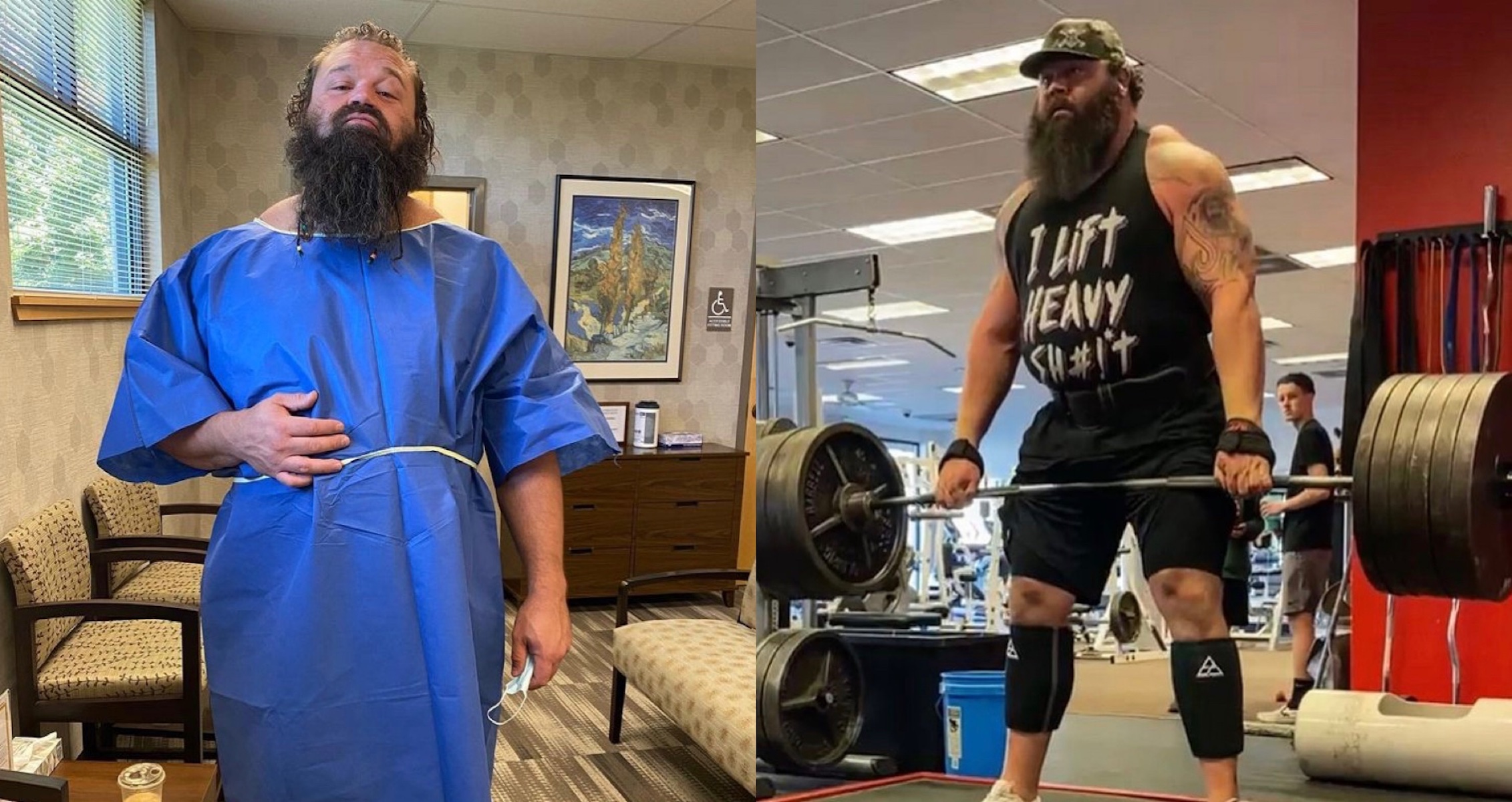
Robert Oberst has announced that he suffered a tear to a tendon in his right shoulder. The powerlifter posted a video on his YouTube page to make the announcement.
Oberst explained that the tear is a half-centimeter and will not require surgery. It was in the front of the shoulder and was a bursae-sided tear, which means it was on the outside of the joint.
“I know everyone wants to hear why I had to pull out of The Shaw Classic. Well, you’ll know as soon as I do. Getting a shoulder/upper bicep MRI right now and hoping it’s something I can fix up fast!! Don’t worry, I’ll be back Til The Wheels Fall Off”
Robert Oberst was scheduled to take place in the 2021 Shaw Classic, which took place on Aug. 27-28. Just days before the competition, Oberst pulled out of the competition with a shoulder injury but there was no other information released at the time. Now, it is clear why he was forced to miss the event.
Oberst set up an appointment with Dr. Joseph Lynch, who is a shoulder specialist. He advised Oberst to avoid rotator cuff surgery as this would have left a stronger chance that Oberst’s career in lifting might be over. Because the tendon did not retract from the bone, the option to avoid surgery was on the table.
This means that Oberst will have to rehab the injury with lighter weights and anti-inflammatories until the pain is more tolerable. His return to competition will depend on how effective the rehabilitation process is.
There is no solid timetable for when Robert Oberst might return to competition but if all goes well, it could be the beginning of 2022. The fact that he did not need surgery is good news if Oberst wants to return to powerlifting soon. For now, he will have to focus on the rehab and getting that should back to full strength.
[embedded content]
For more news and updates, follow Generation Iron on Facebook, Twitter, and Instagram.

A History Of The Mr. America Bodybuilding Competition
With Mr. America approaching, this historic event is set to continue it’s historic comeback.
We all know the names of the big bodybuilding competitions being the Arnold Classic and Mr. Olympia, among other notable contests. But one pre-dates all of these and it began in 1939; Mr. America. This prestigious event has seen the likes of some amazing physiques and notable names over its decades’ long run, but as of late, this contest had seemingly fell by the wayside, allowing other competitions to sneak their way into the public eye and take over the title of the best and biggest bodybuilding competitions in the world. But with a revival and newfound sense of determination, Mr. America has sought to reclaim this position and continue its comeback as a top contest full of elite competitors.
Let’s take a look at the history of this storied event. Years and years of trial and error, unfortunate circumstances, rivaling competitions, and a shift in the sport of bodybuilding has sent Mr. America on a tumultuous ride but one that shows true resiliency and a real passion and respect for the sport. Despite all the short comings through the years, this contest has stood the test of time and has seen some elite and serious athletes walk across the stage in hopes of being crowned Mr. America.
The longest running and most prestigious event is back and shows no signs of leaving. And even though Mr. America is non-sanctioned, support has proved that this event will draw in crowds and continue to add to the legacy and allure of what Mr. America once was and what it will become.
The Early Years Of Mr. America
Mr. America was started in 1939 by the Amateur Athletic Union (AAU) and ran alone until challenged by the newly found IFBB which served as an alternative to the AAU. With opposing competitions, both of these events fought for the public’s support.
What Mr. America did was champion the idea of the Greek ideal, that perfectly sculpted physique dating back centuries, but money and professionalism from the opposing IFBB would challenge Mr. America and lead to what was to come.
A Decline In Popularity
What would come to be a slow decline resulted from a shift in the ideas of bodybuilding. The idea of the true balance of mind and body shifted to massive physiques and athletes beginning to win contests like Mr. Olympia multiple times. Attention shifted and the rights to Mr. America began to be sold several times.
Eventually, the AAU would stop holding the contest and the original masterminds behind this storied event pulled out, leaving it abandoned and on its own in a world full of large and successful bodybuilding competitions. With bodybuilding becoming something of a spectacle, the idea of the sport and roots that cemented Mr. America for so long began to wane and what would emerge was the idea of profit over sheer love for the sport.
A True American Comeback
The World Bodybuilding & Fitness Association acquired the rights in 2004 but little traction was gained in its quest to revive Mr. America. In 2011, the International Natural Bodybuilding Federation sought to host these contests again, and even with strict doping guidelines and a passion for a revival, the contest struggled to get off the ground. Enter into the late 2010’s and the rights were once again acquired but it wasn’t until 2020 when East Coast Fitness Concepts took the reigns and sought to pour their heart and soul into bringing this contest back for good. A successful event last year brought hope that this year would be even better and it has sure turned out to look that way.
What To Look Forward To This Year
The Mr. America contest this year will see elite bodybuilders and those rising the ranks compete for this coveted title. Athletes are scored on the following criteria: muscular development, muscular proportion, conditioning, posing, and general appearance. These are based on a point system and the judges will rank these criteria out of a perfect score of 20 to determine the top three finishers. For added fun, those athletes competing in Women’s Physique, Men’s Bodybuilding, and Men’s Classic Physique will be required to perform an individual routine. What is set to be an exciting event this year, Mr. America and the incredibly competitors will certainly put on quite a show that all will love.
Mr. America will be held October 8-10 in Atlantic City, New Jersey with the final ceremony being held on October 9. With everything going on, the health and safety of everyone involved is of the top priority and event organizers have worked diligently and incredibly hard to make sure this event runs as smoothly as possible. Generation Iron will be covering this event and it will also be broadcast on CBS Sports Network at a later date. Generation Iron will provide updates on the CBS Sports Broadcast as these updates become available.
Check out Mr. America’s website here for more information on this historic and amazing event!
Wrap Up
Mr. America is a long and storied event full of rich bodybuilding history and incredible highlights. Do to unforeseen circumstances and the evolution of the sport, this historic contest had fallen away, seemingly leaving the public eye as others crept in to take the top spot. But with a comeback and revival for the ages, Mr. America has returned and competitors are excited to get back out to try and win this coveted title. For those of us looking forward to this awesome event, these athletes have worked hard to craft their physique to put on quite a show. History has sent Mr. America on a wild and interesting ride through the years but we should all be excited for the continued return of the one and only, Mr. America.
Let us know what you think in the comments below. Also, be sure to follow Generation Iron on Facebook, Twitter, and Instagram.
*Images courtesy of Mr. America Instagram

Kai Greene Teams With Veteran Bodybuilder Eugene Mishin for Alien Themed Commercial
Kai Greene and Eugene Mishin team for alien themed lotto commercial.
Kai Greene has teamed up with fellow bodybuilding veteran Eugene Mishin. The two bodybuilders and actors are set to appear in a lottery commercial together.
Kai Greene has always been a theatrical performer. Whether he’s on the bodybuilding stage or on the big and small screen in movies and television, Kai has always been a consummate performer. So it should come as no surprise that the popular bodybuilder will be appearing in what seems to be an ambitious commercial for the Powerball Lottery.
Kai Greene is at home when he can showcase is art to the world. He has used bodybuilding as a medium to showcase his many talents, from posing to acting.
Posing is a unique art-form where the body collaborates with your visions to shape something extraordinary to the eye. As your visions and thoughts take form, the body follows. Through movement we express ourselves and our purpose.
As time goes by we harness the energy and skills of those around us, we practice, and we perfect our craft. As soon as the spotlight hits, I will be ready.
Bodybuilders Unite
Kai Greene isn’t the only bodybuilder appearing in the commercial. A bodybuilding veteran with tons of experience joins Kai in the commercial. Mr. Russia and Mr. Europe champion Eugene Mishin is also joining the fray.
An Olympia veteran in his own right, Eugene Mishin competed with some of the best of the best. Those kind of credentials, as well as maintaining a solid physique, landed Michin the opportunity for this commercial. Speaking of which, what is the commercial about in the first place.
From what can be gleaned from images posted online, it appears that both Kai Greene and Eugene Mishin will be dawning some rather interesting costumes. Full disclosure, it appears that the two are portraying aliens. The commercial, for the Powerball Lottery, will feature both Kai and Mishin in full alien garb from head to toe.
Lights, Camera, Action
Check out the hilarious commercial below.
What do you think about Kai Greene and Eugene Mishin teaming up for this interesting commercial?
For more news and updates, follow Generation Iron on Facebook, Twitter, and Instagram.
Managing Editor at Generation Iron, Jonathan Salmon is a writer, martial arts instructor, and geek culture enthusiast. Check out his YouTube, Instagram, Twitter, Facebook, and Sound Cloud for in-depth MMA analysis.
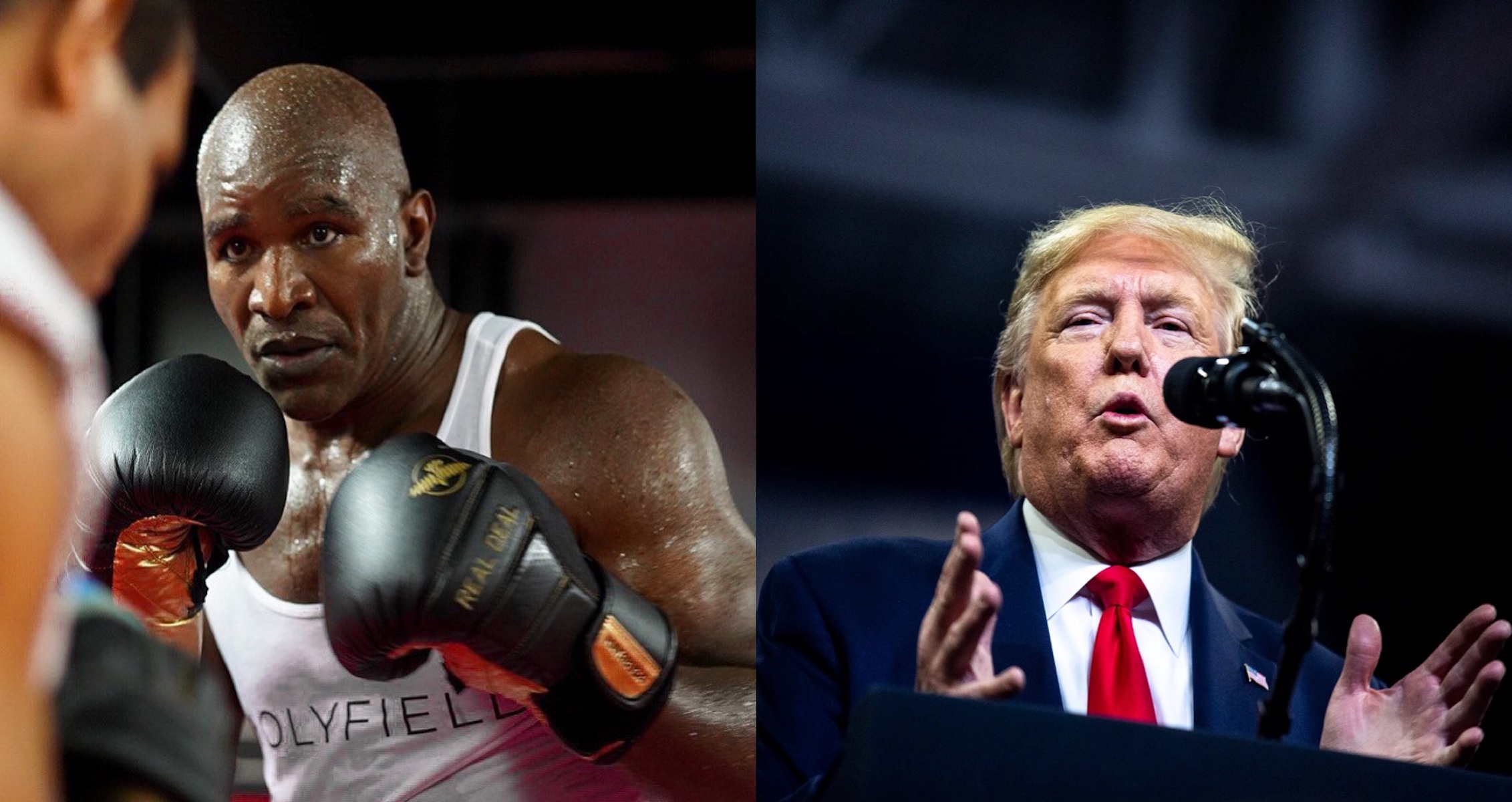
Donald Trump To Commentate Evander Holyfield Return Fight
Donald Trump will provide commentary for Evander Holyfield vs. Vitor Belfort on Sept. 11.
Evander Holyfield will make his return to the ring on Saturday against Vitor Belfort. If you are watching the match ad hear a familiar voice, it will be that of Donald Trump. The 45th President of the United States will be ringside at the Seminole Hard Rock Hotel & Casino in Hollywood, FL. to call the bout. Trump will be joined by his son, Donald Trump Jr., for the duration of the event.
Trump will be on call for all four matches that night. This includes Anderson Silva vs. Tito Ortiz, David Haye vs. Joe Fournier, and Andy Vences vs. Jono Carroll. The event will be available via pay-per-view on FITE.TV. It will cost $49.99 and can be streamed on both mobile and Smart TV apps. This match will consist of two eight-minute rounds and was put together by Triller Fight Club.
Evander Holyfield vs. Vitor Belfort: How to watch, start time, Donald Trump commentary https://t.co/QVBwM9bT3i via @CNET
— FITE (@FiteTV) September 9, 2021
Evander Holyfield will make his return to the ring for the first time since 2011. The 58-year-old boxer will be replacing Oscar de la Hoya, who was forced to pull out of the match due to complications with COVID-19. Holyfield is the former heavyweight champion and one of the best boxers of all-time. His age did cause some concerns as the California State Athletic Commission did not approve the fight. This is why it was moved to Florida.
Belfort is a former UFC Light Heavyweight Champion with a record of 26-14. At 44 years old, he will hold an edge in age but Holyfield is a top competitor in the boxing world. He finished 42-8 in his career and has victories over the likes of George Foreman and Buster Douglas, who he defeated for the title.
This is not the first time that Trump and Holyfield will be connected. In the 1990’s, Trump would stage events for some of the top boxers at his Atlantic City locations. This included bouts betweenTyson and the likes of Larry Holmes and Michael Spinks. When Holyfield won the heavyweight title, Trump staged the 1991 “Battle of the Ages” between Holyfield andForeman. This was one of the most-watched pay-per-views of all-time.
On the 20th anniversary of 9/11, Trump will join longtime HBO announcer Jim Lampley and analyst and former welterweight champion Shawn Porter on the call. Viewers will have the choice to either watch the main telecast or a Trump ‘gamecast.’
For more news and updates, follow Generation Iron on Facebook, Twitter, and Instagram.
This Is The Rep Range You Should Be Doing To Build The Most Muscle Mass
The right range. The best gains.
If you want to start an argument between fitness experts – talk about the “perfect” rep range. You’ll get anywhere from a hundred reps to one. Okay, so we might be over exaggerating but there’s no question that everyone has their own idea in mind when they talk about the “right” amount of reps you should be doing. Well we’re going to open up that argument once again… and we’ll also finish it.
First we’re going to make cases for each, high rep ranges (15 reps or more), medium rep ranges (5-15 reps), and low rep ranges (1-5 reps). Then we’ll weigh in with the definitive answer on the ideal rep range for building mass.
Low rep ranges (1-5)
This rep range is primarily for strength. While it will definitely add mass to your frame as well as cutting fat, there’s one missing piece to this puzzle – Time under tension (TUT). It has repeatedly been shown that TUT is necessary for optimal muscle fiber growth. With a less than 30-60 second rep range, you might find yourself coming up short on muscle gains.
High rep range (15 reps or more)
A high rep range is best for endurance. Commonly associated with fat loss and toning, more and more evidence is starting to show that builders can lose just as much fat with medium to high reps depending on the intensity of the exercise. This range is best for skill specific exercises. For example if you’re working on your baseball swing, or practicing your throwing arm – this not optimal for muscle building however.
Medium rep range (6-15 rep range)
Not too soft and not too tight. This is an old eastern philosophy adage that could pay dividends on your muscle gains. The medium rep range proves to win all across the board, being associated with fat loss and the most Muscle mass. This range combines time under tension with the 75% of one rep weight needed to stimulate muscle fibers. This rep range also shreds fat without losing muscle.
While the medium rep range has been declared the mass building king, we recommended combining all rep ranges for the most complete physique. High rep ranges after a medium set can provide a serious pump and low rep ranges can add strength to your massive gains. Whatever body type you’re looking for, the results are in, train accordingly.
Top Training Tips For Ab Development
8 Underrated Methods That Will Transform Your Ab Training
When it comes to ab training there are many different methods in existence. In the pursuit of strong, well-defined abdominals, most individuals concentrate on one specific method.
Some individuals will look at isometric exercises where they remain entirely rigid, others will focus on exercises that move the limbs in a variety of different ways.
Still others believe that weight machines are the way forward while some argue that bodyweight is all that is required for efficient abdominal development.
Regardless of which method you believe to be best, everyone can benefit from learning new abdominal training techniques in order to comprehensively develop the abs.
This article will provide you with 8 ab training secrets that can transform your training and bring about significant improvements in abdominal strength and definition.
8 Abdominal Training Secrets
Before looking at the 8 underrated abs techniques, it must be emphasized that while training these muscles may build strength and improve muscle tone, they will not give you a six-pack (1).
This can only be achieved by restricting calories so that body fat is reduced to the point where the muscles become visible. (2)
While it is clear that it is proper nutrition that will reveal the abdominal muscles, it is still important that we train the abdominal muscle group regularly.
1) Round The Back
For almost every single resistance exercise, rounding the back is something that is to be avoided. In fact, it’s likely that you’ve spent much time teaching yourself how to keep the spine neutral.
It is absolutely imperative that the spine is neutral during exercises like deadlifts, squats, rows and any bent-over exercises. It is done in order to prevent injury occurring to the spine.
For exercises that target the abdominals however, you may have to unlearn this skill as maintaining a flat back will limit the degree of abdominal contraction.
It’s not uncommon to see gym-goers performing exercises, like the cable crunch, with a flat back which causes them to bend at the hips rather than the waist.
By bending at the waist, the rectus abdominis shortens and fully contracts whereas bending at the hips causes an isometric contraction and the abdominals remain the same length.
You may have heard it said that spinal flexion exercises are risky, however, often the risk is overstated. Your spine is designed to bend and therefore, exercises like crunches are entirely legitimate.
Simple crunches will not cause lower back pain if performed properly, however, performing the same abdominal workout for months and months may cause overuse injuries or low back problems.
Therefore, variety is extremely important for abdominal training. Ensure to add in some sagittal and lateral abdominal work as well as performing crunches.
2) Target Specific Areas
Isolation exercises can be useful when it comes to developing the abdominals. An isolation exercise is simply an exercise that entirely focuses on working one muscle.
While it may not be entirely possible to isolate particular portions of certain muscles, it is possible to emphasize one area over another.
Core training tends over the past few years have revolved around developing the core overall with a particular focus on the transverse abdominis.
While this is undoubtedly a good focus to have, there is value in targeting the upper and lower portions of the abdominals.
For the upper areas, use exercises that stabilize the lower body and focus on curling the back so that the ribcage is pulled down towards the hips.
To effectively target the lower areas, flip it around. Stabilize the upper body and bring the pelvis up towards the ribcage.
The cable crunch is an example of an effective “upper ab” exercise whereas a hanging leg raise serves a great example of a “lower ab” exercise.
A few ab exercises actually involve the pelvis and ribs move towards each other simultaneously to bring about a peak abdominal contraction. This type of exercise targets the upper and lower abs equally.
Finally, all exercises which involve twisting, rotation or lateral movement will effectively work the oblique muscles. Side bends are a great example of an effective oblique-focused exercise.
3) Use Progressive Overload
When performing ab routines most individuals use the same amount of sets, reps, and weight every time.
The problem with this is that the muscles have adapted to the point that they comfortably deal with the stress of this workout, therefore, they fail to adapt further.
Consider the other work you do in the gym. With heavy lifting, you are always aspiring to improve by lifting heavier or for a greater total volume. The same principle should apply to your ab training.
Progressive overload is the process of gradually adding more load over time to ensure that the body continually adapts. It is absolutely foundational to all strength training (3).
When considering ab training, you should program, execute and apply progressive overload in the same way as you would with other resistance exercises.
Here are the 3 most common methods of applying progressive overload:
– Increasing the weight– Increasing total volume (sets x reps)– Reducing rest periods
Look to improve in one variable at a time and ensure that the increments are gradual. Focusing on all three and overloading too quickly will more than likely cause regression rather than progression.
4) Start with Loaded Resistance
The abdominals are primarily made up of slow-twitch muscle fiber (4) which are particularly resistant to fatigue, however, this should not mean that you use high-reps only.
Although there is a greater percentage of slow-twitch, the abdominal region also contains many fast-twitch fibers that respond best to low-to-moderate rep ranges.
Keeping this in mind, to develop these fast-twitch it may be useful to start your routines with weighted ab exercises using a low-to-moderate rep range.
A useful recommendation is to use a weight that brings you to the point of muscular failure while still allowing you to perform 8-12 reps.
If using bodyweight exercises, you can still increase this resistance by manipulating your body position. The best examples of this are seen in ab / TRX rollouts.
5) Use Holds
Peak-contraction training involves consciously squeezing the muscle at the top of the rep for a short period of time. Adding this method to a number of ab exercises can increase the overall intensity.
Let’s say you can comfortably complete 12 reps of the hanging leg raise. Adding a 1-second hold at the top of the leg raise will suddenly make the 12 reps feel much more challenging.
By using the peak-contraction technique you may find that you perform fewer reps than before simply because the muscles are put under a greater load – this is totally fine.
Remember that movement quality and exercise intensity are much more important than reaching a predetermined rep target.
6) Maintain Time Under Tension
When using machines, if the weight makes contact with the stack, muscle tension immediately dissipates and the training stimulus disappears.
While it may be evident when this occurs with machine-based exercises, it may be less clear with bodyweight exercises.
During all bodyweight exercises which involve lying flat on your back, look to keep the shoulder blades off the floor as resting them on the floor will reduce the time under tension.
Again, don’t concern yourself too much with the number of reps you perform, instead, focus on maintaining muscle tension throughout the exercise.
7) Be Aware of Your Hip Flexors
The hip flexors are the muscle group responsible for generating movement around the hips, as the name suggests. For a number of exercises it is possible to work the hip flexors instead of the lower abs.
An exercise where this is commonly seen is the hanging leg raise. During the leg lift, if the lower back remains entirely flat, it is likely that the hip flexors are doing the work.
For exercises that involve anchoring the lower body, it is also possible to drive through the thigh muscles rather than engage the abdominals to pull the torso up.
Often, the hip flexors will become too heavily recruited when exercise technique is incorrect or less than optimal. Therefore, it is important to assess your technique regularly.
8) The Importance of the Plank
The plank plays a part in many gym-goers ab workouts – and rightly so! It is one of the best core exercises for strength, stability, and function.
Let’s consider the movement patterns and requirements for a number of heavy compound lifts – deadlifts, squats, bench, bent rows, overhead presses and so on.
Bracing and maintaining a strong torso is pivotal to all of these exercises and certain points of specific exercises actual resemble a plank and activate ab muscles in a similar fashion (5).
Therefore, developing planking and bracing abilities can have a positive impact on your performance with other resistance-based exercises.
Check out our Abs Exercise Guide here for exercises and further instructions.
Final Word
Abdominal training does not have to be boring or mundane. Utilizing these methods, varying your abdominal workout on occasion and effectively applying progressive overload will yield excellent results.
References:
1-Vispute, Sachin S.; Smith, John D.; LeCheminant, James D.; Hurley, Kimberly S. (2011-09). “The effect of abdominal exercise on abdominal fat”. Journal of Strength and Conditioning Research. 25 (9): 2559–2564. doi:10.1519/JSC.0b013e3181fb4a46. ISSN 1533-4287. PMID 21804427.
2-Redman, Leanne M.; Ravussin, Eric (January 15, 2011). “Caloric Restriction in Humans: Impact on Physiological, Psychological, and Behavioral Outcomes”. Antioxidants & Redox Signaling. 14 (2): 275–287. doi:10.1089/ars.2010.3253. ISSN 1523-0864. PMC 3014770. PMID 20518700.
3-Lorenz, Daniel S.; Reiman, Michael P.; Walker, John C. (2010-11). “Periodization”. Sports Health. 2 (6): 509–518. doi:10.1177/1941738110375910. ISSN 1941-7381. PMC 3438871. PMID 23015982.
4-Häggmark, T.; Thorstensson, A. (1979-12). “Fibre types in human abdominal muscles”. Acta Physiologica Scandinavica. 107 (4): 319–325. doi:10.1111/j.1748-1716.1979.tb06482.x. ISSN 0001-6772. PMID 161688.
5-van den Tillaar, Roland; Saeterbakken, Atle Hole (June 13, 2018). “Comparison of Core Muscle Activation between a Prone Bridge and 6-RM Back Squats”. Journal of Human Kinetics. 62: 43–53. doi:10.1515/hukin-2017-0176. ISSN 1640-5544. PMC 6006542. PMID 29922376.

EXCLUSIVE: LeRoy Walker Speaks On Recent Controversy Surrounding Strict-Curl World Record
LeRoy Walker sat down with Generation Iron to address the issues.
It has been almost two weeks since LeRoy Walker set a new world record with a 114kg (250lb) strict curl. Walker beat the previous record held by Denis Cyplenkov back in 2019 by a single kilogram. This is not the first record that Walker has locked up. Back in June, he set the American strict curl record with a 102.5 (226lb) lift.
Walker has become a huge force in powerlifting but his world-record lift has not come without controversy. Russia’s Nizami Tagiev believes that Cyplenkov should still hold the record and does not recognize Walker’s lift as legitimate. He took to Instagram to share a post explaining why he believes Walker’s lift should not be recognized — highlighting technique and calling for rule changes.
Tagiev ended his Instagram post with a call to action to judges when looking at lifts in the future — and even got backup from the likes of CT Fletcher, who commented “I totally agree with you.” Fletcher once held the record in strict curl for many years at the mark of 102kg (225lb).
With all of this out in the open, Walker decided to sit down with Generation Iron and discuss recent issues and controversy surrounding his record. Below, you can find the full interview with Walker.
Q: The bench press, squat, and deadlift have been the big three lifts in competition. The strict curl is one that seems to be coming back, how important do you think is the lift and should it be considered as the fourth pillar along with the other three lifts?
Leroy Walker: “You know, I think and thank you for acknowledging that, I think it’s a great lift. I think everything kind of goes in cycles. I think it’s a great lift that led people to make great strides and progress at home, especially when gyms were shut down for so long. I think bicep curls have always been something that people have gravitated to at the gym in one way or another and it’s one of the easier pieces of equipment to pickup during COVID when gyms were shutdown.”
You have guys like the Russians have been doing a great job, Larry Wheels, Nick’s Strength & Power have always kind of kept it in the spotlight. CT Fletcher made it famous with his YouTube. As far as the sport, I think we’re seeing people revisit it. I don’t think it’s going to replace the major three but it’s one of those things that, once you get into it, you realize that it’s a lot more challenging than it looks initially. The fact that it has to be done with certain commands and a certain structure.
I think another thing that is making it really popular is the rise of arm wrestling. If you look at it historically, a lot of your top arm wrestlers are strict curlers and a lot of your top strict curlers are arm wrestlers. that’s something I’ve dabbled in but I have not gone full force because I have some goals that I want to hit in strict curl but I can see how it landed itself to have the rise because there are a lot of great people getting involved in arm wrestling.”
Q: A couple weeks out now since you set the world record of a 250-pound strict curl. You attempted bigger numbers at that event — what was the overall mindset on stage and what made you land on that 250 mark?
Leroy Walker: “The 250 mark, that’s a great question, because it’s led itself to a lot of controversy. I always have known since I started that there’s always the factor of what are the numbers and what are the numbers gonna be? In America, the coveted number was 225. I think that stood for 20+ years, set by CT Fletcher. No American was able to touch that number. When it was broken, it was broken pretty handily by Denis Cyplenkov of Russia, who set the world record at 249.
I’ve always made it a point to say that when I start something, I want to go after the biggest and the baddest so 249 was always the number in my mind. It wasn’t to take anything away from anybody else. It wasn’t to take anything away from CT, it was just mathematics. If I wanted to get to 249, 225 was naturally going to fall.
When I started off curling conventionally, my numbers were already in the 200’s. I didn’t showcase anything strict per say because I believe to be a great strict curler, you actually have to curl less against the wall. In my bench days, I would showcase every video and every workout. Some people didn’t agree with it so I started going and competing and they started seeing ‘okay this guy knows what he’s talking about.’ So with strict curl I wanted to keep it close to heart and I wanted to kind of just troll everyone and let them say ‘oh this guy is just a gym lifter, he’s afraid to go strict, Larry Wheels is better,’ so I said ‘fuck it what do I have to lose.
I never really made it a point to go after the American record. I just knew that it would fall. I attempted it in my first one. That was one of my first big fails. I opened up over 200, which no one in the sport has ever really done. Just like 700 is coveted for bench press, 1,000 for deadlift, 1,000 for squat — 200 is kind of what separates the elite from the unelite in strict curl so to start out my first couple lifts over 200, I was happy with that. It took me until my second meet to get to 226, which was the American record.
I’ve been prepping for the Arnold Invitational, which is supposed to be the best of the best, in March. So with that being said, I do my own programming and I knew my numbers were around 240-245. So I went into this last one, which was only my third competition, and wanted to make some headlines. I thought I would go 226 to prove that the American record wasn’t a fluke because I still had a lot of doubters. Then I wanted to go 240ish then I had a choice to make and the number 250 is a great number.”
Q: There was a bit of controversy after this lift — where do you think that came from and what do you have to say about it?
Leroy Walker: “I get it. It’s kind of the new-age kind of imperialism. The Russians have been the top dogs for the longest time. They kind of have their right to throw around what they think is what. They have the top lifters, they have a very strict federation, the WRP, so a couple things came to me.
I’m a Ghost athlete and I’m sponsored by Ghost. Ghost made a prototype strict-curl setup for me and it’s also competition certified. Different federations have different regulations on what a competition rack is supposed to look like. They make a great rack, it’s regulated to be at certain widths. Other federations use a wall. When Ghost made the racks, that’s the one measurement we probably didn’t nail. The racks sit right in the groove like every kind of strict curl bar imaginable.
The conference that I’m in allows that if there is something impeding the rack then you can get a self liftoff. That was the first thing that people had a problem with. Well it’s allowed in bench press. If you go to the gym, you can’t tell me that it’s harder to pick up a 25-pound dumbbell off the rack then it is to pick up a 25-pound dumbbell if someone hands it to you in mid air. It takes that much more time to take control of it. So I don’t understand why people think that me having 250 handed to me by two different sets of hands and have to control it, still get set and come to a complete pause and then start the lift — why people may think that gave me an advantage, I have no idea. But here we are and next time, Ghost is gonna reconfigure it. I’m gonna be able to get my hooks in and have a more stable lift. I welcome the criticism because it’s only gonna put me on a platform that is gonna be easier for me to do.
Then there was controversy about the lift. We had to spread everything out like hey these are calibrated plates, the same ones you guys saw on the video. Then people had something to say about the bar. Which is funny because, here is something that people don’t know about the technicality of the sport, WRP allows for two bars however, the top curler gets to decide which bar they’re going to use. So a lot of people have opted to use a different bar than Denis Cyplenkov. I use a different bar. I use a bar that is more aggressive like most of the Russians use. I thought it was kind of cheeky to call out that I use a different bar.
You know what, I get stronger too. I’m not near the end of my career. This is my third meet. I’m just getting started. Between now and March, I’m going to perfect, I’m not going to go 255, I’m not going to go 260, I’m going to go 250 every single time. I’m going to bury this record three times in a row so it is so picture perfect and flawless. Those are the headlines I’m going to make.”
Q: CT Fletcher commented on an Instagram post about this lift and agreed with the criticism. Is this something that you saw right away and if so, what was going through your head at first?
LeRoy Walker: “I respect CT, he’s done a lot of great stuff for the sport. I respect Denis, great lifter, done a lot for the sport. It’s just funny that we live in this day and age where people have to piggy back and make issues out of non-issues.
“The past couple years, there’s been this liftoff at Venice Beach. I abstained from going to the Venice Beach Liftoff. It’s not sanctioned. It’s a broham kind of competition. My thing is this, there was a lot of speculation that says ‘oh his head wasn’t against the board.’ It’s not a fucking rule but in CT’s, it’s a rule. We’re talking about the same federation that doesn’t require people to wear a singlet. One of the things that makes a sanctioned lift a sanctioned lift is the uniformity of everybody being in a singlet.
There’s a bunch of clowns on the Internet saying ‘this guy is wearing a power suit.’ I’m pretty well-versed in everything powerlifting, I don’t know of a single company that makes a power suit to fucking strict curl in but if there is, let me know, I’d love to use it. Anyway, it’s called a singlet, I’m wearing one. CT doesn’t require it. A lot of time weights are called into speculation. I just think that it’s funny that the guy who set the American record who didn’t do it in a sanctioned event, didn’t do it in a singlet, and used pig iron, non-calibrated played is trying to call me out about technicalities that his own federation doesn’t even adhere too.
People can call me out but it’s like don’t throw stones at a glass house. If I have to go out and bury 226 a million times to make it a point, that’s what I’ll do. It has a lot of weight, he has a lot followers, he’s a great guy but why he’s choosing to not embrace the new American and world record holder makes no sense to me but it is what it is.”
Q: Is there any plans to break your record? We’ve seen on social media ‘The road to 275,’ so what’s your plans for the near future?
LeRoy Walker: “That is the plan. You guys have done a great job covering someone who I have a great admiration for and respect in Julius Maddox. Julius got so much criticism the first time he broke the world record. I’ve had many talks with him about what it’s like to receive all this criticism and animosity. No one likes to see records get broken so I didn’t expect people to congratulate me when I broke the record.
The point I’m making about burying and forgetting about 250, is that my road is to 275 and eventually I want to be the first person to strict curl 300 in a sanctioned event. That makes me have to quickly forget about the 250 or the 249. So all that is going to end up being, is when I get to where I want to get to and not worry about what the world says about curls, I don’t do it for the approval or the criticism. I do it for the love of the sport. If I put out great content then people are going to cover great content. If I go out and bomb, people are going to cover me bombing. That’s just the nature of the beast.”
Q: Who can you tell me about your training regimen and work in the gym on a weekly basis and especially leading up to competitions?
LeRoy Walker: “I just train relentlessly. I train everyday. I would say the biggest thing that changed for me, and I got asked this question on a podcast the other day, they said ‘well, what is so much different know versus a yea ago.’ And I just said that I perfected the techniques. Now, it’s just more or less the validation.
I’ve been doing the same shit. I’ve been doing basic curls, preacher curls, and curls in a squat rack. People still say ‘you don’t know what you’re doing, you don’t train that way.’ As soon as I get a couple records, then all of a sudden what I say is gonna be right. Six months ago, I didn’t know what I was talking about. Now, I get a couple records and it’s like ‘go this guy kind of knows.’ You’re always gonna have your contractors and naysayers. If I’m doing it and I’m the best, then it probably works.”
Q: Is there any specific diet plan that you follow on a regular basis?
LeRoy Walker: “I always have to say this, and I kind of joke around about it, in some aspects you have a responsibility to kind of personify the teaching. With that being said, I’m probably a great example of the work ethic and the workout part of it, but as far as the aesthetics of it, I’m not going to win a swimsuit fit contest anytime soon. I’m like what I like to call ‘functionally fluffy.’ I have a certain amount of weight that I carry around that probably makes it a little easier.
Functionally, and I’m doing a great job at that, it’s always something I’ve kind battled and struggled with it. I think if you ask most powerlifters and they’re honest about it, why they got into powerlifting, they’re gonna say that they were the chubby kid that didn’t know how to diet to become a bodybuilder. I think most powerlifters wanted to become bodybuilders but we didn’t know how to control the macros or the urges. I have no problem saying that. It’s something that I’m trying to level up with.
As far as the functionality of it, I’m better and what’s changed in the last couple months is to eat for a purpose and with a purpose. Meaning if you have a choice between good carbs and bad carbs, I always think ‘is this going to help or hurt my lift.’ Same thing with the protein in terms of recovering. I think there’s no excuse for it. There’s no excuse to have no comprehension.
I would say go out and pay the money, it’s a good investment, go out and get a nutritionist. If you want to have great success financially, you get a financial planner and if you want to do a better job with your workouts, you get a personal trainer. I think we’re too reluctant to settle for mediocrity because we don’t want to seek other people’s advice. I think that’s a pitfall for a lot of men. It’s an excuse.”
Q: Is there any closing thoughts that you would like to leave us with?
LeRoy Walker: “I’m thankful for media being present to cover the sport. The good and the bad and getting the truth out there. I’ll say this again, I have nothing but respect for the people that have paved the way. The people that have given hope and grind to the sport and the country and hope to the people who might be down on their luck and want to see everyone be the best version of themselves.
A lot of this stuff, I don’t really take it too far out of context. If I was at a restaurant and I saw CT or I saw Denis in passing, they’re great guys. On the platform in competition, in the business world, they might have different viewpoints. I think CT is a great fucking person, I have nothing but admiration for him. Do I like the way that this is being handled? I don’t but to each their own. I think controversy sells. When it is all said and done, I think many records are going to get smashed and broke, I think we’re gonna shake hands, and probably have some meals together and I look forward to it.”
For more news and updates, follow Generation Iron on Facebook, Twitter, and Instagram.