
 All Posts By Muscle Insider
Board Certified PHD
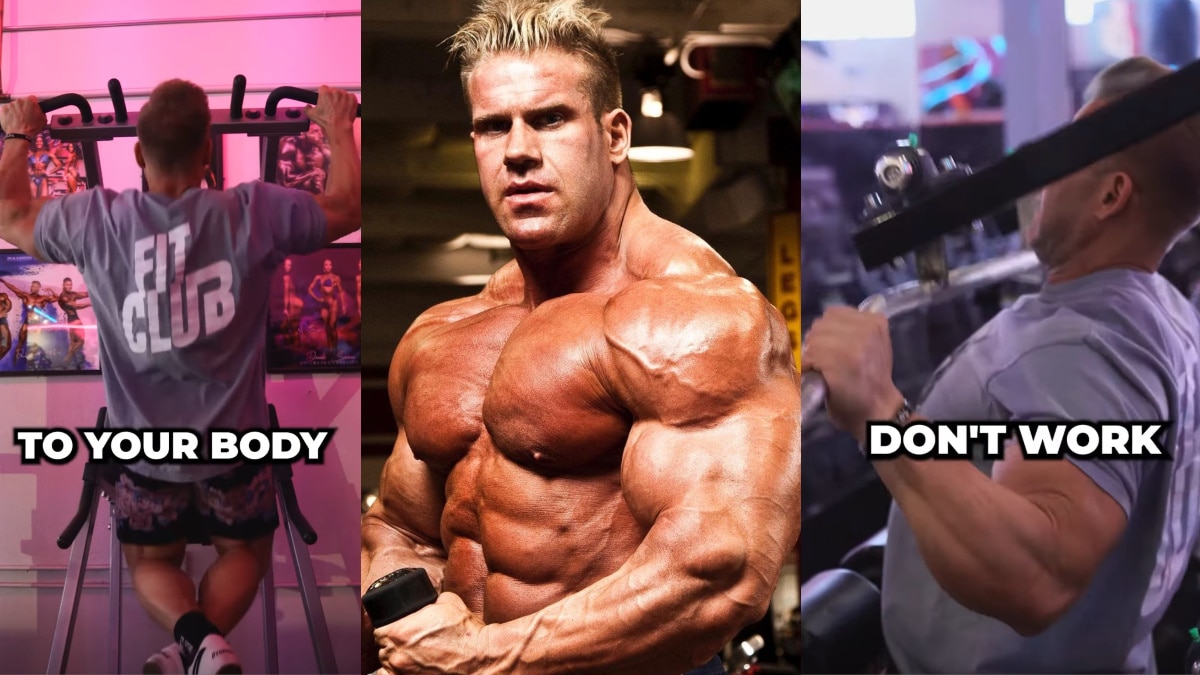
Jay Cutler Shares ‘Ultimate Back-Builder Exercise for Crazy Wide Lats’
Bodybuilding legend Jay Cutler possesses a wealth of fitness knowledge stemming from years of competing in the sport. Although he stepped away from professional competition a decade ago, his passion for bodybuilding burns strong. In a recent video uploaded to YouTube, Cutler shared the ultimate back-builder exercise for developing crazy wide lats.
Jay Cutler first gained recognition for his freakish muscle mass, size, and conditioning as a Men’s Open competitor in the 2000s. His fierce rivalry with fellow legend Ronnie Coleman is considered to be one of the greatest in the history of the sport. He fell short of the eight-time Mr. Olympia champion on four occasions until he finally secured the coveted Sandow trophy in 2006. Cutler racked up four Mr. Olympia titles, and three Arnold Classic titles, and hung up his posing trunks with a record six runner-up finishes.
Cutler has maintained a high level of personal fitness post-retirement. He’s working towards transforming his physique as part of the ‘Fit for 50’ challenge. Earlier this year, he left the fans stunned with a shredded physique update and posing session where he weighed 240 pounds.
Cutler regularly educates his fanbase on ways to lead a healthy lifestyle. He offered an arm workout targeting the biceps and triceps for building muscle last month. Next, he laid out tips on carving a ripped midsection with three exercises. He suggested focusing on conditioning the abs rather than trying to build muscle in the area.
The 49-year-old crushed a high-volume lower body workout for optimizing muscle growth last month. He targeted quads and hamstrings in the training session to get ready before his 50th birthday.
Jay Cutler detailed the different types of exercises he’s utilizing to enhance his cardiovascular health and get in shape for the body transformation challenge. He suggested doing cardio while fasting in the morning or after a weight lifting session. Next, Cutler shared that he packed on 15 pounds since starting the challenge and declared his ambitions to get leaner over the next few weeks.
Cutler backed Open standouts Samson Dauda and Derek Lunsford as the favorites in his analysis of the upcoming 2023 Mr. Olympia two weeks ago. He also extended his support for Andrew Jacked to potentially shock the world with a strong performance.
Jay Cutler Shares His Best Back-Building Exercise for Wide Lats
In a recent YouTube video, Jay Cutler shared pull-ups as the ultimate back-builder exercise for attaining crazy wide lats.
“Is the standard pulldown with a machine the same thing as a pull-up?” said Cutler. “I would say not. I would say the ultimate back-builder you want to build crazy wide lats you got to stick to your pull-ups whether it’s body weight or adding some weight to your body, it depends on how heavy you are. More importantly, there’s nothing that would replace the standard pull-up. You see all the wide backs, all that v-taper, it comes from a wide pulldown movement and that is best done on a pull-up bar.
Not to say pulldowns on a machine don’t work but try to stick to the basics and do your pull-ups in your routine. Just make sure you focus on at least 10 repetitions. I know it gets heavy over time with set after set but remember repetitions are going to get the growth in the lats.”
Jay Cutler gave fans a look into his methods for building huge arms while crushing a heavy-duty workout last week. He went through the exercises that helped him develop 20-inch arms and offered helpful tips. Then, he showed off his insane physique in an impressive update seven weeks out from the challenge.
His latest offering will encourage his fans to try his go-to exercises for building a thicker and wider back.
RELATED: Milos Sarcev and Jay Cutler Talk Big Ramy’s Future: ‘He’s 100% Not Doing 2023 Mr. Olympia’
You can watch the full video below:
Published: 6 July, 2023 | 3:11 AM EDT
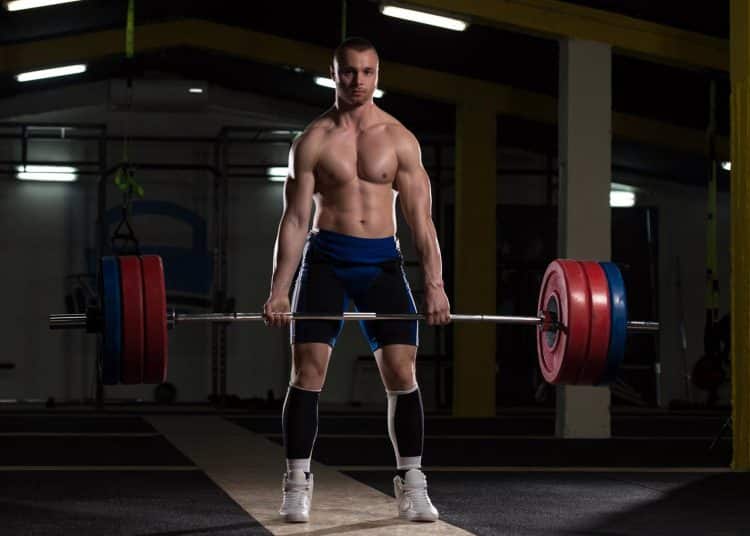
Deadlift Muscles Worked: Your Guide to REAL King of Exercises!
We’ve said it before, and we’ll say it again – the deadlift is probably THE most productive exercise you can do with a barbell. Sure, squats are often called the king of exercises, but that title may be somewhat undeserved. In many ways, deadlifts are better and may even deserve a bigger place in your workouts.
In this article, we explain what’s so good about the deadlift, reveal the muscles involved, and discuss some of the best deadlift variations.
What’s So Good About Deadlifts, Anyway?
Before you start typing a comment in defense of squats, it’s important to stress that they’re an excellent exercise, and everyone who lifts should include squats in their workouts. However, as great as squats undeniably are, deadlifts also deserve a place in your workouts.
You don’t have to choose between these two awesome exercises, and most people should do both.
However, there are several compelling reasons for putting a little more energy into deadlifts. These include:
A truly functional exercise
Functional training is an often-misused term. Some people use it to describe overly complicated exercises that are basically circus skills, like doing biceps curls while balancing on a stability ball or single-leg squats with your eyes closed.
In reality, functional training is something that improves your performance of everyday or athletic activities outside of the gym.
There are very few exercises more functional than deadlifts. After all, they teach you how to lift heavy objects off the floor using your legs and back, and hopefully without hurting yourself.
Given how many people injure their lower backs when lifting grocery bags, suitcases, their kids, etc., learning and mastering the deadlift should be compulsory.
An almost full-body exercise
As you’ll learn in the next section, the deadlift involves virtually every muscle in your body. From your feet to your hands via everything in between, the deadlift is the epitome of a full-body exercise. In fact, the only muscles that don’t get much of a workout are your pecs. That shortfall is easily remedied by supersetting some push-ups between sets of deadlifts.
So, whether you are short on time or just want to get the biggest bang for your workout buck, deadlifts are a must.
A very accessible exercise
In a world of complicated workout machines and convoluted exercises, the deadlift is a breath of fresh air. All you need to do deadlifts is a barbell, some weights, and a bit of space. As such, even home exercisers can do deadlifts, which may not be the case for squats, where a squat rack is usually required.
While good deadlift technique is critical, the movement is pretty natural, and most lifters can pick it up relatively quickly. As such, lifters of all ages, abilities, and genders can and should do deadlifts.
Easier to judge a successful lift
If you watch a lot of videos on YouTube, you’d be forgiven for thinking that shouldering a heavy weight and then twitching your knees counts as a good squat. People are claiming successful lifts when they are clearly a long way from hitting parallel – the accepted standard for squat depth.
There is much less room for interpretation with deadlifts. The exercise starts with the weight resting on the floor and ends when standing upright. You either lift it or you don’t – there are no degrees of success. Judging a good deadlift is simple, and it’s a very hard exercise to cheat.
Failure IS an option
Squatting to failure is a risky endeavor – even in a squat or power rack. Getting stuck under a heavy bar can cause catastrophic knee, hip, or back injuries. Athletic careers have ended as a result of failed squats.
In contrast, being unable to complete a deadlift is far less risky. You can simply let go of the bar or lower it quickly back to the floor with no mess and no fuss. As such, the deadlift is suitable for intense solo training.
Build a butt you can be proud of
Prolonged periods of sitting mean many people have weak, flaccid glutes. Underdeveloped glutes are a leading cause of lower back pain and, let’s be honest, not all that nice to look at!
The deadlift is one of the best glute-centric exercises around. In fact, they’re great for your entire posterior chain, which is the collective term for the muscles on the back of your body. A strong posterior chain is critical for locomotion (running, walking, jumping) and many other athletic and everyday activities. So, if you want a butt you can be proud of, you’d better start deadlifting.
Personal satisfaction
The deadlift can be a brutally challenging exercise, but that’s also what makes it so satisfying to perform. You get behind the bar, bend down and grip it, drive your feet into the floor, and pulling with every fiber of your being, you lift it off the floor. It’s a battle of wills – you against mean old Mr. Gravity!
If you are successful, you’ll feel great, experiencing a wave of satisfaction that’s hard to describe and highly addictive. If you fail, you’ll be more determined to beat the weight next time.
While you might never break any deadlifting records, you can always compete against yourself for a new one-repetition maximum, and even small weight increases deserve celebration.
The deadlift really is one of the most productive things you can do with a barbell, and whatever you are training for, deadlifts will probably help you get there faster.
Muscles Worked During Deadlifts
It’s no exaggeration to say that deadlifts are a full-body exercise. In fact, the list of muscles not involved in deadlifts is very short (yes, we’re talking about you, pecs!).
That said, some muscles work harder than others, getting the most stimulation from deadlifts. The main muscle movers and shakers during deadlifts are:
Latissimus dorsi
Deadlifts are often described as a back exercise. While they are much more than this, deadlifts will give you a broader, thicker upper back. That’s because you must use your latissimus dorsi or lats to keep the bar pressed against your legs and stop it from swinging away from you. Performed alongside pull-ups and rows, deadlifts will help you develop a show-stopping back.
Trapezius
Known as the traps for short, this is a large diamond-shaped muscle that covers much of your upper back. The traps have three sets of fibers – upper, middle, and lower. All three groups of fibers are involved in deadlifts, but the upper and middle fibers are the most active. Heavy deadlifts will help you develop thick, high traps and get you “yoked.”
Rhomboids
The rhomboids are located between your shoulder blades and work with your middle trap fibers to keep your shoulder girdle retracted or pulled back. Strong mid-traps and rhomboids give your upper back its thickness and are also good for your posture.
Gluteus maximus
Known as the glutes for short, this is the largest and potentially strongest muscle in the human body. Responsible for hip extension, the glutes are the engine that drives your deadlift. The glutes are basically your butt.
Hamstrings
Located on the backs of your thighs, the hamstrings work with your glutes to extend your hips and are also involved in knee flexion. There are three muscles in the hamstring group – semimembranosus, semitendinosus, and biceps femoris. Deadlifts are a very hamstring-centric exercise.
Quadriceps
Contrary to popular opinion, the quadriceps are strongly involved in deadlifts – or at least they should be. The quads extend your knees and are most active at the start of each rep; weak quads can stop you from breaking the weight away from the floor. The four quadriceps muscles are vastus lateralis, vastus intermedius, vastus medialis, and rectus femoris.
Hip abductors and adductors
Your knees should not cave in or fall outward during deadlifts. Doing so would limit your performance and increase your risk of injury. The hip abductors (outer hips and thighs) and the adductors (inner thighs) work to stabilize your hips and prevent unwanted knee movement. The hip abductors are gluteus minimus, gluteus medius, and the tensor fascia latae, while the hip adductors are longus, brevis, and magnus.
Core
The core is the collective term for the muscles that encircle your midsection. During deadlifts, these muscles act like a weightlifting belt to support and stabilize your lumbar spine.
The muscles of the core include the rectus abdominis, obliques, transverse abdominis, diaphragm, and pelvic floor. Contracting these muscles to prevent movement of the lumbar spine is called bracing, which is critical for safe deadlifting.
Erector spinae
Deadlifts are a very back-centric exercise. In fact, there isn’t a muscle in your back that isn’t working during deadlifts. The erector spinae is a group of three muscles that runs up both sides of your spine. Each one is subdivided into three sections. During deadlifts, the erector spinae must work hard to stop your spine from flexing or rounding.
Biceps
It’s bad form to try and bend your elbows during deadlifts, and doing so can cause serious injuries. However, you’ll need to use your biceps to stop your elbows from hyperextending, so they’ll still be under a lot of tension. This is especially true if you use a mixed grip, and your supinated (palms forward) biceps will be working especially hard.
Triceps
Surprisingly, the triceps play a significant role during deadlifts. Working with your lats, you must use the long head of your triceps to keep the bar pressed back against your legs. As such, if you have any kind of triceps weakness, you’ll feel this small but essential muscle working overtime.
Deltoids
The deltoids are your main shoulder muscles. There are three groups of fibers, called heads, that make up the deltoids – anterior (front), medial (middle), and posterior (rear). The posterior deltoids are the most active during deadlifts, although the other two heads are also involved.
Forearms
A big deadlift requires strong forearms. After all, these muscles are responsible for your grip, and if you cannot maintain your hold on the bar, you won’t be able to lift it. You could use lifting straps to reinforce your grip, but anything more than a liberal application of gym chalk is considered cheating by many people.
Using a mixed grip can help improve your hold on the bar, but you may need to work on your hand strength if you want to deadlift bigger weights.
Deadlifts Variations and Muscle Activation
There are several different types of deadlift you can use to add variety to your workouts. Each one uses many of the same muscles as conventional deadlifts. However, they often emphasize some muscles more than others and have a slightly different training effect.
This the following information to help you choose the best deadlift for your training goals:
1. Romanian deadlift
Deadlifts are so-called because you’re lifting a dead weight from the floor. That said, Romanian deadlifts start with the weight at hip height, and it never touches the ground. As such, it’s not really a deadlift.
However, the name has stuck, and the Romanian deadlift is a very popular exercise. This variation all but removes your quadriceps from the movement and focuses on the muscles of your posterior chain, i.e., the glutes, hamstrings, and lower back.
Read more about Romanian deadlifts here.
2. Deficit deadlift
The deficit deadlift involves standing on a low platform or a bumper plate or two. This puts you in a lower starting position, increasing your range of motion. With a deeper bend in your knees and hips, deficit deadlifts involve more quadriceps and glutes engagement and increase your strength off the floor.
Learn how to do deficit deadlifts here.
3. Sumo deadlift
Sumo deadlifts are performed with a wider-than-shoulder-width stance and a more upright torso. This increases glute and quadriceps activation and also uses the hip abductors and adductors more. A lot of powerlifters use sumo deadlifts as they find it lets them lift heavier weights with less low back stress.
Read all about sumo deadlifts here.
4. Trap bar deadlift
A trap bar or hex bar is a specialist barbell that allows you to stand between the weights. This shifts the load closer to your base of support, taking stress off your lower back. However, this change makes trap bar deadlifts more quad-dominant than conventional deadlifts, so this exercise often feels more like a squat than a deadlift. As such, it’s sometimes called a squat lift.
You can read more about trap bar deadlifts here.
5. Dumbbell deadlift
No trap bar? No problem! You can simulate trap bar deadlifts with a pair of dumbbells. Like trap bar deadlifts, the weight is next to you instead of in front of you, putting more stress on your quadriceps and less on your lower back. However, most people find this exercise awkward with heavy weights as the dumbbells tend to swing in against the legs.
Learn how to do dumbbell deadlifts here.
6. Jefferson deadlift
The Jefferson deadlift is like a cross between a lunge and a conventional deadlift. You perform this exercise standing astride your barbell. Jefferson deadlifts use your quadriceps, abductors, and adductors more than regular deadlifts. They also allow you to maintain a more upright posture, which may be a little more lower back-friendly.
Discover the secret to Jefferson deadlifts in this article.
7. Deadlift with bands or chains
Deadlifting against bands or chains increases the load as you approach lockout. This deloads your quadriceps and puts more tension on your glutes and hamstrings. Powerlifters use band and chain deadlifts to strengthen their lockout. This is also an excellent way to take pressure off your lumbar spine while still putting plenty of tension through your muscles.
Read more about deadlifts with bands or chains here.
8. Rack pulls
Rack pulls are a partial deadlift where each rep starts with the bar at about knee height. The bar is raised in a power rack or on blocks. The partial range of motion allows you to lift heavier weights and focus on the top part of each rep, strengthening your lock out. Rack pulls emphasize your glutes, hamstrings, and upper back.
Learn how to do rack pulls here.
9. Snatch grip deadlift
Most deadlift variations feature a shoulder-width grip. However, with snatch grip deadlifts, your hands are much wider apart, which increases your range of motion and also forces you to use your upper back more. As such, using a snatch grip for your deadlifts increases trap and rhomboid engagement and also uses your glutes and hamstrings more.
Find out more about snatch grip deadlifts here.
10. Suitcase deadlift
Most deadlift variations are bilateral, meaning they use both arms and legs at the same time. The suitcase deadlift is unilateral or one-sided. Holding the weight with one hand will force you to use your core more to keep your torso upright. So, as well as being an effective leg and back exercise, this move will also hammer your lateral core muscles. You can do suitcase deadlifts with a dumbbell, kettlebell, or barbell gripped in the middle.
Learn how to do suitcase deadlifts here.
FAQs
Do you have a question about deadlift anatomy or deadlifts in general? No problem, because we’ve got the answers!
1. Are deadlifts safe?
Deadlifts are a reasonably safe exercise, provided you perform them correctly. This means you avoid rounding your lower back, keep your core braced, and don’t try to lift more weight than you can handle. You won’t get pinned under a heavy bar if you cannot complete your rep, so you won’t need spotters or a squat rack.
However, because of the magnitude of the loads involved in the deadlift, muscle strains are not uncommon, and poor form could result in potentially serious lower back injuries.
Trump Junior Deadlift
2. Are deadlifts a leg exercise or a back exercise?
You may have noticed that some programs include deadlifts for legs, while others put them into back workouts. While this may seem confusing or contradictory, both approaches are correct.
Looking at the hips down, you can see the deadlift is a powerful leg exercise that targets the glutes, hamstrings, and, to a lesser degree, the quads. In contrast, the lats, traps, and rhomboids are also very active, so it’s an upper-body exercise, too.
As such, you can do deadlifts in your leg or back workouts – they’re fine in both situations.
That said, if you want to do deadlifts for your back but also want to include them in your leg workouts, you should probably use different variations to avoid doing the same movement twice in one week, e.g., something like rack pulls for your back and Romanian deadlifts for legs.
Doing the same type of deadlift twice per week will probably lead to overtraining.
3. Do I need to wear a belt for deadlifts?
While a lot of lifters wear a lifting belt for deadlifts, they are not compulsory. Wearing a belt allows you to generate more intra-abdominal pressure as your abs will have something to push and brace against. This may allow you to lift heavier weights more safely.
However, if you are training with sub-maximal loads, you should have no problem bracing your abs without the extra support afforded by a weightlifting belt.
So, use a belt if you want to push your limits in the deadlift, but go belt-free if you plan on keeping things light. Finally, remember that a belt doesn’t protect you from bad form or the dangers of trying to lift too much weight. People who wear belts get injured, too!
4. Do you have any good deadlift programs for novice powerlifters?
We sure do! This nine-week program is designed to slowly but surely increase your deadlift one-repetition maximum. It uses several progression methods and accessory exercises to turn you from a novice powerlifter into a deadlifting machine. It’ll also add bulk to your back and posterior chain.
Run through it once, deload for a week, and run it again to see your deadlift 1RM record crumble.
5. My grip is weak – can I use lifting straps for deadlifts?
While you can use lifting straps to bolster a weak grip, doing so will not fix your problem and actually could make matters worse. The more you use straps, the more reliant on them you’ll become, and the weaker your grip will get.
Instead, make it your mission to improve your grip by a) NOT using straps for anything other than your heaviest deadlift sets and b) adding dedicated forearm and grip training to your routine.
You can’t ignore a weakness and hope it’ll get better by itself. Instead, you need to focus on it and work it so it catches up with the rest of your body. While this can be humbling at first, in a few months, your weak grip could become one of your strongest assets and will improve your performance in any exercises that involve your hands, including rows, pull-ups, and even bench presses.
6. Deadlifting with a mixed vs. double overhand grip – what’s the difference?
Using a mixed grip, where one palm faces forward, and the other faces backward, stops the bar from rolling out of your hands. This gives you a more solid grip on the bar and should help you lift heavier weights.
However, using a mixed grip is hard on your supinated (palms forward) biceps and could cause muscle tears. Using the same mixed grip could also lead to muscle imbalances.
For these reasons, if you do choose to use a mixed grip, make sure you switch your hands around set by set. This will probably feel weird initially, and one side will invariably be stronger than the other, but it’s the best way to avoid imbalances and injuries. You should also endeavor to use a double overhand grip for lighter loads, switching to a mixed grip only when needed.
A good deadlift requires a stable platform. Soft-soled sneakers with raised heels compress when loaded and push your weight forward onto your toes, making you much less stable. Taking off your shoes and lifting barefoot or wearing flat, uncushioned minimalist athletic shoes ensures your feet won’t move during your reps.
Powerlifters wear very thin shoes called deadlift slippers to ensure their feet are as flat and low to the ground as possible.
All that said, if you are deadlifting light to moderate weights for general fitness, you probably don’t need to resort to going barefoot or minimalist shoes. But, if you have a tendency to fall forward during deadlifts, flat-soled shoes could be the solution.
More on Deadlifts:
Closing thoughts
From bodybuilders to fitness models to powerlifters to runners to moms to athletes – deadlifts are good for everybody’s body. It’s no surprise that Victorian physical culturists used to call deadlifts the health lift. Even back then, the experts of the day recognized the benefits of this potent lift.
Some coaches and trainers will be quick to tell you that the deadlift is dangerous and it could hurt your back. However, this is only half-true. A poorly performed deadlift can undoubtedly be a back-wrecker. But, done correctly, very few exercises can strengthen your back like deadlifts can.
Squats deserve their title of the king of exercises, but deadlifts are every bit as valuable. So, include both these exercises in your workouts, and enjoy all the benefits that they offer; there is no need to choose between them.
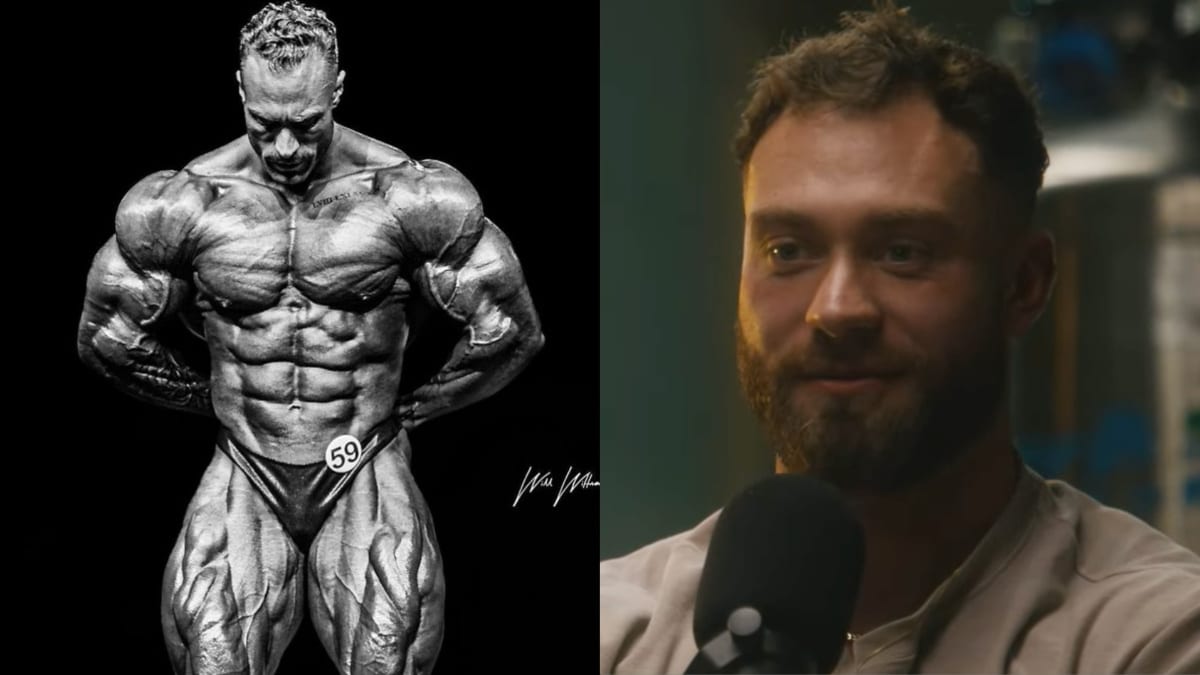
Chris Bumstead Lists the Only 10 Exercises He’d Pick to Build Muscle
Canadian bodybuilder Chris Bumstead has been a dominant force in the Classic Physique division over the last few years. The reigning four-time Olympia champion stands as the most successful Classic Physique athlete in the history of the competition. In a recent interview with Chris Williamson, Bumstead shared the only 10 exercises he would keep to build muscle for contests.
Chris Bumstead first gained attention for his insane muscle mass, definition, and symmetry in 2017. He narrowly missed out on the top prize at Mr. Olympia to former two-time champion Breon Ansley, who defeated him again the next year. After two consecutive silver medals, Bumstead returned with a vengeance and handily dispatched the competition to secure his maiden Sandow trophy at the 2019 Mr. Olympia. He became a powerhouse in the Classic Physique division, winning four Mr. Olympia events in a row with 2022 Mr. Olympia being his latest victory.
Bumstead opened up on the mental challenges of defending the coveted title earlier this year. He admitted he was afraid of losing and not meeting the expectations he set for himself. His ultimate objective is to hang up his posing trunks at the top and depart from bodybuilding as a dominant champion.
‘CBum’ revealed he cut back on PEDs (performance-enhancing drugs) and has been training harder as a result three months ago. While he used to bulk up to 265 pounds in the off-season in the past, he and his coach said they don’t plan to go as high this season. Instead, Hany Rambod is focused on keeping him around 255 pounds to bring a leaner Bumstead on stage for his next outing.
Two months ago, Bumstead shared that he took less time off and appears to be in better form than ever before entering a prep. He also credited his former coach and Men’s Open standout Iain Valliere for helping him stay injury-free. In addition, he thanked Valliere for the immense success he achieved at a young age.
Bumstead teamed up with Derek Lunsford, former 212 Olympia champion and Men’s Open sensation, for a brutal back workout under the mentorship of Rambod two months ago. The pair crushed the workout to help Lunsford get ready for his guest-posing appearance at the 2023 Pittsburgh Pro.
Considering how imposing Chris Bumstead has been in the Classic Physique category, there has been speculation about how he would fare against the mass monsters of the Open.
IFBB athletes’ representative Bob Cicherillo believes he could contend with the best and even push for the top three if he added 15-20 pounds to his frame. Hall of Famer Chris Cormier praised Bumstead’s package and called for him to receive a special invite to the Open last month. On the other hand, bodybuilding veteran Rich Gaspari isn’t convinced Bumstead is ready just yet and argued he’d need to gain about 40 pounds of muscle to win the Open Mr. Olympia.
Chris Bumstead lists the only 10 exercises he’d pick to build muscle
In a recent YouTube video, Chris Bumstead picked the only 10 exercises he would keep to get as muscular as possible for contests.
Bumstead started off with squats and deadlifts to cover the lower body using compound movements that target multiple muscle groups.
“Squats, just overall leg growth, they help glutes, quads, a large portion of the legs. Barbell back squats, super simple,” said Bumstead. “If it’s my whole life I might actually do some Smith machine squats because it’ll help my knees and be a little bit easier.
“Deadlifts just to get something that’ll target my hamstrings so I don’t have to take out another in 10 or something to hamstring focused, and glute and back focused.”
Next, he went with pull-ups, incline dumbbell presses, seated dumbbell shoulder presses, close grip flat bench, dumbbell curls, bent-over rows, and hanging leg raises for his upper body and overall development.
“Pull-ups so I can hit my back and biceps in one, neutral grip. Incline dumbbell press. I find incline is a little bit better on your shoulders so if it’s the only exercise you do you won’t f**k up your shoulders too much and dumbbell, it’ll keep you a bit more symmetrical. Dumbbell shoulder press seated.
“I think that’ll help your triceps and shoulders a lot. Maybe a close grip flat bench for a different part of the chest and triceps. Dumbbell curl because how do you want to live without doing dumbbell curls for the rest of your life, standing supinated. Bent over row, that’ll help with stability and the core as well and then lower back and upper back. Hanging leg raise to make sure your core is getting hit so you’re not f”**king up your back.”
He rounded off the list with lateral raises.
“This is a tough one. I’m trying to focus on either lateral raises or overhead tricep extension because I haven’t had a lot of specific triceps. I would probably do lateral raises just to get some meaty delts over.”
Chris Bumstead gave fans a look into the private gym he’s building and his new meal plan last month. He’s hoping to have the training facility ready about 18-20 weeks out from the 2023 Mr. Olympia and said he dropped down to four meals instead of six for better digestion.
Bumstead’s exercise selection gives fans interesting insight into the mind of a dominant four-time Classic Physique Olympia champion.
RELATED: Ronnie Coleman Reacts to Chris Bumstead’s Biggest Feats of Strength
You can watch the full video below:
Published: 5 July, 2023 | 9:59 PM EDT
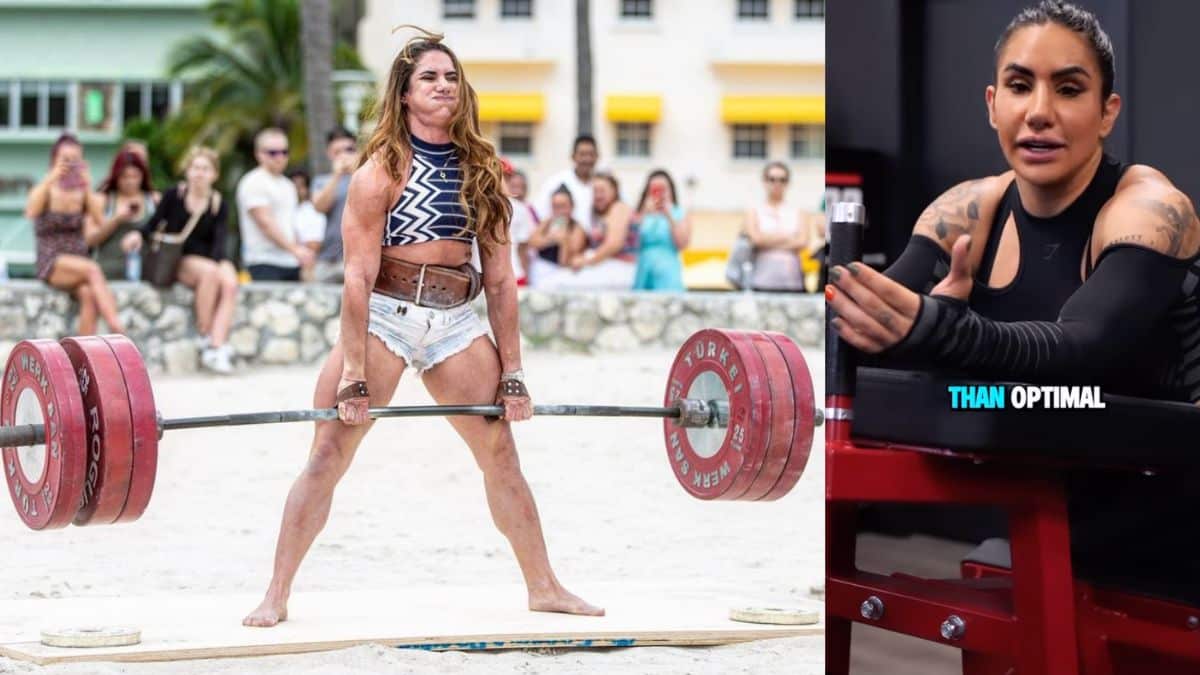
Stefi Cohen on Growing Weaker Body Parts: “9/10 Times You’re Not Performing the Exercise Correctly”
Stefi Cohen has proven herself to be a force inside the gym, having taken part in a number of different sports over the years. In a recent Instagram post, Cohen said genetics aren’t to blame for weaker body parts and shared that stubborn muscles require correct form and proper technique.
“We all have body parts that are harder to grow, but to blame it on genetics is lame. More often than not it’s a product of poor exercise selection, inadequate volume, intensity and most importantly poor execution. The moment you take accountability is the moment you’ll be able to start making progress,” Cohen shared.
From boxing, arm-wrestling, bodybuilding, powerlifting (25-time record holder), strongman, and CrossFit, there are very few athletic mountains Stefi hasn’t climbed. Far from average, she has tested her physique, strength, and endurance for years. She’s also rubbed shoulders with some of the best athletes of their respective disciplines, like former 2017 World’s Strongest Man, Eddie Hall. They teamed up for a shoulder workout and Stefi proved herself lifting alongside the legendary strongman.
As for her CrossFit skills, Cohen doesn’t shy away from a workout challenge. She recently joined Brent Fikowski, the 2017 CrossFit Games silver medalist, for a savage workout that featured intense exercises like Plyo-push-ups, kettlebell deck squats, and burpee-dumbbell snatches.
During her time in the squared circle, Stefi built a commendable combat sports record. In her Pro boxing debut, she knocked her opponent out but recently suffered the first defeat of her career last August when she lost to Devany Cuevas by unanimous decision. Given her competitive history and knack for athletics, Stefi Cohen’s knowledge of fitness makes her especially qualified to offer training advice.
‘We Tend to Blame Sub-Optimal Genectics Instead of Us Not Working Hard Enough,’ Stefi Cohen On Weaker Body Parts
According to Stefi Cohen, people are quick to blame genetics rather than their technique and intensity.
“You don’t have shit genetics. Your hamstrings don’t grow because you don’t know how to train them. And it’s not only when we’re talking about our hamstrings, it’s often the case when we’re talking about a stubborn or weak body part that we’re trying to grow, that we tend to blame it on our less-than-optimal genetics instead of admitting the simple fact which is we don’t know what we’re doing and we’re not working hard enough.
9 times out of 10 the main reason why you can’t grow that specific body part is because you are not performing the exercise correctly and you’re not choosing the right exercise either. It’s so obvious but it’s often overlooked at the expense of hyperfocusing on progressive overload, which is the notion of continuously adding more weight to the exercise that you’re performing.
Oftentimes, lifters focus on getting through the reps instead of the quality of the contraction, which compromises form, Cohen says.
“Take for example the prone hamstring curl exercise. In this exercise the goal is to stabilize our hips as much as possible so that we can stress and apply as much tension to the hamstring muscle as possible. What most people tend to do is focusing on how much weight they’re lifting with this exercise and they compromise their form,” Stefi Cohen explained.
Having made a name for herself in the fitness industry, Cohen has been subjected to a fair amount of fan animosity. So much so that Stefi has openly discussed how she handles haters online who have taken issue with muscular women. She called it ‘fit shaming’ and she highlighted that strong muscular women are common victims of this type of social injustice.
In one of her latest ventures, Cohen teamed up with fitness influencer Will Tennyson. They took part in a boxing/agility-themed workout and played a game of exercise HORSE, with the loser forced to wear a horse mask and take a punch from the winner.
This isn’t Stefi Cohen’s first time offering fans valuable workout advice. Cohen shared her most effective strategies for sculpting a six-pack of abs recently. While she accepts everyone is different, she stressed the importance of dieting and maintaining a sufficient fitness level, adding that, ‘you don’t need to do endless crunches.’ Cohen also said common movements like the deadlift and squat help build the core muscles as well.
Growing weaker body parts can be a daunting task for some, but Cohen is confident that with correct technique and proper intensity, even with bad genetics, substantial gains can still be made inside the gym.
READ MORE:
Published: 5 July, 2023 | 5:58 PM EDT
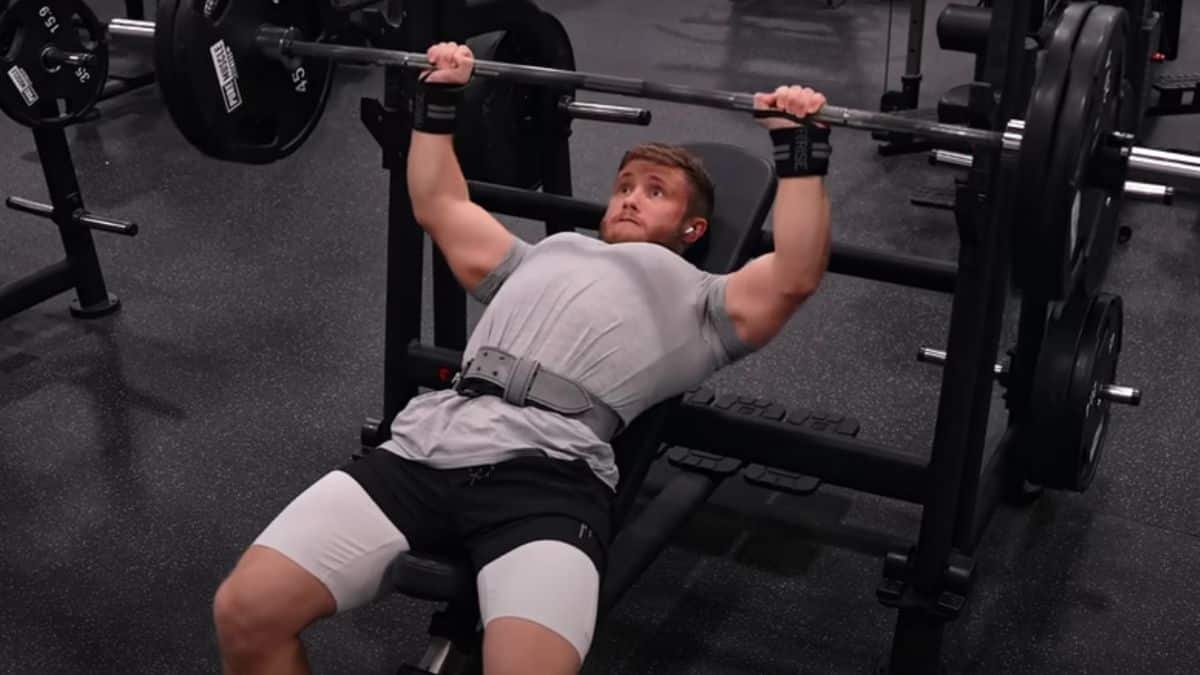
Jeff Nippard Shares Science Based Push Day Workout
Maximize muscle growth with Jeff Nippard’s effective push-day workout routine.
Jeff Nippard has laid down a near-perfect training plan with the first part of his push-pull-leg training series. It is based on minimalist training principles and he recently shared another push-day training session that compliments the first one in the series.
Nippard is a Canadian natural bodybuilder, powerlifter, and fitness expert. He is the 2012 Mr. Junior Canada and also held the Canadian national record for bench press. He has garnered a huge social media following due to his science-based bodybuilding and fitness content. At the time of this article’s publishing, Nippard has a whopping 3.81 million YouTube subscribers.
His content primarily focuses on educating the masses about the right approach to diet and training. The Canadian backs up most of his advice with findings of extensive studies and published medical material. Apart from training and study, Nippard’s knowledge comes from his formal education – a bachelor’s degree in biochemistry. Many professionals have put their faith in Nippard as he has trained several natural bodybuilders and powerlifters in men’s as well as women’s divisions.
In recent months, Jeff Nippard has shared content that deals with methods for boosting metabolism, sustainable weight management, and common nutritional mistakes. His most recent video, a push-day workout, is the fourth installment of a six-part push-pull-leg series. This training session compliments the first push-day workout of the series which we have already covered. So let’s check out the unique benefits this training session has brought for us.
Jeff Nippard’s Push-Day Workout
Close Grip Barbell Incline Bench Press
This compound pushing exercise is the main exercise of the push day workout. Nippard suggested doing a few warm-up sets of the movement before jumping into the working sets. He introduced this as an undulating set model. The first working set should include moderate weights while the second set must be done with heavier weights. The third set, which must include lighter weights, should be done for a maximum number of reps.
“First set of eight will give you a much better idea of how much weight you should add for the following heavier set of five. Just make sure you rest for at least three to four minutes in between those sets so your pecs are feeling recovered and capable of going up in weight.”
While the first two sets are intended for getting the benefit of progressive overloading, the third set will help build mind-muscle connection when performed with lighter weights. After putting in the right amount of work in close grip incline bench press, Nippard moves on to a shoulder exercise.
Machine Shoulder Press
Incline bench press works the anterior deltoid muscles to a great extent. However, Nippard feels the need to train the shoulders with a bit more volume without taxing the body too much. As a result, a machine shoulder press is his preferred exercise.
Machines tend to be less fatiguing as you don’t need to control the weight. You can push a little closer to failure because you can use heavier weights on machines without the risk of dropping weights or getting injured.
“Obviously, machines won’t hit some of the smaller stabilizing muscles quite as well as free weights will. But as long as you’re still including some free weight exercises, I think that concern about machines pretty much goes away anyway!” Nippard said.
Keeping arms parallel to the ground after lowering the weights is sufficient to achieve the necessary range of motion during shoulder press. But Nippard prefers to go a little further down to get a deep stretch in the muscles.
“I also use a thumbless grip on these because I find it improves the mind-muscle connection,” he added.
After doing the stipulated three sets, Jeff Nippard takes on a tricep exercise next.
Floor Reset Skull Crushers
Shifting his focus to tricep work, the Canadian fitness expert performs this strength-focused tricep exercise.
“I’m including this because on my other push day of the week, I do more hypertrophy focused higher rep tricep movement on the cables.”
Nippard does floor reset skull crushers with heavier weights and maintains a low (6 to 8) rep range, putting more emphasis on progressive overload. Nippard explained the steps of performing each rep with minute details. Personally, he aims to lift the weight to full or close to full elbow flexion. He controls the weight up to half way down in the eccentric phase.
After this, he lets the weight fall down and come to a complete dead stop on the ground before initiating the next rep. This method is efficient for making strength gains. However, you can make the exercise more hypertrophy oriented by following this advice from Jeff Nippard:
“I would suggest resisting and controlling the negative all the way down to the floor from a pure hypertrophy standpoint.”
However, strength gain is Nippard’s primary objective here and he suggests applying the progressive overload principle without fail.
Bent Over Cable Flyes
Although it might be mistaken with decline cable flye, bent over pec flye is a different exercise. Arms movement in bent over cable flyes is still perpendicular to the chest and not at a lower angle. As a result, it activates all regions of pectoral muscles. But it still puts more emphasis on mid-pecs.
Technically, bent over cable flyes are similar to the regular cable crossover. However, Nippard argues that the cables can pull you backwards during the eccentric phase of the exercise when you are in an upright position. The constant backward pull from cable can make it harder to maintain balance and stability, limiting the amount of tension in pecs.
“So by leaning forward over the cables, you’ll be more stable since your body weight is grounded with the floor and it should allow you to direct more tension onto the pecs,” Nippard concluded.
He performs three sets of bent over cable flyes and takes up a side delt movement next.
Machine Lateral Raises
Nippard includes this high intensity medial delt exercise in the training routine. Although he performs three sets of 20 reps, those are not regular sets. He splits every set into two parts. For the first part of five reps, he performs the exercise with slow negative reps. The eccentric phase of these reps lasts for five seconds. Reps 6 to 20 are regular reps with constant tension.
“For those first five reps, the slow eccentrics should help you find your delts on the negative and you should be able to zone in on feeling the side delt fibers pulling and then, when you’ve locked that connection in, from there you can kind of just blast them with more standard constant tension reps,” Nippard explained.
There is no particular benefit of this method. However, it can be extremely beneficial for people that do not feel the side delts through regular reps.
Plate Front Raises
Jeff Nippard is not a big fan of anterior delt exercises like front raises. He feels that anterior delts get enough stimulation during compound movements and tend to be overdeveloped in comparison with lateral delts in many cases.
However, there is a way to perform front raises without putting too much emphasis on front delts. According to Nippard, you can actually work the middle segments of muscles between anterior and side delts if front raises are modified properly.
Steering the plate during front raises is an effective variation that can help engage these muscles. As explained by Nippard, side delts are engaged along with anterior delts when the arm is internally rotated during a front raise.
Dumbbell Y-raises are a good alternative to achieve the same effect for people that experience pain during the front raises with internal rotation.
Diamond Push-ups
Nippard likes to finish the workout with an all-out set as there are no sets ahead to preserve the energy for. Additionally, it gives a huge mental boost knowing that you gave it all to the training session.
The diamond push-up form forces the triceps to work harder than they do in most other push-up variations. He performs one set of diamond push-ups to failure and wraps up the training session.
The push-day workout includes following exercises, number of sets and rep range:
Warm-up
5 mins on the treadmill or stair master
Dynamic stretches – arm swings, cable external rotations etc.
Close Grip Barbell Incline Bench Press
Warm-up sets
1st set – empty bar X 10 reps
2nd set – 50% working weight X 4 reps
3rd set – 75% working weight X 3 reps
Working sets
1st set – moderate working weight X 8 reps
2nd set – heavy working weight X 5 reps
3rd set – light working weight X 15 reps
Machine Shoulder Press
3 working sets of 10 to 12 reps
Floor Reset Skull Crushers
3 sets of 6 to 8 reps
Bent Over Cable Flyes
3 sets of 10 to 12 reps
Machine Lateral Raises
3 sets of 20 reps
Plate Front Raises
2 sets of 15 to 20 reps
Diamond Push-ups
1 set to failure
Jeff Nippard has ensured that his content is backed by proven data and he has done a great job of staying away from bro science. This ensures that his advice will be beneficial for most people, if not everyone. So what are you waiting for? Head over to the gym and try incorporating Jeff Nippard’s push day training session in your training.
You can watch the full workout video here, courtesy of Jeff Nippard’s personal YouTube channel:
Published: 5 July, 2023 | 3:01 PM EDT
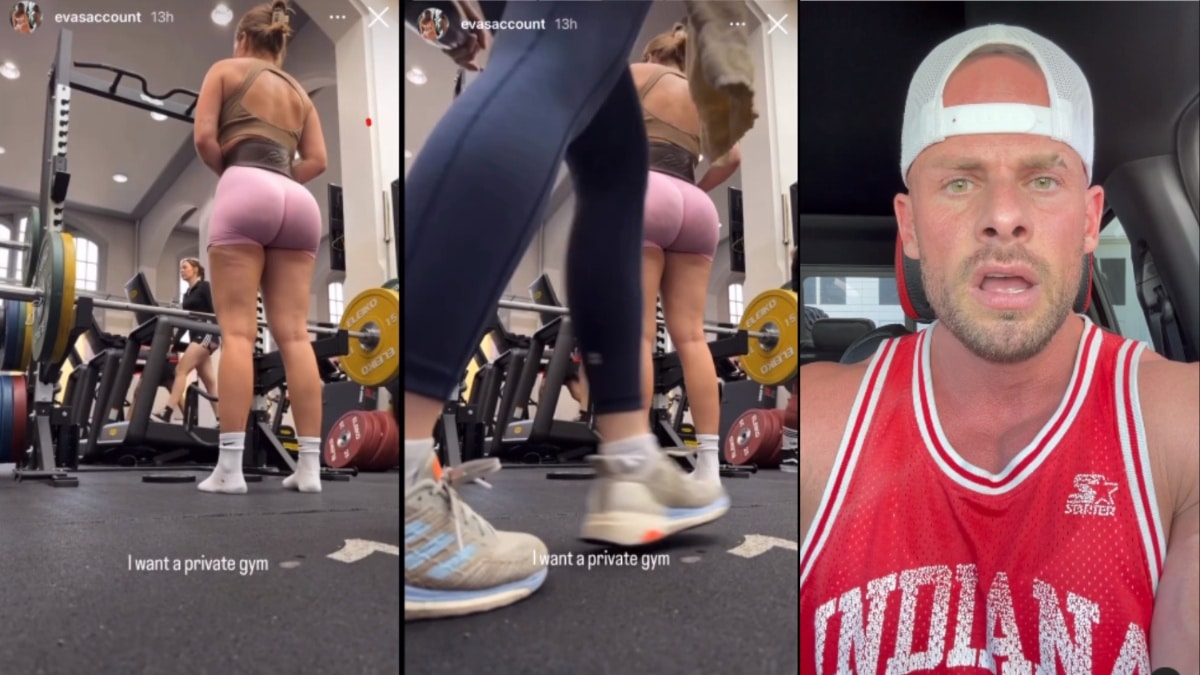
“The Gym Is Not Your Personal Studio” – Joey Swoll Calls Out Influencers Recording at Gyms
Fitness personality Joey Swoll is taking aim at people recording irresponsibly at gyms and fitness centers. In a recent Instagram post, Swoll took issue with an influencer who was frustrated after gym-goers walked in front of her camera during a training session.
With a rise in social media platforms like Instagram and TikTok, Joey Swoll has been a busy man in his attempt to correct poor gym etiquette or what he refers to as ‘Toxic gym culture.’ Whether it’s disrespect, hostility, or aggression, Swoll’s hope is to make gyms a safer and more welcoming place by defending people who refuse to speak up for themselves.
In his latest attempt to better the scene, Swoll is addressing a hot topic in fitness: influencers recording at gyms. While some companies have a zero-tolerance policy against recording, other gyms allow it. In the video, Swoll called out the woman who was upset by the gym’s apparent foot traffic.
“If you’re going to film at a gym that allows you to take videos, you need to do so responsibly with respect to other people. That means not getting upset if someone walks through your camera and then posting it on social media,” said Joey Swoll.
Joey Swoll Says Influencers ‘Need to Stop Nonsense’ at Gyms: “I’m Sorry, You Don’t Own the Place”
According to Swoll, influencers shouldn’t expect to record at gyms without interruptions as they are open to anyone with a membership.
“Influencers need to stop this nonsense acting as if they’re filming, they’re taking a video is more important than everyone else in the gym, that they need to stop what they’re doing just because you’re taking a video. I’m sorry you don’t own the place.
Your video is never a priority over anybody at the gym. Let me let you in on a secret, it’s a gym. People know it’s busy, if someone walks by it’s not going to matter. It’s not going to take away from your views or likes or anything about the video,” Joey Swoll shared.
Before wrapping up the video, Swoll advised the woman to either find a private gym or build one so she can record videos without foot traffic.
“If you want to go to a gym where nobody walks by, go to a private gym or build your own. Until then, you need to do better than that. Mind your business.”
This isn’t the first time Joey Swoll has gone after influencers recording at gyms. Last month, Swoll made an example out of a woman who filmed a video but set the camera up to watch the man in the adjacent machine more than herself. Swoll underlined that just because she wanted to record herself, doesn’t mean she has the right to record other people without their consent.
These unfortunate situations are all too common nowadays. In May, Joey put a Chelsea soccer player on blast after he made fun of a man whose pants fell down during a strenuous workout. While some fans may have found the events humorous, Swoll was disgusted by the athlete’s behavior and said he did a poor job of representing his team.
RELATED: ‘Your Gym Should Kick Your A** Out’: Joey Swoll Reacts to Female TikToker Making Fun of Old Gym-Goer
Swoll also went after someone online for recording inappropriately at the gym. A female TikToker mocked a gym-goer’s loud grunts during a training session. Given that gyms are supposed to be welcoming for all types of people, Swoll said it was best for the TikToker to just mind their business, much like the advice he offered to his latest subject in today’s Instagram video.
Published: 5 July, 2023 | 2:17 PM EDT
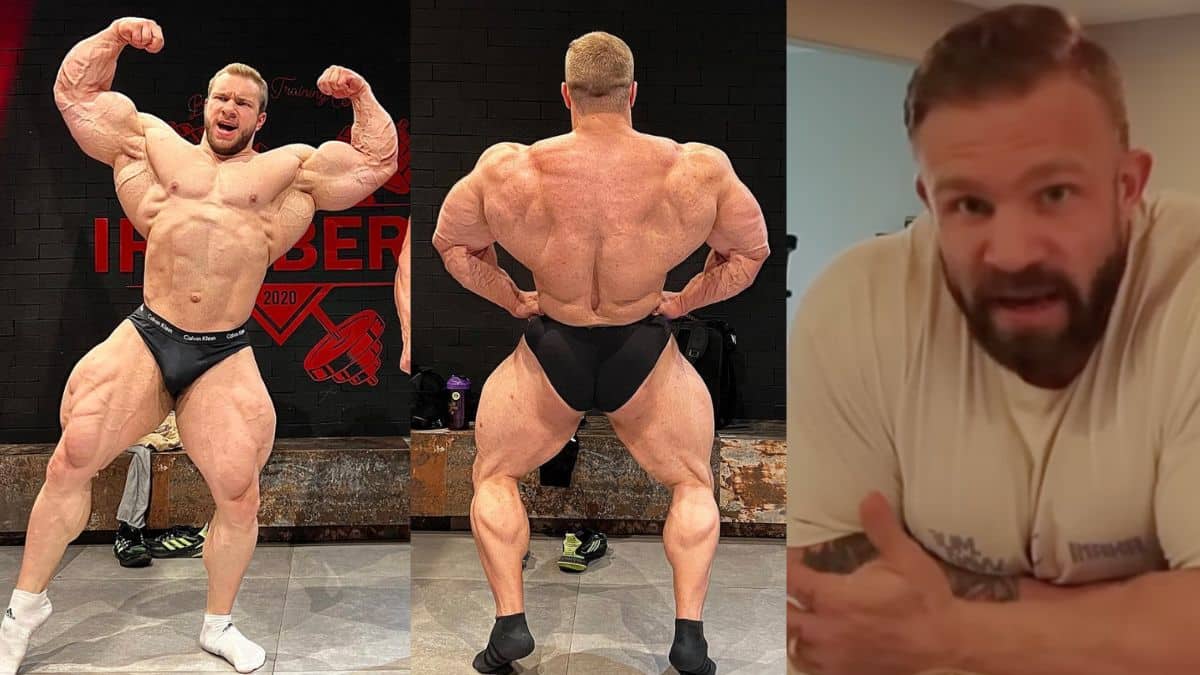
Iain Valliere: ‘Bodybuilders Don’t Want to Face Vitaliy “Good Vito” Ugolnikov He’s An Absolute Fuc**ng Freak’
Vitaliy Ugolnikov, well known as ‘Good Vito,’ continues to gain momentum despite having yet to earn an invite to 2023 Mr. Olympia. In a recent Bro Chat Podcast, Iain Valliere and Fouad Abiad discussed Vito’s potential in the IFBB Pro League and his chances against other Olympia contenders.
Ugolnikov’s entrance into bodybuilding was filled with excitement. He came from the IFBB Elite Pro League last year and switched to the NPC, similar to the path Michal Krizo took. His impact was immediately felt as he claimed his IFBB Pro card at the 2022 Musclecontest International Brazil Nationals. At the event, Vito displayed a stunning display of mass, conditioning, and fullness.
Good Vito’s huge arms and quads also set him apart from his peers. His physique has gone viral online as a result of some impressive updates. And with the hype he’s gained over the past several months, fans continue to back him as a legitimate wild card at Olympia, assuming he earns his invitation.
Currently, Ugolnikov is in preparation to bring his best at the upcoming 2023 European Pro Championships. In addition to progress videos and photos, Vito has kept fans up to date on his journey by showing off posing routines as well.
Iain Valliere, Fouad Abiad Debate Potential of Vitaliy ‘Good Vito’ Ugolnikov
According to Valliere, bodybuilders in North America don’t want to stand against Good Vito on stage.
“Every bodybuilder in North America thinks that exact same thing [I don’t want to go against this guy],” said Iain Valliere
“Vito is kind of that same build as Hadi…” said Fouad Abiad.
As for possible weaknesses, Valliere and Abiad agree Vito needs to strengthen his back.
“Yeah, but Vito is not nearly as strong in the back and the conditioning department as some of those guys you just named. Look, from the front double, is this guy an absolute fuc**ng freak,” replied Iain Valliere.
“If he has a shallower back than the others that doesn’t necessarily mean he can’t stand with them,” Abiad explained.
“I don’t think he has a bad back, but it’s definitely one of the more important factors. I’m not saying this guy doesn’t have a back, I’m just saying in the context of being in that top five, you know,” Valliere shared.
Vito must earn an invite for 2023 Olympia by winning a pro show. If he’s successful, Abiad believes he can threaten contenders at the competition with improved conditioning.
“I would like him to stand up more on that though [side chest pose],” Iain added. “Not a bad back. Fuc**ng shit, fuc**ng crap. I meant back double but that’s still a really good back lat spread.”
“The only thing I would say is he looks like he has enough muscularity, but he looks like he has to get his condition up to stand up [on the Olympia stage],” shared Abiad.
“His legs are just outrageous,” added Valliere. “Look at the fuc**ng muscularity on that guy. Yeah, [he’s] very young.”
Having credited Vito’s back, arms, and quads, Valliere and Abiad agree he’s a dark horse at the 2023 Olympia should he earn an invitation.
“Well, honestly, that’s my dark horse at the Olympia,” said Abiad.
“Could be, for sure,” replied Valliere. “He’s 12 weeks out, he’s doing one of the later European shows I think. At least I think. He just posted an update.”
While Vito has yet to test himself on an IFBB Pro League stage, he’ll get the chance very soon. His presence in the league has already generated a lot of chatter. In a recent Olympia TV video, bodybuilding judge Terrick El Guindy pointed out a few rising stars in the Open. One of them was Ugolnikov. Chris Cormier also praised Good Vito for his youth and potential, predicting that he’d shake up the category in the future.
Considering Vito’s monstrous build, fans online have accused him of doctoring or photoshopping pictures. In response to the allegations, Ugolnikov shared a follow-up video where he went on to disprove the unfounded remarks.
Even though he’s yet to make waves in North America, it appears it’s only a matter of time until fans see Good Vito on the sport’s biggest stages. He has until Oct. 9 to earn his invite to the 2023 Mr. Olympia competition. As for Iain Valliere, he qualified after his win against Hassan Mostafa at the recent Toronto Pro Supershow in June.
RELATED: Bodybuilder ‘Good Vito’ Vitaliy Ugolnikov Moves to Brazil, Continues Offseason Prep
You can watch the full video from the Fouad Abiad Media YouTube channel below:
Published: 5 July, 2023 | 11:54 AM EDT
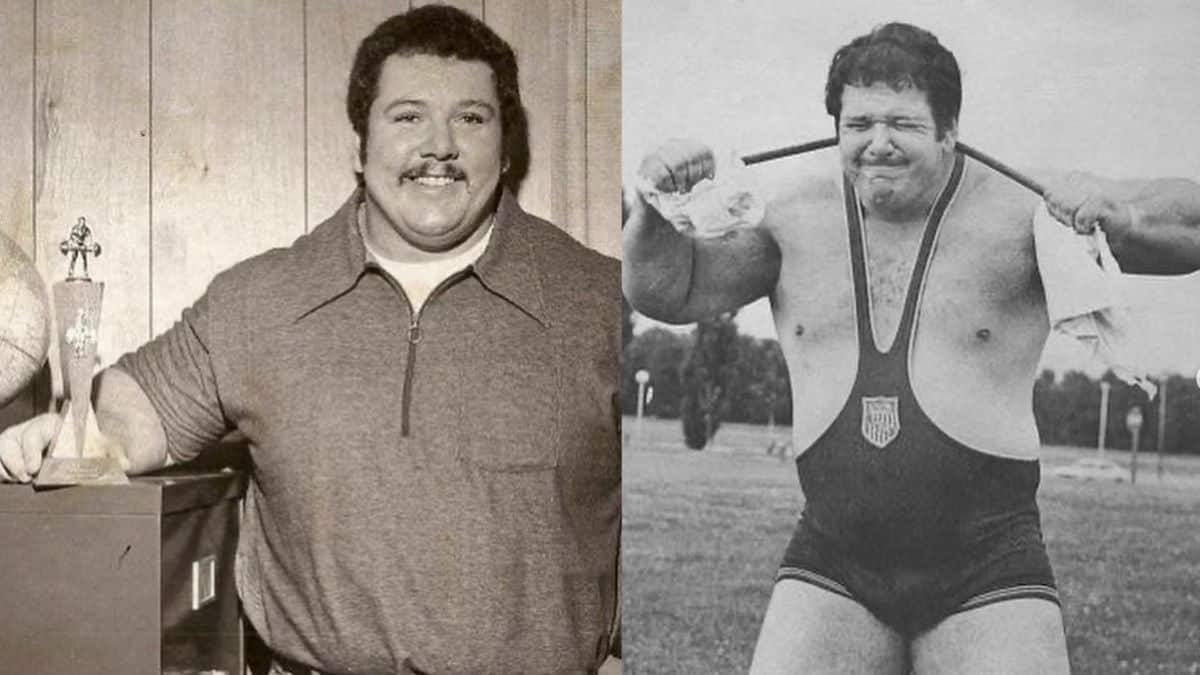
Powerlifting & Strongman Legend Don Reinhoudt Passes Away At 78
Strongman and powerlifting are now well-established sports, but it took them some time to reach this point. Just a few decades ago, these sports were in the development phase, with some incredible athletes pushing them onto the main scene. One of those was Don Reinhoudt who lured many fans into both sports with his incredible feats of strength. Tragically, Don has passed away at the age of 78-years-old.
The cause of Don Reinhoudt’s passing is currently unknown, but many powerlifting and Strongman athletes, like Ray Williams and Laurence “Big Loz” Shahlaei, have shared the news on Instagram, confirming that the unfortunate news is real.
“I was lucky enough to talk to Don a couple of times, and he was incredibly kind and a real gentleman with so many stories to share” wrote Big Loz.
“ I chased his records for most of my early lifting career. It is men like Don that made powerlifting the amazing sport it has grown into today,” wrote Ray Williams.
Related: Eddie Butler, Legendary Strongman Commentator & Rugby Player, Passed Away At 65
Don Reinhoudt’s Life and Career
Don Reinhoudt was born on March 5th, 1945, in Brocton, New York. He went on to have very successful teen years, becoming an All-League basketball player, an All-Western New York football player and an All-Western shot putter. In addition, Don was also a college football player, a part of the varsity track team, and also competed in Olympic Weightlifting. So, it is clear that Don was a man of many talents.
Powerlifting
Don Reinhoudt excelled the most in two sports, the first being powerlifting. He began powerlifting in 1969 and after some training, he made his debut at the 1972 AAU Men’s World Powerlifting Championships. He finished in third place, just behind his two idols, John Kuc and Jim Williams.
After that, Don Reinhoudt took part in eight more competitions and won all of them. Most notably, he won four consecutive IPF Men’s World Powerlifting Championships from 1973-1976.
Don Reinhoudt set dozens of National and World records during his time in powerlifting, some of which stood for multiple decades.
Strongman
After finishing his career in powerlifting, Don Reinhoudt’s incredible strength was recognized by Strongman organizers. So, he was invited to compete in the first-ever edition of the World’s Strongest Man competition in 1977. Having lost over 100 pounds of bodyweight just one year before, Don declined, but revealed that he would compete in 1978.
The year 1978 rolled around and so did the second edition of the WSM. So, Don took part in the competition and was leading the pack until the final event – the tug of war. Unluckily, he lost balance and ended up losing to Bruce Wilhelm, who also won the competition in 1977.
Don Reinhoudt remained determined and came back in 1979 to compete at the WSM once again. This time he ended up taking the title, becoming only the second man in history to hold the most prestigious calling in Strongman.
Related: Every Winner of The World’s Strongest Man Competition Since 1977
Even after wrapping up his official career in Strongman and Powerlifting, Don Reinhoudt continued impressing people with feats of strength like picking up people with his teeth, hammering nails in wooden boards with his bare hands, and more. So, with everything that Don has accomplished in his career, he will be an inspiration for generations to come.
Fitness Volt is expressing our condolences to the family and friends of Don Reinhoudt. May he rest in peace.
Published: 5 July, 2023 | 9:25 AM EDT
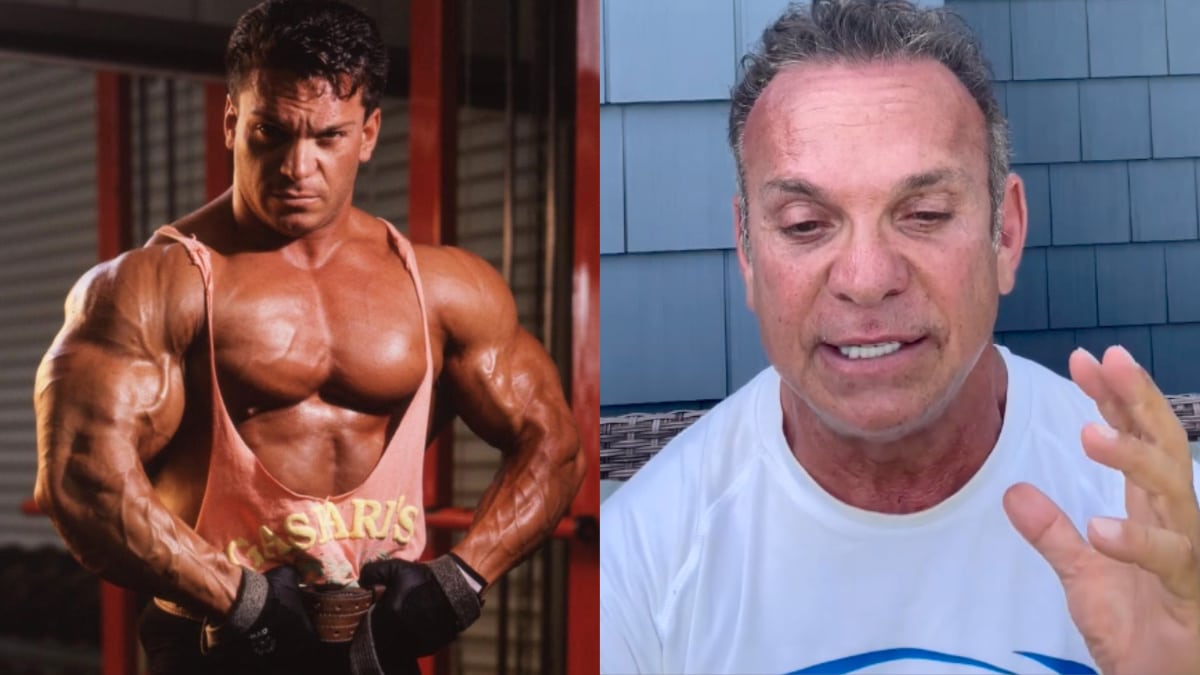
Rich Gaspari Shares Tip on Stimulating Muscle Growth with Slow-Mo Reps
Bodybuilding veteran Rich Gaspari amassed a ton of fitness knowledge from his years of competing in the sport. Although he no longer competes, he stays in top form and provides insight into the training methods of an elite bodybuilder. In a recent post made on Instagram, Gaspari broke down how to stimulate muscle growth by incorporating slow-mo reps.
Rich Gaspari first rose to prominence for his insane muscle mass, definition, and conditioning in the mid-1980s. He displayed a dry look and was the first athlete to showcase striations on his glutes. He proved to be one of the most disciplined Men’s Open competitors during his run with seven consistent top-10 finishes at the Mr. Olympia contests. While he did not win the Sandow trophy, he took three silver medals, falling short of eight-time champion Lee Haney on each occasion. He graced several magazine covers and was inducted into the IFBB Hall of Fame in 2004.
Since moving on from competition, Gaspari has been a vocal critic of the evolution of the Open class. He fired shots at modern competitors for depending too much on steroids instead of focusing on quality training earlier this year. He followed up with a motivational message asking his fans to push themselves in the training room a month later. Gaspari provided the keys to training with intensity using techniques such as supersets, drop sets, giant sets, and more.
Gaspari opened up on the difference in the gear bodybuilders from the 90s would take to now five months ago. While many compounds, such as Anavar, Winstrol, Testosterone, and Trenbolone, continue to prevail, he highlighted the issue of procuring these substances from the black market instead of getting a pharmaceutical-grade product.
The 60-year-old provided tips and techniques to maximize the gains on leg day workouts three months ago. He stressed the importance of training the lower body to failure to get it to grow and laid out some methods for achieving the same.
Rich Gaspari voiced his disapproval of the lack of artistic touch in the Open class weeks ago. He argued bodybuilding is an art form that cannot be treated like a sport and credited the Classic Physique competitors for keeping the art form alive.
Gaspari detailed a modified version of the sumo squats for a stronger lower body two months ago. He suggested using elevated feet to get an extra range of motion and add stress to the glutes.
Rich Gaspari shares tips on stimulating muscle growth with slow-mo reps
In a recent Instagram post, Rich Gaspari shared tips on utilizing slow-mo reps for enhancing muscle growth.
“A lot of you have seen videos of me doing drop sets to train a muscle to failure,” said Gaspari. “Works really well, we do supersets, drop sets. Going quickly sometimes the motion can be a little bit more free meaning they’re not prefect reps. Then there’s other type of training that I do, slow mo reps. Slow mo reps I do every once in a while just to have a different feel to my muscle to stimulate them. Slow mo rep is doing a rep five seconds on the extension and five seconds on the contraction. For example, doing a leg press, five seconds on the way down and five seconds on the way up. Normally on my leg training I like to do reps of 20 or 30. When you’re doing reps super slow and you’re controlling the weight the whole time, no momentum. What’s going to happen is you’re going to have to lighten the weight tremendously and in doing that you’re also going to feel the muscle fibers working, slow and fast twitch you’re going to really feel them working and you may only be able to do 10-15 reps. You can follow this principle and can bee only able to do maybe three exercises.”
Rich Gaspari extended his support for reigning four-time Classic Physique Olympia champion Chris Bumstead last month. He believes Bumstead has a stellar package and could hold his own against the freakiest mass monsters of the Open if he added 40 pounds of muscle to his frame and grew his arms. Then, he provided abs exercises for building strength along with a tip on training intensity for muscle growth earlier this month.
His latest offering will certainly help many fitness fans take their physiques to the next level with the intensity technique.
Published: 5 July, 2023 | 8:12 AM EDT
Army PRT Exercises – The Army Physical Readiness Training Drill
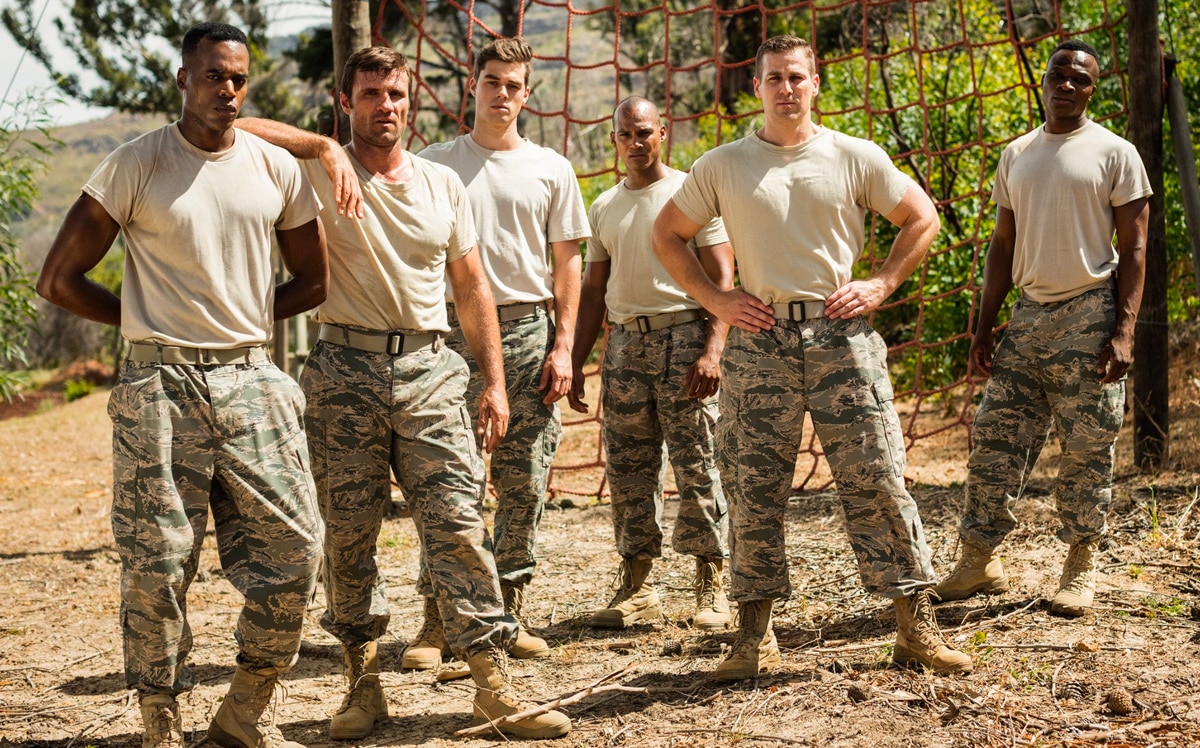
Watch any movie or video about Army physical training, and you’ll probably see recruits and soldiers clambering over obstacles, running with packs, doing unarmed combat, or participating in other forms of intense exercise.
However, the reality is that a whole lot of basic fitness training precedes these feats of endurance and strength. While military training is tough, it builds up gradually over time, helping to reduce the risk of injury and preventing recruits from “washing out” before their military career begins.
The Army PRT (APRT) is a series of exercises designed to prepare soldiers for more intense physical training. It’s also a great way for civilians to warm up before exercise and develop and maintain a decent all-around fitness level.
In this article, we reveal the exercises that make up the Army Physical Readiness Training Drill.
What is the Army PRT Drill?
The Army PRT Drill is a series of ten simple bodyweight exercises designed to be performed sequentially to a predetermined tempo or cadence. The Army uses it as a warm-up before more intense forms of training and also as a short-but-effective standalone workout.
Soldiers often perform the APRT daily, usually on rising. It can also be used to build the basic fitness required to pass the Army Physical Fitness Test (APFT), which all soldiers must do at least twice a year.
The exercises themselves involve no equipment, so they can be done anywhere and anytime, even while on deployment.
The exercises that make up the Army PRT Drill are:
Bend and reach
Rear lunge
High jumper
Rower
Squat bender
Windmill
Forward lunge
Prone row
Bent-leg body twist
Push-up
Each exercise is typically performed for five to ten “Army reps,” which, because each movement is performed to a cadence, is actually 10-20 regular reps. You may find this challenging if you are unused to doing your exercises this way.
The aim of the Army PRT Drill is not to overload the muscles or exhaust the participant. Instead, it’s meant to increase heart rate, body temperature, joint mobility, and muscle blood flow. You should feel pleasantly energized after completing the APRT, and not tired to the bone!
The entire ten exercise sequence should take no more than 10-12 minutes, and breaks between exercises should be kept as short as possible. All major joints and muscles are involved in the Army PRT Drill, and its simplicity and low to moderate intensity level means it can be performed daily.
Many military veterans continue to perform the PRT exercises to help them stay in shape and maintain some of their hard-won Army fitness.
Army PRT Exercise Instructions
There are two ways to perform most exercises – the right way and the wrong way. Needless to say, the Army won’t tolerate sloppy exercise technique, so make sure you follow these instructions and make your physical training instructor proud!
Do 5-10 reps of the following exercises using a smooth, controlled tempo.
1. Bend and reach
Purpose: Mobilize the shoulders, hips, and spine.
The first exercise in the Army PRT Drill is the forward bend and reach. This exercise will loosen and warm up your entire posterior chain, which is the collective name for the muscles of the back of your legs, hips, and torso. Take care not to round your back too much, as doing so could lead to injury.
Steps:
Stand with your feet roughly shoulder-width apart. Pull your shoulders down and back and look straight ahead.
Brace your abs and raise your arms above your head.
Bend your knees slightly, hinge from your hips, and lean forward, reaching your hands between your feet.
Return to the starting position and repeat.
2. Rear lunge
Purpose: Mobilize the hips while improving lower body strength and balance.
Most exercisers should be familiar with lunges. After all, they’re one of the best unilateral leg exercises around. The Army does rear lunges a little differently, but they still offer many of the same benefits. This move is especially beneficial for soldiers as it helps strengthen and stretch the running muscles and builds the balance and agility needed to get behind cover and shoot from a kneeling position.
Steps:
Stand with your feet about shoulder-width apart, hands on your hips. Pull your shoulders down and back, brace your core, and look straight ahead.
Take a large step backward and then stop.
Keeping your leg straight, gently press your heel into the floor and push your hips forward to feel a mild stretch in your calf, hips, and quads.
Step your foot back in and then repeat on the opposite leg.
Continue for the desired number of reps.
3. High jumper
Purpose: Improves explosive leg strength and teaches the correct takeoff and landing for jumps.
A soldier’s legs need to absorb a lot of impact when they march, run, and jump. That impact rises significantly when carrying a pack or equipment. This jumping exercise is designed to develop lower body power and teach correct jumping technique to help ward off impact-related injuries.
Steps:
Stand with your feet roughly shoulder-width apart, knees bent, and arms straight with your hands behind your hips.
Swing your arms forward and up, and jump a few inches into the air.
Lower your arms and perform a second small jump.
Next, swing your arms forward vigorously, and use this momentum to jump high into the air.
Land, lower your arms, and perform another small jump.
Continue this four-count sequence for the desired number of reps.
4. Rower
Purpose: Develop core and hip flexor strength
Core strength is important in the military. A strong core provides support for your lumbar spine, reducing the risk of back injury. A strong core is especially important for infantry soldiers, who must be able to march long distances while carrying heavy packs. This is known as rucking in Army parlance.
Steps:
Lie on your back with your arms straight and your biceps close to your ears. Brace your core.
Bend your legs, sit up, and take your arms forward so they’re parallel to the ground and outside your knees. Your feet should be flat on the floor.
Lie back down and return to the starting position.
Continue for the desired number of reps.
5. Squat bender
Purpose: Develop lower body endurance and hip/lower back mobility.
The squat bender combines bodyweight or air squats with unweighted Romanian deadlifts. Between them, these two exercises work all your major leg muscles while providing an excellent stretch for your hips and hamstrings. The bodyweight RDL also reinforces correct lifting technique.
Steps:
Stand with your feet about shoulder-width apart, hands on your hips. Pull your shoulders down and back and look straight ahead.
Bend your knees and squat down until your thighs are roughly parallel to the ground. Extend your arms out in front of you for balance.
Stand up and return to the starting position.
Next, hinge forward from the hips and reach down toward your toes. Take care not to round your lower back.
Finally, stand back up and return to the starting position.
Repeat the four-count sequence for the desired number of reps.
6. Windmill
Purpose: Develop mobility in the spine, shoulders, and shoulder girdle.
The windmill is an old-school calisthenic mobility exercise. It involves hip hinging and twisting, which stretches your hamstrings and waist while mobilizing your entire spine. Do this exercise slowly, as per the instructions, to avoid injury and get the most from this classic calisthenic movement.
Steps:
Stand with your feet shoulder-width apart, arms raised so they’re parallel to the ground. Brace your core and look straight ahead.
Bend your hips and knees and reach down to touch the outside of your left foot with your right hand.
Extend your right arm behind you so the arms form a straight line throughout. Ensure most of the movement comes from your hips and not by rounding your lower back.
Stand back up and repeat to the opposite side.
Continue alternating sides for the required number of reps.
7. Forward lunge
Purpose: Develops balance, mobility, and leg strength.
The Army sure does love lunges! For your seventh PRT exercise, you’ll be doing alternating forward lunges with a somewhat shorter-than-normal step. This increases quads engagement and involves a larger range of motion at the knees. As such, expect to feel this exercise more in your thighs and less in your hips.
Steps:
Stand with your feet about shoulder-width apart, hands on your hips. Pull your shoulders down and back and look straight ahead.
Take a small step forward, bend your legs, and try to lower your butt to your rear heel. Keep your torso as upright as possible.
Straighten your legs, step back into the starting position, and repeat on the other side.
Continue alternating legs for the duration of your set.
8. Prone row
Purpose: Strengthen the neck and upper back for greater stability and better posture.
The prone row is an excellent exercise for the neck and upper back. It helps prepare you for shooting from a prone (lying on your front) position and supporting the weight of your helmet. It’s also a good movement for increasing lower back strength and improving your posture. All in all, it’s a perfect exercise for soldiers.
Steps:
Lie on your front with your arms extended and hands a couple of inches above the floor.
Raise your shoulders and chest off the floor and pull your hands down and into your shoulders like you’re doing a lat pulldown. Clench your fists and lift your head as far as comfortable.
Next, extend your arms, open your hands, and return to the starting position.
Repeat for the desired number of reps.
9. Bent-leg body twist
Purpose: Develop core strength and spine mobility.
This exercise will help mobilize your lumber spine and increase core strength, especially in the obliques or waist muscles. Rotational strength is important for many activities in the military, including pushing, pulling, punching, kicking, and throwing.
Steps:
Lie on your back with legs bent to 90 degrees and thighs vertical. Extend your arms out to the side to form a T-shape, hands resting on the floor.
Keeping your shoulders and arms on the floor, rotate your hips and lower your knees to the left so they’re a couple of inches above the floor.
Return to the starting position and then repeat the same movement to the right.
Come back to the center and repeat, alternating sides rep by rep.
Continue for the desired number of reps.
10. Push-up
Purpose: Strengthen the chest, shoulders, and triceps.
No Army workout is complete without push-ups! This classic exercise builds upper body strength and endurance and is a staple of military training. Forget the bench press; if you want to develop a functionally strong upper body and arms, push-ups are a must.
Steps:
Adopt the front support position with your arms, legs, and body straight. Your hands should be shoulder-width apart, fingers pointing forward. Brace your core.
Bend your arms and lower your chest down until your upper arms are parallel to the ground.
Extend your arms and return to the starting position.
Continue for the prescribed number of reps.
Army PRT Exercises Pros
Not sure if the Army PRT is right for you? Consider these pros and then decide!
1. Anywhere, anytime
The exercises in the Army PRT involve no equipment and require very little space. As such, you should be able to do them almost anywhere and anytime. Because of this, you really have no valid excuse for not making the Army PRT Drill part of your daily routine.
2. A full-body workout
The Army PRT works every major muscle and joint, providing a well-rounded and comprehensive workout. Developing all your muscles and joints equally is critical for creating a balanced physique and avoiding muscle imbalances, which can lead to injuries and dysfunction.
3. Easy to learn
Despite a few unfamiliar names, the exercises that make up the Army PRT Drill are generally common and well-known. Many feature in high-school PT classes. They’re also straightforward and easy to learn. While training to a cadence may be challenging at first, you’ll get used to moving in such a controlled fashion. The Army PRT exercises are ideal for all levels, including beginners.
4. Minimal time commitment
Taking no more than 10-12 minutes to complete, doing the Army PRT should fit into even the busiest person’s schedule. Lack of time and facilities are common barriers to exercise participation, but both are no longer an issue with this short workout plan.
5. Easy to modify for all levels
The PRT Drill is usually performed for one lap of five reps done to a set cadence. However, that doesn’t mean you can’t modify it to better suit your current fitness level. For example, beginners can drop the cadence and just do regular reps, which are considerably easier. More capable exercisers can do more reps or more than a single lap.
So, the Army PRT Drill has something to offer all exercisers, from beginners to advanced.
6. Easy to make a habit
This workout is tailor-made to make habitual exercising easier. The ten exercises flow together to form an easy-to-remember routine you can do whenever you have a few minutes free.
Many people struggle to exercise regularly, but committing to doing the Army PRT Drill every day should help develop a strong exercise habit. Doing something simple every day is often better than doing something more challenging less frequently.
Army PRT Exercises Cons
The Army PRT is a safe and effective way to work out without equipment and in minimal space. However, there are a couple of disadvantages to consider, too:
1. Limited overload
The Army PRT Drill uses your body weight to develop strength, endurance, and mobility. However, if you are strong, light, or already pretty fit, this may not be challenging enough to provide an effective workout.
You can do more reps to overload your muscles, but this can become time-consuming. Alternatively, you can do the PRT wearing a weighted vest to make it more effective.
2. Not many upper body exercises
While the Army PRT Drill is undeniably a full-body program, your legs and core do most of the work. The only upper body exercises are push-ups and prone rows, and the latter is not a very challenging movement.
If you want to increase your upper body strength and endurance, you may want to include more upper body exercises in your workout routine, such as pull-ups, dips, and yet more push-ups. You could also supplement your APRT with resistance exercises such as bench presses, shoulder presses, biceps curls, and lat pulldowns.
3. Not enough training volume
Lasting no more than 10-12 minutes, the Army PRT drill may be too short to provide maximal fitness benefits. According to the Centers for Disease Control (CDC), most adults should try to get about 150 minutes of exercise per week (1). Even if you do the PRT every day, you won’t hit this target.
As such, the PRT will probably work best when performed alongside another form of exercise, e.g., running.
Army PRT Exercises FAQs
Do you have a question about the Army PRT Drill? No worries because we’ve got the answers!
1. Can you share a follow-along version of the Army PRT Drill?
We sure can! This video takes you through the entire PRT Drill and is led by an Army physical training instructor who counts out the cadence for the entire workout. Just watch the demos and follow his lead.
2. How should I cool down after the Army PRT?
While you could just end your workout with a few cool-down stretches, the Army won’t leave you hanging and has a cool-down routine designed to be done after the PRT Drill. Comprising five exercises, this sequence of moves stretches all the muscles you have just been exercising. Follow along with the video, which again is led by an Army physical training instructor.
3. How often should I do the Army PRT Drill?
Because it’s short and not too intense, you can do the Army PRT Drill daily, which is what many soldiers do. However, if that’s too much for you, you should endeavor to do it at least every other day. Doing the APRT less often than this probably won’t produce noticeable results.
4. I’m very unfit – how can I modify the Army PRT to make it easier?
The Army PRT Drill is designed to be done as a non-stop sequence of ten exercises. However, moving quickly from one movement to the next may be too much for some people.
So, do the exercises as described but a) do fewer reps and b) take a moment between each one to catch your breath. Then, as you get fitter, make those breaks shorter until, eventually, you can do the exercises back-to-back.
You could also split the exercises into two five-movement workouts. For example, do the first five exercises one day and the second five the next. Again, as you get fitter, work toward doing the Army PRT Drill as prescribed.
5. When is the best time to do the Army PRT Drill?
The best time to do the Army PRT Drill is whenever it’s convenient. On rising works for some people, while others will prefer to do it later in the day. However, you’ll probably find it easier to create a lasting exercise habit if you do the APRT at the same time each day.
6. Will doing the PRT Drill help me prepare for boot camp?
It’s best to start training early if you plan to join the Army. While boot camp is designed to build your fitness and strength, the entire process will be more manageable if you arrive in decent shape.
So, a few months before your boot camp starts, begin doing some running and basic calisthenic exercises such as push-ups, pull-ups, and squats. You should also strive to do the Army PRT Drill daily and have a couple of tries at the Army Physical Fitness Test (APFT), so you can be confident that you can pass it.
Related: 5 Simple Exercises – A Daily Calisthenics Routine
7. Can I change any of the exercises in the Army PRT Drill?
You could, but you probably shouldn’t. After all, the APRT Drill was created by the US Army for soldiers, and following orders goes with the job! That said, if one of the exercises bothers an old injury, is painful, or is beyond your abilities, feel free to replace it with something similar.
However, that doesn’t mean you can switch out an exercise just because you find it hard; those are the exercises that drive your fitness improvements. So, rise to the challenge and don’t shy from it, and remember, as they say in the military, you gotta train hard if you want to fight easy.
Related:
Closing Thoughts
The Army Physical Readiness Training (APRT) Drill is a sequence of ten simple calisthenic exercises that develops basic all-around fitness, endurance, and strength. Doubling as a warm-up, this program is designed to be done anywhere and anytime.
It is ideal for serving soldiers, veterans, home exercisers, and anyone who enjoys no-frills, equipment-free workouts. It can also be used to help you prepare for the Army Physical Fitness Test, which is a prerequisite for military service.
While the Army PRT has limitations, it can combined easily with other workouts, such as running and lifting weights, to create a balanced training system.
So, if you are looking for a short, straightforward bodyweight workout that you can also use as a daily warm-up, give the Army PRT Drill a try. At less than 10-12 minutes in duration, it’s time efficient, practical, and very convenient.
References:
Centers for Disease Control and Prevention: How much physical activity do adults need? https://www.cdc.gov/physicalactivity/basics/adults/index.htm