
 All Posts By Muscle Insider
Board Certified PHD
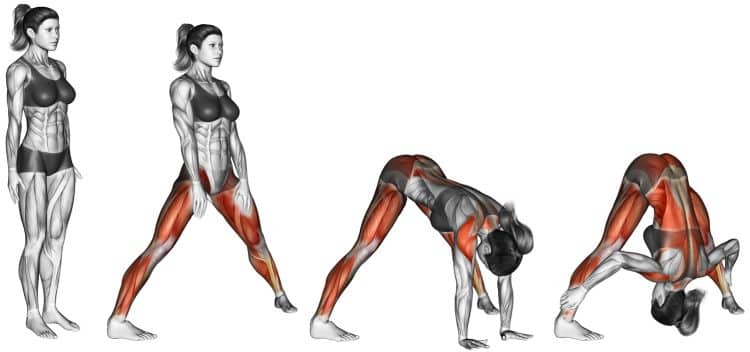
Wide Legged Forward Bend Prasarita Padottanasana – Muscles Worked, Benefits, Common Mistakes, and Variations
One of yoga’s many fold poses, the sangskrit name prasarita padottanasana describes five elements of the wide legged forward bend:
“Prasarita” – Spread
“Pada” – Foot/leg
“Ut” – Intense
“Tan” – To stretch
“Asana” – Pose
Putting the sequence into action, the yogi takes a wide, straddle stance which requires foot and thigh strength, hip flexibility, and core strength. Moving up the chain, the hips hinge the upper body forward, until the torso is inverted or folded over, and the head is upside down.
Wide legged forward fold is a common yoga pose, and it benefits everything from the feet (strengthening), to the head (increased blood flow to the brain which may yield some benefits).
In this guide, we detail how to perform this pose, with a short video demonstration, tips, common mistakes to avoid, and some arm variations.
Muscles Worked During Wide Legged Forward Bend
While wide legged forward bend isn’t working muscles to increase their strength and size (primarily although you may get a little of that), you can expect a phenomenal stretch, and to recruit muscles in a way they’re not usually.
Hamstrings
The most obvious muscles stretched during a forward bend are the hamstrings. On the back part of your upper leg strung between the hips and thighs, most ham stretches involve hinging the hips forward, to really lengthen the three sections of fibers that make up this muscle group.
Your hamstrings are athletic muscles, that can help us to perform explosive movements, acting as a rubber band being stretched, and released. They’re also key to the gait or walking cycle.
Glutes
Butt muscles that form a large portion of the hips, you have a large maximus, smaller medius, and smallest minimus muscle in your backside. Maximus is the largest, strongest, and most notable, creating most of what is your hips size and shape. Consequently, the role of maximus is controlling movements at the hip such as extension, and external rotation of the thigh.
Abdominal core muscles
You may not realize it, but when you hinge forward at the hips, and stand back up after the wide legged forward bend, your core muscles have to step into decelerate the descent, and extend the spine, respectively. It’s your deeper core muscles, transverse abdominis that stabilize the spine, while the erector spinae muscles by the spine, stand you up from a bent over position.
How To Do Wide Legged Forward Bend
Considered a beginner yoga pose, for many who attempt it for the first time, there’s nothing beginner about it. But the key is having the right setup, being patient, listening to your body, and keeping at it.
Before you thrust yourself into the wide legged forward bend, we recommend checking out the short video demonstration below, and using the written instructions below for reference and tips.
Steps
Note: The first four steps are to prepare your body for the full movement.
Choose a surface where your feet will not slide.
From a standing position, spread your feet apart into a wide stance, creating roughly 4-5 feet of space in between. You want a wide stance but not so wide that you lose stability and balance.
Point your toes forward or slightly inward to activate the inner thighs and glutes, keep your legs straight and engaged, and focus your weight on your outer feet. Place your hands on your hips.
Now hinge forward at the hips, and lower your torso until your upper body is roughly parallel to the floor. Make sure to keep your back straight. Then, slowly stand up straight.
Repeat step 4, but now stretch your arms down to the floor and touch it with your fingertips.
Walk your hands back until your fingers and toes are in line, and press your palms flat on the floor.
Lift your head up and gently stretch toward the sky.
Then drop your head and body down toward the floor, while bending your elbows. Try to relax your upper body.
Gently rest the crown of your head on the floor. Hold this position for a few seconds, trying not to exceed 10 seconds at first.
Now come up onto your fingers, walk your hands forward, and bring your hands on your hips, one at time, then slowly stand up in the starting position.
Tips
Make sure to perform this pose on an appropriate, non-slip surface, such as a yoga mat. Do not try it using socks on a slick floor, as it’s very difficult, and is not good for the groin, and knees.
If you’re not ready to rest your head on the floor in the full wide legged forward bend pose, then simply use your arms to keep your head up, and practice being in this position.
If your head touches the floor too easily, narrow your stance a little.
You can bend your knees slightly if you have tight hamstrings.
Do not try to rush the process. The body usually takes time to open up so that you can move into deeper positions.
You can also use yoga blocks under your hands to help decrease the range of motion, if you can’t reach the floor just yet, or if its uncomfortable.
This Exercise
Target Muscle Group: Hamstrings, glutes, core
Type: Yoga
Mechanics: Isolation
Equipment: Yoga mat
Difficulty: Intermediate
Benefits of Wide Legged Forward Bend
There are the most obvious and then there are some of the not so obvious benefits of folding yoga poses. Let’s see what they are…
Target your thigh and adductor muscles
One of the poses that involves a forward hip hinge, wide legged forward bend favors a hamstrings and adductors stretch. If you play sports or are regularly involved in resistance training or other activities, it’ll benefit you to keep these muscles loose and active. You’ll also help prevent injuries, and the hamstrings are so important for mobility.
Stretch the neck, back and shoulders too!
We hold lots of tension in our necks, shoulders, and backs, especially being slumped over in front of our devices for most hours of the day. Stretching is helping to reduce the long term negative effects of muscle tightness from prolonged inactivity.
Potential benefits of inverted position
It’s important to note that evidence for the potential benefits of inversion training are not conclusive.
However, hanging upside down does create changes in blood flow which may enhance circulation to the brain. Many believe this can enhance cognitive performance. Inversion type training does decompress the spine though, which is said to create more space between the vertebra, allowing better disk hydration and hence greater spine mobility and reduced risk of injury.
The advantages may extend further though, reaching as deep as the lymphatic system, possibly helping to drain the body of toxins. This process is said to only be able to occur via the movement of muscles, and breathing.
Build patience and mental fortitude
One of the most valuable tools in life is patience. The rewarding things require patience, and mental grit. Wide legged forward bend isn’t just picking up a dumbbell and doing a barbell curl, or sitting down in a squat or performing a push-up.
It requires a bit of many things to be able to maintain a wide stance, bend forward, and set your head on the floor. And for many, it won’t be possible the first few attempts.
Common Mistakes During Wide Legged Forward Bend
Here are some common mistakes that may make for a frustrating or painful experience attempting the wide legged forward bend.
Not spreading your feet wide enough
While it is called the forward fold, most people are not contortionists and will need to spread their feet wide enough to reach their head to the ground. Two to three and even four foot of distance between your feet won’t cut it for most. It’s perfectly normal to have a very wide stance, that way you can decrease the distance your head needs to travel.
But… if you’re just starting out, you could assume a narrower stance, and it’s fine if the head cannot yet touch the floor. Give your hips time to open up and then you can get lower and lower.
Forcing yourself into the pose
Forcing the body to do something is hardly ever recommended. In this case, you can pull tight muscles, or increase risk of injuries in the future.
A common and wise piece of yoga advice is to take it slow, and allow your body to open up when it’s ready. That’s why you’ll typically see professionals perform warmup steps before attempting the full pose. With that said, this pose requires decent flexibility.
Variations of Wide Legged Forward Bend
While the basic wide legged forward bend is a phenomenal practice to get into, here are some fun variations to try and challenge yourself while getting additional benefits.
Wide legged forward bend with hands behind your back
It’ll require more balance, and core control, but it’s just one progression that’ll prove you’re ready for something more challenging. Most people should be able to easily reach behind their body and interlock their fingers. It’ll give you a sweet stretch in the delts too!
Steps
Get into a wide stance as explained in the original instructions.
Bring your arms behind your body and interlock your fingers with the palms facing each other.
Slowly drop your torso under control, and then gently rest your head on the floor. If you cannot yet, place an object such as a yoga block between your feet to rest your head on and reduce the range of motion.
Grabbing your toes
For this variation, you’ll grab your big toes with your pointer fingers on each side as you’re dropping into the folded position resting on your head.
Steps
In your straddle stance, hinge forward at the hips, and hook your pointer fingers over and around your big toes.
Keep your elbows bent, pointed up, and try to squeeze your shoulders blades together. Hold this position for the desired time.
With rotation
Like wringing out a wet rag, including a twist in the forward bend will stretch out your oblique muscles that help us to rotate, and bend laterally. It’s also a good technique to help maintain coordination and mobility in the upper body.
Steps
From a bent over position, extend one arm toward the floor and place your palm flat directly in the center between your feet.
Now rotate your torso in the opposite direction of your arm, and reach the free arm straight up toward the sky with the fingers straight.
Now bring the top arm down and switch positions with the other arm, placing your arm in the exact same spot. Then reach up in the opposite direction with the free arm. Repeat for 3-5 repetitions.
Holding the opposite leg
Challenge flexible endurance and stretch your torso by gripping the opposite leg and holding for a static count.
Steps
From the forward fold position, grab your right ankle with your left hand, and bend the right arm behind your lower back. Breathe in, and then breath out as you release and change sides.
Now grab the left ankle with the right hand, and place your left arm behind your back. Hold, and repeat by alternating sides.
Seated forward bend pose
Otherwise called Paschimottanasana, the seated forward fold pose trains a similar technique but with the inversion.
Steps
Sit on the floor with your legs stretched out in front of you. Sit up tall, and pull your toes in toward you.
Inhale, and reach both arms overhead, then exhale and bend forward at the hips.
Reach toward your toes. Stop where you’re able too. If you’re flexible enough, grab one wrist with the other hand and your arms in front of the bottom of your feet.
If you’re flexibility allows, lie face down on your your shins.
Unlock your grip, and with both arms extended past your feet, inhale and sit up to the original position.
Exhale and lower the arms.
That’s the seated forward bend yoga pose.
Here’s a progression technique that you can do if you cannot perform the full pose yet. Use a strap of some type to wrap around the balls of your feet, and slowly try to stretch forward, grabbing the straps closer to your feet as you reach forward.
Wrapping Up
While yoga should incorporate various elements of mental and physical fitness, the wide legged forward bend is a swift and much needed change up from your usual exercises. Combining inversion, stretch, and strength, it’s a pose you should hang-up for the next day and bring it out because of the range of benefits it offers.

How Long Does Alcohol Stop Fat Burning?
Drinking alcohol is a popular pastime. A lot of people like to unwind at the end of the day with an alcoholic drink or two, and wine is a common accompaniment to meals. A beer with friends can often lead to a fun night out, and what celebration is complete without champagne?
Moderate alcohol consumption, i.e., 1-3 drinks a couple of times a week, is generally considered healthy. However, binge drinking or drinking too often is not. The list of the possible side effects of alcohol consumption is long and quite sobering – pardon the pun.
The risks of long-term and excessive drinking include:
Accidents and injuries
Alcohol dependence
Alcohol poisoning
Anxiety
Brain damage
Congenital disabilities
Dehydration
Dementia
Depression
Digestive problems
Heart disease
High blood pressure
Infertility
Liver disease
Malnutrition
Osteoporosis
Pancreatitis
Stroke
Various cancers, including mouth, throat, liver, and colon
Weakened immune system
Alcohol can also lead to weight gain and interfere with weight loss. Unfortunately, many dieters fail to appreciate just how much drinking can affect fat burning.
In this article, we discuss how alcohol makes it harder to burn fat and lose weight.
How Alcohol Affects Weight Loss
It’s easy to think that a couple of beers or glasses of wine won’t cause any harm. And, from a health perspective, that’s probably true. But even the occasional drink can make losing weight far harder than it needs to be.
Reasons for this include:
1. Alcoholic beverages contain a lot of calories
Protein contains four calories per gram, as do carbohydrates. Fat has nine calories per gram. Alcohol contains seven calories per gram, so close to double that of carbs and protein and only slightly less than fat.
As such, a couple of alcoholic drinks could easily wipe out your calorie deficit for the day, making weight loss slow, if not impossible.
Here is a chart showing the caloric value of some of the most popular alcoholic drinks. Bear in mind that these are standard bar measures, and people who drink at home may pour more generous amounts:
Beverage
Serving size
Calories
Beer
Beer (light)
12 oz (355 ml)
103
Beer (regular)
12 oz (355 ml)
153
Beer (strong)
12 oz (355 ml)
170 to 350
Distilled Alcohol
Gin
1.5 oz (45 ml)
116
Rum
1.5 oz (45 ml)
116
Vodka
1.5 oz (45 ml)
116
Whiskey
1.5 oz (45 ml)
116
Liqueurs
Coffee liqueur
1.5 oz (45 ml)
160
Coffee liqueur with cream
1.5 oz (45 ml)
154
Crème de menthe
1.5 oz (45 ml)
186
Mixed Drinks
Bloody Mary
4.6 oz (136 ml)
120
Cosmopolitan
2.75 oz (81 ml)
146
Daiquiri
2.7 oz (80 ml)
137
Highball
8 oz (235 ml)
110
Hot buttered rum
8 oz (235 ml)
292
Mai Tai
4.9 oz (145 ml)
306
Margarita
4 oz (120 ml)
168
Mimosa
4 oz (120 ml)
75
Mint Julep
4.5 oz (135 ml)
165
Mojito
6 oz (177 ml)
143
Pina colada
6.8 oz (200 ml)
526
Rum and Coke
8 oz (235 ml)
185
Tequila sunrise
6.8 oz (200 ml)
232
Vodka and tonic
7 oz (207 ml)
189
Whiskey sour
3 oz (89 ml)
125
White Russian
8 oz (235 ml)
568
Wine
Burgundy
5 oz (145 ml)
122
Cabernet Sauvignon
5 oz (145 ml)
122
Chardonnay
5 oz (145 ml)
128
Chenin Blanc
5 oz (145 ml)
129
Claret
5 oz (145 ml)
122
Dry dessert wine
3.5 oz (90 ml)
157
Merlot
5 oz (145 ml)
122
Muscat
5 oz (145 ml)
129
Pinot Grigio
5 oz (145 ml)
128
Pinot Noir
5 oz (145 ml)
121
Red dessert wine
3.5 oz (90 ml)
165
Red table wine
5 oz (145 ml)
125
Riesling
5 oz (145 ml)
129
Sauvignon Blanc
5 oz (145 ml)
128
White table wine
5 oz (145 ml)
128
Depending on your chosen beverage, “going out for drinks” could easily add up to several thousand additional calories, leading to weight gain rather than fat burning and weight loss.
2. Alcohol can contribute to belly fat
While it is impossible to spot-reduce fat from your abdomen, drinking alcohol can cause you to spot gain. Go to any bar, and you’re sure to see at least a few beer bellies.
Excess calories from alcohol have a nasty habit of migrating toward your stomach, even if the rest of your body is relatively slim. Belly fat is not just unsightly, but it’s a leading cause of diabetes, heart disease, gallbladder disease, and premature death (1).
A lot of exercisers want to lose belly fat but sabotage their progress by consuming too much alcohol. It’s almost impossible to get six-pack abs if you regularly put away a six-pack of beer, or any other alcoholic beverage, every night.
3. Alcohol makes it harder to make good nutritional decisions
Even a small amount of alcohol can impair your judgment, making good nutritional decisions harder to make. For example, if you have wine with dinner, you may also have a dessert when, sober, you would have sent the sweet trolley away.
While the occasional treat probably won’t hurt your weight loss too much, habitual cheating will wreak your diet and make it impossible to lose weight.
Alcohol can also cause carvings, especially for salty and savory food. A few drinks often lead to a bag of chips, a plate of French fries, a burger, or some other high-calorie indulgence.
Add the calories from your dietary slip-ups to the calories in the booze, and it’s easy to see why alcohol and dieting don’t make good bedfellows.
4. Alcohol can interfere with your workout routine
Eating less is only one part of the fat and weight loss equation. You also need to burn more calories, which most people do through exercise.
Drinking alcohol can rob you of the energy, motivation, and willpower you need to work out regularly and consistently. A night of drinking can make getting up the next day a challenge, let alone dragging your tired, hungover butt to the gym!
In addition, alcohol can interfere with muscle protein synthesis, or MPS for short (2). So, even if you DO manage to make it to the gym, your workouts will be less effective, and you won’t recover as well as you would if your body was alcohol-free.
Related: Does Alcohol Affect Muscle Growth?
5. Alcohol reduces sleep quality and duration
While alcohol can make you drowsy and even fall asleep quicker, the duration of quality of your sleep will probably be lower than usual (3).
As such, when you wake up, you’ll still feel tired. Feelings of tiredness can make it harder to stick to your diet and workout regimen. Your body will drive you to fuel up on fast-acting carbs because it needs energy and doesn’t care that you’re supposed to be on a diet and cutting down on sugar.
Alcohol-induced sleep deprivation, like anything else that stops you from getting a restful night of sleep, is not conducive to weight loss and fat burning. In fact, not getting enough sleep is often linked to weight gain (4).
6. Alcohol puts the brakes on fat burning
Your body views alcohol as a priority fuel and will burn it before using fat for energy. So, if you have a drink and have alcohol in your system, fat burning stops until all the alcohol is metabolized and used up (5).
The duration of this fat-burning stoppage depends on how much alcohol you have consumed, your body size and weight, and your gender.
However, it can take as long as 24-48 hours for fat metabolism to return to normal. During this time, you won’t be burning much, if any, fat for fuel, and your weight loss progress will grind to a halt.
Unfortunately, and contrary to many old wives’ tales, there is nothing you can do to make your body burn alcohol faster. Drinking lots of coffee or eating a meal to “soak up the alcohol” doesn’t work. You’ll just have to let nature (and your liver) take its course.
And if blocking fat burning wasn’t a big enough problem, during this time, your body also increases lipogenesis, which is the act of creating and storing more fat (6). Food consumed during this time is much more likely to be converted into and stored as fat.
So, no fat burning but increased fat storage – talk about a lose-lose situation!
In summary, consuming alcohol makes it harder to lose weight because:
It contains a lot of empty calories
It can lead to increases in belly fat
It makes it harder to make good nutritional decisions
It interferes with your workout routine
It reduces sleep quality and duration
It blocks fat burning
How To Drink Alcohol and Still Lose Weight
Even though drinking alcohol can interfere with fat burning and weight loss, it is still possible to reach your weight loss and body composition goals while sensibly enjoying alcohol.
Here are some tips on how to drink alcohol and still lose weight:
1. Drink in moderation
Small, occasional quantities of alcohol should not impact too greatly on weight loss. So, if you want to enjoy a drink or two a couple of times a week, there is probably no reason not to indulge. It’s generally best not to drink every day, and you should also avoid binge drinking.
However, you still need to account for the calories in your alcoholic beverages when calculating your calorie intake. You may have to forgo a snack to maintain a calorie deficit. Considering that a glass of wine contains about 150 calories, and a large beer has as many as 300, you may prefer to eat your calories instead of drinking them.
2. Choose lower-alcohol beverages
The lower the alcohol content of your drink, the shorter and less pronounced its fat-burning blocking effect will be. As such, you should avoid strong beers, fortified wines, and most cocktails. Instead, choose light beers and regular wine. Lower alcohol beverages will have less of a negative impact on your fat-burning efforts.
3. Avoid high-calorie mixers
In some instances, most of the calories in a drink come from a non-alcohol mixer rather than the alcoholic beverage itself. For example, many drinks also contain full-sugar Coke or lemonade, sweetened fruit juices, sugar syrups, or even cream.
Make sure your drinks contain as few high-calorie extras as possible. Ask for diet Coke in your vodka or rum, have soda water instead of lemonade, and skip the sweet or creamy cocktails.
4. Alternate alcoholic drinks with water
Nights out can involve consuming many alcoholic drinks over several hours. This can lead to consuming a large quantity of alcohol and a lot of calories. You can half your caloric intake simply by alternating between things like beer or wine and water.
Water is calorie-free, and halving your alcohol intake means you’ll imbibe far fewer calories. Diet sodas also have the same effect. Water is also hydrating and will help counter the dehydrating action of alcohol. The lower alcohol intake will also have a less detrimental effect on fat burning.
5. Be mindful of what you eat while drinking
Alcohol can increase your appetite. It causes your blood glucose levels to drop, making you feel hungry. Alcohol also tends to lower your inhibitions and willpower, making you more inclined to give in to that hunger. Cravings can be a problem, too.
So, be extra mindful of what you eat when you are drinking. Do your best not to give in to hunger and cravings. Combined with the calories from alcohol and its fat-burning blocking effect, breaking your diet will surely derail weight and fat loss.
6. Weigh up the pros and cons before drinking
Getting fit and losing weight involves making a lot of choices. You need to choose between going to the gym and staying at home watching Netflix, eating a salad or binging on pizza, and going to bed early or staying up all night playing Call of Duty.
Ultimately, it’s these decisions that determine your weight loss success.
In the same way, you can choose to drink or choose to abstain in the name of fitness and weight loss.
So, consider the pros and cons of drinking and decide if you want that beer or glass of wine. After a few minutes of contemplation, you may discover that you can do without a drink and would rather be lean and healthy instead.
FAQs
Do you have a question about alcohol and fat loss? No problem, because we’ve got the answers!
1. Will I lose weight if I quit drinking?
You will lose weight if you quit drinking if doing so creates a calorie deficit that forces your body to burn more fat for fuel.
For example, suppose you currently drink three beers a night, and your weight is stable. In that case, ditching those beers will probably create a 400-500 calorie shortfall, leading to weight loss. However, if you eat more to compensate, you won’t lose weight and could even gain it if you create a calorie surplus.
4. I want to drink less, but I feel pressured by my friends to drink more. What can I do?
Peer pressure can be hard to resist. It’s often easier to go along with the crowd than go your own way. If you find yourself in a group of friends who drink more than you want to, try the following strategies:
Volunteer to be the designated driver
Avoid buying rounds of drinks and just buy your own
Drink smaller measures
Alternate alcoholic and non-alcoholic drinks
Suggest alternative activities where alcohol is not available
Arrive late and leave early to shorten your drinking window
Ask your friends to be more supportive of your choices
Get new friends
While the final point may seem drastic, if you are serious about not drinking but your friends continue to pressure you, they clearly don’t have your best interests at heart.
3. Which alcoholic drinks have the least calories?
Alcohol contains seven calories per gram, and most alcoholic drinks also contain sugar. As such, the best alcoholic drinks are both low in ethanol and sugar. You can find a comprehensive list of calorie values for popular drinks elsewhere in this article. However, five of the least calorific alcoholic beverages are:
Light beer
White/red table wine
Gin
Vodka
Whisky
4. Is there anything wrong with drinking every day?
The negative effects of alcohol increase the more you drink. So, in theory, you could just have 1-2 drinks a day without affecting your health. Daily, moderate drinking is usually considered healthier than consuming the same amount of alcohol in one session, i.e., binge drinking.
Remember, too, that alcohol contains calories and blocks fat burning. So, when you’re trying to lose weight, you’re better off minimizing your alcohol intake.
Finally, if you feel you must have a drink each day, maybe to unwind, you may have a dependency even if you don’t drink excessively. Try going dry for a few weeks to see how you feel. If you crave alcohol, you may need help to overcome your dependency.
5. Isn’t moderate alcohol consumption good for you?
For many years, it was thought that consuming alcohol in low to moderate amounts offered protection against heart disease and other chronic illnesses. This, in part, was due to something called the French Paradox, which describes how France has a lower incidence of heart disease despite a somewhat less healthy diet.
More recent studies have dismissed the French Paradox, suggesting that no amount of alcohol will improve health, and that drinking should not be recommended as a health intervention (7).
So, while the occasional drink or two probably won’t hurt you, it can’t be considered healthy or necessary.
Closing Thoughts
Drinking alcohol can undermine your fat-burning and weight-loss efforts. Alcohol contains almost twice as many calories per gram as protein and carbohydrates. It is treated as a priority fuel, meaning it will always be metabolized before fat for energy.
Giving up alcohol could make losing weight and keeping it off easier.
That said, many people enjoy drinking and don’t want to quit. In that case, it’s worth limiting your intake to 1-3 drinks a couple of times a week and mainly consuming low-calorie beverages. Light beer and refined spirits are good choices, as is red and white wine.
However, even small amounts of alcohol can interfere with fat burning, so if you do decide to drink, you’ll also need to accept that you might not lose weight as fast as you’d like.
References:
Pi-Sunyer X. The medical risks of obesity. Postgrad Med. 2009 Nov;121(6):21-33. doi: 10.3810/pgm.2009.11.2074. PMID: 19940414; PMCID: PMC2879283. https://www.ncbi.nlm.nih.gov/pmc/articles/PMC2879283/
Parr EB, Camera DM, Areta JL, Burke LM, Phillips SM, Hawley JA, Coffey VG. Alcohol ingestion impairs maximal post-exercise rates of myofibrillar protein synthesis following a single bout of concurrent training. PLoS One. 2014 Feb 12;9(2):e88384. doi: 10.1371/journal.pone.0088384. PMID: 24533082; PMCID: PMC3922864. https://pubmed.ncbi.nlm.nih.gov/24533082/
Roehrs T, Roth T. Sleep, sleepiness, and alcohol use. Alcohol Res Health. 2001;25(2):101-9. PMID: 11584549; PMCID: PMC6707127. https://pubmed.ncbi.nlm.nih.gov/11584549/
Cooper CB, Neufeld EV, Dolezal BA, Martin JL. Sleep deprivation and obesity in adults: a brief narrative review. BMJ Open Sport Exerc Med. 2018 Oct 4;4(1):e000392. doi: 10.1136/bmjsem-2018-000392. PMID: 30364557; PMCID: PMC6196958. https://www.ncbi.nlm.nih.gov/pmc/articles/PMC6196958/
Cederbaum AI. Alcohol metabolism. Clin Liver Dis. 2012 Nov;16(4):667-85. doi: 10.1016/j.cld.2012.08.002. PMID: 23101976; PMCID: PMC3484320. https://www.ncbi.nlm.nih.gov/pmc/articles/PMC3484320/
Baraona E, Lieber CS. Effects of ethanol on lipid metabolism. J Lipid Res. 1979 Mar;20(3):289-315. PMID: 87483. https://pubmed.ncbi.nlm.nih.gov/87483/
Chiva-Blanch G, Badimon L. Benefits and risks of moderate alcohol consumption on cardiovascular disease: current findings and controversies. Nutrients. 2019 Dec 30;12(1):108. doi: 10.3390/nu12010108. PMID: 31906033; PMCID: PMC7020057. https://www.ncbi.nlm.nih.gov/pmc/articles/PMC7020057/

Heather Connor (47KG) Scores 200-kg (440.9-lb) Raw Deadlift World Record at 2023 IPF World Classic Powerlifting Championships
Day one of the 2023 IPF World Open Classic Powerlifting Championships proved to be extremely interesting, mostly due to the women’s 47-kilogram weight class. This division gathered some amazing competitors and the battle for the title was set to be fierce. Most notably, Heather Connor and Tiffany Chapon were both aiming to claim their third title. Unfortunately for Heather, she was unable to put out her best display on the squats and bench, which cost her the title. She did, however, set a new 200-kilogram (440.9-pound) IPF Deadlift World Record to make up for it.
At the start of the competition, that is during her squat attempt Heather Connor felt a pop in an unspecified part of her body. This disrupted her flow completely as thoughts of injury rushed through her mind. Consequently, Heather performed significantly worse than what she wanted to.
By the time that the deadlift portion of the competition started to take place, Heather Connor was already out of the title race. However, she gathered herself and reached a huge milestone on the deadlifts. So, she set a new U47KG IPF World Record.
The previous record belonged to Heather Connor as well, but it stood at 185 kilograms (407.9 pounds). Heather set the record at the 2022 IPF World Classic Powerlifting Championships, which was almost exactly one year ago from now.
Watch the deadlift here:
Related: Powerlifter Heather Connor Lands a 202.5-kg (446.4-lb) Unofficial Raw Deadlift IPF World Record & PR
Heather Connor weighed in at only 46.4 kilograms (102.3 pounds) for the 2023 IPF World Championships. So, her IPF Deadlift World Record was 4.31x heavier than her bodyweight was.
Heather Connor missed her first two squat attempts, but luckily succeeded in her third attempt. If she had missed all three attempts, Heather would have been disqualified. She then moved onto the bench press where she missed only one attempt, finishing with a result of 75. kilograms (165.3 pounds). Her deadlift session was perfect, as she successfully completed all three attempts.
Heather Connor’s Full Performance
Squat: 132.5 kilograms (292.1 pounds)
Bench Press: 75 kilograms (165.3 pounds)
Deadlift: 200 kilograms (440.9 pounds) — U47KG IPF World Record
Total: 407.5 kilograms (898.4 pounds)
Heather Connor finished in third place of the 47-kilogram weight class at the 2023 IPF Worlds, only behind Tiffany Chapon and Jessica Espinal. The winner, Tiffany Chapon, also set a World Record in the bench press event with a lift of 99.5 kilograms (219.4 pounds).
Watch all Heather’s lifts here:
Related: Powerlifter Heather Connor Annihilates a 152.5-kg (336.2-lb) Raw Squat PR
Heather Connor’s Competition History
Personal Bests
Equip
Squat
Bench
Deadlift
Total
Dots
Raw
315.3
165.3
315.3
903.9
551.29
Competition Results
Place
Fed
Date
Competition
Division
Total
Dots
2
AMP
2023-02-24
Classic National Championship
FR-O
870.8
520.55
Location
USA-TX
Competition
Classic National Championship
Division
FR-O
Age
31
Equipment
Raw
Class
103.6
Weight
102.8
Squat
292.1
303.1
-308.6
303.1
Bench
148.8
154.3
-159.8
154.3
Deadlift
396.8
413.4
-426.6
413.4
GLP
110.31
1
FFForce
2022-10-15
Girl Power
Open
892.9
532.79
Location
France
Competition
Girl Power
Division
Open
Age
31
Equipment
Raw
Weight
103.1
Squat
292.1
-308.6
308.6
308.6
Bench
154.3
159.8
165.3
165.3
Deadlift
402.3
418.9
-429.9
418.9
GLP
112.84
2
IPF
2022-06-06
World Classic Powerlifting Championships
Open
876.3
524.26
Location
South Africa
Competition
World Classic Powerlifting Championships
Division
Open
Age
31
Equipment
Raw
Class
103.6
Weight
102.7
Squat
292.1
308.6
-314.2
308.6
Bench
143.3
154.3
159.8
159.8
Deadlift
-407.9
407.9
-425.5
407.9
GLP
111.13
1
AMP
2022-04-01
Classic Open Nationals Presented by SBD
FR-O
887.4
536.01
Location
USA-TX
Competition
Classic Open Nationals Presented by SBD
Division
FR-O
Age
30
Equipment
Raw
Class
103.6
Weight
101.4
Squat
281.1
297.6
314.2
314.2
Bench
154.3
-159.8
-159.8
154.3
Deadlift
396.8
407.9
418.9
418.9
GLP
114.02
4
Ireland-UA
2021-11-27
ABS Pro
PRO Female
903.9
541.61
Location
Ireland
Competition
ABS Pro
Division
PRO Female
Age
30
Equipment
Raw
Weight
102.5
Squat
286.6
308.6
314.2
314.2
Bench
154.3
159.8
165.3
165.3
Deadlift
402.3
424.4
-435.4
424.4
GLP
114.87
1
USAPL
2021-06-14
Raw Nationals
FR-O
899.5
551.29
Location
USA-FL
Competition
Raw Nationals
Division
FR-O
Age
30
Equipment
Raw
Class
103.6
Weight
99.5
Squat
286.6
303.1
315.3
315.3
Bench
148.8
159.8
-165.3
159.8
Deadlift
410.1
424.4
-440.9
424.4
GLP
117.91
1
USAPL
2020-09-26
Palmetto Classic
FR-O
870.8
535.71
Location
USA-SC
Competition
Palmetto Classic
Division
FR-O
Age
29
Equipment
Raw
Class
103.6
Weight
99
Squat
286.6
303.1
308.6
308.6
Bench
154.3
-159.8
-159.8
154.3
Deadlift
374.8
391.3
407.9
407.9
GLP
114.74
1
USAPL
2019-10-16
Raw Nationals
FR-O
866.4
530.31
Location
USA-IL
Competition
Raw Nationals
Division
FR-O
Age
28
Equipment
Raw
Class
103.6
Weight
99.6
Squat
281.1
292.1
303.1
303.1
Bench
148.8
154.3
159.8
159.8
Deadlift
363.8
385.8
403.4
403.4
GLP
113.36
9
Ireland-UA
2019-08-17
ABS Pro
F-O
826.7
494.58
Location
Ireland
Competition
ABS Pro
Division
F-O
Age
28
Equipment
Raw
Weight
102.7
Squat
275.6
286.6
297.6
297.6
Bench
148.8
154.3
-159.8
154.3
Deadlift
358.3
374.8
-391.3
374.8
GLP
104.84
1
IPF
2019-06-04
World Classic Powerlifting Championships
Open
834.4
509.47
Location
Sweden
Competition
World Classic Powerlifting Championships
Division
Open
Age
28
Equipment
Raw
Class
103.6
Weight
100
Squat
-281.1
281.1
292.1
292.1
Bench
148.8
154.3
-159.8
154.3
Deadlift
369.3
380.3
388
388
GLP
108.8
1
USAPL
2018-10-11
Raw Nationals
FR-O
826.7
504.34
Location
USA-WA
Competition
Raw Nationals
Division
FR-O
Age
27
Equipment
Raw
Class
103.6
Weight
100.1
Squat
-281.1
281.1
292.1
292.1
Bench
148.8
154.3
-159.8
154.3
Deadlift
358.3
380.3
-385.8
380.3
GLP
107.67
1
USAPL
2018-03-03
The Arnold SBD Pro American
FR-O
876.3
546.54
Location
USA-OH
Competition
The Arnold SBD Pro American
Division
FR-O
Age
26
Equipment
Raw
Class
103.6
Weight
97.2
Squat
286.6
303.1
314.2
314.2
Bench
148.8
-159.8
159.8
159.8
Deadlift
358.3
385.8
402.3
402.3
GLP
117.71
1
IPF
2017-06-14
World Classic Powerlifting Championships
Open
821.2
496.3
Location
Belarus
Competition
World Classic Powerlifting Championships
Division
Open
Age
26
Equipment
Raw
Class
103.6
Weight
101.3
Squat
292.1
303.1
-308.6
303.1
Bench
143.3
-154.3
-154.3
143.3
Deadlift
352.7
369.3
374.8
374.8
GLP
105.59
4
NAPF
2017-03-04
Arnold Grand Prix
Open
827.8
495.8
Location
USA-OH
Competition
Arnold Grand Prix
Division
Open
Age
25
Equipment
Raw
Class
103.6
Weight
102.6
Squat
297.6
-308.6
-308.6
297.6
Bench
143.3
-154.3
-154.3
143.3
Deadlift
347.2
369.3
386.9
386.9
GLP
105.14
1
USAPL
2016-10-13
Raw Nationals
FR-O
814.6
488.89
Location
USA-GA
Competition
Raw Nationals
Division
FR-O
Age
25
Equipment
Raw
Class
103.6
Weight
102.3
Squat
264.6
276.7
287.7
287.7
Bench
137.8
143.3
155.4
155.4
Deadlift
347.2
369.3
371.5
371.5
GLP
103.75
2
IPF
2016-06-19
World Classic Powerlifting Championships
Open
771.6
461.91
Location
USA-TX
Competition
World Classic Powerlifting Championships
Division
Open
Age
25
Equipment
Raw
Class
103.6
Weight
102.6
Squat
242.5
259
270.1
270.1
Bench
137.8
-148.8
-148.8
137.8
Deadlift
341.7
363.8
-392.4
363.8
GLP
97.94
1
NAPF
2016-03-05
Arnolds StartingStrength.com Pro Raw Challenge
Open
755.1
449.58
Location
USA-OH
Competition
Arnolds StartingStrength.com Pro Raw Challenge
Division
Open
Age
24
Equipment
Raw
Class
103.6
Weight
103.4
Squat
237
-259
259
259
Bench
126.8
137.8
143.3
143.3
Deadlift
325.2
-352.7
352.7
352.7
GLP
95.14
1
USAPL
2015-12-12
South Carolina State Championship
FR-O
729.7
433.8
Location
USA-SC
Competition
South Carolina State Championship
Division
FR-O
Age
24
Equipment
Raw
Class
103.6
Weight
103.6
Squat
237
253.5
-270.1
253.5
Bench
126.8
132.3
137.8
137.8
Deadlift
308.6
319.7
338.4
338.4
GLP
91.75
1
USAPL
2015-12-12
South Carolina State Championship
FR-O
137.8
81.91
Location
USA-SC
Competition
South Carolina State Championship
Division
FR-O
Age
24
Equipment
Raw
Class
103.6
Weight
103.6
Bench
126.8
132.3
137.8
137.8
GLP
66.24
2
USAPL
2015-10-15
Raw Nationals
FR-O
722
447.2
Location
USA-PA
Competition
Raw Nationals
Division
FR-O
Age
24
Equipment
Raw
Class
103.6
Weight
98.1
Squat
237
259
-275.6
259
Bench
132.3
-143.3
-143.3
132.3
Deadlift
308.6
330.7
-347.2
330.7
GLP
96.04
1
USAPL
2015-05-30
North Carolina State Championships
FR-O
712.1
433.68
Location
USA-NC
Competition
North Carolina State Championships
Division
FR-O
Age
24
Equipment
Raw
Class
103.6
Weight
100.3
Squat
231.5
248
-253.5
248
Bench
-121.3
132.3
-149.9
132.3
Deadlift
275.6
314.2
331.8
331.8
GLP
92.53
1
USAPL
2015-03-21
Battle on the Border IX
FR-Jr
733
415.44
Location
USA-NC
Competition
Battle on the Border IX
Division
FR-Jr
Age
23
Equipment
Raw
Class
114.6
Weight
110.7
Squat
253.5
Bench
143.3
Deadlift
336.2
GLP
86.6
1
USAPL
2014-11-01
Fall Festival of Power
FR-Jr
551.2
306.37
Location
USA-NC
Competition
Fall Festival of Power
Division
FR-Jr
Age
23
Equipment
Raw
Class
114.6
Weight
113.8
Squat
242.5
Deadlift
308.6
DQ
USAPL
2014-11-01
Fall Festival of Power
FR-Jr
Location
USA-NC
Competition
Fall Festival of Power
Division
FR-Jr
Age
23
Equipment
Raw
Class
114.6
Weight
113.8
Data Source: Open Powerlifting. Last Updated: April 12, 2023
Analyze Lifts
The 2023 IPF World Open Classic Powerlifting Championships was Heather Connor’s 25th sanctioned powerlifting appearance. She previously won two editions of the IPF Worlds, one in 2017 and another in 2019. Heather hoped to reclaim the title after four years, but luck was once again not on her side.
Heather Connor made impressive progress leading up to the 2023 IPF Worlds, setting personal records in her training. However, her performance in the squats affected her chances against Tiffany Chapon, who proved to be a tough opponent. Despite this setback, Heather’s potential suggests that she could have a strong opportunity to secure the top spot in the 2024 IPF Worlds.
Published: 11 June, 2023 | 5:08 PM EDT
Tiffany Chapon (47KG) Sets 99.5-kg (219.4-lb) Bench Press World Record at 2023 IPF World Championships
The 2023 IPF World Open Classic Powerlifting Championships are taking place from June 11-18, in Valletta, Malta. It did not take long to see the first World Records fall, as Tiffany Chapon put up a record breaking performance on day one. The French representative took part in the 47-kilogram weight class, set a new bench press World Record, and claimed her third consecutive title. So, it was a very successful outing for the 22-year-old Tiffany.
The IPF World Record that Tiffany Chapon set was in the bench press event. She walked confidently onto the stage and locked out 99.5 kilograms (219.4 pounds), thus setting a new record. It was also raw, since the 2023 IPF World Open Classic Powerlifting Championships only featured the raw division.
The previous U47KG IPF Bench Press World Record was also held by Tiffany Chapon and it stood at 96 kilograms (211.6 pounds). She set the record at the 2022 IPF World Classic Powerlifting Championships. So, in just one year Tiffany managed to further improve the record by 3.5 kilograms (7.7 pounds).
Watch the lift here:
Related: Powerlifter Tiffany Chapon Squats 166-kg (366-lb), 13-kg (28.7-lb) Over The IPF Raw World Record
Tiffany Chapon put up solid performances in other events as well, but the bench press was the only World Record she managed to set. She opened up her performance with a 157.5-kilogram (347.2-pound) squat, and then impressed everyone with her bench. However, she then added a 167.5-kilogram (369.3 pounds) deadlift to secure the title.
In the end, Tiffany Chapon’s Total came out to 424.5 kilograms (935.9 pounds), which is just 2 kilograms (4.4 pounds) shy of her last year’s result.
Tiffany Chapon’s Full Performance
Squat: 157.5 kilograms (347.2 pounds)
Bench Press: 99.5 kilograms (219.4 pounds) — U47KG IPF World Record
Deadlift: 167.5 kilograms (369.3 pounds)
Total: 424.5 kilograms (935.9 pounds)
Tiffany Chapon was significantly ahead of her rivals, as Jessica Espinal was the second-place finisher with a Total of 412.5 kilograms (909.4 pounds). Finishing in third-place was Heather Connor with a Total of 407.5 kilograms (898.4 pounds).
Watch all Tiffany’s lifts here:
Related: Powerlifter Tiffany Chapon Hits 352.7 Lbs Raw Squat in Training, 3X Her Competition Bodyweight
Tiffany Chapon’s Competition History
Personal Bests
Equip
Squat
Bench
Deadlift
Total
Dots
Raw
364.9
211.6
364.9
949.1
564.25
Competition Results
Place
Fed
Date
Competition
Division
Total
Dots
7
IPF
2023-03-25
Sheffield Powerlifting Championships
Open
944.7
564.25
Location
UK
Competition
Sheffield Powerlifting Championships
Division
Open
Age
~21.5
Equipment
Raw
Weight
103
Squat
336.2
-354.9
354.9
354.9
Bench
209.4
-219.4
-219.4
209.4
Deadlift
363.8
380.3
-391.3
380.3
GLP
119.54
1
EPF
2022-11-25
European Classic Powerlifting Championships
Open
898.4
534.48
Location
Poland
Competition
European Classic Powerlifting Championships
Division
Open
Age
21
Equipment
Raw
Class
103.6
Weight
103.5
Squat
308.6
330.7
-341.7
330.7
Bench
198.4
209.4
-215
209.4
Deadlift
358.3
-377
-377
358.3
GLP
113.08
3
IPF
2022-09-23
Arnold Sports Festival
Open
937
556.55
Location
England
Competition
Arnold Sports Festival
Division
Open
Age
21
Equipment
Raw
Class
114.6
Weight
103.7
Squat
336.2
-352.7
352.7
352.7
Bench
203.9
-215
-215
203.9
Deadlift
363.8
380.3
-385.8
380.3
GLP
117.69
1
FFForce
2022-07-02
Silent Worker Meet
Prime Time
903.9
522.3
Location
France
Competition
Silent Worker Meet
Division
Prime Time
Age
~20.5
Equipment
Raw
Weight
107.7
Squat
319.7
341.7
-358.3
341.7
Bench
198.4
-209.4
-209.4
198.4
Deadlift
363.8
-380.3
-380.3
363.8
GLP
109.48
1
IPF
2022-06-06
World Classic Powerlifting Championships
Open
940.3
559.84
Location
South Africa
Competition
World Classic Powerlifting Championships
Division
Open
Age
~20.5
Equipment
Raw
Class
103.6
Weight
103.4
Squat
336.2
353.8
-359.4
353.8
Bench
198.4
211.6
211.6
Deadlift
352.7
369.3
374.8
374.8
GLP
118.48
1
FFForce
2022-05-14
Championnats de France Jeunes de Force Athlétique
Juniors
949.1
544.97
Location
France
Competition
Championnats de France Jeunes de Force Athlétique
Division
Juniors
Age
~20.5
Equipment
Raw
Class
114.6
Weight
108.7
Squat
330.7
352.7
364.9
364.9
Bench
198.4
209.4
-220.5
209.4
Deadlift
352.7
374.8
-388
374.8
GLP
114.02
1
FFForce
2022-03-19
Championnats de France Élite de Force Athlétique
Open
921.5
548.68
Location
France
Competition
Championnats de France Élite de Force Athlétique
Division
Open
Age
~20.5
Equipment
Raw
Class
103.6
Weight
103.4
Squat
325.2
341.7
-352.7
341.7
Bench
192.9
205
-211.6
205
Deadlift
341.7
363.8
374.8
374.8
GLP
116.12
1
EPF
2021-12-03
European Classic Powerlifting Championships
Open
888.5
534.07
Location
Sweden
Competition
European Classic Powerlifting Championships
Division
Open
Age
20
Equipment
Raw
Class
103.6
Weight
102.1
Squat
325.2
337.3
-339.5
337.3
Bench
181.9
192.9
-198.4
192.9
Deadlift
341.7
358.3
-369.3
358.3
GLP
113.4
2
FFForce
2021-10-30
Girl Power
Open
887.4
532.73
Location
France
Competition
Girl Power
Division
Open
Age
20
Equipment
Raw
Weight
102.3
Squat
314.2
325.2
-330.7
325.2
Bench
181.9
192.9
198.4
198.4
Deadlift
330.7
352.7
363.8
363.8
GLP
113.07
1
IPF
2021-09-23
World Classic Powerlifting Championships
Open
876.3
525.1
Location
Sweden
Competition
World Classic Powerlifting Championships
Division
Open
Age
20
Equipment
Raw
Class
103.6
Weight
102.5
Squat
314.2
330.7
-337.3
330.7
Bench
-181.9
-181.9
181.9
181.9
Deadlift
330.7
352.7
363.8
363.8
GLP
111.37
1
FFForce
2021-07-16
Championnats de France Jeunes et Élite de Force Athlétique
Open
815.7
507.15
Location
France
Competition
Championnats de France Jeunes et Élite de Force Athlétique
Division
Open
Age
~19.5
Equipment
Raw
Class
103.6
Weight
97.6
Squat
281.1
292.1
-304.2
292.1
Bench
165.3
176.4
181.9
181.9
Deadlift
319.7
-341.7
341.7
341.7
GLP
109.09
2
FFForce
2021-07-03
Silent Worker Meet
Prime Time
832.2
510.94
Location
France
Competition
Silent Worker Meet
Division
Prime Time
Age
~19.5
Equipment
Raw
Class
103.6
Weight
99.3
Squat
281.1
292.1
-308.6
292.1
Bench
170.9
181.9
187.4
187.4
Deadlift
319.7
341.7
352.7
352.7
GLP
109.35
1
FFForce
2021-02-13
Test Match Eleiko
Juniors
747.4
475.81
Location
France
Competition
Test Match Eleiko
Division
Juniors
Age
~19.5
Equipment
Raw
Class
94.8
Weight
94.7
Squat
270.1
-286.6
-286.6
270.1
Bench
148.8
154.3
-159.8
154.3
Deadlift
303.1
314.2
323
323
GLP
103.39
1
FFForce
2020-09-12
Silent Worker Meet
Open
617.3
408.93
Location
France
Competition
Silent Worker Meet
Division
Open
Age
19
Equipment
Raw
Class
94.8
Weight
90
Squat
209.4
220.5
226
226
Bench
115.7
126.8
132.3
132.3
Deadlift
248
259
-284.4
259
GLP
90.58
Data Source: Open Powerlifting. Last Updated: April 12, 2023
Analyze Lifts
This was Tiffany Chapon’s 15th sanctioned powerlifting appearance and her 11th victory. Furthermore, she is now a 3x IPF World Champion and a 3x EPF European Champion. Tiffany also holds a number of Open and Junior World Records.
Tiffany Chapon was once again quite dominant, having easily won the title. In addition, she further improved her own World Record, as well as brought the first gold medal for France at the 2023 IPF Worlds. She will now hope to defend her European Title in a few months as well, which looks like the most realistic outcome currently.
Published: 11 June, 2023 | 2:38 PM EDT
2023 Northern California Pro Results and Scorecard
Competitors from the Figure category met in Sacramento, California for the 2023 Northern California Pro over the weekend on June 10. This show served as an Olympia qualifier, as athletes have until October 9 to secure their respective invites.
The 2023 Mr. Olympia competition takes place November 2-5 and has moved from Las Vegas, Nevada to Orlando, Florida, inside the Orange County Convention Center. Over the last few weeks, competitors have taken it to each other for an Olympia invite.
Whoever should emerge victorious this weekend will have not only a pro win under their belt but a chance to face the champion of the Figure division – the super dominant six-time winner Cydney Gillon. She’s held the title since 2017.
A few threats stood out as names to watch this weekend, like Jossie Becerra who served as a shocker at the 2022 Figure Olympia, where she took fourth place. However, if she wants a shot at gold, she’ll have to get through two-time Figure Olympia runner-up Natalia Soltero. Soltero also took second at the Pittsburgh Pro and New York Pro, so she’s eager to finally lay claim to a gold trophy. Lastly, Wendy Fortino is another top name who aimed to cement herself as a title contender.
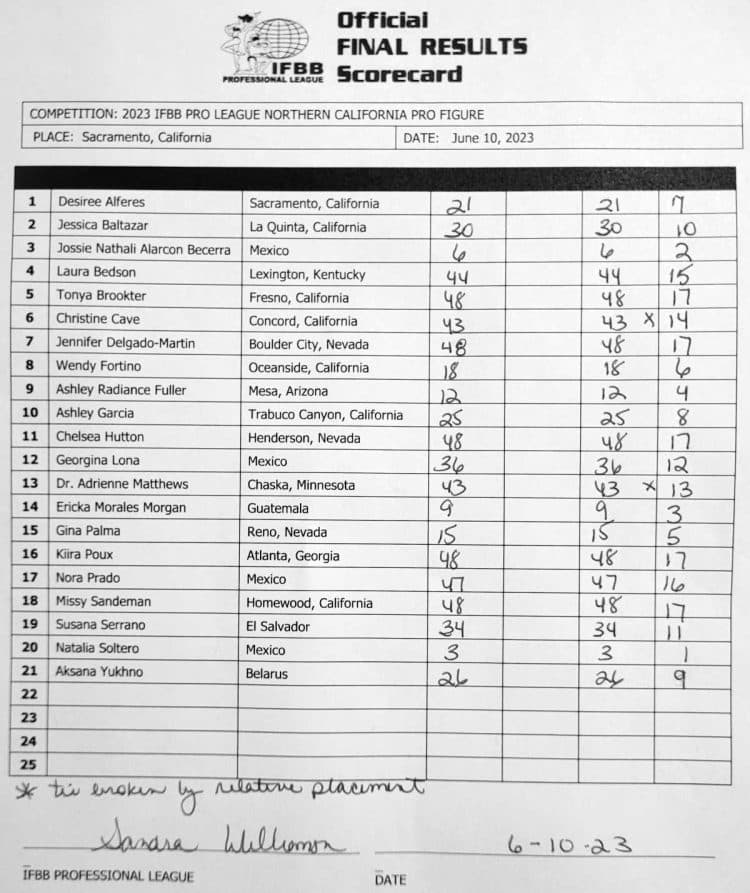
2023 Northern California Pro Figure Results
Winner — Natalia Soltero
Second Place — Jossie Nathali Alarcon Becerra
Third Place — Ericka Morales Morgan
Fourth Place — Ashley Radiance Fuller
Fifth Place — Gina Palma
Sixth Place – Wendy Fortino
Seventh Place — Desiree Alferes
Eighth Place — Ashley Garcia
Ninth Place — Aksana Yukhno
Tenth Place — Jessica Baltazar
2023 Northern California Pro Scorecard
2023 Northern California Pro Scorecard
Fitness Volt congratulates the winner!
Published: 11 June, 2023 | 2:17 PM EDT

Arnold Classic UK Set for Relaunch Under US-Based Management of Arnold Schwarzenegger
The Arnold Classic UK was founded by the organizers of the Arnold Sports Festival in 2021 after the Columbus, Ohio event got pushed back due to COVID-19 pandemic-related restrictions. In a recent post made on Instagram, the organizers of ASF announced the relaunch of Arnold Classic UK with the management of the US-based team under the ownership of Arnold Schwarzenegger.
Legendary bodybuilder Arnold Schwarzenegger dominated the IFBB Pro League Men’s Open division with his insane muscle mass, size, and symmetry in the 1970s. He triumphed at the Mr. Olympia contest in 1970 to secure his first Sandow trophy and went on to become a seven-time champion. He reached new heights in the sport and was the first competitor to break into the mainstream with his leading role in the bodybuilding docudrama Pumping Iron (1977) alongside fellow icon Franco Columbu.
Following a decorated career at the highest level, Schwarzenegger turned into a revered figure in the community. He teamed up with the late Jim Lorimer to found the Arnold Sports Festival, widely regarded as the second most prestigious fitness showcase in the world next to only the Mr. Olympia competition. Since the show’s inception in 1989, it has provided a platform for budding talent across bodybuilding, strongman, powerlifting, and more.
Bodybuilding veteran Rich Gaspari created history by winning the inaugural edition. The show often features athletes who go on to contend for the Mr. Olympia title. Legendary bodybuilder Jay Cutler and Dexter Jackson made a name for themselves with wins at the Arnold Classic before finding glory at Mr. Olympia.
Arnold Classic UK was held for the first time after the original event got delayed in the US in Oct. 2021. Men’s Open standout Nathan De Asha emerged as the first champion of the event and punched his ticket to the Mr. Olympia contest ahead of Samson Dauda.
For the second edition of the show, the organizers disclosed that Arnold Schwarzenegger would not be in attendance to crown the champion due to financial challenges related to prize money and his attendance fee in Sep. 2022. Without the man himself, the event was rebranded to Experience With Sports Festival UK.
ASF’s Brian Powers vocalized Schwarzenegger’s disappointment in the change of plans and pinned the blame on promoters failing to meet their financial commitments. Eventually, the IFBB Pro League and organization president Jim Manion stepped in to guarantee the prize money for the winners. Andrew Jacked came out on top of the 2022 Arnold Classic UK with Patrick Johnson taking silver and James Hollingshead rounding up the top three.
Arnold Classic UK set for a relaunch under US-based management of Arnold Schwarzenegger
In a recent Instagram post, the organizers of the Arnold Sports Festival announced the Arnold Classic UK is set to relaunch next year under the US-based management team of Arnold Schwarzenegger.
The 2024 Arnold Sports Festival UK is scheduled for Mar. 15-17 in Birmingham, England.
“The US-based management team is happy to announce the relaunch of the 2024 Arnold Sports Festival UK,” wrote the organizers. “Join us in Birmingham, England, March 15-17, 2024 as next years Arnold will boast the biggest names, brands and prize money in Europe — EVER.
“Having now said ‘hasta la vista’ to the event’s former ownership, brands can now expect reliable and responsible leadership from the US management team under the ownership of the man himself, Arnold Schwarzenegger.
Act swiftly to secure your spot now. It’s a chance to elevate your brand to new heights and leave an indelible impression on the fitness world.”
The 2023 Arnold Classic wrapped up with Samson Dauda taking home the top prize in Columbus three months ago.
With the Arnold Classic UK set to head in a new direction under the original team, regional fans will be excited to witness some of their favorite bodybuilders battle it out on stage in hopes of securing qualification for the Mr. Olympia show. Meanwhile, competitors might be better placed and not have to worry about the issues that plagued the previous edition.
Catch full coverage of the 2023 Arnold Classic, including pre-judging, event recaps, analysis, and final and full results at our Arnold Classic coverage hub: FitnessVolt.com/arnold-classic
Published: 11 June, 2023 | 12:15 PM EDT
4x Mr. Olympia Jay Cutler Shares Arm-Building Hypertrophy Workout
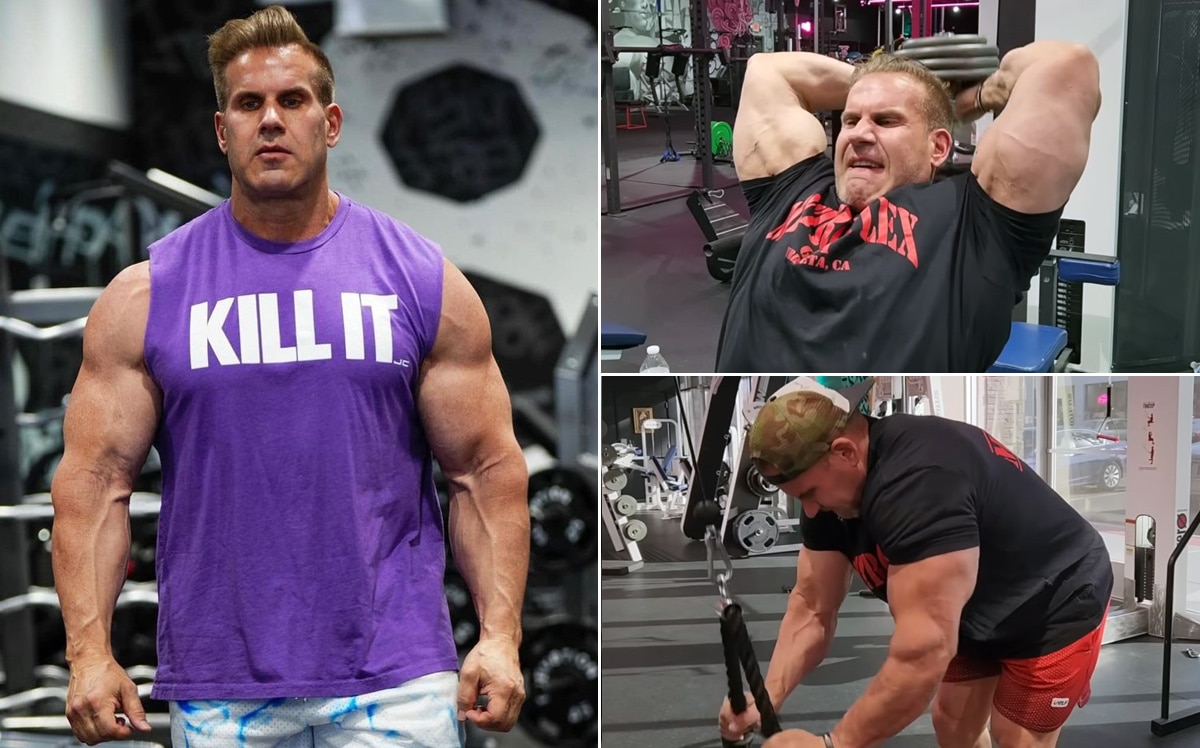
Jay Cutler’s workout intensity has seemingly ramped up judging from his latest training session. In a JayCutler TV YouTube video, Cutler smashed an eight-exercise arms workout focused on hypertrophy as he continues making strides toward a better physique.
During his respective tenure, Cutler set himself apart from his peers with massive arms, a full chest, and some of the most defined quads in the sport’s history. His consistency and grit guided him to an Olympia title in 2006 after he dethroned the eight-time champion Ronnie Coleman. Despite their rivalry, Cutler admits some of his workouts were inspired by Coleman’s high-volume heavy weight strategy.
Having sailed off into the sunset with four Mr. Olympia victories, Cutler remains one of the best to ever throw on a pair of posing trunks. Even though he hasn’t appeared on stage in 10 years, fans continue to call for his return. While he won’t compete on stage, Cutler has made it clear he’s transforming his physique before his 50th birthday.
Fortunately for fans, he’s documented the process. In addition to sharing training sessions, Cutler underlined why nutritional demands have been so crucial to his goal. And now with August approaching, Cutler shared an exhausting arm workout.
Jay Cutler Shares Arm Workout for Hypertrophy
1- Triceps Press Down – 2 or 3 warm-up sets, 3-4 working sets2- Triceps Extension Machine – 3 sets as many reps as possible3- Seated Overhead Dumbbell Extension – 3 working sets of 12 reps4- Rope Press Down – 3 sets 12 reps5- Machine Biceps Curl – 3 working sets 12 reps 6- Standing Dumbbell Curl (alternating) – 3 sets 12 reps7- Preacher Machine Curls – 3 sets8- Cambered Bar Curl (wider grip) – 4 sets
Following the arms training session, Jay Cutler discussed some of his workout habits and goals. He aims to weigh 250 pounds in eight weeks.
“That was my arm workout. I’m not trying to overdo it a lot, I’m really just trying to get the benefit of each workout, not trying to change the game. Anything I do now and moving the tissue around, moving the food through, I’m going to grow. And that is the goal. I would love to hit 250 by the time we get to eight weeks. And we’ll see where we’re going to end up. I’m about four meals deep today. I’m eating about six meals a day right now.”
And then at eight weeks out, I’ll evaluate and maybe I’ll start throwing in a little cardio exercise but I’ll tell you the cardio is going to be a lot different from the past because I’m going to stick to less intense cardio. I’m going to do more bike work, I don’t know if I’ll get on a step mill because I’m not necessarily trying to get striated glutes with this kind of come down with my body weight. But I’m kind of touch and see. Remember, I’m going for the best shape I’ve been in 10 years.”
Cutler clarified that his physique goal doesn’t involve being shredded. Instead, he plans to showcase a balance of fullness, hardness, and roundness.
“Now that means I’m going to be full, hard, and round. I’m not trying to get super shredded. Okay, on my birthday I’m actually going to be dried out, diuretics and everything else, I’m just going to be in a walk-around best shape. So, that means if I take my shirt off at a show which possibly could happen by the way, I’m going to look a lot better than I did on the original video.”
“What I’m trying to do is get the workouts in later so I can get the fullness and really, like I did in 2010 and 2011 when Hany kind of trained me and put me on this whole different mindset that you should train after if you want to come in bigger, you need to train later and have at least four meals. Your body performs better guys. If you’re trying to get bigger, you’ll stay home and focus on eating those meals and your output will be a little less so when you go to the gym you’re utilizing all those calories,” Cutler said.
This is far from Cutler’s first progress update regarding his ‘fit-for-50’ physique transformation. In a previous JayCutlerTV episode, Cutler argued against bulking up. He shared that his goal was to keep his metabolism guessing while becoming ‘bigger and leaner’ at the same time.
Cutler’s latest physique challenge is a testament to his determination and willpower. In the months to come, bodybuilding fans around the world hope to see him guest pose at the upcoming 2023 Masters Olympia contest, taking place in Cluj Napoca, Romania.
Watch the full video on the CutlerCast TV YouTube channel below:
RELATED:
Published: 11 June, 2023 | 10:45 AM EDT
What Is the Mediterranean Diet?
The diet industry has a problem – many of their eating plans are impossible to maintain for more than a few weeks. They’re too restrictive, unpleasant, costly, or complicated for long-term use.
As such, even if they work, most people quit them long before reaching their target weight or body fat percentage, regaining whatever weight they’ve lost soon after. This gives rise to the term yo-yo dieting, where your weight goes down but soon comes back up again.
Switching diets won’t help, as while the “flavor” may change, most share the same faults. Feelings of hunger and deprivation mean that no diet works for long. Some people become serial dieters, hopping from one restrictive plan to another, doomed to fail over and over again.
Dieters are often blamed for their inability to lose weight, with lack of willpower being the most common accusation. However, when a diet is so bad that you hate every (tiny, bland) meal you eat, only a sadist would stick with it for more than a few days! After all, food should be one of life’s pleasures, not a source of stress and unhappiness.
In most cases, it’s the diet and not the dieter that’s the problem.
The good news is there is a diet that’s much easier to stick to. It’s not as radical as keto or restrictive as intermittent fasting, but that’s what makes it different – and better.
So, in this article, we take a look at the Mediterranean diet. It could be the last eating plan you ever need!
What is the Mediterranean Diet?
The Mediterranean diet is based on the foods traditionally eaten in the countries that border the Mediterranean Sea, including Portugal, coastal France, southern Spain, southern Italy, Crete, and much of Greece.
The populations in these countries have lower incidences of heart disease and other common illnesses and diseases, and the Mediterranean diet is often promoted as one of the best in the world. People who eat a Mediterranean diet generally live longer and are healthier than people who eat a standard American or Western diet (1).
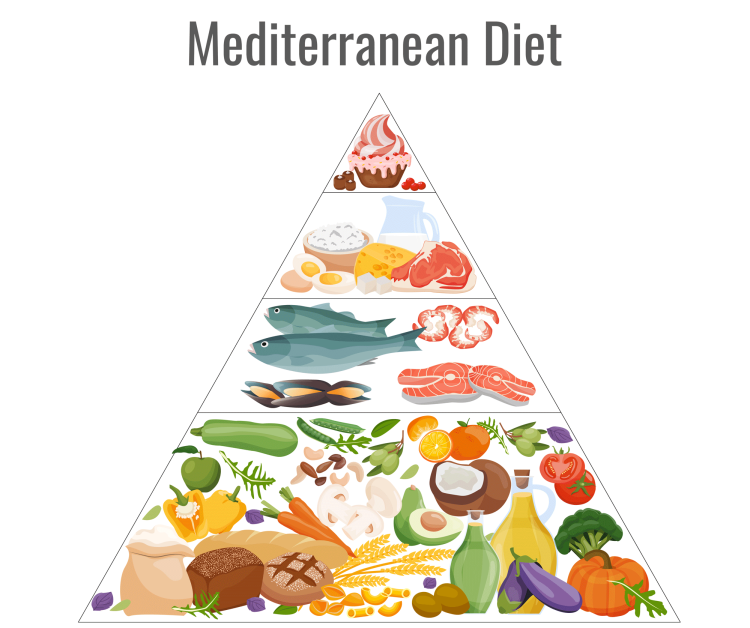
While there is no set Mediterranean diet menu to follow, it typically promotes the consumption of:
Fruits
Vegetables
Whole grains
Legumes
Nuts and seeds
Unprocessed dairy
Lean proteins, especially fish and chicken
Heart-healthy fats and oils
Herbs and spices
In contrast, foods that should be eaten rarely or in small amounts include:
Processed foods
Refined grains, e.g., white bread, white pasta, white rice, etc.
Red meat
Added sugars
Alcohol
There is also an emphasis on preparing food yourself, using fresh seasonal ingredients, and eating mindfully rather than rushing your meals or eating on the go. Like life in a Mediterranean country, this is a lifestyle and not just another restrictive diet.
The Potential Benefits of the Mediterranean Diet
Changing your eating takes time, energy, and effort, so you’ll want to know the benefits before you start; is the Mediterranean diet worth following?
Here are the main potential benefits of the Mediterranean diet:
Protection against heart disease
Heart disease is one of the leading causes of death in developed countries. It is characterized by the narrowing of cardiac arteries and poor blood supply to the heart. Linked to diet and lifestyle factors, heart disease can cause heart attacks, strokes, hypertension, and premature death.
The grains, vegetables, and healthy oils in the Mediterranean diet are believed to offer a lot of protection against heart disease and other conditions of the circulatory system (2). Olive oil, a Mediterranean diet staple, is considered to be especially heart-healthy.
Reduced risk of diabetes
Diabetes is a disease where the body cannot metabolize carbohydrates and sugar properly. This causes a rise in blood glucose levels which can cause damage to almost everywhere blood flows, including the heart, kidneys, extremities, eyes, and sensory nerves. People with diabetes risk dying prematurely, even if the condition is well managed.
There are two types of diabetes – type one and type two. Type one diabetes is an idiopathic autoimmune disease of the pancreas that causes too little insulin to be produced. It is often inherited but can develop when type two diabetes is mismanaged.
In contrast, type two diabetes is usually caused by a poor diet and sedentary lifestyle. In type two diabetes, the cells become insulin resistant, so blood glucose levels remain dangerously high.
While type one diabetes is currently incurable, the low-sugar Mediterranean diet will make it easier to manage. It could also help prevent type two diabetes from developing (3).
Reduced risk of cancer
Cancer incidence is statistically lower in people living within the Mediterranean region. The rate of cancer survival is also significantly higher. Studies have shown a strong link between the Mediterranean diet and a lower risk of death from many types of cancer (4).
Protection against cognitive decline
Age-related cognitive decline is a growing problem, and rates of dementia and Alzheimer’s disease are on the rise. Symptoms are developing earlier and are becoming more severe in many countries.
That said, the Mediterranean diet looks promising for minimizing and even preventing age-related cognitive decline and is as brain-friendly as it is heart-friendly (5). This is due to the high nutrient value of the core foods plus the anti-inflammatory effect of ingredients such as olive oil.
Weight loss and weight control
While any diet that creates a caloric deficit will result in weight loss, studies suggest that the Mediterranean diet could be one of the best long-term weight management diets around (6). This is because it’s not overly restrictive, meals are filling and tasty, and many of the foods are low in calories.
In short, the Mediterranean diet takes the pain out of dieting, and you’re more likely to want to follow it and stick to it for extended periods.
A longer life
With all its known health benefits, it should be no surprise that the Mediterranean diet could help you live longer (7). Numerous studies have shown that people in rural Mediterranean countries live longer, healthier lives than their American counterparts.
Of course, other factors also influence longevity, such as exercise, medical history, health care, stress, etc., but it seems that if you want to live a long, healthy life, the Mediterranean diet could help. The Mediterranean region contains several so-called “Blue Zones,” where people have the longest lifespans, including Sardinia in Italy and Ikaria in Greece.
How to Follow the Mediterranean Diet
There is no set plan to follow for the Mediterranean diet, but this table offers some guidelines:
1
Eat more:
Vegetables, fruits, nuts, seeds, legumes, potatoes, whole grains, herbs, spices, fish, seafood, and extra virgin olive oil
2
Consume in moderation:
Poultry, eggs, cheese, yogurt, red wine*
3
Eat less or avoid:
Red meat, sugar-sweetened beverages, added sugars, processed meat, refined grains, other highly processed foods, beers, and liquors
* Drinking red wine is optional, and you don’t have to start drinking it if you don’t want to.
Base your meals on the following foods and ingredients, adjusting portion sizes as required:
Dairy: cheese, yogurt, milk
Eggs: chicken, quail, and duck eggs
Fish and seafood: salmon, sardines, trout, tuna, mackerel, shrimp, oysters, clams, crab, mussels
Fruits: apples, bananas, oranges, pears, strawberries, grapes, dates, figs, melons, peaches
Healthy fats: extra virgin olive oil, olives, avocados, and avocado oil
Herbs and spices: garlic, basil, mint, rosemary, sage, nutmeg, cinnamon, pepper
Legumes: beans, peas, lentils, pulses, peanuts, chickpeas
Nuts, seeds, and nut butters: almonds, walnuts, macadamia nuts, hazelnuts, cashews, sunflower seeds, pumpkin seeds, almond butter, peanut butter
Poultry: chicken, duck, turkey
Vegetables: tomatoes, broccoli, kale, spinach, onions, cauliflower, carrots, Brussels sprouts, cucumbers, potatoes, sweet potatoes, turnips
Whole grains: oats, brown rice, rye, barley, corn, buckwheat, whole wheat bread, and pasta
Meanwhile, you should avoid the following while on the Mediterranean diet:
Added sugar: added sugar, candies, ice cream, table sugar, syrup, and baked goods
Highly processed foods: fast food, convenience meals, microwave popcorn, granola bars
Processed meat: processed sausages, hot dogs, deli meats, beef jerky
Refined grains: white bread, pasta, tortillas, chips, crackers
Trans fats: found in margarine, fried foods, and other processed foods
Drinks to include:
Water
Coffee and tea, but with limited sugar or cream
Small to moderate amounts of red wine, and only to complement a meal
Fresh fruit juices without added sugar
Drinks to limit or avoid:
Beer and hard liquor
Sugar-sweetened beverages, such as sodas, which contain a lot of added sugar
Fruit juices with added sugar
High-sugar coffee or tea-based drinks
Armed with all this information, you should have no problem creating delicious, nutritious, healthy Mediterranean meals. But, to get you started and maybe give you some ideas and inspiration, here is a sample one-day menu. Adjust the portion sizes to meet your nutritional needs.
Breakfast: Natural Greek yogurt and diced fresh strawberries, topped with chopped walnuts and raw honey.
Lunch: Wholegrain tuna sandwich with hummus and raw vegetables, e.g., carrot sticks, cucumber, sliced tomato, etc.
Dinner: Grilled chicken breast with a large green salad, olive oil, balsamic vinegar, mixed seeds, and wholegrain pitta bread.
Snacks: Fresh fruit, e.g., apples and bananas, tuna or salmon pouches, raw nuts, peanut butter and celery sticks, or mixed raw nuts and seeds.
Mediterranean Diet FAQs
Do you have a question about the Mediterranean diet or healthy eating in general? No problem, because we’ve got all the answers!
1. Is the Mediterranean diet a weight loss diet?
The Mediterranean diet is not specifically a weight loss diet. Instead, it’s more of a healthy way of eating. That said, you can use it for weight loss, and it’ll probably be very effective for this purpose.
To lose weight with the Mediterranean diet, you must ensure you have a calorie deficit and combine your diet with some regular workouts to speed up fat loss. Most people will lose 1-2 pounds a week with a 500-1000 calorie daily deficit.
The foods in the Mediterranean diet tend to be tasty, nutritious, and filling, so the eating plan lends itself well to weight loss.
2. Does the Mediterranean diet contain enough protein to support muscle building?
While protein is NOT a staple of the Mediterranean diet, that doesn’t mean you can’t get enough to support muscle building. It’s generally accepted that most exercisers need about 0.7 to 1.0 grams of protein per pound of body weight. Consuming more fish, chicken, eggs, nuts, beans, and dairy will ensure you get enough of what you need.
Tip: Determine your protein requirements with this easy-to-use calculator.
3. How long does the Mediterranean diet supposed to last?
Unlike many diets, which are designed for a week or a month, the Mediterranean diet can be used for as long as you want – even forever. After all, entire populations follow variations of the Mediterranean diet every day of their lives. To them, it’s just food!
So, don’t think of the Mediterranean diet as a short-term health fix or weight loss plan. Instead, adopt it as your new way of eating for the foreseeable future. The longer you stay on the Mediterranean diet, the more significant its effects will be.
4. Am I allowed cheat days on the Mediterranean diet?
The Mediterranean diet is not overly structured or restrictive. It’s more like a list of sensible and sustainable nutritional principles and guidelines, so no food is actually banned. Instead, just build most of your meals around the nutritious foods available in the Mediterranean region.
Does that mean you can’t have the occasional cheat meal or sweet dessert? Of course not!
However, if you want to be healthy and maintain or lose weight, you should keep your cheats to a minimum, eating healthily 90% of the time.
So, assuming you eat 28 meals and snacks a week (three meals and one snack per day), you can safely allow yourself 2-3 modest-size cheats without derailing your diet.
5. Is there a workout to go with the Mediterranean diet?
While there is no official Mediterranean workout, one of the countries in the Mediterranean region, Greece, gave us calisthenics. So, while any workout will multiply the effects of the Mediterranean diet, bodyweight training could be the most authentic workout to combine with this healthy eating plan.
People in the rural Mediterranean region also walk a lot, so clocking up 10,000 steps or more per day will also be beneficial.
Related: How to Walk For Fitness and Fat Loss
Mediterranean Diet – Closing Thoughts
There is no single, official Mediterranean diet. Instead, it’s a set of general nutritional guidelines based on how people living in the Mediterranean region eat. High in seasonal vegetables and fruits, whole grains, lean proteins, and healthy fats and oils, it’s one of the most heart-friendly diets in the world and is strongly linked to increased longevity.
The Mediterranean diet is not prescriptive or restrictive, and the foods are filling and nutritious. Eating like a Mediterranean resident probably won’t feel like a diet at all!
That said, if you want to lose weight with the Mediterranean diet, you’ll still need to control your portion sizes and watch your calorie intake. A calorie deficit is a must for any successful weight loss plan. However, Mediterranean diet meals tend to be satisfying and filling, so hunger shouldn’t be such a problem.
So, if you want to eat for better health and weight loss and don’t want an eating plan you’ll probably quit in a week, give the Mediterranean diet a try. Unlike almost every other diet, it’s designed for long-term use.
References:
Lăcătușu CM, Grigorescu ED, Floria M, Onofriescu A, Mihai BM. The Mediterranean Diet: From an Environment-Driven Food Culture to an Emerging Medical Prescription. Int J Environ Res Public Health. 2019 Mar 15;16(6):942. doi: 10.3390/ijerph16060942. PMID: 30875998; PMCID: PMC6466433. https://www.ncbi.nlm.nih.gov/pmc/articles/PMC6466433/
Huedo-Medina TB, Garcia M, Bihuniak JD, Kenny A, Kerstetter J. Methodologic quality of meta-analyses and systematic reviews on the Mediterranean diet and cardiovascular disease outcomes: a review. Am J Clin Nutr. 2016 Mar;103(3):841-50. doi: 10.3945/ajcn.115.112771. Epub 2016 Feb 10. PMID: 26864357. https://pubmed.ncbi.nlm.nih.gov/26864357/
Dinu M, Pagliai G, Casini A, Sofi F. Mediterranean diet and multiple health outcomes: an umbrella review of meta-analyses of observational studies and randomized trials. Eur J Clin Nutr. 2018 Jan;72(1):30-43. doi: 10.1038/ejcn.2017.58. Epub 2017 May 10. PMID: 28488692. https://pubmed.ncbi.nlm.nih.gov/28488692/
Morze J, Danielewicz A, Przybyłowicz K, Zeng H, Hoffmann G, Schwingshackl L. An updated systematic review and meta-analysis on adherence to Mediterranean diet and risk of cancer. Eur J Nutr. 2021 Apr;60(3):1561-1586. doi: 10.1007/s00394-020-02346-6. Epub 2020 Aug 8. PMID: 32770356; PMCID: PMC7987633. https://www.ncbi.nlm.nih.gov/pmc/articles/PMC7987633/
Petersson SD, Philippou E. Mediterranean diet, cognitive function, and dementia: a systematic review of the evidence. Adv Nutr. 2016 Sep 15;7(5):889-904. doi: 10.3945/an.116.012138. PMID: 27633105; PMCID: PMC5015034. https://www.ncbi.nlm.nih.gov/pmc/articles/PMC5015034/
Poulimeneas D, Anastasiou CA, Santos I, Hill JO, Panagiotakos DB, Yannakoulia M. Exploring the relationship between the Mediterranean diet and weight loss maintenance: the MedWeight study. Br J Nutr. 2020 Oct 28;124(8):874-880. doi: 10.1017/S0007114520001798. Epub 2020 May 21. PMID: 32436489; PMCID: PMC9105806. https://pubmed.ncbi.nlm.nih.gov/32436489/
Martinez-Gonzalez MA, Martin-Calvo N. Mediterranean diet and life expectancy; beyond olive oil, fruits, and vegetables. Curr Opin Clin Nutr Metab Care. 2016 Nov;19(6):401-407. doi: 10.1097/MCO.0000000000000316. PMID: 27552476; PMCID: PMC5902736.
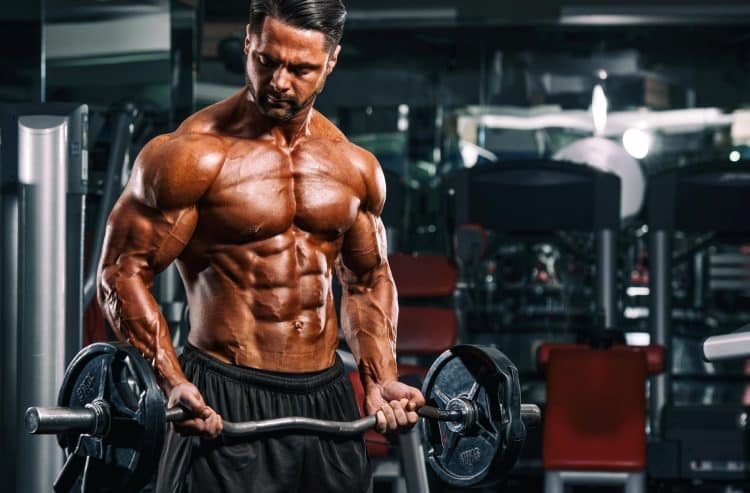
28 Day Workout Challenge: Get Fit, Feel Powerful, and Unlock Your True Potential
Irrespective of your experience level, fitness challenges are a great tool for leveling up. Beginners can use challenges to kickstart their fitness journey and build healthy habits, whereas more advanced athletes can use them to break through plateaus.
However, there are a few common problems with most fitness challenges. Some challenges are so overly ambitious that people detect a hint of deception and refrain from embracing them; ‘Build six-pack abs in seven days’ is one example of such a fitness challenge. On the other hand, some fitness challenges are so excessively fixated on results that they repel exercisers; for instance, no beginner (in their right mind) will ever sign up for a “Learn to squat 315 pounds in 30 days” challenge.
Process goals should be the way to go for most people, especially beginners. Process goals are milestones that comprise smaller, controlled accomplishments that help you achieve a larger objective. “Hit the gym six days a week for 28 days” is a process goal. Most beginners will be more receptive to this objective as there are no overwhelming expectations here. We will focus on a process goal in this program.
The 28 day workout challenge will help you kickstart your transformation journey and get fitter, faster, and healthier. This training program includes a balance of strength, hypertrophy, and conditioning exercises to help you get in the best shape of your life and improve your overall functioning.
The following 28-day workout regime is broken into four weeks. The programming for each week will change to help you build a well-rounded physique. You will require a pair of light dumbbells and an iron grit for this program.
Although this is a challenge, the objective here is not to bench 225 pounds or run 5K at the end of these 28 days. The test is to stick to the workout regimen for 28 days and do your best. The results will follow. I promise.
Prerequisites For The 28 Day Workout Challenge
The benefits of an exercise program go far beyond improved aesthetics. Following a training regime can boost your overall health and mental well-being, enhance your daily functioning and heighten your productivity. [1]
Since this is a beginner-friendly workout challenge, the barriers to entry are shallow. Here are a few requirements of the 28 day workout challenge:
Experience
You don’t need to know every exercise in the Encyclopedia of Modern Bodybuilding to start this exercise program. That said, it would make a world of difference if you knew how to perform some of the most basic compound movements correctly.
If you are a rookie, I recommend turning this four-week program into a five-week program and using the first week to learn the exercises in this program. I will link each exercise to a detailed guide. Please feel free to explore those guides to drill the movements. Learning the correct exercise technique improves your exercise form and significantly reduces your risk of injury.
Basic Equipment
Don’t worry; I won’t ask you to drop a bundle on a squat rack or a treadmill. This 28 day workout challenge requires minimum training equipment, such as a pair of dumbbells and a resistance band. You can also switch the dumbbells with kettlebells if you have a few lying around your house.
People that lack the budget to buy new training equipment can use water jugs, backpacks, and suitcases. Think outside the box and use anything in your home to challenge yourself.
Diet and Recovery
Although training is a crucial aspect of building muscle and losing fat, it is not the be-all and end-all of a transformation program. You must focus on your nutrition and recovery program to make the needle budge in the right direction.
Begin by determining your daily calorie goal and using an appropriate macro intake target to help you move toward your body recomposition objective. Further, you must sleep seven to eight hours each night to allow your body enough time to rest and recuperate from your workouts.
Remember, you cannot outwork a bad diet, and you break muscle tissue while training. Your muscles grow back bigger and stronger when you are resting.
28 Day Workout Challenge Program Outline
Burning workouts are one of the most common reasons why people give up on their transformation journey without achieving their objective.
This 28-day workout program is different. This training regimen is programmed to ensure the exercises deliver enough stimulus to build strength and muscle mass and boost fat loss and will keep you on your toes with consistent volume and intensity changes over the four weeks.
Outline of the 28 Days Workout Program
Although the exercises will remain the same in this four-week workout challenge, you will perform a different number of reps and sets and use different weights (if possible) to boost muscle fiber stimulation. It will help you drill the form of these exercises, which will set you up for better performance down the line.
If you are a rookie, you should spend the first week, let’s call it “Week 0,” learning the correct exercise form and building a foundation. Although one week will probably not be enough to drill the movements, it will be enough to make you feel comfortable. Since you’ll not be using heavy weights in this 28 day workout challenge, these four weeks will also help you master the exercises without putting you at risk of injury.
Without any further ado, here is a brief outline of this four-week workout challenge:
Week 1: Build a Foundation
We will use the first week to ease into the 28 day workout challenge. Week one is not the time to go pedal to the metal. You want to keep muscle soreness to a minimum, as you don’t want to sit out of a workout because of restricted joint and muscle range of motion due to stiffness. Avoid lifting heavy and focus on familiarizing yourself with the exercises.
Week 2: Increase the Reps
You will increase the intensity slightly in the second week by ramping up the number of reps you perform in each exercise. Limit the rest time between sets and exercises to 60 seconds to keep your heart rate up. Doing more sets with the same weights as week one should result in better muscle pumps.
You will remain in the 8-12 rep range in the first, third, and fourth weeks. However, you must bump up your reps to 15-20 in the second week. You might have to use lighter weights to achieve the new rep goal.
Week 3: Lift Heavier
Two weeks of training will improve your form and develop muscle memory, making it the right time to go heavier. If you train at home and want to purchase dumbbells, I recommend getting adjustable ones, as they are more versatile and take up less space. Folks that do not have heavier weights can get creative with resistance bands to make the exercises more challenging.
Beginners can go up to 20% heavier in the third week. Ensure you don’t compromise your form while chasing bigger weights. Use a weight that allows you to complete eight reps with perfect form. Feel free to reduce the reps to six as fatigue starts to set in.
Week 4: Boost the Volume
Three weeks of training will condition your muscles enough to handle more volume. For the fourth week, you will increase the training volume by doing an additional set of each exercise. Plus, we will be adding one exercise to each workout. Following the same training program for too long can lead you to a plateau. Programming progressive overload into your training regimen ensures you are making consistent gains.
28 Day Workout Challenge: Weekly Split
Here is the weekly split of this training challenge:
Day 1: Upper Body Strength
Day 2: Full-Body HIIT
Day 3: Lower Body Strength
Day 4: Rest
Day 5: Full-Body Strength
Day 6: Cardio and Core
Day 7: Mobility and Skill / Rest
This 28 day workout challenge involves training six days a week. Although the seventh day of the week is reserved for mobility and working on developing new skills, you can also use it as a rest day if you feel sore.
Workout Plan
Although the exercises will remain the same week-over-week, keep an eye on the sets and reps and adapt your workouts according to the weekly outline described above.
Day 1: Upper Body Strength
You can swap the dumbbells with resistance bands in each exercise in this workout. Furthermore, if you don’t have access to a flat bench, you can swap the first exercise of this workout with the dumbbell or resistance band floor press.
Day 2: Full-Body HIIT
After the upper body strength workout, you will perform a full-body HIIT workout focusing on increasing your heart rate and burning calories. This will be a 14-minute bodyweight workout. Complete three circuits of these seven exercises. You are allowed a 15-second rest between exercises and a 60-second rest after completing each circuit.
Feel free to break up your sets if you cannot perform an exercise for the stipulated time. For example, take a five-second breather if you cannot perform pull-ups continuously for 30 seconds.
Perform four circuits of this full-body HIIT workout in the fourth week.
Day 3: Lower Body Strength
Spend 5-10 minutes warming up before each workout. It will get your blood flowing, improve your range of motion, and significantly reduce your risk of injury. Your warm-up routine should include a combination of static and dynamic stretches.
Day 4: Rest
Rest days on this 28 day workout challenge are not a free pass to becoming a couch potato. You must keep your body moving on your rest days as well. Go for a 20-30 minute walk, bike ride, or hike on your off days.
Day 5: Full-Body Strength
Most exercises in this workout program are compound movements, which demand greater energy input than single-joint exercises. However, you must limit your rest duration between sets to 60 seconds to maintain a high intensity.
Day 6: Cardio and Core
You’ll be doing a 15-minute HIIT cardio session and five core exercises on day six of this training program. Training your core will help develop a six-pack, improve your overall functionality, and reduce your risk of lower back pain and injury.
Day 7: Mobility and Skill / Rest
The seventh day of each week is reserved for mobility drills. Working on your flexibility will improve your range of motion, leading to greater muscle stimulation. You can also use this day to drill exercises you have difficulty performing. CrossFitters can work on their Olympic lifts or gymnastics techniques on day seven. Feel free to take this day off if you feel sore and tired.
Tracking Progress
Twenty-eight days is a relatively short time to see any significant improvement in your physique. However, you must track your progress weekly to ensure you are on the correct path. Recording body weight, anthropometric measurements, workout performance (sets, reps, and weights used), and taking physique photos are the most popular ways of tracking your progress. Seeing the needle budge in the right direction can boost your motivation and push you to work harder.
Common Obstacles
These are the most common problems faced by people on a transformation program:
Diminishing Motivation
Many people lose their motivation to train and eat healthy when they do not see progress within a few weeks. To avoid this, set measurable short-term objectives. For example, you can set a new goal to do 20 sit-ups in a set by the end of two weeks if you can only do 15 right now. Routinely ticking off goals will keep you excited about your workouts.
Lack of Support
The importance of a support system is often overlooked in a training program. A support system can keep you accountable and motivated. A support group consisting of individuals who share common goals can be invaluable. Your friends and family can also be a part of your support group.
Unplanned Events
Major life events, emergencies, and other unplanned events can disrupt your workout program. Some of these events are unavoidable. However, you must ensure that you return to your transformation program after dealing with the situation at hand.
Frequently Asked Questions
How to lose weight?
Losing weight boils down to calories in vs. calories out. You must be in a calorie deficit to lose weight, meaning you must burn more calories daily than you consume. According to the CDC, you can lose 1-2 pounds weekly by cutting 500-1,000 calories from your daily diet. [2]
Can I build a six-pack in 28 days?
Technically, yes, you can. If you have a low body fat percentage, you can improve the definition of your six-pack by performing ab exercises. However, folks with a body fat percentage of 20% or more usually require more than a month to build washboard abs, as they must first lose the excess fat by running a calorie deficit.
Is it possible to spot-reduce belly fat?
No. You cannot spot-reduce fat from your abdomen. Most people lose fat in a generalized manner across their entire body while in a calorie deficit. Genetics can also play a role in your fat loss pattern.
Note: The content on Fitness Volt is for informative purposes only and should not be taken as medical advice to diagnose, prevent, or treat health problems. If you’re suffering from a health issue, are pregnant, or are under 18 years old, you should consult your physician before starting any new supplement, nutrition, or fitness routine.
Wrapping Up
Congratulations on seeking a challenge. Following a 28 day workout program requires you to leave your comfort zone, try new things, and test your limits. You should be proud of yourself for making this decision to explore your potential and work toward your best self.
Remember, the challenge here is not to build a six-pack in record time or maximize your VO2 performance. This 28 workout challenge has just one goal — hit the gym for four weeks and complete your workouts. Give yourself a pat on the back after you complete this challenge. On the other hand, don’t hang your head low if you can’t achieve this objective for some reason. Shake off the unpleasant emotions and try again. Best of luck!
References
Ruegsegger GN, Booth FW. Health Benefits of Exercise. Cold Spring Harb Perspect Med. 2018 Jul 2;8(7):a029694. doi: 10.1101/cshperspect.a029694. PMID: 28507196; PMCID: PMC6027933.
Centers for Disease Control and Prevention. (2021). Losing Weight. Retrieved from https://www.cdc.gov/healthyweight/losing_weight/index.html
2023 Northern California Pro Scorecard
/* custom css */
.tdi_86{
color: #eaeaea;
}IFBB PROFESSIONAL LEAGUE®, IFBB PRO LEAGUE®, IFBB PRO® and the IFBB Professional League logo are registered trademarks owned by the IFBB Professional League.The IFBB Professional League logo cannot be altered in any way, shape or form without the expressed written approval of the IFBB Professional League. Where such approval is granted, the IFBB Professional League will provide the altered logo.© 2022 IFBB Pro, All Rights Reserved.