
 All Posts By Muscle Insider
Board Certified PHD
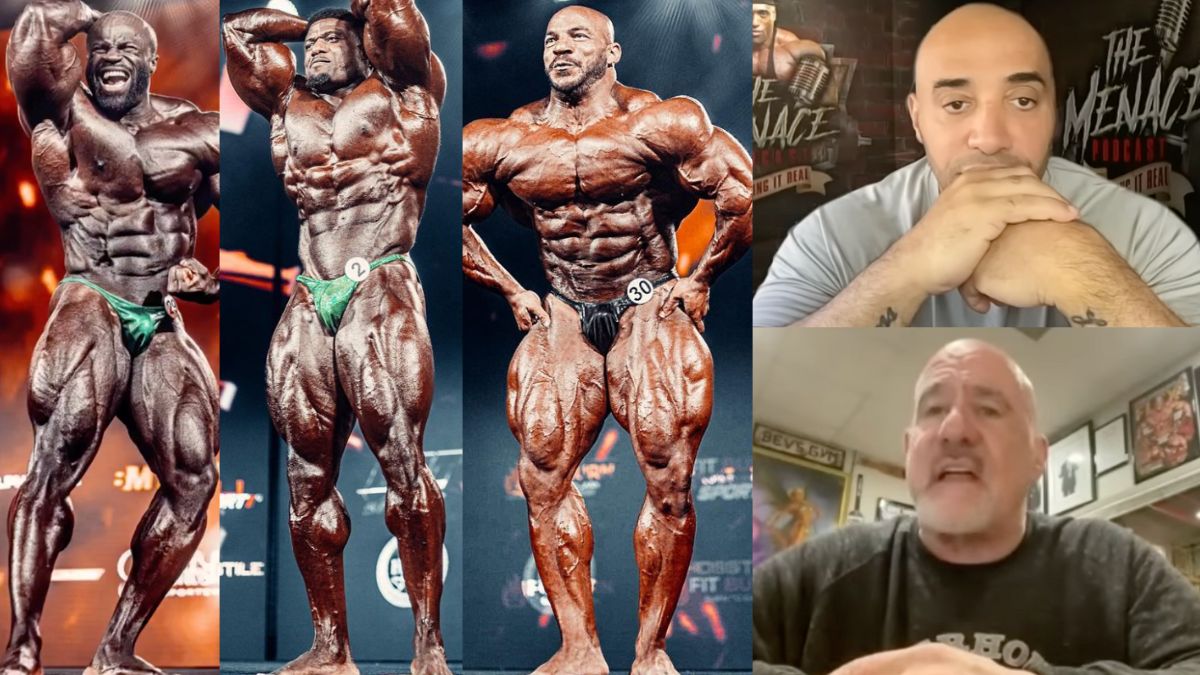
Steve Weinberger Lays Out 2023 Mr. Olympia-Winning Advice for Big Ramy, Samson Dauda & Andrew Jacked
The 2023 Mr. Olympia contest is approaching in less than six months, prompting IFBB head judge Steve Weinberger to discuss the possible lineup. In a recent The Menace Podcast with Dennis James, Weinberger assessed Mamdouh ‘Big Ramy’ Elssbiay‘s future and laid out paths to victory for Andrew Jacked and Samson Dauda.
Last year, the Mr. Olympia competition turned the Men’s Open division on its head. Elssbiay was unable to defend successfully despite his status as an overwhelming favorite. The finals were determined following a three-man battle between Hadi Choopan, Derek Lunsford, and Nick Walker. In the end, the completeness of Choopan’s physique stole the show. His victory ignited discussions online about which direction the Men’s Open division was headed, given that a mass monster no longer held the crown.
Since Ramy’s fall from the top, Steve Weinberger has been open with the public about what went wrong for the former champ. According to Weinberger, Ramy appeared to be suffering from injuries on stage as his lats, back, and arms looked to have lost detail.
In March, competitors gathered in Columbus, Ohio for the 2023 Arnold Classic. After finishing fifth at the Olympia contest last December, Big Ramy was eager for redemption. While many in the sport thought he delivered a refined package, the judges once again saw Ramy outside of the podium in fourth. Meanwhile, Samson Dauda won the 35th Arnold Classic title.
With shake-up after shake-up, fans expect another unpredictable Mr. Olympia contest. Athletes are either eying their tickets to the show or already amid preparations. Weinberger, who serves as one of the busiest judges in the league, took a breather to offer insight on many of the top contenders targeting gold in November.
Steve Weinberger Breaks Down Physiques of Hadi Choopan, Big Ramy, Samson Dauda, Andrew Jacked: “Previous Doesn’t Mean Anything”
Weinberger first clarified that athletes aren’t judged based on the physiques they brought to previous contests.
“Absolutely not, they can look great a year ago, it matters what you look like on that date at that moment. Previous doesn’t mean anything. Look at Big Ramy, look at what happened there at the Olympia, it does not matter. You can look like shit next week or that week but on that day if you look good, you’re good to go,” Steve Weinberger said.
He explained that Choopan had a ‘few problems’ with his physique in 2021 compared to last year when he presented his most complete package to date.
“In 2021, he [Hadi Choopan] had a few problems with his physique. He was harder in 2021, but he was a more complete package in 2022. He had a couple of problems in 2021, you know what they were.”
Given Ramy’s last two performances, Steve Weinberger says it would be best if the Egyptian native took some time off. While he doesn’t believe Ramy is finished, he shared that the former champ’s shoulders, arms, and back need improvements. In addition, he underlined that Ramy’s oversized legs are disproportionate to the rest of his body.
“He was here all week training. We had a talk right after the Olympia, we had a talk even during this last previous week. I think he might need a break honestly and he needs to leave his legs alone. His legs are way out of proportion. His back still has to come up and his shoulders and arms… look like they deflated a little bit. He really did not look good in Pittsburgh. I think he might need some time honestly. Maybe a year to step away. I don’t think he’s done. I think he needs a break, I really do,” Weinberger said.
Dennis James said Ramy took a break from training recently following a stem cell treatment. Weinberger suggested Ramy take a break from dieting and ‘hardcore’ training in the meantime. A few weeks ago, Ramy shared that he was training ‘angry’ and focused on winning back his title.
“I asked him and said ‘Are you going to do the Olympia this year?’ He said, ‘I don’t know, I have to stop training, I start training again in two weeks’ when they allow him to start training and he’ll see how his body responds” Dennis James said.
“He might need a break honestly,” suggested Weinberger. “Like I mean, not dieting, hardcore training, put that mask back on and then bring it back down. More than two months I mean. Because if he’s getting ready for the Olympia now, what’s he got, three months to really train, and then he has to start his diet.”
“He can’t take it easy. He’s got to train his ass off for a year. I don’t mean sit by the pool and have a margarita, I mean get in the gym and bust ass,” added Weinberger.
Even though many in the community thought Ramy improved at the 2023 Arnold Classic, Steve said Ramy looked the same or worse. Similar to Mr. Olympia, Steve thought Ramy’s size ‘was gone’ in Ohio.
“He didn’t really look any better at the Arnold to tell you the truth. I don’t think so, no. It was also different guys too but I don’t think he looked better,” said Weinberger. “His size was gone too. I didn’t think he was [bigger] at the Arnold. The legs are always big. The legs are never a problem for Ramy. He doesn’t even have to train Ramy. I’m talking about his upper body.”
Steve Weinberger is convinced the sport won’t see another highly-dominant Mr. Olympia again like Ronnie Coleman.
“Those days are over. I don’t think we’re ever going to see an eight-time Mr. Olympia again or a seven-time or even a six-time, I could be wrong but I don’t see it. There’s no one I see that’s dominating that’s going to dominate like that.”
Lastly, Weinberger laid out paths to Mr. Olympia victories for Samson Dauda and Andrew Jacked. He predicted Dauda will break into the top three in November with back improvements.
“He has to really keep this same size, improve the back and dial it in just a little bit harder. He has Mr. Olympia potential. I would be surprised if he wasn’t a runner for the top three, including one, second and third. He really just needs to pick [up] that back.”
“He [Samson Dauda] needs conditioning and more back,” added Weinberger. “Great hamstrings. Great shape. At Pittsburgh he wasn’t sloppy, he was pretty good. Absolutely, he’s got a beautiful body and a lot of muscle.”
As for Jacked, Weinberger said he’ll be in the running for gold once he brings up his lower body.
“Andrew Jacked’s got to build those legs up. He’s got the frame to do it but that lower half has to get built. If he had legs like Ramy, I don’t know what would happen. The Arnold he was flat”
Despite his success in the IFBB Pro League recently, Andrew Jacked has yet to earn an invite to the Mr. Olympia contest taking place Nov. 2-5 in Orlando, Florida. Jacked is currently preparing for his first title defense at the 2023 Texas Pro, which is coming up in August.
The Mr. Olympia contest is always a thrilling spectacle for fans, who are eager to see if Choopan can defend his title. As Steve Weinberger points out, becoming a dominant reigning Mr. Olympia champion is no easy feat.
RELATED: Big Ramy Says He’s Training ‘Angry,’ & Working Harder Than Anybody for 2023 Mr. Olympia
You can watch the full YouTube video from the Muscle and Fitness channel below:
Published: 29 May, 2023 | 12:10 PM EDT

2023 CrossFit North America West Semifinal Results — Pat Vellner & Alex Gazan Shine
The 2023 CrossFit Semifinals are coming to a close, with the second week witnessing three additional competitions held in North America, South America, and Oceania. The biggest out of the three was the 2023 CrossFit North America West Semifinal, as the action happened in Pasadena, CA, on May 25-28. Due to the stacked roster of this Semifinal, CrossFit has given 10 women’s qualifying spots, and nine men’s qualifying spots for the CrossFit Games.
The 2023 CrossFit North America West Semifinal saw incredible battles in all divisions, especially amongst the Teams. The win in the men’s division went to Patrick Vellner, while Alex Gazan topped the women’s leaderboards. The Teams came down to a tie-breaker where CrossFit Franco’s Misfits took gold.
2023 CrossFit North America West Semifinal Leaderboards
Men
Patrick Vellner got off to a rocky start with a 15th place finish on the first event, but his performances in all other events were absolutely impeccable. He won two events and placed third in additional two events as well. Patrick ended up with almost a 50 point lead ahead of the second place finisher, Brent Fikowski.
Patrick Vellner — 612 points
Brent Fikowski — 569 points
Samuel Kwant — 564 points
Cole Greashaber — 528 points
Justin Medeiros — 519 points
Chandler Smith — 490 points
Nick Mathew — 472 points
Colten Mertens — 458 points
Cole Sager — 458 points
Mitchel Stevenson — 422 points
Luis Oscar Mora — 418 points
John Wood — 417 points
Jack Rozema — 402 points
Justin Rhodes — 351 points
Maximilian Krieg — 349 points
Women
In her first three events, Alex Gazan put on an incredible performance, but a 43rd place finish in the fourth event unnecessarily complicated her situation. However, she remained calm and continued displaying amazing fitness levels to win the women’s division.
Alex Gazan — 538 points
Katrin Tanja Davidsdottir — 527 points
Arielle Loewen — 525 points
Christine Kolenbrander — 507 points
Bethany Shadburne — 504 points
Emily Rolfe — 465 points
Olivia Kerstetter — 457 points
Abigail Domit — 421 points
Baylee Rayl — 415 points
Kelly Baker — 415 points
Dani Speegle — 413 points
Kloie Wilson — 402 points
Lauren Fisher — 382 points
Emily White — 381 points
Sydney Michalyshen — 373 points
Teams
The teams division of the 2023 CrossFit North America West Semifinal saw a three-way tie for first place. So, the number of event wins was put in as a tie-breaker. CrossFit Franco’s Misfits had three event wins and took first place. CrossFit Invictus had two wins and finished second, while CrossFit Omnia settled for third.
CrossFit Franco’s Misfits — 555 points
CrossFit Invictus — 555 points
CrossFit Omnia — 555 points
CrossFit Kilo II — 528 points
Koda CrossFit Redemption — 486 points
CrossFit Invictus Unconquerable — 483 points
CrossFit Dawgs — 444 points
CrossFit Invictus Sea Of Green — 432 points
Einhorn CrossFit Ascend — 417 points
CrossFit Believe — 364 points
Related: 2023 CrossFit North America East Semifinal — Full Results
Individual Division Tests (Workouts) Recap
TEST ONE
For time:
3,000-meter Echo Bike
Hand-Over-Hand Pull (84 feet)
2,000-meter Assault AirRunner
Hand-Over-Hand Pull (84 feet)
1,000-meter SkiErg
Hand-Over-Hand Pull (92 feet)
Time cap: 30 minutes
Women: 180 pounds
Men: 225 pounds
Men’s Results
Brent Fikowski — 23:02.41
Rafael Sancen — 23:19.39
Cole Greashaber — 23:34.43
Women’s Results
Stacy Lerum— 26:51.26
Emily Rolfe — 27:24.47
Hannah Black — 27:25.02
TEST TWO
As many reps as possible in 3 minutes of:
5 Ring Complexes (1 Toe-To-Ring, 1 Muscle-Up, 1 Ring Dip)
20 Single-Leg Squats
Max Burpees Over Box
*Complete 3 rounds, resting 1 minute between rounds.
*Score is total reps across the 3 minutes.
Women Wear a 10-pound ruck, 24-inch box
Men Wear a 20-pound ruck, 30-inch box
Men’s Results
Scott Tetlow — 56 reps
Colten Mertens — 56 reps
Patrick Vellner — 54 reps
Women’s Results
Alex Gazan — 54 reps
Arielle Loewen — 54 reps
Marisa Flowers — 50 reps
TEST THREE
For time:
Semifinals Linda — 10, 9, 8, 7, 6, 5, 4, 3, 2, 1 reps of:
Deadlifts
Dumbbell Bench Presses
Squat Cleans
Time cap: 17 minutes
Women: 220-pound deadlifts, 60-pound dumbbells, 105-pound squat cleans
Men: 295-pound deadlifts, 90-pound dumbbells, 145-pound squat cleans
Men’s Results
Colten Mertens — 11:06.99
Chandler Smith — 12:10.53
Patrick Vellner — 12:24.21
Women’s Results
Olivia Kerstetter — 12:13.50
Alex Gazan — 12:26.86
Dani Speegle — 12:43.22
TEST FOUR
For load:
Run 800 meters
Max Snatch
Time cap: 6 minutes
After the time cap for test four clocked out, the athletes had just two minutes to rest before initiating Test Five.
Men’s Results
Tudor Magda — 325 pounds
Brent Fikowski — 300 pounds
Anthony Davis — 300 pounds
Women’s Results
Hannah Black — 215 pounds
Madison Mcelhaney — 210 pounds
Christine Kolenbrander — 205 pounds
TEST FIVE
For time:
8 Snatches
Run 800 meters
Time cap: 6 minutes
Women: 125-pound snatch
Men: 185-pound snatch
Men’s Results
Patrick Vellner — 02:56.39
Brent FIkowski — 02:58.61
Maximilian Krieg — 03:07.56
Women’s Results
Emily White — 03:17.45
Katrin Tanja Davidsdottir — 03:19.62
Emily Rolfe — 03:20.70
TEST SIX
For time:
20 Overhead Squats
500-meter Row
Three Handstand-Walk Pirouettes
Two Seated Legless Rope Climbs
20 Strict Chest-To-Wall Handstand Push-Ups
Two Seated Legless Rope Climbs
Three Handstand-Walk Pirouettes
500-meter Row
20 Overhead Squats
Time cap: 15 minutes (Men) — 16 minutes (Women)
Women: 125-pound Squat
Men: 185-pound Squat
Men’s Results
Justin Medeiros — 08:55.89
Samuel Kwant — 09:57.03
Colten Mertens — 10:10.17
Women’s Results
Alex Gazan — 11:10.37
Trista Smith — 11:23.88
Rebecca Fuselier — 11:23.96
TEST SEVEN
Three rounds for time of:
Echo Bike Calories (Men: 15 calories / Women: 10 calories)
20 Toes-To-Bar
60-Foot Sandbag Bear-Hug Carry
Women: 150-pound Sandbag
Men: 200-pound Sandbag
Men’s Results
Patrick Vellner — 04:08.48
John Wood — 04:12.53
Cole Sager — 04:17.56
Women’s Results
Emily Rolfe — 04:15.28
Bethany Shadburne — 04:21.26
Alex Gazan — 04:25.50
Related: 2023 CrossFit Africa Semifinal Results — Jason Smith & Michelle Basnett Victorious
The 2023 North America West Semifinal was arguably the biggest competition out of the seven this year, purely due to the strength of the rosters. The competitiveness of the athletes is evident due to the fact that some big names like Dani Speegle and Laure Fisher missed out on qualifying for the 2023 CrossFit Games.
Published: 29 May, 2023 | 10:01 AM EDT
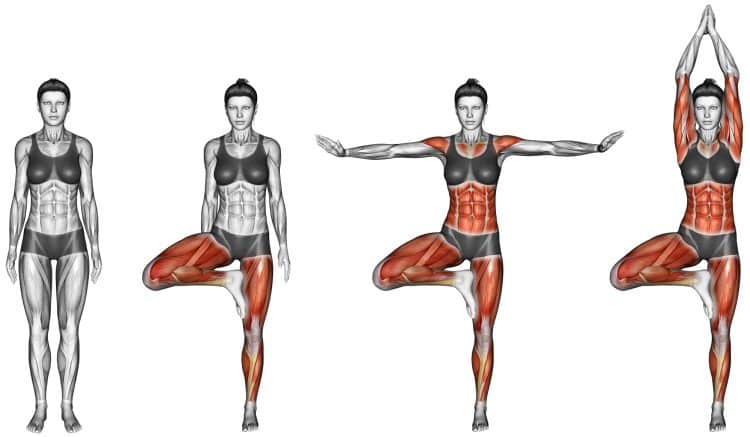
How to Do a Tree Pose (Vrksasana): Muscles Worked, Benefits, and Variations
Tree pose, also known as Vrksasana is a body posture reminiscent of a healthy, tall, and resilient tree. Rooted down by the feet, and supported by the pelvis and core muscles, this yoga technique combines balance, coordination, flexibility, pelvic stability, core strength, and upper body mobility. But you’re also reaping the rewards of increased focus, and concentration while opening the hips, lengthening the spine, and strengthening the legs and feet.
For such a simple pose, Vrksasana sure carries along lots of advantages, and there are lots of reasons to do it daily. In this guide, we want to walk you through a proper tree pose while discussing the advantages, drawbacks, commonly performed mistakes and more.
Muscles Worked
While the tree pose is NOT a “muscle-building exercise”, it is a body and mind-building pose that will help keep your muscles loose, flexible, and functional as they move the joints. Learn about the muscles targeted with this technique.
Legs
Powerful and resilient, the legs represent the trunk while the feet are the roots that ground you in the tree pose. The weight bearing leg takes on more of the load than normal, while the glutes, hips and pelvis help to stabilize the trunk and act as support for the remaining steps.
Core
Strong core muscles support an upright posture and open diaphragm, which translates to healthier breathing, and hence better focus, and energy.
Shoulders
Lifted shoulders also help open the chest and back area to release tension, and promote posing stamina.
How To Do The Tree Pose (Vrksasana)
If you have the flexibility, and experience, the tree pose may be easy for you. But for everyone else, it will take some practice. While this technique appears to be simple and easy, well, try it and see if that’s true. You may be very surprised at how difficult it can be.
That’s why we created this step by step guide with video demonstrations, tips, and how to fix common mistakes. The key is to be patient, don’t rush, and make sure your body is aligned, tall, and balanced, while engaging the necessary muscles.
Steps
Stand tall with your feet together.
Slowly lift one knee up to roughly belly button height, then grab the front of the knee with both hands to keep the leg up.
From here, root down through all four corners of your standing foot, and align your pelvis and core to find your balance. Keep your pelvis straight and in line with your body, and low back lengthened.
Then grab the ankle of your lifted leg with the same-side hand, and rotate your thigh outward to open the hips.
Now flex your foot by lifting the toes up, then bring the sole of your foot as high as you can on the standing-leg inner thigh with your toes facing down.
Press your foot into the squishy part of your thigh and pull your thigh into the foot to keep it in place and avoid it sliding down the leg.
Here you can bring your hands together by your heart, or extend your arms overhead. Hold for 30-60 seconds.
Take your foot off the inner thigh, bring the knee to waist height, then place it back on the floor.
You can then switch legs, pulling the opposite foot to your inner thigh, and repeat the movement.
Check the short tree pose video demonstration below.
If you have 12 minutes for a more in-depth tutorial that shows all the technique tips and tricks, we highly recommend watching the following video.
Tips
Before you start the pose, spread your toes and bring awareness to your feet. After all, the feet are the roots and you want to feel a strong base before beginning.
Before you lift the leg and foot into position on your inner thigh, ease yourself into it by first lifting one heel off the ground with the toes still on the ground.
Remember to keep the pelvis tucked in and aligned with your torso. Do not let your buck curl up and arch the lower back.
Gently push yourself into the correct position if the pelvis shifts back or to the side when the foot is pressed into the inner thigh.
Use a wall or place your foot on the lower leg, rather than the top of the inner thigh for support, if you have trouble balancing.
It’s important to root your feet and stand tall in maintaining good balance.
Keep in mind, everyone may not have the same exact form during the tree pose.
If you want more of a challenge, try closing your eyes or looking up at the ceiling to train your balance.
Benefits of Tree Pose Vrksasana
There may not appear to be so many benefits of the tree pose, but we can assure you that there are many worthwhile. Here are the unique benefits of this exercise.
A functional test of balance, coordination and concentration
Challenging indeed, but consequently beneficial, tree pose tests and grows your balance, positional awareness, and concentration. Seldom do basic exercises have you stand on one leg to complete an exercise. Tree pose involved various elements, making you more functional and coordinated.
It’s so beneficial for the aging population who incur injuries from balance issues, in addition to the sports crowd.
One sided
The tree pose is asymmetrical in nature, with the left and right sides performing a different function. This develops proprioception (physical awareness of the body and coordination), unilateral function (training one side at a time), and trains us to perform as humans.
Tree Pose
Posture pose
The tree pose can challenge you to maintain good posture, by standing upright, and consciously focusing on being a tall tree! Today we slouch more than ever, looking down at our devices, and this technique gently helps to reinforce and focus on good body position.
Stretches the full body
We don’t do stretches like this often enough. Lifting the foot and placing it against the inner thigh opens the hips and stretches the groin area, while you’ll also feel it in the quads, and hamstrings via knee and hip flexion. Move up the torso, raise the arms overhead, and the upper chest and latissimus dorsi fibers lengthen, as well as the shoulders and arms.
Keeps you flexible
It takes practice to stretch the groin area if you lack the flexibility to pull your heel into the upper inner thigh region. As school kids, the butterfly stretch hit this area but most of us never did it again. Tree pose is a great way to bring it back into your routine!
Activates the core muscles
Balancing on one leg will naturally recruit your core muscles to do more to stabilize your body. It’s a nice routine for anyone, and especially elderly individuals who need a light, functional activity to help maintain their coordination and stability.
A pelvis exercise
Your pelvis is bones that connect the trunk and legs near the hips. When you stand on one leg, the pelvis is called upon for extra duty where it supports the weight of the upper body, and maintains stability there to keep you in proper posture. From there, you can comfortably perform the moving parts of the pose such as raising the arms overhead.
Builds patience
We live in a very instant world where we can get an immediate dopamine rush without having to wait like we did in the old days. This has caused us to become less patient, more anxious, irritated and yeah you get the point. The tree pose, and yoga, in general, is a form of meditative exercise that can help calm our nerves, reduce anxiety, and teach us that patience creates worthwhile rewards.
Drawbacks of Tree Pose
Take a look at this pose in motion, and it’s easy to see the potential drawbacks. But don’t mistake drawbacks with negatives as practice will change them into positives.
You’ll need some darn good balance!
There’s no way around it, you must have exceptional balance to the do the tree pose. However, we’d assume most people practicing this pose are capable of standing on one leg. But if you’re doing it for the first time and hardly test your balance, it will be difficult.
The good news is that a wall or chair can be used as a progression to a non-supported variation of tree pose.
But you should also take your time with the tree pose, and practice easing yourself onto one leg, and establishing your balance.
Can be frustrating to learn
For beginners especially, it can sometimes be frustrating when you can’t quite nail a pose. Balance, groin flexibility, and are the big annoyances during tree pose.
Common Mistakes While Performing The Tree Pose
While there’s no cookie cutter technique, there are general form cues and recommendations to ensure you stay injury free, maximize the muscles involved, and enjoy the process. Here are some things to avoid.
You can actually place your foot on the lower leg below the knee, if above the knee is too difficult yet. However, we do not recommend placing your foot directly on your knee, which will put unnecessary pressure on this joint. The knee is to meant to bend to the side, but rather back.
Not using the weight bearing/standing leg
If you’re doing nothing with the standing leg, you’re doing the tree pose wrong. You need the counter pressure from the standing weight bearing leg not only to keep the foot from sliding down, but to keep your body straight, which will allow you to have a tall posture and maintain your balance.
Clenching your toes
It’s normal to want to dig your toes into the mat to maintain your balance. But it’s more accurate to relax the toes, so that you can tense the quads and pull them up, to lift the hips in the proper position. Then you’ll have a more efficient tree pose.
Rotating the knees and hips to the side
When the foot is pressed into the upper thigh, there may be a tendency for some people to swing the bent leg and rotate the body. Focus on keeping your body facing one direction and don’t deviate or turn your body. The only thing that should be moving is your arms, whatever you decide to do with them during the pose.
Wandering eyes
Your eyes are also important for maintaining your balance during the tree pose. If you’re looking around, you’ll probably have a difficult time standing on one leg, much less doing anything else. Try to fix your gaze on a spot on the wall and keep it there.
Variations of Tree Pose Vrksasana
A base to other variations, tree pose is a fundamental pose that opens up the door to these similar, but individually unique exercises.
Tree pose with a block
Some people need to ease themselves into a pose, and using a block is a great idea. You can use it to inch your way higher up the leg, while having something to hold your foot up and in position. It will also allow you to focus on engaging the leg muscles and working that flexibility before you go full on tree pose. When you can move beyond this beginner technique, place your foot on the lower leg below the knee.
Steps
Stand tall with your feet roughly hip width apart.
Place a block long ways between your feet.
Find your balance on one leg by rooting down into the four points of your foot.
Bend the other foot and lift your knee up, then place the ball and toes of that foot on the top of the block. Keep your heel close to the ankle bone of the weight bearing leg.
Now focus on keeping your body squared up, with the hips straight, and body nice and tall.
Lift the foot off the block for a few seconds and try to find how you’ll gain balance on the standing leg. Do it a few more times.
Now, switch your legs and repeat.
Windy tree
As the name implies, a windy tree blows the branches from side to side. This can actually challenge your core muscles, stretch your midsection, improve total body stability, balance, focus, and your mind.
Steps
Find your tree pose stance, then raise your arms in the air in the form of a V.
Wave your arms from side to side while rotating your body from left to right.
If you thought tree pose was challenging, bring your feet a little higher on your hips, and try to do the same thing. You’ll also stretch out your abductor muscles on the outer thigh if performed correctly.
Steps
From a standing position, bend your left leg, pull the left foot up, and hold it across the top of your right thigh in the hip crease. Flare your toes and flex your foot. You can hold your foot in place, or let go and try to keep it there.
Stay in this position and try to feel out the movement, and get accustomed to holding your feet there, or bring your arms to a prayer position or raise them overhead.
Arms reaching to sky
There’s nothing like leaning forward and reaching your arms toward the sky to throw off your balance, or rather, force you to maintain it. Try the tree pose with this additional step.
Steps
Get into tree pose stance with one foot pressed into the opposite thigh.
Hinge forward at the hips, rotate your torso toward the bent leg, and lean forward.
Extend the top arm toward the sky, and use the bottom arm to stabilize yourself.
Toe stand pose
You need to be a vrksasana master to get deep down in this sitting pose, and support your entire weight on your toes, while crossing one foot over the opposite thigh. It requires an extreme degree of focus or you can easily be thrown off course.
Steps
Start from a full tree pose with one foot pressed into the opposite inner thigh.
Next grab your foot and pull it into your hip crease. Flare your toes and flex your foot.
Now hinge at the hips, bend your upper body down, extend your arms toward the floor, and slowly drop down on your hands.
Then walk your hands forward, rise up onto the toes of the standing leg, then bend the standing leg and slowly drop your butt down to within a few inches from the floor.
Keep your hands on the floor for support, and instead of sitting all your weight on your calf muscle, focus on pushing into the ground with your toes and lifting yourself up.
Wrapping Up
Balance, coordination, positional awareness, and every functional foundation are vital abilities that we need, yet often fail to maintain. Planting yourself in the tree pose on a weekly basis will help counteract aging’s effects on our balance, while keeping our groins and hips healthier, reinforcing good posture, and easing our minds from the stressful modern culture. Then when you’re ready for something more advanced, you can step into more complex variations that will challenge your body, mind, and spirit on higher levels.
Creatine Pros and Cons: Cracking the Code
The sports nutrition industry is convoluted. A few years ago, most supplement companies (and social media influencers) were going gaga over glutamine, arginine, and Tribulus. However, it wasn’t long before these supplements were disproven. Furthermore, most fad supplements have one (or rather two) things in common. First, they are hotly priced and can burn a hole in your pocket. Second, the only gains seen after taking these supplements are in the P&L statements of the manufacturers, whereas there is little to no difference in the bottom line of the lifters.
Fitness enthusiasts are a vulnerable bunch. Many supplement companies exploit their users by claiming insane results.
But enough with the rant about the supplement companies; let’s turn our attention to the true protagonist of the discussion — creatine.
Creatine is one of the most popular supplements in the sports nutrition industry. In stark contrast to all the supplements mentioned above, the sand-textured white powder is one of the most studied supps on the market. Many athletes believe it is as close to performance-enhancing drugs (PEDs) as we will ever get without violating the WADA (World Anti-Doping Agency) prohibited substance list. [1]
Contrary to what most people think, creatine is not a new supplement. Creatine was first discovered in 1832 when Michel Eugene Chevreul extracted the compound from meat. It entered the mainstream in 1992 after two Olympic gold medalists credited creatine as part of their success. [2][3]
In this article, we go over the basics of creatine, its advantages and disadvantages, dosage and safety, and the final verdict on whether you should add it to your fitness regimen.
What is Creatine?
Creatine is produced naturally in the human body from amino acids, the building blocks of protein. It is found primarily in muscle cells but is also present in the brain, central nervous system, and heart.
Creatine is also present in red meat and seafood. Creatine helps improve exercise performance and muscle mass by facilitating the recycling of adenosine triphosphate, primarily in muscle and brain tissue. This is a fancy way of saying that creatine helps shorten your rest duration between sets by replenishing your ATP reserves, allowing you to do more in a short period, which helps maintain a high training intensity.
Although creatine is produced naturally in the body and can be consumed through real food, many athletes prefer using a creatine supplement to optimize their creatine intake and get the most out of their training.
Creatine is widely used by serious lifters in supplement form; however, its use routinely generates several safety concerns. Besides talking about the pros and cons of creatine, we will also address how to take this supplement safely.
Pros of Creatine
Using creatine supplements entails several benefits, including:
Helps Boost Muscle Mass
Most people notice an improvement in overall muscle mass development within 8-12 weeks of starting supplementing with creatine.
Creatine increases adenosine triphosphate (ATP) production in the body, the primary energy source for muscle contractions. After you have built satisfactory muscle creatine stores, creatine supplements can enhance ATP synthesis, allowing for more prolonged and intense workouts, leading to greater muscle stimulation and growth. [4]
Plus, creatine improves muscle protein synthesis, which is the process by which the body builds new muscle tissue. Creatine can boost protein synthesis and increase the rate at which muscle fibers repair and rebuild after a workout. [5]
Creatine has also been shown to activate the mammalian target of the rapamycin (mTOR) pathway, a signaling pathway involved in muscle growth. This pathway regulates protein synthesis, cell growth, and muscle hypertrophy. [6]
Creatine supplements are infamous for making you retain water. Although water retention might not be ideal for an athlete on a shredding routine, others can benefit from the cell volumization delivered by creatine supplements.
Improves Strength and Energy
Creatine supplementation increases phosphocreatine (PCr) levels in the muscles, which can improve ATP regeneration. Quick ATP replenishment enhances your energy reserves, reduces muscle fatigue, and boosts recovery. Many lifters experience a sharp uptick in their strength levels after adding a creatine supplement to their stack.
A review of over 200 creatine-related studies has shown that supplementing with creatine can increase strength, power, and sprint performance by 5–15%. The study concludes that creatine supplements can promote significantly greater gains in strength, fat-free mass, and high-intensity exercise performance. [7]
Increases Recovery and Endurance
Creatine supplements can help shorten the rest duration between sets by improving your recovery. Also, it can improve your overall endurance and stamina.
The enhanced endurance and better recovery boost your overall training volume and intensity. It helps you perform more reps and sets and use heavier weights. You must ensure, however, that you are not compromising your exercise form to chase heavier weight, as it can increase your risk of injury.
By allowing for more repetitions, increased training volume, and higher workloads, creatine enables individuals to push their muscles harder and stimulate muscle growth.
May Reduce Muscle Loss in Older Adults
Studies show that creatine can slow down sarcopenia, which is an age-related, involuntary loss of skeletal muscle mass and strength. Sarcopenia is linked to physical disability, poor quality of life, and an increased risk of death. [8]
The loss of muscle mass with age results from natural hormone changes. The testosterone levels begin to drop about 1 to 3 percent a year, beginning around age 40.
Weight training combined with a creatine supplement can improve muscle health and help you retain muscle mass and volume.
Improves Cognitive Function
No, supplementing with creatine won’t turn you into Einstein or save you from flunking your math test. So, dry-scooping creatine before an exam is not a good idea.
Creatine is also found in the brain, and studies have shown that creatine supplements can help improve cognitive function by a massive 5-15% by increasing the compound’s level in your brain. [9]
A study found that consuming 5–20 grams of protein daily for a period of five days to six weeks can improve your short-term memory and intelligence or reasoning. [10]
Cost-Effective
This is one of the most underrated benefits of creatine supplements. This effective small-scooped supplement is one of the most budget-friendly supps on the market. A three-month supply of creatine costs you $25, whereas a 30-day serving of a whey protein can cost $45.
Don’t let the price of creatine fool you; they are as effective as they get. However, you shouldn’t limit your supplement stack to creatine. Combining creatine with a protein supplement will give you the best muscle and strength-building effects.
Cons and Safety Concerns of Creatine
Adding a creatine supplement to your fitness regime can have the following disadvantages:
Can Cause Bloating
Creatine can improve muscle cell hydration due to its osmotic properties, which can lead to water retention and possible weight gain as your body retains water. Many lifters do not like the additional weight gain caused by creatine use.
Since creatine is extremely hydrophilic and attracts water, you must ensure you stay hydrated throughout the day. Drink at least a gallon of water daily to reduce the risk of dehydration.
Furthermore, creatine has a chalk-like texture, which makes it hard to dissolve in water. Most people end up dry-scooping creatine, making the whole supplement experience inconvenient.
Digestive Issues and Gastrointestinal Discomfort
Although creatine supplements are generally well-tolerated, some people might experience digestive issues and gastrointestinal discomfort while taking this supp. The poor solubility of creatine monohydrate, the most popular creatine form, is often blamed for GI discomfort. However, there is no solid scientific evidence to back these claims.
Improper dosing, dehydration, and individual sensitivity can also be the reasons behind digestive issues after taking a creatine supplement. You must consult a healthcare professional if you experience any health issues while taking any supplements.
Not Suitable For People With Kidney Issues
Although many people believe that creatine use can cause kidney and liver disease, this is not the case. There is no scientific evidence to prove that using an appropriate daily dose of creatine supp can harm your organs. Creatine supplementation is safe for people following a high-protein diet.
That said, folks with impaired kidneys should always check with their healthcare providers before starting any new supplement.
Creatine Results Might Vary Depending on Your Genetics and Consumption Pattern
Like most things in bodybuilding and fitness, creatine results are not universal and can vary depending on your genetics, age, sex, fitness, and activity level. Furthermore, people that start with the loading phase might experience quicker results that folks that stick to the maintenance phase — more on this in the next section.
Omnivores naturally have higher creatine stores than vegans and vegetarians and might experience better and faster results from a creatine supp than their counterparts. Although noticeable muscle mass change might take 8-12 weeks, you’ll start seeing the strength and endurance benefits of creatine within a few weeks as soon as your muscle creatine levels reach the point of saturation.
Confusion About The Best Form of Creatine
Whenever a new supplement is launched, sports nutrition companies tend to milk the product by introducing different variations of the supp and claiming the latest to be better than the rest. It is no different with creatine supplements.
The six most popular types of creatine include monohydrate, ethyl ester, hydrochloride, buffered, magnesium chelate, and liquid creatine. Creatine monohydrate is the oldest and most-tested variation, and you should stick with it to build muscle mass and strength.
How To Use Creatine Safely
Creatine is one of the most researched and safest supplements. Nonetheless, you must keep a few things in mind to ensure safety.
Brand: You should only opt for reputable brands. Since creatine is usually low-priced, many companies enter the sports nutrition market by offering low-quality creatine, which can hamper your overall health.
Use a Suitable Form: Some people react to one form of creatine better than the other. For example, you might see great results from creatine monohydrate, whereas your training mate might be a fan of creatine HCL.
Dosage: Choose your creatine dose depending on your tolerance and other symptoms.
Hydration: Drink at least a gallon of water daily while supplementing with creatine.
You must stop creatine use immediately if you experience any health issues, such as acne, diarrhea, hair loss, digestive issue, or GI discomfort, and seek a medical professional’s advice before resuming the supplement use.
How To Take Creatine
There are two most popular methods of taking a creatine supplement:
Loading Phase
The loading cycle results in rapid muscle creatine level saturation. In this phase, an individual takes 20 grams of creatine daily for five to seven days. Based on his convenience, the user can split his creatine intake into four five-gram servings or five four-gram doses.
Following the five to seven days, you must switch to consuming 3–5 grams daily to maintain your creatine reserves and optimize muscle and strength gains.
Maintenance Phase
Consuming four to five daily servings of creatine can be overwhelming for most folks. You could begin your creatine intake with the maintenance phase to save yourself the hassle.
In the maintenance phase, you consume 3-5 grams of creatine daily. However, this technique may take 3–4 weeks to maximize your creatine stores. Conversely, you reach creatine saturation within seven days using the loading phase.
Notably, there is no benefit to creatine cycling. You could stick to the maintenance phase from the beginning and will get the same benefits as the loading phase in the long run.
Most omnivores consume between one to two grams of creatine daily through their natural diet, which makes their creatine stores 60%–80% full. Even an omnivore must use a creatine supplement to maximize their creatine reserves. The loading phase, which involves consuming 20 grams of creatine daily for five to seven days, boosts muscle creatine stores by 10–40%.
People with greater muscle mass generally require more creatine intake to reach creatine saturation and get the desired results from this supplement.
FAQs
I am a beginner and only do cardio. Should I take creatine?
Creatine can help improve your strength, power, total work capacity, and muscle mass and can be used by anyone. However, this supplement works best for athletes that train at very high workloads and need a spike in their power, endurance, and stamina to take their training to the next level.
That said, research shows that creatine also has therapeutic benefits, which can prevent muscle loss in older adults, reduce the risk of vascular disease, and improve brain health. These benefits make creatine supplementation suitable for everyone, even folks that do not train.
Does creatine cause muscle cramps?
Some users report muscle cramps after taking a creatine supplement. However, there is no conclusive scientific evidence to prove a link between the two. A possible reason for cramps could be that most people usually train harder after taking creatine, which could lead to muscle cramps. Plus, a high training intensity could cause dehydration and inadequate electrolyte balance, leading to muscle cramps.
Do I need to eat meat and fish for optimal natural creatine production in my body?
This is one of the most common questions from vegans and vegetarians about creatine. The short answer to this question is — no; your body can produce the required creatine endogenously, and you do not need to eat meat to optimize its natural production.
However, taking a creatine supplement can boost your creatine stores, which can give you better results.
Note: The content on Fitness Volt is for informative purposes only and should not be taken as medical advice to diagnose, prevent, or treat health problems. If you’re suffering from a health issue, are pregnant, or are under 18 years old, you should consult your physician before starting any new supplement, nutrition, or fitness routine.
Final Verdict
Creatine is one of the most studied and safest supplements. It can help you build and retain muscle, improve your overall strength and cognitive function, boost your recovery, and reduce age-related muscle loss. While each supplement has its advantages and disadvantages, creatine’s pros far outweigh its cons.
While advanced athletes are best positioned to get the most benefits from a creatine supplement, nothing is stopping a beginner from taking it. Furthermore, elderlies should use a creatine supplement for its therapeutic benefits.
Whether you choose the loading or maintenance phase, you must build optimal muscle creatine stores before you can expect results.
Ensure that you use a good brand and stay hydrated for the best results. So, what are you waiting for? Grab that little white-powdered scoop and head to the gym for your PR. Best of luck!
References
Hall M, Trojian TH. Creatine supplementation. Curr Sports Med Rep. 2013 Jul-Aug;12(4):240-4. doi: 10.1249/JSR.0b013e31829cdff2. PMID: 23851411.
Butts J, Jacobs B, Silvis M. Creatine Use in Sports. Sports Health. 2018 Jan/Feb;10(1):31-34. doi: 10.1177/1941738117737248. Epub 2017 Oct 23. PMID: 29059531; PMCID: PMC5753968.
Close GL, Hamilton DL, Philp A, Burke LM, Morton JP. New strategies in sport nutrition to increase exercise performance. Free Radic Biol Med. 2016 Sep;98:144-158. doi: 10.1016/j.freeradbiomed.2016.01.016. Epub 2016 Feb 5. PMID: 26855422.
Lanhers C, Pereira B, Naughton G, Trousselard M, Lesage FX, Dutheil F. Creatine Supplementation and Upper Limb Strength Performance: A Systematic Review and Meta-Analysis. Sports Med. 2017 Jan;47(1):163-173. doi: 10.1007/s40279-016-0571-4. PMID: 27328852.
Ingwall JS, Weiner CD, Morales MF, Davis E, Stockdale FE. Specificity of creatine in the control of muscle protein synthesis. J Cell Biol. 1974 Jul;62(1):145-51. doi: 10.1083/jcb.62.1.145. PMID: 4407046; PMCID: PMC2109188.
Sun M, Jiao H, Wang X, Li H, Zhou Y, Zhao J, Lin H. The regulating pathway of creatine on muscular protein metabolism depends on the energy state. Am J Physiol Cell Physiol. 2022 May 1;322(5):C1022-C1035. doi: 10.1152/ajpcell.00447.2021. Epub 2022 Apr 13. PMID: 35417269.
Kreider RB. Effects of creatine supplementation on performance and training adaptations. Mol Cell Biochem. 2003 Feb;244(1-2):89-94. PMID: 12701815.
Candow DG, Forbes SC, Kirk B, Duque G. Current Evidence and Possible Future Applications of Creatine Supplementation for Older Adults. Nutrients. 2021 Feb 26;13(3):745. doi: 10.3390/nu13030745. PMID: 33652673; PMCID: PMC7996960.
Dechent P, Pouwels PJ, Wilken B, Hanefeld F, Frahm J. Increase of total creatine in human brain after oral supplementation of creatine-monohydrate. Am J Physiol. 1999 Sep;277(3):R698-704. doi: 10.1152/ajpregu.1999.277.3.R698. PMID: 10484486.
Avgerinos KI, Spyrou N, Bougioukas KI, Kapogiannis D. Effects of creatine supplementation on cognitive function of healthy individuals: A systematic review of randomized controlled trials. Exp Gerontol. 2018 Jul 15;108:166-173. doi: 10.1016/j.exger.2018.04.013. Epub 2018 Apr 25. PMID: 29704637; PMCID: PMC6093191.
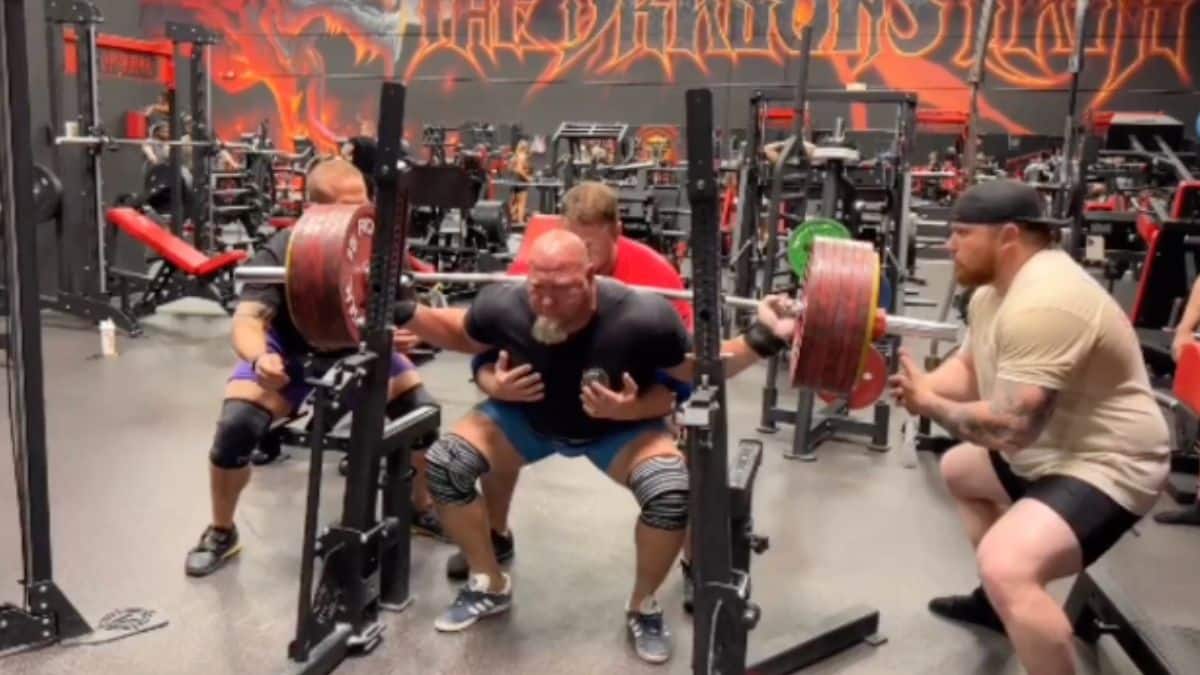
54-YO Nick Best Sinks a 771-lb (349.7-kg) Squat With Knee Wraps In Training
There are not many athletes in the Strongman community who are more famous than Nick Best. Moreover, he is arguably the most impressive man in modern Strongman history, as he has been defying the aging process for years now. Even after more than a decade of pressuring his body with massive weights, Nick still continues to push his limits. So, most recently, he challenged himself with a 771-pound (349.7-kilogram) squat and successfully completed it.
Nick Best made his way to the “Dragon’s Lair Gym” in Las Vegas, which is owned by 7x 212 Mr. Olympia Flex Lewis. He then geared up for the 771-pound (349.7-kilogram) squat by putting on a pair of knee wraps, a lifting belt, and some wrist wraps. The only thing left to do was find some spotters before attempting the lift. Luckily for Nick, the All-Time Squat World Record holder, Joe Sullivan, was present to assist him alongside two other men.
Nick Best slowly dipped down with 771 pounds (349.7 kilograms) on his back, but quickly ascended back up. After re-racking the weight back, Nick excitedly stated:
“That was easy. That was kind of crazy.”
Watch the lift here:
Related: Strongman Nick Best Scores 10 Reps Of 700-lb (317.5-kg) 13-Inch Deadlift At 2022 Clash Of The Masters
Nick Best also performed his first heavy deadlift single in training which came out to 675 pounds (306.2 kilograms). While it wasn’t his heaviest deadlift, Nick expects to be back to pulling 800 pounds (362.9 kilograms) soon.
Nick Best is currently in the process of coming back from nephrectomy. This is a process of removing a kidney due to a tumor. Nick had undergone the surgery back in January, but things are just now starting to fall back in place. Interestingly, he recently revealed that the kidney tumor was found accidentally, as he originally went to the hospital due to a bench press incident.
Nick Best retired from Strongman competitions in 2022, but still left the door open for a few more powerlifting appearances. Consequently, this is why his focus has shifted towards powerlifting events and why a 771-pound (349.7-kilogram) squat seems effortless to him.
Nick Best, known for his remarkable strength, recently made headlines with his incredible 771-pound (349.7-kilogram) squat. However, it’s not just his squats that amaze people; he frequently showcases astonishing deadlift feats as well. For example, during the 2022 Mr. Olympia Expo, Nick loaded 600 pounds (272.2 kilograms) onto the bar and crushed 15 repetitions.
As a Strongman, Nick Best took part in 41 International and National competitions and came out victorious three times. However, he was admired by everyone due to his resilience and impressive stationary strength.
Nick Best’s powerlifting career is nothing short of incredible as well. He took part in 33 sanctioned competitions and won 20 of them. Furthermore, he set two Masters World Records in his most recent appearance at the 2022 WRPF FQ Classic 2.
Related: Strongman Nick Best Defies Age By Deadlifting 500lb For 50 Reps At 53 Years Old
Nick Best’s Powerlifting History
Personal Bests
Equip
Squat
Bench
Deadlift
Total
Dots
Wraps
870.8
529.1
870.8
2226.7
555.07
Single-ply
815.7
551.2
815.7
2155
537.54
Competition Results
Place
Fed
Date
Competition
Division
Total
Dots
1
WRPF
2022-05-01
FQ Classic 2
M50-54
2028.3
506.13
Location
USA-NV
Competition
FQ Classic 2
Division
M50-54
Age
53
Equipment
Wraps
Class
308.6
Weight
304.5
Squat
749.6
804.7
821.2
821.2
Bench
407.9
440.9
463
463
Deadlift
683.4
744.1
-771.6
744.1
3
WRPF
2021-04-24
Kern US Open
Open
2028.3
505.81
Location
USA-CA
Competition
Kern US Open
Division
Open
Age
52
Equipment
Wraps
Class
308.6
Weight
305.1
Squat
749.6
-815.7
815.7
815.7
Bench
451.9
485
-507.1
485
Deadlift
727.5
-821.2
727.5
NS
WRPF
2019-04-27
Kern US Open
Open
Location
USA-CA
Competition
Kern US Open
Division
Open
Age
50
Equipment
Wraps
1
IPL
2018-11-17
Old Dogs World Cup
Masters 50-54
2182.6
543.64
Location
USA-CA
Competition
Old Dogs World Cup
Division
Masters 50-54
Age
50
Equipment
Wraps
Class
308.6
Weight
306.4
Squat
848.8
Bench
518.1
Deadlift
815.7
2
IPL
2018-09-14
Olympia Pro Powerlifting
Open
2155
537.54
Location
USA-NV
Competition
Olympia Pro Powerlifting
Division
Open
Age
49
Equipment
Single-ply
Class
308.6
Weight
304.9
Squat
815.7
Bench
507.1
Deadlift
832.2
GLP
89.92
3
USPA
2017-04-15
CETC US Open Powerlifting Championships
HW
2226.7
555.07
Location
USA-CA
Competition
CETC US Open Powerlifting Championships
Division
HW
Age
48
Equipment
Wraps
Class
308.6
Weight
305.6
Squat
870.8
Bench
529.1
Deadlift
826.7
1
USPA
2017-01-07
American Cup Los Angeles Fit Expo
Open
2221.2
552.13
Location
USA-CA
Competition
American Cup Los Angeles Fit Expo
Division
Open
Age
48
Equipment
Wraps
Class
308.6
Weight
308.6
Squat
854.3
Bench
523.6
Deadlift
843.3
1
USPA
2016-04-23
Nevada State Powerlifting Championships
Open
2171.6
540.78
Location
USA-NV
Competition
Nevada State Powerlifting Championships
Division
Open
Age
47
Equipment
Wraps
Class
308.6
Weight
306.7
Squat
843.3
Bench
518.1
Deadlift
810.2
1
USPA
2016-04-23
Nevada State Powerlifting Championships
Masters 45-49
2171.6
540.78
Location
USA-NV
Competition
Nevada State Powerlifting Championships
Division
Masters 45-49
Age
47
Equipment
Wraps
Class
308.6
Weight
306.7
Squat
843.3
Bench
518.1
Deadlift
810.2
DQ
USAPL
2000-07-09
Mens National Powerlifting Championships
M-O
Location
USA-IL
Competition
Mens National Powerlifting Championships
Division
M-O
Age
31
Equipment
Single-ply
Class
275.6
Weight
270.5
Squat
-733
-733
-733
1
USAPL
1999-04-10
California State
Open
1973.1
507.25
Location
USA-CA
Competition
California State
Division
Open
Age
30
Equipment
Single-ply
Class
275.6
Weight
275.6
Squat
771.6
Bench
540.1
Deadlift
661.4
GLP
85.19
3
USAPL
1998-07-03
Mens National Powerlifting Championships
M-O
1940.1
501.06
Location
USA-CO
Competition
Mens National Powerlifting Championships
Division
M-O
Age
29
Equipment
Single-ply
Class
275.6
Weight
271.6
Squat
716.5
Bench
518.1
Deadlift
705.5
GLP
84.21
1
USAPL
1998-04-03
California State
Open
1973.1
507.25
Location
USA-CA
Competition
California State
Division
Open
Age
29
Equipment
Single-ply
Class
275.6
Weight
275.6
Squat
733
Bench
551.2
Deadlift
688.9
GLP
85.19
1
USAPL
1997-07-26
Mens Nationals
Open
1989.7
511.5
Location
USA-IL
Competition
Mens Nationals
Division
Open
Age
28
Equipment
Single-ply
Class
275.6
Weight
275.6
Squat
744.1
-777.1
-804.7
744.1
Bench
518.1
540.1
-551.2
540.1
Deadlift
661.4
688.9
705.5
705.5
GLP
85.9
1
ADFPA
1997-02-01
California State
Open
2022.7
Location
USA-CA
Competition
California State
Division
Open
Age
28
Equipment
Single-ply
Squat
810.2
Bench
551.2
Deadlift
661.4
1
WDFPF
1996-08-24
World Powerlifting Championships
Open
1907
490.24
Location
USA-IL
Competition
World Powerlifting Championships
Division
Open
Age
27
Equipment
Single-ply
Class
275.6
Weight
275.6
Squat
760.6
Bench
485
Deadlift
661.4
GLP
82.33
1
ADFPA
1996-06-15
Mens Nationals
Open
1967.6
505.83
Location
USA-MO
Competition
Mens Nationals
Division
Open
Age
27
Equipment
Single-ply
Class
275.6
Weight
275.6
Squat
744.1
771.6
-810.2
771.6
Bench
501.6
-523.6
-523.6
501.6
Deadlift
661.4
-688.9
694.5
694.5
GLP
84.95
1
ADFPA
1996-04-13
California State Championships
Open
2006.2
515.75
Location
USA-CA
Competition
California State Championships
Division
Open
Age
27
Equipment
Single-ply
Class
275.6
Weight
275.6
Squat
804.7
Bench
529.1
Deadlift
672.4
GLP
86.62
4
ADFPA
1995-07-15
Mens Nationals
Open
1901.5
488.83
Location
USA-PA
Competition
Mens Nationals
Division
Open
Age
26
Equipment
Single-ply
Class
275.6
Weight
275.6
Squat
705.5
-755.1
-755.1
705.5
Bench
485
507.1
512.6
512.6
Deadlift
661.4
683.4
-705.5
683.4
GLP
82.09
1
ADFPA
1995-03-25
California State
Open
1885
484.58
Location
USA-CA
Competition
California State
Division
Open
Age
26
Equipment
Single-ply
Class
275.6
Weight
275.6
Squat
755.1
Bench
485
Deadlift
644.9
GLP
81.38
1
ADFPA
1994-12-11
Outlaw Christmas Open
Open
479.5
128.82
Location
USA-CA
Competition
Outlaw Christmas Open
Division
Open
Age
26
Equipment
Single-ply
Class
242.5
Weight
242.5
Bench
479.5
GLP
66.16
1
ADFPA
1994-10-15
Beale Open and California State Deadlift
Open
1796.8
482.7
Location
USA-CA
Competition
Beale Open and California State Deadlift
Division
Open
Age
25
Equipment
Single-ply
Class
242.5
Weight
242.5
Squat
672.4
Bench
463
Deadlift
661.4
GLP
81.61
5
ADFPA
1994-07-16
Mens Nationals
Open
1857.4
498.98
Location
USA-IL
Competition
Mens Nationals
Division
Open
Age
25
Equipment
Single-ply
Class
242.5
Weight
242.5
Squat
661.4
711
727.5
727.5
Bench
451.9
474
-490.5
474
Deadlift
600.8
622.8
655.9
655.9
GLP
84.36
1
ADFPA
1994-04-23
California State
Open
1758.2
472.33
Location
USA-CA
Competition
California State
Division
Open
Age
25
Equipment
Single-ply
Class
242.5
Weight
242.5
Squat
694.5
Bench
451.9
Deadlift
611.8
GLP
79.85
2
ADFPA
1994-01-23
California State Squat
Open
661.4
170.03
Location
USA-CA
Competition
California State Squat
Division
Open
Age
25
Equipment
Single-ply
Class
275.6
Weight
275.6
Squat
661.4
1
ADFPA
1993-10-23
Azusa Classic
Open
1769.2
475.29
Location
USA-CA
Competition
Azusa Classic
Division
Open
Age
24
Equipment
Single-ply
Class
242.5
Weight
242.5
Squat
672.4
Bench
451.9
Deadlift
644.9
GLP
80.35
4
ADFPA
1993-07-10
Mens Nationals
Open
1780.2
478.26
Location
USA-PA
Competition
Mens Nationals
Division
Open
Age
24
Equipment
Single-ply
Class
242.5
Weight
242.5
Squat
-661.4
661.4
705.5
705.5
Bench
451.9
-474
474
474
Deadlift
-600.8
600.8
-633.8
600.8
GLP
80.86
2
ADFPA
1993-03-13
California State Championships
Open
1802.3
484.18
Location
USA-CA
Competition
California State Championships
Division
Open
Age
24
Equipment
Single-ply
Class
242.5
Weight
242.5
Squat
705.5
Bench
463
Deadlift
633.8
-650.4
633.8
GLP
81.86
7
ADFPA
1992-06-06
Mens Nationals
Open
1648
442.72
Location
USA-MN
Competition
Mens Nationals
Division
Open
Age
23
Equipment
Single-ply
Class
242.5
Weight
242.5
Squat
633.8
-661.4
-661.4
633.8
Bench
402.3
-435.4
-435.4
402.3
Deadlift
600.8
611.8
-622.8
611.8
GLP
74.85
1
ADFPA
1991-11-02
Northern California
Open
1631.4
438.28
Location
USA-CA
Competition
Northern California
Division
Open
Age
22
Equipment
Single-ply
Class
242.5
Weight
242.5
Squat
617.3
Bench
413.4
Deadlift
600.8
GLP
74.1
1
USPF
1991-08-24
East Beach Open
Natural
1625.9
436.8
Location
USA-CA
Competition
East Beach Open
Division
Natural
Age
22
Equipment
Single-ply
Class
242.5
Weight
242.5
Squat
617.3
Bench
402.3
Deadlift
606.3
GLP
73.85
1
USPF
1991-08-24
East Beach Open
Open
1625.9
436.8
Location
USA-CA
Competition
East Beach Open
Division
Open
Age
22
Equipment
Single-ply
Class
242.5
Weight
242.5
Squat
617.3
Bench
402.3
Deadlift
606.3
GLP
73.85
3
USPF
1985-04-01
El Dorado Gold Championships
High School
940
288.83
Location
USA-NV
Competition
El Dorado Gold Championships
Division
High School
Age
16
Equipment
Single-ply
Class
181.9
Weight
181.9
GLP
49.41
Data Source: Open Powerlifting. Last Updated: April 12, 2023
Analyze Lifts
It is nice to see that Nick Best is almost back to his best form after his kidney surgery just a few months ago. He is already putting up humongous lifts in training and setting new goals for the future. So, it is just a matter of time until he enters another powerlifting competition and sets some more World Records.
Published: 28 May, 2023 | 2:37 PM EDT
Dorian Yates Explains Why ‘You Don’t Need To Do Squats’ & Training 4x a Week for Mr. Olympia
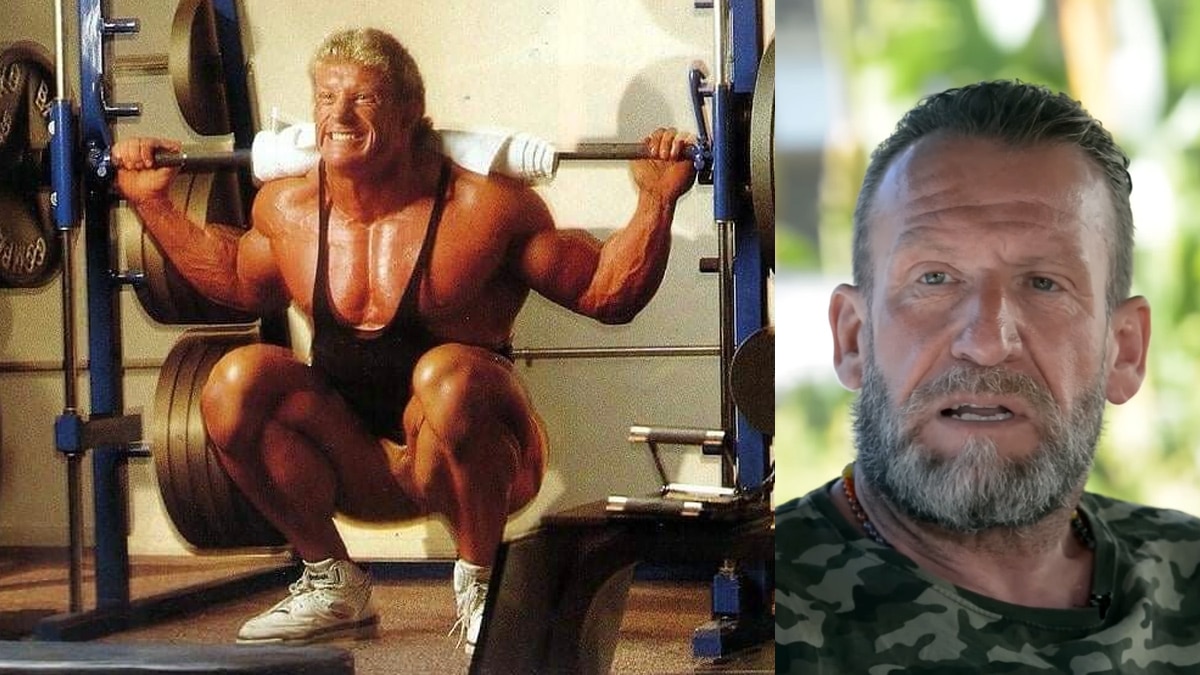
Bodybuilding legend Dorian Yates stood out from the pack during his days of professional competition with his intense training methods. The English talent led one of the most successful careers in the IFBB Pro League by going against the grain when it comes to training philosophy. In a recent interview with Escaped Fitness, Yates explained why there is no need to do squats for muscle growth and opened up on training four days a week for the Mr. Olympia competitions.
Dorian Yates rose to prominence for his shocking muscularity, size, and stellar conditioning as a Men’s Open contender. He presented arguably the best back muscle development of any competitor in the history of the sport. After taking silver in his Olympia debut, Yates secured his maiden Sandow trophy in 1992. He proved to be a dominant champion who racked up a total of six Mr. Olympia wins until 1997.
Yates was renowned for staying away from the spotlight in the off-season and only making his presence known for competition. His tendency to stay on the sidelines and avoid media attention earned him the nickname ‘The Shadow.’ While most bodybuilders used the traditional approach of working for a fixed number of sets and reps, Yates focused on pushing himself to near failure in every single training session.
In Nov. 2022, Yates reflected on the beginnings of his bodybuilding journey as a troubled teenager in prison. He opened up on the intense mindset he adopted in which he was completely obsessed with bodybuilding. He credited the sport for helping him turn his life around at a crucial point.
Bodybuilding veteran Rich Gaspari compared the backs of Yates and reigning Mr. Olympia Hadi Choopan to criticize ‘The Persian Wolf’ last December. He used the comparison to prove that conditioning levels had dropped significantly from era to era.
Dorian Yates maintains a high level of personal fitness. He reported excellent findings after undergoing a health check and VO2 max test earlier this year. Despite being in his 60s, his biological age was estimated to be between 30 and 39.
‘The Shadow’ offered barbell rows with an underhand grip as his favorite exercise for building a jacked back two months ago. Then, he stressed the importance of keeping proper nutrition and rest for optimizing hormone balance.
In another offering to fans, Yates provided a few of his high-intensity training techniques to increase the difficulty of workouts. His next update encouraged his fans to focus on completing a full range of motion and using slow negatives to boost muscle growth in the lower body.
Related: Ten Ways to Boost Your Squat
Dorian Yates Explains Why ‘You Don’t Need to do Squats’
In a recent YouTube video, Dorian Yates shared why it is not necessary to include squats in your training plan.
“I always ask why. That’s a big thing with me,” said Yates. “Squats are the best things for legs everyone says. Why? Alright let me try to do something else. I did believe that until squats damaged my hip so I had to try and do something else and I discovered you can do it another way. You don’t need to do squats. Everybody was training six days a week and 20 sets and all this stuff from the Arnold era and didn’t make sense to me.”
Yates revealed he follows the teachings of Arthur Jones, founder of Nautilus when it comes to training frequency and achieving muscle growth.
“I read Arthur Jones’s writings, who’s the guy that built the Nautilus machines and looked into the real science of muscle building and so on and Mike Mentzer of course carried on that high intensity training. So, it made logical sense to me. Then when I applied it in the gym, keeping notes and so on, I got very good feedback from day one. I noticed that if I train more often or increase the volume and time in the gym, I stopped progressing. Okay, let me take a couple of days rest and go back to a more abbreviated routine, train three days a week, no more than an hour, boom, start growing again. There’s the feedback.”
Yates used to train 4 days a week for Mr. Olympia
’The Shadow’ revealed he only trained four days a week with a maximum of one hour per session for the Mr. Olympia contests.
“Three days a week I was training initially when I first started training because I was working a job as well and couldn’t recover training more often than that. That’s what the feedback showed me so I listened to it. Later on, training for Mr. Olympia, I was training four days a week and maximum one hour in the gym.”
“People struggle with that because they don’t understand the key. The key to stimulating muscle growth is the intensity of the exercise and the fact that you’re progressively overloading and giving your body something that it’s not used to and it needs to react. Muscle Growth is just a reaction to a stress that the body’s trying to protect itself from.”
The 61-year-old laid out a straightforward approach for building muscle with efficient training and recovery.
“This is the process, stimulate, overload, recovery, after recovery, overcompensation, growth, so if that recovery or stimulus period isn’t sufficient, you’re not going to grow. There needs to be a balance between all that. Intensity and recovery. So if you’re going in there hammering your legs. You’re breaking them down and damaging them and they’re sore, and then four days later you train them again and still sore, damaged, how are you getting anywhere? You’re not really getting anywhere.”
Dorian Yates offered the training and steroid cycles he utilized while preparing for contests in his heyday. He also opened up on his reasons for using TRT (testosterone replacement therapy) after retiring from the sport. As of late, Yates described his experience using ayahuasca in the Amazon rainforest, which he says helped him achieve a new level of mental clarity.
Yates’ latest offering goes against the common belief that squats are a must in any training plan for muscle growth. Given his experience and accolades, Yates continues to be a service to the bodybuilding community.
You can watch the full video below:
RELATED: 6x Mr. Olympia Dorian Yates Guides Junior Mr. Universe Kaya Yusuf Through Brutal Back Workout
Published: 28 May, 2023 | 1:27 PM EDT
Lee Priest Calls for Guest-Posing Seminar with Jay Cutler after 2023 Masters Olympia
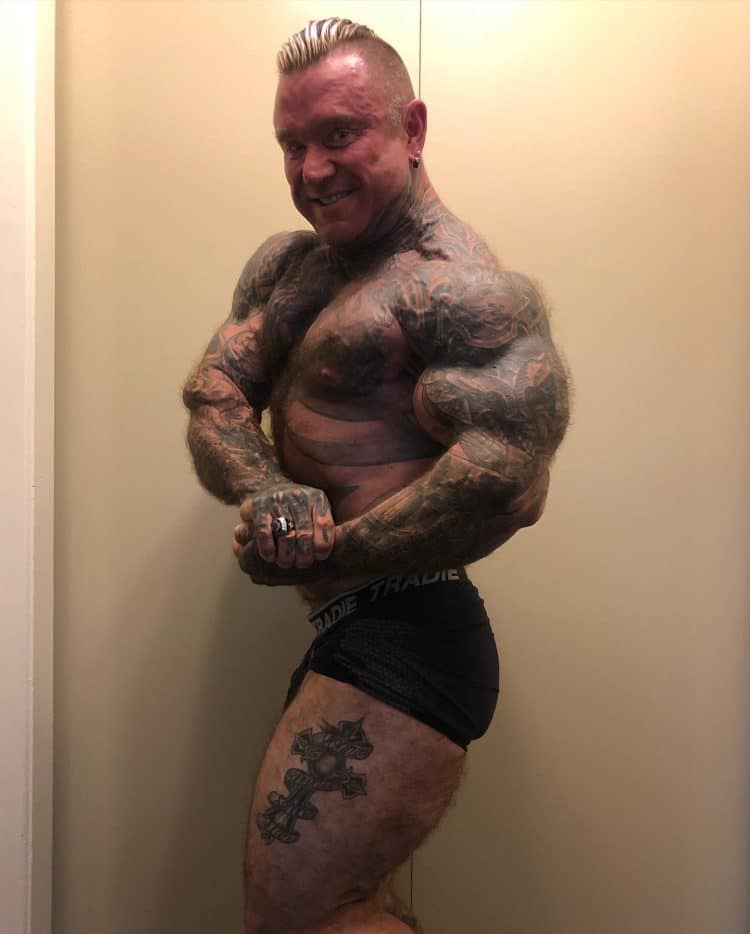
Bodybuilding legend Jay Cutler did not lose his passion for fitness after moving on from professional competition years ago. During his career, he battled it out with several notable names such as Australian bodybuilding veteran Lee Priest. In a recent episode of RxMuscle, Priest shared his thoughts on potentially facing Jay Cutler on stage in a guest-posing appearance at the 2023 Masters Olympia and called for a ‘Golden Era seminar.’
Jay Cutler made a name for himself with his insane muscle mass, size, and conditioning in the IFBB Pro League Men’s Open class. He won the Arnold Classic title three times and found Olympia glory in 2006 after placing second four times. His last appearance came at the 2013 Mr. Olympia, where he finished sixth and hung up his posing trunks as a four-time champion. He continued to work out regularly and stay in stellar shape post-retirement.
After an 11-year hiatus, the Masters Olympia is set to make a comeback on Aug. 25-27 in Cluj Napoca, Romania. The competition was started in 1994 to provide older bodybuilders an opportunity to showcase their talents in front of fans and vie for the title. Robby Robinson created history by winning the inaugural event whereas Vince Taylor etched his name in the record books with six titles under his belt. The show’s last edition was won by Dexter Jackson in 2012.
Given the impressive package Cutler boasts, there were rumors about his return to action for the upcoming 2023 Masters Olympia. He’s looking to level up his fitness game for his own ‘Fit for 50’ body transformation challenge. He laid out his ambitions in the gym and believes he could achieve them with proper nutrition, diet, and only using TRT (testosterone replacement therapy) last month. However, he later shut the door on competing again.
Lee Priest opened up on the possibility of signing up for the event earlier this year. As much as he would’ve liked to compete, Priest revealed he would not be able to due to his chest atrophy and other health challenges.
Jay Cutler and IFBB head judge Steve Weinberger announced the full roster of all 10 divisions for the contest a few weeks ago. Former 212 Olympia champion Kamal Elgargni goes into the show as the betting favorite to win the Open title. Following the announcement, Priest called on the organizers to revamp the eligibility criteria and raise the qualification age to 50+ instead of 40.
Lee Priest talks about chances of guest-posing against Jay Cutler at the 2023 Masters Olympia
In a recent YouTube video, Lee Priest shared his thoughts on potentially going against Jay Cutler in a guest-posing appearance at the 2023 Masters Olympia.
Priest believes Cutler would rather do a guest-posing showing instead of competing.
“He did say he might take his shirt off, joked around about guest posing that he might take his shirt off but he said he’s definitely not competing,” said Priest. “But he said he could take his shirt off and maybe guest pose or something like that. I’d say it could be more of that than competing again.”
When asked if he would pose next to Cutler, Priest voiced his hesitation and seemed to be against the prospect.
“I don’t get invited to go anywhere. It’s a bit late now I haven’t got much prep time. My birthday’s coming up in July. I’ll be 51.”
Priest calls for a ‘Golden Era seminar’ with Cutler
Lee Priest / Instagram
The 50-year-old suggested hosting a similar event where competitors of yesteryears could pose in front of fans without the pressure of competition.
“I always said, you get a good promoter, if you had like Kevin, Flex, get in shape or like you did back then like you have Jay now, you could probably have Victor, myself, a few who could over 12-16 weeks get in decent shape. I say don’t compete just have them do a golden era seminar where they do a seminar and a bit of posing would be great.”
Lee Priest offered some of his best tips on effectively performing bicep preacher curls to maximize pump using different rep ranges, equipment, and grip variations two months ago. He followed up by revealing the difference in his training and diet from when he was in his 20s to now at the age of 50.
2023 Masters Olympia will feature Michelle Brent, a 65-year-old bodybuilder with over 36 years of experience. Hidetada Yamagishi will also be in attendance as a frontrunner for the title.
Jay Cutler opened up on his ambitions to lower his body fat to six to eight percent for the body transformation challenge earlier this month. He showed off his shredded package in a physique update two weeks ago and provided another jacked update where he weighed 240 pounds days later.
Whether Cutler competes at the show or not, a guest-posing appearance would send fans into a frenzy over witnessing the iconic competitor take to the stage again.
You can watch the full video below.
Published: 28 May, 2023 | 12:21 PM EDT
Strongman Sean Logan Sets 455-kg (1,003-lb) Deadlift PR at 2023 NZ Log & Deadlift Championships
A deadlift is arguably the most universal exercise for determining strength, as it is used in all disciplines, including Strongman, Powerlifting, CrossFit, Bodybuilding, as well as among everyday gym goers. So, it takes a lot of effort and sacrifice to become one of the greatest deadlifters in the world, but Sean Logan is one of the few that made it to the top. Sean is recognized for his stationary strength, most notably the deadlift. Having said that, he has just achieved a huge achievement, having set a new 1,003-pound (455-kilogram) deadlift personal record (PR).
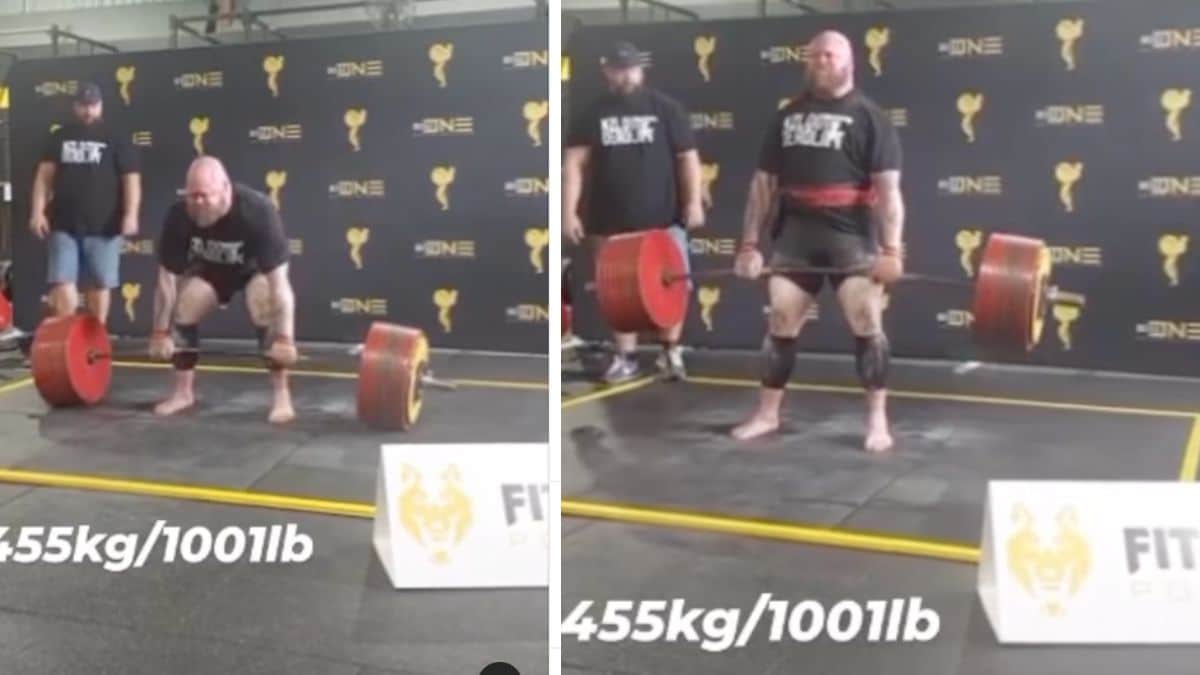
Sean Logan set the 1,003-pound (455-kilogram) deadlift PR at the 2023 New Zealand Log and Deadlift Championships. In addition, Sean shared video footage of all six attempts on his Instagram page.
Judging by how Sean Logan approached the barbell, it seems that he used a deadlift suit. His other pieces of equipment were a lifting belt and lifting straps. Sean also warmed up with 425 kilograms (937 pounds) for his first attempt.
“Super pumped that I’ve finally made the 1000lb club I’ve knocked on the door multiple times only to miss out ?”
Watch the lift here:
Related: Powerlifter Jamal Browner Crushes 435-kg (959-lb) Raw Conventional Deadlift PR In Training
After setting a new deadlift PR, Sean Logan also attempted to lift 480 kilograms (1,058.2 pounds). Even though he was not successful, the fact that he was able to lift the massive weight from the ground indicates that he will be able to lock it out in the future.
Sean Logan also competed in the other portion of the competition, the Log Lift. Due to a shoulder injury he sustained some time back, Sean wasn’t able to perform as expected. Sean’s heaviest successful attempt came out to 150 kilograms (330.7 pounds).
Sean Logan’s Full Performance
Deadlift
425 kilograms (937 pounds)
455 kilograms (1,003 pounds) — Personal Record
Unsuccessful — 480 kilograms (1,058.2 pounds)
Log Lift
140 kilograms (308.6 pounds)
150 kilograms (330.7 pounds)
Unsuccessful — 160 kilograms (352.7 pounds)
During his Strongman career, Sean Logan’s greatest success was winning the 2018 England’s Strongest Man competition. However, he is mostly known for his deadlift. Now that Sean resides in New Zealand, he also holds the country’s record for the heaviest deadlift.
Sean Logan recently also took part in a powerlifting competition for the first time and walked away with some massive lifts. His 410-kilogram (903.9-pound) Squat W/Wraps and 405-kilogram (892.9-pound) Raw Deadlift proved that he has major potential in powerlifting as well.
Watch all of Sean Logan’s lifts here:
Related: Lewis Byng Sets a 411-kg (906.1-lb) U23 Strongman Deadlift World Record
Having set the new Heaviest Deadlift In New Zealand, Sean Logan will now continue climbing the ranks of deadlift leaderboards. If he makes some additional improvements, Sean will be a World Record contender in no time at all. It seems reasonable to expect him to achieve this outcome, especially since he is able to deadlift even more than 455 kilograms (1,003 pounds) at the moment.
Published: 28 May, 2023 | 11:35 AM EDT
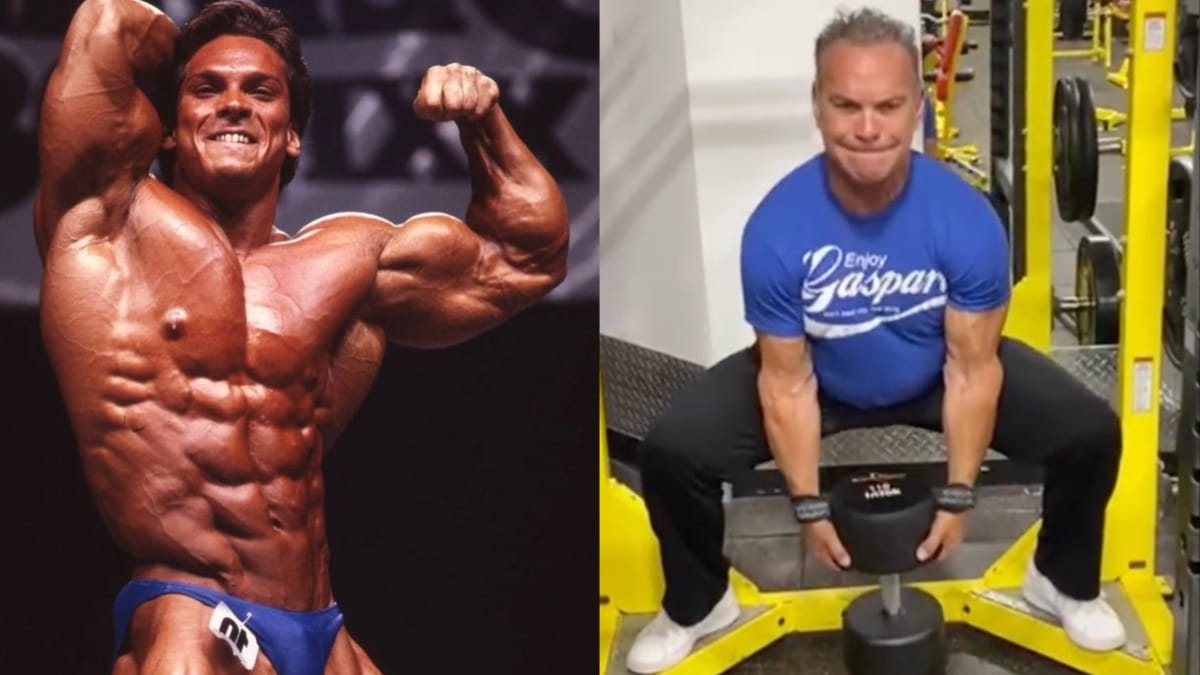
Bodybuilder Veteran Rich Gaspari Reveals Effective Glute-Targeting Exercise for a Stronger Lower Body
Bodybuilding veteran Rich Gaspari revolutionized the Men’s Open division during his days of professional competition. He became the first athlete to display striations in his glutes. In a recent post made on Instagram, Gaspari shared an exercise for building leg muscles and glutes.
Rich Gaspari started his career in the IFBB Pro League in the mid-1980s. He boasted an impressive blend of muscle mass, definition, and conditioning levels. His potential was evident from the start as he cracked the top three of the 1985 Mr. Olympia competition in his maiden appearance. While he did not win the Sandow trophy, he proved himself as a top contender with three runner-up finishes, falling short of eight-time Mr. Olympia Lee Haney on each occasion.
Gaspari was the inaugural winner of the 1989 Arnold Classic and earned an entry into the IFBB Hall of Fame in 2004. He decided to hang up his posing trunks in 1996 after an illustrious career lasting over two decades. Since retiring, he’s become a revered analyst with hot takes.
Following Hadi Choopan’s win at the 2022 Mr. Olympia, Gaspari fired shots at the champion for a perceived lack of conditioning in the back. He urged Choopan to work on the area and bring back an older drier look to the stage in his return.
Gaspari criticized the modern mass monsters of the Open class for relying on steroids and neglecting quality training. He highlighted the decrease in conditioning levels and called on the competitors to prioritize training.
Rich Gaspari has kept a high fitness level after stepping away from competition. He opened up on his use of peptides to achieve anti-aging benefits along with testosterone, weight training, and growth hormone three months ago. Then, he stressed the importance of maintaining proper nutrition to build muscle in addition to effective training.
The 59-year-old believes modern Open athletes take considerably higher dosage of drugs than the competitors of past eras. He issued a cautionary message against using harsh diuretics in hopes of athletes achieving drier looks. In The Menace Podcast with Dennis James, Rich revealed he didn’t use such diuretics to sculpt his physique and laid out the risks involved in using synthetic substances.
Gaspari provided fans with some of his best tips on growing lower body muscles with intense training last month. He encouraged users to reach failure in their leg workouts and offered techniques to maximize the pump.
Rich Gaspari’s Ultimate Glute-Burner for a Strong Lower Body
In an Instagram post, Rich Gaspari shared an effective glutes exercise for building muscle in the legs. He suggested performing sumo squats on an elevated platform to extend the range of motion at the bottom of the movement.
“Great exercise to hit glutes are Sumo squats with a Dumbbell elevating feet so you get more stretch at the bottom of the movement,” wrote Gaspari. “3 sets of 20-30 reps and feel your glutes burn.”
Rich Gaspari continued his feud with the Open division last month. He believes bodybuilding is an art form that is not properly represented in the marquee division. He credited the Classic Physique athletes for bringing the artistic element back into the game.
RELATED: Rich Gaspari Talks PEDs in Bikini/Wellness Divisions and Poor Coaching: ‘It’s Gotten Out of Hand’
Incorporating elevated sumo squats into your workout routine can help you strengthen your lower body, improve balance, and achieve a more sculpted and toned gluteal region. Give this exercise a try and discover the benefits it can bring to your fitness journey.
Published: 28 May, 2023 | 10:44 AM EDT
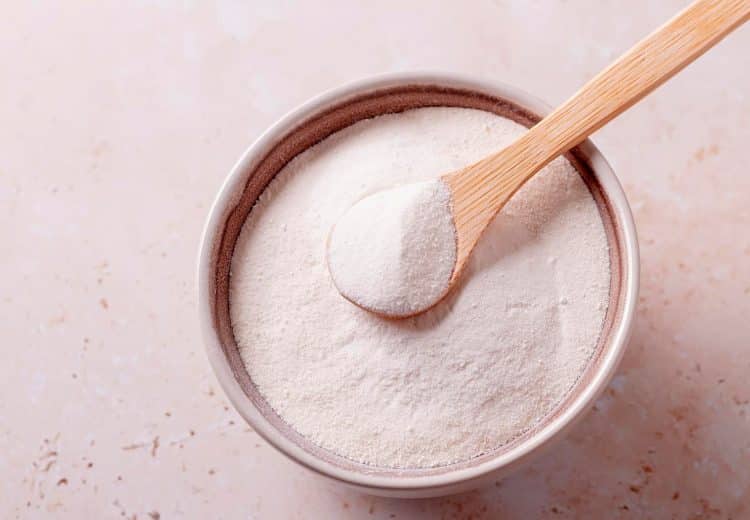
7 Benefits of Collagen for Muscle Growth: Unlock Your Muscle-Building Potential
We all know that protein is the key macronutrient for muscle growth. And when it comes to a protein supplement, most people immediately think of whey. Yet, while it’s the most popular protein supplement, whey isn’t the only one — and it may not even be the best.
Collagen represents the most abundant protein in your body. It is available in several supplement forms, including as a powder that can be added to shakes. So, how good is it for muscle growth? In this article, we discover whether collagen supplementation can help you pack muscle tissue.
What is Collagen?
Collagen is the most common protein in the body, representing between 25-35% of your total protein. The connective tissue that constructs your muscles, ligaments, skin, and tendons is made from it.
Collagen is made from the following three amino acids:
Proline
Glycine
Hydroxyproline
Depending on their configuration, these amino acids will produce one of 28 different collagen forms. The four most common forms are:
Type I
Type II
Type III
Type IV
Type I collagen represents 90% of the total collagen in your body. This dense form of collagen is responsible for the structure, support, and strength of your skin, bones, ligaments, and tendons.
Type II collagen is found in joint ligaments, where it enhances elasticity. It is also part of the intervertebral disc material that cushions the spine.
Type III collagen is contained in muscle, skin, and blood vessels.
Type IV collagen is found in the layers of the skin and ears, and kidneys.
Collagen is part of what is called the extracellular matrix. As such, it involves the construction and structure of every cell in your body.
As we age, our bodies produce less collagen. This decline begins in our late 20s or early 30s and is a major contributor to the wrinkles, joint stiffness, and sagging skin that are the hallmarks of aging. Lifestyle factors such as poor diet, smoking, and excessive exposure to the sun may exacerbate age-related collagen loss.
Collagen supplementation has become popular over the last decade or so to replace the amounts we naturally lose and for its claimed health benefits. Collagen supplements come in various forms, including collagen peptides, which are usually sold in powder form, collagen capsules, liquid collagen, and collagen chewable or gummies.
There are four main sources of collagen for use in supplements:
Bovine (cow)
Porcine (pig)
Marine (fish)
Poultry (chicken)
Benefits of Collagen Supplementation
Collagen supplementation has been shown to provide the following health benefits:
Improves Skin Health
Collagen is well-known as a skin rejuvenator and is used in most skin health products to help reduce wrinkles and replenish skin health. There is some solid science backing up collagen’s ability to enhance skin health. One study involved 114 women aged between 45 and 65. Over eight weeks, the women took either 2.5 grams of collagen or a placebo. At the end of the study period, the collagen group had reduced their wrinkles by 20%.
The researchers found that the supplementation increased elastin production and stimulated the body to produce its own collagen. As the anime suggests, elastin boosts the skin’s elasticity to help prevent wrinkles. [1]
Eases Joint Pain
Joint pain is often a result of degenerative bone disease or a breakdown of bone cartilage. Collagen supplementation can help by building up your protein stores to rebuild cartilage. It also stimulates the body to produce more natural collagen to contribute to this building process.
In one study published in the Journal of Agricultural and Food Chemistry, 80 people with severe joint pain were given either 2 grams of collagen daily or a placebo for 70 days. The collagen group experienced a decrease in joint pain from Day 35 onwards. The pain progressively decreased up to Day 70. [2]
Hormonal Balance
Collagen plays a big part in modulating hormones, especially estrogen. Once more, glycine is the key player here. This amino acid helps to activate estrogen receptors. This helps to channel the free estrogen floating around in your system and use it effectively. Doing so will help to prevent such problems as water retention and oxidative damage.
Promotes Better Sleep
One of the main reasons that people have trouble sleeping is that they are overheated. The most abundant amino acid in collagen is glycine, which has been shown to be able to cool the body. It does this by acting upon the NMDA receptor, which relaxes the blood vessels, allowing blood to flow more effectively through the body. This helps to cool the body down.
Glycine also inhibits a neuropeptide called orexin, which stimulates arousal and wakefulness. So taking collagen can help diminish its effects, helping us attain the relaxed, calm state needed to fall asleep.
Improves Liver Function
The glycine that makes up collagen assists in creating bile, the body’s main fat emulsifier. If we cannot produce enough bile, we will feel bloated and sick after eating a fatty meal. By supplementing with collagen, you can get the glycine you need to kickstart the bile production process. [3]
Collagen also helps offset liver inflammation resulting from excessive alcohol consumption.
Promotes Muscle Recovery
Collagen has been shown to improve muscle recovery after an injury. In one study, researchers found that collagen taken directly after a muscle rupture was able to significantly improve muscle recovery. It was noted that, following the injury, the body was, in effect, screaming out for more collagen. The researchers identified that the injury site needed more Type III collagen straight away; however, weeks later, there was still a demand for more collagen, but this time the Type I version.
Enhances Brain Functioning
Collagen helps support a healthy brain-blood barrier by exchanging compounds between the blood and the brain. The anti-inflammatory effects of collagen also protect the brain. There is also emerging research that suggests that collagen may play a part in neurogenesis, the formation of new brain cells.
Can Collagen Increase Muscle Mass?
Being the most abundant protein in the body, you’d think that collagen must have a role to play in building muscle, which is made of protein. And you’d be right — at least in people with sarcopenia (age-related muscle loss). Sarcopenia affects all men once they reach the age of around 30, with a loss of about 3-5% of total muscle mass every decade from 30 onward.
In a study by Zdzieblik et al., 53 men with an average age of 72 were put on a 12-week resistance training program. Half of them were given a daily dose of 15 grams of collagen, while the other half were given a placebo. Post-study testing revealed that the collagen group had a significantly greater increase in fat-free mass (4.2 kg average compared with 2.9 kg for the placebo group). Muscle strength gain and fat loss were also greater in the collagen group. [4]
Scientists believe that a key mechanism by which collagen boosts muscle growth when combined with resistance training is that it improves muscle protein synthesis and acts as a stimulus for muscle repair and growth after a strenuous workout.
Collagen has been shown to be especially good at inducing protein synthesis in people on a low-protein diet. Of course, most people trying to add muscle are just the opposite, but if you are on a keto diet or follow an intermittent fasting protocol, your protein intake will probably be lower than normal.
Collagen is an excellent source of the amino acids glycine and arginine, both of which are ingredients in creatine. So, when you take a collagen supplement, you are also ingesting two key building blocks of creatine. Creatine synthesizes ATP from the moment you start your workout. It’s what powers you through the initial seconds of your workout. In other words, a collagen supplement will help you generate maximum strength at the start of your workout. That is why the elderly men in the study cited above had an increase in muscle strength while those on a placebo did not.
Is Collagen Better Than Whey for Muscle Gain?
When it comes to supplements, many people have an either-or mentality. They need to know if this is better than that so that they can choose one over the other. The reality is that, in many cases, supplements are complementary. That is certainly the case when it comes to whey and collagen protein.
Whey could be considered a ‘better’ source of protein for muscle growth than casein because it contains more BCAAs (branched-chain amino acids). The three BCAAs – leucine, valine, and isoleucine — are the key drivers of protein synthesis.
Whey protein is a by-product of the cheese-making process. Whey liquid is dehydrated to form a powder. Whey protein is valued because it contains all nine essential amino acids and is fast digesting. Collagen, in contrast, is not an essential amino acid. Though high in glycine, proline, and hydroxyproline, it is relatively low in tryptophan, methionine, and histidine.
A 2018 study directly compared whey and collagen’s ability to build muscle. Eight men were given either 22 grams of whey or collagen protein 45 minutes before exercising, 22 grams intra-workout, and another 22 grams post-workout. The workout consisted of a 75-minute intensive cycle session. The post-study analysis revealed that the whey group had significantly greater protein synthesis levels. This was attributed to the higher levels of BCAAs in whey protein. [5]
A 2009 study by Hays et al. compared the nitrogen balance that results from whey and collagen supplementation. Nitrogen balance relates to the relationship between the level of nitrogen that enters the body through the diet and the levels that the body excretes. Positive nitrogen balance is needed to build new muscle. In this study, nine healthy women were given a whey protein supplement for 15 days. After a one-week washout period, they were given the same amount of collagen for 15 days. The analysis showed that the women had significantly higher levels of positive nitrogen balance during the collagen trial. [6]
The researchers also noted that, while collagen has a lower protein digestibility, on a per-gram basis, those proteins contained more nitrogen. This boosts the level of available nitrogen in the body, meaning that you can be in a higher nitrogen balance with less protein intake than you’d need if you were taking another protein source such as whey.
These studies confirm that collagen plays a vital role in building muscle. It boosts protein synthesis and promotes positive nitrogen balance. This is different from the muscle-building potential of whey protein, which is mainly based on its high levels of BCAAs. Ideally, you should take both collagen and whey protein supplements to maximize your muscle-building potential. In other words, you get more bang for your buck from collagen when it comes to maintaining a positive nitrogen balance.
Collagen Dose for Muscle Growth
The best way to determine the effective dosage for a supplement is to consider the dosages used in clinical studies. In the case of collagen, the study dosages range from 2 to 15 grams per day. If you’re training hard to build muscle, you should err on the higher side because your stressed muscle will have a higher demand for nutrients.
We recommend taking 15 grams of collagen daily for muscle growth.
Side Effects
While collagen supplementation is safe for most people, some may experience unpleasant effects due to intolerance or excessive dosage. Collagen supplements may be manufactured from fish and eggs, so people with an intolerance or allergy to these foods should look for an alternative source that is safer for them.
The following side effects may be experienced:
Skin rash
Acne
Inflamed skin
Scar tissue (fibrosis) in the liver
Kidney stones
Stomach upset
Diarrhea
Constipation
Heartburn
Abnormal heart rhythm
How Long To Take It
Collagen takes a relatively long period to be synthesized in the body and deliver noticeable results. Don’t expect results any sooner than six-eight weeks after beginning collagen supplementation.
The average length of collagen studies is about eight weeks. There have been no reported negative effects of long-term collagen use.
Alternatives
Collagen contains a unique chemical makeup, so finding a like-for-like substitute is not easy. Keratin, which is another form of protein found in hair, nails, and skin, has been promoted as a collagen substitute, but the existing research does not support its ability to replicate the benefits of collagen supplementation. [7]
There have been attempts to cater to vegans wanting to supplement with collagen. By adding human collagen genes to yeast, it can produce its own form of collagen.
You could also purchase individual supplements that contain the three key amino acids in collagen production; glycine, lysine, and proline.
Wrap Up
Several studies support collagen’s ability to promote muscle growth. It appears to simulate both muscle protein synthesis and the positive nitrogen balance needed for it to occur. When you combine this with the other research-backed benefits of taking collagen, it appears that taking collagen is a smart choice. A great way to get your collagen is in the form of a bone broth. To make bone broth, you simmer animal bones and connective tissue, which releases collagen and other nutrients into the liquid. Bone broth also contains muscle growth-promoting minerals such as magnesium and calcium.
I’ve been taking collagen in the form of bone broth for several years. I take a cup of it about an hour before my workout. Then post-workout, I have a whey protein shake. Combining collagen and whey in this manner gives me the best of both worlds. Whether you take collagen in the form of a powder, bone broth, capsule, or liquid, get into the habit of consuming it daily, and your muscle growth potential will get a serious boost.
References
Proksch E, Schunck M, Zague V, Segger D, Degwert J, Oesser S. Oral intake of specific bioactive collagen peptides reduces skin wrinkles and increases dermal matrix synthesis. Skin Pharmacol Physiol. 2014;27(3):113-9. doi: 10.1159/000355523. Epub 2013 Dec 24. PMID: 24401291.
Schauss AG, Stenehjem J, Park J, Endres JR, Clewell A. Effect of the novel low molecular weight hydrolyzed chicken sternal cartilage extract, BioCell Collagen, on improving osteoarthritis-related symptoms: a randomized, double-blind, placebo-controlled trial. J Agric Food Chem. 2012 Apr 25;60(16):4096-101. doi: 10.1021/jf205295u. Epub 2012 Apr 16. PMID: 22486722.
Yamashina S, Ikejima K, Enomoto N, Takei Y, Sato N. Glycine as a therapeutic immuno-nutrient for alcoholic liver disease. Alcohol Clin Exp Res. 2005 Nov;29(11 Suppl):162S-5S. doi: 10.1097/01.alc.0000189281.82523.6c. PMID: 16344603.
Zdzieblik D, Oesser S, Baumstark MW, Gollhofer A, König D. Collagen peptide supplementation in combination with resistance training improves body composition and increases muscle strength in elderly sarcopenic men: a randomized controlled trial. Br J Nutr. 2015 Oct 28;114(8):1237-45. doi: 10.1017/S0007114515002810. Epub 2015 Sep 10. PMID: 26353786; PMCID: PMC4594048.
Impey SG, Hammond KM, Naughton R, Langan-Evans C, Shepherd SO, Sharples AP, Cegielski J, Smith K, Jeromson S, Hamilton DL, Close GL, Morton JP. Whey Protein Augments Leucinemia and Postexercise p70S6K1 Activity Compared With a Hydrolyzed Collagen Blend When in Recovery From Training With Low Carbohydrate Availability. Int J Sport Nutr Exerc Metab. 2018 Nov 1;28(6):651-659. doi: 10.1123/ijsnem.2018-0054. Epub 2018 Oct 1. PMID: 29757056.
Hays NP, Kim H, Wells AM, Kajkenova O, Evans WJ. Effects of whey and fortified collagen hydrolysate protein supplements on nitrogen balance and body composition in older women. J Am Diet Assoc. 2009 Jun;109(6):1082-7. doi: 10.1016/j.jada.2009.03.003. PMID: 19465192.
Mokrejs P, Hutta M, Pavlackova J, Egner P, Benicek L. The cosmetic and dermatological potential of keratin hydrolysate. J Cosmet Dermatol. 2017 Dec;16(4):e21-e27. doi: 10.1111/jocd.12319. Epub 2017 Feb 6. PMID: 28164425.