
 All Posts By Muscle Insider
Board Certified PHD
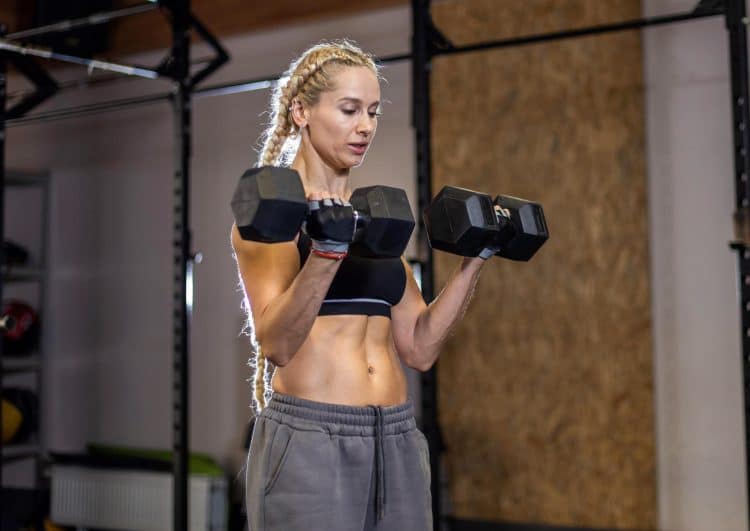
3 Arm Workouts For Women To Build Strong and Sculpted Guns (Featuring 22 Killer Exercisers)
Whether you want to get ready for the summer or build strength to boost your functionality and perform better at daily activities, you must train your arms. Furthermore, strong arms can help you do more in other workouts that require pulling and pushing strength.
Due to hormonal differences, women are more likely to develop bat wings than men. Arm workouts will not only make you look amazing in that sleeveless top, but you’ll also be able to carry those heavy grocery bags with ease.
Arm workouts are an essential part of any fitness routine, especially for women. Besides making you look stunning in sleeveless dresses, arm workouts, provide numerous benefits, including improved strength, posture, and metabolism.
In this article, we cover the 22 best arm exercises to help you carve the perfect arms. We have also programmed these 22 movements into three workouts for women at different experience levels to help maximize the results. This article has something for everyone. So, let’s roll up our sleeves and dive into the world of arm workouts for women — trust us, your arms will thank you!
22 Best Arm Exercises For Women
The arm workouts for women article compiles the most effective biceps and triceps exercises that women can incorporate into their workout routine to achieve beautifully sculpted arms reminiscent of Greek goddesses. Here are the lifts that should be a part of your exercise arsenal:
Barbell Biceps Curl
The barbell biceps curl is an isolation exercise that is incredibly effective for building size and strength. Follow a strict form on this movement for optimal muscle fiber recruitment.
Steps:
Stand upright with a hip-width stance while holding a barbell with a shoulder-wide underhand grip.
Keep your elbows pinned to your sides, and curl the bar to your shoulder level.
Pause and contract your pythons at the top.
Slowly return to the starting position.
Repeat for recommended reps.
Pro Tip: Grab the bar as tightly as possible to engage your forearms. Alternatively, use a false (thumbless) grip to limit forearm recruitment.
Check out our complete barbell biceps curl guide here!
Dumbbell Biceps Curl
The dumbbell biceps curl is a unilateral exercise that can help fix muscle and strength imbalances.
Steps:
Stand erect with a shoulder-wide stance while holding a dumbbell in each hand using a neutral (palms facing your thighs) grip.
While keeping your left arm in place, bend your right elbow to curl the bar to your shoulder level. Twist your arm to the outside during the concentric (upward) motion. Your palm should face your shoulder at the top.
Slowly return to the start position.
Alternate between sides for recommended reps.
Pro Tip: Beginners can hold the dumbbell in front of their thighs with a supinated (palms facing forward) grip. It will help improve your mind-muscle connection.
Check out our complete dumbbell biceps curl guide here!
Dumbbell Hammer Curl
The dumbbell hammer curl helps improve your biceps thickness by working the brachialis muscle.
Steps:
Stand erect while holding a dumbbell in each hand with a neutral grip.
Keeping your elbows pinned to your side, curl the dumbbells to your shoulder level.
Return to the start position.
Repeat for recommended reps.
Pro Tip: Ensure you are not using momentum to lift the weight by swinging your torso back and forth.
Check out our complete dumbbell hammer curl guide here!
Barbell Reverse Curl
The barbell reverse curl engages the forearm muscles, which helps improve your arm symmetry and balance.
Steps:
Stand upright with a hip-width stance.
Grab the bar with a shoulder-wide overhand grip.
Keeping your elbows pinned, curl the bar to your shoulder level.
Rinse and repeat.
Pro Tip: Use a thumbless grip for greater forearm muscle recruitment.
Check out our complete barbell reverse curl guide here!
Underhand Pull-Up
Contrary to what most lifters believe, you don’t always need weights to train your biceps. The bodyweight underhand pull-up will set your pythons on fire.
Steps:
Grab a pull-up bar with a supinated shoulder-wide grip.
Bend at your elbows to bring your chest to the pull-up bar level.
Pause and contract your pythons at the top.
Return and repeat.
Pro Tip: Ladies that cannot perform a bodyweight pull-up can use an assisted pull-up machine. You could also ask your training partner to spot you or use a resistance band.
Check out our complete underhand pull-up guide here!
Cable Biceps Curl
Unlike the free weights, the cable keeps constant tension on your muscles throughout the range of motion, helping induce hypertrophy.
Steps:
Set the cable pulley at the lowest setting and attach a straight bar attachment.
Grab the bar with a shoulder-wide grip.
Keeping your elbows pinned, curl the bar to your shoulder level.
Rinse and repeat.
Pro Tip: Ensure the weight is engaged throughout the range of motion. The weight should not rerack at the bottom of the movement.
Check out our complete cable biceps curl guide here!
21s
This exercise is a must-do for women that have never experienced a biceps pump.
Steps:
Grab a barbell with a shoulder-wide underhand grip.
Keeping your elbows pinned, curl the bar until your forearms are parallel to the floor.
Repeat for seven reps.
After completing the seven reps, curl the bar to your shoulder level.
Slowly lower the bar until your forearms are parallel to the floor.
Repeat for seven reps, then lower the bar to the start position.
Perform seven full reps.
Pro Tip: Use an EZ bar to make this exercise easier on your wrists.
Check out our complete 21s guide here!
Incline Dumbbell Curl
This exercise eliminates momentum since you’ll be lying on an incline bench.
Steps:
Adjust the back of an incline bench at a 45-degree angle with the floor.
Lie with your back on the bench while holding a dumbbell in each hand with a neutral grip.
Curl the dumbbells to your shoulder level. Turn out your wrists during the eccentric motion.
Lower the weights.
Repeat.
Pro Tip: Lowering the back of the incline bench will make the exercise more challenging, whereas lifting it will make it easier.
Check out our complete incline dumbbell curl guide here!
Preacher Curl
Since the preacher curl involves keeping your arms on an incline bench, it allows optimal biceps brachii engagement. It is an excellent exercise to improve your biceps peaks.
Steps:
Place the back of your upper arms on the preacher curl bench.
Hold an EZ bar with a shoulder-wide grip.
Bend your elbows to curl the bar.
Slowly lower the bar to the start position.
Repeat for reps.
Pro Tip: Using a cable preacher curl machine helps keep constant tension on your biceps throughout the ROM.
Check out our complete preacher curl guide here!
Squatting Biceps Cable Curl
This exercise locks your elbows in place and removes the possibility of using momentum by swinging your torso.
Steps:
Set a cable pulley machine at the lowest position and attach a straight bar.
Grab the bar with a shoulder-wide underhand grip and take a step back.
Sit in a deep squat and place your elbows on the inside of your knees.
Curl the bar toward your head.
Slowly return to the start position.
Pro Tip: Keep your chest up throughout the exercise. Rounding your shoulders will limit your range of motion.
Overhead Cable Curl
Ladies, if you want to look dazzling while hitting the front double biceps pose, you must add the overhead cable curl to your exercise arsenal.
Steps:
Set the cable pulleys at the highest position and attach D-handle bars on both ends.
Grab the handles with an underhand grip, position yourself in the center of the machine, and assume a shoulder-wide stance.
Your arms should be extended at your sides at the starting position.
Keeping your elbows pinned, perform a biceps curl.
Rinse and repeat.
Pro Tip: Maintain the natural curvature of your spine throughout the range of motion. Rounding your back will throw you off balance during the set.
Check out our complete overhead cable curl guide here!
Diamond Push-Up
The diamond push-up is a bodyweight triceps exercise that works your triceps through its full range of motion.
Steps:
Get on all fours.
Place your hands together on the floor so your index fingers and thumbs touch. Your hands should form a triangle.
Extend your legs behind you.
Get into a push-up position.
Slowly lower your chest to the floor by bending your elbows until your chest touches your hands.
Pro Tip: Your body, from head to heels, should be in a straight line throughout the exercise. Lifting your hips or letting them drop will remove tension from your triceps.
Check out our complete diamond push-up guide here!
Cable Triceps Pushdown
The cable triceps pushdown is a staple in most triceps workouts, and for a good reason.
Steps:
Set the cable pulley at the highest position and attach a straight bar.
Grab the bar with a shoulder-wide overhand grip.
Extend your arms while keeping your elbows pinned to your sides.
Pause and contract your triceps at the bottom for optimal muscle fiber stimulation.
Repeat for reps.
Pro Tip: Use different grips, such as a straight bar, V-handle bar, and ropes, to train your triceps from different angles.
Check out our complete cable triceps pushdown guide here!
Overhead Triceps Extension
This exercise engages your lateral and long triceps head, helping develop a chiseled horseshoe muscle.
Steps:
Stand upright with a shoulder-wide stance.
Hold one end of the dumbbell with both hands and lift it overhead.
Keeping your elbows pinned, slowly lower the dumbbell until the other end touches the back of your neck.
Return to the start position.
Repeat for reps.
Pro Tip: Perform this exercise on a cable machine to keep constant tension on your triceps.
Check out our complete overhead triceps extension guide here!
EZ Bar Skull Crusher
The EZ bar skull crusher is an incredibly effective exercise to tone your arms and build strength.
Steps:
Lie supine (facing the ceiling) on a flat bench.
Hold an EZ bar with a narrow grip over your shoulders. Your arms should be perpendicular to the floor at the start position.
Keeping your lower arms pinned, bend your elbows so the bar is a few inches away from your forehead at the bottom.
Rinse and repeat.
Pro Tip: Beginners and those lifting heavy should perform this exercise with a spotter.
Check out our complete EZ bar skull crusher guide here!
Dumbbell Kickback
You must perform this exercise with a picture-perfect form for optimal triceps engagement.
Steps:
Grab a dumbbell in each hand with a neutral grip.
Slightly bend your knees and lower your torso toward the floor by bending your hips and pushing them back.
Lift your elbows above your sides. Pull back your shoulder blades and lift your shoulders to your ears.
The dumbbells should be next to your chest at the start position.
Extend your arms.
Pause and contract your triceps.
Slowly return to the start position.
Pro Tip: Do this exercise on one side if you are struggling to establish a mind-muscle connection in the bilateral variation.
Check out our complete dumbbell kickback guide here!
Reverse-Grip Cable Pressdown
Some exercisers find the reverse-grip cable press-down more effective at targeting the triceps than the conventional pushdown.
Steps:
Set a cable pulley at the highest position and attach a straight handle.
Grab the bar with an underhand grip.
Keep your elbows pinned slightly in front of your body and extend your arms.
Rinse and repeat.
Pro Tip: You could also use lifting straps if you have difficulty holding onto the bar with a reverse grip.
Check out our complete reverse-grip cable press-down guide here!
Close-Grip Bench Press
This compound (multi-joint) exercise primarily works the triceps. Use a weight that allows you to follow a full ROM and complete between 8-12 reps.
Steps:
Lie with your back on a bench.
Grab the bar just outside your chest width.
Unrack the bar and hold it over your chest.
Lower the bar to your chest by bending your elbows.
Explode to the start position.
Repeat for reps.
Pro Tip: Avoid flaring your elbows while performing this exercise, as it can put unnecessary strain on your shoulder rotator cuffs.
Check out our complete close-grip bench press guide here!
Dips
The parallel bar dips are an excellent exercise to target your triceps. Beginners could perform this exercise on a flat bench.
Steps:
Grab the parallel bars with a neutral grip.
Your arms should be extended at the starting position.
Slowly lower toward the floor while keeping your elbows close to your sides and maintaining an upright torso.
Your chest should be at your hand level at the bottom.
Repeat for reps.
Pro Tip: Avoid bending forward while performing this exercise, as it will result in pectoral muscle engagement.
Check out our complete dips guide here!
Tate Press
The Tate press is an underutilized exercise. However, its unique range of motion will help you tone your arms.
Steps:
Lie supine on a flat bench while holding a dumbbell in each hand using a neutral grip.
Your arms should be above your chest and perpendicular to the floor at the start position.
Turn your arms so your palms are facing forward.
The inside plates of the dumbbell should be touching each other. Your elbows should be pointing outward. This will be your starting position.
Initiate the movement by bending at your elbows and bringing the dumbbell inner plates toward your chest.
Touch the dumbbell to your chest at the bottom.
Return to the starting position.
Pro Tip: Ensure that the dumbbells are in contact throughout the range of motion.
Check out our complete Tate press guide here!
Cable Triceps Kickback
This is an excellent dumbbell kickback variation if you have trouble establishing a mind-muscle connection during the conventional exercise.
Steps:
Set the cable pulley at hip height and attach a D-handle bar.
Grab the handle with a neutral grip.
Step back and bend over so your torso is almost parallel to the floor.
Lift your elbow so your upper arm is parallel to the floor.
Extend your arm.
Pause and contract your triceps.
Repeat for recommended reps before switching sides.
Pro Tip: Holding onto the cable directly will help ensure better stability.
Check out our complete cable triceps kickback guide here!
Resistance Band Overhead Triceps Extension
You’re in for a surprise if you’ve never tried the resistance band overhead triceps extension before. Use a loop resistance band for this movement.
Steps:
Place one end of the loop resistance band around your right foot.
Wrap the other end around your right hand.
Bring your hand to your shoulder level and point your elbow toward the ceiling.
Keeping your elbow pinned, extend your arm.
Pause and contract your triceps.
Slowly lower to the start position.
Repeat for recommended reps before switching sides.
Pro Tip: Start with the lightest resistance band in your gym and focus on contracting your triceps at the top of the movement.
3 Effective Arm Workouts For Women
Given below are three arm workouts for women at different experience levels. These workouts will train your arms from different angles using various equipment to ensure overall growth.
Beginner Arm Workout For Women
The arm workouts for women in this article include four exercises each for the biceps and triceps. Although we have listed the biceps exercises first, you must start the workouts with your weaker muscle group. For example, ladies with lagging triceps should begin these workouts by training the back of their upper arms.
Exercise
Sets
Reps
Biceps Cable Curl
3
8-12
Preacher Curl
3
8-12
Dumbbell Hammer Curl
3
8-12
Overhead Cable Curl
3
8-12
Cable Triceps Pushdown
3
8-12
Dumbbell Kickback
3
8-12
Resistance Band Overhead Extension
3
8-12
Dips
3
8-12
Dumbbell-Only Arm Workout For Women
You can perform the following workout with just a pair of dumbbells. Keep your training intensity high by limiting your rest duration between exercises to 60-120 seconds. You must complete these workouts within 60 minutes.
Exercise
Sets
Reps
Dumbbell Biceps Curl
3
8-12
Incline Dumbbell Curl
3
8-12
Dumbbell Hammer Curl
3
8-12
Dumbbell Reverse Curl
3
8-12
Overhead Triceps Extension
3
8-12
Dumbbell Kickback
3
8-12
Dumbbell Skull Crusher
3
8-12
Tate Press
3
8-12
Advanced Arm Workout For Women
In this workout, you’ll use two advanced training techniques, supersets and dropsets.
#
Exercise
Sets
Reps
1
Barbell Biceps Curl
3
8-12
2
21s
3
21
3a
Machine Preacher Curl
3
8-12
3b
Underhand Pull-Up
3
8-12
4a
Reverse-Grip Triceps Extension
3
8-12
5
Tate Press
3
8-12
6a
Close-Grip Bench Press
3
8-12
6b
Diamond Push-Up
3
8-12
The machine preacher curl (3a) and underhand pull-up (3b) are super set exercises for the biceps. After performing 8-12 reps on the machine preacher curl, start doing the underhand pull-ups without stopping for rest. You are allowed a 60-120 second rest after completing the recommended reps for the underhand pull-up. Similarly, the close-grip bench press and diamond push-up are super sets for the triceps.
The reverse-grip triceps extension (4a) is a drop-set exercise. Perform 8-12 reps on this exercise, then immediately lower the weight on the stack and perform another set to failure without stopping for rest.
Wrapping Up
Whether you are a fitness enthusiast or a beginner, these three arm workouts for women can help you feel stronger, more confident, and ready to take on any challenge that comes your way.
Stick to these workouts for at least 12 weeks to allow them the time to work their magic. Feel free to tweak the workouts to fit your needs. However, you must progressively overload your muscles to ensure strength and muscle gains. Best of luck!
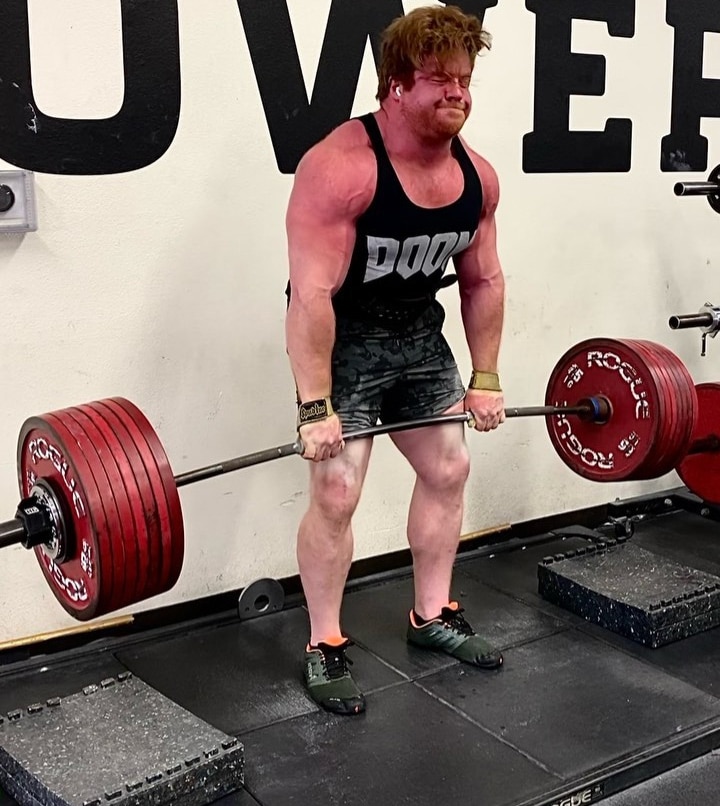
Partial Deadlifts vs. Full Deadlifts – Which One Should You Do?
Barbell back squats are often called the king of exercises. Entire workouts have been built around the back squat, including the classic old-school 20-rep squat routine. It’s safe to say that the squat is a VERY productive exercise for building muscle mass and strength.
All of that said, there are drawbacks to squats. For starters, you need a squat or power rack to perform heavy squats safely. Getting pinned under a heavy bar can cause severe injury. Barbell squats also require a high degree of technical proficiency to perform safely. An ugly squat is often a dangerous squat.
And then there is the whole “squats are functional” thing. While squatting (the movement) is highly functional, when was the last time you did a squat with a heavy weight on your back outside of the gym? Probably never, right?
All this means that the barbell deadlift could be the real king of exercises. You don’t need a rack to do them, and they teach you how to lift heavy weights off the floor, making them a REAL functional exercise. Plus, if you want to build real-world strength and useable muscle mass, the deadlift delivers.
That’s not to say that squats are bad, but deadlifts may be better.
All squats vs. deadlift arguments aside, there are several different types of deadlifts for you to choose from. In this article, we compare and contrast the partial and full deadlifts so you can decide which is the best one for you.
What is Partial Deadlift?
Block Pull / Ken Cooper
The partial deadlift involves starting your rep with the bar higher off the floor than usual. For full or conventional deadlifts, the standard bar height is nine inches. That’s because standard 45lbs/20kg Olympic bumper plates have a diameter of 18 inches.
With partial deadlifts, you raise the bar by placing it on blocks or in a power rack with the safety bars set at your preferred height. This reduces your range of motion and changes several aspects of the lift. Partial deadlifts are also known as block pulls and rack pulls, named after the equipment used to elevate the bar.
Powerlifters frequently use partial deadlifts as an assistance exercise to increase conventional deadlift performance. They also feature in strongman competitions where deadlifts often start from a higher position, e.g., the silver dollar deadlift. Partial deadlifts also offer benefits to bodybuilders and general exercisers.
Muscles Worked
The partial deadlift is a compound exercise involving multiple muscles and joints working together. From top to bottom, the main muscles tested and trained by partial deadlifts are:
Trapezius – upper back
Rhomboids – between the shoulder blades
Deltoids – shoulders
Latissimus dorsi – side of the upper back
Core – muscles of the midsection, including the abs and lower back
Biceps – front of the upper arm
Forearm flexors – gripping muscles
Gluteus maximus – back of the hips
Hamstrings – back of the thigh
Quadriceps – front of the thigh
Triceps surae – calf muscles
Needless to say, partial deadlifts are a very comprehensive exercise that works almost every muscle in your body. Do a few sets of bench presses, dips, or push-ups, and you can theoretically train your entire body with just two exercises.
How To Do Partial Deadlifts
Get the most from partial deadlifts while keeping your risk of injury to the minimum by following these step-by-step instructions!
Set your barbell in a power rack or on blocks so it’s between lower knee and mid-thigh height. The lower the bar, the more work your glutes and hamstrings have to do.
Stand close to the bar so it’s touching your legs. Your feet should be between hip to shoulder-width apart.
Hinge forward from your hips, bend your knees slightly, and grab the bar. Hold it using a shoulder-width double overhand or mixed grip. Flex your lats and upper back.
Brace your core, straighten your arms, and lift your chest. Take any tension out of the bar.
Drive your feet into the floor, push your hips forward, and stand up. Do not bend your arms or round your lower back. Take care not to lean back at the top of your rep.
Lower the bar back down under control, allow it to settle for a second or two, reset your core and grip, and repeat.
Tips:
Use gym chalk and/or lifting straps to reinforce your grip.
Wear shoes with flat soles and low heels for stability.
Use a weightlifting belt for support and safety.
This exercise works best with low reps and heavy weights.
Do not use a deadlift bar for this exercise, as doing so may damage it.
Partial Deadlifts – Pros
Not sure if partial deadlifts deserve a place in your workouts? Consider these advantages and benefits and then decide!
Better for tall and inflexible lifters
Bending down to deadlift a weight from the floor requires excellent hamstring flexibility. Tall people may also find bending over so far challenging. Because of this, some lifters end up rounding their lower backs during deadlifts, increasing their risk of injury.
Partial deadlifts start with the barbell raised, making it easier to reach if you are tall or inflexible. This means that partial deadlifts are often more lower back-friendly than deadlifts from the floor.
Lift heavier weights
Partial deadlifts involve a shorter range of motion than full deadlifts. Because of this, you should be able to lift heavier weights compared to conventional deadlifts. Lifting heavier weights will build more strength, especially in your upper back and grip.
Build a bigger back
Bodybuilders use partial deadlifts to increase back size and width. The partial deadlift involves every major upper, lower, and mid-back muscle, and using heavy weights is one of the best ways to increase back thickness and density.
Overcome your sticking points
Like most freeweight exercises, full deadlifts have sticking points. Some lifters struggle to break the bar away from the floor, while others get stuck at the midpoint of their rep and battle to lock out their hips.
Partial deadlifts allow you to work on your lockout, so you are more likely to be able to complete your conventional deadlift reps successfully.
Fatigue management
Full deadlifts are incredibly fatiguing. They challenge your entire body and central nervous system, especially if you do very low reps, e.g., 1-3 per set. Partial deadlifts are a little less taxing as the range of motion is less.
So, if you are feeling too tired to do full deadlifts, you may find that you can still perform partials. Alternatively, you can alternate between full and partial deadlifts if you want to avoid accumulating too much fatigue, e.g., because you deadlift twice a week.
Partial Deadlifts – Cons
While partial deadlifts are an effective exercise, there are a couple of drawbacks to consider, too:
Equipment
You’ll need pulling blocks, a power rack, or stacks of bumper plates to do partial deadlifts. If you cannot raise the bar off the floor, you won’t be able to do this exercise. In contrast, all you need for full deadlifts is a bar and weight plates.
You can lift more weight
While this is a pro, it can also be a con. Just because you can lift more weight doesn’t mean you should! Some lifters load up the partial deadlift and use way more weight than they can handle safely. This can lead to injury, especially to the lower back.
Not as functional
Most strenuous lifting activities start with a weight resting on the floor. Partial deadlifts begin with the weight raised, so you could become “weak off the floor” if you never do full deadlifts.
What is Full Deadlift?
The full or conventional deadlift is so-called because each rep starts with the weight resting on the floor. In other words, it’s a “dead” weight. When talking about deadlifts, most people are referring to full deadlifts rather than partials.
The deadlift is a popular exercise with all strength athletes and is the final lift contested in powerlifting events. Deadlifts also feature in most strongman competitions. Bodybuilders do deadlifts to build upper and lower body strength and muscle size. Even booty girls do deadlifts as it’s such an effective hip and butt-builder.
The current world record for the deadlift is 501kg/1,104.5lbs, held by strongman Hafþór Júlíus Björnsson. However, Eddie Hall’s 500kg lift is the heaviest ever in strongman competition.
Muscles Worked
Full deadlifts work the same muscles as partials. However, full deadlifts involve more lower-body engagement. This is because you must flex your knees and hips more to reach the floor.
The muscles tested and trained during full deadlifts are:
Trapezius
Rhomboids
Deltoids
Latissimus dorsi
Core
Biceps
Forearm flexors
Gluteus maximus*
Hamstrings*
Quadriceps*
Triceps surae
*Greater involvement compared to partial deadlifts.
How to do full deadlifts
Get the most from full deadlifts while minimizing the risk of injury by following these guidelines!
Place your barbell on the floor. Use standard 45lbs/20kg plates or raise the bar on blocks so it’s around nine inches off the floor.
Stand with your feet between hip and shoulder-width apart, toes under the bar. The bar should lightly touch your shins.
Lean forward and hold the bar with an overhand or mixed shoulder-width grip.
Straighten your arms, drop your hips, brace your core, and raise your chest. Pull the slack out of the bar. Flex your lats and press the bar toward your legs.
Drive your feet into the floor and stand up, pushing your hips forward as you rise. Make sure your hips do not come up faster than your shoulders.
Stand up straight but avoid leaning back.
Lower the bar under control back to the floor, allow it to settle, reset your core and grip, and repeat.
Learn more about perfecting your deadlift form here.
Tips:
If using a mixed grip, switch your hands around set by set to avoid muscle imbalances.
Deadlift in flat shoes or just your socks to maximize posterior chain engagement.
Do not allow your lower back to round during deadlifts, as doing so can cause severe injury.
Use chalk and/or straps to reinforce your grip.
Wear a weightlifting belt for safety and support.
Full Deadlifts – Pros
Are full deadlifts the best variation for you? Consider these benefits and then decide!
A very functional exercise
Full deadlifts teach you how to safely lift heavy objects from the floor. This is a common feat of strength that many people must perform daily, e.g., lifting kids, pets, grocery bags, etc. Full deadlifts develop functional or useful strength that can help you in the real world outside of the gym.
A total muscle builder and strengthener
Full deadlifts work almost every major muscle in your body – upper and lower. As such, they’re an excellent option for time-pressed exercisers who don’t have time for more convoluted workout plans.
So, whether you want more muscular legs, a broader back, or an unbreakable grip, full deadlifts will give you what you want.
A standardized lift
Providing you use Olympic bumper plates, all full deadlifts should be more or less identical and, therefore, comparable. So, if you lift 220lbs in Boston, you should have no problem repeating your lift in New York.
In contrast, partial deadlifts can start from almost any height, making it much harder to compare your performances. Starting with the bar at 12 inches feels very different to 15 or 18.
Lots of options and variations are available
Partial deadlifts are a variation of full deadlifts, and there are plenty more to choose from. Additional full deadlift variations include:
Paused deadlifts
Sumo deadlifts
Deficit deadlifts
Banded deadlifts
Single-leg deadlifts
Touch ‘n’ go deadlifts
Hack deadlifts
Snatch grip deadlifts
All these variations (as well as partial deadlifts) mean your deadlift workouts never need to be repetitive or boring.
Full Deadlifts – Cons
There are also a couple of drawbacks to full deadlifts to consider:
Increased lower back stress
Bending forward to reach a barbell on the floor puts a lot of stress on your lower back. This can be a problem for people suffering from lower back pain. This stress is highest for taller lifters and those with tight hamstrings.
Related: 3 Reasons Your Back Hurts After Performing Deadlifts
A complex exercise
Contrary to what you might think, full deadlifts are quite technical and require skill to perform safely. Common deadlift form faults include rounding the lower back, letting the hips rise faster than the shoulders, “squatting” the bar up, and lifting your heels.
Some lifters, especially beginners, may need help learning the deadlift. Given its potential to cause injury, the deadlift should not be taken lightly!
A very taxing exercise
The full deadlift is so demanding that some lifters only do a few sets a week. In contrast, others only train heavy deadlifts every 10-14 days. A heavy deadlift workout will take a lot out of your body, taxing not only your muscles but your central nervous system.
This could be a problem if you also need energy for other activities, e.g., a sport you’re training for.
Some people hate deadlifts!
Heavy, high-rep deadlifts are tough. It’s not uncommon to feel faint or sick after a set of deadlifts. But, of course, this demand is what makes deadlifts so effective. Still, for those of a less masochistic persuasion, the difficulty of deadlifting means they dread or hate doing deadlifts.
The good news is that deadlifts are NOT compulsory, and there are plenty of exercises you can do instead.
Partial Deadlifts vs. Full Deadlifts
So, now that you know a little more about partial and full deadlifts, let’s judge these exercises by a few different criteria:
Partial Deadlifts vs. Full Deadlifts: Strength
Partial and full deadlifts are both excellent strength-building exercises. They are ideal for low rep, heavy weight training, which is critical for building strength. However, because the movement/range of motion differs between these two exercises, so does the type of strength they develop.
Full deadlifts will develop full-range strength, particularly in your hamstrings and hips. They’re much more lower-body dominant. In contrast, partial deadlifts use a smaller range of motion and less lower-body engagement. They tend to emphasize the upper body more.
Therefore, you should choose the exercise that strengthens the muscles you want to develop – full deadlifts for the lower body and partials for your upper body.
Winner: It’s a draw!
Partial Deadlifts vs. Full Deadlifts: Hypertrophy
Both partial and full deadlifts are potent muscle builders. However, like building strength, each exercise tends to affect different parts of your body. Full deadlifts work your upper body and lower body reasonably equally, but partial deadlifts are more upper-body dominant.
Because of this, you must choose the right deadlift for the muscle groups you want to enlarge.
Winner: It’s a draw!
Partial Deadlifts vs. Full Deadlifts: Safety
While deadlifts can be performed safely, the loads and movements mean there is always a risk of injury, especially to the lower back. Biceps tears are also a problem during deadlifts, especially when using an alternating or mixed grip.
The reduced range of motion and more back-friendly starting position means that partial deadlifts are potentially safer than conventional deadlifts, especially for taller lifters and anyone with tight hamstrings.
Winner: Partial deadlifts!
Partial Deadlifts vs. Full Deadlifts: Ease of learning
The large range of motion and potentially awkward starting position means that full deadlifts can be hard for beginners. In contrast, the partial deadlift is harder to get wrong, as the bar is set at a more comfortable and reachable height.
However, most beginners should be able to learn either type of deadlift with proper instructions. In fact, the deadlift is a critical movement for all exercisers as it teaches you how to safely lift heavy objects off the floor, e.g., when picking dumbbells up off the floor to do curls.
Winner: Partial deadlift, albeit only just!
Partial Deadlifts vs. Full Deadlifts: Equipment
Full deadlifts are a very low-tech exercise. All you need is somewhere flat to stand, a barbell, and enough weight plates. You can do full deadlifts in a fancy gym, your garage, or even in your backyard.
In contrast, you’ll need something to rest the bar on for partial deadlifts, be that a power rack or pulling blocks. Because of this, you may not have the equipment you need to do partial deadlifts.
Winner: Full deadlifts!
Partial Deadlifts vs. Full Deadlifts: Long-term progression
With partial deadlifts, your primary source of long-term progression is adding weight to the bar. You CAN reduce the height of your barbell, which will make the lift more challenging. Still, unless you lower the bar a fraction of an inch at a time, this is not a viable option for long-term progression.
In contrast, while you can add weight the same way with full deadlifts, there are also many variations you can use to maintain your progress, such as deficit and snatch grip deadlifts.
Many of these variations are designed to boost your conventional deadlift performance. However, they probably won’t do much to improve your partial deadlift.
Winner: Full deadlift!
Partial Deadlifts vs. Full Deadlifts: Variety
As discussed above, partial deadlifts are already a variation of full deadlifts, and there are many more for you to try. Lifters do not tend to just do partial deadlifts and use other variations to keep their workouts fresh and productive.
In fact, powerlifters usually use partial deadlifts as an assistance or accessory exercise to improve their conventional deadlift lockout. Only strongmen compete in the partial deadlift.
Winner: Full deadlift!
Partial Deadlifts Vs. Full Deadlifts – Wrapping Up
Back in Victorian times, the deadlift was known as the health lift. It was considered one of the best exercises you could do for strength, endurance, fitness, and well-being. Nowadays, you are more likely to see exercisers doing leg presses than deadlifting, and the squat is arguably more popular than the deadlift.
However, in terms of bang for your buck, deadlifts are hard to beat. Very few exercises work as many muscles or are as functional as the deadlift. Sadly, though, because of prolonged sitting, many people are unsuited to deadlifts, and some gyms have even banned them.
So, are partial deadlifts better than full deadlifts, or is it the other way around? The truth is that both of these exercises are excellent, and either one would make a great addition to your lower body or back workouts.
Do full deadlifts for more of a full-body workout or partial deadlifts to emphasize your upper body.
Ultimately, any deadlift is a good deadlift, providing you perform it correctly, of course!
Read also: Romanian Deadlift Vs. Deadlift: Which One Should You Do?
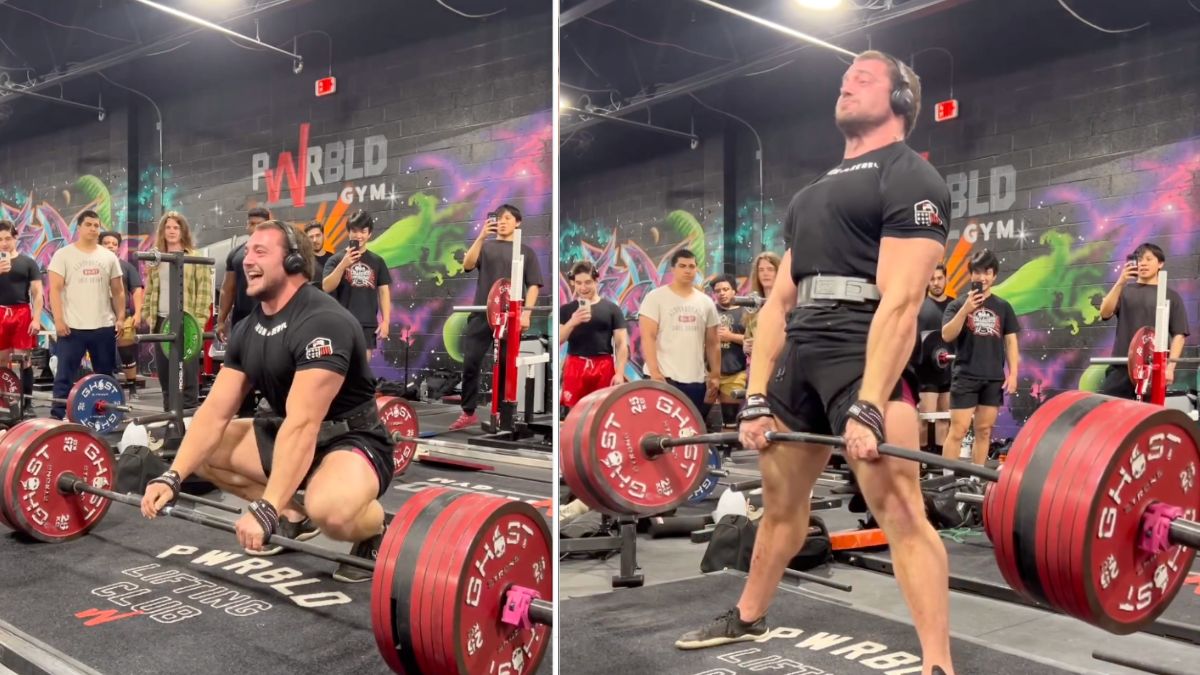
Powerlifter Shane Hunt Smashes Massive 926-lb Deadlift Three-Rep PR
Shane Hunt is a highly regarded athlete who is commonly recognized for his strength and sheer size. Even after acknowledging his humongous lifts, many still can’t fathom what an impressive specimen he actually is. However, he continues to improve on every aspect of his physical shape. So, most recently, Shane achieved a 926-pound deadlift three-rep personal record (PR). Afterward, he posted about his latest success on Instagram.
Upon loading the 926 pounds onto the barbell and getting ready to lift it, a crowd of people gathered around Shane Hunt to witness his mind-blowing deadlift. However, after putting his headphones on, Shane turned his focus to the task ahead of him.
Shane Hunt got comfortable in a sumo stance and wrapped his lifting straps around the bar. When he began deadlifting the 926 pounds, he made all three repetitions appear effortless.
Seeing that Shane Hunt used lifting straps to achieve the lift, it would not count in a powerlifting competition. However, that still doesn’t undermine the fact that this is the heaviest that he has ever managed to perform three reps with.
Watch the lift here:
Related: Powerlifter Shane Hunt Crushes 11 Reps Of 700-lb (317.5-kg) Conventional Deadlift At 2022 Olympia Expo
Currently, Shane Hunt is preparing for his next appearance, which is not far off. Despite the fact that the competition in which he intends to compete is currently unnamed, he has revealed that it will take place within about eight weeks. This comes as a surprise, since Shane has competed just a few weeks ago as well.
Shane Hunt seems to be particularly active compared to the past few years. We are just five months into 2023, but he has already taken part in the 2023 Ghost Clash 2 and 2023 Pioneer On The Beach. However, this proves that Shane is hopeful of breaking some records and ready to do everything in his power for this feat.
A decade in the making, Shane Hunt’s resume is now filled with incredible achievements. He has taken part in 16 sanctioned powerlifting competitions and won 12 of them. Moreover, he is regarded as one of the greatest deadlifters in history.
Shane Hunt’s Competition PRs
Squat: 360 kilograms (793.6 pounds) — (2022 USPA Pro Raw Championships)
Bench Press: 232.5 kilograms (512.5 pounds) — (2023 USA-UA Pioneer on the Beach)
Deadlift: 425 kilograms (936.9 pounds) — (2022 USPA Pro Raw Championships)
Total: 1,015 kilograms (2,237.7 pounds) — (2022 USPA Pro Raw Championships)
Related: Powerlifter Shane Hunt Breezes Through a 420-kg (925.9-lb) Raw Deadlift PR
Shane Hunt’s Competition History
Personal Bests
Equip
Squat
Bench
Deadlift
Total
Dots
Raw
793.7
507.1
793.7
2237.7
582.6
Competition Results
Place
Fed
Date
Competition
Division
Total
Dots
1
WRPF
2023-02-18
The Ghost Clash 2
Pro Open
2188.1
570.16
Location
USA-FL
Competition
The Ghost Clash 2
Division
Pro Open
Age
25
Equipment
Raw
Class
275.6
Weight
264.3
Squat
705.5
755.1
-771.6
755.1
Bench
485
507.1
507.1
Deadlift
881.8
925.9
-970
925.9
GLP
115.42
1
USPA
2022-09-24
Pro Raw Championships
Open
2237.7
582.6
Location
USA-MO
Competition
Pro Raw Championships
Division
Open
Age
25
Equipment
Raw
Class
275.6
Weight
265
Squat
716.5
771.6
793.7
793.7
Bench
485
507.1
507.1
Deadlift
881.8
937
-970
937
GLP
117.9
1
WRPF
2022-02-12
Ghost Clash
Open
2160.5
560.37
Location
USA-FL
Competition
Ghost Clash
Division
Open
Age
24
Equipment
Raw
Class
275.6
Weight
268.1
Squat
716.5
755.1
-782.6
755.1
Bench
463
485
501.6
501.6
Deadlift
826.7
859.8
903.9
903.9
GLP
113.27
6
WRPF
2021-09-25
The Bucked Up Showdown
Open
2028.3
528.8
Location
USA-MO
Competition
The Bucked Up Showdown
Division
Open
Age
24
Equipment
Raw
Class
275.6
Weight
263.9
Squat
705.5
749.6
-777.1
749.6
Bench
451.9
474
474
Deadlift
804.7
-854.3
-854.3
804.7
GLP
107.06
1
WRPF
2021-02-20
Hybrid Showdown III
Open
2061.3
534.78
Location
USA-FL
Competition
Hybrid Showdown III
Division
Open
Age
23
Equipment
Raw
Class
275.6
Weight
267.9
Squat
606.3
655.9
705.5
705.5
Bench
429.9
457.5
474
474
Deadlift
804.7
843.3
881.8
881.8
GLP
108.1
8
USAPL
2019-10-16
Raw Nationals
MR-Jr
1653.5
456.11
Location
USA-IL
Competition
Raw Nationals
Division
MR-Jr
Age
22
Equipment
Raw
Class
231.5
Weight
226.8
Squat
-540.1
-573.2
573.2
573.2
Bench
330.7
-341.7
330.7
Deadlift
672.4
716.5
749.6
749.6
GLP
93.49
1
WRPF
2019-06-01
Hybrid Summer Slam
Open
1581.8
434.83
Location
USA-FL
Competition
Hybrid Summer Slam
Division
Open
Age
22
Equipment
Raw
Class
242.5
Weight
228.7
Squat
-551.2
573.2
589.7
589.7
Bench
330.7
-341.7
330.7
Deadlift
-661.4
661.4
-733
661.4
GLP
89.08
4
USAPL
2018-10-11
Raw Nationals
MR-Jr
1692
463.23
Location
USA-WA
Competition
Raw Nationals
Division
MR-Jr
Age
21
Equipment
Raw
Class
231.5
Weight
231
Squat
562.2
589.7
-606.3
589.7
Bench
352.7
363.8
374.8
374.8
Deadlift
683.4
727.5
-766.1
727.5
GLP
94.84
1
USAPL
2018-08-18
Southeast Regional
MR-Jr
1675.5
460.68
Location
USA-NC
Competition
Southeast Regional
Division
MR-Jr
Age
21
Equipment
Raw
Class
231.5
Weight
228.6
Squat
551.2
584.2
-611.8
584.2
Bench
341.7
358.3
363.8
363.8
Deadlift
639.3
683.4
727.5
727.5
GLP
94.38
1
USAPL
2018-06-02
Gulf Breeze Open
MR-Jr
1653.5
447.48
Location
USA-FL
Competition
Gulf Breeze Open
Division
MR-Jr
Age
21
Equipment
Raw
Class
264.6
Weight
237.9
Squat
534.6
573.2
606.3
606.3
Bench
308.6
336.2
-363.8
336.2
Deadlift
628.3
672.4
711
711
GLP
91.44
DQ
USAPL
2017-10-10
Raw National Championships
MR-Jr
Location
USA-FL
Competition
Raw National Championships
Division
MR-Jr
Age
20
Equipment
Raw
Class
231.5
Weight
209.3
Squat
407.9
407.9
Bench
-292.1
1
USAPL
2016-12-09
Southeast Regionals
MR-T3
1422
408.98
Location
USA-FL
Competition
Southeast Regionals
Division
MR-T3
Age
19
Equipment
Raw
Class
231.5
Weight
206.5
Squat
457.5
485
501.6
501.6
Bench
264.6
275.6
286.6
286.6
Deadlift
600.8
-633.8
633.8
633.8
GLP
84.09
1
USAPL
2016-12-09
American Open & Police-Fire Nationals
MR-T3
1422
408.98
Location
USA-FL
Competition
American Open & Police-Fire Nationals
Division
MR-T3
Age
19
Equipment
Raw
Class
231.5
Weight
206.5
Squat
457.5
485
501.6
501.6
Bench
264.6
275.6
286.6
286.6
Deadlift
600.8
-633.8
633.8
633.8
GLP
84.09
1
USAPL
2014-01-25
GA Winter Classic & Single Ply Invitational
MR-T2
1411
374.59
Location
USA-GA
Competition
GA Winter Classic & Single Ply Invitational
Division
MR-T2
Age
16
Equipment
Raw
Class
275.6
Weight
250.4
Squat
507.1
Bench
330.7
Deadlift
573.2
GLP
76.22
1
APF
2013-02-23
Florida State Meet
M_TR_1_APF
1234.6
317.38
Location
USA-FL
Competition
Florida State Meet
Division
M_TR_1_APF
Age
15
Equipment
Raw
Class
275.6
Weight
275.6
Squat
424.4
Bench
314.2
Deadlift
496
GLP
63.96
Data Source: Open Powerlifting. Last Updated: April 12, 2023
Analyze Lifts
Not many people have achieved a deadlift of over 1,000 pounds, but Shane Hunt is currently very close to joining that exclusive minority. His training sessions are always at maximum force, which is why he is reaching new heights during workouts.
Published: 7 May, 2023 | 3:41 PM EDT
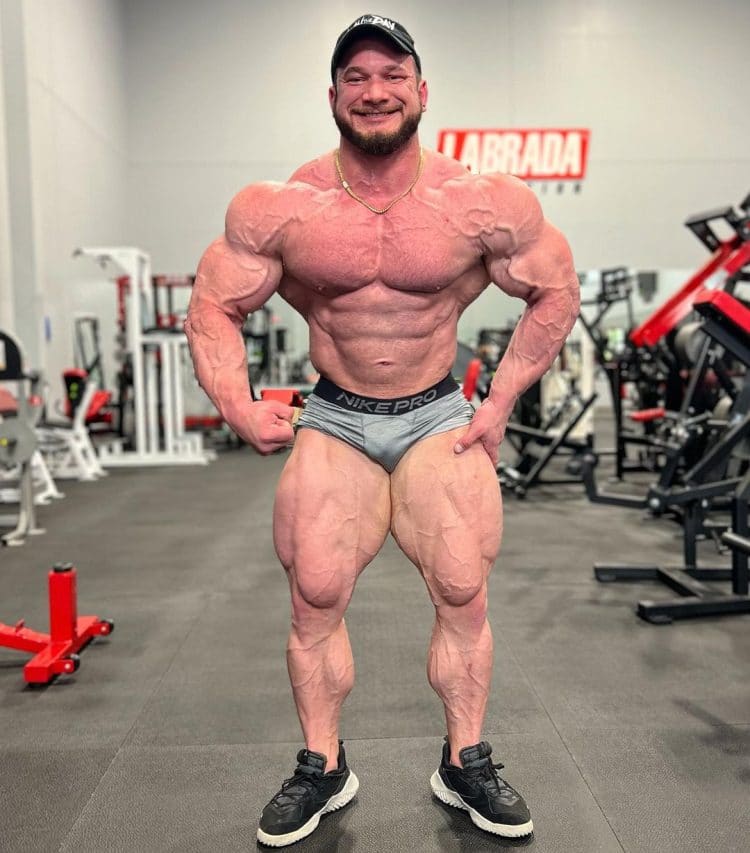
Hunter Labrada Shares Tips for Breaking Plateaus & Changes in Off-Season & Prep Training
American bodybuilder Hunter Labrada is on a mission to reassert himself in the mix of title contention after an uneventful Olympia showing. He did not get discouraged by the setback and got back to making the necessary changes. In a recent video posted on YouTube, Labrada shared his thoughts on how to break through plateaus and revealed the changes in his training in the off-season and prep.
Hunter Labrada, son of IFBB Hall of Famer Lee Labrada, entered the Men’s Open division as a legacy competitor in 2020. He dominated the competition at the Tampa Pro with his enormous muscle mass, size, and posing skills and took home the top prize in his maiden IFBB show. The win made way for him to join the lineup for Mr. Olympia, where he placed eighth in his first outing. He scored gold the following year at the 2021 Chicago Pro before improving his standing to fourth place at the 2021 Mr. Olympia.
Labrada’s latest appearance happened at the 2022 Mr. Olympia last December. He didn’t bring his best form on stage and dropped down to seventh place. Following the result, Labrada expressed his frustrations with his performance. His coach Ben Chow admitted he came in flatter than anticipated as there were troubles in timing his peak. Given that he was not in the top six, Labrada eyed competing in two shows for two reasons; to qualify for the Olympia contest and figure out his peak. He started a new diet and training routine for the off-season earlier this year.
Hunter Labrada via @hunterlabrada
Labrada regularly educates his fanbase on a variety of topics related to fitness and bodybuilding. He revealed his full day of eating along with the supplements he was consuming two months ago. Then, he followed up by offering tips on building lower body muscle and smoked a heavy leg workout. One of his biggest ambitions for the season is to lean out his midsection. He detailed three ways of using vacuums to enhance core control.
Last month, Labrada gave fans a look into his preparations for the upcoming guest posing appearances at the Emerald Cup and the Pittsburgh Pro. He weighed in at 283 pounds while fasting and listed the new diet he was utilizing to get ready for the shows.
Hunter Labrada shares tips on breaking through plateaus
In a recent video posted on YouTube, Hunter Labrada shared his thoughts on pushing past any point of stalled progress in the training room.
“If I am stuck on a set and I’ve gotten the same amount of reps more than two sessions in a row what I’m probably going to look to do is employ some kind of intensity technique or a plateau breaker if you will,” said Labrada. “That would probably be in that case the rest pause, doing it for as many reps as I can, which should be a tie for the amount of reps I got last week and the week before, taking 10 breaths resting 15ish seconds and then going as many as I can again aiming to get three or four more. Doing that a couple weeks in a row and then going back to building that straight set.”
Related: 4 Methods For Busting Through Lifting Plateaus
Labrada reveals the difference in training off-season and in prep
Labrada gave his take on the changes in training during the off-season and in prep.
“Not a damn thing. Regardless of the period of the year that I’m in whether it’s a contest prep, an off-season, a health phase, this that or another, I am still training the same way. Very much so logged progressive overload training. The only thing changing is the load and the volume so in the off-season obviously I’m stronger. I’m full of food, body fat’s a little higher, the load and volume might be a little higher although I’m very low volume even in the off-season as we go into the prep.
“The poundages will go down a bit because obviously strength takes a dip but the variable I like to play with a little more is reducing the volume. Heading into a prep I might be doing three working sets on half the exercises I’m doing and then two on others by the end of prep I might be down on two on a lot of them and even on legs days like down to one on most of the exercises.”
Hunter Labrada opened up on developing the gym and bodybuilding mindset last month. He encouraged the more experienced lifters to set realistic goals and allow themselves time to build the skill. A few weeks later, Labrada offered tips on growing weaker calves in a straightforward way. He also laid out a detox drink that helps boost gut health and improve digestion earlier this week.
His latest update will help fellow gym-goers and fitness enthusiasts get back on track for progress and adjust their training routine throughout the year accordingly.
You can watch the full video below.
Published: 7 May, 2023 | 2:23 PM EDT
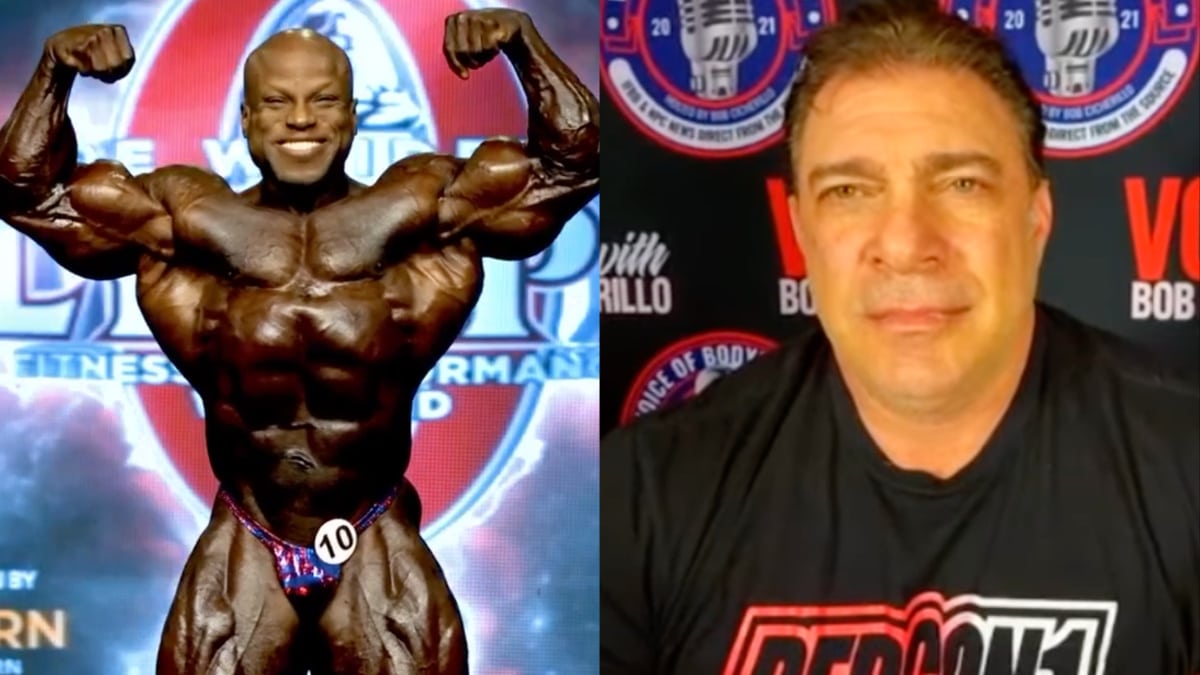
‘Only an Idiot Would Want to Get Rid of 212’: Bob Cicherillo Issues Fiery Response
IFBB Pro League athletes’ representative Bob Cicherillo is a revered analyst of the game known for his often hot takes. He isn’t afraid to ruffle some feathers no matter the topic at hand. In a recent video uploaded on YouTube, Cicherillo issued a fiery response against those calling for the end of the Men’s 212 division.
The Men’s 212 class was first introduced as the 210-pound division in 2008. The IFBB experimented with different weight caps before settling on the 212-pound mark in 2011. Since its inception, it has proven to be an increasingly popular category in the sport.
Numerous contenders have made their splash in other divisions, such as Former 212 competitor Hadi Choopan, who created history by winning the Men’s Open division at the 2022 Mr. Olympia. Former 212 Olympia champ Derek Lunsford switched to the Open group last year and scored silver at the Olympia.
There has been a movement questioning the validity of the 212 class in the wake of the success some contenders found in the Open. Bodybuilding veteran Lee Priest suggested that the league remove the category from the Olympia event and add the prize money to the Open section. He believes the top 212 contenders would be able to hold their own against the mass monsters based on the performance of Choopan, Lunsford, and former Olympia king Kamal Elgargni.
Men’s Open standout Iain Valliere isn’t a fan of the 212 either. He voiced his disapproval of the group and theorized contenders should work on developing their abilities to compete in the Open instead. On the other hand, Lunsford argued the 212 needed to stay based on the opportunities it provided athletes who were working their way up.
Bob Cicherillo issues a fiery message for those wanting the 212 division to end
In a recent YouTube video, Bob Cicherillo hit back at those calling for the elimination of the Men’s 212 division.
“There’s some people calling for the demise of the 212,” said Cicherillo. “Let me just clarify that. Those aren’t people those are idiots. Let’s get that clear. Only an idiot would want to get rid of a division that’s been so successful and provides history for people.”
“[212] gave the chance for Joses, Felix Lewis’, and everybody else that we can bring into the discussion an opportunity to turn professional, compete in an even level playing field against people that were within 10 pounds, not 50 or 70 pounds. It’s literally given careers to people. Ask these guys if they want to get rid of it. We provide a platform that people can literally go from one division, they outgrow it and go to another.”
“The Hadi Choopans and Derek Lunsfords, these are guys that were able to transition. If you’re that good god bless go to that but why would we want to get rid of it for the other 99% of guys who have done very well and again has provided contracts, guest postings, starting businesses, representing supplement companies. I’m sure Flex Lewis would have done very well in the Open but it’s a little more impressive when you’re a seven-time Olympia champion.
Bob Cicherillo faced heat for his criticism of former two-time Mr. Olympia Mamdouh ‘Big Ramy’ Elssbiay two months ago. He remained steadfast in his suggestions to the Egyptian to move on from professional competition and doubled down on it following the conclusion of the 2023 Arnold Classic. The pair made peace weeks later as Ramy indicated no plans to hang up his posing trunks just yet.
Cicherillo believes Ramy would compete at the upcoming 2023 Mr. Olympia. He backed Choopan to defeat fellow Open sensation Nick Walker at the event. However, he favored Samson Dauda to triumph over all after his Arnold Classic win.
The 57-year-old extended his support for Kamal Elgargni to add the 2023 Masters Olympia title under his belt last month. He’s confident the former 212 champ has what it takes to come out on top of the show without adding size.
The 212 division has enabled many contenders to make a name for themselves in bodybuilding and it’s hard to imagine what the sport would look like without it given its immense success.
You can watch the full video below.
Published: 7 May, 2023 | 12:33 PM EDT
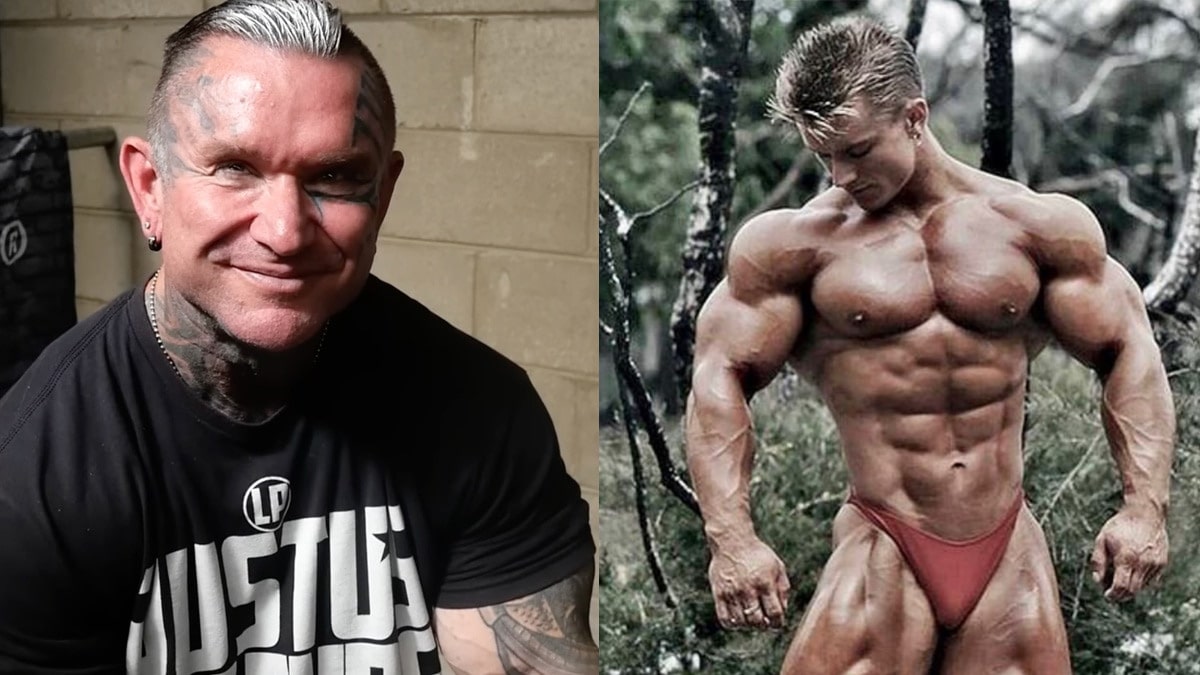
Lee Priest Reveals Changes in Training & Diet from His 20s to 50s
Australian bodybuilding veteran Lee Priest made a name for himself with his insane conditioning levels and longevity. He’s one of the few competitors who continued to perform even after stepping away from professional competition. In a recent video uploaded on YouTube, Priest shared the changes in his training and diet from when he was in his 20s to now that he’s in his 50s.
Lee Priest started his career in the IFBB Pro League as a Men’s Open contender in 1989. He became one of the youngest athletes to earn a Pro Card at the age of 20. Boasting gigantic arms with razor-sharp muscle detail, he worked his way up the ranks with frequent contest appearances. He secured an invite to the Mr. Olympia competition in 1997, where he placed sixth in his debut.
Priest was a regular feature of the Olympia shows with six participations between 1997 and 2003. While he did not win the Sandow trophy, he went up against the likes of eight-time champ Ronnie Coleman, six-time champ Dorian Yates, Shawn Ray, and four-time victor Jay Cutler. He scored his biggest win at the 2006 Ironman Pro and made his final IFBB appearance at the 2006 Grand Prix Australia.
Lee has not lost his passion for working out and maintains a high level of personal fitness. He opened up about taking Deca (Nandrolone) in his teenage years to build muscle and how he’s managed to retain it despite facing health challenges such as a neck injury last November. Then, he offered his expertise on performing the decline bench press for optimal chest muscle growth. He cautioned his fans against loading up too heavy as the decline motion could increase the risk of injuries.
Earlier this year, Priest gave fans a look into building gigantic forearms. He revealed he never trained the muscle group suggesting his refined forearms were down to genetics and overall training. He listed eight exercises that could help grow weak forearms. The 50-year-old went on the offensive against the Men’s 212 division a few months ago. He believes the 212 competitors could hold their own against some of the freakiest mass monsters of the Men’s Open class if they brought their best package.
Following the announcement of the returning 2023 Masters Olympia, Priest expressed a desire to complete the show had it not been for his chest atrophy. Two months ago, Priest laid out tips for effectively using preacher curls to maximize biceps gains and pump.
Priest weighed in on the Minnesota court’s ruling permitting transgender athletes to compete in women’s sports weeks ago. He bashed the decision for being unfair to women and urged the females to go on strike in protest.
Lee Priest reveals changes in his diet & training from his 20s to his 50s
In a recent YouTube video, Lee Priest shared how his training and diet protocols have changed over time from when he was in his 20s to now that he’s entering his 50s.
While he continues to train in a similar fashion, he needed to make some adjustments due to his injuries.
“The only thing that’s probably changed now is the weights,” said Priest. “Until I had this or the neck injury from the car accident, exactly the same. I’d still go as heavy as I could because I get good heavy days. But now with injuries I just gotta work around things. But overall still exactly the same as when I started really.”
“It’s good to focus on your form and also seated you can’t cheat as much and you can’t go as heavy. If you do have a back problem it’s probably easier to do it seated as well rather than just bending over but whatever feels comfortable for you. Don’t be one of those people where they go well he does them seated I have to do them seated when you could feel it better standing up. Everyone’s going to be different because their limbs are longer or shorter. That’s fine what works for you. I say do both if you can.
“[Recovery is] about the same really. I sometimes go sort of hard on leg still but not as heavy. I do a good amount of weight higher reps but really focus on the quads and it still might be sore for two or three days at the most after but still recover pretty quick as long as I’m getting the sleep, the food in. I can still train and not eat a lot of food and not sleep well and feel like sh*t.”
He theorized burning fat might be tougher but he manages to stay in good shape with cardio while being around 211-213 pounds currently.
“Now, maybe burning body fat gets harder as you get older. Metabolism might slow down but I still do lots of cardio so it’s good for burning fat and keeping healthy.”
“2 hours minimum of cardio. An hour in the morning and another in the afternoon. Then I’ll walk the dogs as well so anywhere between two to three hours a day.”
“I’m sitting around 96-97 kilos (211-213 pounds). It’s a comfortable weight. I’m not force feeding myself. Sometimes I only have two meals a day so I could probably go heavier but I can’t be bothered.”
Lee Priest voiced his disapproval of the qualification requirements for the 2023 Masters Olympia last month. He encouraged the organizers to raise the age criteria from 40 to 50+ with the condition that the athlete did not compete for at least two to three years.
Based on the latest update, it’s evident Priest continues to enjoy working out and leading a healthy lifestyle even without competition.
You can watch the full video below.
Published: 7 May, 2023 | 11:07 AM EDT

Fasted Running Explained: Benefits and Precautions
Intermittent fasting is the latest buzzword in fitness circles. Practitioners of this form of calorie control swear by it as a means to achieve a better state of being. Athletes, in particular, are especially gong-ho about intermittent fasting, claiming that it helps them maximize their muscle gain while boosting metabolism.
One of the most popular fitness trends out there nowadays is fasted running. Those who practice it say that it has made a world of difference to their fitness levels while helping them shed fat. This article delves into the world of fasted running, looking into its pros and cons, and tries to give you a ringside view into what is now undoubtedly a major health trend.
Fasted running is popular for two main reasons. Firstly, there is a camp of followers who feel they do not have sufficient time in the morning to eat before going on a run. They also find that running on a full stomach causes cramps. The other camp of followers goes for fasted runs because they want the added benefits of running on an empty stomach, like fat loss.
A Quick Look at Intermittent Fasting
Intermittent fasting involves going without food for a certain number of hours a day and consuming all your calories in the remaining hours. These periods are known as the fasting window and feeding window, respectively. It has been claimed that intermittent fasting helps to lose weight, improve insulin levels, improve cardiovascular health, improve brain health, and potentially prevent cancer.
During fasting, the body uses up all its glycogen stores for energy and undergoes a metabolic switch wherein it enters a state known as ketosis. In ketosis, the body breaks down its fat stores to make ketone bodies that fuel the body in the absence of glycogen.
Intermittent fasting is a favorite with athletes as it helps them build more muscle while boosting their metabolic rates. Anabolic fasting, in particular, helps with this. From rank beginners to hardcore fasters, intermittent fasting has something for everyone. It has various routines and schedules that can be customized according to your needs.
During fasting, it is important to drink enough water to stay hydrated. If you feel hungry, go for a shot of lemon water to keep yourself satiated. If you are starving, sip a cup of bone broth during your fasting window. Remember, you must avoid consuming any calories during the fast to reap the maximum benefits of intermittent fasting.
What is Fasted Running?
Simply put, fasted running means that you run on an empty stomach. Another way of defining it is that you run after going through a long period without food. The majority of people practice fasted running as the very first activity in the morning before they have breakfast or consume any kind of pre-run snacks.
Running is an intense activity that requires lots of energy. This is why eating normally in the non-fasting hours leading up to the running time is crucial. This means you must consume enough nutrients to get sufficient energy to take care of running demands and other activities in your daily routine. Based on the caloric intake and volume of the last meal you had, if four hours have passed after your last snack or six hours have passed after your last meal, you are doing fasted running.
Besides getting sufficient energy for your running sessions, looking after hydration and recovery is also important. Depending on the kind of intermittent fasting you are doing, fluids may or may not be a part of your schedule. It is very important to be hydrated adequately to compensate for the fluid and salt loss during running.
You must also consider recovery after the running session. You need to pay attention to your running schedule so that you can plan your fasting periods to accommodate recovery times. During recovery, your body will have to replenish the energy it burnt during your exercise session. To do this, it has to have a ready supply of sugars, nutrients, and amino acids.
Related: Calories Burned Running Calculator
Benefits of Fasted Running
There are quite a few benefits attached to fasted running. Check them out here:
Fasted Running Could Increase Fat Oxidation
Fasted running increases fat oxidation, meaning that a larger percentage of calories you burn as you run comes from stored body fat instead of stored glycogen in the muscles. Your body has limited glycogen stores in the skeletal muscles and the liver; these levels will go down overnight during fasting.
An athlete who is endurance trained can store up to 2,000 calories in the form of glycogen in the muscles and the liver, while other runners can store about 1,500 calories. This is why, when doing fasted running, your body will try to conserve these limited glycogen levels and instead burn fat for energy.
A study has shown that you can burn 20% more fat during endurance training, like running on an empty stomach. [1]
Fasted Running Could Improve Digestive Problems
If you have a sensitive stomach, you might find that fasted running reduces gas, side stitches, cramping, bloating, and runner’s trots. Studies have discovered that you are more likely to have nausea while running if you are running on a full stomach. [2]
During exercise, blood gets diverted from the digestive tract to meet the enhanced oxygen demands of muscles. Your digestion will cease, and anything sitting around your stomach will stay there without getting digested. This irritates the gut, causing nausea, gas, and bloating.
If you have a sensitive stomach, even snacks can cause nausea. Hence, fasted running will be a good option for you.
Fasted Running Brings Greater Loss of Weight
Studies have shown that exercising on an empty stomach will cause you to consume fewer calories during the day. [3]
Possibly, fasted running decreases appetite by suppressing the hunger hormone ghrelin. Hence, while fasted running does not directly cause weight loss because it will not consume more calories compared to running on a fed stomach, it is possible that fasted running can help speed up weight loss because you are consuming fewer calories during the day.
Fasted Running Improves the Regulation of Blood Sugar
One main concern that runners have before they do fasted running is that they may become hypoglycemic, a state where their blood sugar is too low. This can cause headaches, fatigue, dizziness, nausea, irritability, and decreased performance.
However, studies show that fasted running does not cause a decrease in blood sugar, even in athletes with diabetes. [4]
Studies have even shown that if you exercise in a fasted state, like running, it can improve insulin sensitivity, leading to better blood sugar control. [5]
Even when backed up by these findings, it would make sense for you to consult a doctor if you have diabetes before you do fasted running.
Drawbacks to Fasted Running
While fasted running has wonderful benefits, it has some potential drawbacks. We take a look at these below:
Fasted Running Could Cause Muscle Loss
When you exercise in a fasted state, glycogen stores get depleted quickly, and your body turns to the fat deposits and the muscles for energy. So it is possible that fasted running can lead to muscle protein depletion, leading to muscle loss.
Some evidence suggests that doing fasted cardio can potentially increase the depletion of muscle for energy, which means that when you do fasted running, your body may begin to burn protein for fuel. [6]
Fasted Running Could Increase Cortisol Levels in the Body
Cortisol is one of the primary stress hormones in the body, and chronically elevated cortisol levels are associated with a signal to trigger the body to store fat, primarily in the abdominal region. We must remember that any type of exercise, like fasted running, is a stressor to the body. Even hunger, as well as prolonged fasting, act as stressors.
Hence, combining the two, i.e., fasting and exercise, can increase cortisol levels significantly, as studies have shown. [7]
Fasted Running Could Lead to Hormonal Imbalances
While fasted running can increase cortisol levels, some studies have shown that exercising in a fasted state could cause more hormone imbalances [8]. This can increase your risk of injury and negatively affect your recovery after workouts and the gains you derive from fasted running.
Fasted Running May Hamper Athletic Performance
The biggest concern runners have with fasted running is that it can hamper their performance, as research has shown, because they are not consuming adequate fuel before running. [9]
Your strength, speed, and intensity levels will naturally be higher if you run in a fed state. If you eat a meal rich in carbohydrates and protein before running, you can continue for a longer period compared to running on an empty stomach. Fasted running may hamper your ability to run for long distances and durations.
How Long Should a Fasted Run Last?
Unfortunately, there is no rule to determine the duration of your fasted run. The length of your run is influenced by your training intensity. Because of the lack of glycogen stores, any high-intensity effort would naturally need to be quite short, as it depends entirely on the glycogen stores.
On the other hand, if you are doing a long, slow recovery run, it can be done in a glycogen-depleted condition, as your energy will be derived from your fat stores. If you want to adopt fat burning as a principle, you should go for longer, slower runs. You should start with short periods and gradually work your way up to, ideally, one hour of a slow run.
At What Pace Should I Conduct a Fasted Run?
The most important factor in this question is the intensity at which you run. If you are looking for endurance, a long run should be conducted at 70-75% of your aerobic power. You could also go for shorter, higher-intensity runs, but these runs will be short, and you will need a lot of time to recover. You also have to be mindful that you replenish your carbohydrate stores immediately after the short burst run so that recovery and repair can happen optimally.
Frequently Asked Questions
What happens when you do a fasted run?
Fasted running is famous for its fat-burning abilities. When you do a fasted run, your glycogen levels will be low. Hence, your body will start to burn the fat stores it has, in what is known as fat oxidation, to fuel your run. This leads to fat loss.
Will running in a fasted state cause an increase in heart rate?
Fasted exercise, like a fasted run, will increase your oxygen uptake by 9.3% and your heart rate by 8.4%. This will happen within the first 60 minutes of exercise.
Should I eat after a fasted run?
You should eat a combination of carbs and protein within 60 minutes of ending the fasting run.
What should I eat after running fasted?
After a fasted run, you should consume a mix of protein and carbohydrates to promote muscle growth. This meal should be consumed immediately after the workout.
Conclusion
Including fasted running into your training regimen can have several potential benefits for your health and fitness. Training your body to burn fat for fuel improves your endurance and reduces the risk of chronic diseases. But remember to consult a doctor before you start because fasted running is not for everybody.
If you aim to take your running game to the next level, fasted running could be the solution. Irrespective of whether you are an amateur runner or a professional, fasted running is a very effective way to challenge yourself, give your performance a boost, and reach your fitness goals. Who knows, you may even discover an affinity for fasted running in the process.
Remember, fasting running is not a one-size-fits-all solution, and you must experiment with various training methods to discover the one that suits you best. So what are you waiting for? Lace up and hit the road!
References
Vieira, Alexandra Ferreira, et al. “Effects of Aerobic Exercise Performed in Fasted V. Fed State on Fat and Carbohydrate Metabolism in Adults: A Systematic Review and Meta-analysis | British Journal of Nutrition | Cambridge Core.” Cambridge Core, 9 Sept. 2016, https://doi.org/10.1017/S0007114516003160.
“Exercise-induced Nausea Is Exaggerated by Eating.” Exercise-induced Nausea Is Exaggerated by Eating – ScienceDirect, 25 May 2002, https://doi.org/10.1006/appe.2000.0391.
Bachman, Jessica L., et al. “Exercising in the Fasted State Reduced 24-Hour Energy Intake in Active Male Adults.” PubMed Central (PMC), 21 Sept. 2016, https://doi.org/10.1155/2016/1984198.
https://academic.oup.com/jcem/article/104/1/111/5105939?login=true. academic.oup.com/jcem/article/104/1/111/5105939?login=true.
Rothschild, Jeffrey A., et al. “What Should I Eat Before Exercise? Pre-Exercise Nutrition and the Response to Endurance Exercise: Current Prospective and Future Directions.” PubMed Central (PMC), 12 Nov. 2020, https://doi.org/10.3390/nu12113473.
“Does Cardio After an Overnight Fast Maximize Fat Loss? : Strength and Conditioning Journal.” LWW, https://doi.org/10.1519/SSC.0b013e31820396ec.
Kim, Tae Woon, et al. “Comparison of the Effects of Acute Exercise After Overnight Fasting Andbreakfast on Energy Substrate and Hormone Levels in Obese Men.” PubMed Central (PMC), 30 June 2015, https://doi.org/10.1589/jpts.27.1929.
Rothschild, Jeffrey A., et al. “What Should I Eat Before Exercise? Pre-Exercise Nutrition and the Response to Endurance Exercise: Current Prospective and Future Directions.” PubMed Central (PMC), 12 Nov. 2020, https://doi.org/10.3390/nu12113473.
“Intermittent Fasting and Its Effects on Athletic… : Current Sports Medicine Reports.” LWW, https://doi.org/10.1249/JSR.0000000000000614.
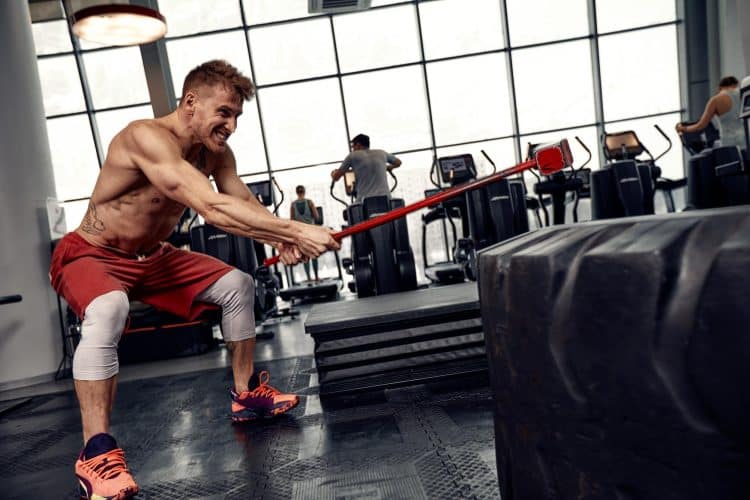
How to Avoid Fatigue: Tips for Post-Exercise Recovery!
Are you tired of being tired after a workout and dread that feeling of exhaustion that hits you like a ton of weights after hitting the gym? You’ve come to the right place.
Many people start exercising because they want to feel energetic and invigorated. However, working out has the exact opposite effect on some. They feel fatigued and drained after a workout and end up dragging their feet through the rest of the day. People that train late in the evening don’t have it any better, either. Exercise fatigue can make it hard to fall asleep.
Furthermore, training fatigue and exhaustion don’t discriminate between beginners and advanced lifters. It can plague the training experience of lifters across all experience levels. Depending on several factors, a lifter might experience fatigue immediately after a workout or the following day.
Chronic fatigue can hamper your ability to recover after a workout, which can impede your strength and muscle gain journey, inhibit your performance in upcoming workouts, and increase your risk of injury.
Contrary to what most lifters have come to believe, post-workout fatigue doesn’t have to be the norm. Making a few changes to your pre-training and post-workout regimen can reduce or even eliminate the feeling of exhaustion and help your body recover more efficiently.
In this article, we cover how to avoid fatigue, the most common reasons for fatigue after a workout, and what you can do to maximize your workout performance while powering up your post-workout recovery. So, put down that Red Bull, and listen up.
Reasons for Fatigue After a Workout
In contrast to the prevailing view held by most lifters, what you do immediately after a workout session is not the only factor responsible for a post-training crash. Multiple factors could be at play if you feel tired and exhausted after a training session. You must analyze your entire lifestyle to check where you are lacking. Here are the factors to consider while troubleshooting your post-exercise fatigue:
Training Intensity
Your training intensity has a significant impact on your post-workout experience. You’re more likely to experience fatigue after a high-intensity training regimen than after a low to moderate-intensity workout. HIIT (high-intensity interval training) workouts involve short bursts of high-intensity exercise followed by brief periods of rest or lower-intensity exercise.
Although the popularity of HIIT workouts is on the rise, only a few trainers know how to program HIIT sessions correctly to maximize results and limit post-training fatigue.
Additionally, lifters that are bumping up their training intensity are at higher odds of experiencing prolonged training fatigue. Trying new exercise programs, lifts, training methods, and advanced training principles can also lead to post-workout exhaustion.
How to avoid exercise fatigue due to high training intensity:
You must gradually increase your training intensity and limit your HIIT workouts to less than 45 minutes to restrict the risk of post-training fatigue. Furthermore, you must cut back your training frequency if you still experience fatigue after lowering your training intensity.
Caffeine
Caffeine, due to its energy, focus, and alertness-boosting capabilities, is the darling of the fitness community. Pre-workout supplements are loaded with caffeine to give you a solid punch of energy. Recently, the sports supplement market has witnessed a flood of energy drinks. Bros that don’t have the budget for a pre-workout supp or energy drinks usually throw down espresso shots to fire up for their training sessions.
However, caffeine is also notorious for causing post-workout crashes. The potency of a caffeine-loaded pre-workout supplement is directly proportional to the harshness of its post-workout crashes.
Plus, caffeine is a diuretic and can cause dehydration if consumed in large quantities, leading to fatigue and decreased athletic performance. It doesn’t end here; consuming too much caffeine can interfere with your sleep cycle, which can add to the feeling of exhaustion and fatigue.
How to avoid exercise fatigue due to caffeine:
If you cannot hit the gym without caffeine, you must regulate your dosage to avoid post-workout crashes. Furthermore, you could use a stim-free pre-workout supplement to get all the benefits of a pre-training sup, minus the crashes.
Dehydration
Proper hydration is crucial for optimal training performance and recovery. During a workout, your body sweats to regulate your body temperature. Dehydration strikes if you don’t drink enough fluids to replace the lost sweat, leading to a decrease in blood volume and blood pressure, which makes it harder for your heart to pump oxygen and nutrients to your muscles.
You’ll fatigue more quickly and often if your muscles don’t get enough oxygen and nutrients during a workout. Muscle cramps and stiffness are a couple of signs of dehydration, which can further lead to chronic fatigue. [1]
Furthermore, dehydration during a workout can cause your core body temperature to rise, which can lead to heat exhaustion or even heat stroke in severe cases.
How to avoid exercise fatigue due to dehydration:
You must keep yourself hydrated before, during, and after a workout. Plus, if you are an endurance athlete or sweat a lot during your training sesh, you must ensure you consume an appropriate amount of sodium and electrolytes to avoid dehydration. Sports drinks such as Gatorade are excellent for keeping you hydrated throughout an intense workout.
You must drink at least a gallon of water each day to keep yourself hydrated and limit the risk of dehydration. The American Council on Exercise recommends drinking 17-20 ounces of water 2-3 hours before exercise, 7-10 ounces every 10-20 minutes during exercise, and at least eight ounces of water within 30 minutes of exercise.
Low Blood Sugar
Your body uses stored glycogen as an energy source during your workouts. People following a calorie-restrictive diet are at a higher risk of exhausting their glycogen reserves during moderate to high-intensity workouts, which can cause low blood sugar and fatigue.
If your blood sugar levels drop too low, your body becomes incapable of producing enough glucose to fuel your muscles properly, leading to fatigue. Plus, low blood sugar can lower your insulin levels, reducing your ability to store glycogen. It leads to your muscles tiring more quickly during exercise, leading to fatigue.
How to avoid exercise fatigue due to low blood sugar:
Eat balanced meals before and after a workout to limit the risk of low blood sugar levels. The meals should contain high-quality complex carbohydrates to replenish your glycogen reserves and avoid fatigue. Additionally, you must eat a carbohydrate-rich snack during longer workouts to prevent low blood sugar.
Lack of Sleep
A lack of sleep can make you feel tired and lethargic, especially after a high-intensity workout. Many people get grumpy after a bad night’s sleep, which can hamper the quality of their workouts.
You must sleep seven to eight hours each night to ensure optimal time to recuperate between workouts. Sleep deprivation can cause overexertion, which can lead to chronic fatigue.
How to avoid exercise fatigue due to lack of sleep:
Sleeping in a cold room can help you doze off quickly and increase the time you spend in deep sleep, which can improve your recovery. You should avoid screens before bedtime and meditate to improve your sleep cycle. Using melatonin and magnesium supplements can also improve your sleep quality.
Poor Nutrition
A poor diet is one of the leading reasons for prolonged fatigue. For optimal functioning, your body requires multiple nutrients, including carbohydrates, proteins, fats, vitamins, and minerals. Not meeting your daily macro and micronutrient goals can lead to fatigue after exercise.
While a lack of carbohydrates can cause fatigue due to glycogen store depletion, protein deficiency can impair muscle growth and recovery. Improper fat intake can cause joint health issues.
How to avoid exercise fatigue due to poor nutrition:
Ensure that you meet your daily caloric needs and follow a macro and micronutrient-balanced diet to promote muscle and strength gain and limit fatigue. Seek expert help if you don’t know how to design a diet program, as it can significantly improve your energy levels.
Overtraining
Pushing too hard in the gym can lead to overtraining. It beats up your central nervous system, which limits your body’s ability to recover from your workouts. Prolonged workouts, using too many advanced training techniques, or increasing your workout volume and intensity disproportionality can lead to overtraining. [2]
Skipping rest days or not allowing your body enough rest between workouts is also a common cause of overtraining. Not only does overtraining cause chronic fatigue, but it also increases your risk of injury.
How to avoid exercise fatigue due to overtraining:
Diet and recovery are just as important as training, if not more. You must back up your workout regimen with a balanced diet and give your muscles enough time to recover between workouts. Lifters following an advanced training program should limit their workouts to five days a week and rest for the remaining two days.
Read also: Overtraining: How Much Exercise Is Too Much?
Medical Conditions
Medical conditions such as anemia, thyroid disorders, and chronic fatigue syndrome can lead to persistent fatigue and weakness, even with mild exercise. Furthermore, asthma, or chronic obstructive pulmonary disease (COPD), can cause shortness of breath and fatigue during exercise due to impaired lung function.
On the other hand, certain medications can also cause fatigue and weakness as a side effect. For example, beta-blockers, used to treat hypertension and heart conditions, can cause prolonged fatigue.
How to avoid exercise fatigue due to medical conditions:
You must get a doctor’s clearance before starting training if you are dealing with any medical conditions. Plus, you must also seek medical advice before bumping up your training intensity while on medication.
Tips To Reduce Post-Workout Fatigue
Here are some tips on how to avoid fatigue and exhaustion:
Active Recovery
Most hobbyist exercisers overlook the importance of active recovery in their training regimen. Active recovery after a workout can improve blood flow to your muscles, which can help deliver the necessary nutrients for recovery and limits the chances of fatigue. It also reduces muscle stiffness, lower the chances of delayed onset muscle soreness (DOMS), and lowers stress levels. [3]
Active recovery exercises like light jogging, cycling, rowing, and foam rolling are a must after high-intensity workouts. Your active recovery sessions should last between 20-30 minutes. You could also do stretching, mobility drills, or yoga at this time.
Rehydrate and Refuel
You must supply your muscles with the required nutrients to speed up your recovery process. However, rehydration and refueling should not be limited to post-workout. You must follow a balanced diet program to avoid chronic fatigue.
Reduce Stress
Stress reduction techniques can help reduce post-workout fatigue by calming the nervous system. These techniques can vary depending on an individual’s preferences and lifestyle. Some people might prefer playing video games to lower stress, whereas others might prefer listening to their favorite music.
Other popular stress-reducing techniques include deep breathing exercises, meditation, yoga, massage, or taking a warm bath. These techniques help lower cortisol levels, improve sleep quality, increase mental clarity, and reduce muscle tension. [4]
Listen To Your Body
Every individual is built differently, meaning we react to the same stimulus uniquely. An exerciser can have a higher stress appetite than their training partner. Hence, you must not try to copy other people around you. Follow a personalized diet and training program to achieve your objectives. Furthermore, constantly assess your health markers to ensure optimal recovery and reduce your risk of chronic fatigue.
Wrapping Up
Fatigue is a common occurrence among trainers that hampers performance and results in the gym. Dehydration, poor diet, sleep, low blood sugar levels, and overtraining are some of the common factors behind chronic fatigue.
You can uproot fatigue, improve your recovery, and reduce your risk of injury by using the tips mentioned in this article, including implementing active recovery, rehydrating and refueling, reducing stress, and modifying your training intensity according to your needs. Make sure that you seek medical clearance before starting to exercise if you are dealing with a medical condition. Best of luck!
References
Edwards AM, Noakes TD. Dehydration: cause of fatigue or sign of pacing in elite soccer? Sports Med. 2009;39(1):1-13. doi: 10.2165/00007256-200939010-00001. PMID: 19093692.
Kreher JB, Schwartz JB. Overtraining syndrome: a practical guide. Sports Health. 2012 Mar;4(2):128-38. doi: 10.1177/1941738111434406. PMID: 23016079; PMCID: PMC3435910.
Ortiz RO Jr, Sinclair Elder AJ, Elder CL, Dawes JJ. A Systematic Review on the Effectiveness of Active Recovery Interventions on Athletic Performance of Professional-, Collegiate-, and Competitive-Level Adult Athletes. J Strength Cond Res. 2019 Aug;33(8):2275-2287. doi: 10.1519/JSC.0000000000002589. PMID: 29742750.
Nag N, Yang X, Jelinek G, Neate S, Simpson-Yap S. Undertaking specific stress-reducing activities are associated with reduced fatigue and depression, and increased mastery, in people with multiple sclerosis. Mult Scler Relat Disord. 2022 Jun;62:103804. doi: 10.1016/j.msard.2022.103804. Epub 2022 Apr 12. PMID: 35461058.
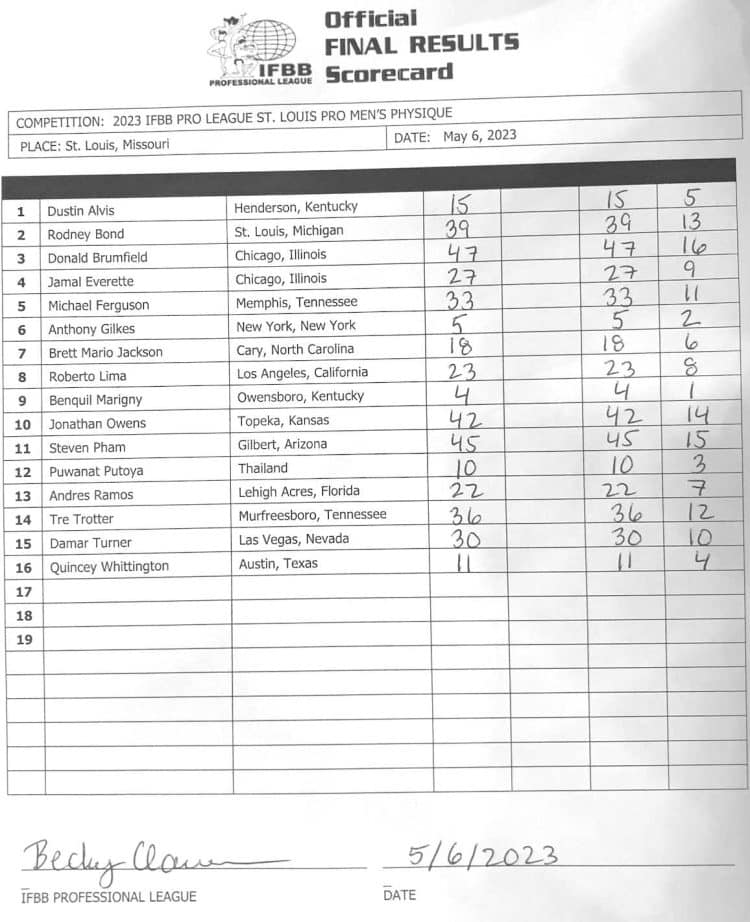
2023 St. Louis Pro Results and Scorecards
Men’s Physique and Women’s Physique contenders clashed over the weekend on May 6 at the 2023 1st Phorm St. Louis Pro. Featuring competitors in St. Louis, this show served as a qualifier for this year’s Mr. Olympia competition.
The 2023 Mr. Olympia contest takes place November 2-5 in Orlando, Florida inside the Orange County Convention Center. Athletes have until October 9 to qualify for the prestigious show. However, no competitors will be allowed entry based on points. The point system has been removed and bodybuilders must win a pro show to qualify.
With less time to earn an invite compared to 2022, athletes have a limited number of opportunities to guarantee their passage. Given the popularity of both categories this weekend, it turned out to be an extremely competitive affair.
2023 St. Louis Pro Winners
Men’s Physique: Benquil Marigny
Women’s Physique: Pamela Canfield
2023 St. Louis Pro Results
Men’s Physique
Winner — Benquil Marigny
Second Place — Anthony Gilkes
Third Place — Puwanat Putoya
Fourth Place — Quincey Whittington
Fifth Place — Dustin Alvis
Sixth Place — Brett Mario Jackson
Seventh Place — Andres Ramos
Eighth Place — Roberto Lima
Ninth Place — Jamal Everette
Tenth Place — Damar Turner
Women’s Physique
Winner — Pamela Canfield
Second Place — Emilija Martic
Third Place — Daniely Castilho
Fourth Place — Donna Williams
Fifth Place — Nadia Henriquez
Sixth Place — Elena Aviles Romero
Seventh Place — Marianne Von Gierke
Eighth Place — Marika Jones
Ninth Place — Jessica Belt
Tenth Place — Stacey A Lewis
2023 St. Louis Scorecards
2023 St Louis Men Physique Scorecard
2023 St Louis Women Physique Scorecard
Fitness Volt congratulates the winners!
Published: 7 May, 2023 | 2:06 AM EDT
2023 Florida Grand Prix Pro Scorecards
/* custom css */
.tdi_86{
color: #eaeaea;
}IFBB PROFESSIONAL LEAGUE®, IFBB PRO LEAGUE®, IFBB PRO® and the IFBB Professional League logo are registered trademarks owned by the IFBB Professional League.The IFBB Professional League logo cannot be altered in any way, shape or form without the expressed written approval of the IFBB Professional League. Where such approval is granted, the IFBB Professional League will provide the altered logo.© 2022 IFBB Pro, All Rights Reserved.