
 All Posts By Muscle Insider
Board Certified PHD
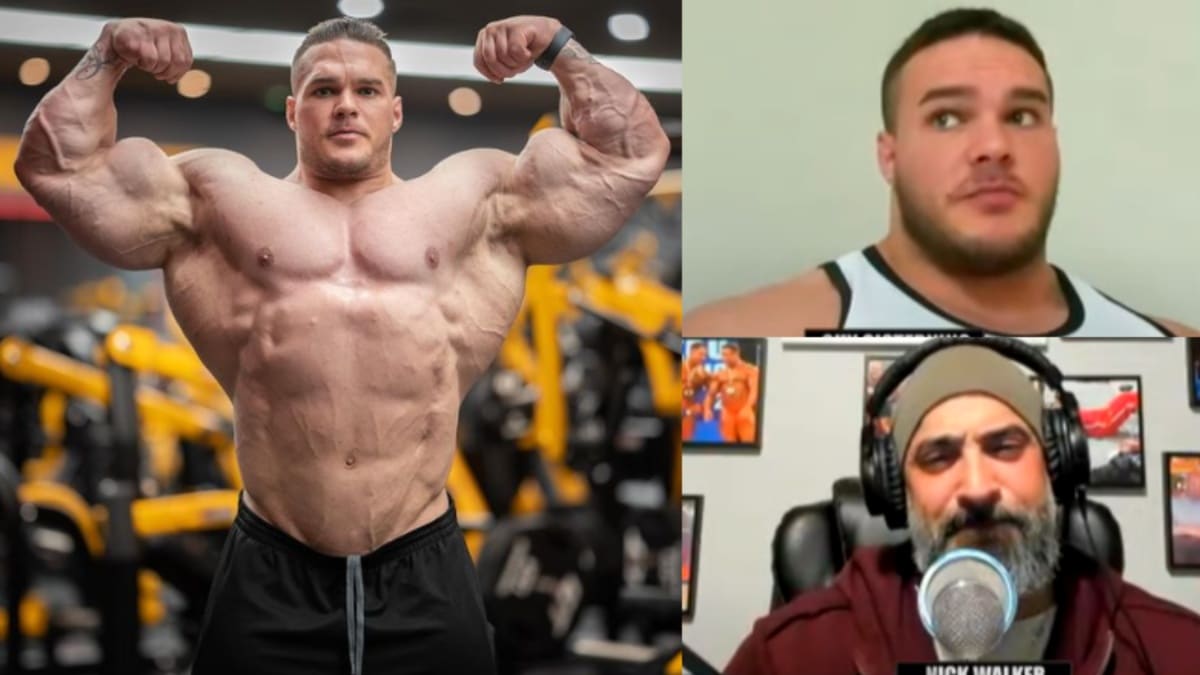
Nick Walker Signals Intensity Shift in Training/PEDs for 2023 Mr. Olympia: ‘Growing Now, Strength is Up’
Nick Walker has set his sights on the 2023 Mr. Olympia title as his off-season efforts are well underway. In a recent Mutant and the Mouth podcast, Walker discussed his diet and game plan to take the title from the reigning champion Hadi Choopan in November.
“I feel great. Now that recovery is better, oh my God, fantastic,” Walker said regarding the next stage of his off-season.
Impossible to ignore, Nick Walker emerged as a Men’s Open frontrunner after winning the 2021 New York Pro and Arnold Classic consecutively. His freakish muscle mass, size, and hardness set him apart from his contemporaries. Though perhaps his massive arms were his biggest claim to fame, so much so, his biceps have even been compared with icon and Mr. Olympia kingpin Ronnie Coleman. With considerable momentum, Walker entered his first Mr. Olympia and finished fifth.
Instead of defending his Arnold Classic title, ‘The Mutant’ stuck to the sidelines in favor of making improvements to his physique, most notably to his waistline. Having taken full advantage of his 2022 off-season with an appearance at the Pittsburgh Pro guest posing spectacle, it was evident Walker was a favorite at the Olympia contest, which was hosted in Las Vegas, Nevada.
Hadi Choopan would raise gold above his shoulders at 2022 Mr. Olympia, but Walker still left with his head held high after earning third place and the Olympia People’s Champ Award. In a quick turnaround, the 28-year-old made a splash at the 2023 Arnold Classic and despite his status as a favorite, he lost to Samson Dauda, which admittedly, was a difficult outcome for Walker to accept.
Nick Walker Targets 20-Week Prep But ’12-Week Mark, That’s When It’s Really Game Time’
Typically, Walker’s preps start at 20 weeks but says the intensity of his diet and training change at 16 weeks, and then intensifies again at the 12-week mark.
“I usually always start the prep 20 weeks out which is kind of just like getting in the groove. Okay, not necessarily strict exactly but this is kind of where we’re headed, 16 weeks out, we dry up a little more, and then you get to the 12-week mark, and that’s when it’s really game time.”
“My waist honestly can say I don’t think my waist has changed much at all,” Walker said regarding his progress. “I’m not overeating, I’m trying – I don’t feel the need to where I have to eat so much food to pack on size and I think that plays a big role. Like I said, we’re eating enough where it’s going to put me in a surplus to give me the energy I need to get stronger make improvements in the gym that need it but not just blow up everywhere. I don’t need that anymore. I think that it keeps the waist obviously a little tighter. It just helps.”
“I’d rather start prep and my weight barely budges… you know, because you know you’re in a good fuc**ng spot right now.”
Nick Walker said his strength is rising and his physique is growing. He specified that his food intake hasn’t drastically changed but they are reintroducing supplements and steroids.
“Off-season really just kind of officially started now, so just training, growing now,” said Walker.
“Now officially means what did you start incorporating the drugs, did you increase the food?” asked Guy Cisternino.
“Yeah, pretty much. Supplements got incorporated now, food is a little bit higher. Training volume is starting to increase a little bit for me. Weight, right now, I’m 280,” added Walker. “My protein doesn’t really change, like after the Arnold even after the Olympia when we did a quick little rebound, it’s 224 grams, which is like eight oucnes, it doesn’t change.
Honestly, since we did start the off-season now, incorporating supplements, the food hasn’t drastically changed from what it was prior because he kind of wants to see what does what and then we’ll start going up in the food. The food is already… you know I’m eating enough to where my recovery is fine, training performance is fine, strength is going up, food wasn’t necessarily the issue but I’m doing say average 5, 600 grams of carbs a day right now for me. My fats are around 80 [grams] he’s pretty big on fats right now. Strength is going up,” said Walker.
At his heaviest weight where he pushed over 300 pounds, Walker said it wasn’t that bad, but he didn’t feel great. This season, however, his focus is not on acquiring more muscle tissue.
“Even when I was 300 and that was pretty fuc**ng heavy for me, I felt like crap, but it wasn’t that bad,” said Walker. “I definitely had moments but it wasn’t that bad.”
Guy Cisternino and Walker hope to train with Dorian Yates in Canada in the next few weeks after Nick guest poses in Pittsburgh.
“We live Wednesday to Pittsburgh because I guess I’m guest posing at the Pittsburgh Pro. She’s going to fly back here, but I’m driving back down with them to Canada – it’s a 5-hour drive, I’m going to be there for like two weeks when I get there that following weekend it’s that Fit Log, or some big thing in Canada, a fit expo or something, we’ll stay another week and doing a lot of content for them [HD Muscle] and then I’ll come back.”
“I was thinking maybe you and Dorian and those guys were out there, I really wouldn’t want to drive, if I was going to go do it I’d take a quick flight over there,” said Cisternino. “I thought that would be pretty cool, me and you could link up and do that to [train and do content with Dorian Yates].”
Walker hasn’t stopped training even though he’s competed at two shows in the last six months. He recently demonstrated a grueling chest and triceps workout that involved seven different movements. Just last week, the Open star demolished a push day workout where he offered insight on how to maximize gains during the training session.
RELATED: Samir Bannout Tells Nick Walker to Hire Frank Zane as Posing Coach for 2023 Mr. Olympia Win: ‘Fix Front Lat Spread’
As one of the most popular and beloved Open bodybuilders in the league, fans would love to see Walker push the current champion Hadi Choopan at the next Mr. Olympia contest, which is slated to take place November 2-5 in Orlando, Florida.
Watch the full YouTube video below, courtesy of Nick Walker’s Channel:
Published: 9 May, 2023 | 11:46 AM EDT
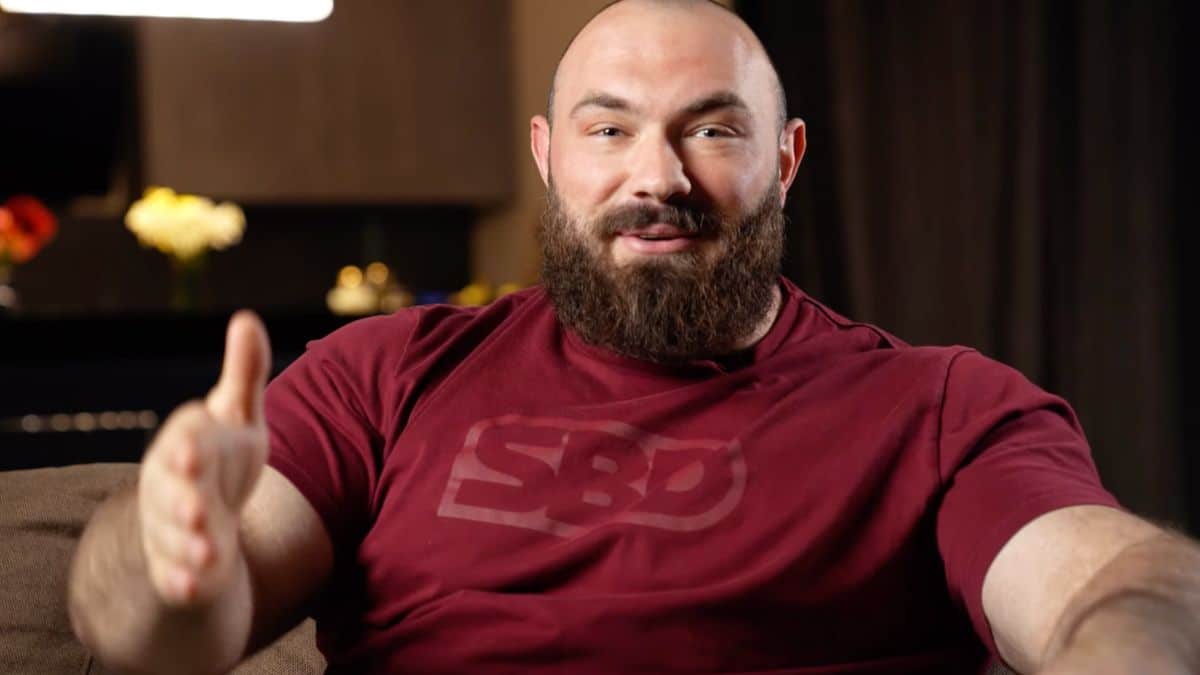
Oleksii Novikov Discusses Elbow Injury’s Impact on 2023 WSM Performance: “My Signature Event Became an Achilles Heel”
The 2023 World’s Strongest Man competition took place almost a month ago. So, we already saw the winner, Mitchell Hooper, and the second-place finisher, Tom Stoltman, post their recaps of the competition. The only one remaining was the bronze medal winner, Oleksii Novikov. However, he has also given his thoughts about the 2023 WSM competition on May 8th. Oleksii sat down for a 40-minute YouTube video in order to paint the full picture of his 2023 WSM campaign.
Oleksii Novikov covered every topic in his video, from the initial travel to the USA to his mental state after the competition. However, one thing stood out the most, and that was his elbow injury. This injury was one of the reasons why Oleksii could not secure his second WSM title, as his overhead strength plummeted because of it.
Related: 15 Incredible Stats & Facts About The 2023 World’s Strongest Man by Laurence Shahlaei
Oleksii Novikov’s 2023 WSM Recap
Oleksii Novikov’s journey at the 2023 World’s Strongest Man competition got off to a rocky start even before the event kicked off. Upon starting his journey from Ukraine to the USA, he had no idea that it would end up taking three days to get there.
“The road (trip) was the longest and hardest in all of my competing history. It took three days. It is hard to get out of Ukraine currently… When we got to New York, all the fun things started… We were told that the next flight would be in 20 hours.”
Even after arriving in Myrtle Beach, Oleksii Novikov had to sit down for multiple interviews and media shoots which caused his energy levels to deplete.
“We came there (Myrtle Beach) at night. Woke up in the morning and all the interviews, photoshoots, and media stuff started… So, lots of organizational activities before the start of the competition. Usually, all the athletes come three days before this… I just had to accept it.”
Oleksii Novikov was absolutely impeccable during the qualifying stage, winning three out of the five events. Consequently, he qualified for the finals with ease. His greatest performance in the qualifying stage came in the Conan’s Wheel event, which he won confidently. He believes that his rivals did not warm-up for the event properly. So, his attention to detail helped him get the best score across all five groups.
“It was interesting that all the athletes did not warm up the way I think is needed… The point is simple, they put too much pressure on their diaphragm and just switched off… I started off carefully, picked it up, felt the weight and my goal was to catch the needed speed and pace so the weight wouldn’t be wobbling.”
Oleksii Novikov didn’t have a great time at the Finals of the 2023 World’s Strongest Man competition. Unlike the qualifying stage, things didn’t go as planned for him. On the second day of the finals, there was a Max Dumbbell Press event that Oleksii was looking forward to. After all, the Dumbbell Overhead Press is his favorite event, but sadly, he didn’t do as well as he had hoped.
Oleksii Novikov revealed that while preparing for the 2023 WSM, he injured his elbow and was not able to extend his elbow without pain. Consequently, he was not able to lift more than 132 kilograms (291 pounds) in the Dumbbell Overhead Press event.
“This event is one of my best, but I will tell you what happened before and during the competition… In the last training session I lifted 144 kilograms (317 pounds), and during these processes I got an injury which I didn’t pay much attention to, just some elbow pain. I kept training and only then noticed this issue with my elbow.
The elbow lost the function of full extension and activating. There were problems with the lock out, and that is why locking out heavy weights became a problem for me… Don’t know if I need surgery or not, but I’ll certainly take care of my elbow… So, my signature event became an Achilles heel.”
In the end, Oleksii Novikov was happy with his performance at the 2023 WSM, but revealed how the mental pressure of having to win the competition took a toll on his performance. According to him, it is easier to perform well when you don’t have high expectations as opposed to aiming to become the World’s Strongest Man.
Watch the video here:
Related: Oleksii Novikov Wins The 2022 Rogue Strongman Invitational Contest
Oleksii Novikov’s Full Performnce
Qualifying
Loading Race: First-Place
Deadlift Machine: First-Place
Log Ladder: Third-Place
Conan’s Wheel: First-Place
Kettlebell Toss: Sixth-Place
Finals
Reign Shield Carry: Third-Place
Knaack Deadlift: Tied-Second
Fingal’s Fingers: Second-Place
Max Dumbbell: Tied-Second
Bus Pull: Eight-Place
Atlas Stones: Fourth-Place
Oleksii Novikov has now competed in 36 International contests and came out with 11 victories. In addition, he has appeared in three WSM finals, winning one (2020) and placing third twice (2022, 2023).
Oleksii Novikov is already moving on to other competitions, having previously announced that he will take part in the 2023 Shaw Classic, Rogue Invitational, and Strongman Classic. So, with at least three more appearances this year, Oleksii has the chance to improve his resume even further.
Published: 9 May, 2023 | 10:48 AM EDT

What Happens If You Take Fat Burners Without Working Out?
One of the most popular nutritional supplements on the market today is fat burners, which probably shouldn’t come as too much of a surprise, considering losing weight is one of the top, if not the #1 goal, for many people who go to the gym.
And ideally, if weight loss is your goal, taking fat burners and working out should go hand in hand, as together they will help you burn more calories throughout the day.
In addition, fat burners with stimulants will give you more energy to work out even harder (meaning you have the potential to burn more calories!), and establishing sound exercise habits now will help you more easily maintain your weight loss in the long run.
So, if you’re taking a fat burner, it’s a good idea to work out as well, as it will only help you lose more weight and keep it off in the long run. But, do you absolutely need to work out while taking fat burners? And what happens if you don’t?
Let’s find out.
What Is A Fat Burner?
Fat burners are a class of nutritional supplements that are used to increase fat loss. Each fat burner supplement contains a unique combination of ingredients and dosing designed to help you lose body fat.
Fat burners typically either do this by increasing your calorie burn through thermogenesis or decreasing your calorie intake by curbing hunger, leading to loss of body fat and improved body composition.
You can learn even more about fat burners in our article: What Is A Fat Burner?
What Do Fat Burners Do?
Fat burner supplements enable your body to burn fat through several mechanisms.
The most common ways fat burners help you lose weight include:
Increase calorie burn by ramping up metabolism
Decrease appetite and cravings
Increase energy and physical activity levels
Increase focus
Again, the main purpose of each of these is to burn fat.
Do Fat Burners Work?
Before we get into too much detail, let’s first answer the question: Do Fat Burners Work?
And the answer is: Yes, fat burners work. Multiple studies have shown that using fat burners and thermogenic supplements effectively increases metabolism and improves body composition.
For example, a 2021 meta-analysis examined fat loss through thermogenic fat burners, comparing it to fat loss through exercise and diet¹. To be clear, the people taking dietary supplements were not exercising.
The researchers found that even without exercise or a regimented diet, people still successfully lost weight only using fat burners. However, it’s important to note that the group that only took a fat burner lost less fat than the group that performed exercise and followed a healthy diet.
Other studies have also shown positive findings with taking fat burners. In 2023, a paper examined the effects of participants taking a multi-ingredient fat burner2.
The study concluded that the fat burner’s thermogenic mixture resulted in an increased metabolic rate, more calorie expenditure, and reduced fatigue over a 3-hour period.
The supplement used a large number of ingredients (20+), including:
Caffeine
Garcinia Cambogia
CLA
Raspberry Ketone
Interestingly, even though there were so many ingredients used, no negative health markers were seen in the blood tests, suggesting that fat burners are safe.
What Happens If You Take Fat Burners Without Working Out?
So, what happens if you take fat burners without working out?
The effects of what happens will be determined by what ingredients are in the fat burner. This is due to the different mechanisms by which the ingredients work.
Here’s a look at some potential outcomes.
1) May Cause Jitters:
Taking thermogenic fat burners can increase your heart rate and give you an energy boost. Out of all the types of fat burners, stimulant fat burners have the most noticeable effects.
When taken without exercise, stimulant fat burners may give someone the jitters or make them feel fidgety. In addition, stimulant fat burners may increase your body temperature, which can result in sweating and agitation.
Other fat burners, such as non-stimulant fat burners, will not affect you as much.
Many ingredients in non-stim fat burners work by increasing focus and concentration. Therefore, this type of fat burner may even be able to provide benefits when you’re doing work or chores and may be the better choice if not training.
2) Still Mitigates Appetite:
One of a fat burner’s mechanisms is to help decrease your appetite. If you’re not working out, taking a fat burner can still help support your weight loss goals by preventing you from eating less.
Eating fewer calories will play a massive role in overall body fat, so this means they can still help with your weight loss progress.
But, imagine the gains you could make if you ate less and exercised.
3) Potentially Leads to Loss Of Muscle Mass:
One final issue to address is the loss of lean muscle mass that may occur if you take fat burners and don’t exercise. Whenever you put yourself in a caloric deficit, you put yourself at risk of losing muscle.
Our bodies are efficient machines, so when they need energy, they find it from various compounds, and that includes muscle.
So, if you’re taking fat burners but not doing anything to preserve your muscle, you risk losing it. To avoid this, keep your calorie deficit minimal and use a workout split to preserve muscle.
Are Fat Burners Effective Without Exercise?
The answer to this question depends on what you mean when you say effective.
We need to remember that burners work independently of exercise or diet. In other words, you don’t need exercise for the mechanisms of fat burners to take place. In this context, fat burners will work without exercise.
Now, if we’re talking about effectiveness in terms of overall fat loss, then combining exercises with fat burners will be significantly more effective. It’s the same concept with diet and exercise. A calorie-restricted diet, like this weight loss meal plan, will burn fat, but combined with an exercise plan, it will be much more effective.
In addition, if you don’t work out after taking fat burners, you may be “wasting” some of the benefits of fat burners. One of the major mechanisms by which fat burners work is by increasing energy levels.
Many people will use energy boosts to help them move more and have a more intense workout. If you don’t take advantage of this extra energy, you will miss out on burning additional calories.
Still, to suggest that fat burners don’t work without exercise is to suggest that they, in fact, do nothing, which isn’t true. Again, we can go back to the abovementioned meta-analysis that shows fat burners are effective at reducing body mass while improving cardiometabolic health.
However, this effect is smaller than either exercise alone or exercise plus diet.
Should You Take Fat Burners On Rest Days?
Absolutely! We need to be sure to distinguish fat burners from pre-workouts. A pre-workout is taken before you exercise to improve sports performance. Going to the gym and working out harder is the entire purpose of a pre-workout.
On the other hand, with fat-burning supplements, you can go to the gym after taking one, but its primary purpose is to increase metabolism and calories burned. In other words, you can go to the gym or simply perform basic life activities.
That said, you can definitely take fat burners without working out. But, remember, if you take a stimulant fat burner and then plan to be semi-inactive, it could result in you feeling jittery.
On your rest days, you may be better off taking a non-stimulant fat burner to avoid excess energy or uncomfortable side effects. LeanBean Fat Burner is a great stimulant-free option, helping with appetite reduction, increased energy, and thermogenesis.
Can You Lose Weight Taking Fat Burners Without Exercise?
Absolutely. Let’s remember that when losing weight, the main priority is to burn more calories than one consumes to create a caloric deficit. You will lose weight if you can make a caloric deficit.
There are two different mechanisms by which this can happen:
You can increase your calories burned through exercise and activity.
You can decrease the calories you consume through diet.
When looking at these two, diet is generally the most important mechanism in a person’s weight loss journey. To be clear, your best bet is to do both of these, but diet will play the most significant role.
With this in mind, you can definitely lose weight by taking fat burners without working out. However, this means you must get your diet under control. If you reduce your calorie intake, a fat burner can further increase your calorie burn and your body’s fat burning process.
Tips To Make The Most Of Your Fat Burner
If you have decided to use fat burners to help with your fat loss or to simply help maintain your body weight, there are some habits and guidelines that can help you optimize your fat loss.
Follow an effective exercise program that includes resistance exercise training and cardio.
Follow a calorie-restricted diet that is sustainable.
Use non-stim fat burners on non-workout days.
Use non-stim OR stimulant fat burners on workout days.
Take fat burners 30-60 minutes before meals to mitigate overeating.
Only take nighttime fat burners close to bedtime, as any other type can affect your sleep, and poor sleep can cause weight gain.
Increase water intake when taking fat burners.
What Are The Best Fat Burners To Take When Working Out?
This will depend on what you’re hoping your fat burner will do for you.
If your goal is to take one with stimulants that will help you exercise even harder, PhenQ is one of our favorite fat burners, containing natural caffeine and Capsimax powder to increase your energy and boost your metabolism.
Our Top Pick
PhenQ is a natural weight management system that targets 5 key areas of metabolic health to help shed excess fat, crush cravings, and support natural energy…
Instant Knockout is another great option, containing energy-boosting ingredients like green tea, caffeine anhydrous, and green coffee bean.
Looking for more great options? We’ve got tons!
Check out our articles on the Best Fat Burners For Men and the Best Fat Burners For Women. Looking for great stimulant-free options? We’ve got those too in this round-up of the Best Non Stimulant Fat Burners!
Fat Burners Burn Fat With Or Without Exercise
A quality fat burner can be helpful in your overarching weight loss journey. They can increase calories burned, improve your body’s burning fat ability, decrease calories consumed, and provide increased energy levels, regardless of whether you’re exercising.
However, if you are thinking of taking fat burners on rest days or aren’t planning to work out on your weight loss journey, you may want to opt for less stimulating or even non-stimulant fat burners.
Particularly if you’re sensitive to stimulants, taking a strong stimulant without working out could produce unpleasant side effects, such as jitters and sweating. Or, if you do want a stimulant fat burner and aren’t planning to exercise, try a half dose of your fat burner to start, so you can see how you react.
Another great option? Throw in some exercise with your fat burner. You’ll feel better, look better, and find you lose weight more easily!
Looking for a great fat burner? These 9 Best Non Stimulant Fat Burners are great for rest days or for those who aren’t planning to exercise while taking their weight loss supplements. Or, for some stimulant options, check out the Best Fat Burners For Men and the Best Fat Burners For Women!
References:
Clark, J. E., & Welch, S. (2021). Comparing effectiveness of fat burners and thermogenic supplements to diet and exercise for weight loss and cardiometabolic health: Systematic review and meta-analysis. Nutrition and health. https://doi.org/10.1177/0260106020982362
Prather, J. M., Florez, C. M., Vargas, A., Soto, B., Harrison, A., Willoughby, D., Tinsley, G., & Taylor, L. (2023). The effects of a thermogenic supplement on metabolic and hemodynamic variables and subjective mood states. Journal of the International Society of Sports Nutrition. https://doi.org/10.1080/15502783.2023.2185538
CrossFit Cluster Exercise Guide: How To, Benefits, Muscles Worked, and Variations
CrossFit is a unique sport. It involves beginner-friendly simple movements like the air squat, shoulder press, and kettlebell swings. On the flip side, it also incorporates demanding exercises such as rope climbs, pig flips, and Olympic lifts (clean and jerk and snatch) that get elite athletes on their knees.
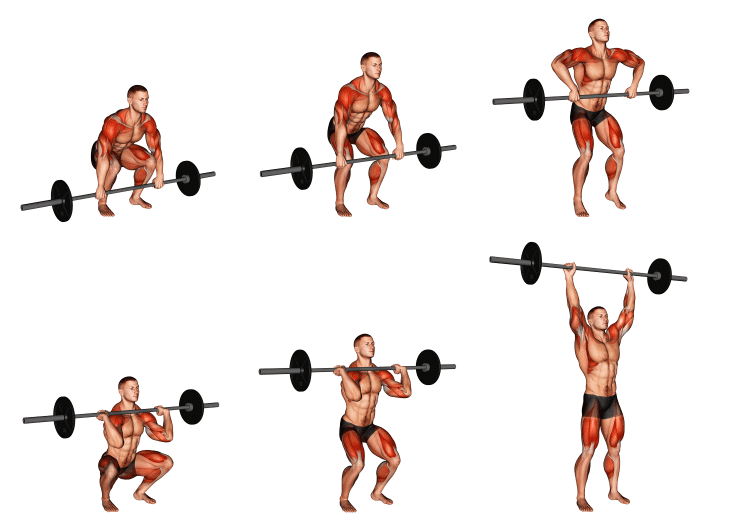
Most CrossFit WODs (workout of the day) consist of circuits that combine two or more movements. The CrossFit cluster takes this a step further, merging the thruster with the clean into a single exercise.
Interestingly, the thruster is a combination of two exercises — the front squat and the push press. Adding the clean to the mix makes the cluster a blend of three compound (multi-joint) movements.
CrossFit has set itself apart by requiring its athletes to perform unique and challenging compound exercises that help you work your entire body in a short time. The cluster fits the bill perfectly.
In this article, we go over the fundamentals of the CrossFit cluster, and everything you need to know about it to master the movement, including its benefits, correct form, common mistakes, variations, and the muscles worked during this exercise.
What is a CrossFit Cluster?
A CrossFit cluster combines two exercises — the clean and the thruster. The compound exercise works your entire body. Most WODs have just the right amount of clusters as chippers or in a circuit to destroy you by the end of the workout.
Each cluster begins from the ground. You must lift the bar to your hip height and catch it in the front rack position at the bottom of a squat. The rest of the movement is the same as the thruster. From the bottom of the front squat, stand up by extending your knees and driving through your midfoot. As you’re about to achieve full knee extension, use the momentum to drive the bar overhead and lock out your elbows. Return the bar to the front rack position.
In the thruster, you would go right into a squat after catching the bar and repeat for the recommended reps. However, you will return the bar to the floor with each rep while doing the cluster. Adding the cleans makes the cluster much more demanding than the thrusters.
You must follow the perfect form while performing the cluster to avoid unnecessary strain on your lower back. Lifting with a rounded back is one of the most common mistakes while doing this exercise.
Muscles Worked During CrossFit Cluster
The CrossFit cluster is a full-body exercise, recruiting almost every muscle fiber in your body. It is such an effective compound exercise that we think this section should be titled “Muscles not worked in a CrossFit Cluster.” Nonetheless, here are the muscles stimulated in this exercise:
Legs
The cluster works your quads during the initial lift off the floor; your glutes and hamstrings are activated as you get into the squat after catching the bar. This exercise is a complete leg builder that will help you add strength and size to your lower body.
Back
While performing the cluster, you’ll experience latissimus dorsi, rhomboids, teres major and minor, and trapezius muscle engagement. Since this is a hip-hinge movement, you’ll also feel lower back stimulation.
Shoulders
From pulling the bar off the floor and pressing it overhead, you’ll experience shoulder engagement. Cycle through the cluster reps, and you’ll feel a sick anterior and lateral deltoid pump.
Arms
The first half of the movement involves pulling the bar to the front rack, resulting in biceps engagement. The second half requires you to press the bar overhead, which will fire up your triceps.
Core
Performing a clean, especially while lifting heavier, requires a strong core. Your midriff and stabilizers will also be in action as you press the bar overhead and complete a lockout. Folks that lack a solid core will have trouble completing a heavy overhead lockout.
Benefits of CrossFit Cluster
Adding the cluster to your exercise arsenal entails the following benefits:
Boosts Your Skills
CrossFit involves a lot of skills. Most WODs involve a healthy chunk of high-skill weightlifting moves such as the Olympic lifts and gymnastics moves like handstand walks and ring muscle-ups.
The cluster helps you improve at Olympic lifts by incorporating the clean, front squat, and overhead press into a single movement. It will aid in improving your technique and get you better results faster.
Full-Body Exercise
The cluster is a full-body exercise that will help you build overall strength and muscle mass. This compound exercise will improve your functionality, making you better at other exercises and day-to-day activities.
The cluster will also improve your metabolic conditioning, boosting your performance in demanding workouts.
Helps Build Strength and Muscle Mass
The compound exercise will boost your strength and muscle mass. You must, however, program your workouts accordingly. Stay in the 1-5 rep range to focus on strength. On the other hand, the 8-12 range is optimal for hypertrophy. [1]
Enhances Endurance and Stamina
Perform high-rep sets of clusters, and you’d be gasping for breath. Adding cluster ladders to your WODs will help you build stamina and endurance, translating to better performance in demanding workouts.
Improves Coordination
There are several moving parts in the cluster. You need to clean the barbell off the floor, perform a squat, and then do an overhead press. Doing this exercise regularly will help improve your hand-eye coordination.
How To Do a CrossFit Cluster
The CrossFit cluster is a complex lift. You must dial in your technique to get the best bang for your buck. There will be a lot of tips and tricks, so pay close attention. Here is how to perform the cluster with the perfect form:
Steps:
Place a barbell against your shins and stand upright with a shoulder-wide stance.
Grab the bar using a shoulder-wide hook grip. Your hip crease should be below your knees crease. This will help you use your quads in the initial phase of the lift.
Your chest should be open, and you should look straight ahead while at the bottom of the lift.
Pull the bar to your hip level while keeping it close to your body by driving through your midfoot.
Pull the bar faster as it crosses your knees, and you stand upright by extending your knees.
The bar should make contact with your hips. At this point, lean back slightly, generate momentum by getting on your heels, and pull the bar toward your shoulders.
In one motion, jump your feet wide and get under the bar to catch it in the front rack position at the bottom of the squat.
Get out of the hole explosively by driving through your midfoot.
Press the bar overhead as you reach the top of the movement.
Move your head through your arms to achieve a lockout.
Lower the bar to a front rack position.
Repeat for reps.
CrossFit Cluster Tips
Pull the slack out of the bar at the bottom by pulling the bar slightly off the floor. This will help ensure a smooth upward movement.
You can skip jumping your feet out if you are comfortable with your initial stance and can use it to push the weight overhead.
Your elbows should trace over the bar in the initial part of the lift and drop below the bar as you catch it in a squat. This will help you keep control of the barbell.
Avoid rounding your back or looking down in the initial phase of the cluster, as it can put unnecessary strain on your neck.
Driving through your heels or toes will throw you off balance. Drive through your midfoot to maintain your center of gravity.
This Exercise:
Target Muscle Groups: Back, Legs, Shoulders, Arms, and Core
Type: Strength
Mechanics: Compound
Equipment: Barbell
Difficulty: Intermediate
Best Rep Range: 8-12 Reps
Common Mistakes While Performing a CrossFit Cluster
Stay clear of the following cluster errors for optimal gains and to avoid injuries:
Improper Form
Like all the other exercises, you only get better at the cluster with practice. Since this is a compound movement, lifters tend to make several mistakes initially. You must not yank the bar off the floor in the first half of the lift, as it can throw you off balance.
Keep your chin tucked and your eyes locked straight ahead throughout the exercise. Tilting your head toward the ceiling or the floor will again make the lift unstable. Plus, many lifters get on their toes too soon. You must wait for the bar to reach your hip level before using your feet to generate extra momentum.
Not Warming Up
The cluster is a full-body exercise, meaning a lot can go wrong while performing this exercise. Many people increase their odds of injury by not warming up before a workout. You must spend 10-15 minutes warming up before a training session for optimal performance.
Furthermore, compound lifts like the cluster require a decent amount of mobility. You must work on improving your flexibility and mobility to get better at the Olympic lifts.
Going Too Heavy
This is one of the most common mistakes lifters make while doing the cluster. Since this exercise is a combination of three lifts, many people load the bar with more weight than they can handle, assuming that they can muscle through the lift. However, letting your ego get the better of you jeopardizes your form and puts you at a greater risk of injury.
Variations and Alternatives of CrossFit Cluster
Use the following cluster variations and alternatives to add variety to your training regimen:
Dumbbell Cluster
This cluster variation uses dumbbells instead of a barbell. Although many lifters might think it is easier than the conventional cluster, it is not the case. The dumbbell cluster requires a different skill.
Steps:
Grab a dumbbell in each hand and stand upright with a shoulder-wide stance.
Push your hips back, hinge at your hips, and bend your knees to lower the dumbbells to your floor. Place the dumbbells on the outside of your feet at the starting position.
Lift the dumbbell to your knees by driving through your quads and midfoot.
Drive your hips forward and extend your knees as the dumbbells cross the knees.
Generate momentum by lifting your heels off the floor when the dumbbells reach your hip level.
Drop under the dumbbells and catch them over your shoulders.
Explode out of the hole and push the dumbbells overhead as you complete the movement.
Pro Tip: Ensure you’re using your quads to power off the floor by getting your hip crease below your knee crease at the bottom of the movement.
Thruster
The thruster is a great exercise to forge a more robust cluster. It is just like the cluster, minus the cleans while doing multiple reps.
Steps:
Take a shoulder-width stance and stand upright with a barbell against your shins.
Grab the bar at shoulder-width using a hook grip.
Clean the bar into a front rack and get into a squat.
Explode out of the hole by driving through your midfoot.
Press the bar overhead as you extend your knees.
Lower the bar into a front rack.
Perform a squat.
Repeat for recommended reps.
Pro Tip: Hold the bar in the front rack position using a full grip. Balancing the bar using only your fingers can make the lift unstable.
Clean
The clean is an Olympic lift, which needs a lot of practice to master. However, sticking with this exercise will make you better at most other CrossFit compound lifts, as it will help develop a stronger base.
Steps:
Stand with a shoulder-wide stance with a barbell placed against your shins.
Grab the bar with a hook grip.
Maintaining an open chest and flat back, pull the bar to your knees using your quads.
Drive your hips forward and extend your knees to bring the bar to your hip level.
From here, lift your heels off the floor to pull the bar toward the ceiling.
Get under the bar and catch the bar in a front rack position while jumping your feet out.
Stand upright.
Pro Tip: Drive your knees outward during the initial phase of the lift, as it will help engage your legs to generate power.
Front Squat
The next two exercises on the list are among the nine basic movements of CrossFit. The front squat is a compound exercise that primarily works your quads.
Steps:
Start with the bar in a front rack position with your hands slightly wider than shoulder-width apart.
Use a shoulder-wide stance and turn your toes slightly outward.
While maintaining an upright torso, lower into a squat and go as deep as possible.
Return to the starting position.
Repeat for reps.
Pro Tip: You must have decent upper body, overhead, hip, and lower body mobility to perform a front squat with an upright torso.
Push Press
The push press is a basic CrossFit movement that will help you build upper body strength and explosiveness.
Steps:
Start in the front rack position and a shoulder-width stance.
Drop into a shallow stance.
Extend your knees rapidly and push the barbell overhead while raising your heels off the floor.
Lock out your elbows at the top and drive your head through your arms.
Lower the bar to the front rack position.
Repeat.
Pro Tip: Your elbows should be under the bar at the starting position, as it will help you generate power.
Wrapping Up
CrossFit is a high-intensity sport that combines weightlifting, gymnastics, and cardio. Olympic weightlifting exercises form the basis of the CrossFit resistance training WODs and help work your entire body in a short time.
The CrossFit cluster is one of the most effective functional exercises to help you build strength, muscle, endurance, and balance. Use the cluster alternatives and variations listed in this article to take your WODs to the next level. Best of luck!
References
Krzysztofik M, Wilk M, Wojdała G, Gołaś A. Maximizing Muscle Hypertrophy: A Systematic Review of Advanced Resistance Training Techniques and Methods. Int J Environ Res Public Health. 2019 Dec 4;16(24):4897. doi: 10.3390/ijerph16244897. PMID: 31817252; PMCID: PMC6950543.
What To Eat To Bulk Up For Skinny Guys: The Ultimate Guide
Skinny, beanpole, rawboned, scrawny, bony, lanky, skeletal, twiggy, gaunt, fragile, delicate, hollow-cheeked, as thin as a rake, skin-and-bones, sticklike, size-zero, emaciated, pinched, undernourished, underfed, rangy, spindly, gangly, gangling, gawky, spindle-shanked, starveling, and macilent. It would be safe to say that the world tends to be unkind when labeling underweight individuals.
Do you want to know the synonyms for ‘jacked’? Shredded, rugged, sturdy, muscly, stout, well-built, hefty, powerful, and lusty. If given a choice, most people would want to be a part of the latter group.
Ask a bro at your gym about putting on size, and they’ll tell you it is the easiest thing in the world. However, this is not always the case. Bulking up is simple in theory but difficult in execution. Although most of us know that we need to eat more to build muscle mass and size, it is only a piece of the puzzle.
You must stay in a calorie surplus to build muscle, meaning you must eat more calories daily than you expend. At the same time, these calories must come from nutrient-dense sources. Eating junk food and chugging sugar-laden aerated drinks can get you to your daily caloric goal, but in the long run, it will lead you toward obesity and other health issues.
A basic understanding of nutrition and how it plays a role in achieving your fitness goals is vital to be successful in your fitness journey. It will help you avoid fad diets and ensure you get the best bang for your buck.
In this article, we discuss the basics of bulking for skinny guys, including the nutrition breakdown, and lay down 15 nutrient-dense high-calorie foods to help you hit your daily caloric goals.
What is Bulking Up?
Contrary to what most people believe, bulking and weight gain are not the same thing. In a weight gain program, your only objective is to get from your current weight to your goal weight. However, in a bulking program, you must also gain muscle mass and improve your physique aesthetics.
Bulking up requires a combination of increased caloric intake and weight training exercises. During a bulking-up program, you want to add muscle mass to the body while minimizing fat gain.
Bulking is the name of the game for skinny guys wanting to add muscle mass. It requires consuming a high-calorie and protein diet and engaging in strength training exercises to stimulate muscle growth.
Besides helping you develop muscle size and strength, bulking up has several other benefits, including boosting metabolism and immune system, better nutrient absorption and energy levels, and improving overall health. Unlike the ‘dirty bulking’ diet, the nutrient-dense foods listed in this article will also avoid health issues, such as high cholesterol and high blood pressure. [1][2]
Although most people know they need to enter a calorie surplus to add size and strength, they are clueless about the foods they should add to their diet plan. If you are one of these people and are looking for answers, you’ve come to the right place. This article contains 15 high-calorie foods to help skinny guys build size and strength.
Overview of the 15 Best Foods For Bulking Up
We have put the nutritional information of the 15 foods into a convenient table with their serving sizes, calories, protein, carb, and fat content, to help you make the right dietary choices:
Food
Serving Size
Calories
Protein (in grams)
Carbohydrates (in grams)
Fats (in grams)
Whole Milk
1 cup
150
8
12
8
Cheese
1 oz
110
7
1
9
Nuts
1 oz
170-200
4-6
3-5
14-18
Avocado
1 medium
300
3
17
25
Peanut Butter
2 tbsp
200
8
6
16
Brown Rice
1 cup
220
5
45
2
Sweet Potato
1 medium
100
2
24
0.2
Whole-Grain Bread
2 slices
200-250
8-12
36-48
2-5
Dried Fruit
1 oz
100-120
0-1
25-30
0-1
Salmon
3 oz
150
17
0
9
Chicken Breast
100 gram
165
31
0
3.6
Beef
3 oz
180
22
0
10
Granola
1 cup
400-500
7-9
66-80
12-16
Quinoa
1 cup
220
8
39
3.5
Weight Gainer Shakes
1 serving
1,000-1,300
45-60
200-300
2-6
15 High-Calorie Foods For Skinny Guys To Bulk Up
Given below is a list of lean protein, fruit, nuts, and vegetables that will help underweight lifters bulk up:
Whole Milk
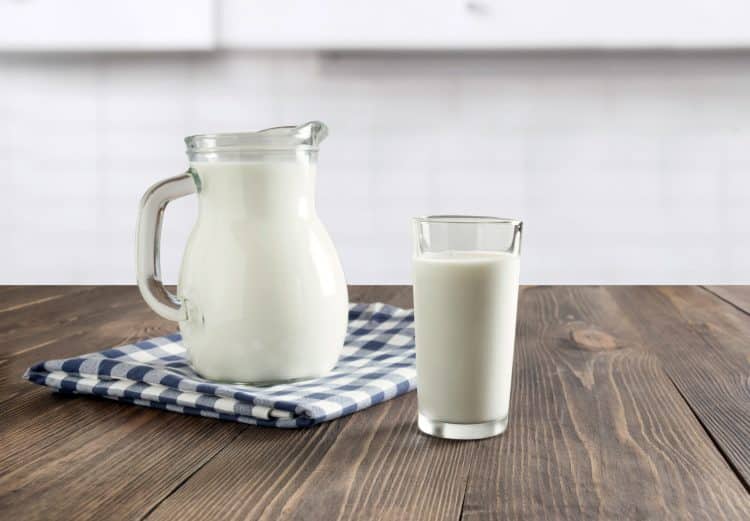
Whole milk is an excellent source of calories, protein, carbs, and fats. It is versatile and convenient; you could include milk in any of our meals throughout the day. It is also easily digestible.
Furthermore, skinny guys trying to bulk up can also include yogurt and curd in their grocery list. You can pair them with your three big meals or eat them as a snack anytime throughout the day.
A cup of whole milk contains 150 calories, eight grams of protein, 12 grams of carbohydrates, and eight grams of fat.
Cheese
Cheese is another dairy product that should be a part of a skinny individual’s dietary routine. This nutrient-dense food comes in different shapes and sizes, making it perfect to add to a wide variety of dishes.
Mozzarella, ricotta, cheddar, Swiss, feta, goat cheese, and cottage cheese are a few different types of cheese whose protein, carbs, fat, and calorie content can change depending on their making process.
One ounce of cheese delivers 110 calories, seven grams of protein, one gram of carbs, and nine grams of fats.
Nuts
Nuts are packed with fats and are a convenient source of the macronutrient. Besides fats, nuts contain a healthy amount of protein and carbs. You can also add seeds to your daily serving of nuts to make things more interesting.
Almonds, cashews, walnuts, hazelnuts, pistachios, Macadamia nuts, pumpkin seeds, and sunflower seeds are some of the most popular nuts and seeds. You can add nuts and seeds to your meals or grab them as a snack.
Depending on the type of nuts, one ounce serving of nuts contains 170-200 calories, 4-6 grams of protein, 3-5 grams of carbs, and 14-18 grams of fats.
Avocado
Avocado is popular among fitness enthusiasts as a high-quality fat source. This fruit primarily contains monounsaturated fats, fiber, and vitamins, which can help reduce the risk of blood pressure, regulate glucose levels, promote healthy blood lipid profiles, and improves insulin sensitivity.
Avocado is mostly added to salads or consumed by itself. You could also add avocados to smoothies for a quick high-calorie meal. Also, a guacamole dip is an excellent option for folks looking for a healthy spread.
One medium-sized avocado contains 300 calories, three grams of protein, 17 grams of carbs, and 25 grams of fats.
Peanut Butter
Peanut butter is a staple in most fitness enthusiasts’ cupboards. Although peanut butter is mainly eaten for its fat content, it also contains a healthy dose of protein and carbs. You could also add peanut butter to shakes and smoothies for a delicious snack.
Some alternatives to peanut butter include almond butter, cashew butter, and hazelnut butter. You could switch between these alternatives to keep your meals interesting. However, ensure that these butter are not laden with artificial sweeteners and sugar. Prefer organic peanut butter over the others.
Two tablespoons of peanut butter contain 200 calories, eight grams of protein, six grams of carbs, and 16 grams of fats.
Brown Rice
Brown rice is a complex carbohydrate that is an excellent energy source for the body. Carbs are the most crucial macronutrient during the bulking phase. Brown rice’s versatility makes them an excellent food to add to any meal and fill a calorie void.
A cup of brown rice includes 220 calories, five grams of protein, 45 grams of carbs, and two grams of fat.
Sweet Potato
This food is packed with complex carbohydrates, vitamins, and minerals. It is one of the few inherently delicious foods in a healthy diet. You could consume sweet potato as a side in your main meals or as a snack.
A medium sweet potato packs 100 calories, two grams of protein, 24 grams of carbs, and 0.2 grams of fats.
Whole-Grain Bread
Whole-grain breads are delectable and highly versatile. They contain a high-calorie content in a small serving size. Most people eat bread in their breakfast. However, you could add it to any of your meals.
Unlike refined white bread, whole grain bread contains the entire grain, providing a wealth of vitamins and minerals. Whole-grain bread also digests slower than white bread, providing a constant energy supply throughout the day.
Two slices of whole-grain bread contain 200-250 calories, 8-12 grams of protein, 36-48 grams of carbs, and 2-5 grams of fats, depending on the brand.
Dried Fruit
Dried fruit is a nutrient-dense snack that is easy to transport, has more shelf life than fresh fruit, and is easy to carry. It contains a good amount of carbs, fiber, vitamins, and minerals.
Almonds, cashews, raisins, apricots, dates, and prunes are a few types of dried fruit. Dried fruit is also great for satisfying your sweet cravings. However, dried fruit contains more concentrated sugar than fresh fruit. You must consume dried fruit in moderation, as excessive intake can lead to high sugar intake and digestive issues.
An ounce of dried fruit contains 100-120 calories, 0-1 grams of protein, 25-30 grams of carbs, and 0-1 grams of fats.
Salmon
Salmon is the go-to seafood for most lifters. This high-quality protein is rich in omega-3 fatty acids and is an excellent food choice for folks looking to build muscle and improve overall health. Since salmon is a quick-absorbing source of protein, consume it right after your workout for the best results.
Three ounces of salmon contains 150 calories, 17 grams of protein, zero carbohydrates, and nine grams of fat.
Chicken Breast
The good old chicken breast is one of the best foods for building muscle mass without adding body fat. You could consume chicken breast during your lunch or dinner and ideally after your training session.
A 100 grams serving of chicken breast consists of 165 calories, 31 grams of protein, zero carbs, and 3.6 grams of fat.
Beef
Beef is rich in protein and essential amino acids, which can help build muscle mass. It is also a good source of iron, zinc, and vitamin B12, improving overall health and vitality. Choose lean cuts of beef, such as sirloin, flank, or round steak, to limit your fat intake.
A three-ounce serving of beef contains 180 calories, 22 grams of protein, no carbs, and 10 grams of fat.
Granola
Granola is an often overlooked complex carbohydrate in a bulking regimen. It is an excellent breakfast food and snack that is made from a combination of oats, nuts, seeds, and dried fruits. Granola also contains a healthy dose of fat and protein, making it a well-rounded food source.
A cup of granola generally comprises 400-500 calories, 7-9 grams of protein, 66-80 grams of carbs, and 12-16 grams of fat.
Quinoa
Quinoa is one of the few plant-based foods with a complete protein source, meaning it contains all of the essential amino acids the body needs to build muscle. It is a must-have in every vegan diet. You can add quinoa to salads, stir-fries, or as a side dish.
A cup of quinoa delivers 220 calories, eight grams of protein, 39 grams of carbs, and 3.5 grams of fats.
Weight Gainer Shakes
Weight gainer shakes are a godsend for folks who have difficulty meeting their nutrition goals through whole foods. A serving of a weight gainer can contain between 200-300 grams of carbs and a decent amount of protein. You could also use a whey protein supplement instead of a mass gainer, as per your macros.
Depending on the brand, a 300-400 gram serving of a mass gainer supplement delivers a monster 1,000-1,300 calories, 45-60 grams of protein, 200-300 grams of carbs, and 2-6 grams of fat.
Tip: Calculate your recommend daily protein, carbs and fat intake.
Nutrition Planning For Bulking Up For Skinny Guys
Now that you know about the 15 high-calorie foods to help skinny guys bulk up and build muscle, it is time to put the knowledge to work. Here are some nutrition planning tips to help you in the process:
Calories
Skinny folks must use a calculated approach to enter a calorie surplus to add size and strength. Your goal should be to eat 300-500 additional calories daily. Bumping up your calories by 500 kcal will help you gain a pound of weight each week, which is a sustainable and healthy approach to bulking up. [3]
Macronutrient
After arriving at a daily calorie goal, you must break it down into a suitable carbs, protein, and fats ratio to achieve your goal physique. A 40-30-30 split (40% carbs, 30% protein, and 30% fats) is one of the most reliable macronutrient ratios for building muscle mass and strength while limiting fat buildup.
Here is an oversimplified step-by-step process for setting a calorie and macronutrient goal to bulk up for skinny guys:
Use a calorie-tracking tracking app, such as MyFitnessPal, to calculate your daily average calorie intake for the last five days.
Bump up your calorie intake by 300-500 calories.
Break down the calorie goal into a suitable macronutrient split.
Alternatively, you could use our online calorie and macronutrient calculators for this process.
Design a diet using the 15 high-calorie, nutrient-dense foods mentioned in this article.
Remember, you might need to tweak your diet plan for the first few weeks until you find something that works for you. Seek expert help if you have trouble designing a diet plan; it will save you a lot of time, effort, and money.
Wrapping Up
Skinny folks must enter a caloric surplus to build muscle and strength. However, you must remember that all calories are not created equal. Although dirty bulking is more convenient (and delicious), it can lead to excess body fat and chronic health conditions.
Skinny guys must add the 15 high-calorie, nutrient-dense foods mentioned in this article to their grocery list and follow a customized training program to bulk up sustainably, improve their overall health and physical performance, and achieve the physiques of their dreams.
References
Troesch B, Biesalski HK, Bos R, Buskens E, Calder PC, Saris WH, Spieldenner J, Verkade HJ, Weber P, Eggersdorfer M. Increased Intake of Foods with High Nutrient Density Can Help to Break the Intergenerational Cycle of Malnutrition and Obesity. Nutrients. 2015 Jul 21;7(7):6016-37. doi: 10.3390/nu7075266. PMID: 26197337; PMCID: PMC4517043.
Drewnowski A. Impact of nutrition interventions and dietary nutrient density on productivity in the workplace. Nutr Rev. 2020 Mar 1;78(3):215-224. doi: 10.1093/nutrit/nuz088. PMID: 31889196.
Cleveland Clinic. “High-Calorie Foods and Snack Ideas to Gain Weight.” Cleveland Clinic, 2020, https://my.clevelandclinic.org/health/articles/16555-snack-ideas-for-weight-gain. Accessed May 8, 2023
Related:
Block Pulls Guide: Muscles Worked, How-To, Benefits, and Alternatives
If you only had the time and energy to perform one exercise per workout, the deadlift would probably be your best choice. Deadlifts work almost every major muscle on the back of your body and several on the front, too. They build real-world functional strength and, frankly, make you look and feel like a badass.
Combine deadlifts with an upper-body push, such as push-ups, dips, or bench presses, and you can get a full-body workout from just two exercises.
Deadlifts are AWESOME!
That said, deadlifting from the floor is not easy, especially when you’re tall or inflexible. Also, doing nothing but conventional deadlifts will eventually get boring, even if you love what Victorian physical culturalists used to call the health lift.
Thankfully, there is more than one way to deadlift, and block pulls, aka partial deadlifts, are a great alternative to regular deadlifts.
We reveal why and how to do this excellent exercise and provide you with a few equally effective alternatives to try.
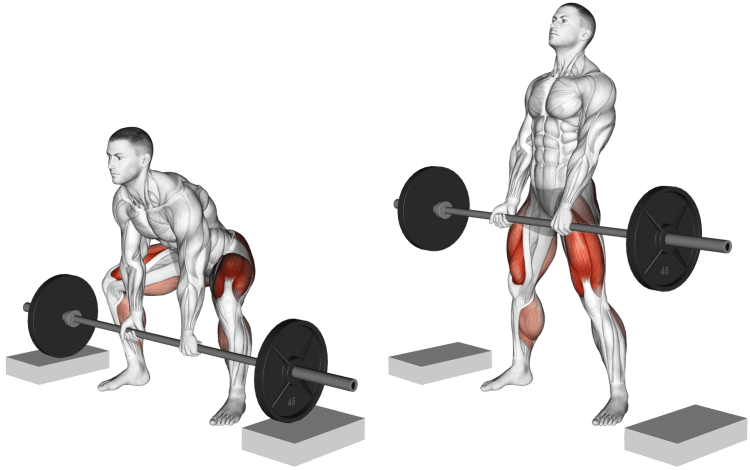
Block Pulls – Muscles Worked
Block pulls are a compound exercise, meaning they involve several joints and multiple muscles working together. In fact, block pulls use so many muscles that they’re virtually a full-body exercise.
Block Pulls Muscles Worked
The main muscles (listed from top to bottom) trained during block pulls are:
Trapezius
The trapezius, or traps for short, is the large diamond-shaped muscle of your upper back. It consists of three groups of fibers – upper, middle, and lower. The upper and middle fibers are the most active during block pulls. Block pulls are very effective for building bigger, thicker traps.
Rhomboids
Located between the shoulder blades, the rhomboids work with your middle traps to pull your shoulders back and together.
Deltoids
The deltoids are your shoulder muscles. Like the trapezius, the deltoids are made up of three groups of fibers called heads – anterior (front), medial (middle), and posterior (rear). All three deltoid heads are working during deadlifts, but the posterior delts are the most active.
Biceps brachii
Located on the front of your upper arm, your biceps flex your elbows. However, in block pulls, their job is to stop your elbows from hyperextending.
Forearm flexors
Block pulls are a very grip-centric exercise. Gripping the bar involves lots of lower arm muscles, which are collectively called the forearm flexors. If you want bigger, more powerful forearms and a vice-like grip, block pulls are sure to help.
Latissimus dorsi
Located on the sides of your torso, the latissimus dorsi, or lats for short, give your upper back its width. Well-developed lats look like wings! You use your lats to keep the bar pressed in toward your legs during block pulls. Bodybuilders do this exercise to develop a thicker, more powerful-looking back.
Erector spinae
Erector spinae is the collective name for the muscles that run up either side of your spine. During block pulls, you use these muscles to prevent your back from rounding. Rack pulls will give you a more muscular lower back.
Core
Core is the name given to the muscles of your midsection, including your rectus abdominis, obliques, and transverse abdominis. Together, these muscles contract inward to create intra-abdominal pressure to support and stabilize your lumbar spine. Wearing a weightlifting belt allows you to produce even more intra-abdominal pressure.
Gluteus maximus
Known as the glutes for short, this is the largest and most powerful muscle in the human body. The glutes extend your hips, which is the main lower body movement during block pulls. If you want a bigger butt, block pulls will help!
Hamstrings
Located on the backs of your thighs, the hamstrings work with your glutes to extend your hips during block pulls. However, the range of motion is relatively small, so if you want to work your hammies harder, you should also include exercises like leg curls and Romanian deadlifts in your lower body workouts.
Quadriceps
Block pulls start with your knees bent and end with your knees extended. This means they involve your quadriceps as well as your hamstrings and glutes. However, quads engagement is quite low because the range of motion at your knees is relatively small.
How to Do Block Pulls
Get more from block pulls while keeping your risk of injury to a minimum by following these guidelines:
Place your barbell on blocks so it’s between lower knee and mid-thigh height. The lower the blocks, the more you’ll need to use your glutes and hamstrings to lift the weight.
Stand behind the barbell with your feet between shoulder and hip-width apart. Your feet should be under the bar.
Grip the bar with a double overhand or mixed shoulder-width grip.
Straighten your arms, brace your core, and pull your shoulders back and down. Engage your lats by pressing the barbell toward your legs.
Without rounding your lower back, drive your feet into the floor and stand up.
Lock out your hips and knees, taking care not to lean back at the top of your rep. Leaning back increases your risk of injury.
Lower the bar back to the blocks, let it settle for a second or two, reset your core and grip, and repeat.
Pro Tips:
Use chalk and/or lifting straps for a stronger grip.
If you use a mixed grip, make sure you switch hands set by set to avoid muscle imbalances.
Use lower blocks to work your glutes and hamstrings more or higher blocks to emphasize your upper back.
Wear flat shoes or go barefooted to prevent your weight from shifting forward onto your toes.
Use a weightlifting belt when training with heavy loads.
Block Pulls Benefits and Drawbacks
Not sure if block pulls deserve a place in your workouts? Consider these benefits and then decide!
Better for tall or inflexible lifters
Conventional deadlifts start with the weights on the floor and the bar about nine inches above the deck. Reaching down to grab the bar requires good flexibility, especially if you are taller than average. As such, some people end up rounding their lower backs during deadlifts, and that’s a recipe for injury.
A rounded lower back is a weak lower back and puts tremendous pressure on the intervertebral discs and ligaments of the lumbar spine. Starting with the bar on blocks means you don’t have to lean so far forward, so there is less chance of rounding. This means that block pulls are more lower back-friendly than off-the-floor deadlifts, especially for tall or inflexible lifters.
Boost your lockout strength
Full deadlifts, like most compound freeweight exercises, have sticking points. Some lifters get stuck trying to break the bar away from the floor, while others get stuck at the midway point. Rack pulls allow you to focus on your lockout. For this reason, powerlifters use block pulls as a deadlift accessory exercise to boost their full deadlift performance.
Fatigue management
Full deadlifts can be exhausting. Because of this, some lifters only deadlift once a week or even less often when using maximal weights. Block pulls are a little less fatiguing, so you should be able to do them more often or in conjunction with regular deadlifts. For example, you could alternate block pulls with conventional deadlifts workout by workout if you want to train your posterior chain twice a week.
Build a more muscular back
Few exercises have the potential to build back size like rack pulls can. Pushing the bar back toward your legs maximizes lat engagement while keeping your shoulders back and down hits your traps and rhomboids. Stopping your lumbar spine from rounding will thicken and strengthen your lower back muscles. In short, rack pulls are a total back builder.
While block pulls are a mostly beneficial exercise, there are also a few drawbacks to consider:
Equipment
While most gyms have barbells and weight plates for deadlifts, lifting blocks are not as common. As such, you may not have access to the equipment you need to do block pulls. However, there are alternatives to this exercise, which we have detailed below.
Less functional than full deadlifts
A functional exercise mirrors the demands of daily living or a sport. Deadlifts from the floor are a very functional exercise, as many lifting movements start with the weight resting on the deck, e.g., picking up your kids, a pet, or grocery bags.
However, block pulls start with a weight resting above the floor, so they may not be as functional as regular deadlifts. That said, they work the same muscles as regular deadlifts, so block pulls will still enhance your functional strength, albeit to a somewhat lesser degree.
Lift heavier weights
Block pulls have a smaller range of motion than conventional deadlifts, so most people can use heavier weights for them. While lifting more weight can be a good thing, it could be a drawback, too.
Some lifters load block pulls with way more weight than they can handle safely. This can lead to injury, especially to the lower back.
7 Block Pulls Variations and Alternatives
Block pulls are a highly effective compound exercise, but that doesn’t mean you need to do them all the time. There are several variations and alternatives you can use to keep your workouts productive and interesting:
1. Rack pulls
No suitable lifting blocks? No problem! You can also do partial deadlifts using a power rack. This exercise looks and feels very similar to block pulls, and as most gyms have a suitable power rack, they may be more accessible for some lifters. However, do not do this exercise with a deadlift bar, as doing so will damage it. In contrast, block pulls will not damage a deadlift bar.
Steps:
Place your barbell on the safety pins of a power rack so it’s between lower knee and mid-thigh height.
Stand behind the barbell with your feet between shoulder and hip-width apart. Your feet should be under the bar.
Grip the bar with a double overhand or mixed shoulder-width grip.
Straighten your arms, brace your core, and pull your shoulders back and down. Engage your lats by pressing the barbell toward your legs.
Without rounding your lower back, drive your feet into the floor and stand up.
Lock out your hips and knees, taking care not to lean back at the top of your rep.
Lower the bar back to safety pins, let it settle for a second or two, reset your core and grip, and repeat. Do not bounce your bar off the pins, as doing so could damage the bar and the power rack.
Muscles Targeted:
Primary: Latissimus dorsi, trapezius, rhomboids, gluteus maximus, hamstrings, erector spinae, core.
Secondary: Biceps, forearm flexors, quadriceps.
Benefits:
More accessible than block pulls for some lifters.
Easier to adjust the height of the bar, as most power racks are drilled with one-inch holes.
An excellent total back and posterior chain exercise.
Tips:
Try a lower starting point to emphasize your glutes and hamstrings or a higher one to emphasize your back.
Use a mixed or double overhand grip as preferred.
Use lifting straps and/or chalk to prevent your hands from slipping on the bar.
Related: The Ultimate Guide to Rack Pulls
2. Paused deadlifts
Like block pulls, paused deadlifts are designed to improve your mid-rep strength and boost your lockout. However, as an extra advantage, you don’t need any additional equipment to do them. Paused deadlifts are another common powerlifting accessory exercise.
Steps:
Place your barbell on the floor and stand with your toes beneath it, feet between shoulder and hip-width apart.
Grab the bar using an overhand or mixed grip, hands shoulder-width apart.
Straighten your arms, brace your core, set your shoulders, and drop your hips down below your shoulders. Take the slack out of the bar.
Drive your feet into the floor and stand up, pausing as the bar reaches about knee height. Hold this position for 1-3 seconds.
Push your hips forward and stand fully upright.
Lower the bar back to the floor, reset your core and grip, and repeat.
Muscles Targeted:
Primary: Latissimus dorsi, trapezius, rhomboids, gluteus maximus, hamstrings, erector spinae, core.
Secondary: Biceps, forearm flexors, quadriceps.
Benefits:
A very accessible exercise as no extra equipment is required.
An effective way to strengthen your deadlift lock out.
A good way to make light weights feel heavier.
Tips:
The longer you pause, the harder this exercise becomes.
Vary the height of the pause to change the effect and feel of this exercise.
Use less weight than normal, as this exercise is much more demanding than full deadlifts or block pulls.
3. Deadlifts with chains
Chains are another way to overload the top part of the deadlift movement. Doing deadlifts with chains is a type of training called accommodating resistance. As well as overloading the upper range of motion, using bands or chains teaches you to lift more explosively and develops your ability to use power to blast through your sticking points.
Steps:
Load your barbell and attach your chains.
Place your barbell on the floor and stand with your toes beneath it, feet between shoulder and hip-width apart.
Grab the bar using an overhand or mixed grip, hands shoulder-width apart.
Straighten your arms, brace your core, set your shoulders, and drop your hips down below your shoulders. Take the slack out of the bar.
Drive your feet into the floor and stand up. Do not lean back, as doing so increases your risk of injury.
Lower the bar back to the floor, reset your core and grip, and repeat.
Muscles Targeted:
Primary: Latissimus dorsi, trapezius, rhomboids, gluteus maximus, hamstrings, erector spinae, core.
Secondary: Biceps, forearm flexors, quadriceps.
Benefits:
A very movement-specific deadlift accessory exercise.
An excellent way to overload the top part of your deadlift.
An effective exercise for developing deadlift speed and power.
Tips:
This exercise works best when done for low reps, e.g., 3-5.
Start with light chains, as this exercise can be very challenging.
No chains? You can also use strong bands for accommodating resistance training.
4. Trap bar block pulls
Because the load is in front of your base of support, barbell deadlifts have a tendency to pull you forward onto your toes. This increases the shearing force on your lumbar spine. Shearing force isn’t a problem for some lifters but can be a deadlift deal breaker for those with pre-existing back pain. Trap or hex bar block pulls allow you to keep your torso more upright, making them far more lower back-friendly.
Steps:
Load up your trap bar and place it on blocks.
Stand between the handles, feet about shoulder-width apart.
Grip the handles, straighten your arms, pull your shoulders down and back, and brace your core.
Drive your feet into the floor and stand up straight.
Lower the weights back to the blocks, allow them to settle, and then repeat.
Muscles Targeted:
Primary: Latissimus dorsi, trapezius, rhomboids, gluteus maximus, quadriceps, hamstrings, erector spinae, core.
Secondary: Biceps, forearm flexors.
Benefits:
More quadriceps engagement than regular block pulls.
Much less lower back stress.
The parallel grip makes trap bar deadlifts more biceps and shoulder-friendly.
Tips:
Adjust the height of your blocks to change the effect of this exercise.
You can also do this exercise in a power rack, i.e., trap bar rack pulls.
Experiment with the width of your stance to see what feels best.
5. Snatch grip deadlift
Lifters often do block pulls to overload their upper back muscles. Using a wider-than-shoulder width or snatch grip also increases upper back engagement but requires no additional equipment. As an added advantage, this exercise increases off-the-floor strength and explosiveness.
Steps:
Place your barbell on the floor and stand with your toes beneath it, feet between shoulder and hip-width apart.
Grab the bar using an overhand, wider than shoulder-width grip.
Straighten your arms, brace your core, set your shoulders, and drop your hips down below your shoulders. Take the slack out of the bar.
Drive your feet into the floor and stand up. Do not lean back, as doing so increases your risk of injury.
Lower the bar back to the floor, reset your core and grip, and repeat.
Muscles Targeted:
Primary: Latissimus dorsi, trapezius, rhomboids, gluteus maximus, quadriceps, hamstrings, erector spinae, core.
Secondary: Biceps, forearm flexors.
Benefits:
A very effective upper-back builder.
A precursor for doing Olympic snatches.
A great upper trap and mid-back strengthening exercise.
Tips:
The wider your hands, the more challenging this exercise becomes.
Use a hook grip to prevent your hands from slipping.
You can also do this exercise off blocks or power rack safety pins, like this:
6. Romanian deadlifts
Like block pulls, Romanian deadlifts emphasize the top of the deadlift movement. However, performed with semi-straight legs, Romanian deadlifts are more glute and hamstring-dominant than block pulls. Romanian deadlifts are arguably one of the best posterior chain exercises around.
Steps:
Hold a barbell in front of your thighs using a double overhand or mixed grip.
Stand with your feet hip-width apart, knees slightly bent but rigid.
Brace your core and set your shoulders back and down.
Push your hips back and hinge forward, lowering the bar down the fronts of your thighs to below your knees.
Drive your hips forward and stand back up.
Muscles Targeted:
Primary: Gluteus maximus, hamstrings, core, latissimus dorsi, trapezius, rhomboids.
Secondary: Forearms, biceps.
Benefits:
More glute and hamstring-centric than block pulls.
No additional equipment is required.
A very functional posterior chain exercise.
Tips:
Adjust your range of motion according to your flexibility.
Do NOT round your lower back!
Keep your neck long and your chin tucked in to avoid cervical spine stress.
7. Kettlebell block pull
Most deadlift variations revolve around barbells. However, you can also deadlift other heavy objects, including sandbags, dumbbells, and kettlebells. The kettlebell block pull is an especially useful exercise for home lifters.
Steps:
Place your kettlebell on a block and stand astride it, toes pointing slightly outward.
Grip the handle with an overhand, narrow grip.
Straighten your arms, pull your shoulders down and back, brace your core, and lower your hips below your shoulders.
Drive your feet into the floor and stand up straight.
Lower the kettlebell back down to your block and repeat.
Muscles Targeted:
Primary: Gluteus maximus, hamstrings, core, latissimus dorsi, trapezius, rhomboids.
Secondary: Forearms, biceps.
Benefits:
A very accessible block pull variation.
Minimal lower back stress.
An excellent block pull option for home exercisers.
Tips:
Experiment with the height of your block.
Push your knees outward to increase glute engagement.
You can also do this exercise with a single dumbbell standing on end.
Block Pulls FAQs
Do you have a question about block pulls or posterior chain training in general? No worries, because we’ve got the answers!
1. How many times a week can I do block pulls?
Most lifters should be able to do block pulls twice a week, e.g., Monday and Thursday. This will allow adequate time for rest, recovery, and muscle growth. However, if you train very heavy (90%+ of your 1RM) or perform a high volume of sets per session, once a week may be all you can recover from. Doing block pulls more often could result in overtraining.
Adjust your training frequency based on your progress, and if you’re feeling tired or burnt out, you probably need to do block pulls less rather than more often.
2. Are block pulls safe?
Compared to conventional deadlifts from the floor, block pulls should be somewhat safer. The shorter range of motion and higher starting position means less low back stress. However, these benefits will soon vanish if you use too much weight or poor technique.
So, block pulls are pretty safe, but only if performed correctly and with appropriate loads.
3. How many reps and set should I do for block pulls?
Your rep scheme depends on your training goal. To build strength, you must lift heavy weights for low reps, typically in the 1-5 range. For muscle building, you need to do moderate to high reps (6-30) using lighter loads. However, to build muscle, you also need to take your sets to within a couple of reps of failure.
Regarding sets, provided you train hard enough, you should be able to fatigue your muscles in 2-4 sets. If you feel you need to do many more, you are either not training hard enough or are resting too long between sets. That said, strength-specific workouts often involve more sets than hypertrophy programs, e.g., six sets of three reps.
Check out this guide to learn more about effective program design.
4. Are deadlifts the only way to train the posterior chain
While deadlifts and block pulls are an effective way to develop your posterior chain, they’re not the only way to train this critical area. Other exercises you can do include:
Kettlebell swings
45-degree back extensions
Barbell hip thrusts
Good mornings
Read about these and other exercises in this article.
5. Are block pulls part of powerlifting?
While block pulls are not an official part of competitive powerlifting, powerlifters often do them as an assistance exercise to improve their lockout strength. However, variations of the block pull, such as the silver dollar deadlift, often feature in strongman competitions.
Because of the raised bar height and shorter range of motion, partial deadlift weights are almost always significantly higher than full deadlifts.
Image via @sirseaningtoniii Instagram
Block Pulls – Wrapping Up
Deadlifts are one of the most productive exercises you can do with a barbell. They’re functional as they replicate several everyday and sporting movements and are great for building full-body muscle and strength.
However, there is no law saying that you have to deadlift from the floor. In fact, if you are tall or inflexible, you may find that doing so leads to injuries.
Block pulls raise the bar to a more mechanically advantageous height, so you don’t have to bend over so far to reach it. In addition, they provide a way to train the upper part of your deadlift more, which may help you blast past your sticking points.
Whether you are an experienced deadlifter or a novice, block pulls are a very beneficial exercise, so try ‘em – you’re gonna like ‘em!
HGH and Steroids Show Promise for Back Pain
Human growth hormone (HGH) and steroids—proven performance-enhancers that were once the fuel behind the high-powered offenses of Major League Baseball—are increasingly becoming outcasts in the sports world. But while their effectiveness (and potential unfairness) make them dirty words for stat geeks, HGH and steroids continue to emerge as tools in the pain care toolbox. A…
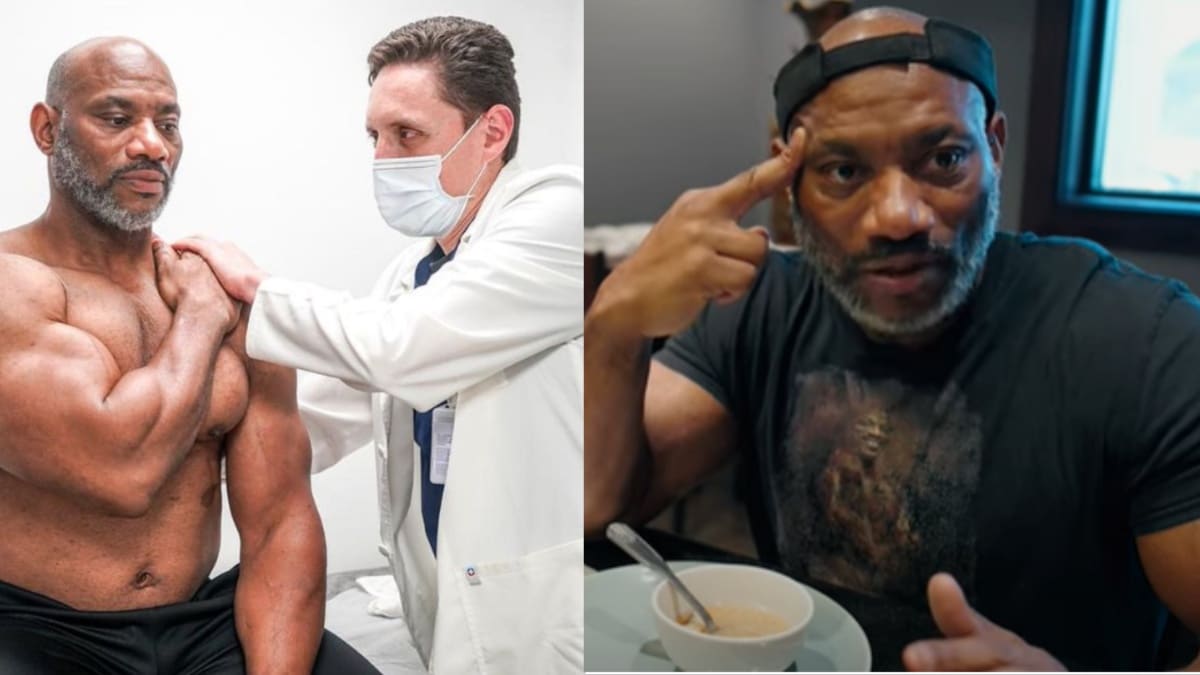
Dexter Jackson Talks Recent Stem Cell Therapy, TRT Cycles & Protein Demands During Prime
Despite stepping away from the stage in 2020, Dexter Jackson still holds himself accountable in terms of fitness and nutrition. In a YouTube video, Jackson detailed his recent stem cell therapy session, his nutritional plan, and how he’s used testosterone replacement therapy (TRT) to preserve his health.
During his illustrious career lasting over two decades, Dexter Jackson was constantly pushing himself at shows and breaking records as an IFBB Pro. While competing actively, Jackson became a five-time Arnold Classic winner, a feat he made possible with conditioning, symmetry, and most importantly, consistency. His tenure saw him face a number of icons such as seven-time Mr. Olympia Phil Heath, Kai Greene, and four-time winner Jay Cutler.
In 2008, Jackson would reach the pinnacle of his career by defeating Cutler at Mr. Olympia. He wasn’t able to regain the prestigious title but competed for several years en route to his final contest, which came at the 2020 Mr. Olympia where he finished ninth. Jackson also holds the honor of having won the 2012 Masters Olympia competition.
While fans hoped for his eventual comeback, Jackson appeared in an Olympia TV interview and made it clear he’s not returning nor does he miss the sport. When asked why, Jackson explained that his long career was fueled by the idea that he would have no regrets when he finally stopped competing.
Dexter Jackson Says Neck Mobility Has Improved Since Stem Cell Therapy
After seeing doctors, Jackson discovered that he had four discs in his neck that displayed considerable arthritis. However, he had positive findings to report after receiving the stem cell treatment.
“Well, they say it takes anywhere from six weeks to three months before you start really benefitting from the stem cell. But when I went over there, got an MRI, they did an MRI on me to check everything, right, found that I had a couple of – four of the discs in my neck that need – that has some arthritis in it as well. I thought I slept on the pillow wrong two months ago and my neck has been bothering me, I mean, I could turn like probably about three-quarters of the way without feeling some pain.
Now I can turn it all away, I’m not saying it’s from the stem cells, it could have just been from rest or maybe it could be, who knows. Stem cells affect people differently, right? Just like anything else. So, it could have been from maybe a little stem cell treatment and rest.”
“All I know is I can turn [my neck] all the way now, I don’t feel nothing,” said Jackson. “Hopefully that I got treated, hopefully, it’s now going to prevent me – it’s supposed to, prevent me from getting that way, hopefully, I’ve caught it early. I got stem cell treatments in my neck and back. In my spine, I had arthritis there.”
Jackson Details Diet and Current/Past TRT Use: ‘I Like to be Cautious and Safe’
According to Jackson, he now consumes four or five ounces of protein daily. Conversely, at the height of his career, he ate six-to-eight ounces. Moreover, he reduced his meals from seven to three in retirement.
“Let’s show you how I’m living and eating nowadays,” said Jackson. Shrimp, sometimes steak, I don’t eat like I use to no more. Instead of eating eight ounces or six-to-eight ounces of beef or protein, you know, with my meals, I probably do now, about four to five ounces. Not six or seven meals a day no more, so probably about three meals a day with one of my shakes. And like I said, I don’t do two cups or rice or none of that stuff no more.”
During his tenure, ‘The Blade’ said it was common to consume approximately 50 grams of protein per meal.
“For 30 years, about 50 grams per meal [of protein] six or seven meals a day. 300 grams or maybe more. Protein has always been around that. I manipulated the carbs depending on off-season versus prep, contest prep right? You have to manipulate the carbs during contest preps so they would go down as low as 150 grams. But on my high days, I was probably eating 100 grams per meal, so 6, 7, 800 grams of carbs a day.”
He said he ate grits almost every morning while competing. He added that he switched to baked potatoes as a breakfast option because it helped avoid midsection bloat later in his tenure.
“I used to eat grits every day for breakfast. Even you get turned off of grits too much because of the mountain I had to eat and how long I had to eat it for. Now, I probably have a baked potato/grits for breakfast depending on how I feel that day. I started doing backed potatoes during the end of my career because it kept my stomach from getting bloated.”
Jackson shared that he started TRT two years ago and took an on/off approach. Generally, he preferred to use TRT for 12 weeks and then take a 12-week break.
“I started doing TRT about two years ago. I did it off and on for a little bit. I was even coming off. A lot of people think you stay on TRT or HRT or whatever, low test is what that means. You can stay on that forever and you don’t have to come off, but of course, me, I like to be cautious and safe and I would even come off of TRT and just be on it for like 12 weeks… come off that, be off for 12 more weeks. I did that for probably about a week but now I don’t even do that anymore.”
Jackson isn’t the only high-profile 2000s bodybuilder open about his TRT regimen. Bodybuilding legend Jay Cutler shared that he’s using TRT to transform his physique as part of a fit-for-50 challenge. He mentioned he plans to steer clear of more powerful compounds like trenbolone. In a separate interview, Cutler underlined that TRT is still a steroid despite some in the industry suggesting it’s not.
Given that Jackson has won every major title in the sport, he has nothing left to prove in bodybuilding. In retirement, he continues to give back to the community by sharing the wisdom he’s accrued following a long and successful career.
Watch the full video below on Dexter Jackson’s YouTube channel:
Published: 8 May, 2023 | 3:32 PM EDT
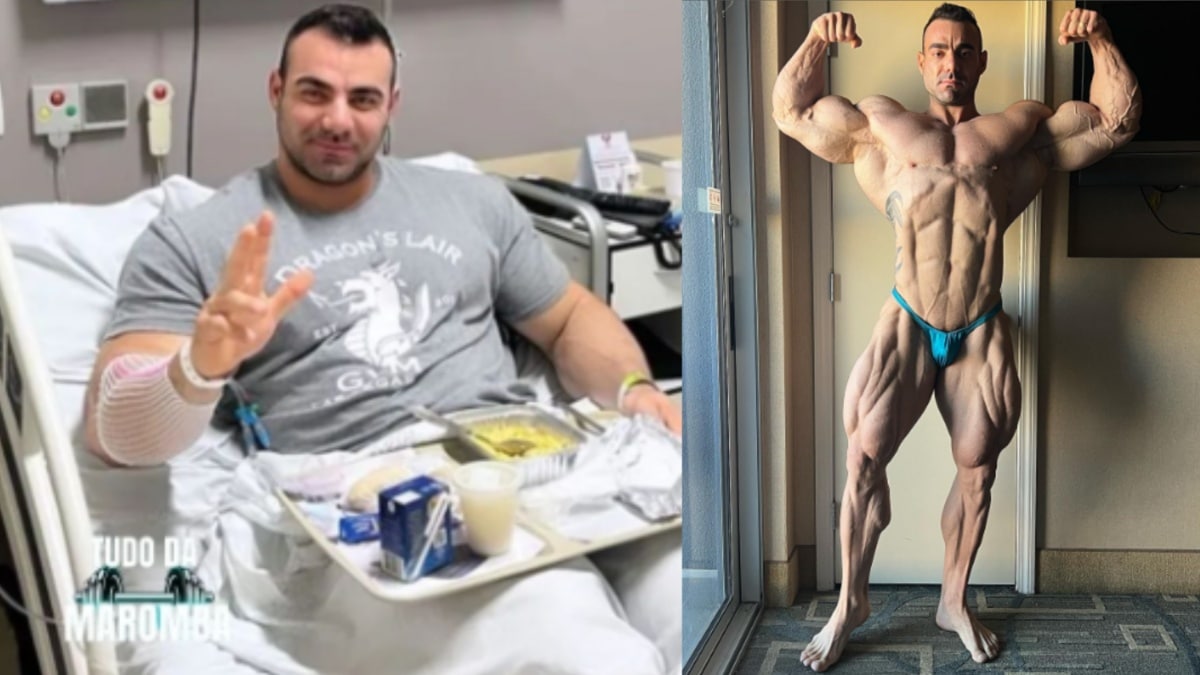
Rafael Brandao Hospitalized with Dengue Fever: ‘We Are Rooting for a Speedy Recovery’
Brazil’s Rafael Brandao is on the mend following a severe case of Dengue fever which required hospitalization. In a recent Instagram post, Brandao updated fans on his symptoms, recovery plan, and how long he might be staying under medical supervision.
Brandao is a top Men’s Open contender in the IFBB Pro League, who found success quickly against top-tier talent. Fans took notice of his symmetry, aesthetics, and balanced proportions following his bronze-earning performance at the 2020 Europa Pro Championships. Brandao was expected to compete on the Mr. Olympia stage that same year, but several health issues prevented him from the commitment.
One of Brandao’s best performances came in 2021 at the Romania Muscle Fest Pro. He took first place ahead of Samson Dauda and Quinton Eriya. Brandao mapped out a return to the 2022 Arnold Classic but eventually pulled out, citing health problems again. Nevertheless, he entered the Arnold Classic South America last year and earned gold plus an Olympia qualification.
At the 2022 Mr. Olympia, Brandao showcased an impressive package though some thought he lacked the size to contend with others in the first call-out. In the end, he took 10th place in his debut. Having yet to earn his 2023 Olympia qualification, Brandao will have until October 9 to secure an invite for this year’s event.
Rafael Brandao Offers Health Update After Being Hospitalized with Dengue Fever
Dengue is a disease that can infect humans through the bite of a mosquito carrying the virus. It mainly occurs in warm and humid regions of the world. Many people who contract dengue fever do not show any symptoms, but some may suffer from fever, headache, body aches, and nausea.
According to Brandao, he’s currently under doctor’s supervision and expects to be discharged in the next 3-5 days. Check out his post below:
“Good evening guys!
I’m a little absent here from the networks …
Unfortunately last weekend I had diarrhea and very strong pains in the abdomen, as I have a sensitive digestive system I was treating it as if it were a virus or food infection, until Thursday to Friday I had a lot of abdominal pain and came to the hospital, arriving here I was diagnosed with Dengue! They admitted me right away, as I was showing some symptoms that could worsen the condition to hemorrhagic dengue.
So I’m here hospitalized under medical supervision, probably staying here from 3 to 5 days or until everything is resolved!
Otherwise, I’m fine, being well taken care of and recovering to be able to go home soon. “
We are rooting for a speedy recovery” Rafael Brandao shared.
In light of Samson Dauda’s recent victory at the 2023 Arnold Classic, some believe the sport’s judges are shifting to favor aesthetics, beauty, and balance over size and conditioning. Terrick El Guindy, a popular promoter and IFBB judge believes the rise of aesthetic physiques is bad news for Nick Walker, who uses size, conditioning, and freak factor to overwhelm opponents on stage.
RELATED: Bodybuilders Flex Lewis and Rafael Brandao Join Hands For An Intense Back Workout
While he’ll likely need extra time for recovery, Rafael Brandao is optimistic about his bodybuilding future. Fans hope to see him back on stage in time to earn his 2023 Mr. Olympia invite as the contest is slated for November 2-5 in Orlando Florida.
Published: 8 May, 2023 | 1:17 PM EDT
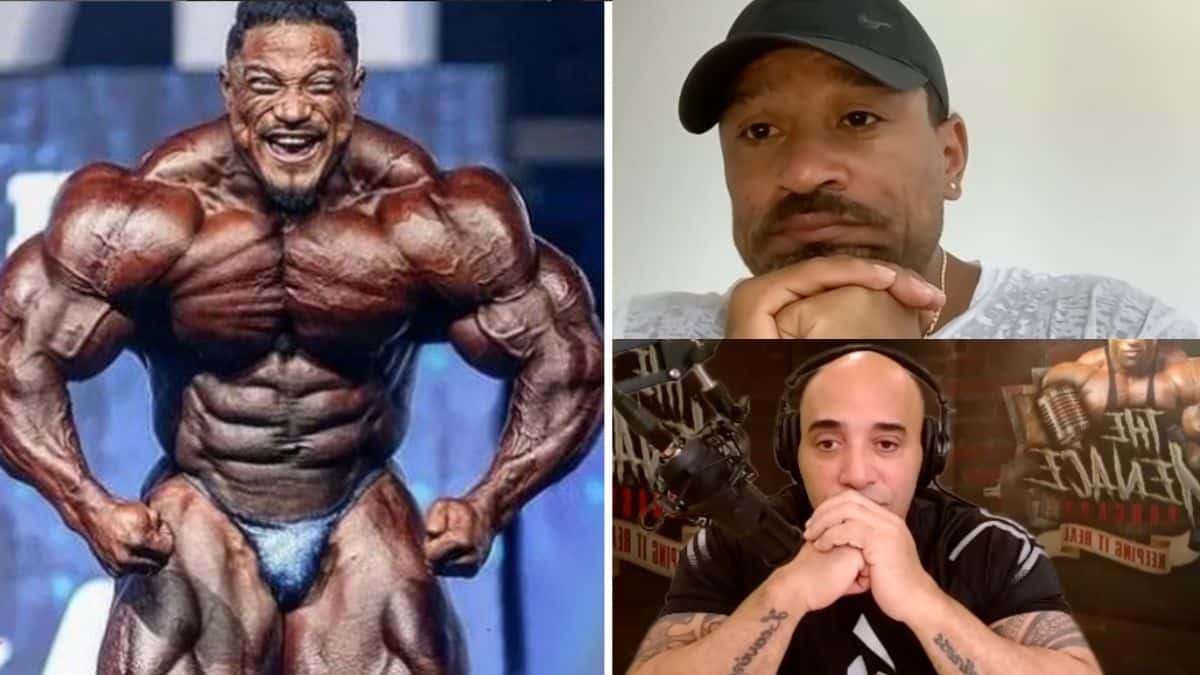
Roelly Winklaar Rethinking Retirement: “I Never Thought I Would Have Ended It Like This”
Egberton Rulove “Roelly” Etienne-Winklaar‘s official retirement status has yet to be decided. In a recent The Menace Podcast, Winklaar, joined by Dennis James, Milos Sarcev, and Chris Cormier, discussed injuries, protein intake, and whether or not a comeback is on the horizon.
As a standout Men’s Open competitor, Winklaar quickly garnered attention in the IFBB Pro League with cartoonish muscle density, size, and pronounced triceps. The Curaçaoan/Dutch native has proven himself against elite talent, having earned and competed at Mr. Olympia a total of 10 times.
Fans of bodybuilding will be amazed but not surprised to hear that Roelly Winklaar has the most impressive and colossal triceps in bodybuilding history. Roelly’s triceps are so enormous that they redefine what is possible in bodybuilding.
What’s more, Roelly’s triceps are massive even when his arms are at rest. But he also knows how to show off his triceps with perfect posing. Whether he’s doing his signature side triceps pose or a cross-body arm pose, Roelly has unparalleled triceps that make him stand out as the best in the business. No one else even comes close to his impressive physique.
In 2018, Winklaar recorded his best Mr. Olympia performance, where he pushed the late Shawn Rhoden in the first call-out. He ultimately finished third but also received the Olympia People’s Champ Award. Well-respected for his active schedule, Winklaar’s last competition saw him reach ninth at the 2021 Romania Pro.
Questions surrounding Roelly’s retirement have lingered for some time. Last year, fans noticed he downsized his physique, which spurred rumors of his departure from the sport online. In addition, he helped fellow compeittor William Bonac prepare for 2022 Mr. Olympia.
Following a five-hour left shoulder rotator cuff surgery, Winklaar voiced that his future in bodybuilding was uncertain. He said the healing process would factor into his decision to make a comeback. And while he admits he may never build the physique he carried in his prime, Winklaar isn’t ready to close the door on his career.
Roelly Winklaar Hints at Comeback, Talks Injuries and Retirement
When explicitly asked if he was officially retired, Roelly Winklaar had the following to say:
“I can’t answer that no, [officially retired] I don’t want to retire. I don’t want to retire but the injuries that I have I think I can do better to be my best back on stage. I was fighting with myself to train so I can compete with myself even training to look good, but to be the best and what I want… I think it could be never anymore but,” Roelly Winklaar said.
“If I go back, I’ll be smarter and just control the muscle, the pump, and everything,” said Winklaar. “It was after Tampa, after my surgery, exactly. It was… I was training light weight but I was still feeling fit. It was after my surgery [where I decided to stop]. I was just trying to but it wasn’t going.”
Winklaar believes his heavy training likely caused the shoulder injury that has prevented him from working out and competing.
“I don’t know how to call it in English, rotator cuff, it’s done. It’s too much, third-grade [tear]. I tried food, I tried. No, it’s only from the gym from all the years of heavy training,” said Winklaar. “Yeah [I had surgery] that was in 2020 when I did it. I started training back again. And exactly all my last shows, 2021, I didn’t want to eat well. I don’t exactly know, that’s why I placed bad.”
According to Dennis James, ‘The Beast’ has nothing left to prove as a bodybuilder.
“Roelly doesn’t have anything to prove anymore, your name is cemented in the IFBB Pro League forever. People will talk about ‘The Beast’ for the next 100 years. You’ll never have to worry about that. Maybe, I would have loved to see was you getting off stage and telling your fans ‘This is it for me, I’m going to hang it up.’”
Winklaar would have preferred to leave the sport on his own accord instead of an injury forcing him to stop.
“Exactly, I’ve never had a chance to do that. I never thought that I would have ended it like this, you know,” says Winklaar.
Regarding his career’s best physique, the 45-year-old believes his greatest look came in 2018.
“The Arnold Classic Australia,” added Roelly.
During his tenure, Roelly was over 300 pounds but said pushing the limits of his size never helped at shows.
“The heaviest I have ever been was maybe 138 kilos (305 pounds),” said Winklaar. “I can’t go heavier because in that time, I was like heavier on stage. I was like 128 and nobody was liking my shape anymore. That’s why I don’t be heavier anymore.”
To maintain muscle mass, Winklaar discussed common proteins he consumed.
“I was eating in my prep I was always eating fish. No more, like two kilos, two kilos of chicken,” said Winklaar. “I don’t have protein [shakes] no, shakes. No shakes. With eggs [and chicken] for breakfast.”
This isn’t the first time Roelly Winklaar has reflected on his career. In a special appearance on William Bonac’s Gye Nyame podcast, Winklaar revealed that politics affected his placings at contests ‘a lot.’ However, he made it clear that his exit from bodybuilding was a direct result of his recent shoulder injury.
RELATED: Kevin Levrone on Winners Being Hand Picked in Bodybuilding: ‘It’s Business, I Didn’t Take It Personal’
While it doesn’t appear to be final, Roelly Winklaar is heavily considering a comeback. Given his abrupt departure, fans would love to see him back on stage.
You can watch the full video below from the Muscle and Fitness YouTube channel:
Published: 8 May, 2023 | 11:50 AM EDT