
Muscle Chemistry Archive
4 Reasons You Should Have a Deload Week
The Importance of a Deload Week
If you’ve been following the same training protocol and no matter how many tweaks and adjustments you make to your training plan, nutrition, and sleep, you still can’t break past plateaus, you may want to try adding a deload week to your program.
Many people make the mistake of continuously pushing themselves and pushing harder when they reach a plateau, but the reality is that you’ll want to do the opposite and push yourself less. Giving your body a break from the taxing effects of doing a lot of volume at a high intensity is sometimes just what it needs to hit new personal records (PRs) and continue to build the body that you want.
Below, you’ll learn all about what a deload week is and the reasons you should start including them in your training plan.
What Is a Deload Week?
Rest is important for your body and muscles to grow and get stronger. Of course, one way you can rest from working out is by completely taking time away from the gym and being a couched potato in general. However, there are slightly more productive approaches that will have you burning calories and giving you all the other benefits of exercise without having to give up on moving completely.
For one, you can partake in your favorite physical activities, including swimming, hiking, biking, rowing, basketball, etc. This is known as active recovery. Although you won’t be giving your body a complete rest day, which is still important, you’ll be giving your body a break from weightlifting so that your muscles can grow.
Outside of playing different sports, you can follow a method that still allows you to do the exercises and work your muscles in your training plan. This is known as a deload week.
Simply put, you’ll still do the same workouts that you normally do, except instead of pushing yourself on weight and reps, you’ll reduce the workload you do.
4 Reasons to Deload
1. Better Rest and Recovery
Your muscles don’t grow while you’re lifting, they grow while you’re resting. And while taking full rest days — where you do no activities that day — are important, having some weeks that are less intense than other weeks is important as well (1). When you lift weights, you place a lot of stress on your central nervous system (CNS) and muscles. Lifting weights well-rested will allow you to lift the most weight you’re capable of, which will continue to get you stronger and build you muscle. Whereas always lifting weights in a fatigued state won’t allow you to push yourself at your highest capability each workout, hampering your total strength and muscle growth.
2. Hit New PRs
Since you’ll be able to push yourself harder each workout when you’re fully rested and full of energy, you’ll be able to explode your lifts and hit new PRs on movements, including barbell bench press, barbell squats, lat pulldowns, and barbell bicep curls.
This study from the Journal of Strength and Conditioning Research found that collegiate athletes who followed autoregulatory progressive resistance training — increasing or lowering weight based on how they felt — gained more strength than following a linear progression model — a set increase in intensity and weight from week to week (2).
3. Improve Your Joint Health
Resistance training is healthy for your joints, however, doing too much weightlifting can be detrimental to your joint health. Giving your muscles, bones, and joints, a rest from external stimulus can improve your joint health and keep them strong long-term (3).
Adding a deload week to your training plan will reduce your chances of injury and your joints will feel stronger and you’ll have fewer tweaks you’ll have to worry about that may prevent you from using heavier weights.
4. Reduced Stress
Overtraining can decrease your testosterone and increase your cortisol — your stress hormone — which negatively affects your muscle growth and overall health. Taking some time off to allow your body to rest up and reset can prevent this (4).
Weight training and pushing your physique to new heights places a lot of stress on your mind and body, and allowing yourself some time with less volume at a lower intensity can give your mind and body the reduction in stress it needs to increase your lifts when you go back to your normal intensity and volume.
How to Deload
There’s no cookie-cutter method of doing this, but in general, you’ll be using much lighter weight and doing fewer sets.
The best way to do this is to cut back 1-2 sets for each exercise and reduce the weight you use by 40-60% of what you would normally do. With this method, you can still do the same number of reps you usually would do, you’ll just be doing much less volume and intensity.
How Often Should You Deload
There is no set amount of time or cycle you’ll want to follow to do this. It’s best to listen to your body. For example, if you’ve been stuck at the same weight for a while or are feeling extra fatigued, that would be a good time to incorporate a deload week to give your body a break and let it reset. However, it’s recommended that you deload once every 6-12 weeks, depending on each individual and athlete. For example, a powerlifter who is pushing themselves with more intensity and volume should take a deload week more often than an average gym-goer who is pushing themselves at a lower intensity.
Conclusion
When your body stops growing and getting stronger, or you’re feeling fatigued and exhausted from your training plan, adding a deload week can be just what you need to push past plateaus and give your body the rest and reset it needs to continue on its path to building your desired physique.
A deload week improves your rest and recovery process, helps you hit new PRs, improves your joint health, and reduces stress.
Have you ever tried a deload week before? If so, let us know how it went in the comment sections below. Also, share this article on social if you think other people will get value out of it.
References
1 – Cheng, A. J., Jude, B., & Lanner, J. T. (2020). Intramuscular mechanisms of overtraining. Redox biology, 35, 101480. https://doi.org/10.1016/j.redox.2020.101480
2 – Mann, J. B., Thyfault, J. P., Ivey, P. A., & Sayers, S. P. (2010). The effect of autoregulatory progressive resistance exercise vs. linear periodization on strength improvement in college athletes. Journal of strength and conditioning research, 24(7), 1718–1723. https://doi.org/10.1519/JSC.0b013e3181def4a6
3 – O’Brien M. (2001). Exercise and osteoporosis. Irish journal of medical science, 170(1), 58–62. https://doi.org/10.1007/BF03167724
4 – Flavio A. Cadegiani, Claudio E. Kater, Matheus Gazola. (2019) Clinical and biochemical characteristics of high-intensity functional training (HIFT) and overtraining syndrome: findings from the EROS study (The EROS-HIFT). Journal of Sports Sciences 37:11, pages 1296-1307.
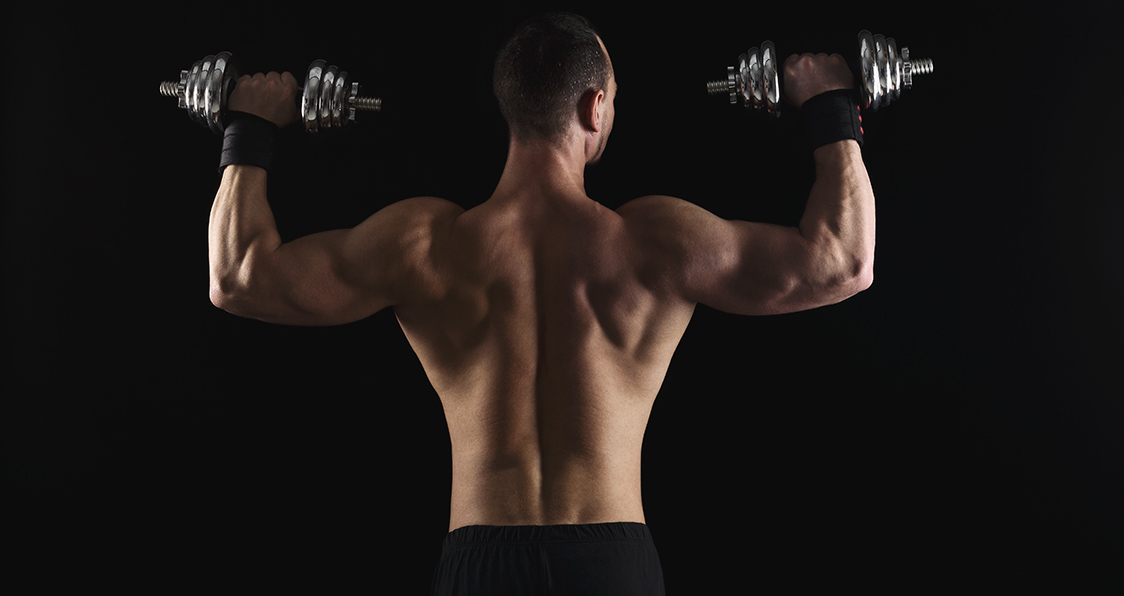
6 Best Exercises For Building Boulder Shoulders
Build Broad Shoulders With These 6 Exercises
“Broad shoulders don’t look nice,” said no one ever. Shoulders can be one of the hardest muscle groups to develop. Only a few people follow the right training routine to achieve big shoulders.
You need to follow a holistic approach in your training to achieve shoulders which look like massive boulders. Building round and big shoulder take much more than performing a few shoulder presses.
Arnold Presses
Arnold presses are one of the best shoulder exercises for overall shoulder development. Named after the Governator himself, the exercises can help in building round shoulder caps which look like the top of football helmets.
Sit on a chair while holding a dumbbell in each hand with a supinated (palm facing inwards) grip. At the beginning of the movement, hold the dumbbells at your shoulder level while keeping your elbows bent.
Rotate your arms as you lift the dumbbell over your head. Your palms should be facing forward at the top of the movement. Rotate your palms to the starting position as you lower the dumbbells.
Dumbbell Front Raises
The dumbbell front raises primarily work the anterior deltoids. The exercise helps in developing the separation between the chest and shoulders. Don’t make the mistake of using momentum by swinging back and forth to lift the dumbbell while performing the front raises.
Hold a dumbbell in each hand at your sides extended at arms length. Your palms should be facing your thighs at the starting position. Elevate your right arm while maintaining a slight bend in your elbow until it’s parallel to the floor. Return to the starting position and repeat with your left arm. Alternate between arms for the recommended reps.
Leaning Cable Side Lateral Raises
Using cables in your workout helps isolate your muscles which can build definition and conditioning. Side lateral raises work the medial delts. Stand beside the cable pulley machine so that your right arm is next to the pulley machine.
Hold the D-bar attached to the low pulley with your left arm. Lean toward your left side and elevate your left arm until it is parallel to the floor. Return to the starting position and repeat for the recommended reps. Repeat on your right side.
Seated Smith Machine Presses
Using a smith machine gets you the best of the isolation and compound movement worlds. Smith machine presses work the medial deltoids while keeping constant tension on your shoulders.
Place a chair under the smith machine bar so that anterior delts are directly under the barbell throughout the movement. Maintain a full range of motion to get the best results while performing all the exercise mentioned in the article.
Chest Supported Dumbbell Rear Delt Raises
Rear deltoids are one of the weakest muscle groups for most people. Since your rear delts are a stubborn muscle group, performing the exercise on an incline bench adds an isolation aspect to better target the muscles.
Adjust the incline bench so that it is forming a 60-degree angle with the floor. Grab a dumbbell in each hand with a supinated (palms facing inwards) grip extended at arms length. Elevate the dumbbells to your sides while maintaining a slight bend in your elbows until they are parallel to the floor. Repeat for the recommended reps.
Barbell Shrugs
Barbell shrugs work your trapezius muscles. Traps are a major muscle group which covers most of the upper back and the posterior of the neck. Shrugs are one of the easiest exercises to perform and yet many people do them wrong.
Hold the barbell with a shoulder-wide pronated (palms facing inward) grip. While maintaining a slight bend in your elbows, lift your shoulder as high as you can without using jerking. Hold at the top of the movement for a couple of seconds before returning to the starting position.
Which is your favorite shoulder exercise? Let us know in the comments below. Also, be sure to follow Generation Iron on Facebook and Twitter.
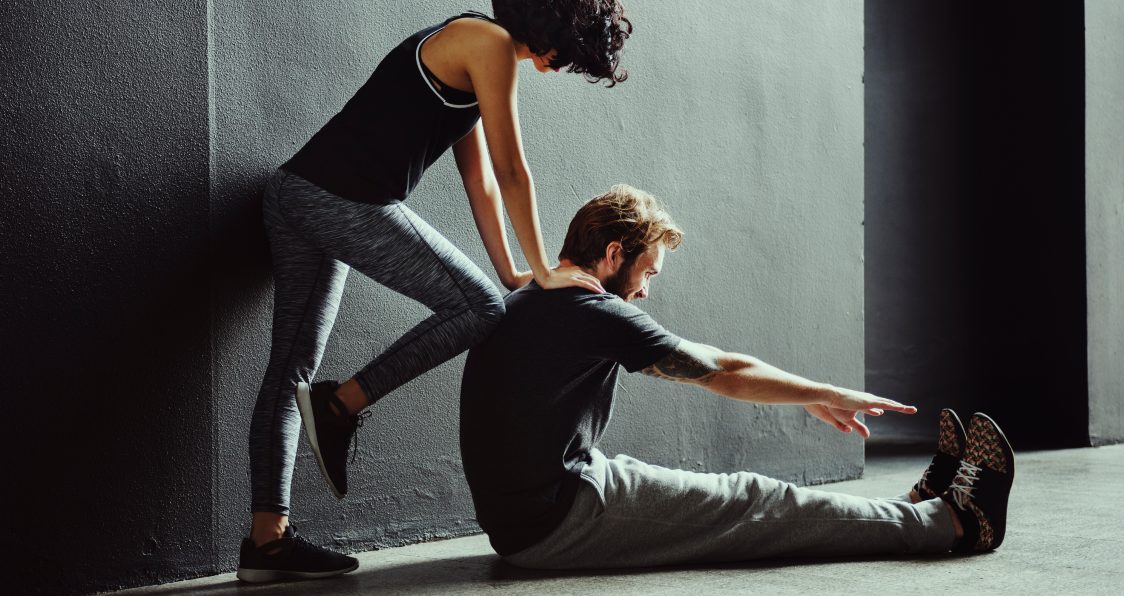
Best Bodyweight Partner Exercises To Add To Your Workouts
These bodyweight partner workouts are perfect for those with someone to workout with who don’t have access to a gym!
These are challenging times to workout. The current state of everything with gyms closed or open with limited capacity has probably made it difficult for you to find that stable routine you once had. On top of that, the weather is starting to change, that bitter, cold air moving in faster than we may like. Those valuable runs or outdoor activities are dwindling and you may feel stuck with what to do. Working out at home can be a challenge and we fully understand the struggle of balancing your busy life and your workouts especially with no gym to escape to.
If you have a partner or workout buddy living with you, thankfully there are some great exercises you can do together! Keeping you both on a routine promotes a healthier lifestyle overall, both physically seeing gains and staying mentally sharp during these challenging times. Plus, it is more fun to work out with somebody. If you prefer to workout alone, that is perfectly understandable and we get that, but working with someone can open new doors to exercises, tips, and a great energy that you may be missing out on.
Believe it or not, it is possible to get a good workout in without all the equipment a gym provides. While we get used to grinding in the gym with our favorite machines, maybe its time to switch things up and get a great full body workout in with your partner as the only equipment you need. The right person can keep you accountable and push you to limits you may have not thought possible.
Getting Started
To start, have a conversation with your partner about your goals as well as their goals and work together to achieve them. Any injuries, current or past, sensitive spots, or weight differences can also be discussed to run a safe and efficient workout. While focusing on form and technique together, you both can see great gains with a monster partner workout.
Partner Exercises
Plank With A Clap
Planks are great all around ab builders while also promoting great gains for balance and stabilization as well as low back pain (1). Both you and your partner hold the plank position, keeping your cores engaged with a neutral spine. Facing each other, you can either start a timer or count the claps as reps. While in the plank position, reach your right arm out and clap their left hand as they extend their arm, alternating arms as you go.
Push-Up With A Clap
This is very similar to the plank with a clap but we had to throw this in there. Working your chest, arms, and abs, a push-up is one of those exercises that should be staple in any workout (2). Both you and your partner perform a push-up and clap hands with the opposite arms. Continue alternating for a set amount of time or reps.
Burpees
Burpees are a killer full body workout and that love-hate relationship we have with them may be slightly easier with a partner present. Have your partner lie on the ground flat on their stomach, or they can hold a plank position. Then perform a burpee, jumping over them to the other side as you perform this exercise. The added challenge is jumping over them as opposed to jumping straight up in the air.
Pistol Squat
Pistol squats can be challenging, but with a partner, these exercises become a whole lot easier. Use your partner as support for these. Stand facing each other and join opposite hands, making sure you have a good grip. With one leg off the ground, squat into the sole leg planted firmly on the ground into a one-leg squat. You and your partner will both be performing the exercise and providing balance for each other.
Wheelbarrow Push-Up With Squat
This is an interesting exercise but one you both can have fun with. Your partner will be in a push-up position, but you will hold their ankles at about hip height. Your job is to hold them stable while also maintaining a good, solid squat position. At the same time you will both lower, your partner into a push-up and you into a squat, for your desired number of reps.
Bodyweight Squat
We had to put this in there because the bodyweight squat is a great exercise to perform (3). You can hold one hand to your partners or cross your arms and hold each opposite hand as you both engage in a squat position. With a tight core and flat back, both of you will lower into a squat and control the motion back up.
Side Plank With Rotation And Clap
Side planks can be brutal, but are perfect for your obliques as well as providing balance and promoting good posture (4). You and your partner will be back to back in an opposite arm side plank. Extend your arms at the top and clap hands with your partner, followed by you both rotating down and clapping your hands underneath each other. Keeping a good, stable core is key for this exercise.
Hand Stand Hold
Hand stands can be challenging but are fun exercises to perform for stability as well as using multiple muscles to keep yourself engaged. And you look good doing it! Have your partner help you into a hand stand position, or hop into it on your own if able, and hold for your desired amount of time. Your partner will stand next to you as back-up incase you start to lose your balance. Switch positions and let your partner show off a little.
Wrap Up
Working out with a partner is a great way to be accountable to yourself and someone else while promoting great growth, both physically and mentally. While it can be challenging to get a good workout in, having someone to help you, and someone you can help, can make these more fun and engaging as you seek that desired physique. Give these partner exercises a try and really see the benefits of a great workout.
Let us know what you think in the comments below. Also, be sure to follow Generation Iron on Facebook, Twitter, and Instagram.
*Images courtesy of Envato
References
Gupta, Gautam; Alok, Mayank (2018). “Effectiveness of Plank Exercise in Low Back Pain”. (source)
Contreras, Bret; Schoenfeld, Brad; Mike, Jonathan; Tiryaki-Sonmez, Gul; Cronin, John; Vaino, Elsbeth (2012). “The Biomechanics of the Push-up: Implications for Resistance Training Programs”. (source)
Kritz, Matthew; Cronin, John; Hume, Patria (2009). “The Bodyweight Squat: A Movement Screen for the Squat Pattern”. (source)
Blasimann, Angela; Eberle, Simon; Scuderi, Manuel M. (2018). “Effect of Core Muscle Strengthening Exercises (Including Plank and Side Plank) on Injury Rate in Male Adult Soccer Players: A Systematic Review”. (source)
4 Tips On How To Handle ‘Two-A-Days’ To Maximize Your Gains
Two a-days are a practice reserved for those with luxuries of time and strength of spirit.
In this age of increasing amateur fitness, more and more gym-goers are finding excuses to fit workouts in over 7 times a week. Here are some tips to help manage the grueling but rewarding practice of two- a days.
1. Recovery Is King
Of course this always applies, but extreme attention must be payed when doing two a-days. If one is not getting enough sleep or calories, two workouts a day will start to become a detriment rather than a boost. Also, sitting at a desk for 8 hours in between workouts is a recipe for a stiff inhibited body- vulnerable to injury. Extra care must be taken both during off time, and during warm ups/ cool downs to make sure the body is supple and ready to work.
2. Diversify Workouts
Two a-days are not meant to be just an acceleration of an average workout program. Doing a program twice as fast as intended usually means you’re not working hard enough, or the program sucks. Two a-days are beneficial for the individual looking to attack the body in multiple ways.
Cardio workouts are excellent pairings on heavy bodybuilding days, can be done with a variety of machines, and can be anaerobic or aerobic in focus. As far as weightlifting, hitting the same movements multiple times a week can be beneficial, but the law of diminishing returns always looms large.
Make sure you have multiple ways to hit each body part, and that resistance types, set, and rep ranges are altered to constantly provide a new stimulus while allowing for recovery.
3. Have A Goal
Often, the biggest danger of doing two-a-days is becoming confused in routine- making up workouts on the way to the gym, altering workouts senselessly while at the gym, etc. It’s easy to be swept up in the feeling of ‘the grind,’ doing a ton of work without actually having a specific intention behind any of it.
Write down exactly what you want to accomplish and plan around that, or at least use it to orient yourself every day, so that the work, which often becomes monotonous, does not become mindless. Putting in twice the work and not seeing results because the work had no clear purpose can be a damaging psychological blow.
4. Make sure you have the drive.
From my own experience in sports training, often doing two-a-days becomes half-assing two workouts instead of really pushing through one. When one knows that they will have to work out later in the day, it’s easy to take the first workout lightly. This is a nasty habit. Both workouts don’t need to be balls to the wall, but they need to be complete workouts. Don’t delude you’re doing twice the work if you’re really just taking twice the time every day.
How do you prepare for two-a-days?
Let us know in the comments below. Also, be sure to follow Generation Iron on Facebook, Twitter, and Instagram.

IFBB Milwaukee Pro 2021 Results
Full results for the IFBB Milwaukee Pro 2021.
This weekend held the IFBB Milwaukee Pro 2021 on Saturday, May 29th, 2021. The event took place in Milwaukee, Wisconsin. In the biggest highlight of the night, Pro bodybuilder George Kawalawu won the Classic Physique division. Read on for a full breakdown of the Milwaukee Pro 2021 results.
The Milwaukee Pro 2021 featured four divisions including Classic Physique, Men’s Physique, Bikini, and Wellness. While the first place victor does not receive automatic qualification for the Olympia, the top three earn points towards overall qualification.
The Milwaukee Pro 2021 is one event of many finally going underway after a delayed start to the IFBB Pro season due to the COVID-19 pandemic. With ristrictions lowering in nearly all states of the US, the 2021 season has now moved forward in full force. Though admittedly, both the Arnold Classic and the Mr. Olympia events have been delayed to later dates this year.
The full results have now been announced. Check out our full breakdown of the Milwaukee Pro 2021 results below.
Milwaukee Pro 2021: All Division Winners
A quick breakdown of the winners in each division from the Milwaukee Pro 2021. The top three placing winners earn points towards qualifying or the Olympia 2021 weekend.
Classic Physique: George Kawalawu
Men’s Physique: Rodrigue Chesnier
Bikini: Chenqi Liu
Wellness: Isabelle Nunes
2021 IFBB Milwaukee Pro Breakdown:
Classic Physique Results
First Place – George Kawalawu
Second Place – Tommy Clark
Third Place – Zeek Andrews
Fourth Place – Sabur Favors
Fifth Place – Omar Bautista
Men’s Physique Results
First Place – Rodrigue Chesnier
Second Place – Ismael Dominguez
Third Place – Daniel Stull
Fourth Place – Clarence McSpadden Jr.
Fifth Place – Mehdi Kabbadj
Bikini Results
First Place – Chenqi Liu
Second Place – Alessia Facchin
Third Place – Shelby Pierce
Fourth Place – Carolina Collazos
Fifth Place – Trisha Green
Wellness Results
First Place – Isabelle Nunes
Second Place – Sunny Andrews
Third Place – Renee Harshey
Fourth Place – Devyn Cambre
Fifth Place – Bruna Ferraz
Milwaukee Pro 2021 Scorecards:
Make sure to check out our full IFBB Pro results page from this year and previous years right here to catch up on any action you may have missed!
The GI Team is here to provide top news and original content for the new generation. The generation of bodybuilders who are pushing the sport to bigger and better places. Join The Movement. Become a part of Generation Iron!
2021 California State Pro Scorecard
This website uses cookies so that we can provide you with the best user experience possible. Cookie information is stored in your browser and performs functions such as recognising you when you return to our website and helping our team to understand which sections of the website you find most interesting and useful.

IFBB California Pro 2021 Results
Who became champion at the IFBB California Pro 2021?
And just like that, in a flash, the pro bodybuilding season has kicked into full gear. This weekend held the IFBB California Pro 2021. It’s the third major IFBB Pro show to be held in May alone. Finally the sport of bodybuilding is starting to feel normal again. And with that – you can read on to get a breakdown of the California Pro 2021 results.
Two notable competitors going into this competition were Hassan Mostafa and Mohamed El Amem. Both of these competitors have already stepped on stage previously this month. Mostafa ended up placing 3rd at the New York Pro 2012. Mohamed competed in both the Indy Pro 2021 and the New York Pro. He placed 2nd at the Indy and 5th at the NY Pro. It’s clear these two competitors are hungry to earn a Mr. Olympia qualification.
But the clear highlight of the night was Patrick Moore. A pro competitor who has been hyped as “The Future” since he won the California Pro in 2019. Since then he has had a bumpy road placing 13th at the Arnold Classic and ultimately taking an extended offseason. He now claims to be ready for the stage again – and the California Pro 2021 was his target. Was he able to reclaim his glory from two years ago?
Compared to the New York Pro and Indy Pro – the California Pro was a relatively smaller affair. Not in terms of talent but in terms of divisions. The Cali Pro only featured the Men’s Open division. The winner of the division received qualification to the Mr. Olympia 2021 set to be held later in October.
The official IFBB California Pro 2020 results have finally arrived. You can check them out below.
IFBB California Pro 2021 Breakdown
Men’s Open Bodybuilding Results
First Place – Patrick Moore
Second Place – Coming Soon
Third Place – Coming Soon
Fourth Place – Coming Soon
Fifth Place – Coming Soon
Make sure to check out our full IFBB Pro results page from this year and previous years right here to catch up on any action you may have missed!
The GI Team is here to provide top news and original content for the new generation. The generation of bodybuilders who are pushing the sport to bigger and better places. Join The Movement. Become a part of Generation Iron!

2021 Milwaukee Pro Scorecards
This website uses cookies so that we can provide you with the best user experience possible. Cookie information is stored in your browser and performs functions such as recognising you when you return to our website and helping our team to understand which sections of the website you find most interesting and useful.
Powerful Chest Building Exercises
The Key To Chest Developing
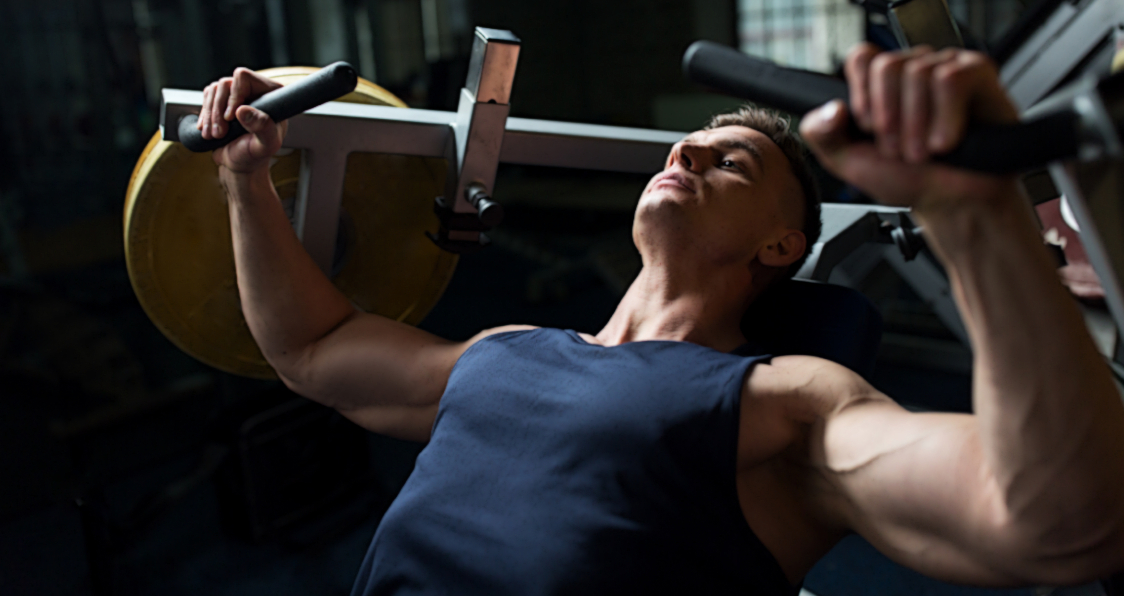
Chest development is so often high on the priority list for many bodybuilders, powerlifters and gym regulars. There are a number of exercises that we can perform to place significant demand on the muscles of the chest and increase muscular size and strength. In order to develop the chest to its full potential, we must think about incorporating a number of chest strengthening exercises which place an adequate tensity on all muscles of the chest.
The pectorals are the muscle group of the chest which consists of 4 individual muscles that drive and control movement around the shoulder. The two major pectoral muscles are the pectoralis major and the pectoralis minor. The pec major muscle originates from the sternum (front of the ribcage) and clavicle (collarbone) and inserts directly on the humerus of the upper arm. The role of the pec major is to cause flexion, extension and rotation of the humerus (1). The pec minor, meanwhile, lies beneath the pec major, originates from the ribs and inserts on the scapula (shoulder blade). The pec minors role is different from it’s bigger brother as it works to stabilize the scapula.
There are two small muscles of the pecs which are often overlooked – the subclavius and the serratus anterior. As the name suggests, the subclavius can be found underneath the clavicle where it’s role is to depress or “pull” the clavicle down. The serratus anterior originates from the ribs and inserts on the scapula which allows it to pull the shoulder blade forward and around the side of the body.
If we are looking to add mass to the chest, the primary emphasis should be on exercises that challenge the pectoral major – considering it is the biggest muscle of the 4 and therefore has the greatest growth potential. With that being said, if we are looking for comprehensive chest development it’s important to select exercises which target the smaller pectoral muscles too.
The following exercises have been selected simply because they are supreme mass building exercises. However, a further reason for their inclusion is that they all effectively place a high demand on all 4 muscles of the pectorals and contribute to overall chest growth.
The Best Mass Building Chest Exercises
By reading through these 10 chest building exercises, you may quickly notice some similarities and trends. Many of the exercises do replicate the same or similar movement patterns. However, we will use different equipment or a change in the angle of application (i.e adding an incline) to effectively load the pectorals.
You will also find that the vast majority of the exercises are compound or “multi-joint” exercises. Since the goal is mass orientated, it would be appropriate to perform a number of compound lifts considering the substantial impact they have on the body (2). There are a couple of useful isolation or “single-joint” exercises listed, however, their purpose is to facilitate improvement with the compound exercises and iron out any weaknesses.
As stated, a wide range of equipment is utilized – machines, cables, dumbbells, barbells, and body weight. Each piece of equipment will provide a slightly different challenge and training stimulus for the pectorals.
1. Barbell Bench Press
The undisputed king of chest building exercises for a number of reasons. With free weight exercises, you will find that you can lift the heaviest loads when using the barbell, therefore, you can reasonably expect to lift a substantial weight with the barbell bench press. By lifting heavy, we increase the amount of mechanical load that the muscles are exposed to which will drive muscular hypertrophy (growth).
To execute the bench press, lie back on the bench and align your eyes with the barbell. Keeping feet flat on the floor, bring them under the hips to create a slight arch in the lower back. Grip the bar slightly wider than shoulder width to place maximal demand on the pecs. Having a narrower grip will involve the triceps more heavily, taking some demand away from the pecs. Drive hard through the heels and brace the core muscles before removing the bar from the rack and bringing it over the chest. Drop the bar down until it makes contact with the chest and then drive upward to return to the starting position. It is essential to ensure that the elbows are slightly down from the line of the shoulders throughout the duration of the movement. This is done to reduce any risk of shoulder impingement or injury.
If you are new to bench pressing, always start light and practice form first. As you become more competent you can gradually begin to increase the load lifted. Regardless of your experience in lifting, always prioritize safety when benching with the barbell. This means, setting up the rack appropriately to catch the bar in the case of failure or using a spotter to prevent becoming trapped under the bar.
2. Incline Barbell Bench Press
The flat bench press places the body in a position that is parallel with the floor. With the incline bench press, this angle is altered so that the body is placed at incline angle (typically anywhere between 15° and 50°. The purpose of this is to shift the demand to the upper portion of the pectoralis major however, be aware that if the angle is too steep, we will begin to involve the deltoids (shoulders) to a greater extent rather than the pecs (3). Therefore, it would be wise to keep the bench at a low angle in order to hit the upper chest most effectively.
The form for the incline press is identical to the flat press with the only difference between the two being the bench angle. However, don’t expect to bench the same kind of weight with the incline press as you do with the flat press. Because we are utilizing =the upper portion of the pec rather the entirety of the the muscle, you will find the incline press to be more challenging than a flat press.
The standard approach to “chest day”, is often to perform flat bench first before moving onto incline press later in the session. The problem with this approach is that you approach the incline press already in a fatigue state and therefore cannot lift as heavy as you could if you were fresh. With this in mind, I would recommend alternating the variation you start with on a regular basis so that you can perform at an optimal level for both exercises.
3. Dumbbell Bench Press
The dumbbell bench press is an excellent variation of the barbell version. While you will be capable of driving heavier loads with the barbell, there may come a time where you hit a plateau with your benching. At this point, it may be a good idea to switch to the dumbbell bench press which will provide a slightly different stimulus to the pectorals and recommence progress (4).
One of the biggest benefits to dumbbells is the fact that both sides have to work independently which challenges joint stability to large degree. As a result of this instability, a number of stabilizing muscles are recruited in order to control the movement. A further advantage with the dumbbell press is the fact that range of motion is increased. With the barbell press, as soon as the bar touches the chest you must drive back up – there is no physical way to drop any further. With the dumbbells, there is no restriction to stop you from dropping the weights down to the side of the body thus increasing the distance the weight travels and engaging the muscle to an even greater extent.
Finally, the dumbbell bench press may be a good option for beginners or those who are concerned about heavy barbell benching. With the dumbbell press, there is no concern about getting trapped under the bar or failing, as there is with the barbell variation. If you were to reach muscular failure with the dumbbells, you can simply drop them to the floor – no spotter or rack required.
4. Incline Dumbbell Press
As with the barbell press, the dumbbell press can also be completed on an incline bench. Feel free to play around with the angle of the bench which will allow you to target the muscle from a variety of angles and lead to a more comprehensive development.
One variation that can performed with dumbbells that cannot be before with barbells, is the usage of rotation. With a fixed bar, it is impossible to rotate through the shoulder, however, the individual dumbbells allow for a medial rotation of the humerus which causes considerable activation in the pectoralis major.
5. Incline Dumbbell Pullover
The dumbbell pullover is not only an impressive pec developer, but it actually activates a vast number of upper body muscles – including the lats and the delts. The intention with the pullover is to extend maximally through the shoulders, over the top of the head all while maintaining straight arms. This motion demands a great deal of stabilization, control and drive from the pectorals.
To complete the pullover, set a bench up with a slight incline, lie down, start with the dumbbell above the chest and gradually drop the dumbbell over the top of the head without bending at the elbows before returning to the starting position. Remember, this is a single-joint exercise which should be treated as accessory work and therefore be performed towards the end of your session.
6. Machine Chest Press
The primary benefit of using the chest press machine is the fact that the machine requires no stabilization work from the muscles. Because it is a machine, the handles only move in a fixed range, negating the need for muscular stabilization. This, in turn, removes demand from stabilizing musculature, places it all on the pecs and therefore may enhance hypertrophy. If you are looking to gain mass, it would be wise to complete sets on the machine chest press at the end of the session.
7. Machine Decline Press
The machine decline press is another machine based exercise that will hit the pecs from a different angle. The back support is slightly angled backward which places your upper body in a decline position. In the same way in which the incline targets the upper pecs, the decline will hit the lower portion of the pecs.
8. Machine Pec Deck
As with all machine-based exercise, the primary benefit of the pec deck is the fact that it will only follow one path removing the need for muscular stabilization. The machine starts with the handles out to the side of the body. Grasping the handles with straight arms, the pecs must powerfully contract and drive the arms together until they are approximately in line with the shoulders. Despite the different movement patterns, studies have suggested similar muscular activation of the pectorals with both the bench press and pec deck (5).
9. Incline Cable Fly
The incline cable fly is the next stage up from the pec deck machine. Simply, the chest fly is one of best single-joint exercises for isolating the muscles of the chest. The benefits of using cables for the fly is the fact that, unlike with free weights, the cable maintains tension on the pectorals throughout the entirety of the movement which will apply a large amount of stress to the muscle and enhance muscle growth.
10. Chest Dips
The only bodyweight exercise that makes the cut is the chest dip. This can be performed grounded or suspended; having the feet on the ground simplifies the exercise while holding the entire body of the floor presents a greater challenge. In order to target the chest, ensure you go with a wide grip as a narrow grip will place too much stress on the triceps rather than the pecs. The idea is to flex at the elbow and drop the body down towards the floor until the upper arm is parallel with floor. From there, the pecs and triceps must powerfully contract to drive the body back up to the starting position.
Final Word
Understandably, it will be challenging, if not impossible, to program in all 10 exercises into your training. Instead, adopt a small number of these exercises, integrate them into your strength program and be consistent with your training to bring about significant changes in chest size and strength.
For more news and updates, follow Generation Iron on Facebook, Twitter, and Instagram.
References:
1- Solari, Francesca; Burns, Bracken (2019), “Anatomy, Thorax, Pectoralis Major Major”, StatPearls, StatPearls Publishing, PMID 30252247,
2-Paoli, Antonio; Gentil, Paulo; Moro, Tatiana; Marcolin, Giuseppe; Bianco, Antonino (December 22, 2017). “Resistance Training with Single vs. Multi-joint Exercises at Equal Total Load Volume: Effects on Body Composition, Cardiorespiratory Fitness, and Muscle Strength”. Frontiers in Physiology. 8. doi:10.3389/fphys.2017.01105. ISSN 1664-042X. PMC PMCPMC5744434. PMID 29312007.
3-Travi, Alexandre. “Effects of Variations of the Bench Press Exercise on the EMG Activity of Five Shoulder Muscles”.
4-Welsch, Elizabeth A.; Bird, Michael; Mayhew, Jerry L. (2005-5). “Electromyographic activity of the pectoralis major and anterior deltoid muscles during three upper-body lifts”. Journal of Strength and Conditioning Research. 19 (2): 449–452. doi:10.1519/14513.1. ISSN 1064-8011. PMID 15903389.
5-Stastny, Petr; Gołaś, Artur; Blazek, Dusan; Maszczyk, Adam; Wilk, Michał; Pietraszewski, Przemysław; Petr, Miroslav; Uhlir, Petr; Zając, Adam (February 7, 2017). “A systematic review of surface electromyography analyses of the bench press movement task”. PLoS ONE. 12 (2). doi:10.1371/journal.pone.0171632. ISSN 1932-6203. PMC PMCPMC5295722. PMID 28170449.

Gold Standard Hypertrophy-Specific Training
Driving Muscular Hypertrophy
Before we consider the many facets of Hypertrophy-Specific Training (HST), let’s first consider muscular hypertrophy itself. Hypertrophy is a word that is often thrown around in the health and fitness sector and, while many recognize that it refers to muscular growth, few understand the true demands and requirements necessary to bring about changes in muscle mass.
HST is a training method based on a number of well-researched scientific principles that were first discovered in the laboratory. Over the years, these methods have been refined and adjusted to coincide with the latest research and are seen as essential for all hypertrophy training. An effective HST program will incorporate the following principles in order to elicit maximal muscle growth.
The 4 Muscular Hypertrophy Principles
There are 4 primary principles that are considered foundational for all hypertrophy training. Over time, providing that these principles are applied appropriately, individual muscle fibers will be forced to adapt and grow in cylindrical size leading to an overall increase in total mass.
1. Mechanical Load
The first principle to consider is quite an evident one; it is the application of mechanical load. Mechanical load is the driving force for hypertrophy and appears to be the most important principle for stimulating muscle fibers to grow. Research indicates that muscles are stimulated to grow after being exposed to a certain degree of mechanical loading. This load can be applied through the use of barbells, dumbbells, kettlebells, resistance machines, and even your own bodyweight.
This mechanism involves a number of cellular processes and responses involving satellite cells, growth factors, calcium, and an array of other well-researched factors connected with muscle tissue strain (1). It’s important to recognize that it is not the effort required to lift the weight that causes adaptation to occur. Rather, it is the physical effects of placing a load on the muscle as it moves through concentric and eccentric phases that dictate change. Additionally, it’s important to recognize that building muscular fatigue does not dictate the rate of muscular growth. This, therefore, means that you do not necessarily have to work through to absolute muscle failure in order to stimulate significant growth.
2. Chronic Stimuli for Growth
As stated, muscles will only be stimulated to change after being subject to a certain degree of load. If we fail to regularly expose the muscles to a training stimulus, we fail to see substantial changes in muscle mass. It is essential to create the right environment for maximizing muscle growth; this is something that can be done through manipulating training frequency…
While we must train frequently to elicit growth, the general consensus is to allow for at least 48 hours before training the same muscle group again – this principle is applied with HST. It has been suggested that training any sooner than 48 hours may even hinder and impair protein synthesis and consequent muscular growth (2). The purpose of repeatedly loading the same muscle group every 48 hours is to maintain a high anabolic state and encourage maximal muscular growth.
While some may argue that 48 hours is not a long enough recovery period, research suggests that although the muscles may not have fully recovered structurally, exercising 48 hours later will not negatively impact the muscles recovery ability.
3. Progressive Load
As your muscles are exposed to a training stimulus, significant strength, neural and metabolic adaptations will take place. Initially, the stimulus applied to the muscles is new and in order to deal with the demands of the training, the muscles must adapt. However, if you continue training at the same intensity, you will quickly reach a point where your muscles will no longer adapt or increase in size. This is because they have adapted to the point that they can cope with the training stimulus.
This is why it is essential to apply the progressive load principle to our training. Progressive loading involves gradually increasing the demands of training – typically through manipulating a training principle such as intensity, volume or load. In simpler terms, we can progressively load our training by gradually adding more weight on the bar or by adding additional reps and sets into our workouts (3).
With HST, you will progressively load on a week by week, session by session basis. The goal is always to add more weight with each completed session. If applied correctly, you will continue to provide an effective training stimulus to the muscles thus facilitating muscular growth.
4. Strategic Deconditioning
This principle is the one hypertrophy principle that is most commonly overlooked however, it is vital for efficient progress. The reason that the deconditioning principle is often avoided is that it involves halting all training for a short period of time. On the face of it, a week off may be welcome however, many individuals fail to schedule in deconditioning periods believing them to be unnecessary.
Strategic deconditioning is simply the opposite of progressive overload. Its purpose is to reduce training intensity which allows the body time to recover from previous exertions thus priming the muscles for future growth. As stated, the principle involves a short period of time of no training (typically lasting one to two weeks). A deconditioning period should be applied as soon as improvements are seen to stall. The purpose of this is to allow the muscle to detrain to a certain extent and allow it to become sensitive to the training stimulus once again (4).
Finally, It’s important not to confuse strategic deconditioning and deloading. While the purpose behind both methods is similar, they are applied slightly differently. As mentioned, strategic deconditioning involves a total cessation in all resistance-based activity whereas deloading allows resistance training to continue but at a reduced intensity.
HST Guidelines
Although HST follows these universally recognized principles, HST programs do tend to look slightly different from others. The reason for this is that there are a number of specific guidelines that must be followed with all HST programs – guidelines that are based on scientific studies and backed up with years of research.
HST vs Conventional Training
The first apparent difference between HST and other hypertrophy programs is in regards to training volume. In order to stay true to hypertrophy principles, sets of heavy lifts are spread out through the week, rather than just one bout per week. For example, if there are 6 prescribed sets of squats, instead of completing the entire six in one sitting, the sets are spread out across the course of the week. So, instead of completing the full 6 sets of squats on Monday, as with many conventional programs, you perform 2 sets of squats on Monday, Wednesday and Friday.
This method allows you to apply the training stimulus to the muscle group multiple times per week. In doing so, you promote hypertrophy all while reducing the demand on the nervous system thus reducing the risk of overtraining. Additionally, there are a number of studies which suggest that performing multiple sets may not have a significant impact on hypertrophy and therefore, 1-2 sets will suffice. (5).
While the volume for individual exercises may be low, the total weekly volume for HST is average and actually comparable to universally used “split” hypertrophy programs.
Exercise Choice
For HST, and hypertrophy training generally, it is important to select heavy, compound exercises to provide the most potent training stimulus possible to a number of muscle groups. Compound exercises are movements which demand effort from a muscles groups across a number of joints. A few excellent examples of effective muscle-building compound exercises include squats, bench press, bent rows, and shoulder presses.
Isolation exercises, where the focus is on developing a single muscle group, can play a supplementary role in hypertrophy training, however, as stated, the main focus should predominantly be on compound movements.
Adjusting Reps
HST involves decreasing the number of reps performed every two weeks – starting with 15 reps for the first two weeks and gradually working down to sets of 10 and 5. This is done to accommodate a gradually increasing load as the weeks progress.
It is possible to adjust the rep range on a weekly basis (15, 12, 10, 8, 5), however, whether you adjust reps on a weekly or fortnightly basis has no impact on the rate of adaptation.
Building Fatigue and Lactic Acid
As with many hypertrophy orientated strength programs, HST incorporates high-rep sets. The intention with high-rep sets is to build lactic acid levels to increase the readiness of the muscles and connective tissues for dealing with heavy loads. This will not only work to reduce the risk of sustaining an injury but may promote healing and general health of tendons.
Eccentric Training
One final difference between HST and standard hypertrophy program is the inclusion of a two-week block of eccentric training. As you may already be aware, in order to produce movement, muscles must contract concentrically and eccentrically. Concentric contractions involve the shortening of muscles whereas eccentric contractions lengthen the muscle.
Eccentric training focuses on the lengthening of muscles under a load. For example, let’s analyze the bicep curl. In order to drive the bar upward toward the shoulder, the biceps must concentrically contract followed by an eccentric contraction in order to lower the bar back down to the hips. To complete eccentric bicep curls, this lowering phase must be accentuated with the contraction taking 3 – 5 seconds to complete.Eccentric training has been thoroughly researched over the years and what is clear is that eccentrics are stronger than concentric contractions and can, therefore, tolerate a greater deal of strain (6). Based on this, HST recommends that you perform eccentrics using more than your 5 rep max to increase the mechanical load on the muscle and contribute toward greater muscular hypertrophy.
HST Summary
– Train each muscle group every 48 hours– Look to increase the weight lifted with every workout– Decrease the number of reps every 2 weeks (15, 10, 5)– Add a 2-week block of eccentrics at the end of the training cycle, if necessary– Allow for Strategic Deconditioning, when appropriate
Sample HST Program
The following tables include a sample from a general HST program. You will find week 1 and week 2 workouts displayed below.
Week 1
Day 1 (Monday)
Day 2 (Wednesday)
Day 3 (Friday)
Back Squat2 x 15
Leg Press2 x 15
Back Squat2 x 15
Leg Curl2 x 15
Leg Curl2 x 15
Leg Curl2 x 15
Bench Press2 x 15
Dips2 x 15
Bench Press2 x 15
Chin-Ups2 x 15
Bent Rows2 x 15
Chin-Ups2 x 15
Shoulder Press2 x 15
Shoulder Press2 x 15
Shoulder Press2 x 15
Shrugs2 x 15
Shrugs2 x 15
Shrugs2 x 15
Bicep Curls2 x 15
Bicep Curls2 x 15
Bicep Curls2 x 15
Tricep Press2 x 15
Tricep Press2 x 15
Tricep Press2 x 15
Calf Raises2 x 15
Calf Raises2 x 15
Calf Raises2 x 15
Week 2
Day 1 (Monday)
Day 2 (Wednesday)
Day 3 (Friday)
Leg Press2 x 15
Back Squat2 x 15
Leg Press2 x 15
Leg Curl2 x 15
Leg Curl2 x 15
Leg Curl2 x 15
Dips2 x 15
Bench Press2 x 15
Dips2 x 15
Bent Rows2 x 15
Chin-Ups2 x 15
Bent Rows2 x 15
Shoulder Press2 x 15
Shoulder Press2 x 15
Shoulder Press2 x 15
Shrugs2 x 15
Shrugs2 x 15
Shrugs2 x 15
Bicep Curls2 x 15
Bicep Curls2 x 15
Bicep Curls2 x 15
Tricep Press2 x 15
Tricep Press2 x 15
Tricep Press2 x 15
Calf Raises2 x 15
Calf Raises2 x 15
Calf Raises2 x 15
Final Word
Many hold HST in extremely high regard as it has been found to be very effectual for building significant muscular size. It appears to be an extremely powerful muscle building method and as a result, HST has been adopted by a number of competitive bodybuilders. While HST is a method worth adopting for bodybuilders, over the years it has also proved to be very useful for athletes and participants across a number of sports – specifically, powerlifters and Olympic lifters.
For more news and updates, follow Generation Iron on Facebook, Twitter, and Instagram.
References:
1- The Journal of Strength and Conditioning Research 24(10):2857-72 · October 2010
2- Tipton, K. D.; Wolfe, R. R. (2001-3). “Exercise, protein metabolism, and muscle growth”. International Journal of Sport Nutrition and Exercise Metabolism. 11 (1): 109–132. ISSN 1526-484X. PMID 11255140.
3- Services, Department of Health & Human. “Resistance training – health benefits”. www.betterhealth.vic.gov.au.
4- Häkkinen, K.; Komi, P. V. (1983). “Electromyographic changes during strength training and detraining”. Medicine and Science in Sports and Exercise. 15 (6): 455–460. ISSN 0195-9131. PMID 6656553.
5- Carpinelli, R. N.; Otto, R. M. (1998-8). “Strength training. Single versus multiple sets”. Sports Medicine (Auckland, N.Z.). 26 (2): 73–84. doi:10.2165/00007256-199826020-00002. ISSN 0112-1642. PMID 9777681
6- Hoppeler, Hans (November 16, 2016). “Moderate Load Eccentric Exercise; A Distinct Novel Training Modality”. Frontiers in Physiology. 7. doi:10.3389/fphys.2016.00483. ISSN 1664-042X. PMC PMCPMC5110564