
Muscle Chemistry Archive
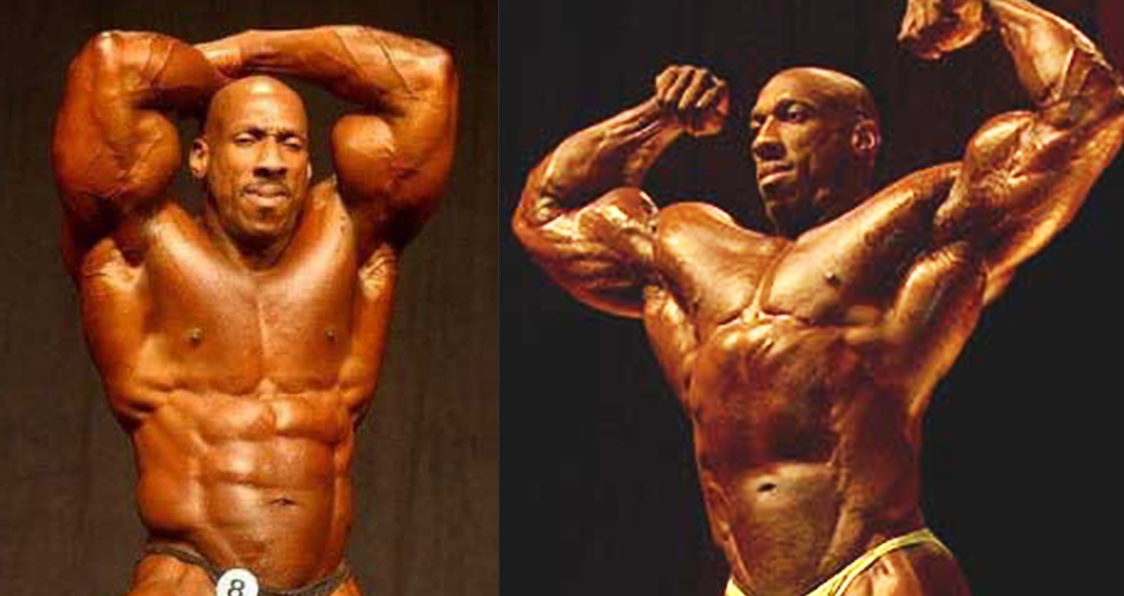
IFBB Pro Bodybuilder Lawrence Marshall Dies At 58 Years Old
Marshall was notable for being the second bodybuilder from Trinidad to turn professional in the IFBB pro league. He was an iconic athlete in the local community for his impressive physique, local wins, and kind personality.
Lawrence Marshall held a wide array of local wins under his belt throughout the 1990s and early 2000s – eventually earning his IFBB Pro card. He had even qualified for the Mr. Olympia and placed 15th in his one and only showing.
Initial rumors began to spread that he had died due to losing a battle with COVID-19 but those reports have been debunked by his family. They have stated they are waiting for an autopsy for confirmation and cause of death.
Lawrence Marshall clearly had a massive impact on the bodybuilding community due to the outpour of support for his family and friends during this time. Despite not being a household name in the mainstream of the IFBB, he was an athletic icon and considered a hero in Trinidad representing the country on the world stage in bodybuilding.
You can watch the D’Dial Fitness Club tribute video and post below:
Unfortunately, this news comes after a series of other bodybuilding deaths have been reported including Mr. India Senthil Kumaran Selvarajan and 212 Olympia Competitor Fahd Zaid Hazzazi. Though this series of events is simply due to chance, it has been a devastating blow for fans of bodybuilding.
Generation Iron sends sincere condolences to the friends and family of Lawrence Marshall during this time. For more news updates in bodybuilding, fitness, and strength sports – stay tuned to the Generation Iron Fitness Network!
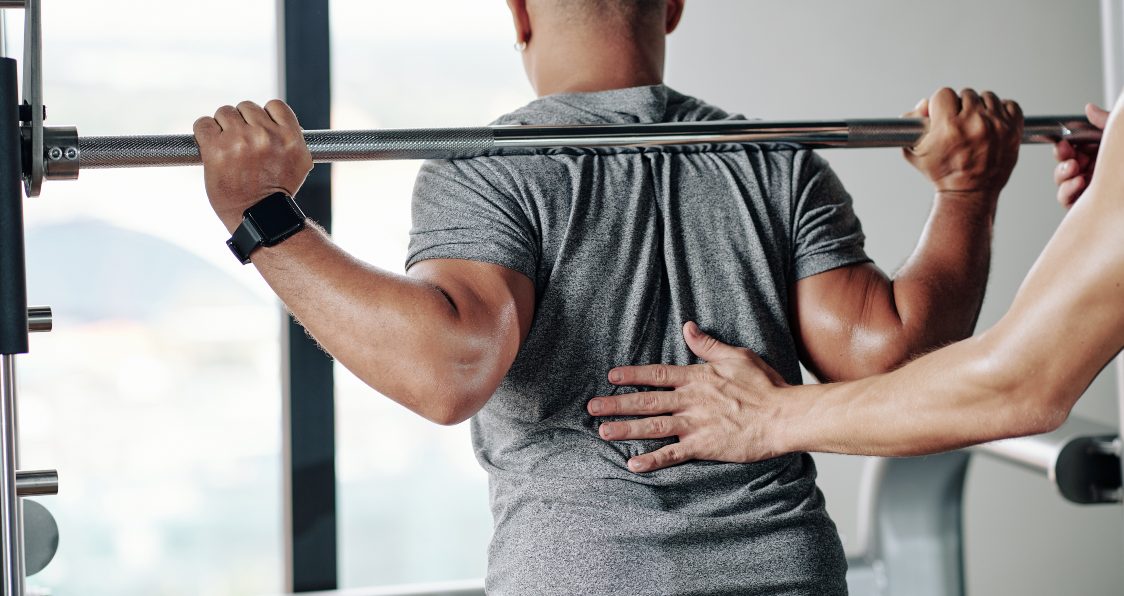
How To Alleviate Lower Back Pain After Squats
Lower back pain can be unpleasant but these tips can help alleviate that unwanted soreness after squats.
The squat is a monster lift. We can all agree on that. For those who take the squat seriously, you know how hard it can be to really get that weight up. The amount of stress it takes on our legs and back can be immense and that unwanted pain we feel after a lift can simply be unpleasant and disrupt many of our other daily activities. What the squat does is it allows us to burn a significant amount of calories with a compound exercise that also works to maximize hypertrophy. Often referred to as a king among other exercises, the squat is something you need in your routine.
To understand just how squats work to alleviate lower back pain, we need to look at a number of factors. Considering our low back works to support and stabilize our lifts to keep us grounded, this is important as we want our balance to be spot on when under so much weight. For some of us, training through a sore low back is doable but the question of how smart it is nags in the back of our minds. Why push ourselves so hard if it will only enhance that uncomfortable amount of pain.
Let’s take a look at this topic further, for it is vital for any lifter. Squats will enhance growth and aid in stability for other lifts, on top of making you look like a giant in the gym. Don’t let lower back pain keep you from doing what you love. How to alleviate low back pain after squats is something you need to know and its something we’ll tell you.
Causes Of Low Back Pain After Squats
The causes of low back pain after squats may be one thing, but more than likely it is a cumulation of many that are piling up and leading to this unwanted soreness. Let’s look at some potential causes below.
Weak core: Our cores are vital for providing important support and stabilization for a number of exercises, but more so with heavy lifts like the squat. If our core muscles are too weak, they won’t be able to support the spine and pelvis thus forcing compensation onto our lower back muscles.
Depth of squat: You want to make sure you are squatting at the right depth and not forcing yourself to go too low in the squat. Squatting too low can put stress on your back which can lead to this unwanted soreness and pain.
Improper weight distribution: This is important and often times overlooked. Our feet t should be flat and grounded, not elevated to where the toes or balls of our feet are taking the load. If this is the case, too much pressure can be placed on the knees and the squat is harder to perform anyway. As a result, you will rely on your low back muscles to take too much load to support.
Too much rounding: A common problem for many of us is rounding our backs just a bit too much. This is dangerous because of the compression it causes on our spines. Especially with a weak core, there’s nothing to support your body if you are rounding only amplifying the negative effects of an arched back.
Ways To Alleviate Lower Back Pain
When looking at ways to avoid lower back pain, we can start with fixing some issues previously mentioned and then some extra tips to really give you confidence when under such big weight.
Strengthen That Core
By putting an emphasis on core training at some point in your training cycle you will allow yourself to build muscle and really enhance a stronger, more stable core. Whether this be an ab exercise in each set of your existing routine, or taking the time to perform a core circuit at the end of each workout, boosting your core strength will prove to be great for a number of reasons, but especially in supporting your squats (1).
Correct & Fix Form
This tip is important for any exercise you do, but for something like the squat, bench press, and deadlift, even more so. These lifts are massive and require you to put immense stress on your body as you look to lift that weight off the ground. Perfecting form is vital and should not be overlooked, even down to the smallest detail. One small tweak can cause more pain than you would like and it is important to really work on proper form and technique. This will also fix the issue of rounding and arching your back (2).
Loosen Up Those Hips & Love Mobility
When our hips become too tight, it can cause real problems for us, not only in terms of movement and maximizing the performance of the exercise, but also for that pain we feel after squats. When our muscles get too tight, it forces our body to look elsewhere for help, and with squats, that typically means our low back. If we don’t work on hip mobility and strength, these muscles can become weak and really hurt the gains we seek the most (3).
Take A Few Days & Rest
As athletes, this may be the last thing we want to hear, but its true. If we’ve pushed ourselves to the limit sometimes our bodies tell us they need a break. Take a few days and rehab the painful or sore spot and put together a plan of attack to fix the problem so it doesn’t happen again. You’ll be glad you took the time now as opposed to when things get worse.
Wrap Up
Pain after squatting is a real thing, especially in our low backs. Knowing the causes and looking at ways to alleviate them are incredibly important for building support and working on bettering ourselves. We all know we need squats so why not set ourselves up for success without unwanted pain and strain. That PR is just around the corner with a healthy, stable body.
Let us know what you think in the comments below. Also, be sure to follow Generation Iron on Facebook, Twitter, and Instagram.
*Images courtesy of Envato
References
Hibbs, Angela E.; Thompson, Kevin G.; French, Duncan; Wrigley, Allan; Spears, Iain (2008). “Optimizing performance by improving core stability and core strength”. (source)
Comfort, Paul; Kasim, Peter (2007). “Optimizing Squat Technique”. (source)
Hrysomallis, Con (2009). “Hip Adductors’ Strength, Flexibility, and Injury Risk”. (source)
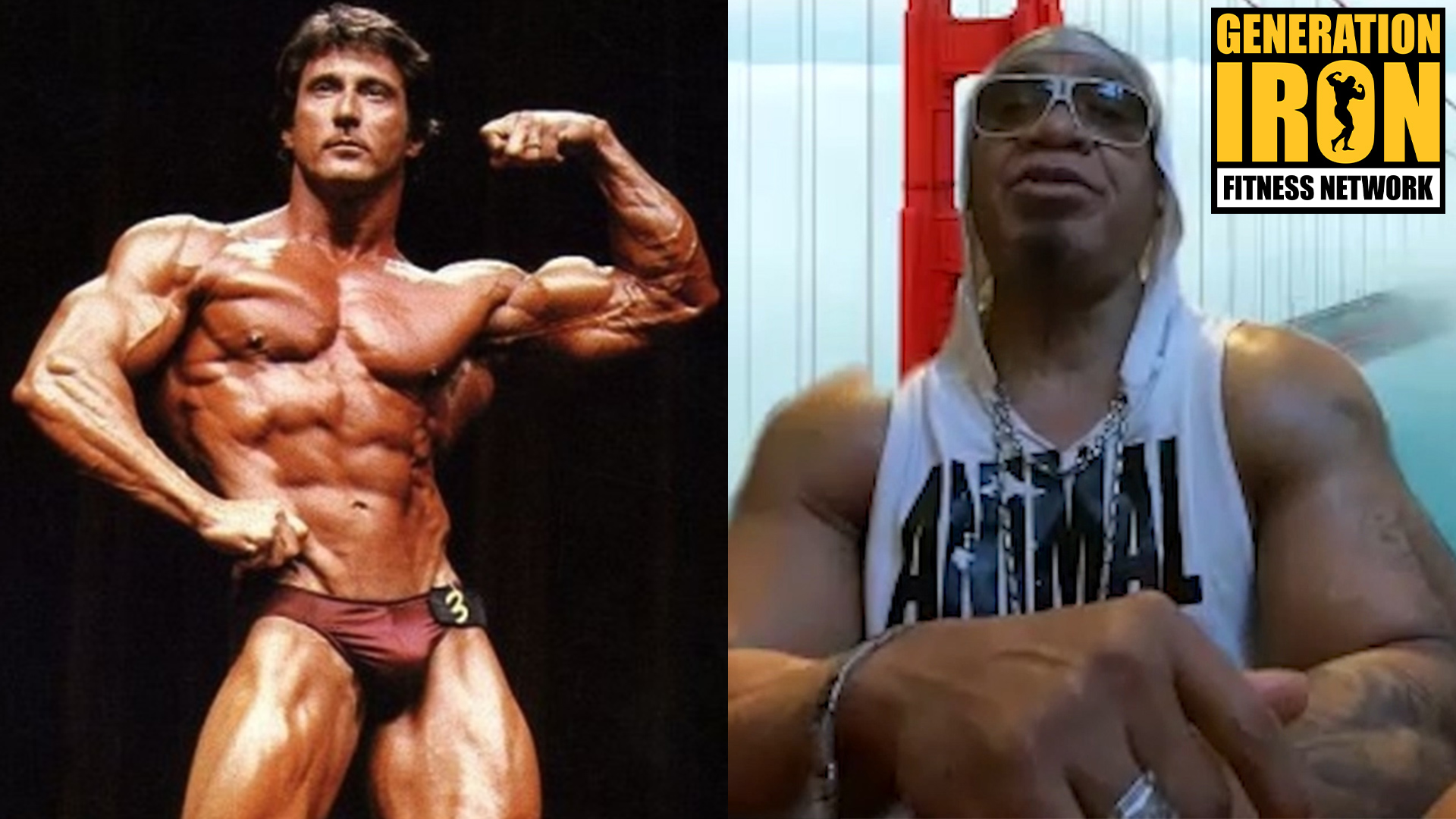
Melle Mel: “Frank Zane Is Hands Down The Best Bodybuilder Ever”
Melle Mel explains why he thinks Frank Zane stands tall as the greatest bodybuilder of all time.
During our Generation Iron interviews, we always make sure to ask who the top five bodybuilders are of all time. Each person has a different list that reveals something about how they view bodybuilding. This held true for rapper and bodybuilding aficionado, Melle Mel. He not only picked a diverse top five – he placed a wild card for the very top of his list. In our latest GI Exclusive interview, Melle Mel details why he believes Frank Zane is the greatest bodybuilder ever – even above the likes of Ronnie Coleman.
Frank Zane is truly a legendary athlete. This much is known throughout the bodybuilding community. But if you were to start discussing the greatest bodybuilder of all time, Zane might not be at the very top of the list. That is usually reserved for the likes of Arnold Schwarzenegger, Ronnie Coleman, or Lee Haney among perhaps a few others.
Melle Mel thinks it’s time for Frank Zane to get his due. Again, there is no one who undervalues Zane as a whole. He has gone down in history as a true legend in the sport. But for Melle Mel – that’s not enough. Zane should be noted as the single greatest bodybuilder of all time.
Of course, this comes back down to the debate of size versus aesthetic. Bodybuilders like Dorian Yates and Ronnie Coleman changed the game. The limits were pushed into inhuman levels and created the term mass monster. Ever since then, the broader and heavier look has reigned supreme.
[embedded content]
Check out our latest GI Exclusive with Melle Mel above!
For Melle Mel, Frank Zane represents a perfect physique before the world turned towards mass monsters. His aesthetic, conditioning, and size all came together into something perfect. More reminiscent to a Roman statue than The Hulk. It showcased a true mastery of bodybuilding without the bigger health risks.
Melle Mel believes that health should still be more of a consideration in pro bodybuilding. He prefers classic physiques of yesteryear because they still mastered muscle without taking it to extremely unhealthy places. It’s an opinion that he shares with a sub category of fans. Their outcry eventually led to the creation of the Classic Physique division.
Melle Mel even draws direct comparisons to Ronnie Coleman. Typically, Coleman is placed as a contender for the greatest bodybuilder of all time. Melle Mel thinks this is misplaced. Coleman certainly is one of the greatest but the sacrifice he paid for that physique promotes unhealthy choices. To Melle Mel, that’s not what bodybuilding should be about.
“Everybody loves Ronnie Coleman. He’s a great guy. I met him, I love him,” Melle Mel states in our interview. He continues:
“The difference between him and Frank Zane is like… I could look like Frank Zane… But you’re never going to look like Ronnie. And if you do there’s a price to be paid to look like Ronnie. And he’s paying the price and he’s a great man because he don’t shy away from it… but there’s a price to be paid because to look like Ronnie Coleman you will pay the price.”
You can watch Melle Mel list off his top five bodybuilders of all time and go more in-depth on Frank Zane by checking out our latest GI Exclusive interview segment above!
Powerlifter John Haack Shows Impressive Strength as He Switches to Strongman
John Haack is an absolute powerhouse.
One of the most impressive powerlifters in the game today, John Haack continues to build his legend. While powerlifting remains his focus it also appears that he’s setting out to try new things as he engages in some strongman training.
For the most part training in one modality is a great thing. One you put your sole focus into one particular endeavor it translates over to mastery. If you hope to become the master at a particular practice then it means performing or studying that action consistently and over a long period of time.
But while gaining mastery is a great thing, sticking with one thing can also make you stagnant. You want to have variety in your life and sticking to one way of doing things usually means a lack of diversity in your skillset.
John Haack is looking to be the absolute strongest he can be. That means pushing his mind and body in ways that go against the grain. While he’s certainly building his legend in powerlifting with some impressive performances, Haack has also looked to strongman training to improve his strength.
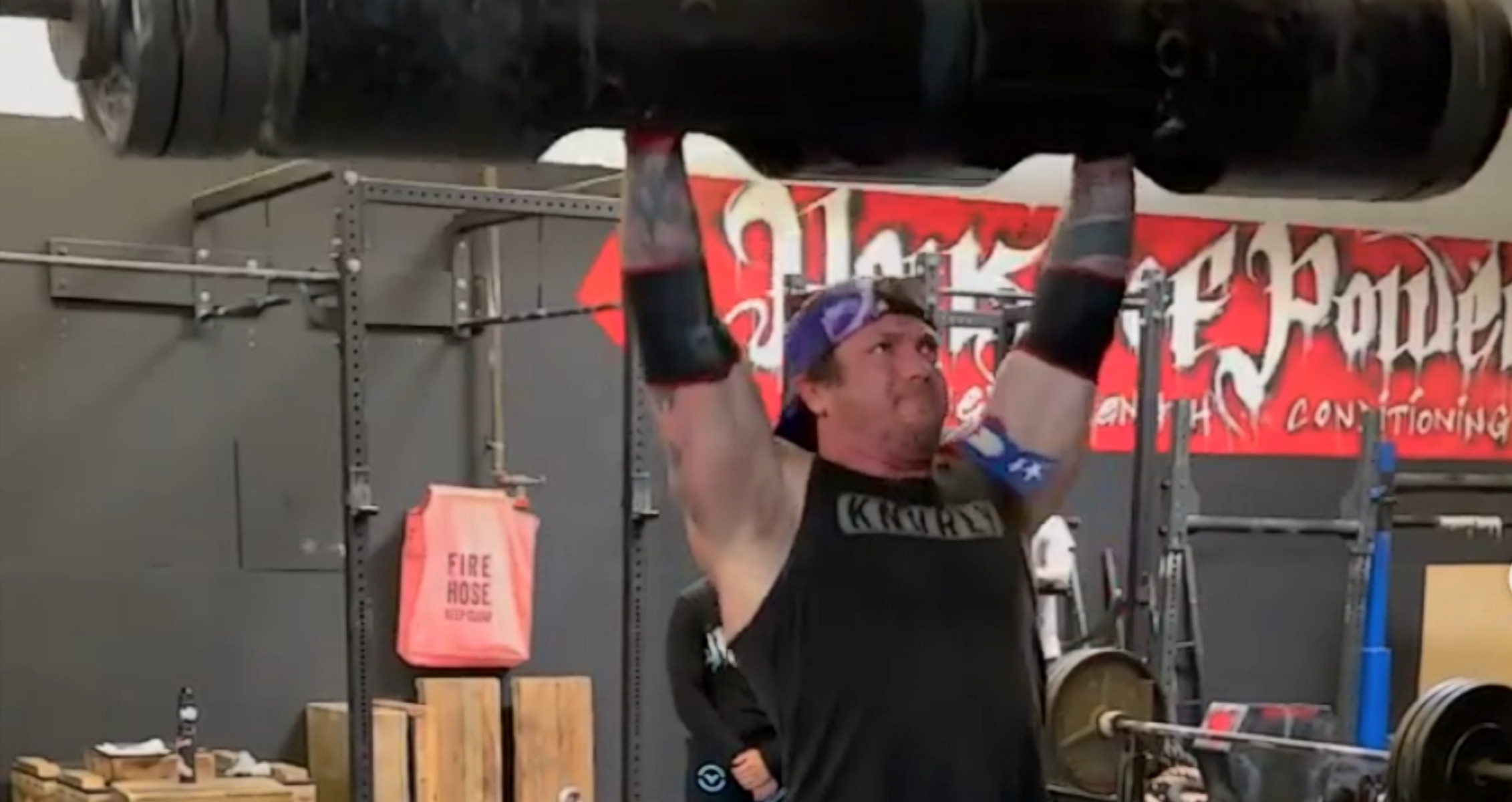
Recently the powerlifting champion trained in the log press, a staple of strongman training and competition.
Back in my strongman bullshit. Log clean and press for sets of 4 up to 250lbs and yoke for 50ft at 660lbs.
Now it appears that John Haack isn’t just dabbling in some strongman training. In fact, Haack is prepping for the official strongman games and is looking to test the waters in another competitive sport. His resolve to enter into a new arena after dominating the powerlifting scene shows that Haack is seeking a new challenge.
But while he may be breaking into strongman, John Haack is still maintaining strength through traditional lifting. In another training session, Haack hit squats and bench, though he reported feeling drained from the effort.
Sets of 8 on squat with 250kgs/551lbs. Felt absolutely drained for bench and only managed 7 reps at 187.5kgs/413lbs. This is when my test levels usually crash so not surprised this workout felt meh.
What do you think of John Haack entering a strongman competition?
For more news and updates, follow Generation Iron on Facebook, Twitter, and Instagram.
Managing Editor at Generation Iron, Jonathan Salmon is a writer, martial arts instructor, and geek culture enthusiast. Check out his YouTube, Instagram, Twitter, Facebook, and Sound Cloud for in-depth MMA analysis.
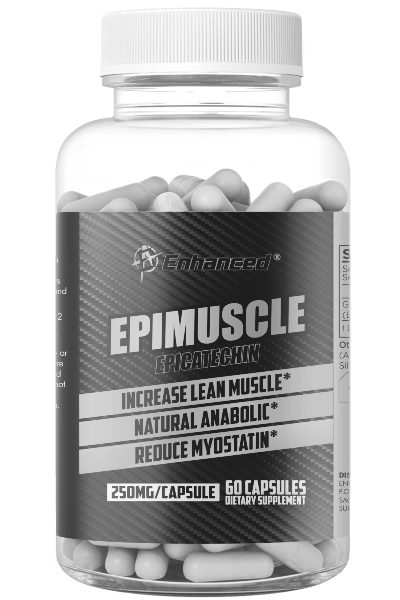
Enhanced Labs EPIMuscle Review- The Newest Innovation In Supplementation
This supplement can increase lean muscle and reduce myostatin for muscle growth regulation.
Table of Contents
Product Overview
When looking for a great supplement to boost our muscle growth and shredded aesthetic, it can be difficult to find a great product. Enhanced Labs continues to make great supplements to enhance all areas of our health and wellness, as well as training and performance, which is just what we need most. A great company to stand by us. Enhanced Labs EPIMuscle is that one supplement you need to seriously boost your gains today with a little help from some worthwhile supplementation.
This week we’re reviewing a supplement you probably haven’t heard of before. EPIMuscle contains epicatechin, a bioactive flavanol that increases levels of follistatin. EPIMuscle increases follistatin and more follistatin equals less myostatin, which in turn means more muscle. Animals lacking myostatin, either due to a defective gene or because they’ve been treated with compounds that inhibit production, show huge increases in muscularity. The limits of muscle growth are removed by the inhibition of myostatin.
Shop at Enhanced Labs
Enhanced Labs are a team of bodybuilders, chemists, and innovators who joined together to disrupt a chaotic industry by doing absolutely whatever it takes to come out with the most effective hardcore supplements line on the market. By always staying on the cutting-edge advancements in technology and chemistry, Enhanced Labs gives their customers the continuous edge they desire most.
Enhanced Labs EPIMuscle Highlights
Research shows that EPIMuscle’s main effect on your muscles involves the chemical myostatin. Myostatin is a type of protein called a myokine. Myostatin acts on the autocrine functions of your muscle cells to inhibit the growth and differentiation of muscle cells. In other words, it directly suppresses muscle growth. Humans and animals who have myostatin deficiencies show huge increases in muscularity.
Follistatin, another myokine, is a direct antagonist to myostatin. Where myostatin suppresses muscle growth, follistatin promotes it by hindering myostatin. EPIMuscle increases the ratio of follistatin to myostatin in humans which equates to larger and stronger muscles.
Clinical studies with EPIMuscle show multiple physiological benefits, including:
Enhanced muscle growth and strength
Increased nitric oxide production improving vascularity, blood flow and endurance
Improved muscle insulin sensitivity
Lowered total cholesterol levels
Improved brain and heart health
Clinical Studies
A clinical trial where adults were given 50mg of EPIMuscle per day found that the follistatin/myostatin ratio increased 49% after only 7 days of supplementation [1]. Another clinical trial found that 200mg of EPIMuscle per day improved endurance and prevented muscular fatigue by inhibiting the aerobic and mitochondrial succinate dehydrogenase adaptations that occur during exercise [2].
New research is looking at EPIMuscle as a way to prevent sarcopenia, a loss of muscle associated with age. In elderly human subjects, levels of myostatin decreased 28% after only 7 days of treatment with EPIMuscle. Treatment with EPIMuscle also yielded a 7% increase in muscular strength [3].
Clinical research shows that a dosage of only 50mg/day is necessary to see results, but empirical usage suggests that EPIMuscle should be dosed at 1-2mg/kg of bodyweight. Feedback from users suggests that dosing at the higher end, around 250mg per day, is optimal to maximize the athletic and muscle building benefits.
Stacking EPIMuscle
EPIMuscle will make any other muscle building ingredient you stack with it more effective. For a natural stack, you could stack EPIMuscle with arachidonic acid, creatine and/or amino acids. You can also stack EPIMuscle with hardcore supplements.
Best Time to Take EPIMuscle?
Enhanced Labs recommends taking EPIMuscle approximately 30 minutes before workouts. On rest days, EPIMuscle should be taken with your first meal of the day.
EPIMuscle contains no stimulants or hormones so it’s safe to use by both males and females.
Price & Effectiveness
Enhanced Labs EPIMuscle is a great supplement to work on boosting lean muscle while reducing myostatin to give you great gains. With 30 servings per container, 2 capsules is a serving size so you start seeing great results.
Pros: Stackable with other supplement like creatine. Clinically validated with honest ingredients. Safe, non-hormonal, and stimulant free.
Cons: A bit expensive at $1.17 per serving. There is also greater delayed onset muscle soreness after exercise.
Price: $34.99
Enhanced Labs offers Free shipping ANYWHERE in the world.If you live in the United States, your order ships FREE no matter what you buy. If you live outside the US, your order ships for free when it’s over $169.
Wrap Up
Whether you’re looking to build muscle, burn fat or increase athletic performance, EPIMuscle is a worthwhile addition to your supplement arsenal, and because it’s non-hormonal, EPIMuscle can be used by both men and women with no side effects. What you are really getting is a great supplement from an honest company designed to help boost all your gains. Try Enhanced Labs EPIMuscle today and see those worthwhile results you want most.
If you have any questions about EPIMuscle or any of the other Enhanced Labs products, reach out to the Enhanced Labs Chemical Engineer Trevor Kouritzin by emailing [email protected]
Try Enhanced Labs EPIMuscle Today
Generation Iron may receive commissions on purchases made through our links. See our disclosure page for more information.
Let us know what you think in the comments below. Also, be sure to follow Generation Iron on Facebook, Twitter, and Instagram.
References
[1] Gutierrez-Salmean, G., Ciaraldi, T. P., Nogueira, L., Barboza, J., Taub, P. R., Hogan, M. C., . . . Ramirez-Sanchez, I. (2014). Effects of (−)-epicatechin on molecular modulators of skeletal muscle growth and differentiation. The Journal of Nutritional Biochemistry,25(1), 91-94. doi:10.1016/j.jnutbio.2013.09.007
[2] Schwarz, N. A., Blahnik, Z. J., Prahadeeswaran, S., Mckinley-Barnard, S. K., Holden, S. L., & Waldhelm, A. (2018). (–)-Epicatechin Supplementation Inhibits Aerobic Adaptations to Cycling Exercise in Humans. Frontiers in Nutrition,5. doi:10.3389/fnut.2018.00132
[3] Gutierrez-Salmean, G., Ciaraldi, T. P., Nogueira, L., Barboza, J., Taub, P. R., Hogan, M. C., . . . Ramirez-Sanchez, I. (2014). Effects of (−)-epicatechin on molecular modulators of skeletal muscle growth and differentiation. The Journal of Nutritional Biochemistry,25(1), 91-94. doi:10.1016/j.jnutbio.2013.09.007
9 Leg Day Mistakes You Might Be Making
9 Leg Day Mistakes You Might Be Making
Your legs make up half your body. Ignore them and you’re doing yourself a disservice.
Correct these 9 leg day mistakes and turn your twigs into tree trunks.
Skipping Leg Day
This seems redundant to say, but it’s true. Unless you’re going for the lightbulb look, stop skipping legs and start squatting. You don’t want to be the Johnny Bravo of your gym.
Not Training Legs Frequently Enough
Most people train their legs once a week (actually, probably once every quarter). Even still, it’s usually not enough to elicit any real adaptation.
Yes, Dorian Yates was known to train each body part once a week. But no, you are not Dorian Yates. His legendary workouts were so intense that his muscles needed adequate rest before the next session. Nothing personal, but you’re (probably) not training with the intensity and weight to justify needing a full week’s recovery. And sticking to one leg day a week may be holding you back.
All things considered, adding a second leg day to your weekly split can make a huge impact on your progress. It’s simple math.
One leg day/week amounts to four workouts every month. Two leg days/week totals eight workouts every month. That’s a difference of 52 workouts by the end of the year!
Not Lifting Heavy
Your technique is the foundation for heavy lifts. One shouldn’t be sacrificed for the other. And more often than not, folks will throw their technique out the window if it means slapping on another plate to impress their gym crush.
That said, stay true to your form while lifting some heavy ass weights and the results will show.
The heavier you lift, the more high threshold motor units (HTMU) you’re engaging. Motor unit recruitment depends on the load and intensity of the exercise being performed. Low intensity exercises recruit your slow twitch fibres (type I fibres). High intensity and heavy loaded exercises recruit your fast twitch fibres (type IIa and IIb).
If you’re always lifting with lighter weights and low intensity, you’re never engaging those type II muscle fibres. And if your goal is to build dense, long-lasting muscle, your program should have a healthy dose of heavy lifts.
Too Much Isolation/Machine Exercises
Piggybacking off the last point, you may be overemphasizing isolation exercises and underemphasizing compound lifts.
With this in mind, it’s no coincidence that it’s harder to find a free leg extension machine than it is to find a free squat rack in most gyms. Too many people are isolating muscles they haven’t even built yet.
While isolation exercises are great, they’re your dessert. Heavy compound lifts are your main course.
Too Little Hamstring and Glute Work
Everyone loves training their “mirror muscles” (pecs, arms, quads) for obvious reasons. This often leads to an underwhelming amount of posterior chain work (aka your “functional muscles”).
Most of the classic lower body exercises you see in the gym are quad-dominant. Hack squats, split squats, leg extension, and leg presses generally emphasize the quads over the glutes and hamstrings.
Your glutes are the biggest muscles in your body. So if your goal is to build bigger, stronger legs…why ignore them? It’s kind of like wanting bigger arms and only doing curls. Meanwhile if you did more triceps work (which is roughly 2/3 of your arm), your arms would be popping out of your sleeves.
Keep doing your quad work, but add more glute and hammie exercises into the mix too. Hip thrusts, deadlifts, and leg curl variations are all great options.
Going Too Fast
Tempo is one of the most overlooked variables when it comes to building size.
Rather than dropping to the bottom of a squat like it’s a race to the floor, focus on loading and contracting the muscles you’re targeting.
Slowing down the eccentric phase of an exercise isn’t always warranted, but at times can be very effective to increase your muscles’ total time under tension.
Regardless of the exercise you’re performing, think of which muscles are the prime movers and focus on contracting them as much as possible.
Not Squatting to Depth
Whether it’s a lack of mobility or an abundance of ego, the average squat performed in the gym fails to achieve full depth. While performing quarter squats with weight you can’t handle might add some false confidence, you’re usually better off squatting through a full range of motion for greater muscle fibre recruitment and total time under tension.
What’s a full range of motion squat? That depends. Generally speaking, it’s when your hip crease is slightly below your knee (so your thigh/femur is at least parallel with the floor, if not slightly lower).
Achieving such depth requires adequate mobility, which brings us to our next leg day mistake.
Not Enough Mobility Work
Mobility is your joints’ ability to actively travel through their intended ranges of motion. Yes, it’s pretty boring stuff…but it’s a necessary evil.
I know, you’d rather be getting after it in the weight room. But if you can’t devote 5-10 min to mobility work every time you’re in the gym (at the very least), you’re doing yourself a disservice.
With mobility comes better positioning during the big lifts, better recovery, better posture, increased ranges of motion, and reduced risk of injury/pain. All of which are vital in the pursuit of bigger, stronger legs.
Not Enough Single Leg Work
The average leg workout consists primarily of bilateral lifts like the squat and deadlift with little to no emphasis on unilateral (one-sided) exercises. But don’t let this fool you.
You can get way more out of single leg exercises than you might think. Here’s why you should do them:
Minimal stress on the spine: Contrary to popular belief, you don’t need to load a barbell behind your neck and squat every leg day. The common limiting factor and weakest link during back squats is the lower back. Single leg exercises allow you to bypass the spine and place all of the load on your legs.
Loading potential: The ceiling of loading potential is high. As mentioned, you can bypass injured or weak areas, unlike squats. Many lifters can’t squat to their legs’ potential because their upper/lower backs can’t handle the load. With many single leg exercises, you can increase the load solely to your legs while minimizing back involvement.
Core work: Single leg exercises minimize your base of support and increase your core engagement.
Summary
Start training your legs and stop doing these nine common mistakes. You’ll get bigger, stronger, and look better because of it.
Did you find this leg day article helpful?
Why Boxing Can Improve Your Overall Fitness And Mental Health
Boxing is a great exercise for both physical and mental development.
Boxing has developed into a fitness trend that many have begun to gravitate towards. While some see it as a workout for hard core athletes, you don’t have to fight in the ring to get the great health benefits boxing has to offer. Seeing a boom in recent years, this fitness trend is only continuing to grow as people look to add a new level of intensity to their workouts.
With many people starting to see their health and fitness as more of a lifestyle than just a hobby, that self-awareness and focus towards personal health, both physically and mentally, has sparked interest in unique ways of training. Boxing has been around for centuries and while we all associate it with big names and pay-per-view fights, the benefits of boxing go far beyond just a good workout.
Instead of spending so much time in the gym lifting weights and hitting the treadmill, although those are still great options to improve your fitness, a boxing workout can offer different solutions to your training regimen. By increasing your heart rate and working on strength, you not only develop physical gains but mental ones as well in order to lead a good lifestyle both inside and out of the gym.
Boxing Basics
While this sport is intricate and requires advanced training once at higher levels, the basics are important to understand to make this as efficient as possible. Learning a combination of punches will allow you to enhance your overall speed and endurance to continue to thrive in the ring.
Some basic movements include jabs, crosses, uppercuts, and hooks and once you nail these, you can add different combinations to activate your core and look good doing it. Adding a bag to your workouts will provide for resistance and will work to strengthen your muscles as well.
Benefits of Boxing
Improve Cardio
The challenge with a continuous movement like boxing is that you place added stress on your heart and lungs to power you through the workout. As a result, you increase aerobic capacity and strengthen your heart and lungs to handle more (1). Keeping your heart rate elevating is key to improving cardio and really working to enhance overall endurance.
Promote Total Body Strength
With such a complex movement, the constant strain on your arms, legs, and core makes boxing a great total body workout. Through quick movements, pivots, and advanced foot work, your legs will feel the burn as you use them to move from your opponent. The repeated stress your upper body takes by hitting the bag, which is providing resistance, forces your upper body muscles to work and an engaged core will provide for balance, stabilization, and solid form to fire up all muscles (2).
Develop Hand-Eye Coordination
Hand-eye coordination is important to develop one’s fine motor skills and works to target faster reaction times and better reflexes (3). Whether you use a speed bag or spar with an opponent, watching a fast moving target and working to strike effectively will not only develop hand-eye coordination but exponentially enhance it.
Burn Calories
Between your increased heart rate and the amount of fuel it takes to power a boxing workout, you will start to shed calories as you head towards that desired physique. By creating a calorie deficit, you are well on your way to getting that shredded body. With help from your metabolism, which is surely fired up as it looks for continuous fuel, your weight loss goals become closer than you think.
Relieve Stress
Those who box tend to feel that their stress levels decline. Any form of physical activity can really enhance mood since it releases endorphins to make you feel good (4). On top of that, you know you did something to better yourself and your overall health. But something about boxing really lets you release built up frustration and punching a bag, albeit an inanimate object, gives you an empowered sense that you are taking down whatever causes you stress in the first place.
Boost Self-Image and Confidence
By burning calories, increasing muscle mass, and working on cardio, your overall body composition will change and your self-image will improve. The way you view yourself matters and you want to be proud of who you are. With that increased level of self-image, your confidence will surely improve and your overall mental health will be greatly enhanced. Boxing is also a difficult sport and by doing this as exercise, you will prove to yourself that you truly can do it.
Finding The Right Gym
Many boxing gyms exist and there are two kinds: those who train competitive boxers and those who train everyday people looking to get fit. There are also studios which offer classes that may be formatted slightly differently than a workout in a gym. If you are someone looking to learn more advanced techniques to get into the ring with someone else, find a gym that works for you in that regard. But if you just want to learn the craft and get fit doing so, make sure you look for the right gym near you so you don’t accidently end up in the ring.
Wrap Up
Boxing is one of those fitness trends that shows no signs of slowing down. The physical benefits of weight loss, increased muscle mass, and improved cardio are equally matched by the mental benefits of stress relief and increased confidence. If you are looking for a challenge or a way to mix up your workouts, look into boxing gyms near you to start your new journey into this centuries old sport. The process of getting fit should be challenging but also fun, and with boxing, you will surely find the best of both worlds as you seek to achieve whatever your desired goals are.
Let us know what you think in the comments below. Also, be sure to follow Generation Iron on Facebook, Twitter, and Instagram.
*Images courtesy of Envato
References
El-Ashker, Said; Chaabene, Helmi; Negra, Yassine; Prieske, Olaf; Granacher, Urs (2018). “Cardio-Respiratory Endurance Responses Following a Simulated 3×3 Minutes Amateur Boxing Contest in Elite Level Boxers”. (source)
Ruddock, Alan D.; Wilson, Daniel C.; Thompson, Stephen W.; Hembrough, Dave; WInter, Edward M. (2016). “Strength and Conditioning for Professional Boxing”. (source)
Harvard Helath Letter (2015). “Punch up your exercise routine with fitness boxing”. (source)
Jackson, Erica M. (2013). “Stress Relief: The Role of Exercise in Stress Management”. (source)
Top Ways To Boost Your Powerlift For Serious Growth
These tips and tricks will help you advance your powerlift to up big numbers.
Powerlifting has grown in popularity over the years and is now one of the most popular strength sports. While some may think bodybuilding and powerlifting share certain similarities, they differ in terms of intended goals. While bodybuilding is focused more on achieving a toned aesthetic and that desired physique, powerlifting focuses on maximizing strength in the big three exercises. It combines the bench press, squat, and deadlift into a competitive sport that tests sheer strength and absolute will. While working to enhance these three exercises is crucial for success in powerlifting, there are plenty of tips and ways to boost your powerlift that you should know.
Powerlifting has become a monster sport and sheer test of strength, forcing competitors to have well-rounded strength and serious mental capacity to get that weight up (1). Men and women compete in powerlifting contests all over the world to reach a podium spot. Typically, athletes and competitors will get three attempts to lift their heaviest amount of weight in each of the events. Those three weights are added together for a grand total.
Powerlifting has the benefit to not only allow you to compete at a high level and show off your strength, but it also gets you bigger, strengthens your overall muscular skeleton (2), and can help burn fat by using a lot of fuel and calories. Even if you don’t compete as a powerlifter, working on the big three exercises can enhance overall athletic performance for whatever your desired sport is. So, how do we get to hitting these big numbers. Proper form, a solid workout routine, a good diet, and the ability push through mental barriers are all needed to succeed in powerlifting, so, let’s make it happen.
Deeper, More Effective Squats
Deeper squats will work to enhance muscle growth and it is important to consider quality over quantity. While this will improve your form, it will work to target the muscles needed instead of relying on others for compensation. It will help with glute activation and can improve range of motion in the hips, knees, and ankles, all areas that are often overlooked. A lighter weight is not a bad thing and will allow for more reps and increased growth.
Get That Deadlift Stronger
Through building an effective squat, you will also work to promote a stronger deadlift. With the right technique, your hamstrings, glutes, back, and grip strength will all improve. Getting lower to the floor will help with stability and will also absorb some of your force. Taking your shoes off will be beneficial for this and you will notice you can lift more with quality reps. Consider something like the trap bar deadlift also to really build more strength for when its time for the barbell.
Enhance Your Bench Press
Everyone loves to bench, but many sacrifice form to lift more and ultimately end up lifting less. While performing the bench, if you move the bar in a slight J-shape motion, this will recruit more muscles and work with the biodynamics of your body. As you come down to your chest, push up and drive the bar toward your upper chest and neck area before exploding up. With the bench press, and the other two lifts, it takes time to really nail down form and build strength, so keep up the practice.
Work With Assistance Exercises
Assistance exercises play an important role in muscle-building as well as stabilization. They allow you train for specific events without grinding away at the bench press, squat, or deadlift which can result in muscle overload and overtraining (3). They assist with what you need to do to get to where you want your strength training and aerobic capacity to be. Examples of good assistance exercises include barbell glute bridges for the deadlift, box squats for the back squat, and dips for the bench press.
Form, Form, Form
Again, quality over quantity will always enhance growth and performance more than just grinding out to reach a number of reps. Having solid form is more than important to correct muscle imbalances, stay away from unwanted and unneeded muscle soreness, and that risk of injury that could keep you from the gym. With proper technique on all of these lifts you will lift more weight anyway as a result of being more efficient, so take advantage of that.
Pump Yourself With Protein
Protein is absolutely needed for muscle growth (4) and while there are many other supplements to really help with growth and recovery, a good whey concentrate or isolate protein supplement will pump you with nutrients to stimulate and enhance protein synthesis and muscle growth. Consider looking into a high quality protein powder to really feel those gains grow.
Look Into Lifting Equipment
Lifting equipment can be really beneficial for you, whether it be lifting gloves, a weightlifting belt, knee sleeves, or a host of other options depending on what you need. Lifting gloves will focus on grip strength and disperse the weight to all muscles to help with injury prevention, while a weightlifting belt can work to provide muscle warmth and core engagement to reduce the risk of low back pain and injury. Knee sleeves are great for increasing circulation and blood flow to reduce lactic acid build up and keep your muscles fueled with blood and oxygen.
Check out our list of the Best Lifting Gloves here, Best Weightlifting Belts here, and Best Knee Sleeves here to really help with overall support, growth, and performance.
Wrap Up
Powerlifting is a test of pure strength and will. While it may seem obvious to just grind it out in the gym, there are helpful tips you can do outside to make your gains even better. Enhancing all three lifts is key, but working on form, nutrition, and supplement aids to help you get there can be a real game-changer for whatever your goals. Try these tips out to really boost your powerlift and be confident that your lift will get even bigger.
Let us know what you think in the comments below. Also, be sure to follow Generation Iron on Facebook, Twitter, and Instagram.
*Images courtesy of Envato
References
Ferland, Pierre-Marc; Comtois, Alain S. (2019). “Classic Powerlifting Performance: A Systematic Review”. (source)
Serrano, Nathan; Colenso-Semple, Lauren M.; Lazauskus, Kara K.; Siu, Jeremy W.; Bagley, James R.; Lockie, Robert G.; Costa, Pablo B.; Galpin, Andrew J. (2019). “Extraordinary fast-twitch fiber abundance in elite weightlifters”. (source)
Eichner, E. R. (2008). “Overtraining: Consequences and prevention”. (source)
Pasiakos, Stefan M.; McLellan, Tom M.; Lieberman, Harris R. (2015). “The effects of protein supplements on muscle mass, strength, and aerobic and anaerobic power in healthy adults: a systematic review”. (source)
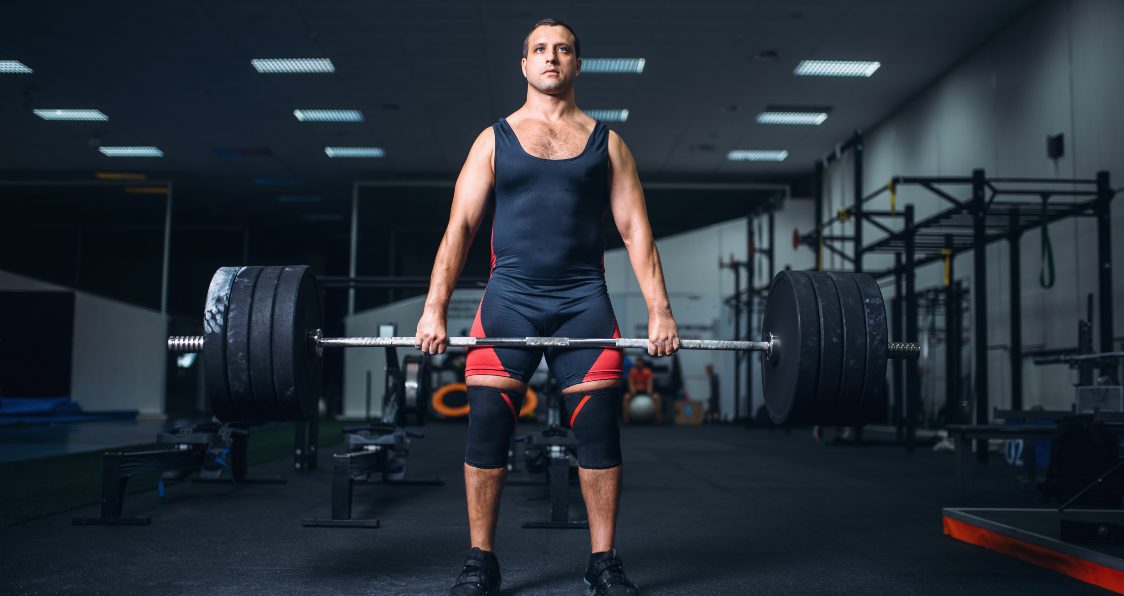
Things To Consider For A Powerlifting Diet For Serious Bulk
When looking to bulk as a powerlifter, here are some important things to consider for boosting training and performance.
For those of us powerlifters, we know how hard it can be to prepare ourselves for a grueling competition. While being healthy is vital for preparing for battle, we need to make sure we cover our bases fully so as to not lose too much weight and any muscle as we look to bulk and master our powerlifting diet. While everyone’s process is different, there are some important factors to consider when it comes to ensuring a quality diet for our powerlifting goals. As masters of the big three powerlifts, we need to give ourselves the best chance at seeing PRs and taking down fellow giants lifting next to us.
Looking to professional powerlifters and checking out their routines is one great way to capitalize on their gains but knowing the basics before even doing so can help you decide which one is best for you. Powerlifting, and other strength sports for that matter, revolve around the idea of learning from those who have gone before us, while also finding what works best for us as individuals. With such a grueling and grinding sport, we need to be comfortable in our process as we seek the best for ourselves and our goals.
Let’s take a look at some important things to consider for our powerlifting diet when looking to bulk. From what to eat, to having a solid workout plan, and nailing down a good supplementation routine, it is important to master the art of balance so we thrive in every aspect of our lifts.
Caloric Intake For Proper Amount Of Energy
For those of us looking to bulk, ensuring we get the right amount of calories into our bodies is vital for putting on strength and size. But here is where things get tricky. Some people float out the idea of something like dirty bulking, where you eat mass amounts of whatever you want in order to gain weight.
While this may work for some, you aren’t maximizing your potential and are simply just putting on fat. To get the most out of your body and energy levels, you need to be sure you get the proper foods in your body to capitalize on energy. During these big lifts, your body burns so much for fuel that without the right foods and proper caloric intake, your lifts will suffer.
Correct Balance Of Macronutrients
This we hear all the time. But its so important. Making sure we have the proper balance of macros is huge for protein is the driving force for building muscle, but carbs and fats are important for driving other bodily functions and maintaining everything we want most of our performance (1). Let’s quickly breakdown why protein, carbs, and fats are important for powerlifters:
Protein: Protein works to maintain, restore, and grow those hard worked muscles, as well as other organs in the body.
Carbs: Can work to provide extra energy that your body can then use for vital fuel stores.
Fats: The right amount of fats will optimize hormonal balance, joint health, cognitive function, and a host of other bodily functions.
Meal Frequency & Timing
Eating at the right times at the right amounts is a great bonus for building strength and size while also keeping you full and engaged throughout the day. Eating around every three hours and working towards something like four to five meals a day will ensure a strategic diet is matched by great benefits. While our busy schedules sometimes don’t allow for us to always be cooking a whole foods meal, something like a protein bar is great for fueling us and providing our bodies with the right essentials it needs to continue seeing growth (2).
Check out our list of the Best Protein Bars, as well as our list of the Best Meal Replacements for some great alternatives!
Supplementation
Supplementation is important for any athlete and having a solid supplementation plan can really boots our gains. We all know some of the staples being a pre-workout or protein supplement, but other supplements like intra-workouts or creatine are great for boosting muscle growth and giving us a boost when it comes to repair. For those looking to bulk, check out supplements that really work to aid in growth, for they will give you the best chance at seeing massive gains you want most (3).
Check out our list of the Best Ultimate Stack Supplements to see gains to your strength and size, especially in the offseason!
Getting Proper Help
For many of us, we know what to do. But we can always be learning and finding ways to learn from the pros and those who have gone before us is very important. Looking into proper coaches for workouts, diets, and supplements can work to give us the best chance at growth and finding the proper ways to excel with our bulking and our training. Larry Wheels was a guest on the Strength Wars podcast and offered some great advice for those serious about lifting. He said that if you really want to see change and excel with your goals, look to the coaches and other experts who can help you get there. Learning and continuing to gains knowledge is important and real experts with tons of experience can help us get there.
Check out the full Strength Wars Podcast with Larry Wheels here!
Wrap Up
As powerlifters, we know how hard it is to find the right balance of everything so we continue to see worthwhile gains. Our diet is important, especially as we bulk, because it can be easy to just eat whatever we see in sight. Knowing what to eat, how much to eat, and how frequently to do so is important for capitalizing on training and performance. You put in the time to get it right so see the results you want most out of your powerlifting diet.
Let us know what you think in the comments below. Also, be sure to follow Generation Iron on Facebook, Twitter, and Instagram.
*Images courtesy of Envato
References
Oliver, Jonathan M.; Mardock, Michelle A.; Biehl, Adam J.; Riechman, Steven E. (2010). “Macronutrient intake in Collegiate powerlifters participating in off season training”. (source)
Schoenfeld, Brad J.; Aragon, Alan A.; Krieger, James W. (2013). “The effect of protein timing on muscle strength and hypertrophy: a meta-analysis”. (source)
Knapik, Andrzej; Gallert-Kopyto, Weronika; Jendrysik, Krzysztof; Ziemianek, Piotr; et al. (2019). “The Use of Supplementation Among People Practicing Powerlifting and its Connections with their Self-esteem and Body Value”. (source)
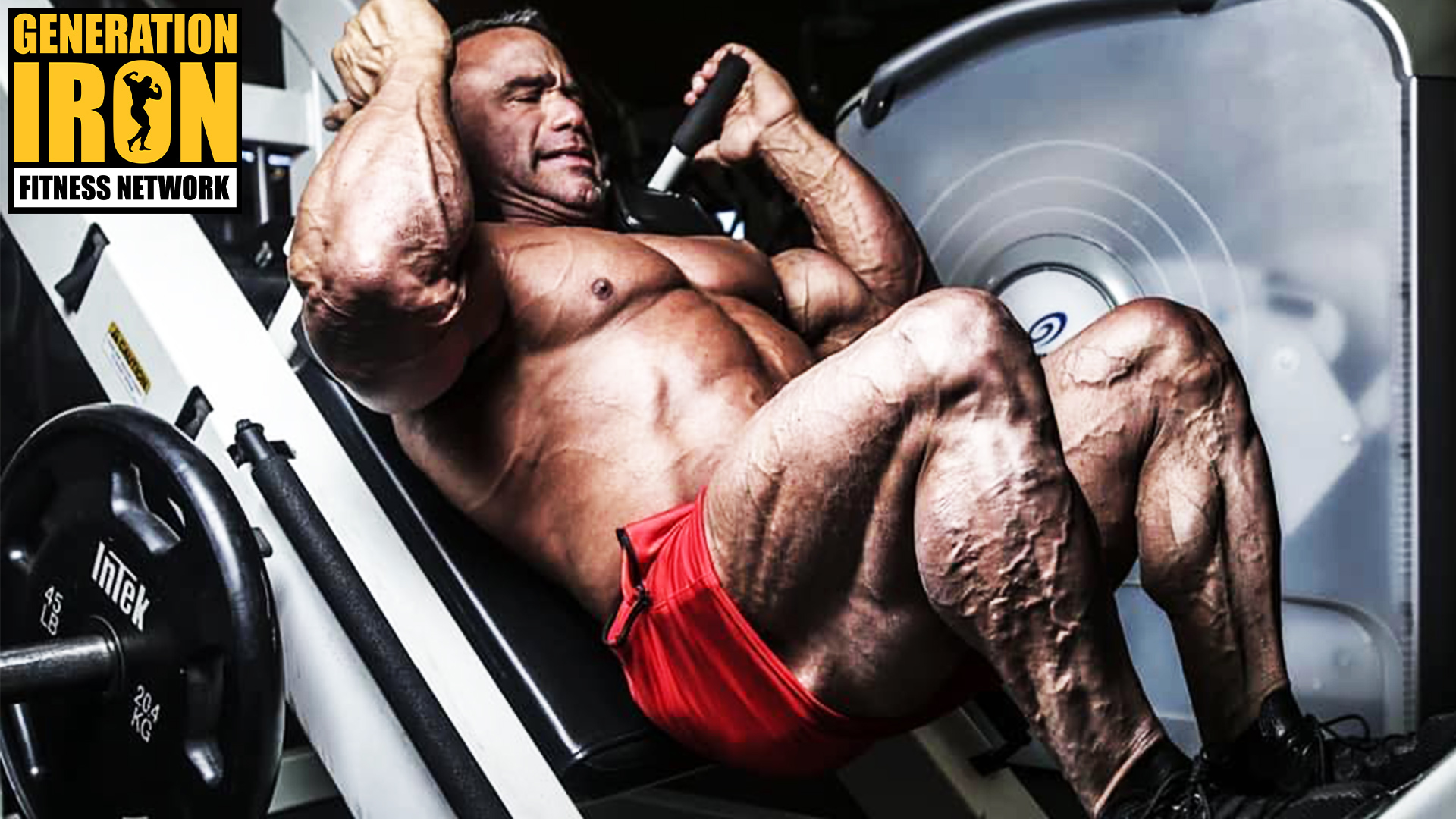
Jose Raymond Breaks Down His Bodybuilding Comeback Training Routine
Jose Raymond shares insight into his comeback training claiming it’s the first offseason he’s ever had in his life.
In our previous interview segment, Jose Raymond confirmed that he’s planning on making a comeback to Men’s 212 bodybuilding. Or at least, he’s training to compete again to see how his body reacts. If he’s happy with the results, he will pick a show to compete in and re-ignite his journey. But after many years away from tried and true contest prep, what is Jose’s tactic to get back on the saddle? In our latest GI Exclusive interview, Jose Raymond breaks down his bodybuilding comeback training routine.
Jose Raymond had a series of unfortunate situations that prevented him from competing over the past few years. But after full recovering from surgery, he’s ready to jump back into action and return to a competitive level of training. During our recent video conversation, we asked him to share what that comeback training looks like and how it differs from his past tactics.
“This is the most different I’ve ever been in my life”
Right off the bat, Jose Raymond makes a point to say that this training process is different than he’s ever experienced before. More specifically, he claims it is the first true off season he’s ever had in his life. Throughout his career, he’s always competed in so many shows – that he never had time for a real off season. He always had to stay in a contest prep level of conditioning due to a competition right around the corner.
So perhaps for the first time since he originally started bodybuilding, he is going into a true offseason bulk phase. Meaning that he can focus purely on building size without worrying about strict conditioning.
In terms of diet, Jose Raymond is currently eating 100 grams of carbs per day. He’s not the kind of bodybuilder to eat sloppy – but he’s also using this opportunity to really focus on building size and worrying less about conditioning at this moment. That means allowing for more heavy foods and carbs in his diet.
[embedded content]
Check out our latest GI Exclusive with Jose Raymond above!
Lower weight with high volume… with a few exceptions
Jose Raymond also dives into his training regimen. He’s doing very little cardio. This is again because he’s focusing on building mass at the moment. He does about 30 minutes of cardio, very light, on a treadmill or stepmill.
Being a bit older and wanting to prevent injury, Jose Raymond is focusing less on heavy weight and more on high volume. In a traditional set he aims for approximately 12, 15, or 18 reps. Though he admits sometimes he will feel energized and try and go all out with some truly heavy weight.
He also does, in a sense, drop sets. Thought perhaps not as strict as a traditional drop set would be. After he gets to a point with his high volume sets where he can only do six to eight reps. He will do one extra set. He lowers the weight and tries to do as many reps as possible. Sometimes reaching up to 20 or 22 reps. This is to make sure that he’s truly exhausted the muscle.
Wrap Up
Ultimately, Jose Raymond is excited to be able to focus on building as much size as possible. He’ll see how his body reacts. And then will evaluate his options and decide what show he wants to compete in. Once he decides that, of course, real contest prep begins. He’ll go back to what he knew for most of his career – focusing on conditioning. We can’t wait to see what show he’ll appear in and how he’ll compare to the new era of competitors.
You can watch Jose Raymond go into even more detail about his bodybuilding comeback training regimen in our latest GI Exclusive interview segment above!