







How to Build Muscle
 Today I’m going to give you the top 20 things you need to know about how to build muscle, without getting overly complicated, super scientific or confusing the hell out of you.
We’ll cover muscle building workouts, muscle building diets, recovery methods and all the essential information you need to start gaining size and strength ASAP.
None of the BS that the bodybuilding rags and supplement companies feed you.
Just the truth about what really works for genetically average, drug-free dudes like you.
So let’s get to it…
Muscle Building Workout Guidelines
1) Gaining Strength is the Key to Building Muscle
If you want to get bigger you HAVE to get stronger. To do this you’ll need to record your workouts in a training journal and be sure to make progressive weight increases over time, but not necessarily from workout to workout. By continually using the same weights over and over you’ll never gain significant size.
All the volume, supersets and fancy training techniques in the world will never be able to trump simple progressive overload. When people ask me how to build muscle the first thing I always tell them is to add weight to the bar before trying anything else.
 2) Use Compound Exercises
DO NOT waste your time with isolation exercises like flyes, leg extensions and concentration curls. Compound, multi-joint exercises that allow you to use the greatest amount of weight will build muscle faster than anything else. These exercises are:
Machines are okay for advanced lifters but if you really want to pack on the muscle the majority of your training should be done with free weights or bodyweight exercises plus resistance (chins, dips, pushups, etc). These exercises lead to a higher level of neuromuscular activation and build muscle and strength at a faster rate.
Beginners and hardgainers should stick with three high intensity strength training workouts per week. More advanced guys can do four and sometimes even five or six. Rest is as equally important in the muscle building process as training is. Three or four hard workouts per week will stimulate growth without leading to over training as it provides ample recovery time.
Remember; you don’t build muscle when you’re in the gym training, that’s simply the stimulus. You build muscle when you are resting and recovering.
5) Don’t Allow Your Workouts to Last More Than 45-60 Minutes
If you’re in the gym much longer than that you’re making friends; not training. When you start training your body will naturally boost testosterone levels significantly higher than normal. It is believed that by the 45 minute mark your testosterone levels are coming back down to baseline and that after sixty minutes your body will start to produce less testosterone and more cortisol, which is a hormone that eats muscle tissue and increases body fat storage. To build muscle and gain weight as fast as possible get in and out of the gym in under an hour.
6) Don’t Train to Failure
Training to failure is what you see most people in public gyms doing. That is one of the reasons they are weak and small. You never want to work so hard in a set that you can’t finish the rep on your own without the assistance of a spotter. When you do that you fry your central nervous system which results in you actually getting weaker, rather than stronger. It also extends the amount of recovery time you will require between workouts. So always finish your sets with one or two reps left in the tank, coming close to failure, but never actually failing, missing a rep or doing forced reps with the assistance of a partner.
Muscle Building Workout Q & A
7) What Type of Workout Split Should I Use?
 Beginners and hardgainers should do full body workouts, three times per week. I recommend my Muscle Gaining Secrets program.
Intermediate trainees can still do full body workouts but should eventually progress to upper/lower splits training 3-4 days per week. My Triple Threat Muscle program would be perfect here.
Advanced lifters should do upper/lower splits or even progress to a three way split. For more on this type of training check out The Renegade Inner Circle.
8] How Many Days Per Week Should I Train Each Body Part?
Progressive overload and frequency are the two most important factors in building muscle. The more frequently you can train a muscle, while stimulating strength gains, the bigger you will get.
Beginners should always train each muscle group three times per week. Everyone else should train body parts somewhere between three times per week and once every three to five days. That provides more opportunities to stimulate growth than the standard bodybuilder prescription of training a muscle group only once per week.
9) How Many Reps Should I do Per Set?
The best rep range for building muscle is around 5-10 for upper body exercises and 8-15 for lower body exercises. Higher reps than that won’t be as effective for building muscle (unless you’re advanced and fairly strong, in which case you can do 20′s) because the load will usually be too light. That said, there is plenty of benefit to be derived from going heavier and using sets of 1-4 reps for a small portion of your training as well as it will develop maximal strength and allow you to use more weight on your higher rep sets. But it’s not 100% necessary.
10) How Much Volume is Enough?
Real world and empirical evidence shows that 50-100 total reps per week, per body part is enough to stimulate muscle growth. That means that for your chest you could do five sets of five one day (25 total reps) and three sets of eight on a second workout that week (24 total reps). That would equal 49 total reps for the week which would be a sufficient starting point for most people to build muscle. More advanced guys or those with better than average recovery ability could work their way up to 100 or even up to 150 total reps per muscle group each week, although I’d always advise doing the least amount necessary and seeing how your body adapts before adding more volume.
11) Is Getting a Pump Important For Building Muscle?
Not for beginners. Chasing the pump with dozens of sets and reps will only make you appear larger temporarily as the localized blood flow to the muscles is increased. Remember that that volume is finite. In other words you can only add so many sets to your workout. Nobody’s going to do a thousand sets of chest each week. But you can keep gaining strength provided you eat properly and get enough rest.
Adding weight to the bar will always be more important than getting a pump. Having said that, intermediate and advanced lifters should definitely get a pump when training to build muscle. Getting a good pump may help amplify the anabolic process, and your ability to get pumped lets you know you’re fully ready to train. The key is to get a good pump with heavy weights and moderate amounts of volume. Just remember to never make it the only goal of your muscle building workouts.
12) How Do I Avoid Getting Fat When Trying to Build Muscle?
By adding in some type of high intensity conditioning work a few days per week. Traditional medium intensity cardio methods will eat away too much muscle and should be avoided.
I always recommend going for a walk first thing in the morning before you eat anything. Simply walk for 30-45 minutes. This can be done seven days per week and will have zero negative impact on your size or strength gains because it’s of such low intensity. It’s not a magical fat burning exercise and we’re not trying to take advantage of “the fat burning zone,” necessarily. It’s just a good idea to go out and get some fresh air, clear your head and get moving. Every bit of physical activity counts and no one can argue against simply going for a walk each day.
If you also want to be athletic and in shape, which is the very essence of The Renegade Method, I would recommend adding in some high intensity conditioning methods like hill sprints two or three times per week immediately after your muscle building workouts or as a separate workout on the same day, 4-6 hours later. By keeping high intensity training all on the same day you give your body more time to recover on off days.
Muscle Building Diet Guidelines

13) Eat Like a Horse
If you want to build muscle you have to eat A LOT of food. You have to eat at regular intervals and keep track of your protein and carb intake each day. I’m not saying you need to carry a scale and calculator with you but you should have a rough idea. Most people should take their bodyweight and multiply it by 17 for a very rough idea of how many calories you will need each day to start with. So if you weigh 200 pounds you would start with 3400 calories per day. Adjust up or down by about 250 calories per day in a week or two based on your results.
14) Eat Real, Whole Foods
If it comes from a box or a bag it probably isn’t good for you. The majority of your diet should come from real food such as:
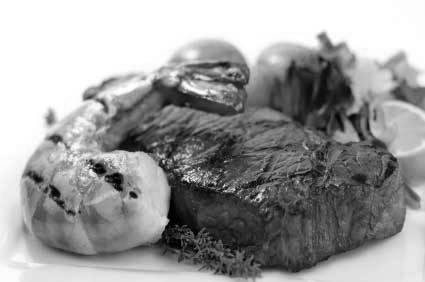
To build muscle optimally you should consume around one gram of protein per pound of bodyweight per day. Some may need less than this but keeping it at a gram per pound makes it very easy. So if you weigh 170 pounds you’ll need to eat 170 grams of protein. The great thing about protein is that it has a higher thermic effect than carbs or fat, meaning that when you eat it your body will burn more calories during the digestion process. It’s also harder to get fat by over eating protein than it is by over eating carbs or fat.
Ideally you’ll want to chew as much of your food as you can but when that can become very difficult and time consuming. If you can’t chew all of your protein down in the form of whole food I’d recommend having one, and at the most two protein shakes per day from a high quality product like Pro Grade, or Sun Warrior if you are vegan or can’t/don’t eat dairy.
16) Cycle Your Carbs
If you want to get huge you need lots of carbs. The problem, however, is that a chronically high carb intake will lead to quite a bit of fat being gained. The way to avoid this is through properly timed carb cycling. In other words, you eat more carbs on training days and fewer carbs on off days. And most of your carbs should be consumed around the time of your workout.
17) Drink Like a Fish
Water and only water. Avoid all other beverages such as soda, juice and milk (unless it’s raw; then it’s good for gaining weight). Your goal should be to drink half your bodyweight in ounces per day. So if you weigh 180 pounds you should have 90 ounces of water per day. This will keep you well hydrated, flush your system, lubricate your joints and help you store carbohydrates more effectively as glycogen in the muscle. You will also notice that when you are well hydrated you get a better pump in the gym and your muscles always appear to have a slightly fuller look.
Recovery Guidelines
18) Sleep 8-9 Hours Per Day
There are a lot of things you can do to improve your recovery and thus your ability to build muscle and gain weight. However, none of them are as important as sleep. When you are sleeping your body repairs itself. This is the time when your muscles grow. If you don’t sleep your testosterone levels will decrease, your cortisol will rise and your insulin sensitivity will be in the toilet (that means your ability to tolerate carbs without getting fat).
 19) Minimize Stress
When you get stressed out your body starts producing boatloads of a hormone called cortisol. This hormone eats away muscle tissue and increases body fat storage, especially around the abdomen. To avoid this horrific fate you need to take steps to de-stress each day. Be sure to laugh, surround yourself with positive people and take some time out to do something fun that you enjoy each day. One other thing that works wonders for stress relief is to practice meditation for 30 minutes daily.
20) Stretch, Foam Roll and Ice
Stretching will help alleviate soreness and speed up your recovery between workouts. Using a foam roller will break up adhesions and scar tissue, thus improving your tissue quality. This can also lead to faster recovery and more muscle growth. Finally, be sure to ice sore joints, ligaments, tendons or muscles. If you aren’t physically healthy you’ll never be able to train optimally and thus will never get the results you’re after. All of these are overlooked by the majority of people but can play a huge role in the muscle building process
We’ll cover muscle building workouts, muscle building diets, recovery methods and all the essential information you need to start gaining size and strength ASAP.
None of the BS that the bodybuilding rags and supplement companies feed you.
Just the truth about what really works for genetically average, drug-free dudes like you.
So let’s get to it…
Muscle Building Workout Guidelines
1) Gaining Strength is the Key to Building Muscle
If you want to get bigger you HAVE to get stronger. To do this you’ll need to record your workouts in a training journal and be sure to make progressive weight increases over time, but not necessarily from workout to workout. By continually using the same weights over and over you’ll never gain significant size.
All the volume, supersets and fancy training techniques in the world will never be able to trump simple progressive overload. When people ask me how to build muscle the first thing I always tell them is to add weight to the bar before trying anything else.
DO NOT waste your time with isolation exercises like flyes, leg extensions and concentration curls. Compound, multi-joint exercises that allow you to use the greatest amount of weight will build muscle faster than anything else. These exercises are:
- Squats
- Deadlifts
- Cleans
- Snatches
- Chin ups
- Dips (on bars or rings)
- Pushups (weighted, on rings, etc.)
- Military presses (with barbells or dumbbells)
- Handstand pushups
- Bench presses (with barbells and dumbbells, flat or incline)
- Bent over, chest supported or inverted rows (with barbells, dumbbells or rings)
- Farmers walks
Machines are okay for advanced lifters but if you really want to pack on the muscle the majority of your training should be done with free weights or bodyweight exercises plus resistance (chins, dips, pushups, etc). These exercises lead to a higher level of neuromuscular activation and build muscle and strength at a faster rate.
- Instead of Cybex rows do dumbbell rows.
- Instead of leg presses do squats.
- Instead of pushdowns do dips.
- Instead of pulldowns do pull ups.
- Instead of Smith machine incline presses do dumbbell or barbell incline presses.
Beginners and hardgainers should stick with three high intensity strength training workouts per week. More advanced guys can do four and sometimes even five or six. Rest is as equally important in the muscle building process as training is. Three or four hard workouts per week will stimulate growth without leading to over training as it provides ample recovery time.
Remember; you don’t build muscle when you’re in the gym training, that’s simply the stimulus. You build muscle when you are resting and recovering.
5) Don’t Allow Your Workouts to Last More Than 45-60 Minutes
If you’re in the gym much longer than that you’re making friends; not training. When you start training your body will naturally boost testosterone levels significantly higher than normal. It is believed that by the 45 minute mark your testosterone levels are coming back down to baseline and that after sixty minutes your body will start to produce less testosterone and more cortisol, which is a hormone that eats muscle tissue and increases body fat storage. To build muscle and gain weight as fast as possible get in and out of the gym in under an hour.
6) Don’t Train to Failure
Training to failure is what you see most people in public gyms doing. That is one of the reasons they are weak and small. You never want to work so hard in a set that you can’t finish the rep on your own without the assistance of a spotter. When you do that you fry your central nervous system which results in you actually getting weaker, rather than stronger. It also extends the amount of recovery time you will require between workouts. So always finish your sets with one or two reps left in the tank, coming close to failure, but never actually failing, missing a rep or doing forced reps with the assistance of a partner.
Muscle Building Workout Q & A
7) What Type of Workout Split Should I Use?
Intermediate trainees can still do full body workouts but should eventually progress to upper/lower splits training 3-4 days per week. My Triple Threat Muscle program would be perfect here.
Advanced lifters should do upper/lower splits or even progress to a three way split. For more on this type of training check out The Renegade Inner Circle.
8] How Many Days Per Week Should I Train Each Body Part?
Progressive overload and frequency are the two most important factors in building muscle. The more frequently you can train a muscle, while stimulating strength gains, the bigger you will get.
Beginners should always train each muscle group three times per week. Everyone else should train body parts somewhere between three times per week and once every three to five days. That provides more opportunities to stimulate growth than the standard bodybuilder prescription of training a muscle group only once per week.
9) How Many Reps Should I do Per Set?
The best rep range for building muscle is around 5-10 for upper body exercises and 8-15 for lower body exercises. Higher reps than that won’t be as effective for building muscle (unless you’re advanced and fairly strong, in which case you can do 20′s) because the load will usually be too light. That said, there is plenty of benefit to be derived from going heavier and using sets of 1-4 reps for a small portion of your training as well as it will develop maximal strength and allow you to use more weight on your higher rep sets. But it’s not 100% necessary.
10) How Much Volume is Enough?
Real world and empirical evidence shows that 50-100 total reps per week, per body part is enough to stimulate muscle growth. That means that for your chest you could do five sets of five one day (25 total reps) and three sets of eight on a second workout that week (24 total reps). That would equal 49 total reps for the week which would be a sufficient starting point for most people to build muscle. More advanced guys or those with better than average recovery ability could work their way up to 100 or even up to 150 total reps per muscle group each week, although I’d always advise doing the least amount necessary and seeing how your body adapts before adding more volume.
11) Is Getting a Pump Important For Building Muscle?
Not for beginners. Chasing the pump with dozens of sets and reps will only make you appear larger temporarily as the localized blood flow to the muscles is increased. Remember that that volume is finite. In other words you can only add so many sets to your workout. Nobody’s going to do a thousand sets of chest each week. But you can keep gaining strength provided you eat properly and get enough rest.
Adding weight to the bar will always be more important than getting a pump. Having said that, intermediate and advanced lifters should definitely get a pump when training to build muscle. Getting a good pump may help amplify the anabolic process, and your ability to get pumped lets you know you’re fully ready to train. The key is to get a good pump with heavy weights and moderate amounts of volume. Just remember to never make it the only goal of your muscle building workouts.
12) How Do I Avoid Getting Fat When Trying to Build Muscle?
By adding in some type of high intensity conditioning work a few days per week. Traditional medium intensity cardio methods will eat away too much muscle and should be avoided.
I always recommend going for a walk first thing in the morning before you eat anything. Simply walk for 30-45 minutes. This can be done seven days per week and will have zero negative impact on your size or strength gains because it’s of such low intensity. It’s not a magical fat burning exercise and we’re not trying to take advantage of “the fat burning zone,” necessarily. It’s just a good idea to go out and get some fresh air, clear your head and get moving. Every bit of physical activity counts and no one can argue against simply going for a walk each day.
If you also want to be athletic and in shape, which is the very essence of The Renegade Method, I would recommend adding in some high intensity conditioning methods like hill sprints two or three times per week immediately after your muscle building workouts or as a separate workout on the same day, 4-6 hours later. By keeping high intensity training all on the same day you give your body more time to recover on off days.
Muscle Building Diet Guidelines
13) Eat Like a Horse
If you want to build muscle you have to eat A LOT of food. You have to eat at regular intervals and keep track of your protein and carb intake each day. I’m not saying you need to carry a scale and calculator with you but you should have a rough idea. Most people should take their bodyweight and multiply it by 17 for a very rough idea of how many calories you will need each day to start with. So if you weigh 200 pounds you would start with 3400 calories per day. Adjust up or down by about 250 calories per day in a week or two based on your results.
14) Eat Real, Whole Foods
If it comes from a box or a bag it probably isn’t good for you. The majority of your diet should come from real food such as:
- Eggs from Free Roaming Chickens
- Wild Caught Seafood
- Grass Fed Beef
- Free Roaming Poultry
- Rice
- Potatoes
- Yams
- Oats
- Quinoa
- Fruit
- Vegetables
- Nuts
- Healthy Oils (coconut, red palm, olive, fish, flax, macadamia)
To build muscle optimally you should consume around one gram of protein per pound of bodyweight per day. Some may need less than this but keeping it at a gram per pound makes it very easy. So if you weigh 170 pounds you’ll need to eat 170 grams of protein. The great thing about protein is that it has a higher thermic effect than carbs or fat, meaning that when you eat it your body will burn more calories during the digestion process. It’s also harder to get fat by over eating protein than it is by over eating carbs or fat.
Ideally you’ll want to chew as much of your food as you can but when that can become very difficult and time consuming. If you can’t chew all of your protein down in the form of whole food I’d recommend having one, and at the most two protein shakes per day from a high quality product like Pro Grade, or Sun Warrior if you are vegan or can’t/don’t eat dairy.
16) Cycle Your Carbs
If you want to get huge you need lots of carbs. The problem, however, is that a chronically high carb intake will lead to quite a bit of fat being gained. The way to avoid this is through properly timed carb cycling. In other words, you eat more carbs on training days and fewer carbs on off days. And most of your carbs should be consumed around the time of your workout.
17) Drink Like a Fish
Water and only water. Avoid all other beverages such as soda, juice and milk (unless it’s raw; then it’s good for gaining weight). Your goal should be to drink half your bodyweight in ounces per day. So if you weigh 180 pounds you should have 90 ounces of water per day. This will keep you well hydrated, flush your system, lubricate your joints and help you store carbohydrates more effectively as glycogen in the muscle. You will also notice that when you are well hydrated you get a better pump in the gym and your muscles always appear to have a slightly fuller look.
Recovery Guidelines
18) Sleep 8-9 Hours Per Day
There are a lot of things you can do to improve your recovery and thus your ability to build muscle and gain weight. However, none of them are as important as sleep. When you are sleeping your body repairs itself. This is the time when your muscles grow. If you don’t sleep your testosterone levels will decrease, your cortisol will rise and your insulin sensitivity will be in the toilet (that means your ability to tolerate carbs without getting fat).
When you get stressed out your body starts producing boatloads of a hormone called cortisol. This hormone eats away muscle tissue and increases body fat storage, especially around the abdomen. To avoid this horrific fate you need to take steps to de-stress each day. Be sure to laugh, surround yourself with positive people and take some time out to do something fun that you enjoy each day. One other thing that works wonders for stress relief is to practice meditation for 30 minutes daily.
20) Stretch, Foam Roll and Ice
Stretching will help alleviate soreness and speed up your recovery between workouts. Using a foam roller will break up adhesions and scar tissue, thus improving your tissue quality. This can also lead to faster recovery and more muscle growth. Finally, be sure to ice sore joints, ligaments, tendons or muscles. If you aren’t physically healthy you’ll never be able to train optimally and thus will never get the results you’re after. All of these are overlooked by the majority of people but can play a huge role in the muscle building process