
Tag: Bodybuilding
Are Calves Genetic? Unlocking The Mystery of Lower Leg Growth
“Are calves genetic?”
If you’ve ever seen someone who clearly has never stepped foot in a gym with full, rounded calves, the question has probably crossed your mind; especially if you’ve been hitting your lower legs with calf raises for years with little result. You’ve probably also noticed that some pro bodybuilders, with massive development in every other muscle group, just can’t seem to bring up their calves.
If calf development is genetic, it means those of us who have lucked out in the genetic lottery will never turn our calves into bulls. However, if that’s not true, we’ve still got hope. Let’s dig into the facts to find out.
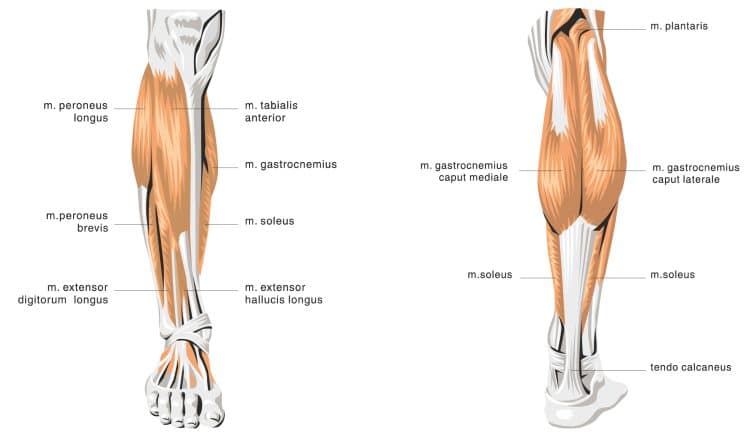
Calf Anatomy
The calves are generally understood to comprise two separate muscles: the gastrocnemius and the soleus. However, some people contend that they are actually two parts of the same muscle. That’s because they both converge at the Achilles tendon and produce the same action; plantar flexion (ankle extension).
The meaty part of the muscle that we generally consider as the calf is the gastrocnemius or gastro. The soleus is a flat muscle that lies under the gastro and has minimal growth potential.
The gastro comprises two parts; the inner and outer head. Both heads originate at the base of the femur, on the medial and lateral condyles (the rounded structure at the end of the bone). These origin points are just above the knee joint.
The soleus originates just below the knee. The gastro and the soleus then converge into the Achilles tendon, which then connects to the heel bone.
Role of Genetics on Calf Development
Genetics does, indeed, have a part to play in your ability to build your calves. Three key genetic factors contribute to the size potential of your lower legs:
Muscle Fiber Type
Muscle Fiber Density
Muscle Belly/Tendon Length
Muscle Fiber Type
There are two types of muscle fiber; slow twitch (Type I) and fast twitch (Type II). Slow twitch fibers are created for endurance work required for repetitive movements like walking and running. The soleus comprises more fast twitch fibers, while the gastro, though it still has more slow twitch fibers, has a higher percentage of fast twitch fibers. Fast twitch fibers are designed more for explosive, strength-type work, as is required when doing calf raises. These fibers have greater growth potential than slow twitch fibers.
A study by Gollnick et al., published in the European Journal of Physiology, analyzed the muscle fiber make-up of the soleus and gastro and other lower body muscles. They found that, on average, the soleus contained 80% of slow twitch fibers, while the gastro averaged just 57% of fast twitch fibers. [1]
This study also revealed that there is quite a variance in the percentage of fast twitch and slow twitch fibers among the study subjects. The range of fast twitch fibers in the soleus was between 64% and 100%. Regarding the gastro, the range was between 34% and 82%. These differences are the result of the genetic lottery.
So, a person whose gastro comprises 34% fast twitch fibers (and therefore 66% slow twitch fibers) will have a genetic advantage regarding muscle-building potential compared to a person with 82% fast twitch and only 18% slow twitch.
This leads to whether changing your muscle fiber type with training is possible. In other words, could a guy with 82% fast twitch fibers in his calves train a certain way to reduce that down to 50% to have more slow twitch fibers?
The short answer is that researchers don’t know. There is debate among scientists on this question, with some believing that you’re stuck with what you were born with, while others contend that, by doing more of a specific type of training, you may be able to make up to a 10% change. So, you may have a 10% window to develop more slow twitch muscle fibers by doing a calf raise exercises. You would engage in running, cycling, and other endurance work to develop more fast twitch fibers for endurance.
Related: The Average Calf Size for Men and Women
Muscle Fiber Density
Your muscle fiber density refers to the number of muscle fibers per unit of muscle volume. Your genetics determines this. Some people will be born with more muscle fibers in their calves than others. As a result, they will have more muscle-building material to work with. Their muscles will be able to grow bigger and stronger than a person who is born with fewer muscle fibers in the calves.
There is scientific debate about whether it is possible to grow more muscle fibers. This is known as hyperplasia (contrasted with hypertrophy, which refers to making your existing muscles bigger). The current consensus is that if hyperplasia does occur, it would only be possible to a small degree. [2]
Muscle Belly/Tendon Length
Genetics determines the length of a person’s calf muscle belly. A long muscle belly runs down from the back of the knee at least halfway to the ankle. A short muscle belly sits much higher on the lower leg. The ideal for muscle development is having a long belly and a short Achilles tendon. However, the length of your muscle bellies and tendons is entirely a matter of genetics.
High calf bellies are better suited for endurance exercise. In fact, you will notice that many high-level sprinters, basketball players, and endurance athletes have noticeably high calves. It is believed that their longer Achilles tendon provides for more force production in the way that a longer rubber band would.
It is important to remember that, for most people, their genetic predisposition to building calves will be about the same as for the rest of their bodies. So, you’ll probably have the same proportion of slow-twitch to fast-twitch muscle fibers in all your muscles. The length of your muscle bellies will likely also be proportionate throughout your body.
Sometimes, what appears to be a genetic predisposition to weak calves is actually the result of training style and focus. A classic example is when Arnold Schwarzenegger came to America in 1968. Back in Europe, the bodybuilding focus was on the upper body. As a result, Arnold did very little calf work in the gym. Looking at him onstage at the 1968 IFBB Mr. Universe (in which he came second to Frank Zane), you may have concluded that he had terrible calf genetics.
Arnold Schwarzenegger / Instagram
Yet, when Arnold came to appreciate that he needed to seriously focus on his lower legs to start winning competitions, he undertook an amazing transformation. Rather than hiding his weakness, he actually cut all of his training pants off at the knee so that he could be reminded every day of what he needed to focus on. He performed 500-pound sets of standing calf raises, along with seated and donkey calf raises six times per week. Within a few years, during which he once said he invested 5,000 hours on calf training, he was able to turn his biggest weakness into one of his greatest strengths.
Factors Beyond Genetics That Impact Calf Development
So far, we’ve seen that genetic factors affect your calf-building potential. The length, muscle fiber type, and density of your calves will not change much over the course of your life. So, if you’ve got high muscle bellies and long Achilles tendons, there’s nothing you can do about that.
You can’t, for example, alter your calves’ shape by modifying how you do your calf exercises. You may have heard that you can better target the inner or outer head of the gastro by angling your toes in or out when doing calf raises. This is not the case. That’s because the inner and outer heads pull on a single Achilles tendon. This causes the ankle to extend in just one direction. If it were possible for the ‘inner’ calf to work differently from the ‘outer’ calf, each head would require its own separate tendon and separate attachment to the heel bone. That would allow each one to act separately based on toe angling.
So, while you can’t change your calf muscle shape, what you can do is maximize what you’ve been given. Let’s now consider the best way to train to maximize your genetic calf-building potential.
The most commonly seen calf training exercise in the gym is the standing calf raise. This involves placing your shoulders under a pad that is connected to a weight stack. You then place your feet on a block that allows you to lower your heels below your toes level.
I often see people doing this exercise with just their toes on the block. However, this is a limiting foot position that would be akin to doing barbell curls by gripping the bar with only your fingertips.
The best foot position when doing calf raises will provide the most support for the movement to follow. When it’s just your toes on the block, you’ll find those toes slipping off as you progress through your reps, probably resulting in a shortened set.
So, rather than just your toes, you should place the balls of your feet on the block. This is the large, bony pad just below your big toe. Each toe has its own sesamoid bone, running on a diagonal rather than horizontally across the foot. So, to give your foot the most support, you should place the ball of your foot on a slight diagonal from the big toe down to the little toe. This will result in a ‘toes in’ position.
By the way, if you feel your feet slipping off the block while doing a set, you should pause and reset your position. If you don’t, you will compromise your ability to get a full extension and contraction on every rep.
Ideal Range of Motion on Calf Raises
You will never achieve your genetic muscle-building potential unless you move your calves through their full range of motion. Yet, it’s common to see people using an extremely abbreviated range of motion that often equates to a short ‘bouncing’ movement. This usually happens when the person uses more weight than they can properly handle.
The whole reason that you have a block to stand on when doing calf raises is to allow you to get a contraction in the bottom part of the rep. So, if you’re doing reps where your heels don’t even come down to the level of your toes, you’re defeating the purpose of having a block!
It is far better to reduce the weight to achieve a full range of motion.
Knees Straight or Bent During Calf Raises?
If you have completely straight legs (with no knee bend) during the standing calf raise, you might experience some knee discomfort. To avoid this, you should slightly bend your knees throughout the exercise, especially when you start to go heavy. Make sure, though, that you keep your legs locked in this slight knee position to avoid bringing your quads into the movement.
How Much Weight for Calf Raises?
To maximize your calf muscle growth potential, you need to achieve maximum effort on your lower leg workouts. There are two ways you can do this:
Muscle fatigue that results from performing high reps in the 20 to 50 range.
Using a weight that limits you to 80-90% of one rep max, with low reps in the 4-10 range.
The weight you choose for the calf raise, along with every other exercise, should be based on the following parameters:
How many reps do you plan to do
Using a full range of motion
Eliminating momentum
Using proper technique
Maximum effort
Don’t let your ego get in the way when selecting your training resistance. It doesn’t matter what weight your training partner is using; if you cannot tick off each of the criteria listed above, the weight is not right for you.
When it comes to the rep range, the calves require more than the conventional 8-12 rep range for hypertrophy. That’s because of the high slow-twitch fiber makeup of the calves. Slow-twitch fibers are highly resistant to fatigue. As a result, they respond better to higher reps. On the other hand, your fast-twitch fibers require lower reps with heavier weight.
Here is a suggested rep scheme over six sets of calf raises, with the weight increasing on each set:
Set One (Warm-up): 50 reps
Set Two: 30 reps
Set Three: 20 reps
Set Four: 15 reps
Set Five: 10 reps
Set Six: 8 reps
6 Best Calf Exercises
Your gym-based calf training options are quite limited. After all, the calves only do one thing; flex the ankle. So every move must be a variation of the calf raise. These resistance-based exercises will primarily work your fast-twitch muscle fibers. However, there are other things you can do to also work your slow-twitch fibers. By including each exercise in your weekly routine, you will cover all bases:
1. Standing Calf Raise
Steps:
After loading the weight stack, slide under the shoulder pads and grab the handles.
Place your feet on the block, with the balls of your feet and toes pointed slightly inward.
Bend your knees slightly, and then keep your legs locked in that position.
Rise on your toes to complete calf extension.
Now lower your heels to below the level of your toes, going down as far as possible. Perform your reps in a smooth, fluid manner.
2. 45-Degree Leg Press Calf Raise
Steps:
Load the weight stack and then position yourself in the leg press machine with your lower back firmly against the back pad.
Place the balls of your feet on the base of the footplate.
Fully extend your calves by pushing your toes away from you. Keep your knees supple (slightly bent). Hold for a second.
Now lower your heels to below the level of your toes, going down as far as possible.
3. Seated Calf Raise
Steps:
Sit on a seated calf raise machine with your thighs tucked under the pads. Set the weights on the machine. Adjust the pad for your height. Place the balls of your feet on the footplate.
Fully extend your calves by raising your heels. Hold for a second.
Now lower your heels to below the level of your toes, going down as far as possible.
4. Jump Rope
Steps:
Stand with a jump rope in hand; feet shoulder together.
Rotate the wrists to bring the rope overhead.
Jump slightly to allow the rope to travel under your feet.
5. Toe Farmer’s Walk
Steps:
Grab a pair of dumbbells or other heavy objects in your home gym.
Walk up and down your gym floor on your toes until you have walked for 30 seconds.
6. Explosive Box Jumps
Steps:
Stand before a 24-inch high plyometric box. Hinge your hips and swing your arms to load the jump.
Jump both legs onto the box.
Immediately jump down on the other side.
Change direction and repeat.
Wrap-Up
While there is a genetic component to calf training, that doesn’t mean you can’t make the most of what you were blessed with. You can’t change the shape of your calf muscles and can only make minor changes to your muscle fiber type and density. However, you can increase the size of your calf muscle fibers by following a variable resistance workout program across a wide rep range. Besides the conventional gym moves like the standing leg press and seated calf raise, add jumping rope, plyometrics, and the toe farmer’s walk to transform your calves into bulls.
References
Gollnick PD, Sjödin B, Karlsson J, Jansson E, Saltin B. Human soleus muscle: a comparison of fiber composition and enzyme activities with other leg muscles. Pflugers Arch. 1974 Apr 22;348(3):247-55. doi: 10.1007/BF00587415. PMID: 4275915.
MacDougall JD, Sale DG, Alway SE, Sutton JR. Muscle fiber number in biceps brachii in bodybuilders and control subjects. J Appl Physiol Respir Environ Exerc Physiol. 1984 Nov;57(5):1399-403. doi: 10.1152/jappl.1984.57.5.1399. PMID: 6520032.
Eddie Hall Learns Posing from Pro Coach Ahead of Anticipated Bodybuilding Debut
Strongman legend Eddie Hall is well-respected in the fitness community for his superhuman strength and athletic abilities. Although he moved on from professional competition years ago, he continued expanding his creative footprint in sporting ventures. In a YouTube video, Hall shared a posing session led by pro coach Emma Heineman ahead of his highly anticipated debut in bodybuilding.
Eddie Hall enjoyed a highly successful career as a strongman athlete. He dominated the UK regional scene in the 2010s and earned his first qualification to the World’s Strongest Man competition in 2012. He racked up several national titles working his way up at the WSM ladder over the next five years. In 2016, Hall created history by becoming the first person to deadlift 500-kg (1,102lbs) and finally secured the coveted WSM title in 2017. He doesn’t compete actively now but serves as a lead ambassador for the sport.
The English star boxed fellow strongman Hafthor Bjornsson in a match billed ‘The Heaviest Boxing Match in History.’ The two titans clashed for six rounds last year with Bjornsson getting the nod on the judges’ scorecards. Although there were talks of another outing, they decided against it. As a result of the loss, Hall was forced to tattoo Thor’s name on his foot.
Hall teamed up with iconic Strongman Brian Shaw for a grueling shoulder workout last November. The former rivals pushed each other in training as Shaw took the lead in guiding Hall through his home gym. Aside from strongman, Hall announced his plans to switch to competitive bodybuilding earlier this year.
The decision to body-build was made possible after Hall witnessed the incredible physiques of reigning four-time Classic Physique Olympia champ Chris Bumstead and former two-time Mr. Olympia Mamdouh ‘Big Ramy’ Elssbiay in December 2022.
‘The Beast’ is furiously training for his next athletic venture. He smashed a heavy chest workout with his son Maximus and influencer Jesse James West a few months ago. Then, Hall joined forces with IFBB Pro bodybuilder Jamie Christian-Johal for a taxing back workout and later reunited for an epic chest workout.
In addition to training, Hall is open about his nutrition. Eddie Hall reflected on eating about 15,000 calories a day to compete at the highest level during his Strongman career. He said his limit was reached after consuming more than 20,000 calories in a single day.
As of late, Hall enlisted the help of legend Jay Cutler for an upper body workout in hopes of adding some much-needed knowledge to his bodybuilding repertoire. The four-time Mr. Olympia praised Hall’s work ethic while offering tips on maximizing the pump.
Eddie Hall learns posing from pro coach ahead of anticipated bodybuilding debut
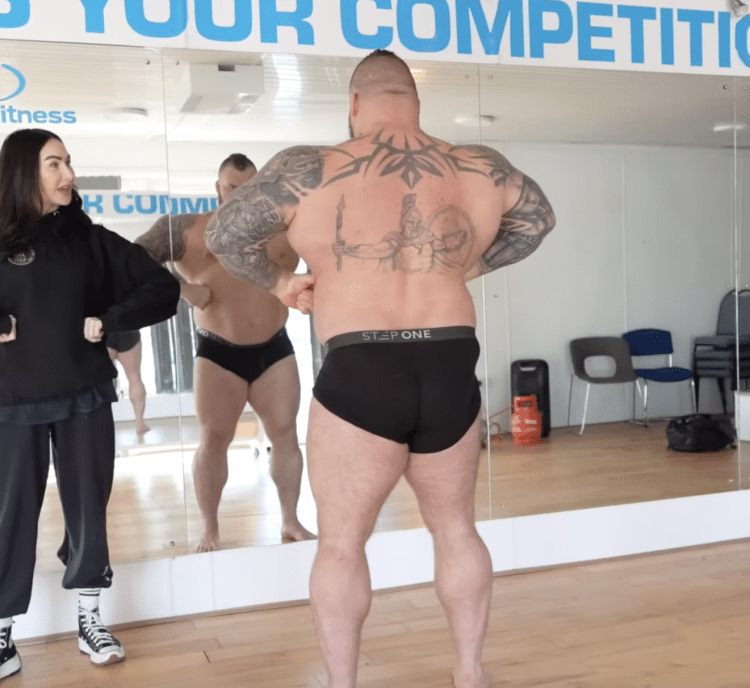
In his latest undertaking, Eddie Hall shared a posing session where he was guided by professional coach Emma Heineman in preparation for his debut in competitive bodybuilding.
Hall weighed in at 175 kgs (386 pounds) and revealed the front lat spread as his favorite pose. He started with a front-facing pose while Heineman guided him through the maneuvers.
“What I’m finding is, Strongman is just moving A to B as efficiently as possible,” said Hall. “You don’t really think about what muscles you use. With bodybuilding, I’m slowing it down and I’m like right activate this muscle. You can literally feel muscles you haven’t usually used before kick in and they’re just growing like crazy.”
“I actually like the front lat spread.”
Eddie Hall The Beast (via YouTube)
Eddie Hall continues to impress by showing off steady physique updates. He collaborated with Men’s 212 legend Flex Lewis for a laborious arm workout session recently. He’s scheduled to captain Team UK for the upcoming 2023 World’s Strongest Nation contest, set for Nov. 18 in Liverpool, England.
RELATED: Strongmen Brian Shaw and Eddie Hall Crash Planet Fitness for Hilarious Leg Workout
Based on his latest posing session, Hall is leaving no stone unturned in his preparations for bodybuilding and fans are excited to see the physique he displays on stage.
You can watch the full video below.
Published: 26 May, 2023 | 1:20 AM EDT
Arnold Schwarzenegger Shares Intense Circuit Workouts & Reveals Training Secrets: ‘Don’t Think Just Do’
Bodybuilding legend Arnold Schwarzenegger moved on from professional competition decades ago but hasn’t lost his passion for fitness. In a recent Men’s Health interview, Schwarzenegger shared intense arm and shoulder circuit workouts and revealed his training secrets.
Arnold Schwarzenegger is easily the most popular bodybuilder of all time. He first gained attention for his impressive muscle mass, shape, and symmetry in the late 1960s and early 70s. In eight total appearances at the Mr. Olympia competition, Schwarzenegger won seven titles and was defeated only in his debut. The Arnold Classic contest, widely regarded as the second most prestigious show next to Mr. Olympia, was named after him to celebrate his contributions to the sport.
Schwarzenegger offered a checklist for a healthy diet and some effective ways to optimize recovery earlier this year. He argued against experimenting with different diets in favor of following general guidelines to keep nutrition sources clean.
The 75-year-old encouraged his followers to achieve at least a total of 30 minutes of exercise daily three months ago. He laid out a three-step plan for designing a custom routine to ensure daily activity for half an hour, even if it’s divided into multiple sessions.
Arnold Schwarzenegger advocated for using bodyweight exercises as well. He provided a quick five-minute workout with no equipment to start the day or recommended a warm-up before training. Then, he followed up with his stance on balancing sleep while losing weight. Schwarzenegger explained that people sleeping less than five hours daily were more likely to be overweight.
Schwarzenegger has no plans to slow down or step away from working anytime soon as he targets living forever. He opened up about struggling to accept his physique with age considering he used to boast one of the best physiques ever in his heyday. He also teamed up with comedians Bert Kreischer and Fortune Feimster for a challenging upper-body workout last week. He mentored the pair through exercises while giving his take on drinking alcohol.
Arnold Schwarzenegger shares intense circuit workouts
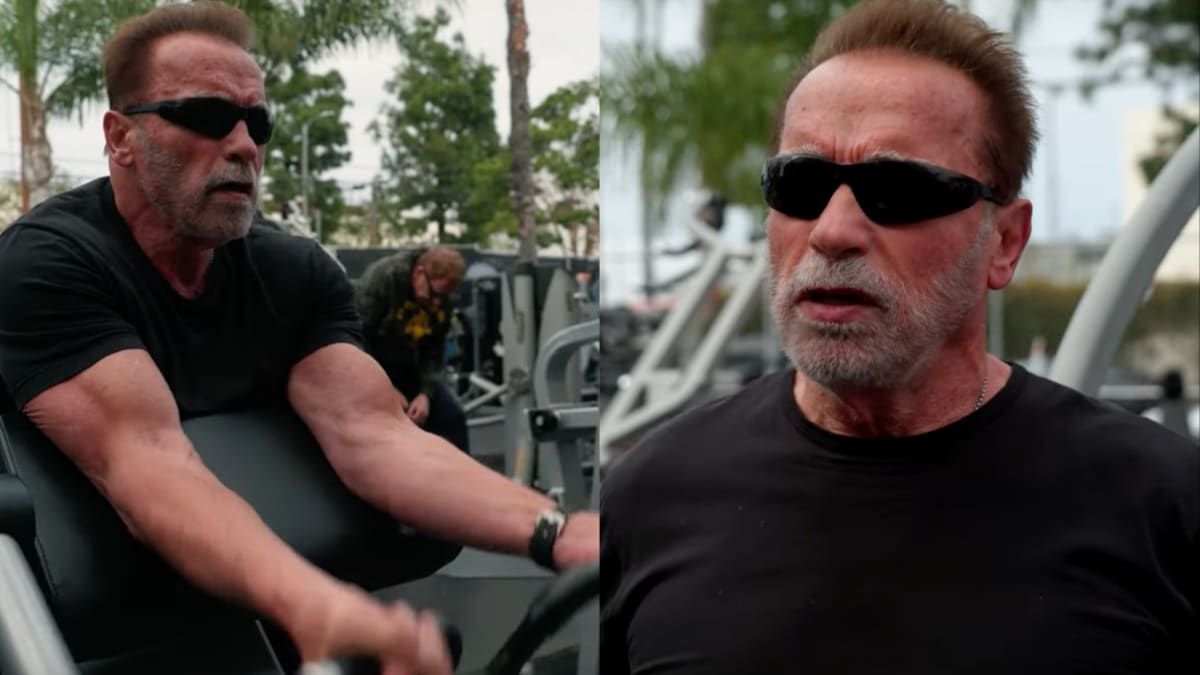
In a recent YouTube video, Arnold Schwarzenegger shared two intense circuit workouts targeting arms and shoulders. He was working out at the popular Gold’s Gym in Venice Beach, California.
Arm Circuit
“This is what I do every morning, I come in here and do 25 to 30 sets in a half an hour,” said Schwarzenegger. “In the old days we did like 30 sets for shoulders now I do 15 sets.”
1A Machine Preacher Curl: 1 set of 30 reps, then 4 sets of 10-12 reps
1B Machine Dip: 1 set of 30 reps, then 4 sets of 10-12 reps
Shoulder Circuit
2A Overhead Press: 5 sets of 10-12 reps
2B Machine Lateral Raise: 5 sets of 10-12 reps
2C Machine Rear Delt Fly: 5 sets of 10-12 reps
Arnold likes ending each set with a 5-second iso-hold squeeze.
Schwarzenegger reveals training secrets
‘The Austrian Oak’ revealed his secret for training consistently. He believes in maintaining a routine by working out first thing in the morning and not giving your mind the opportunity to opt out of the exercise.
“The only reason why someone doesn’t want to go to the gym when they get up is because they were thinking. That’s the biggest mistake you can make.”
“When you train it is not just that your body gets pumped up and gets stimulated with blood but it’s also your mind and you have a much more positive kind of outlook on the day and on life when you’ve had a pump behind you.”
“I was in good shape [back in the 80s], I worked out two hours a day. Cause after having had several heart surgeries and then having had surgeries on my shoulders and knees and all those kind of things, it’s important to kind of protect my body and do therapy training at the same time. So I just do it faster, lighter, but correct exercises and I try to stay young.”
“If you want to go to the gym every day and do your bike ride, training every day, then you roll out of bed and you don’t think. Most important thing is don’t think just do.”
Arnold Schwarzenegger listed four ways to build a strong routine that fits into busy schedules. He highlighted the process of developing habits in a straightforward manner by rewarding the correct behaviors.
He opened up on the PED (performance-enhancing drugs) protocols that he utilized during his days of competing on stage. He also voiced his disapproval of the direction in which bodybuilding appears to be headed due to drug overuse.
Schwarzenegger’s latest offerings will help many improve their training consistency and level up their fitness with the circuit workouts.
You can watch the full video below:
RELATED: Arnold Schwarzenegger Dwarfed by NFL & MMA Superstars: ‘Made Me Look Like A Little Chicken’
Published: 25 May, 2023 | 10:38 AM EDT
Hunter Labrada Scores New 585-lb (265.3-kg) Deadlift PR for 4 Reps in Contest Prep for 2023 Tampa Pro
American bodybuilder Hunter Labrada is determined to earn an invite to the Mr. Olympia competition after dropping out of the top six at the last event. In a recent post made on Instagram, Labrada shared a new PR (personal record) on the 585-pound (265.3-kg) deadlift for four reps.
Hunter Labrada, son of IFBB Hall of Famer Lee Labrada, joined the ranks of the Men’s Open division as a legacy competitor with a lot of hype. He displayed a huge physique with impressive muscle mass, size, and posing abilities that won him his IFBB Pro debut show, the 2020 Tampa Pro. He finished the season with an eight-place finish in his maiden Mr. Olympia participation.
Labrada scored gold at the 2021 Chicago Pro before improving his standing to fourth place at the 2021 Mr. Olympia. His rivalry with fellow Open standout Nick Walker became one of the main talking points as Walker slotted in fifth behind him in a close-fought contest. Last year, Labrada missed the mark at the 2022 Mr. Olympia. He came in a bit watery and settled with a seventh-place finish, meaning he’d need to qualify for the next edition of the show since only the top five get an automatic qualification. Meanwhile, Walker placed third.
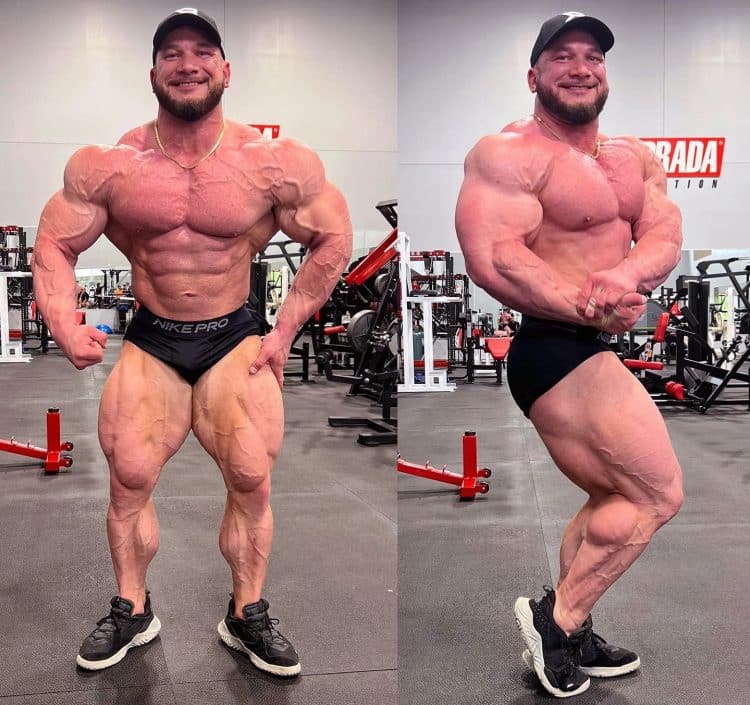
Hunter modified his training and diet program after the disappointing result. He offered a jacked off-season physique update where he weighed 280 pounds fasted three months ago. Then, he opened up on his ambitions to figure out his peak for contests, which he understands will take a calculated effort.
Hunter Labrada via Instagram
The 31-year-old aims to bring a high level of conditioning, similar to his father Lee. He believes trimming down his midsection would enhance his aesthetic quality and get him closer to his goal. With these ambitions on his mind, Hunter has been practicing vacuum poses which are effective for midsection control, especially when posing on stage.
Aside from training and goals for this year, Hunter Labrada detailed his full day of eating in the current off-season. He also detailed the supplements he used to improve his physique before returning to competition. Then, the Open star smashed a heavy off-season lower-body training session days later.
Labrada gave fans a look into his preparations for guest posing appearances at the Emerald Cup and the Pittsburgh Pro last month. He showed off his bulked-up physique where he weighed 283 pounds fasted. About two weeks later, Labrada provided some of his best tips for building muscle on weaker calves. He encouraged training the muscle group to failure and said not to complicate things.
Hunter Labrada scores new PR of 585-lb deadlift for 4 reps
In a recent Instagram post, Hunter Labrada shared that he set a new PR of a 585-lb deadlift for four reps in a 2023 training session.
Labrada used a lifting belt and wrist straps with no shoes for the lift. He performed the set at a consistent pace with proper form for the first three reps. He struggled slightly on the final rep but managed to pull it off.
“Pretty stoked on this! This was a lifetime PR for me,” wrote Labrada. “Seeing these translate in my physique and progressing them in the gym has been fun, and that’s what it’s all about!
585 x 4.”
RELATED: What Does PR Mean in Gym?
As of late, Labrada left fans stunned with a shredded physique update weeks out from the 2023 Tampa Pro. He tipped the scales at a lean 277.6 pounds and gave his opinion on exercise selection.
Labrada turned in a strong performance at the 2023 Pittsburgh Pro guest-posing appearance earlier this month. Based on the latest update, it’s evident why he’s brimming with confidence going into the upcoming Tampa Pro and Texas Pro.
RELATED: Hunter Labrada Recommends Best A/B Split Variations to ‘Break Through Your Plateaus’
Published: 24 May, 2023 | 8:21 PM EDT
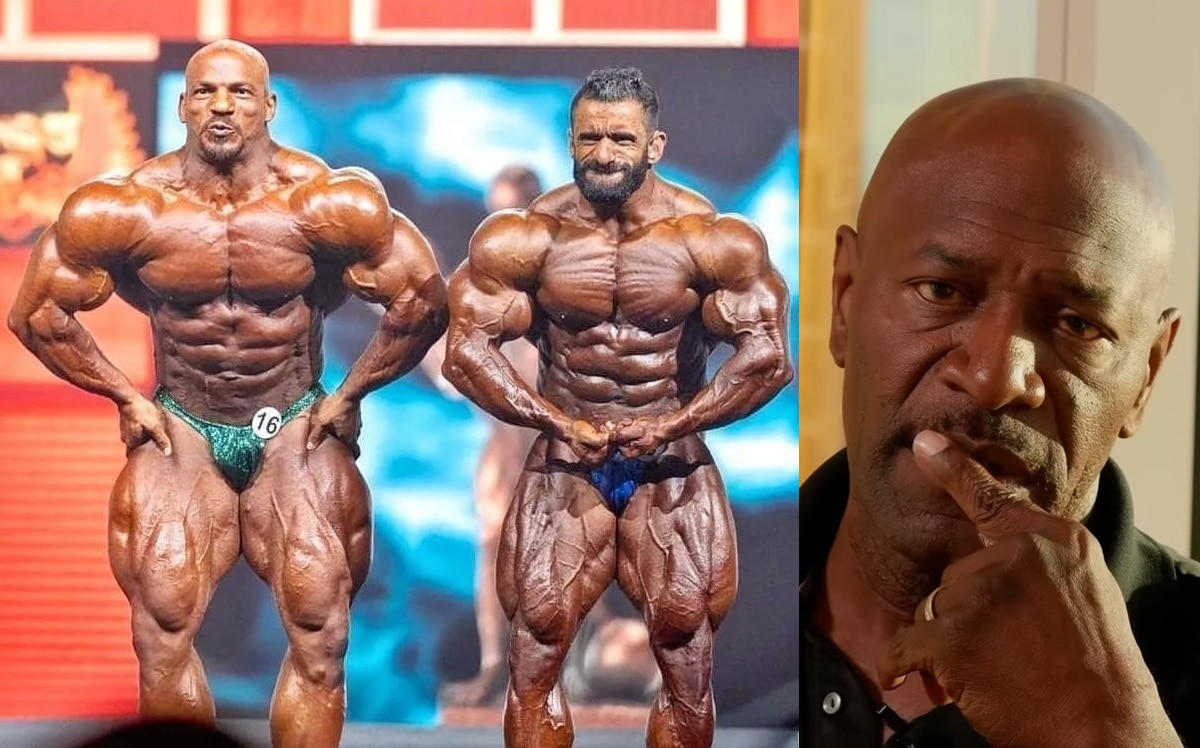
Lee Haney: Open Athletes Are ’60-Lbs Overweight Traumatizing Themselves with Terrible Diets’
Lee Haney rose to the top of the sport with exceptional balance, conditioning, and fullness. In a recent Escape Fitness interview, Haney fired shots at Open bodybuilders for poor nutrition and relived his first Mr. Olympia victory in 1984.
Bodybuilding legend Lee Haney dominated the IFBB Pro League during the 1980s. He is an eight-time Mr. Olympia winner (1984-1991), a reign he made possible with an unyielding work ethic and sheer determination. During his bodybuilding tenure, Haney faced the cream of the crop, having battled with three-time Mr. Olympias Sergio Oliva, Frank Zane, as well as Lee Labrada, and Rich Gaspari.
Since Haney’s dominant title run, the sport has undergone dramatic changes. After Haney retired on top in 1991, mass monsters would soon stake their claim in the division. Despite changes to the category, fans, and bodybuilding veterans alike agree that Haney displayed one of the most complete physiques ever.
While he competed in a different era, Lee Haney has continually warned competitors today about who they choose to train with. And now it appears Haney is taking issue with Open competitors who have developed a seemingly unhealthy relationship with food.
Lee Haney Talks Poor Nutrition & Offers Advice to Bodybuilders: “Always Stay Within Striking Distance”
According to the bodybuilding icon, low-carb diets are for ‘fat boys.’ He encouraged athletes to keep a healthy relationship with food so it’s easier to prepare for bodybuilding shows.
“Low carb is for fat boys. If you look like a porkey the pig in the off-season, you’re fat! You got to burn that stuff off. When you trying to get rid of all that weight through aerobics and starvation, your muscle is not going to have that life to it.
That life force where it looks great on stage and it’s popping because you’re aerobic-ing yourself to death and stress will show up on your physique, it’ll tear you up. So, my message has always been in bodybuilding as I share with young athletes, always stay within striking distance. Train around, no more than around 12-15 pounds over your competition weight,” said Lee Haney.
Haney says 3% body fat is the goal on stage and believes athletes can adjust their nutrition based on where they are in their respective prep.
“If you’re 15 or 16 weeks out, if you’re 15% body fat, then guess what? You can drop a percentage every week until you bottom out at 3% or 3.5% you’re ready then. And if you get there too quick then guess what? Increase the food intake. I don’t believe in zero carbs. I never had to do that. I was a carb monster. My carbs would be 4 to 500 grams of carbohydrates a day because I was never a fat boy.”
“These guys get 40, 50, 60 pounds overweight and they have to traumatize themselves, eating chicken and green beans, what kind of life is that? It’s terrible man. It’s ignorance,” added Haney. “Never go below 50 grams of carbs. Zero carbohydrates for me, keto for me, if you want to call it keto, we just said lower your carbohydrates.”
Unlike his contemporaries, who consumed sunflower seeds, almonds, and walnuts, Haney underscored that modern competitors carb up with bacon, cheese, and ‘garbage.’
“The muscles overcompensate when you put the carbs back in, that’s why we want to hit the stage and we’re full and the muscles and the veins are popping. Even on another point, when we do carbohydrate deplete, we don’t use bacon, cheese, and garbage. We used sunflower seeds, we used almonds, we used walnuts.”
“They have half-truths [people in fitness and bodybuilding], they don’t live and they haven’t lived what we lived. When I say we, we’re bodybuilders, that’s what we do. We understand the science of food. They don’t [online coaches]. They just read stuff and don’t get it right and get a lot of people hurt living off statins.”
Haney on Winning 1st Mr. Olympia in 1984: “It Was a Dream Come True”
Haney said he won his first Mr. Olympia weighing 233 pounds. He credited Arnold Schwarzenegger, Frank Zane, Robby Robinson, and Ed Corney as early influences.
“Winning a Mr. Olympia is a miracle in itself and to be there on the same stage with Frank Zane and Robby Robinson, Sergio Olvia was there… wow. You know, that was absolutely incredible. It was like a dream come true man. You watched these guys in the magazines, you grew up admiring them, there you are, standing on stage with them. To be the winner and the victor, wow. Thank you, lord,” added Haney.
“The previous year I weighed 243 but winning at 233. I had went back and figured out through my notes and studied what had went wrong. No one had stepped on an Olympia stage at the weight and at that height. I knew that was a winning package. You size up your competition. I always knew if I had a combination of Arnold, Robby, Frank Zane, Ed Corney, who can beat that? And I felt that’s what I had achieved during my whole career, not just for that one but during my whole career. That’s what I wanted to be like, a combination of all of those gentlemen, those awesome legends.”
Haney isn’t the only bodybuilding veteran from a different era taking aim at the Open category. A few months back, 1990s standout Rich Gaspari accused Open bodybuilders of abusing steroids instead of depending on consistent training. In an additional Fitness, Fame & Fortune podcast, Gaspari said he personally favored the look of Classic Physique Olympia Chris Bumstead over recent Men’s Open Mr. Olympia winners.
Given his expertise, Lee Haney is determined to educate new talent making their way into bodybuilding. He stands by his approach, which saw him set the all-time Mr. Olympia win record that was later matched by Ronnie Coleman.
You can watch the full video on the Escape Fitness YouTube channel below:
RELATED: Lee Haney Shares Iconic Police Traffic Stop Photoshoot After First Mr. Olympia Win in 1984
Published: 24 May, 2023 | 4:44 PM EDT
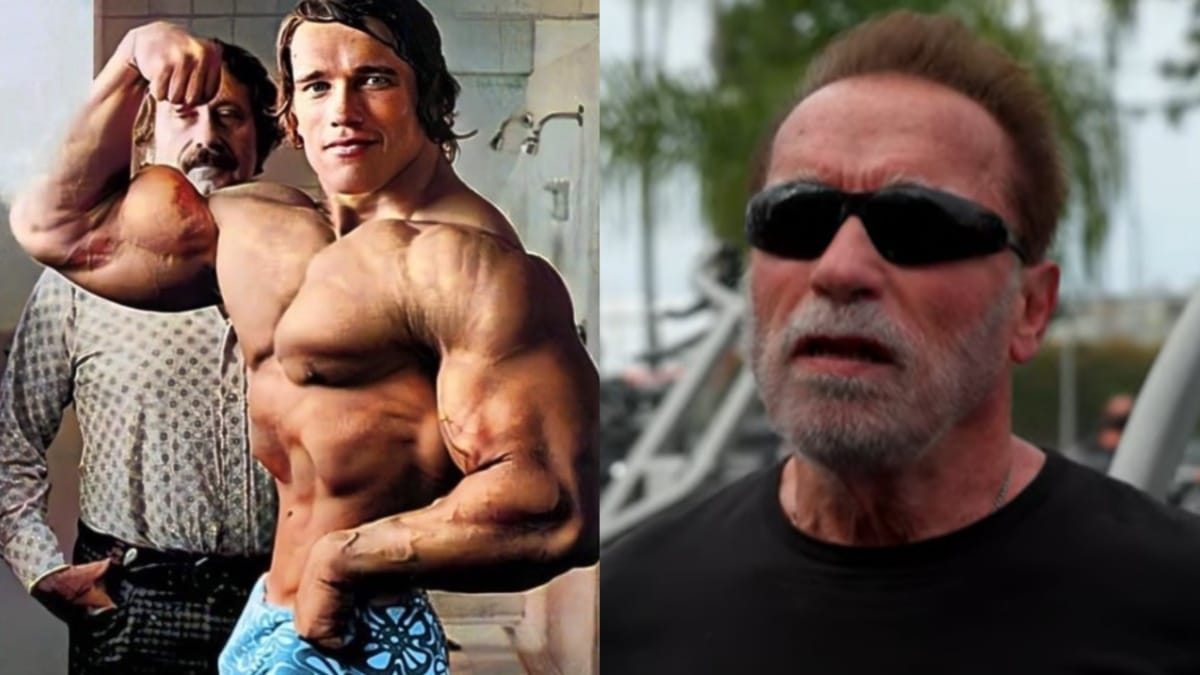
Arnold Schwarzenegger Unveils 2-Compound PED Protocol Used During Prime of Career
Bodybuilding legend Arnold Schwarzenegger has always been honest about using steroids during his career, but he never revealed the exact drugs he took. In a recent Men’s Health interview, that changed as the ‘Austrian Oak’ listed the two-compound cycle he used to win seven Mr. Olympias.
Today, Arnold Schwarzenegger is by far and wide the most popular and visible ambassador of the sport. However, it took hard training, discipline, and consistency to get to where he is. In the 1970s and 1980s, Schwarzenegger was a proven force with a one-of-a-kind physique. His popping biceps and full chest were standout features that helped him climb and claw to the top of the IFBB Pro League.
During Schwarzenegger’s tenure, he was challenged by a handful of icons such as three-time Mr. Olympias Frank Zane and Sergio Oliva. In addition, he competed against Mike Mentzer, who many believe should have defeated Schwarzenegger during his comeback at the controversial 1980 Mr. Olympia competition. Looking back on a decorated career, Schwarzenegger said his toughest battle came against Oliva.
Schwarzenegger managed to claim a total of seven Mr. Olympia titles just shy of the joint record set years later by eight-time winners Lee Haney and Ronnie Coleman. Decades separated from his retirement, fans and bodybuilders alike have wondered about Arnold’s steroid cycles.
‘The Blond Myth’ Lee Priest discussed the topic once and mentioned Dianabol was Schwarzenegger’s favorite compound. Priest explained that times were different back when Schwarzenegger would compete and said athletes didn’t have ‘set rules’ about steroid protocols. Following years of speculation, Schwarzenegger has shared his Olympia-winning cycle, which consisted of Dianabol and testosterone.
Arnold Schwarzenegger Shares Steroid Cycle Used During Career, Says Sport Is Unsafe: ‘People Are Dying’
According to Schwarzenegger, he used 15 milligrams of Dianabol daily and 100 milligrams of testosterone a week.
“One hundred milligrams a week and then three dianabol a day. So that was 15 milligrams,” Arnold Schwarzenegger said describing his steroid use.
Testosterone replacement therapy (TRT) is a popular treatment athletes use for muscle maintenance, strength, and a variety of other benefits that aid low testosterone. From powerlifting sensation Larry Wheels to Jay Cutler, TRT continues to have a major impact on athletes’ health in 2023.
With a sudden spike in bodybuilding deaths over the past three years, Schwarzenegger stressed that people are listening to ‘charlatans’ and ‘don’t know what the ‘fuc* they’re doing.’ He added that people today are more obsessed with shortcuts than consistent hard work.
“Bodybuilding always, always was considered a safe sport,” he shared. “But now, it’s not. Now people are dying. They’re dying because of overdoses of drugs, and they don’t know what the fuck they’re doing. And they’re listening to charlatans. If I want to go and get medical advice from a legitimate doctor, I go to UCLA, or I go to the Cleveland Clinic.”
“Don’t go there,” he says of steroids. “Yes, we are at a time now where we always look for the easy way to make money, the fast way to get rich, the easy way to be an influencer. Any time you abuse the body, you’re going to regret it later on. I want young people to know that I have seen people getting kidney transplants, and suffering tremendously from it,” Schwarzenegger told Men’s Health.
This isn’t the first time Arnold Schwarzenegger has shined a spotlight on the dangers present in bodybuilding. In 2021, Schwarzenegger said Open bodybuilding is dangerous and that Classic Physique was the future. Given the rate at which athletes were dying, Schwarzenegger was candid, highlighting that bodybuilding had become the most dangerous sport in the world.
Following the 2022 Mr. Olympia show, Schwarzenegger said the Classic Physique Olympia winner should be crowned the Mr. Olympia title instead of the Open class champion. Some fans agree with Schwarzenegger, as four-time Classic Physique Olympia Chris Bumstead‘s popularity continues to swell.
RELATED: Arnold Schwarzenegger Shares 5-Min No-Equipment Workout of the Week: ‘Get Your Blood Flowing’
Schwarzenegger’s physique, a mix of aesthetics, muscularity, and mass, still impresses bodybuilding fans today. He achieved it with a minimal steroid cycle that did not include growth hormone, which illustrates how far ahead he was during his prime.
Published: 24 May, 2023 | 1:58 PM EDT
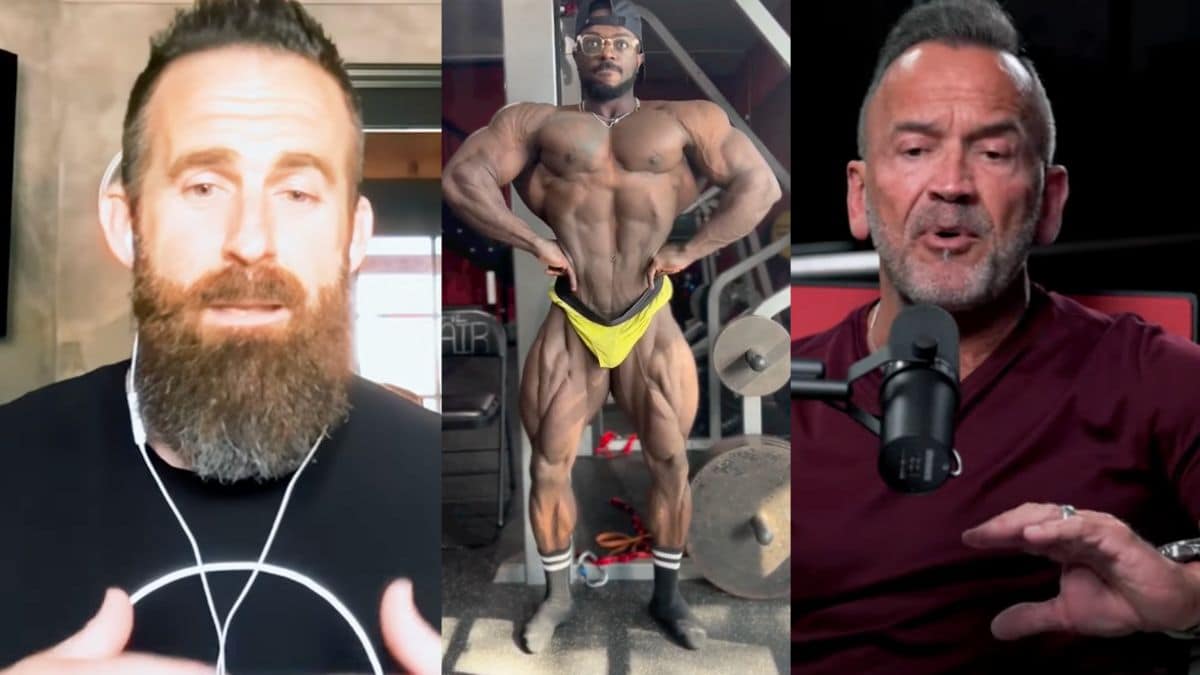
Joe Bennett & Lee Labrada Share ‘Guidances’ on Hypertrophy, Genetics, and Injury Prevention
Fitness and bodybuilding coach Joe Bennett has acquired a wealth of knowledge over the years, having trained athletes and Hollywood actors like Dave Bautista. In a recent episode of the Lee Labrada Show, Bennett joined Labrada for a detailed discussion about genetics, exercise selection, and injury prevention.
As a bodybuilding veteran, Lee Labrada left a memorable impact on the Men’s Open division, where he used aesthetics, conditioning, and artistic posing to assert himself as one of the best. Even though he was unable to procure a Mr. Olympia title, Labrada was a perennial contender who placed in the top four at the show for seven consecutive years.
Joe Bennett on the other hand, is a decorated trainer, who helped shape several top-tier IFBB Pro League bodybuilders, some of which include the inaugural Women’s Physique Olympia Dana Linn-Bailey, two-time Arnold Classic winner Terrence Ruffin, and German star Urs Kalecinski.
With their combined knowledge, Labrada and Bennett tackled ‘common sense’ practices in bodybuilding today. In addition, they explained the role genetics play when determining which exercises are best suited for certain individuals.
Joe Bennett, Lee Labrada on Exercise Selection & Full Range of Motion: ‘Not Everyone Has Short Femurs Like Tom Platz’
Bennett believes common sense guidelines must be established to build muscle, like developing an ‘internal response’ while training.
“If you’re anyone outside of someone whose sport is lifting weights then you have to realize the whole thing of weight lifting is to have an internal response. There should be some common sense guidances, I’m choosing this exercise to train my chest, train my shoulders, I should feel it in my chest, I should feel it the right way in my shoulders.
So, if I’m doing an exercise that’s a chest exercise and all I feel is my triceps and shoulders, it’s not a chest exercise for you. Just because it’s written in a book for chest exercise, but your body doesn’t understand that,” said Joe Bennett.
He stressed that genetics factor into training technique.
“It’s [genetics] a pretty big thing. I always joke with people, in the industry, there’s trainers that will really sell things that are customized. Obviously, there’s a big component of truth there because different exercises work for different people.
At the same time, if I have somebody coming in and it’s day 1, I have some ideas, like I know these are going to be some good options to start with right? Then, obviously, even if this works for 90% of people, I have to realize that it might not benefit this one person if they’re that 10% or even if they’re that 1%, whatever it is. So, there’s definitely some differences.”
Bennett shared that Tom Platz had short femurs which enabled him to achieve a better range of motion when performing squats.
“Limb length, I mean some people, again, you look at someone like Tom Platz and everyone looks how he squats, and that’s what everybody thinks about when they want to squat. There’s people that because of their proportions that they have instead of having Tom Platz’s little tiny short femurs, they’ve got these long legs and they might have a short torso. They literally are like an accordion when they try to squat. Everything folds as opposed to there being a nice pretty straight up and down thing,” Bennett said.
“Between limb length, there is some structural differences if we look at different joints, how your shoulder sits in the side of the scapula, how your femur fits in your pelvis. There are differences person to person. There are for sure people that are built better for things than others. There was a reason Tom Platz could squat what he could. The world record bench pressers are built for bench pressing. It’s the same as a lot of things in life. It’s really important that there is some degree of customizing.”
Bennett on Injury Prevention: ‘Physical, Emotional, Mental Stress Play Into It’
As far as injuries are concerned, Bennett says if an exercise causes pain on a consistent basis, then it should be replaced with a different movement.
“That’s the joke amongst strength coaches [just don’t injure your athlete]. You’ve already got the genetic elite, they’ll do almost anything to put on muscle, just make sure they’re doing things – where again, you’re building them up, get them bigger, stronger, more resilient, because they’re likely to get injured on the field.”
Lastly, Bennett highlighted that injuries often occur when people are dealing with physical or psychological stress.
“There are lots of contributing factors, recovery goes into it, how people are when they come into the gym. We think about physical stress, but emotional stress, mental stress, all that can play into it. If I had to say the biggest thing, it honestly is poor exercise selection. Most injuries and there are some exceptions, but most injuries in the bodybuilding world, it’s repetitive stuff. People have signs where something starts to feel uncomfortable.”
“Most of those things [where people work through pain] as you and I both know, if you start to get something and you don’t change something and you keep going, it only goes one direction, it only gets worse.”
In addition to Bailey, Ruffin, and Kalecinski, Joe Bennett recently partnered with Brett Wilkin for an intense back workout. The ‘Hypertrophy Coach’ led Wilkin through the training session and offered up some useful tips. Wilkin is already qualified for the 2023 Mr. Olympia show after claiming gold at last year’s Bigman Weekend Pro contest.
Injury prevention and exercise selection remain widely discussed topics in bodybuilding. Given their expertise, Labrada and Bennett hope to inspire safer practices in the gym, not just for athletes but for people of all fitness levels.
RELATED: 10 Best Bodybuilding Coaches with Proven Track Records
You can watch The Lee Labrada Show on YouTube below:
Published: 24 May, 2023 | 12:11 PM EDT
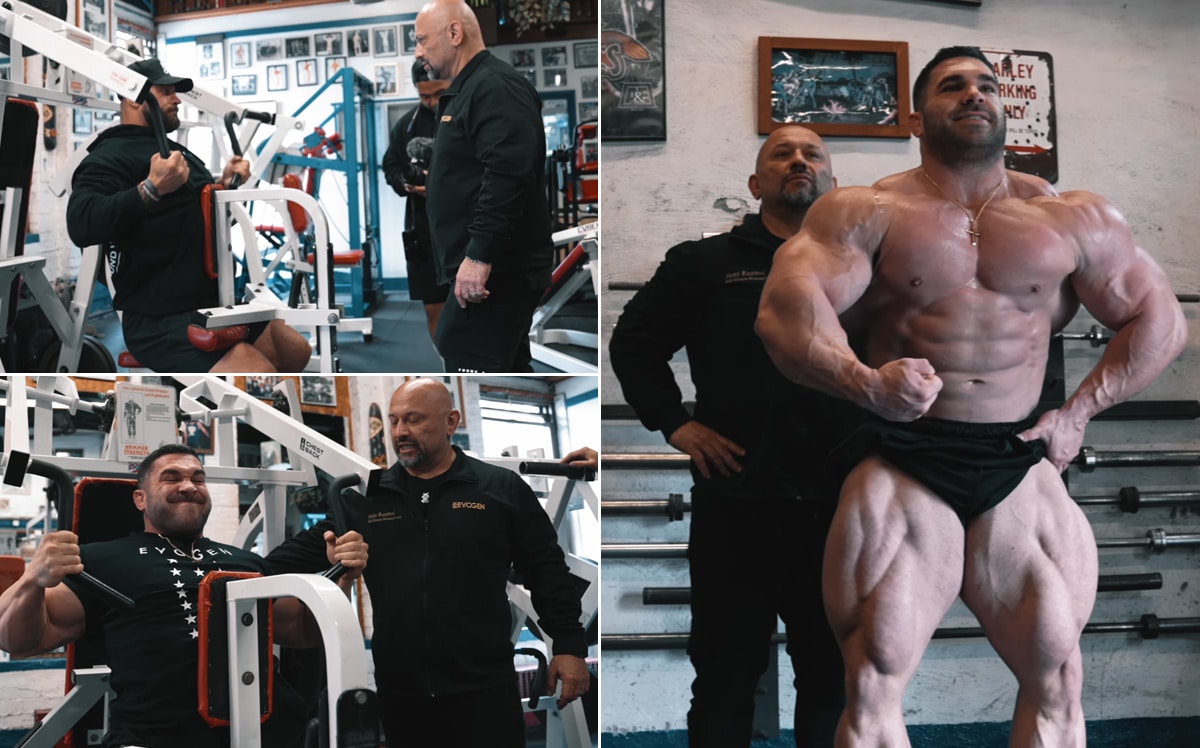
Derek Lunsford Goes Through Title-Worthy Back Workout With Chris Bumstead
Bodybuilders Derek Lunsford and Chris Bumstead are in the absolute prime of their physical and mental abilities. The duo are working hard to extend their competitive legacy under famed bodybuilding coach Hany Rambod’s guidance. Recently, they went through an off-season back workout to get ready for this year’s conquests.
Lunsford is an American professional bodybuilder that made a switch to the IFBB Pro League’s Men’s Open division in 2022. Prior to that, he competed in the 212 division and achieved the ultimate goal of winning the 212 Olympia title in 2021. However, the 30-year-old grew out of the division. Upon receiving the special invitation to compete in the Men’s Open division at the 2022 Olympia, the former 212 kingpin got in the gym to put in the work.
At 2022 Olympia, Lunsford dominated the stage and surged past elite competitors like former 2-time Mr. Olympia Mamdouh ‘Big Ramy’ Elssbiay, Nick Walker and Samson Dauda to secure a runner-up finish.
Lunsford’s training partner in this session, Chris Bumstead, is a Canadian IFBB Pro bodybuilder and arguably the most famous active bodybuilder in the world. CBum has established himself as the most successful competitor in the history of Classic Physique division with four consecutive Olympia wins. Since snatching the title from former champ Breon Ansley at the 2019 Olympia, CBum has fended off fierce competition to retain it at the 2020, 2021 and 2022 Olympia.
Both men have handed the reins of their training to famed coach Hany Rambod who is their head coach. Recently, they trained back under his guidance and the video of this session was posted on Lunsford’s personal YouTube channel. So without much ado, let’s see how Hany Rambod guided his pupils through the workout.
Derek Lunsford and Chris Bumstead go through the back workout
Derek Lunsford had to guest pose at the 2023 Pittsburgh Pro on the day of this back workout. As a result, he kept the workout relatively light and did not go overly heavy.
“Not gonna go crazy today because we’re doing the guest posing tonight. It’s not like we’re changing anything as far as the diet or workout… Nothing like that. We’re just gonna go in there and have fun tonight but also not trying to fill the stomach up a lot…” Lunsford said.
Iso-lateral Lat Pulldown
Rambod instructed CBum and Lunsford to start the training session with lat pulldown on an iso-lateral plate-loaded machine. He suggested using a reverse grip for the first few sets and switching over to the neutral grip for the subsequent sets.
Lat Pulldowns primarily target the latissimus dorsi and the upper back muscles. It is a great way to increase the back width. According to an ACE sponsored study, lat pulldowns, along with seated cable rows, are the second best exercise for lats after pull-ups and chin-ups (1). Lunsford and CBum pushed through a few sets of lat pulldowns to get things started and took to the next exercise.
T-Bar Rows
Lunsford and Bumstead then moved over to this classic back building exercise and cranked out a few sets. Bodybuilding experts swear by the muscle and strength building benefits of this movement. T-bar rows work the majority of the muscles in the upper and the middle back. This includes latissimus dorsi, trapezius, teres major, teres minor, posterior deltoid and infraspinatus muscles. Additionally, T-bar rows also work the brachialis and pectoralis major muscles as well.
Hany Rambod shed light on some of the common technical errors people make while doing the exercise and stated:
“What you’ve got to make sure is you’re pulling all the way… A lot of people just end up doing a really weird version of a shrug when they use heavy weight. Make sure that you’re being able to bring your elbows back and you’ll be able to contract your last to some degree. If you end up using too much weight, all you’re doing is a shrug.”
The bodybuilder duo performed some solid sets of T-bar rows with perfect technique before taking up the next exercise.
Seated Cable Rows
Seated cable rows not only help with muscle and strength building but also help improve the posture. CBum and Lunsford annihilated a few sets of seated cable rows under Coach Rambod’s watchful eye and took to the next exercise.
Incline Dumbbell Rows
This free weight exercise served as the finisher to Lunsford and Bumstead’s back workout. Incline dumbbell rows help emphasize more on the back muscles as the setup takes the need for muscle stabilization out of equation (2). The duo performed this exercise to stimulate the back muscles further and called it a day in the gym.
Overall, the workout included:
Derek Lunsford’s physique looked stage ready and massively improved during guest posing at the 2023 Pittsburgh Pro. Experts suggest that he can beat reigning Mr. Olympia Hadi Choopan if he brings fuller pecs and quads. Looking at his progress in the gym, it does seem like he is a step closer to the goal for sure.
Watch Derek Lunsford and Chris Bumstead go through the back workout here, courtesy of Derek Lunsford’s personal YouTube channel:
Reference
What is the Best Back Exercise? (ACE Sponsored Research)
(Authors – Holly Edelburgh, John P. Porcari, Clayton Camic, Attila Kovacs, Carl Foster and Daniel J. Green)
14 Best Back Exercises to Build the Perfect Back
(Author – Jeremy Ethier)
Published: 24 May, 2023 | 3:28 AM EDT
Quinton Eriya Shares Near 3,500-Calorie Bulking Cheat Meal in 2023 Off-Season
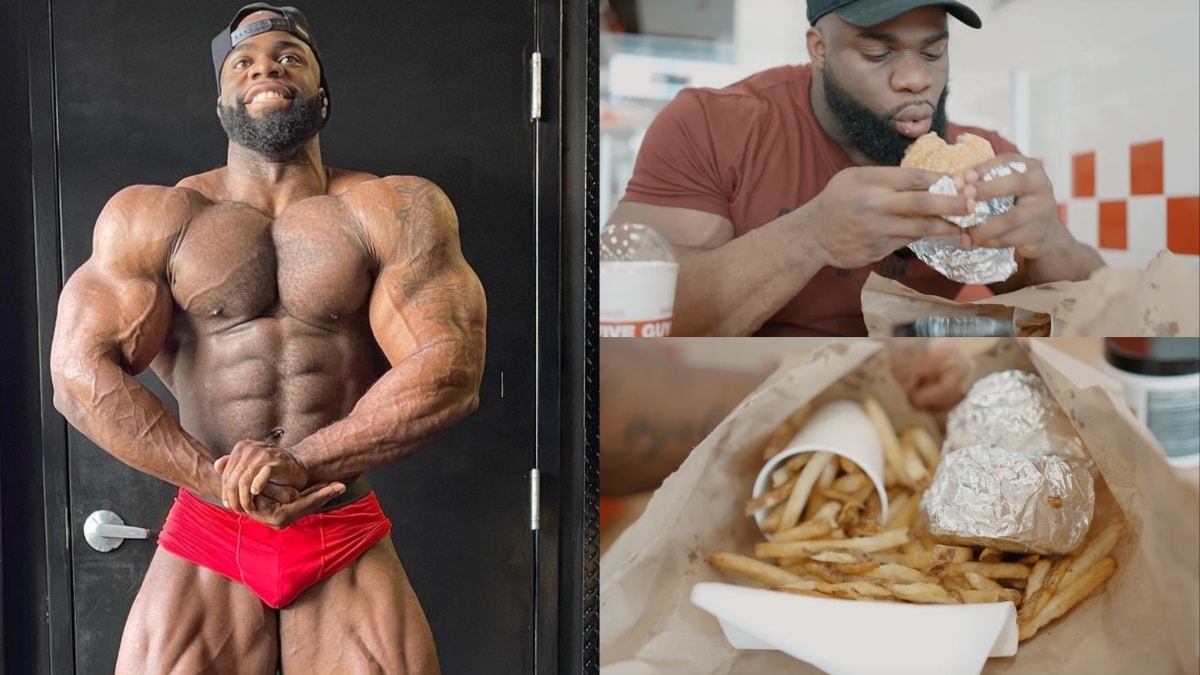
Canadian bodybuilder Quinton Eriya emerged as a promising Men’s Open contender with a strong season in 2019. In a recent YouTube video, Eriya consumed a massive helping of about 3,500 calories. In addition, he mentioned that he implements cheat meals like this one five times per week in the 2023 off-season.
Quinton Eriya boasts a physique with impressive muscle mass, shape, and genetics along with a tight waist. He made his IFBB Pro debut at the 2019 Toronto Pro Supershow and finished fifth. He followed up with a sixth-place finish at the 2019 Vancouver Pro. In 2020, Eriya made his way to the New York Pro and took eighth in a competitive lineup.
Eriya left the fans stunned with a crazy aesthetic physique update in Nov. 2021. He turned in a strong performance at the Romania Muscle Fest Pro and placed fifth. He declared his ambitions to earn an invite to the 2022 Mr. Olympia competition with a win at the Toronto Pro Supershow. Ultimately, he narrowly missed out on the top prize to Joel Thomas and took silver in Canada.
Men’s Open standout Nick Walker joined forces with Eriya for a brutal back workout in Jan. 2022. Eriya revealed he enjoyed using high reps for every body part other than the chest while performing the training session with the former Arnold Classic winner.
Last year, Quinton Eriya displayed significant improvements to his physique at the 2022 Tampa Pro. He scored bronze behind former 212 Olympia champion Kamal Elgargni and winner Akim Williams. He was last seen in action at the 2022 Texas Pro, where he placed fifth. Following the event, Eriya received major praise from Mark Anthony and bodybuilding legend Jay Cutler. Cutler lauded the rising athlete as a potential Olympia title contender.
RELATED: Bulking Calculator to help your weight gain / bulking journey!
Quinton Eriya destroys nearly 3,500 cals in a cheat meal
In a recent YouTube video, Quinton Eriya devoured about 3,500 calories in a single cheat meal and says he consumes similar helpings five times a week on the days he works out.
“I have five cheat meals or free meals, whatever you wanna call them, I have five of them every week and they’re only on training days,” said Eriya. “So, normally I have it for my fifth meal. However, sometimes I swap it out just depending on what I have going on during the day.”
He ate the following items along with some ketchup:
2 hamburgers = 1,680 cals
Regular fries = 960 cals
Chocolate Oreo Milkshake = 670 cals
Total = 3,310 calories.
Quinton Eriya and Nick Walker collaborated for a grueling push-day workout a month ago. Walker joined the budding talent during his trip to Canada and smashed a challenging workout targeting the chest, delts, and triceps.
Eriya took to the stage with Walker in a guest-posing appearance at the 2023 Pure Muscle Championships last month. The duo delivered a memorable pose down with Down syndrome bodybuilder Kyle Landi. Based on Eriya’s latest offering, it appears he’s focused on making the most of the off-season as he eyes his ticket to the Mr. Olympia contest.
You can watch the full video below:
RELATED: Liver King: ‘If The Rock Can Have a F*cking Mammoth Cheat Day Every Week, So Can Liver King’
Published: 24 May, 2023 | 2:40 AM EDT
Phil Heath ‘Optimizing Health’ w/Recovery & Medications: ‘It’s Putting Me in The Best Position to Win’
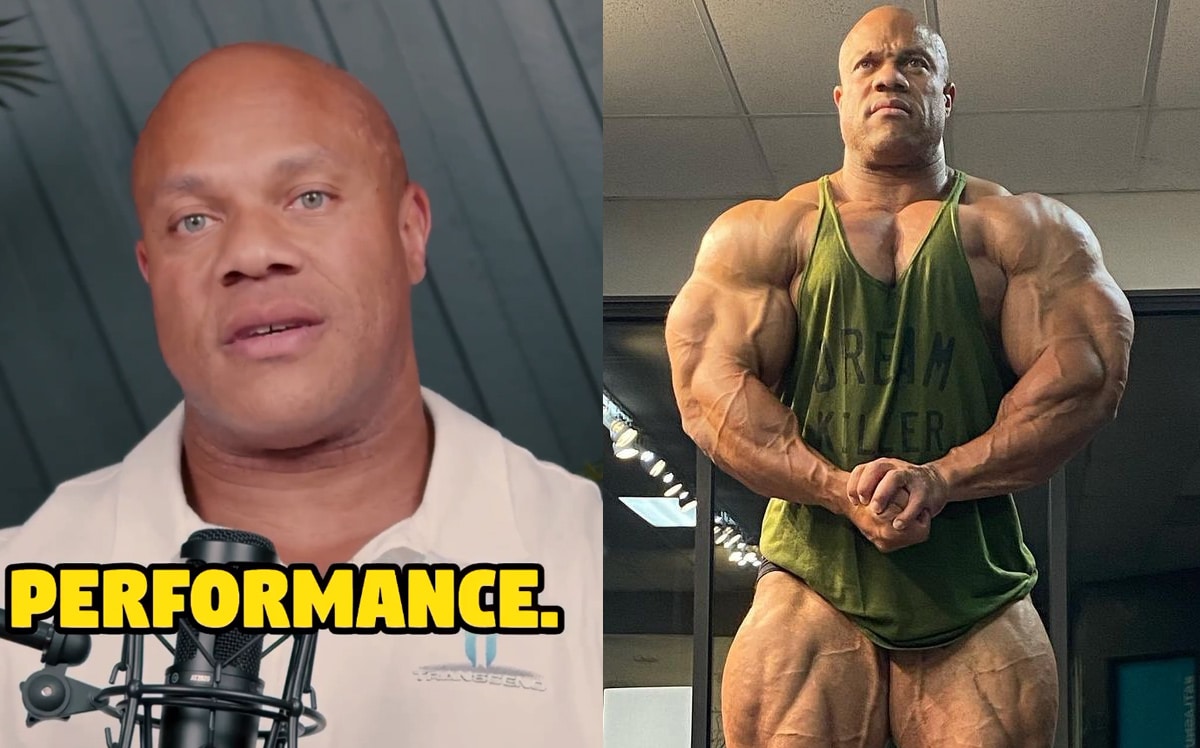
Bodybuilding legend Phil Heath has maintained a muscle-bound physique since stepping away from the stage in 2020. In a recent Instagram reel, Heath shared that his training frequency increased and his medication intake has put him in ‘the best position to win’ moving forward.
“Optimizing your health goes a long way. The goal is to leave life changing and lifelong lasting effects.” Phil Heath shared.
Heath commanded the biggest stages in the sport with authority, having claimed a total of seven consecutive Mr. Olympia titles (2011-2017). At that time, ‘The Gift’ proved to be an incredible force in the Men’s Open class, where he regularly pushed contenders like his arch-rival Kai Greene, the late Shawn Rhoden, and German standout Dennis Wolf.
Late last year, the 2023 Masters Olympia contest was revived and again added to the IFBB Pro League bodybuilding schedule. After an 11-year absence, the show will return August 25-27 in Cluj Napoca, Romania. While fans had hoped for Heath or Jay Cutler’s return, they have both publicly shot down the idea.
In a Voice of Bodybuilding appearance with Bob Cicherillo, Heath underlined that $1 million cash would incentivize his comeback. Considering Heath’s age and record of accomplishments, he believes fans would have called him out if he decided to compete at 2023 Masters Olympia. Nevertheless, Heath’s focus is on health and longevity while he’s away from the stage.
Phil Heath ‘Feeling Fresh,’ Talks Achieving ‘Peak Performance with Recovery & Medications
Even though he no longer trains seven days a week, Heath has retained adequate muscle mass thanks to ‘right types of medications.’
“Even without me training seven days a week, I’ve been able to maintain good muscle mass and that’s because I’ve done things the right way throughout my career. But I’ve made sure I was able to apply the right type of medications for my goals and I am in the gym a little bit more now and I will be more in the upcoming weeks and my body feels really really fresh.”
In addition, Heath stressed that recovery, modalities, and medications are keys to optimizing peak performance and health.
“I know that with Transcend they’re putting me in the best position to win. That’s what I always preached my entire career, you have to train smart, you have to train hard, you have to have fun, but you have to have the recovery, modalities, and the medications to help you stay at your peak performance,” said Phil Heath.
RELATED: Best Speed Up Recovery After Training
Phil’s predecessor, Jay Cutler, has teased a Heath comeback on a number of occasions. According to Jay, Heath could ‘do some damage’ at this year’s Mr. Olympia show. Assuming Heath entered this contest, he would face off against two of his teammates – Derek Lunsford and champion Hadi Choopan, who are both led by the legend’s former coach Hany Rambod.
One of the last time fans heard from Heath, he offered a definitive answer on whether he would make a play at the upcoming 2023 Olympia competition. While he continues to make improvements to his build at 255 pounds, Heath ruled out the possibility of competing later this year in a previous Instagram post.
Phil Heath’s continued dedication to health and fitness puts him in the best position possible to compete at a high level, whether he returns to bodybuilding or not.
RELATED: ‘It’s a 3-Headed Monster’: Phil Heath Reveals His Top Picks for 2023 Mr. Olympia
Published: 23 May, 2023 | 6:55 PM EDT