
 All Posts By Presser
Exposing The Biggest Training And Nutrition Myths In Bodybuilding
The Biggest Training and Nutrition Myths
The fitness trend has been on the rise around the world. This has also given a boost to the number of broscientists eagerly waiting to spread their knowledge. These pseudo bodybuilders are responsible for most of the myths you hear about training and nutrition in your gym.
It is important you don’t listen to their advice. You might not have someone who could put you on the right path when it comes to your diet and training. So, we have put together a list of the biggest training and nutrition myths you should avoid following.
Biggest Training Myths
1. You Should Always Train To Failure
If only we got a nickel for every time we heard someone say this in a gym. The most common myth regarding training is you need to be hitting failure in every set if you want to build muscle mass. This is complete BS!
Training to failure every time can actually have the opposite results of what you desire. Muscle exhaustion in every set can lead to overtraining which in turn can halt your growth. Overtraining can also negatively impact your immune system.
2. Start Your Workout With Heavy Compound Movements
Many people believe it is better to start your workouts with heavy multi-joint exercises like squats, bench press, etc. The reason they give for this is, you are the strongest at the beginning of your workouts and hence can lift more weights.
On the other hand, your body doesn’t know how much weight you’re lifting. It is your ego which pushes you to lift more. You need to break your muscle tissues in order for them to grow bigger. The weight you lift for it doesn’t matter.
You should start your workouts with isolation exercises, so you fatigue your muscles early. Doing this will help you get the same results lifting relatively light as you would if you were lifting heavy. This also dramatically reduces the chances of an injury.
3. You Can Spot Reduce The Fat On Your Belly
The reason most people do crunches and ab exercises is that they want to melt off the fat from their midriffs. Hardly do they realize this won’t do anything for them. Spot reduction whether in the case of abs, under arms or thighs, doesn’t work.
You need to take an overall approach to your training. If you want to lose weight, controlling your diet and doing cardio will give you the best results. Spot reduction is only possible if you go for liposuction.
Biggest Nutrition Myths
1. You Can’t Gain Muscle Without A Protein Supplement
While it is true protein is the most important macronutrient when it comes to gaining muscle mass, you don’t need a protein powder to help you with your goals. If you consume enough protein from your natural diet, you don’t need a protein supplement.
If your goal is to build muscle, you should be taking two gram of protein per pound of body weight daily. For eg- you should be consuming 200 gram of protein every day if your body weight is 100lbs.
2. Eating Fats Make You Fat
Many people think eating foods which contain fats make them gain weight. Due to this, they completely eliminate fats from their diet. Removing fats from your diet can cause bodily dysfunctions as it is an essential macronutrient needed by your body.
Fats help in storing energy in your body which you can utilize when your body is running short of carbohydrates. Fats also help with lubricating your joints, digesting nutrients and maintaining your body temperature.
3. You Should Consume Protein First Thing In The Morning
There is a myth that consuming protein first thing in the morning will help with muscle gain. The logic they give for this is since you’re on an empty stomach, your muscles get a rich and pure supply of protein. This is as far away from the truth as it can be.
If you consume protein on waking up, your body will start using it as a source of fuel for the entire day. If you want to lose weight and build muscle, you should start your day with fats. Doing this will help you burn fat throughout the day even while you’re resting.
Which, according to you, are the biggest training and nutrition myths in bodybuilding?
Let us know in the comments below. Also, be sure to follow Generation Iron on Facebook and Twitter.

How Your Favorite Bodybuilders Celebrated Thanksgiving
Let’s take a look at how some of the top bodybuilders in the world celebrated Thanksgiving!
The sport of bodybuilding requires some serious dedication and support. Many athletes credit their success to their families back at home. Around this time of year is when everyone can truly take the time to acknowledge and celebrate.
With Thanksgiving behind us, that means Christmas and New Year’s are right around the corner. Before we move into the month of December, let’s take a look at how some of the top bodybuilders in the sport celebrated Thanksgiving.
Brandon Curry
Brandon Curry has built one of the best physiques in the sport today. In 2019, Curry rose to the top by winning both the Arnold Classic and Olympia. In each of the last two years, Curry has finished as the runner-up during the most important competition of the year. Bodybuilders can certainly put down an impressive amount of food throughout the day, which makes Thanksgiving even better. Curry spent the holiday in Murfreesboro, TN, where he admitted that his wife, Brandy, does the cooking.
Terrence Ruffin
It ws quite the year for Terrence Ruffin. He was able to get over the hump and win the Arnold Classic before finishing second to Chris Bumstead in the Olympia once again. The Classic Physique division is one that is beginning to take over and have some of the best competitors in the world. Ruffin is right at the top. On Thanksgiving Day, Ruffin celebrated in his home state of Alabama surrounded by family.
Hunter Labrada
Hunter Labrada continues to be one of the fastest-rising stars in bodybuilding. This was proven with his fourth-place finish during this year’s Olympia. He was seen celebrating with his daughter on stage after winning the Chicago Pro back in July and that is exactly how he spent the holiday at home with his family.
Regan Grimes
Regan Grimes has been on a roll since hiring a new trainer following the Olympia. He already earned qualification to the 2022 show with a victory at the KO Pro Egypt. Grimes is no stranger to traveling in order to build the best physique he can. Grimes has been seen around the world training in different areas and Thanksgiving was no different. He spent the holiday in Cancun but continued to focus on cardio, training, and diet.
Andrea Shaw
The reigning two-time Ms. Olympia champion made sure to remember those who we have lost in bodybuilding this year. Shaw posted a picture with the word “thankful” displayed in front of candles reminding everyone to keep those in mind. Shaw specifically tagged George Peterson, Shawn Rhoden, and Jennifer Hernandez.
Ronnie Coleman
The dedication that we mentioned above, there might not be a better example than Ronnie Coleman. The eight-time Olympia champion was at the top of the sport for over a decade in his prime. At 57 years old, Coleman is still crushing the gym and working to improve his physique. Do you think it would be any different on Thanksgiving?
Jennifer Dorie
The Bikini division has turned into one of the biggest in bodybuilding. This was on display during the Olympia with many competitors from all over the world taking the stage. Jennifer Dorie had an impressive year by winning the Arnold Classic followed by the Olympia just two weeks later. On her Instagram story on Thursday, Dorie shared all of the activities done to celebrate. This includes a big meal and decorating gingerbread houses.
Juan Morel
Juan Morel began weight training at 22 years old and quickly gained a passion for bodybuilding. During his career, he put together victories at some big-time shows such as the New York Pro and Toronto Pro. On Thanksgiving, Morel spent the day with family.
Whitney Jones
Whitney Jones regained her Olympia title this year after finishing third in 2020. Jones is a three-time Olympia Fitness champion with plenty more to give. She has a chance to win once again in 2022 and will be one of the favorites on stage. On Thanksgiving, Jones shared a picture in the middle of her two sons. She took the time to give thanks and giving a call-to-action for all to enjoy time with family.
Lauralie Chapados
There is a clear top-tier in the Bikini division and Lauralie Chapados is part of it. She proved it by finishing at the runner-up to Dorie during the Olympia. Chapados continues to improve each time she steps on stage. This year, it was her very first time celebrating Thanksgiving, which she shared in her Instagram story. Chapados spent the day at the house of the family of her boyfriend, Aldo Paredes. He also took to Instagram to shared that it was Chapados’ first Thanksgiving but also the first time she is tasting his mother’s food.
For more news and updates, follow Generation Iron on Facebook, Twitter, and Instagram.

Talking Huge With Craig Golias | EP 20: Fake Deaths & What Truly Defines Natural Bodybuilding?
Craig Golias discusses the misreported death of Victor Richards and his belief that SARMs users should still be considered natural athletes.
Welcome to another episode of Talking Huge – a weekly digital series in which Craig Golias talks in-depth with Vlad Yudin on the latest trending topics in bodybuilding. Raw, honest, and uncut – Craig Golias shares his opinions on all things bodybuilding. In this episode, Craig Golias reacts to the death… and then not death of legendary bodybuilder Victor Richards and also discusses where the line is drawn regarding substances in natural bodybuilding.
The past week we took a break from Talking Huge due to Craig Golias coming down with an illness (he’s okay). So we’re picking up a week later to catch up on all of the latest topics from the past two weeks. The two biggest headlines included the misreporting of Victor Richards’ death. A legendary bodybuilder who seemed to have passed away was reported by most news outlets. 24 hours later, those statements were retracted after confirmation from a family member that he was alive and well.
Craig Golias also takes a look at the Natural Olympia 2021 that happened just last weekend on November 13th. This sparks a discussion as to what truly defines a natural bodybuilder. Is it simply illegal substances? Or do other legal supplements count as “enhancing?” Not surprisingly, Craig has a rather unfiltered take. Let’s jump into it in a new episode of Talking Huge.
One Less Death In The Sport Of Bodybuilding
Two weeks ago, it was announced (including by Generation Iron) that Victor Richards had passed away. This was devastating news coming off the heels of Shawn Rhoden’s death as well as George Peterson’s passing. Ultimately, and happily, it turns out that Richards was not dead at all. Perhaps due to trigger happy reporting during a very tumultuous time for health in bodybuilding – a rumor seemingly was confirmed by many industry insiders. In the end, a family member directly confirmed with Generation Iron that the information was false – and that Richards was alive and well.
Craig Golias finds the entire idea of this false death absurd. He doesn’t understand how in any circumstance a person could accidentally think someone is dead. Who made the original statement that caught wind across news outlets? Why did so many close to Richards seem to confirm his death? Was it a prank? Some sort of rival trick to cause harm to Richards and his family? Or perhaps just a complete accident accelerated by the speed of the internet? In any such case, Craig found the entire situation absurd.
What Makes A Natural Bodybuilder?
Craig Golias also touches base with us about the recent Natural Olympia 2021. Craig doesn’t watch natural bodybuilding – so finds that entire subsection of the sport bizarre and confusing. Namely, what truly makes someone natural? What if someone used to be unnatural and then becomes natural? Do they have a pass? Do they still reap benefits from their past use?
Vlad Yudin also mentions that some people consider some supplements “unnatural” such as creatine. Craig Golias finds that idea laughable. In fact, he believes that even SARMs should be considered natural. While the legal reality behind SARMs is a bit murky – Craig thinks that SARMs are as natural as trees sprouting from the ground. He thinks the entire idea behind limiting what is natural and unnatural to be a bit of a joke.
Wrap Up
You can check out the full conversation in the latest episode of Talking Huge above. Theer were far more topics than could be covered in this article – including his regiment when ti comes to keeping track of macros and Craig’s favorite Thanksgiving food. Make sure to check out Talking Huge every week on Friday – only on the Generation Iron Fitness Network!
Kai Greene Leg Workout For Massive Wheels
Kai Greene Leg Workout Routine
Kai Greene is one of the most widely recognized bodybuilders of our time. His mind-blowing physique, inspirational words, incredible artwork, trademark hairdo (and infamous grapefruit video) have earned him fans all over the world.
Kai Greene Stats
Full Name: Kai Greene
Weight
Height
Year Of Birth
317 lbs.
5’8’’
1975
Arms
Chest
Thights
22″
58″
33″
Kai Greene made his Mr. Olympia debut in 2009 and competed in the world’s most prestigious bodybuilding contest until 2014. Kai Greene’s Mr. Olympia track record:
2009 – 4th place
2010 – 7th place
2011 – 3rd place
2012 – 2nd place
2013 – 2nd place
2014 – 2nd place
Related: Is Kai Greene Challenging Phil Heath In Recent Tweet?
For four years in a row (2011-14), Kai Greene came close (but not close enough) to conquering the throne. Some fans consider Greene a part of the “uncrowned Mr. Olympia” club accompanying bodybuilding legends like Flex Wheeler, Kevin Levrone, and Shaun Ray.
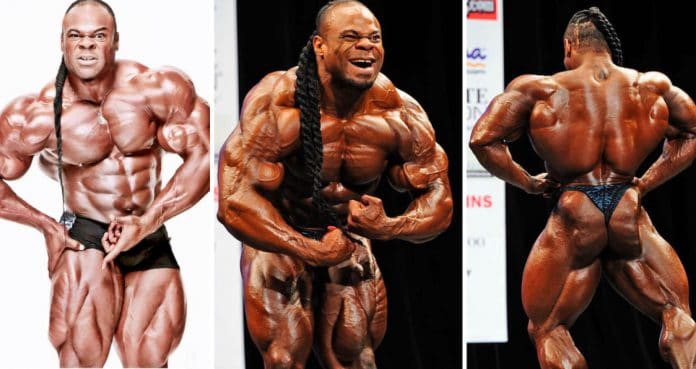
The Predator’s legs are one of the biggest reasons behind his success on stage. Greene’s vastus medialus (quad teardrop) striations are unmatched, hams in perfect symmetry with quads, and his calves have a life of their own.
But before we dive into Kai Greene’s leg workout, let’s get to know him a little better. Shall we?
Also Read: TOP 6 UNCROWNED BODYBUILDERS OF ALL TIME
The Kai Greene Story
Born and raised in Brooklyn, New York, Greene had a tough childhood. After being orphaned at 6-years-old, he spent most of his youth in foster homes.
Throughout his younger years, Kai struggled to find a place in the community. The ensuing feeling of being an outcast turned Greene into a trouble child. His regular misconducts put him at risk of being kicked out from both his school and foster home.
Finding The Anchor
Weight training came as Kai Greene’s saving grace. Greene started training at the age of 13 and used the gym as an escape from all his problems.
Kai’s 7th grade English teacher realized his bodybuilding potential and started encouraging him to compete in teen bodybuilding shows. This little push was all Kai needed to turn his life around.
It did not take Kai Greene too long to realize that he had great bodybuilding genetics. He was growing faster than others his age and was beating kids older than him at bodybuilding competitions.
Check Out: Decoding Genetics: Check If You Have Bodybuilding Genetics
The Predator Was Born
Over the next five years, Kai Greene competed in various unofficial teen bodybuilding shows. Since Greene was bigger and more jacked than other teenagers his age, he dominated every contest he entered.
By the time Mr. Getting It Done turned 19, he had earned his Pro card in a natural bodybuilding federation, the 1994 NGA American Nationals. The early and quick success made Kai realize that he could make it big in bodybuilding, and make it big, he did.
Kai Greene & His Haitus
Since 2014, Kai Greene fans have been complaining about his absence from the Olympia stage. But hardly do they know, this is not the first time Kai has taken a break from competing.
Kai’s first show as an IFBB Pro was the 1999 World Championships in Slovakia. Although Greene placed 4th, he was not satisfied with his performance.
Determined to work on his weaknesses and sculpt one of the greatest physiques of all time, Kai Greene went back to the drawing board and took four years away from the competitive circuit.
Related: Kai Greene Meets With Universal Execs During Olympia Week
Kai Greene Leg Workout
Because of his size and appearance, many people expect Kai Greene’s workouts to consist of lifting heavy, grunting, and cursing throughout the workout. But, the reality is different.
Kai Greene Workout Principles
It does not matter if Kai is training legs, arms, or back. He swears by the following training principles:
1. Form Is King
Let’s do an activity. It will be worth it, we promise.
Set a five-minute timer, log onto YouTube, and watch (at 2X speed) as many Kai Greene training videos as you can.
Now here is what you need to do – note down every time Kai compromises on his form in favor of lifting heavy. At the end of the five minutes, you will probably have – zero entries.
“The weight is a tool. Do you focus on the hammer or the nail? You better focus on the thing you’re trying to hit.”
2. Mind-Muscle Connection
If you see Kai Greene pose, you would know that he can move each fiber in his body at will. The control he has over his muscles is incredible. Kai’s movements are precise, contractions are hard, and each rep is harmonious with the next.
Bodybuilding is not about lifting as heavy as you can. To sculpt your dream body, you need to contract your muscles and visualize your goal physique with every rep to ensure maximum muscle fiber recruitment.
This technique was first made famous by Arnold Schwarzenegger. If you do not feel a muscle pump by the end of an exercise, you would be better off dropping the weight (and your ego) and trying again.
Next Read: The Importance of Mind-Muscle Connection To See Huge Gains
3. Warm-Up
Kai Greene spends 15-20 minutes warming up before every workout. Benefits of warming up include:
Improves flexibility.
Enhances performance.
Less muscle tension and pain.
Improved range of motion.
Increased blood flow and oxygen.
Lower risk of injury.
Mr. Getting It Done believes that his relatively long warm-up routine gets him in the right mindset to train and improves his focus. According to him, he gets more alert, aware, and his neurological connections get sharper.
Related: Follow This Insane Pro Warm-Up Routine For Ultimate Gains
4. Volume is Key
The Predator uses a lot of sets and reps in his workouts. He does not leave the gym unless he has annihilated his muscles. You will be doing up to four sets of eight different exercises and completing 12-20 reps in each, so get ready for the Kai Greene leg workout.
5. Take Your Time
Take your focus off the clock and put it where it should be – on your lower body. You are not in a race against time here. Take as long as you need between sets. Do not begin the next set until you are properly rested.
Kai Greene Leg Training Routine
Kai Greene’s monster truck wheels are a result of years of hard work and consistency. His leg workouts include a combination of advanced training principles and a variety of exercises to train his lower body from different angles.
The Predator’s legs are one of his strengths, but it was not always this way. He has been training for over 20 years with a focus on sculpting the perfect pair of wheels. Greene is presently working on adding more detail to his upper legs and making them rounder.
1. Superset
Glute Kick-Back: 4 sets 20 reps
Hip Abductor: 4 sets 20 reps
Kai Greene trains in a specific order that addresses body parts from weakest to strongest. He believes that it helps him build better muscular symmetry.
Greene starts his leg workouts with glutes and then transitions to training his calves, then hams because, according to him, that is the order of needed improvement. He trains his quads in the end because they are superior to other parts of his legs.
2. Superset
Standing Calf Raise: 4 sets 20 reps
Seated Calf Raise: 4 sets 20 reps
There are no accessory muscles on Mr. Getting It Done’s training program. Kai performs four sets each of standing and seated calf raises. While the standing variation trains the gastrocnemius, seated calf raises are optimal for training the soleus muscle.
Kai Greene uses the standing calf raise machine for the first leg of the superset. If you do not have access to a standing calf raise machine at your gym, you could use a smith machine with an aerobic stepper or a leg press machine for the exercise.
While performing calf exercises, you need to make sure you are following a full range of motion. Your heels should only be a couple of inches away from the floor at the bottom of the movement. On the other hand, at the top of the movement, you should look like a ballerina on her toes.
Related: 10 Reasons Why You’ll Never Have Big Calves
3. Superset
Jefferson Squat: 4 sets 20 reps
Hip Adductor: 4 sets 20 reps
Kai Greene played a big role in bringing back the Jefferson squat.
Named after circus strongman Charles Jefferson (1863-1911), the unique squat variation can help increase leg strength, size, core stability, and build power in multiple planes of movement.
How To Perform Jefferson Squat:
Stand over a barbell, facing one of the weighted ends with the bar between your legs. Your front foot should be facing forwards, and your rear foot rotated 90 degrees outwards.
Place your feet at a distance so that as you go down into your squat, your knees are directly above your ankles.
Squat down over the bar and grab it using a mixed grip with one hand behind you and one in front of you.
Drive down into the ground through your feet and stand tall, bringing the barbell straight up between your legs.
Return to the starting position with a slow and controlled motion.
Repeat for recommended reps.
4. Unilateral Standing Leg Curl: 4 sets 20 reps
Unilateral standing leg curl is an incredibly effective exercise to target your hams individually. It is especially beneficial for people whose hams are lagging their quads, glutes, and calves.
Standing leg curls can also limit the use of momentum and jerking motions. Keep your toes pointed throughout the exercise to ensure maximal hamstring muscle fiber recruitment.
5. Lying Leg Curl: 4 sets 20 reps
Kai Greene likes to think about his hams as piano wires throughout the entire range of motion. You do not want to be moving the weight primarily focusing on your shins or lower body. At the top of the movement, focus on squeezing your hams.
Lying leg curl can do for your hams what bicep curls do for your biceps. Perform the exercise with a slow and controlled movement, and you will feel every fiber of your hamstring working.
The Predator does not limit his workouts to a pre-defined number of sets. If he feels that he was not focused during the first couple of sets, he makes up for it by performing couple more sets of the exercise.
Remember – bodybuilding is not about going through the motions. Your goal should be muscle annihilation.
6. Barbell Stiff-Legged Deadlift: 4 sets failure
For the barbell stiff-legged deadlift, Kai Greene uses relatively lightweight. To put maximum tension on his hamstrings, he turns his toes in and points his heels outwards (forming an “A” with his feet) while performing the lift.
The Predator maintains a slight bend in his back throughout the exercise and uses his hamstrings and glutes to move the weight.
If you cannot perform the movement with a 2:1:2:1 rep tempo (two seconds on the way down, a second’s pause at the bottom, two seconds on the way up, and a second’s pause at the top), and have to jerk your body up and down to punch out the reps, you are probably going too heavy.
7. Squat: 5 sets 20 reps
No, this is not a typo. Kai Greene gets to the squat rack at the end of his leg workout. Since you will be fatigued at this point in your workout, you need to make sure you are not compromising on your form.
Mr. Getting It Done maintains total control for the entire set and length of each rep. Rather than dropping down and blasting up, Kai focuses on feeling every inch of the rep and tries to intensify the contraction on his legs.
8. Leg Press: 5 sets 20 reps
Unlike most lifters, Kai Greene does not like to go super heavy on the leg press machine. While fitness noobs focus on locking out their knees and squeezing their quads at the top of the movement, Greene tries to contract his legs throughout the entire rep.
If you can only move the weight a few inches while performing the leg press, it is a sign you have more weight on the machine than you can handle.
Wrapping Up
The next time you hear fitness gurus talking about why Kai Greene cannot make a comeback, remind yourself that the guy in question here has no qualms taking four years off if he believes he can bring a better package to the stage. Should you be doubting his commitment and ability? They don’t call him Mr. Getting It Done for nothing.
Who, according to you, has the best legs in the fitness industry? Let us know in the comments below. Also, be sure to follow Generation Iron on Facebook, Twitter, and Instagram.
German Volume Training: Does it Increase Strength or Just Size?
Hypertrophy Training Programs
From strongmen to bodybuilders, one of the most gym related questions coaches face is “how do I build muscle as quickly as possible?”
It is a combination of effective programming, proper nutrition and patience that gets results but unfortunately, this process takes time.
There are no “quick fixes” or shortcuts when it comes to developing muscle strength and size. It’s important that a long term perspective is adopted if you want to be successful in your endeavors.
While it is true that change takes time, there are some training programs that will produce results more rapidly than others.
This article will cover German Volume Training (GVT) which is a high intensity hyperthrophy resistance training program that will bring about significant changes in muscle mass.
All You Need To Know About German Volume Training
This advanced training program was created by Charles Poliquin, a strength and conditioning coach of legendary status.
The reason that GVT is so intense is because it combines high volumes, short rest periods, and a restricted time frame.
When it comes to strength training programs, there are two standard ways of programming. Programs either tend to be short and intense or moderate in both length and intensity.
The high intensity programs cannot be sustained over a prolonged period of time as the body simply cannot deal with the extreme intensity and stress related to the workouts for a prolonged duration.
This explains why the GVT program lasts just 30 days. Upon completion, it is recommended that you don’t attempt it again for a minimum of 6 months. That’s how intense it is!
If this program is run too regularly or without extended breaks between cycles, there is a real risk of overtraining.
Overtraining should be avoided at all costs as it will cause regressions with performance, increase fatigue levels and elevate the risk of experiencing injury (1).
When asked about the GVT approach, Poliquin said that he recognized that many of the top weightlifters in the western world were German.
As a result, Poliquin met with German national weightlifting coach, Rolf Feser, and asked him about his athlete’s performances.
Feser explained that he would periodize his athletes training and take them through ten sets of ten, ten sets of five and ten sets of three.
Feser was a big advocate of the law of repeated efforts and believed that weightlifters were simply not performing enough sets in order to get strong.
How German Volume Training Works
With GVT, there are three workouts to be completed over a five day period. This cycle is then to be repeated six times in total giving you a 30 day program.
For those who are more advanced, it is possible to cycle the program in its entirety up to three times.
Every workout contains two supersets or four exercises in total. The supersets are labeled “A” and “B”.
Superset A is considered the primary superset and include exercises which utilize a large amount of muscle, expend a great amount of energy and consequently bring about large adaptations.
Meanwhile, superset B is considered the accessory superset. The exercises here are specifically chosen to facilitate improvements with the primary lifts, add more volume and generally accelerate progress.
For superset A, both exercises are performed for ten sets of ten repetitions with a ninety second rest between sets. The load that is to be used for this should be 60% of your one rep max.
The reason you start at 60% is to ensure that you can complete all ten sets. 60% of your one rep max will likely feel very light to start with, however, after completing ten sets it will feel heavy.
If you manage to complete all ten reps for ten sets, look to increase the weight by four to five percent for the following week.
As the weeks progress, it’s likely that you’ll be using a higher percentage of your one rep max. This is simply because your body will be adapting and allowing for more work to be performed.
To summarize for superset A – perform exercise 1, rest 90 seconds, perform exercise 2, rest 90 seconds and repeat ten times.
Once the 200 reps have been completed, it’s time to move on to superset B.
Superset B involves completing two exercises but only for three sets this time. Additionally, the rest period is reduced from ninety to sixty seconds and the rep range may vary depending on the exercise.
German Volume Training Exercises
It is vitally important that powerful exercises that effectively challenge the body and lead to significant adaptation are chosen for this program.
Ideally, the exercises should recruit a large number of motor units. This is both for superset A and B.
The greater number of motor units recruited, the greater the force generated by the muscles (2).
For example, selecting exercises such as the back squat is highly recommended due to the challenges associated with it and the large number of motor units recruited.
Exercises such as the goblet squat would be seen as less than effective as it is much less demanding than the back squat.
Another example would be to select a french press over a tricep pulldown as it recruits more muscle and therefore places a greater demand on the body.
German Volume Training Workout
There are number of GVT programs in existence that may be used to achieve an array of different goals.
The following program comes directly from Charles Poliquin. The primary focus for this program is full body muscle building.
Day 1 – Chest and Back
Exercise
Sets x Reps
Tempo
Rest (s)
A1 – Neutral Grip Decline Dumbbell Press
10 x 10
4 – 0 – 2
90
A2 – Chin-Ups
10 x 10
4 – 0 – 2
90
B1 – Incline Dumbbell Flyes
3 x 10 – 12
3 – 0 – 2
60
B2 – One Arm Dumbbell Rows
3 x 10 – 12
3 – 0 – 2
60
Day 2 – Legs and Abs
Exercise
Sets x Reps
Tempo
Rest (s)
A1 – Back Squats
10 x 10
4 – 0 – 2
90
A2 – Lying Leg Curls
10 x 10
4 – 0 – 2
90
B1 – Low Cable Pull Ins *
3 x 15 – 20
2 – 0 – 2
60
B2 – One Arm Dumbbell Rows
3 x 15 – 20
2 – 0 – 2
60
*For Cable Pull Ins – Use a weightlifting belt and attach it to the low pulley of a cable machine. From there, lie flat on your back and place the feet inside the belt. From there, drive the knees to the chest and return in a controlled motion.
Day 3
REST
Day 4 – Arms and Shoulders
Exercise
Sets x Reps
Tempo
Rest (s)
A1 – Parallel Bar Dips
10 x 10
4 0 1 0
90
A2 – Incline Hammer Curls
10 x 10
4 0 1 0
90
B1 – Bent Over Dumbbell Lateral Raises *
3 x 10 – 12
2 0 X 0
60
B2 – Seated Dumbbell Lateral Raises
3 x 10 – 12
2 0 X 0
60
*For Bent Over Dumbbell Lateral Raises – sit on the edge of a bench and tip the torso forward so that you are bent over. Drive the dumbbells out to the sides and look to bring the dumbbells up to approximately in line with the ears.
Day 5
REST
Next Steps
On completion of the 30 days you may find that you have made great progress and are enjoying the program.
If so, it is possible to move straight into a 15-day follow up program to help you continue to build on your results. Details of this program can be found below:
Day 1 – Chest and Back
Exercise
Sets x Reps
Tempo
Rest (s)
A1 – Incline Dumbbell Press
10 x 6
5 0 1 0
90
A2 – Wide Grip Pull Ups
10 x 6
5 0 1 0
90
B1 – Dumbbell Flyes
3 x 6
3 0 1 0
60
B2 – EZ Bar Bent Over Rows
3 x 6
3 0 1 0
60
Day 2 – Legs and Abs
Exercise
Sets x Reps
Tempo
Rest (s)
A1 – Bent Knee Deadlifts
10 x 6
5 0 X 0
90
A2 – Seated Leg Curls
10 x 6
5 0 1 0
90
B1 – Twisting Crunches
3 x 12 – 15
3 0 3 0
60
B2 – Standing Calf Raises
3 x 12 – 15
3 0 3 0
60
Day 3
REST
Day 4 – Arms and Shoulders
Exercise
Sets x Reps
Tempo
Rest (s)
A1 – Parallel Bar Dips
10 x 6
3 2 X 0
90
A2 – Incline Hammer Curls
10 x 10
4 0 1 0
90
B1 – Bent Over Dumbbell Lateral Raises *
3 x 10 – 12
2 0 X 0
60
B2 – Seated Dumbbell Lateral Raises
3 x 10 – 12
2 0 X 0
60
Day 5
REST
Does German Volume Training Build Strength?
GVT is primarily a hypertrophy inducing program. After all, studies have indicated that there is a relationship between high volume and substantial muscle growth (3).
But can GVT prove to be a beneficial program for building strength as well as size? Theoretically, could a powerlifter use this program and improve their performance?
GVT may indeed be effective for the powerlifter, most specifically for those who are looking to move up a weight class.
The program will allow them to pack on muscle size thus facilitating an increase in body weight and moving them into the above weight class.
Poliquin recommends a strength specific version of the GVT program which involves a 10 x 6 cycle, followed up with cluster training or a 10 x 3 cycle.
He emphasizes that, providing the weight is constant throughout all ten sets, it is fine to move in and out of periodization.
However, if adopting this program, it would be wise to schedule it into the off-season and use it to firstly develop conditioning before moving onto strength.
If you prefer to stick with the original ten sets of ten reps, that is also fine and it will undoubtedly yield results.
Sets of ten by ten will ultimately push you to the next level and develop maximal strength, work capacity and muscle mass.
German Volume Training Considerations
GVT is a surefire way to get bigger however, Poliquin believes that GVT is more about how fit you are as an individual, rather than how strong or big you are.
He points out that the improvements you make are like a sliding scale dictated by the number of reps you perform which will invariably determine which muscle characteristic is developed.
When it comes to the number of reps used, a lower number of reps will predominantly increase strength capacity but fail to develop muscle size optimally.
Conversely, a higher rep range may more effectively build muscle mass but fail to develop strength in the same way that heavy, low reps will (4).
One thing that is abundantly clear about GVT is that this type of training is not for the faint of heart.
The fact that it is recommended that this program is only completed once or twice per year should be ample warning that this program requires both physical and mental strength.
If you decide to adopt a GVT program, firstly, ensure that you have enough time to dedicate to training as the workouts are long and gruelling.
Secondly, it’s vital that you look to prioritize nutrition and sleep throughout the duration of this program. Both are key recovery components and will ensure that you last the distance and train with real intensity (5, 6).
With that being said, these things should not serve as a deterrent as there is no denying that GVT is a powerful and efficacious strength program that will force the body to adapt and improve.
Final Word
While GVT is an excellent example of an effective hypertrophy program, it may also be of benefit for those who wish to develop their strength and work capacities.
By the time you have completed the 30 day cycle, providing you have been consistent with both training and nutrition, your muscles will have significantly increased in both strength and size.
For more news and updates, follow Generation Iron on Facebook, Twitter, and Instagram.
References:
1-Kreher, Jeffrey B.; Schwartz, Jennifer B. (2012-3). “Overtraining Syndrome”. Sports Health. 4 (2): 128–138. doi:10.1177/1941738111434406. ISSN 1941-7381. PMC 3435910. PMID 23016079.
2-Williams, S. Mark; McNamara, James O.; LaMantia, Anthony-Samuel; Katz, Lawrence C.; Fitzpatrick, David; Augustine, George J.; Purves, Dale (2001). “The Regulation of Muscle Force”. Neuroscience. 2nd edition.
3-SCHOENFELD, BRAD J.; CONTRERAS, BRET; KRIEGER, JAMES; GRGIC, JOZO; DELCASTILLO, KENNETH; BELLIARD, RAMON; ALTO, ANDREW (2019-1). “Resistance Training Volume Enhances Muscle Hypertrophy but Not Strength in Trained Men”. Medicine and Science in Sports and Exercise. 51 (1): 94–103. doi:10.1249/MSS.0000000000001764. ISSN 0195-9131. PMC 6303131. PMID 30153194.
4-Schoenfeld, Brad J.; Grgic, Jozo; Ogborn, Dan; Krieger, James W. (2017-12). “Strength and Hypertrophy Adaptations Between Low- vs. High-Load Resistance Training: A Systematic Review and Meta-analysis”. Journal of Strength and Conditioning Research. 31 (12): 3508–3523. doi:10.1519/JSC.0000000000002200. ISSN 1533-4287. PMID 28834797.
5-Knowles, Olivia E.; Drinkwater, Eric J.; Urwin, Charles S.; Lamon, Séverine; Aisbett, Brad (2018-9). “Inadequate sleep and muscle strength: Implications for resistance training”. Journal of Science and Medicine in Sport. 21 (9): 959–968. doi:10.1016/j.jsams.2018.01.012. ISSN 1878-1861. PMID 29422383.
6-Burke, L. M. (1997-3). “Nutrition for post-exercise recovery”. Australian Journal of Science and Medicine in Sport. 29 (1): 3–10. ISSN 0813-6289. PMID 9127682.
10 Tips To Lose Weight In A Jiffy
Lose Weight Quickly With These Techniques
Contrary to popular belief, losing weight isn’t as hard as some people take it to be. Many people make the wrong decisions in their diet, training, and recovery programs which is why they don’t see results.
It might come as a surprise to you, but you can lose a significant amount of weight in a couple of weeks and be on your way to your dream physique. Be it summer or bulking season, you’ll have abs year-round if you follow the tips mentioned in the article.
Count Your Calories
If you want to lose weight, your first goal should be to design a diet for yourself and get comfortable counting your calories and macros. You can’t afford to depend on eyeballing the food and trusting yourself to make the right food choices every time.
Become A Cardio Ninja
If you want to lose weight in a hurry, you need to be doing two cardio sessions in a day. The first session will be a 30-minute fasted low-intensity steady-state (LISS) workout and the second a 10-minute high-intensity interval training session.
Cycle The Carbs
Changing your daily consumption of carbohydrates can have a major impact on your body fat percentage. You should follow a diet plan where you have three low-carb days (100 grams or less), followed by a single high-carb day (2 to 2.5 grams per pound of body weight).
Say No To Dairy
The regular intake of dairy products can hinder the fat loss process. The elimination of dairy products can come as a shock to some people, but if you’re someone who has stubborn body fat, you should consider cutting out dairy products from your diet.
Drink Plenty Of Water
Some people think that their body fat is nothing more than water weight and they try to get rid of it by reducing the amount of water they drink. For a successful weight loss journey, you need to make sure you’re drinking at least a gallon of water every day.
No Cheat Meals
Depending on your fat loss goals and the time duration of your program, you’ll need to stay away from the cheat meals. Eating a single serving of junk food can set you back by weeks if you’re on a schedule.
Have Smaller But Frequent Meals
Since people directly relate food and their body fat percentage, some make the conscious decision of having bigger but less frequent meals. Eating more but less frequently can be counterproductive as it slows down your metabolism which can fasten up the fat storage process in your body.
Use Supplements
With the advancement in sports nutrition, there are many supplements on the market that can aid fat loss. Supplements like fat burning pills, L-carnitine, Citrulline Malate are some of the favorites as they boost thermogenesis.
Say No To High Fat Food
Although food containing high-quality fats is essential for your body’s optimal functioning, you shouldn’t stock up your cupboards with nuts. If you’re looking for something that you can snack on, your options should be made of foods with high carbs and protein, and low-fat content as the latter is much harder for your body to burn.
Rethink Your Beverage Consumption
Whatever your poison of choice might be (beer, whiskey, rum or coffee), if you are a regular consumer, they’re probably hindering your fat loss progress. On the other hand, if you don’t consume caffeine regularly, consuming it before a workout can help in shedding weight.
Header image courtesy of Envato Elements
Are you bulking or shredding? Let us know in the comments below. Also, be sure to follow Generation Iron on Facebook, Twitter, and Instagram.
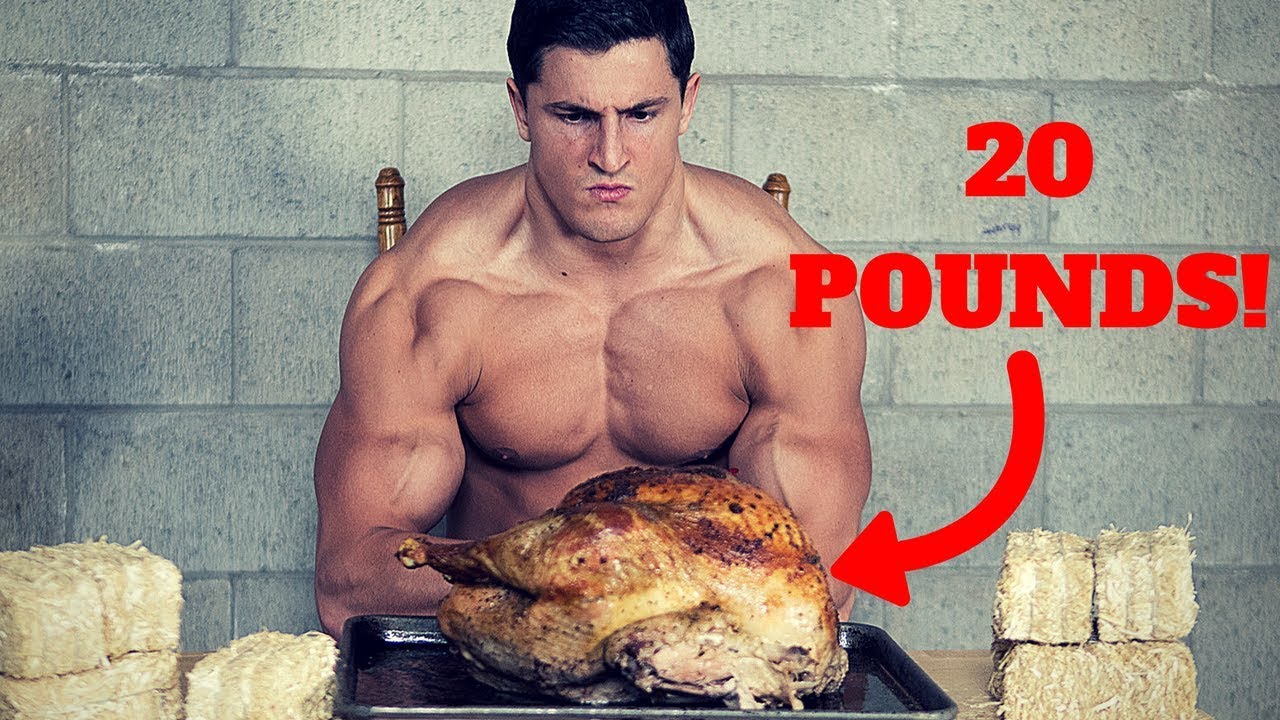
WATCH: This Bodybuilder Eats An Entire 20 Pound Turkey For Thanksgiving
This bodybuilder goes all out for a massive Thanksgiving cheat day.
It’s Thanksgiving and while it might be a bit different this year – many around the country are still gathering with family and friends to sit down and gorge on food until they fall asleep. But for fitness obsessives this time of the year is a challenging crossroad. Do you give in and have a cheat day or do you play it smart and eat healthy on this big food holiday?
For bodybuilders this can be a little less challenging if it’s the off season. This is the perfect time to bulk up anyways. That seems to be how bodybuilder Houston Jones sees things in this epic video of him preparing and eating an entire 20 pound turkey by himself. It’s the ultimate Thanksgiving cheat meal and one that might make you sick just to watch.
But perhaps if you are starving yourself this holiday, watching Jones scarf down this massive bird is the perfect way to feel a little bit better about the food your not eating. Check it out above!
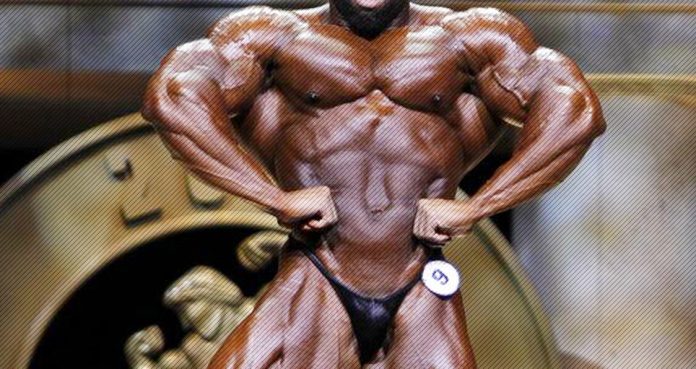
OPINION: 5 Reasons Not To Compete in Bodybuilding Shows
5 Reasons/Excuses to Not Compete in Bodybuilding Shows
Many people who are serious about bodybuilding have a dream of stepping onto the stage one day. Competing in a bodybuilding show is a certificate in itself that you’re serious about your craft. On the other hand, there are people who would do anything to escape the idea of stepping onto a stage with ripped guys.
Since you’re reading this article, we’re assuming you’re from the latter group. Once you’re done with this article, you’ll have enough things to say to people who suggest you should compete in bodybuilding shows.
1. Genetics
Not everyone is born to be a bodybuilder. Genetics play a major role in shaping your muscles. If you have a genetically weak muscle group, don’t bother getting on stage and wasting your, your competitor’s, the audience’s and the judge’s time.
No matter how hard you workout, someone genetically superior will always beat you. You can’t overlook your muscle proportions while preparing for a contest. Even if one of your muscle groups is lagging, you should consider dropping out of the competition.
2. Conditioning
Bodybuilding shows are supposed to be freak shows. People fill up auditoriums to look at muscular giants. If you’re planning to compete, make sure you do justice to these people and give them their money’s worth.
If your muscles aren’t in their peak conditions and the lines and striations don’t show, you should save yourself the trouble of getting up on the stage. Do everyone a favor, get a seat in the audience and enjoy the show.
3. Stage Fright
Not everyone can handle the pressure which comes with getting on a stage. If you’re good enough, you’ll be asked to perform your routine which means you’ll have to handle the stage and the audience single-handedly.
Posing is easier said than done. Legends like Arnold and Kai Greene have been documented taking posing classes, and you might need one (or many) as well. If you can’t think of showing off your ripped physique without getting overwhelmed, bodybuilding shows aren’t for you.
4. Someone is Pushing You
We appreciate the fact you have supportive friends and family, but this shouldn’t be the only reason for you to compete. Take a long and close look at your physique before deciding to sign the competition contract.
Run through the list of athletes competing in the show and make sure you stand a chance against them. Having an experienced coach will pay dividends when it comes to having honest opinion and feedback about your physique.
5. Bad Skin
If your body is full of acne or other marks, it is better to stay off the stage. Some people also consider tattoos to be a setback. Tattoos which don’t take up a lot of real estate on your body can cause no harm.
Choosing the right tan can make a big impact on how you look onstage. An expert eye can always catch the difference between a healthy and bad skin. Getting on the dermatologist table before the stage will be a smarter decision.
Are you planning to compete in a bodybuilding show? Let us know in the comments below. Also, be sure to follow Generation Iron on Facebook and Twitter.
How To Perform The Kirk Shrug
Develop Your Back and Traps With This Shrugging Variation
The kirk shrug is an exercise that was developed by 7-time USPF national powerlifting champion, Kirk Karwoski or “Captain Kirk”.
It is thought that the exercise was used to help Karwoski improve his pulling strength and allow him to lift heavier with the deadlift. The exercise is performed to primarily bring about changes in upper back and trap size, along with an improvement in grip strength.This article will cover the kirk shrug in detail, providing a breakdown of the technique and highlighting a number of benefits associated with the movement.
Kirk Shrug Technique
The differences between the kirk shrug and standard barbell shrug are not huge, therefore pay close attention to the following coaching points.In terms of the weight on the bar, use approximately 25% of your normal working weight for a barbell shrug.
Step One
Start with the loaded barbell on a rack as you would with a standard shrug. Place the feet directly under the hips and grasp the bar at shoulder-width using a thumbless grip. Before lifting the bar from the rack, push the chest up, pull the shoulders back and down and brace the core muscles.
Step Two
Shrug the barbell upward by contracting your lats and traps, imagining that you are attempting to pull the shoulders up to the ears.Remember that movement should only be initiated from the shoulders. The arms should bend slightly to bring the bar up to the belly button, however, ensure that the hips and legs do not assist in any way.Throughout the shrugging motion, ensure that the shoulder blades are pulled back and down. Squeezing tightly between the shoulder blades throughout should help.
Step Three
Once the bar has reached the belly button, perform a static hold for one second while maintaining the contraction of the lats and traps.As far as possible, keep the shoulders shrugged for the full second before controlling the descent of the bar back down to the hips. Resist the weight as far as possible and avoid dropping the bar too quickly.
Kirk Shrug Muscles Worked
The kirk shrug will typically work the same musculature as the standard barbell shrug but in a slightly different manner.
Traps
The trapezius muscle is often seen as the muscle that sticks out from the top of the shoulder. However, this is just the upper portion of the trap muscle. The muscle actually originates from the thoracic (mid) spine and stretches upward attaching to the shoulder blades, collarbones, cervical (upper) spine, and skull.Considering the number of connections that the traps have, they contract to cause a range of shoulder, neck and head movements.The traps are highly active during shrugs as they contract to retract, elevate and depress the shoulder blades.
Lats
The lats are the large wing-like muscles that stretch from the low back up to the shoulders. These muscles contract to cause a variety of movements around the shoulders and spine.The lats insert onto the scapula and when the muscles contract they pull the shoulder blades down. In addition, the lats work to stabilize both the shoulder joint and spine.Therefore, while the lats are not the primary movers during the kirk shrug, they do assist in the depression on the scapula and engage to increase shoulders stability.
Forearm Muscles
The thumbless grip that is used in the kirk shrug places a great demand on grip. By removing the thumb’s involvement, it immediately becomes more challenging to hold the bar.As a result, the muscles of the forearms that control the fingers must work extremely hard to keep the bar in the hands.
Kirk Shrug Benefits
Regardless of whether you are a bodybuilder, powerlifter, sports athlete or are simply just looking to improve your fitness, the kirk shrug can have a substantial impact on the body.This section will detail three of the biggest benefits associated with the kirk shrug.
1) Increases Strength and Stability
Considering the actions and muscle activated during the exercise, the kirk shrug can bring about significant improvements in the upper back and grip strength, as well as improved shoulder stability.Building upper body strength, shoulder stability, and grip strength can help to enhance your workouts, reduce the risk of injury, and simplify a number of everyday tasks.The upper back and shoulders are an area of the body that is commonly affected by poor posture with weakness and instability often being the primary causes.Therefore, a further benefit associated with building upper back and shoulder strength is that poor posture may be rectified (1).
2) Enhanced Performance
If you have reached a plateau with your deadlift or wish to accelerate deadlift progress, the kirk shrug will be valuable.Improving the upper back strength and shoulder stability can allow you to drive the bar more powerfully from the floor and allow you to move beyond any sticking points. If you find grip to be an issue during the deadlift, especially when lifting heavy, consider using the kirk shrug to develop your grip strength.The thumbless grip that is used in the kirk shrug will cause grip strength to substantially improve as the bar is difficult to grip. Increasing your grip strength may contribute to a better deadlift.As well as facilitating deadlift performance, improving your grip has the potential to improve performance with other pulling exercises such as pull-ups, chin-ups, rows, and lat pulldowns.
3) Building Trap Size
In the world of bodybuilding, aesthetics are everything. One thing that is often very eye-catching with top-level bodybuilders is the sheer size of their traps.Considering that the shrugging exercises place the highest amount of stress on the traps (2), there is great trap-building potential.If you have noticed that barbell shrugs aren’t really doing it for you anymore, changing to the kirk shrug may be beneficial. The change of stimulus should allow the traps to begin increasing in size once again.
Why Powerlifters Should Perform Kirk Shrugs
While it is true that shrugs are more commonly in bodybuilding, the kirk shrug can prove to be invaluable for powerlifters.
Using the kirk shrugs as an accessory exercise can facilitate an improved performance with all three lifts – the squat, deadlift, and bench. As highlighted, regularly performing the kirk shrug can significantly build upper back and grip strength and improve performance with pulling exercises such as the deadlift.
However, it can also lead to improvements with the bench and squat too.Firstly with the bench, a large degree of shoulder stability is required. Additionally, increasing the size of the upper back and shoulder can give you a larger, more solid base to bench press from.A combination of increased upper back and shoulder size, strength and stability will ultimately have a positive impact on how much weight you can lift for bench press.Finally, for squats, by building the size of your back, the barbell will have a better “shelf” to sit on. This may improve leverage and confidence when handling heavier loads.
Back Size and Grip Strength Workout
For those who wish to develop upper body muscle size and strength, consider using the following workout that incorporates the kirk shrug.
Exercise 1:
Barbell Rows 3 sets x 10 – 15 reps
One of the best exercises around for back and grip development. To maximize the demand on grip, use an overhand grip and avoid using wrist straps as they will reduce the need for grip strength (#).Once in the bent-over position, avoid moving the trunk or hips and focus on pulling the bar into the body through movement of the shoulders and elbows only.
Exercise 2:
Towel Chin-Ups3 sets x failureFor this exercise, drape a towel over chin-up bars and pull on the towel. The towel will make grip very challenging which will lead to significant grip strength development.Complete as many reps as you possibly can and look to hold the top position of the exercise for as long as possible during the last set.
Exercise 3:
Kirk Shrugs2 sets x 8 repsProgramming 8 reps will give you the opportunity to lift heavy and maximize improvements in the upper back strength and grip strength.
Exercise 4:
Standing Cable Crunch5 sets x 10 – 20 repsYou may be wondering why there is an abdominal exercise incorporated into an upper back session. The abdominals are a key antagonist muscle to the back which means that, when the back is working, the abs generate force to assist in the control of the movement. Therefore, it is important that the abdominals develop at a similar rate to the back muscles so that they can effectively assist the muscles of the back (4).With each rep, hold the contracted position for one full second.
Final Word
There is no doubt that the barbell shrug is an effective exercise for upper back, shoulders, and grip development. The addition of the static hold and increased range of motion in the kirk shrug increases the intensity of the exercise and therefore, may help to accelerate the strength-building process.
References:
1 – Kim, DeokJu; Cho, MiLim; Park, YunHee; Yang, YeongAe (2015-6). “Effect of an exercise program for posture correction on musculoskeletal pain”. Journal of Physical Therapy Science. 27 (6): 1791–1794. doi:10.1589/jpts.27.1791. ISSN 0915-5287. PMC 4499985. PMID 26180322.
2 – Schory, Abbey; Bidinger, Erik; Wolf, Joshua; Murray, Leigh (2016-6). “A SYSTEMATIC REVIEW OF THE EXERCISES THAT PRODUCE OPTIMAL MUSCLE RATIOS OF THE SCAPULAR STABILIZERS IN NORMAL SHOULDERS”. International Journal of Sports Physical Therapy. 11 (3): 321–336. ISSN 2159-2896. PMC 4886800. PMID 27274418.
3 – Coswig, Victor S.; Machado Freitas, Diogo Felipe; Gentil, Paulo; Fukuda, David H.; Del Vecchio, Fabrício Boscolo (2015-12). “Kinematics and Kinetics of Multiple Sets Using Lifting Straps During Deadlift Training”. Journal of Strength and Conditioning Research. 29 (12): 3399–3404. doi:10.1519/JSC.0000000000000986. ISSN 1533-4287. PMID 26595133.
4 – Hirai, Hiroaki; Miyazaki, Fumio; Naritomi, Hiroaki; Koba, Keitaro; Oku, Takanori; Uno, Kanna; Uemura, Mitsunori; Nishi, Tomoki; Kageyama, Masayuki; Krebs, Hermano Igo (2015). “On the Origin of Muscle Synergies: Invariant Balance in the Co-activation of Agonist and Antagonist Muscle Pairs”. Frontiers in Bioengineering and Biotechnology. 3: 192. doi:10.3389/fbioe.2015.00192. ISSN 2296-4185. PMC 4656836. PMID 26636079.
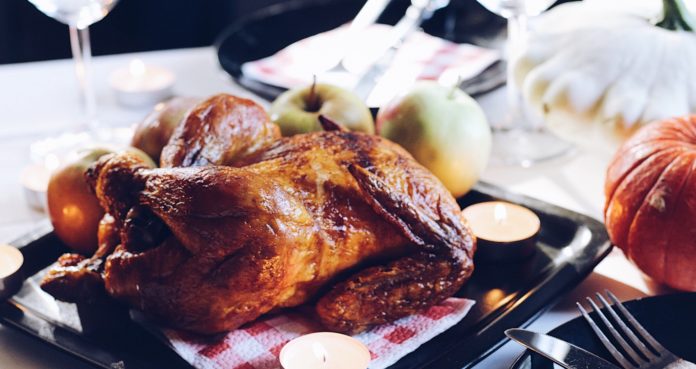
How to Lighten Up 5 Thanksgiving Favorites
How to Lighten Up 5 Thanksgiving Favorites
Can you guess how many calories the average American eats during their Thanksgiving feast? According to the Calorie Control Council a whopping 4,500 – plus a whopping 229 grams of fat! That means most folks will be consuming over 200-percent the average 2,000 recommended calories per day. However, you don’t have to be part of the statistic and can lighten up Thanksgiving favorites by making simple swaps or tweaks to dishes. Here are 5 turkey day favorites and simple ways to lighten them up.
Stuffing
Sticks of butter and pounds of sausage tend to jack up the artery clogging saturated fat and calories in this holiday must-have. One cup of traditional homemade stuffing, on average, using white bread and sans the meat provides around 325 calories, 16 grams of fat, and less than 2 grams of fiber. Pile on the bacon, sausage, or other fatty meat of choice and that’s another 100 to 150 calories per serving for this side dish.
Simple Swaps:
Modify the meat: Remove the meat, use less meat – around ½ ounce per person for flavor, or use a leaner cut of meat.
Use less butter: You don’t need sticks of butter to keep your stuffing moist. Instead, use half the butter and supplement with a touch of low-sodium chicken or vegetable stock.
Use whole grains: Instead of enriched bread use 100% whole wheat bread or whole grains (like bulgur or brown rice) or a combo of white and 100% whole wheat bread. Also, be mindful of portions and keep them to around ½ cup to ¾ cups per person.
Mashed Potatoes
Traditional mashed potatoes provide about 400 calories per servings thanks to the gobs of butter and heavy cream. If the recipes uses one stick of butter (or ½ cup), that would add 816 calories to the recipe. If the recipe serves 6 people, that’s 136 calories just from the butter. Add one-half cup of heavy cream and that’s another 67 calories per serving – or close to 200 calories just from fat!
Simple Swaps:
Modify the butter: Halve the amount of butter in the recipe and/or use whipped butter than have fewer calories per amount.
Modify the heavy cream: Swap the heavy cream for whole milk or reduced fat milk. That will cut the calories and saturated fat significantly.
Add fiber: Most folks don’t meet their daily recommended amount of fiber. Leaving the skin on the potatoes can help add some extra fiber.
Add low-calorie flavor enhancers: If you’re cutting back on butter and heavy cream then add more flavor using low-calorie herbs, spices, and vegetables. Chives, onion, and garlic add mouthwatering deliciousness to mashed potatoes.
Swap half the potatoes for cauliflower: If you’re looking to cut back on some carbs you can make your mashed potatoes with mashed cauliflower combined with potatoes.
Cranberry Sauce
Many folks use the canned version which is brimming with added sugar. You’ll get plenty of added sugar from the rest of your meal so cutting back on your cranberry sauce is a smart move.
Simple Swaps:
Make you own: When you make your own cranberry sauce, then you have full control over the ingredients. Making your own only takes 10 to 15 minutes and you can always halve the sugar in the recipe.
Add flavor enhancers: Instead of using a ton of sugar in your cranberry sauce, use orange zest and lemon juice to add flavor for few calories.
Green Bean Casserole
A traditional green bean casserole can rack up about 550 calories per serving. That’s because the recipe usually calls for tons of cheese, gobs of heavy cream, and the crunchy fried onion topping.
Simple Swaps:
Replace the heavy cream: Instead make a slurry, which is a combination of cornstarch or flour with a liquid. In this case, create the thickener using low fat milk and flour.
Cut back on cheese: Aim for about 2 tablespoons of cheese per serving. Use a reduced fat cheese to help cut back on calories and saturated fat. Avoid fat free cheese that doesn’t tend to melt well or be very tasty.
Replace the fried onions: Instead sauté fresh onions in 1 to 2 tablespoons of olive oil or use crunchy panko (Japanese-style) breadcrumbs.
Apple Pie
An average slice of apple pie can contain over 400 calories and 20 grams of total fat. Add a scoop of ice cream or whipped cream and you’ve upped the calories to at least 500 or more! The ice cream and whipped cream aren’t really the main issue. Rather, the crust and filling is where things can be adjusted. Some filling recipes call for tons of butter adding artery clogging saturated fat.
Simple Swaps:
Cut back on butter: You don’t need tons of butter especially in the filling. Cut back majorly on it in the filling and save it for the crust.
Be mindful of your apples: Each apple provides about 70 calories. Aim for about one-half to three-quarters of an apple per serving.
Opt for an open-faced pie: Instead of making a pie crust that is covered on top, opt for a galette, which is open-faced apple tart. It will help cut back significantly on calories and saturated fat. You can also opt for a warm apple crisp made with a delicious, crunchy topping which includes rolled oats, nuts, and seeds.
Pecan Pie
While apple and pumpkin pie have about 400 calories per serving, pecan pie can pile on over 500 calories because of the boatload of nuts. Just to put it into perspective, one ounce of pecans (about 20 halves) provides 196 calories and 20.4 grams of total fat. Although pecans are certainly a healthy nuts providing 19 vitamins and minerals, adding cups to your recipe can add hundreds of unnecessary calories to your pie. Add a scoop of vanilla ice cream and it will be closer to 650 calories per serving.
Simple Swaps:
Swap the crust: Make an open-faced tart (AKA galette) instead of a full pie with the crust over the top.
Use less pecans: Halve the amount of pecans the recipe calls for.
Use less butter: Use one-third to one-half less butter the recipe calls for in the filling.
Toby Amidor, MS, RD, CDN, FAND is an nationally recognized nutrition expert and Wall Street Journal best selling author of seven cookbook including her latest The Best 3-Ingredient Cookbook: 100 Fast and Easy Recipes for Everyone. Toby has been quoted in thousands of articles and appears on national television and radio regularly. Through ongoing consulting and faculty positions, she has established herself as one of the top experts in culinary nutrition, food safety, and media communications.