
 All Posts By Muscle Insider
Board Certified PHD
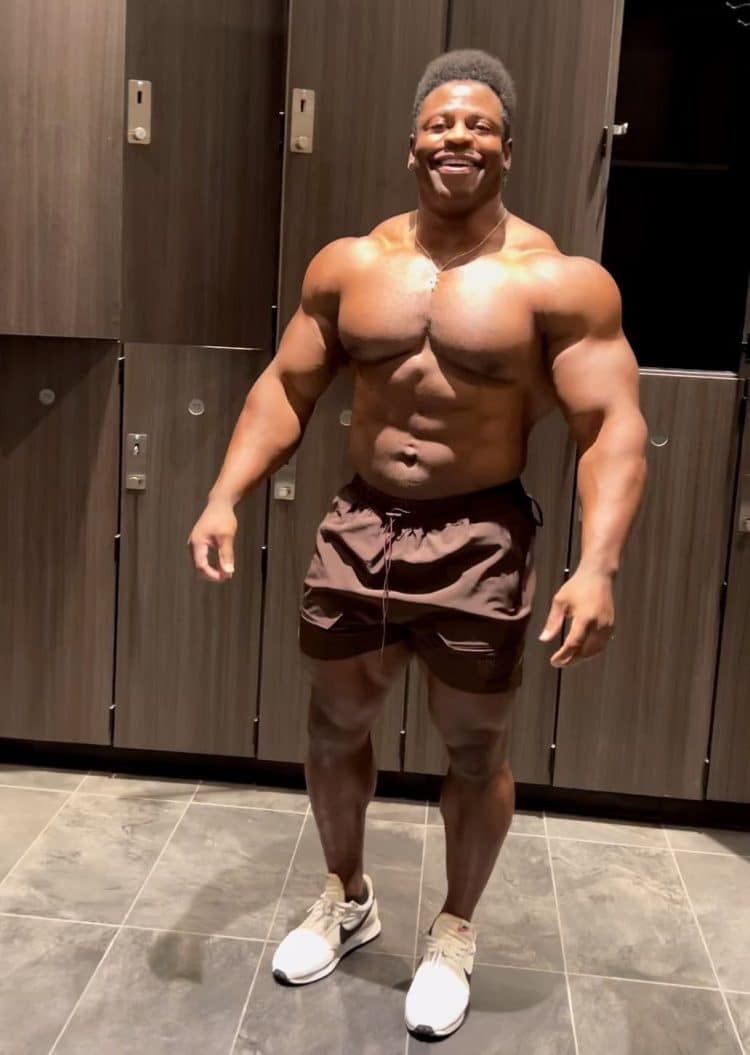
Breon Ansley Says to Expect ’10 More Lbs of Muscle Mass’ on His Frame in 212 Debut
Breon Ansley enjoyed an illustrious career as a Classic Physique competitor with two Mr. Olympia wins. He’s currently gearing up to make a splash in the Men’s 212 division. In a recent interview with OlympiaTV, Ansley shared his thoughts on the target weight and strategy he plans to use for a successful debut in the 212 category.
Breon Ansley first gained attention for his impressive muscle mass, detail, and conditioning in the IFBB Pro League Classic Physique division. Although he dabbled in the 212 class early in his career, he ultimately chose to compete in the Classic Physique division. He dominated the competition at the 2017 Mr. Olympia to win his first Sandow trophy and added a successful title defense the next year along with an Arnold Classic title. In 2019, he got dethroned by reigning four-time Olympia champ Chris Bumstead who has firmly held onto the crown since.
Following a fourth-place finish at the 2022 Arnold Classic, Ansley announced his plans to move on from the Classic Physique division. He was working on bringing a revamped package for his final Classic appearance and indicated a potential move to the 212 group.
Ansley teamed up with popular fitness personality Mike O’Hearn for a fierce arms workout in preparation for the 2022 Mr. Olympia last October. Then, he demolished a heavy upper-body training session utilizing a rest-pause technique and followed up with a brutal leg workout in the final stages of his prep.
Breon Ansley / Instagram
Being the only competitor to defeat ‘CBum’ on the Olympia stage, Breon Ansley was determined to repeat history and reclaim the title. He revealed his desire to change divisions was based on the weight cap restriction he was forced to follow in Classic Physique.
In the end, Bumstead retained his title and Ansley dropped to fourth place. Following the event, the pair buried the hatchet after sharing a six-year-long rivalry on stage in a candid exchange.
Breon Ansley shares the target weight for a move to the 212 division
In a recent YouTube video, Breon Ansley shared the weight he’s aiming for in his 212 class debut.
He believes adding roughly 10 pounds to his frame could help him present a new look.
“I don’t need to be a lot bigger,” said Ansley. “If I’m doing the calculations of where I’m at now and where I’d need to be to be as sharp as a tack when it comes stage time, I’d probably say that’s going to be around 200 pounds. That’s quite a bit of more pounds when you’re talking about around 10 more pounds of muscle mass when it’s able to formulate properly and not have to suffer the loss of muscle like it was with Classic. I think it’s going to be around 200, maybe even 205. I think it’s going to be quite a different look.”
Ansley reveals the strategy for the switch to 212
Without the restriction of his previous weight cap, Ansley is confident he will look his best as he won’t need to sacrifice any muscle mass.
“Now that I’m really going to be able to see my true potential, my true density that I have been lacking over the past two years in Classics so as far as density that they might outmatch me on, I’m going to have to disagree because I think once I’m able to not lose muscle, not lose a single solitary pound of muscle and hold onto all my muscle from all these hard ass Chris Cormier years of training then the density factor… remember I’m just as old or even older than some of these guys so my maturity is right there with them and I think that I can outmatch theirs. I can definitely beat theirs and dominate as far as maturity and density.
“I’m going to be a lot sharper now that I’m not going to have to lose muscle. I’m going to be able to get sharp, refined by holding onto muscle instead of losing it. You thought I was sharp and in fairly great conditioning in Classic, just wait till you see now the sharpness and the lines that I’m going to be able to display in the 212 division now that I can hold onto muscle and not kill myself with hours and hours of cardio.”
He declared his ambitions to score gold at the upcoming 2023 Mr. Olympia.
“Yes, I am winning it in 2023.”
Breon Ansley gave fans a look into his full day of eating in the 2023 off-season last month. He added that he consumes one meal of his choice per day and laid out the diet he was utilizing to pack on the pounds before entering prep for his next show.
It remains to be seen whether Ansley receives a special invite, otherwise, he would need to qualify for the next Mr. Olympia by winning a 212 show. Either way, fans will be excited to see how he stacks up in the new division.
RELATED: Breon Ansley Shares Mass Building High Volume Leg Workout
You can watch the full video below.
Published: 10 June, 2023 | 11:51 AM EDT
Toes to Bar Exercise Guide: How To, Benefits, Muscles Worked, and Variations
A shredded midsection is the symbol of peak fitness. Although many people aspire to develop a well-defined six-pack that could rival the sculpted Greek statues, it usually remains that — an aspiration.
The benefits of a strong core extend beyond aesthetics. A strong core can improve your balance and functionality, which can boost your performance in compound exercises and daily tasks. Plus, it can improve your posture and reduce the risk of lower back pain and injury.
Most people avoid training their abs because they find the orthodox ab exercises, such as crunches and leg raises, boring and redundant. You have come to the right place if you’re looking for a challenging exercise that requires skill, strength, and endurance. Toes to bar is a compound exercise that primarily works your abs and also engages your arms, shoulders, lats, glutes, and hip flexors.
Toes to bar (TTB) is a gymnastics exercise and a mainstay in many CrossFit workouts. It is an extended and advanced version of the hanging leg raise. That said, performing the TTB requires significantly more core strength and practice.
In this article, we go over the basics of TTB, its benefits, muscles worked, correct exercise form, most common mistakes, and the best variations and alternatives to add to your training regimen.
What is a Toes to Bar?
Toes to bar involve lifting your feet to an overhead bar. Simple, right? Wrong. TTBs are more challenging than hanging leg raises, and depending on your experience level, it might take a long time to drill the movement.
Since the TTB is a compound movement, it helps improve your overall anterior chain strength. Plus, TTBs performed with a flawless form look dope. It is also an excellent way to show off your core strength.
There are two main toes to bar variations:
Strict Toes to Bar
The strict TTB is one of the most difficult abdominal exercises. It is generally included in a workout to test an exerciser’s midline strength. Save this TTB variation for after you’ve mastered the kipping TTB. Besides core strength, the strict TTB demands decent hip flexor, gluteal, and hamstring mobility.
Kipping Toes to Bar
The kipping TTB is a popular ab exercise in gymnastics and CrossFit workouts. As the name suggests, it involves using a kipping motion that makes touching your toes to the bar a little easier. On the other hand, the strict TTB involves touching the overhead bar with your toes while keeping your torso parallel to the floor.
Muscles Worked During Toes to Bar
Toes to bar works the following muscles:
Abs
The TTB primarily targets your abs. It engages the rectus and transverse abdominis and will leave you with a sick ab pump. The rectus abdominis runs along the front of your abdomen and is commonly known as the “six-pack.” Conversely, the transverse abdominis wraps around your trunk from front to back.
Hip Flexors
Hip flexors are located on the front of your upper thighs. These muscles are involved in flexing the hips and bringing the knee closer to the chest. Weak hip flexors can make it more challenging to complete a TTB.
Arms
Your grip and forearm strength are crucial factors that can dictate your performance in toes to bar. Plus, you might experience biceps recruitment during more extended TTB sets, which involve holding on to the bar for longer.
Lats
Your lats kick in as soon as you hang on to the pull-up bar. Furthermore, the kipping TTB variation can lead to greater lat engagement as you cycle between the hollow and arch positions.
Glutes and Hamstrings
You need good glutes and hamstring mobility to perform the TTB with optimal form. The glutes and hamstrings also help control the movement during the exercise’s eccentric (lowering) part.
Notably, the kipping toes to bar variation increases the demand on the grip, shoulder, and back.
Benefits of Toes to Bar
Adding the TTB to your training regimen entails the following advantages:
Build a Strong and Shredded Core
TTB is a challenging abdominal exercise that will help build a stronger and chiseled core. To avoid swinging between reps, you must keep your core contracted throughout the exercise. TTB will also strengthen your stabilizers, improving your overall balance and boosting your performance in compound exercises and everyday functioning.
Boosts Muscle Coordination
A TTB involves several moving parts. You must hang onto a pull-up bar, generate momentum by kipping, raise your toes to the bar, return to the start position, and repeat this process for the recommended reps. Adding TTB to your workouts will improve your muscle coordination, which will carry over to other exercises.
Improves Posture
Toes to bar strengthen your abdominal muscles and lower back, which can contribute to a better posture. Core exercises are a must for folks who spend most of their day sitting or hunched over their phones or computer screens.
Read also: Toes To Bar Workout Progression Routine
How To Do Toes to Bar
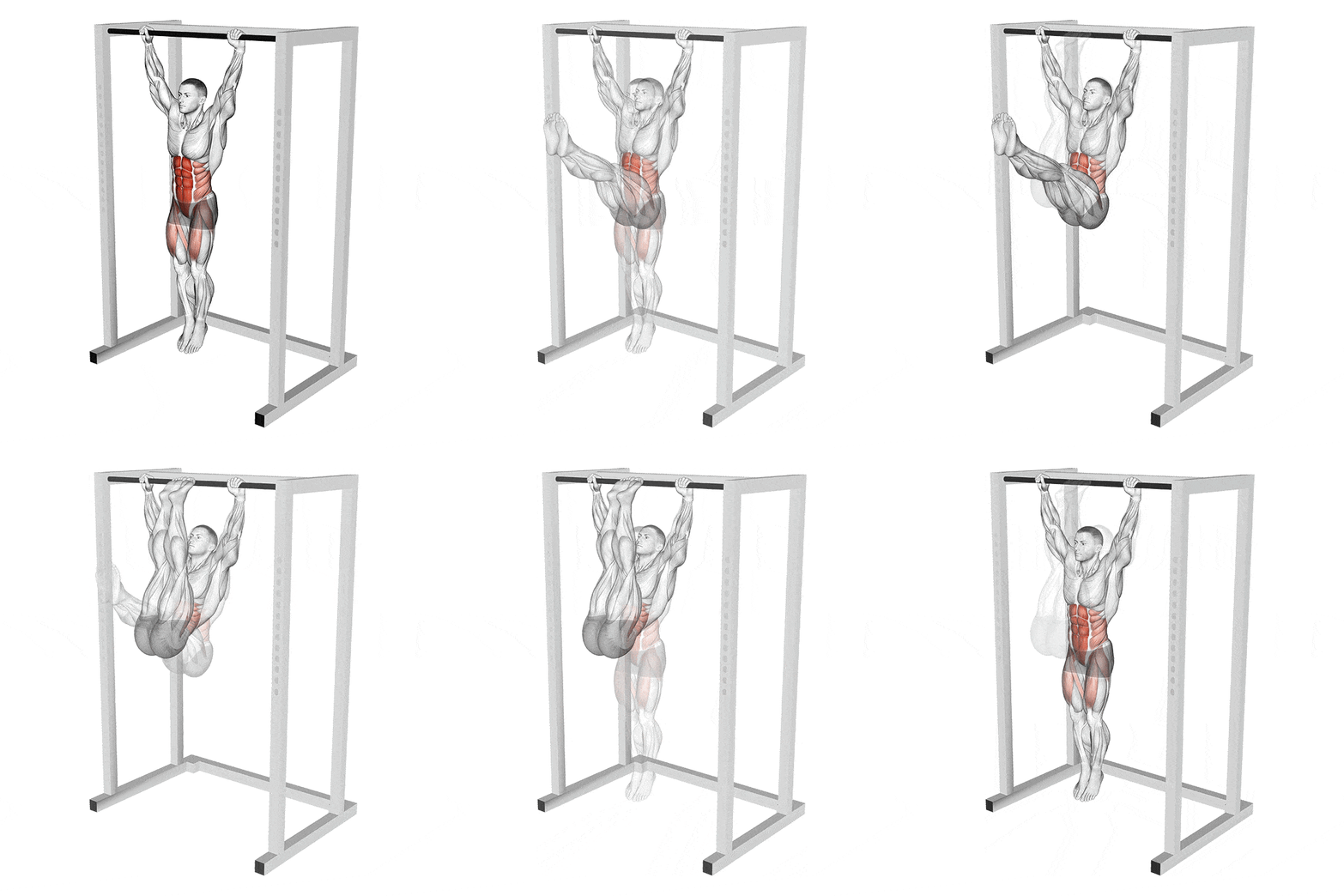
The TTB is a complex exercise, and you must master several steps to perform this movement correctly. Below I’ll take you over the kipping toes to bar step-by-step instructions that require a cyclical, ballistic motion.
Step 1: Grab an Overhead Bar
Jump and grab onto a pull-up bar with a slightly wider than shoulder-width overhand grip. You can use a hook (fingers over the thumb) or reverse hook grip (thumb over the index fingernail) on the bar.
Pro Tip: Avoid using a false grip on the bar. A thumbless grip will make it harder to hold onto the bar during the kipping motion.
Step 2: Generate a Kip
Kipping involves alternating between an arch and a hollow position to generate momentum. Initiate the kip by driving your head and chest forward and extending your legs behind you. Immediately kick your legs in front of your body as you push on the bar and bring your body behind it to get into a “hollow” position.
Pro Tip: Beginners can perform two to three kips to generate enough momentum before raising their legs.
Step 3: Raise Your Legs in the Hollow Position and Flick the Bar
After generating momentum and getting into a hollow position, contract your abs, lats, shoulder blades, glutes, and quads, and raise your legs toward the ceiling. Your toes should hit the bar at the top of the movement. Keep your head neutral throughout the range of motion, and look at the bar during the concentric (upward) phase of the lift. Looking ahead during the upward motion will make lifting your legs more difficult.
Pro Tip: Instead of locking out your knees and keeping your legs straight during the concentric motion, you could break it into two parts. First, bend your knees and bring your quads to your chest. Finish the movement by extending your knees and touching the bar with your toes. This technique is also known as the tuck-and-flick method.
Step 4: Return to the Extended Arch Position
After flicking the bar, lower your legs by extending your spine. Push your legs behind you and your torso forward to immediately enter the arched position. Use the momentum to get into the hollow position. Repeat for recommended reps.
Pro Tip: The eccentric motion of the tuck-and-flick method involves returning your legs to your chest and extending your knees as your legs move below your waist. Many exercisers find the tuck-and-flick method more convenient while stringing bigger sets.
Toes to Bar Tips:
It is common for beginners to experience ab cramps while performing TTBs. Stop your set and stretch out your abs if you experience the same.
Master the kipping TTB before trying the strict TTB.
Before attempting the kipping TTB, drill your kipping form. Perform three sets of 10 kips in alternate workouts until you have command over the exercise.
Use CrossFit grips to avoid ripping your hands on the pull-up bar. Remember, you are as strong as your grip on this exercise.
Advanced trainers can perform this exercise on gymnastic rings. The unstable rings lead to greater core and stabilizer recruitment.
In This Exercise:
Target Muscle Group: Abs
Type: Strength
Mechanics: Compound
Equipment: Bodyweight
Difficulty: Intermediate
Best Rep Range: 10-15
Common Mistakes While Performing Toes to Bar
Avoid the following toes to bar mistakes to get the best bang for your buck and limit your risk of injury:
Incorrect Hand Position
Most people fail to kip consistently and complete a TTB because of incorrect hand placement. Grabbing the bar too close will make touching your toes to the bar more difficult, whereas taking a snatch grip on the bar will lead to uncontrollable swinging. Grab the bar just outside shoulder-width for optimal range of motion.
Keeping Your Shoulders Under The Bar
Many rookies try to do a TTB while keeping their shoulders under the bar. Although you might be able to complete one TTB, you’ll likely not be able to control the eccentric motion, which will lead to uncontrollable swinging.
Not Using a Kip
In continuation with the previous point, strict TTB is significantly more difficult than the kipping variation. You must master kipping before attempting toes to bar. Begin the kip by pretending to perform a straight-arm pushdown and pull your torso behind the pull-up bar.
Banging Your Toes Into The Pull-Up Bar
Avoid banging your toes into the bar at the top of the motion. Many exercisers end up with bruised toes due to kicking the bar too hard. Bring your toes over the bar, or touch it lightly; this will get easier as you gain more experience.
Slowing the Eccentric Motion
Many trainers make the mistake of controlling the descent, which can break their momentum. You want to use the momentum from the eccentric motion to power your kip and the next rep. That said, you must control the eccentric motion on the strict TTB.
Variations and Alternatives of Toes to Bar
The following TTB variations and alternatives will help add variety to your training regimen:
Hanging Leg Raise
The hanging leg raise is an excellent progression exercise for the TTB.
Steps:
Hang onto a pull-up bar with a shoulder-wide overhand grip.
Brace your core and glutes, and lift your legs toward the ceiling until they are at least parallel to the floor. Keep your knees locked out throughout the range of motion.
Pause and contract your abs at the top.
Slowly return to the start position.
Repeat for recommended reps.
Pro Tip: Incorporating kipping into this exercise can help drill the TTB movement. Get into the arched position during the eccentric motion and a hollow position during the concentric lift.
Check out our complete hanging leg raise guide here!
Lying Leg Raise
Perform the lying leg raise on an elevated platform like a flat bench to mimic the arched position of the TTB.
Steps:
Lie supine with your hips on the edge of a flat bench. Your leg should be extended and parallel to the floor.
Hold the bench at your ear level for stability.
Keeping your legs straight, raise your lower body toward the ceiling until it is at a 90-degree angle with your torso.
Lower your legs toward the floor until your feet are a few inches off the floor.
Rinse and repeat.
Pro Tip: As you gain more experience, touch your knees to your head at the top of the movement. Progressing to this stage can take a long time as it requires significant core strength and flexibility.
Check out our complete lying leg raise guide here!
Knees To Elbow
Knees to elbow is the middle ground between the hanging leg raise and the toes to bar. This exercise involves touching your elbows with your knees.
Steps:
Grab onto a pull-up bar with a shoulder-wide grip.
Contract your abs, glutes, and quads.
Raise your quads to your chest by flexing your hips.
Bend your knees and touch your elbows at the top of the motion.
Return to the starting position.
Pro Tip: Kipping can make the exercise easier and help cycle through reps faster.
Hanging L-Sit
The hanging L-sit might look easy, but it requires a strong core. This exercise will improve your core and grip strength, which will translate to a better performance on the toes to bar.
Steps:
Hang onto a pull-up bar with a shoulder-wide pronated grip.
Keeping your elbows and knees locked, raise your legs until they are parallel to the floor.
Hold the position for as long as possible.
Pro Tip: Experienced exercisers can perform L-sit pull-ups. This variation will help build a stronger core, resulting in better lower body control during TTB.
Check out our complete L-sit guide here!
Controlled GHD Sit-Up
GHD sit-ups will help you build a robust midline. However, we will limit the extension on this exercise since we are using it as a TTB progression.
Steps:
Sit at the edge of the GHD pads and place your ankles between the foot pads.
Your torso should be perpendicular to the floor at the start position.
Hold your hands in front of your chest.
Contract your abs and slowly lean backward.
Your torso should at least break parallel to the floor at the bottom of the movement.
Return to the starting position.
Repeat for recommended reps.
Pro Tip: More experienced athletes can use the full range of motion and touch the floor with their fingers at the bottom.
Related: 9 Toes-to-Bar (TTB) Alternatives To Revamp Your Core
Wrapping Up
Toes to bar is a compound exercise that requires decent core strength and kipping practice. Mastering this exercise will help build a stronger core, boost your endurance, and bless you with sculpted abs.
So swing, reach, and touch your toes to the bar with fierce determination, knowing that every rep brings you closer to an extraordinary transformation. Each TTB will hurt, but it will all be worth it in the end.
Best of luck!
Greatest Arms Ever? Chris Cormier Picks Robby Robinson & Olympia Judge Says Phil Heath
Figuring out who has the best arms ever in a sport like bodybuilding is a difficult task. In a recent episode of Prime Time Muscle, Chris Cormier and Terrick El Guindy tackled the challenge and named which bodybuilders they believe possessed the best arms of any competitor regardless of era.
Chris Cormier is uniquely qualified to speak on the matter given his decorated résumé filled with accomplishments. His eye-catching balance of chest fullness, biceps, and deeply separated quads made him a perennial Mr. Olympia threat despite never taking home the prestigious honor. As with most of his contemporaries from the 1990s, Comier competed often and shared the stage with heavy hitters like Dorian Yates, Ronnie Coleman, and Flex Wheeler.
On the other hand, El Guindy is a bodybuilding promoter and judge. He routinely officiates contests and through the years has developed a keen eye for physiques irrespective of category. With regular appearances on the Prime Time Muscle Olympia TV program, El Guindy’s gift of gab makes him a fantastic ambassador for the sport.
In their latest endeavor, El Guindy and Cormier teamed up for a gun show judging contest. They both proposed their picks in the arms race. In addition, they disclosed honorable mentions and named who currently holds the biggest arms in the sport.
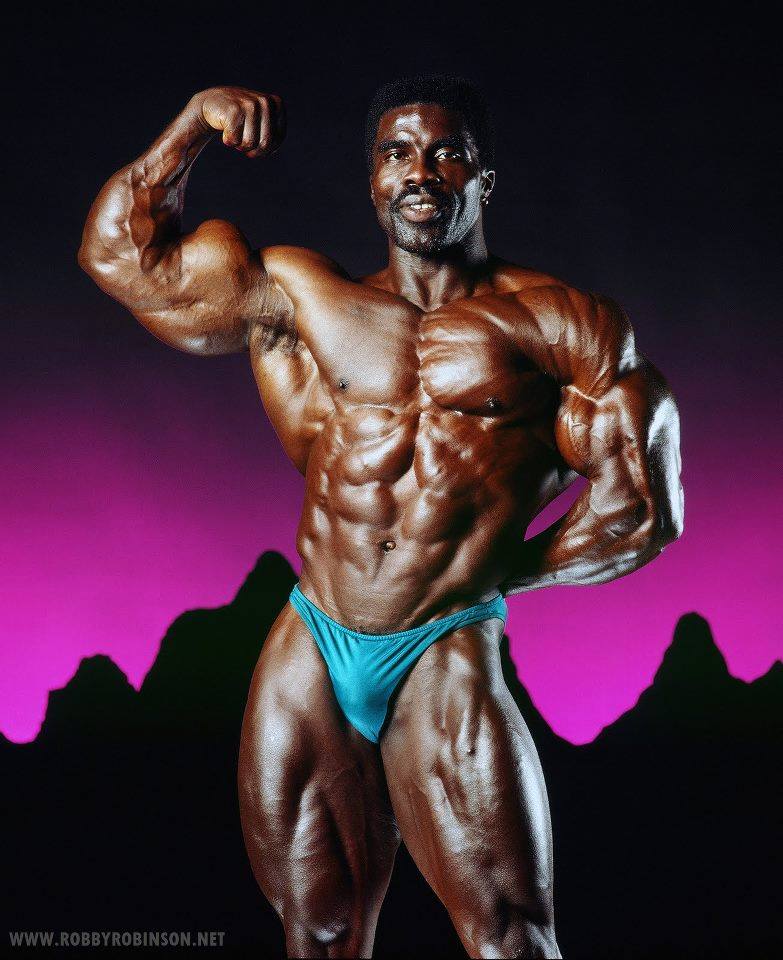
Chris Cormier: ‘Robby Robinson Has The Greatest Arms Ever, No One Will Outshine Those Peaks’
Without taking size into account, Cormier credited Robinson’s arms as the best ever given his pronounced biceps peak, which he still displays today well into his 70s.
Robby Robinson / Instagram
“Robby Robinson! The Black Prince is my go-to when it comes to arms. I’ve watched as a kid and training with him personally and I would saw, when he would do a preacher curl, his biceps would come up, over, then, back, and down. Up, over, back, and down, double scoop ice cream scoop on top of an arm [impressive peaks]. That’s what I would see every time on Robby Robinson. He had the brachialis, the triceps, I don’t think anyone outshined those peaks, ever,” said Chris Cormier.
Terrick El Guindy: “Phil Heath, Freakiest Arms I’ve Ever Seen”
Guindy said he was most blown away by the full muscle bellies in Heath’s arms.
“In my opinion to have the best arms in the history of bodybuilding – a lot of us focus on biceps but it’s got to be biceps and triceps… I’m going to tell you that Phil Heath had amazing freaking arms, okay. It was the triceps, the biceps, and it was the muscle bellies on the arms.”
“I could choose one arm to just borrow and go down Santa Monica with a sleeveless shirt, it would be Phil Heath,” argued El Guindy. “Freakiest arms I’ve ever seen. Lee Priest had freaky arms too but they were a little bit too compact. They were impressive but they didn’t stretch so much.”
Phil Heath / Instagram
As for honorable mentions for greatest arms, Cormier and Guindy agree on Roelly Winklaar and Ramon Queiroz. However, in terms of pure size, Nick Walker has the biggest and most impressive arms of any competitor in the IFBB Pro League right now.
“Let me tell you, I saw Roelly Winklaar’s arms, man!” added Guindy.
“Those arms bro… you can’t even – I mean his forearms are about as big as most people’s biceps peaks, alone just the forearms. You can’t go wrong with those guys mentioned already,” The Real Deal shared.
“It was a few months back and shits crazy my man. He [Ramon Dino] had those crazy forearms laying down on the table. They looked like somebody’s legs. I was looking at this guy and going, why do you have such big forearms. And the reality is he did a lot of bars in Ekiti where he’s from. Incredible arm development. Nowadays, the competitor in the Open that has the biggest most impressive arms in my opinion is Nick Walker,” replied El Guindy.
This isn’t the first time competitors from past eras took a closer look at arm development. Months ago, former four-time Mr. Olympia Jay Cutler shared a throwback video of when he and Ronnie Coleman had their biceps measured. While the race was close, Coleman’s were bigger, topping out at a massive 23.5 inches. Meanwhile, Cutler’s were 22.5 inches at the time.
Comparisons of Walker’s arm size and Coleman’s surfaced recently as well. The eight-time Mr. Olympia titleholder found the online discussion funny. After being critical of the Bro Chat Podcast for the comparison, Coleman specified that muscle separation must also be taken into account when measuring arms.
Interestingly, Cormier and Terrick El Guindy left ‘The King’ out of the discussion, despite being known for some of the biggest arms of any competitor. Given the sport’s subjective nature, fans will never agree as a whole on which athlete had the best arms of all time.
Watch the full video from the Olympia TV YouTube channel below:
Related:
Published: 10 June, 2023 | 12:11 AM EDT

Arnold Schwarzenegger Reacts to Linda Hamilton’s Insane Arms: ‘Son of a B***h is More Cut than Me’
Bodybuilding legend Arnold Schwarzenegger is a man of many talents. After moving on from professional competition, he made a name for himself in the world of entertainment and even found success in politics. In the freshly released Netflix TV mini-series Arnold, Schwarzenegger revealed he was left stunned by Linda Hamilton’s insane arms when the two worked together on Terminator 2.
Arnold Schwarzenegger first rose to prominence for his massive build as an IFBB Pro League Men’s Open competitor in the 1970s. Hailing from Austria, Schwarzenegger found his passion for bodybuilding at a young age and traveled to the US to fulfill his potential in the sport. After falling short of three-time Mr. Olympia Sergio Oliva, Schwarzenegger came back stronger than ever to secure his maiden Sandow trophy in 1970. He was a dominant champion who defended the title five times in a row and returned after a five-year hiatus to win his seventh Mr. Olympia title in 1980.
Following a historic career, Schwarzenegger chose to test out the waters of Hollywood. He applied the strong work ethic he developed as a bodybuilder and quickly found success in his new venture. His starring role in the fantasy Conan the Barbarian (1982) skyrocketed his celebrity. He proved to be a certified megastar with several box-office hits under his belt. He established his status in pop culture with a lead role in the sci-fi action film franchise The Terminator (1984), which amassed a cult following.
Schwarzenegger likes to motivate fans with workout updates and tips on how to lead a healthy lifestyle. He offered a quick five-minute workout that could be performed anywhere to start your day without the use of any equipment. He suggested performing the workout as a warm-up or first thing in the morning for better blood flow. Then, he detailed an intense workout of the week using cluster sets designed to boost strength gains and get the pump going.
‘The Austrian Oak’ laid out the negative effects of not sleeping enough when trying to lose weight a few weeks ago. He recommended his fans get at least seven hours of sleep every night and ideally aim for about eight hours to aid their weight loss goals based on research by Harvard scientists.
The 75-year-old reflected on the changes in his physique over the years last month. He admitted he didn’t like his physique in old age considering he ‘used to be the best-built man’ on the planet. He declared his plans to stay active forever and indicated no plans to retire anytime soon.
Arnold Schwarzenegger detailed four highly-effective ways to build a custom routine that fits into any schedule three weeks ago. He believes in forming habits one can follow consistently without overcomplicating things.
Last month, Schwarzenegger revealed Dianabol and testosterone as his two favorite PEDs (performance-enhancing drugs) of choice that he utilized during his days of competing on stage. Given the rise in bodybuilders dying from steroid abuse, Schwarzenegger cautioned fitness enthusiasts against taking gear due to the health risks.
Arnold Schwarzenegger reveals first response to Linda Hamilton’s jacked arms
In the Netflix series Arnold, Arnold Schwarzenegger revealed his reaction to co-star Linda Hamilton’s insanely cut arms when the pair worked together for Terminator 2 (1991).
He was left stunned after noticing how ripped Hamilton’s arms were and likened it to a bodybuilder.
“A few days before we start shooting, Jim Cameron says to me, let’s all get together and have a nice dinner,” said Schwarzenegger. “Linda comes in and then she takes her sweater off and I’m looking at her arms. Veins on the biceps and then the triceps.
“Everything was like a bodybuilder except miniature. I said, ‘I cant believe that son of a b***h is f***ing more cut than me,” Arnold told Daily Mail.
Arnold Schwarzenegger provided two brutal circuit workouts targeting the upper body last month. He also stressed the need to avoid thinking before workouts to improve consistency. He followed up with a grip strength test and another circuit training routine for longevity.
RELATED: Bodybuilding Icon Arnold Schwarzenegger Set to Release Action Netflix Series FUBAR in May
Schwarzenegger’s latest revelation goes to show how seriously they took the Terminator series back when the film was under production.
Published: 9 June, 2023 | 6:47 PM EDT
Charles Glass Shares ‘German Volume Training’ Lesson for ‘Maximum’ Chest Muscle Growth
As a former gymnast, engineer, and bodybuilder, Charles Glass has a unique understanding of human anatomy. In a recent video on his YouTube channel, Glass discussed German volume training which commonly practices 10 sets of 10 reps on three exercises.
Generous with his wisdom, Charles Glass has made a career out of helping people inside the gym. Whether it’s assisting a legendary four-time Arnold Classic winner like Flex Wheeler, a Bikini International Champion or just helping an average gym-goer, his understanding of body mechanics makes him an invaluable resource to the fitness and bodybuilding communities.
Charles is known for his ability to teach fitness education. He has taken part in numerous training demonstrations designed for muscle growth, such as the back and shoulders but also detailed an array of other workouts that focus on areas such as the calves, triceps, and abs.
Charles Glass / Instagram
Sometimes, it’s just about achieving a slimmer waist, and Glass has answers for that too. In his latest undertaking, Glass shared a ‘German Volume’ training routine for maximizing chest muscle growth.
Charles Glass Shows How To Build Chest Using ‘German Volume Training’
With this particular strategy, Charles Glass says he always employs 10 sets of 10 reps on three different exercises.
“German volume training. Which is 10 sets of 10 on three exercises. So, I’m going to use these three,” said Charles Glass. “Once in a while [I deploy this strategy], I wouldn’t do it every time. That’s preference [the wrist wraps]. Me, I like to wear them, it strengthens me and reminds me to keep my wrists tight.”
Aside from training, Glass has also taken aim at counterfeit drugs and fake steroids. He believes the problem has gotten much worse since the 1990s. Moreover, he said competitors need to practice caution because these fake substances can cause considerable damage to health.
Charles Glass isn’t the only seasoned pro who has pointed out steroid use in the IFBB Pro League. Popular 1990s Open bodybuilder Rich Gaspari tackled the subject as well. In a Fitness, Fame & Fortune podcast, Gaspari highlighted that current dosages are ‘way higher’ than what was used during his time on stage.
Other veterans of the sport, such as eight-time Mr. Olympia Lee Haney have said athletes are 60 pounds overweight on stage because they’re pushing too much food. Haney explained that athletes used to fuel their bodies with healthier foods but now resort to ‘garbage’ like cheese and bacon.
Despite his busy schedule, Glass continues to give back to the sport. He’s an asset to anyone willing to learn from the techniques he developed after decades of grinding inside the gym.
RELATED: Godfather of Bodybuilding Charles Glass Shares A Push-Up Hack to Build Chest Muscles
Watch the full video from Charles Glass’ YouTube channel below:
Published: 9 June, 2023 | 2:08 PM EDT
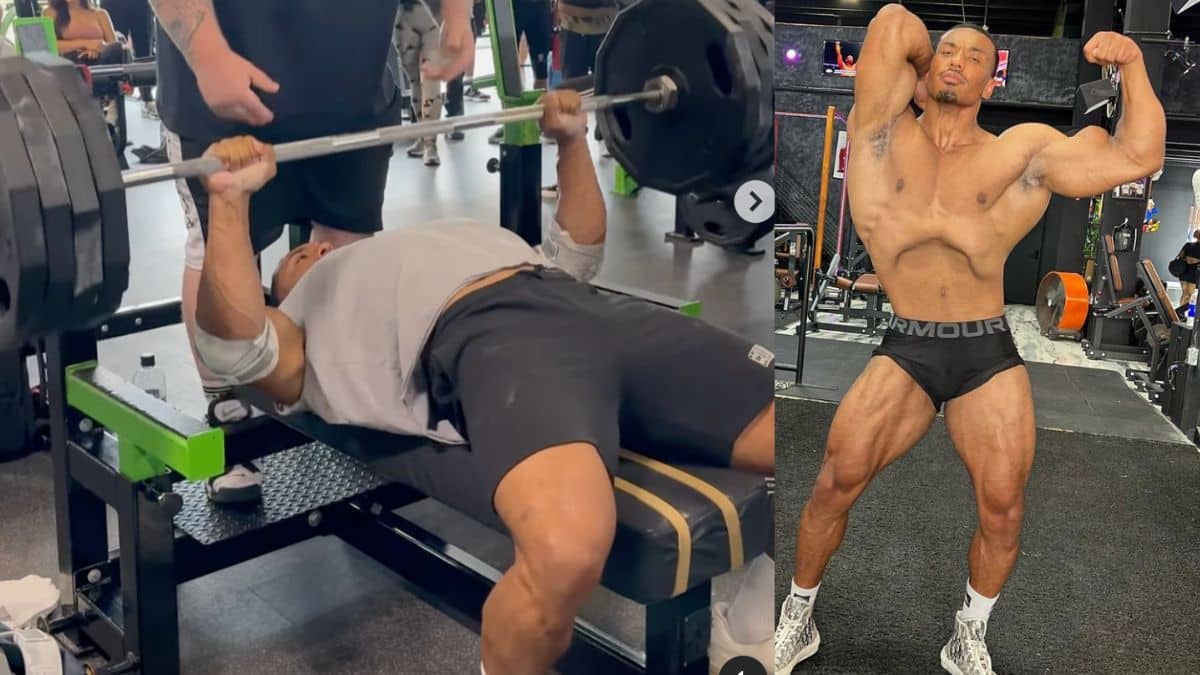
Larry Wheels Crushes 405-lb (183.7-kg) Bench Press For 22 Reps
Larry Wheels recently revealed on Instagram that he is looking and feeling better than ever, and is now proving the statement to everyone. Although Larry is preparing for a bodybuilding competition where he plans to take part in the Classic division, he is still attracted to lifting heavy weights. However, in order to find the right balance, Larry recently loaded up 405 pounds (183.7 kilograms) on the barbell and performed a bench press for a mind blowing 22 repetitions.
Larry Wheels partnered up for a workout with one of the strongest bench pressers in the world currently, Josh Baker, who accumulated fame on TikTok due to his incredible feats. So, with some crowd cheering him on as well, Larry managed to push himself to the limits and squeeze out 22 repetitions on a 405-pound (183.7-pound) bench press with just some elbow straps to aid him in the lift.
Interestingly, Larry Wheels has performed a bench press AMRAP with 405 pounds (183.7 pounds) before, and his greatest result was 26 repetitions. However, as almost everyone knows by now, Larry has stopped using steroids and slimmed down significantly. So, his recent 22-rep set is arguably even more impressive.
Watch Larry Wheels’ lift here:
Related: Eddie Hall and Larry Wheels Crush an Intense Boulder Shoulder Workout
Ever since he stopped using Steroids and PEDs, Larry Wheels has been attempting to reach the peak of his natural strength, performance, and physique. However, he is forced to take TRT (Testosterone Replacement Therapy) since his body does not produce testosterone on its own anymore.
The current goal which Larry Wheels has in mind is to make his debut in the Classic Physique division. He has opted for Classic because he already has the size needed for it. In addition, both Larry and his coach believe that he will not need to take anything except TRT to be competitive.
Larry Wheels has already achieved an extremely shredded physique, with his most recent update displaying an impressive vacuum pose.
Before setting his sights on the bodybuilding venture, Larry Wheels tested to see how strong he could get with just TRT. So, after a few months of training, Larry organized a mock powerlifting meet in his gym and put up impressive numbers. This included a 330-kilogram (727.5-pound) squat, 230-kilogram (507.1-pound) bench, and a 350-kilogram (771.6-pound) deadlift.
So, with experience in powerlifting and bodybuilding, Larry Wheels has also decided to venture into coaching. Most notably, he took IFBB Pro Joe Mackey under his wing to help him accomplish a 1,000-pound (453.6-kilogram) goal.
Related: Larry Wheels Sporting Crazy Bicep Peak in Classic Physique Posing Before Big Debut
Larry Wheel’s Competition History
Personal Bests
Equip
Squat
Bench
Deadlift
Total
Dots
Raw
870
645
870
2370
603.87
Wraps
725
500
725
1900
506.81
Competition Results
Place
Fed
Date
Competition
Division
Total
Dots
1
XPC
2020-03-07
Arnold
Pro
2370
603.87
Location
USA-OH
Competition
Arnold
Division
Pro
Age
25
Equipment
Raw
Class
308.6
Weight
283.6
Squat
740
830
870
870
Bench
525
605
645
645
Deadlift
765
855
855
GLP
121.3
1
RPS
2019-11-23
InsurreXtion 8
Pro Open
2285
574.49
Location
USA-NY
Competition
InsurreXtion 8
Division
Pro Open
Age
24
Equipment
Raw
Class
308.6
Weight
296.6
Squat
835
Bench
635
Deadlift
815
GLP
114.81
DQ
USPA
2018-12-01
The Heavy Holiday Open
Open
Location
USA-CA
Competition
The Heavy Holiday Open
Division
Open
Age
23
Equipment
Raw
Class
275.6
Weight
271.4
Squat
832.2
Bench
600.8
1
USPA
2018-05-12
Kern US Open
Open
2292.8
588.83
Location
USA-CA
Competition
Kern US Open
Division
Open
Age
23
Equipment
Raw
Class
308.6
Weight
276.5
Squat
821.2
Bench
589.7
Deadlift
881.8
GLP
118.62
1
RPS
2017-11-18
Insurrextion VI
Pro Open
2275
590.26
Location
USA-NY
Competition
Insurrextion VI
Division
Pro Open
Age
22
Equipment
Raw
Class
275.6
Weight
267.8
Squat
810
Bench
610
Deadlift
855
GLP
119.32
DQ
USPA
2017-04-15
CETC US Open Powerlifting Championships
HW
Location
USA-CA
Competition
CETC US Open Powerlifting Championships
Division
HW
Age
22
Equipment
Raw
Class
242.5
Weight
239.6
Squat
777.1
1
SPF
2016-11-05
Reebok Record Breakers
Open
2171.6
585.14
Location
USA-CA
Competition
Reebok Record Breakers
Division
Open
Age
21
Equipment
Raw
Class
242.5
Weight
240.6
Squat
716.5
755.1
771.6
771.6
Bench
523.6
551.2
573.2
573.2
Deadlift
738.5
777.1
826.7
826.7
GLP
119.47
2
WRPF
2016-08-19
Boss of Bosses 3
Pro MR-O
2090
563.87
Location
USA-CA
Competition
Boss of Bosses 3
Division
Pro MR-O
Age
21
Equipment
Raw
Class
242.5
Weight
239.8
Squat
705.5
738.5
766.1
766.1
Bench
512.6
545.6
545.6
Deadlift
722
778.2
-804.7
778.2
GLP
115.15
1
SPF
2016-06-18
Gaglione Strength Strong Island Summer Showdown 3
Juniors
1895
487.16
Location
USA-NY
Competition
Gaglione Strength Strong Island Summer Showdown 3
Division
Juniors
Age
21
Equipment
Raw
Class
275.6
Weight
275.6
Squat
685
Bench
505
Deadlift
705
GLP
98.18
1
RPS
2015-11-21
InsurreXtion IV
Pro Juniors 20-23
1280
340.43
Location
USA-NY
Competition
InsurreXtion IV
Division
Pro Juniors 20-23
Age
20
Equipment
Raw
Class
275.6
Weight
249.2
Bench
515
Deadlift
765
1
USPA
2015-08-29
Boss of Bosses 2
Open
545.6
143.58
Location
USA-CA
Competition
Boss of Bosses 2
Division
Open
Age
20
Equipment
Raw
Class
275.6
Weight
256.8
Bench
545.6
GLP
105.76
DQ
RPS
2015-03-21
Dominion
Pro Open
Location
USA-NY
Competition
Dominion
Division
Pro Open
Age
20
Equipment
Raw
Class
275.6
Weight
252
Squat
700
DQ
RUPC
2015-02-07
Raw Unity VIII
M-HW
Location
USA-FL
Competition
Raw Unity VIII
Division
M-HW
Age
20
Equipment
Raw
Class
242.5
Weight
240.3
Squat
688.9
-727.5
-727.5
688.9
1
RPS
2014-07-26
Pennsylvania State Championships
Pro Open
1965
518.07
Location
USA-PA
Competition
Pennsylvania State Championships
Division
Pro Open
Age
19
Equipment
Raw
Class
275.6
Weight
255.4
Squat
700
Bench
540
Deadlift
725
GLP
105.23
1
RPS
2014-01-25
North American & New Jersey State Championships
Pro Open
1900
506.81
Location
USA-NJ
Competition
North American & New Jersey State Championships
Division
Pro Open
Age
19
Equipment
Wraps
Class
275.6
Weight
247.2
Squat
725
Bench
475
Deadlift
700
1
RPS
2013-11-15
InsurreXtion II
Amateur Teen 18-19
1810
479.61
Location
USA-NY
Competition
InsurreXtion II
Division
Amateur Teen 18-19
Age
18
Equipment
Wraps
Class
275.6
Weight
251.8
Squat
635
Bench
500
Deadlift
675
Data Source: Open Powerlifting. Last Updated: April 12, 2023
Analyze Lifts
Larry Wheels gained a massive pump from his 405-pound (183.7-kilogram) bench press for 22 repetitions, as well as a massive confidence boost. Larry also revealed that he is currently weighing 255 pounds. Consequently, he will continue to prepare for his first appearance in the Classic Physique competition.
Published: 9 June, 2023 | 12:11 PM EDT
IFBB VP Tyler Manion Reveals New Height and Weight Restriction Rules for Men’s Physique Division
The Men’s Physique category will undergo major changes in 2023. In a recent NPC News Online YouTube video, NPC & IFBB Professional League Vice-President Tyler Manion announced a new height and weight cap restriction for Men’s Physique, effective at the first contest following the 2023 Mr. Olympia. It should be noted that this rule only applies to Pro Men’s Physique competitors, not amateurs.
The Men’s Physique category has been around for approximately 10 years, and in that time, plenty of stars, icons, and talent have come through the category. Since the division’s competitors wear board shorts, their upper bodies are exclusively evaluated.
In 2013, Mark Anthony Wingson made history after becoming the inaugural Men’s Physique Olympia champion. Following the outcome, fellow competitors had a much clearer idea of what the judges were looking for physique-wise.
The division has never been more compelling. Former four-time Men’s Physique Olympia Jeremy Buendia laid out his firm comeback plan a few months ago. He held the title from 2014-2017. Brandon Hendrickson is a three-time winner and remains the only bodybuilder in his class to have regained the title after losing it.
The category is ultra-competitive and fans realized that in the aftermath of 2022 Mr. Olympia. In the end, Erin Banks upset Hendrickson for gold and became the first competitor from his division to win the Olympia and Arnold Classic in the same year.
Tyler Manion Institutes Height/Weight Cap in Men’s Physique: ‘We Want to Make Sure Athletes Aren’t Getting Too Big’
Tyler’s statement left out details pertaining to the exact height and weight limitations. However, he said that information will be made public two months before 2023 Mr. Olympia in September.
“The reason for this video is because we want to give a heads up to all of our athletes and our coaches that after the Olympia this year, we will be instituting heights and weight limits for our Men’s Physique pros, not amateurs, just the pros. This will go into effect for the first show after the Olympia this year.”
“Why would we do this? We’ve had great success with our heights and weights in Classic Physique so far, we want to make sure our Men’s Physique athletes are not getting too big. This is very important because that’s almost like the go-to saying for a lot of people online that just see the pictures of the shows, really not seeing them in person, but seeing the pictures of the shows and saying a lot of the Men’s Physique athletes are getting too big.”
Given the current crop of talent, Tyler believes most athletes at the top will meet the new height/weight restriction. He shared that officials are recording height and weights at every contest to ensure the new rule is implemented properly.
“I don’t think that’s the case, I think a lot of guys that have been doing well recently are not getting too big but having height and weight limits on these guys will help us control that size. And just so you guys know, the weight limits for your height will be under obviously, the Classic Physique weight limits. So, these next couple of months if you guys are over, or a lot over, or just a little over the Classic Physique weight limits, you should be keeping track of your weight and if you need to, start to downsize a little because while the weights aren’t set yet, they will be lower than the Classic weights.”
“That’s why we are going to continue to height and weight the Men’s Physique pros at most of the shows this year to get data, to help us set the final weights. Giving heights and weights to these athletes is a solution but not the perfect solution because someone can be the same height and the same weight but carry their weight a lot differently.”
“Another important part of this is adhering to our judging criteria and our standards for Men’s Physique which so far this year, I think we’ve done a really good job of. I want to highlight a lot of the athletes who have competed this year that these are what you should be looking for when you look at Men’s Physique pros and what we want to see. It’s also to show you that even though these guys are some of the best guys in the league, they still all have little points of feedback that differ depending on their physiques.”
Manion Names Top Men’s Physique Athletes Who Represent The Look Wanted for Men’s Physique
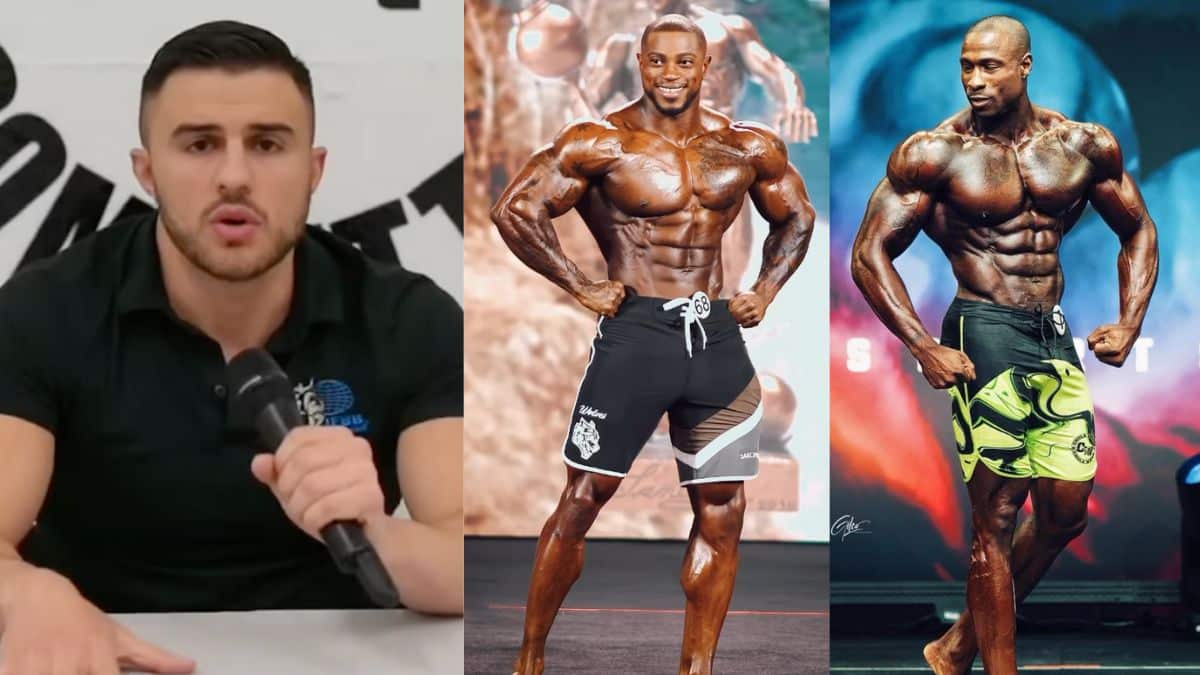
According to Tyler Manion, the physiques of Emmanuel Hunter, Corey Morris, Ryan Terry, Benquil Marigny, and Sidy Pouye represent the direction in which the division is headed.
Emmanuel Hunter
The first name Manion mentioned was 2023 Memphis Pro winner Emmanuel Hunter.
“One guy that competed earlier this year that I want to highlight for getting into a couple of different shows that just happened the last few weeks is Emmanuel (Emmanuel Hunter) won the show in Tennesee. Probably the best he’s ever looked but he has a great Men’s Physique look. His arms and shoulders flow well with his torso. He has a great back. His upper chest could come up a little bit to match the rest of his chest to give him more symmetry, basically, he has to nail his conditioning. He needs to work on that but a great guy to look for for a Men’s Physique look. A very dangerous guy heading into the Olympia later this year.”
Corey Morris
Morris recently took gold in the Men’s Physique class at Jim Manion’s 2023 Pittsburgh Pro.
“Corey Morris. Corey has improved a ton I think on his look over the last few years. Nothing on his torso needs to change. He has a small waist, great chest, full chest, his back has come up considerably, but his feedback that he’s gotten for a while now, and it’s still his feedback, his arms, and shoulders, he needs to work on bringing them down a little bit more for Men’s Physique.”
“Just to touch on mostly everybody I’m talking about from taking heights and weights the last few weeks… these guys would make the new weights that I’m considering right now for Men’s Physique. That’s the other reason I’m highlighting them. Not only do they look the part but they would all make the weight or very close to it.”
Ryan Terry
In addition, Tyler named Ryan Terry who took second in Pittsburgh but first at the New York Pro.
“He [Ryan Terry] has always had a great Men’s Physique look, very balanced physique, exactly what we’re looking for. He still needs a little bit more thickness in his back to really make his back pop the same way as his front. Obviously, he knows from the Olympia till now, he knows the posing has gotten way better. He still needs to nail his posing and work on his posing, especially his back pose. When he gets to the Olympia and to be a threat to obviously Erin and Brandon, just like a lot of these guys, these three guys right here, Emmanuel, Corey, and Ryan brought great looks so far, but it’s not just them.”
Benquil Marigny
Marigny won the 2023 St. Louis Pro and was another physique Tyler highlighted.
“In Pittsburgh, Benquil has competed a lot this year, he won a show he’s qualified. He brings a great look for Men’s Physique too. He still needs a little bit more to his chest and more pop to his back but I thin that will come when he brings his conditioning more.”
Sidy Pouye
Sidy Pouye’s look was highly favored as well. He’s been consistent this year, having earned fourth in Pittsburgh and third at the New York Pro.
“Sidy. Once again, a guy that brought a great look for Men’s Physique with great conditioning, the main factor on him that he needs to fix is posing. He poses himself out of how good he can look. I know because after New York I got the chance to talk to him and work with him. I think he’s going to bringing a look later this year, an even better look for Men’s Physique when he’s posing correctly.”
“All these guys that I just mentioned would most likely make the new weights for Men’s physique. They have a good Men’s Physique look,” added Tyler Manion.
Given Jeremy Buendia’s focus on size for the comeback, it will be interesting to see how the judges evaluate his physique. Buendia aims to dethrone Erin Banks and shocked fans recently with a 4,000-calorie diet he’s using to bulk up.
Rivals Banks and Buendia teased fans of their impending showdown with a special Olympia TV appearance a few months ago. Buendia isn’t taking his nemesis lightly. In a recent appearance in Straight Outta the Lair with seven-time 212 Olympia Flex Lewis, Buendia said he’d have to bring a flawless package to 2023 Olympia if he wanted any chance at taking out Banks.
With the division’s rapid growth and popularity, it’s quickly become one of the main attractions at the annual Mr. Olympia show. As the new rules seemingly favor a leaner look in Men’s Physique, it appears the category is moving away from mass in the future.
RELATED: Jeremy Buendia ‘Hovering Around’ 210 Lbs in Update, Reveals His Steroid Cycle
Watch the full video from the NPC News Online YouTube channel below:
Published: 9 June, 2023 | 12:04 PM EDT
Does Alcohol Affect Muscle Growth?
Alcohol is part of many people’s life. From the occasional celebratory drink to regular weekend-long benders, a large percentage of the population enjoys consuming alcohol. Of course, some people prefer to abstain and don’t drink alcohol at all. But this article is not for them!
Whether you limit yourself to a couple of drinks a month or are a regular happy hour attendee, you probably want to know if and how drinking alcohol affects muscle growth.
The bad news is that alcohol can hurt your gains, especially when consumed regularly and to excess.
In this article, we reveal how alcohol affects muscle growth.
Alcohol and Muscle Protein Synthesis
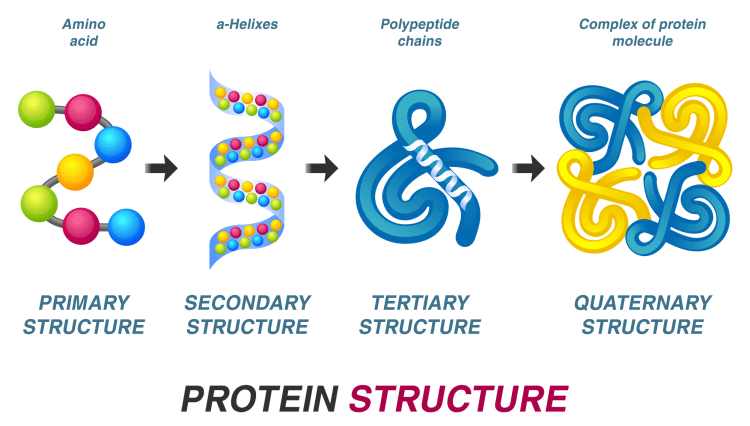
Muscle is constantly being broken down and rebuilt. This is called muscle protein synthesis, or MPS for short. Your workouts cause increased muscle breakdown, and your diet provides the amino acids your body needs to repair and build your muscles and make them bigger and stronger. Try our Protein Intake Calculator.
So, to increase muscle size, muscle building must exceed muscle breakdown.
Unfortunately, studies show that drinking alcohol, especially in large quantities, can decrease muscle protein synthesis (1). It seems that alcohol disrupts the signaling pathways that tell the body how to build muscle. Alcohol consumption can reduce MPS by as much as 37% compared to not drinking alcohol after training.
So, while you can still drink alcohol and build muscle, your rate of progress is likely to be significantly slower. As such, you should avoid consuming alcohol after training and for the next 24-48 hours, which is when MPS tends to be highest.
Alcohol and Testosterone Production
Testosterone is one of the prime anabolic or muscle-building hormones. Working alongside human growth hormone and insulin growth factor-1, testosterone directly and indirectly drives muscle growth.
Testosterone Molecular Structure
Men produce testosterone in their testes, while women make it in their ovaries, and men typically have ten times more testosterone than women. This is why men are generally more muscular than women and find it easier to build muscle mass.
Testosterone is such a potent muscle builder that some athletes and bodybuilders use exogenous testosterone to raise their levels abnormally high. Most anabolic steroids are testosterone derivatives.
Unfortunately, alcohol is bad for testosterone production, and excess consumption can significantly lower your testosterone levels. It appears that, in large quantities, alcohol is toxic to the testes.
While 1-2 drinks won’t have much, if any, impact on your testosterone levels, consuming 4-8 drinks can lower testosterone levels by as much as 40% (2). Regular heavy drinking can even result in testicular atrophy or shrinkage.
Needless to say, this is a literal kick in the balls for muscle growth!
The good news is that this testosterone-lowering effect only lasts a day or so, meaning the occasional big night out won’t hurt your gains too much. However, frequent overconsumption of alcohol will significantly undermine your muscle-building efforts.
Related: Seven Ways to Boost Your Testosterone Naturally
Alcohol and Insulin Resistance
Insulin is another anabolic hormone that plays a crucial role in muscle building. The main function of insulin is transporting nutrients into your muscle cells. It drives both glucose and protein into your muscles, facilitating recovery and growth.
Consuming large quantities of alcohol has been shown to increase whole-body insulin resistance, essentially blocking the flow of nutrients into your muscles (3). This will impair post-workout recovery and, in turn, undermine muscle growth.
In addition, insulin resistance often goes hand in hand with fat gain. This is because the nutrients that should be entering the muscles end up being diverted to the fat cells. So, smaller muscles and a higher body fat percentage – talk about a terrible combination!
Alcohol and Cortisol
Where testosterone and human growth hormone are anabolic or muscle-building substances, cortisol is catabolic, meaning it causes muscle breakdown. Cortisol is often produced in response to stress. However, high alcohol consumption is also linked to elevated cortisol levels (4).
A little cortisol is no bad thing, as it’s one of the triggers of anabolism and muscle growth. However, too much cortisol, or prolonged elevation, will impede muscle growth.
Alcohol and Sleep
Sleep is critical for muscle growth; it’s when your body gets busy repairing the muscle damage caused by your workouts. Anabolic hormone levels tend to rise while you sleep, as does muscle protein synthesis. So, while you’re pushing out the zzzs, your body is busy repairing and rebuilding your muscles. As such, most people should try and score 7-9 hours of sleep per night.
While alcohol can make you drowsy and may even help you drop off to sleep faster, alcohol-fueled sleep is often of poor quality, disrupted, and not especially restful (5). Poor sleep can have a significant impact on your training performance, recovery, and muscle growth.
Interrupted and insufficient sleep can cause cortisol levels to rise, testosterone and growth hormone levels to fall, and insulin resistance to increase. In addition, sleep deprivation can lower your motivation to train and impair your recovery.
This all means that alcohol-fueled sleep is not good and won’t help you build muscle.
Alcohol and Motivation
Let’s face it – building muscle is hard work. It takes consistent effort and determination to push yourself through workouts that are often uncomfortable and even painful. If you aren’t motivated, you will probably miss more workouts than you complete, significantly undermining your progress.
Motivation can be intrinsic or extrinsic, but ultimately, YOU must drag your butt to the gym and do the work required to build muscle.
Regular alcohol consumption, especially when you feel hungover the next day, can severally undermine your motivation to train (6). You’re much more likely to skip workouts, and your motivation to eat well will probably also take a dive.
The bottom line is if you want to stay motivated and skip fewer workouts, you should limit your alcohol intake.
Alcohol and Nutrition
Successful muscle building has as much to do with your diet as it does your workout. Your diet supplies the calories and nutrients your body needs to fuel your training and repair and build your muscles.
While alcohol contains calories, weighing in at seven calories per gram, it doesn’t have any other beneficial nutrients. In fact, alcohol is an anti-nutrient, meaning it uses resources but doesn’t provide any.
Drinking alcohol, especially to excess, can cause you to make improper food choices and reduce your motivation to eat healthily (7). A poor diet will undermine your workouts and impede your muscle-building progress.
How Much Alcohol is Okay for Muscle Growth?
It’s often said that drinking alcohol in moderation is okay and might even be good for you. However, there are no proven benefits associated with regular alcohol consumption – sorry! That said, a couple of drinks now and then probably won’t hurt you (8).
But what does a moderate alcohol intake look like? And will it interfere with your fitness and muscle-building progress?
According to research (1), consuming 0.5g/kg of alcohol or less won’t affect muscle recovery following exercise. So, for someone who weighs 180 lbs., that’s about 2-3 standard-sized drinks. However, consuming 1.5g/kg of alcohol or 8 drinks will significantly impact muscle protein synthesis and undermine your ability to recover and grow.
So, if you want to drink alcohol without derailing your gains, you should limit yourself to no more than a couple of drinks at a time and have a few dry days per week when you don’t drink alcohol at all. You should also avoid binge drinking, where you consume multiple drinks in short succession.
Alcohol Affect Muscle Growth – Closing Thoughts
While some people prefer not to drink, alcohol can be part of a healthy diet. However, when consumed to excess, alcohol can hurt your gains and undermine your health. This is especially true for habitual and binge drinking.
Your body views and treats alcohol as a toxic substance and reacts very negatively to its presence. Consuming alcohol can impair muscle protein synthesis, reduce your testosterone, increase cortisol, and undermine your motivation to train and eat healthily. It also hammers your liver.
Building muscle is hard enough without sabotaging yourself with alcohol!
So, by all means, have the occasional drink if you wish, but if you are serious about building muscle, keep your intake to a minimum, or don’t imbibe it at all.
References:
1 – Parr EB, Camera DM, Areta JL, Burke LM, Phillips SM, Hawley JA, Coffey VG. Alcohol ingestion impairs maximal post-exercise rates of myofibrillar protein synthesis following a single bout of concurrent training. PLoS One. 2014 Feb 12;9(2):e88384. doi: 10.1371/journal.pone.0088384. PMID: 24533082; PMCID: PMC3922864. https://pubmed.ncbi.nlm.nih.gov/24533082/
2 – Vingren JL, Hill DW, Buddhadev H, Duplanty A. Postresistance exercise ethanol ingestion and acute testosterone bioavailability. Med Sci Sports Exerc. 2013 Sep;45(9):1825-32. doi: 10.1249/MSS.0b013e31828d3767. PMID: 23470309. https://pubmed.ncbi.nlm.nih.gov/23470309/
3 – Lindtner C, Scherer T, Zielinski E, Filatova N, Fasshauer M, Tonks NK, Puchowicz M, Buettner C. Binge drinking induces whole-body insulin resistance by impairing hypothalamic insulin action. Sci Transl Med. 2013 Jan 30;5(170):170ra14. doi: 10.1126/scitranslmed.3005123. PMID: 23363978; PMCID: PMC3740748. https://www.ncbi.nlm.nih.gov/pmc/articles/PMC3740748/
4 – Badrick E, Bobak M, Britton A, Kirschbaum C, Marmot M, Kumari M. The relationship between alcohol consumption and cortisol secretion in an aging cohort. J Clin Endocrinol Metab. 2008 Mar;93(3):750-7. doi: 10.1210/jc.2007-0737. Epub 2007 Dec 11. PMID: 18073316; PMCID: PMC2266962. https://www.ncbi.nlm.nih.gov/pmc/articles/PMC2266962/
5 – Park SY, Oh MK, Lee BS, Kim HG, Lee WJ, Lee JH, Lim JT, Kim JY. The Effects of Alcohol on Quality of Sleep. Korean J Fam Med. 2015 Nov;36(6):294-9. doi: 10.4082/kjfm.2015.36.6.294. Epub 2015 Nov 20. PMID: 26634095; PMCID: PMC4666864. https://www.ncbi.nlm.nih.gov/pmc/articles/PMC4666864/
6 – Shamloo ZS, Cox WM. The relationship between motivational structure, sense of control, intrinsic motivation, and university students’ alcohol consumption. Addict Behav. 2010 Feb;35(2):140-6. doi: 10.1016/j.addbeh.2009.09.021. Epub 2009 Oct 1. PMID: 19836901. https://pubmed.ncbi.nlm.nih.gov/19836901/
7 – Fawehinmi TO, Ilomäki J, Voutilainen S, Kauhanen J. Alcohol consumption and dietary patterns: the FinDrink study. PLoS One. 2012;7(6):e38607. doi: 10.1371/journal.pone.0038607. Epub 2012 Jun 12. PMID: 22719905; PMCID: PMC3373562. https://pubmed.ncbi.nlm.nih.gov/22719905/
8 – Chiva-Blanch G, Badimon L. Benefits and risks of moderate alcohol consumption on cardiovascular disease: current findings and controversies. Nutrients. 2019 Dec 30;12(1):108. doi: 10.3390/nu12010108. PMID: 31906033; PMCID: PMC7020057. https://www.ncbi.nlm.nih.gov/pmc/articles/PMC7020057/
L-Sit Exercise Guide: How To, Benefits, Muscles Worked, and Variations
Some exercises look super easy, but when you try them, you fail to get even in the correct position; the L-sit is one of them.
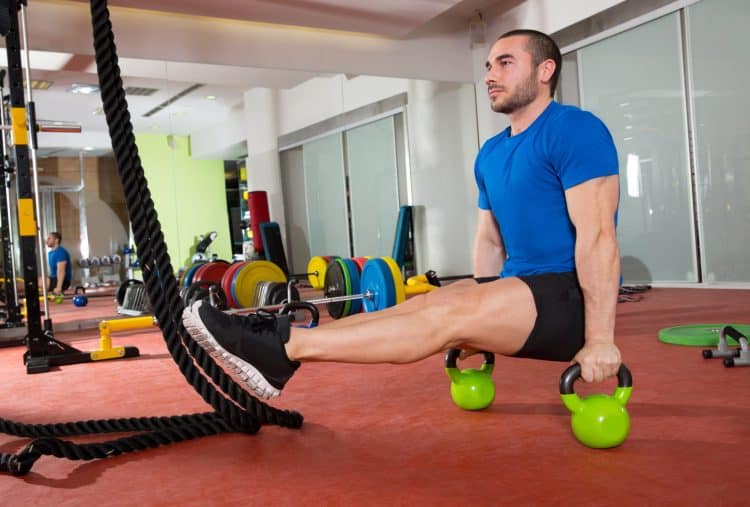
The L-sit is a classic gymnastic movement that will set your core on fire. On the outside, the L-sit looks very easy. You sit on the floor, plant your hands next to your hips, and lift your hips and legs off the ground. However, this is easier said than done.
Beginners that do not have a gymnastics background will most likely find themselves grinding their teeth while they fail to lift themselves off the floor. I have had newbie exercisers tell me they are anatomically unfit to do the L-sit because they have a long torso and short arms. You might experience the same thing.
However, most people falter at doing the L-sit not because of their body mechanics but because of an incorrect form or a lack of core strength.
Since the L-sit is a bodyweight exercise, most people think that they should be able to do it from the get-go. This, however, is not the case. Like most gymnastic exercises, you will be better off starting with an L-sit progression plan.
In this article, we dive deep into the L-sit and cover its fundamentals, an effective progression plan; the muscles worked during an L-sit, its benefits, proper form, the most common mistakes, and the best variations and alternatives.
What is a L-Sit?
L Sit With Kettlebells
The L-sit is an isometric exercise that improves your core strength and balance. Isometric exercises involve static muscle contraction without visible movement in the joint’s angle. The L-sit is a fundamental gymnastic exercise that grew popular thanks to CrossFit. This exercise is also very popular in the calisthenics circuit.
Besides the conventional L-sit, CrossFit WODs (workout of the day) include several variations of this exercise, including L-sit bar pull-ups and L-sit ring pull-ups. The conventional L-sit demands decent core and hip flexor strength. On the other hand, the pull-up variations also engage most of your upper body, including the biceps, lats, traps, rhomboids, and teres major and minor.
Beginners should start practicing this exercise by placing their hands on an elevated object, such as yoga blocks, or perform this exercise on parallettes or parallel bars. If you still cannot perform this exercise, use the progression exercises listed in this article to build the required core strength.
Muscles Worked During L-Sit
The L-sit works the following muscles:
Abs: The core is the primary target muscle of the L-sit. This exercise requires you to keep your core contracted, resulting in a rectus and transverse abdominal recruitment.
Hip Flexors: These muscles run along the front of your upper thigh. You must engage your hip flexors to keep your legs parallel to the floor throughout the exercise.
Glutes and Quads: This exercise involves keeping your glutes and quads contracted to maintain a stable position.
Triceps: You’ll experience triceps stimulation as soon as you lock out your elbows and lift yourself off the floor. Furthermore, pointing your fingers behind you will engage your biceps.
Shoulders: The L-sit involves actively pushing into the floor, which will result in a sick deltoid pump. You will also experience trapezius muscle stimulation as this exercise requires pushing your shoulders back and down.
Benefits of L-Sit
Adding the L-sit to your training regimen entails the following benefits:
Build a Solid Core and Six-Pack
L-sits can help you build abs of steel. Holding your legs parallel to the floor while extended in the air will work muscles in your core that you didn’t know existed. A strong core can also improve your performance in compound exercise and daily functioning.
Enhance Stability and Balance
A strong core translates to robust stabilizer muscles, which can significantly improve your stability. The L-sit also improves your balance and performance in handstands, push-ups, toes-to-bar, deadlifts, and barbell squats.
Improve Posture
The L-sit strengthens the muscles responsible for maintaining an upright and stable spine, which can help improve your posture. This is an excellent exercise for people that spend most of their day sitting.
Boost Hip Flexor Strength
The hip flexors help bring the knee closer to the chest, meaning they are used in activities such as walking, running, jumping, and kicking. Since the L-sit involves holding your legs parallel to the floor, it engages and strengthens your hip flexors.
How To Do L-Sit
This is how to perform the L-sit with the correct form:
Steps:
Sit upright on the floor with your legs extended in front of you.
Place your hands on the floor next to your hips. Spread your hands and curl your fingers slightly so that your fingertips are pushing into the floor.
Straighten your arms and lock out your elbows. Simultaneously engage your lats and push your shoulders back and down.
Push your palms into the floor, engage your core, and lift your hips and legs off the floor. Your legs should be parallel to the floor throughout the exercise.
Your body should resemble an “L” at the top of the exercise.
Hold the position for as long as possible or a specific time.
Return to the starting position.
Repeat for the desired number of sets.
L-Sit Tips:
Keep your quads and glutes contracted and your toes pointed throughout the exercise.
Place your hands on yoga blocks if you have trouble pushing yourself off the floor.
Spreading your hands and pushing your fingertips and palms into the floor will help you maintain your balance.
Maintain an upright torso while pushing yourself off the floor. Bending forward will make lifting your legs off the floor more difficult.
Advanced exercises can wear a weighted vest to make this exercise harder.
In This Exercise:
Target Muscle Group: Abs
Type: Strength
Mechanics: Isometric
Equipment: Bodyweight
Difficulty: Intermediate
Best Rep Range: 30-60 seconds
L-Sit Progression Exercises
Use the following L-Sit progression exercises if you lack the strength to perform the conventional variation of the exercise:
Step 1: Boat Hold
The boat hold is an excellent core exercise that is suitable for trainers of all experience levels. It will help you build the foundational strength for L-sits.
Steps:
Sit upright on the floor and extend your legs in front of you.
Cross your arms in front of your chest.
Engage your core and tilt your torso backward. Anything between 1 to 2 o’clock will work.
Lift your legs off the floor while keeping your knees locked out.
Hold this position for as long as possible.
Pro Tip: If you have trouble maintaining your torso in position, place your hands next to your hips on the floor.
Step 2: Elevation
This L-sit progression exercise involves using an elevated platform, such as yoga blocks or parallettes. Furthermore, you will focus on lifting your hips off the floor while keeping your heels grounded.
Steps:
Sit on the floor with your legs extended and place parallettes on each side of your hips.
Grab the bars with an overhand grip. Your elbows will be bent at this position.
Extend your elbows while pushing your shoulders back and down. You must lock out your elbows at the top, and your hips should be off the floor.
Your heels should be the only point of contact with the floor.
Slowly return to the starting position.
Repeat for 15-20 reps.
Pro Tip: Avoid using your legs to push yourself into a lockout position. Conversely, beginners can bend their knees slightly and push their heels into the floor to generate force.
Step 3: Alternating Leg Lift
In this L-sit progression exercise, you’ll focus on the lockout and lifting one leg at a time.
Steps:
Sit upright on the floor and extend your legs in front of you.
Place your hands on your hip side.
Push your shoulders down and back, and extend your elbows. Your hips should be off the floor at this point. Your heels should be the only point of contact with the floor.
Contract your abs and lift your left leg off the floor until it is parallel to the floor.
Return your left leg to the floor and repeat with the right leg.
Alternate between sides for the recommended reps.
Pro Tip: As you get better at this exercise, lift your legs as high as possible without bending your knees. Hold for a five-second count before lowering your legs to the floor.
Step 4: Tuck Sits (on an elevated platform)
Tuck sits can be incredibly effective in building the required core strength and confidence to perform the L-sit. This is also the first exercise where we bring together most of what we’ve learned up to this point.
Steps:
Sit upright on the floor and extend your legs in front of you.
Bend your knees and plant your heels on the floor as close to your hips as possible.
Place your hands on the sides of your hips.
Push your shoulders back and down and extend your elbows to lift your hips off the floor.
Pull your quads to your chest as you lift your hips off the floor.
Hold for as long as possible.
Pro Tip: Holding your legs close to your chest is easier than maintaining straight legs. You can also use an elevated platform for this exercise if you have difficulty doing it on the ground.
Step 5: Tuck-Sit to L-Sit (on an elevated platform)
We push into the next gear with this L-sit progression exercise. This exercise begins in the tuck sit position and requires you to work into a full L-sit.
Steps:
Follow the steps mentioned above to get into a tuck-sit position.
While keeping your back straight, extend your legs until they are parallel to the floor.
You might lose balance as you extend your legs. In this case, pull your legs back to your chest.
Hold the L-sit position for as long as possible.
Pro Tip: Use elevated platforms for this exercise if you cannot do it on the floor. Performing this exercise on an elevated platform will ensure you have enough space to pull your legs into your chest without having your feet touch the floor.
Step 6: L-Sit
After you have spent enough time practicing the tuck-sit (step four) and tuck-sit to L-sit (step five), the conventional L-sit will be the natural next step. Use the steps mentioned in the “How To Do L-Sit” section to perform the L-sit.
Common Mistakes While Performing L-Sit
Avoid making the following mistakes while performing the L-sit to get the best bang for your buck:
Rounding Back
This is one of the most common mistakes exercisers commit while performing the L-sit. You must avoid hunching your back as you extend your elbows to lift your hips off the floor. Rounding your back makes it harder to lift your legs off the floor.
Skipping Warm-Up
Since the L-sit is a bodyweight exercise, many people skip warming up their bodies, which can hamper their performance. Before doing this exercise, you must spend 5-10 minutes warming up your wrists, arms, shoulders, abs, glutes, hamstrings, and legs to ensure you’re primed to hold this position for as long as possible.
Not Locking Out Your Elbows and Pushing Your Shoulder Back and Down
Maintaining soft elbows while performing the L-sit is a rookie mistake. You must lock out your elbows to ensure optimal stability and balance. Soft elbows usually lead to the rounding of the back. Also, you must push your shoulders back and down to gain an optimal height to lift your legs off the floor comfortably.
Variations and Alternatives of L-Sit
Add the following L-sit variations and alternatives to your training regimen to build a shredded midsection:
L-Sit Pull-Up
After mastering the L-sit, you can progress to the L-sit pull-up for an additional challenge. Most people tend to use their legs to perform a pull-up; however, since you’ll be holding your legs in front of you in this variation, this exercise is much more difficult than the conventional pull-up.
Steps:
Stand under a pull-up bar.
Grab the pull-up bar with a shoulder-wide grip.
Lift your legs until they are parallel to the floor.
Perform a pull-up while holding this position until your chin is over the bar.
Return to the starting position.
Repeat for recommended reps.
Pro Tip: Beginners can perform hanging L-sit until they develop the core strength to perform a pull-up.
L-Sit Pull-Up on Rings
Since you can pull your head between the rings, this exercise is a little easier than the L-sit pull-up on a pull-up bar, where you must pull your body at an angle. However, performing it on the rings requires more core stability.
Steps:
Jump and grab the gymnastic rings with a neutral (palms facing each other) grip.
Lift your legs until they are parallel to the floor.
While keeping your core contracted, perform a pull-up.
Return to the start position.
Repeat for reps.
Pro Tip: Keep your shoulders pulled back and down while performing pull-ups.
Plank
You need a strong core to perform the L-sit. Planks are an incredibly effective beginner-friendly exercise to build the requisite core strength.
Steps:
Get on all fours on the floor.
Place your elbows under your shoulders and plant your forearms on the floor. Your forearms should be parallel to each other.
Extend your legs behind you.
Your body should be in a straight line from head to toe.
Hold this position for as long as possible.
Pro Tip: As you get more experienced, make this exercise more difficult by wearing a weighted vest or placing a weight plate on your back.
Check out our complete plank guide!
Hollow Body Hold
Hollow body hold is an excellent exercise to build core strength. It is used widely in CrossFit gyms to improve your kipping pull-up mechanics.
Steps:
Lie supine on the floor. Extend your arms over your head.
Contract your abs and lift your legs off the floor. Simultaneously lift your shoulders and arms toward the ceiling.
Your hips and lower body should be the only point of contact with the floor.
Hold the position for as long as possible.
Pro Tip: Focus on actively pushing your arms and legs toward the ceiling throughout the exercise.
Check out our complete hollow hold guide!
Toes-To-Bar
Performing toes-to-bar requires significant core strength. You must keep your core engaged throughout the exercise to avoid swinging between reps.
Steps:
Grab a pull-up bar with an overhand shoulder-wide grip.
Lock out your elbows.
Press on the bar using your lats; this will pull your torso behind the bar.
Simultaneously lean back slightly and raise your legs toward the pull-up bar.
Touch your toes to the bar.
Lower your legs to the starting position.
Repeat for recommended reps.
Pro Tip: Perform a kip to stabilize your body and generate momentum to raise your toes to the bar.
Wrapping Up
The L-sit is an isometric exercise that will help you build a strong core, strengthen your stabilizers, improve your balance and posture, and boost hip flexor strength. Mastering this exercise is a must if you are into gymnastics or CrossFit.
The five beginner-friendly progression exercises listed in this article are excellent movements to work toward an L-sit. Perform the variations thrice weekly, and you should be able to perform a picture-perfect L-sit by the end of six weeks. Best of luck!
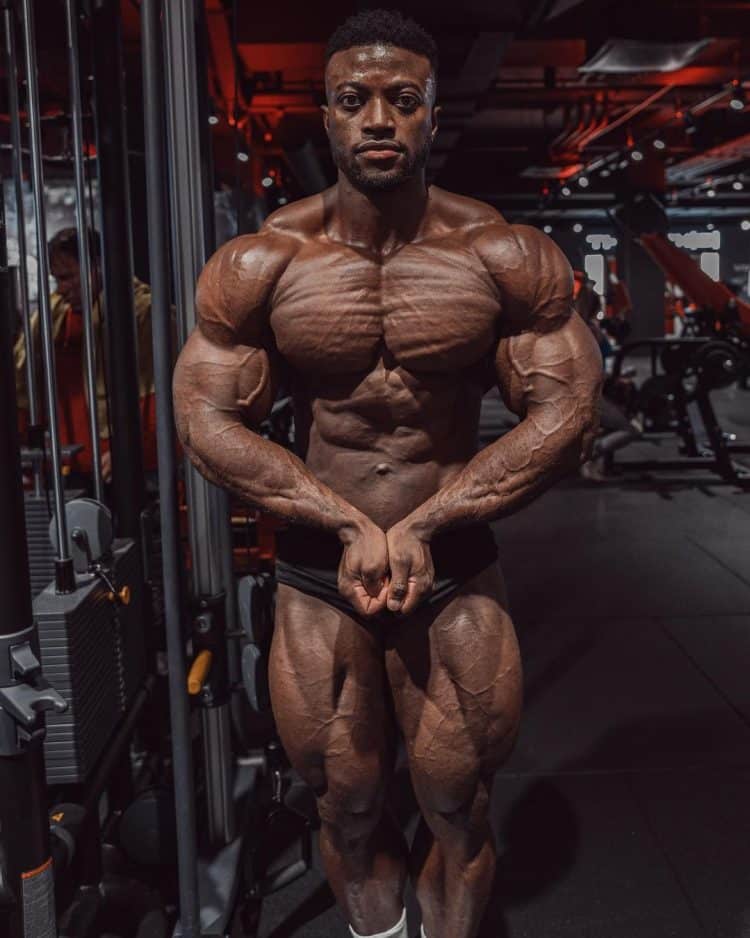
Classic Physique’s Stephane Matala Shares Impressive Update Ahead of 2023 Mr. Big Evolution Pro Portugal
The Classic Physique division is one of the most popular and fastest-growing divisions in bodybuilding. It has attracted a plethora of talent since its debut in 2016. In a recent Instagram post, Stephane Matala shared an impressive physique update four weeks from the upcoming 2023 Mr. Big Evolution Pro Portugal.
Classic Physique was introduced in 2016 to provide a platform for athletes who wish to bring back a Golden Era look. It enables competitors to present a refined blend of muscularity and density without going too far in terms of size, an attribute often favored in the Men’s Open class today. Danny Hester created history by becoming the first-ever Classic Physique Olympia champ. After the crowning of Hester, athletes got a better idea of the physique the judges were looking for.
Former two-time champ Breon Ansley emerged as the second winner after Hester but got dethroned by Canadian bodybuilder Chris Bumstead in 2019. Once Bumstead took the throne, there was no stopping him. The reigning four-time Olympia winner proved to be a dominant champion who has yet to be defeated since taking the throne. He’s also one of the most popular bodybuilders on the planet.
Stephane Matala / Instagram
Bumstead’s fame helped take the division to new heights and attract a ton of new talent. Going into the 2022 Mr. Olympia, German sensation Urs Kalecinski and Brazilian standout Ramon Rocha Queiroz were thought to be major threats to Bumstead. Eventually, ‘CBum’ triumphed over all and won his fourth Olympia title in a row.
Now, another potential future contender Stephane Matala is working his way up and has generated a lot of hype behind him.
Stephane Matala shares an impressive update ahead of the Classic Physique contest
In a recent Instagram post, Classic Physique competitor Stephane Matala shared an impressive physique update four weeks from the 2023 Mr. Big Evolution Pro Portugal, scheduled for July 9 in Estoril, Portugal.
Matala went through a strong posing routine with somber music to paint an artistic picture. He displayed refined muscle quality, shape, and definition along with striations in his upper body. It’s clear Matala is genetically gifted and some argue he has a structure similar to Ramon Dino.
Bodybuilding veteran Rich Gaspari believes the Classic Physique division is preserving the art of bodybuilding in an era obsessed with mass and size. With the addition of Kalecinski, Ramon Dino, and other rising competitors in the Classic Physique, it’s shaping up to be an exciting time for the division.
RELATED: Chris Bumstead ‘Fell Back in Love With Bodybuilding’ After Winning 4th Classic Physique Olympia
The golden standard Bumstead set for the Classic Physique division has been unbeatable so far and it remains to be seen how Matala will fare in higher-level competitions.
Published: 8 June, 2023 | 11:19 PM EDT