
 All Posts By Muscle Insider
Board Certified PHD
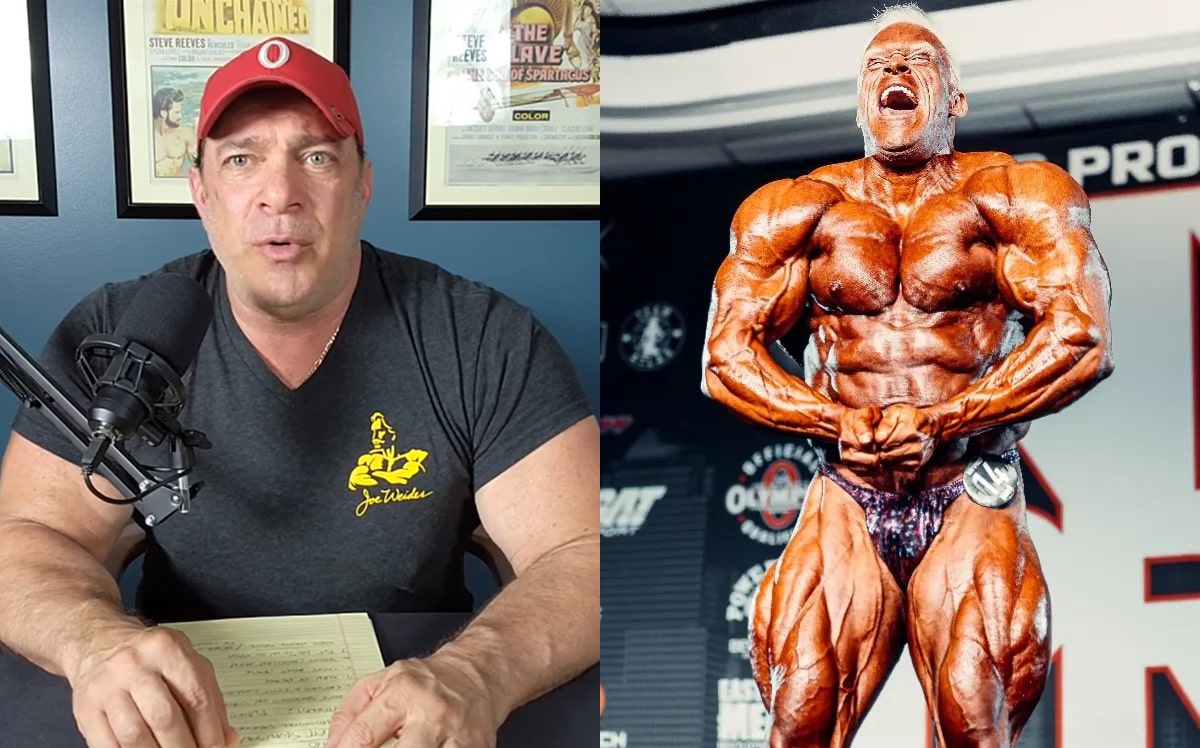
Bob Cicherillo Calls Out Salty Fans Over Contest Results: “Leave Your Feelings at the Door!”
Bob Cicherillo is setting his sights on angry fans who disagree with judges and contest results. In a recent Voice of Bodybuilding podcast, Cicherillo laid out why the judging process is fair and accurate despite fans continually taking issue with scorecards.
Judging in bodybuilding took center stage following last December’s Mr. Olympia competition. The event served as a major shake-up for the Open class as Mamdouh ‘Big Ramy’ Elssbiay lost his title to Iran’s Hadi Choopan. The former two-time champion dropped down to fifth whereas Derek Lunsford and Nick Walker took second and third.
Immediately after the results, fans and some bodybuilding veterans criticized the judging process. Retired pro Zack Khan was among them. He believes Ramy wasn’t given a fair shot on stage in Las Vegas because the 38-year-old was sidelined for most of prejudging.
Months later, competitors gathered in Ohio for the Arnold Classic. Nick Walker entered the contest on short notice as the overwhelming favorite but lost to Samson Dauda. Once again, fans and the bodybuilding community were upset by the results.
While Chris Aceto and Jay Cutler thought Walker could have won, Cicherillo disagrees. He’s taken to multiple podcasts and interviews to explain the judging process. Even though Walker brought the best conditioning of the show, Cicherillo stressed that Dauda presented the best combination of symmetry, balance, shape, proportions, and stage presentation.
Bob Cicherillo Sounds Off On Fans Angry Over Contest Results: ‘The Judges Decide the 1st Call Out’
Cicherillo said his latest video was inspired by fans who called out the 2023 New York Pro scorecards.
“He [Brent Swanson] didn’t end up doing that well in terms of placings, he ended up in ninth place. But this isn’t about where he placed okay, it’s about a post that I saw which inspired me to want to put out on this edition of the Voice of Bodybuilding. In a nutshell, Brent’s got a couple of fans/clients I guess that do personal training from the description. We’ll get to that in a second. They put out a big long lengthy post about after show about how disappointed they were.”
Again, Cicherillo highlighted that a contest is won by a combination of factors, not just conditioning.
“Number two: he was the most shredded guy on stage, you can see it right there. What does that mean? There’s so many components to a bodybuilding show. We’ve been over this folks, over and over and over. The most shredded guy on stage… listen, that’s fantastic. If we were in the Mr. shredded competition, well he might have won the thing.
But there’s size shape, proportion, symmetry, muscularity, presentation, and conditioning, so if that was all he had then obviously, what, you’re [the fans] are 1 for 6? That’s not really helping your cause. That’s strike two,” Bob Cicherillo explained.
According to Bob, only judges can dictate who earned a spot in the first call-out.
“Earned a first call out, we believe he earned a first call out. No, no, you earn a first call out with your physique. You don’t earn a first call out because of these other accolades or because you believe he worked very hard or any of those things. The judges dictate who earns a first call out, I don’t care who you are.
If you’re a former champ, if you’re a former Olympian, I’d say that consideration only goes so far as to what you’re quote entitled to. You’re entitled to step on that stage, alright, in front of a jury of your peers, we call them judges and get compared to the guys next to you. Now, it’s all about comparisons. I don’t care if you won six Olympias, if you’re not at that level at that point if you blew your conditioning and you just weren’t in shape, you don’t earn anything. You earn it by showing up and being in contention with the other guys.”
Cicherillo highlighted that the point of the judging panel is to score shows in an impartial manner. He added that fans shouldn’t bash events because their friends were unable to win.
“You have to take these things out of consideration. When you’re objectively talking about a physique competition because the underlying [problem] here are that he was given a raw deal and that he deserved a top five call out, ‘He should have been in the first call out.’ Our hearts were broken when he wasn’t in that top-five call out and he deserved to be called out. I couldn’t disagree more.
Listen, your hearts might have been broken for your friends personally, listen, I’ve had family around me for 13 years trying to get a pro card. Trust me, their hearts were broken as much as mine. When I would go to another show, another year and come up short of a pro card. They knew how hard I worked. They knew I put 100% in every prep,” said Cicherillo.
“Check your feelings at the door! Stop bashing shows your friends didn’t win.”
The last time fans heard from Cicherillo, he gave his thoughts on the recent 2023 Pittsburgh Pro guest posing spectacle. Big Ramy fulfilled his obligation this year, but Bob thought his physique looked the same or worse than at Mr. Olympia.
Overall, Cicherillo thinks judging should fairly and objectively compare different body types. He admits the system has flaws, but he urges fans not to criticize the shows.
RELATED: Bob Cicherillo Talks Olympia TV Labeling Athletes ‘Failures;’ Terrick El Guindy Apologizes
You can watch the video from the Voice of Bodybuilding YouTube channel below:
Published: 3 June, 2023 | 9:53 AM EDT
The Best Anti-Core Exercises for Increased Lumbar Stability
When most people talk about core training or working out in general, they tend to mean exercises that involve movement. For the core, that means things like crunches, sit-ups, hanging leg raises, Russian twists, side bends, etc.
These exercises usually feature a concentric or shortening phase followed by an eccentric or lengthening phase. After all, what goes up, must come down, right?
However, in many instances, the core muscles work isometrically, generating force without changing length. They contract to prevent unwanted movement, which is what the term core stability means.
Training to prevent movement might seem kinda odd. Still, it’s actually critical for various sports and activities in and out of the gym. For example, squats and deadlifts require incredible levels of static core stability, as do overhead barbell presses, push-ups, and barbell curls.
Fitness experts call these static core strengtheners anti-core exercises. The anti refers to how the core muscles work to prevent movement rather than cause it.
Whether you are training for improved aesthetics, better performance, weight loss, or health, anti-core exercises deserve a place in your workouts. If nothing else, preventing unwanted movement of your lumbar spine could help stop lower back injuries.
In this article, we reveal the best anti-core exercises.
Core Anatomy Basics
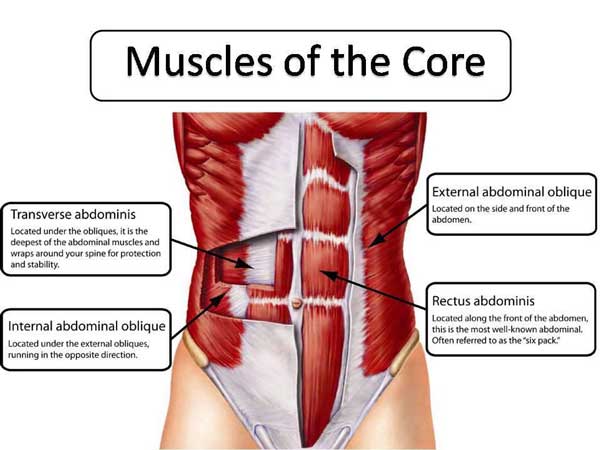
Core is the collective term for the muscles that encircle your midsection. Some fitness folk also like to include other muscles in the core, such as the glutes and lats, but that just confuses matters. So, for the purposes of this article, the core is the muscles in and around the abdominal region.
The primary muscles that make up the core are:
Rectus abdominis
Located on the front of your abdomen, the rectus abdominis is the large, flat muscle that, when you are lean, has that unique six-pack appearance. The rectus abdominis is responsible for the flexion of your spine and also contributes to lateral flexion.
In anti-core terms, the rectus abdominus prevents extension and lateral flexion of the spine.
Obliques
The obliques are essentially your waist muscles. There are two sets of obliques on each side of your abdomen – internal and external. They work together to rotate and laterally flex your spine.
In anti-core terms, the obliques prevent rotation as well as initiating it.
Transverse abdominis
Known as the TVA for short, this muscle surrounds your abdominal contents like a corset or weightlifting belt. It contracts inward to increase intra-abdominal pressure, stabilizing your spine from within.
If prizes were being given for the most critical anti-core muscle, the TVA would be a shoo-in for the gold medal!
Erector spinae
Erector spinae is a group of muscles that run up either side of your spine, including the
iliocostalis, longissimus, and spinalis, each of which can be subdivided into three further sections. The erector spinae are responsible for extending your spine as well as lateral flexion.
In anti-core terms, the erector spinae prevents flexion and lateral flexion.
Movements of the spine
The spine is a column of 33 individual bones called vertebrae. It’s divided into five sections:
Cervical spine – your neck – made up of 7 vertebrae
Thoracic spine – your upper back – made up of 12 vertebrae
Lumbar spine – your lower back – made up of 5 vertebrae
Sacrum – part of your pelvis – made up of 5 immovable/fused vertebrae
Coccyx – your “tailbone” – made up of 4 immovable/fused vertebrae
The cervical, thoracic, and lumbar vertebrae are separated by intervertebral discs, which are sections of tough fibrous cartilage. These discs absorb shock and compress to allow movement.
Speaking of which, the spine is capable of four main movements:
Flexion, i.e., bending forward
Extension, i.e., bending backward
Lateral flexion, i.e., bending sideways
Rotation, i.e., twisting
Movements can also be combined, e.g., flexion with rotation during a twisting crunch.
As such, there are four groups of anti-core exercises, each one designed to prevent one (or more) of these movements. For example, anti-extension exercises emphasize the rectus abdominis, while anti-rotation exercises emphasize the obliques. However, all anti-core exercises involve the transverse abdominis.
Benefits and Drawbacks of Anti-Core Exercises
Not sure if you need to include anti-core exercises in your workouts? Consider these benefits and then decide!
Very functional
Functional training is a very misused term. Many people confuse functional training with technically demanding exercises involving a lot of balance, e.g., squats on a stability ball or curls while slacklining. While these are impressive feats, they’re not examples of real functional training.
In contrast, functional training means doing exercises that have a carry-over to your life outside of the gym, i.e., they improve how you function.
Anti-core exercises train your midsection in a very functional way. People often have to use their core muscles this way during their daily lives, in the gym, or on the sports field. Anti-core exercises will have a significant carry-over to your everyday life.
Spine-friendly
Like any joint, the spine is prone to wear and tear. If you do a lot of crunches, sit-ups, Russian twists, etc., you can cause stress to both the vertebrae and intervertebral discs, and these structures can become worn and damaged.
By their very nature, anti-core exercises involve no movement, so there will much less stress on your vertebrae, spinous ligaments, or discs. In fact, anti-core exercises should not cause lower back stress or pain of any sort – done correctly, of course!
Easy to learn
With no movements to think about, most anti-core exercises are very straightforward and easy to learn. You just have to keep still and prevent movement. That’s not to say these exercises are easy – far from it. However, from a technical performance perspective, the learning curve for most anti-core exercises is pretty short.
While anti-core exercises are mostly beneficial and safe, there are also a few drawbacks to consider:
Usually done for time instead of reps
Many anti-core exercises are held for a predetermined time, e.g., 30 seconds. This means you’ll need to use a timer or be able to see a clock with a second hand. Also, some people prefer to pump out reps, and keeping still may be less appealing.
Elevated blood pressure
Isometric anti-core exercises can cause a short-term increase in blood pressure (1). This is because the muscles are contracted, which reduces blood flow. This should be no issue for people with healthy blood pressure but could be problematic for anyone with hypertension.
This problem can be reduced by never holding your breath during anti-core exercises. Breath-holding can have a significant effect on blood pressure.
Speak to your doctor if you have high blood pressure before doing any of the exercises in this article.
Five Best Anti-Flexion Core Exercises
Anti-flexion exercises emphasize your erector spinae muscles. These exercises are good for improving your posture and protecting your lower back from pain and injuries.
1. Back extension hold
Anti-flexion exercises don’t come much simpler than the back extension hold. Done for time, this exercise teaches you to use your back muscles to resist the pull of gravity. Back extension holds are an excellent stepping stone onto more demanding exercises and is ideal for beginners.
Steps:
Mount your back extension machine (45-degree or horizontal) and get into the mid-point of the exercise so your body is straight. Brace your core and engage your glutes and hamstrings.
Without holding your breath, maintain your position for as long as possible.
Yes, all that shaking is perfectly normal.
Relax, rest a moment, and repeat.
Muscles targeted:
Erector spinae, core, gluteus maximus, hamstrings.
Benefits:
Very easy to learn.
Very accessible as most gyms have a back-extension machine.
Easy to progress/regress by altering the time of each hold.
Tips:
Work up to holding for 2-3 minutes per rep.
Make this exercise harder by holding a weight to your chest or using resistance bands.
Keep your knees slightly bent throughout for comfort and safety.
2. Cobra Superman hold
No back-extension machine? No problem! You can work on your anti-flexion strength with this straightforward floor exercise. On the downside, it can be a little uncomfortable, so make sure you use a mat to avoid any unnecessary pain.
Steps:
Lie on the floor on your front and place your hands on your temples.
Lift your head, chest, arms, legs, and feet a few inches off the floor so you’re balancing on your abdomen and hips only.
Hold this position for as long as possible.
Muscles targeted:
Erector spinae, gluteus maximus, hamstrings, core, trapezius, rhomboids, deltoids.
Benefits:
An ideal exercise for home workouts.
No equipment required.
Good for improving spine mobility.
Tips:
Place a folded mat under your hips for comfort.
Take care not to hyperextend your spine.
Do not hold your breath.
3. Dual kettlebell front rack carry
While stationary exercises like back extension and Superman/cobra holds are effective, they don’t teach you to stabilize your spine during movement. As such, they’re good preparatory exercises but also need to be progressed. Dual kettlebell front rack carries train you to resist flexion while moving your legs, so they’re much more functional.
Steps:
Rack and hold two kettlebells on your shoulders. Pull your shoulders down and back, and brace your core. Look straight ahead.
Keeping your torso upright, walk around your training area until you start to tire.
Lower the weights to the floor, rest, and repeat.
Muscles targeted:
Erector spinae, gluteus maximus, hamstrings, core, trapezius, rhomboids, deltoids.
Benefits:
A highly functional exercise.
Good for integrating your core with your upper and lower body.
An excellent general strength and conditioning exercise.
Tips:
Use dumbbells instead of kettlebells if preferred.
Use gym chalk to stop your hands from slipping.
Use one weight only to add anti-lateral flexion to this exercise.
4. Romanian deadlift
While most people do RDLs to strengthen their glutes and hamstrings, it’s actually a very effective anti-flexion exercise. However, you need to be able to resist flexion in isolation first, e.g., with back extension holds, before attempting this exercise.
Steps:
Hold a barbell with an overhand, shoulder-width grip. Stand with your feet between shoulder and hip-width apart, knees slightly bent.
Brace your core and pull your shoulders down and back.
Hinging from your hips, lean forward and lower the bar down the fronts of your legs. Do NOT round your lower back.
Drive your hips forward, stand up straight, and repeat.
Muscles targeted:
Erector spinae, gluteus maximus, hamstrings, core, trapezius, rhomboids, deltoids, forearms.
Benefits:
An excellent exercise for your entire posterior chain.
Easy to scale by adding or subtracting weight.
A proven way to learn how to hip hinge, which is a prerequisite for many more demanding exercises, such as kettlebell swings and power cleans.
Tips:
Remove your shoes to keep your heels on the floor and your weight toward the back of your feet.
Use chalk or lifting straps to reinforce your grip.
Keep your chest up and your lower back slightly but tightly arched throughout.
Related: Romanian Deadlifts (RDLs) Guide
5. Deadlift
The barbell deadlift is one of the best bang-for-your-buck exercises you can do. Working a large percentage of the muscles in your body, deadlifts have the potential to build muscle size and strength like no other. However, the key to a good deadlift is keeping your spine extended, which is what also makes them an excellent anti-flexion exercise.
Steps:
Place a loaded barbell on the floor. Ideally, the bar should be about mid-shin height.
Stand with your toes under the bar, feet between shoulder and hip-width apart.
Bend down and hold the barbell with an overhand or mixed shoulder-width grip.
Straighten your arms, drop your hips, and lift your chest. Brace your core and pull your shoulders back and down.
Drive your feet into the floor and stand up, ensuring your hips don’t rise faster than the bar.
Push your hips back, bend your legs, and lower the weight back to the floor.
Allow it to settle for a couple of seconds, reset your core and grip, and repeat.
Muscles targeted:
Erector spinae, gluteus maximus, hamstrings, quadriceps, core, trapezius, rhomboids, deltoids, forearms.
Benefits:
One of the most productive barbell exercises you can do.
Teaches you how to lift heavy objects off the floor safely.
A very time-efficient exercise that trains multiple muscle groups at the same time.
Tips:
Place your barbell on blocks or in a power rack if you tend to round your back when deadlifting from the floor.
Do NOT bounce the bar off the floor. Instead, allow the weight to “go dead” between reps for safety and best results.
Experiment with an overhand and mixed grip to see which you prefer.
Related: 9 Weeks to a Bigger Deadlift Program
Five Best Anti-Extension Core Exercises
Anti-extension exercises target your rectus abdominis. Working on your anti-extension strength will lessen the likelihood of hyperextending your spine during athletic and everyday activities.
1. Plank
The plank is the original anti-extension core exercise. With roots in yoga and Pilates, this exercise has been around for centuries. However, despite being so common, many people do this exercise incorrectly. Don’t be one of them!
Steps:
Kneel down and rest your forearms on the floor. Your elbows should be under your shoulders, lower arms parallel. Brace your core and pull your shoulders back and down.
Walk your feet out and back to form a straight line with your shoulders and hips.
Hold this position for the required duration. However, do not hold your breath.
Muscles targeted:
Rectus abdominus, core, hip flexors.
Benefits:
No equipment required.
An excellent preparatory exercise for more advanced movements.
An easy exercise to progress or regress.
Tips:
Try to increase muscle tension instead of holding for excessively long durations.
Bend your legs and rest on your knees to make this exercise easier.
Rest your forearms on a stability ball to make this exercise more challenging.
Related: Plank Progressions and Variations for Stronger Abs
2. Dead bug
Dead bugs teach you to resist extension while moving your arms and legs, which is how your core muscles often have to work in nature. This is a highly functional anti-core move that’s suitable for all levels of exerciser.
Steps:
Lie on your back with your legs bent and arms extended up toward the ceiling. Brace your core and press your lower back into the floor.
Extend your left arm and right leg and lower them to the floor. Keep your lower back pressed down.
Return to the starting position and repeat on the opposite side.
Continue alternating arms/legs for the duration of your set.
Muscles targeted:
Rectus abdominus, core, hip flexors.
Benefits:
A very lower back-friendly exercise.
A very functional anti-extension core exercise.
No equipment required, so ideal for home workouts.
Tips:
Make this exercise easier by only lowering your arms OR legs.
Make it more challenging by lowering both arms and legs together.
Increase the intensity of this exercise by holding dumbbells or a medicine ball.
3. Overhead Pallof press
The Pallof press was invented by Bostonian physical therapist John Pallof. Unlike many anti-core exercises, this one uses weights to overload your muscles. As such, it can be progressed just like any other strength-training exercise, i.e., by increasing the load. Unlike the traditional anti-rotation Pallof press, this is an anti-extension exercise.
Steps:
Attach a rope handle to a high pulley. Grab the handle and then turn your back to the cable machine. Hold your hands at shoulder height. Brace your core and adopt a split stance for balance.
Without leaning forward or backward, raise your arms above your head. Note how the tension on your core increases as you extend your arms.
Lower your hands back to your shoulders and repeat.
Muscles targeted:
Rectus abdominis, core, pectoralis major, latissimus dorsi, deltoids.
Benefits:
Can be made as easy or as challenging as required by adjusting the weight.
Teaches you how to integrate your upper and lower body with your core.
A good exercise for improving shoulder mobility and stability.
Tips:
The narrower/closer your feet are, the more challenging this exercise becomes.
You can also do this exercise with a resistance band.
Experiment with different height cables to see what works best for you.
4. Rollout
Rollouts are like a moving plank. As you extend your arms, the tension on your core increases dramatically, and you’ll have to work harder to prevent lumbar spine extension. Rollouts also provide an intense lat workout. An ab roller is an excellent investment!
Steps:
Kneel down and hold your roller with an overhand grip. Place the roller on the floor in front of your knees. Brace your core and pull your shoulders back and down.
Push the roller out in front of you and lower your chest and abdomen down to the floor. Do not allow your lower back to extend.
Using your abs and lats, pull the roller back up to your legs.
That’s one rep – keep going!
Muscles targeted:
Rectus abdominus, core, latissimus dorsi, triceps.
Benefits:
A low-tech exercise that’s ideal for home workouts.
Can be modified to suit most levels of exerciser.
A challenging, effective anti-extension core exercise.
Tips:
Do this exercise from standing for a more intense workout.
Don’t extend your arms so far to make this exercise less challenging.
No ab roller? No problem! You can also do this exercise with a barbell.
Related: Rollouts: Benefits, Technique, And Alternatives
5. Extended plank
Planks are an excellent exercise. However, if you can do them for over a minute or two, they probably aren’t challenging enough to increase core strength. This variation takes your hands and feet further apart to make them much more demanding.
Steps:
Firstly, lie on your back with your arms stretched out to the side. Make marks on the floor with your fingertips to determine your “wingspan.”
Next, place your feet on one mark and your hands on the other. This is your extended plank position.
Brace your core and hold the extended plank position for as long as possible, taking care not to hyperextend your lumber spine or hold your breath.
Muscles targeted:
Rectus abdominus, core, hip flexors.
Benefits:
No equipment required.
A much more challenging way to do planks.
An excellent anti-extension move for advanced exercisers.
Tips:
Shorten the distance between markers if you cannot do this exercise correctly, or you can feel it in your lower back.
Ensure your hands are dry and won’t slip to avoid accidentally face-planting the floor.
This is a very challenging core exercise, so proceed with caution.
Five Best Anti-Lateral Flexion Core Exercises
Anti-lateral flexion exercises strengthen your obliques, rectus abdominis, and erector spinae muscles, albeit one side at a time. Improving your ability to resist lateral flexion will ensure you can keep your torso upright when dealing with unilateral or unbalanced loads.
1. Side plank
The side plank is an excellent introduction to anti-lateral flexion exercises. It’s a little harder than front planks but just as simple to learn. This exercise is popular in group workout classes for a reason!
Steps:
Lie on your side and rest on your forearm. Your body and legs should be straight. Brace your core.
Lift your hips off the floor and hold them up for the required duration.
Lower your hips back to the floor, roll over, and repeat on the opposite side.
Muscles targeted:
Obliques, rectus abdominus, erector spinae, deltoids.
Benefits:
No equipment required, so ideal for home workouts.
Easy to learn and master, so perfect for novice exercisers.
An excellent preparatory exercise for more demanding anti-lateral flexion movements.
Tips:
Rest your elbow on a folded exercise mat or foam pad for comfort.
Bend your legs to make this exercise easier.
You can also do this exercise with your supporting arm extended:
2. Single-arm farmer’s walk
Exercises don’t come much more functional than the single-arm farmer’s walk. However, despite its simplicity, this exercise can be extremely challenging. All you need is a single dumbbell, kettlebell, or heavy bag, so this exercise is ideal for home workouts.
Steps:
Hold a heavy weight in one hand, arm by your side. Brace your core and make sure your hips and shoulders are level.
Without leaning sideways, go for a walk around your training area.
On completion, lower the weight to the floor, swap hands, and repeat.
Muscles targeted:
Obliques, rectus abdominus, erector spinae, forearms.
Benefits:
A highly functional core.
Can be modified for all levels of strength by increasing or reducing the weight.
An excellent way to develop a stronger, more enduring grip.
Tips:
Chalk your hands or use lifting straps to reinforce your grip if necessary.
Walk in zigzags to destabilize the weight and make this exercise more demanding.
Take care not to lean sideways or shrug your shoulders during this exercise.
3. Single-arm waiter’s walk
The single-arm waiter’s walk is similar to the farmer’s walk, but the weight is held overhead and not down by your side. This increases the stability demand of this exercise. Take care not to go too heavy too soon with this exercise; it’s harder than it looks!
Steps:
Lift and hold a single dumbbell or kettlebell overhead. Brace your core and engage your shoulders and upper back to stabilize the load.
Without leaning sideways, go for a walk around your training area.
On completion, lower the weight to the floor, swap sides, and repeat.
Muscles targeted:
Obliques, rectus abdominus, erector spinae, deltoids.
Benefits:
A challenging and effective anti-lateral flexion exercise.
Builds stronger, more stable shoulders.
Can be modified for all levels of strength by increasing or reducing the weight.
Tips:
Chalk your hands or use lifting straps to reinforce your grip if necessary.
Walk in zigzags to destabilize the weight and make this exercise more demanding.
Take care not to lean sideways or shrug your shoulders during this exercise.
4. Single-arm overhead press
Overhead presses are great for building bigger shoulders and triceps. However, when you switch from using both arms to just one, they become an excellent ant-lateral flexion exercise. Requiring just one weight, this anti-core move is ideal for home workouts.
Steps:
Hold a dumbbell or kettlebell in one hand at shoulder height. Stand with your feet shoulder-width apart and brace your core. Make sure your hips and shoulders are level.
Without leaning sideways, press your weight up and overhead to arm’s length.
Lower the weight back to your shoulder and repeat.
Switch hands and do the same number of reps with your other arm.
Muscles targeted:
Obliques, rectus abdominus, erector spinae, deltoids.
Benefits:
A very functional upper-body and core exercise.
An excellent way to identify and fix left-to-right strength imbalances.
A very accessible, practical exercise.
Tips:
Do this exercise in front of a mirror to ensure you’re keeping your shoulders level.
Use less weight than you would for a two-handed overhead press.
You can also do this exercise with a barbell, which is an exercise called the javelin press:
5. Suitcase deadlift
The suitcase deadlift is so-called because it’s the same technique you’d use to pick up a single bag at the airport. This awesome exercise teaches you how to maintain a neutral and stable spine while generating force with your legs.
Steps:
Place a kettlebell or dumbbell on the floor and then stand sideways on to it. The handle should run parallel to your feet.
Squat down and grab the handle with a neutral or palms-in grip.
Pull your shoulders down and back, brace your core, and look straight ahead.
Drive your feet into the floor and stand up straight, taking care not to lean sideways.
Lower the weight back to the flood and repeat.
Turn around and do the same number of reps on the opposite side.
Muscles targeted:
Obliques, rectus abdominus, erector spinae, gluteus maximus, hamstrings, forearms.
Benefits:
A high degree of crossover with activities outside of the gym.
An effective and functional anti-lateral flexion exercise.
An excellent deadlift assistance exercise.
Tips:
Use gym chalk or lifting straps to stop your hands from slipping.
Do this exercise in front of a mirror to ensure your torso, hips, and shoulders are straight.
Experiment with your stance width to see what works best for you.
Five Best Anti-Rotation Core Exercises
Anti-rotation exercises target your obliques. Having stronger obliques will help you prevent unwanted twisting during activities like running, kicking, and throwing. Anti-rotation is especially important during contralateral activities where you use one arm and the opposite leg, e.g., running.
1. Bird-dogs
Bird-dogs are one of the most basic anti-rotation exercises around. Ideal for beginners, this exercise teaches you how to stabilize your core as you move your arms and legs. Bird-dogs are also an excellent muscle activation exercise and are perfect for warm-ups.
Steps:
Kneel on all fours with your shoulders over your hands and your hips over your knees.
Brace your core and set your shoulders down and back.
Keeping your hips and shoulders level, extend your right arm and left leg.
Lower them back to the floor and repeat.
On completion of your set, swap sides and do the same number of reps with the opposite arm and leg. Or, if preferred, you can use an alternating arm and leg action.
Muscles targeted:
Obliques, rectus abdominis, gluteus maximus, hamstrings, deltoids, erector spinae.
Benefits:
An excellent exercise for lower back pain sufferers.
A great movement for beginners.
No equipment required, so ideal for home workouts.
Tips:
Kneel on a folded exercise mat for comfort.
Use ankle/wrist weights to make this exercise more challenging.
You can also do this exercise in a high plank position like this:
2. Pallof press
The Pallof press is one of the most widely-performed anti-rotation core exercises. Popular with almost every type of exerciser, it’s safe to say that this move delivers. If you’ve never done Pallof presses before, you are in for a treat, but if you’re already doing them, you should definitely continue!
Steps:
Attach a D-shaped handle to a cable machine set to mid-chest height.
Stand side-on to the pulley and hold the handle on both hands. Your feet should be about shoulder-width apart, with your knees slightly bent. Brace your core.
Pull your hands into your chest and step away from the machine to load the cable.
Without moving your hips or shoulders, extend your arms out in front of you. Feel how the tension on your muscles increases as you straighten your arms.
Bend your arms and return your hands to your chest.
Repeat for the required number of reps and then switch sides.
Muscles targeted:
Obliques, rectus abdominis, erector spinae, pectoralis major, deltoids, triceps,
Benefits:
An ideal exercise for beginners.
A very spine-friendly anti-core exercise.
Very scalable – just adjust the load to reflect your current strength.
Tips:
You can also do this exercise with a resistance band.
Vary the height of your arms to work your core from different angles.
Try doing Pallof presses in a half-kneeling position for variety, like this:
3. Single-leg Romanian deadlift
While regular Romanian deadlifts are an excellent anti-flexion exercise, switching to one leg/one arm means you’ll also have to work hard to prevent twisting. This exercise is also great for improving balance and stability and is ideal for runners and other athletes.
Steps:
Stand with your feet together and a dumbbell or kettlebell in your left hand. Shift your weight over onto your right foot. Brace your core and pull your shoulders back and down.
Hinge forward from your hips and lower the weight down the front of your leg. Extend your left leg out behind you for balance.
Stand back up and repeat.
Rest a moment and then do the same number of reps on the opposite leg, remembering to switch hands, too.
Muscles targeted:
Obliques, hamstrings, gluteus maximus, rectus abdominis, erector spinae.
Benefits:
A time-efficient way to train your core and lower body simultaneously.
An excellent exercise for better balance and coordination.
Easier on your lower back than two-legged Romanian deadlifts.
Tips:
Rest your non-working foot lightly on the floor for balance if needed, i.e., B-stance or kickstand RDLs.
Try holding the weight in the same hand rather than the opposite hand. This is considerably more demanding.
Do this exercise next to a wall or handrail for balance if required.
Related: Why the Single Leg Romanian Deadlift Deserves to Be the Hero of Your Workout
4. Renegade row
Renegade rows are among the most challenging anti-rotation exercises, even with light to moderate weights. However, if you’ve mastered Pallof presses and can do bird-dogs in your sleep, this is the exercise you’ve been waiting for!
Steps:
With a dumbbell in each hand, squat down, and place them on the floor.
Walk your feet out into the push-up position. Brace your core and tense your legs.
Bend one arm and row your dumbbell up and into your lower ribs.
Lower the weight back to the floor, switch arms, and repeat.
Alternate arms for the required number of reps.
Muscles targeted:
Obliques, rectus abdominus, latissimus dorsi, biceps, triceps, deltoids, erector spinae.
Benefits:
A total core exercise that teaches you to stabilize your core as you move your arms and legs.
A time-efficient conditioning exercise that burns lots of calories.
A challenging movement that’s ideal for intermediate and advanced exercisers.
Tips:
Wear a weighted vest to make this exercise even harder.
Use hexagonal dumbbells for increased stability and safety.
Combine renegade rows with push-ups for a complete upper-body and core workout:
Related: Renegade Rows Guide
5. Single-arm cable chest press
While the single-arm chest press is not an especially good exercise for your pecs, it is an excellent anti-rotation core exercise. It teaches you how to integrate your core with your upper and lower body.
Steps:
Attach a D-shaped handle to a chest-high cable machine. Hold the handle and turn your back on the machine so the cable runs outside your arm. Adopt a split stance for balance. Brace your core.
Keeping your hips and shoulders stationary, push your arm forward and out to full extension.
Bend your arm, bring the handle back to your chest, and repeat.
Switch sides and do the same number of reps with the other arm.
Muscles targeted:
Obliques, rectus abdominus, pectoralis major, deltoids, triceps, erector spinae.
Benefits:
A very lower back-friendly anti-rotation exercise.
Infinitely scalable by increasing or reducing the weight.
Suitable for beginner, intermediate, and advanced exercisers.
Tips:
Press up at an incline to change the feel of this exercise.
Do this exercise with your feet together to challenge your core and balance more.
Do this exercise with a resistance band or in a half-kneeling position:
Anti-Core Exercises – FAQs
Do you have a question about anti-core exercises? No problem, because we’ve got the answers!
1. How many reps and sets should I do?
There is no magic number of reps you should use to train your core. You will make progress whether you do 10 or 30 reps per set. That said, lower reps are generally more time-efficient, so it’s worth choosing exercises that are demanding enough to fatigue your muscles relatively quickly, e.g., between 12-20. Wherever possible, avoid very high-rep sets, e.g., 50.
In terms of sets, 3-5 should be sufficient for most people. If you can do more, the chances are that you a) aren’t getting close enough to failure or b) are resting too long between efforts.
2. How often should I do anti-core exercises?
It’s generally accepted that it takes 48-72 hours for a muscle or muscle group to recover from a workout. As such, you should aim to do anti-core exercises 2-3 times per week on non-consecutive days, e.g., Monday and Thursday, or Monday, Wednesday, and Friday. This provides a good balance between work and recovery.
Training your core more often, i.e., daily, won’t necessarily produce better results, and could even lead to overtraining.
3. Will anti-core exercises give me a six-pack?
While doing anti-core exercises will develop your six-pack muscle (the rectus abdominis) and other critical core muscles, you won’t be able to see them until your body fat percentage is low enough. This usually means under ten percent for men and 15 percent for women.
It’s true what they say – six-pack abs are made in the kitchen, and your diet will determine if your abs and core muscles are visible.
4. Are anti-core exercises safe?
Because they involve minimal movement, most anti-core exercises are very safe. As long as you brace and stabilize your spine correctly, there should be very little stress on your intervertebral discs or spinous ligaments, so many are even okay for folk who suffer from back pain.
That said, exercises that involve additional movements, e.g., suitcase deadlifts and single-arm overhead presses, are somewhat riskier than static exercises like planks and side planks.
However, if performed correctly and with appropriate loads, there is a very low risk of injury with most anti-core exercises.
5. Do I have to do anti-core exercises – aren’t regular core exercises enough?
While all core exercises are beneficial, anti-core exercises are often more functional. That’s because you often need to use these muscles to prevent unwanted movement of your lumbar spine, e.g., during deadlifts, push-ups, and overhead presses.
If your core is strong, you may not need to do a lot of anti-core training. However, if your lumbar spine lacks the stability it needs, then anti-core exercises are a must.
Wrapping Up
Whether you’re training for performance, aesthetics, or health, your workouts should include anti-core exercises. Anti-core exercises teach you how to stabilize your lumbar spine, which will protect you from lower back injury.
A more stable spine will also let you do more reps with heavier loads, making the rest of your workout more effective.
With 20 anti-core exercises to choose from, you have more than enough options to keep you busy and progressing for years to come. Include anti-core exercises in all your midsection workouts for best results.
References:
Hanson P, Nagle F. Isometric Exercise: Cardiovascular Responses in Normal and Cardiac Populations. Cardiol Clin. 1987 May;5(2):157-70. PMID: 2884033. https://pubmed.ncbi.nlm.nih.gov/2884033
Aaron Donald Workout Routine and Diet Plan
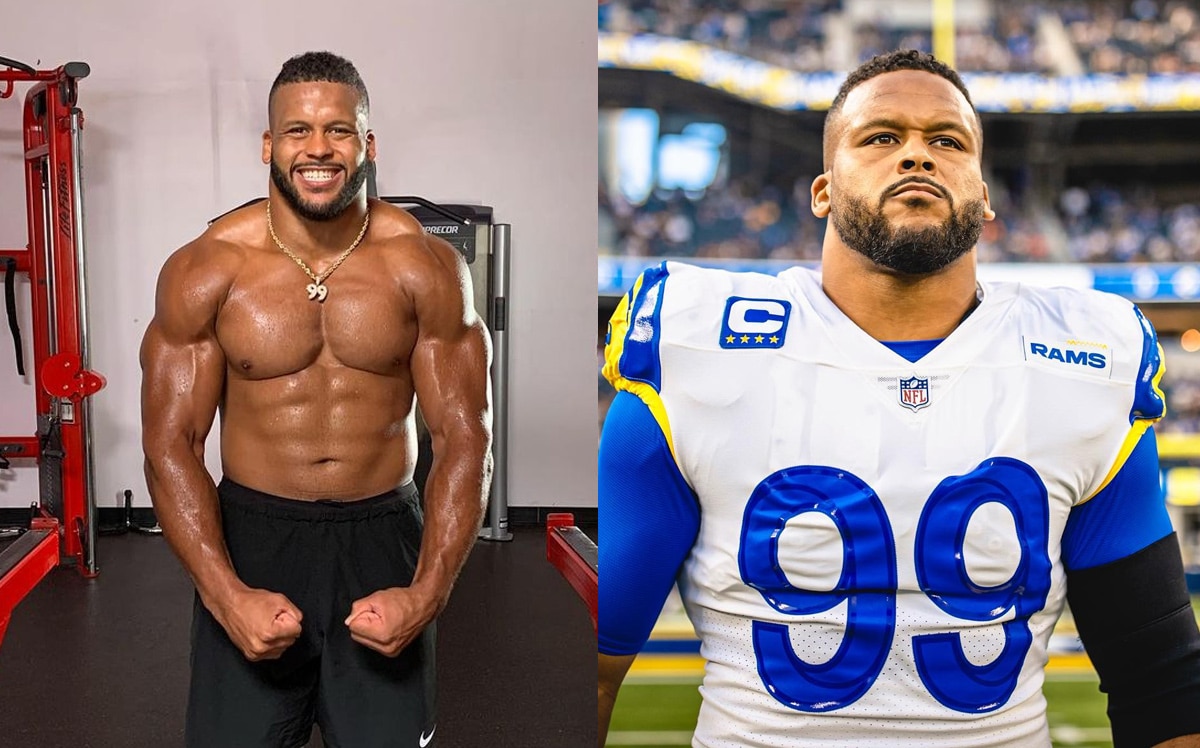
Aaron Donald is an American Football player. He is a defensive tackle for the Los Angeles Rams of the National Football League (NFL). Donald has been named Defensive Player of the Year numerous times and he is considered among the best defensive players in the sport. This is his complete profile, biography, workout, diet as well as statistics.
Aaron Donald Statistics
Full Name: Aaron Charles Donald
Weight
Height
Age
280 lbs (127 kg)
6’1” (185 cm)
32 years
Date of Birth
Place of Birth
Nationality
May 23rd, 1991
Pittsburgh, Pennsylvania
American
Aaron Donald Biography
Early Life
Aaron Charles Donald was born on May 23rd, 1991 to working class parents in Pittsburgh, Pennsylvania. He attended Penn Hills High School where he played high school football. However, it was not a natural progression of his interests. As a kid, Aaron was lazy and did not have a fruitful routine in his day. His father introduced him to training to add structure to his daily routine. By the time Aaron turned 12, he and his father used to wake up as early as 4:30 AM and train in the basement of their house. The discipline thus imbibed in Aaron helped him pursue the athletic career.
During his collegiate athletic career, Aaron Donald played as a reserve defensive end. As a sophomore, Donald moved up in the starting lineup in 2011 and turned it into a breakthrough campaign. In the senior season, the Pittsburgh native became one of the most effective defensive players in the NCAA. He received the ACC Defensive Player of the Year honor and was also an All-American.
Related: Strongest NFL Players in the World
Career
Aaron Donald was drafted by the St. Louis Rams in the first round in the 2014 NFL Draft. The Pittsburgh native signed a $10.3 million four-year rookie contract with the St. Louis Rams. Donald made the regular season debut against the Minnesota Vikings in the 2014 season and also got his first career start against the San Francisco 49ers. He became one of the rookies selected for the 2015 Pro Bowl and also won the 2014’s NFL Defensive Rookie of the Year award.
His career has only progressed after that point. Donald is regarded as one of the greatest defensive players in the history of the NFL. He has won several awards for his contribution to the sport. Some of which include:
Super Bowl Champion
3-time NFL Defensive Player of the Year Award – 2017, 2018 and 2020
2-time Sporting News NFL Player of the Year Award – 2018 and 2020
5-time Pro Football Focus Defensive Player of the Year – 2015, 2017, 2018 and 2020
7-time First Team All-Pro selection – 2015 to 2021
9-time Pro Bowl Selection – 2014 to 2022
Aaron Donald Workout Routine
Aaron Donald was accustomed to a fitness and health oriented lifestyle even as a child. He woke up at 4 AM every single day to work out with his father. These training sessions lasted two hours and took place in the basement of their family house. This discipline developed in early life stayed with Aaron for the rest of his life and kept his interest in training alive.
In spite of the naturally gifted athletic frame and immense strength, Aaron always strived to be the hardest worker in the room. He keeps committed to the craft. A lot of this can be attributed to the tough and disciplined upbringing his father gave him.
Aaron Donald follows a six-day training week followed by one rest day for recovery. He draws motivation from his team members who have a similar drive and level as him.
A typical training week in Aaron Donald’s off-season routine looks like this:
Monday – Abs Workout
Core strength is of utmost importance in Aaron Donald’s athletic endeavours. It requires a lot of hard work but develops Aaron’s core strength, stability and balance. It includes:
Tuesday – Lower Body Workout
One cannot ignore the lower body and still be a top XX player. Aaron Donald dedicates Tuesday’s training session to the lower body and ensures that all the major muscles like quadriceps, hamstrings, glutes and calves get the necessary amount of work.
Wednesday – Speed and Agility Training
Aaron is a defensive tackle and it is essential for him to react quickly, be fast and flexible. Agility training helps improve posture and endurance. It also reduces the chances of injury. The speed and agility training includes:
Sprints
10 meter sprints (3 reps)
25 meter sprints (3 reps)
Agility
Suicide Sprints (3 reps)
Agility Ladder (3 reps)
Burpees (3 sets of 10 reps)
Thursday – Cardio Session
To increase endurance and stamina, Aaron Donald performs cardio exercises on Thursday. These are typically exercises like treadmill, exercise bike or elliptical machines that get the heart rate up, burn fat and strengthen the cardiovascular system.
Friday – Upper Body Strength Workout
Aaron Donald dedicates the Friday training session to upper body strength exercises. This training session is a combination of compound and isolation movements that help gain muscle mass and strength.
Saturday – Full Body Strength Training
A full body strength training session follows the upper body workout and Aaron Donald does following exercises:
Sunday – Rest Day
Giving the body time to recover from the wear and tear is also equally important, especially when you have to aim for performance longevity as a professional athlete. Aaron Donald takes rest on Sunday to let his body recuperate. However, he might go out for easy walks or do some active recovery drills like stretching.
Aaron Donald Diet
Most NFL players include high amounts of protein in their diet. The total share of protein may be as high as 40 percent of the total caloric intake in most cases. However, Aaron Donald takes a much more balanced approach. His diet consists of 20 percent protein, 30 percent fat and nearly 50 percent carbohydrates.
He has to eat nearly 5000 calories every single day to sustain and provide energy to his large and muscular frame. Getting that many calories involves a lot of eating throughout the day.
Los Angeles Rams dietician Joey Blake guides Aaron through the diet and helps him adjust the caloric intake based on his observations.
A typical day of eating in Aaron Donald’s routine looks like this:
Breakfast
2 Protein Smoothies with Greens
5 Cups of Milk
Morning Snacks
2 Protein Smoothies
5 Cups of Milk
Lunch
2 Protein Smoothies
5 Cups of Popcorn
8 Cups of Rice
25 Ounces of Lean Fish Like Salmon
5 Cups of Milk
Afternoon Snacks
2 Protein Smoothies
5 Cups of Popcorn
5 Cups of Milk
Dinner
2 Protein Smoothies
5 Cups of Popcorn
7 Cups of Rice
30 Ounces of Fish
5 Cups of Milk
Late Night Snacks
2 Protein Smoothies
5 Cups of Popcorn
5 Cups of Milk
Supplements
Whey Protein
Multivitamins
Vitamin D
Vitamin B12
Personal Life
Aaron Donald’s desire to help his parents retire has been one of the major driving forces in his career. He has also received a degree in Communications from the University of Pittsburgh. Aaron Donald is married and has a son born in 2021. Additionally, he has two children, a son and a daughter, born from a previous relationship.
To Conclude…
At 32 years of age, Aaron Donald is in the absolute prime of his physical and mental abilities. He has risen to the ranks of one of the greatest defensive players in the history of the sport through sheer will, hard work and unwavering commitment to the craft. The Pittsburgh native is a shining example of what one can achieve with discipline and consistency.
Jennifer Nicole Lee Diet And Workout Routine
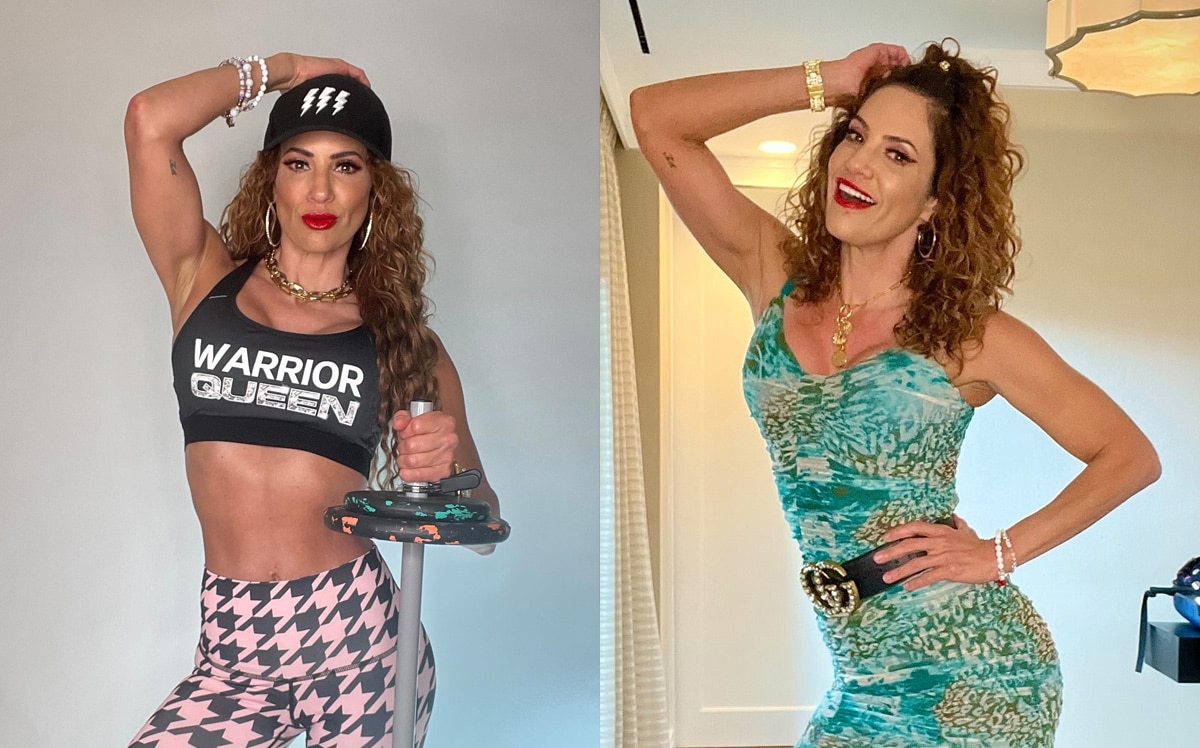
Jennifer Nicole Lee is an American Fitness advisor and author. She is best known for her books and articles that give advice on weight loss and healthy living. Jennifer is also the winner of the 1997 Miss Bikini America contest and her physical transformation journey has been nothing but an inspiration for millions of people around the world. This article explores her biography as well as workout and diet routine.
Jennifer Nicole Lee Statistics
Full Name: Jennifer Nicole Lee
Weight
Height
Age
145 – 155 lbs (65.8 – 70.3 kg)
5’9” (175 cm)
47 years
Date of Birth
Place of Birth
Nationality
June 13th, 1975
Rochester, New York
American
Jennifer Nicole Lee Biography
Early Life
Jennifer Nicole Lee was born in Rochester, New York on June 13th, 1975 to Italian parents. She spent her early years there but the family shifted the base to Tennessee. Jennifer finished her schooling there and also earned a bachelor’s degree in foreign relations from the University of Tennessee at Knoxville.
She got married, had children and everything went perfectly. However, Jennifer was not happy with one aspect of her life – unhealthy eating, lack of exercise and the resultant weight gain.
Career
Jennifer decided to change her life for good and adapted to a healthy lifestyle. As a result, she lost nearly 70 lbs weight during the process and soon became known as a fitness guru due to her knowledge of fitness. However, the situation further changed for good and the mother-of-two took steps towards launching her career as a fitness advisor.
Confident in her newfound passion for fitness, Jennifer entered the 1997 Miss Bikini America contest. Although she had no prior background of athletics, bodybuilding or any such activity, the then 23-year-old emerged victoriously at the show. Additionally, this achievement further boosted her confidence and Jennifer Nicole Lee decided to go full throttle in her career as a fitness advisor and never looked back after that.
After getting recognition through her work as fitness advisor, JNL also launched two clothing lines. The Jennifer Nicole Lee Collection through Rogiani is a brand designed by Elisabetta Rogiani for fitness model photoshoots. The second brand, JNL Clothing Line, includes streetwear as well as gym wear.
In 2011, Jennifer opened a production studio containing photography and videography studios, hair and make-up styling along with coaching for fitness models.
Jennifer Nicole Lee has authored several books on fitness and lifestyle and she has also appeared in several fitness magazines.
Jennifer Nicole Lee published works:
The Mind, Body & Soul Diet: Your Compete Transformational Guide To Health, Healing and Happiness
Jennifer Nicole Lee Fitness Model Diet: JNL’s Super Fitness Model Secrets to A Sexy, Strong, Sleek Physique
The Fitness Model Program
The Sext Body Diet
101 Things Not To Do If You Want To Lose Weight
Get Fit With Jennifer Nicole Lee
Get Fit Now With Jennifer Nicole Lee
Bikini Model Diet
DVD Series – Fabulously Fit Moms
The New Mom Workout
Total Body Workout
Lower Body Burn
Super Energized Workout
Upper Body Blast
Sleek and Sexy Workout
Jennifer Nicole Lee Workout
Jennifer Nicole Lee believes in consistency and staying ready to flaunt the bikini body at any given time. As a result, she trains six days a week and does not take a day off unless it is extremely necessary.
She approaches the fitness routine more as an inseparable aspect of her lifestyle than a mere activity that helps her look good. However, she believes in constantly exploring new training methods and bringing more variety to her training routine.
This approach has multiple benefits. Frequent changes to the training routine keeps mental fatigue and boredom at bay. Additionally, it enables the body to adapt to different types of activities, making it inevitably versatile in performing physical tasks.
However, the 47-year-old has learned that performing warm-up and active cooldown drills before and after a hard day’s work is of utmost importance to keep the injuries at bay and prepare the body for workouts.
Maintaining cardiovascular health is undeniably a key component of healthy living. So not surprisingly, Jennifer Nicole Lee does a lot of cardio activities that raise the heart rate and burn a large number of calories. Rope skipping is one of her preferred cardio exercises. Swinging, jogging and long walks are also incorporated in the training routine for variety.
Jennifer Nicole Lee’s training week
To get a toned body and gain strength as well as muscles, the mom of two does weight training at least three days a week. These sessions include compound and isolation movements. While she adheres to free weights for the most part, Jennifer is not opposed to machine exercises either.
Jennifer Nicole Lee’s training week is split into six separate training sessions dedicated to shoulders & biceps, legs, chest and triceps and back as well as two cardio sessions. These are a combination of compound and isolation movements to work each and every part of the body for complete development.
Monday – Shoulder / Biceps Workout
Jennifer’s training week starts with an intense shoulder and biceps workout that sets the tone for the rest of the week. The training session includes compound and isolation movements that target all three parts of the shoulder muscles – anterior, medial and posterior deltoid muscles.
She includes two biceps exercises – dumbbell curls and hammer curls to work these pulling muscles in the arms. Since arms get the stimulation during most pushing and pulling movements, Jennifer Nicole Lee does not include too many biceps exercises in her routine. Out of the shoulder exercises mentioned below, the mother of two includes any three in each workout.
Shoulders
Biceps
Tuesday – Legs Workout
Legs or lower body represents literally one half of the human body. While many gym bros tend to avoid training legs, Jennifer Nicole Lee is far more wise. Tuesdays in her training routine are reserved for leg workouts. The relatively lengthy training session includes several exercises that work all the major muscles in the legs like quadriceps, hamstrings, glutes as well as calves in addition to other supporting muscles. The leg workout typically includes following exercises:
Quads
Calves
Hamstrings
Wednesday – Cardio
Cardio exercise is one of the most effective ways to keep excess weight at bay. It is also a proven way to maintain and improve the cardiovascular health, which is crucial to maintain from the longevity point of view.
Jennifer Nicole Lee reserves her Wednesdays for a cardio session and performs different exercises like rope skipping, long walks and jogging to get her heart rate up.
Thursday – Chest and Triceps
The push day workout which primarily targets the chest and triceps is crafted for complete development. Jennifer Nicole Lee includes pressing movements and flyes in the chest routine for improving pushing and adduction strength of the upper body. Triceps workout includes exercises that work the muscles from different angles and positions to emphasize all three triceps heads. The training session includes:
Chest
Triceps
Friday – Back
Jennifer Nicole Lee trains back on Friday and the short training session includes three effective exercises:
Saturday – Cardio
Another cardio session caps the training week as Jennifer Nicole Lee keeps Saturday specifically for exercises like rope skipping, jogging and long distance walking.
Sunday – Rest
Having been in the fitness industry for the most part of her life, Jennifer understands that rest and recuperation is as important as hard training. She spends time with her family and takes rest throughout the day to get ready for another week of intense work.
Jennifer Nicole Lee Diet
Jennifer Nicole Lee follows one simple dietary rule irrespective of her schedule and location – eating small meals throughout the day. She believes in eating every three hours to maintain energy levels, keep the metabolism fired up and avoid drop in blood sugar irrespective of whether you’re hungry or not. These meals need not be full hefty meals. Instead, they can be small meals or snacks that have sufficient protein and complex carbohydrate content to keep her satiated for a longer time.
Jennifer focuses on eating healthy foods and voids sugar laden, processed foods at all costs. She focuses on eating lean protein through natural sources like chicken, fish or lean cuts of red meat. Combined with complex carbohydrates like brown rice, sweet potatoes and healthy fats like flaxseed oil, coconut oil and Omega-3 oil. Combined together, these foods make for perfectly balanced meals with sufficient macronutrient profiles.
Vegetables that are rich in fiber, vitamins and minerals as well as carbohydrates are also an important constituent of Jennifer Nicole Lee’s diet.
Although the 47-year-old believes in getting most of the nutrients through whole foods for the most part, it can be difficult to meet the daily requirement given the hectic and busy urban lifestyle. As a result, Jennifer Nicole Lee consumes supplements like whey protein and vitamins to meet the daily requirement of nutrients.
Breakfast
Egg White Omelet
Coconut Oil
Spinach
Asparagus
Mushrooms
Whole Grain Bread
Tomatoes
Water
Mid-Morning Meal
Protein Shake
Ground Flax Seeds
Omega-3 Oil
FlaxSeed Oil
Coconut Oil
Lunch
4%Ground Antibiotic Free, Organic Grass Fed Lean Beef Hamburger
Wheat Bread
Hummus
Spinach
Late Afternoon Meal
Protein Shake
Ground Flax Seeds
Omega-3 Oil
FlaxSeed Oil
Coconut Oil
Dinner
Grilled Fish
Caribbean Vegetables
Salad
Carrot Ginger Dressing
Glass of Red Wine
Personal Life
Jennifer Nicole Lee was married to Edward Lee. The couple has two sons, Jaden and Dylan. Jennifer and Edward divorced in 2014. She now lives with her two sons in Miami, Florida.
To Conclude…
Jennifer Nicole Lee’s physical transformation and subsequent career trajectory proves that there is no right or wrong time to take necessary steps and do the things that can bring a positive change to your life.
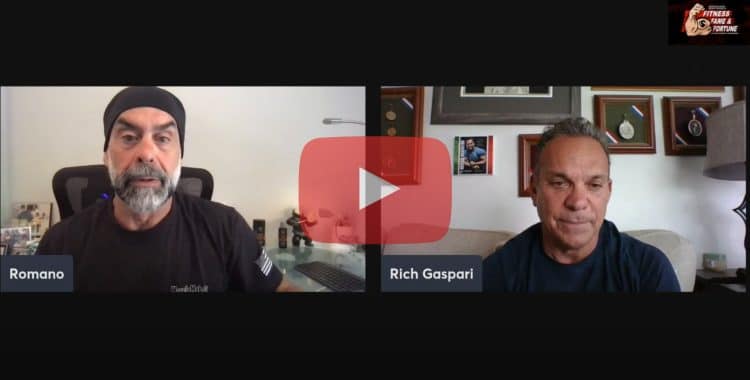
Rich Gaspari: ‘Chris Bumstead Needs 40 Lbs to Win Open Mr. Olympia, No One Is Close to Him in Classic’
Bodybuilding veteran Rich Gaspari is back to discuss the career of reigning four-time Classic Physique Olympia Chris Bumstead. In a recent Fitness Fame & Fortune podcast with John Romano, Gaspari critiqued Bumstead’s physique and shared what it would take to win the Open title at Mr. Olympia.
Since Bumstead’s 2019 Olympia takeover, contenders have yet to catch up to his physique. His full muscle bellies, x-frame, and conditioning have made for an overwhelming combination on stage. Before taking his talents to Las Vegas in December, Bumstead and his brother-in-law Iain Valliere decided to stop working together. With 12 weeks until the big show, Bumstead joined forces with bodybuilding coach Hany Rambod.
When the dust settled after 2022 Mr. Olympia many fans were shocked to find out Bumstead thwarted his competition successfully with a torn bicep. He has been open about his career as of late and mentioned that he’s on the hunt for a fifth title.
In addition to his growing popularity on social media, talks of Cbum moving to the Open have percolated for some time. Earlier this year, the 28-year-old said he would consider competing in the Open at the Arnold Classic if the contest was scheduled two weeks after Olympia. The latest to discuss his career was Rich Gaspari, who made a solid case for Bumstead winning Open Mr. Olympia with an added 40 pounds.
Rich Gaspari Assesses Cbum’s Physique, Believes He Needs 40 Lbs to Be a Mr. Olympia
According to Gaspari, competitors of Classic Physique lack muscle density and that ‘crazy look.’ When critiquing Bumstead’s physique, Rich said his arms were a weak point.
“Even in Classic, I don’t want to toot my own horn, you look at my physique when I won the 86 Pro Worlds, the density in that muscle, first of all, it was never seen those striations. Then, you look at guys that are winning now in Classic, they don’t even have that look, that crazy look. They have great symmetry, small waist.
You got Chris Bumstead, a really small waist. The one thing about Chris he doesn’t have huge arms, kind of weak in the arm size but a really good front double biceps. You see how he looks with the vacuum, good legs, but he doesn’t have big arms. That class is very very hard.”
“I saw him at the Pittsburgh Pro, they asked him if he’s considering going to the Open, he goes, ‘Are you crazy? How can I go to the Open? I’m grateful that I came into this sport at a time when Classic was big and I just fit the mold of what a Classic bodybuilder should look like and because of height and because of my weight, I can look a certain size that’s still impressive at my height and weight in the Classic category. And this is why I’m winning that category,’” shared Rich Gaspari.
Given his current build and genetics, Rich Gaspari laid out what it would take for Bumstead to make a play for Open Mr. Olympia gold.
“At least 40 pounds [he’d need to win Open Mr. Olympia]. Yeah, at least 40 pounds. He said it. He was like, ‘I’ll have to be 40 pounds bigger to be competitive with these guys and how do I know I’m going to look right?’ Because, you know, when you gain that muscle it may not necessarily look the way he looks now with the streamlined look that he has. It may not look the same.
He goes, ‘Why would I put my body through that when I’m doing really well in my category? That’s my category, I was fortunate to be born at this time.’ He’s dominating. He’s dominating, I think he’s going to win again, this is his fourth win, he’ll win a fifth Classic Bodybuilding because there’s no one close to him with his small joints, wide clavicle, small waist, big muscle bellies in his legs, the only weakness I see, he doesn’t have these huge arms, these huge peaked arms, but still, they’re good.”
Gaspari says Bumstead has found success in the category because of his bone structure, small waist, and wide clavicles. When comparing the Canadian to Arnold Schwarzenegger, Rich said Bumstead lacked charisma but made up for it with an authentic personality.
“He’s got 17 million followers, it’s an anomaly. Nobody has that type of following. He’s not flamboyant, charismatic, he’s actually, I hate to talk about him bad, he’s kind of boring. He’s authentic, he’s not like this charismatic, he’s not like Arnold, Arnold was very charismatic. Chris Bumstead is not charismatic, I’m not putting anything against him.”
“To really look good in Classic bodybuilding you need small bone structure, small waist, you need a wide clavicle, there’s a lot of factors that makes a good Classic bodybuilder. You can’t take a Jay Cutler and make him a Classic bodybuilder.”
Recently, event announcer Bob Cicherillo shared a similar prediction about Bumstead. However, he specified that Chris could be a threat on the Mr. Olympia stage with an added 20 pounds. If that were the case, Cicherillo argued that Cbum could push Samson Dauda, Nick Walker, or Mamdouh ‘Big Ramy’ Elssbiay.
Gaspari isn’t the only bodybuilding veteran to assess Bumstead’s physique and impact on the sport. Arnold Schwarzenegger has suggested that the Classic Physique champion should be crowned the Mr. Olympia title instead of the Open winner.
It’s evident that there’s a public interest to see Bumstead switch divisions. Though, in the meantime, he’s made it clear that his sole focus is on repeating as the Classic Physique Olympia on November 3.
RELATED: Bodybuilding Veteran Chris Cormier Breaks Down Chris Bumstead’s Chances In the Men’s Open Division
You can watch the full video from the Dragon Slayer Media YouTube channel below:
Published: 2 June, 2023 | 5:53 PM EDT
TikToker Shows Off Severe Back Acne After Using Steroids for 4 Months: “It Feels Pretty Terrible”
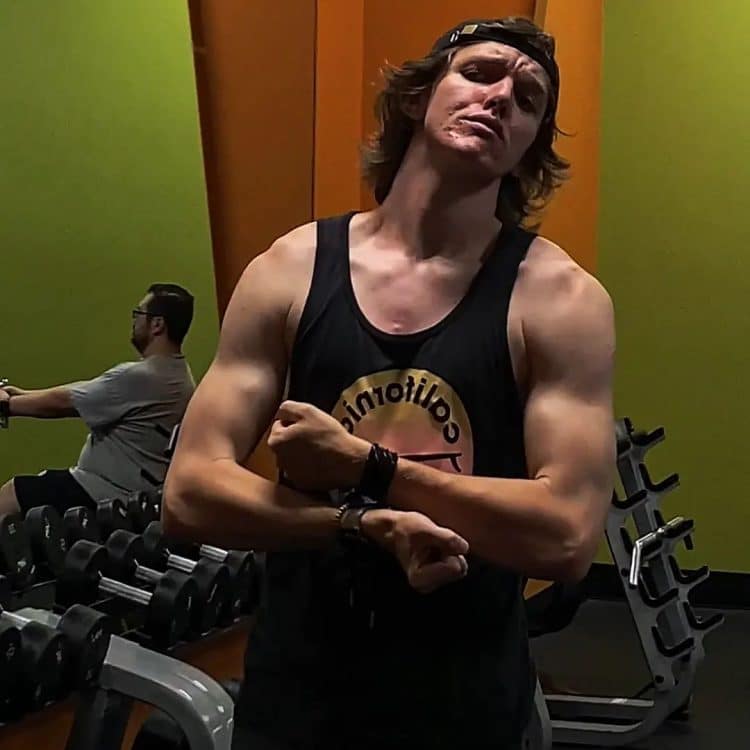
TikToker John Joshua James is determined to keep building muscle with steroids despite some unwanted side effects. In a recent TikTok video, James showed off his scarred and inflamed back from acne following four months of continued PED use.
Whether fans or athletes like it, steroids have influenced sports for generations. From the steroid eras in baseball to bodybuilding, athletes are willing to go to great lengths to achieve an edge over their competition.
While these compounds have utility, some believe people take steroid use too far. This topic often surfaces in bodybuilding because athletes are known for using substances to enhance their muscle-bound physiques. However, these measures have consequences. This is something Seth Feroce has tackled head-on. In a series of YouTube videos and Instagram posts last year, Feroce warned whoever would listen about the harmfulness of steroids.
In addition to Feroce, Kali Muscle, a popular fitness influencer and bodybuilder, issued a grave warning about steroid abuse. Simply put, Kali Muscle believes steroids ‘will make you die young.’ Moreover, he expressed concern for athletes in the IFBB Pro League, who are forced to use such drugs to keep up with their contemporaries.
Even though he’s not a bodybuilder, TikToker John Joshua James is eager to add muscle fast. And while he has a very severe case of bacne, it appears he has no desire to taper off or eliminate steroids from his routine. Check out his severe back acne from a few months of using gear below.
“Steroids in Four Months Have Done This To My Back” – TikToker Reveals Harsh Side Effects from Gear
According to James, the back acne feels ‘terrible all the time,’ but mentioned he has no intention of stopping. He shared that his cycle has allowed him to train more frequently.
4th month on the juice? #bodybuilding #steroids #fitness pic.twitter.com/Ecycn5EGIb
— Johnathon J. James (@John_J_James) April 29, 2023
“Steroids in four months have done this to my back and I gotta say, it’s worth it. After doing a bit of research, I found out that steroids actually give you back acne and it’s not great. My back is completely covered in scars and it feels pretty terrible all the time, but I do like being able to go to the gym more. I finally hit 180 pounds, so I’m going to keep doing them.”
#gym #fitness #steroids pic.twitter.com/UD0odD0Gbx
— Johnathon J. James (@John_J_James) May 11, 2023
“Steroids have not only made my back look like a bit of strawberry shortcake but they’ve also made my shoulders way bigger than my arms. The first day I went to the gym is the first day I started doing steroids. It’s not hard to tell. Not because I don’t have any muscle to speak of but because I have all the symptoms,” the TikToker shared.
John Joshua James’ TikTok video immediately went viral after he published it online. He started his fitness journey at 150 pounds and achieved his goal of reaching 180 pounds. Some fans have questioned whether or not he’s telling the truth about his steroid use.
Eventually, James’ video got the attention of Derek of the More Plates More Dates YouTube channel. According to Derek, he’s not convinced the TikToker is using gear, which he said would make him the first ‘fake, fake natty.’
“I think this is an interesting, probably a first time ever if I’m correct, of a guy that is a fake, fake natty. Does that even make sense? He is faking being on gear. That is what I think is going on.”
“I do see this style of video he is doing… the really aggressive. I almost feel like I’m watching a Mr. Beast intro to a video but it’s about a guy doing gear that has never worked out in his life. This is the imrpession I get. This is a viral focused endeavor, and the entire page is centered around this: ‘started juice when I started working out,” Derek of More Plates More Dates said.
John Joshua / Instagram
The last time Derek of MPMD tackled a ‘natty or not’ topic, he took a closer look at popular influencer Andrew Tate’s physique. After fans accused Tate of using TRT or steroids after getting out of jail, the 36-year-old issued a fiery message on Twitter where he stressed that he’s never touched any PEDs. Derek thought the evidence pointed to Andrew Tate having a natural body.
John Joshua James’s story shows that steroid use alone will not result in dramatic muscle gain. Building an ideal physique is a calculated effort that requires hard work, discipline, nutrition, and a holistic training approach.
RELATED: Liver King Looks Crazy Ripped After Being Natty for 120 Days
You can watch Derek’s full video on the More Plates More Dates YouTube channel:
Published: 2 June, 2023 | 3:41 PM EDT
2023 Toronto Pro Supershow Preview & Athletes to Watch
The bodybuilding calendar will see a total of seven events take place this weekend. However, the 2023 Toronto Pro Supershow is the biggest and will feature 10 divisions on June 4: Men’s Open, 212 Bodybuilding, Classic Physique, Men’s Physique, Men’s Wheelchair, Women’s Bodybuilding, Figure, Bikini, Women’s Physique, and Wellness.
Last year, the 2022 Toronto Pro Supershow saw Mohamed Shaaban win gold and an Olympia invitation. While it appears Shaaban is preparing for a competition, his name was excluded from the Men’s Open competitors list. Nevertheless, this weekend’s show is stacked with talent as a few major players are expected to be in the running for gold.
Whoever emerges with the win this weekend will earn an invite to compete at the 2023 Mr. Olympia competition, which is scheduled for Nov. 2-5 in Orlando, Florida. Currently, athletes have until October 9 to guarantee their passage to the biggest show of the year. Find a full athletes list and detailed breakdown of the Men’s Open and 212 Bodybuilding contests below.
2023 Toronto Pro Supershow Offical Athlete Lineups
Men’s Open
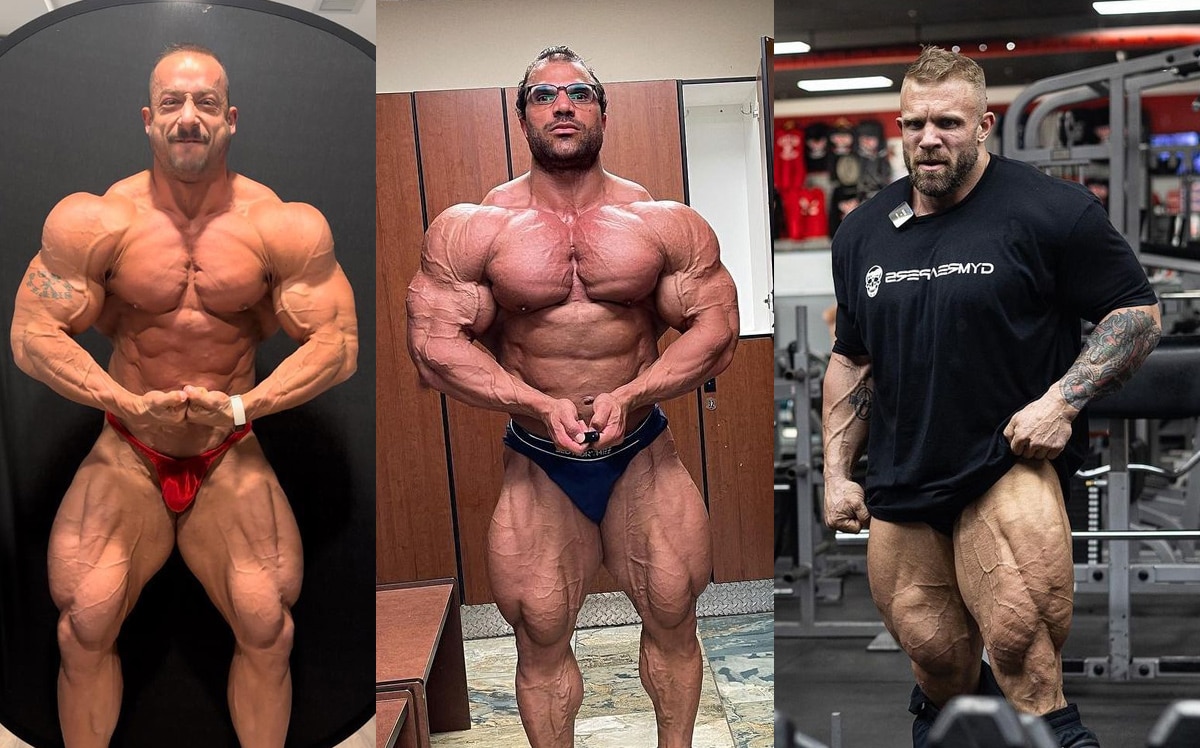
Iain Valliere
The Men’s Open division will headline this weekend’s attraction and plenty of names have caught the attention of fans. In 2020, Valliere claimed the prestigious title of New York Pro champion and got 7th in Olympia. He carried that momentum into the next year, securing back-to-back victories at the Texas Pro and Tampa Pro, as well got 7th again at the Mr. Olympia contest.
As the highest-ranking Olympian (11th), Iain Valliere enters this show as the odds-on favorite. He won the Vancouver Pro last year en route to performing on the Olympia stage.
Hassan Mostafa
The field of talent is deep, and Hassan Mostafa, who went undefeated last season, is determined to once again earn his invite to Mr. Olympia.
In 2019, Mostafa made an impressive entrance onto the bodybuilding scene, securing third place at the Indy Pro. With his remarkable size, he showed great potential, but he knew there were areas for improvement. Over the years, he diligently worked on sculpting his physique, achieving a shredded look. In 2021, Mostafa consistently placed in the top three at competitions like the New York Pro, California Pro, and Puerto Rico Pro.
Although he finished 13th at the 2021 Olympia, Mostafa didn’t stop there. In the year 2022, he impresses everyone by winning the Orlando Pro and Puerto Rico Pro. Unfortunately, Hassan Mostafa was unable to participate in the 2022 Olympia due to health reasons.
He offered a very promising physique update just days before taking to the event this weekend, leaving fans even more excited for the showdown.
Ross Flanigan
Meanwhile, momentum is on the side of Ross Flanigan. He performed exceptionally well at last weekend’s 2023 Musclecontest California Pro, where his conditioning led him to victory against ”Beef’ Stu Sutherland, Serigo Oliva Jr., and 2023 NY Pro winner Tonio Burton.
Joe Seeman
Joe Seeman also took part in the 2023 New York Pro, though found himself in fourth. He’s on the hunt for a Mr. Olympia invite this year and hopes to reach his goal by claiming a pro show victory against a stiff Open lineup.
Jangmin Lee
Contender Jangmin Lee plans to make a statement this weekend. While he made one appearance last year in the IFBB Pro League, he capitalized on the opportunity. Lee finished first at the NPC Regional Chan Classic.
Slavoj Bednar
Another threat this weekend was Slavoj Bednar. He’s remained very active in 2023 and has competed at three contests so far: Arnold Classic Brazil (10th), New York Pro (12th), and the California State Pro (5th).
Slavoj Bednar
Ross Flanigan
Eiren Gauley
Mike Hulusi
Hossein Kalateh
Sahar Kazes
Jangmin Lee
Jason Lowe
Morgan MacDonald
Hassan Mostafa
Joe Seeman
Robin Strand
Iain Valliere
212 Bodybuilding
Sung Yeop Jang
Heading into this weekend, there was notable hype behind a pair of contenders. Last year, Sung Yeop Jang competed at just one show but showed immense promise with an aesthetic and shredded physique. Ultimately, he finished fifth at the 2022 New York Pro, won by Noel Adame.
Hwang Shin
As for Shin, he’s making his 212 debut and also participated in a single show last year, which saw him earn fifth at the Monsterzym Pro in the Men’s Open, an event which was won by Mohammad Alnsoor.
Piotr Borecki
Chris Buhr
Ming Chun Hon
Sung Yeop Jang
Hwang Shin
Nate Telow
Jordan Wise
Classic Physique
Edgard John Augustin
Maurice Burgess
Gregory Dawson
Javier Duarte
Ali Emre
Carl Gauthier
Farzad Ghotbi
Shane Makan
Tyler Okowinsky
Samuel Paquin
Josue Isai Cortes Vargas
Dimitri Williams
Men’s Physique
Austin Belanger
Bhuwan Chauhan
Rodrigue Chesnier
Julian Colley
Gary Cooper
Francisco Alberto de la Cruz
Rory Gissing
Harrett Jenkins
Mehdi Kabbadj
Clarence Lau
Daniel Rabiela
Jason Alan Robinson
Mario Stewart
Serge Victor
Men’s Wheelchair
Tim Caldwell
Jack McCann
Jason Metcalf
Bryan Williams
Women’s Bodybuilding
Tananarive Huie
Theresa Ivancik
Melina Perron
Julia Whitesel
Figure
Dalila Alegria
Desiree Alferes
Jodi Boam
Theresa A. Dekker
Manon Dutilly
Amanda Jessica Elliott
Sally Forse
Nelly Gonzalez
Giselie Heathcote
Lauren Martin-Stow
Taylor Mauro
Lola Montez
Nina Paulus
Carmen Garcia Penalver
Nora Prado
Tamika Robinson
Paige Sabedra
Bikini
Eli Fernandez
Brittany Gillespie
Racquel Hutchinson
Nikki Kiani
Adair Libbrecht
Maritza Romano Pacheco
Sophia So Wai Pik
Ayleen Santander
Maxine Somov
Courtney Ustrzycki
Women’s Physique
Josefa Paloma Barba Bedolla
Alyssa Coppolino
Georgina D’Abreo
Leona Lynn Gairy
Cara Kerluck
Amandine Kolly
Wai Chun Virginia Kwok
Emilija Martic
Angela Noury
Renee Reefschlaeger
Diana Schnaidt
Romana Skotzen
Kyna Squarey
Nathalee Thompson
Wellness
Sandra Colorado Acal
Emily Azzarello
Lauren Barton
Anne-Marie Gobeil
Winglam Lee
With 10 Olympia invitations on the line and plenty of prize money, pressure is mounting for athletes to ensure their presence on this year’s Olympia stage. Given the prestige of the Toronto Pro, fans expect the winner of the Men’s Open division to do some damage in November.
RELATED: Iain Valliere Shares Shredding Diet 2 Weeks from 2023 Toronto Pro Supershow
All roads lead to the reigning Mr. Olympia Hadi Choopan, who continues to train tirelessly in preparation for his first title defense later this year.
Published: 2 June, 2023 | 12:22 PM EDT
‘Chris Bumstead Should Get an Invitation’ to Open Olympia’: Chris Cormier & Olympia Judge
Canadian bodybuilder Chris Bumstead is easily one of the most popular contenders in the sport. What makes his success even more impressive is the fact that he doesn’t compete in the Men’s Open division, which generally serves as the main attraction of any event. In a recent episode of Prime Time Muscle, bodybuilding Hall of Famer Chris Cormier and Olympia judge Terrick El Guindy shared their thoughts on how Bumstead would fare if he switched divisions and voiced their support for him to receive an invitation to compete in the Open class at the Mr. Olympia competition.
Reigning four-time Classic Physique Olympia champion Chris Bumstead first gained attention for his impressive muscle mass, definition, and symmetry in 2017 when he took silver at Mr. Olympia. He fell short of former two-time champion Breon Ansley for the second time in 2018 before exacting revenge the following year in 2019 to win his maiden Sandow trophy. Once he reached the top, there was no stopping him as he racked up three successful title defenses.
Bumstead is coming off his fourth win at the 2022 Mr. Olympia last December. Following the victory, he announced his ambitions to win another title and opened up about finding his passion for bodybuilding again.
Four months ago, Bumstead gave his take on testing out the waters of the Men’s Open division. He expressed a desire to get a special invite and compete in the Open Arnold Classic contest on the condition that the event took place two or three weeks after Mr. Olympia.
Bumstead joined forces with Brazilian standout Ramon Rocha Queiroz for a heavy back training session earlier this year. Then, he teamed up with German sensation Urs Kalecinski for a sleeve-busting arms workout two weeks later.
Chris Bumstead With Coach Hany Rambod
‘CBum’ gave fans a look into his 3,500-calorie diet that he utilized in the 2023 off-season two months ago. He tipped the scales at 253 pounds and targeted adding more muscle mass to his frame. Then, Chris Bumstead showed off his massive back while crushing an intense upper-body workout. He later collaborated with seven-time 212 Olympia champion Flex Lewis for a taxing back training session.
Coach Hany Rambod wants Bumstead to bulk up to 255-258 pounds by the time off-season rolls out to start gearing up for the 2023 Mr. Olympia.
Olympia judge breaks down Chris Bumstead’s chances in the Men’s Open class
Olympia judge Terrick El Guindy shared his thoughts on how Chris Bumstead would look competing against the mass monsters of the Men’s Open division.
El Guindy lauded Bumstead for his mindset and believes he won’t aim for an extended run in the Open category.
“Chris Bumstead lives on his own pace,” said El Guindy. “He will not do anything to prove anything to anybody. If Chris Bumstead gets married and has two kids, looks at his wife and says I’m done, and everybody thinks he’s going to win the Mr. Olympia, he’s done. I give him a lot of credit because he’s a free-spirited guy who’s not going to be swayed by money or titles.
“If he does an Open bodybuilding show, I believe it’s going to be for fun. I think he’s going to give his best but I don’t think he’ll do on our terms he will do on his terms. He could very well show up at a show in Texas, here and there.
“Do I think that’s his career? I personally don’t. I don’t think Chris Bumstead will be known as an Open bodybuilder when he retires even if he competes. His legacy will be as the greatest Classic Physique of all time.”
Chris Bumstead / Instagram
Chris Cormier & El Guindy want ‘CBum’ to get an invitation
Chris Cormier and El Guindy extended their support for ‘CBum’ to receive an invitation for participating as an Open athlete.
“There’s some poses we would be dying to see Chris Bumstead up there against some of the top guys hitting the front lat spread, side chest, ab and thing, and such like that,” Cormier said. “Maybe even start just like Derek did. Go to Pittsburgh, try your luck on stage and see how you fare and just take it from there.
“Yeah I would give [Bumstead an invitation],” added Cormier. “He’s the most popular bodybuilder we have in the sport.”
El Guindy said, “If Derek got an invitation, Chris Bumstead should get one in my personal opinion, I’m not a decision maker.”
Chris Bumstead reflected on his partnership with former coach and Men’s Open standout Iain Valliere about two weeks ago. He credited Valliere for helping him stay healthy and succeed at a young age without using heavy amounts of steroids.
Even though Cbum competes in the Classic Physique division, his impact on the Open class is undeniable. Recently, 1990s bodybuilding veteran Kevin Levrone argued that Bumstead’s efforts have resulted in a new era of aesthetics in Open bodybuilding.
IFBB Pro League athletes’ representative Bob Cicherillo weighed in on Bumstead’s chances in the Open class and backed him to present a challenge against the likes of former two-time Mr. Olympia Mamdouh ‘Big Ramy’ Elssbiay, Samson Dauda, and Nick Walker if he added 15 to 20 pounds.
You can watch the full video below.
RELATED: Chris Bumstead on Fantasy Match-Up vs Arnold Schwarzenegger: ‘I Think I Would Beat Him’
Published: 2 June, 2023 | 9:15 AM EDT
How To Get Ripped Quick: 12 Tips To Blast Away Body Fat and Unleash Your Perfect Abs!
Has this happened to you?
You stand in front of a mirror, turn to your side, grab your belly bulge between your hands, and wonder how you could turn this into a six-pack.
It most likely has because you wouldn’t be reading this article if it didn’t.
Most people get a gym membership to get ripped, and they want the results quickly. However, their results are generally so slow that it makes a snail on vacation look like an Olympic sprinter. It’s no surprise that most of these folks end up hanging their sprinting shoes before achieving their training objectives.
To be honest, losing body weight isn’t easy. It requires tedious planning and meticulous execution. Falter on any of the fronts, and you’ll see your progress halt or, worse, enter a downward spiral.
In this article, we will go over everything you will ever need on your fat-blasting and muscle-building journey, including what it really means to be ripped and the body fat percentage you should have, and factors that affect the time it takes for you to get in the best shape of your life.
Besides unveiling the 12 best tips to get ripped in a record time, we also cover a general timeline of the changes you can expect by following these tips. Finally, we summarize the article with the most frequently asked questions about shredding.
We have a lot to cover, so sit tight, grab your protein shake, and read on.
What does ‘getting ripped’ mean?
The fitness world has its fair share of jargon. So, before we get into the nitty-gritty of getting ripped, let’s ensure we are on the same page.
Getting ripped can mean different things to different people. For a bodybuilder, it could mean gaining muscle conditioning; for an overweight individual, it could mean losing weight; and for a motorcyclist, it could mean falling off his bike without protective gear. You are certainly in the wrong place if you are a rider. The bikes we’ll be riding in this program are stationary.
For the scope of this article, getting ripped refers to shedding body fat while preserving and building lean muscle mass. Getting ripped involves maintaining a low body fat percentage so that you have crisp muscle conditioning, separation, lines, and striations. It is the process of sculpting your physique into a masterpiece worthy of gracing the cover of fitness magazines. Lean, diced, shredded, peeled, cut, and whittled are other gym terms for getting ripped.
The optimal body fat percentage that makes it look like your muscles are tightly wrapped around your muscles will vary for different individuals. Furthermore, men achieve a more defined physique faster as they hold a lower body fat percentage than women.
Different Body Fat Percentages
Although many lifters tirelessly chase a lower body fat percentage, only a few truly understand the subject. Your body fat percentage is the proportion of fat your body carries compared to its total weight. It is calculated by dividing your total fat mass by your total body mass, multiplied by 100. It includes essential body fat and storage body fat.
According to the American Council on Exercise, the percent body fat norms for men and women are as follows:
Description
Men
Women
Essential Fat
2-5%
10-13%
Athletes
6-13%
14-20%
Fitness
14-17%
21-24%
Average
18-24%
25-31%
Obese
>25%
>32%
Essential fat is required to maintain life and reproductive functions; essential fat stores in women generally lie in the 10-13% range. On the other hand, they are considerably lower in men and lie between 2-5%.
Athletes engaged in physical sports usually have the lowest body fat percentage. Female athletes have 14-20% of body fat, whereas men are in the range of 6-13%. On average, ladies that work out regularly have a body fat percentage between 21-24%, whereas the males have 14-17%.
An average untrained female has a body fat percentage between 25-31%, and for an average male, it lies in the range of 18-24%. Anything over this is considered obese.
Body Fat Percentage and Ab Visibility
The average body fat percentages don’t necessarily dictate when you’ll be able to see your abs. Here is a rough estimate between the body fat percentage and ab visibility in men:
20%+: In the ‘average’ body fat percentage stage, you will be soft around your midsection, and your abs will not be visible.
14-17%: The ‘fitness’ stage can be considered healthy, but it is unlikely that you will see any ab definition. People at the lower end of this range might have their abs peeking through in perfect lighting.
6-13%: The ‘athlete’ range of body fat is considered lean, which means your abs will be visible.
5-9%: You will be peeled AF. However, staying in the ‘essential’ body fat range for a prolonged period is unhealthy.
Factors That Influence How Long It Can Take To Get Ripped
Several factors can play a role in determining how long it takes for you to get ripped. You can tweak some of these factors, but you have to adjust to the others.
Genetics
You are in for a rude shock if you thought you could replicate your cousin’s weight loss transformation results by following his fitness regimen. Genetics plays a crucial role in how your body adapts to your training and diet routine.
Some folks might be better positioned to get ripped quickly because of a favorable fat distribution and faster metabolism. That said, some people use poor genetics as an excuse and go easy on themselves. Don’t be this person.
Even if you did not hit the genetics lottery, you could still achieve a ripped physique by adhering to the 12 transformation tips mentioned in this article. Remember, genetics can slow you down and limit your growth, but it won’t stop you dead in your tracks. You must keep pushing yourself to achieve your dream physique.
Related: Bad Chest Genetics and How To Build a Barrel Chest
Starting Point
How fast you can achieve your training objective depends on where you start. For example, a person with 19% body fat will get to 15% body fat faster than an individual starting at 24%.
However, beginners initially experience quick results, and their progress tapers off as they gain more experience and their bodies adjust to their training and diet programs. You must constantly challenge your body to avoid hitting a plateau.
Also, you shouldn’t compare your progress with others, as it can lead to frustration and burnout. Many people also increase their risk of injury while training by pushing themselves too hard while trying to keep up with others.
Your lifestyle also plays a crucial role in how long it will take you to achieve your dream physique. People who are very active (train 5-6 days a week or have a physically-intensive job) will get ripped faster than those with a sedentary lifestyle. Plus, your sleep quality, stress levels, and overall health can also affect how quickly you shed your body weight and build muscle mass.
The Trifecta
An optimal training, diet, and recovery program is the holy trifecta of a transformation program. You must nail all three aspects of your fitness regimen to achieve your dream physique. Neglecting any department will lead to suboptimal results.
You must follow personalized training, diet, and recovery regimen to fast-track your gains. Many people make the mistake of following a vanilla transformation program. However, they never get too far with it as it is designed around someone else’s strengths and weaknesses.
For example, folks with a lagging lower body will increase their muscle imbalances by following a training program focusing on building upper body strength.
Gender
Men generally find it easier to lose body fat and shed weight due to higher testosterone levels. Testosterone is the male sex hormone responsible for the development of muscle mass and strength and for producing male sex characteristics.
High natural testosterone production is why the ladies cannot build the same amount of muscle mass and strength as the gents. Nonetheless, women can still achieve a ripped physique in a short period by following the right training and diet protocols.
Metabolism
The process by which your body changes food and drink into energy is known as metabolism. Metabolism constantly provides your body with energy for essential bodily functions like breathing and digestion.
Your body needs a minimum number of calories to sustain these functions; this category of calories is known as the basic metabolic rate (BMR). Do you want to know your BMR? Check out this neat BMR calculator.
Factors like age, sex, muscle mass, and physical activity affect metabolism or BMR. Some folks have a naturally high metabolic rate, which can help them burn more calories throughout the day. Most of us have a friend that eats like a pig but can easily be mistaken for a pole. That’s a classic case of someone with a high metabolic rate.
Furthermore, your metabolic rate improves through regular exercise, strength training, and maintaining muscle mass. Stay active throughout the day to burn more calories.
Age
Since the natural testosterone levels drop with age, humans of both genders find it more difficult to lose body fat and build muscle mass. Furthermore, our metabolic rate takes a dip too, which adds to the complexities.
We tend to lose muscle mass with age. However, following a balanced training, diet, and recovery program can help slow down muscle atrophy. Don’t get us wrong; we, by no stretch of the imagination, mean to say that you cannot lose body fat as you grow older. You can reach your goal weight at any age. You will just have to work a little harder.
Consistency
You can only achieve your transformation objective with consistency and dedication toward your goal. Most cutting programs require a long-term approach, especially if you are doing it for the first time.
You must stick to your training and diet program even when the going gets tough; believe me, it will get tough, very tough. You must have the grit and commitment to get your head down and work with all your might, even when you do not see immediate results.
Even after you achieve your training objective, you must stay consistent with your training and diet program to maintain your ripped physique. Staying in photoshoot-ready shape throughout the year is a full-time job. The sooner you realize this, the less friction you will face in your transformation journey.
Furthermore, the 12 tips mentioned below to get ripped quickly revolve around these factors and managing them better. The better you can control these factors, the better results you will see.
Timeline For Getting Ripped
Let’s address the elephant in the room. “How long will it take for me to get ripped?” This is usually the first question asked by beginners starting their fitness journey. Although many fitness experts get annoyed with this question, we think it is a fair thing to ask since a body transformation demands significant time, energy, effort, commitment, and cash.
Knowing how long it takes to achieve your dream physique will give you a timeline. You can use it to assess your progress and make necessary adjustments if and when required. A timeline can also act as motivation to stick to your guns. A transformation timeline is like a ticking time bomb; you are a bomb defuser trying to cut the correct wire before the big bang.
How much weight should I expect to lose?
The Centers for Disease Control and Prevention (CDC) recommends cutting your daily calorie intake by 500-1,000 kcal. Doing so will help you shed 1-2 pounds weekly. Conversely, adding 500-1,000 calories to your diet will result in gaining 1-2 pounds weekly.
According to JAMA, you must burn 3,500 calories to lose a pound of body fat. Sticking to these calorie increases and cutting limits will keep your physique transformation journey gradual, steady, and sustainable. [1][2]
Here are a few weight loss estimates as per these recommendations:
Time
Expect Weight Loss Results
1 Day
0.14–0.28 pounds
1 Week
1–2 pounds
1 Month
4–8 pounds
3 Months
12–24 pounds
6 Months
24–48 pounds
12 Months
48–96 pounds
How ripped can I get in a week?
As per the JAMA findings, you can expect to lose 0.14 pounds daily if you cut 500 calories from your diet. Notably, you won’t see the results from the first day you cut your calories. You will start seeing results after your body starts adjusting to the new regimen. This process usually takes up to a week.
Sticking to the 500-1,000 daily calorie cut will help you lose 1-2 pounds weekly. Some people try to lose too much weight too soon by following a much bigger calorie deficit, such as a 1,500-2,000 kcal shortfall. Not only is such a large calorie deficit unsustainable, but it can lead to chronic health conditions. Furthermore, the weight lost by following such a significant deficit usually returns just as fast.
How ripped can I get in a month?
There are three ways of entering a calorie deficit. You could enter a deficit by cutting your calorie, starting exercising, or using a combination of the two methods. We recommend using a combination of both approaches to achieve your weight loss goals.
You can lose 4 pounds of body weight in a month by maintaining a weekly deficit of 3,500 calories. However, since a month usually has a little more than four weeks, you can expect to shed around 6 pounds monthly. The number could increase to 10 pounds if you can manage a 1,000-calorie deficit.
How ripped can I get in three months?
An intermediate exerciser can lose slightly more than 12 pounds in three months by sticking to a 3,500 weekly calorie deficit. You must account for your cheat meals in your weekly calorie deficit. For example, if you eat 1,000 surplus calories in your cheat meal, you must adjust your calorie intake the following week to return to a weekly deficit.
You should use a calorie-counting app to log all your meals so you are on top of your diet plan. Further, developing a habit of reading food labels while grocery shopping will help you avoid junk food and achieve your goal faster.
How ripped can I get in six and 12 months?
Most people will start to see weight loss results after they stick to a controlled diet and training program for 6-12 months. You can expect to shed 24-48 pounds in six months and 48-96 pounds in 12 months by maintaining a 3,500-calorie weekly deficit.
It doesn’t matter where you are starting at. Losing between 24-94 pounds in a year can lead to a total body transformation.
Notably, the time it takes to transform your body will depend on your genetics, gender, starting point, consistency, and the other factors mentioned above. You can expect a slight variance from this timeline.
Novices shouldn’t expect to lose 1-2 pounds weekly. You can expect to replicate these results after you have some training experience under your belt and know what you are doing. Noticeable changes start to appear after you have arrived at a diet and training program that works for you.
12 Best Tips To Get Ripped Quickly
Here are the 12 best tips to get shredded in record time:
Start With a Goal
It sounds so basic, but it is where most people falter. While many do not set an objective goal for themselves before starting their transformation journey, others are either too aggressive or bleak.
You must set realistic expectations. Setting goals that are too ambitious will not only lead to disappointment but also increase your risk of injury, burning out, or giving up on your transformation dreams entirely.
Rome wasn’t built in a day. Your physique transformation will take time, effort, and grit, and you must be willing to commit to it for the long term.
Have a goal that is specific, measurable, attainable, relevant, and time-bound; for example, ‘lose 4 pounds in a month.’
Assess Current Diet and Make Necessary Changes
Most people think that losing weight is like solving a Rubik’s cube. You must twist and turn your entire lifestyle up and down until you can create the right pattern. However, this couldn’t be farther from the truth.
The only thing that you need to do to lose weight is to cut calories and enter a calorie deficit, meaning you must expend more calories in a day than you consume. Determine your daily average calorie intake, realign it according to your goals, and Bob’s your uncle.
Many people go balls to the wall while cutting their calories. They limit as many calories as they possibly can and sometimes push it so much that they can hear guilt whispering in their ear every time they indulge in a cheat meal. Although going cold turkey cheat meals can be great for an obese individual, depending on your starting physique and training objectives, you might not have to do it.
Following an unnecessarily severe diet can lead to a negative relationship with food, which can result in chronic health conditions.
After determining your daily caloric intake goal, use a suitable macronutrient split (carbs, protein, and fats) to work toward your dream physique. Use a high-protein, low-carb, low-fat diet to shed body fat and build muscle mass.
Do Cardio
Although cardiovascular training isn’t compulsory in a weight loss program, doing it can help speed up your weight loss progress. You should ideally perform two cardio workouts daily to fast-track your weight loss progress.
The first sesh should be a 30-45 minute low-intensity steady state (LISS) session that you do on an empty stomach first thing in the morning. Your second cardio workout should be a 15-20 minute high-intensity interval training (HIIT) session, preferably after your weight training session.
Lift Weights
You must add weight training to your exercise regime to build a chiseled physique. Resistance training exercises will help you pack muscle mass, tone your physique, and improve your overall aesthetics.
Your workouts’ frequency, intensity, and volume will depend on your experience level and training objective. Furthermore, your workouts should include a balance of compound and isolation exercises. Compound lifts help build strength and muscle mass, whereas single-joint movements improve your conditioning.
Incorporate Progressive Overload Into Your Routine
You must progressively overload your muscles to ensure consistent progress. A progressive overload could include enhancing your training frequency, volume, intensity, or time under tension.
Advanced training principles, such as super sets, drop sets, and blood flow restriction (BFR) training, are also incredibly effective ways of shocking your muscles into growing. Remember, following the same workouts for too long can lead to weight loss and muscle plateau, which can delay your progress.
Use Targeted Exercise
The concept of spot reduction is as fake as unicorns. However, both these myths live on because they are beautiful and ignite your fantasy and imagination.
Although you cannot spot-reduce a trouble area, you can target it using resistance training exercises to help shape and improve your muscle aesthetics. For example, men with excess chest fat can improve the shape of their pecs using chest exercises after reducing body fat by staying in a calorie deficit.
Track Your Progress
Tracking your progress ensures you are on the right path. Track your progress weekly by taking progress photos, body measurements, and weighing yourself. You can also record your heart rate and blood pressure for overall health tracking.
Lifters can also track their training progress by noting their exercises, sets, reps, and weights in a daily journal. Tracking your improvement allows you to make quick and necessary changes in your fitness regimen whenever you feel you’ve derailed.
Work With a Personal Trainer
A personal trainer can give you a personalized training program that suits your abilities, makes the most of your strengths, and works on fixing your weaknesses. He can also teach you the correct exercise form, which can significantly reduce your risk of injury.
You could also hire a dietician for a customized nutrition program. Availing the services of a trainer and a nutritionist might cost you a little money upfront, but it will pay you dividends in the long term.
Focus on Your Recovery
Many people become obsessed with losing body weight and do too much too soon. Doing this for a prolonged period can lead to overtraining. If you always feel sore, you must work on your recovery program.
Sleep for seven to eight hours each night to give your body enough time to rest and recuperate from your workouts. Massages, self-myofascial release, and cold plunges are other incredibly effective ways of fast-tracking your recovery.
Try New Things
You must be open to experimenting with different strategies to maximize your fat loss potential. Consider carb loading before a training session to increase your workout intensity and push yourself harder.
Furthermore, if you are stuck on a weight loss plateau, you could try intermittent fasting to break through the overhead ceiling. Always be on the lookout for things you could do differently to maximize your returns.
Improve Your Lifestyle
Getting shredded isn’t limited to the gym and kitchen; it is a lifestyle. You must manage your stress levels and be mindful of your choices throughout the day. For example, you should take the stairs instead of the elevator and bike to work whenever possible.
Stay active throughout the day. Set a step goal for yourself and schedule walks throughout the day to achieve your objective. Beginners can start with a 5,000-step goal, whereas active folks can experiment with a 10,000-step goal.
Supplements Can Help
Although supplements aren’t necessary for building a chiseled physique, they can help fill the void in your whole food diet and speed up your transformation. Whey protein, creatine, and BCAAs are a few effective supplements you can add to your fitness regimen.
2 HIIT Workouts To Get Ripped Quickly
Contrary to what most people think, you don’t require fancy training equipment or need to spend a couple of hours in the gym to tone your body and shed excess fat. You can do it using bodyweight exercises within 30 minutes. Here are two HIIT workouts that will help you get ripped quickly:
Workout 1
Perform four rounds of the following circuit, resting one minute after the burpees in each round. This workout will last 18 minutes.
Exercise
Time
Rest
Mountain Climber
60 seconds
–
Jumping Jacks
60 seconds
–
Burpee
60 seconds
120 seconds
Workout 2
Here is a lower-body dominant HIIT workout for getting ripped. Do four rounds of this circuit. This workout will take you 22 minutes to complete.
Exercise
Time
Rest
Sprint
30 seconds
–
Squat Jump
60 seconds
–
Lunge
60 seconds
–
Standing Calf Raise
60 seconds
–
Inch Worm
30 seconds
120 seconds
Next Read: How Many Abs Can You Have? 4-Pack vs. 6-Pack vs. 8-Pack
How To Structure Your Weight Loss Program
Learning about all these 12 steps to get ripped quickly can be overwhelming and lead to analysis paralysis. If you are a beginner and have no idea where to start, don’t fret; we have got you covered.
Beginners will probably not lose 1–2 pounds weekly. You can expect these results after you’ve been following the fit lifestyle for at least a couple of months. For this timeline, we are assuming you have a few months of training experience under your belt.
Here is an over-simplified six-month transformation timeline that you can use to kickstart your weight loss journey:
Month 1: Establishing a Strong Foundation
Beginners should focus on getting their basics right. Assess your current diet and make necessary adjustments according to your objectives. Begin by creating a caloric deficit through balanced nutrition and portion control. Your goal is to lose 4–8 pounds in the first month.
Start your training journey by engaging in regular cardiovascular exercises (e.g., running, cycling, swimming) for fat burning. You can also start strength training to improve your physique aesthetics. However, your goal here will be to learn the correct exercise form instead of chasing big weights.
Ensure you take weekly progress measurements and photos during your weight loss journey. It will keep you accountable and motivated and ensure you are on the correct path.
Month 2-3: Accelerating Fat Loss and Muscle Development
While maintaining your objective of losing 1–2 pounds weekly, in the second phase, you must refine and optimize your nutrition plan, increase the intensity and duration of cardiovascular workouts, implement progressive overload in your strength training routine, and incorporate HIIT (high-intensity interval training) in your cardio and strength workouts for efficient fat burning.
Your goal will be to lose 12–24 pounds by the end of three months. Make necessary adjustments to your fitness regimen if you are far from this objective.
Month 4-6: Focus on Muscle Definition and Strength
As you gain more experience, you can gun for improving your muscle definition and strength while pushing your cardiovascular endurance and stamina. In this phase, increase the frequency, intensity, and volume of your workouts.
You should see a considerable improvement in your physique by the end of six months. Your weight loss should be in the range of 24–48 pounds. Consider hiring a training and diet coach if you are unsatisfied with your progress.
Read also:
FAQs
Can you spot-reduce body fat?
Most people want to shed belly fat and are always looking for ways to spot-reduce their tummy. Sadly, this is not possible. Maintaining a calorie deficit and engaging in cardio exercises leads to overall fat reduction and body weight loss. However, you can tone a particular muscle group through targeted training. For example, men can build a six-pack by doing ab exercises after their body fat percentage falls below 15%.
Do I need to take supplements to lose fat and build muscle?
Absolutely no! You can shed body weight and achieve the physique of your dreams by eating nutrient-dense whole foods. However, supplements can help folks that cannot meet their daily caloric needs through whole foods.
Is it possible to lose fat without hitting the gym?
Yes, you can lose weight without training. You must maintain a calorie deficit to lose weight and can expect to lose 1 pound weekly by cutting 500 calories from your diet. That said, exercising regularly can speed up your weight loss progress.
Note: The content on Fitness Volt is for informative purposes only and should not be taken as medical advice to diagnose, prevent, or treat health problems. If you’re suffering from a health issue, are pregnant, or are under 18 years old, you should consult your physician before starting any new supplement, nutrition, or fitness routine.
Wrapping Up
Following the 12 explosive tips mentioned in this article to get ripped quickly will set you on a fat-obliterating and muscle-building adventure that will have you rocking a body so ripped that you’ll have people wondering if you were sculpted by Michelangelo himself.
Starting a transformation journey might feel like a daunting task. You might feel unequipped and unprepared even to begin, but with these 12 tips by your side, you aren’t. Losing the flab might feel like an uphill battle, but it isn’t.
Are you feeling too overwhelmed to take your first step? Cut one serving from any of your meals, and you’ll have begun the journey to becoming totally unstoppable. Best of luck!
References
Wishnofsky M. CALCULATION OF DIETS. JAMA. 1957;163(5):384–385. doi:10.1001/jama.1957.02970400056024
Centers for Disease Control and Prevention. (2021). Losing Weight. Retrieved from https://www.cdc.gov/healthyweight/losing_weight/index.html
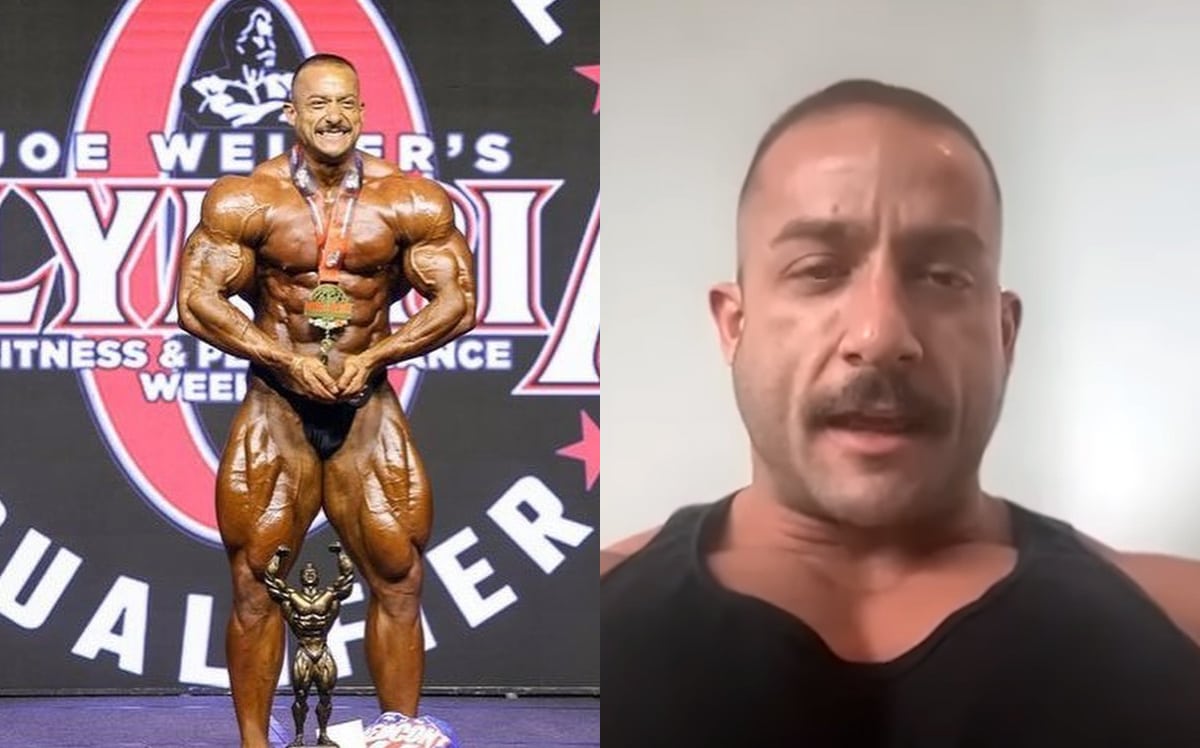
Ross Flanigan Reveals How Vodka & Edibles Ruined Prep & Targets Arnold Classic Title in Next 2 Years
American bodybuilder Ross Flanigan made headlines after turning in a spectacular performance at the 2023 California State Pro, held May 27 in Anaheim, CA. In a recent interview with Muscular Development, Flanigan shared the story of how his prep for the 2022 Indy Pro got ruined and his ambitions in the game next.
Ross Flanigan started his career as an amateur bodybuilder under the NPCC in 2015. His potential was evident from the start as he took home the top prize in his division and the overall in his debut at the 2015 Shawn Ray Classic. He took to the sidelines for the next year and came back in 2017 with a dominant win at the Phil Heath Classic. He finished the season with a top-ten placing at the USA Championships.
Flanigan continued to work his way up the ranks. In 2018, he narrowly missed out on the gold at the North American Championships. He handily dispatched the competition in his next showing at the 2019 San Antonio Classic and followed up with a solid third-place finish at the 2019 National Championships. He added the 2020 Adela Garcia Classic title under his belt in Oct. 2020 and took runner-up at the 2020 National Championships a month later.
After taking 2021 off, Flanigan decided to turn Pro and joined the IFBB Pro League in 2022. He signed up for the 2022 Indy Pro for his maiden appearance. Although he was brimming with confidence going into the contest, he missed the mark on stage and settled for a ninth-place finish.
Ross Flanigan was last seen in action at the 2023 Musclecontest California Pro last weekend. The competition gained a ton of attention after Sergio Oliva Jr., son of three-time Mr. Olympia Sergio Oliva, joined the roster to make his long-awaited comeback just days out from the show. In the end, Flanigan managed to ward off the threats and came out on top of the contest with Oliva Jr. taking bronze and Tonio Burton in second place.
While he did not get the win, Oliva Jr. assured the fans he would continue to compete and stay active. As for Flanigan, the win secured him an invite to the upcoming 2023 Mr. Olympia competition, widely regarded as the most prestigious fitness showcase in the world, for the first time.
Ross Flanigan reveals how vodka & edibles ruined contest prep
In a recent YouTube video, Ross Flanigan revealed the reasons for his lackluster appearance at the 2022 Indy Pro. He explained he was in a good spot going into the show but a night of drinking vodka and ingesting cannabis-infused edibles derailed his progress.
“We were ready. I had shredded glutes five weeks out coasting in we didn’t have to manipulate water, didn’t have to do any diuretics,” said Flanigan. “All we were going to do and ironically, we have a video doing this, me and Dom toasting to such a successful pro debut. So, we take a shot of vodka and for some reason I am inclined to take an edible. And something happens with the combination of alcohol, the edible, my low body fat, dehydration maybe. I lose my f**king mind. I blackout.
“I don’t sleep. My cortisol goes crazy, I have this crazy panic attack and I end up gaining 20 pounds overnight of water. I just go from skeletor face to fat overnight.”
Flanigan shared two crucial tips for those in prep to help make the process a bit easier to handle.
“I have two tips for anyone that is in prep or prepping. Always stay physically active so track your steps. The more you move, the more you’re going to want to keep moving. Body in motion stays in motion. The same thing applies to your mind. Most people sit on the couch and just veg out but me, I’m literally always working, always moving. Preps are super easy and they’re super fulfilling because I get so much done.”
Flanigan is targeting an Arnold Classic title next & wants to improve his package with experience
Ross Flanigan expressed contentment with his recent performance. He wants to come in better next time and identified a need to level up his mid-back, chest, and triceps for Mr. Olympia later this year.
“Happiest, like I said I just wanted to show up on stage with my potential. I think I did that and we can’t wait to get on Toronto stage too because there’s a lot of things we can improve upon especially with posing that’ll make me a little bigger, want to come in a little drier and fuller for the prejudging for Toronto. But for the Olympia, I’m going to have a massive rebound. Definitely bring up my mid-back, chest, and triceps. I think that’ll make me much more complete but I’m not looking to put a placing goal. I just want to get better.”
While he doesn’t believe he would win the Sandow trophy just yet, he’d prefer to get as much experience as he can to improve his chances.
“I want to compete. I want to get in front of the judges more. I want more feedback. I know I’m not going to win the Olympia this year but if I keep progressing maybe three years, five years, the more stage time the more chances I have to showcase my bodybuilding, it’s going to be more beneficial than doing less shows.”
His ambition is to win an Arnold Classic title in the next two years or so.
“An Arnold Classic championship would be the top goal. I’m 32, only been bodybuilding seriously for the last 3-4 years and an Arnold Classic title by 35 would be realistic.”
Ross Flanigan is set to compete at the upcoming 2023 Toronto Pro Supershow, scheduled for Jun. 3-4 in Toronto, Ontario, Canada. He will likely face a tough challenge from the likes of Men’s Open standout Iain Valliere, Jason Lowe, and Hassan Mostafa.
Based on his latest update, Flanigan looks focused on scoring back-to-back wins with another stellar performance this weekend. Although he’s already qualified for the Olympia, it will certainly boost his confidence further.
You can watch the full video below.
Published: 1 June, 2023 | 11:15 PM EDT