
 All Posts By Muscle Insider
Board Certified PHD
Nine Signs You Need a Rest Day
Of all the things you need to build muscle, get stronger, burn fat, or get fit, consistency is arguably the most important.
It doesn’t matter how carefully you plan your training or how balanced your diet is; if you don’t keep punching the clock and doing what needs to be done, your progress will be slow or even non-existent.
Ultimately, your body only responds to what you ask it to do. This is the fitness law of specificity. If you train hard and often, your body will adapt by getting fitter, stronger, and more muscular.
But, if you skip more workouts than you complete, your body has less reason to adapt and grow.
The bottom line is that consistency is often more important than finding the perfect workout or diet. Even the “wrong” program can produce great results if you do it often enough and with sufficient intensity.
That said, consistency can be a double-edged sword, and sometimes taking an unplanned day off may actually do you good. However, you need to be able to differentiate between feeling lazy and actually needing an extra rest day or two.
We reveal the top nine signs that you need a rest day.
The Top Nine Signs You Need a Rest Day
While sticking to your training schedule is usually a good thing, there are several signs that suggest the last thing you need is another punishing workout.
Intense exercise takes a lot out of your body, and it needs time to repair, recover and adapt after your workouts. There is a fine line between training hard enough to maximize gains and working so hard that you cannot recover.
Plowing on despite needing more rest can lead to overtraining syndrome, which is a chronic condition that can take many weeks or even months to overcome.
However, taking an unplanned rest day can help you avoid the overtraining trap and keep your training and gaining for the foreseeable future.
The following signs may indicate you need to skip training and take an extra rest day.
1. Reduced grip strength
It can be hard to know you are still tired from your last workout before you start your next one. After all, it’s only when you start training that you realize you aren’t feeling as strong or energetic as you should.
While you could abort your workout and go home, most people will push on regardless, making the problem worse.
Testing your grip strength before a workout could save you an unnecessary trip to the gym. Your grip force is an excellent indicator of the condition of the rest of your body.
You can test your grip strength with a cheap, readily available hand grip dynamometer. Take readings every day for a week to establish your average grip strength. Then, if you notice your score is more than ten percent lower than average, this suggests an extra day off will probably do you good.
2. Increased resting heart rate
Fit, healthy individuals usually have a lower resting heart rate (RHR) than their non-exercising compatriots. It’s not uncommon for well-conditioned people to have an RHR of 60, 50, or even 40 beats per minute (BPM), compared to the population average of 72 BPM.
However, if your RHR is 5-10 beats or ten percent higher than usual, it could indicate you are overtired and should take a rest day. A higher-than-usual RHR can also be an indicator that your body is fighting off the early stages of an illness, e.g., a cold.
Either way, if your RHR is higher than usual, take it as a sign that you may need an extra rest day.
The best time to take your resting heart rate is shortly after you wake up but before you get out of bed. Alternatively, you can use your smartwatch or fitness tracker to show trends in resting heart rate variance.
Related: Calculate Your Target Heart Rate
3. Even your warm-up feels hard
Warming up helps prepare your muscles and joints for what you are about to do. It may also lower your risk of injury. However, another lesser-known warm-up function is it allows you to assess your current condition and decide whether you are okay to train.
Typically, before doing their first heavy set, most lifters ramp up the weight over several warm-up sets, e.g.:
20kg/45lbs x 10 (empty bar)
40kg/90lbs x 8
60kg/135lbs x 6
80kg/175lbs x 3
100kg/220lbs x 5 (first heavy work set)
Warming up in this fashion helps fire up your nervous system so that the first heavy set is less of a shock. While it probably won’t feel light, your first work set should feel manageable.
However, if even your warm-up sets feel heavy, you should take this as a sign that you are tired and probably need a rest day. Pushing yourself through your workout will only increase your fatigue and could even lead to injury.
4. Familiar exercises or skills feel awkward
Fatigue doesn’t only affect your muscles; it also affects your central nervous system, or CNS for short. Your CNS comprises your brain and spinal cord and controls your peripheral nervous system (PNS), which in turn controls your muscles.
CNS fatigue will not only lower your potential for force production, making you weaker, but will also affect neurological fitness components such as balance and coordination.
So, if familiar movements feel awkward or more challenging than usual, e.g., standing on one leg, it’s a good indicator you need more rest and not a workout.
5. You are dreading your next workout
We all have days when we’d rather drink coffee and watch TV than sweat it out in the gym. But, once you’re actually there, you’ll be glad you went and feel terrific afterward. Giving in to your impulse to skip training would be an act of laziness.
However, if you are physically dreading your workout, you are probably suffering from fatigue and need a rest day. Not wanting to work out is a strong indicator that you are tired, and pushing yourself to train will potentially do more harm than good.
That said, you must be able to differentiate between laziness and really needing a rest day. Laziness is almost entirely psychological, whereas needing a rest day is more physical.
6. You’re craving high-energy foods
Your body is incredibly intuitive and is constantly sending you signals about what’s going on inside. Thirst tells you that you could be dehydrated and need more water while yawning lets you know you could probably do with a nap!
Uncharacteristic cravings for high-energy foods could be an indicator that your body is feeling low on energy and is after a fast-acting boost. However, simply eating something sugary probably won’t be enough to offset fatigue, so you should skip the candy bar and have an extra rest day instead.
7. You are sleepier than normal
Most adults need between 7-9 hours of sleep per night. This should leave you feeling refreshed, energized, and ready to face the day, including your workouts. However, despite sleeping well, if you wake up feeling tired or find yourself craving a nap, it could suggest that you need a day off more than you need a workout.
Disrupted sleep is also a common symptom of overtraining, so if you’re tired but still unable to sleep, you definitely need to back-off your workouts.
8. Your joints are achy
Muscle soreness is NOT a good indicator of fatigue. Muscles can feel sore just because you’ve done a new exercise or used an unfamiliar training method. Most lifters experience muscle soreness on a regular basis, and while it’s not an indicator of a successful workout, nor does it mean you’ve overdone it and need extra rest.
In contrast, achy joints are a better indicator that you need some extra rest. We’re talking non-specific joint pain here and not the pain you get from injury.
Non-specific joint pain is often caused by systemic inflammation and made worse by fatigue. So, if your knees, hips, lower back, shoulders, or elbows are uncharacteristically achy or stiff, you will probably benefit from an unplanned day off.
9. You feel unwell
Training while ill may win you a bravery medal from the gym bros, but it’s often a sign you need to take a day off.
When you are unwell, your body must divert vital resources to your immune system to help you get better. But, if you also exercise, those resources will be more thinly spread, and you could end up being ill for longer.
Also, training while sick means your body will have less energy for recovery and repair, making your workout less productive.
This makes training when you’re sick a lose-lose scenario.
In most cases, it’s better to rest when you feel unwell so you recover faster and avoid unproductive workouts. Return to the gym when you feel better, and your body can cope with the demands of your training.
Related: The Hierarchy of Successful Hypertrophy Training
How to Avoid Needing Unplanned Rest Days
Unplanned and extra rest days are sometimes unavoidable. We all have days where, for inexplicable reasons, our energy levels are low, and a workout will only make things worse. Taking a day off is sometimes the smart thing to do!
However, if you often feel the need to skip training, something in your workout schedule, diet, or lifestyle is probably out of whack. Fixing any problems could mean needing fewer unplanned rest days, making your training more productive in the process.
Reduce your need to take extra rest days with the following tips and strategies:
1. Include planned rest days in your program
You can’t expect to work out every day and not become fatigued. And yet, many people can be found in the gym seven days a week. Training every day is NOT a sign of commitment or toughness. Instead, it’s an indicator that you don’t understand how exercise affects your body, and how it needs to rest and recover to adapt.
Avoid this problem by programming rest days into your schedule. Two or three rest days per week should suffice.
You don’t have to be sedentary on your rest days; light physical movement, e.g., easy walking or stretching, can be very restorative. However, you should avoid doing tiring activities.
2. Periodize your training
The best workouts build up to a performance/volume/intensity peak and then ease off for a while before building back up again. This is called periodization. In contrast, many exercisers train with 100% intensity all the time and then wonder why they burn out!
Plan your workouts in blocks, called macrocycles in periodization. Each block builds on the one that preceded it. Then, after a few weeks of very intense training, enjoy a brief deload (detailed below) and then ramp up again.
This three-steps-forward-one-step-back approach to training can help ward off overtraining and minimize the need for unplanned days off.
3. Deload from time to time
Deloads are planned periods of low-intensity or low-duration training. They typically follow a training peak, where intensity and volume were very high.
A deload allows you to rest and recover while maintaining your current fitness and strength. In fact, you may even see improvements in performance during a deload as any residual fatigue disappears.
Structured strength training programs often include deloads, such as one easy week in four. The main concept behind deloading is to take time off voluntarily before you are forced to. In almost every case, regular short deloads are better than training without a break and being forced to take a long time off because of overtraining or overuse injuries.
4. Make sleep a priority
While recovery starts the moment your workout finishes, things really speed up when you are asleep. With nothing much else to do, your body can put more energy into tissue repair and muscle growth while you’re pushing out the zzzs.
While you can survive on less than 7-9 hours of sleep per night, chronic under sleeping can significantly impact your energy and motivation for exercise.
Getting the optimal amount of sleep means your mental and physical batteries will always be fully charged. Prioritize getting enough sleep, and you won’t need to take so many unplanned rest days.
Related: 10 Best Natural Aids for Better Sleep
5. Consume more nutritious food
Food contains energy, which is measured in calories. However, your body needs more than calories to function at its best; it also needs vitamins, minerals, and a host of other nutrients that are only present in clean, natural foods, such as fruits, vegetables, and whole grains.
Many lifters like the If It Fits Your Macros (IIFYM) or flexible diet, which means they can eat almost anything provided it helps them hit their calorie, protein, carbs, and fat targets for the day.
However, eating a lot of junk food means your diet will be nutritionally poor, which can affect energy and your ability to recover between workouts.
Reduce your need for extra days off by building your meals and snacks around nutritious whole foods. You can still enjoy nutritionally-poor treats from time to time, but consuming more healthy foods will, in turn, make you healthier. After all, you are what you eat!
6. Understand the impact of psychological stress on your energy levels
It’s not only physical exercise that can drain your energy levels – psychological stress does, too. Arguments with your boss, an unpleasant working environment, financial worries, and familial conflicts can all leave you feeling frazzled.
Piling a long or intense workout onto all this stress can make things worse, driving you ever closer to needing to take unplanned days off training.
If you feel emotionally burnt out, dial back on your workouts to give yourself more chance to recover. Exercise IS an excellent stress buster, but too much can make matters worse.
Respect the effect of psychological stress on your energy levels and make allowances in your workouts.
FAQs
Do you have a question about rest days or recovery in general? That’s okay because we’ve got the answers!
1. If I’m tired, can’t I just take a pre-workout or an espresso to rev myself up for training?
Caffeine and the energizing ingredients in pre-workouts do a great job of increasing your short-term energy and focus. However, they don’t address the cause of fatigue, which is usually too much training and too little recovery. In fact, they can make things worse by allowing you to train when you should probably be resting, thus deepening your “energy debt.”
The occasional use of caffeine and pre-workouts is seldom harmful. But, if you use them to power you through a workout when your body is telling you to take a day off, they could cause more harm than good. In many cases, a rest day will do more for your progress than a workout.
2. How can I tell if I really need a day off or if I’m being lazy?
Just because you don’t feel like training doesn’t mean you should take a rest day. Taking time off when you really should be in the gym is a sign of laziness.
If you feel you need a day off, don’t just rely on your emotions. Instead, consider things that you can see or measure.
For example, biomarkers like your resting heart rate and grip strength provide quantifiable indicators that you may benefit from a rest day. They are directly influenced by your condition and level of fatigue. Or, you could start your workout and see how you feel. Poor performance early on is a good indicator that you should take it easy or take the day off.
We all have days when we don’t feel like training, but, in some cases, this has nothing to do with our physical state and is purely mental. In these cases, you’ll probably feel better after a workout.
3. What can I do at the gym if I’m having an off day?
One of the downsides of using your warm-up or workout to determine if you need a rest day is they involve going to the gym and training! So, what should you do if you realize that you’re having an off day?
Here are a few ideas:
Stretch instead of lift.
Do some easy (zone two) cardio.
Use less weight, and do fewer sets and reps.
Learn some new exercises.
Have a sauna or steam bath.
Go for an easy swim.
Pack up and go home!
4. Can you cure overtraining with more food and sleep?
While sleep and good nutrition can go a long way to preventing overtraining, it is still possible to outpace your ability to recover and end up plateauing or regressing.
Advancing age, training too hard and too often, emotional stress, activities outside of the gym, your job, and numerous other factors can make it harder to fully recover from exercise, even if you sleep and eat well.
Sleep and food will go a long way toward preventing overtraining, but they are just two factors you need to consider.
5. What’s the best way to measure my resting heart rate?
There are several ways to measure your resting heart rate or RHR. Arguably the easiest is to use a smartwatch with an infrared sensor. Next easiest would be to use a chest strap heart rate monitor. Both of these give you a live heart rate reading.
However, if you don’t have access to these tools, you can just take your pulse.
There are several pulse sites throughout the body, but two of the most accessible are the radial pulse on the outside/underside of your wrist, just below your thumb, and your carotid pulse on the side of your neck, just below your jaw.
Place your first two fingers on either of these points and press gently. Then, when you can feel your pulse, count the number of beats in 60 seconds. Relax and breathe normally to get the most accurate reading.
Compare your result to your average RHR. If it is 5-10 beats or 10% higher than your usual resting heart rate, you may benefit from a rest day.
Closing Thoughts
Needing an unplanned rest day is not a sign of laziness. In fact, you might need an extra rest day because you’ve been very un-lazy lately and have trained harder or longer than usual. Training through fatigue invariably makes matters worse and could even lead to overtraining. In many cases, you can nip problems in the bud by taking an unscheduled rest day.
However, this doesn’t give you a license to take days off whenever you want. Missing more workouts than you complete will severely hamper your progress. Remember, the most important factor for training success is and always will be consistency. Consistency IS king!
That said, sometimes, the best way to win a war is by retreating and regrouping so you can come back stronger. Use the information in this article to determine if you really need a rest day or if you are just being lazy.
Hunter Labrada Scores New 585-lb (265.3-kg) Deadlift PR for 4 Reps in Contest Prep for 2023 Tampa Pro
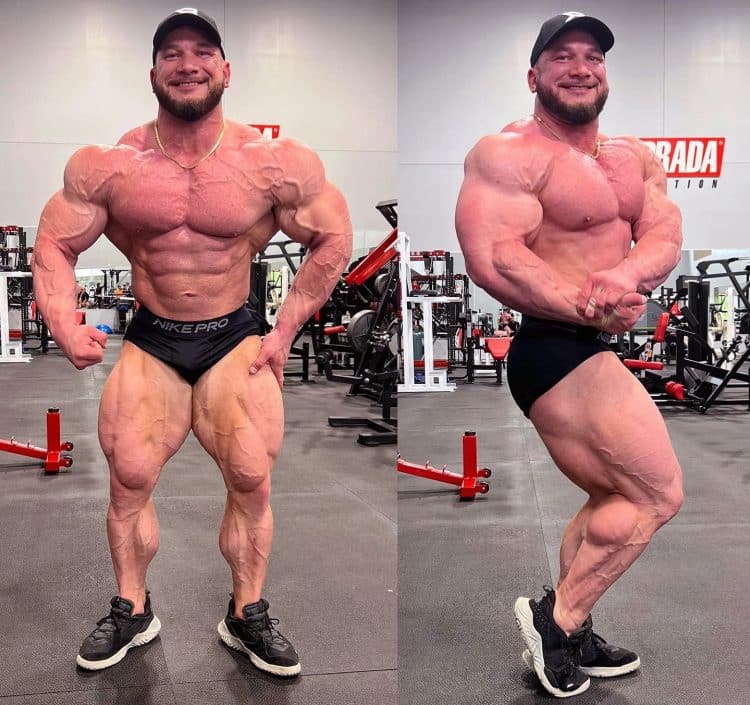
American bodybuilder Hunter Labrada is determined to earn an invite to the Mr. Olympia competition after dropping out of the top six at the last event. In a recent post made on Instagram, Labrada shared a new PR (personal record) on the 585-pound (265.3-kg) deadlift for four reps.
Hunter Labrada, son of IFBB Hall of Famer Lee Labrada, joined the ranks of the Men’s Open division as a legacy competitor with a lot of hype. He displayed a huge physique with impressive muscle mass, size, and posing abilities that won him his IFBB Pro debut show, the 2020 Tampa Pro. He finished the season with an eight-place finish in his maiden Mr. Olympia participation.
Labrada scored gold at the 2021 Chicago Pro before improving his standing to fourth place at the 2021 Mr. Olympia. His rivalry with fellow Open standout Nick Walker became one of the main talking points as Walker slotted in fifth behind him in a close-fought contest. Last year, Labrada missed the mark at the 2022 Mr. Olympia. He came in a bit watery and settled with a seventh-place finish, meaning he’d need to qualify for the next edition of the show since only the top five get an automatic qualification. Meanwhile, Walker placed third.
Hunter modified his training and diet program after the disappointing result. He offered a jacked off-season physique update where he weighed 280 pounds fasted three months ago. Then, he opened up on his ambitions to figure out his peak for contests, which he understands will take a calculated effort.
Hunter Labrada via Instagram
The 31-year-old aims to bring a high level of conditioning, similar to his father Lee. He believes trimming down his midsection would enhance his aesthetic quality and get him closer to his goal. With these ambitions on his mind, Hunter has been practicing vacuum poses which are effective for midsection control, especially when posing on stage.
Aside from training and goals for this year, Hunter Labrada detailed his full day of eating in the current off-season. He also detailed the supplements he used to improve his physique before returning to competition. Then, the Open star smashed a heavy off-season lower-body training session days later.
Labrada gave fans a look into his preparations for guest posing appearances at the Emerald Cup and the Pittsburgh Pro last month. He showed off his bulked-up physique where he weighed 283 pounds fasted. About two weeks later, Labrada provided some of his best tips for building muscle on weaker calves. He encouraged training the muscle group to failure and said not to complicate things.
Hunter Labrada scores new PR of 585-lb deadlift for 4 reps
In a recent Instagram post, Hunter Labrada shared that he set a new PR of a 585-lb deadlift for four reps in a 2023 training session.
Labrada used a lifting belt and wrist straps with no shoes for the lift. He performed the set at a consistent pace with proper form for the first three reps. He struggled slightly on the final rep but managed to pull it off.
“Pretty stoked on this! This was a lifetime PR for me,” wrote Labrada. “Seeing these translate in my physique and progressing them in the gym has been fun, and that’s what it’s all about!
585 x 4.”
RELATED: What Does PR Mean in Gym?
As of late, Labrada left fans stunned with a shredded physique update weeks out from the 2023 Tampa Pro. He tipped the scales at a lean 277.6 pounds and gave his opinion on exercise selection.
Labrada turned in a strong performance at the 2023 Pittsburgh Pro guest-posing appearance earlier this month. Based on the latest update, it’s evident why he’s brimming with confidence going into the upcoming Tampa Pro and Texas Pro.
RELATED: Hunter Labrada Recommends Best A/B Split Variations to ‘Break Through Your Plateaus’
Published: 24 May, 2023 | 8:21 PM EDT
Lee Haney: Open Athletes Are ’60-Lbs Overweight Traumatizing Themselves with Terrible Diets’
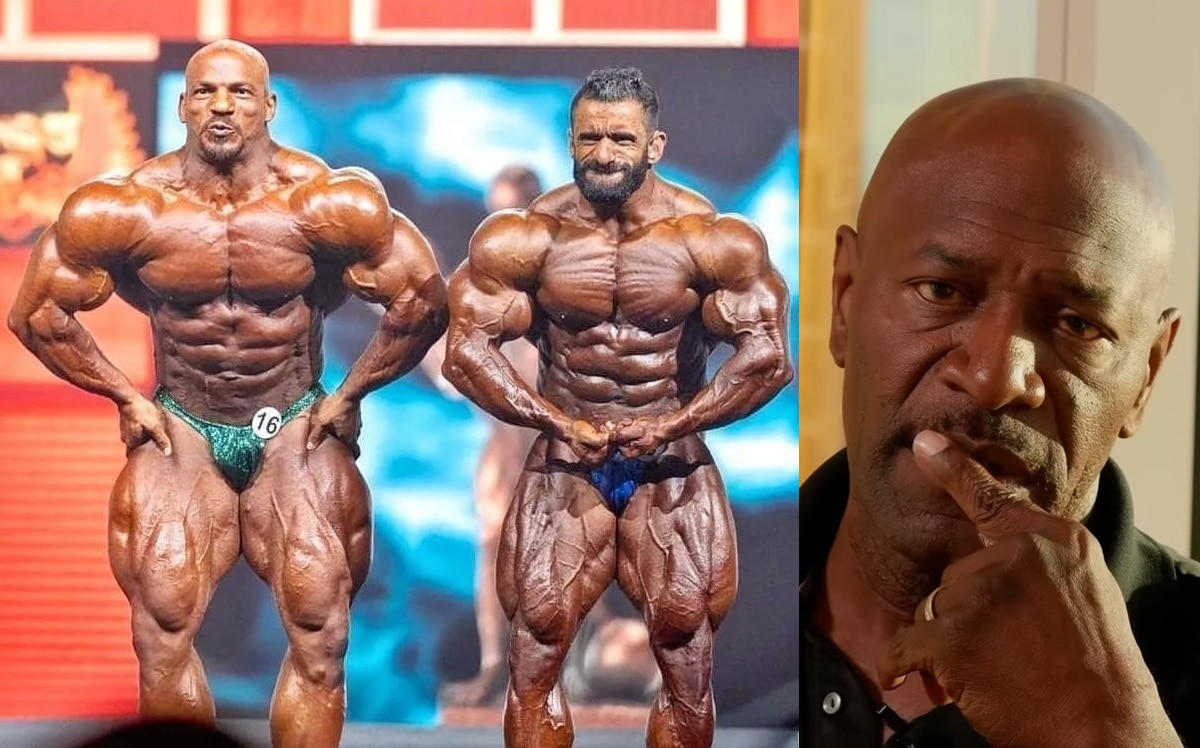
Lee Haney rose to the top of the sport with exceptional balance, conditioning, and fullness. In a recent Escape Fitness interview, Haney fired shots at Open bodybuilders for poor nutrition and relived his first Mr. Olympia victory in 1984.
Bodybuilding legend Lee Haney dominated the IFBB Pro League during the 1980s. He is an eight-time Mr. Olympia winner (1984-1991), a reign he made possible with an unyielding work ethic and sheer determination. During his bodybuilding tenure, Haney faced the cream of the crop, having battled with three-time Mr. Olympias Sergio Oliva, Frank Zane, as well as Lee Labrada, and Rich Gaspari.
Since Haney’s dominant title run, the sport has undergone dramatic changes. After Haney retired on top in 1991, mass monsters would soon stake their claim in the division. Despite changes to the category, fans, and bodybuilding veterans alike agree that Haney displayed one of the most complete physiques ever.
While he competed in a different era, Lee Haney has continually warned competitors today about who they choose to train with. And now it appears Haney is taking issue with Open competitors who have developed a seemingly unhealthy relationship with food.
Lee Haney Talks Poor Nutrition & Offers Advice to Bodybuilders: “Always Stay Within Striking Distance”
According to the bodybuilding icon, low-carb diets are for ‘fat boys.’ He encouraged athletes to keep a healthy relationship with food so it’s easier to prepare for bodybuilding shows.
“Low carb is for fat boys. If you look like a porkey the pig in the off-season, you’re fat! You got to burn that stuff off. When you trying to get rid of all that weight through aerobics and starvation, your muscle is not going to have that life to it.
That life force where it looks great on stage and it’s popping because you’re aerobic-ing yourself to death and stress will show up on your physique, it’ll tear you up. So, my message has always been in bodybuilding as I share with young athletes, always stay within striking distance. Train around, no more than around 12-15 pounds over your competition weight,” said Lee Haney.
Haney says 3% body fat is the goal on stage and believes athletes can adjust their nutrition based on where they are in their respective prep.
“If you’re 15 or 16 weeks out, if you’re 15% body fat, then guess what? You can drop a percentage every week until you bottom out at 3% or 3.5% you’re ready then. And if you get there too quick then guess what? Increase the food intake. I don’t believe in zero carbs. I never had to do that. I was a carb monster. My carbs would be 4 to 500 grams of carbohydrates a day because I was never a fat boy.”
“These guys get 40, 50, 60 pounds overweight and they have to traumatize themselves, eating chicken and green beans, what kind of life is that? It’s terrible man. It’s ignorance,” added Haney. “Never go below 50 grams of carbs. Zero carbohydrates for me, keto for me, if you want to call it keto, we just said lower your carbohydrates.”
Unlike his contemporaries, who consumed sunflower seeds, almonds, and walnuts, Haney underscored that modern competitors carb up with bacon, cheese, and ‘garbage.’
“The muscles overcompensate when you put the carbs back in, that’s why we want to hit the stage and we’re full and the muscles and the veins are popping. Even on another point, when we do carbohydrate deplete, we don’t use bacon, cheese, and garbage. We used sunflower seeds, we used almonds, we used walnuts.”
“They have half-truths [people in fitness and bodybuilding], they don’t live and they haven’t lived what we lived. When I say we, we’re bodybuilders, that’s what we do. We understand the science of food. They don’t [online coaches]. They just read stuff and don’t get it right and get a lot of people hurt living off statins.”
Haney on Winning 1st Mr. Olympia in 1984: “It Was a Dream Come True”
Haney said he won his first Mr. Olympia weighing 233 pounds. He credited Arnold Schwarzenegger, Frank Zane, Robby Robinson, and Ed Corney as early influences.
“Winning a Mr. Olympia is a miracle in itself and to be there on the same stage with Frank Zane and Robby Robinson, Sergio Olvia was there… wow. You know, that was absolutely incredible. It was like a dream come true man. You watched these guys in the magazines, you grew up admiring them, there you are, standing on stage with them. To be the winner and the victor, wow. Thank you, lord,” added Haney.
“The previous year I weighed 243 but winning at 233. I had went back and figured out through my notes and studied what had went wrong. No one had stepped on an Olympia stage at the weight and at that height. I knew that was a winning package. You size up your competition. I always knew if I had a combination of Arnold, Robby, Frank Zane, Ed Corney, who can beat that? And I felt that’s what I had achieved during my whole career, not just for that one but during my whole career. That’s what I wanted to be like, a combination of all of those gentlemen, those awesome legends.”
Haney isn’t the only bodybuilding veteran from a different era taking aim at the Open category. A few months back, 1990s standout Rich Gaspari accused Open bodybuilders of abusing steroids instead of depending on consistent training. In an additional Fitness, Fame & Fortune podcast, Gaspari said he personally favored the look of Classic Physique Olympia Chris Bumstead over recent Men’s Open Mr. Olympia winners.
Given his expertise, Lee Haney is determined to educate new talent making their way into bodybuilding. He stands by his approach, which saw him set the all-time Mr. Olympia win record that was later matched by Ronnie Coleman.
You can watch the full video on the Escape Fitness YouTube channel below:
RELATED: Lee Haney Shares Iconic Police Traffic Stop Photoshoot After First Mr. Olympia Win in 1984
Published: 24 May, 2023 | 4:44 PM EDT
What’s next after I become a IFBB Pro Bodybuilder?
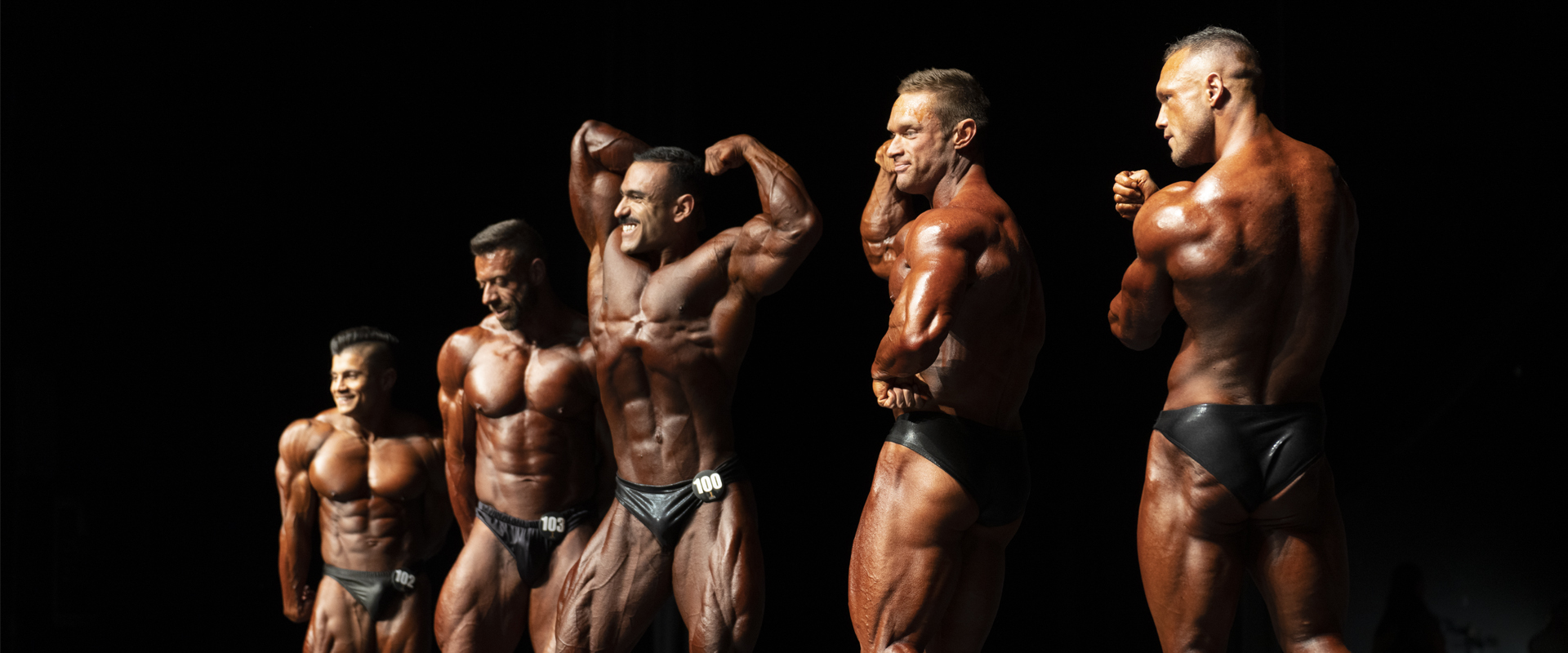
Becoming a professional bodybuilder under the International Fitness and Bodybuilding Federation (IFBB) is a remarkable achievement that reflects years of dedication, discipline, and hard work. However, reaching this pinnacle in the world of bodybuilding is just the beginning of an exciting and challenging journey. Once you have attained professional status, a whole new chapter awaits, offering a range of opportunities and possibilities.
1. Competing at the highest level:
As a professional bodybuilder, you will have the chance to compete against some of the most accomplished athletes in the world. The IFBB hosts a series of prestigious competitions, including the Mr. Olympia, Arnold Classic, and Legion Sports Fest where professionals showcase their incredible physiques. These events provide a platform to demonstrate your skills, gain recognition, and potentially secure lucrative sponsorships.
2. Pursue Endorsements and Sponsorships:
Achieving professional status can open doors to endorsement deals and sponsorships. Companies related to fitness, nutrition, and sportswear are often interested in partnering with successful athletes to promote their products. Establishing strategic alliances can not only provide financial support but also enhance your brand and increase your exposure within the fitness industry.
3. Inspire and Mentor Others:
As a professional bodybuilder, you become an influential figure in the fitness community. People look up to you for inspiration, guidance, and motivation. You can use your platform to empower and educate others, sharing your expertise through training programs, workshops, or online platforms. Becoming a mentor and helping aspiring athletes reach their goals can be incredibly fulfilling and contribute to the growth of the sport.
4. Venture into Fitness Entrepreneurship:
With your knowledge and experience in fitness and bodybuilding, you may consider venturing into entrepreneurship. This could involve starting your own fitness training facility, creating a line of fitness apparel, or launching a nutrition supplement brand. Your professional status lends credibility and can attract potential customers who admire your achievements.
5. Expand Your Social Media Presence:
In today’s digital age, social media has become a powerful tool for athletes to connect with fans and build their personal brand. Leverage your professional status to expand your social media presence and engage with a larger audience. Sharing training tips, nutritional advice, and behind-the-scenes glimpses into your life as a professional bodybuilder can help you gain a loyal following and attract opportunities for collaborations or sponsorships.
6. Explore Modeling and Media Opportunities:
Professional bodybuilders often have the opportunity to branch out into modeling and media. Your exceptional physique can make you a sought-after model for fitness magazines, apparel brands, and advertising campaigns. Additionally, you might be invited to participate in television shows, documentaries, or fitness-related media projects, further boosting your exposure and widening your reach.
7. Focus on Personal Development:
Beyond the physical aspect of bodybuilding, professional athletes understand the importance of continuous personal development. Take the time to expand your knowledge by studying exercise science, sports nutrition, or strength and conditioning techniques. Engage in workshops, seminars, or conferences to stay updated with the latest trends in the industry. Investing in your personal growth will not only benefit your own career but also enable you to provide better guidance to those who look up to you.
Conclusion
Becoming a professional bodybuilder under the IFBB is a significant achievement, but it is not the end of the road. It marks the beginning of an exciting journey filled with opportunities to compete, inspire others, and explore new avenues within the fitness industry. Embrace the next phase with passion, adaptability, and a drive to leave a lasting impact on the world of bodybuilding.
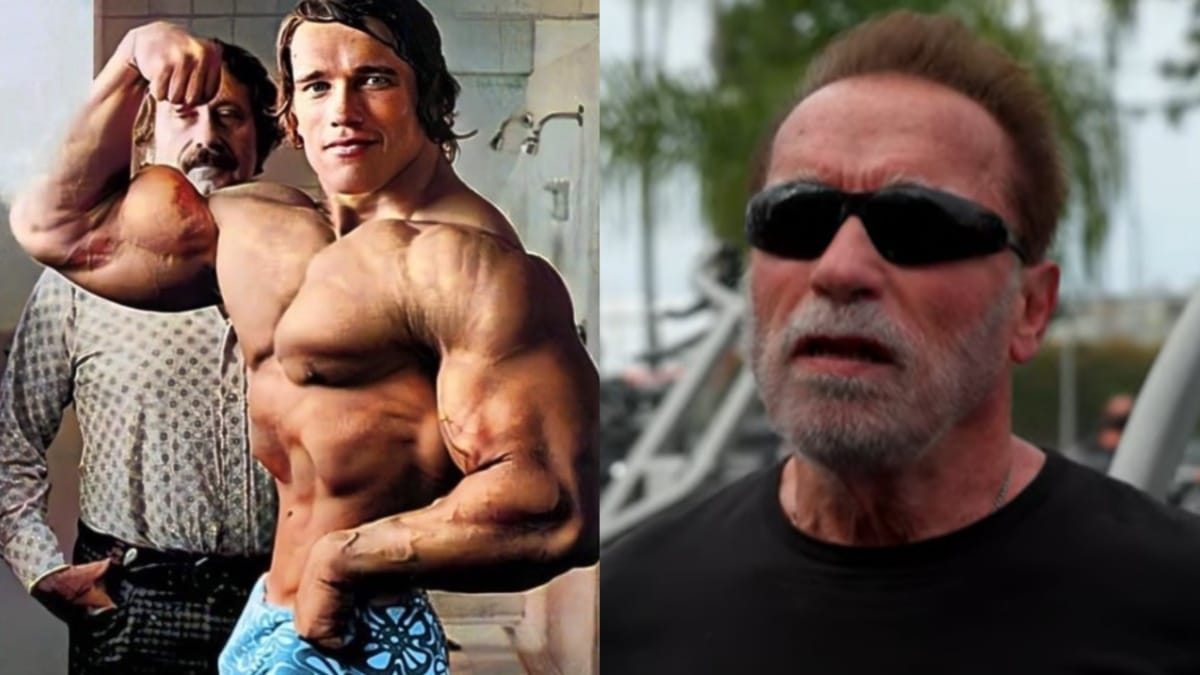
Arnold Schwarzenegger Unveils 2-Compound PED Protocol Used During Prime of Career
Bodybuilding legend Arnold Schwarzenegger has always been honest about using steroids during his career, but he never revealed the exact drugs he took. In a recent Men’s Health interview, that changed as the ‘Austrian Oak’ listed the two-compound cycle he used to win seven Mr. Olympias.
Today, Arnold Schwarzenegger is by far and wide the most popular and visible ambassador of the sport. However, it took hard training, discipline, and consistency to get to where he is. In the 1970s and 1980s, Schwarzenegger was a proven force with a one-of-a-kind physique. His popping biceps and full chest were standout features that helped him climb and claw to the top of the IFBB Pro League.
During Schwarzenegger’s tenure, he was challenged by a handful of icons such as three-time Mr. Olympias Frank Zane and Sergio Oliva. In addition, he competed against Mike Mentzer, who many believe should have defeated Schwarzenegger during his comeback at the controversial 1980 Mr. Olympia competition. Looking back on a decorated career, Schwarzenegger said his toughest battle came against Oliva.
Schwarzenegger managed to claim a total of seven Mr. Olympia titles just shy of the joint record set years later by eight-time winners Lee Haney and Ronnie Coleman. Decades separated from his retirement, fans and bodybuilders alike have wondered about Arnold’s steroid cycles.
‘The Blond Myth’ Lee Priest discussed the topic once and mentioned Dianabol was Schwarzenegger’s favorite compound. Priest explained that times were different back when Schwarzenegger would compete and said athletes didn’t have ‘set rules’ about steroid protocols. Following years of speculation, Schwarzenegger has shared his Olympia-winning cycle, which consisted of Dianabol and testosterone.
Arnold Schwarzenegger Shares Steroid Cycle Used During Career, Says Sport Is Unsafe: ‘People Are Dying’
According to Schwarzenegger, he used 15 milligrams of Dianabol daily and 100 milligrams of testosterone a week.
“One hundred milligrams a week and then three dianabol a day. So that was 15 milligrams,” Arnold Schwarzenegger said describing his steroid use.
Testosterone replacement therapy (TRT) is a popular treatment athletes use for muscle maintenance, strength, and a variety of other benefits that aid low testosterone. From powerlifting sensation Larry Wheels to Jay Cutler, TRT continues to have a major impact on athletes’ health in 2023.
With a sudden spike in bodybuilding deaths over the past three years, Schwarzenegger stressed that people are listening to ‘charlatans’ and ‘don’t know what the ‘fuc* they’re doing.’ He added that people today are more obsessed with shortcuts than consistent hard work.
“Bodybuilding always, always was considered a safe sport,” he shared. “But now, it’s not. Now people are dying. They’re dying because of overdoses of drugs, and they don’t know what the fuck they’re doing. And they’re listening to charlatans. If I want to go and get medical advice from a legitimate doctor, I go to UCLA, or I go to the Cleveland Clinic.”
“Don’t go there,” he says of steroids. “Yes, we are at a time now where we always look for the easy way to make money, the fast way to get rich, the easy way to be an influencer. Any time you abuse the body, you’re going to regret it later on. I want young people to know that I have seen people getting kidney transplants, and suffering tremendously from it,” Schwarzenegger told Men’s Health.
This isn’t the first time Arnold Schwarzenegger has shined a spotlight on the dangers present in bodybuilding. In 2021, Schwarzenegger said Open bodybuilding is dangerous and that Classic Physique was the future. Given the rate at which athletes were dying, Schwarzenegger was candid, highlighting that bodybuilding had become the most dangerous sport in the world.
Following the 2022 Mr. Olympia show, Schwarzenegger said the Classic Physique Olympia winner should be crowned the Mr. Olympia title instead of the Open class champion. Some fans agree with Schwarzenegger, as four-time Classic Physique Olympia Chris Bumstead‘s popularity continues to swell.
RELATED: Arnold Schwarzenegger Shares 5-Min No-Equipment Workout of the Week: ‘Get Your Blood Flowing’
Schwarzenegger’s physique, a mix of aesthetics, muscularity, and mass, still impresses bodybuilding fans today. He achieved it with a minimal steroid cycle that did not include growth hormone, which illustrates how far ahead he was during his prime.
Published: 24 May, 2023 | 1:58 PM EDT
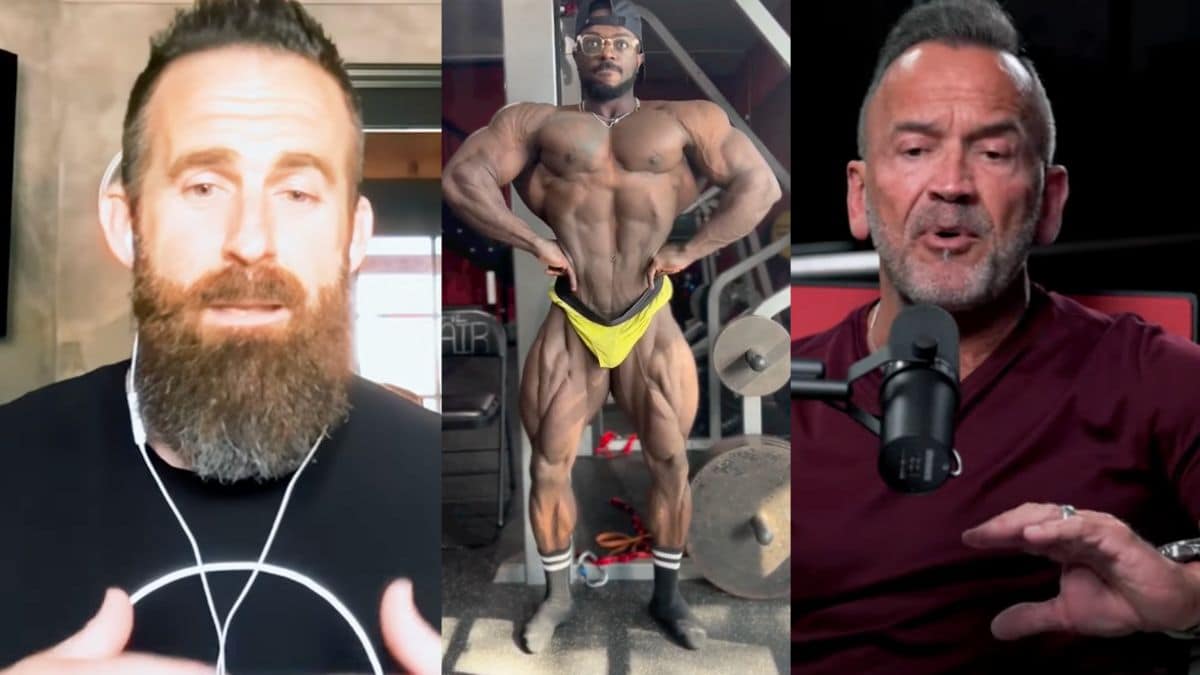
Joe Bennett & Lee Labrada Share ‘Guidances’ on Hypertrophy, Genetics, and Injury Prevention
Fitness and bodybuilding coach Joe Bennett has acquired a wealth of knowledge over the years, having trained athletes and Hollywood actors like Dave Bautista. In a recent episode of the Lee Labrada Show, Bennett joined Labrada for a detailed discussion about genetics, exercise selection, and injury prevention.
As a bodybuilding veteran, Lee Labrada left a memorable impact on the Men’s Open division, where he used aesthetics, conditioning, and artistic posing to assert himself as one of the best. Even though he was unable to procure a Mr. Olympia title, Labrada was a perennial contender who placed in the top four at the show for seven consecutive years.
Joe Bennett on the other hand, is a decorated trainer, who helped shape several top-tier IFBB Pro League bodybuilders, some of which include the inaugural Women’s Physique Olympia Dana Linn-Bailey, two-time Arnold Classic winner Terrence Ruffin, and German star Urs Kalecinski.
With their combined knowledge, Labrada and Bennett tackled ‘common sense’ practices in bodybuilding today. In addition, they explained the role genetics play when determining which exercises are best suited for certain individuals.
Joe Bennett, Lee Labrada on Exercise Selection & Full Range of Motion: ‘Not Everyone Has Short Femurs Like Tom Platz’
Bennett believes common sense guidelines must be established to build muscle, like developing an ‘internal response’ while training.
“If you’re anyone outside of someone whose sport is lifting weights then you have to realize the whole thing of weight lifting is to have an internal response. There should be some common sense guidances, I’m choosing this exercise to train my chest, train my shoulders, I should feel it in my chest, I should feel it the right way in my shoulders.
So, if I’m doing an exercise that’s a chest exercise and all I feel is my triceps and shoulders, it’s not a chest exercise for you. Just because it’s written in a book for chest exercise, but your body doesn’t understand that,” said Joe Bennett.
He stressed that genetics factor into training technique.
“It’s [genetics] a pretty big thing. I always joke with people, in the industry, there’s trainers that will really sell things that are customized. Obviously, there’s a big component of truth there because different exercises work for different people.
At the same time, if I have somebody coming in and it’s day 1, I have some ideas, like I know these are going to be some good options to start with right? Then, obviously, even if this works for 90% of people, I have to realize that it might not benefit this one person if they’re that 10% or even if they’re that 1%, whatever it is. So, there’s definitely some differences.”
Bennett shared that Tom Platz had short femurs which enabled him to achieve a better range of motion when performing squats.
“Limb length, I mean some people, again, you look at someone like Tom Platz and everyone looks how he squats, and that’s what everybody thinks about when they want to squat. There’s people that because of their proportions that they have instead of having Tom Platz’s little tiny short femurs, they’ve got these long legs and they might have a short torso. They literally are like an accordion when they try to squat. Everything folds as opposed to there being a nice pretty straight up and down thing,” Bennett said.
“Between limb length, there is some structural differences if we look at different joints, how your shoulder sits in the side of the scapula, how your femur fits in your pelvis. There are differences person to person. There are for sure people that are built better for things than others. There was a reason Tom Platz could squat what he could. The world record bench pressers are built for bench pressing. It’s the same as a lot of things in life. It’s really important that there is some degree of customizing.”
Bennett on Injury Prevention: ‘Physical, Emotional, Mental Stress Play Into It’
As far as injuries are concerned, Bennett says if an exercise causes pain on a consistent basis, then it should be replaced with a different movement.
“That’s the joke amongst strength coaches [just don’t injure your athlete]. You’ve already got the genetic elite, they’ll do almost anything to put on muscle, just make sure they’re doing things – where again, you’re building them up, get them bigger, stronger, more resilient, because they’re likely to get injured on the field.”
Lastly, Bennett highlighted that injuries often occur when people are dealing with physical or psychological stress.
“There are lots of contributing factors, recovery goes into it, how people are when they come into the gym. We think about physical stress, but emotional stress, mental stress, all that can play into it. If I had to say the biggest thing, it honestly is poor exercise selection. Most injuries and there are some exceptions, but most injuries in the bodybuilding world, it’s repetitive stuff. People have signs where something starts to feel uncomfortable.”
“Most of those things [where people work through pain] as you and I both know, if you start to get something and you don’t change something and you keep going, it only goes one direction, it only gets worse.”
In addition to Bailey, Ruffin, and Kalecinski, Joe Bennett recently partnered with Brett Wilkin for an intense back workout. The ‘Hypertrophy Coach’ led Wilkin through the training session and offered up some useful tips. Wilkin is already qualified for the 2023 Mr. Olympia show after claiming gold at last year’s Bigman Weekend Pro contest.
Injury prevention and exercise selection remain widely discussed topics in bodybuilding. Given their expertise, Labrada and Bennett hope to inspire safer practices in the gym, not just for athletes but for people of all fitness levels.
RELATED: 10 Best Bodybuilding Coaches with Proven Track Records
You can watch The Lee Labrada Show on YouTube below:
Published: 24 May, 2023 | 12:11 PM EDT

2023 Strongman Champions League Serbia Results – Gavin Bilton Claims His First International Win
Although the biggest Strongman competitions of the year have already concluded, the season is still extremely active. With many competitions taking place around the globe, one stood out over the past weekend, as the most thrilling action took place in Europe. Specifically, the 2023 Strongman Champions League Serbia took place in the city of Zrenjanin on May 20th.
The Strongman Champions League (SCL) features a lot of incredible athletes, but the competition in Serbia stood out due to Gavin Bilton. Also known as “The Bull”, Gavin is known as a major Strongman figure, but this was the first International win in his career so far.
Gavin Bilton did not have an easy job in Serbia, as he had some fierce rivals chasing him from the start. However, two event wins out of five were enough to take the top spot, as his performance resulted in 56 points overall.
Fatih Karaca finished in second place, but he even had a realistic chance to win the competition. Going into the final event, Fatih was in the lead, as he had 0.5 points more than Gavin Bilton. However, a disappointing eight place finish in the final event ruined Fatih’s chances of winning the show.
2023 Strongman Champions League Serbia Leaderboards
Gavin Bilton — 56 points
Fatih Karaca — 52.5 points
Kelvin de Ruiter — 49 points
Andrea Invernizzi — 46 points
Peter Juhasz — 44.5 points
Evans Nana — 37 points
Nemanja Tasic — 36 points
Dado Stroil — 35.5 points
Jarkko Mehtälä — 34.5 points
Jonathan Cotton — 23 points
Hristo Muskov — 20 points
Andy Black — 5 points
Ervin Toots — 1 point
Related: Gavin Bilton Victorious At 2021 UK’s Strongest Man, Lucy Underdown Sets New World Record
Event One — Truck Pull
The Truck Pull was a fantastic way to start off the 2023 SCL Serbia, as athletes raced to pull the 15,000-kilogram truck as fast as possible. The Turkish representative, Fatih Karaca, was the quickest man to cross the given 25-meter distance, having performed the task in just 30.46 seconds. However, in an extraordinary set of circumstances, Kelvin de Ruiter finished in second, just 0.01 seconds behind Fatih.
Fatih Karaca — 30.46 seconds
Kelvin de Ruiter — 30.47 seconds
Gavin Bilton — 35.35 seconds
Andrea Invernizzi — 36.37 seconds
Dado Stroil — 36.4 seconds
Evans Nana — 36.56 seconds
Hristo Muskov — 39.18 seconds
Jarkko Mehtälä — 39.25 seconds
Andy Black — 39.3 seconds
Jonathan Cotton — 47.39 seconds
Peter Juhasz — 54.87 seconds (Tied-11th)
Nemanja Tasic — 54.87 seconds (Tied-11th)
Ervin Toots — 57.81 seconds
Event Two — Farmer’s Walk
The 2023 Strongman Champions League Serbia continued with the iconic Farmer’s Walk event. It tasked the participants with lifting and carrying 150-kilogram implements for a length of 50 meters.
Peter Juhasz of Hungary displayed the best combination of grip strength and quick feet, as he completed the course in just 23.69 seconds. Fatih Karaca further solidified his impressive start with a second place finish, which he earned by crossing 50 meters in 26.25 seconds. Kelvin de Ruiter finished just behind Fatih, with a time 0.59 seconds slower than his.
Peter Juhasz — 23.69 seconds
Fatih Karaca — 26.25 seconds
Kelvin de Ruiter — 26.84 seconds
Andrea Invernizzi — 30.84 seconds
Gavin Bilton — 33.53 seconds
Evans Nana — 34.63 seconds
Hristo Muskov — 48.4 seconds
Dado Stroil — 47.1 meters
Jonathan Cotton — 46.3 meters
Nemanja Tasic — 42 meters
Jarkko Mehtälä — 25 meters
Andy Black — Withdrew
Ervin Toots — Withdrew
Event Three — Viking Press
The third event of the 2023 Strongman Champions League Serbia was a true test of shoulder and upper body strength. The event tasked the athletes with performing as many overhead press repetitions as possible with 160 kilograms and a 60-second time cap.
Gavin Bilton stood out as the greatest overhead presser on the roster, beasting through 13 reps without much struggle. He was followed by Andrea Invernizzi who had 12 reps, and Peter Juhasz who had 11.
Gavin Bilton — 13 reps
Andrea Invernizzi — 12 reps
Peter Juhasz — 11 reps
Fatih Karaca — 10 reps (Tied-fourth)
Jarkko Mehtälä — 10 reps (Tied-fourth)
Kelvin de Ruiter — 9 reps
Evans Nana — 6 reps
Nemanja Tasic — 5 reps (Tied-eighth)
Dado Stroil — 5 reps (Tied-eighth)
Jonathan Cotton — 4 reps
Hristo Muskov — 0 reps
Event Four — Hercules Hold
The Hercules Hold is known for being a test of grip and determination, which is why it was picked for the 2023 SCL Serbia. The goal was to hold the two pillars for as long as possible.
Being the most experienced in the group with regards to this event, Gavin Bilton easily outperformed the remainder of the competitors. His final time came out to 36.62 seconds, which is 8.31 seconds more than his closest rival, Fatih Karaca. Representing the host country, Serbian Nemanja Tasic placed third with just 0.22 seconds less than Fatih.
Gavin Bilton — 36.62 seconds
Fatih Karaca — 28.31 seconds
Nemanja Tasic — 28.09 seconds
Kelvin de Ruiter — 26.18 seconds
Andrea Invernizzi — 25.28 seconds
Dado Stroil — 22.09 seconds
Peter Juhasz — 18.87 seconds
Jonathan Cotton — 14.03 seconds
Evans Nana — 10.58 seconds
Jarkko Mehtälä — 3.73 seconds
Hristo Muskov — 1.62 seconds
Event Five — Super Yoke
For the final event of the 2023 Strongman Champions League Serbia, the athletes had to perform a Super Yoke. However, while the concept looked as usual, people were used instead of weights. So, four people sat on each Super Yoke and athletes had to carry them for a distance of 25 meters.
Once again boosted by the home crowd, Nemanja Tasic sprinted his way towards an event victory, finishing the Super Yoke in just 16.25 seconds. Jarkko Mehtälä was the next fastest to finish with a time of 17.03 seconds, while Peter Juhasz rounded up the top three with 18.26 seconds.
Nemanja Tasic — 16.25 seconds
Jarkko Mehtälä — 17.03 seconds
Peter Juhasz — 18.26 seconds
Gavin Bilton — 19.51 seconds
Evans Nana — 19.68 seconds
Kelvin de Ruiter — 19.98 seconds
Dado Stroil — 23.66 seconds
Fatih Karaca — 24.59 seconds
Andrea Invernizzi — 28.68 seconds
Jonathan Cotton — 42.87 seconds
Hristo Muskov — 52.35 seconds
Related: Mitchell Hooper Breaks Tom Platz’s 1992 Legendary Squat Record With 24 Reps of 525 Lbs
While Gavin Bilton is 34-years-old and already a popular Strongman athlete, he has only been competing for four years. Therefore, it is understandable that he just recently claimed his first international victory at the 2023 Strongman Champions League Serbia. If everything falls into place, this could set off a chain reaction of success, opening the doors to countless victories for Gavin in the years to come.
Published: 24 May, 2023 | 9:35 AM EDT
Win 5 lbs of Bio Serum 1
Protein Recipe Contest
The winner gets 5 lbs of Bio Serum 1 Rules: 1. Email me a great protein recipe you use. It must be your creation. 2. Must include a pic and/or video. (this will prevent people from just Googling a recipe and sending it to me.3. Email the recipe and pic/video to [email protected] with the subject heading: recipe contest. Sorry if you don’t have a camera, you cannot win. 4. If you are located NOT in the United States of America and you win, you’ll have to pay for the shipping.5. I’ll pick the winner next week.6. By sending me your pic/image/video you agree that I can use it for my marketing material. The winner will be based on all or some of the following:creativity (funny, good editing, etc.)OriginalityTasteProtein Factory products used QualityFinally, whoever I feel has sent me the BEST recipe WINS!!Good Luck, Alex
Bio Serum Black
$59.99 – $134.99 — or subscribe and save up to 10%
Bio Serum 1
$99.99 – $449.99 — or from $89.99 – $404.99 / month
Alex Rogers is a supplement manufacturing expert. He has been formulating, consulting, & manufacturing dietary supplements since 1998. Alex invented protein customization in 1998 & was the first company to allow consumers to create their own protein blends. He helped create the first supplement to contain natural follistatin, invented whey protein with egg lecithin, & recently imported the world’s first 100% hydrolyzed whey.
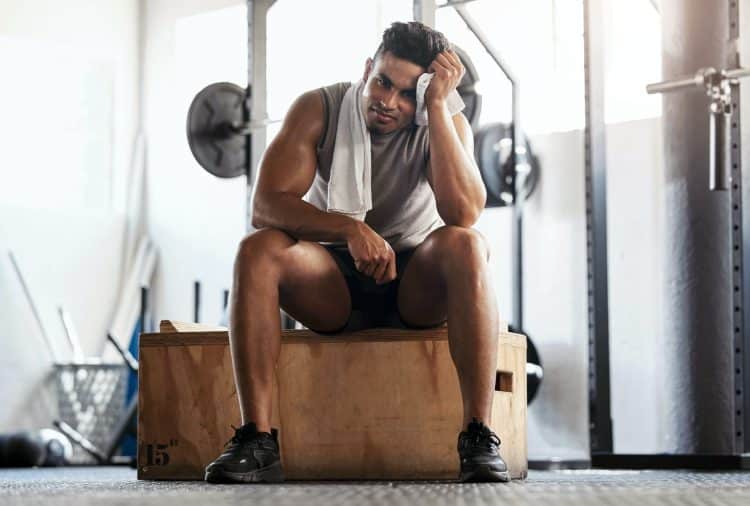
Rest Time for Hypertrophy: How Long Between Sets for Maximal Muscle Growth?
Hypertrophy training programs are typically built around a range of variables. These include training frequency and split, exercise selection, rep range, number of sets per exercise and muscle group, and recovery time between sets.
In most cases, program writers put a lot of thought into things like the training split and exercise selection but very little into how much rest time you should take between sets. Some don’t even mention it, leaving you to fill in this missing piece of information yourself.
This is unfortunate because not only is the length of your interset rest a variable you can manipulate, but it may also have a direct impact on the effectiveness of your program.
In this article, we investigate how the rest time between sets can affect your progress and if there is an optimal rest time for building muscle.
Rest Time for Hypertrophy – The Standard Recommendation
While a lot of exercisers just rest as long as needed between sets, the standard recommendation interset rest period for hypertrophy training is 30-90 seconds. So, for example, if you do a set of bench presses, you would rest 30-90 seconds before beginning your next set.
Some lifters favor the short end of this scale (30-60 seconds), while others prefer slightly longer rests (60-90 seconds). Oftentimes, rest periods are modified depending on the exercise performed, e.g., less rest between sets of isolation exercises and longer rests for compound exercises.
Regardless of the exact duration, 30-90 seconds has worked for thousands of bodybuilders. It’s just long enough for levels of lactic acid to subside and to catch your breath. However, it’s not so long that your muscles recover fully, so each set will be more demanding than the one preceding it.
Resting from 30 to 90 seconds between sets will give you a good pump and burn, producing the mechanical and metabolic stress that is necessary for building muscle. However, while 30 to 90-second interset rests undoubtedly work, there are disadvantages too.
These include:
Accumulated fatigue
With incomplete rests between sets, your set-by-set rep count will probably decrease, reducing the quality and amount of work you can perform. This may have a negative effect on workout productivity.
For example:
Set 1 – 12 reps
Set 2 – 9 reps
Set 3 – 7 reps
Alternatively, if you want your reps to remain more or less constant, you may have to reduce the weight as you get tired or hold back on your first few sets so you are less fatigued. Both of these strategies could make your workout less effective.
Cardiovascular overload
While hypertrophy training is generally anaerobic, a strenuous set of most compound exercises can leave you out of breath with your heart racing. Even if you are in good shape, you may find that when it’s time to do your next set, you are still out of breath, which limits how many reps you can do.
In short, your heart and lungs fatigue before your muscles. Doing fewer reps because you are out of breath will significantly undermine the effectiveness of your workout.
Needless to say, this effect is generally strongest with leg exercises as they demand the most oxygen and energy. This is one of the reasons that leg workouts are so hard (and daunting!).
The “rush factor”
Training with short interset rests means you have very little time between sets to gather your thoughts, get psyched up, change weights, grab a drink, update your workout diary, or do any of the other things that can help make your workout more productive. You may even start your next set before you feel ready and perform poorly as a result.
There is more to building muscle than just rushing through your workout. Successful hypertrophy training involves training smart, too. Short rests between sets definitely make for an intense workout. However, evidence suggests that longer rests may be more effective for building muscle.
Summary:
While 30-90 seconds is the traditional interset rest time for bodybuilding, it’s not without disadvantages, such as accumulating muscular and cardiovascular fatigue. However, given how many people have successfully used short rests to build muscle, it’s clear that it works.
In Support of Longer Rests for Hypertrophy
It’s generally accepted that longer rests (three minutes or more) are best for developing maximal strength. For example, maximum strength training typically involves lifting heavy weights (85%+ of your one-repetition maximum) for low reps (1-5 per set).
Low-rep, heavy-weight training creates less cardiovascular fatigue and minimal lactic acid compared to bodybuilding training. This suggests that shorter rests should work.
However, this type of training has a massive impact on the central nervous system, or CNS for short. The CNS controls how much force you can generate and needs to fully recover before you can lift the same load again.
This recovery takes time, and three minutes is considered the minimum rest period between sets of heavy lifts. Some exercisers rest five or more minutes between sets of very heavy strength training, even if their set only takes a few seconds to complete.
Longer rests for hypertrophy training
A growing number of studies and meta-analyses (a statistical analysis that combines the results of multiple scientific studies) suggest that more extended rest periods may result in more significant muscle growth and aren’t just for building strength (1).
Longer interset rests (3 to 5 minutes) allow you to lift heavier weights, creating more mechanical tension, and do more reps with that heavier weight, which is linked to greater hypertrophy.
This is expressed as your training volume, which is:
Reps x Weight x Sets
A higher overall training volume is usually associated with an increased adaptive response.
In addition, lifting big weights also builds more strength, making future workouts more productive, as you’ll be able to train even heavier.
Also, resting for three vs. one minute may lower the overall workout RPE or rating of perceived exertion, which is how hard you feel you are working (2). A high RPE is usually associated with feelings of fatigue and reduced motivation. In contrast, if your RPE is lower, you will be inclined to train harder and longer, leading to a more stimulating workout.
On the downside, resting more will make your workouts longer. This may be a problem if you are already pressed for time and struggle to fit training into an already-packed schedule.
Summary:
Longer rest periods allow you to do more reps with heavier loads, increasing training volume. Combined with a lower workout RPE, this should make your workouts more effective for hypertrophy, albeit only marginally. However, it’ll also make your workouts longer, which may be a drawback for some people.
How to Use This Information
While 30 to 90-second rests between sets undeniably work, there may be advantages to taking longer breaks. Resting for three vs. one minute could allow you to lift more weight or do more reps. It may also make your workout feel more manageable.
But how do you put this information into practice? And do you really need to overhaul your entire workout and double all your rest periods?
Probably not.
In fact, longer rest periods are probably best used with big, heavy, tiring compound exercises like squats, deadlifts, bench presses, overhead presses, and weighted pull-ups. After all, these are the most demanding and the most productive exercises.
For these exercises, longer rests are entirely appropriate and will ensure you reap all of the hypertrophic benefits they can deliver
In contrast, most isolation exercises are much less demanding and far easier to recover from, e.g., leg extensions, biceps curls, and lateral raises. As such, shorter rests are more applicable for these exercises.
So, using this information, a leg workout could end up looking something like this:
#
Exercise
Sets
Reps
Recovery
1
Squats
4
6-8
3 minutes
2
Romanian deadlift
4
6-8
3 minutes
3
Leg press
3
8-12
2 minutes
4
Leg extension
3
12-15
90 seconds
5
Leg curl
3
12-15
90 seconds
6
Calf raise
3
15-20
60 seconds
The rest periods get shorter as the exercises get easier, i.e., use fewer muscles or move from a high cardiovascular demand to a lower cardiovascular demand. You can apply this rationale to all body parts where you go from heavy compound to light isolation exercises.
Rest Time for Hypertrophy – FAQs
Do you have a question about how long to rest between sets for muscle growth? No problem, because we’ve got the answers!
1. So, how long should I rest between sets for hypertrophy?
Conceivably, you can rest anywhere from 30 seconds to 3-5 minutes between sets and build muscle. Shorter rests mean more metabolic stress, while longer rests allow you to lift heavier weights and do more reps.
According to science, longer rest periods are somewhat better for hypertrophy than short rests, but both can work.
So, try short (30-60 seconds), moderate (90 seconds to two minutes), and long (three minutes plus) rests and see which you prefer. Alternatively, adjust your rest period to the difficulty of the exercise you are performing and take advantage of the benefits of short and long rest periods.
2. Long rests between sets make my workout too long; got any solutions?
The biggest drawback to resting three minutes or more between sets is how much longer your workout will become. For example, it could add 30 minutes or more to your training session, which may be impractical.
One way around this is a method I call “lazy supersets.” Unlike regular supersets, where you move quickly from one exercise to the next, with lazy supersets, you transition more slowly, so one exercise will not affect your performance of the next but still makes good use of your recovery time.
For example, let’s say you’re training back and chest. For lazy supersets, do one set of bench presses, rest 60-90 seconds, and then do a set of pull-ups. Rest another 60-90 seconds and return to the bench press.
Using this method, you can rest for 3-4 minutes between sets without being completely idle and wasting so much time.
3. How much better are long rests than short rests for hypertrophy?
Studies suggest that the benefit of long vs. short rests is “statistically significant,” which means they can put a numerical value to it. However, in actuality, the benefits are pretty small, so it could be argued that there are more important things you should focus on, like exercise selection, training proximity to failure, eating right, and getting enough sleep.
So, if you like resting 30-90 seconds between sets and you’re happy with your progress, there is no need to change your approach. If you ARE missing out on any gains, it won’t be by much.
However, if you are training hard and consistently, eating right, and sleeping and recovering like a boss, longer interset rests may optimize your workouts, making each one as productive as possible (3).
Resting three instead of one minute means more downtime between sets. Here are a few things you can do during your longer rests:
Stretching
Pre-hab/rehab of other muscle groups
Short bouts of cardio (e.g., 30 to 40 seconds of jump rope)
Warming up for your next exercise
A set of a non-competing exercise, e.g., calves or core
Update your training diary
However, you should still keep track of your rest periods so you don’t get distracted. This is NOT the time to start updating your social media status or watching YouTube videos. Instead, stay focused on training. After all, that’s what you are there to do.
5. What is the best way to control my rest periods?
There are several methods you can use to control how long you rest between sets. Firstly, you could simply time yourself. Start your stopwatch (on your phone or wristwatch) as soon as you finish your last rep, and then start your next set three minutes later.
Or, if you only have access to a regular watch or clock, you can use the add-on method. Look at the time when you finish your set and add on however many minutes you need to rest. Do your next set at that time. For example, if your set ends at 17.00 and 45 seconds, and you want to rest for three minutes, start your next set at 17.03 and 45 seconds.
Finally, you can use a variation of EMOM, which stands for every minute on the minute. For example, let’s say your set takes an average of 40 seconds to complete, and you want to rest for three minutes between efforts.
Simply set a repeating alarm to sound every three minutes and 40 seconds. Start each set when you hear the beep; your rest periods should be roughly three minutes every time.
6. I like taking short rests between sets; do I really need to switch to longer interset breaks?
Most training methods have been studied scientifically. While some have been found to be better than others, the differences are often so small that it doesn’t really matter which one you do. The best one often comes down to personal preference.
For example, the benefits of doing three vs. one set, training to failure vs. close to failure, doing five vs. 15 reps per set, and full-body vs. split routines.
All of these methods produce similar results. Instead, what matters most is training consistency, and that usually hinges on enjoyment. Even the best program in the world won’t produce work if you don’t like it and, therefore, don’t do it.
So, while long rests may be slightly better for building muscle, if you prefer shorter rest periods between sets, then that’s the type of training you should stick to.
That said, don’t dismiss a type of training without trying it. Something that looks wrong on paper could be the missing training link you’ve been searching for.
So, give longer rests a try, but feel free to go back to shorter rests if that’s what you prefer. Be your own experiment, and build your workouts around what you enjoy and what works best for you.
Rest Time for Hypertrophy – Closing Thoughts
Many lifters feel guilty when they rest more than a minute or so between sets. They think they’re being lazy if they aren’t sweating, panting, and hustling from one set to the next.
However, research suggests that slowing down and taking more time between could allow you to train harder and heavier than shorter rests. This may help build muscle faster and will also enhance strength gains.
On the downside, longer rests invariably mean longer workouts, which may be problematic for busy lifters who already struggle to find the time to train.
So, don’t get too hung up on your rest periods. 30 to 90 seconds has been the go-to rest time for generations of bodybuilders. And if it worked for them, it’ll work for you too. But if you want to squeeze every last drop of productivity from your workouts, rests of three minutes or more could help.
References:
Grgic J, Lazinica B, Mikulic P, Krieger JW, Schoenfeld BJ. The effects of short versus long inter-set rest intervals in resistance training on measures of muscle hypertrophy: A systematic review. Eur J Sport Sci. 2017 Sep;17(8):983-993. doi: 10.1080/17461391.2017.1340524. Epub 2017 Jun 22. PMID: 28641044. https://pubmed.ncbi.nlm.nih.gov/28641044/
Senna, Gilmar W.; Willardson, Jeffrey M.; Scudese, Estevão; Simão, Roberto; Queiroz, Cristiano; Avelar, Raoni; Martin Dantas, Estélio H.. Effect of Different Interset Rest Intervals on Performance of Single and Multijoint Exercises With Near-Maximal Loads. Journal of Strength and Conditioning Research 30(3):p 710-716, March 2016. | DOI: 10.1519/JSC.0000000000001142 https://journals.lww.com
Schoenfeld BJ, Pope ZK, Benik FM, Hester GM, Sellers J, Nooner JL, Schnaiter JA, Bond-Williams KE, Carter AS, Ross CL, Just BL, Henselmans M, Krieger JW. Longer Interset Rest Periods Enhance Muscle Strength and Hypertrophy in Resistance-Trained Men. J Strength Cond Res. 2016 Jul;30(7):1805-12. doi: 10.1519/JSC.0000000000001272. PMID: 26605807. https://pubmed.ncbi.nlm.nih.gov/26605807/
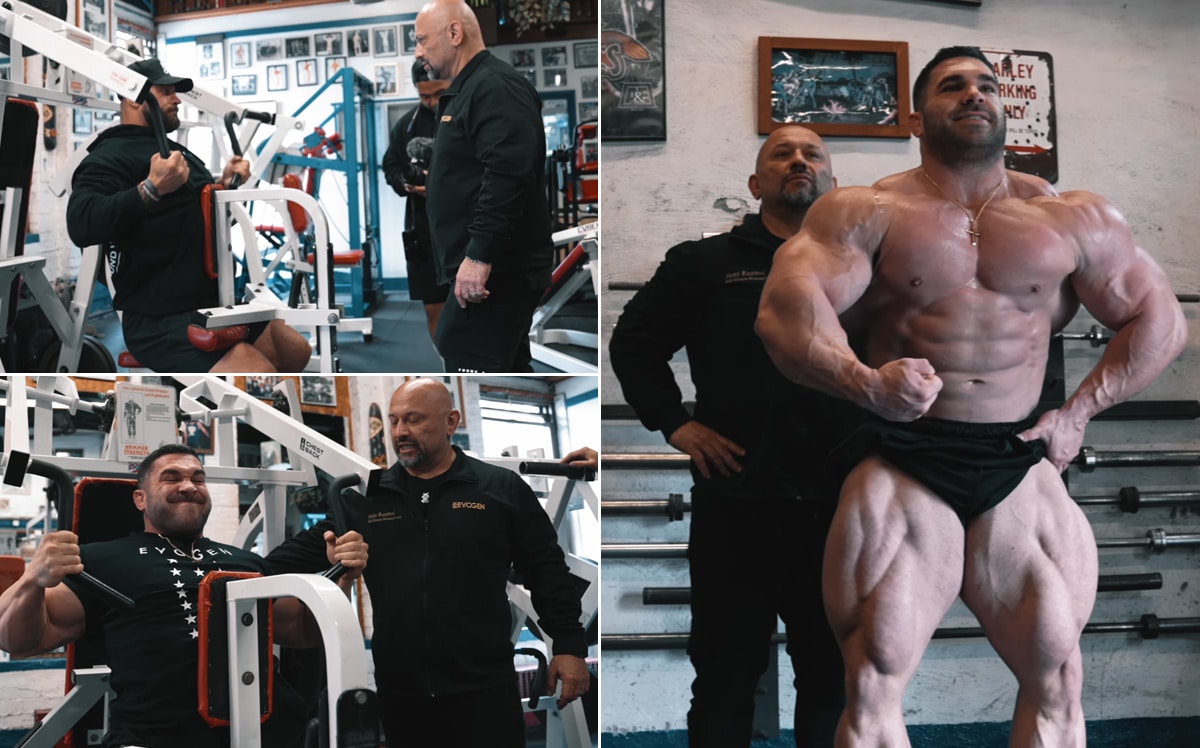
Derek Lunsford Goes Through Title-Worthy Back Workout With Chris Bumstead
Bodybuilders Derek Lunsford and Chris Bumstead are in the absolute prime of their physical and mental abilities. The duo are working hard to extend their competitive legacy under famed bodybuilding coach Hany Rambod’s guidance. Recently, they went through an off-season back workout to get ready for this year’s conquests.
Lunsford is an American professional bodybuilder that made a switch to the IFBB Pro League’s Men’s Open division in 2022. Prior to that, he competed in the 212 division and achieved the ultimate goal of winning the 212 Olympia title in 2021. However, the 30-year-old grew out of the division. Upon receiving the special invitation to compete in the Men’s Open division at the 2022 Olympia, the former 212 kingpin got in the gym to put in the work.
At 2022 Olympia, Lunsford dominated the stage and surged past elite competitors like former 2-time Mr. Olympia Mamdouh ‘Big Ramy’ Elssbiay, Nick Walker and Samson Dauda to secure a runner-up finish.
Lunsford’s training partner in this session, Chris Bumstead, is a Canadian IFBB Pro bodybuilder and arguably the most famous active bodybuilder in the world. CBum has established himself as the most successful competitor in the history of Classic Physique division with four consecutive Olympia wins. Since snatching the title from former champ Breon Ansley at the 2019 Olympia, CBum has fended off fierce competition to retain it at the 2020, 2021 and 2022 Olympia.
Both men have handed the reins of their training to famed coach Hany Rambod who is their head coach. Recently, they trained back under his guidance and the video of this session was posted on Lunsford’s personal YouTube channel. So without much ado, let’s see how Hany Rambod guided his pupils through the workout.
Derek Lunsford and Chris Bumstead go through the back workout
Derek Lunsford had to guest pose at the 2023 Pittsburgh Pro on the day of this back workout. As a result, he kept the workout relatively light and did not go overly heavy.
“Not gonna go crazy today because we’re doing the guest posing tonight. It’s not like we’re changing anything as far as the diet or workout… Nothing like that. We’re just gonna go in there and have fun tonight but also not trying to fill the stomach up a lot…” Lunsford said.
Iso-lateral Lat Pulldown
Rambod instructed CBum and Lunsford to start the training session with lat pulldown on an iso-lateral plate-loaded machine. He suggested using a reverse grip for the first few sets and switching over to the neutral grip for the subsequent sets.
Lat Pulldowns primarily target the latissimus dorsi and the upper back muscles. It is a great way to increase the back width. According to an ACE sponsored study, lat pulldowns, along with seated cable rows, are the second best exercise for lats after pull-ups and chin-ups (1). Lunsford and CBum pushed through a few sets of lat pulldowns to get things started and took to the next exercise.
T-Bar Rows
Lunsford and Bumstead then moved over to this classic back building exercise and cranked out a few sets. Bodybuilding experts swear by the muscle and strength building benefits of this movement. T-bar rows work the majority of the muscles in the upper and the middle back. This includes latissimus dorsi, trapezius, teres major, teres minor, posterior deltoid and infraspinatus muscles. Additionally, T-bar rows also work the brachialis and pectoralis major muscles as well.
Hany Rambod shed light on some of the common technical errors people make while doing the exercise and stated:
“What you’ve got to make sure is you’re pulling all the way… A lot of people just end up doing a really weird version of a shrug when they use heavy weight. Make sure that you’re being able to bring your elbows back and you’ll be able to contract your last to some degree. If you end up using too much weight, all you’re doing is a shrug.”
The bodybuilder duo performed some solid sets of T-bar rows with perfect technique before taking up the next exercise.
Seated Cable Rows
Seated cable rows not only help with muscle and strength building but also help improve the posture. CBum and Lunsford annihilated a few sets of seated cable rows under Coach Rambod’s watchful eye and took to the next exercise.
Incline Dumbbell Rows
This free weight exercise served as the finisher to Lunsford and Bumstead’s back workout. Incline dumbbell rows help emphasize more on the back muscles as the setup takes the need for muscle stabilization out of equation (2). The duo performed this exercise to stimulate the back muscles further and called it a day in the gym.
Overall, the workout included:
Derek Lunsford’s physique looked stage ready and massively improved during guest posing at the 2023 Pittsburgh Pro. Experts suggest that he can beat reigning Mr. Olympia Hadi Choopan if he brings fuller pecs and quads. Looking at his progress in the gym, it does seem like he is a step closer to the goal for sure.
Watch Derek Lunsford and Chris Bumstead go through the back workout here, courtesy of Derek Lunsford’s personal YouTube channel:
Reference
What is the Best Back Exercise? (ACE Sponsored Research)
(Authors – Holly Edelburgh, John P. Porcari, Clayton Camic, Attila Kovacs, Carl Foster and Daniel J. Green)
14 Best Back Exercises to Build the Perfect Back
(Author – Jeremy Ethier)
Published: 24 May, 2023 | 3:28 AM EDT