
 All Posts By Muscle Insider
Board Certified PHD
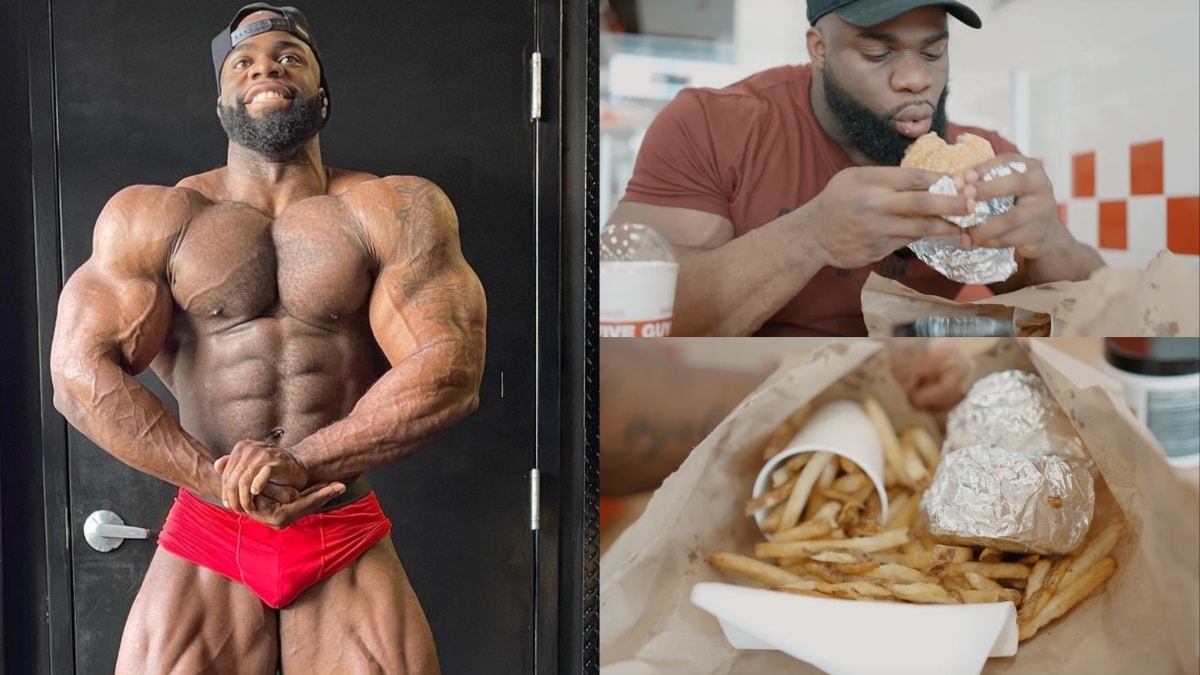
Quinton Eriya Shares Near 3,500-Calorie Bulking Cheat Meal in 2023 Off-Season
Canadian bodybuilder Quinton Eriya emerged as a promising Men’s Open contender with a strong season in 2019. In a recent YouTube video, Eriya consumed a massive helping of about 3,500 calories. In addition, he mentioned that he implements cheat meals like this one five times per week in the 2023 off-season.
Quinton Eriya boasts a physique with impressive muscle mass, shape, and genetics along with a tight waist. He made his IFBB Pro debut at the 2019 Toronto Pro Supershow and finished fifth. He followed up with a sixth-place finish at the 2019 Vancouver Pro. In 2020, Eriya made his way to the New York Pro and took eighth in a competitive lineup.
Eriya left the fans stunned with a crazy aesthetic physique update in Nov. 2021. He turned in a strong performance at the Romania Muscle Fest Pro and placed fifth. He declared his ambitions to earn an invite to the 2022 Mr. Olympia competition with a win at the Toronto Pro Supershow. Ultimately, he narrowly missed out on the top prize to Joel Thomas and took silver in Canada.
Men’s Open standout Nick Walker joined forces with Eriya for a brutal back workout in Jan. 2022. Eriya revealed he enjoyed using high reps for every body part other than the chest while performing the training session with the former Arnold Classic winner.
Last year, Quinton Eriya displayed significant improvements to his physique at the 2022 Tampa Pro. He scored bronze behind former 212 Olympia champion Kamal Elgargni and winner Akim Williams. He was last seen in action at the 2022 Texas Pro, where he placed fifth. Following the event, Eriya received major praise from Mark Anthony and bodybuilding legend Jay Cutler. Cutler lauded the rising athlete as a potential Olympia title contender.
RELATED: Bulking Calculator to help your weight gain / bulking journey!
Quinton Eriya destroys nearly 3,500 cals in a cheat meal
In a recent YouTube video, Quinton Eriya devoured about 3,500 calories in a single cheat meal and says he consumes similar helpings five times a week on the days he works out.
“I have five cheat meals or free meals, whatever you wanna call them, I have five of them every week and they’re only on training days,” said Eriya. “So, normally I have it for my fifth meal. However, sometimes I swap it out just depending on what I have going on during the day.”
He ate the following items along with some ketchup:
2 hamburgers = 1,680 cals
Regular fries = 960 cals
Chocolate Oreo Milkshake = 670 cals
Total = 3,310 calories.
Quinton Eriya and Nick Walker collaborated for a grueling push-day workout a month ago. Walker joined the budding talent during his trip to Canada and smashed a challenging workout targeting the chest, delts, and triceps.
Eriya took to the stage with Walker in a guest-posing appearance at the 2023 Pure Muscle Championships last month. The duo delivered a memorable pose down with Down syndrome bodybuilder Kyle Landi. Based on Eriya’s latest offering, it appears he’s focused on making the most of the off-season as he eyes his ticket to the Mr. Olympia contest.
You can watch the full video below:
RELATED: Liver King: ‘If The Rock Can Have a F*cking Mammoth Cheat Day Every Week, So Can Liver King’
Published: 24 May, 2023 | 2:40 AM EDT
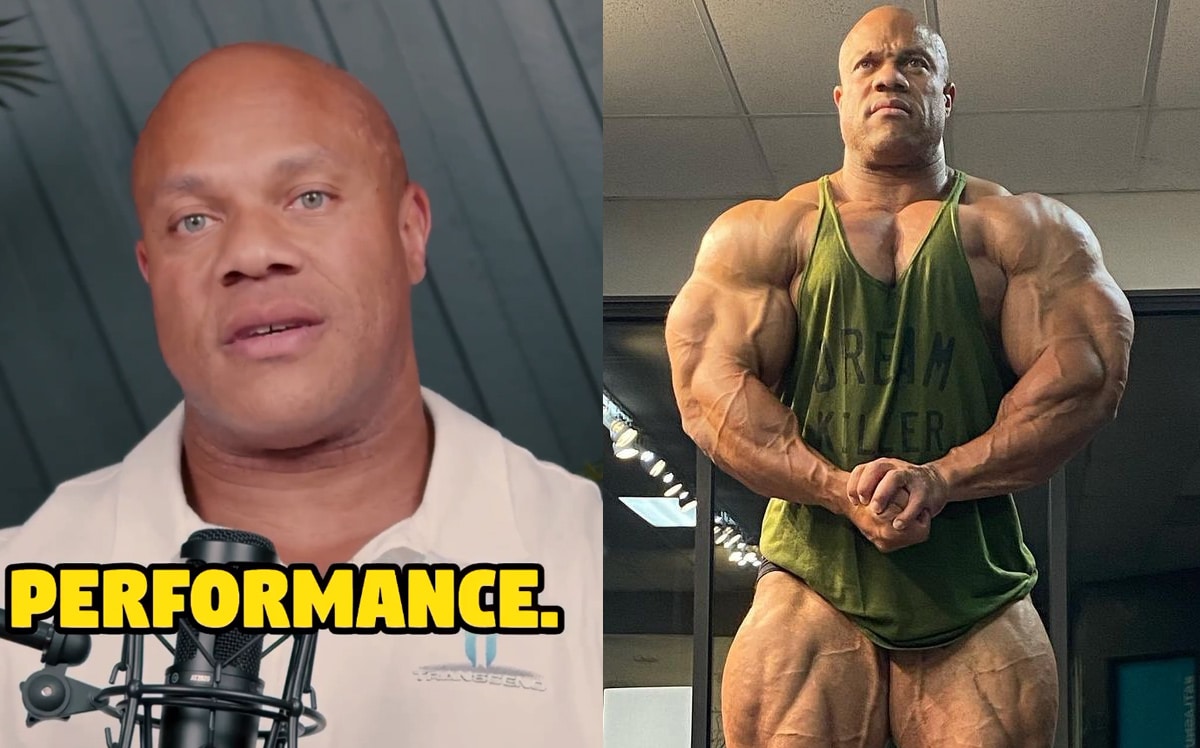
Phil Heath ‘Optimizing Health’ w/Recovery & Medications: ‘It’s Putting Me in The Best Position to Win’
Bodybuilding legend Phil Heath has maintained a muscle-bound physique since stepping away from the stage in 2020. In a recent Instagram reel, Heath shared that his training frequency increased and his medication intake has put him in ‘the best position to win’ moving forward.
“Optimizing your health goes a long way. The goal is to leave life changing and lifelong lasting effects.” Phil Heath shared.
Heath commanded the biggest stages in the sport with authority, having claimed a total of seven consecutive Mr. Olympia titles (2011-2017). At that time, ‘The Gift’ proved to be an incredible force in the Men’s Open class, where he regularly pushed contenders like his arch-rival Kai Greene, the late Shawn Rhoden, and German standout Dennis Wolf.
Late last year, the 2023 Masters Olympia contest was revived and again added to the IFBB Pro League bodybuilding schedule. After an 11-year absence, the show will return August 25-27 in Cluj Napoca, Romania. While fans had hoped for Heath or Jay Cutler’s return, they have both publicly shot down the idea.
In a Voice of Bodybuilding appearance with Bob Cicherillo, Heath underlined that $1 million cash would incentivize his comeback. Considering Heath’s age and record of accomplishments, he believes fans would have called him out if he decided to compete at 2023 Masters Olympia. Nevertheless, Heath’s focus is on health and longevity while he’s away from the stage.
Phil Heath ‘Feeling Fresh,’ Talks Achieving ‘Peak Performance with Recovery & Medications
Even though he no longer trains seven days a week, Heath has retained adequate muscle mass thanks to ‘right types of medications.’
“Even without me training seven days a week, I’ve been able to maintain good muscle mass and that’s because I’ve done things the right way throughout my career. But I’ve made sure I was able to apply the right type of medications for my goals and I am in the gym a little bit more now and I will be more in the upcoming weeks and my body feels really really fresh.”
In addition, Heath stressed that recovery, modalities, and medications are keys to optimizing peak performance and health.
“I know that with Transcend they’re putting me in the best position to win. That’s what I always preached my entire career, you have to train smart, you have to train hard, you have to have fun, but you have to have the recovery, modalities, and the medications to help you stay at your peak performance,” said Phil Heath.
RELATED: Best Speed Up Recovery After Training
Phil’s predecessor, Jay Cutler, has teased a Heath comeback on a number of occasions. According to Jay, Heath could ‘do some damage’ at this year’s Mr. Olympia show. Assuming Heath entered this contest, he would face off against two of his teammates – Derek Lunsford and champion Hadi Choopan, who are both led by the legend’s former coach Hany Rambod.
One of the last time fans heard from Heath, he offered a definitive answer on whether he would make a play at the upcoming 2023 Olympia competition. While he continues to make improvements to his build at 255 pounds, Heath ruled out the possibility of competing later this year in a previous Instagram post.
Phil Heath’s continued dedication to health and fitness puts him in the best position possible to compete at a high level, whether he returns to bodybuilding or not.
RELATED: ‘It’s a 3-Headed Monster’: Phil Heath Reveals His Top Picks for 2023 Mr. Olympia
Published: 23 May, 2023 | 6:55 PM EDT
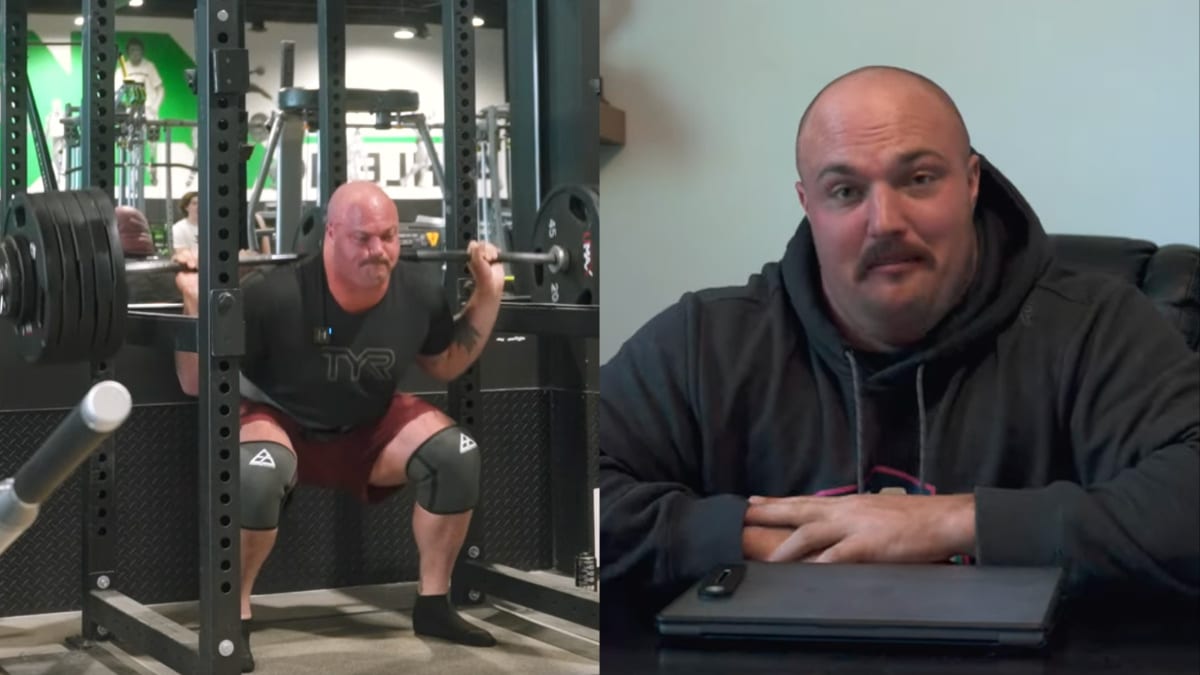
Mitchell Hooper Breaks Tom Platz’s 1992 Legendary Squat Record With 24 Reps of 525 Lbs
Canadian strongman Mitchell Hooper is one of the fastest-rising strength sports athletes around. He’s coming off a historic first-place performance at the 2023 Worlds Strongest Man, held in Myrtle Beach, South Carolina. In a recent YouTube video, Hooper broke bodybuilding icon Tom Platz’s legendary 525-pound squat record of 23 reps with 24 reps.
Mitchell Hooper first gained attention for his insane strength after he dominated the qualifying group stages of the 2022 World’s Strongest Man competition. He followed up with back-to-back bronze medals at the 2022 Rogue Invitational and 2022 Shaw Classic. He scored gold at the 2023 Australia’s Strongest International contest as well.
Following the win, Hooper achieved a new PR (personal record) with a 420-kg (925.9-lb) raw deadlift in a training session. He left the fans in awe of his unreal strength by smashing 770-kg (1,697.6-lb) raw leg pressses for eight reps in preparation for the 2023 Arnold Strongman Classic. His intense training methods paid off as he secured the title impressively two months ago.
Hooper claimed the biggest win of his career at the 2023 World’s Strongest Man last month. He set his lead early in the opening stanza and extended it further on day two. He created history by becoming the first Canadian to win the coveted WSM title, defeating the likes of former champ Oleksii Novikov and Tom Stoltman.
Bodybuilding legend Tom Platz made a name for himself with his stellar lower body development and conditioning. While he moved on from professional competition decades ago, his passion for working out persists. He showed off his jacked quads after changing his diet and training regimen at the age of 67 last month.
Platz set the squat challenge record of 525 pounds for 23 reps in 1992 in Essen, Germany. He accomplished this epic feat in a head-to-head matchup against Fred Hatfield, who squatted the same weight for 11 reps. This iconic competition was popularly known as the ‘Great American Squat-Off.’
Many have attempted to break the record. Powerlifter Bradon Gulch took on the challenge earlier this month. Matt Wenning broke Platz’s record of 23 reps with 24, however, wasn’t able to match ‘The Quadfather’s’ total weight lifted of 525 pounds.
Mitchell Hooper breaks Tom Platz’s squat challenge record
In a recent YouTube video, Mitchell Hooper surged past Tom Platz’s record on 525-lb squats. Hooper used a lifting belt and wore knee sleeves during the challenge.
“At the 1993 FIBO show, Tom Platz and Fred Hatfield had a squat-off and in the squat-off, they did 525 for reps. Tom Platz set the record at 23 which is a record that stood all the way up until about eight months ago when Matt Wenning went and did 24.”
“It’s going to be difficult. There’s a lot of anxiety around doing that many reps that heavy.
“It gets really challenging at first to squat due to my shoulder mobility.”
“It actually got to a point where just standing with the weight was the challenge. I was losing my balance just trying to stay upright.”
Hooper performed a warm-up set, did a second set of 495 pounds, and finally got to 525 pounds. He didn’t seem too confident before the lift as he recognized the challenge of the task ahead of him.
He performed the squat with proper technique and form at a quick pace for the first 10 reps before taking a brief pause. He continued to get five more reps in and took another quick break before squeezing out a few more reps without breaking form. He appeared to struggle in the last five reps as he began to breathe heavily and had his legs shaking from the load. In the end, he managed to perform 24 reps.
Mitchell Hooper got back to training days after his win at the 2023 WSM. He utilized a bodybuilding style workout to ease his way back into training strongman.
Hooper opened up about his experience competing at the contest weeks ago. He called for a proper ruleset to ensure fair competition and to avoid confusion at the events. Hooper also recently laid out his must-have supplements along with his take on consuming alcohol and sugar for recovery.
He crushed 20 reps on 465-lb squats over a week ago. His latest achievement shows Hooper is continuing to improve and will likely return stronger than ever.
Hooper’s amazing squat set showcases why he’s the current WSM. The strength and endurance required for that many reps are top-notch, and his quads will need some good recovery time.
RELATED: Tom Platz Reflects on Training ‘Unknown’ Dorian Yates: “He Surpassed Everything I Taught Him”
Hooper is making serious strength gains based on the latest performance. He will look to defend the WSM title successfully next year. Given his young age, he has the potential to add many more records to his glittering resume.
You can watch the full video below.
Published: 23 May, 2023 | 5:10 PM EDT
Secret Ingredient In Bio-Serum 1 Improves Muscle Benefits!
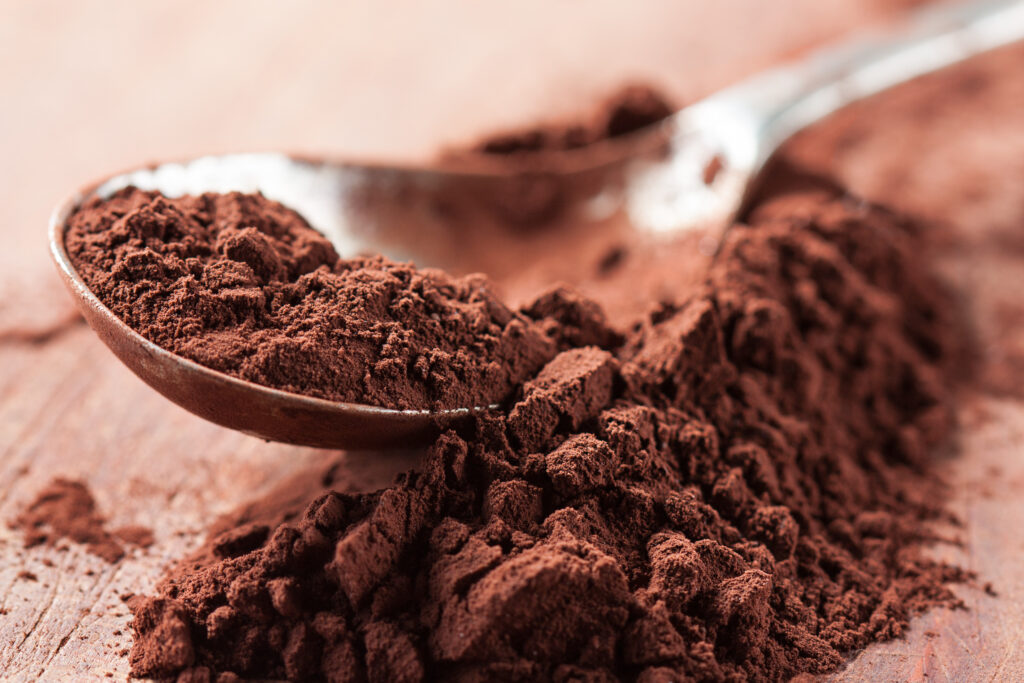
The added cocoa in our Bio-Serum 1 may act as a performance enhancer. We do have our reasons for adding it. Take a look at the studies below, and you’ll see the benefits of cocoa. Therefore you combine the benefits of Bio Serum 1 PLUS the benefits of cocoa, and you have yourself one potent muscle recovery powder. (BTW look at the second study below….add blueberries or our Blue Generator to your post-workout shake.
How To Mix
1/3 cup of Bio Serum 1
1 cup of Blueberries
2-3 tbs of raw honey
1 banana
WOW talk about awesome!
1) The effects of cocoa flavanols on indices of muscle recovery and exercise performance: a narrative review. Sports Sci Med Rehabil. 2021; 13: 90.
Abstract
Exercise-induced muscle damage (EIMD) is associated with oxidative stress and inflammation, muscle soreness, and reductions in muscle function. Cocoa flavanols (CF) are (poly)phenols with antioxidant and anti-inflammatory effects and thus may attenuate symptoms of EIMD. The purpose of this narrative review was to collate and evaluate the current literature investigating the effect of CF supplementation on markers of exercise-induced oxidative stress and inflammation, as well as changes in muscle function, perceived soreness, and exercise performance. Acute and sub-chronic intake of CF reduces oxidative stress resulting from exercise. Evidence for the effect of CF on exercise-induced inflammation is lacking and the impact on muscle function, perceived soreness and exercise performance is inconsistent across studies. Supplementation of CF may reduce exercise-induced oxidative stress, with potential for delaying fatigue, but more evidence is required for any definitive conclusions on the impact of CF on markers of EIMD.
(2) Regular Consumption of Cocoa and Red Berries as a Strategy toImprove Cardiovascular Biomarkers via Modulation ofMicrobiota Metabolism in Healthy Aging Adults. J.Nutri. 2023, 15(10), 2299.
Abstract: The aim of the present study was to analyze the effects of cocoa flavanols and red berry anthocyanins on cardiovascular biomarkers, such as homocysteine, angiotensin-converting enzyme (ACE), nitric oxide (NO), flow-mediated vasodilation (FMD), blood pressure and lipid profile. Ad-ditionally, we aimed to ascertain their possible interactions with microbiota related metabolites, such as secondary bile acids (SBA), short-chain fatty acids (SCFA) and trimethylamine N-oxide (TMAO). A randomized, parallel-group study, single-blind for the research team, was performed on 60 healthy volunteers between the ages of 45 and 85, who consumed 2.5 g/day of cocoa powder (9.59 mg/day of total flavanols), 5 g/day of a red berry mixture (13.9 mg/day of total anthocyanins) or 7.5 g/day of a combination of both for 12 weeks. The group that had consumed cocoa showed a significant reduction in TMAO (p = 0.03) and uric acid (p = 0.01) levels in serum, accompanied by an increase in FMD values (p = 0.03) and total polyphenols. corrected by creatinine (p = 0.03) after the intervention. These latter values negatively correlated with the TMAO concentration (R = −0.57, p = 0.02). Additionally, we observed an increase in carbohydrate fermentation in the groups that had consumed cocoa (p = 0.04) and red berries (p = 0.04) between the beginning and the end of the intervention. This increase in carbohydrate fermentation was correlated with lower levels of TC/HDL ratio (p = 0.01), systolic (p = 0.01) and diastolic blood pressure (p = 0.01). In conclusion, our study showed a positive modulation of microbiota metabolism after a regular intake of cocoa flavanols and red berry anthocyanins that led to an improvement in cardiovascular function, especially in the group that consumed cocoa.
(3) A single dose of microencapsulated cocoa supplementation attenuated eccentric exercise-induced endothelial dysfunction. International Journal of Food Sciences and Nutrition. 09 May 2023
Abstract
In the present study, it was evaluated whether microencapsulated cocoa supplementation could attenuate endothelial dysfunction caused by eccentric exercise in healthy subjects. Thirteen volunteers were enrolled in this double-blind, placebo-controlled, crossover study. Flow-mediated dilatation (FMD), blood flow and muscle O2 saturation (StO2) were evaluated by ultrasound and near-infrared spectroscopy (NIRS), respectively, before and after microencapsulated cocoa supplementation. The eccentric exercise was performed after microencapsulated cocoa supplementation to generate vascular dysfunction. Eccentric exercise significantly reduced FMD in the PLA condition, but cocoa attenuated this exercise effect. No significant effect was observed on muscle StO2 and blood flow after eccentric exercise and nutritional supplementation. In conclusion, the present study showed that a single dose of microencapsulated cocoa ingestion attenuated FMD-induced eccentric exercise. These findings suggest that a single dose of microencapsulated cocoa may be an alternative nutritional strategy to attenuate vascular dysfunction induced by eccentric exercise in healthy individuals.
(4) Arterial stiffening following eccentric exercise-induced muscle damage. J Appl Physiol (1985)
Bio Serum 1
Bio-Serum 1 protein is a high-tech muscle-building protein powder specifically made for hard-core bodybuilders and athletes.
Helps increase muscle mass by providing you with a potent protein source.
$99.99 – $449.99 — or from $89.99 – $404.99 / month
Alex Rogers is a supplement manufacturing expert. He has been formulating, consulting, & manufacturing dietary supplements since 1998. Alex invented protein customization in 1998 & was the first company to allow consumers to create their own protein blends. He helped create the first supplement to contain natural follistatin, invented whey protein with egg lecithin, & recently imported the world’s first 100% hydrolyzed whey.
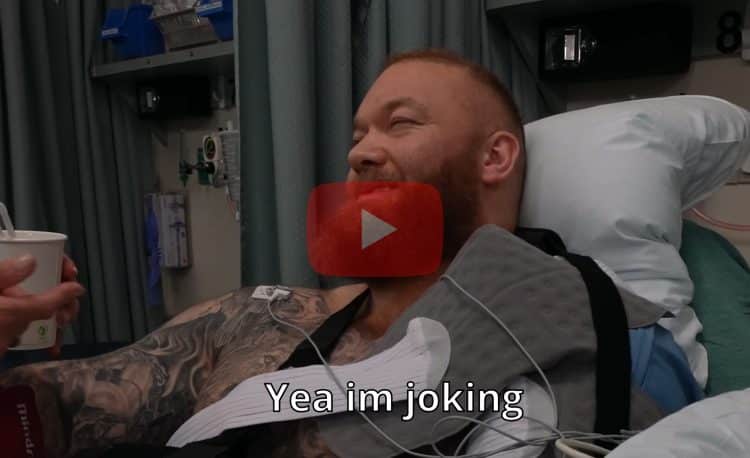
Hafthor Bjornsson Shares Graphic Footage Of His Successful Pec Tear Surgery
A month has passed since Hafthor Bjornsson tore his chest during the bench press portion of a powerlifting competition. Ever since then, he has been working on making his recovery as perfect as possible which would shorten the time needed to come back. This included some intense methods, like infrared light exposure, cryotherapy, and more. However, all of this led to the most important moment of Hafthor’s recovery, which was the surgery.
Hafthor Bjornsson recently published a new video on his YouTube channel which covered a span of a few days. It started off with Hafthor preparing for his surgery using some of the aforementioned methods, but it also displayed clips of Hafthor’s surgery, as well as a segment of him lying in a hospital bed after everything was done.
Related: Hafthor Bjornsson Shares Doctor’s Update on Pec Tear Ahead of Surgery: ‘Swelling is Getting Worse’
Hafthor Bjornsson’s Surgery
Hafthor Bjornsson started off his video by completing his final round of cryotherapy and specially made recovery shakes, while also expressing gratitude for everyone who assisted him in this process. He then revealed that the pain in his chest and arm has dialed down drastically and that he only feels a bit bruised.
“It’s actually crazy how good I feel in my arm, like I can move it without any pain. The pain level I have right now is zero. If I press my arm I just feel a little bruised, that is all. Obviously, I am cautious, I am trying not to put my arm in any weird positions.”
While talking to his surgeon over the phone, Hafthor Bjornsson explained how he was excited to undergo surgery, presumably because it marked an important moment in his recovery process.
“I am looking forward to everything, which is kind of weird, but I am actually very excited for it.”
After 2 days of preparation, Hafthor Bjornsson woke up on the third day ready to undergo surgery. With everything prepared, Hafthor was put to sleep by one of the best anesthesiologists around. A clip from the surgery, which lasted for a couple of minutes, was then uploaded to his YouTube channel.
Since Hafthor Bjornsson was under the influence of anesthesia, he was not able to communicate as well following the surgery. So, his doctor took over the video to explain what happened.
“Everything went perfect, no problems, absolutely great. It was tough, but we have been preparing for seven days waiting for this. Really happy with how it went.”
While talking to Hafthor, the surgeon explained that they did everything in their power to enable the 2018 World’s Strongest Man to come back properly. They understand that his priority is to regain his strength, so everything was addressed to the smallest detail.
“Not only is his mass large, but his goals are large. So, he needed a special approach in terms of keeping him safe… I did a heavy duty type of repair so it will help him have the best chance of recovery.”
Seeing Hafthor’s injury first-hand, the surgeon explained to him how severe it was and what needed to be done.
“Yes his pec was totally torn, and Yes it was torn mostly muscular. But, I used a couple of different types of graphs that reinforce the muscle, recreated the tendon, and reattached it using some heavy duty anchors.”
Luckily for Hafthor Bjornsson, his doctor went an extra step in ensuring his comfort, as not a lot of additional treatments will be needed after this surgery. He will, however, only need to take care of his wound for some time.
“The good news about your incision is that you don’t need to do anything to it. It is covered with a special waterproof dressing. You don’t need to do anything about it.”
Watch the video here:
Warning: The graphic footage of Hafthor’s surgery starts at the 16:30 mark, and ends at the 18:17 mark.
Related: Mike O’Hearn & Injured Hafthor Bjornsson Use Tom Platz-Inspired Workout for Ligament Strength
Hafthor Bjornsson originally hoped to set a new All-Time World Record in powerlifting by the end of this year, before transitioning to Strongman next year. However, everything will be delayed now, as Hafthor is expected to put out a follow-up video explaining what his expectations for the recovery process moving forward will look like.
Published: 23 May, 2023 | 2:56 PM EDT
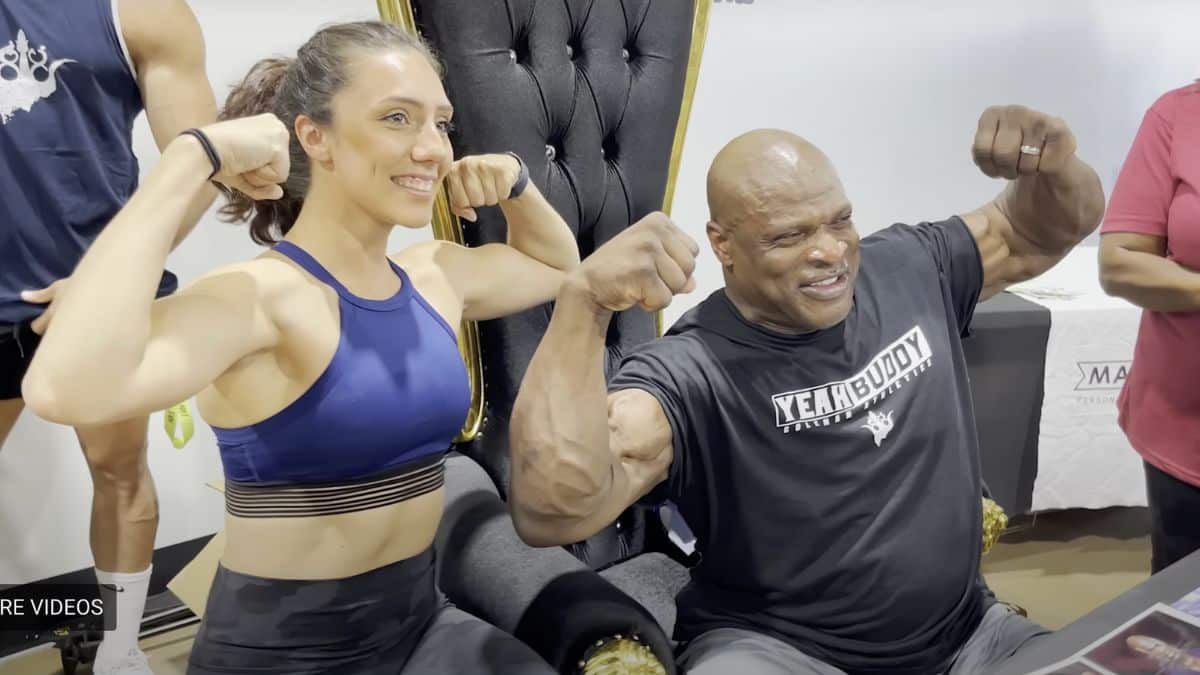
Bodybuilding Icon Ronnie Coleman Opens Metroflex Gym in Tampa, Florida
Prolific bodybuilding legend Ronnie Coleman is keeping busy in retirement. In a recent video shared on his YouTube channel, Coleman filmed the grand opening of his Metroflex Gym in Tampa, Florida after years of training at their facilities.
Coleman, an eight-time Mr. Olympia, reached the pinnacle of the sport and exercised dominance for almost a decade. While his eight-year reign came to an end courtesy of Jay Cutler in 2006, fans and athletes alike consider Coleman to be one of the greatest competitors to ever throw on a pair of posing trunks.
In addition to his bodybuilding journey, Coleman was held in high regard for his powerful weightlifting capabilities. He recorded epic feats of strength while building a successful career, which saw him lock out an 800-pound deadlift for two reps and push 2,300 pounds on the leg press machine.
To this day, Coleman’s successor, Jay Cutler, believes no one in the sport has come close to ‘The King’s’ prime physique. Moreover, Cutler argued that competitors today have yet to match the level of size and conditioning Big Ron displayed on stage.
At 59 years old, Ronnie Coleman remains a leading ambassador for bodybuilding. Whether he’s taking part in a training session with fitness influencers or reacting to gym fails, Coleman’s love for working out is one of his biggest motivators in retirement.
Ronnie Coleman Shows Off His New Metroflex Gym in Tampa, Florida
Coleman, who recently listed his $495,000 Texas house for sale, has now bought up a gym location in Florida.
“What’s up everybody. We here in Tampa, Florida, for the opening of the Metroflex Gym Tampa. We got a nice crowd here, getting ready to take some photos, sign some autographs, and just meet and greet as many people as I can. Yeah buddy,” shared Coleman.
After signing autographs, guests at the grand opening admired Coleman and the sacrifices he endured on the way to building his legacy.
Coleman has been subject to more than 10 back surgeries, all of which occurred after his competitive tenure. As a result of so many operations, Coleman can no longer walk unassisted. Nevertheless, he pushes through training sessions daily even when his extremities feel numb.
Aiming for longevity and health preservation, Coleman has received consistent stem cell therapy treatments. Coleman appeared optimistic in his latest update earlier this month and stressed that he is feeling better with each passing treatment.
Mamdouh ‘Big Ramy’ Elssbiay’s stem cell doctor, Dr. Khan, appeared on a recent The Menace podcast and said he was confident Coleman would walk one day soon without help. While that remains to be seen, Coleman is adamant that these consistent treatments are assisting with his quality of life.
Given his accomplishments, fans look forward to training at Coleman’s new gym. The Metroflex Gym has been home to several top-tier athletes during their respective careers, like Coleman, Branch Warren, Johnnie Jackson, and Steve Kuclo.
RELATED: Chris Cormier Reflects on Gunter Schlierkamp Almost Defeating Ronnie Coleman at 2002 Mr. Olympia
Check out the full video below from Coleman’s YouTube channel:
Published: 23 May, 2023 | 1:03 PM EDT
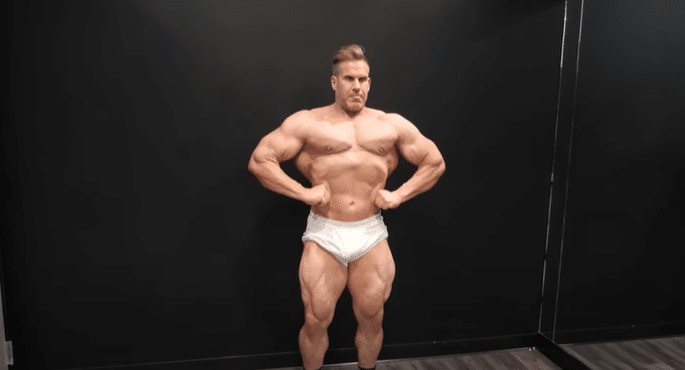
Jay Cutler Shows Off Ripped 240-Lb Physique Update & Posing Session Before Turning 50
Jay Cutler continues to make strides in the gym and kitchen as he sets his sights on his latest physique transformation. In a JayCutlerTV interview, Cutler revealed he’s tipping the scales at 240 pounds and plans to achieve more fullness in his chest, shoulders, and legs in the coming months.
As an active Men’s Open pro, Jay Cutler reached the top of the sport with an intense work ethic, grit, and consistency. He is famous for his rivalry with Ronnie Coleman, who is known for winning a total of eight Mr. Olympia titles, tied with Lee Haney for the most ever. Meanwhile, Cutler managed to win four Mr. Olympias during his respective tenure.
In 2006, Cutler dethroned Coleman, a feat he made possible with sharp conditioning and an impeccable lower body. While Cutler lost the title in 2008 to Dexter Jackson, he regained his status as champion a year later in what many consider one of the greatest comebacks in modern IFBB Pro League history.
Since his retirement in 2013, Cutler’s popularity and name recognition is at an all-time high. The four-time Mr. Olympia routinely examines the Men’s Open division of today. Even though he’s happy following a decorated career, Cutler said he planned to transform his physique last year. Initially, fans thought he might have been preparing for a comeback. However, Cutler dismissed that idea and explained that he started this ongoing fitness journey for personal fulfillment before turning 50 years old.
Jay Cutler Turns Heads with Fit-for-50 Shredded Physique Update, Plans to Get Fuller
Jay Cutler won’t compete at the upcoming 2023 Masters Olympia, but the bodybuilding legend has made it clear he’s planning an appearance. It remains uncertain whether or not he will guest pose, but Jay promised to show off his physique on stage. Check out the latest progress from Jay Cutler below:
“Alright, so we’re going to show the physique because I actually start my 12 weeks this weekend. Not to say I haven’t been training, but I’ve been trying to eat like six meals. My weight is close to about 240. Like I said, every week, I’m going to kind of showcase a little bit of the physique and show you guys kind of what I’m working with a little bit.”
“Obviously, I’m trying to stay in great condition and gain the size. You can see, I definitely have a lot of work to do to fill up, especially in the backside I’m sure. I can’t really see my back,” explained Cutler. “At the starting point. I just got to get really a lot fuller in here the legs. Obviously, my leg is always smaller on this side [left] it’s going to be about filling that out. Getting fuller through the chest and shoulders, especially here, my rear delts, to have that size and tighten everything up through here,” Cutler said.
YouTube/JayCutlerTV
During his recent YouTube video, Cutler demonstrated a couple of mandatory poses. Cutler, who has been away from competition for over 10 years, looks to be improving day by day. On the horizon, Cutler stressed that he plans to add fullness to his legs, delts, back, chest, and shoulders.
This is far from the first time Cutler has opened up about details pertaining to his fit-for-50 challenge. With his 50th birthday in August, Cutler said 6-8% body fat is the goal and shared that he was entering ‘uncharted territory’ after his last update, which featured a legendary quad-stomp-inspired training session.
Aside from diet and training, Cutler also discussed his steroid protocols. Given his age and the subsequent risk factor, Cutler underlined that he will achieve this transformation without the use of harder compounds such as trenbolone. Instead, the Massuchessets native said he’s using a strict regimen of testosterone replacement therapy.
Jay Cutler’s progress is a testament to his hard work and dedication to bodybuilding. Fans are excited to see him make a special appearance at the 2023 Masters Olympia show, scheduled for August 25-27 in Cluj Napoca, Romania.
RELATED: Jay Cutler Getting ‘Bigger, Leaner’ Without Bulking & Talks Keeping the Metabolism Guessing
Watch the full video from JayCutler TV below:
Published: 23 May, 2023 | 11:24 AM EDT

2023 CrossFit Africa Semifinal Results — Jason Smith & Michelle Basnett Qualify For CrossFit Games
The 2023 CrossFit Africa Semifinal took place on May 19-21, in South Africa, and gathered this continent’s greatest CrossFit athletes. However, only the winners of both the men’s and women’s divisions earned qualification for the 2023 CrossFit Games. Consequently, dozens of elite athletes gave their all in the hopes of securing the exclusive top spot. However, Jason Smith and Michelle Basnett won their respective men’s and women’s divisions and thus qualified for the 2023 CrossFit Games.
Jason Smith had no problems in winning the men’s division of the 2023 CrossFit Africa Semifinal. He won two of the events and claimed impressive top-10 finishes in all of the remaining five events. In the end, his point tally came out to 596, while his closest rival, Conrad Winnertz, had 500.
Michelle Basnett, however, had to grind to get her victory. She accumulated an impressive 613 points with three event victories, but still had a few athletes narrowly following her. However, Michelle proved to be the most consistent in the field and rightfully earned her place at the 2023 CrossFit Games.
2023 CrossFit Africa Semifinal Leaderboards
Men
Note: Only the winner of the men’s division qualified for the 2023 CrossFit Games.
Jason Smith — 596 points
Conrad Winnertz — 500 points
Ruan Potgieter — 497 points
Darren Zurnamer — 482 points
Josh Kernot — 475 points
Daniel Griesel — 474 points
James Van Dongen — 466 points
Justin Holliday — 433 points
Dutoit Botha — 418 points
Assem Effat — 413 points
Ruan Conradie — 366 points
Matthew Schiff — 350 points
Damien Botes — 348 points
Driss Bouchiah — 333 points
Julian Liebenberg — 333 points
Women
Note: Only the winner of the women’s division qualified for the 2023 CrossFit Games.
Michelle Basnett — 613 points
Mariska Smit — 596 points
Gilmari Reyneke — 580 points
Christina Livaditakis — 570 points
Tanha Bouffe — 507 points
Gemma Rader — 497 points
Emma Holliday — 492 points
Megan Joy McDermott — 418 points
Megan Faul — 411 points
Alicia Stoop — 408 points
Maxx Klynsmith — 380 points
Ingy Hossam Eldin — 362 points
Mary Jamieson — 355 points
Sofia Bennani — 553 points
Laura Hume — 345 points
Teams
CrossFit FBDV Mayhem Africa — 580 points
Cape CrossFit Wolfpack — 555 points
CrossFit 10 Star Hybrids — 530 points
CrossFit Tijger Valley Synergy — 530 points
CrossFit Juggernaut Unstoppable — 490 points
Pack Life CrossFit Wanderers — 380 points
Cape CrossFit Werewolves — 335 points
Motley Crew CrossFit Red — 330 points
CrossFit Zulu — 325 points
CrossFit 111 Relentless — 320 points
Related: 2023 CrossFit North America East Semifinal — Full Results
Individual Division Tests (Workouts) Recap
TEST ONE
For time:
3,000-meter Echo Bike
Hand-Over-Hand Pull (84 feet)
2,000-meter Assault AirRunner
Hand-Over-Hand Pull (84 feet)
1,000-meter SkiErg
Hand-Over-Hand Pull (92 feet)
Time cap: 30 minutes
Women: 180 pounds
Men: 225 pounds
Men’s Results
Jason Smith — 25:56
Daniel Griesel — 26:30
Estian Ferreira — 26:41
Women’s Results
Gilmari Reyneke — CAP+14
Alicia Stoop — CAP+14
Maxx Klynsmith — CAP+14
TEST TWO
As many reps as possible in 3 minutes of:
5 Ring Complexes (1 Toe-To-Ring, 1 Muscle-Up, 1 Ring Dip)
20 Single-Leg Squats
Max Burpees Over Box
*Complete 3 rounds, resting 1 minute between rounds.
*Score is total reps across the 3 minutes.
Women Wear a 10-pound ruck, 24-inch box
Men Wear a 20-pound ruck, 30-inch box
Men’s Results
Ruan Potgieter — 42 reps
Darren Zurnamer — 38 reps
Jason Smith — 34 reps
Women’s Results
Christina Livaditakis — 36 reps
Michelle Basnett — 28 reps
Gilmari Reyneke — 28 reps
TEST THREE
For time:
Semifinals Linda — 10, 9, 8, 7, 6, 5, 4, 3, 2, 1 reps of:
Deadlifts
Dumbbell Bench Presses
Squat Cleans
Time cap: 17 minutes
Women: 220-pound deadlifts, 60-pound dumbbells, 105-pound squat cleans
Men: 295-pound deadlifts, 90-pound dumbbells, 145-pound squat cleans
Men’s Results
Kealan Henry — 15:15
Justin Holliday — 16:29
Ruan Conradie — 16:47
Women’s Results
Megan Faul — CAP+3
Gemma Rader — CAP+11
Christina Livaditakis — CAP+16
TEST FOUR
For load:
Run 800 meters
Max Snatch
Time cap: 6 minutes
After the time cap for test four clocked out, the athletes had just two minutes to rest before initiating Test Five.
Men’s Results
Elsayed Hasona — 278 pounds
Darren Zurnamer — 269 pounds
Ruan Potgieter — 269 pounds
Women’s Results
Michelle Basnett — 179 pounds
Mariska Smit — 176 pounds
Christina Livaditakis — 172 pounds
TEST FIVE
For time:
8 Snatches
Run 800 meters
Time cap: 6 minutes
Women: 125-pound snatch
Men: 185-pound snatch
Men’s Results
Justin Holliday — 3:24
Dutoit Botha — 3:29
Matthew Schiff — 3:34
Women’s Results
Mariska Smit — 3:59
Gilmari Reyneke — 4:00
Emma Holliday — 4:21
TEST SIX
For time:
20 Overhead Squats
500-meter Row
Three Handstand-Walk Pirouettes
Two Seated Legless Rope Climbs
20 Strict Chest-To-Wall Handstand Push-Ups
Two Seated Legless Rope Climbs
Three Handstand-Walk Pirouettes
500-meter Row
20 Overhead Squats
Time cap: 15 minutes (Men) — 16 minutes (Women)
Women: 125-pound Squat
Men: 185-pound Squat
Men’s Results
Ruan Potgieter — 11:05
Darren Zurnamer — 12:54
Conrad Winnertz — 13:17
Women’s Results
Michelle Basnett — CAP+3
Christina Livaditakis — CAP+4
Mariska Smit — CAP+9
TEST SEVEN
Three rounds for time of:
Echo Bike Calories (Men: 15 calories / Women: 10 calories)
20 Toes-To-Bar
60-Foot Sandbag Bear-Hug Carry
Women: 150-pound Sandbag
Men: 200-pound Sandbag
Men’s Results
Jason Smith — 4:29
Josh Kernot — 4:34
Ruan Potgieter — 4:42
Women’s Results
Michelle Basnett — 5:08
Gemma Rader — 5:10
Christina Livaditakis — 5:16
Related: How to Watch the 2023 CrossFit Semifinals
The first week and two of the Semifinal competitions are already done. So, 13 men and 12 women have already qualified for the 2023 CrossFit Games. The total number of spots at the Games will be 40 in each division, so the next two weeks will determine the full roster. We still have five more Semifinal competitions set to take place, which will fill out the remaining qualifying spots.
Published: 23 May, 2023 | 9:37 AM EDT
2023 Global Classic Vietnam Regional 073023
/* custom css */
.tdi_86{
color: #eaeaea;
}IFBB PROFESSIONAL LEAGUE®, IFBB PRO LEAGUE®, IFBB PRO® and the IFBB Professional League logo are registered trademarks owned by the IFBB Professional League.The IFBB Professional League logo cannot be altered in any way, shape or form without the expressed written approval of the IFBB Professional League. Where such approval is granted, the IFBB Professional League will provide the altered logo.© 2022 IFBB Pro, All Rights Reserved.
How Much Muscle Can You Gain in A Month?
If someone ever invents motivation in supplement form, they’ll become a millionaire billionaire overnight. Motivation is what drives us, and it’s often in short supply.
When your motivation levels are high, crushing your workouts and sticking to your diet is easy. You rise to every challenge and push yourself relentlessly. All your hard work is invariably rewarded with great gains and rapid progress.
However, when your motivation levels are low, even thinking about going to the gym is exhausting. And eating healthy? Forget about it!
Sadly, no supplement can turn your motivation levels up to 11, so it’s up to you to get and stay motivated.
One of the most motivating things you can do is set goals. For example, building 15 pounds of muscle, adding 20 pounds to your bench press, or dropping five percent of body fat. Having a goal gives you something to train and diet for. It provides direction and a way to measure your progress.
Knowing how long it’ll take you to achieve your goals can also be helpful. Having a finish line makes it easier to stick to your diet or workout plan. And what do you do when you reach your goal? Set a new one, of course!
So, how much muscle can the average lifter expect to gain in a month? We reveal the answer!
How Much Muscle Can You Gain in A Month?
Regardless of your age, gender, experience, or diet, regular strength training builds muscle (1). When you lift weights, do push-ups, use resistance bands, or otherwise overload your muscles, you expose them to mechanical and metabolic stress and cause muscle fiber microtrauma. Your muscles respond to these stresses by getting bigger and stronger, which is a process called hypertrophy.
However, because of various factors, the rate of muscle gain varies between individuals.
Some people are better at building muscle than others. Plus, there are external factors that determine the rate of muscle growth, such as diet and getting enough sleep. All that said, some studies have attempted to answer the question of how much muscle you can expect to gain in a month.
1. Beginner gains are real
Beginner gains might sound like bro science, but newbies tend to build muscle faster than their more experienced counterparts. This is probably because any training stimulus is novel for beginners and shocks their muscles into growing. Beginners also have “more room to grow” as they are a long way from their genetic potential for muscle growth.
As such, beginners can expect to gain 2 to 4 pounds of muscle per month (2). However, this rapid muscle growth phase doesn’t last long – 6-12 months being typical.
Beginners usually experience rapid gains regardless of the type of program they follow, even if it’s very basic. In fact, most beginners don’t need advanced bodybuilding workouts to build appreciable amounts of muscle, and a simple full-body program will suffice.
2. Experienced lifters gain muscle more slowly
Muscle gains are slower for more experienced exercisers. This is probably because experienced lifters’ muscles get used to the demands of strength training and no longer perceive it as such a threat.
If you’ve been training for a while, you may have noticed that you don’t get as sore as you used to. This is an indicator that you are now more accustomed to your workouts.
Because of this, experienced exercisers must train harder and often use workout-intensifying methods to continue stimulating muscle growth, e.g., drop sets, supersets, etc. In addition, workouts also tend to be more voluminous and complex.
Experienced exercisers can expect to gain 0.5 to 2 pounds of muscle per month (3). However, the closer you get to your genetic potential for muscle size, the slower your progress will be and the harder you’ll need to work for your gains.
Summary: While the number will be unique for you, most lifters can expect to gain between 0.5 to 4 pounds of muscle in a month, with 1-2 pounds being an acceptable average. However, there are both internal and external factors that affect your rate of muscle growth.
Unmodifiable Factors Affecting Muscle Growth
While there are plenty of things you can do to maximize muscle growth, there are several unmodifiable factors that you cannot do anything about. These include:
Age
While you can build muscle at any age, gains tend to be slower as you get older. Muscle growth rates peak during your mid-thirties and decline after that. As such, younger lifters have the potential to build muscle faster than older exercisers. However, even exercisers in their 60s and above can still build muscle, albeit more slowly.
Gender
Men have the potential to build more muscle than women and build it more quickly. Men naturally have more testosterone than women, which is an anabolic or muscle-building hormone.
Women can build appreciable levels of muscle mass but, on average, will not gain as much or develop it as quickly.
Dominant muscle fiber type
There are three types of skeletal muscle fiber – 1a, 2a, and 2b.
1a (slow twitch) fibers are made for aerobic activities and have a low potential for hypertrophy or growth.
In contrast, type 2b (fast twitch) fibers are made for force production and have much greater hypertrophic potential. The third type of fibers, 2a, are adaptable and change according to your workouts.
Your ratio of type 1a to 2b fibers depends on your genetics, and you can do nothing to alter it. That’s why some people are naturally muscular, while others make better endurance athletes.
Having a high ratio of type 2b to 1a fibers means you have a greater potential for rapid muscle growth.
Somatotype
We are all a mix of three basic somatotypes or body types. Each one has different physical characteristics, including the potential for building muscle.
Ectomorphs are naturally slim and tend not to build muscle quickly or in appreciable amounts. In contrast, mesomorphs are more muscular and build muscle mass easily and more quickly. Endomorphs are also naturally muscular but tend to accumulate fat as well as muscle.
Your somatotype mix, like your muscle fiber ratio, is determined by your genetics and helps explain why some people are easy muscle gainers while others are hard gainers who struggle to gain even a few pounds of muscle.
Related: Body Type Quiz
You can’t change any of these factors – they are the genetic hand you have been dealt. That said, whatever your age, gender, muscle fiber ratio, or somatotype, you can still build muscle if you train hard, eat right, and take care of the unmodifiable factors that affect muscle growth.
Modifiable Factors Affecting Muscle Growth
While you can’t change your age or dominant muscle fiber type, there are several modifiable factors that affect your rate of and potential for building muscle. Pay attention to the following to maximize muscle growth.
Training program
There are lots of different ways to work out, and some are better for muscle growth than others. This is because of the specificity principle, which states your body adapts to the type of training you do.
For example, if you do a lot of running, your body will adapt to make you a better runner. However, running will not improve your ability to swim as the movements are too dissimilar.
So, to build muscle, you need to follow a hypertrophy-specific training program, i.e., a bodybuilding workout. You can design your own or follow one of the hundreds in the Fitness Volt workout archives.
Once you’ve got your program, you then need to train consistently and progressively. Missing workouts doesn’t build muscle, and you need to overload your muscles with more weight and reps to keep them growing.
Then, after 6-12 weeks, you must change your program to avoid plateaus.
Nutrition and diet
The food you eat provides your body with the energy and nutrients it needs to build muscle. You must consume adequate calories, protein, carbohydrates, fats, vitamins, minerals, and fiber to build muscle, and any dietary insufficiencies could hurt your progress.
You need a calorie surplus for optimal muscle growth, meaning you must consume more calories than you expend. While you can build muscle without a surplus, your progress will be slower than it could be.
It’s beyond the scope of this article to tell you what to eat to build muscle, but you’ll find all the information you need here.
Rest and sleep
Intense, muscle-building workouts take a lot out of your body. In simple terms, your training breaks your muscles down. To get bigger and stronger, your muscles need time to recover and repair the damage caused by your workouts. Not only do they return to their original state when you rest, they supercompensate and come back better than before.
For this to happen, you must rest between workouts and get plenty of sleep.
It takes 48 to 72 hours for a muscle group to recover from training. For this reason, lifters usually follow a three-times-a-week full-body training plan, e.g., Monday, Wednesday, and Friday, or a split routine where different muscle groups are trained on different days, e.g.:
Monday: Chest and triceps
Tuesday: Legs
Wednesday: Back and biceps
Thursday: Rest
Friday: Shoulders, arms, and abs
Saturday: Rest
Sunday: Rest
Regardless of how you organize your training week, you must avoid training any muscle group too often, e.g., every day. Training too frequently could hinder rather than help you in your quest to build muscle and could even lead to overtraining.
While rest between workouts is essential, sleep could be even more critical for muscle growth. Lack of sleep can undermine your energy and enthusiasm for training, and studies suggest too little sleep can lower levels of vital anabolic hormones, reducing muscle growth (4).
Most adults need 7 to 9 hours of sleep per night, but bodybuilders should aim for the upper end of this recommendation. Even occasional sleep deficits can hurt your progress.
Stress
Stress comes from various sources, including work, relationships, and finances. Excess stress has been shown to interfere with muscle growth and strength development (5).
Regardless of the origin of your stress, it triggers the “fight or flight” response, which causes a cascade of physical and chemical changes within your body, not least the release of cortisol. Cortisol is a catabolic hormone, meaning it causes muscle breakdown. Needless to say, the last thing you want when you’re trying to build muscle is more cortisol and catabolism.
While stress is impossible to eliminate completely, you can reduce your exposure and limit its impact. Strategies for minimizing the damaging effects of stress include:
Get more sleep
Cut back on caffeine
Drink less alcohol
Do not abuse medications or drugs
Exercise moderately
Learn how to prioritize
Avoid perfectionism
Organize and manage your time better
Practice meditation and breathing exercises
Spend time in nature
Talk about how you’re feeling with a trusted friend
Practice gratitude
Avoid people and situations that trigger your stress response
Seek professional help to deal with stress
Supplements
While you don’t need to take supplements to build muscle, there are some products that may enhance your progress. These supplements help optimize your nutritional intake, plugging any gaps in your diet.
Good options include:
Protein powder – to make getting sufficient protein easier
Creatine – for cell volumization, increased endurance, and faster recovery
Pre-workout – for more energy and longer, more intense workouts
BCAAs and EAAs – for less muscle breakdown and quicker recovery
However, it’s important to remember that no supplement will compensate for a poorly designed workout plan, incomplete diet, or too little rest and sleep. Instead, think of supplements as effort multipliers: the harder YOU work, the more THEY work.
Muscle Gain FAQs
Do you have a question regarding how much muscle you can gain in a month? No problem, because we’ve got the answers!
1. So, how much muscle can I gain in one month?
Because of the many factors involved, it’s impossible to give you a precise number of pounds you’ll gain per month. Things like your training status, body type, age, and diet influence your rate of muscle gain.
That said, studies indicate you can gain anywhere from 0.5 to 4.0 pounds per month. However, if you want to maximize your rate of muscle gain, you must pay attention to everything you do in and outside the gym, including your workout, diet, sleep, and stress.
It’s also worth noting that gaining just one pound a month for a year will have a massive impact on your appearance. That’s especially true if you drop some body fat to reveal your definition.
2. What are the best exercises for building muscle?
It’s generally accepted that the best muscle-building exercises are compound in nature, meaning they involve multiple joints and muscle groups working together.
Examples include:
Squats
Deadlifts
Leg presses
Bench presses
Overhead presses
Pull-ups
Pulldowns
Rows
These exercises allow you to lift heavy weights, putting lots of muscle-building stress through your muscles. So, while there is nothing wrong with including isolation or single-joint exercises in your workouts, the bulk of your program should consist of compound lifts.
Related: Compound vs. Isolation Exercises
3. I’m not gaining any muscle – what gives?
Not gaining muscle can be so frustrating that it makes some people give up training altogether. After all, what’s the point if what you are doing is not working? Here are some of the reasons you may be stuck in a muscle-building rut, plus the solutions to your problems.
You aren’t eating enough – make sure you have a 500-calorie-per-day surplus. If your weight is stuck, you probably need to eat more. Eat more if you still aren’t gaining weight.
You aren’t training hard enough – building muscle involves taking at least some of your sets to failure. Push yourself harder, and don’t leave more than a rep or two in the tank.
You are training too hard – if your workouts outpace your ability to recover, muscle growth will stall. Make sure your program includes rest days and that it matches your fitness and experience. Beginners should avoid high-volume workouts, which can hurt more than help you build muscle.
You’re skipping too many workouts – missed workouts do not build muscle. Instead, your training must be consistent if you want to transform your body by building muscle. Find a program you can stick to religiously, as even the best workout won’t work if you don’t do it.
You aren’t getting enough sleep – go to bed eight hours before you plan on getting up. Do this every night, and not just at the weekend.
Cut down on cardio – your body is very bad at adapting to multiple stressors. If you are serious about building muscle, you’ll need to put cardio on the back burner for a while. You can still do 20-30 minutes 2-3 times per week, but more than that could harm your progress.
You aren’t consuming enough protein – protein contains the building blocks of muscle tissue: amino acids. Consume plenty of meat, fish, eggs, dairy, legumes, nuts, seeds, etc., to ensure you’re getting enough. Insufficient protein will undermine your progress.
4. How much protein do I need to build muscle?
It’s generally accepted that you need to consume about one gram of protein per pound of body weight to build muscle. This may be a little more than required, but it ensures you are never in a protein deficit.
Alternatively, you can personalize your protein intake with our easy-to-use protein calculator.
Divide your protein intake throughout the day to ensure your muscles receive a steady stream of amino acids.
5. Do steroids and other bodybuilding drugs help you build muscle faster?
They certainly do! Steroids and other bodybuilding drugs increase protein synthesis, which is one of the mechanisms of muscle growth. They also enhance recovery, so you can train harder and longer.
Drugs used in bodybuilding include exogenous testosterone, human growth hormone, and insulin.
While these substances will undoubtedly speed up muscle growth, they can also harm your health and can even contribute to premature death. Also, when you stop taking them, you will quickly lose much of your chemically-enhanced muscle mass.
Closing Thoughts
While we can’t say precisely how much muscle you can gain in a month, most people should be able to add 0.5 to 4.0 pounds to their frames in that time.
The actual amount of muscle you can build in 30 days depends on several modifiable and unmodifiable factors, including your diet, training program, age, gender, body type, and experience.
However, while we can’t tell you how much muscle you can build in a month, we can tell you what will harm your progress. Too little sleep, insufficient protein, and too many easy workouts will all undermine your progress.
So, get all your training, diet, and recovery ducks in a row and see just how much muscle you can build in a month. And then, next month, do it all again! Keep at it until you have built the body of your dreams.
References:
Roth SM, Ivey FM, Martel GF, Lemmer JT, Hurlbut DE, Siegel EL, Metter EJ, Fleg JL, Fozard JL, Kostek MC, Wernick DM, Hurley BF. Muscle size responses to strength training in young and older men and women. J Am Geriatr Soc. 2001 Nov;49(11):1428-33. doi: 10.1046/j.1532-5415.2001.4911233.x. PMID: 11890579. https://pubmed.ncbi.nlm.nih.gov/11890579/
Hartman JW, Tang JE, Wilkinson SB, Tarnopolsky MA, Lawrence RL, Fullerton AV, Phillips SM. Consumption of fat-free fluid milk after resistance exercise promotes greater lean mass accretion than does consumption of soy or carbohydrate in young, novice, male weightlifters. Am J Clin Nutr. 2007 Aug;86(2):373-81. doi: 10.1093/ajcn/86.2.373. PMID: 17684208. https://pubmed.ncbi.nlm.nih.gov/17684208/
Arden NK, Spector TD. Genetic influences on muscle strength, lean body mass, and bone mineral density: a twin study. J Bone Miner Res. 1997 Dec;12(12):2076-81. doi: 10.1359/jbmr.1997.12.12.2076. PMID: 9421240. https://pubmed.ncbi.nlm.nih.gov/9421240/
Dattilo M, Antunes HK, Medeiros A, Mônico Neto M, Souza HS, Tufik S, de Mello MT. Sleep and muscle recovery: endocrinological and molecular basis for a new and promising hypothesis. Med Hypotheses. 2011 Aug;77(2):220-2. doi: 10.1016/j.mehy.2011.04.017. Epub 2011 May 7. PMID: 21550729. https://pubmed.ncbi.nlm.nih.gov/21550729/
Bartholomew JB, Stults-Kolehmainen MA, Elrod CC, Todd JS. Strength gains after resistance training: the effect of stressful, negative life events. J Strength Cond Res. 2008 Jul;22(4):1215-21. doi: 10.1519/JSC.0b013e318173d0bf. PMID: 18545186. https://pubmed.ncbi.nlm.nih.gov/18545186/