
 All Posts By Muscle Insider
Board Certified PHD

Steps to Calories Calculator
Walking is one of the easiest ways to increase your fitness, control your weight, and improve your health. Because it requires no athletic skill or special equipment, walking is very accessible, and most people can do it.
In addition, walking is a low-stress activity, so you can walk far and often. You don’t even have to limit yourself to walking just once per day. Instead, you can walk several times each day, accumulating a high volume of steps.
However, if you are walking for weight loss, it’ll be handy to know how many calories you burn while walking.
Use our steps to calories calculator to determine how much walking you need to do to burn fat and lose weight.
Steps to Calories Calculator
Please fill out the form correctly
height
Calculate
Result:
Calories Burned
If you would like to use this calculator on your website or blog you can simply embedded this
calculator in one click. Use the below ‘Generate Code’ tool to get the embedded code.
Generate Code
What Is the Steps to Calories Calculator?
The Steps to Calories Calculator is a simple tool for determining how many calories you burn when walking a predetermined number of steps. This can be useful when working out how many steps you need to do for weight control and fat burning.
For example, suppose you want to burn an additional 500 calories per day. In that case, you can use this calculator to discover how many steps you need to take to hit your goal.
The Steps to Calories Calculator uses your weight and age to estimate your calorie expenditure for your specified step count. You can enter any step count, including the popular 10,000 steps per day.
Related: How to Use Counting Steps to Get Lean
How to Use the Steps to Calories Calculator
The Steps to Calories Calculator is very straightforward to use. Just follow these step-by-step instructions:
Select your preferred units, choosing between imperial (feet, inches) and metric (meters, centimeters).
Enter your proposed step count, e.g., 5000.
Hit “calculate.”
Read off your result.
Interpreting your Results
Your result is the number of calories burned walking the specified number of steps. This is in addition to your normal daily calorie expenditure, which includes your Basal Metabolic Rate (BMR), the Thermal Effect of Food (TEF), and the Thermal Effect of Activity (TEA).
Armed with this information, you may want to increase your step count per day so you burn more calories per day. Input different step counts until you arrive at the number of calories you want to burn.
Factors Affecting Your Results
While the Steps to Calories Calculator is pretty accurate, there is a margin for error. That’s because it does not take into account all of the variables that affect your caloric expenditure while walking.
As such, it’s only an estimate of how many calories you burn while walking. Factors that can affect the number of calories you burn include:
Walking speed
Walking faster burns more calories than walking slowly. The average walking speed is three to four miles an hour, or 15 to 20 minutes per mile. The faster you walk, the harder you’ll be working, and the higher your caloric expenditure will be.
If you want to burn more calories, pick up the pace and stride out with purpose. Swing your arms and try to walk as quickly as possible without breaking into a jog.
Related: How Long to Walk a Mile Calculator
Terrain
Walking uphill and over rough ground burns more calories than walking on flat, even surfaces. The more challenging the surface, the harder you’ll need to work to maintain your balance, overcome gravity, and propel yourself forward. This will probably be reflected in a more elevated heart and breathing rate.
You can burn more calories by seeking out hills or walking on uneven trails. This will use more energy than walking on flat pavements or using a motorized treadmill, even if you do the same number of steps.
Additional weight
Our calculator uses your body weight to determine how many calories you burn while walking. However, carrying extra weight, e.g., a backpack, will increase your caloric expenditure.
While it’s almost impossible to accurately determine how much carrying weight will affect your caloric expenditure, walking with a backpack or weighted vest will inevitably burn more calories than walking without one.
Wearing a backpack or weighted vest while walking is known as rucking, which is a cornerstone of military fitness training.
One way to estimate how many extra calories you’ll burn while carrying a load is to add the extra weight to your body weight when you do your steps to calories calculation. For example, if you weigh 180 lbs. but plan on carrying an additional 25 lbs., enter 205 lbs. in the bodyweight box.
While not 100% accurate, this should provide you with a rough idea of how many extra calories you’ll burn while carrying weight.
Fitness
The fitter you are, the easier walking becomes, and the fewer calories you’ll use to cover the same number of steps. As a result, less-fit individuals will burn more calories than their fitter counterparts as they must work harder.
As such, your calorie count will decrease as you get fitter. However, this can be offset by walking faster, which will probably happen naturally as your fitness improves.
Summary: To maximize your caloric expenditure while walking, walk at a brisk pace, seek out hills and uneven terrain, wear a backpack or weighted vest, and pick up the pace as you get fitter.
Related: How to Walk for Fitness and Fat Loss – Your Ultimate Guide
Steps to Calories FAQ
1. How many steps does it take to walk a mile?
The average person takes about 2,000 steps to cover a mile. However, this varies according to your speed, height, and stride length. You can get a more accurate estimate of how many steps you’ll take walking a mile with this easy-to-use calculator.
2. How many steps do I need to lose weight?
This is a tricky question to answer because it depends on your current diet and calorie intake/expenditure. In fact, you could do a lot of walking and still not lose weight if you are eating too much.
So, assuming your calorie intake currently matches your calorie expenditure and your weight is stable, walking 10,000 steps per day will give you a calorie deficit of about 3,500 per week, which should result in a weight loss of one pound.
If you aren’t losing weight, you are probably overeating and need to create a more significant calorie deficit. Alternatively, you could try increasing your step count.
3. How many calories does walking three miles burn?
While step counting is a popular way to determine how far you’ve walked, you can also use miles or kilometers. This is useful if you have a measured route you like to walk.
The same factors that affect your calorie expenditure for steps walked also affect calories burned for distance, i.e., body weight, height/stride length, fitness, speed, etc. However, you can get a reasonable estimate of how many calories you burn by walking with this calculator.
4. How much weight should I use for rucking?
Rucking, or walking with a backpack or weighted vest, is a great workout. It burns a similar number of calories to running but is much easier on your joints. If you want to maximize your calorie burn but don’t want to start jogging or running, rucking could be a great option.
However, it’s crucial that you don’t use too much weight too soon, as rucking can be tiring.
Start with an additional load of about 10% of your body weight. So, if you weigh 160 lbs., put about 15 extra pounds in your rucksack or weighted vest. Increase this weight gradually by a few pounds at a time as you get used to walking with additional weight.
In addition, don’t walk too far or too fast when you’re starting out. The last thing you want to do is get halfway around your route and realize you are too tired to finish. So be conservative and increase the distance gradually.
5. Isn’t walking too easy to be beneficial?
Walking is pretty easy compared to running, jumping rope, HIIT, CrossFit, etc. However, that easiness is what makes walking such a powerful workout!
Because it’s a low-stress, low-intensity workout, you can walk long and often and do it alongside your regular workout routine. As such, it provides a great way to increase your daily caloric expenditure without tiring you out or taking energy away from your primary training. Walking is also a very low-risk activity and unlikely to result in injuries.
In addition, walking increases general blood flow and oxygenates your tissues, enhancing recovery between workouts. Walking is also good for general health and can help lower stress levels. It’s a natural sleep enhancer, and getting more sleep is almost always a good thing.
So, while there is nothing wrong with doing more intense workouts, there is a limit to how often and how long you can do them. In contrast, walking is far easier on your body, so you can do it daily if you wish – and you probably should!
Other related calculators
Steps to Calories Calculator – Wrapping Up
Knowing how many steps you need to do to burn a specific number of calories can be very helpful when planning your weight loss diet and exercise plan. It tells you how much additional physical activity you need to do to reach your body composition goal.
Walking is easy and convenient, making it a great addition to a more structured and intense workout routine. However, walking is more than just a form of exercise – it’s also very beneficial for your general physical and mental health. Walking can also boost creativity and improve your mood.
Use this calculator to determine how many calories you burn while walking. But remember that walking has benefits that far exceed simple weight management!
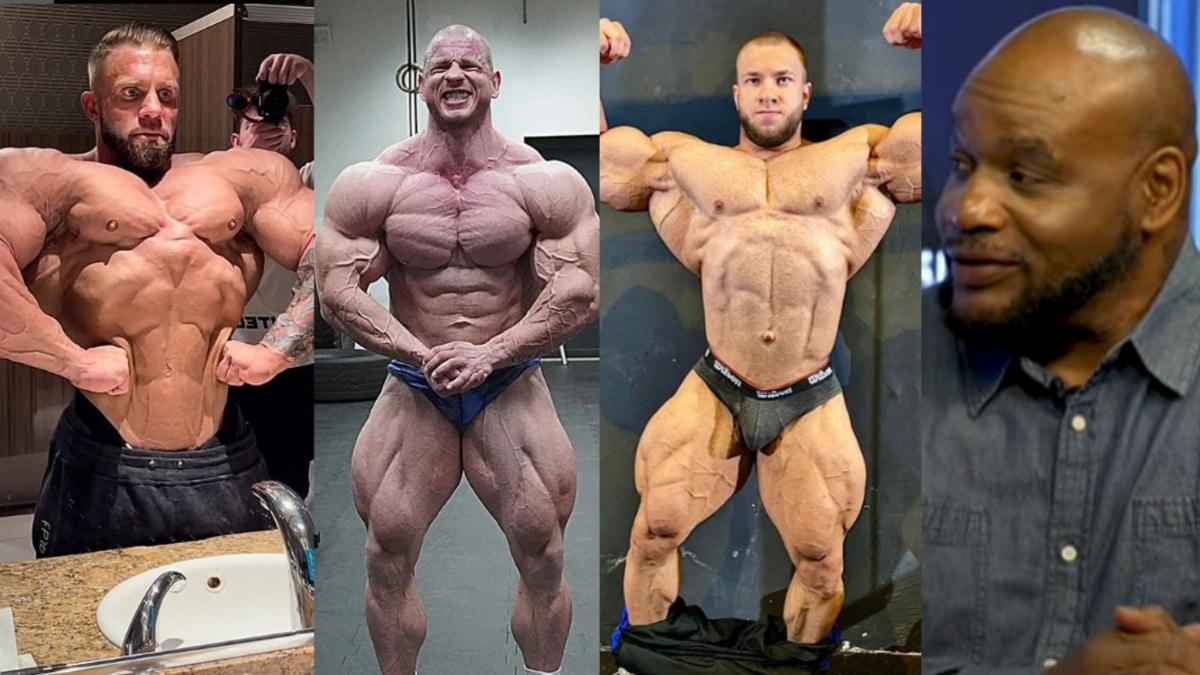
Chris Cormier & Olympia Judge Discuss Potential of Iain Valliere, Michal Krizo, And ‘Good Vito’
The 2023 bodybuilding season is underway, prompting Terrick El Guindy and Chris Cormier to discuss the potential Mr. Olympia lineup. In a recent episode of Prime Time Muscle, Cormier and El Guindy assessed the Olympia-winning potential of Iain Valliere, Michal Krizo Križánek, and Good Vito (Vitaliy Ugolnikov).
As a consistent top-seven finisher at Olympia, Iain Valliere came up short at the event last December. He earned 11th place though pushed through adversity during prejudging and finals. Reflecting on his last show, Valliere admits some mistakes were made regarding his nutrition, posing, and training. When the dust settled, Hadi Choopan claimed gold, and Mamdouh “Big Ramy” Elssbiay was knocked down to fifth.
Fellow mass monster Krizo made his way to the Mr. Olympia stage following a historic bodybuilding season. He switched to the NPC, won a pro show, and earned his Olympia invite in the span of a few months. He proved himself in his Olympia debut with a 12th-place finish, just one spot behind Valliere.
Vitaliy Ugolnikov, well known as ‘Good Vito,’ continues to grow in popularity among the bodybuilding community. He boasts an impressive level of size and conditioning. Fans have also praised his biceps and flaring quads. Last November, Good Vito earned his IFBB Pro card after winning the Musclecontest International Brazil Nationals.
Chris Cormier and Olympia Judge on Iain Valliere: ‘He Needs to Bring Up His Calves & Back’
When all is said and done, El Guindy is convinced Valliere will be considered an all-time great Canadian bodybuilder.
“He’s a great bodybuilder. Iain is a great bodybuilder. He’s won plenty of pro shows. He’s going to go down in history as one of the best Canadian bodybuilders of all time; I got to give him credit for that. Was this performance his best performance? No. It wasn’t a good performance, he’ll be the first one to tell you, ‘I missed my peak, I’m going to be better next time.’”
El Guindy advised Valliere to improve his back and calves.
“The biggest issue here is his back. His back double biceps, his back lat spread, because look at this: this is one of his best poses [side triceps] this is how he won in Texas; this is how he won a lot of shows. Look at the hamstrings, the legs, he’s massive on top, he’s a mass monster. From the back here, this is not a good back double biceps,” said Terrick El Guindy.
“Let me tell you then: he needs to bring up his calves, his back, here’s the thing, I had a chance to talk to Iain Valliere. Sometimes, we look at the posing and maybe he needs to practice his back posing. I’m not saying he’s pinching his back on the back double biceps but on the back lat spread, I just don’t like it. He needs to fix that. If he fixes that and he becomes as good as that side chest, this guy is formidable.”.
Cormier on Michal Krizo: ‘Everything About Him is Raw, But He Has So Much Upside’
Chris Cormier believes Michal Krizo is still ‘raw’ or inexperienced in many aspects of bodybuilding such as posing. Given his mass and conditioning, Cormier predicted that the Slovakian native will give competitors problems on the horizon.
“He wanted to go up against the big boys, he wanted to be considered the best or one of the best in the world and I mean… he could have placed better but I was really impressed when he took that shirt off and hit that crab [during the presser]. The big old arms, he’s very raw as I noticed, very raw. Everything he does, from the posing, the training, everything is raw with him but he has so much upside. I think he’s going to give some people some real headaches pretty soon. I’m really impressed with what he can bring in the future. Those arms — they are gigantic,” said Chris Cormier.
“He might have some of the biggest arms in the history [of the sport]. To make it more disproportionate, he doesn’t have a big head. His head is kind of small so his arms look even bigger,” said El Guindy. “He’s just so impressive.”
‘He’s Another One That Will Shock A Lot of People’: Cormier Talks Good Vito’s Potential
According to ‘The Real Deal,’ Good Vito also has the capabilities to make major waves in the Men’s Open this year.
“Good Vito, he’s very young, big flaring quads. The back is not too bad for his age. I mean, at that age, you don’t expect someone to have that type of back development. I had a tough time building it for a long time. Just his depth to his body is pretty good,” said Chris Cormier.
“When that comes, you got to get around someone that’s actually done that shit [bodybuilding]. But he has so much upside, I was looking forward to trying to see if he was going to be able to get into a pro show and try to get to the Olympia but you know, there’s always time for that. He’s a young guy. He has a lot of road ahead of him. As long as he stays doing everything smart — I think he’s another one that can shock a lot of people pretty soon.”
El Guindy said he heard a rumor that Good Vito plans to compete at the 2024 Arnold Classic South America contest.
“I think he is in his late 20s. So, he’s a guy that was with the other federation,” El Guindy said. “I was able to connect him with some guys in Brazil who were looking for a bodybuilder [to sponsor]. He’s been training in Brazil. He’s massive. Now, the thing about [him], we have not seen him compete in the IFBB Pro League. Rumor has it he’s going to make his pro debut at the Arnold Classic in Brazil.”
In addition to those mentioned above, Andrew Jacked is another new contender who recently emerged as a Men’s Open threat. He recorded a spectacular season last year, where he claimed victories at the 2022 Texas Pro and Arnold Classic UK shows. He finished eighth in his debut at Mr. Olympia and earned third place in a close affair at the 2023 Arnold Classic.
It should be noted that this video and an Instagram post promoting this episode were initially deleted after offending fans online. They used words like ‘failure’ and bust’ to describe a few of the Men’s Open competitors that were unable to find success on the Olympia stage. In response to the backlash, El Guindy issued an apology and stressed he’d be more careful with his word choice in the future.
RELATED: Iain Valliere on Next Show: ‘I’m Not in A Big Sluggish Off-Season, I Could Go from 285 to 265 in 4 Weeks’
With such a talent-rich division, fans are excited to see which athletes earn invites to compete later this year. El Guindy and Cormier are confident Valliere, Good Vito, and Krizo have the potential to shake up the 2023 Mr. Olympia assuming they earn qualifications.
You can watch the full video below courtesy of the Olympia TV YouTube channel:
Published: 2 May, 2023 | 6:52 PM EDT
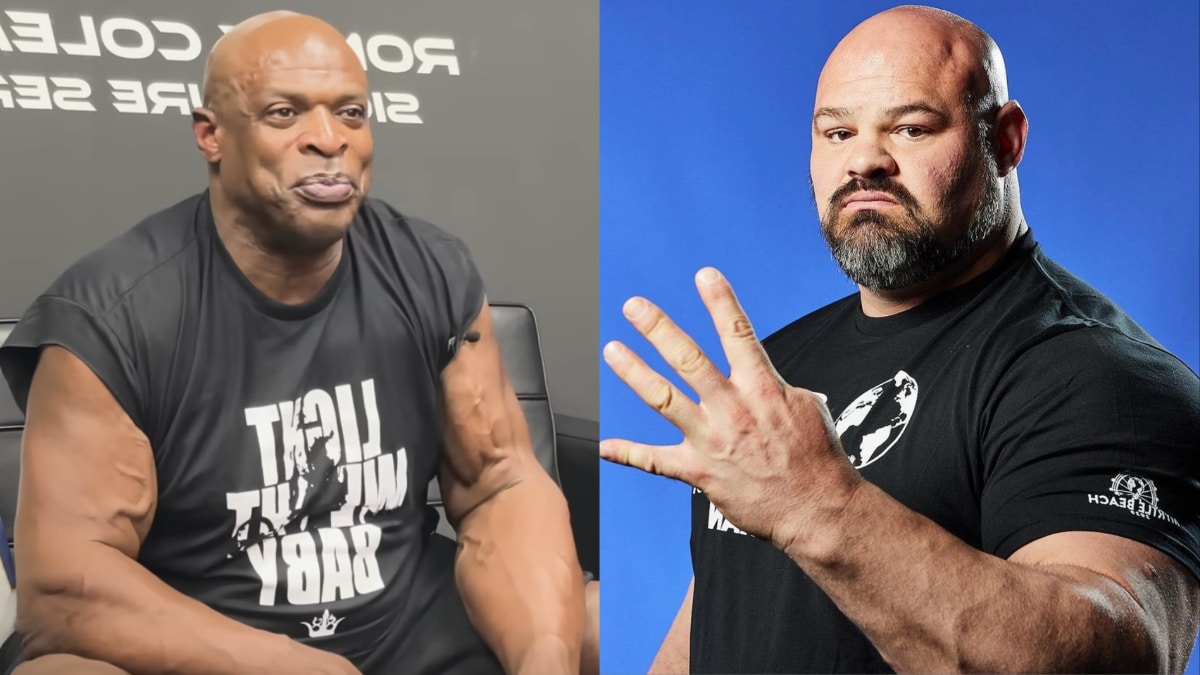
Ronnie Coleman Reacts to Brian Shaw’s Most Insane Strongman Lifts: ‘Holy Sh*t’
Legendary bodybuilder Ronnie Coleman was renowned for lifting insanely heavy weights during his career. Following the retirement of Strongman legend Brian Shaw, Coleman shared his reaction to some of Shaw’s most impressive lifts on YouTube.
Ronnie Coleman is widely regarded as one of the greatest bodybuilders of all time. He presented a jacked package with freakish muscle mass, size, and conditioning in the Men’s Open division. In addition to his look, Coleman made a name for himself with his brutally heavy workouts. He took home the top prize at the 1998 Mr. Olympia and went on a dominant run that saw him win eight Sandow trophies against the likes of four-time champ Jay Cutler, Flex Wheeler, Chris Cormier, and Kevin Levrone.
Given the intense nature of his training, Coleman would eventually suffer from a string of injuries. He needed multiple back surgeries and had trouble walking properly. Fortunately, Coleman made great progress in recovery after getting stem cell treatment. He credited the therapy for helping him recover earlier this year.
As of late, Coleman joined social media fitness sensation Jesse James West for a powerlifting style workout a few months ago. West pranked Coleman by using fake weights to exaggerate his lifts. Coleman conceded he was stunned to see West seemingly lift 700 pounds on the squat with ease.
‘The King’ gave fans a look into four of the greatest bodybuilding poses he incorporated in his performance routine on stage two months ago. He detailed how each pose brought out his strongest features and overall package in the best way possible.
He teamed up with former 212 Olympia champ and Men’s Open standout Derek Lunsford for a grueling back and biceps workout last month. Both men discussed their training philosophies as Coleman mentored him through the session. A few weeks later, Coleman extended his support for Lunsford again by backing him to dethrone reigning Mr. Olympia Hadi Choopan at the next event.
The 58-year-old credited fellow legend Flex Wheeler for his immense success in the sport last month. He revealed Wheeler connected him to prolific bodybuilding guru Chad Nicholls, who led him to his first Mr. Olympia victory.
Two weeks ago, the 2023 World’s Strongest Man contest concluded with the win of Mitchell Hooper and the exit of Brian Shaw, widely considered to be one of the greatest strength athletes ever. The four-time WSM winner had announced it would be his final appearance in the build-up to the show.
Brian Shaw is one of the most accomplished strongmen in history. He has won the World’s Strongest Man title four times, in 2011, 2013, 2015 and 2016. He has also won the Arnold Strongman Classic three times, in 2011, 2015, and 2017. He is the only person to win both competitions in the same year twice. He has set numerous world records in events such as the Atlas Stones, the Hummer Tire Deadlift, and the Rogue Elephant Bar Deadlift.
Shaw was a regular feature of the WSM events with 16 participations in total. He stands as the fourth-winningest Strongman of all time with 26 international contest wins under his belt. During his decorated career, Shaw battled it out against fellow legends Eddie Hall, Hafthor Bjornsson, and Zydrunas Savickas.
Ronnie Coleman reacts to Brian Shaw’s insane Strongman lifts
In a recent YouTube video, Ronnie Coleman shared his reaction to some of Brian Shaw’s jaw-dropping lifts in Strongman contests.
Coleman started by commenting on Shaw performing the Tire Carry.
“Running with them big old heavy ass tires. Running like it ain’t nothing to it and it wasn’t nothing to it.”
Then, he weighed in on Shaw lifting a 530-lb (240.4-kg) bench press and a 1,091 pounds (494.8 kilograms) deadlift.
“530 pounds like it’s 330 pounds easy to lift.”
“1,000-pound deadlift like it ain’t nothing to it but to do it. Pull it, lightweight baby. That’s how you do it. Make the thousand pounds look like a hundred pounds.”
The next clip was Shaw’s 2016 deadlift of about 980 pounds followed by a lower body exercise.
“That was easy, lightweight. Go ahead and put another 45, 50 pounds on there.”
“I don’t know how much weight that is but I see it’s got to be pretty heavy. I don’t know what kind of contraption that is but ain’t nothing easy about what he’s doing.”
Coleman was astonished by Shaw’s crazy strength on the Kettlebell Toss and Overhead Press.
“Those awesome big ass kettlebells and he tossed them like they peanuts. Those are 60-pound kettlebells, holy sh*t!”
“This is one of the hardest I think I’ve seen. He’s just hopping it like it ain’t nothing.”
Finally, Coleman wrapped up by lauding Shaw for his insane Car Deadlifts and Truck Pull.
Recently, Ronnie Coleman made headlines for selling his home of 26 years for $495,000 in Texas over a week ago. He utilized the home gym during his days of competing on stage, making it a great piece of bodybuilding history.
RELATED: Ronnie Coleman On ‘Comical’ Biceps Comparison with Nick Walker: ‘I Shouldn’t Even Be In This Conversation’
Coleman gave his take on iconic bodybuilder Arnold Schwarzenegger’s strongest lifts last week. He offered to train with Schwarzenegger following the reaction video.
You can watch the full video below.
Published: 2 May, 2023 | 5:31 PM EDT
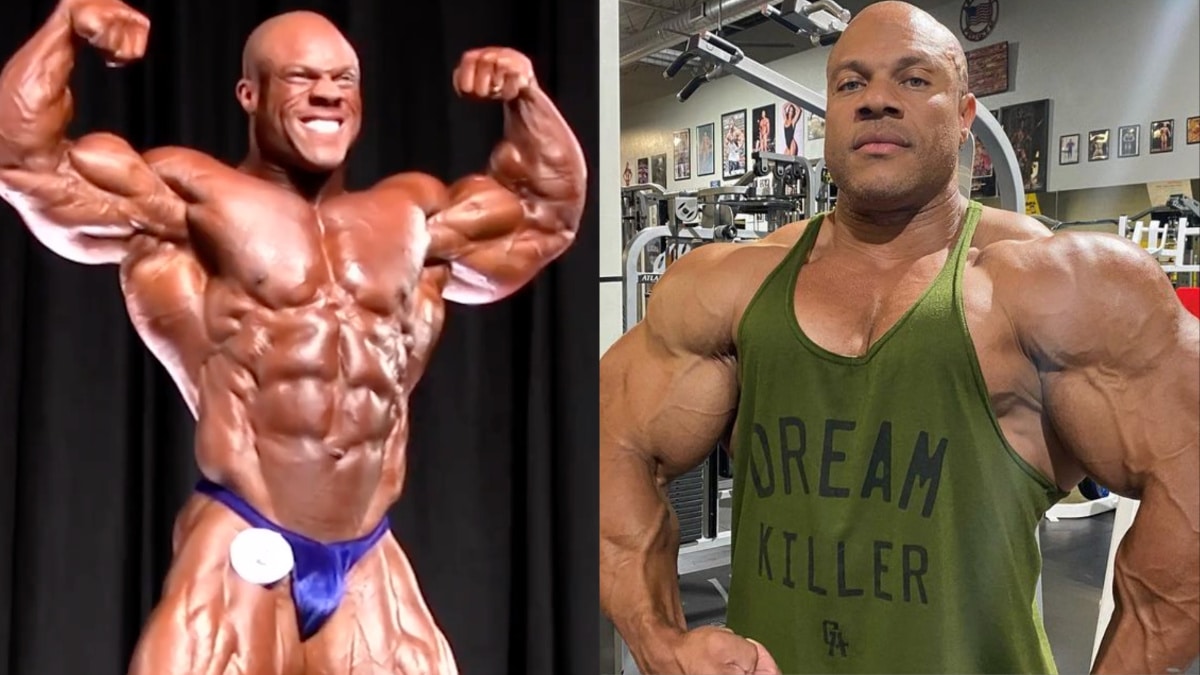
Phil Heath Gives Definitive Answer on Return in 2023: Not This Year; I’m Sitting Around 255 Pounds’
Bodybuilding icon Phil Heath dominated the Men’s Open stage during his run at the top from 2011-2017. The seven-time Mr. Olympia champion stepped away from professional competition years ago but remains in love with fitness and training. In a recent Instagram post, Heath shut down rumors of his anticipated comeback this year and revealed he’s tipping the scales at 255 pounds.
Phil Heath grew up playing sports at a young age. He explored his interest in basketball before switching over to professional bodybuilding in the mid-2000s. He made waves across the community after placing runner-up to fellow legend Dexter Jackson at the 2008 Arnold Classic and took third in his Olympia debut the same year. In 2011, Heath dethroned four-time winner Jay Cutler to secure his maiden Sandow trophy. He established himself as a commanding champion, defending the title successfully six times in a row.
Earlier this year, Heath hinted at the possibility of making a comeback. He seemed interested in the prospect but added the caveat that he would need to test his body in a prep before committing to anything concrete. ‘The Gift’ teamed up with bodybuilder Regan Grimes for a training session a few months ago. Heath looked massive in the workout update, which led fans to wonder again about a possible comeback.
Heath possessed some of the best shoulders of all time with 3D muscularity. He opened up about his experiences using steroids as a competitor as well. Heath managed to win shows without pushing gear too hard and focused on maximizing muscle stimulation instead of focusing on heavy weights.
As of late, Phil Heath showed off his significantly leaner midsection in an update. He started incorporating cold plunge routines and laid out the benefits he reaped from the new practice. Three months ago, Heath gave fans a look into one of his favorite injectable stacks that he utilized with TRT.
As one of the most recognizable names in the industry, Heath indicated that prize money of $1 million could potentially lure him out of retirement. Jay Cutler has also mentioned the idea of returning to a competition for $1 million.
Phil Heath won’t make a comeback in 2023
Phil Heath ruled out a return to competition this year. He revealed he weighed 255 pounds and feels more confident than ever about his physique post-retirement.
“Everyone’s dying to know if yours truly will grace the bodybuilding stage,” said Heath. “Once again, not this year. But this summer I do plan on looking as if I am doing one if that makes anyone happy, just going to let nature takes its course. I’m sitting around 255 pounds right now. I’ve been a lot leaner and I feel like everything has been working really well.” shared Heath.
Phil Heath gave his breakdown of the upcoming 2023 Mr. Olympia last month. He picked reigning champion Hadi Choopan to retain the title while recognizing the danger presented by top contenders Nick Walker, Derek Lunsford, and Samson Dauda.
RELATED: Jay Cutler ‘Pushing’ Phil Heath to Return at 2023 Mr. Olympia: ‘He Could Do Some Damage’
Some fans might be disappointed by Heath’s latest update but it’s important to note that he did not shut the door on his return completely and could change his mind at a later date.
Published: 2 May, 2023 | 3:53 PM EDT
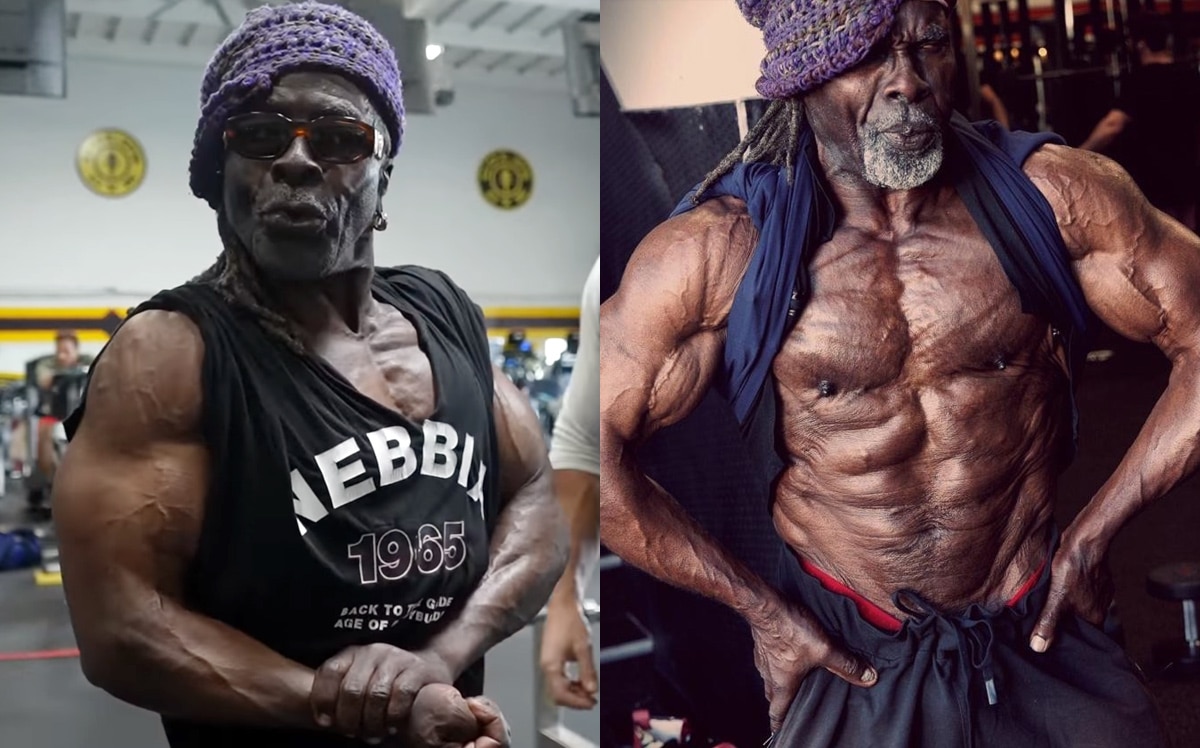
Bodybuilding Icon Robby Robinson Defies Age: Astonishingly Shredded at 76!
Turns out that veteran bodybuilder Robby Robinson never lost the eye of the tiger and continues to train hard at 76 years of age. The Black Prince partnered with natty Greek god Mike O’Hearn for an arms workout and his incredibly shredded physique stole the show.
Mike O’Hearn posted Glimpses of the veteran bodybuilder’s training session on his YouTube channel. Robby Robinson is seen performing barbell preacher curls in the video. The 76-year-old looked incredibly shredded and rock solid during the workout. You can see the video below, courtesy of Mike O’Hearn’s YouTube channel:
Robby Robinson performed a drop set of barbell preacher curls in the session after a warm-up set. For the drop set, he started with a 70 lbs barbell and pumped out seven solid reps with a great form. Mike O’Hearn handed him a 50 lbs barbell and the former Masters Olympia champion cranked out five more reps to close the show.
“Look at this… The fibers, the striations, insertions…That is what we do this for,” Mike O’Hearn marveled as Robinson flexed to show his pecs and arms.
Robby Robinson responded:
“I’m working, working, working all the time.”
“You’ve gotta put in the work. If you’re not willing to put in the work like you see myself and Mike, seriously, just go home,” He added.
Mike O’Hearn obviously knows a thing or two about maintaining the body at an age where it is supposed to fall apart. Him being astonished by Robbinson’s physique says a lot about the latter’s commitment to maintaining a shredded physique at 76.
Robby Robinson’s bodybuilding career at a glance
Robinson proudly belongs to the golden era of bodybuilding. He took his first steps in competitive bodybuilding in the early to mid 1970s. As an African-American born in the deep south, Robinson had a tough path leading up to the stature of a legendary bodybuilder. However, he competed successfully for nearly 27 years and left a lasting legacy in the sport.
Mr. Lifestyle started out as an amateur in 1974, winning the AAU Mr. Southeastern USA and Mr. Southern States competitions. Robby won four titles in 1975, the Mr. World title being the most prominent of those.
IFBB Pro League’s Mr. Olympia contest turned out to be the real proving ground for the Georgia native bodybuilder. He took home the Heavyweight title at the 1977 and 1978 Olympia and finished third in the Lightweight division at the 1979 Olympia. Unsurprisingly, Robinson was the runner up to Mr. Olympia overall winner Frank Zane in 1977 and 1978.
The 1981 NABBA Mr. Universe Pro turned out to be his only victory in the winless stretch of nearly seven years. However, The Black Prince never stopped working and emerged victorious at the 1988 IFBB Niagara Falls Pro Invitational. In the later stages of his career, Robbie became a Masters Olympia mainstay. He has his name etched on the 1994 Masters Olympia as well as the 1997 and 2000 Masters Olympia 50+ trophies.
Robby Robinson’s contribution to the sport is undeniably important. Fitness Volt wishes him good health and a fulfilling life.
Published: 2 May, 2023 | 1:00 PM EDT
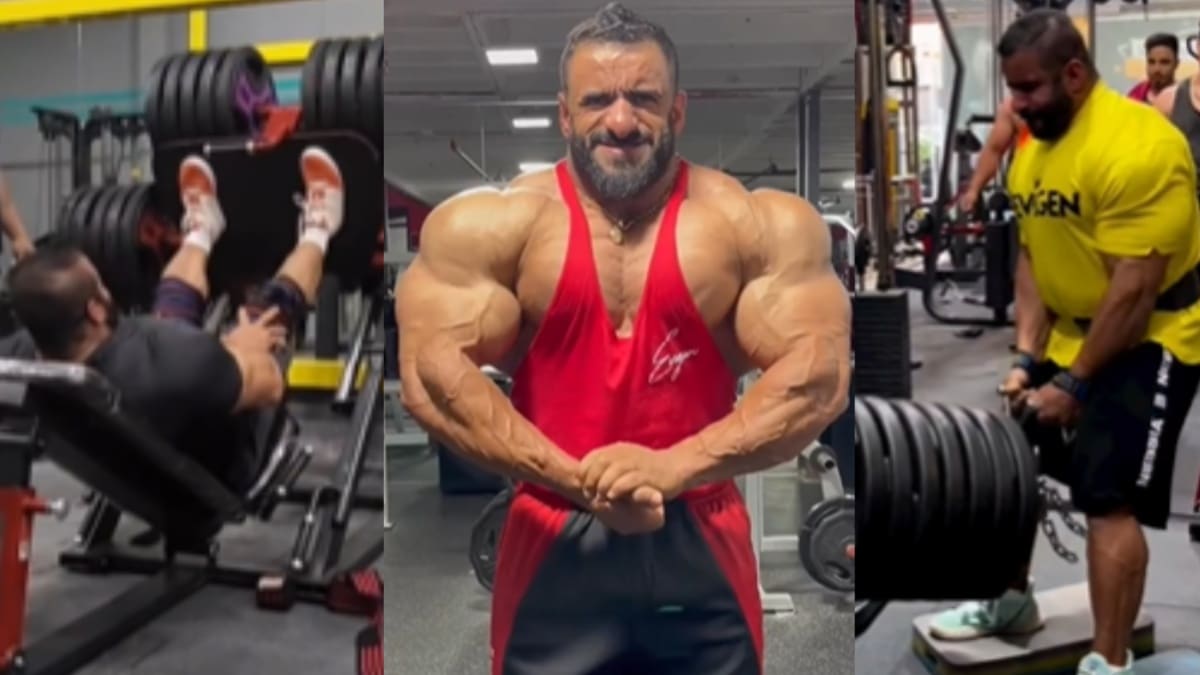
Hadi Choopan Looks Massive in 2023 Off-Season, Shares Brutal Row & Leg Press Workouts
Hadi Choopan is determined to repeat the success he enjoyed last year. In two posts published on Instagram, Choopan showed off his strength with leg presses and t-bar rows in preparation for the 2023 Mr. Olympia contest.
Choopan made history last year at 2022 Mr. Olympia and became the first man from Iran to win the prestigious title. The show was filled with surprises as Mamdouh ‘Big Ramy’ Elssbiay surrendered his throne in fifth whereas Derek Lunsford, a former 212 Olympia winner, cashed in his special invite for the Open with a second-place finish. Meanwhile, Nick Walker secured third in addition to earning the Olympia People’s Champ Award.
After Samson Dauda defeated Walker at the 2023 Arnold Classic in March, fans refocused their attention to the Olympia contest set for November 2-5 in Orlando, Florida. Veterans and active competitors have taken to social media to back their respective favorites. Bodybuilding legend Ronnie Coleman has stated Derek Lunsford will defeat Choopan in their next outing.
Nick Walker also said Choopan won’t repeat as champion this year. He believes the show will be determined after a showdown between himself and Derek Lunsford. Other notable voices in the community, such as Bob Cicherillo, believe Choopan at ‘100%’ beats everyone in the show. William Bonac shared a similar prediction recently and suspects Choopan will win another Sandow.
Hadi Choopan Sends Warning Shot to Open Class with Heavy Training Sessions
Check out Choopan’s t-bar row workout below:
“My ears are damaged and I love this blessing of God because it helps me to think only about my goal and not on the idle words of others. A warrior’s place is on the battlefield, not among weaklings.” Hadi Choopan wrote.
Then, Choopan powered through a set of heavy leg presses.
“We are together, move but don’t cheat, I’ll see you”
In a rare off-season update, Choopan gave fans a glimpse into his latest progress. Fans were taken aback by his striated chest and overall conditioning levels so far out from his next show. Choopan’s opponent, Lunsford, is guided by the same trainer Hany Rambod. They made it clear that Derek’s current focus is to bring more detail to his chest, arms, and legs moving forward.
Looking at the potential 2023 Olympia lineup, Bob Cicherillo laid out who believes could feasibly take out Choopan. Given Dauda’s improvements at the Arnold Classic, he named him and Derek Lunsford as equal threats to the reigning champ’s title.
RELATED: Chris Cormier, Terrick El Guindy on Hadi Choopan: ‘This Guy’s Stakes Are Higher Than Just Winning a Title’
Fans expect another unpredictable Mr. Olympia contest this fall as competitors have until October 9 to secure their invites. Considering his consistent nature, defeating Choopan will take a massive and calculated effort.
Published: 2 May, 2023 | 11:02 AM EDT

Powerlifter Reece Fullwood (125KG) Sets 412.5-kg (909.4-lb) Raw Squat All-Time World Record
Coming into the 2023 GPC-GB Welsh National Championships, Reece Fullwood did not have too high expectations. The competition was held on one day only, April 30th, in Swansea, so Reece had the goal of completing it without any injuries. However, his achievements reached miles above that, since Reece managed to set a new All-Time World Record Raw Squat in the 125-kilogram weight class.
Reece Fullwood opened his performance with a 360-kilogram (793.6-pound) squat, which immediately looked way too easy for him. So, for the second attempt, he made a jump of 30 kilograms (66.1 pounds) for a squat of 390 kilograms (859.8 pounds). This second attempt was nothing more difficult than his first one, as he made it look like a warm-up.
However, having full confidence in his abilities, Reece Fullwood made another massive weight jump and loaded a 412.5-kilogram (909.4-pound) squat. Equipped with just a lifting belt, knee sleeves, and a swagger pair of glasses, Reece managed to push through and lock out a brand new All-Time World Record Raw Squat.
The previous record holder in the 125-kilogram weight class was Phillip Herndon. He set the old squat World Record at the 2023 USPC Mid-Atlantic Regional Championship by squatting 411 kilograms (906.1 pounds). So, not even two months have passed since Herndon set the record, but Reece Fullwood has already outperformed it.
Watch Fullwood’s lifts here:
Related: Powerlifter Russel Orhii Scores a Huge 337.5-kg (744-lb) Raw Squat Two-Rep PR
Reece Fullwood’s Full Performance
Reece Fullwood was primarily focused on the squat event at the 2023 GPC-GB Welsh National Championships, since he was unable to display his best on other events due to some injury issues. However, even with some nerve issues and an elbow injury, Reece managed to set a new British Record Squat and Total.
Squat
360 kilograms (793.6 pounds)
390 kilograms (859.8 pounds)
412.5 kilograms (909.4 pounds) — U125KG All-Time World Record, British Record, & Competition PR
Bench Press
190 kilograms (418.8 pounds)
210 kilograms (462.9 pounds)
Unsuccessful — 215 kilograms (474 pounds)
*Reece Fullwood has a heavier Competition PR of 212.5 kilograms (468.4 pounds) which he set at the 2019 GPC-GB Welsh Championships.
Deadlift
330 kilograms (727.5 pounds)
362.5 kilograms (799.1 pounds) — Competition PR
Unsuccessful — 377.5 kilograms (832.2 pounds)
Total — 985 kilograms (2,171.5 pounds) — U125KG British Record & Competition PR
Related: Hafthor Bjornsson Crushes 420-kg (925.95-Lb) Raw Squat In Training
Reece Fullwood’s Competition History
Personal Bests
Equip
Squat
Bench
Deadlift
Total
Dots
Raw
716.5
180.99
Wraps
887.4
468.5
887.4
2127.5
548.6
Competition Results
Place
Fed
Date
Competition
Division
Total
Dots
1
GPC-GB
2022-04-09
Tattooed and Strong
M-O
716.5
180.99
Location
England
Competition
Tattooed and Strong
Division
M-O
Age
30
Equipment
Raw
Class
308.6
Weight
291.9
Deadlift
716.5
-782.6
716.5
1
GPC-GB
2019-05-05
Welsh Championships
M-O
2127.5
548.6
Location
Wales
Competition
Welsh Championships
Division
M-O
Age
28
Equipment
Wraps
Class
275.6
Weight
272.9
Squat
782.6
837.8
887.4
887.4
Bench
418.9
451.9
468.5
468.5
Deadlift
694.5
771.6
771.6
Data Source: Open Powerlifting. Last Updated: April 12, 2023
Analyze Lifts
As Reece Fullwood competed in the third professional powerlifting competition of his career, he already claimed an All-Time World Record. He now plans on doing some bodybuilding training and working on recovering from his injuries. So, when all is set and done in about a year from now, Reece hopes to cross the 1,000-kilogram (2,204.6-pound) raw Total with ease.
Published: 2 May, 2023 | 9:17 AM EDT
5 Back Workouts for Women: Bring the SexyBack!
Most women want an hourglass figure. However, some girls mistake an hourglass figure for a tennis racket figure. These ladies spend considerable time working on their booties but almost always overlook a vital aspect of achieving their dream figure — a shapely back. Ladies that want to rock a strapless dress or tank top must prioritize training their backs. Plus, a shapely back can add to your physique aesthetics by making your waist look smaller.
To build a curvy figure, you must incorporate back workouts into your training regimen. Your back workouts should have a balance of rowing exercises, such as barbell rows, dumbbell rows, seated cable rows, and horizontal pulling movements, such as lat pulldowns, pull-ups, etc.
After your legs, your back is the second-biggest muscle group, meaning your back workouts will be as brutal as your lower body training sessions. Plus, since it is a large muscle group, it will help burn more calories than the small muscle group workouts. If you feel fresh and energetic after a back workout, know that you didn’t go all-out in that training session.
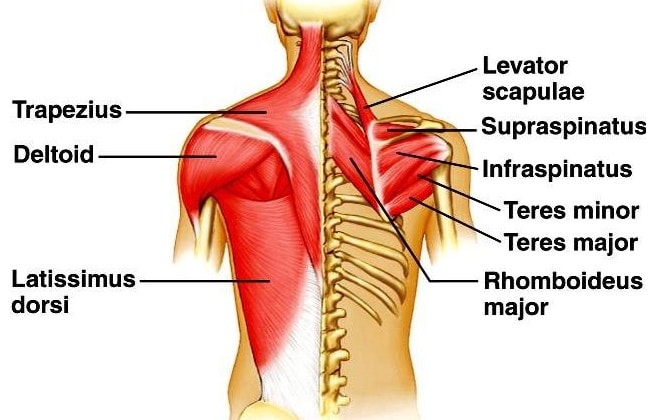
Unlike smaller muscle groups like the biceps, which have only two muscle heads, your back consists of several muscles, such as the latissimus dorsi, rhomboids, teres major and minor, trapezius, posterior delts, and erector spinae. Furthermore, your back is divided into two portions — upper and lower. You must train your back from different angles, using different grips for overall posterior chain development.
In this article, we go over the back anatomy, the five best back workouts for women, the importance and benefits of building a strong back for women, and tips to make the most of your workouts.
Back Anatomy
Understanding your back anatomy can help you program an effective back workout and ensure there are no weak areas in your back. Here are the back muscles you should know about for building an eye-catching backline:
Back Anatomy Muscles
Latissimus Dorsi
Latissimus dorsi, or lats, are the biggest back muscle. A pair of developed lats can accentuate your V-taper. They are located on both sides of the middle and lower back and are responsible for moving your arms down and toward the body.
Teres Major and Minor
These are present at the back of the shoulder and are responsible for rotating the arm and stabilizing the shoulder joint.
Rhomboids
They are located on your upper back underneath the trapezius muscle and between the shoulder blades. They help maintain a good posture and stabilize your shoulder blades.
Erector Spinae
These are a group of muscles present on both sides of the spinal column. As their name suggests, they help maintain an erect spine and allow for bending and twisting movements. The erector spinae is also referred to as the lower back.
Posterior Deltoids
Although the posterior or rear delts are located on your back, they are mostly trained in a shoulder workout. They help move your arm backward.
Trapezius
The trapezius muscle is located over the back of the neck and shoulders and extends down to the middle of the back. It helps moves the head and shoulder blades. Many people train their traps in a shoulder workout.
Best Back Workouts For Women
Our goal with these workouts is to build a toned back that looks amazing and improves your overall health and fitness. We have included five workouts in this article for ladies at different experience levels. The resistance band back workout is perfect for when you don’t have access to a gym.
Beginner Back Workout For Women
Women that are just starting their fitness journey should perform foundational exercises that will help them build a solid base and improve their mind-muscle connection. Your focus with this workout will be to drill each movement until you know them, like the back of your hand.
Seek expert advice to learn the correct technique for performing these exercises. Hiring a personal trainer can expedite your learning process, lower your risk of injury, and fast-track your progress.
Advanced Back Workout For Women
Ladies with at least a few months of lifting experience should graduate to the advanced back workout. Use an assisted pull-up machine or a spotter if you cannot perform bodyweight pull-ups.
You’ll also be doing rear delt flyes for the rear delts and barbell shrugs for the trapezius muscle in this workout. Expect this workout to take between 45-60 minutes. However, keep your rest durations between sets limited to 30-60 seconds to maintain a high training intensity.
Machine-Only Back Workout For Women
Machines follow a fixed movement trajectory, which can help you focus on establishing a mind-muscle connection and achieve muscle-ripping pumps. Plus, machine workouts take less time than free-weight workouts, which is a boon for lifters on a tight schedule.
You can swap the GHD back extension with a conventional back extension if you lack the posterior chain strength to perform the exercise. Focus on contracting your muscles with each rep to get the most out of this workout.
Resistance Band Back Workout For Women
The resistance band back workout is an excellent place to start for beginners and when you are traveling. Contrary to what most people think, you don’t always need free weights or machines to build a chiseled physique. Resistance bands help maintain constant tension on your muscles throughout the motion, helping induce hypertrophy.
We recommend using loop bands for this workout; grab the heaviest bands you can find. Furthermore, you’ll be performing a higher number of reps in this workout than in the other workouts to ensure you’re not leaving anything in the tank.
HIIT Back Workout For Women
HIIT, or high-intensity interval training, workouts consist of short periods of high-intensity exercises followed by periods of rest or lower-intensity exercises. A HIIT workout aims to push your body to its maximum capacity in a short period. It is a great training protocol for breaking through strength and muscle plateaus. Furthermore, it is perfect for folks that can only dedicate 30 minutes to a training regimen.
You’ll perform five rounds of this HIIT workout. Do each exercise for 30 seconds and rest for 10 seconds after completing a movement. You are allowed a 60-second rest after completing each round.
Read more: HIIT Workouts for Women: 6 Best Workout Plans, Benefits, and Pro Tips
Back Workout Tips For Women
Follow these tips for carving a head-turning back:
Focus on Form
Beginners must prioritize lifting with the correct form instead of chasing heavy weights. Using a picture-perfect form maximizes an exercise’s muscle and strength-building potential and reduces the risk of injury.
Plus, focus on contracting your target muscles with each rep. Going through the motions for the sake of it won’t cut it. Slow down your rep tempo if you have trouble establishing a mind-muscle connection.
Progressive Overload
Progressive overload is the name of the game when it comes to building muscle mass. You could make your workouts harder and increase your training volume and intensity by lifting heavier, doing more sets and reps, shortening your rest duration between sets, or incorporating advanced training techniques like super sets, drop sets, intraset stretching, rest-pause sets, etc.
You must gradually increase the demands placed on your muscles. It will challenge your muscles to adapt and improve, leading to gains in strength, muscle size, and overall fitness.
You Don’t Have To Reinvent The Wheel
Many exercisers tend to do too much too soon. These people think that doing out-of-the-box exercises will speed up their progress. However, this is not the case. You don’t have to join a cult or follow a charlatan to build a chiseled back. The exercises mentioned in this article are all you need to develop a shapely back.
Nutrition and Sleep
You cannot out-train a bad diet and recovery program. You must back your workouts with a balanced diet to optimize muscle growth. Further, a seven to eight-hour sleep is a must as it allows your body enough time to rest and recuperate between workouts.
Since the back is a large muscle group, perform one of the workouts mentioned in this article weekly. As you gain more experience, you could perform two weekly back workouts to expedite your back growth. However, avoid doing more than two back workouts a week as it increases your risk of overtraining.
Change Grips
Performing the same exercise with a different hand grip can target your muscles differently. For example, you could do a barbell bent-over row with an underhand or overhand grip. You could also perform the seated cable row with a supinated, pronated, or neutral grip to train your back from different angles.
Why Building a Strong Back is Important For Women?
Incorporating back workouts into your training regimen entails the following advantages:
Improves Aesthetics
Building a bigger back can add to your physique aesthetics. It can create an illusion of a smaller waist and broader shoulders, which are essential features of an hourglass figure. A diced back will also make you look stunning in backless dresses and tank tops.
Promotes a Better Posture
Most of us spend the majority of our days hunched over a computer or phone screen. Training our backs can help improve our posture by strengthening the muscles responsible for maintaining a proper upright position. Plus, back exercises can increase back flexibility and mobility, which can help pull the shoulders back, open up the chest, and align the spine in its natural S-shape curvature.
Helps Burns Calories
Your back is the second-biggest muscle group. Performing an intense back workout that involves compound (multi-joint) exercises can spike your heart rate, helping you burn a decent amount of calories. Plus, back workouts help increase overall muscle mass and boost metabolism, both of which lead to a higher calorie expenditure even when you are physically inactive. However, if your goal is to burn more calories, you should follow the HIIT back workout listed in this article.
Boosts Functionality
Most back exercises are functional movements that improve overall strength, mobility, and stability. Your back plays a crucial role in many everyday activities, such as lifting, carrying, and bending, as well as in sports and other physical activities. Balanced back workouts improve your performance in all these activities while reducing your risk of injury.
Help Alleviate Lower Back Pain
Training your spine-supporting muscles (erector spinae) in your back workout can help alleviate and reduce the risk of lower back pain, especially in women with large breasts or those that remain seated for most of the day.
FAQs
How can women build a toned back?
Building a chiseled back requires following a balanced back workout focusing on building muscle mass and strength. Perform one of the workouts given in this article weekly for 12 weeks to see noticeable back development. You could also switch between the workouts to add variety to your training regimen.
Should men and women follow different back workouts?
No exercise is gender specific. The workouts in this article can be used by men and women alike. With that said, girls don’t need to worry about building a cobra back like their male counterparts. The ladies don’t produce enough testosterone to build the same amount of muscle mass as men.
How to program a back workout for hypertrophy and strength gains?
The number of sets, reps, and exercises you perform and your workout intensity will depend on your training goals. Perform 3 sets of 8-12 reps of an exercise and rest 60-90 minutes between sets if you want to build muscle mass. On the other hand, do 3-5 sets of 1-5 reps of an exercise with 2-5 minutes of rest between sets if you want to maximize strength. [1]
Wrapping Up
To carry the heavy burden of the world, you must have a strong back. The five back workouts for women listed in this article will help improve your posture, boost your functional fitness and calorie expenditure, and enhance your physique aesthetics.
These workouts are apt for women of any experience level. Furthermore, the HIIT back training session is great for ladies on a tight schedule. Pair these workouts with a balanced recovery program for optimal results. Best of luck!
References
Krzysztofik M, Wilk M, Wojdała G, Gołaś A. Maximizing Muscle Hypertrophy: A Systematic Review of Advanced Resistance Training Techniques and Methods. Int J Environ Res Public Health. 2019 Dec 4;16(24):4897. doi: 10.3390/ijerph16244897. PMID: 31817252; PMCID: PMC6950543.
Demi Bagby Workout And Diet Routine
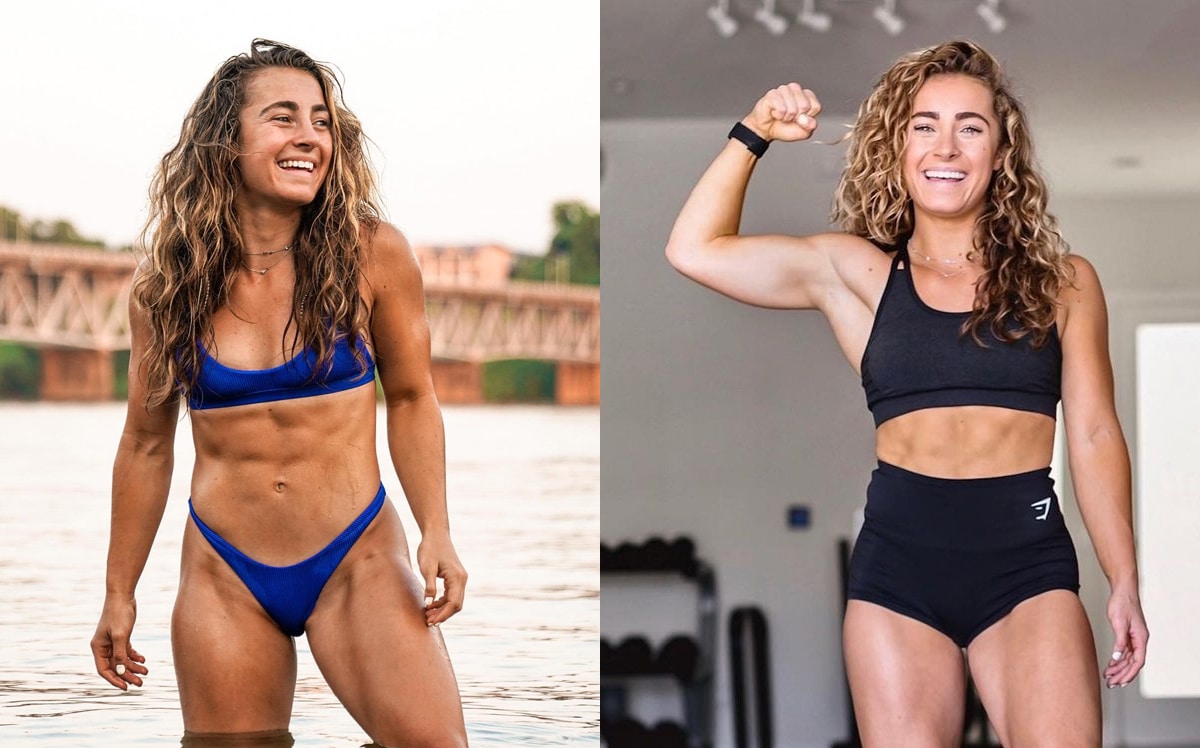
Demi Bagby is an American bodybuilder, CrossFit athlete, Martial artist and social media influencer from San Diego, California. She has been involved in many different sports and fitness activities since a very young age and has become a shining example of overcoming a crippling injury to become a flag bearer of fitness and peak performance. This article takes a closer look at her inspiring story as well as diet and current workout routine.
Demi Bagby Statistics
Full Name: Demi Brooke Bagby
Weight
Height
Age
115 lbs (52 kg)
4’11” ( 150 cm)
22 years
Date of Birth
Place of Birth
Nationality
January 10, 2001
San Diego, California
American
Demi Bagby Biography
Early Life
Demi Bagby took her first steps towards a sports and fitness lifestyle as a child. Her brothers played soccer and her father coached the sport. Naturally, she was inclined towards it. However, she expressed interest in competitive cheerleading when in sixth grade. The family respected Demi’s decision by supporting her to go ahead.
Bagby got an admission in the cheerleading gym in spite of having no experience on one condition – she had to learn the necessary skills before their first competition. The San Diego native opted for taking private lessons as well since she did not feel confident with her skills. She trained by herself in the comfort of home.
“I’d take these rectangular cushions from outside by our pool and put them in the living room and start flipping. That’s where I did my first ever backflip,” Demi told in an interview with Men’s Health.
As months went by, Demi got remarkably better and the pace of her progression astonished even the coaches. But something that starts well does not necessarily end well. Bagby suffered a horrendous back injury on the last day of cheerleading practice. As she was descending down during a basket toss, Demi was dropped and the impact immediately broke her back.
It took Demi one full year to recover completely from the injury and the process raised her pain threshold exponentially.
“Unless I die, nothing’s ever going to hurt that much,” She says.
Introduction to CrossFit training and subsequent success
Discovering CrossFit training played a crucial role in Bagby moving on from the injury. She decided to check out a CrossFit gym after a display sign awakened her curiosity. The then 14-year-old was intrigued to see the gym and knew what she wanted to do next.
“I walk in, and it;s a little gym with black mats, pull-up bars and an open floor… And I’m like, ‘Wow, this is crazy.’ It just looked so cool. Like, this open space means you do something here.”
Gymnastics and conditioning were Demi Bagby’s favorite aspects of competitive cheerleading. She could do a whole lot of it in CrossFit and do light lifting work as well. Once again, Demi started making rapid progress in CrossFit and competed in the teen competition at CrossFit Open, placing 517th in the US for 14 to 15-year-old girls. She returned the following year and jumped to the 23rd place in the world.
The young prodigy never looked back after finding her way forward. She never stopped learning new things and added ocean surfing, wake surfing, snowboarding and skateboarding to her long list of accomplishments.
Demi Bagby started posting her progress on Instagram and other social media platforms. She soon shot up in fame and started gaining followers at a rapid pace. But more than the means to become famous, Instagram was always the means to track her progress.
“It’s a journal of my skills. I can watch myself surfing and say, ‘I know what feeling I had when I was carving, and this is what it looks like.”
Demi Bagby Workout
Demi Bagby’s Instagram and YouTube channel content give a fair idea about her training philosophy. Fitness is not merely a function of her strive for achieving peak performance level but a motivating factor in all aspects of her life.
She gives her all to fitness and training. Also, Demi Bagby likes to constantly learn new things and not get comfortable with what she is already good at. Her training philosophy revolves around the principle of trying new things and learning through failure as well as success.
“I’ll do something and know that it’s not right or I’ll get hurt and be like, ‘I know what I did. I need to never do that again,’ rather than someone saying, ‘Don’t do that,’” Demi Bagby said in an interview.
Demi’s training routine is a mix of different disciplines like calisthenics, plyometrics, CrossFit as well as combat sports. The workout routine mentioned below isn’t a hundred percent accurate summary. Instead it gives a broad idea about how she trains based on various social media posts on her Instagram and YouTube channel.
Monday- Calisthenics
Calisthenics is nothing but a fancy epithet for body weight exercises. It is a training method where the person relies on his own body weight for resistance to build muscle strength and other attributes necessary for leading a healthy life.
It is an excellent way to work mainly for two reasons – you don’t need to spend on equipment or gym as your body and a little bit of open space is the only real estate required to perform calisthenics workout. Calisthenics is a holistic way of training and helps improve functional strength instead of being focused heavily on the aspects like aesthetics or body composition.
Push-ups, pull-ups or bodyweight squats are some most common examples of bodyweight training. Demi Bagby starts her training week with calisthenics training and does a full body circuit on Monday.
Repeat the circuit three times
Tuesday – Muay Thai
Being a mix of aerobic and anaerobic training, Muay Thai offers great benefits in terms of strength and endurance. The aerobic elements of Muay Thai training like jump rope, battle rope, running and shadow boxing helps improve the cardiovascular strength required for maintaining the optimal function of the human body.
Every Tuesday in Demi Bagby’s training schedule is reserved for this art of eight limbs and she does not cut any corners when it comes to learning this craft. Apart from the health benefits, no one can deny the efficacy of Muay Thai in self defense situations.
The Muay Thai training session typically consists of:
2.4 mile Run on the Treadmill or outside
Jump Rope or Battle Rope – 3 sets of 100 reps
Shadow Boxing – 3 sets of 25 reps per side
Pad Work or Sparring – 3 sets, 50 reps
Bag Work – 3 sets, 1 minute intervals
Meditation and Stretching
Wednesday – Yoga
For those with a superficial understanding of the practice, Yoga is beneficial improving flexibility, muscle coordination and balance. However, the more experienced individuals will tell you that the most potent benefits of Yoga go above and beyond that. The ancient Yogic practice helps with managing stress, improves mental health and makes positive changes in every aspect of life.
Demi Bagby practices different forms of training like calisthenics, CrossFit and Board Sports to name a few. To maintain focus on each one of those disciplines without mental fatigue setting in, Yoga practice must help her immensely. The Yoga session in Demi Bagby’s routine looks like this:
Downward Dog – Hold for 10 breaths
Crescent Lunges – Hold for 5 breaths
Warrior II – Hold for 5 breaths
Triangle – Hold for 10 breaths
Plank Hold – Hold for 10 breaths
Low Plank – Hold for 5 breaths
Upward Facing Dog – Hold for 10 breaths
Tree Pose – Hold for 5 breaths
Half Pigeon Pose – Hold for 10 breaths on each leg
Seated Forward Hold – Hold for 5 breaths
Thursday – Surfing
Surfing is a good full body workout in that it engages the shoulder and back, core as well as lower body muscles. Its benefits for the cardiovascular system cannot be denied. Additionally, it is an amazing way to spend time in a natural environment and reduce stress and anxiety.
Demi Bagby enjoys surfing as much as she loves to train in the gym or outdoors. Also, a full body activity like surfing can really put the gains made with body weight and strength training to test and give a person an idea about their level of fitness.
Friday – Calisthenics
Demi Bagby is back to working calisthenics on Friday. She goes through a full body training circuit to improve functional strength and muscle coordination.
L Sits – Hold for 45 seconds
Squats – As many reps as possible in 45 seconds
Push-Ups – As many reps as possible in 45 seconds
Hanging Leg Raises – As many reps as possible in 45 seconds
Kettlebell Swings – As many reps as possible in 45 seconds
Pull ups – As many reps as possible in 45 seconds
Repeat the circuit for 3 rounds
Saturday- Cardio
Demi Bagby’s Saturdays start with a long run along the beach with her dog. On some occasions, she also rides the exercise bike to get the cardio work in.
Sunday- CrossFit Workout
It would not be an overstatement to say that CrossFit gave Demi Bagby’s aspirations a second wind and allowed her to pursue an active lifestyle after the career ending back injury. She goes through an intense CrossFit training session every Sunday which concludes her training week.
Clapping Ring Push-Ups – 2 sets of 5 reps
Muscle-ups – 2 sets of 5 reps
Backflip Wall Balls – 2 sets of 5 reps
Backflip Burpees – 2 sets of 1 to 5 reps
Pistol Squats – 2 sets of 5 reps on each leg
Flag Raises – 2 sets of 5 reps
One Arm Toes to Bar – 2 sets of 5 reps on each arm
Bar Rope Climb – 2 times through
Demi Bagby Diet
Hydration is the key to maintaining healthy body function, especially when you are as active as Demi Bagby. The 22-year-old gives utmost importance to staying hydrated and makes sure to drink enough water throughout the day and during her training sessions to fuel performance.
Demi’s diet includes a balanced mix of Complex carbohydrates, fats, vitamins, other micronutrients and most importantly, protein and fiber. Ice cream is her weakness and she can walk miles to have a scoop of her favorite flavor. However, Demi practices immense self control and does not waver from a strict diet plan necessary for maintaining peak physical health.
She follows a simple dietary routine of three meals per day. It consists of simple and nutrient dense whole foods that are not laden with calories.
While chicken, eggs and Salmon are the primary sources of protein in her diet, vegetables, fresh fruits, brown rice and oats serve as healthy sources of fats, carbohydrates, vitamins and minerals.
A full day of eating in Demi Bagby’s routine looks like this:
Breakfast
Whole Grain Oats
Fresh Fruits
Scrambled Eggs
Greek Yoghourt
Lunch
Grilled Chicken
Brown Rice
Steamed Vegetables
Dinner
Grilled Salmon
Brown Rice
Steamed Vegetables
To Conclude…
Demi Bagby has overcome life altering injuries at a very young age and that has helped her build an unbreakable mind and body. Still in her early 20s, Demi has a lot of time left to take her fitness career and business endeavors to a whole new level. Her progress in different disciplines of training shows that if you have the drive and a right mindset, nothing can stop you from achieving the highest levels of human capabilities.
How Long To Walk A Mile Calculator
Walking is one of the best things you can do for your general health. It’s so easy and accessible that you can walk several times a day, making it the ideal form of exercise for building basic fitness, fat burning, and weight control. In addition, walking is good for your mental health.
Clock up about 10,000 steps/five miles of walking per day, and you’ll soon discover just how powerful daily walking can be!
However, many people believe they don’t have time to walk, assuming it’s far too time-consuming, especially compared to shorter, more intense workouts like HIIT. That’s probably because they don’t know how long it actually takes to walk a mile.
Use our calculator to find out how long it will take to walk a mile (or any other distance for that matter) to see how easy it is to fit walking into your daily schedule.
How Long to Walk A Mile Calculator
Please fill out the form correctly
Calculate
Result
Hour: calculated Min: calculated
If you would like to use this calculator on your website or blog you can simply embedded this
calculator in one click. Use the below ‘Generate Code’ tool to get the embedded code.
Generate Code
Related: Calories Burned While Walking Calculator
What Is the How Long to Walk A Mile Calculator?
The How Long to Walk A Mile Calculator is an easy-to-use tool for determining how long it will take to walk a predetermined distance at your chosen pace, e.g., one mile, three miles, or even 10k. You can then use this information to plan your walk and ensure you have sufficient time to complete it.
For example, if you want to walk two miles during your lunch break, you can use this calculator to make sure you’re back at work when you’re supposed to be and don’t end up being late.
You can also use this calculator to see how adjusting your walking speed affects the time you’ll need to cover the same distance.
How to Use the How Long to Walk A Mile Calculator
The How Long to Walk A Mile Calculator is very straightforward. Just follow these step-by-step instructions to estimate how long it will take you to walk a predetermined distance.
Select your walking pace, choosing between slow, casual, brisk, and fast.
Select the distance you plan on walking, choosing between kilometers, miles, or steps.
Enter your proposed distance.
Hit “Calculate” and read off your results.
Interpreting your Results
The How Long to Walk A Mile Calculator result shows how long it will take to cover your inputted distance at your proposed pace, expressed in hours and minutes.
The average speed for walking a mile is 15-20 minutes. However, some people walk faster than others, and your pace will probably vary according to how far you walk. Most people can walk faster over short distances and slower over longer distances.
For example, if you walk two miles at a casual pace, it’ll take you approximately 40 minutes to cover the distance. However, if you pick up your speed and walk at a fast pace, that same distance will only take you about 30 minutes to complete.
Factors Affecting Your Results
Walking speed is highly individual, and people tend to walk at a pace that feels comfortable and natural. What factors determine walking speed? Let’s take a look!
Aerobic fitness
Walking is an aerobic activity, meaning your body produces and utilizes energy in the presence of oxygen. The primary source of fuel during walking is stored body fat. The higher your aerobic fitness, the faster you’ll be able to walk without getting out of breath. People with a good fitness level tend to walk more quickly than those that are less fit.
Muscular strength and endurance
While walking does not require as much strength as lifting heavy weights, you still need sufficient muscle strength to support your body weight on one leg and propel yourself forward.
Deconditioned individuals with below-average levels of strength will not be able to walk as quickly as those with better-developed muscles. This is even more true when walking up steep hills, or uneven terrain, when strength is even more important.
Similarly, low levels of muscular endurance will limit how far you can walk and how long you can maintain a brisk pace.
Muscular strength and endurance tend to peak during your third decade and naturally decrease thereafter. They also tend to decrease with lack of use. However, training at any age can help preserve or restore strength and endurance.
Fatigue
You’ll probably walk slower if your legs are tired. This may because you’ve walked a long way already, and you’re starting to slow down as fatigue sets in, or because of something you did before you started walking, e.g., an intense leg workout.
Regardless of why, you won’t be able to walk as far or as fast as usual if your leg muscles are in need of some extra rest and recovery.
Age
Walking speed tends to decrease with advancing age. This is because of a natural decrease in muscle strength and aerobic fitness. However, you can preserve your walking speed as you get older by doing plenty of walking and strength training. Increased walking speed is linked to longevity and a better quality of life (1).
Height and stride length
Taller people usually have longer legs and, therefore, take longer steps while walking. This allows them to cover the ground faster, and they need to take fewer steps than a shorter person. Stride length is also affected by hip mobility.
While there is nothing you can do about your height or leg length, you can optimize stride length by stretching your hips flexors and adopting a fuller, more purposeful stride.
Mental and emotional state
Your mental and emotional state can have a significant impact on your walking speed. You will probably walk faster if you feel happy, positive, energetic, or motivated. You may also walk faster if you are stressed or in a hurry.
In contrast, if you feel out of sorts, depressed, or sad, you may not walk as fast. You may even dawdle if you aren’t enjoying your walk, or are walking toward something you don’t enjoy, such as a meeting with bank advisor.
Walking while listening to music may help you walk faster. It can lift your mood and walking in time to the beat may raise your tempo. Use music with 125-140 bpm to power you through your walking workouts.
Gait
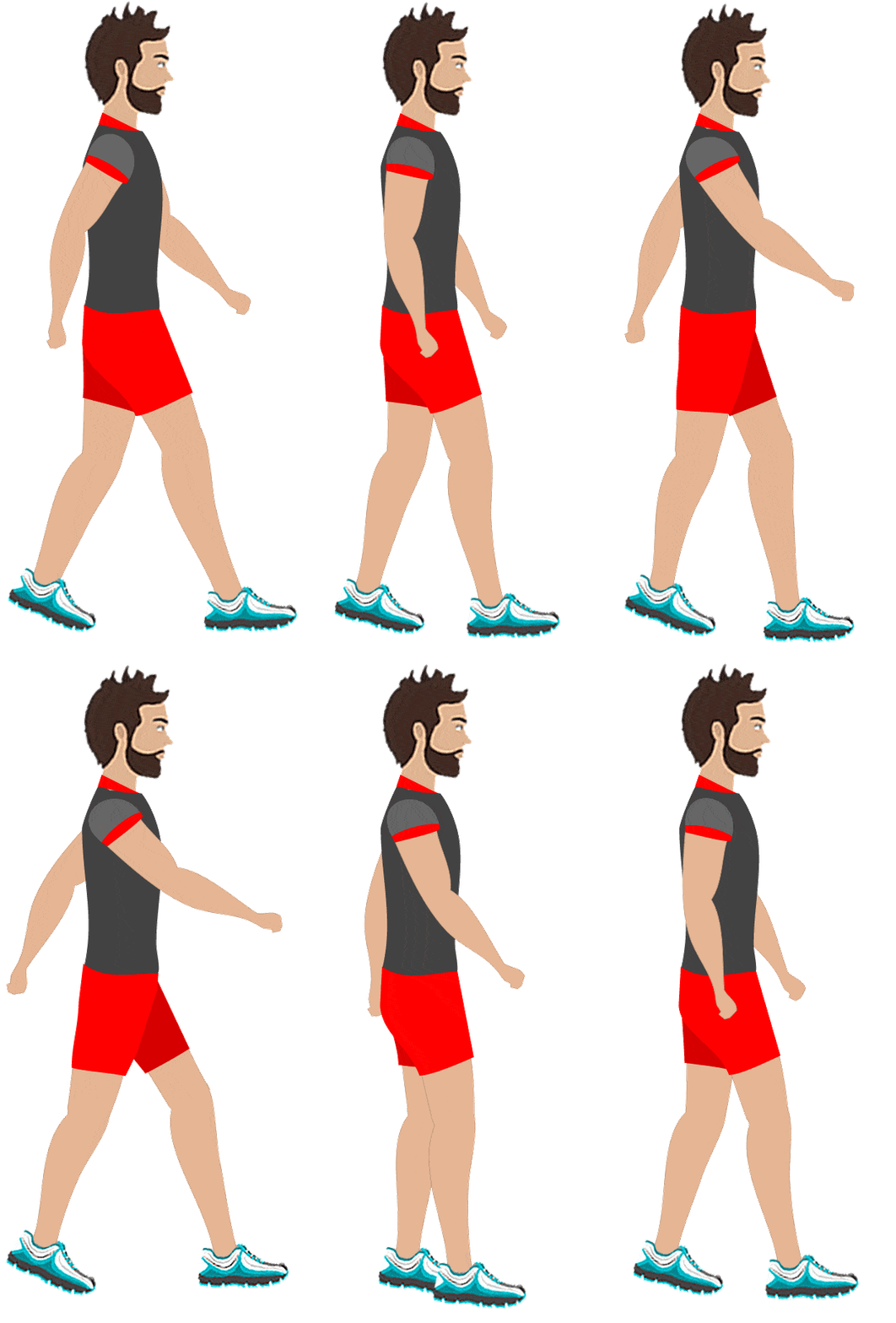
Gait is the term used to describe your walking style. Gait is affected by several factors, including cadence, stride length, arm swing, foot strike, knee/hip/ankle structure and health, balance, and various other factors.
Some people have a very efficient gait that lends itself to fast walking. However, other people’s gaits are less efficient, which makes it more difficult to walk fast.
While some aspects of gait can be modified, some are unmodifiable and are determined by your genetics. Gait also tends to deteriorate with age, e.g., adopting a more shuffling walking style because of reduced strength, mobility, and balance.
The bottom line is that not everyone is built to walk fast.
Weather and terrain
Just because you can walk fast on a flat, smooth path doesn’t mean you’ll be able to match that pace when you’re on a rough trail or heading uphill. Walking on flat surfaces requires much less effort than walking on more demanding terrains, and you’ll probably need to slow down to accommodate the increased difficulty.
You’ll also be able to walk faster on a motorized treadmill than out in the “real world” where wind resistance and inclines slow you down.
In addition, extremes in temperature can affect your walking speed. For example, it’s usually harder to walk fast when it’s very hot. You may be able to walk faster when the weather is cool and may even speed up just to keep warm if it’s cold.
Weather and terrain can have a significant impact on your walking speed and how far you can walk in a given time.
Your shoes can have a big impact on your walking speed. Some shoes are built around a curved sole called a rocker that propels you forward from your heels to the balls of your feet. This gives a slight but beneficial boost so you can walk a little faster.
In contrast, heavier shoes and boots can weigh you down and make it harder and more tiring to walk faster. Walking in high heels can make it impractical if not impossible to walk briskly.
Uncomfortable shoes could also reduce your walking speed, and blisters can make even fit walkers want to go slower or stop.
If you are serious about walking and want to go as far and as fast as possible, consider investing in an appropriate pair of walking shoes. Ideally, they should be light, cushioned, supportive, flexible, and comfortable.
How Long to Walk A Mile Calculator FAQ
1. Is walking good for weight loss?
While walking doesn’t burn as many calories as running, it is still an effective calorie burner. The main advantage of walking for burning calories is that you can do a lot of it and you can walk every day. It’s not overly tiring or stressful, so you can even walk several times a day if you wish.
However, you’ll still need to watch what you eat and reduce your food intake so you’re in a calorie deficit. Walking alone probably won’t lead to significant weight loss or fat burning.
2. How many steps should I walk per day?
The standard prescription for steps per day is 10,000. However, despite being such a common recommendation, there is no scientific reason to adopt this target. In fact, the 10,000-step “rule” only exists because it was adopted by a Japanese pedometer company back in the 1960s.
That said, 10,000 steps are a decent target that should deliver good health and weight control benefits. Having a daily step goal can be motivating and may make it easier to commit to walking every day.
Your step goal can be adjusted according to your fitness and health, but good examples include the following:
Beginner: 8,000 to 10,000 steps per day.
Intermediate: 10,000 to 15,000 steps per day.
Advanced: 15,000 to 20,000 steps per day.
Of course, you don’t have to do the same number of steps each day and may have different goals for different days, depending on what else you have planned. For example, on a non-gym day, you might do 15,000 steps, but only 10,000 steps on the days you do your strength training workouts.
Use a step-counter app or a smartwatch to make tracking your step count much easier.
3. How can I make walking better for fitness and fat loss?
Make walking even more beneficial for fitness and fat loss with the following tips and strategies:
Wear a backpack or a weighted vest – carrying extra weight means your muscles have to work harder, which will, in turn, increase your heart rate and caloric expenditure. Start with about 10% of your body weight and build up gradually from there. This type of workout is called rucking and is a cornerstone of military fitness training.
Head for the hills – walking uphill is significantly more challenging than walking on the flat. Your heart and breathing rate will quickly increase, especially if you push yourself to a brisk pace. Try to include hills in your walks to burn more calories in less time.
Walk with purpose – walking is not just a lower body activity; it also uses your arms. However, your arms aren’t loaded, so you probably won’t feel them working much. Fix this issue by walking purposefully and swinging your arms to increase your speed and momentum. You can make your arms work even harder by carrying light dumbbells or wearing wrist weights if you prefer to keep your hands empty.
Break into the occasional jog – jogging is the pace between walking and running. Jogging burns more calories than walking and will also increase your heart and breathing rate a little more. However, it’s less intense and easier on your joints than running.
You don’t need to jog all the time. Instead, walk until you feel like jogging, and jog until you feel like walking again. This is a form of endurance training called fartlek, which is Swedish for speed play. One way to do this is to follow an undulating path, walking uphill but jogging on flat and downhill sections.
4. What is the average walking speed?
The average walking speed varies by age, with younger people tending to walk faster than older people. However, it takes the typical healthy person 15-20 minutes to walk one mile, which is the equivalent of three to four miles per hour. That said, some people in their 60s may walk as slowly as one mile per hour (2).
The good news is that you can preserve your walking speed by staying active and walking further and more often. Like all fitness attributes, your walking speed is very much a case of use it or lose it. So, keep walking quickly to preserve your walking speed.
5. What is the best time to walk for fitness and fat loss?
It’s something of a myth that there is a best time to exercise. Ultimately, so long as it works for you, whatever time you work out is the best. With walking, you can walk anytime it suits you and fits into your schedule.
Examples include:
On walking before breakfast
During your lunch break
Walk to/from work or school
After work
After dinner
Before bed
At weekends
Any journey less than a mile
You don’t even have to limit yourself to one time or the same time each day. Instead, you can spread your walking throughout the day, grabbing little walking breaks whenever the opportunity arises.
10-15 minutes 3-4 times a day adds up to about an hour of walking a day, or seven hours a week. At about 300 calories per hour, that’s a significant increase in your daily caloric expenditure.
Look for ways to walk more steps per day, e.g., by taking the stairs instead of the elevator, walking to see a colleague instead of phoning/emailing them, parking your car further from work and walking the rest of the way, walking with your kids or partner, walking to the coffee shop instead of having a delivery, etc.
Related Calculators:
Wrapping Up
Knowing how long it will take you to walk a certain distance can be very useful. For example, you may want to check that you have time to walk to a nearby store during your lunch break. You may also find it interesting to see how much time you can save by walking faster.
Walking is arguably the most accessible workout you can do to lose weight and get fit. Besides comfortable shoes, you don’t need any special equipment to walk your way fitter and leaner. You can slot it seamlessly into your daily schedule. Walking is free and a very low-risk activity.
Going for a walk is also good for your mental health. Walking is relaxing, energizing, and a fantastic stress-buster.
So, sit less and walk more – it’s good for every aspect of your health.
“Solvitur ambulando: “When in doubt, walk.” — Christopher McDougall
References:
Himann JE, Cunningham DA, Rechnitzer PA, Paterson DH. Age-related changes in speed of walking. Med Sci Sports Exerc. 1988 Apr;20(2):161-6. doi: 10.1249/00005768-198820020-00010. PMID: 3367751. https://pubmed.ncbi.nlm.nih.gov/3367751/
Schimpl M, Moore C, Lederer C, Neuhaus A, Sambrook J, Danesh J, Ouwehand W, Daumer M. Association between walking speed and age in healthy, free-living individuals using mobile accelerometry–a cross-sectional study. PLoS One. 2011;6(8):e23299. doi: 10.1371/journal.pone.0023299. Epub 2011 Aug 10. PMID: 21853107; PMCID: PMC3154324. https://www.ncbi.nlm.nih.gov/pmc/articles/PMC3154324/
Cite this page: Dale, P. (2023) ‘How Long To Walk A Mile Calculator’, Fitness Volt. Available at: https://fitnessvolt.com/mile-walking-time-calculator/ (Accessed: 2 May 2023).