
 All Posts By Muscle Insider
Board Certified PHD
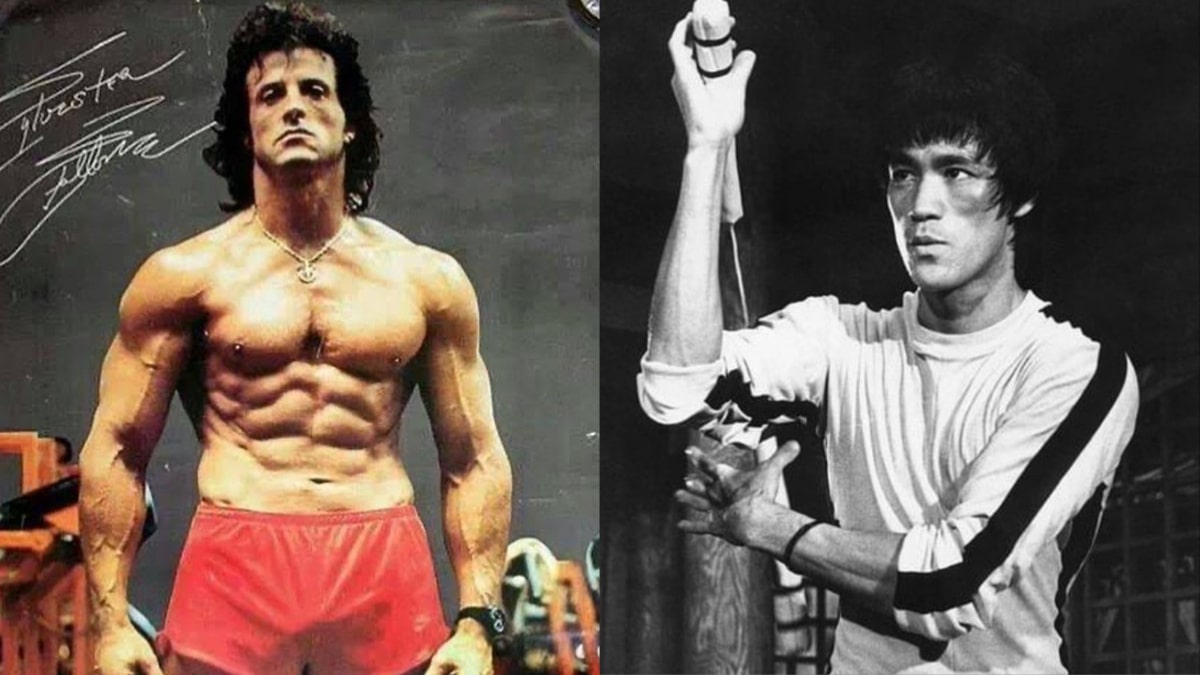
Sylvester Stallone Cautions Against Working Out ‘Too Hard’ with Bruce Lee Reference: ‘Will Kill You’
Legendary filmmaker Sylvester Stallone boasted one of the best builds of any actor in Hollywood when he donned the role of boxer Rocky Balboa in the Rocky film franchise. His passion for fitness carried into his later years despite the health challenges. In a recent post made on Instagram, Stallone cautioned others against strenuous movements and working out too hard with a reference to martial arts icon Bruce Lee.
Sylvester Stallone started his career as an actor with side roles in films. It wasn’t until 1976 that he got to play the lead role in the first film of the cult classic Rocky series, which he also wrote the screenplay for. He pulled off an impressive body transformation to bring the boxing star to life. His portrayal received widespread acclaim and boosted his celebrity to new heights.
Besides the sports film franchise, Stallone established himself as one of the premier action heroes of the 1970s and 80s. He delivered several blockbuster projects, including the First Blood and other Rambo films. He developed a competitive rivalry with bodybuilding legend Arnold Schwarzenegger based on the similarities between the two action stars. In Mar. 2020, Schwarzenegger opened up on the evolution of his relationship with Stallone over the years as the two buried the hatchet and became friends.
Stallone took a trip down memory lane recalling his leanest look on the silver screen of all time in Mar. 2021. Although he presented a ripped package across the board, he revealed he weighed 166 pounds at under 3 percent body fat as his peak for Rocky III.
In Jun. 2021, Sly came under fire after showing off his insane grip and shoulder strength in a clip online. He lifted 45-lb plates in each hand while getting up to his feet from the knees. However, there was speculation about whether he used fake weights to pull off the stunt. Fitness influencer Scott Herman was convinced Stallone used fake weights considering his over-the-top performance and theorized it was a publicity stunt.
The 76-year-old has kept a high level of personal fitness and maintains an impressive physique that even the younger gym-goers would envy. He showed off his gigantic arm muscle development in a post-workout snap in 2021. He also continues to practice his boxing abilities and sent his fans into a frenzy with a heavy bag training session update.
Sylvester Stallone references Bruce Lee in his warning against working out too hard
In a recent Instagram post, Sylvester Stallone issued a warning to his fans against pushing themselves too hard in the training room with a reference to Bruce Lee.
Lee is widely credited for bringing martial arts to the forefront and pioneering mixed martial arts with his fighting style called Jeet Kune Do. He was renowned for his superhero-like speed and athletic abilities.
Stallone combined a photo of Lee and himself performing the dragon flag exercise. He believes the movement contributed to his back pain.
“No wonder my back hurts.! When you WORKOUT remember EVERY exercise has long range consequences. Knees, elbows, shoulders, ankles, wrists, neck if you push too hard, these strenuous movements will come back to haunt you. That’s why I’ve always said getting in really great shape Will kill you!
Sylvester Stallone shared an inspiring message on never giving up on your dreams last April. He reflected on his decorated career by revisiting the place where his ambitions began to grow. Then, he delivered another motivational piece on staying strong despite the setbacks and obstacles along the way.
His latest offering might come as an unexpected one but it could help add clarity for those in a similar situation.
Published: 30 April, 2023 | 11:32 AM EDT
Cable Superset Workout: More Muscle in Less Time
Building muscle, getting stronger, losing body fat, improving your fitness – while these are all excellent training goals, they can also be time-consuming. That’s why most pros invariably achieve better results than amateurs; they get paid to train, so time is no object.
The average pro doesn’t have to balance their workouts with holding down a full-time job and all the demands that come with conventional employment. They don’t have to try and squeeze in a workout before going to the office, during a lunch break, or after work when they’d rather be chilling at home.
Pros can train when they want for as long as they want. Needless to say, this is a huge advantage. That’s why average folk should avoid following programs designed for pros; they were not the intended audience.
Because time is at such a premium, the average exerciser needs to learn how to train smarter and not longer. We must find ways to get more done in less time, maximizing our training results.
One way to do this is with supersets, and using a cable machine can also help.
So, for all of the people who have to balance their workouts with their careers, here is a cable superset workout designed to get you great results in less time.
Cables and Supersets – A Match Made in Heaven
Your muscles have a hard time differentiating between different types of training equipment. In truth, they don’t really know or care if you’re doing barbell or cable curls for your biceps. So long as you work hard and often enough, they’ll respond by getting stronger and bigger.
That said, using cables does have a few advantages over other types of training:
Quick exercise setup and weight adjustments
It’ll take you no more than a few seconds to attach the appropriate handle to a cable machine and slam in the selector pin to adjust the weight. Less time setting up means shorter workouts or that you can cram more exercises and sets into your training session.
Either way, cable machines make for a very time-efficient workout.
More constant muscle tension
Cable machines tend to keep your muscles under more constant tension compared to the same exercise done with freeweights. This makes each and every rep you perform more effective, so you won’t need to do as many sets per muscle group.
For example, compare cable crossovers with dumbbell flys. With dumbbell flys, the tension on your muscles peaks when your arms are far apart but almost vanishes when your arms come together. In contrast, cable crossovers keep your pecs under tension for the entire range of motion.
Perfect for drop sets
When time is of the essence, you may want to use intensity-boosting training systems so you can fatigue your muscles faster. One way to do this is with drop sets.
To do a drop set, rep out to failure, reduce (or drop) the weight by 10-20%, and then rep out again. The selectorized weight stack on most cable machines means you can reduce the weight in seconds, making your workout even more time-efficient.
This simple system lets you train well beyond your usual failure point. A couple of drop sets will soon fatigue your muscles, so you don’t have to do a long, time-consuming workout.
A safer, more joint-friendly workout
Training to failure with cables is a safe proposition. There are no bars to get pinned under, and dropping a weight will cause nothing more serious than a loud crash. The same cannot be said of most barbell and dumbbell exercises.
In addition, most cable exercises are easier on your joints than the same exercise performed with freeweights. There is less end-to-end joint compression, leading to less wear and tear. In addition, cable exercises can easily be modified to work around any aches, pains, or limitations you might have.
Finally, you can train to failure without a spotter, so you won’t have to wait for someone to help you when you just want to get on and train.
Perfect for supersets
Supersets and cable machines go together like peanut butter and jelly – they complement one another perfectly. Transitioning from one exercise to the next takes no more than a couple of seconds, and you can train your entire body on a single or double cable machine.
And speaking of supersets, their benefits include…
Less time spent resting
Most strength training workouts involve rest than actual training time. Lifters typically rest 60-90 seconds between every set they perform. Supersets involve doing two exercises back-to-back, eliminating half of your rests. With less resting, you’ll be in and out of the gym in half the time.
A structurally balanced workout
Using supersets makes it much easier to train opposing muscle groups equally. For example, by pairing biceps curls with triceps pushdowns, you ensure that both main upper arm muscles get the same volume of training.
Balancing your pushes and pulls will help develop an aesthetically and structurally balanced physique.
Cable Superset Workout – Program Overview
Short on time? Got access to a cable machine? Like supersets? Then this is the workout for you!
This program involves three workouts per week, performed on non-consecutive days, e.g., Monday, Wednesday, and Friday. This provides a good balance between training and recovery and works well for most average trainees.
All exercises are to be performed as paired supersets. For example, do exercise 1a and immediately follow it with exercise 1b. Rest for the designated time and then repeat the pairing. Do the specified number of sets and then move on to the next pairing (2a and 2b). Simple, but effective!
Workout 1 – Horizontal Push/Pull & Arms
By working in the horizontal plane, this workout hits your chest and upper back, specifically your mid-traps and rhomboids, with a bit of lats thrown in for good measure. We close things out with some direct upper arms training because everyone wants a ticket to the gun show!
Exercise
Sets
Reps
Recovery
1a
Cable supine chest press
4
12-20
60-90 seconds
1b
Cable seated row
2a
Cable crossover
4
12-20
60-90 seconds
2b
Cable reverse fly
3a
Cable incline fly
3
12-20
60-90 seconds
3b
Cable face pull
4a
Cable biceps curl
3
12-20
60-90 seconds
4b
Cable triceps pushdown
Workout 2 – Legs and core
Friends don’t let friends skip leg day! Your legs make up at least 40% of your total muscle mass, and it would be a crime against bodybuilding not to give you a cable superset leg workout to try.
This workout focuses on your quads, hamstrings, and glutes, but there are some direct abs exercises at the end for you to enjoy.
Exercise
Sets
Reps
Recovery
1a
Cable goblet squat
4
12-20
60-90 seconds
1b
Cable Romanian deadlift
2a
Cable standing leg extension
4
12-20
60-90 seconds
2b
Cable standing leg curl
3a
Cable hip abduction
3
12-20
60-90 seconds
3b
Cable hip adduction
4a
Cable woodchop
3
12-20
60-90 seconds
4b
Cable stability ball crunch
Workout 3 – Vertical Push/Pull & Arms
The workout emphasizes your shoulders and lats to build upper body width and hone your V-taper. And because no upper body workout is complete without some arm training, you’ll also work your biceps and triceps again.
Exercise
Sets
Reps
Recovery
1a
Cable shoulder press
4
12-20
60-90 seconds
1b
Cable single-arm pulldown
2a
Cable lateral raise
4
12-20
60-90 seconds
2b
Cable straight arm pulldown
3a
Cable upright row
3
12-20
60-90 seconds
3b
Cable Y pulldown
4a
Cable preacher curl
3
12-20
60-90 seconds
4b
Cable skull crusher
Cable Superset Workout – Exercise Descriptions
Get the most from your cable workouts by performing each exercise with perfect form. Proper exercise technique keeps the tension on your workout muscles and away from your joints. In contrast, the wrong technique makes your workout less effective and more likely to cause injury.
Workout 1 – Horizontal Push/Pull & Arms
1a. Cable supine chest press
This unique exercise looks like a bench press but feels more like a chest fly. The result is a challenging movement that will really pump up your pecs.
Target Muscles:
Pectoralis major, triceps, anterior deltoids.
Steps:
Place a bench in the center of a cable crossover machine. Attach D-shaped handles to the low pulleys.
Sit on the bench and take a handle in each hand. Lie on your back and pull the handles into your armpits. Turn your wrists so your palms face down your body.
Press your hands up and together so they meet above your chest.
Return your hands to your shoulders and repeat.
Tips:
Drive your feet into the floor for increased stability.
Keep your wrists straight.
Focus on pushing your hands inward as much as pushing them up to maximally engage your chest.
1b. Cable seated row
Cable seated rows are an excellent exercise for building a thicker, broader back. Unlike freeweight bent-over rows, this horizontal rowing movement is very lower back-friendly.
Target Muscles:
Latissimus dorsi, trapezius, rhomboids, posterior deltoids, biceps.
Steps:
Attach a neutral grip handle to a low pulley machine.
Sit with your legs outstretched and knees slightly bent. Grab the handle and sit up tall. Brace your core and pull your shoulders down and back.
Bend your arms and pull the handle into your abdomen. Keep your upper arms close to your sides.
Extend your arms and repeat.
Tips:
Drive your elbows back to maximize lat engagement.
Hinge forward slightly from your hips to stretch your lats but take care not to round your lower back.
Wear wrist straps or use gym chalk to enhance your grip if required.
2a. Cable crossover
Cable crossovers isolate your chest and hit all three heads of the pectoralis major. This exercise is great for creating shape and separation in your pecs.
Target Muscles:
Pectoralis major, anterior deltoids.
Steps:
Attach D-shaped handles to the high pulleys on a cable crossover machine.
Holding a handle in each hand, adopt a staggered stance and stand with your arms stretched out to the side.
Keeping your elbows slightly bent but rigid, sweep your arms forward and down so your hands meet in front of your hips.
Raise your arms, get a mild stretch in your chest, and repeat.
Tips:
Keep your torso upright to emphasize your chest and prevent turning this into a pressing exercise.
Keep your core braced throughout.
You can also do this exercise with your arms horizonal or moving from low to high.
2b. Cable reverse fly
This exercise works the muscles on the rear of your shoulders that oppose your chest. The trapezius, rhomboids, and posterior deltoids are critical for better posture and holding you upright against the pull of gravity.
Target Muscles:
Trapezius, rhomboids, posterior deltoids.
Steps:
Using a high cable machine, cross your hands and grip the balls/carabiners at the ends of the cables.
Move back 1-2 steps so your arms are extended in front of you, hands at about head height.
Keeping your elbows slightly bent but rigid, open your arms and pull the cables down and back to about hip height.
Raise your arms and repeat.
Tips:
You can also do this exercise with D-shaped handles if you don’t want to hold onto the cables directly.
Lead with your elbows and pull your shoulders back and down to make this exercise as effective as possible.
You can also do this exercise with your arms horizontal.
3a. Cable incline fly
Cable incline flys are so much more effective than the dumbbell variation that, once you try them, you’ll never go back to using freeweights to isolate your pecs. This exercise is VERY effective!
Target Muscles:
Pectoralis major, anterior deltoids.
Steps:
Place a bench in the center of a cable crossover machine. Raise the backrest to around 30 degrees. Attach D-shaped handles to the low pulleys.
Sit on the bench and take a handle in each hand. Lie on your back and extend your arms out so they’re roughly parallel to the floor.
Keeping your arms slightly bent but rigid, squeeze your hands up and together so they meet above your chest.
Lower your arms to get a stretch in your chest, and repeat.
Tips:
Experiment with different bench angles to see what feels most effective and comfortable.
The steeper the angle, the more you’ll hit your upper chest.
Imagine you are hugging a tree to perform this movement correctly.
3b. Cable face pull
Face pulls target your upper back, i.e., the mid-traps, rhomboids, and posterior deltoids. They’re an excellent exercise for improving your posture and will add some thickness to your upper back muscles. Face pulls are also good for your shoulder health and could prevent future shoulder joint pain.
Target Muscles:
Trapezius, rhomboids, posterior deltoids, biceps.
Steps:
Attach a rope handle to a head-high cable machine.
Take one end of the handle in each hand and, with straight arms, step back into a staggered stance.
Bend your elbows and pull the handles into either side of your head. Keep your elbows up to fully engage your upper back.
Extend your arms and repeat.
Tips:
Lead with your elbows and drive them back to emphasize your upper back muscles.
Don’t go too heavy, as doing so will make you lower your elbows and use your lats more than your upper back.
Raise your hands by externally rotating your shoulders to also work your rotator cuff (supraspinatus, infraspinatus, teres minor, and subscapularis).
4a. Cable biceps curl
The cable biceps curl is a proven arm builder that keeps your arm flexors under near-constant tension to deliver a skin-splitting pump. Paired with triceps pushdowns, this final superset will leave you looking and feeling swole AF!
Target Muscles:
Biceps, brachialis, brachioradialis.
Steps:
Attach a straight bar to a low cable machine. Hold the bar with an underhand, shoulder-width grip, upper arms by your sides.
Brace your core and pull your shoulders down and back.
Bend your elbows and curl the handle up to your shoulders.
Extend your arms and repeat.
Tips:
Use a rope handle and do cable hammer curls to target your brachioradialis and brachialis muscles more.
Use an EZ bar to take pressure off your wrists and elbows.
Try a palms-down grip to challenge your forearms and improve your grip.
4b. Cable triceps pushdown
Cable pushdowns are one of the most popular triceps exercises. They’re simple, effective, and ideal for beginners and more experienced lifters. Supersetting them with cable biceps curls provides a great way to pump up your arms without having to switch machines.
Muscles Worked:
Triceps.
Steps:
Attach a straight bar to a high cable pulley. Grip the bar with a shoulder-width overhand grip.
Pull your upper arms into your sides, brace your core, and set your shoulders down and back.
Extend your arms and press the bar down to your thighs. Pause for 1-2 seconds.
Bend your arms as far as possible without letting your upper arms move away from your sides.
Continue for the specified number of reps.
Tips:
You can also perform this exercise with a V-bar or a rope handle.
For variation, try using an underhand grip.
Keep your torso uptight so you don’t turn this into a pressing exercise.
Workout 2 – Legs and Core
1a. Cable goblet squat
Muscles worked:
Most people are more than familiar with kettlebell and dumbbell goblet squats. After all, they’re an excellent lower body exercise. However, the cable variation is just as effective and could be a better option for some people as it’s even more lower back-friendly than the original version.
Steps:
Attach a straight bar to a low pulley. Hold it in front of your chest, just below your chin. Pull your shoulders back and down and brace your core.
Take a small step back and stand with your feet about shoulder-distance apart, toes turned slightly outward.
Bend your legs and descend until your thighs are roughly parallel to the floor. Do not round your lower back.
Stand upright and repeat.
Tips:
Work your glutes harder by wearing a booty band around your knees.
Increase quads engagement by resting your heels on weight plates.
Experiment with your stance (wider, closer) to see which feels the most comfortable.
1b. Cable Romanian deadlift
Romanian deadlifts are one of the best posterior chain exercises around. Not only are they a great muscle developer, but they’re also an effective move for mobilizing and stretching your hips and hamstrings. Cable Romanian deadlifts are easier on your lower back than the barbell or dumbbell variations.
Muscles Worked:
Gluteus maximus, hamstrings, core.
Steps:
Attach a bar or rope handle to a low pulley. Hold the handle and stand up, taking 1-2 steps back to tension the cable.
Stand with your feet hip-distance apart, knees slightly bent. Brace your core and set your shoulders.
Bend over from your hips and reach forward with your arms. Do not round your lower back, as doing so could lead to injury.
Drive your hips forward and stand back up.
Continue for the specified number of reps.
Tips:
Move further back from the weight stack to make this exercise more hip-centric.
Vary your stance width to see what works best and feels more comfortable.
Make this exercise harder by standing on one leg – single-leg cable stiff-legged deadlifts.
2a. Cable standing leg extension
While regular leg extensions are an effective quadriceps exercise, one of the four quad muscles doesn’t get such a great workout – the rectus femoris. That’s because this muscle crosses your hips and knees, and sitting with your hip flexed puts the rectus femoris into a relaxed position, so it cannot contract very well. This standing variation fixes that problem.
Muscles worked:
Quadriceps, hip flexors, core.
Wearing an ankle strap, stand with your back to the weight stack. Take 1-2 steps forward. Bend your knee and move your hip backward.
Drive your knee forward and extend your leg.
Return to the starting position and repeat.
Switch legs and do the same number of reps on the other side.
Tips:
Keep your supporting knee slightly bent for balance.
Brace your core to prevent unwanted hip and lumbar spine movement.
You can also do this exercise with a resistance band.
2b. Cable standing leg curl
The hamstrings are a biaxial muscle, meaning they cross two joints – your hips and knees. As such, they are responsible for two movements; knee flexion and hip extension. Cable standing leg curls are one of the few exercises to address both of these functions simultaneously.
Muscles Worked:
Hamstrings, gluteus maximus, core.
Steps:
Wearing an ankle cuff, attach it to a low pulley machine and stand facing the weight stack. Shift your weight onto the other leg and brace your core. Use your arms for balance.
Extend your leg to the rear and bend your knee, curling your foot up toward your butt.
Lower your foot and repeat.
Tips:
Extend your hip more or less to change the feel of this exercise.
Keep your calf relaxed so your hamstrings do most of the work during this exercise.
Home exercisers can do this move with a resistance band.
3a. Cable hip abduction
Cable hip abductions work the muscles on the outside of your hips. Strengthening these muscles will improve lateral hip stability and help you sculpt a better-looking butt.
Muscles Worked:
Gluteus minimus, gluteus medius, tensor fascia latae.
Steps:
Put on an ankle cuff and attach it to a low pulley machine. Stand sideways-on to the weight stack with the cable running in front of your feet. Brace your core and hold on to the machine for balance.
Raise your leg out to the side as high as possible without twisting your hips.
Lower your leg and repeat.
Switch legs and do the same number of reps on the other side.
Tips:
Rotate your hip inward slightly to emphasize the hip abductor muscles.
Keep your supporting leg slightly bent for better stability and balance.
You can also do this exercise with a resistance band.
3b. Cable hip adduction
The adductor muscles are located on the inside of your thighs and hips. Like the abductors, these muscles help stabilize your hips. Stronger hip adductors will lower your risk of groin strain during activities that involve running, sprinting, lunging, and kicking.
Muscles Worked:
Adductor longus, adductor brevis, adductor magnus.
Steps:
Put on an ankle cuff and attach it to a low pulley machine. Stand sideways-on to the weight stack with the cuff on your innermost leg.
Cross your leg in front of the other without twisting your hips.
Lower your leg and repeat.
Switch legs and do the same number of reps on the other side.
Tips:
Brace your core to stabilize your lumbar spine and prevent unwanted movement.
Bend your supporting knee slightly for better balance.
Home exercisers can replicate this move with a resistance band.
4a. Cable woodchop
The cable woodchop is so called because it looks and feels a little like you are swinging an axe and cutting down a tress. This core rotation exercise will develop your obliques and strengthen your abs.
Muscles Worked:
Obliques, rectus abdominis, erector spinae.
Steps:
Attach a D-shaped handle to a high cable pulley. Hold the handle in both hands and then stand sideways onto the weight stack. Extend your arms and brace your core.
Rotate your upper body through 180 degrees, drawing a diagonal line with your hands.
Return to the starting position and repeat.
Turn around and do the same number of reps on the opposite side.
Tips:
Keep your arms slightly bent but rigid throughout.
You can also do this exercise in a half-kneeling position to stop you from using your legs.
For variety, use a low cable and raise your arms upward.
4b. Cable stability ball crunch
Bodyweight crunches are a great exercise, but once you’ve been training for a while, they often become too easy. Doing crunches on a stability ball with a cable makes them much more challenging and effective. High-rep crunches? Just say no!
Muscles Worked:
Rectus abdominis.
Steps:
Attach a rope handle to a low pulley machine. Place your stability ball on the floor next to your cable machine.
Sit on the ball and hold the handle over your shoulders so the cable is behind you.
Walk your feet forward and lean back so the ball sits in the natural curve of your lower back.
Contract your abs, flex your spine, and curl your shoulders toward your hips.
Lie back down, get a mild stretch on your abs, and repeat.
Tips:
Anchor your feet to prevent being pulled backward over the ball.
Exhale as you lift your shoulders to increase abs engagement.
Move your feet further apart to increase stability and make this exercise easier. Bring your feet closer together to decrease stability and make it more challenging.
Workout 3 – Vertical Push/Pull & Arms
1a. Cable shoulder press
Cable shoulder presses look like any other overhead pressing exercise but feel very different. The angle of the load changes how your deltoids are recruited, hitting your shoulders in an entirely new way. This is a unique exercise, and you’re going to love it!
Muscles Worked:
Deltoids, triceps.
Steps:
Attach a straight bar to a low pulley machine.
Pick up the handle and hold it in front of your shoulders so your elbows are below your wrists. Set your shoulders and brace your core. Take 1-2 small steps backward.
Press the handle upward and slightly back until your arms are extended.
Return to the starting position and repeat.
Tips:
Step back just enough that the cable doesn’t touch your face when your arms are overhead.
You can also do this exercise with a neutral grip.
Experiment with the width of your grip to see what feels most comfortable.
1b. Cable single-arm pulldown
Lat pulldowns are a popular lat-building exercise. However, training both sides of your back at the same time could lead to muscle imbalances. This unilateral version hits one side of your back at a time and will also enhance your mind-muscle connection.
Muscles Worked:
Latissimus dorsi, biceps, trapezius.
Steps:
Attach a D-shaped handle to a high pulley.
Hold the handle with one hand and sit or knee beneath it with your arm extended above you.
Leading with your elbow, bend your arm and pull the handle down to the front of your shoulder.
Extend your arm and repeat.
Do the same number of repetitions with the opposite arm.
Tips:
Use an overhand, underhand, or neutral grip as preferred.
Brace your core to keep your torso upright and balanced throughout.
Drive your elbow down and back to maximize lat engagement.
2a. Cable lateral raise
Lateral raises target the medial head of your deltoids, which is the part of your shoulders that give them their width. Doing this exercise with give you bigger, broader, more rounded shoulders.
Muscles Worked:
Deltoids.
Steps:
Attach a D-shaped handle to a low cable machine. Stand sideways onto the weight stack and hold the handle in your outside hand so the cable runs in front of your body.
Keeping your arm slightly bent but rigid, raise it up and out until it’s roughly parallel to the floor.
Lower the handle to the front of your hips and repeat.
Tips:
Hold onto the cable machine with your non-working arm for balance if required.
Lead with your elbows (and not your hands) to get more from this exercise.
You can also do this exercise with both arms at the same time if you wish:
2b. Cable straight arm pulldown
When it comes to training the lats, most people tend to focus on pulldowns and rows. While these are effective exercises, the lats can also be worked with straight arm extensions. This move hits your upper lats, and you should really feel it in your armpits. It also works the long head of your triceps.
Muscles worked:
Latissimus dorsi, triceps, posterior deltoid.
Steps:
Attach a straight bar to a high cable machine.
Hold the handle with an overhand, shoulder-width grip. Brace your abs and set your shoulders
With your arms slightly bent but rigid, push the bar down to your thighs.
Raise your arms, get a stretch in your lats, and repeat.
Tips:
You can do this exercise on a cable crossover or a lat pulldown machine.
Pause at the bottom of each rep to maximize muscle engagement.
Lead with your elbows, and avoid pressing the bar down with your triceps.
3a. Cable upright row
Upright rows are a slightly controversial exercise, and some coaches believe they’re bad for your shoulders. While that may be true for the straight barbell version, cable upright rows are more shoulder-friendly and usually better tolerated. Using a rope handle also allows for more comfortable movement.
Muscles Worked:
Deltoids, trapezius, biceps.
Steps:
Attach a rope handle to a low cable machine. Hold one end in each hand and stand up straight. Take a small step back, brace your abs, and set your shoulders.
Bend your arms and pull your elbows up until they’re above your hands.
Extend your arms and repeat.
Tips:
Keep your knees slightly bent for better balance and stability.
Squeeze your shoulders back to maximize mid-trap engagement.
Only pull your arms up as high as your shoulders comfortably allow.
3b. Cable Y pulldown
This unique exercise hits your lats from a very unusual angle. You should feel it in the middle of your back as well as the sides. Avoid going too heavy with this exercise. Instead, focus on contracting your lats as hard as possible.
Muscles Worked:
Latissimus dorsi, biceps, trapezius.
Steps:
Attach D-shaped handles to the high pulleys of a cable crossover machine. Hold a handle in each hand and kneel between the pulleys, arms raised to form a Y-shape.
Bend your arms and pull your elbows down and into your sides. Squeeze your shoulders down and back.
Extend your arms up and out and repeat.
Tips:
Try using an underhand, overhand, or neutral grip to see which you prefer.
Kneel on a folded exercise mat or foam pad for comfort.
Think about leading with your elbows rather than pulling with your hands to maximize lat engagement.
4a. Cable preacher curl
Preacher curls are usually done using a barbell or dumbbells. However, that means there is very little tension on your muscles at the top of each rep. Using a cable ensures there is tension on your biceps throughout the movement.
Muscles Worked:
Biceps, brachialis, brachioradialis.
Steps:
Move a preacher curl bench over to a low cable machine. Attach a straight bar to the low pulley.
Hold the bar with an underhand grip and rest your upper arms against the bench.
Bend your arms and curl the handle up until your forearms are roughly vertical.
Extend your arms and repeat.
Tips:
Use an EZ bar to make this exercise more comfortable.
You can also do this exercise using one arm at a time with a single D-shaped handle.
No preacher curl bench? No problem! Just use the inclined backrest of an adjustable exercise bench:
4b. Cable skull crusher
Cable skull crushers might sound like an MMA knockout move, but they’re actually a very effective triceps exercise. Utilizing a large range of motion, they take your triceps into a deep stretch, ensuring your arms get a great workout and an intense pump.
Muscles Worked:
Triceps.
Steps:
Place a flat bench next to your cable machine and attach a straight bar to the lowest pulley.
Lie on the bench with your head nearest the weight stack and hold the handle above your chest.
Keeping your upper arms stationary, bend your elbows and lower the bar to your forehead.
Extend your arms and repeat.
Tips:
You can also do this exercise while lying on the floor instead of a bench.
Use a rope handle to hit your triceps from a different angle.
Extend your shoulders backward to get an even deeper stretch in your triceps.
Cable Superset Workout – FAQs
Do you have a question about this workout, training with cables, or superset in general? No worries because we’ve got the answers!
1. Is this a cutting or a bulking program?
Contrary to popular belief, it’s not your workout that determines if you are cutting or bulking, but your diet. Bulking invariably involves consuming a surplus of calories, leading to rapid weight and muscle gain.
In contrast, cutting involves eating fewer calories, and this deficit leads to fat burning and weight loss.
Consequently, you can use this workout plan for bulking or cutting; you just need to adjust your diet according to your goals.
Read more about cutting vs. bulking here.
2. Can I change some of the exercises?
You are very welcome to make changes to any of these programs. However, make sure that whatever new exercises you choose are similar and work the same muscles. For example, while cable reverse lunges are an acceptable replacement for cable goblet squats, cable biceps curls are not.
Stick to the spirit of the program, and you’ll be fine. However, avoid making changes just for the sake of it or swapping out an exercise just because it’s hard. When it comes to building muscle, harder exercises are usually the most effective.
3. How should I warm up before these workouts?
Warming up prepares your muscles, joints, and mind for the workout you are about to do. It helps lower your risk of injury and also gets your muscles firing properly so you can work harder.
Warming up is usually a three-stage process:
Pulse raiser – 5-10 minutes of light cardio.
Dynamic flexibility and mobility – loosen up those muscles and joints.
Practice sets – a couple of light sets of your first 1-2 movements to prepare your body for the exercises you’re about to do.
It’s beyond the scope of this short Q&A to tell you how to warm up, but this in-depth guide should provide you with all the answers you seek.
4. What weights should I use for these workouts?
Because we don’t know how strong or experienced you are, we cannot tell you how much weight you should lift. Instead, you need to self-select your weights based on your performance.
If you can do more than 20 reps or any exercise, the load is too light. In contrast, if you are unable to do 12 reps, it’s too heavy. Pick weights that keep you in the sweet spot of 12-20 reps for all the exercises.
Remember, though, that you also need to make the workouts progressively more challenging by either increasing the weights or doing more reps whenever you feel you are able. It’s this progressive overload that keeps you moving forward.
5. Are there any supplements I can take that will enhance my progress?
While you don’t have to take supplements to get good results from your workouts, there are a few products that may help. However, even the most exotic or expensive substance won’t do anything for you if you aren’t training hard, eating right, and getting enough sleep.
Supplements that may be helpful include:
Closing Thoughts
While there is no need to use just cables or supersets in your workouts, doing so could be just the change you need to reignite your gains and bust out of your current training rut. Cable exercises are very joint-friendly and stress your muscles in a unique way. Supersets make great use of your training time and will save you from having to do two-hour workouts.
Cable machines and supersets? We think they’re a match made in heaven!

Intermittent Fasting and Collagen Production: How Fasting Can Enhance Your Skin and Health!
Intermittent fasting is fast becoming the go-to diet for achieving different health goals, most importantly, weight loss. Many celebrities, business tycoons, and famous entrepreneurs have endorsed this transformative fasting strategy as the sure-shot way to a healthier mind and body.
Intermittent fasting is an eating pattern where you fast for a certain number of hours a day and reserve calorie intake to a small eating window. When you do this, in the fasting period, your body uses up the glycogen stores it utilizes for energy and undergoes a “metabolic switch.” With this metabolic switch, the body enters a state known as ketosis, where the liver produces ketones from the stored fat reserves to use as an energy source.
There are several intermittent fasting techniques, the most common being 16/8, where you fast for 16 hours and eat calories in the eight-hour feeding window. Some fasters like to do the 5/2 fasting schedule, where they eat normally for five days of the week, and on two non-consecutive days, they limit calorie intake to 500-600 calories. Yet more advanced fasters prefer to go for OMAD fasting (one meal a day), 36-hour fasts, and monk fasts, with extreme fasters also taking it as far as a 60-hour fast.
Many variants of intermittent fasting exist, like water fasting and fat fasting, each with its own special benefits. People also work out towards the end of the fasting period to lose fat and gain muscle simultaneously.
Despite its growing popularity, one of the most overlooked benefits of intermittent fasting is its significant impact on collagen production within the body. We need collagen, a protein, for healthy skin, nails, joints, and hair. Recent research suggests that intermittent fasting can assist in stimulating the body’s production of collagen. This article examines the relationship between intermittent fasting and collagen production, supporting the theory with scientific studies and research. Keep reading to discover the connection between intermittent fasting and collagen synthesis.
What is Collagen?
Among the different kinds of proteins in the human body, collagen is the most abundant, accounting for 30% of the total protein composition. It is a building block for muscles, skin, tendons, bones, ligaments, and other kinds of connective tissue. You can also find collagen in the blood, intestinal lining, and organs.
All proteins are made from amino acids, and collagen is no exception. Proline, glycine, and hydroxyproline are collagen’s main amino acids. These three amino acids are grouped to form protein fibrils in the famous triple helix structure.
Role of Collagen in the Body
The main role of collagen is to provide strength, structure, and support to the body. Its specific roles are:
Helping the formation of fibroblasts in the dermis, thereby helping the formation of new skin cells.
Replacement of dead skin cells.
Giving a protective covering to the different vital organs in the body.
Providing skin strength, structure, and elasticity.
Blood clotting.
What are the Different Types of Collagen in the Body?
To date, researchers have identified 28 types of collagen. The differentiation is based on the molecule assembly, the cell components, and the location of the collagen in the body. All these different collagen fibrils consist of a triple helix structure.
Here are the main types of collagen as well as their various functions:
Type I: This consists of 90% of the collagen in the body, and it is densely packed, providing structure to ligaments, tendons, bones, and skin.
Type II: It is found in the elastic cartilage that supports joints.
Type III: It is found in organs, arteries, and muscles.
Type IV: This can be found in the different layers of the skin.
Type V: It is found in the cornea, some skin layers, and the hair and tissue of the placenta.
What Factors Affect Collagen Production?
Here are the different factors that can affect collagen production in the body:
Age: With age, collagen production naturally diminishes, which leads to sagging skin, wrinkles, as well as pain in the joints.
Nutrition: Consumption of proteins and vitamin C can help produce collagen in the body.
Sun Exposure: Collagen fibers can get damaged from prolonged exposure to UV rays, which can cause skin damage and premature aging.
Smoking: Collagen production reduces if you smoke, causing skin damage and premature aging.
Stress: Chronic stress causes increased production of the stress hormone cortisol, which can potentially inhibit collagen production.
Exercise: If you exercise regularly, collagen production increases.
Sleep: If you can get enough quality sleep, your body’s production of collagen increases. This is because the body repairs and regenerates itself when you sleep.
Apart from these factors, it has also been found that fasting, especially intermittent fasting, can increase collagen production. We shall take a look at this phenomenon now.
What is the Relationship Between Intermittent Fasting and Collagen Production in the Body?
Intermittent fasting can stimulate collagen synthesis in multiple ways. Check them out here:
Intermittent Fasting Increases Human Growth Hormone Secretion
It has been proven that intermittent fasting can increase and enhance the secretion of an important hormone, Human Growth Hormone (HGH). HGH is a very important regulator of collagen production in the body. HGH stimulates collagen production in two ways. Firstly, it helps the fibroblasts differentiate into myofibroblasts, cells that produce collagen. Secondly, HGH upregulates collagen gene expression.
A study published in the Nutrition Research journal revealed that 24-hour intermittent fasting led to an immense increase in HGH levels in both women and men [1]. Another study proved that a 37.5-hour fast elevated basal HGH concentration by 10-fold and additionally reduced the metabolic clearance of HGH. [2]
As we know, HGH is essential for collagen synthesis. This increase in HGH levels during intermittent fasting suggests that the latter is a very useful tool for increasing collagen production in the human body.
Intermittent Fasting Induces Autophagy
Cancer.gov defines autophagy as “ A process by which a cell breaks down and destroys old, damaged, or abnormal proteins and other substances in its cytoplasm (the fluid inside a cell). The breakdown products are then recycled for important cell functions, especially during periods of stress or starvation.”
As the body ages, it gets increasingly exposed to free radicals from the food we eat, the air we breathe, and the different products we use daily. This stresses out the individual cells and causes them to get damaged faster than normal. These damaged cells can linger in connective tissues and organs, causing inflammation and disease. Autophagy removes the task of maintaining these useless and inefficient cells in the body. It frees it to fight inflammation, deter diseases, and line the body up for optimal functioning.
After age 30, the fibroblasts in the skin begin to store more waste, slowing down the collagen-producing and autophagy rates. This then causes a deterioration of the fragility and integrity of the skin and leads to sagging and wrinkled skin. Hence, an increased autophagy rate will help clean the fibroblasts, removing unwanted cellular debris and slowing down the signs of skin aging.
A study found that intermittent fasting induced autophagy in mice, helping remove dead and damaged cells and produce healthy and new cells. [3]
As we know, autophagy is crucial for collagen synthesis, and increased autophagy rates brought about by intermittent fasting lead to improved and increased collagen synthesis by inference.
Intermittent Fasting Reduces Inflammation
Intermittent fasting can reduce body inflammation in many ways. It reduces oxidative stress by producing antioxidants, promotes autophagy, lowers insulin levels, activates anti-inflammatory pathways, and modulates the gut microbiome, all contributing to reduced inflammation.
A study found that intermittent fasting reduces chronic inflammation in mice by activating an anti-inflammatory pathway known as the Nrf2 pathway. [4]
As we know, inflammation is a big cause of collagen breakdown. Hence, the above reduction in inflammation in the mice suggests that intermittent fasting can help protect collagen.
Intermittent Fasting Improves Gut Microbiome
There are several ways in which intermittent fasting can improve gut health. Firstly, it improves the motility of the gut, helping the digestive system move food through the GI tract. Secondly, it improves the gut microbiota, modulating the composition of the trillions of microorganisms residing in the gut. Thirdly, it refines the gut barrier function by increasing mucus formation, reducing inflammation, and finally enhancing the absorption of nutrients from the gut.
A study has conclusively shown that intermittent fasting improves overall gut health. [5]
Now, the gut is where most of the nutrients necessary for collagen synthesis get absorbed. Hence, a healthy gut can ensure that the body has all the ingredients it needs for the production of collagen, and this can be made possible through intermittent fasting.
Can I Use Collagen as a Protein Source While Fasting For Weight Loss?
Collagen is a great way to help you achieve your weight loss goals, but you’re probably using it wrong. When used correctly, it can help prevent snacking, reduce cravings, and help you get to your weight loss goals.
The biggest mistake that you are making is that you are using collagen as your main protein source. If you do this, you will lose weight, but it will be in the form of a loss in muscle and bone mass, leading to a decrease in metabolism, which you do not want.
To achieve healthy weight loss, use collagen supplements in tandem with a rich protein source. Suppose you are making a collagen supplement smoothie. We suggest you reinforce this smoothie with a rich source of protein, like Greek yogurt or even another protein supplement.
If you use bone broth, you can sip on it but do not use it as a replacement for protein. Rather, use it as an add-on to a meal. For example, you can sip on bone broth while relishing a chicken salad. This gives you collagen and a complex protein.
Frequently Asked Questions
1. Will collagen intake interrupt my fast?
Strictly speaking, yes. Collagen intake during fasting periods will break your fast. Even if you eat hydrolyzed and unflavored collagen peptides, remember that each scoop of collagen contains 30 calories.
2. What slows down the production of collagen in our body?
The collagen tissues in our body are responsible for forming tendons, ligaments, and bones. However, you can lose collagen in your body if you are exposed to UV rays, if you consume tobacco, or if you take excessive sugar, as well as with age. Additionally, chronic stress can make you lose collagen.
3. How long does it take to generate collagen?
It has been observed that new collagen growth can take anywhere from 4 to 12 weeks to complete.
4. Why is collagen important for weight loss?
Collagen supplements can make you feel satiated. This helps with weight loss and the prevention of hunger pangs when you are doing intermittent fasting. Collagen has this effect because it is a form of protein.
5. Which foods are rich in collagen?
The top foods rich in collagen are bone broth, eggs, meat, fish, and spirulina.
Conclusion
The link between intermittent fasting and collagen production is multi-faceted and complex. Collagen is a crucial protein that is indispensable to the human body as it maintains the function and structure of different organs and tissues. Studies have shown that fasting can increase the secretion of human growth hormone and promote the process of autophagy, both of which directly or indirectly influence the production of collagen.
The intricate relationship between collagen synthesis and intermittent fasting impacts longevity and health. If we can increase collagen production by fasting intermittently, it could help arrest age-related issues with skin, joint health, and the density of our bones. Again, nowadays, collagen supplements are quite popular, and their efficacy can be increased if we better understand the relationship between fasting and collagen production.
Collagen production is influenced by various factors, including lifestyle, exercise, and nutrition; intermittent fasting is one of many ways collagen synthesis can be promoted. The fascinating link between intermittent fasting and collagen production needs further exploration and study so that we can come to a better understanding of their complex relationship.
References
Ho, K. Y., et al. “Fasting Enhances Growth Hormone Secretion and Amplifies the Complex Rhythms of Growth Hormone Secretion in Man.” PubMed Central (PMC), https://doi.org/10.1172/JCI113450.
Ho, K. Y., et al. “Fasting Enhances Growth Hormone Secretion and Amplifies the Complex Rhythms of Growth Hormone Secretion in Man.” PubMed Central (PMC), https://doi.org/10.1172/JCI113450.
“Time-restricted Feeding Improves Insulin Resistance and Hepatic Steatosis in a Mouse Model of Postmenopausal Obesity – PubMed.” PubMed, 1 Dec. 2016, https://doi.org/10.1016/j.metabol.2016.09.006.
Zhang, Yu-Kun Jennifer, et al. “Genetic Activation of Nrf2 Protects Against Fasting-Induced Oxidative Stress in Livers of Mice.” PubMed Central (PMC), 18 Mar. 2013, https://doi.org/10.1371/journal.pone.0059122.
“Intermittent Fasting Promotes White Adipose Browning and Decreases Obesity by Shaping the Gut Microbiota – PubMed.” PubMed, 3 Oct. 2017, https://doi.org/10.1016/j.cmet.2017.08.019.
Cite this page: Byakodi, D. (2023) ‘Intermittent Fasting and Collagen Production: How Fasting Can Enhance Your Skin and Health!’, Fitness Volt. Available at: https://fitnessvolt.com/intermittent-fasting-collagen-production/ (Accessed: 30 April 2023).
Scott Herman Workout And Diet Routine
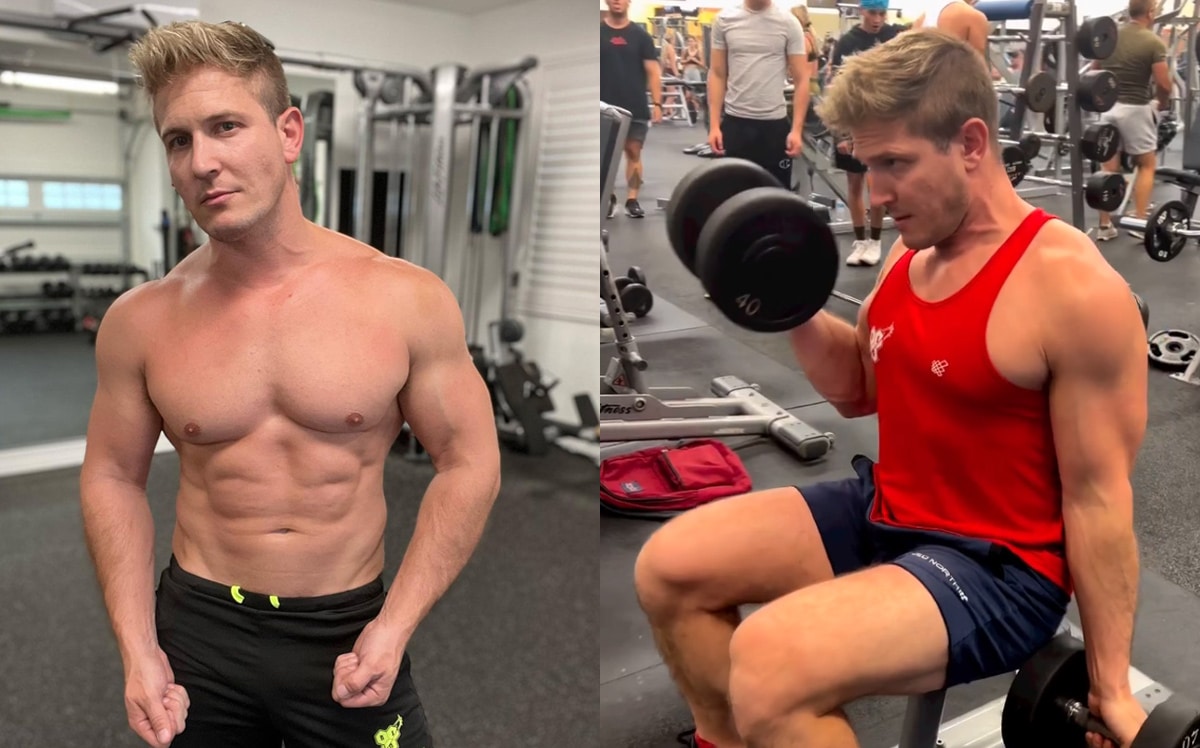
Scott Herman is an American fitness YouTuber, actor, entrepreneur and model. He is best known for sharing motivational fitness content on his YouTube channel ScottHermanFitness. He has also appeared in reality TV shows and a number of photoshoots for brands. This is his complete profile, biography, diet and workout routine as well as statistics.
Scott Herman Statistics
Full Name: Scott Herman
Weight
Height
Age
87 kg (191.8 lbs)
5’10” (178 cm)
38 years
Date of Birth
Place of Birth
Nationality
October 18, 1984
Lawrence, Massachusetts
American
Scott Herman Biography
Early Life
Scott Herman was born in Lawrence, Massachusetts on October 18, 2023. He spent his childhood in Lawrence and played various sports like football and wrestling during school days. Although he had a very normal family life and upbringing, little Scott was bullied as a kid and felt the need to get physically stronger. Watching superhero serials on the television gave him the motivation to take first steps in the fitness journey with his father’s weight training set in the house basement.
Scott Herman’s father became his first coach and he ensured that his son learned the basics of weight training in a proper way. Scott outgrew his dad’s weight set after training for a while. To get a free membership of Gold’s gym, the teenager applied to clean there for three hours every Saturday. He soon developed the passion for weightlifting. Although weight training was initially a way to channel his anger against bullying, it soon became an integral part of his life.
He obtained a college degree in business from Merimack college while managing his training and a small DJ business.
Career
As his training journey progressed, Scott Herman got more and more confident with his physique. He then moved to New York to find work in the television industry. The Massachusetts native soon bagged a role in the show The Real World that filmed strangers as they lived together. He enjoyed his time on the show and was chosen because of his perfect physique.
He then entered the Iron Abs competition hosted by Men’s Health and managed to pull off a win. This increased his popularity and he rode high on the wave of this success. Scott Herman was invited for many fitness events and many high-profile brands sponsored him for photoshoots as well.
Scott’s journey through the fitness and television industry gave him a lot of exposure and a boost of confidence. He soon started a YouTube channel to help others reach their fitness goals. The success of the channel skyrocketed over time and at the time of this article’s publishing, Scott Herman’s YouTube channel ScottHermanFitness has 2.77 million subscribers.
Scott Herman Workout
Scott Herman believes in making consistent and steady progress at a moderate rate, especially if you are new in the fitness journey. For those taking their first steps in free weights training, Herman advises to build a strong foundation by building muscle endurance through compound lifts like bench press, deadlifts and squats.
Herman recommends starting the weight training journey with as many free weights as possible to improve functional strength and balance. Machines eliminate or significantly reduce the need to control the weight which may not engage the stabilizing muscles that support the target muscles. Also, the weights on machines move along a fixed trajectory. Therefore, using free weights initially is essential to build a proper form and to engage stabilizing muscles.
Herman firmly believes in training frequency and states that he has never taken an off-season in his fitness journey. Additionally, he does not have separate bulking and cutting phases either. The only downside to this method is the pace. Herman believes that gains are made at a relatively slower rate with his method.
The 39-year-old does not necessarily use one exercise more than the other. However, overhead dumbbell extensions, dumbbell bench press and deadlifts are his favorite exercises. He feels that dumbbell exercises are some of the best options for building a toned physique. Therefore, no wonder that the two dumbbell exercises found their way on the list of Herman’s favorite exercises. The third one, deadlift, is without a doubt the king of all lifts and its efficacy in building overall strength.
Scott Herman’s personal training routine
Scott Herman’s personal training routine focuses on high-volume training. He trains for five days every week and gives his body rest on Saturday and Sunday. High-volume training coupled with high-frequency training is one of the most effective ways to make maximum strength and muscle gains.
Apart from abs exercises, he does not use machines too much and mostly relies on free weights, preferably dumbbells. His training splits focus on targeting every muscle group in the body and has dedicated days for chest, shoulder and back, legs, arms and abs training.
Monday – Chest Workout
Herman starts his training week with chest training. His chest day combines presses and flyers. While compound pressing movements like dumbbell press improve the pushing strength of the upper body, movements like cable crossover improve the chest and arms’ ability to adduct (bring together the muscles). As a result, it is advisable to incorporate both types of movements in the chest training routine for complete development. Herman performs dumbbell bench press and cable crossover variations to work the pectoral muscles from different angles and positions to emphasize different parts of the muscle.
His chest training session includes:
Tuesday – Shoulders and Back Workout
After working the pushing muscles on Monday, Herman targets the major upper body pulling muscles – back – on Tuesday. Once again, back exercises can be broadly divided into two categories. While vertical pulls like pull-ups and lat pulldowns help build a wide back, horizontal pulls like rows help add thickness to the back. Hence, a combination of these two movement patterns enable overall, complete development of the back.
Herman combines the back training with shoulders. He ensures that anterior and medial deltoids get sufficient work with movements like shoulder press, front and lateral raises. Since the posterior deltoid / rear delt muscles get activated during other compound lifts Herman does not necessarily include rear delt specific movements in every training session.
His back and shoulder workout consists of:
Back Exercises
Shoulder Exercises
Wednesday – Leg Workout
Neglecting legs is one of the biggest mistakes you can make in the fitness journey. Afterall, it is not wise to ignore literally one half of the body that forms a strong foundation. Scott Heman is obviously not among that lot and approaches his lower body training with utmost sincerity. Squat is the primary compound movement of his leg training. It works all the major muscles in the lower body including quads, hamstrings, glutes and even calves. In many ways, squats are the ultimate lower body exercise. In addition to squats, Herman performs isolation movements like leg curls, leg extensions, calves raises and machine hip adduction to target the lower body muscles individually.
The training session includes:
Thursday – Arms Workout
Arms are the most visible muscle group on the physique. As a result, having toned and muscular arms is a must for an aesthetically good physique. However, aesthetics is a secondary goal as having strong arms is essential for performing a majority of everyday activities. Scott Herman works his arms with a variety of exercises to work from different angles and in different positions to target different parts of the muscles. Biceps and triceps respond best to moderate weights and high volume.
The 39-year-old’s arms training routine looks like this:
Friday – Shoulder and Abs Workout
Herman wraps up the training week with this split. Abs are the primary target muscles in this workout and he sprinkles a few shoulder movements as well. As mentioned before, Scott Herman uses a cable machine for crunches and includes other core exercises like side planks, russian twists and hanging leg raises to work different parts of abdominal muscles from different angles.The Friday training session looks like this:
Saturday – Rest
There is no better way to recover from the stressful training sessions than simply allowing the body to rest and heal itself. Scott Herman believes that good quality sleep is the number one remedy for recovery. Therefore he takes Saturday off to get rejuvenated for the next week’s training.
Sunday – Cardio
To maintain and improve the cardiovascular health and to burn calories, Scott Herman does cardio two to three days per week in addition to his free weight training routine. Typically, he does only cardio on Sundays and the training session includes:
Footwork warm-up to maintain ankle strength
20-minute run on a treadmill at a 3% incline and 8 mph speed
Scott Herman Diet
Scott does not like to leave any loose ends when it comes to his nutrition. After all, a perfect physique is a combination of training and diet. Things can take a hit if one of these two aspects are neglected.
Scott Herman prefers to plan his full day of eating well in advance. He decides the macronutrient intake for the day and ensures that it is met through healthy and home cooked whole foods. He does not make changes to his diet frequently and eats pretty much the same food everyday to ensure the macronutrient intake is sufficient.
Herman includes protein in each one of his meals and also incorporates a healthy portion of vegetables in the diet. While his diet does not necessarily contain ‘delicious’ foods, Scott Herman believes that it is a cost you have to pay for having a god-like physique. After all, you can’t be a couch potato with a pack of nachos and expect to have a physique like Scott Herman’s, can you?
That being said, the 39-year-old YouTuber does indulge in his favorite foods once in a while BUT in moderation. His caloric intake and micronutrient profile for a typical day looks like this:
Energy – 2800 to 3100 Calories
Protein – 200 to 220 Grams
Carbohydrates – 250 to 350 Grams
Fats – 80 to 100 Grams
Full Day of Eating in Scott Herman’s Diet
Herman starts the day with a wholesome breakfast that is high in protein. The rest of his meals also focus on sufficient protein and vegetables. Chicken, eggs, fish and Whey protein are the primary sources of protein in Scott Herman’s diet. On the other hand, brown rice, whole wheat pasta and whole wheat bread provide sufficient carbohydrates. Milk, egg yolk and a variety of vegetables provide fats, vitamins and other essential nutrients. His typical meal plan for a day looks like this:
Breakfast
Rolled Oats
Whole Wheat Toast
Whole Eggs
Milk
Whey Protein
Lunch
Grilled Chicken
Brown Rice
Vegetables
Dinner
Fish
Mixed Vegetables
Whole Wheat Pasta
To Conclude
Scott Herman’s training approach and reliance on free weights might seem regressive to many as new evolved training methods promise far better and quicker results. However, his journey shows that if you believe in your training principles and stick to them without wavering, it is possible to reach your fitness goals slowly but surely.
2023 Grl Pwr Championships Results — Romina Basualdo Wins
The 2023 Grl Pwr Championships took place on Saturday, April 29 in Orlando Florida. This weekend’s competition featured the Bikini division and served as a qualifier for the Olympia competition later this year.
The 2023 Mr. Olympia contest is scheduled for November 2-5, in Orlando Florida inside the Orange County Convention Center. Athletes have until October 9 to earn their respective invitations. Aside from the Men’s Open class, all other division’s top three finishers from the 2022 Olympia show are automatically invited back to this year’s event.
There have been significant changes to the Olympia Qualification System this year. Unlike in 2022, the point system has been removed. With that in mind, bodybuilders must win a pro show to guarantee their Olympia appearance in a few months.
As it stands, 2022 Bikini Olympia 10th place finisher Romina Basualdo will be in attendance looking to stamp her ticket. Meanwhile, fans expect Kathy Setiz and Reijuana Harley to push for gold given their consistency and stage presentation.
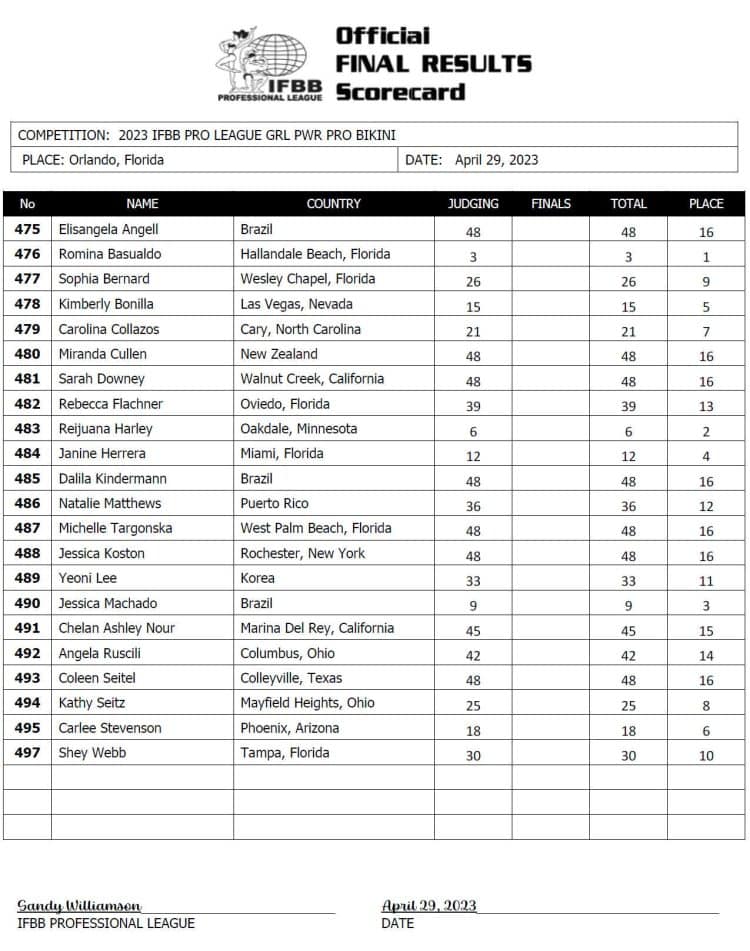
2023 Grl Pwr Bikini Championships Results
Winner — Romina Basualdo
Second Place — Reijuana Harley
Third Place — Jessica Machado
Fourth Place — Janine Herrera
Fifth Place — Kimberly Bonilla
Sixth Place — Carlee Stevenson
Seventh Place — Carolina Collazos
Eighth Place — Kathy Seitz
Ninth Place — Sophia Bernard
Tenth Place — Shey Webb
2023 Grl Pwr Pro Scorecard
2023 Grl Pwr Pro Bikini Scorecard
Fitness Volt congratulates the winner!
Published: 30 April, 2023 | 12:15 AM EDT
2023 Grl Pwr Pro Scorecards
/* custom css */
.tdi_86{
color: #eaeaea;
}IFBB PROFESSIONAL LEAGUE®, IFBB PRO LEAGUE®, IFBB PRO® and the IFBB Professional League logo are registered trademarks owned by the IFBB Professional League.The IFBB Professional League logo cannot be altered in any way, shape or form without the expressed written approval of the IFBB Professional League. Where such approval is granted, the IFBB Professional League will provide the altered logo.© 2022 IFBB Pro, All Rights Reserved.
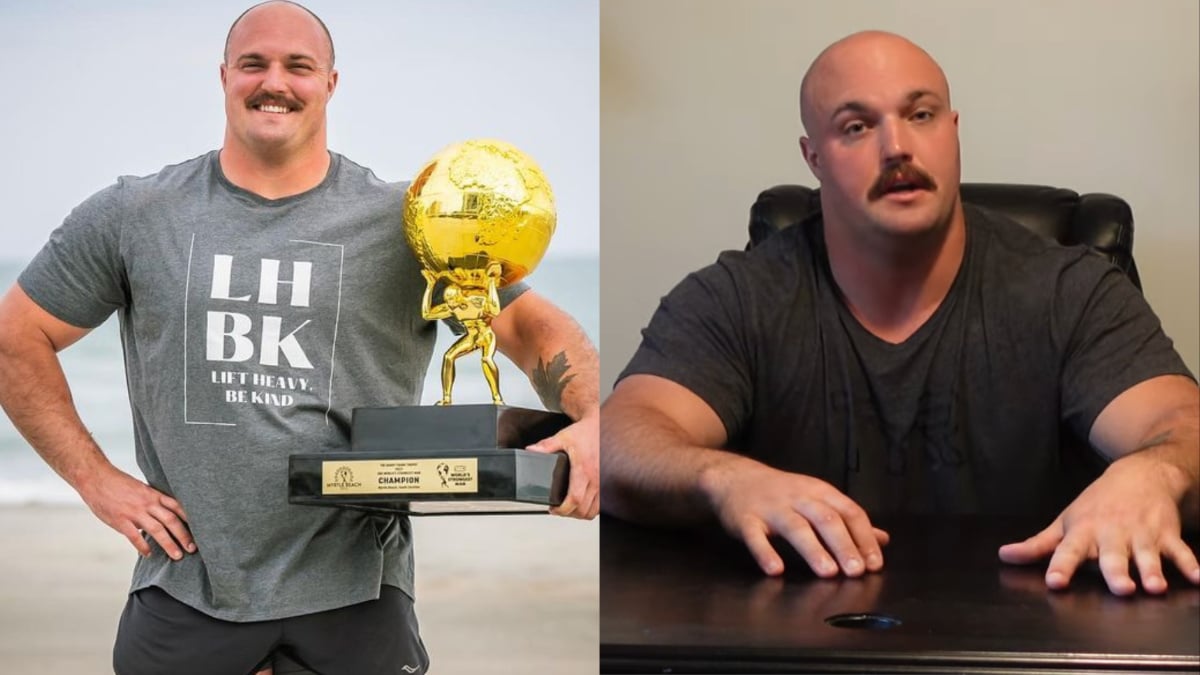
‘I Was in Serious Danger’: Mitchell Hooper Breaks Down 2023 World’s Strongest Man Win
Canadian Strongman Mitchell Hooper is coming off a phenomenal win at the 2023 World’s Strongest Man competition. Hooper’s experience at the show was nothing short of thrilling, with four days of non-stop action that left him on the edge of his seat. In a recent YouTube video, Hooper shared his breakdown of the victory and his performance at the show.
Mitchell Hooper made headlines for his crazy feats of strength after beating legendary Strongman Brian Shaw in the qualifying stage of the 2022 World’s Strongest Man. He followed up with a dominant win at the 2022 Arnold Strongman Classic UK, where he defeated 13 other competitors just a few months after the WSM. Then, he made his way to the 2022 Giants Live World Tour and took home the top prize ahead of Aivars Smaukstelis and Kevin Faires.
In November 2022, Hooper set the new World Record on the Dinnie Stones Hold, clocking in a time of 39.58 seconds by holding a total 732 pounds across both arms at the 2022 Rogue Invitational. He also left the fans stunned with his impressive strength earlier this year, having set a new two-rep PR on the raw squats of 771.6-lb (350-kg). Shortly after, Hooper extended his commanding competition streak with another win at the 2023 Australia’s Strongest International Competition.
Following the competition in Australia, Mitchell Hooper continued preparing for two biggest competitions of the year. So, Hooper crushed an intense set of 420-kg (925.9-lb) raw deadlift to achieve a new PR in training. In addition, just two months ago, Hooper smoked a heavy set of 770-kg (1,697.6-lb) raw leg press for eight reps in preparation for the 2023 Arnold Strongman Classic. In the end, his hard work paid off as he came out on top of the contest last month.
The 27-year-old was last seen in action for his second WSM appearance at the 2023 World’s Strongest Man a week ago. Hooper went up against the most elite contenders and managed to win the coveted title.
Mitchell Hooper breaks down his win at the 2023 World’s Strongest Man
In a recent YouTube video, Mitchell Hooper shared his experience of competing and scoring gold at the 2023 World’s Strongest Man contest.
“On Sunday, Kate and I went to the alligator park,” said Hooper. “You guys see me do a lot of stuff before contests that most guys won’t like drinking, going to the alligator park, I’d be more than down to go to a swimming pool because that’s how I get myself in the headspace to perform my best.”
“In my group I had Mateusz Kieliszkowski, who was probably the number one guy I didn’t want in my group aside from Pavlo. I also had Aivars, which you never want a good stone lifter in your group. I also had Matt Ragg, who I knew people were sleeping on. We also had Spenser Remick who won the OSG and Graham Hicks. I’m looking at that group and thinking who on earth would be the bottom two. It’s really quite impossible to tell. The work was cut out.”
“The heat events were really good for me. I went to bed thinking I had a good shot but full form Mateusz on those events could beat anyone and Aivars can beat me on stone so I didn’t go in with 100 percent confidence.”
“The deadlift machine was interesting experience. It got very heavy after the barrel 6 or 7. It seemed to disproportionately get heavy.”
“I knew that if I won Conan’s Wheel I would sweep into the finals. I picked up that Conan’s Wheel horribly. After about half a lap, it came down my arm and I was in this sort of like handcuff position that was sort of weird for about half a lap. I thought I was in serious danger at this stage I needed to get a lap in three quarters. It fell into my wrist after the lap and a bit and then it was okay. I think next time I’ll be much better. Interlocking fingers, getting elbows close would be much better strategy.”
“Surprise group winner Jaco Schoonwinkel, amazing job. Sometimes, there’s guys who behave like they could definitely win the group and then this guy just came out of nowhere. He didn’t seem particularly confident or like he was ready to go smash it. He just absolutely killed the heats. I never expected it to happen so huge well done to him.”
Hooper revealed the difficulties he faced at the 2023 WSM
Mitchell Hooper laid out the difficulties he faced as a competitor at the show.
“Everything doesn’t run perfectly at World’s obviously. Everything doesn’t run perfect everywhere. It’s just highlighted the most at World’s because there’s so much emotion around it. We did our equipment testing, that was all good, then we had a meeting, Flex Lewis got introduced as Flex Wheeler, we talked about the rain situation and we weren’t given a set of rules. The only time I read any rules were when I asked for the rules on the bus on the way to day one of the finals. Then I gave it back to production. Otherwise, to my knowledge, no athlete actually had a set of rules that we traditionally get a package of. No athlete got that. No one was clear on the rules from the get go.”
“Shield Carry, I essentially thought if I beat Tom I will be in a good spot. That was my entire thought. Thankfully, Tom is very fast with a shield and I couldn’t keep up to him. I got a lap and a quarter about 30 meters and shield was already slipping, I did a bit of pop to readjust the shield up high, walk all the way down to the end, came on back, started crab walking a bit, and ended up beating Tom by the smallest of margins.”
“The story here is mostly around Pavlo, who’s the best at Shield on the day but his foot didn’t cross the line. He was deducted 19.8 meters off of his distance which is a harsh penalty for just missing the line. That being said, if there was an actual 100 percent proper rule, he should’ve been deducted 39.8 meters because nothing should count until their foot crosses that line and they come back. While it was a harsh penalty, I don’t think it was overstepping reason because they did still give him a distance.”
“The Fingal’s Fingers didn’t go so well. I won’t get into too much detail but I went into Day 2 half a point ahead of Oleksii, 1 point ahead of Tom and 2.5 points ahead of Trey. I wasn’t particularly confident at this stage. I was going to push hard for the podium.”
Hooper called for a clearer ruleset & explained his road to victory
Mitchell Hooper suggested developing a clearer ruleset to avoid ambiguity and shared his road to victory.
“Dumbbell was difficult. There’s some questions around rules and equipment, a big challenge. The biggest was should we be allowed to wear a medical cuff on our elbows to stop things like tendonitis. That’s their primary function but the secondary function can be they help you lift more. I was very hard on the argument that this is such a bicep heavy show this year meaning that we needed protection. If we’re not safe what’s the point of doing it? That was approved. There was a lot of talk in the athletes teens between us to the refs about what equipment should be allowed or not. There’s no long-standing ill will and I don’t think it’s going to be brought up again. We just need to be super clear and have a rule sheet.”
“Max dumbbell, I overperformed dramatically on that. My personal best was 125 kilograms. I ended up hitting 140 kilograms in the competition. That is the performance I’m most proud of and I believe what secured me the World’s Strongest Man.
“There were some calls that were soft, not as strict as they could be. For example, my reps a lot of them I locked out here, I’ll speak about me, there were plenty of soft reps given to other guys. The reason it’s not a problem is that nothing should change about the judging of Strongman currently. It can modify but nothing should change altogether. I got some calls that I believe wouldn’t have been called in other competitions. A lot of other guys are in the same boat. It’s because my body was not completely vertical.”
“All we can ask for in Strongman is that in a given competition it is equal referring. No one’s getting reps they shouldn’t get when other people aren’t getting those reps. If everyone’s getting soft calls, fair enough.”
“I feel for Oleksii and Pavlo because their lockouts were perfect. If the judging was the most strict in the world, those guys would’ve had disproportionately good results so fair play to them.”
“On the Bus Pull, there is this unbelievable chunk of people at 32 seconds, I believe there was seven guys. Tom goes and he has the lowest time of 32 seconds, still in that chunk of guys meaning that if I did 32 seconds flat I would get 7 or 8 points more than if I did 33 seconds which you can imagine the pressure on something I did very poorly in the past. Now I have to go essentially win the event or lose the competition. I started the track pretty well and ended up winning the event which helped me tremendously.”
Following the result, Mitchell Hooper opened up on the victory in an exclusive interview with Fitness Volt. He detailed his mindset and credited his fellow standouts for inspiring him on his way to the title. Hooper now continues preparing for other competitions, as he plans on making a few more appearances by the end of the year.
You can watch the full video below.
Discover comprehensive coverage of the 2023 World’s Strongest Man competition at our WSM coverage hub, featuring exclusive interviews, final results, event recaps and in-depth analysis: FitnessVolt.com/wsm
Published: 29 April, 2023 | 4:12 PM EDT
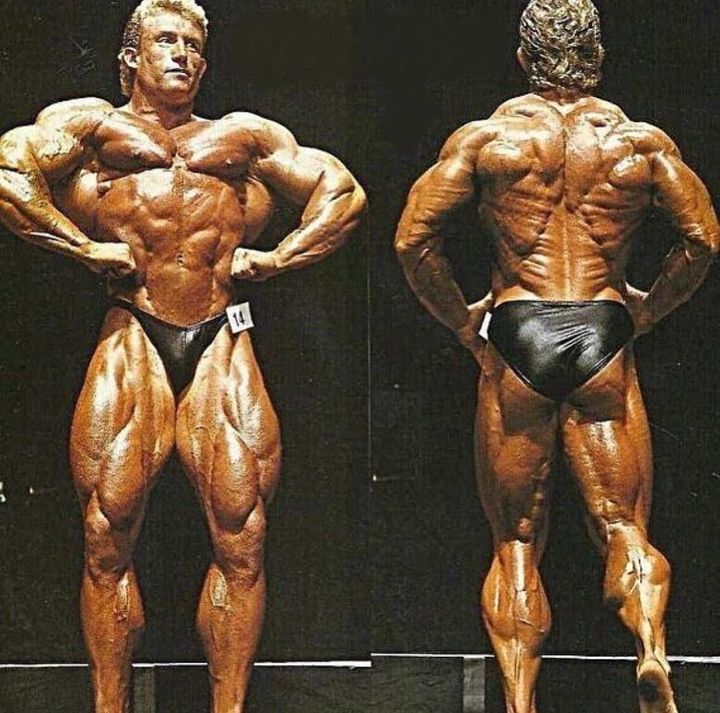
Dorian Yates Shares Keys to Happiness and Reflects on Ayahuasca Spiritual Journey
Dorian Yates is one of the most successful talents to emerge from the IFBB Pro League. In a recent interview with Rob Lipsett, Yates talked about his spiritual journey on ayahuasca, a psychoactive brewed drink chemically similar to DMT (dimethyltryptamine).
During a tenure that saw him compete mostly during the 1990s, Dorian Yates established himself as a frontrunner in the Men’s Open division. Following eight-time Olympia winner Lee Haney‘s reign, Yates ushered in a new era of mass monsters. He used dry conditioning, size, and impeccable detail to cement his dominance.
Yates adopted a unique training style en route to becoming one of the best bodybuilders in the world. He refused to tailor his workouts around reps or sets. Instead, Yates trained to near failure on the regular and pushed his body to extremes when he made time for the gym.
Dorian Yates / Instagram
While Yates left the sport on top in 1997, his love for bodybuilding is evident in retirement. At 61 years old, he maintains an incredible physique and often showcases training sessions and techniques online. In his latest endeavor, he discussed what it was like consuming ayahuasca at a retreat deep in the Amazon rainforest.
Dorian Yates Talks Hallucination on Ayahuasca Journey: ‘I Thought It Was Poisoning Me’
While staying in Brazil, Yates said he was introduced to ayahuasca by a local.
“We got a guide and went on a boat down on the Amazon [forest] for a couple of days to get out with nature. So, she came with me. We just met but I was still half in the party zone still there. I’m in Brazil, and I thought, ‘Wow I’m in the Amazon.’ I said to the guy, ‘Oh can we get some coke?’ He’s like, ‘Of course, it’s the best.’ It’s raw shit there, from the plant! I head there and we’re going out, do a bit of that, a bit of vodka, I don’t think I even knew, just keeping it quiet.”
“That’s where I was at. We’re out on the boat. I’m like, ‘Hey when we go out on the boat, can you get that stuff, I heard about that stuff ayahuasca, that drink stuff.’ He’s like, ‘Yeah, I’ll get it.’ You know, I don’t know what he got, whether it was ayahuasca or really strong ayahuasca, I don’t know you know. Please kids, don’t do this at home. It’s not a recommendation here. This was wild west stuff. I didn’t know what I was doing. He didn’t know what he was doing. He got me some ayahuasca, apparently, I believe it was.”
Yates said the ayahuasca caused him to violently throw up. Moments after, he could hear and feel a ‘female entity’ who told him to stop poisoning himself.
“I had a guide that was Indian, and the guy said to me, ‘So you’re doing the ayahuasca tonight?’ He said, ‘Don’t smoke any weed then today,’ because you’re not supposed to. I didn’t do any of that shit I was smoking and drinking vodka the night before.”
“I’ve gone and I’ve done the ayahuasca, I drank it; and I’m just being violently vomiting, violently sick [after taking it],” said Yates. “I thought this ayahuasca poisoning me but actually what it was was a female entity, something you can hear or feel [hallucinations], it’s talking to me, [saying], ‘Stop poisoning yourself.’ So that was that. That was my experience.”
Yates Defines Success and Breaks Down What Happiness Means
Yates defined success as having a positive impact on the world and said happiness is achieved by ‘loving yourself.’
“What’s success? How do you define success? I mean, some people define it by material possessions, ‘Oh that guy is very successful, he’s got a big yacht and this and that.’ But that’s not necessarily success, it’s not necessarily happiness because there’s a lot of rich people who are very miserable. So, what is happiness? I think it’s being comfortable and being in love with yourself.
And projecting that out to the world, and what success is that you learned a lot and ultimately you had a positive impact on the world and the people around you that you came in touch with during this life. So, when you check out of here, if somebody asks you or you ask yourself and I’ve spoken to a lot of other people who have clinically died because it was something I was interested in at some point, what happened to them? Normally, they go to this place of total peace and then they’ll see their life in front of them. But they don’t see it they feel it as well,” Dorian Yates said.
‘The Shadow’ isn’t the only bodybuilding icon from the 90s who uses hormones to stave off aging. Bodybuilding veteran Rich Gaspari, who built a legacy with conditioning and striated glutes, continues to share various anti-aging peptide stacks he takes to preserve his body.
RELATED: Dorian Yates Shares High-Intensity Training Strategies: ‘Make it Harder for Your Body to Recover
As of late, Yates gave an update on his health and revealed he was weighing 235 pounds. He used the update as an opportunity to underline the dangers associated with bodybuilding and said he was grateful to reap the benefits of hormone replacement therapies.
This wasn’t Dorian Yates’ first hallucinogenic experience. Last summer, the 61-year-old received a ‘new perspective on life’ after trying out the popular compound DMT, which he described as a ‘powerful life-changing medicine.’
Watch the full video below:
Published: 29 April, 2023 | 1:45 PM EDT
Average Bench Press By Age, Weight, Gender, and Experience Level (2023 Update)
It is no secret the bench press is one of the most badass exercises. Answering “How much do you bench?” with an obnoxious number has become a legit way of establishing your clout amongst the gym bros.
While this question might sound like casual inquiry, it is anything but that. Your answer will determine the respect you will get from people at your gym. It will dictate whether folks at your gym will vacate the bench or any other equipment, for that matter, as soon as you walk up to it. Finally, your response will decide if you will have an audience when you head into a set.
The bench press is one of the three big lifts in powerlifting and a bread and butter exercise in bodybuilding style workouts. However, powerlifters and bodybuilders have a slightly different approach to performing the exercise.
While powerlifters perform the lift with a back bridge, bodybuilders usually perform the movement with a slight back arch. Amongst other things, the rep tempo, repetitions performed, bar’s motion path, and foot placement vary between the two lifting styles.
In this article, you’ll learn about the average bench press by age, gender, weight, and experience level, how to perform the bench press with the correct form, and get better at the lift.
Trivia: Julius Maddox holds the world record for the heaviest bench press at a ming-boggling 782.6 pounds (355 kilograms) set in a sanctioned powerlifting meet in June 2022.
Average Bench Press By Age, Weight, Experience Level, and Gender
Before we get into the average bench press nitty-gritty, let’s address the elephant in the room — arm length.
Your arm length can influence your bench press. Many people believe that lifters with shorter limbs can bench press more weights than folks with longer limbs as the bar has to move through a shorter range of motion.
It could be one of the reasons the bench-pressing totals at the NFL and NBA draft combines are vastly different.
Related: 24 Strongest NFL Players in the World
How much can the average man bench press?
The average male bench press depends on several factors, including a lifter’s age, weight, and experience level.
Average Male Bench Press by Weight
Below is the National Strength and Conditioning Association-approved ExRx.net official Bench Press Standards chart:
Body weight (pounds)
Untrained
Novice
Intermediate
Advanced
Elite
114
85
110
130
180
220
123
90
115
140
195
240
132
100
125
155
210
260
148
110
140
170
235
290
165
120
150
185
255
320
181
130
165
200
275
345
198
135
175
215
290
360
220
140
185
225
305
380
242
145
190
230
315
395
275
150
195
240
325
405
319
155
200
245
335
415
320+
160
205
250
340
425
Per the data, an advanced or elite male athlete can, on average, lift more than twice as much weight as an individual who doesn’t lift.
Below is the 2023 Bench Press Standards chart from Symmetric Strength:
Body weight (pounds)
Untrained
Novice
Intermediate
Advanced
Exceptional
Elite
World Class
114
70
105
140
200
230
260
290
123
75
110
150
220
250
280
310
132
80
120
160
235
265
300
335
148
90
130
175
225
295
330
365
165
95
145
190
280
320
360
400
181
100
150
205
295
340
380
425
198
105
160
215
310
355
400
445
220
110
170
225
325
375
420
465
242
115
175
230
340
385
435
485
275
120
180
240
350
400
450
500
320
125
185
245
360
410
460
510
Note: These standards apply when the bar makes contact with the chest above the bottom of the sternum with a momentary pause and pressed to full elbow extension.
How much can the average woman bench press?
Women, on average, cannot lift as heavy as their male counterparts of the same age, weight, and experience level.
Average Female Bench Press by Weight
Per the same ExRx.net official Bench Press Standards chart listed above, here is the average bench press of women of different weights and experience levels:
Body weight (pounds)
Untrained
Novice
Intermediate
Advanced
Elite
97
50
65
75
95
115
105
55
70
80
100
125
114
60
75
85
110
135
123
65
80
90
115
140
132
70
85
95
125
150
148
75
90
105
135
165
165
80
95
115
145
185
181
85
110
120
160
195
198
90
115
130
165
205
199+
95
120
140
175
220
Unlike men, women at the advanced lifting stage cannot bench press twice as much as the females who don’t train. However, elite athletes can lift more than twice as much as their non-lifting peers.
The following is the Symmetric Strength 2023 Bench Press Standards chart for women:
Body weight (pounds)
Untrained
Novice
Intermediate
Advanced
Exceptional
Elite
World Class
97
45
65
90
130
150
165
185
105
65
95
125
185
210
235
265
114
70
105
140
200
230
260
290
123
75
110
150
220
250
280
310
132
80
120
160
235
265
300
335
148
90
130
175
255
295
330
365
165
95
145
190
280
320
360
400
181
100
150
205
295
340
380
425
198
105
160
215
310
355
400
445
200
105
160
215
315
360
400
445
Average Male and Female Bench Press by Age
Age
Total Weight
20-29
100 percent of your body weight
30-39
90 percent of your body weight
40-49
80 percent of your body weight
50-59
75 percent of your body weight
You shouldn’t get under a bar and expect to bench press 100 percent of your body weight just because you’re in your 20s. Depending on your genetics, you might have to train for at least a couple of years to reach the benchmarks mentioned in the table.
According to the data, lifters (male and female) are usually the strongest in their 20s and 30s. However, they experience muscle and strength atrophy in their 40s and 50s.
On average, men and women between 20 and 29 can bench press 100 percent of their body weight. The number goes down to 90 percent when they enter their 30s.
The bench press strength undergoes a further downgrade as an average individual can only lift 80 percent of their body weight in their 40s and 75 percent in their 50s.
A fall in natural testosterone levels is one of the biggest reasons for the strength downgrade. Testosterone is the male sex hormone and an anabolic steroid. It plays a key role in the development of male reproductive organs and secondary sexual characteristics such as increased muscle and bone mass and body hair growth.
Related: 7 Ways To Boost Your Testosterone Naturally
Overall Average Male and Female Bench Press
Per the Centers for Disease Control and Prevention’s National Center for Health Statistics (CDC), an average American male weighs 197.8 pounds, meaning the average bench press of a man in his 20s who doesn’t lift is 135 pounds or 175 pounds for a rookie lifter. The average bench press jumps to 215 pounds for an intermediate lifter, 290 pounds for an advanced lifter, and 360 pounds for an elite athlete. [1]
On the other hand, an average American female clocks in at 170.5 pounds. As per the table above, a 165 pounds woman (closest to 170.5 pounds) with no lifting experience can bench press 80 pounds or 95 for a novice.
The average bench press jumps to 115 pounds for an intermediately experienced woman of average weight and 145 pounds for an advanced lifter.
Calculate Your 1RM (One Rep Max)
Now that you know the average bench press for your age, weight, gender, and experience level, the next step should be to determine your one-rep max, meaning how much weight you can lift for a single rep on the bench press.
While you could find your 1RM with the trial and error method, it is risky and could lead to injuries. Check out our convenient bench press calculator to discover your one-rep max using different methods.
How to Bench Press
If your goal is to lift heavy and hit a PR, you should follow the powerlifting bench press method. This is how to bench press like a powerlifter:
Lie down on a flat bench. Your chest should be directly under the bar.
Grab the bar tightly with a slightly wider than shoulder-width grip.
Slowly pull yourself towards the bar so that you form a back bridge.
Plant your feet firmly on the floor. Your lower legs should form a 90-degree angle with your upper legs.
Unrack the bar and hold it over your chest — this will be your starting position.
Slowly lower the bar towards the bottom of your breastbone until you have made contact with your chest.
Pause at the bottom for a couple of seconds.
Explode back to the starting position.
Repeat for recommended reps.
Check out our barbell bench press (chest) guide to learn how to perform the exercise for achieving muscle hypertrophy.
How to Improve Your Bench Press
Here are a few ways to improve your bench press:
1. Progressive Overloading
If you want to improve your bench press, you should gradually increase the weight, frequency, or number of repetitions in your strength training routine.
However, make sure you’re not rushing through the process and biting off more than you can chew. Focus on lifting with the correct form to minimize the risk of injury.
Check Out: Muscle Development With Progressive Overload – The Concept You Must Know To Grow!
2. Incorporate Advanced Training Techniques Into Training
Advanced training principles like supersets, dropsets, intraset stretching, negatives, and forced reps can help you build strength and avoid hitting a plateau.
Additionally, performing other compound and isolation lifts can build your primary and secondary muscles and improve your bench press.
Related: The 25 Best Joe Weider Training Principles and Methods
3. Focus on Diet
You cannot achieve peak performance if you’re not meeting your daily calorie, micro, and macronutrient goals. Follow a nutrient-dense diet to ensure your gains do not stall.
Related: Our List of 40 Great Protein-Packed Foods
4. Don’t Overlook Recovery
It doesn’t matter how hard you work in the gym — you’re not going to see progress if you’re not giving your body enough time to rest and recuperate from your workouts.
You should also include stretching, foam rolling, and massages into your routine to fast-track your recovery.
Related: 8 Ways to Speed Up Recovery After Training
FAQs
What is a good bench press for a male?It is a subjective question, and the answer depends on your age, weight, gender, and experience level. Please refer to the table above to check the bench press weight against your body weight. The numbers in the advanced and elite columns can be considered ‘good.’
Which muscle groups does the bench press target?In a bench press, the chest is the primary target muscle, and your shoulders and triceps are the secondary muscle groups.
How much can the average man bench press?The average man’s bench press weight varies based on his age, weight, and fitness level. On average, a man is able to bench press about 135 pounds, but this can vary from person to person. The maximum weight a person can bench press is not necessarily a reliable measure of overall strength or fitness, other factors like muscle composition, body weight, and training can affect a person’s ability to bench press.
You might also like:
Wrapping Up
Whether the bench press is the correct exercise to assess your strength is a debate for another time. However, knowing the average bench press by age, weight, gender, experience level, and how you stack against it can give you a fair idea of your strength levels.
Remember, if you can bench your own body weight or more, don’t be shy to flaunt your numbers the next time someone directs a “How much do you bench?” at you. Rest assured, they’ll walk away impressed.
References
McDowell MA, Fryar CD, Ogden CL, Flegal KM. Anthropometric reference data for children and adults: United States, 2003–2006. National health statistics reports; no 10. Hyattsville, MD: National Center for Health Statistics. 2008.
Optimal Rest Time Calculator
Optimal Rest Time Calculator
Calculate the optimal rest time between sets or exercises based on your training goal and exercise type.
Training Goal:
Exercise Type:
Calculate
Recommended Rest Time:
Rest Timer:
0:00
Start
Pause
Reset
Workout Templates:
Custom Rest Time:
Apply
Warm-Up Exercises:
Jumping Jacks
Dynamic Stretching
Bodyweight Squats
Cool-Down Exercises:
Walking
Static Stretching
Deep Breathing
How to Use:
Select your training goal and exercise type from the dropdown menus, then click the “Calculate” button to receive a recommended rest time. Use the interactive timer to time your rest periods during your workout. Customize your rest time as needed based on your individual preferences and fitness level. The timer also includes audio cues to indicate the start and end of rest periods.
Training Goals and Exercise Types:
Strength: Focuses on increasing muscle strength and power. Compound exercises are recommended.
Hypertrophy: Focuses on increasing muscle size. A combination of compound and isolation exercises is recommended.
Endurance: Focuses on improving cardiovascular and muscular endurance. Cardio exercises are recommended.
Power: Focuses on increasing explosive strength and speed. Compound exercises with plyometrics are recommended.
Mobility/Flexibility: Focuses on improving joint mobility and overall flexibility. Exercises may include stretching and mobility drills.
Weight Loss: Focuses on burning calories and reducing body fat. Exercises may include a combination of cardio and resistance training.
Rehabilitation: Focuses on recovering from an injury or surgery. Exercises include physical therapy exercises and gentle movements.
General Fitness: Focuses on overall health and well-being. Exercises may include a balanced mix of cardio, resistance training, and flexibility exercises.
Compound Exercises: Exercises that work multiple muscle groups at the same time (e.g., squats, bench press).
Isolation Exercises: Exercises that target a single muscle group (e.g., bicep curls, leg extensions).
Cardio Exercises: Exercises that increase heart rate and improve cardiovascular fitness (e.g., running, cycling).
Plyometrics: Exercises that involve explosive movements, such as jump squats and burpees.
Calisthenics: Bodyweight exercises that improve strength and flexibility, such as push-ups, pull-ups, and dips.
Circuit Training: A series of exercises performed one after the other with minimal rest in between. Circuits often include a mix of cardio and resistance exercises.
High-Intensity Interval Training (HIIT): Short, intense bursts of exercise followed by brief rest periods.
Yoga: A practice that combines physical postures, breathing exercises, and meditation to improve flexibility, strength, and relaxation.