
 All Posts By Muscle Insider
Board Certified PHD
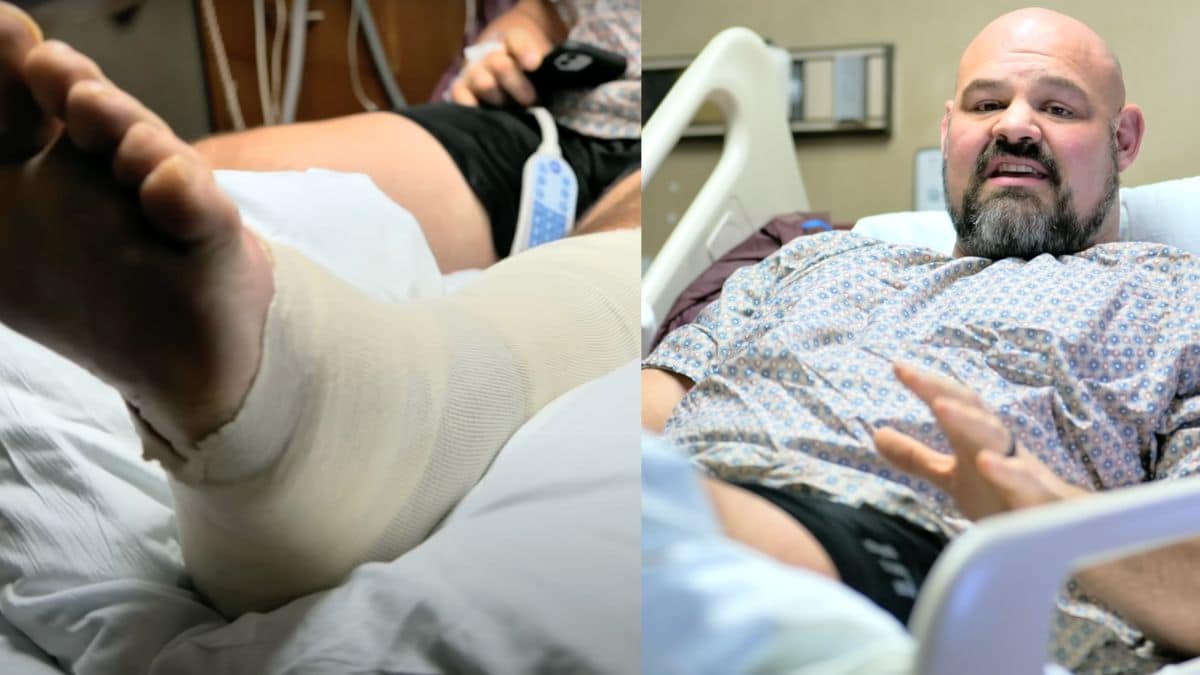
Strongman Brian Shaw Opens Up About Battle With Leg Cellulitis: “This Has Been Extremely Challenging For Me”
As Brian Shaw’s long and strenuous training for his finals World’s Strongest Man competition nears its end, he has taken to YouTube to share the details of his “Road to WSM”. Just a few days ago, Brian Shaw revealed that he faced a severe leg infection in January, which chained him to a hospital bed for several days. Yet in his latest video, Brian unveiled additional footage of himself in the hospital and the aftermath of his first workout upon returning to the gym. Additionally, he talked about the difficulties he has experienced as a result of this unexpected setback.
Brian Shaw did not think much of his infection and thought that he would only go to the hospital for a few hours and come back out. However, that extended to a grueling eight days in the hospital. Even during brief instances where Brian attempted to take a stroll, he had to endure intense discomfort.
“I really thought this would be a one day process… It has proved to be anything but that. So, what I am dealing with is a very bad case of cellulitis… It is extremely aggressive.”
Brian Shaw also revealed that his exact infection was a severe case of cellulitis. For those who are not familiar with this case, cellulitis is an infection which appears suddenly and quickly spreads through the body. It is also located in the deeper layers of the skin and tissue. So, swift prevention is absolutely necessary.
“We’ve tried a series of different antibiotics that I have had to use through an IV.”
The task of attaching multiple IV lines to Brian Shaw proved to be challenging due to his notably dense skin and muscle tissue. In addition, it was another painstaking procedure that Brian had to go through countless times. His forearms also became sore and solid from all the injections, even to the point where doctors were not able to poke them anymore.
“They poked me a few times to try to get more, but they just said that my veins are hard to poke with IVs and also my veins reject them.”
Brian Shaw admits that this has been a very difficult process for him, despite his positive attitude towards everything. In just a matter of days, he went from lifting enormous weights to barely being able to stand up. That shows how much the infection has affected him physically, but it was also mentally draining.
“This has been extremely challenging for me… taking my leg from an elevated position, going down to the ground, standing up, and going to the bathroom is right now unbelievably challenging and painful… Anything is maybe going to seem easy compared to that.”
In as little as two hours after his hospital departure, Brian Shaw was back at his gym, getting ready to train. Despite his eagerness for a fresh start, he remained uncomfortable and weak in every aspect of his preparation.
“I feel like complete garbage if I am being completely honest. I wasn’t able to eat like I normally would… No training, and I am a guy who has trained religiously since highschool… More of a break than I can remember in my entire lifting career.”
Despite his desire to immediately jump back to lifting heavy weights, Brian Shaw had to refrain from potentially making his condition worse. Clearly, after being ill for over a week, Brian found himself in a challenging situation.
“It is crazy how easy the training was two weeks ago… But, I know how quickly I can bounce back… This now is a win, even though it is such a miniscule session overall for me.”
Watch Brian Shaw’s video here:
Related: Brian Shaw Announces The 2023 Shaw Classic Lineup & Reveals It Will Be His Final Competition
Brian Shaw’s goal was to continue building momentum and get back into peak physical and mental shape before the 2023 World’s Strongest Man competition. So, judging by his recent training session, it seems that he was successful.
If Brian wins his fifth WSM title this year, he will tie Mariusz Pudzianovski’s record and be recognized for one of the greatest comebacks in sports history. Just four more days remain until the competition starts and we see Brian perform.
Published: 15 April, 2023 | 11:35 AM EDT
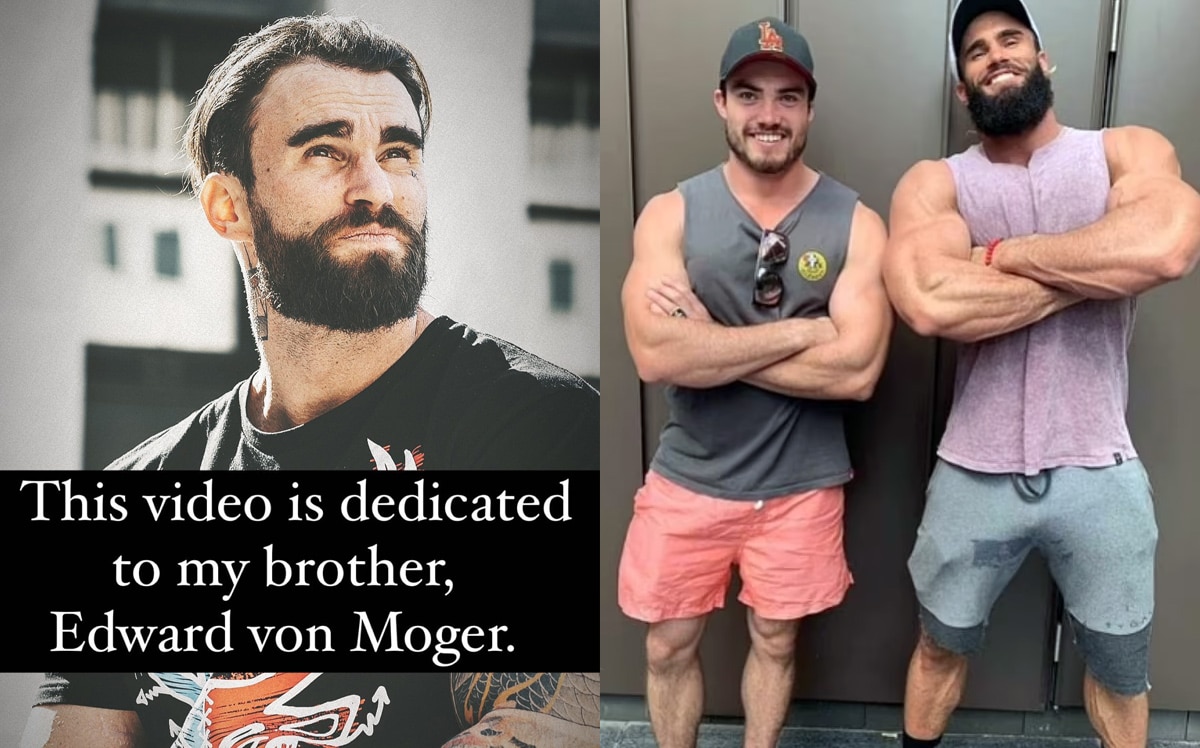
Calum Von Moger Reacts to Brother’s Death: ‘Every Second of the Day, My Mind Is Elsewhere’
Calum Von Moger has issued his first statement since the tragic death of his brother Edward Von Moger. In a YouTube video dedicated to Edward, Von Moger attended the 2023 Arnold Classic Expo with a heavy heart and reflected on losing his sibling.
To say it’s been a tough few years for the Von Moger family would be an understatement. Calum, who once portrayed a young Arnold Schwarzenegger in the docudrama Bigger, appeared to be headed for greatness in bodybuilding, but a slew of personal issues prevented his career from blossoming.
The 32-year-old faced legal troubles due to a bizarre road rage incident. He slashed the tires of a man’s car with a knife and police found several weapons in his vehicle like brass knuckles, a tomahawk, and a hunting knife. While Calum pleaded guilty, his hardships were far from over.
Last May, a troubled Von Moger jumped out of a two-story window. His motive for the incident was unclear, but Von Moger was in a coma for six days before waking up. He’s since gone to rehab and taken measures to get his life back on track.
However, last month, Calum’s brother, Edward Von Moger, mysteriously went missing. After an exhaustive search effort, a body was found off the coast of Australia and was presumed to be Edward. Having endured a massive loss, Von Moger took to his YouTube channel for a cathartic experience.
Emotional Calum Von Moger Issues First Statement Since Eddie Von Moger Death
According to Von Moger, he discovered his brother was missing the day he flew out to Columbus, Ohio for the 2023 Arnold Classic Expo.
“I was excited to meet you all at the [2023] Arnold but during that same time, I was going through the toughest moment in my life. On the day I flew out to Ohio, I found out my brother was missing…”
While attending the Expo, Von Moger ran into fitness influencer Jesse James West, who dressed up as The Terminator from Schwarzeneggger’s famous franchise. Calum apologized to fans for being overwhelmed with emotion at the gathering.
“Every second of the day, my mind was elsewhere thinking about Eddie. I know I was physically there but mentally not present. I want to apologize to those who approached me and sadly I had to turn away because I was too emotional. Thank you everyone for the love and support during this time. This video is dedicated to my brother Edward Von Moger,” Von Moger shared.
Considering all that Calum has been through over the past few years, the bodybuilding community was happy to see him turning his life around. Lee Priest, a fellow Australian athlete, extended his support and stressed that anyone could find themselves in the type of trouble Von Moger faced.
RELATED: Calum Von Moger: ‘I’m Doing Better, Got All The Help I Needed and Ready to Return in 2023’
Determined to lead a more healthy and productive life, Von Moger redirected his focus to the gym. The last time fans heard from Calum, he shared a high-volume leg day training session. During the workout, Von Moger revealed that his plan was to downsize his physique in the months to come.
Despite his grief, Calum decided to honor his brother’s memory by attending the 2023 Arnold Classic Expo. Fitness Volt extends our best wishes and support to the Von Moger family in 2024.
You can watch the full video below, courtesy of Calum Von Moger’s YouTube channel:
Published: 15 April, 2023 | 9:01 AM EDT
2023 Korea AGP Pro Bikini Scorecard
/* custom css */
.tdi_86{
color: #eaeaea;
}IFBB PROFESSIONAL LEAGUE®, IFBB PRO LEAGUE®, IFBB PRO® and the IFBB Professional League logo are registered trademarks owned by the IFBB Professional League.The IFBB Professional League logo cannot be altered in any way, shape or form without the expressed written approval of the IFBB Professional League. Where such approval is granted, the IFBB Professional League will provide the altered logo.© 2022 IFBB Pro, All Rights Reserved.
The 10 Best Forearm Exercises for Arm Wrestling
While strength matters in arm wrestling, technique matters, too. There are several tricks you can use to beat a stronger opponent, such as moving your hand higher up their fingers and thumb to maximize your leverage while weakening theirs. This is called climbing.
But, at its heart, arm wrestling is a test of strength, and arm wrestlers often have very muscular arms and forearms. Most pros train with weights to develop the strength they need to beat their opponents and minimize their risk of injury.
In this article, we reveal the best forearm exercises for arm wrestling.
Arm Wrestling History
Arm wrestling (also spelled armwrestling) is an ancient strength sport. Evidence shows that arm wrestling was practiced in Egypt and Greece over 2,000 years ago. In America, native Americans did a type of arm wrestling, and on seeing it, settlers called it Indian wrestling. Arm wrestling was also popular in Spain, Japan, Cuba, Russia, Norway, and many others.
However, what started as an informal and spontaneous activity eventually became a professional sport. Pro arm wrestlers are now viewed as legitimate athletes.
Organized national and international arm-wrestling bouts started gaining popularity in the early 1950s. Like boxing, there are now several governing bodies, including the World Armwrestling Federation (WAF), The International Armwrestling Federation (IAF), and the World Wristwrestling Championship (WWC).
Despite being a legitime sport governed by rules, a lot of people enjoy casual arm wrestling and like to test their strength against friends and acquaintances. Informal bouts often happen in barrooms, with the loser having to buy the beers.
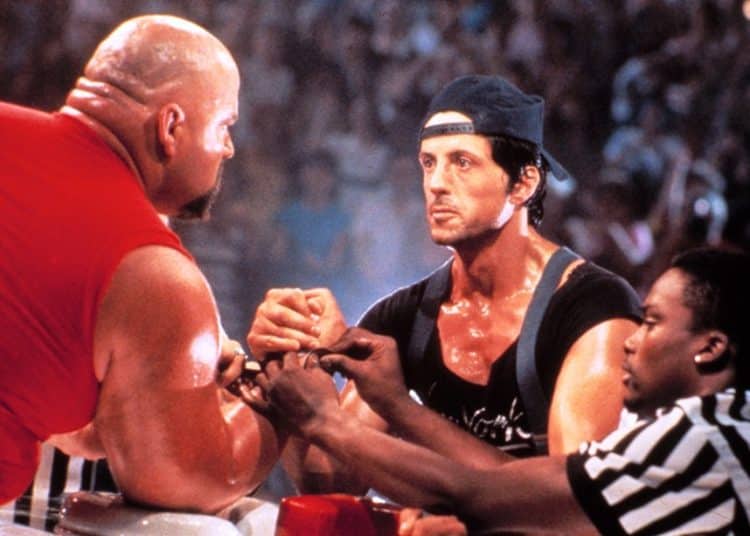
Arm wrestling has also been featured in movies, most notably Over the Top with Sylvester Stallone.
The 10 Best Forearm Exercises for Arm Wrestling
Build the strength you need to pin your opponents with the ten best forearm exercises for arm wrestling!
1. Barbell wrist curls
Wrist curls are a cornerstone of arm wrestling forearm training. They strengthen the muscles you need to use to top-roll your opponent so their palm is turned upward. This is a weak position which makes it easier to push their arm downward. Most pro arm wrestlers do plenty of wrist curls.
Steps:
Sit on an exercise bench and lean forward so your forearms rest at the top and your wrists are free to move. Hold a barbell in your supinated (upturned) hands.
Extend your wrists and lower the bar down toward the floor. Open your hands and let the bar roll down your fingers.
Next, close your fingers and curl the weight upward. Finally, flex your wrist as far as possible to maximally engage the target muscles.
Continue for the desired number of repetitions.
Muscles Targeted:
Forearm flexors.
Benefits:
A very arm wrestling-specific forearm exercise.
A good exercise for increasing forearm size.
Increases forearm and wrist flexibility as well as strength.
Tips:
Do this exercise with a light load for high reps to build endurance and heavier weights and lower reps for strength.
Lower the weight slowly and then lift it quickly to make this exercise more effective.
You can also do this exercise with dumbbells or just one dumbbell to train one forearm at a time.
2. Cable wrist curl
While there is nothing wrong with barbell wrist curls, they have an uneven strength curve, making some parts of the exercise harder than others. Using a cable machine keeps the target muscles under near-constant tension, which may mean this is a more effective, efficient way to wrist curls.
Steps:
Place an exercise bench in front of a cable machine and attach a straight bar to the lowest pulley.
Sit on the bench, and grab the handle with an underhand grip. Rest your forearms on your legs so your wrists are just past your knees.
Extend your wrists and lower the bar down toward the floor. Open your hands and let the bar roll down your fingers.
Next, close your fingers and curl the bar upward. Finally, flex your wrist as far as possible to maximally engage the target muscles.
Continue for the desired number of repetitions.
Muscles Targeted:
Forearm flexors.
Benefits:
More even tension on the target muscles compared to freeweight wrist curls.
Quick and easy to change the weights.
You can adjust the loading angle by moving the bench closer or further away from the pulley.
Tips:
You can also do this exercise with a single D-shaped handle and train one arm at a time.
Rep out to failure, lower the weight by 15-20%, and then rep out again to improve endurance, build muscle, and get a great pump. This is called a drop set.
Use a thick bar to challenge your grip more.
3. Behind-the-back wrist curls
No bench? No problem! You can get a great forearm workout with a barbell and some space to stand. This old-school exercise will pump up your forearms in seconds and build a cast-iron grip.
Steps:
Hold a barbell behind your back with your palms facing away from you.
Flex your wrists and curl the bar out and away from your body.
Pause with your forearms flexed for 1-3 seconds.
Lower the weight and repeat.
Muscles Targeted:
Forearm flexors.
Benefits:
A convenient exercise for home lifters.
A good movement for heavier weights and low reps.
A very effective old-school forearm and grip exercise.
Tips:
Use gym chalk to stop the bar from slipping out of your hands.
Use a thick bar to challenge your grip and develop more muscular forearms.
End your set with a 15-30 second dead hold to fully exhaust your forearms.
4. Single-arm hammer curls
Pulling your forearm toward your chest increases your leverage while decreasing your opponent’s. Once your arm is close to your body, you should find it easier to press the other guy’s arm down and pin it. Single-arm hammer curls are very arm wrestling specific and deserve a place in your arm-wrestling workouts.
Steps:
Hold a dumbbell in one hand, arm by your side, palm facing your leg.
Stand with your feet shoulder-width apart and your knees slightly bent. Brace your core and pull your shoulders down and back.
Bend your arm and curl the weight up to your shoulder. Do not rotate your wrist. Instead, maintain your neutral or thumbs-up grip.
Lower the dumbbell and repeat.
Switch sides and do the same number of reps on the other side.
Muscles Targeted:
Biceps, brachialis, brachioradialis.
Benefits:
A very effective exercise for arm wrestling.
Identify and fix left-to-right strength imbalances.
A great way to build stronger, more muscular upper and lower arms.
Tips:
Use a thumbless grip to increase forearm engagement.
Use clip-on fat grips to work your forearms even more.
Pause for 1-3 seconds at the top of each rep for a more challenging workout.
Use your non-working arm to perform a few end-of-set forced reps.
5. Sledgehammer pronation and supination
Some arm-wrestling techniques involve twisting your opponent’s wrist. As such, you must strengthen the muscles responsible for pronating and supinating your forearm. Strength in these muscles will also make it harder for your opponent to gain the upper hand and turn your wrist.
Steps:
Hold a sledgehammer about a quarter to a third of the way down the handle. Bend your arm to 90 degrees and tuck your upper arm into your side.
Keeping your upper arm stationary, slowly turn the sledgehammer clockwise and then counterclockwise through about 90 degrees in each direction.
Continue until your forearms begin to burn and get pumped.
Muscles Targeted:
Biceps, pronators, supinators.
Benefits:
One of the best ways to train pronation and supination at the same time.
Easy to scale by moving your hand up or down the handle.
A low-tech but high-effect grip and forearm exercise.
Tips:
The further your hand is from the head of the sledgehammer, the more challenging this exercise becomes.
Use a light sledgehammer, as this exercise is more strenuous than it looks. 7-10 pounds should be sufficient for most people.
No sledgehammer? Load one end of an adjustable dumbbell bar and use that instead.
6. Towel wringing
While you can train your forearms for arm wrestling in a gym, you can also get a productive workout at home. This exercise works your grip and forearms using nothing but a water-logged towel. However, don’t let the simplicity of this exercise fool you into thinking it’s easy – it’s actually a beast!
Steps:
Dunk a towel in a bowl or bucket of water.
Remove the towel from the water and grip one end in both hands.
Twisting your hands, wring the water out of the first section of towel, move your hands down a few inches, and then wring it out again.
Continue down the length of the towel until you have wrung out as much water as you can.
Rest a moment, re-dunk the towel, and repeat.
Muscles Targeted:
Forearm flexors and extensors.
Benefits:
An excellent exercise for home workouts.
Very joint-friendly.
A great way to increase grip and forearm strength simultaneously.
Tips:
The thicker the towel, the more challenging this exercise becomes.
Don’t use your best towels for this exercise, as they may rip.
Reverse hand positions/wringing directions to ensure that you train both arms equally.
7. Wrist roller
The wrist roller is an old-school forearm and grip exercise that’s perfect for arm wrestling. While you can use it with heavy weights for low reps to build strength, it’s better for developing endurance so your muscles can cope with the demands of a lengthy arm-wrestling bout.
Steps:
Start with the cord unraveled and the weight resting on the floor. Hold the handle with an overhand grip.
Raise your arms in front of you, and then start rolling your wrists to wrap the cord around the handle. Use an alternating hand action, and try to wrap as much cord as possible per wrist turn.
Continue until you have done the desired number of reps or the weight reaches the handle.
Slowly lower the weight back down to the floor – no dropping!
Muscles Targeted:
Forearm flexors and extensors.
Benefits:
A low-tech exercise that’s ideal for home workouts.
Wrist rollers are widely available and cheap to buy.
Easy to modify by adding or subtracting weight plates.
Tips:
Alternate between rolling your wrists forward (flexion) and backward (extension) to train the muscles on both sides of your forearms equally.
Lower your arms and hold the handle in front of your hips to take pressure off your shoulders.
Make your own wrist roller for just a few dollars – instructions here.
8. Towel pull-up
While towel pull-ups might not be an obvious exercise for arm wrestling, they’re actually an excellent choice. Towel pull-ups not only strengthen your forearms, but they’ll also build a vice-like grip, battering-ram biceps, and rock-hard lats, which are all muscles used during arm wrestling. Simply switching from regular pull-ups to this variation will help make you a stronger, more successful arm wrestler.
Steps:
Hang two gym towels over your pull-up bar.
Grip the ends of the towels and squeeze them tightly together.
Hang with your arms straight, shoulders down and back, and core braced.
Bend your arms and pull your shoulders up toward your hands.
Descend under control and repeat.
Muscles Targeted:
Biceps, forearm flexors, latissimus dorsi.
Benefits:
A total upper body/arm/grip workout for arm wrestlers.
Builds bigger, stronger forearms.
An easy exercise to add to your regular back workout.
Tips:
Wear a weighted vest to make this exercise more challenging.
Thicker towels make this exercise more grip-centric.
Just hang from the towels to build a stronger grip and muscular forearms if you cannot do pull-ups.
9. Hand grippers
Hand grippers are ideal for those times you want to work on your grip and forearms but don’t have time to go to the gym or do a full workout. Keep a hand gripper at home so you can train while watching TV or in your desk drawer at work so you can sneak in a set between phone calls. Buy heavy-duty hand grippers to ensure your workout is as effective as possible.
Steps:
Wrap all four fingers and your thumb around the hand gripper.
Squeeze it closed and then hold for a few seconds.
Slowly relax your hand and then repeat.
Muscles Targeted:
Forearm flexors.
Benefits:
Highly portable, so you can train your grip anywhere and anytime.
Hand grippers are available in a wide range of closing strengths, so they’re ideal for all levels and abilities.
Hand grippers are cheap and widely available.
Tips:
Buy grippers that you can only just close. Easy-to-close hand grippers are of limited value.
Make sure you balance your hand gripper training with a few sets of finger extensions to balance your muscular development (see below).
Resist the temptation to use your hand grippers every day. This could lead to overuse injuries, such as tendonitis. Include a few rest days on your arm-wrestling forearm workouts.
10. Finger extensions
Most arm wrestling exercises focus on your forearm flexors. This makes sense, given how important these muscles are. However, you must also work on your finger extensors to ensure that the muscles that open your hands are strong and well-developed. Imbalances between flexors and extensors can lead to injuries. The good news is that training your finger extensors is easy and requires no special equipment.
Steps:
With your fingers straight and together, take a large rubber band and loop it around your fingertips and thumb. A standard stationary-type band should suffice.
Open your hand and spread your fingers and thumb apart as far as possible.
Slowly close your hand and repeat.
Muscles Targeted:
Forearm extensors
Benefits:
A good exercise for promoting recovery.
Helps to prevent muscle imbalances.
Simple and easy to do – anywhere and anytime.
Tips:
Do one set of finger extensions for every few sets of forearm and hand flexion you perform.
Use a wide band so it stays in place and doesn’t slip off your fingers.
Loop the band around each finger to make your workout harder and make sure the band remains in place.
Keep a finger extension band in your pocket so you can do a set whenever you have a few minutes spare.
FAQs
Do you have a question about forearm exercises for arm wrestling? No worries because we’ve got the answers!
1. Will more muscular forearms make me a better arm wrestler?
Almost every great arm wrestler has big biceps and thick forearms. This is not a coincidence! However, the guy with the most muscular arms is not always the winner, and technique is also important. The small, skilled wrestler can often beat someone bigger but less experienced.
So, work on your forearm and arm strength, but don’t underestimate the importance of learning how to arm wrestle properly. Practice your skills by arm wrestling against a range of opponents.
2. How often should I train my forearms for arm wrestling?
While it may be tempting to train your forearms every day, you’ll probably get better results if you limit yourself to 2-3 intense workouts per week. This will provide plenty of time for recovery and muscle growth while reducing the risk of overuse injuries.
Build each workout around a few different exercises, so you hit your muscles from all the available angles, e.g.,
Single-arm hammer curls – 3 sets of 6-10 reps
Barbell wrist curls – 3 sets of 10-15 reps
Sledgehammer supination/pronation – 3 sets of 15-20 reps
Choose different exercises for your next workout.
3. What is the best rep range for arm wrestling training?
Arm wrestlers need to be strong, powerful, and have good endurance so they’re ready for every type of bout and opponent. For example, being fast and explosive may help you win an arm-wrestling bout quickly. Still, you also need endurance in case the battle lasts longer than you expected.
As such, you should train your muscles with different rep ranges to ensure you are ready for all the demands you are likely to face. This means:
Power – 3-5 reps with heavy weights lifted quickly
Strength – 4-6 reps with heavy weights lifted slowly
Size – 8-12 reps with moderate weights*
Endurance – 15-20+ reps with light weights
*Optional
Use a variety of exercises and rep ranges in your workouts to ensure you have all the tools you need to dominate at the arm-wrestling table. There is no point in being strong if your muscles are tired in 10 seconds. Similarly, unlimited endurance won’t help you if you get pinned straight away by stronger opponents.
4. Do I need to train any other muscles besides my forearms?
While strong forearms are a must for successful arm wrestling, there are other muscles that also deserve your attention. After all, arm wrestling involves your entire upper body, not just your lower arms.
So, make sure you also train your chest, shoulders, back, biceps, triceps, and core in your quest to become an unbeatable arm wrestler.
You should also train your legs simply to ensure your body is well-proportioned and balanced. Friends don’t let friends skip leg day, even if they are arm wrestlers.
5. Are arm wrestlers strong?
Arm wrestlers are very strong, but that strength is often specific to their chosen activity. For example, a powerful arm wrestler may not be a good bench presser or deadlifter. Arm wrestlers also tend not to be as muscular as bodybuilders.
There are exceptions, such as Larry Wheels, who excels in many different strength sports, including powerlifting, strongman, and arm wrestling.
However, as Wheels himself knows, size is not everything in arm wrestling, and smaller, more experienced competitors can sometimes beat much bigger opponents.
6. Is arm wrestling dangerous?
Any activity that tests maximal strength can be dangerous – including arm wrestling. Most arm-wrestling injuries affect the soft tissues and include ligament sprains and muscle strains. However, humerus (forearm bone) fractures also occur from time to time (1).
These injuries can be to the wrist, forearm, elbow, upper arm, or shoulder. Chronic overuse injuries are probably more common than acute injuries, although the latter tend to be more serious. Strength training can reduce the risk of injury by ensuring the structures of the body are up to the demands of arm wrestling.
You should also warm up before arm wrestling, stretch and mobilize your wrists, elbows, and shoulders between workouts and bouts, and use recovery tools such as massage guns, foam rolling, ice, and trigger point therapy to stop minor aches and pains turning into more serious problems.
Also, be wary of arm wrestling too often, wrestling against much stronger opponents, not using good technique, or not submitting once you know you’ve lost a bout, all of which increase your risk of injury.
More Forearm Exercises:
Wrapping Up
Arm wrestling is a popular activity and sport. Some people are naturally good arm wrestlers, while others need to work at it.
There is more to arm wrestling than just gripping your opponent’s hand and trying to push it down. There are several techniques and tricks you can use to improve your chances of success. Arm wrestling is a skill, and it’s worth becoming a student of the game if you want to get better.
That said, arm wrestling is a strength sport, and training your forearms will help you become a better arm wrestler. Building more muscular forearms could also protect you from injury.
So, train your forearms, as well as the rest of your upper body, and you’ll soon be king of the arm-wrestling table!
References:
1 – Moloney DP, Feeley I, Hughes AJ, Merghani K, Sheehan E, Kennedy M. Injuries associated with arm wrestling: A narrative review. J Clin Orthop Trauma. 2021 Apr 20;18:30-37. doi: 10.1016/j.jcot.2021.04.010. Erratum in: J Clin Orthop Trauma. 2021 Jul 30;20:101539. PMID: 33996446; PMCID: PMC8091050.
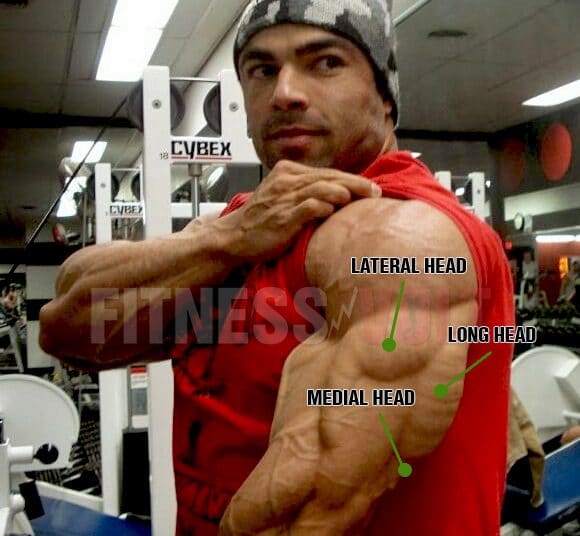
Triceps Pushdown Comparison: Rope vs. Straight Bar vs. V-Bar (Which is Better?)
The quantity of breaths we receive is predetermined, and we aim to maximize the value of each. This is also why we are always looking for the most effective exercises for a muscle group. We don’t want to waste our time, effort, and energy on an inferior lift. Most lifters switch between different cable triceps…
Mark Wahlberg Will Make Movie About ‘Godfather of Fitness’ Jack LaLanne
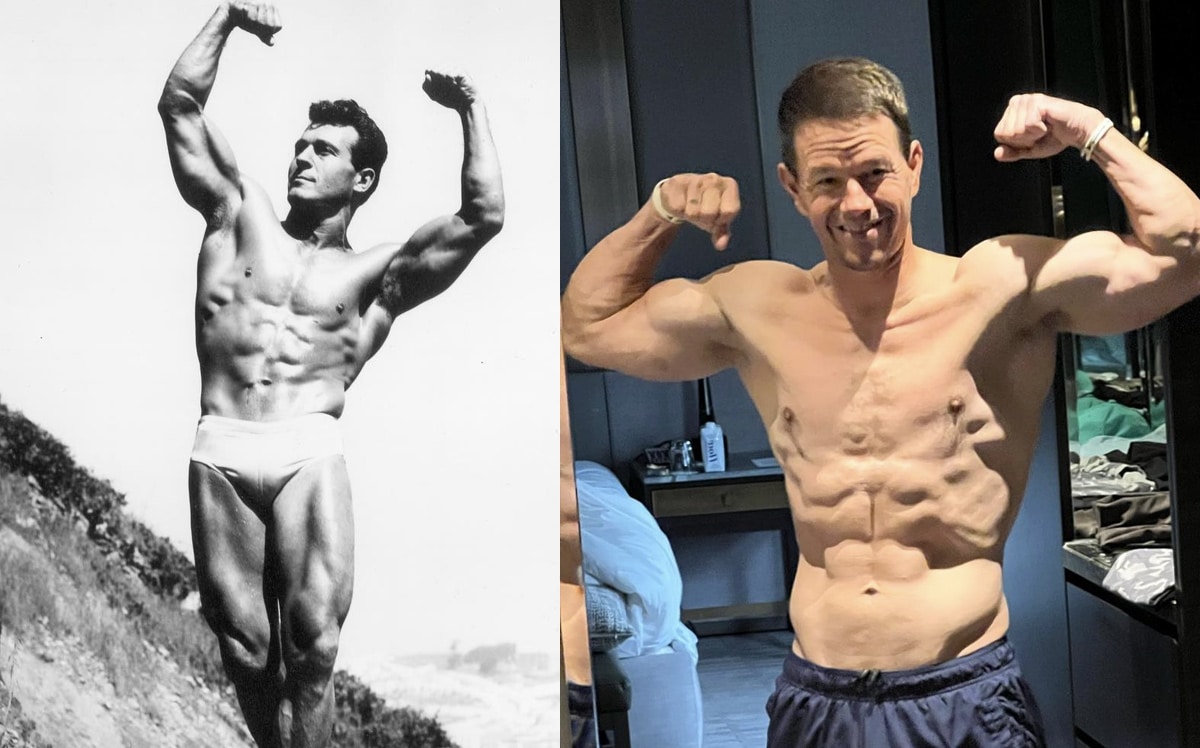
Hollywood A-lister Mark Wahlberg is one of the busiest actors in town yet he never fails to get a workout in. In a recent interview with The Hollywood Reporter, Archie Gips, president of Wahlberg’s production company called Unrealistic Ideas, shared the firm’s plans to honor the legacy of the late Jack LaLanne in movie theatres. …

Awesome Muscle Building Stack!
Here is an awesome stack a customer ordered!
1 pound of Total Frag 250
1 pound of Bio Serum
5 lbs of OatMuscle
16 oz of Raw Honey
Directions:
Budget
1 tbs of Bio Serum
1 tbs of Total Frag
1/4 cup of Oatmuscle
2-3 tbs raw honey
1/4 cup of protein powder
No Budget
1/4 cup of Bio Serum
1/4 cup Total Frag
1/4 cup Oatmuscle
2-3 tbs of raw honey
Add to chocolate milk or similar
blueberries, banana, ice
BEST muscle building protein powder!!!
Alex Rogers is a supplement manufacturing expert. He has been formulating, consulting, & manufacturing dietary supplements since 1998. Alex invented protein customization in 1998 & was the first company to allow consumers to create their own protein blends. He helped create the first supplement to contain natural follistatin, invented whey protein with egg lecithin, & recently imported the world’s first 100% hydrolyzed whey.
Rich Gaspari Says Classic Physique Is Saving The Art of Bodybuilding
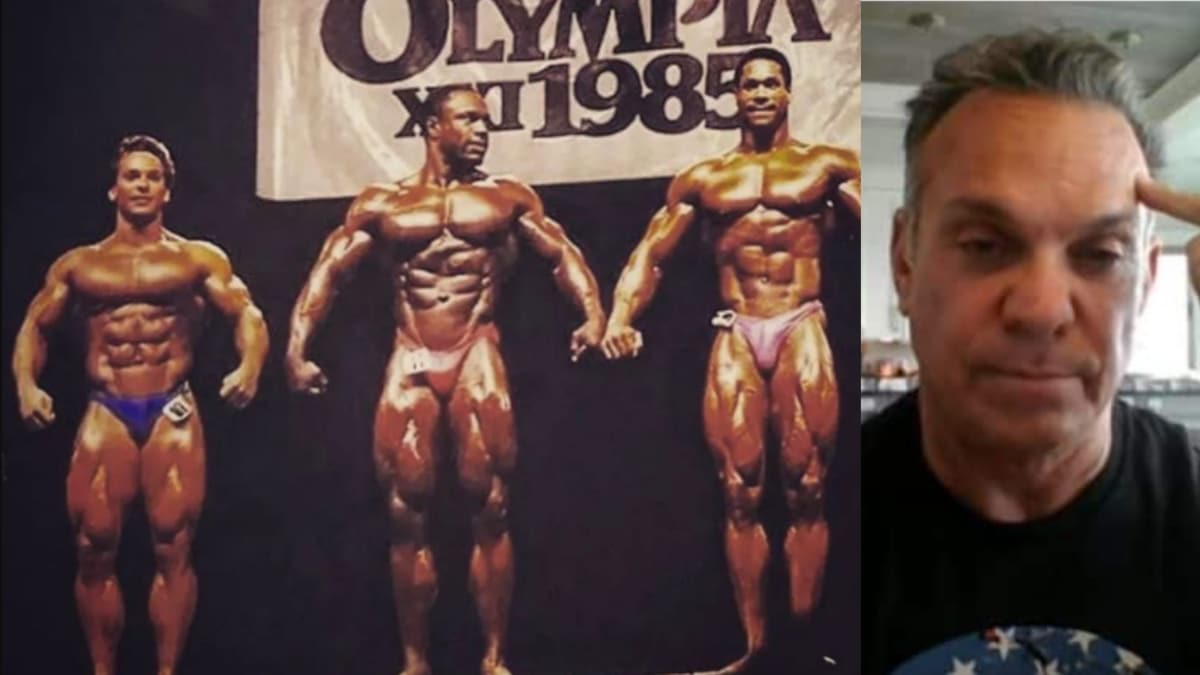
Rich Gaspari has seen bodybuilding progress through the years and worries the artful aspects of the practice have fallen by the wayside. In a recent Fitness, Fame & Fortune Podcast, Gaspari argued why bodybuilding should be considered an art form, not a sport.
Artistic expression and bodybuilding go hand in hand. For as long as the sport has been around, competitors have crafted unique posing routines to complement their respective physiques. There is no doubt bodybuilding has changed since Rich’s time on stage. After wrapping up his tenure, mass monsters were slowly taking over the top of the Men’s Open division.
In the 1990s, Dorian Yates proved mass and conditioning to be an Olympia-winning combination. Following Yates’ six-year reign, another massive albeit conditioned bodybuilder took his place as Ronnie Coleman made his ascension into the history books with eight Sandow trophies.
Many believe Hadi Choopan’s win at the 2022 Mr. Olympia show signaled a shift to conditioning and balance in bodybuilding. Gaspari thinks the sport has temporarily lost its artistry and blames dull posing routines.
Rich Gaspari Says Bodybuilding Is Not A Sport It’s an Art Form: ‘It’s Something That’s Subjective’
In Gaspari’s opinion, the subjectivity of bodybuilding makes it an art form, not a sport. He supported his argument by comparing it to other sports like track and field, where an athlete reaches a finishing line following a contest.
“You talked earlier about what is bodybuilding, is it a sport or an art? I consider it an art form. Do you have to go through physical training to get to this art form, yes you do. You’re building a statue by throwing clay to build up your chest or your shoulders but what are you doing? You’re displaying your body after all this physical exertion that you’re doing to build that body. Is it really a sport? It’s something that is subjective.”
“You really don’t sit there and run through the finish line and pick a winner. When someone argues with me that it’s a sport, I say it’s not a sport. It’s an art form. You have to go do the gym to get to look like a certain way to be that art form but is it really something that you can say I don’t know.
I can’t really say anything about sports because in the Olympics you got curling, which I think is a ridiculous sport, throwing that thing across the ice. Could bodybuilding be considered a sport, in that sense sure, since curling is a sport, why not bodybuilding. I kind of think when people tell me I said it’s art form, it’s not a sport,” Gaspari said.
According to the 59-year-old, artistic expression might have been lost but he believes Classic Physique is resurrecting the concept.
“A lot of what you’re doing is training, but people don’t see what it takes to make that body. The dieting, the training, the tanning, all the preparation it takes to get ready to go on that stage. That’s the part that it’s all the stuff that comes together to get you to be that bodybuilder on stage. I mean – I spent hours posing too because it’s good that lately that the art form is coming back because of Classic Bodybuilding but for the last couple of years, the last five or six years it was lost, it was a lost art.”
“Back – go five, six, eight years ago, bodybuilding posing was completely lost. I thought the routines were shit. The only guy that really posed that gave a good show was someone like a Kai Greene. That still saw something in that even though there wans’t – I guess they didn’t score it. Back when I posed or when I competed, they did score the posing round.”
Industry expert John Ramano also drew attention to the lack of vacuum poses in the Men’s Open division compared to the Golden Era of bodybuilding, which hosted the likes of Arnold Schwarzenegger, the late Dave Draper, and Lou Ferrigno.
“Ferrigno was famous for that, think of the huge guys from then that could do a vacuum. Draper, Arnold, Louis, all these guys that we talk about – Mentzer – he was pretty big at one point still sucking up a vacuum,” added John Ramono.
Before wrapping up, Gaspari underlined how busy Venice Gold’s Gym was and likened it to a circus.
“It was such a show [at Gold’s Gym Venice], guys like Lyle Alzado, you knew Lyle Alzado, he was nuts, the Barbarian Brothers — guys if you went to this gym back then, it was a circus. It was a circus. You really couldn’t train in that – I would train, like I said, train in the valley, I would go to World’s Gym with Lee and he would never want to go to Gold’s.”
Rich Gaspari is far from the first retired pro to highlight how the Men’s Open has changed over the years. Perrenial Olympia contender Lee Labrada pointed out that symmetry, proportions, and balance have been ‘tossed to the side’ as of late. Moreover, he took issue with the lack of creative posing routines and described the Open class as ‘tanks clunking’ between each other with no transitions.
RELATED: 63-Year-Old Lee Labrada Looks Jacked in Father-Son Posing Session with Hunter
Samson Dauda’s win at the 2023 Arnold Classic revived the importance of balance, symmetry, and posing in the Open. Nevertheless, Gaspari is adamant that bodybuilding should be considered an art form, not a sport.
Watch the full video below:
https://youtu.be/2s5ne_2PGtc
Published: 14 April, 2023 | 2:50 PM EDT
6 Best Powerlifting Programs (Beginner, Intermediate and Advanced)
There are hundreds of free powerlifting programs that you can find on the internet that cater to different levels of powerlifters. You have old programs that have changed in popularity over time, and you have new coaches coming up with their own programs. Trying to decipher what program to start with can leave you paralyzed…
Chris Cormier and Olympia Judge on Glute Injections/Implants: ‘It’s Really Cheating’
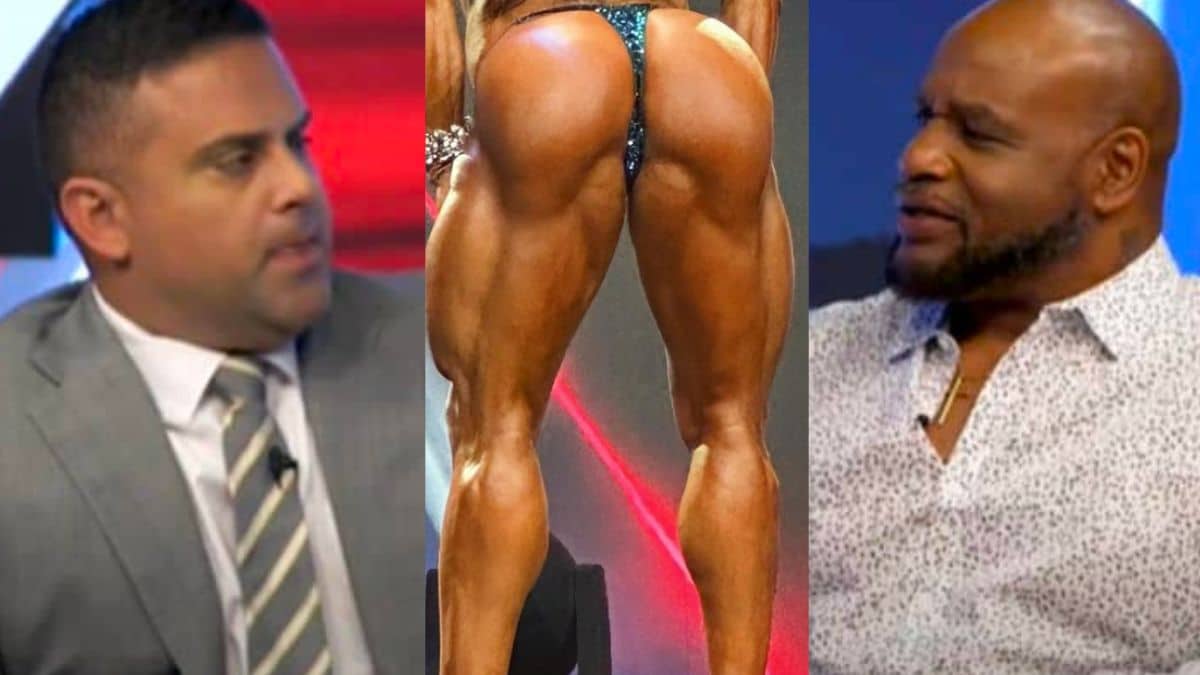
Chris Cormier and Terrick El Guindy are taking a closer look at how to observe imbalances in a bodybuilding physique. In a recent Prime Time Muscle podcast, Cormier and El Guindy explained why glute implants/injections are a form of cheating in the IFBB Pro League.
Judging in bodybuilding has become a hot topic in the sport as of late. Discussions on how to score a contest swelled following the conclusion of the 2022 Mr. Olympia contest that saw Mamdouh ‘Big Ramy’ Elssbiay lose to Hadi Choopan. The podium was rounded out with Derek Lunsford and Nick Walker taking second and third, respectively. Given the results, fans suspected that judges were beginning to favor balance and conditioning rather than size and freak factor.
These observations were brought into the limelight again after the 2023 Arnold Classic. Samson Dauda‘s shape, balance, and proportions sealed the deal in Ohio, where he outlasted Walker and third-place finisher Andrew Jacked. Bodybuilding veterans and fans of the sport took issue with Dauda’s victory. Chris Aceto, Jay Cutler, and Samir Bannout thought Walker could or should have won.
Walker implored his fans to stop harping on the results days after the contest. In a recent Mutant & The Mouth Podcast, Walker, joined by Guy Cisternino and Nick Trigili, called for a more transparent judging process. Meanwhile, event announcer Bob Cicherillo took to his own series of podcasts to not only lay out why Walker lost but also explained in detail how to score a bodybuilding contest.
In light of the judging controversy, Cormier and El Guindy tackled the subject and laid out strategies for detecting imbalances related to glute injections/implants.
Chris Cormier, Judge Terrick El Guindy Explain How to Look for Injection/Implant Imbalances
According to El Guindy, the breasts of a female competitor are not being judged in any capacity, and specified that the Olympia in female categories can be won without implants.
“The section where a woman breastfeeds or accumulates natural fat, that’s not being judged in any category. What that means is, whether you have large breasts whether you don’t have large breasts whether you have an implant, it’s up to you, it makes zero difference on the judging.”
“It doesn’t matter at all,” says El Guindy. “I don’t know if Marueen Blanquisco has augmentation or not or the girl in 10th place has augmentation or not – I don’t look at it, I don’t judge it, I don’t even have time to look at it. What I am looking at — the abdominals section, I’m looking at glutes, I’m looking at legs, is she over-conditioned? Is there too many veins and this or that.”
“I couldn’t tell who had augmentation and who doesn’t It’s not important, you can win the Olympia without it,” El Guindy stated. “As judges we don’t have the time to look at it. Now going back to the difference between glutes and breats, is that we are judging the glutes. We are judging the glutes. So, if you show up on stage with an imbalance which is not natural to the anatomy indentation… exactly, there is, and Chris and I talk about it, the human anatomy where the glutes connect with the hamstrings.”
El Guindy explained that judges are trained to look at the natural indentation connecting the glutes to the hamstrings.
It doesn’t matter, men and women, if you look at a famous picture of Ronnie Coleman when he squeezes his glutes, there’s a natural indentation of the glute going into the hamstring. You look at Franciella Mattos – the current Wellness champion, there’s a natural indendation into the glutes going into the hamstrings.”
“When you don’t have what a lot of girls call the teardrop when it just goes down and just stops and there’s extra volume, that’s an imbalance and judges are going to catch it. You’re going to go from, ‘Hey, I never had butt implants, I was winning shows, I was in the first call-out.’ To now, hey, ‘You have an imbalance and now you end up on the last call-out,” El Guindy added.
Another telltale sign of imbalance that El Guindy revealed was physiques whose legs and glutes don’t match in terms of development.
“I’m not sure I could quite reveal some of our strategies to identify it – I have no problem because first of all, just the facts,” El Guindy said. “Then, you look at the development of the leg, it doesn’t match the development of the glutes.”
“And it’s going to get worse as you get older,” Cormier said.
Lastly, El Guindy highlighted that judges can identify an implant or injection by the way someone walks on stage.
“Whether you like it or not, you have to walk to that spot [on stage]. And when you walk and stuff doesn’t move naturally, like we’ve seen for the last thousands of years, something is wrong,” El Guindy explained. “So, I want to understand why some of them try to do it. Because it’s really cheating, right?”
“This competitor who just used some type of you know, imbalance, did not do what you’re supposed to do which is bodybuilding. You’re building your body; it’s not called implant-building. It’s bodybuilding. It requires the breakdown of protein and building muscle.”
Given his expertise, El Guindy has witnessed competitors who were on the verge of winning drop to the last call-out due to injection/implant imbalances.
“You’re absolutely right, we’re trained to identify not only when you pose but when you walk. It’s sad because a lot of times, I’ve judged some shows where I said, ‘Man, this person had the potential of winning, men or women, the potential of actually winning the entire show,’ but somehow because of an imbalance they actually lost and went into the last call-out, we see that a lot.”
This isn’t the first time that Cormier and El Guindy joined forces to discuss site-enhancement oils and physique imbalances. Urging competitors against substances like Synthol, ‘The Real Deal’ underlined the damage he sustained to his calves earlier in his career. He stressed that the practice causes lifelong damage to the muscle due to poor blood circulation.
RELATED: Chris Cormier Warns Hadi Choopan to Bring ‘Different Look’ In Shoulders Due to Synthol Accusations
Simply put, Cormier and El Guindy believe glute injections and implants are cheating. They emphasized that the sport’s Olympia titles can still be won without resorting to these types of shortcuts.
You can watch the full video below:
Published: 14 April, 2023 | 12:00 PM EDT