
 All Posts By Muscle Insider
Board Certified PHD

Chad Nicholls Reveals Origins of Beef with Shawn Ray & Scuffle with Son Dom
Bodybuilding guru Chad Nicholls has guided the careers of many top contenders in the sport. In a Desktop Bodybuilding interview, Nicholls revealed the origins of his beef with retired bodybuilder Shawn Ray and laid out what happened between his son Dominic and Ray at the 2023 Arnold Classic Expo.
Chad Nicholls gained attention for his expertise as a mentor to bodybuilding legend Ronnie Coleman, who racked up eight Sandow trophies during his reign of dominance between 1998 and 2005. Nicholls is credited for guiding Coleman to his first Olympia title.
Nicholls has been at odds with former IFBB Pro Shawn Ray for the last few years. Ray took issue with Nicholls’ training techniques in Feb. 2020. He criticized Nicholls for promoting dangerous training with the use of performance-enhancing drugs. The tensions between Nicholls and Ray heated up again when Shawn expressed disapproval of the protocols used by Nicholls.
Meanwhile, Nicholls remained focused on supporting former two-time Mr. Olympia Mamdouh ‘Big Ramy’ Elssbiay on the way to his next appearance. He lauded the Egyptian mass monster for making strides in the off-season and backed him to return with an even bigger package at the 2022 Mr. Olympia. However, he was cautious of the threat presented by rising sensation Nick Walker and William Bonac, both of whom display freakish muscle mass.
In the end, Ramy missed the mark on stage in Las Vegas four months ago and dropped the title to Hadi Choopan. Nicholls highlighted the need to fix some issues Ramy faced at the Olympia before his return to action for the 2023 Arnold Classic last month. He thought Ramy made the necessary adjustments and would be a problem for many at 310 pounds.
During the 2023 Arnold Classic Expo, the troubles between Nicholls and Ray reached a boiling point. Nicholls’ son Dominic confronted Ray at the expo and called him out for trashing his father’s name. While the altercation didn’t come to blows, the video of the heated verbal exchange made headlines online.
Prolific bodybuilding coach Milos Sarcev weighed in on the scuffle a week later. Sarcev stated Ray allegedly got jumped by Nicholls but didn’t provide any evidence of the incident. IFBB Hall of Famer Chris Cormier theorized Dom was particularly upset at Ray for blaming his father for the deaths of some bodybuilders.
Chad Nicholls reveals the origins of his beef with Shawn Ray
In a recent YouTube video, Chad Nicholls revealed how his feud with Shawn Ray started.
“Boyer Coe called me on the phone and asked me, now I can’t swear to god that Shawn knew that Boyer was going to call me or not but Boyer Coe definitely called me and asked me if I’d be interested in working with Shawn,” said Nicholls. “Of course, they both deny that now but they’ve been friends for years. That’s 100 percent what happened. I think he’s pissed at me though when I started working with Flex, like he was beating a lot of these guys, and then next thing you know he never beat one of my guys ever again. Then, he retired two or three years.”
Nicholls details what happened between Dom and Ray at the 2023 Arnold Classic Expo
Chad Nicholls says the beef with Ray has been going on for 20 years and touched on the viral incident with his son, Dom.
“Here’s kind of what happened. Obviously, everybody knows the beef between me and Shawn, it’s going on for 20 years ever since I started training athletes and they all started placing ahead of him so that was kind of no-brainer and it kind of back and forth. When I saw Shawn, I had nothing but positive thoughts. I was going to be like, ‘hey man we need to talk. Let’s go and talk.’ My thinking was let’s just squash this sh*t. It’s all petty nonsense. He kinda made a smart-ass thing, got my number and we’re both there, let’s go talk. I said let’s go talk and my thinking was we’ll exit the ballroom because I didn’t want to do in front of everybody.
We’re already at the back and so I was going to walk out the back doors. Basically what happened was when Sean realized we were getting ready to exit, he stopped and kind of backtracked. Dom was behind him but Dom kinda was like get moving boy and then Sean does Sean and starts screaming, you’re going to go to jail, you want to be arrested, I’m going to end your career, blah blah. That was really the end of it. I literally would’ve not thought another thing about it.
“But I guess after that, Ron Harris had sent Dom a message and it’s like hey why is Shawn saying you hit him and Dom’s like what the hell are you talking about because Ron was right there. I didn’t hit him and he’s like no that’s what I’m saying why is Shawn saying that he’s completely lying about it so that kind of pissed off. Then, somebody else came and was like hey I heard Shawn was ready to go outside with you. He’s telling everybody he was ready to go outside so at this point, you’re talking about a 19 year old kid and now all these guys are saying this happened and that happened.
So, now Dom loses his cool a little bit the next day, goes up and decides to confront him. The reason he recorded it was basically so they couldn’t say something happened that didn’t happen so that was really all that was basically being recorded. He went up basically, said what he said, they recorded it again, only reason they record it so Shawn couldn’t come back and say oh well he was aggressive, put his hands on me, done this, done that and that was basically it. It was done and over with at that point basically.”
“It was basically he had already started saying stuff that was not true. So, Dom didn’t want to do something and all of a sudden, Sean calls up somebody and said he assaulted me at the booth. They recorded it to make sure everybody knew.”
Bodybuilding veteran Jose Raymond chimed in with his take on the rivalry between Shawn Ray and Chad Nicholls two weeks ago. Raymond sided with team Nicholls while bashing Ray for his behavior. He believes Ray is walking on thin ice and doesn’t serve the bodybuilding community as a legend should.
RELATED: Chad Nicholls Details Big Ramy’s ‘Disaster’ 2022 Olympia Prep: “Everything Went Wrong”
Based on Nicholls’ latest comments, it appears the troubles with Ray are far from over and could escalate on the horizon.
You can watch the full video below.
Published: 14 April, 2023 | 9:06 AM EDT
Progressive Overload: The Science Behind Maximizing Muscle Growth
If you have been in the iron game for a while, “progressive overload” might not be something new. It’s a common phrase to help explain what is needed for effective training.
The idea is pretty simple. Training must present progressively larger stressors over time for continued progress. However, as straightforward as it is, there are a ton of misconceptions. Progressive overload is about more than just adding weight to the bar. Yes, lifting heavier is part of it, but it is not the only way to progressively overload the muscles.
In this article, we will address some common fallacies and more as we dig into progressive overload and the science behind maximizing muscle growth.
What is Progressive Overload?
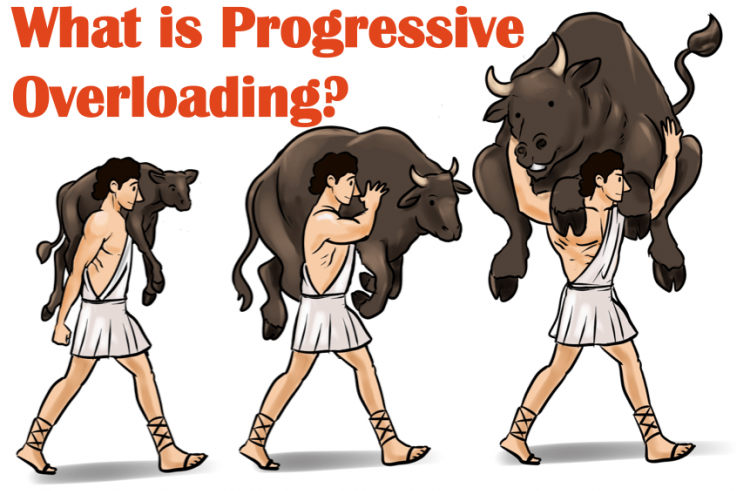
All talk on progressive overload, for better or worse, starts with the story of Milo of Croton. Milo was an ancient Greek wrestler who was known as quite the stud. As legend has it, Milo began lifting a tiny calf on his shoulders daily. As the calf grew, Milo k
ept lifting it until one day, the baby calf grew into a full-grown bull. As a result, Milo grew too.
The story is more myth than fact, but it does help illustrate the concept of progressive overload. In simple terms, progressive overload means training must get progressively more challenging over time to continue stimulating adaptation.
But let’s take a step back.
The human body is a well-balanced machine controlled by homeostasis. It’s like the body’s built-in thermostat. Blood pressure, body temperature, and blood sugar are examples of homeostasis within the body. If the body detects any changes, it takes action to return to balance. It’s why we sweat in the heat and shiver in the cold.
Building muscle is no exception.
The process of building muscle can be described as stimulus, recovery, and adaptation. Or, in a practical sense — train, recover, and then get stronger and more muscular. Lifting weights is the first domino, but the entire process must repeat for continued progress.
The key is the stimulus must represent an overload. Overload is a workload beyond what the lifter is accustomed to.
The adaptation (getting more jacked) is only a result of the overload forcing the body out of homeostasis. This is why doing the same weight for the same reps is eventually a dead end. Progress slows or stops as soon as the workout is no longer challenging, and your body can maintain homeostasis.
Bottom line: Training must get progressively challenging for the workout to continue to deliver results.
Why Progressive Overload Is Essential
The importance of progressive overload comes down to mechanical tension. Mechanical tension is the stress applied to a muscle from external resistance. It’s what happens to the muscle when we lift weights. Although there are many factors for initiating muscle growth, mechanical tension is widely considered the primary factor.
To illustrate how critical tension is for building and maintaining muscle, look no further than astronauts in space. Whether we realize it or not, we are always resisting the force of gravity. Of course, gravity on earth is a low level of tension, but its tension nonetheless.
When astronauts are up in space, they don’t have gravity, so tension is removed. In fact, minimal muscle contraction is needed. According to NASA, astronauts experience up to a 20% loss of muscle mass during spaceflights. In a weightless environment, the body doesn’t require additional muscle mass. If you don’t use it, you lose it.
You may wonder what this has to do with progressive overload and muscle-building.
The reason astronauts lose muscle in space helps explain why progressive overload is essential for progress. The body only wants as much muscle and strength as it needs to carry out daily functions.
Lifting boxes, carrying our kids, and climbing stairs are examples of enough tension to create a hypertrophy stimulus, just a minuscule amount. Once we have enough muscle and strength for these daily functions, they no longer stimulate growth.
To grow additional muscle beyond what is needed for daily functions, we must introduce the body to higher levels of mechanical tension. At first, all forms of resistance training satisfy that requirement. This is why when you first start training, progress is easy. You get bigger and stronger if you show up to the gym a few times per week, give a reasonable effort, and eat halfway decent. But, the newbie gains only last for a brief period.
The body is very good at adapting. Eventually, just showing up will not deliver results. The body adjusted to the workouts the same way it did daily activities. Most of us have experienced this as we transitioned from beginner to intermediate. It’s often called a training rut or plateau.
You must continue overloading the body to break the plateau and stimulate progress.
How to Build Progressive Overload into Your Program
So far, we have talked a lot about the concept of progressive overload but have yet to learn how to implement it. There are many ways to build progressive overload into the training plan. Here are the most common:
Increase the weight lifted: Adding weight to the bar is the easiest way to build progressive overload into any training program. Accomplish this by increasing the weights lifted over time while maintaining the same reps and sets.
Increase the repetitions performed: Another option for progressive overload is adding repetitions over time while keeping the weights and sets performed the same.
Increase the number of sets: One of the most overlooked ways to build progressive overload into your program is by increasing sets. Do this by adding sets over time while maintaining weight and reps. Adding sets is a great way to increase training volume.
Increase the number of exercises performed: Adding exercises is another way to increase training volume and progressive overload. For example, you have implemented progressive overload if you usually do three chest exercises per week and bump it up to four.
Decrease rest periods: Training density refers to the work you can do in a given time. Completing your workouts faster is another form of progressive overload. You can accomplish this by decreasing rest periods between sets. That said, be careful not to reduce rest periods too much that it limits performance. For optimal performance, rest for 1-3 minutes between sets.
Progressive Overload Misconceptions
On the surface, this all seems straightforward. However, there are some common misconceptions we need to address.
Misconception #1: Progress is Linear
Okay, so we have established that doing more work overtime leads to progress. Awesome. Let’s do the math. If you can bench 135 pounds for five reps today and add five pounds to the bar each week for the next two years, you will be benching well over 600 pounds!
We all know it doesn’t work like that. But why?
Progressive overload is the observation of increased performance based on the adaptations that have already occurred. Put another way; you must earn the right to progressively overload your training. It’s not just the act of doing more work. It’s the result, too. Overload is limited by the positive adaptation that results from training. It can’t be forced. The limitations of muscle growth are beyond the scope of this article, but they exist.
Misconception #2: You Need to Progressively Overload Every Workout
Progressive overload does not need to occur in every training session. Beyond the beginner and early intermediate stages, this is unrealistic. However, growth will be limited if you do not add weight to the bar over time. The goal is to keep the big picture in mind.
The more advanced you get, the longer it takes to see meaningful progress. Sometimes you have to do the same thing for a couple of weeks before you can up the ante. The goal is not to do more in each workout but to push for more in each workout. Results will come if the programming is well-designed and the effort is there.
Misconception #3: It’s All About Going Heavy
The biggest misconception about progressive overload is that it’s all about lifting as heavy as possible. Yes, adding weight to the bar is an excellent way to progressive overload, but it’s not the only way. In fact, adding reps is highly effective. Research shows muscle growth occurs with low and high reps [1]. The key is pushing each set close to failure.
Misconception #4: It’s All About Volume
Over the past few years, training volume has received much attention as a primary driver of muscle growth. On the surface, this is true. Research comparing one, three, and five sets per exercise shows that multiple sets are more effective for muscle growth than a single set [2].
However, the response to volume follows an inverted “U” shape curve. What this means is, adding more volume works until it doesn’t. Eventually, volume increases to a point where it exceeds the body’s ability to recover. At that point, progress stalls and, if continued, starts to backslide. Besides, who has all day to spend in the gym?
The right amount of volume will be slightly different for everyone. Based on the current literature, ten sets per muscle group per week is a great spot to build muscle [3]. This doesn’t mean you can’t go beyond ten sets per week. You can. However, once you get beyond ten sets per week, start looking at other ways to build progressive overload into your program to facilitate progress.
Three Examples of Progressive Overload
The key to taking advantage of progressive overload is not leaving it up to chance. Here are three ways to build progressive overload into your program.
Example #1: Increase Weight
The first example is adding weight each week. Don’t be tricked by the simplicity of this setup. A basic linear load progression can be highly effective.
Week 1: 3 sets of 10 reps at 66% of 1RM
Week 2: 3 sets of 10 reps at 68% of 1RM
Week 3: 3 sets of 10 reps at 70% of 1RM
Example #2: Increase Sets
In example two, the number of sets increases weekly while the weight stays the same. Adding sets is a great way to increase volume without lifting heavier each week. Advanced lifters respond well to this style of overload.
Week 1: 3 sets of 10 reps at 68% of 1RM
Week 2: 4 sets of 10 reps at 68% of 1RM
Week 3: 5 sets of 10 reps at 68% of 1RM
Example #3: Increase Reps
The third example involves adding a rep each week while maintaining the sets and weight on the bar. Increasing reps each week is sometimes more feasible than increasing the weight.
Week 1: 3 sets of 8 reps at 70% of 1RM
Week 2: 3 sets of 9 reps at 70% of 1RM
Week 3: 3 sets of 10 reps at 70% of 1RM
Progressive Overload Principles
There are three progressive overload principles you must keep in mind.
Principle 1: Only change one variable at a time
The first principle of progressive overload is only to change one variable at a time. It’s easy to assume that if a bit of progression is good, more must be better. With progressive overload, that muddies the waters, making it hard to know what is driving progress.
Additionally, changing more than one variable at a time can cause you to push beyond your recoverability. For example, if you try adding weight and reps simultaneously, you can outpace your progress and miss reps.
Principle 2: Always maintain good technique
For progressive overload to work, we need natural progression. You can’t use a lousy technique to force weekly advancements that are not there. Adding weight or reps but allowing your form to break down differs from actual progression.
Principle 3: Keep a Training Journal
The key to progressive overload is knowing what you have done during your workouts in previous weeks. Keep a training journal and track the exercises, weights you used, sets, reps, etc. Before each training session, review the journal to know what numbers you need to beat.
Benefits of Using Progressive Overload
Regardless of your goals, there are many benefits to using progressive overload in your training.
Avoid Muscle Building Plateaus:
Once you get past the beginner stage, continuing to build muscle becomes harder. If you don’t have a strategy to build progression into your program, it’s easy to get caught in a muscle-building rut. Eventually, you will stop progressing if you continuously do the same exercises for the same weight, sets, and reps. By constantly planning ahead and building ways to stress the muscles to greater degrees, you can mitigate stalls in progress.
Gain Strength:
To gain strength, you need to lift heavy weights. There is no way around it. That said, you can’t just go to the gym and max out every time and expect to get the best results. Part of quality strength programming is gradually increasing the weights used systematically.
Save Time:
Chances are you live a busy life and can’t spend all day in the gym. Well, using progressive overload is the most time-efficient way to train. One of the problems with training programs that don’t use progressive overload is they end up with a lot of junk volume.
Junk volume is work that needs to be more challenging to stimulate muscle growth. Often this happens when working sets are not close enough to failure to produce enough tension in your muscles. People typically add more sets to make up for the abundance of junk volume. You can train for two hours at a time, but if the workout is 80% junk volume, it won’t deliver results.
Focusing on progressive overload and beating the logbook ensures your program has no wasted sets.
Frequently Asked Questions
What is an example of progressive overload?
There are many examples of progressive overload. You can increase the weight lifted, the number of sets performed, and do more reps or exercises.
Should I progressive overload every week?
In a perfect world, we could implement progressive overload every week. However, progress is only sometimes linear. As an advanced lifter, you can outpace your progress if you try to force weekly progressions. Think of progressive overload in the big picture. If week-to-week gains are too aggressive, aim for month-to-month.
Is progressive overload safe?
As long as you maintain good form, progressive overload is safe. That said, if you add weight too quickly, you can increase your risk of injury. Only use weights you can handle with good technique.
Can you grow muscle without progressive overload?
Yes, you can grow muscle without progressive overload, but only temporarily. Eventually, your muscles will stop growing unless you continuously apply more stress.
Wrapping Up
Progressive overload is one of the primary principles in strength training. Anyone can make progress for a short time, but as the iron game veterans know, long-term results are a different story. Whether you want to be as strong as possible or look great naked, your workouts must have built-in progressions.
That said, there is more to it than lifting heavier weights. Of course, always aim to get stronger, but don’t avoid the other methods of progressive overload, either. Using all the tools available is the key to long-term progress. Now all you have to do is put in the work!
References:
Schoenfeld BJ, Grgic J, Ogborn D, Krieger JW. Strength and Hypertrophy Adaptations Between Low- vs. High-Load Resistance Training: A Systematic Review and Meta-analysis. J Strength Cond Res. 2017 Dec;31(12):3508-3523. doi: 10.1519/JSC.0000000000002200. PMID: 28834797.
Radaelli R, Fleck SJ, Leite T, Leite RD, Pinto RS, Fernandes L, Simão R. Dose-response of 1, 3, and 5 sets of resistance exercise on strength, local muscular endurance, and hypertrophy. J Strength Cond Res. 2015 May;29(5):1349-58. doi: 10.1519/JSC.0000000000000758. PMID: 25546444.
Schoenfeld, Brad J, et al. “Dose-Response Relationship between Weekly Resistance Training Volume and Increases in Muscle Mass: A Systematic Review and Meta-Analysis.” Journal of Sports Sciences, vol. 35, no. 11, 2017, pp. 1073–1082, www.ncbi.nlm.nih.gov/pubmed/27433992, 10.1080/02640414.2016.1210197.
Cable Reverse Crunch: Muscles Worked, How-To, Benefits, and Variations
The cable reverse crunch is not a familiar exercise to most of us (admit it, you’ve never tried it). Hopefully, that will change as we’re convinced it’s one of the most potent variations for bringing out those stubborn and oftentimes invisible lower abs.
Effective core training is not just doing a few weighted crunches, and planks (although they’re part of it). For the best results, you need to incorporate movements that curl the torso at both ends and emphasize core muscle contraction (and oh, it feels so good!).
In this guide, we spill the beans on this must-have ab movement, that offers advantages over similar core-building powerhouses. We’ll show you how to do it correctly, and explain why the hips are key!
Muscles Worked During The Cable Reverse Crunch
A powerful core, and hip strengthening exercise, learn how cable reverse crunches train the abdominal and lower body muscles and understand the importance of training them.
Rectus abdominis
The fancy term for abdominal muscles, rectus abdominis are a long pair of muscles that run between the pelvis and lower chest. Consequently, these muscles serve to curl the torso at both ends of its attachments. We see this during a regular lying floor crunch (lifting the head and shoulders off the floor), and when curling the pelvis and lifting the hips off the ground.
Transverse abdominis
Most people think the abs are the bumpy ridges, aka six pack muscles. Well, that’s one set of abdominals. We also have deeper core muscles called the transverse abdominis. Slung between the ribs and pelvis too, they wrap around the torso, horizontally, like a lifting belt, and consequently acts like one, compressing the core, and stabilizing the spine.
Reverse cable crunches activate transverse abdominis, especially during the hip raise.
Obliques
Playing a sidekick role to the rectus abdominis during cable reverse crunches, obliques lie on either side of the abdominals, more laterally on the torso. The obliques’ position allows them to crunch the trunk sideways, and perform rotational movement of the upper body.
Hip flexors
The hip flexors are muscles that connect our spines to our legs, and they allow us to pull the knees back and lift the butt off the floor. Not just one muscle, but several contribute to this action.
Hip flexor muscles include:
Iliacus
Psoas (major and minor)
Rectus femoris
Iliocapsularis
Sartorius
However, “hip flexors” usually refers to the psoas and iliacus that form the iliopsoas muscle. A powerful duo, these muscles, together, are the strongest and most important hip flexors. Consequently, when iliopsoas contracts, it supports standing, sitting, and overall lower body movement.
How To Do The Cable Reverse Crunch
The cable reverse crunch requires a little more setup and training experience compared to more basic abdominal exercises.
This section will guide you through the proper step-by-step process including machine setup, pre-set routine, and finally, the cable reverse crunch.
Steps
Slide the cable pulley to the lowest notch on the railing. Then attach an ankle strap.
Sit on your butt facing the machine, then wrap the strap around your ankles and make sure it’s secure, and will not come off. Tip: Start with a very light weight and do a few reps to test the secureness of the ankle strap.
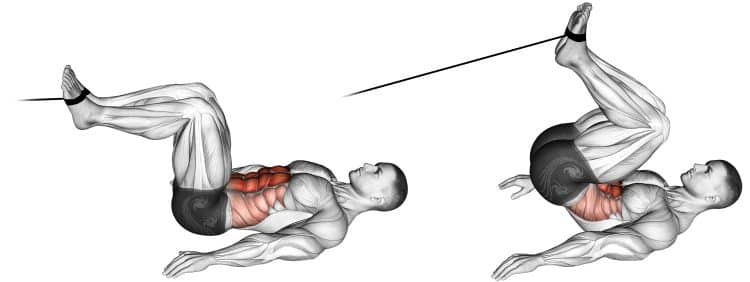
Now lie back on the floor and lift your knees up so you’re upper legs are vertical or perpendicular to the floor, and the legs are bent at a 90-degree angle. Extend your arms forward next to your butt and place the palms flat on the floor. Press your lower back flat on the ground.
Lift your shoulders and head off the floor like you’re doing an upper ab crunch, as shown in the video example below.
Tense your core muscles, then pull your knees into your chest and lift your butt off the floor. Focusing on curling the pelvis toward the ceiling, and squeeze both your lower and upper abs hard.
Slowly drop your hips and move your legs forward in the starting 90-degree legs bent position. Then repeat for the preferred number of reps. That’s one set!
Watch a video demonstration of the cable reverse crunch, below.
Tips
If you’re a beginner to exercise or direct ab training, start with the bodyweight variation first. It should be very challenging without extra resistance.
If you don’t have access to a cable machine but still want to benefit from weighted leg crunches, you can do hanging leg raises, strap on some ankle weights, or hold a dumbbell, or exercise ball between your feet.
Focus on curling the pelvis and remember to lift the butt off the floor to really engage the lower abs. Don’t just focus on pulling the knees back as it’s more about what’s happening with the butt!
This Exercise:
Target Muscle Group: Rectus abdominis
Secondary Muscles: Obliques, hip flexors
Type: Strength, hypertrophy
Mechanics: Isolation
Equipment: Cables and ankle strap
Difficulty: Intermediate
Benefits of Cable Reverse Crunch
The cable reverse crunch fits a specific role, not really offered by other options. Besides the main benefits of training the abdominals, there are bonus benefits too. Here’s why we like it.
Add resistance to bodyweight lying leg crunches
A basic lying leg crunch can become boring and unchallenging for those who are more advanced in their training. The cable variation is a gamechanger because you can add incremental weight, and most people will never outgrow the full weight stack. Although, you don’t need much weight anyhow.
It’s also more convenient to use ankle straps, and not have to hold a weight between your feet. You can focus more on the actual exercise.
Awesome hanging leg raise alternative
Numbered weights are the easiest way to track and make progress. With bodyweight variations and banded movements, it’s harder to do. How else can you measure strength progress using your legs during ab training?
Easier to measure gains!
Numbered weights are the easiest way to track your progress, and that’s something cable training offers. Unlike bodyweight and banded exercises where you need to be more strategic about measuring your gains!
Drawbacks of Cable Reverse Crunches
While the cable reverse crunch is a sweet movement, there could be some potential drawbacks.
Requires a decent level of fitness and core strength
While it is a weighted variation, reverse crunches are hard enough without the added resistance. They require strong ad mobile hips, plus decent strength from the deeper and more superficial abdominal muscles. Therefore, we can see why weighted cable reverse crunches are not the best for beginners or those out of shape.
Cables are ideal, but not required
Cables allow you to easily track your progress using a numbered weight stack.
Unless you have regular access to a cable machine, the other variations and alternatives (like the ones below) may require a little more planning and strategy, as you cannot as easily add resistance or measure the weight loads as accurately.
Cable Reverse Crunch Variations and Alternatives
One of the exciting things about training is there are so many different ways to train a muscle. Not only does this combat workout boredom, but using different angles and techniques will undoubtedly get you the best results. The following exercises add extra resistance to your lower ab crunches.
Check out our favorite cable reverse crunch variations and alternatives…
Banded reverse crunches
Resistance bands are the natural alternative to using cables because, when used correctly, they should provide constant tension, not allowing your muscles to take a break at any point during a repetition.
Steps
Wrap one end of a loop resistance band around a heavy, stable object close to floor level as shown in the video example below.
Sit on the floor and wrap the other end of the band around the top of your feet.
Lie back and bring your knees up so the upper legs are vertical and your lower legs are horizontal.
Engage your core, drive your knees back, and lift your butt off the ground, curling the hips upward. Squeeze your abs, then drop your butt down to the floor, and return your legs to the starting angle.
That’s one rep… Now do several more to complete your set!
Tips
Start with a light band and focus on performing the exercise with a full range of motion, and feeling the abs contract. If you can do 15 easy reps, it’s time to add more resistance!
Keep your feet pointed toward the ceiling and toes curved back, or the band will snap back toward the base, throwing off your set.
Recliner crunch
One of the simplest and most effective ways to make leg crunches more challenging is to recline your body, so that your legs are at an angle, forcing gravity to create more resistance for your abs.
Steps
Sit in the center on the long side of a bench.
Grab the edge of the bench on either side of your thighs.
Lean back, keep your back straight, and raise your feet off the ground while keeping your feet together. Your core should tense naturally.
Now simultaneously pull your chest and knees into each other while squeezing your ab muscles hard.
Reverse the motion and repeat as many times as needed.
Related: 13 Best Hanging Leg Raise Alternatives For Beginner, Intermediate and Advanced Levels
Hanging leg and hip raise
If you have access to a pull-up bar, hanging leg raises are a must. The core works extra to stabilize the trunk, and you’re working the abs against the full weight of the legs, unlike a basic lying leg crunch. A more functional option than the cable reverse crunch, hanging variations should be in your top five!
Steps
Reach up and grab the bar with your hands spaced roughly shoulder width apart. Pull your shoulders down.
Hold your feet together and tense your core muscles.
Now bend your knees and lift them up past your waist, then curl your pelvis up and lift your butt to engage the lower abs. Contract the lower core, then slowly drop your legs to the starting position, but don’t fully straighten them.
Repeat until your set is finished.
Pro tip: For more lower ab engagement, lift your butt even higher than what’s demonstrated in the video provided below.
TRX/suspension trainer knee tuck
You can also flip around and use a suspension trainer like TRX or alternatives to imitate a similar movement. It’s more challenging than a lying bodyweight reverse crunch because you’re in a high plank position and the feet are elevated several inches the ground. There are a lot more muscles involved too, making suspension crunches a more functional, and mental fortitude building exercise.
Steps
Adjust the suspension handles to roughly mid calf height.
Place the top of your feet in the loops as shown in the video demonstration.
Get in a push-up position with your hands shoulder width apart, elbows locked out, and arms vertical. Keep your body straight.
Push your feet down into the straps to keep them stable, then tense your abs, and pull your knees to your chest and squeeze your core.
Extend your legs and repeat for the desired number of reps. Do not allow your hips to sag.
Stability ball ab tucks
A perfect home variation, if you have a decent level of fitness ability. Exercise ball knee tucks are harder than a basic lying ab tuck, and the stability requirements work your abs overtime!
Note: Use a quality ball and make sure it’s properly inflated.
Steps
Assume a push-up position with your hands roughly shoulder width apart, palms aligned with the lower chest, fingers pointed forward, and arms fully extended.
Prop your lower shins and feet on top of the ball keeping your legs close together. Your body should be straight with the butt slightly lifted.
Now pull your knees into your chest and squeeze your abs.
Extend your legs back to the starting position and repeat for the desired number of repetitions.
Dragon flag/fly
Dragon flags need no convincing, used by none other than legends Bruce Lee, Sylvester Stallone, and pro trainer/ fitness celebrity Jeff Cavaliere (Athlean X YouTube channel). It’s a more advanced core exercise that uses just the body weight for resistance. Static in nature, you must use more muscles to stabilize, balance, and create the movement.
The challenge comes from extended legs, which creates a longer lever arm.
Steps
Lie flat on your back and grab a stable section of your chosen object behind your head. Ideally, you can grab underneath and apply upward force.
With your legs and feet pressed together, use your hips and core to lift your feet toward the ceiling. Your body should form a straight line. This is your starting position.
Now brace your core strong and squeeze your butt muscles, then slowly drop your legs until they’re at a roughly 45-degree angle to the surface you’re lying on.
Pull your legs back to the starting spot and repeat!
Tips
Grip matters! Ideally, you can anchor yourself down by holding an object from underneath with the palms facing the sky.
Work on just eccentric phase to build strength by cheating your legs to the top and slowly fighting against gravity as it pushes your body back down. There’s a progression in the video example below.
Squeeze your glutes! Your butt muscles are important for hip extension (straightening the legs), so they need to be activated, especially during the lowering phase, do this exercise effectively.
Watch the video below to see the important form cues.
Here’s a detailed video that we recommend watching if you have a few minutes to spare!
FAQs
Below you’ll find answers to some common questions about cable reverse crunches.
What are the best sets and reps for cable reverse crunches?It depends on your level of experience, goals, and current routine. We generally recommend using a variety of sets and rep ranges to get the benefits of increased core strength, more muscle development, and building a more resilient and athletically capable midsection.
Below we listed a few examples of ideal rep ranges for each desired outcome.
Stronger core: 6-8 reps
A little strength and muscle growth: 8-12 reps
Ab development and endurance: 15-25 reps
Note: You should be using a weight that challenges you in the last few reps of each set.
Do cable reverse crunches train the entire abs?Yes, it’s impossible to entirely isolate one part of the abdominal muscles. While leg crunches emphasize the lower abdomen, the abs are a pair of long muscles that split down the center and run parallel. Therefore, a crunch activates the length of the abs.
Wrapping Up
We said the cable reverse crunch was a powerful ab variation and we meant it. Unlike using the forces of gravity (e.g., decline crunches and hanging leg raises), and your body weight, this exercise uses adjustable resistance, and replicates the same lying position as conventional ab crunches.
There are few downsides except you need access to a cable machine and decent fitness ability. But we’ve also shown you other effective options too if that’s ever the case.
Program cable reverse crunches to take your core gains to the next level!
Leg Press Variations for Powerful Quadriceps
While the squat remains the number one exercise for building powerful quads, the leg press is right up there. The leg press is a terrific alternative exercise if you can’t do squats due to your structure, mechanics, or inherent weaknesses. And, if you can squat, following it with a few sets of heavy leg presses will help you build power and mass in your quads.
In this article, we will uncover several leg press variations that will allow you to better target your quads for power. Most of these changes involve your foot positioning. As you’re about to discover, where you put your feet on the platform can make all the difference when it comes to targeting different muscle groups.
Leg Press Muscles Worked
The leg press is a compound exercise because it operates through two joints — the knee and hips. You are performing hip flexion when you lower the weight to bring your knees back. Then, when you push back to the start position, you perform knee extension.
Leg Press Muscles Worked
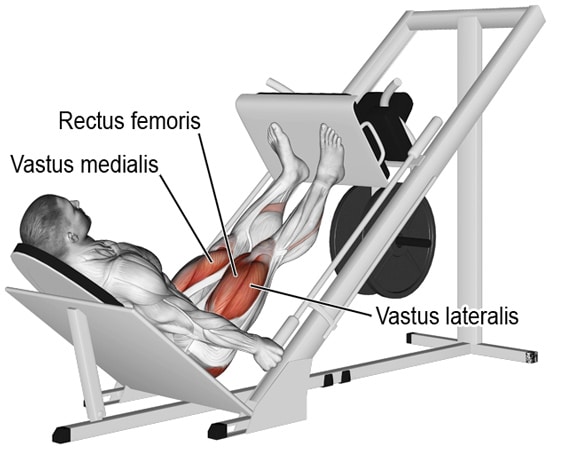
The leg press mainly works the quadriceps, which is a four-headed muscle group. These four muscles are:
Rectus femoris: This is the only quad muscle that crosses the hip joint. It originates at the base of the spine, running down the front of the quads to attach to the kneecap. This muscle plays a part in knee extension and hip flexion. A wider leg press stance will put more focus on the rectus femoris.
Vastus lateralis: It originates at the top of the upper leg bone (femur) and runs down the outside of the quads to attach to the kneecap. A wide stance will better activate this muscle.
Vastus intermedius: This muscle runs down the middle of the quads, from the top of the femur to the kneecap.
Vastus medialis: This muscle lies on the inner side of the quads, again running from the femur to the kneecap. Adopting a narrow leg press stance will maximally engage the vastus medialis.
The other muscles engaged when you do the leg press are the glutes, calves, and hamstrings.
Leg Press Benefits
Before we delve into the variations that will allow you to ramp up the intensity on the leg press, let’s consider three reasons why adding this exercise to your leg day workout in the first place makes sense.
Stable Environment
A major benefit of the leg press is that it allows you to work your legs in a stable environment. When you do exercises such as squats and lunges that don’t lock you into a fixed movement pattern, many things can go wrong, especially when working with heavy weights.
Built-in Safety
Because your back is supported when doing the leg press, you can concentrate 100% of your focus and energy on pressing the weight. The machine also has a built-in safety mechanism; with a simple twist of the handles, you can activate the locks that secure the weights in place. That means you can go extra heavy on this exercise without needing a spotter.
Greater Quad Focus
Your range of motion for the leg press is typically shorter than if you were doing squats. If you’re trying to develop quad mass and power, that’s actually a good thing. That’s because it keeps the focus on your quads rather than transferring it to your glutes and hamstrings.
Which Type of Leg Press Should You Use?
There are two types of leg press machines commonly found in gyms:
Horizontal
45-degree
With a horizontal leg press, you push your legs directly out in front of you. On the other hand, the 45-degree version has you pressing your legs at an angle.
So, which is best?
There is no definitive answer to this question. At this stage, no studies have directly compared the effectiveness of the two versions of the exercise in terms of building quad power. However, we can be informed by simple physics on this subject.
When doing the 45-degree leg press, the weight you load on the machine is spread out over the diagonal plane of the leg press machine. This creates a wide moment arm, which is the distance between the line of action and the pivot point, which in this case is the hip joint. The wider the moment arm, the lower the force needed to lift the weight.
But when you do the horizontal leg press, the weight is spread out directly in front of your hips, creating a shorter moment arm. A shorter moment arm means you’ll need more force to lift the weight.
That’s why you’ll find it harder to light the same weight on the horizontal leg press than on the 45-degree leg press.
As a general guide, you should be able to lift about 30% more weight on the 45-degree leg press. But simply being able to lift more weight will not make your quads stronger if the physics of the machine have made it easier.
The fact that it’s easier to lift a weight on the 45-degree leg press doesn’t mean that you should only use the horizontal machine. But if you’ve got access to both machines, you should compensate when using the 45-degree machine by adding extra weight to make up for the longer moment arm. If you don’t, you won’t be pushing your weight limit, and you’re likely to plateau your quad power.
Leg Press Form Tips
Whether using a horizontal or a 45-degree leg press machine, ensure that your lower back and glutes are pressed hard against the pads.
Do not use a weight that is too heavy. This will restrict your range of movement. Don’t be that guy who loads up seven or eight 45s on each side and then moves just a few inches.
Slow down. When you go too fast, your knees tend to cave in, and you may even bounce the weight using momentum at the bottom.
Don’t lock your knees at the top of the rep. Stopping just short of lock-out keeps the tension on your quads.
Consciously think about keeping the weight evenly distributed between both legs.
Should Your Knees Go Over Your Toes?
The knees-over-toes debate is usually associated with the squat, But the same applies to the leg press. For decades, lifters were told not to allow their knees to track over the toes because it would damage the knee joint. Recent research, however, has thrown that argument out the window.
One study showed that allowing your knees to track over your toes during the squat led to significantly improved activation of the vastus medialis head of the quadriceps. This part of the quads is often known as the ‘teardrop’ because of its appearance on a developed bodybuilder with low body fat levels. Furthermore, there was no adverse effect on the knee joint reported. [1]
It should be noted that this study specifically looked at the muscle stimulation of the quads during the squat. It is reasonable to speculate that the same thing applies to the leg press but, to date, there are no studies specifically testing the leg press in this regard.
The leg press foot platform is generally a large area. That gives you the freedom to vary your foot placement from very wide to very narrow. Where you choose to palace your feet on the platform will work your muscles differently. Here’s an overview of the different foot placements and what areas each one targets:
1. High & Wide
When you place your feet high and wide on the platform, you will target your hamstrings. You want to place your legs as high and wide on the platform as possible without your hips coming off the seat pad. Your toes should actually be off the edge of the platform’s top and angled outward. To accentuate the hamstrings, push your heels into the platform on the descent.
In the high and wide position, your feet should be about one and a half times your hip width.
2. Low & Close
Putting your feet low and close together on the platform will emphasize your quads. Your heels should be almost, but not quite, hanging off the bottom of the platform, with your feet about six inches apart.
When pressing, think of pushing your quads out and over your knees. Think also about keeping the weight distributed over the balls of your feet. This position is going to really blow up your quads, but only if you go deep on the descent. So don’t let your ego get in the way of a full range of motion.
As we’ve seen, the more your knees can track over your toes, the greater the quad activation, especially on the vastus medialis head. One way to increase this effect is to wear elevated-heel weightlifting shoes when doing the narrow stance leg press. This is especially beneficial if you have poor ankle flexibility and find your heel coming off the platform in the bottom position of the leg press.
3. Neutral
A neutral stance is where your feet will naturally go on the platform if you’re not thinking about it. Find your most comfortable position with your feet hip distance apart. This position will provide an even distribution across the quads, glutes, and hamstrings.
A neutral foot placement will help you lift the most weight. Focus on a slow descent, bringing your knees down to the outside of your shoulders, and then push the heels through the platform on the ascent. Drive your lower back into the seat pad the whole time.
4. Heels Elevated
An adaptation of the neutral position may place extra emphasis on the quads. This involves wearing weightlifting shoes with elevated heels. The increased angle this creates puts more load on the vastus medialis quad muscle that runs into the knee joint.
5. Toes Elevated
To assume a toes elevated position, you need to place a pair of small weight plates or a squat wedge under your toes on the foot platform. Your feet should otherwise be in a neutral stance. This will shift the emphasis to your hamstrings.
Single Leg Press
The single-leg press allows you to work each quad independently. It helps correct quad strength imbalance, where one leg is stronger than the other.
When you do the two-legged leg press, your dominant side will take a disproportionate percentage of the weight. Doing the single-leg press forces each leg to carry its own weight, which will eventually help balance the strength between your quads.
Place your foot low and inside hip width to target the quads with the single-leg press. Place the other foot firmly on the ground. Unrack the weight and slowly bring the platform back toward you. Concentrate on the knee traveling back and out as you descend. This will lengthen your range of motion so that you don’t hit your knee into your ribcage.
Come back until your leg forms a right angle at the knee, and then push your heel into the platform to return to the start position. Don’t lock out at the top but move smoothly into the next rep.
Do not allow your heel to lift off during the descent. If you do, you’ll transfer the force from your quad to your knee. You must also not allow your hips to roll up off the pad in the bottom position.
A Leg Press Workout For Power Quads
Now that we’ve identified the best ways to do the leg press to target the quads, we can put them together to create a mini quad workout on the leg press machine. We’ll be doing the following three leg press variations:
Neutral-stance leg press
Low and close stance leg press
Single-leg press
The first two exercises will be done as a mechanical drop set. This is when you do a drop set without changing the weight by shifting your foot position. We’ll start with the low and close stance version, as this is the one that most directly targets the quads. After pumping out eight reps, you quickly rack the weight and shift to a neutral stance. Then immediately unrack and do another eight reps.
Because you’re strongest in the neutral stance, following a set of narrow stance reps with eight more neutral stance reps will tap deep into your quad’s strength reserves, allowing you to eke out every ounce of benefit from the set. The key to getting the most out of a mechanical drop set like this is minimizing the downtime between the two phases — it should only take a few seconds.
Once you’ve completed your 16 reps on the mechanical drop set, get out of the machine, shake your legs out, and then take half the weight off the machine. Now get straight back on and start pumping out single-leg presses. This transition should take you less than 30 seconds.
Your goal is to get 16 reps on each leg on the single-leg press. At that point, your quads will be on fire. Rest for two minutes, and then do the whole thing over again. Work up to doing three total sets. Here’s what it will look like:
Set One:
Narrow-stance leg press: 8 reps
Neutral stance leg press: 8 reps
Single-leg press (right leg): 16 reps
Single-leg press (left leg): 16 reps
Rest for two minutes and then repeat for another two sets.
Wrap Up
The leg press is an effective quad power and mass builder. You can target different areas of your upper legs depending on where you place your feet on the platform. The best way to target your quads is with a low, narrow stance. You can target the quads even more by elevating your heels using weightlifting shoes.
The next best foot stance to hit the quads is the neutral stance. This is also the version you can lift the most weight with. Our final quad-centric leg press move for power is the single-leg press with a low stance.
Combine these three exercises into a killer mechanical drop set followed by a unilateral quad isolation workout. You can either do this as the first part of your quad workout and follow it up with leg extensions and lunges or, if you’re game, do four sets of squats first and then jump into your leg press workout.
Just don’t expect to be able to walk the next day!
References
Escamilla, R. F., Fleisig, G. S., Zheng, N., Lander, J. E., Barrentine, S. W., Andrews, J. R., & Bergemann, B. W. (2001). Effects of technique variations on knee biomechanics during the squat and leg press. Medicine and Science in Sports and Exercise, 33(9), 1552-1566.
Rich Gaspari on Building Bigger Legs: ‘Train Super Hard and Go to Failure’
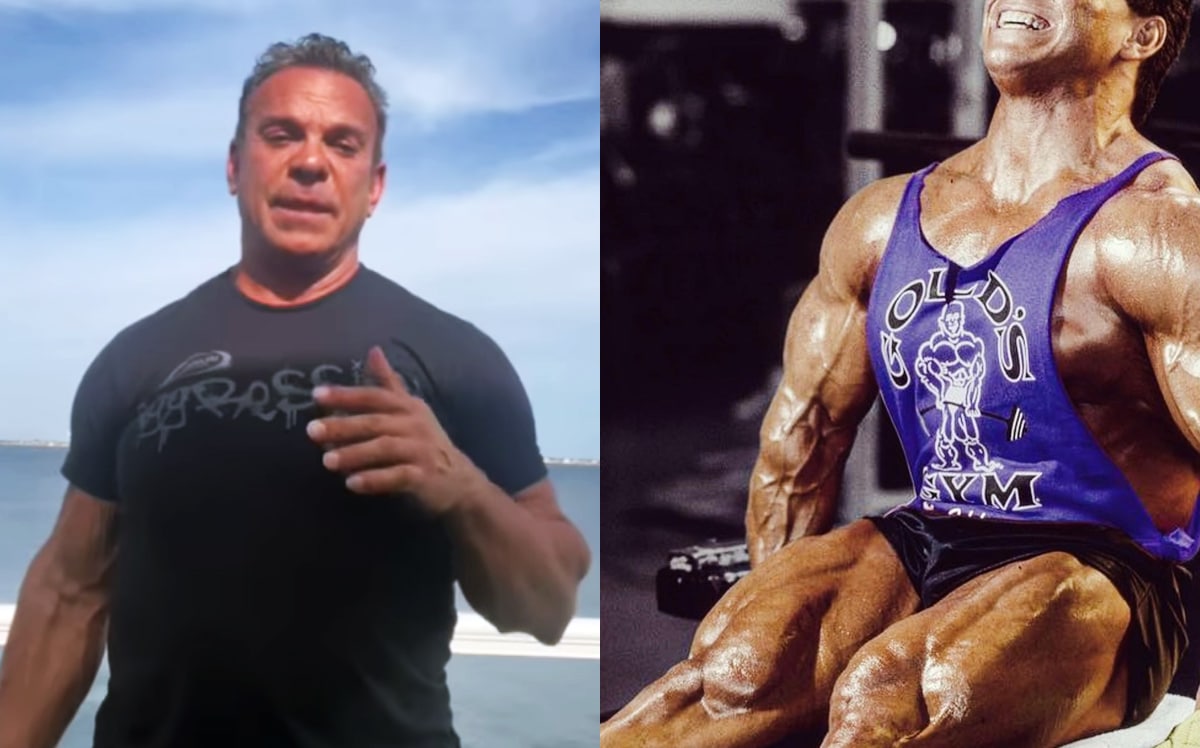
Seasoned bodybuilding veteran Rich Gaspari has amassed a wealth of knowledge related to the sport following a decorated career. In a recent Instagram video, Gaspari shared tips for legs and techniques to utilize in lower-body training sessions. During his days of competition, Rich Gaspari boasted a refined lower body and stellar conditioning as a Men’s…

William Bonac: ‘If Give It My All, Then I Have the Possibility to Win Mr. Olympia’
William Bonac hasn’t given up hope on securing a Mr. Olympia title before calling it a career. In a recent interview with Desktop Bodybuilding, Bonac brushed off retirement rumors and said he’s taking the year to come back better than ever in 2024.
As a Men’s Open pro, William Bonac has participated at the highest level for over a decade. His thick compact muscle density and work ethic were vital components to his rise as a pro. Bonac is a two-time winner of the prestigious Arnold Classic, winning gold in 2018 and 2020. While proving himself as an elite talent, Bonac narrowly missed out on winning Mr. Olympia to Brandon Curry in 2019.
Last year (2022), ‘The Conqueror’ was unable to exact revenge against Curry at the Arnold Classic and finished second. The outcome was controversial and many pros like Lee Priest thought Bonac brought the winning package. Despite the setback, Bonac returned a week later to win gold at the Boston Pro, guaranteeing his passage to the Mr. Olympia show.
He went into Las Vegas’ 2022 Olympia as a notable favorite but failed to make the first call-out. Bonac finished ninth and his teammate, Mamdouh ‘Big Ramy’ Elssbiay, also came up short in fifth, which served as one of the biggest shocks of the night. Bonac attempted the latest Arnold Classic as well but finished seventh.
William Bonac Says He Can Still Win Arnold Classics and Mr. Olympias
During the video, Bonac said he was still in the running to win Arnold Classics and Mr. Olympias as long as he takes a year off to let his body recover.
“I do for sure [think] I can win the Arnold Classic; the possibility is still there. To win the Olympia… I don’t know man, where the judges are going with the kind of physiques that they want for that. But I think if I give it my all, like the next two years, then I might have the possibility to win the Olympia. Right now, it’s just taking time off, you know, let my body recover.”
“When you compete and compete and compete, your body adjusts to the system to your supplementation and diet, so it won’t react as it normally would be. Your receptors – everything would be sensitive. So I need to get rid of that. Once I have that and that’s what I’m doing now, so I’ll need a whole year off. Once I have that, then I can come back again and everything will feel fresh, my body will feel fresh because that’s what I did in 2022 as well at the Arnold Classic.”
According to Bonac, his ninth and seventh-place finishes at the Olympia and Arnold Classic were justified. He added that the judges made the correct decision and said the outcome could have been worse.
“It was the right decision. When I look back at the pictures, I was like I look shit. You know, so yeah, you can even say you have to be happy with your placing and what you got – it could have been worse. I looked like shit. At the Arnold, I looked better. Did I deserve my placings? Yeah. The judges put me there for a reason. I’m not a guy to complain about his placings. Of course, in the past, I had some issues.”
“I’ve grown, I understand the game. So, I don’t complain when I win, I’m happy when I win, so why should I complain when I lose some? It’s a big pie, everyone can have some of it,” added Bonac. “I know what I saw, and I was like [no], people told me I should have placed higher but I’m lucky that I got that place, believe me. It’s not the physique I wanted to represent at the Olympia.”
Bonac on Big Ramy: ‘Its Tough to Be 2x Mr. Olympia & Lose Your Title All in 6 Months’
Bonac sympathizes with Big Ramy since the Egyptian native lost his title after holding the honor for two years.
“To be honest with you, if I did qualify for the Olympia, I would have probably gone to the Olympia as well. For him [Big Ramy] to go, is a good thing as well. I wouldn’t be demotivated because of his placings that he didn’t maybe expect it at the Olympia and then maybe the Arnold. It’s tough you know, to be two-time Mr. Olympia, losing your title and all just in sixth months’ time. Losing your title and placing fifth and then going to the Arnold and not even placing in the top three, it’s kind of tough to be the king and then… you know,” said William Bonac.
“I thought he looked better at the Arnold and I think at the Olympia he didn’t look that bad. We all looked — we all didn’t look perfect. None of use except maybe three guys and those three guys were in the top three, simple as that. I think Big Ramy should maybe have a rest for this time now and start his prep for Olympia and then maybe after Olympia take a rest and go forward again. We are not as young as these guys anymore.”
The last time fans heard from Bonac he discussed his future in the sport. Given the strain his body has been under, he decided to take a year off for the sake of longevity. He believes the time off is exactly what his physique needs following a busy season. Considering how illusive the Olympia title has been for him, Bonac set his sights on another Arnold Classic victory next year.
Watch the full video below:
RELATED: William Bonac Completed Blood Work Before 2023 Arnold Classic, Says ‘There’s Nothing Wrong’ With Kidneys
While his time in the sport is limited, William Bonac hopes to come back stronger and more competitive in 2024.
Published: 13 April, 2023 | 6:38 PM EDT
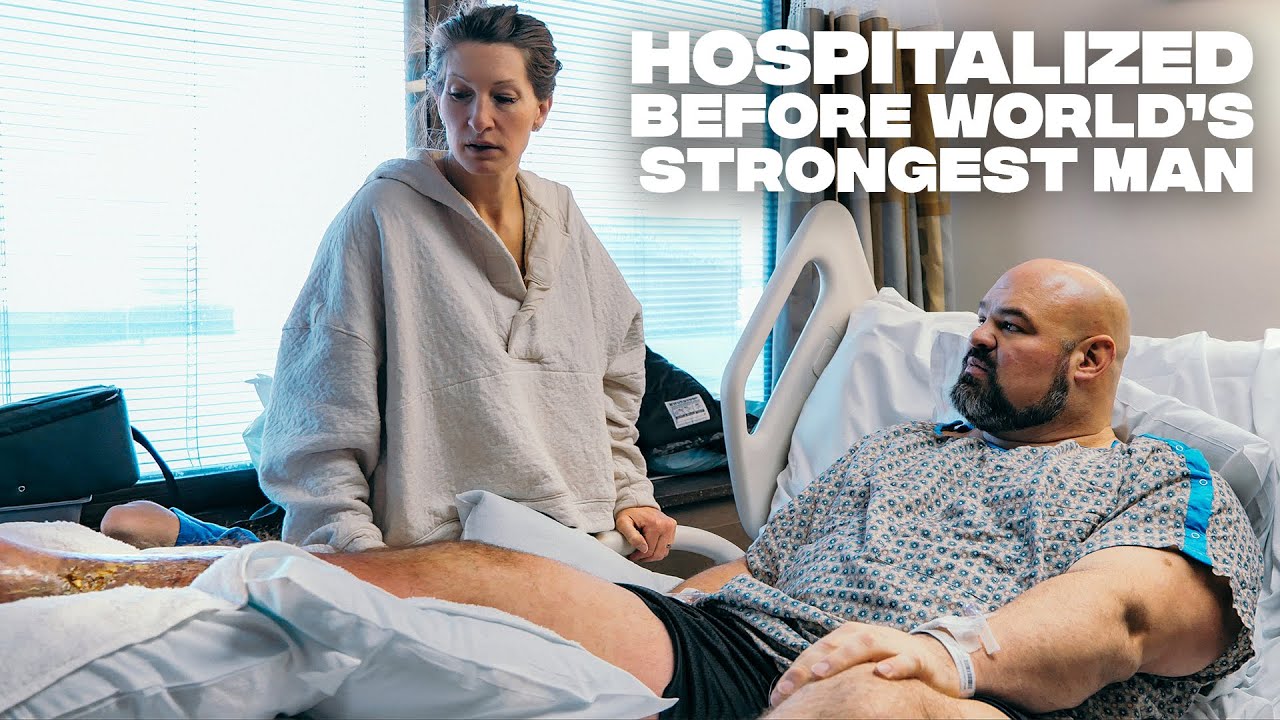
Brian Shaw Reveals How He Almost Lost His Leg In Preparation For 2023 World’s Strongest Man
The 2023 World’s Strongest Man competition is set to take place on April 19-23, in Myrtle Beach, SC, and it is expected to be one of the greatest editions yet. One of the reasons is Brian Shaw, as the 4x WSM champion and Strongman icon is planning to make his final appearance this year. With the end of an era just around the corner, everyone is hyped up to watch Brian compete at the biggest stage once more. However, although everything seems perfect now, Brian has just revealed that he almost lost his leg in late January.
In the newest video on Brian Shaw’s channel, titled “Road to WSM“, he showed footage of himself lying in a hospital bed. Brian was talking about the situation that led to an infection of his leg, which was fortunately resolved before it was too late. However, the infection almost spread too much.
“The biggest thing is that it didn’t go into my bloodstream. So, if I would have waited potentially any longer, the big fear would be it going into my bloodstream… Once it does that, the outcome might not be as good, meaning possible amputation.”
While talking about the infection in the video, Brian Shaw also showed what his leg looked like at the time. The distressing footage shows his skin drying out and completely changing color to purple. It was evident that Shaw was suffering from a serious infection, but he never lost his positive attitude. In addition, his goal of winning the fifth WSM still remained one of the biggest priorities. During his time in the hospital, Brian made a conscious effort to maintain his weight by eating multiple meals throughout the day and taking short walks around the premises.
“When you battle some adversity like this, you just have to find a way… I’m trying to get five meals in a day right now. The goal is to walk out of here having not lost a lot of bodyweight.”
This infection also reminded Brian Shaw of 2013, as he had to undergo surgery before the WSM, but still managed to win it. He now hopes that the same outcome will come into place this time as well.
“This has reminded me the most of 2013. In 2013 I had to have a nerve release surgery done approximately three months out from WSM… So, I’ve been telling myself, as I’ve been sitting here, that this leg infection is not as bad as that.
Watch Brian Shaw’s video here:
Related: Trifecta Nutrition CEO Says It Costs Over $60,000 A Year to Feed Strongman Brian Shaw
While in the hospital, Brian Shaw reviewed training videos and worked on his training plan to perform better at the 2023 World’s Strongest Man competition. He stayed in the hospital for a few days to recover from his infection before he was discharged, fully healed.
After he finishes up the 2023 World’s Strongest Man competition, Brian Shaw will only make one more appearance at the 2023 Shaw Classic before retiring from professional Strongman forever. So, having recovered from a potentially devastating infection, Brian is now even more motivated to wrap his career up with mind-blowing performances.
Published: 13 April, 2023 | 4:02 PM EDT
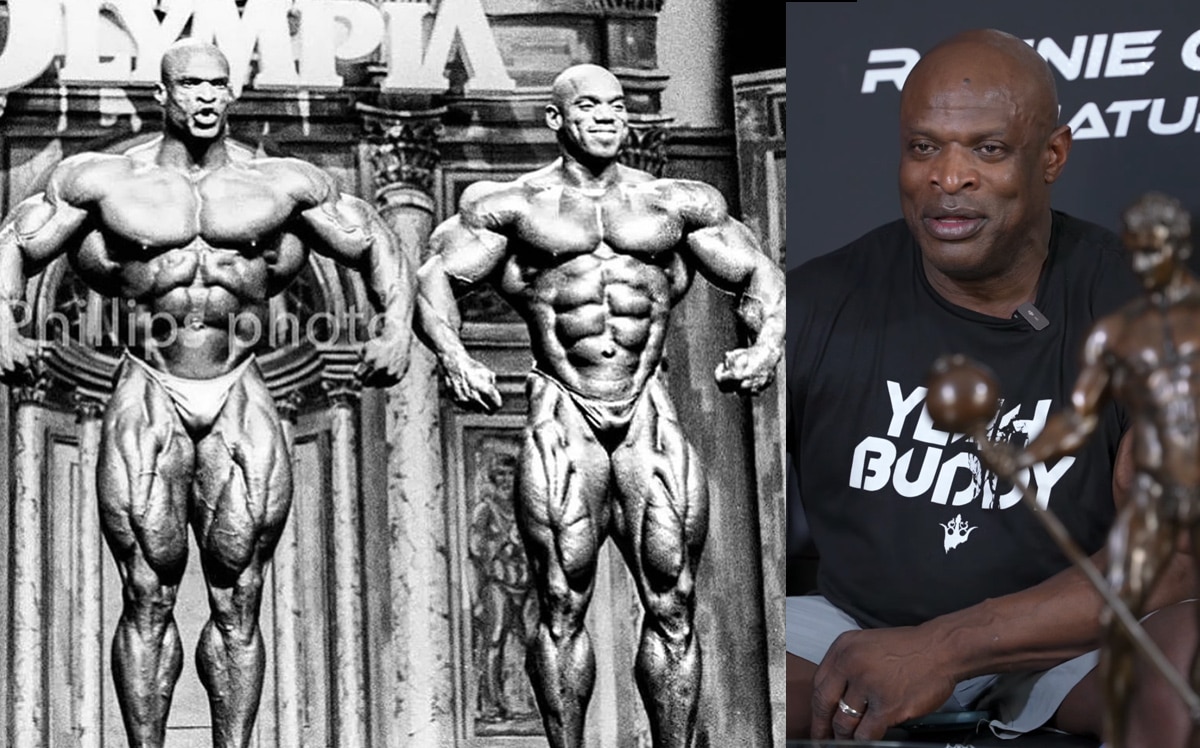
Ronnie Coleman: ‘Flex Wheeler Is Pretty Much the Reason Why I First Won The Olympia’
Despite a heated rivalry, Ronnie Coleman believes Flex Wheeler was crucial to his bodybuilding success. In a recent Nothin’ but a Podcast, Coleman credited Wheeler for introducing him to coach Chad Nicholls and disclosed some of the dietary demands that led to his first Mr. Olympia title.
Ronnie Coleman is widely regarded as one of the best bodybuilders of all time, having earned a total of eight Mr. Olympia titles, tied with fellow legend Lee Haney. During his respective tenure, Coleman laid waste to the Men’s Open division, defeating icon after icon en route to cementing his legacy in the 1990s and 2000s. He was led by Nicholls, who now trains William Bonac and Mamdouh “Big Ramy” Elssbiay.
In addition to his bodybuilding achievements, Coleman was held in high regard for his impressive feats of strength. Considered one of the strongest bodybuilders to ever compete, ‘The King’ recorded a shocking 2,300-pound leg press and turned heads by smoking an 800-pound deadlift.
While enjoying retirement, Coleman remains infatuated with the sport. In his spare time, he’s trained with fitness influencers and most recently, started a podcast with 212-turned-Men’s Open star Derek Lunsford. In their latest undertaking, Coleman looked back on how Wheeler introduced him to one of the sport’s most accomplished gurus, Chad Nicholls.
Ronnie Coleman Talks Meeting Chad Nicholls Through Flex Wheeler: ‘He Changed Everything I Was Doing’
According to ‘The King,’ his first Mr. Olympia title was made possible thanks to Wheeler. After being introduced to Nicholls, Coleman said his contest preparations were drastically altered.
“It was the same way for me and the guys coming up; a lot of people don’t know it – but Flex Wheeler is pretty much the reason why I won the Olympia because he turned me on to Chad Nicholls. He was like, ‘Hey man, who are you working with?’ I’m like, ‘Dude, I’m doing my own thing.’ He’s like, ‘You need to call this guy Chad Nicholls.’ I’m like, ‘Chad Nicholls…’ yup. He gave me his number I called Chad but Chad didn’t pick up the phone. I said, ‘Flex why’d you have me call this guy Chad he didn’t pick up the phone.’ He says, ‘Nah, he’s just like that man. Call him again, and he’ll call you back.’ He called me back and the rest is pretty much history. I won my first Olympia that year by hooking up with him,” Ronnie Coleman said.
Coleman shared that his food intake exploded as he went from eating a half-pound of food to a whole pound.
“I was doing my own thing pretty much,” shared Coleman. “He changed everything I was doing, everything. Everything. I went from doing like an hour to cardio a day to two hours. I went from eating half a pound of food with every meal to a whole pound. I went from training maybe 45 minutes to an hour a day to about maybe an hour, an hour and a half, sometimes an hour and 15 minutes of training because I was trying to do some of everything. I was working all my body parts as much as I could. All my weak ones, especially!”
“I went from working calves maybe once a week to three times a week, working abs maybe once a week to maybe three times a week, he changed pretty much everything I was doing. Had I not gone with him, I wouldn’t have never ever figured that out on my own. I went from probably eating 400 grams of protein a day to 600. I went from eating like 400 grams of carbs a day to like 100, so it was — major changes going on and he pretty much changed everything I was doing. I would have never ever figured that out on my own for sure because I had no idea that you could put on a lot of quality muscle from eating food, had no idea whatsoever, I’m not going to lie.”
“A lot of people think it’s the drugs was going to put on all that size, no. You had to eat. You can take all the drugs in the world but if you ain’t eating you will not grow. I learned that the hard way,” said Coleman.
Wheeler, who won four Arnold Classic titles, took part in a Cutler Cast appearance to reflect on his career. Looking back on his epic battle with Coleman at the 1998 Mr. Olympia, Wheeler said he ‘didn’t put everything into’ his performance and was ‘ashamed’ of himself. He believes one of his biggest mistakes while competing was chasing the size of Coleman instead of focusing on his own strengths, like aesthetics and conditioning.
RELATED: Ronnie Coleman Talks How Chad Nicholls Helped Him Become The King Of Bodybuilding
Coleman’s gratitude to Wheeler shows that even in a competitive sport like bodybuilding, there can be comradery and mutual respect.
You can watch the full video below:
Published: 13 April, 2023 | 1:28 PM EDT
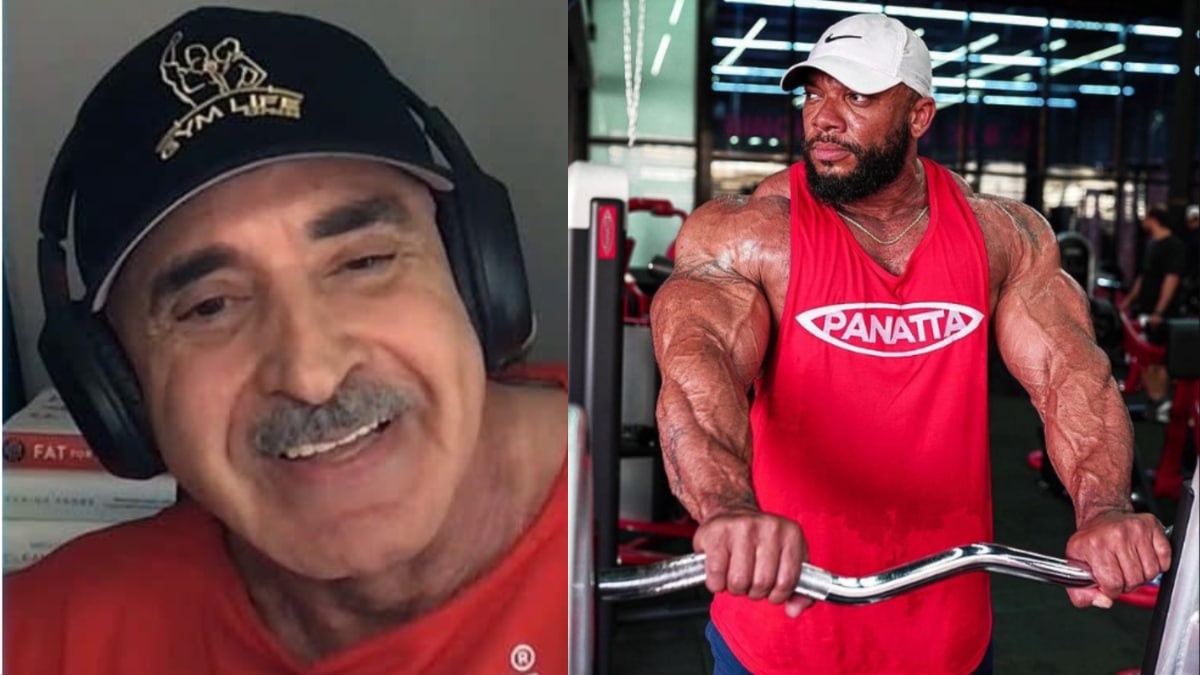
Samir Bannout Says ‘Capable’ Sergio Oliva Jr. Can Win 2023 Olympia With New Mentality
Samir Bannout, a decorated bodybuilder from the 1980s, routinely examines the sport’s hottest topics. In a recent Old School Labs podcast, Bannout discussed Sergio Oliva Jr.’s potential and whether or not 2023 Mr. Olympia will be an easy contest to win. On the heels of the 2022 Mr. Olympia competition, Hadi Choopan captured the title…
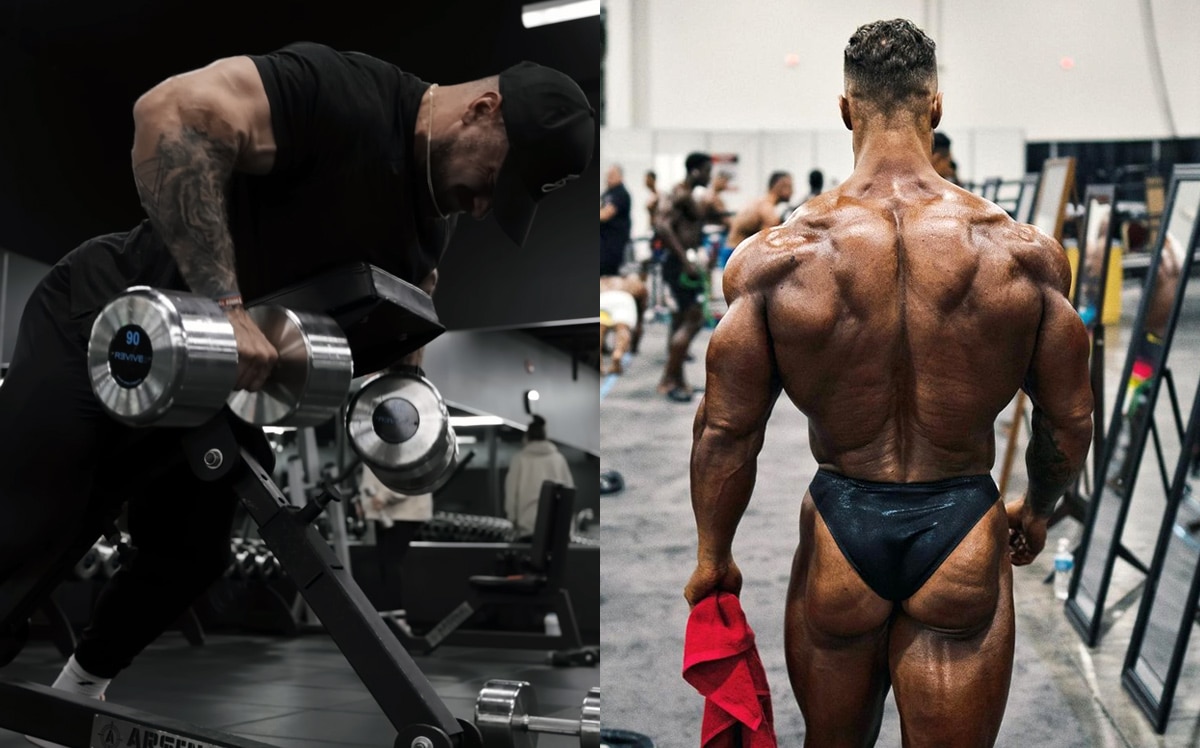
Chris Bumstead Builds A Thick And Huge Back In The Gym
Chris Bumstead is keeping himself busy in the gym this off-season. The 28-year-old phenom recently went through an intense back workout and shared glimpses of his commitments outside of training and winning trophies.
The Classic Physique division of the IFBB Pro League is home to one of the biggest superstars and a dominant champion in Chris Bumstead. Since winning the Classic Physique Olympia title at the 2019 Olympia, CBum has held it with a firm grip and defended it at the 2020, 2021 and the 2022 Olympia. Heading into his most recent title defence, Bumstead had to face quite a lot of adversity. Apart from pushing through knee, back and quad injuries during the prep, the Canadian bodybuilder had to deal with coaching changes.
Bumstead and his longtime friend and coach Iain Valliere decided to end the coach-client relationship for the latter to focus on his own bodybuilding career. Under the tutelage of famed bodybuilding coach Hany Rambod, CBum entered the 2022 Olympia and brought the Classic Physique Olympia title back home to Canada. The 28-year-old later revealed that he entered the competition with a torn bicep but still managed to stay head and shoulders above the rest of the division.
With the bicep now completely healed, Bumstead is now fueling his off-season training with a 3500-calorie diet to improve his physique for the 2023 Olympia. In the recent video posted on his personal YouTube channel, CBum can be seen performing a hellacious back workout. So let’s go over the training session and the tips CBum shared as he went through it.
Chris Bumstead’s Back Workout
Wide Neutral Grip Lat Pulldown
CBum warmed up the back muscles with lat pulldowns. This movement primarily targets the latissimus dorsi muscles in the back but also activates major pulling muscles like trapezius, teres major and teres minor, infraspinatus, posterior deltoids as well as biceps. He performed the exercise with a shovel handle that enables a neutral grip. After doing four to five warm-up sets, CBum got a few working sets under the belt and did a drop set to complete the warm-up drill.
Incline Dumbbell Rows
The horizontal rowing movement followed the lat pulldowns as the reigning Classic Physique Olympia champion performed a few good sets of this to work the pulling muscles as well as the sternal head of pectoralis major muscles. Horizontal pulls or rowing movements are essential in building a thick back and therefore they should be an integral part of the back training routine for complete development. CBum said that the incline rows help him practice breathing and get better at it. He explained:
“It’s one of the things where it’s hard to breathe with your chest on the pad but forcing you to practice proper breathing techniques. You should do this every exercise but you are forced to do it here… Something I am trying to get better at with every rep breathing the same consistency.”
Bumstead pushed through a few good sets of incline dumbbell rows. He pulled the breath in before initiating the lift for each rep and exhaled slowly while lowering the dumbbells. After holding the dumbbells for a couple of seconds at the bottom, he initiated the rep with the same breathing technique. The 28-year-old performed all the sets to practice breathing and build the back before jumping into the next exercise.
One Arm Chest Supported Rows
Bumstead next took to the chest supported rows on the plate loaded machine to stimulate the back further. He did the exercise unilaterally to really focus on the movement and build the mind-muscle connection.
“With the one arm rows where you can actually get the full stretch are beautiful or way better than a dumbbell row from the floor. You just get a much better stretch and contraction,” Bumstead explained.
CBum also explained the correct technique to do the one arm rows for maintaining maximum focus on the back muscles. He added:
“The same arm that we are doing, keep that (same side) foot planted forward. A lot of people would put that foot back and the (working) arm forward. This way you’re opening up your hips and then you’re rotating your body. Your core is moving away. But if you keep your foot forward, your hips are forced to stay forward and you have to pull from your lats rather than your core. So keep it on your back.”
Bumstead got some solid sets of this movement under his belt and took to the next exercise.
Seated Rows
Chris Bumstead jumped into the seated rows next and cranked out some heavy sets of seated rows on the Prime Fitness Seated Rows machine. The machine has three plate horns and different levels. Bumstead noted that keeping the weight on the highest horn makes it difficult to lock the movement on contraction. Therefore adding the weight on the lower and middle plate horn suits him better where he can get a good contraction while still lifting heavy.
Reverse Grip Lat Pulldowns
After putting in a good amount of work with horizontal rows, the Canadian bodybuilder went back to working with the vertical pulling movement and performed the reverse grip lat pulldowns. The reverse grip targets the lower lats more as the upper arms are closer to the body. Additionally, you use more of the biceps for pulling the weights. This enables training with heavier weights. After cranking out a few sets of this exercise, CBum performed the final exercise of the day.
Banded Bent Over Straight Arm Pulldowns
Bumstead wrapped up the training session with this exercise. It targets the latissimus dorsi, teres minor, posterior deltoids, triceps brachii and levator scapulae muscles. CBum performed four sets using moderate weights. He maintained short 20-second rest periods between the sets and performed every set to failure without changing the weights. As a result, the rep range went on reducing as the sets progressed.
Overall, the workout included:
Chris Bumstead is still the most dominant competitor in the Classic Physique division. Although he has retirement in sight, the reigning champion is looking to defend the title a few more times before hanging up the posing trunks. It will be interesting to see how he maintains the lead at the 2023 Olympia.
You can watch the full workout video here, courtesy of Chris Bumstead’s personal YouTube channel:
Published: 13 April, 2023 | 8:57 AM EDT