
Muscle Chemistry Archive
Blood Sweat & Gear, 96: cheat meals
https://www.advicesradio.com/uploads/tracks/img/BSG01.png
It’s Just Bodybuilding, 63: live qa
https://www.advicesradio.com/uploads/tracks/img/BB01.png
Muscle Minds, 94: bodybuilding science
https://www.advicesradio.com/uploads/tracks/img/MM.png
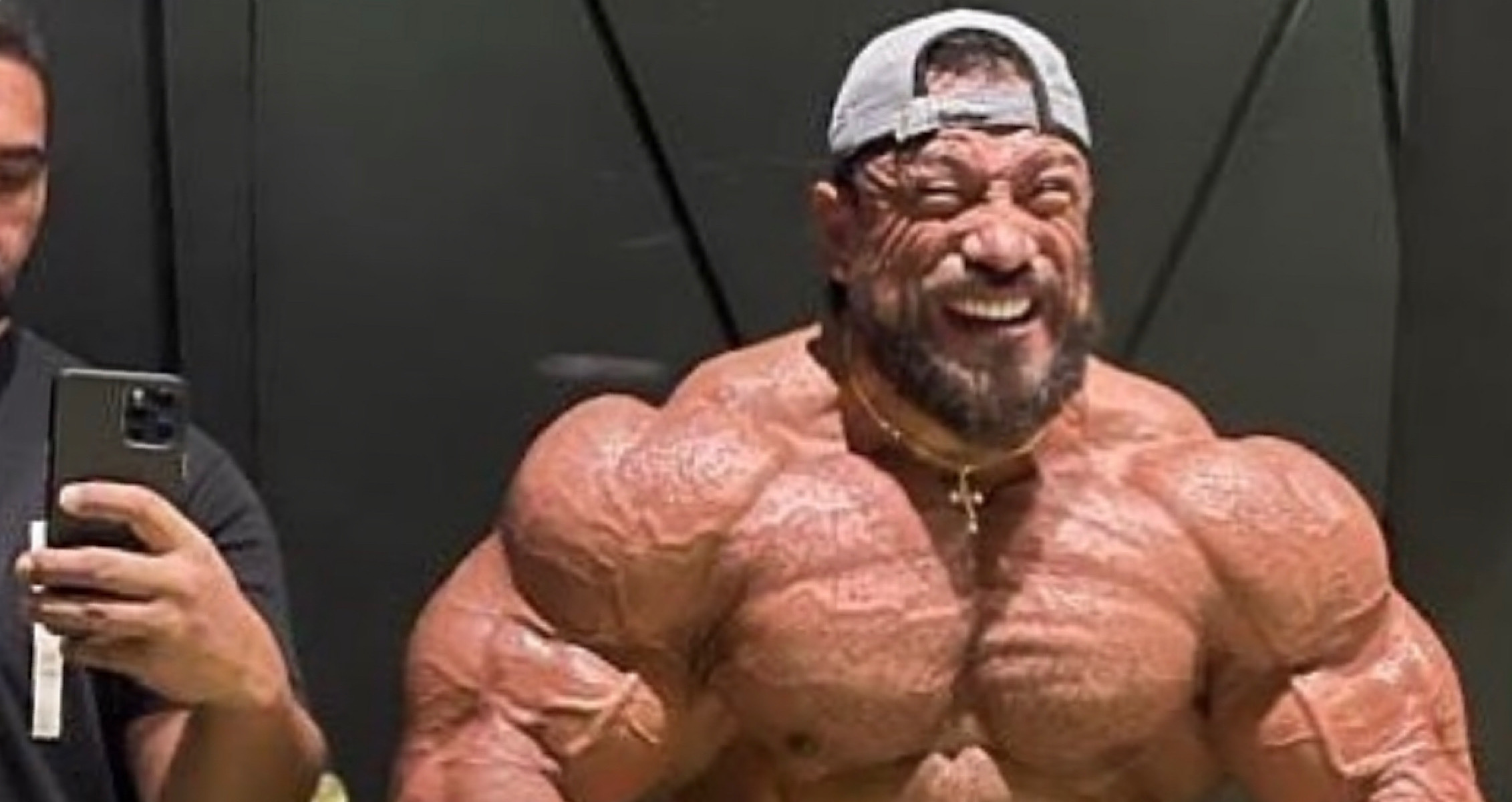
Roelly Winklaar is Looking Insane in Recent Update Ahead of Next Show
Roelly Winklaar is in next level condition ahead of his next show.
Roelly Winklaar is once again showing why he’s one of the best bodybuilders on the planet. “The Beast” had to pull out of the 2021 Olympia due to coming down with the illness that shut down the globe for well over a year. But now it appears that he’s back in action and looking to make up for lost time.
It’s clear that Roelly Winklaar is reaching a whole new level. After Mamdouh “Big Ramy” Elssbiay won the 2020 Olympia, all bets are off. Let’s face it, the masses have been used to having a reigning Olympia champion. Ronnie Coleman, Jay Culter, and Phil Heath consistently were in the winners circle in the past 20 years. But after Shawn Rhoden won, then Brandon Curry, and now Big Ramy, there’s been no one to hold onto the title for more than a year. If the trend continues it means that the title is up for grabs. Perhaps Roelly Winklaar could grasp a victory during these uncertain times.
In any event, Roelly Winklaar is showing some true championship caliber as he prepares for his next show. Winklaar will most likely be competing at 2021 Arnold Classic. In prep for the show he looks to be in some incredible condition. His recent update speaks for itself.
Roelly Winklaar is on the next level currently. In fact, it would come as no surprise if he dominates at the Arnold Classic.
What do you think of Roelly Winklaar and his current condition?
For more news and updates, follow Generation Iron on Facebook, Twitter, and Instagram.
Managing Editor at Generation Iron, Jonathan Salmon is a writer, martial arts instructor, and geek culture enthusiast. Check out his YouTube, Instagram, Twitter, Facebook, and Sound Cloud for in-depth MMA analysis.
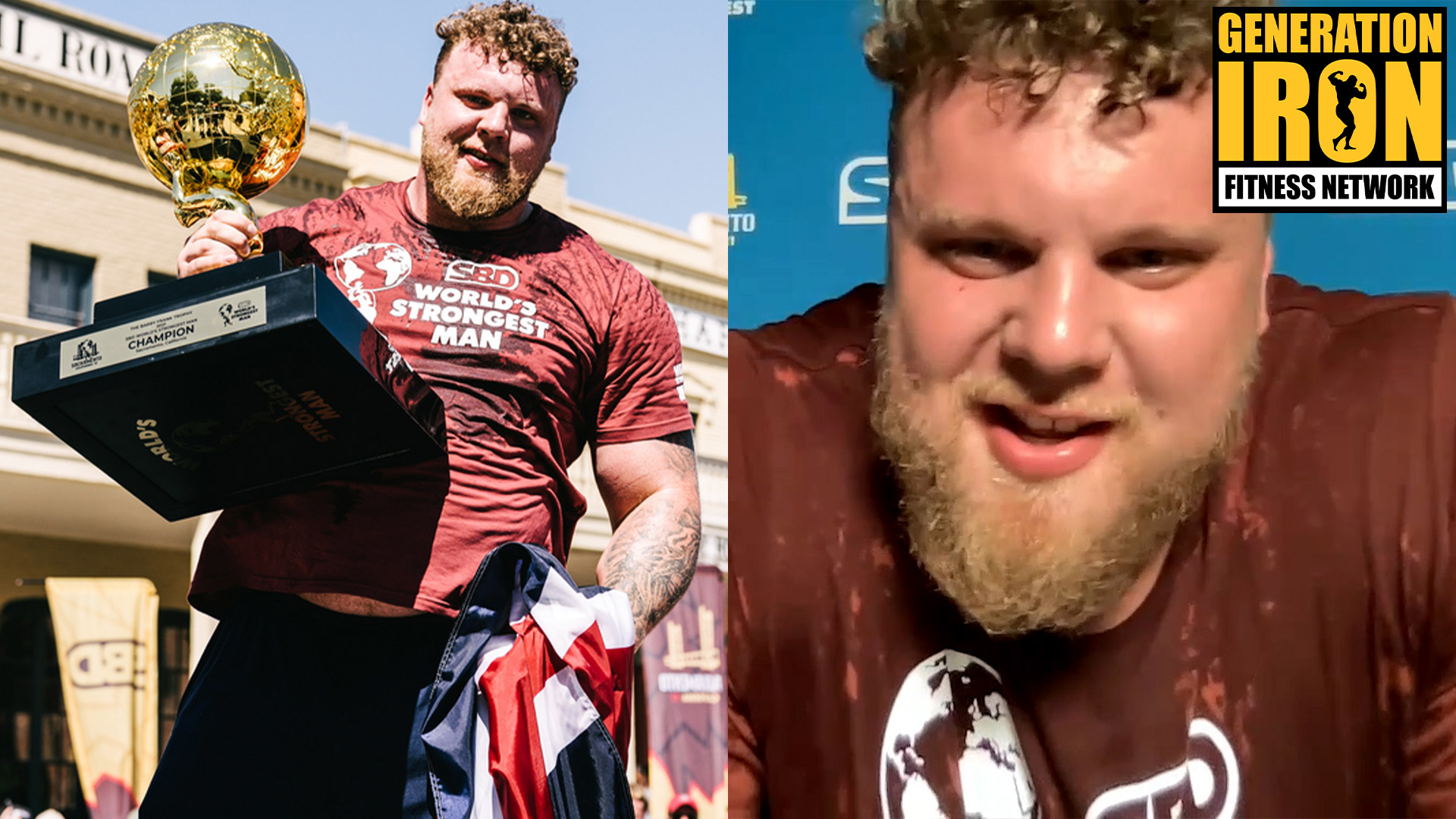
INTERVIEW: Tom Stoltman “Went To Places No Human Being Wants To Go” For World’s Strongest Man 2021
[embedded content]
World’s Strongest Man 2021 champion Tom Stoltman opens up about taking his training to the next level for victory.
This past weekend, on June 20th 2021, Tom Stoltman became the World’s Strongest Man champion. It was an epic victory after a dramatic two-day finals. Stoltman was only one point ahead going into the final event. Four-time WSM champion Brian Shaw was right on his tale. Ultimately, Stoltman dominated in the last event and earned his first World’s Strongest Man title. In our latest GI Exclusive interview, Tom Stoltman details his training, diet, and tactics leading up to the World’s Strongest Man 2021.
Tom Stoltman placed second at last year’s World’s Strongest Man 2020. So it seemed destined for him to rise up and become the new champion this year. Of course, in real life destiny doesn’t always play out. For Stoltman – it did. He’s now the new WSM 2021 champion. We had the opportunity to connect with him just after his victory for a quick video interview.
The competition was fierce and going into the final event of the finals – Tom Stoltman was only one point ahead of former champion Brian Shaw. According to Stoltman though, he wasn’t worried at all. The Atlas Stones are his favorite event. So he knew that he would dominate in the final event of the night. Not only that – but he felt that he could rely on Brian Shaw falling further behind in this event as well. His confidence paid off. Stoltman ultimately placed first in that final event – clinching his overall victory.
But what was the big difference between this year and last year? How did Tom Stoltman upgrade his performance to become the new champion? Stoltman told us that the minute he stepped off the plan after the WSM 2020, he immediately jumped back into training. Not only that – but he made additions to his team in order to take his success in 2020 and turn it into ultimate victory in 2021.
Tom Stoltman goes into great detail about the overhaul he committed to preparing for the WSM 2021:
“As soon as we got off the airplane last year, we got a warehouse and kind of got a specialist kit. So bigger yolks, fingal’s fingers… all that kind of stuff to help us get to that next level. I started working with someone to help me mentally and it all just paid off. I really put my heart and soul into this prep.”
Stoltman also explains further the specialist who helped him with his mental state. From the sound of it – he truly put both body and mind to the test. He brought himself on the verge of breaking. Knowing that it would all pay off in the end.
“So the lady that I had help me used a few words and helped me believe in myself. And helped me go past failure. You know that’s something I never, ever did before. When things got hard I would just give up or not be able to kind of push through that… she helped me kind of go to places where no human being wants to go. Just dark, dark places and you know it paid off this weekend because I went to some of those places.”
Tom Stoltman also shared some other fun facts about his experience preparing and competing at the World’s Strongest Man 2021. He would consume anywhere from 8,000 to 12,000 calories a day. That calorie count would increase as he got closer to the competition. He also admitted that his favorite food while he was competing here in the US was Five Guys burgers – claiming to have probably spent over one thousand dollars on the food during his time here.
And how does Tom Stoltman plan to celebrate? He’s going back to his home in Scottland to throw a massive party at his warehouse. He hasn’t had a beer in quite some time due to his training – so he’s excited to have a cold glass of beer to reward himself for his victory. The smile on his face on that last note during our interview says it all. Stoltman is on top of the world right now – and he put himself through the paces to truly earn it.
You can watch our full GI Exclusive interview with Tom Stoltman above!
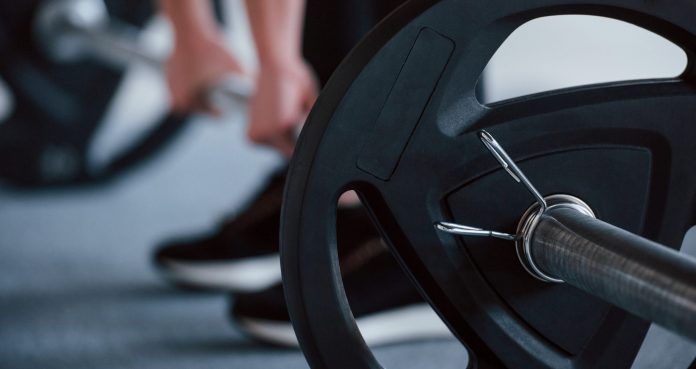
Best Barbell Workouts For Versatility & Optimal Growth
Barbells are perfect for enhancing exercise performance and aiding in competition and serve as a versatile and effective piece of exercise equipment for great gains.
Barbells can be seriously effective when looking to enhance strength and performance and can be used for a variety of exercises to offer great benefits to keep you healthy and fit. While we often associate barbells as tools for those big lifts, there are many isolated exercises that simply use the barbell. When looking to build a stellar home gym, consider looking into barbells in order to effectively maximize all of your gains and really add diversity to your at home workouts.
Barbells can help build functional strength for people looking to gain muscle mass while also enhancing overall strength. A good, quality barbell workout can tear down muscle in order to rebuild that muscle tissue in a safer, more effective manner. This is where a good protein supplement would come into play, for they can pump you with vital nutrients like BCAAs to stimulate protein synthesis and aid in that much needed recovery and recuperation.
Unlike some more complicated equipment that requires some tutorial which you just don’t have time for, barbells are easy to use, versatile by nature, and can really work to perfect lifting techniques so you can tackle any of those big lifts, like the big three powerlifting exercises being the squat, bench press, and deadlift. The ability to add more resistance can increase time under tension and lead to deeper muscles being worked that often times get overlooked, seriously enhancing all aspects of your growth and maximizing total performance. This makes the barbell worthwhile for all your bodybuilding goals.
The benefits of barbell training should not be overlooked and these top barbell workouts will surely convince you to incorporate barbells into your training, if you don’t already. Let’s dive more into barbells and see what all this hype is about.
Benefits Of Barbell Training
Barbells are great for offering full body workouts to see enhanced growth and size, while also aiding in functional movements and working to improve range of motion, flexibility, and ultimately, more solid mobility. Mobility comes from both flexibility and stability, also referred to as strength, and is important for all sorts of athletic performance as you look to advance in your goals (1). Since barbells work to really improve mobility, barbell training has become a great way to get the edge up on all your competitors.
The benefits of barbell training include:
Versatility: With the ability to build both strength and cardio, barbells offer just the right amount of weight to work your muscles to increase mass and size, while also allowing more quicker movements to be performed without a serious overload.
Improve athletic performance: A great full body workout, any exercise performed with a barbell will work to promote better training and competitive performance. Barbells are perfect for building better mind muscle connection in efforts to work on technique and better muscular focus (2).
Convenient: Barbell training allows you to perform an entire workout by simply using one piece of equipment. Instead of constant changes to prolong your workout, barbell training can be quick and convenient, while also still very effective.
Promote better cognitive function: Barbell training, like most all training, can really work to boost your confidence and mood in knowing you are bettering yourself and seeing great gains (3). Other benefits like productivity and better sleeping habits also come from barbell training.
Top Barbell Workouts For Maximum Growth
Landmine Rainbow
The landmine rainbow is a great core exercise to really fire up those abs and start to see that shredded physique. Through various twists and turns, you work your core by moving your arms in an arc while maintaining good form through your spine.
How to: Place one end of the barbell on the ground, preferably in a stand for added support. Hold the other end at around eye-level and twist the barbell with your arms, keeping your body as straight as possible. Alternate sides and perform for desired number of reps.
Zercher Squat
The Zercher squat may look similar to a front squat but the grip and bar placement are different, really working to target your core as well. It is important to stay as tall as possible to avoid any unwanted pain and injury.
How to: Place the bar in the pit of your elbow and maintain a solid core. With your feet spread slightly at around shoulder width apart, drive down into a squat, keeping a neutral spine. Push through your heels and return to the top.
Overhead Press
The overhead press is a mean shoulder workout to really round out your upper body. This will not only increase shoulder strength but also helps maintain proper muscular balance. This can be done seated or standing (4).
How to: Place your hands slightly more than shoulder width apart on the bar. With the bar at ear-level, drive it over your head, extending your arms. Gently lower back down and repeat for your desired number of reps.
Upright Row
The upright row is great for shoulders and traps while also engaging your biceps and back. This is a great exercise for toning and getting those mountains for traps that you’d love to have. Feel free to add weight as well if you’re comfortable.
How to: Using an overhand grip, place your hands at around shoulder width apart. With the bar close to your body, raise your elbows so they are parallel to the ground and the bar at about chin height. With a controlled motion, lower back down to the starting position.
Wrap Up
Barbell training is a great way to see awesome growth in your muscles while also aiding in functional movements to support any big lifts, complex exercises, or competitive performance. The perfect at home tool for training, barbells are convenient, versatile, and affordable, making this a much sought after piece of workout equipment. Check out barbells and the benefits they can offer you and really work to see that desired growth really come to life.
Let us know what you think in the comments below. Also, be sure to follow Generation Iron on Facebook, Twitter, and Instagram.
*Images courtesy of Envato
References
Haley, Jimmy. “The Importance of Flexibility and Mobility”. (source)
Lucero, Rhys AJ.; Fry, Andrew C.; LeRoux, Christopher D. (2019). “Relationships between barbell squat strength and weightlifting performance”. (source)
Cassilhas, Ricardo C.; Viana, Valter A. R.; Grassmann, Viviane; et al. (2007). “The Impact of Resistance Exercise on the Cognitive Function of the Elderly”. (source)
Waller, Mike; Piper, Tim; Miller, Jason (2009). “Overhead Pressing Power/Strength Movements”. (source)
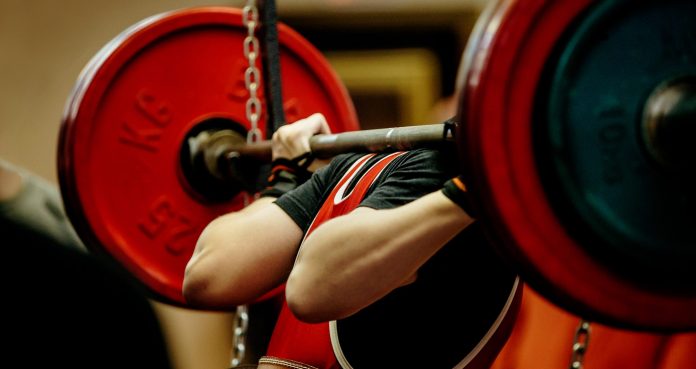
High Bar Vs. Low Bar Squat: Which One Is More Effective For Training?
These two squatting techniques are used by athletes for gains, but each provides different movement mechanics and the transfer of forces to get work done.
Squats are an exercise that anyone of all levels can enjoy from beginners, to those more intermediate, all the up to more experienced lifters. As a great lower body exercise, squats are perfect for seeing serious growth in your legs while also benefiting explosive power and that added level of dynamic movement to aid in any workout, training session, or competitive performance. With many variations of squats and a host of equipment to use, back squats are especially great for enhancing those gains.
The importance of good technique is something to take note of in order to both maximize strength and size while also preventing any unwanted injury that may put you out of your training cycle. Knowing the difference between a high bar squat and low bar squat is something to really take note of because while they will both help with squatting form for optimal growth, they differ in their respective movement mechanics and the transfer of forces done during the exercise.
As a slight side note, when it comes to squatting, balance and stability are more than important, especially considering the amount of weight put on your back. Being able to maintain a good, solid posture will allow you to push yourself to new heights and really enhance all aspects of your lift. By combining flexibility with stability, also referred to as strength, you really get the chance to increase overall mobility and work to enhance your range of motion (1). The benefits of squats is that you are actively working on this while also promoting it for your overall physical health.
The differences in the high bar versus low bar squat lie in the foot placement, hips, chest angle, and hand placement and vary slightly to target different muscles and movements. Let’s dive into these differences and see which squat is most effective when it comes to your training and performance.
What Is A High Bar Squat?
The high bar squat is where the bar is placed high on your upper back, typically on the trapezius muscle that goes across the top of the shoulders. Your hands are placed wider towards the plates and your feet are around shoulder width apart. Since the bar is placed higher on your back, it is important to stay over the midfoot as much as possible and your back may be slightly straighter than with a low bar squat.
Benefits Of A High Bar Squat
This is seen as the traditional way of squatting and puts you more in that conventional athletic stance. A high bar squat will really work your quads and you will start to see great growth and strength adding more explosive power and a more solid stance when it comes to other activity (2). Placing less stress on your back allows for more balance and your ankles will develop more mobility in order to keep you upright, especially since your upper body is more straight than a low bar squat.
What About A Low Bar Squat?
A low bar squat is where the bar is placed on the upper back as well, but lower than the high bar squat. This would typically rest on your posterior deltoid as opposed to the top of your shoulders. Your hands will be slightly closer together and your feet shoulder width apart, although they will splay out slightly as opposed to keeping your toes directly in front of you. With the bar slightly lower on your back, you will have a slightly more forward lean to maintain a more solid form.
Benefits Of A Lower Bar Squat
Low bar squats are used for a couple of reasons, but the main ones being moving more weight and increasing the load on your back to really see solid development. Since your hips are forced to move back, you can load more on your back and will be able to absorb and produce better force (3). It is slightly easier to lift more weight and is great for developing strength. This style of squatting can really develop the glutes, hamstrings, and back extensors since they require more activation than the quads.
Which Placement Is More Effective?
Each of these squatting placements have their respective benefits and it all comes down to your performance goals and what you are looking to achieve from each. If you seek strength, maybe look more towards the low bar squat since you can add more weight onto that bar and really feel the effects of an increased load. For hamstring, glute, and back growth, a low bar squat may be just what you need to increase that one rep max or just build up sheer strength.
The high bar squat will translate over nicely into other power exercises and can really work on that quad growth. Knowing just what to do when it comes to supporting lower body building is great and the high bar squat will see a more traditional squat to aid in your athletic stance regardless of your respective sport. It is ultimately up to you, your goals, and your comfort level when it comes to squatting. With so much of the weight on your back, without the proper strength and form, that load can lead to unwanted pain and injury. Knowing your limits is key but being able to push those limits is equally as important.
Wrap Up
Squatting is an essential exercise for lifters and athletes of all kind to not only see growth, but also aid in functional movements that can really increase our work capacity. The high bar squat versus the low bar squat are two placements that may differ in movement and a transfer of force but can also be more than beneficial when it comes to lower body gains. Decide on what your goals are and really work to see a huge change in strength and power with these two squatting techniques.
Let us know what you think in the comments below. Also, be sure to follow Generation Iron on Facebook, Twitter, and Instagram.
*Images courtesy of Envato
References
Haley, Jimmy. “The Importance of Flexibility and Mobility”. (source)
Glassbrook, Daniel J.; Brown, Scott R.; Helms, Eric R.; Duncan, Scott; Storey, Adam G. (2019). “The High-Bar and Low-Bar Back-Squats: A Biomechanical Analysis”. (source)
Murawa, Michal; Fryzowicz, Anna; Kabacinski, Jaroslaw; Jurga, Jakub; Gorwa, Joanna; Galli, Manuela; Zago, Matteo (2020). “Muscle activation varies between high-bar and low-bar back squat”. (source)
How These Smith Machine Exercises Work For Huge Gains
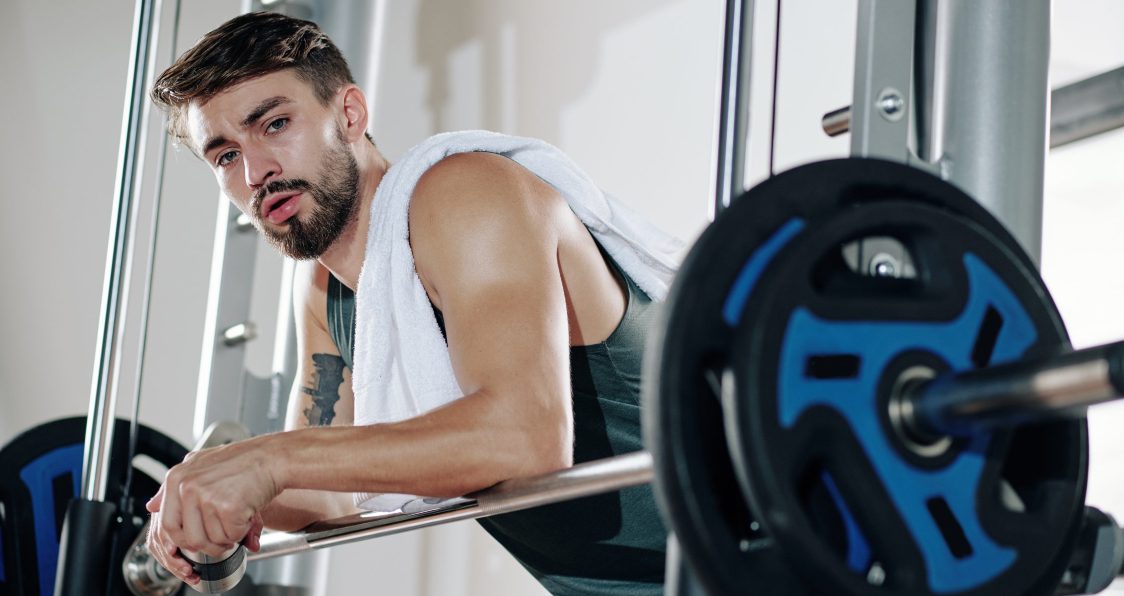
Some have a love-hate relationship with it, but these smith machine exercises are great for gains.
For those of us who lift, we may look at smith machine exercises and scoff. The smith machine does have that reputation for not being a “real” lift, or that somehow using this machine is just a cheat. So, we continue to lift that bar freely as we pack on the weight and totally neglect the potential of another group of exercises that can help our gains. While you may have different opinions of what the smith machine can or cannot do, just hear us out, for we have an argument to be made for why you should use it.
Smith machine exercises are essentially the same exercises that you would perform on the free weights, just with the assistance of this machine. But in reality, you are lifting the same amount of weight, albeit with some of that assistance. Your muscles still get work done and you can target specific groups to start to challenge yourself and your goals. To help change your mind, think of the smith machine as just another training tool. You won’t be competing with it, just boosting your gains so you start to see that desired physique you want most.
Let’s look into some awesome smith machine exercises to boost your workouts to new heights. While many of these will be familiar to you, putting them into the format of the smith machine will allow for some real growth and a chance to propel your progress.
What Is The Smith Machine?
The smith machine is a piece of weight training equipment that is fixed within a steel rail system. This fixed track allows for resistance while still operating in similar fashion to the free weight rack. By using this machine, you start to eliminate a lot of the load off your muscles and the movement tends to be more smooth since you are running on a fixed point (1). Some say this is cheating because you can really pack the weight on and potentially lift more than you would with a traditional free weight exercise. Regardless, it is a great training machine to boost your gains.
Pros & Cons of Using It
The smith machine has some pros and cons that are good to consider before jumping right into this. What the smith machine does well is it will help with balance and stability while enhancing safety since it is on a fixed track. You can lift more as well increasing muscle growth for that increased strength and size. Looking at the downsides of the smith machine, the movement of the bar is only up and down on a straight line. Naturally, your body doesn’t lift like this so it can be an unusual movement without targeting your stabilizer muscles, which are vital to grow for better support and functional movements (2). Like anything, the smith machine has its pros and cons but ones worth looking into.
Great Smith Machine Exercises For Boosting Gains
Back Squat
A typically sensitive movement since you are under so much weight, really nailing down form with this is key because you want to stay away from injury and only boost those lower body gains. One tip is to have your feet slightly in front of the bar instead of directly under like a traditional free weight back squat.
Bent Over Row
This is an awesome back exercise and to really widen out those lats. With the smith machine, it takes out the need for those stabilizer muscles and is a good one for isolating the lats and other muscle groups associated with the lift. Help tackle your posture needs with this as well.
Split Squats
Great for working one leg at a time, using the smith machine can work for better balance so you can focus on working those muscles more without wasting concentration on stability. These can be done flat on the floor or with the back foot elevated.
Bench Press
This is perfect to use for those seeking to build muscle. It allows for heavier weight and you will be able to pump out a few more reps given its fixed stability. This is a great training exercise for that muscle growth.
Shrugs
We all know shrugs can work to give your traps some nice strength and size and the smith machine allows us to focus on range of motion to really target the upper traps. The nice part is you can do shrugs either with the bar in front of you or behind you.
Featured Supplement To Enhance These Gains
When it comes to lifting big and fueling our bodies after these smith machine workouts, it’s important to realize that having a top supplementation routine can boost all areas of our gains. A protein powder is absolutely vital for enhancing growth and recovery (3) and while there are many options in supplements like pre-workouts, BCAAs, and even something like a testosterone booster or fat burner, you can’t go wrong with a high-quality protein supplement for all of your lifting needs.
Performance Lab SPORT Protein
Performance Lab SPORT Protein uses Oryzatein® in their protein powder, which provides for awesome benefits out of a clean brown rice protein. This protein is much cleaner than other protein powders and is naturally flavored with organic cocoa, vanilla bean, and ceylon cinnamon for an amazing tasting supplement. Being a brown-rice protein powder, anyone can use it for growth and weight loss for this powder contains great ingredients and offers a non-dairy, plant-based approach to a protein supplement without sacrificing any gains. With no allergens and being vegan-friendly, this protein will give you 20g protein and only 100 calories making this a great option for both cutting and bulking.
Price: $59.00
Click here for the best price
Check out our individual review for Performance Lab SPORT Pre here!
Check out our list of the Best Protein Powders for more awesome protein supplements!
Wrap Up
Smith machine exercises and the many benefits associated with them are great for all of your gains. By working on stability and really targeting muscles differently, you get the most out of each of these exercises to boost your gains. Don’t let the stigma of the smith machine hurt any chance at serious gains and work to give yourself the best chance at growth.
Let us know what you think in the comments below. Also, be sure to follow Generation Iron on Facebook, Twitter, and Instagram.
*Images courtesy of Envato
References
Saeterbakken, Atle H.; van den Tillaar, Roland; Fimland, Marius S. (2011). “A comparison of muscle activity and 1-RM strength of three chest-press exercises with different stability requirements”. (source)
Schick, Evan E.; Coburn, Jared W.; Brown, Lee E.; Judelson, Daniel A.; et al. (2010). “A Comparison of Muscle Activation Between a Smith Machine and Free Weight Bench Press”. (source)
Pasiakos, Stefan M.; Lieberman, Harris R.; McLellan, Tom M. (2014). “Effects of protein supplements on muscle damage, soreness and recovery of muscle function and physical performance: a systematic review”. (source)
Tom Stoltman Wins World’s Strongest Man 2021
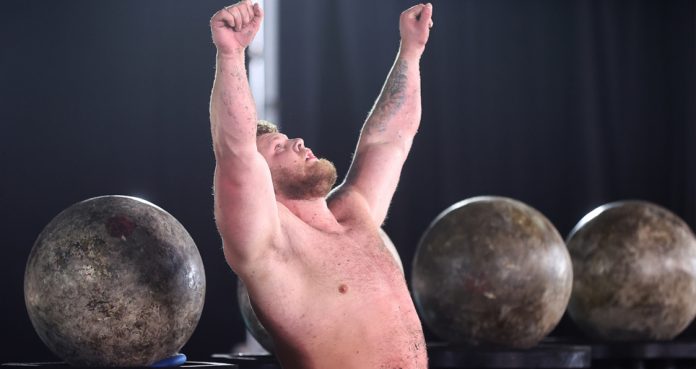
Tom Stoltman victorious in World’s Strongest Man 2021.
It’s official. Tom Stoltman is the World’s Strongest Man 2021 champion. After an exciting and grueling five days, the 27 year old Stoltman was victorious earning the first place prize in strongman. Brian Shaw received second place while Maxime Boudreault finished in third. For Stoltman, this is a step up from his placing last year, where he ranked second at the WSM 2020.
During the qualifier stage, Tom Stoltman squeaked by – just making it into the top 10 finalists for the last two days. He did so by winning a Stone Off against Mark Felix. Despite the slow start in the qualifier events, Stoltman stood tall during the finals, especially during day one with a sweep of many of the events.
After the first two events in the last day of finals, the World’s Strongest Man 2021 competition was neck and neck between two competitors. Tom Stoltman and Brian Shaw were just one point away for each other – battling for first place. It was clear that the event would come down to the final competition. The energy in the air was electric and audiences were on the edge of their seats.
Tom Stoltman was looking promising in the first day of the finals – but didn’t bring in his best showing during the day two finals events. Despite this, he was able to hold onto his lead and earn himself the first place victory. The first two events of the day, the Log Lift and KNAACK Deadlift, left Stoltman just one point ahead. The gap had closed significantly putting lead in jeopardy.
Ultimately, this didn’t matter. Stoltman came in strong on the final event, the Atlas Stone Medley, and placed first place – putting all questions to rest and earning him his champion status. In the end, it seems, the close call simply made for a dramatic and exciting photo finish.
You can read our entire breakdown and recap of the World’s Strongest Man 2021 finals right here to get more of a play-by-play of the two-day events.
You can also see a brief recap of Tom Stoltman’s performance in each event below.
2021 WSM Qualifying Stage
Loading Medley — 4 in 49.69 (First place)
Deadlift for Reps — 8 reps (Tied for first)
Train Push — 37.83 (Third place)
Overhead Medley — 4 in 38.02 (Third place)
Pickaxe Hold — 36.90 (Third place)
Stone Off — Defeated Mark Felix with 5 stones
2021 WSM Finals Stage
Giants Medley — 18.36 (First place)
Titan’s Turntable — 46.89 (First place)
Keg Toss — 7.5 meters (Tied for second place)
Max Log Lift — 185 kilograms (Tied for ninth place)
KNAACK Deadlift — 8 reps (Tied for third place)
Atlas Stones — 5 stones in 20.21 (First place)
This performance earned Tom Stoltman the title of World’s Strongest Man 2021. He is now the 23rd athlete since the inception of the competition in 1977 to be dubbed champion. You can get more updates and news coverage on all things strongman, strength sports, and bodybuilding right here at the Generation Iron Fitness Network!
Everything You Need to Know About StrongLifts 5×5 Strength Program
The optimal volume for building muscle has been the subject for a number of scientific studies over the years and yet there still does not appear to be a definite answer. The original understanding was that the number of reps completed dictated the muscle component trained. Low reps under a heavy load developed strength whereas high reps under a low load would improve muscular endurance.
Now, however, there are those who advocate the use of both high and low repetitions stating that this is optimal for hypertrophy (muscular growth). With a number of contradicting opinions and views on the ideal number of repetitions, it can be challenging to know who is right. For a number of years, 5 sets of 5 reps has been seen as the gold standard for strength training however, it’s overall impact on muscle building is questionable.
What Is StrongLifts?
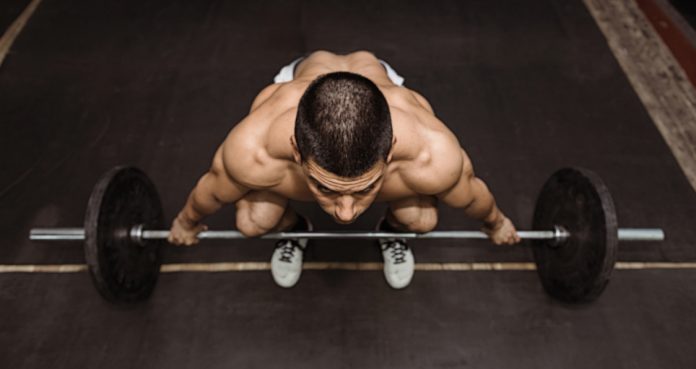
StrongLifts is a linear progression strength program which can be used by practically any individual, regardless of their experience. It is a simple and effective program for building strength as highlighted by the fact it only requires completion of 2 workouts – workout A and B.
Both of the workouts focus on large, compound movements that will cause improvements in strength. Compound movements are simply exercises which work multiple muscles groups across a number of joints.
The participant is required to train 3 times per week and must alternate between both workout A and B. The workouts should be spread throughout the week with the general rule being one day on, one day off, which will give the body sufficient time to fully recover from training bouts.
As mentioned, StrongLifts follows linear progression which simply refers to a training principle involving incrementally adding more weight to each exercise with every session. To effectively apply this principle, StrongLifts requires that on successful completion of 5 sets of 5 reps, 5lbs (or 2.5kg) should be added to the barbell. This process should be repeated and continue for as long as possible in order to maximize an increase in strength.
StrongLifts Workouts
The StrongLifts workout routine is simple and easy to implement; there are only 5 exercises to complete per week – the squat, bench press, barbell row, overhead press, and deadlift. Of course, this makes the StrongLift program highly appealing for novices and beginners.
Workout A
Exercise
Sets x Reps
Squat
5 x 5
Bench Press
5 x 5
Barbell Row
5 x 5
Workout B
Exercise
Sets x Reps
Squat
5 x 5
Overhead Press
5 x 5
Deadlift
1 x 5
The deadlift is the only exercise out of the 5 that fails to follow convention as only one set of deadlift is required, rather than five. The underlying reason for this is that heavy deadlifts are highly taxing on the central nervous system and as a result, 1 set will suffice.
5 x 5 Considerations
By searching through popular strength training programs online, it won’t take long to notice that a large percentage of them use 5 x 5. Many view the 5 x 5 as the optimal combination of load and intensity for building strength. But is it the ideal volume for driving muscle growth too?
Previously, the widely-held belief was that performing 1-5 reps would build muscular strength, 6-12 reps causes muscular hypertrophy and 12 reps or more would develop muscular endurance. This may help to explain why so many strength programs focus on 5 x 5 and rarely incorporate sets exceeding 5 reps.
Optimal Training Frequency
Typically, bodybuilders follow a “split” strength program which involves focussing on one muscle group per session – in other words, they train each muscle group once per week. However, evidence is mounting that suggests that this is perhaps not the most efficient way to develop size.
Recent research indicates that an increase in training frequency may accelerate muscular hypertrophy to a greater extent (1). This means training each muscle group several times per week – instead of once. One particular study compared the rate of muscle growth between those adopting a “split” routine and those training 3 times per week. The group that trained muscle groups multiple times per week experienced more rapid gains.
With StrongLifts, squats will be performed 6 times over a two week period. Meanwhile, bench press, overhead press, row, and deadlift will be performed 3 times each over the same period.
Of the back of this research, the training frequency for squats would be considered optimal, however, frequency is certainly lacking for the deadlift and for all upper body exercises. Therefore, this may lead to a fine development of the legs (specifically the quads and glutes) but an inefficient development of the upper body and hamstrings specifically.
Weekly Training Volume
Training volume simply refers to the total amount of work performed during each workout. The number of sets and reps performed, the weight lifted and total intensity will all have a bearing on overall training volume.
In the fitness industry, there is a wide range of opinions when it comes to training volume. For example, one may say that completing sets to muscular failure is the best way to add mass whereas another may say working to absolute failure is unnecessary for muscle building.
As with training frequency, a large number of studies have been completed and have investigated the link between volume and hypertrophy. The majority of the research agrees that the number of sets performed will have a direct impact on the rate of muscular hypertrophy. The more sets completed (without overtraining), the greater the rate of muscular growth (2).
It is important to consider total weekly training volume – rather than individual workout volume. The weekly volume for the StrongLifts program includes 16/17 sets for the legs (15 sets of squats, 1/2 sets of deadlifts). This is ample volume for developing the legs optimally.
Once again, however, StrongLifts is found lacking when it comes to upper body development. The weekly volume for the chest, back and shoulders is significantly lower – averaging at 7.5 sets.
This adds even further weight to the idea that StrongLifts may indeed develop the legs at a decent rate yet the upper body may under-develop due to the lack of training frequency and overall volume.
Using Heavy Weight
As stated earlier, the deeply-held belief was that for building muscle mass effectively, a rep range of 6 – 12 reps should be adopted and therefore, while completing 5 x 5 would be beneficial for building strength, it would not optimally build muscle.
The main benefit of using heavy weight is the fact that there is a large degree of muscle recruitment required to generate movement and stability. A further benefit to using heavy weight is that fatigue will not build up to the same extent as it would with high reps thus facilitating form.
Over the years, however, data from recent studies have suggested that the number of reps completed may not have as great an impact on muscle growth as we had once imagined. Both low and high reps appear to have a similar impact on the rate and extent of muscular hypertrophy.
One recent study even suggested that heavier weights and low reps is actually superior for muscular growth. The research involved placing participants into one of two groups. The first group completed 4 sets of 10-12 reps per exercise while the second group completed the same exercises using a heavier load and completed 3-5 reps per exercise.
The results after 8 weeks of training indicated that those performing 3-5 reps put on a greater amount of muscle mass in comparison to those who participated in sets of 10-12 reps (3).
Research investigating how the body reacts to rep ranges will undoubtedly continue for many years to come however, this recent research does seem to point toward heavy weight training being as beneficial for muscular growth as traditional hypertrophy training.
The traditional view would have shunned the approach taken by the StrongLifts program for building mass, however, keeping in mind these latest findings, it must be said that low reps (3-5) will indeed facilitate muscle mass improvements.
Varying Sets and Reps
While 5 x 5 does appear to be effective, there is a case to suggest that varying the number of sets and repetitions performed may lead to even greater development. Often referred to as “combination training”, this method involves working the upper and lower body through a number of different rep ranges.
Findings have indicated that this method can be utilized to maximize muscle growth. One study, in particular, investigated the impact that “backed off” sets had on overall muscle gain. A backed off set is simply where the load is reduced drastically for the final set to allow a high number of reps to be performed.
The research found that backed off sets had a greater impact on size development and strength capability than standard “straight” sets of 5 x 3-5 (4). Based on these findings, incorporate a mixture of high and low repetitions may accelerate hypertrophy to a greater extent. StrongLifts fails to utilize combination training and stick only to straight sets of 5 x 5.
Limited Exercise Menu
The majority of 5 x 5 programs, such as StrongLifts, integrate a number of key compound exercises. It would be highly challenging to find a 5 x 5 program that doesn’t include the squat, deadlift, bench, and overhead press.
While these exercises are high effective for strength and size building, concentrating solely on one exercise per muscle group is unlikely to optimize growth. Undoubtedly, these key movements exercise a large number of muscles and place a great demand on them however, in order to maximize development, we must use several exercises.
For a comprehensive development, we must ensure that all muscle fibers are targeted equally. One of the best examples that can be given to demonstrate this is the use of an incline during the bench press. A standard bench press will place a great degree of stress on the pectorals, yet, in order to fully develop the pecs, it’s important to incorporate the incline press and allow the fibers of the upper pecs to develop at a similar rate.
One recent study investigated the impact that squat-only program and a varied quad-based program had on overall quad development. The varied program, which involved several exercises including the leg press, squat, and lunge, was found to be superior for developing the 4 individual muscles of the quads. (5)
Strength Does Not Equate To Size
5 x 5 programs have been in existence for a long time but were highly popularized in the 1970’s. Since then the 5 x 5 has been treated as the ultimate strength and power building method.
While there is no doubt that the 5 x 5 is superb for developing strength, it is critical to remember that an increase in strength capabilities does not necessarily equate to changes in muscle size. Absolutely, there is a link between an increase in strength and muscular hypertrophy but it is not a perfectly correlated relationship.
There are many individuals, some who you may have come across at your local gym, who are not especially muscular but are extremely strong. This helps to highlight the fact that improving strength with each and every compound lifts will not guarantee an increase in muscle mass.
Before we even consider the strength program to follow, one must first place themselves within a calorie surplus and ensure that they are consuming an adequate amount of protein per day to promote effectual growth. If these two components are not in place, strength may improve yet muscular size may remain relatively unchanged.
The 5 x 5 and Testosterone
Finally, it has been suggested that performing compound lifts following the 5 x 5 method somehow creates an anabolic state thus enhancing the release of muscle building hormones such as testosterone and human growth hormone (HGH).
Unfortunately, this claim lacks substance. While “big” exercises such as squats and deadlifts may contribute to a minute increase in testosterone and growth hormone, it is a short lived effect and has little impact on muscle mass development (6).
Final Word
While the StrongLifts program is simple, effective and a great tool for novices looking to learn basic barbell exercises and build strength, there are absolutely no guarantees that it will develop muscle mass to a great extent. There are a number of shortcomings with the StrongLift program – specifically in regards to the lack of upper body development. Therefore, if your primary goal is to build mass, consider looking for a program which integrates appropriate volume, frequency, and variation.
For more news and updates, follow Generation Iron on Facebook, Twitter, and Instagram.
References:
1- Schoenfeld, Brad J.; Ratamess, Nicholas A.; Peterson, Mark D.; Contreras, Bret; Tiryaki-Sonmez, Gul (2015-7). “Influence of Resistance Training Frequency on Muscular Adaptations in Well-Trained Men”. Journal of Strength and Conditioning Research. 29 (7): 1821–1829. doi:10.1519/JSC.0000000000000970. ISSN 1533-4287. PMID 25932981.
2- Schoenfeld, Brad J.; Ogborn, Dan; Krieger, James W. (2017-6). “Dose-response relationship between weekly resistance training volume and increases in muscle mass: A systematic review and meta-analysis”. Journal of Sports Sciences. 35 (11): 1073–1082. doi:10.1080/02640414.2016.1210197. ISSN 1466-447X. PMID 27433992.
3- Mangine, Gerald T; Hoffman, Jay R; Gonzalez, Adam M; Townsend, Jeremy R; Wells, Adam J; Jajtner, Adam R; Beyer, Kyle S; Boone, Carleigh H; Miramonti, Amelia A (August 13, 2015). “The effect of training volume and intensity on improvements in muscular strength and size in resistance-trained men”. Physiological Reports. 3 (8). doi:10.14814/phy2.12472. ISSN 2051-817X. PMC PMCPMC4562558. PMID 26272733.
4- Goto, Kazushige; Nagasawa, Masanari; Yanagisawa, Osamu; Kizuka, Tomohiro; Ishii, Naokata; Takamatsu, Kaoru (2004-11). “Muscular adaptations to combinations of high- and low-intensity resistance exercises”. Journal of Strength and Conditioning Research. 18 (4): 730–737. doi:10.1519/R-13603.1. ISSN 1064-8011. PMID 15574075.
5- Fonseca, Rodrigo M.; Roschel, Hamilton; Tricoli, Valmor; de Souza, Eduardo O.; Wilson, Jacob M.; Laurentino, Gilberto C.; Aihara, André Y.; de Souza Leão, Alberto R.; Ugrinowitsch, Carlos (2014-11). “Changes in exercises are more effective than in loading schemes to improve muscle strength”. Journal of Strength and Conditioning Research. 28 (11): 3085–3092. doi:10.1519/JSC.0000000000000539. ISSN 1533-4287. PMID 24832974.
6- Walker, Simon; Häkkinen, Keijo; Haff, Guy Gregory; Blazevich, Anthony J.; Newton, Robert U. (2017-4). “Acute elevations in serum hormones are attenuated after chronic training with traditional isoinertial but not accentuated eccentric loads in strength-trained men”. Physiological Reports. 5 (7). doi:10.14814/phy2.13241. ISSN 2051-817X. PMC PMCPMC5392527. PMID 28400506.
Header image courtesy of Envato Elements