
Muscle Chemistry Archive
5 Exercises Which Will Burn Fat Better Than Cardio
Exercises Which Are More Effective Than Cardio
Most people get a gym membership because they want to shed weight. Losing weight is one of the most common New Year’s Resolutions. This is why there is an influx of new members in gyms around the world during that time.
Most people when they think weight loss, think about cardio. If you’re someone who doesn’t like the idea of spending time on a treadmill or don’t feel comfortable going for a walk or a run in the wild, this is the article for you.
1. Burpees
Burpees are one of the most brutal exercises. All the exercises on this list are high-intensity exercises which will put your cardiovascular system to a test. Apart from losing weight, HIIT workouts help you in building strength and stamina.
Stand with your feet shoulder-width apart. Perform a squat and place your hands on the floor, just inside your feet. Get into the pushup position, perform a pushup and return to the starting position. Reach your arms overhead and explosively jump up in the air. Land back and repeat for reps.
2. Alternate Kettlebell Swings
The benefit of performing HIIT exercises is, you can target specific muscle groups while burning fat. Alternate kettlebell swings will work your shoulders and back while burning those extra calories.
Stand with your feet in a wider than shoulder-width stance. Hold a kettlebell between your legs in your right hand. Swing the kettlebell so its parallel to the floor and at your shoulder level. Return to the starting position and repeat with your left arm.
3. Dumbbell Farmer’s Walk
Dumbbell farmer’s walk is an incredibly effective exercise if you’re looking to build grip strength. This exercise also helps in shedding weight while sculpting your body and strengthing your stabilizers.
Dumbbell farmer’s walk has different variations you can perform. You can use farmer’s walk bars, dumbbells, kettlebells or barbells for this exercise. You can also hold the dumbbells and kettlebells overhead to make the walk intense.
4. Step Up Jumps
If you have ever performed step-ups, you would know this exercise can smoke you. The trick with step-up jumps is you need to maintain a constant intensity. You could perform the bodyweight version of step-up jumps or could add resistance by using weights.
Stand behind a flat bench of knee height and place one foot on the elevated platform. Jump up, driving through the forefoot of the elevated leg. Switch legs in the air so that you land your opposite leg on top of the platform.
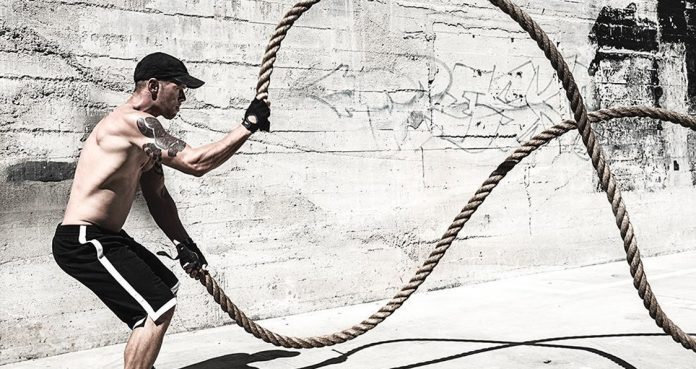
5. Battle Rope Wave
Battle rope training is a staple in unconventional gyms, and there’s a good reason behind it. They’re one of the most functional pieces of equipment for high-intensity training and hardcore conditioning.
Battle rope waves can exhaust you in a couple of minutes. This exercise might look easy but will take all you have. Hold the ends of the rope at arm’s length in front of your hips with your hands shoulder-width apart. Brace your core and begin alternately raising and lowering each arm explosively.
How long are your cardio sessions? Let us know in the comments below. Also, be sure to follow Generation Iron on Facebook and Twitter.
*Header image courtesy of Envato Elements.
2021 Japan Pro Results
Yukihiro Yuasa wins Men’s Physique at the 2021 Japan Pro!
Yukihiro Yuasa stole the show during the 2021 Japan Pro by winning gold in Men’s Physique. Tokyo was the site of the event where Men’s Physique and Bikini athletes took the stage hoping to earn qualification to the 2022 Olympia.
Yuasa is no stranger to the biggest competition of the year. He was present in Orlando back in October and finished 16th. Yuasa earned qualification after winning the 2021 Tokyo Supershow Pro just one month before the Olympia. Yuasa has emerged as one of the best bodybuilders in Japan and now he is making moves around the world. This will continue as he improves and continues to rack up some victories.
Sally Ann Kato was the winner in the Bikini division. Kato earned a victory in an NPC competition in 2020 by winning the Worldwide Iris & Hide Classic. She is an up-and-coming competitor who has a bright future. It has already begun with a victory in Tokyo.
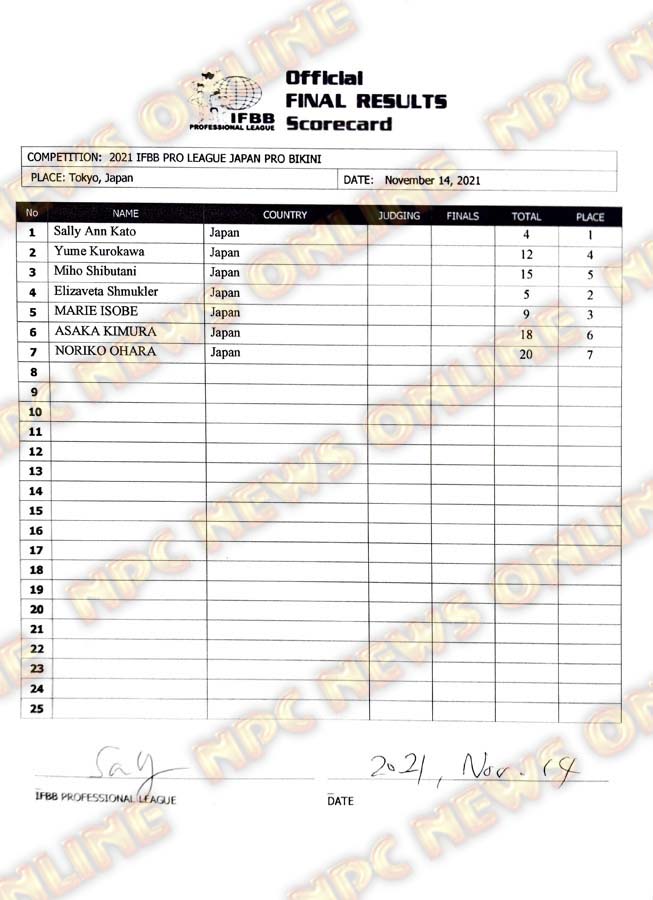
The 2021 Japan Pro is now in the books and the full results have been announced. Check out the full breakdown of the show, including official score cards, below!
2021 Japan Pro: All Division Results
Men’s Physique: Yukihiro Yuasa
Bikini: Sally Ann Kato
2021 Japan Pro Breakdown
Men’s Physique
First Place – Yukihiro Yuasa
Second Place – Farouq Ishimoto
Third Place – Shogo Sato
Fourth Place – Hirokawa Shoichi
Fifth Place – Steven Pettis
Sixth Place – Hong Son
Seventh Place – Hasegam Hirohisa
Bikini
First Place – Sally Ann Kato
Second Place – Elizaveta Shmukler
Third Place – Marie Isobe
Fourth Place – Yume Kurokawa
Fifth Place – Miho Shibutani
Sixth Place – Asaka Kimura
Seventh Place – Noriko Ohara
Official Score Cards
Generation Iron wishes to congratulate all the great athletes who earned a win at the 2021 Japan Pro. Make sure to check out our full IFBB Pro results page from this year and previous years right here to catch up on any action you may have missed!
For more news and updates, follow Generation Iron on Facebook, Twitter, and Instagram.
Greg has covered the four major sports for six years and has been featured on sites such as Sports Illustrated, Fox Sports, SB Nation, NJ.com, and FanSided. Now, he is transitioning into the world of bodybuilding and strength sports.

2022 International Regional & Pro Qualifier Contest Schedule Announced
NPC WORLDWIDE ANNOUNCES PHASE 1 OF THE 2022 REGIONAL AND PRO QUALIFIER CONTEST SCHEDULE November 15, 2021: Pittsburgh, USA – On behalf of NPC WORLDWIDE, we are pleased to announce Phase 1 of the 2022 NPC WorldWide Regional and Pro Qualifier Contest Schedule. Despite the challenges this year, NPC WORLDWIDE saw record-breaking numbers of athletes…
2021 Texas State Pro-Am Results
Mehdi Larijani wins Classic Physique at the 2021 Texas State Pro-Am!
The 2021 Texas State Pro-Am took place on Saturday where Mehdi Larijani was able to take home the prize in the Classic Physique division. This is the event that highlighted the show in Austin, TX. Three divisions gathered to gain qualification to the 2022 Olympia in December of 2022.
This was a small show that took place weeks after Big Ramy defended his title in Orlando. This does not mean that it lacked quality as athletes showed up in their best shape looking to gain qualification to the Olympia. There were plenty of well-known names on stage on Saturday.
Larijani was active in 2020 but did not pick up a victory. He finished seventh at the Battle of Texas and fourth during the Chicago Pro last year. Larijani will not have a chance to take on some of the best in the world on the biggest stage. In Figure, Jessica Reyes Padilla took home gold and will prepare to compete in her sixth straight Olympia competition.
Padilla recently took the stage in Orlando and finished sixth in Figure. She was able to defeat Larhannah Robinson and Autumn Cleveland on stage in Austin. Rounding out the show was Yarishna Ayala Otero and Wellness. Sunny Andrews entered the competition as a dark-horse to win and ended up with the bronze medal. Otero earned qualification to the Olympia and has put her name on the map heading into 2022.
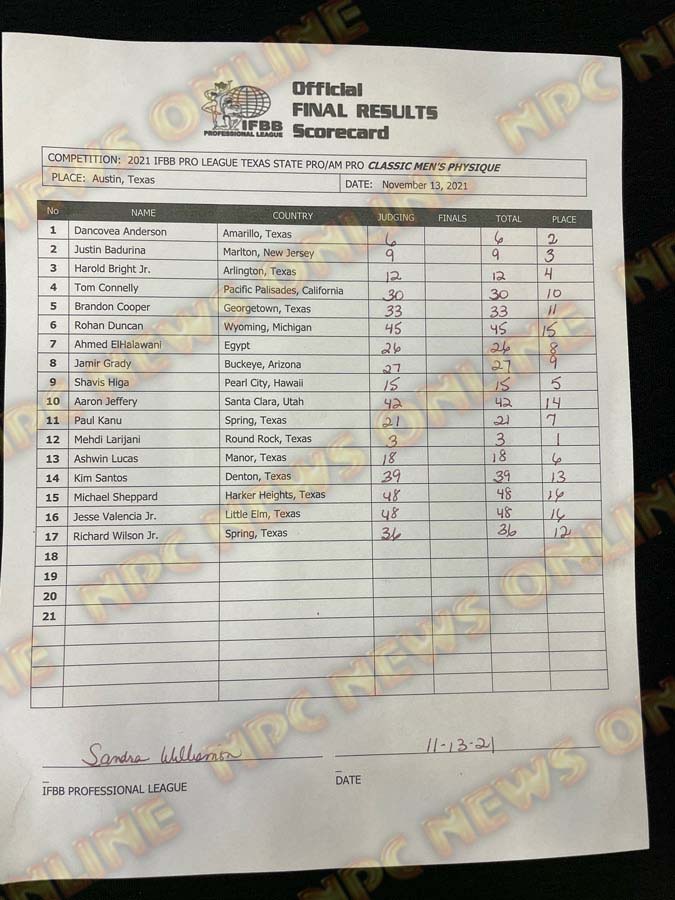
There were three bids handed out to the Olympia, which is set to take place in Las Vegas next year. The full results have been announced from the Texas State Pro-Am and they can be found below, along with the official score cards!
2021 Texas State Pro-Am: All Division Results
Classic Physique: Mehdi Larijani
Figure: Jessica Reyes Padilla
Wellness: Yarishna Ayala Otero
2021 Texas State Pro-Am Breakdown
Classic Physique
First Place – Mehdi Larijani
Second Place – Dancovea Anderson
Third Place – Justin Badurina
Fourth Place – Harold Bright
Fifth Place – Shavis Higa
Figure
First Place – Jessica Reyes Padilla
Second Place – Larhannah Robinson
Third Place – Autumn Cleveland
Fourth Place – Militsa Rivera
Fifth Place – Sh’Nere Mattise Deas
Wellness
First Place – Yarishna Ayala Otero
Second Place – Barbara Emanuele Cesar
Third Place – Sunny Andrews
Fourth Place – Kassandra Gillis
Fifth Place – Tatiany Vaillant
Official Score Cards
Generation Iron wishes to congratulate all the great athletes who earned a win at the 2021 Texas State Pro-Am. Make sure to check out our full IFBB Pro results page from this year and previous years right here to catch up on any action you may have missed!
For more news and updates, follow Generation Iron on Facebook, Twitter, and Instagram.
Greg has covered the four major sports for six years and has been featured on sites such as Sports Illustrated, Fox Sports, SB Nation, NJ.com, and FanSided. Now, he is transitioning into the world of bodybuilding and strength sports.
2021 Amateur Olympia India Pro Qualifier
/* custom css */
.tdi_86{
color: #eaeaea;
}
IFBB PROFESSIONAL LEAGUE®, IFBB PRO LEAGUE®, IFBB PRO® and the IFBB Professional League logo are registered trademarks owned by the IFBB Professional League.The IFBB Professional League logo cannot be altered in any way, shape or form without the expressed written approval of the IFBB Professional League. Where such approval is granted, the IFBB Professional League will provide the altered logo.
Suffering From Shoulder Pain? Self-Diagnose With These Easy Tests
Shoulder pain self-diagnoses you can do at your home.
Suffering from shoulder pain? You have come to the right place.
Shoulders are one of the most complex and vulnerable joints in our body. Given the complicated anatomy and range of muscles and movement involved, it is a miracle we do not run into shoulder trouble often.
Most people with underlying shoulder issues experience pain when they are performing a physically intensive task. Compromised shoulder movement due to stiffness or pain can cause substantial disability and affect an individual’s ability to carry out daily activities.
Occupations that require a person to perform repetitive tasks, lift heavy loads, and cause shoulder vibrations are associated with a higher risk of shoulder disorder.
How the shoulder works
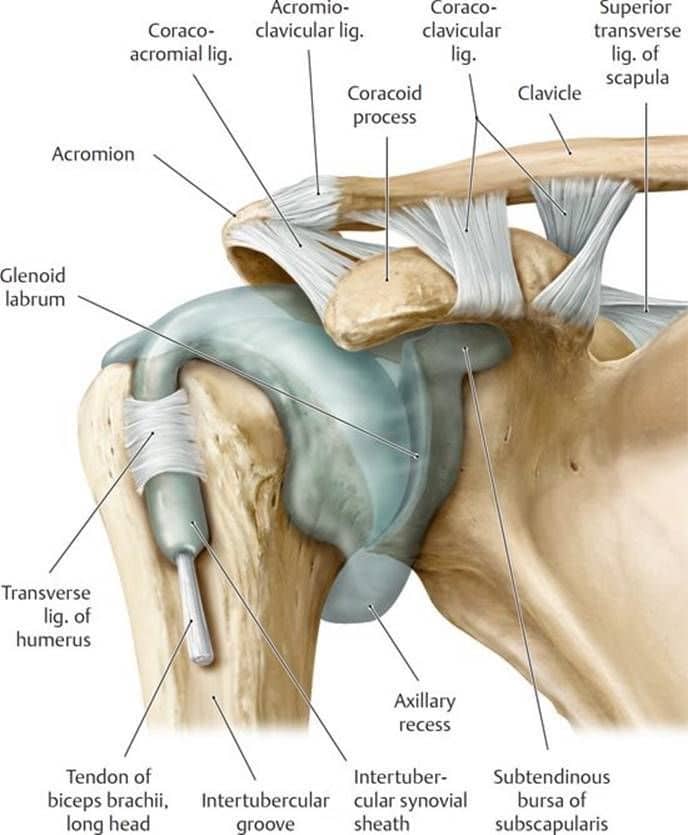
The shoulder is a ball-and-socket joint that has three main bones: the humerus (long arm bone), clavicle (collarbone), and scapula (also known as the shoulder blade).
The three bones are cushioned by cartilage. Further, there are two main joints:
Acromioclavicular – Located between the highest part of scapula and clavicle.
Glenohumeral (aka shoulder joint) – Made up of top, ball-shaped part of the humerus bone and outer edge of the scapula.
Fun fact: The should joint (glenohumeral) is the most mobile join in your body.
Rotator Cuff
Shoulders get their range of motion from the rotator cuff. The stiffer a person’s rotator cuff, the more restricted his range of motion will be. The rotator cuff is made up of four tendons.
But what are tendons, you ask?
Tendons are tissues that connect muscles to bone. If tendons or bones around the rotator cuff are swollen or damaged, it might be painful or difficult to lift your arm over your head.
Symptoms of a Shoulder Injury
The ball-and-socket structure of the shoulder gives you a great range of motion, but it comes at the expense of stability.
The shoulder joint is the most dislocation-prone in your body. On top of that, repeated stress (at work or while playing sports) can lead to tears and other shoulder injuries.
A preliminary shoulder injury test includes asking yourself the following questions:
Can you move your arm normally, or is your shoulder too stiff or painful?
Is your shoulder strong enough for routine tasks?
Do you feel that your shoulder could pop out of the socket?
Related: Get Bulletproof Shoulders with this Essential Stability Workout Program
Self-Diagnoses For Shoulder Pain
Here are a few simple DIY shoulder tests that can help determine the reason behind your shoulder pain. You will need the help of a partner to perform these shoulder self-diagnoses.
1. Supraspinatus Tear (Empty Can Test)
The empty can test is a common shoulder pain self-diagnose exam. The diagnostic is used to assess the status of the supraspinatus (one of the four rotator cuff muscles).
The muscle is used in arm abduction (raising) and is located on the upper part of the shoulder joint.
Steps:
Sit on a chair with your arms at your sides and hands supinated (palms facing forward).
Lift the sore arm forward and to the side at about 30-45 degrees.
Slowly turn your wrist (as if you were trying to empty a glass of water) until your palm faces down to the floor.
In this position, get your partner to slowly push your arm down while you attempt to resist the force.
If you feel pain or are not able to maintain the arm position due to weakness, you may have a supraspinatus tear.
2. Labrum Tear
The shoulder labrum is a thick piece of tissue attached to the rim of the shoulder socket that helps keep the ball of the joint in place. It can tear in three ways:
Completely off the bone.
Within or along the edge of the labrum.
Where the bicep tendon attaches.
The labrum tear test for shoulder pain has two parts: the apprehension test and the relocation test.
Apprehension Test:
Lie down on your back on a flat and elevated surface.
Move your arm out to the side so that it is perpendicular to your torso and parallel to the floor.
Flex your elbow so that your upper arm is at a ninety-degree angle with your lower arm.
Your partner should slowly rotate your arm so your hand moves toward your ear. Make sure you are maintaining the ninety-degree elbow flexion throughout the test.
If you are apprehensive (hesitant) about shoulder movement beyond the joint, this test is considered positive for a possible labrum tear.
Relocation Test:
In some cases, you might feel your shoulder is unstable and wants to move out of the socket or relocate – especially during extreme external rotation.
If you are facing the same problem, have your partner gently press on the front of your shoulder to relocate the joint.
After this, if you feel less relocation and your shoulder feels in place and more stable, then this test is considered positive.
Also Read: 5 Things You Should Never Do During Shoulder Workouts
3. Impingement
The space where your rotator cuff tendons and shoulder bursa reside becomes smaller when your arm is raised overhead. Impingement happens when the tendons of the rotator cuff get pinched in the bones of the shoulder.
Steps:
While seated, have a partner raise the arm of your sore shoulder to the front and overhead as far as possible.
Your partner should support your shoulder blade (scapula) with one hand and use the other hand to raise your arm.
If you experience shoulder pain while your arm is being raised, the impingement test is considered positive. The pain is probably caused by impingement of the tendons or bursa in that part of the shoulder.
4. Frozen Shoulder
A frozen shoulder is one of the most common types of shoulder issues. It is also known as adhesive capsulitis. It usually occurs over time and can cause shoulder pain, tightness, and limit the functionality of your arm. A frozen shoulder can make it difficult for you to reach overhead and scratch your back.
A frozen shoulder cannot be diagnosed through an X-ray or MRI. It has to be examined by observing the troubled shoulder while it is moving through its range of motion.
Frozen Shoulder Test #1 Steps:
Stand in front of your partner and ask them to observe you as you move your sore arm. Your partner should closely notice the range and quality of motion of the shoulder joint.
Slowly raise both your arms to the front and overhead. If you are suffering from a frozen shoulder, you might only be able to lift your sore arm to a point just past parallel with the floor. Additionally, as your scapula elevates towards your ear, you might experience incremental shoulder pain.
From the overhead position, slowly lower your arms down to the starting position.
Lift your arms out to your sides. As with lifting your arms overhead, you might be suffering from a frozen shoulder if you are only able to lift your arms to a point parallel to the ground.
Frozen Shoulder Test #2 Steps:
Stand with both arms extended straight at your sides so that they are parallel to the floor.
Flex your elbows so that your upper arm is perpendicular to your lower arm.
Rotate your arms outward.
If you are suffering from a frozen shoulder, the painful arm will not rotate as far as the healthy shoulder.
Check Out: How To Fix Rounded Shoulders For Optimal Posture
5. Bicep Tendonitis
Bicep tendons are long and strong cord-like structures that connect the bicep muscle to the bone in the shoulder socket. Biceps tendinitis is an inflammation or irritation of the upper biceps tendon.
Steps:
While seated, raise your sore arm forward so that it is parallel to the floor.
While holding the position, turn your wrist so that your palm is facing the roof.
Ask your partner to push your arm down, while you resist.
If you experience shoulder pain while resisting your partner’s attempt to lower your arm, you are probably suffering from bicep tendonitis.
6. Rotator Cuff Tear
A rotator cuff is a group of muscles and tendons that hold the shoulder joint in place and allow you to move your arm and shoulder.
The rotator cuff includes the following muscles:
Subscapularis
Infraspinatus
Supraspinatus (from the empty can test)
Teres minor
These four muscles arise from the scapula and insert into the humerus. The tendons of the rotator cuff muscles blend with the joint capsule and form a musculotendinous collar that surrounds the posterior, superior, and anterior aspects of the joint, leaving the inferior aspect unprotected.
This shoulder set-up is a big reason behind most of the shoulder dislocations as the humerus slides inferiorly through the unprotected part of the joint.
During arm movements, the rotator muscles contract and prevent the sliding of the head of the humerus. This provides stability and a full range of motion to our shoulder joints.
While we wait for human evolution to catch up to this flaw, use the following test to determine if your shoulder pain is caused by a rotator cuff tear:
Steps:
While seated, ask your partner to lift your painful arm to the side so that it is parallel to the floor.
After a few seconds in this position, ask your partner to let your arm drop.
If you are unable to maintain the parallel position by yourself, your shoulder pain might be due to a rotator cuff tear.
Make sure you are not compensating for a torn rotator cuff by elevating the scapula towards your ear to hold the parallel position.
Related: These Exercises Are Key to Developing Great Shoulder Stability
7. Sulcus Test
The sulcus test is used to assess the glenohumeral joint (responsible for connecting the upper extremity to the trunk) for inferior instability due to a laxity of the superior glenohumeral ligament and coracohumeral ligament.
Note: This test is best performed by a trained professional. We would recommend passing on your friendly neighborhood brofessor‘s help for this test.
Steps:
While seated, let your arms hang at your sides.
Taking hold of your wrist or elbow, your practitioner pulls the arm down.
While doing this, the healthcare professional is looking for the appearance of a small divot, or sulcus, at the top of your shoulder joint.
The presence of a sulcus is a sign that your shoulder might be pulling away from the socket, hence indicating shoulder instability.
8. AC Joint Separation
The acromioclavicular (AC) joint is a joint in the shoulder where two bones meet. One of these bones is the collarbone or clavicle. The second bone is a part of the shoulder blade (scapula), which is the big bone behind the shoulder that also forms part of the shoulder joint.
The AC joint is a plane-type synovial joint, which under normal physiological conditions allows only gliding movement. As it also attaches the scapula to the thorax, the AC joint allows an additional range of motion to the scapula and assists in arm movement such as shoulder flexion and abduction.
The AC joint may become separated in a traumatic event like a sports injury or a car accident. The test for an AC joint separation is called the AC joint compression test.
Steps:
While seated, have your partner place one hand on the front of your shoulder and one hand on the back of your shoulder.
They then push their hands together, compressing the AC joint.
If you experience shoulder pain, then the test is positive. Additionally, pain while raising the arm upward and while sleeping are also indications of an AC joint separation.
When to seek medical help?
Usually, shoulder pain is caused by the factors mentioned above and can be fixed at home with rest and ice. You could also bandage it to hold it in place if necessary or use a cuff or elbow support until you see improvement.
But you should not delay getting professional help if you experience heat and tenderness around the joints, shoulder deformity, fever, inability to move your shoulder, lasting bruising, numbness, or pain that persists beyond a few weeks of home treatment.
We do not want to be the article that relates everything to a possible heart attack (or cancer) but if your shoulder pain is intense and sudden and not related to an injury, call 911 immediately. It may be a sign of a stroke.
Do you perform shoulder-specific warmups before a workout? Let us know in the comments below.
Also, be sure to follow Generation Iron on Facebook, Twitter, and Instagram.
2021 Japan Pro Scorecards
/* custom css */
.tdi_86{
color: #eaeaea;
}
IFBB PROFESSIONAL LEAGUE®, IFBB PRO LEAGUE®, IFBB PRO® and the IFBB Professional League logo are registered trademarks owned by the IFBB Professional League.The IFBB Professional League logo cannot be altered in any way, shape or form without the expressed written approval of the IFBB Professional League. Where such approval is granted, the IFBB Professional League will provide the altered logo.
2021 Romania Muscle Fest Pro Scorecards
2021 Romania Muscle Fest Pro Scorecards | IFBB PRO

2021 Romania Muscle Fest Pro Results
Here are the full results from the 2021 Romania Muscle Fest Pro!
The 2021 Romania Muscle Fest Pro took place on Sunday. Competitors from nine divisions gathered in Bucharest, Romania looking for an automatic bid to the 2022 Olympia. The event was highlighted by the Men’s Open division and the full results have been announced.
Samson Dauda returned to the stage just one week after winning the 2021 EVLA Prague Pro. He was able to defeat Regan Grimes, who has also earned his qualification to the Olympia. For Dauda, this was the competition win he was looking for to prove to be a force. He quickly returned to stage to see how he matched up in another competition.
Rafael Brandao returned to the stage during the Prague Pro and finished second to Dauda. He is another competitor who quickly returned to competition. For Brandao, it makes sense given the time off. He has quickly built a physique that is ready to compete. Roelly Winklaar continues to compete and was a top-five finisher in Prague.
The 2021 Romania Muscle Fest Pro was one of the biggest competitions following the 2021 Olympia. There were a total of nine divisions fighting for qualification to the biggest competition of the year. The full results have been announced. The overall breakdown and office score cards can be found below!
2021 Romania Muscle Fest Pro: All Division Winners
Men’s Open:
Men’s 212: Angel Calderon
Classic Physique: Jose Maria Mete Bueriberi
Men’s Physique: Alessandro Cavagnola
Women’s Bodybuilding: Nadia Capotosto
Figure: Jennifer Zienert
Bikini: Ashley Kaltwasser
Women’s Physique: Anne Lorraine Mohn
Wellness: Anna Mroczkowska
2021 Romania Muscle Fest Pro Breakdown
Men’s Open
Results coming soon!
First Place –
Second Place –
Third Place –
Fourth Place –
Fifth Place –
Sixth Place –
Men’s 212
First Place – Angel Calderon
Second Place – Ahmad Ashkanani
Third Place – Jafar Ghafarnezhad
Fourth Place – Radoslav Angelov
Fifth Place – Naser Mohamed
Sixth Place – Babak Akbarniya
Classic Physique
First Place – Jose Maria Mete Bueriberi
Second Place – Peter Molnar
Third Place – Jesus Rodriguez Sendra
Fourth Place – Vahid Badpey
Fifth Place – Hassan Mahdi Abdulreda
Sixth Place – Carlo Michellini
Men’s Physique
First Place – Alessandro Cavagnola
Second Place – Furkan Er
Third Place – Andrei Deiu’
Fourth Place – Daniel Leone
Fifth Place – Nemeth Balint
Sixth Place – Emile Walker
Women’s Bodybuilding
First Place – Nadia Capotosto
Second Place – Branka Njegovec
Third Place – Mayla Ash
Fourth Place – Anastasia Korableva
Fifth Place – Tiana Flex
Sixth Place – Claudia Mocciaro
Figure
First Place – Jennifer Zienert
Second Place – Tereza Linhartova
Third Place – Maryam Bamdad
Fourth Place – Gabriela Linhartova
Fifth Place – Zulfiya Bitiyeva
Sixth Place – Elena Kirshchina
Bikini
First Place – Ashley Kaltwasser
Second Place – Allison Testu
Third Place – Gessica Brun
Fourth Place – Tatiana Lanovenko
Fifth Place – Matilde Biagini
Sixth Place – Stine Hansen
Women’s Physique
First Place – Anne Lorraine Mohn
Second Place – Carol Alves
Third Place – Penpraghai Tiangngok
Fourth Place – Ilaria Armeni
Fifth Place – Mirea Henriquez
Sixth Place – Jeannine Grob
Wellness
First Place – Anna Mroczkowska
Second Place – Leonida Ciobu
Third Place – Maria Paulette
Fourth Place – Aysegul Besli
Fifth Place – Michalle Capponi
Sixth Place – Charline Mas
Generation Iron wishes to congratulate all the great athletes who earned a win at the 2021 EVLS Prague Pro. Make sure to check out our full IFBB Pro results page from this year and previous years right here to catch up on any action you may have missed!
For more news and updates, follow Generation Iron on Facebook, Twitter, and Instagram.
Greg has covered the four major sports for six years and has been featured on sites such as Sports Illustrated, Fox Sports, SB Nation, NJ.com, and FanSided. Now, he is transitioning into the world of bodybuilding and strength sports.
For the Love of God, Stop Going Super Heavy on These 5 Exercises
5 Favorite Exercises of Ego-Lifters
Look around in your gym, and you’ll surely find some egomaniacs lifting more weights than they can handle. Their incorrect form is proof of their bulging ego. Some people lift heavy to prove themselves. There are a few exercises where people go super heavy to show off.
Not only is lifting heavy on these five exercises dangerous, but they’ll also not be beneficial in adding muscle mass. Little do these people know lifting with the right form is more aesthetically appealing than overloading the machines.
Leg Press
Leg press is how most of the ego lifters stroke their egos. Many people fully load the leg press machine with weight plates and then get someone to sit on the top of the machine while they perform half a rep, and then re-rack it.
Leg presses aren’t supposed to be done this way. Like every other exercise on this list, you need to have a full range of motion while performing leg presses. Make sure you’re not supporting your legs by pushing your knees with your arms.
Standing Calf Raises
The reason most people have a weak lower body is that there is a lot of ego-lifting involved. Most people make the mistake of lifting too heavy on the standing calf raises and overlook the importance of a complete range of motion.
While performing the calf raises imagine extending your ankles as a Ballerina stands on her toes. While you’re on the top of the movement, hold and squeeze your calves. Your calves should be on fire by the end of the exercise.
Military Overhead Presses
Shoulder overhead presses are another ego-lifter favorites. Most people use a jerking motion to lift the weights over their heads. You need to perform this exercise with military discipline and without using momentum.
The barbell should rest right above your shoulders, and you need to lock out your elbows and have the barbell over your head at the top of the movement. Many people make the mistake of pushing the bar in front and over their toes at the top of the movement rather than their heads.
Leg Extensions
Leg extensions are a quad focused isolation exercise. You’ll reap the most rewards by extending your legs completely while performing this exercise. Your legs should go above the parallel level from the ground at the top of the movement.
Many people leave money on the table by stacking up the plates on the leg extension machine and moving the weights a few centimeters. Pause and contract your quads at the top of the movement to target your quads optimally.
Shrugs
Shrugs are probably the easiest exercise you can do. All you need to do is grab the barbell or a pair of dumbbells and lift your shoulders to your ears while keeping your elbows locked out or slightly bent.
Many egoist people still manage to screw up this exercise by going too heavy and moving their necks instead of the shoulders. Do yourself a favor by lifting lighter, pulling up your shoulders to your ears and pausing at the top of the movement.
How much do you shrug, bro? Let us know in the comments below. Also, be sure to follow Generation Iron on Facebook and Twitter.