
Muscle Chemistry Archive
2021 Poland Pro Supershow Results
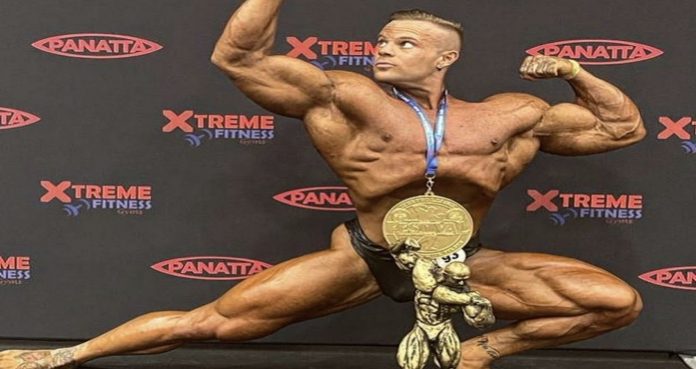
Mike Sommerfeld wins Classic Physique at the 2021 Poland Pro Supershow!
Mike Sommerfeld showed up the to 2021 Poland Pro Supershow in top shape and was able to win Classic Physique. This event took place on Sunday in Warsaw, Poland with Classic Physique and Bikini competitors looking for qualification to the 2022 Olympia.
In the end, Sommerfeld came out victorious. He earned a victory back in July at the IFBB Xtreme Bodybuilding & Fitness Pro. This punched his ticket to the biggest event of the year where Sommerfeld went toe-to-toe with the top competitors in the world. Sommerfeld finished seventh at this year’s Olympia but can be viewed as an up-and-comer. He will have a chance to prove this once again at the 2022 show after winning on Sunday.
Wiktoria Gasior was victorious in the Bikini division. Gasior was last on stage in September when she finished second at the IFBB Tsunami Cup Pro. Now, Gasior will join Bikini at the Olympia next season. This was the largest division at the Olympia just three weeks ago. It is as competitive as any other division and will feature some new names next year.
The 2021 Poland Pro Supershow was able to crown a champion in two events and give qualification for the 2022 Olympia. The full results have been announced and they can be seen below!
2021 Poland Pro Supershow: All Division Winners
Classic Physique: Mike Sommerfeld
Bikini: Wiktoria Gasior
2021 Poland Pro Supershow Breakdown
Classic Physique
First Place – Mike Sommerfeld
Second Place – Hubert Kulczynski
Third Place – Hany Saeed
Fourth Place – Ruben Lopez Reyes
Fifth Place – Roberto Martinez Pizana
Sixth Place – Yevhenii Mykhailenko
Seventh Place – Denis Romanov
Eighth Place – Piotr Wojtowicz
Ninth Place – Roman Khaliulin
Tenth Place – Aldin Alijagic
Bikini
First Place – Wiktoria Gasior
Second Place – Ana Maria Vintu
Third Place – Adrianna Kazcmarek
Fourth Place – Noora Mahonen
Fifth Place – Aneta Szoltysek
Sixth Place – Eliana Guzman Reyes
Seventh Place – Kristina Alexandrovna Ivanova
Eighth Place – Klaudia Ignasiak
Ninth Place – Renata Nowak
Official Score Cards
Generation Iron wishes to congratulate all the great athletes who earned a win at the 2021 Border States Pro. Make sure to check out our full IFBB Pro results page from this year and previous years right here to catch up on any action you may have missed!
Greg has covered the four major sports for six years and has been featured on sites such as Sports Illustrated, Fox Sports, SB Nation, NJ.com, and FanSided. Now, he is transitioning into the world of bodybuilding and strength sports.
Build Bigger Biceps With These 3 Dumbbell Exercises
Build Bigger Biceps With These 3 Dumbbell Exercises
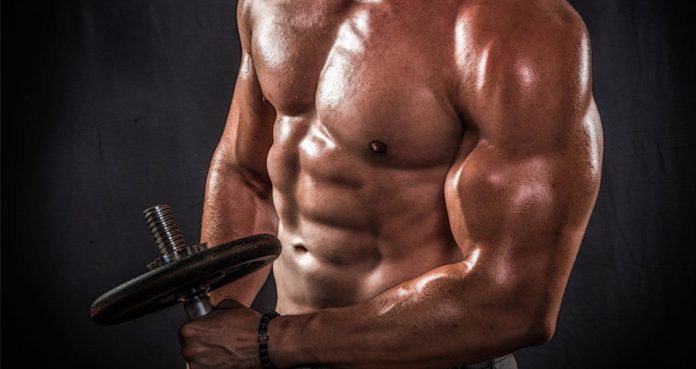
Nothing gets your confidence up like looking down at your arms and seeing a pair of bulging biceps. At the same time, nothing can be harder, or more confusing than growing those bulging biceps. There are so many exercises to choose from, and they all seem to do pretty much the same thing, right?
You’ve got barbell curls, dumbbell curls, concentration curls, zottman curls, incline curls, supinated dumbbell curls, hammer curls, preacher curls, spider curls, and the list goes on and on…
But what are the best exercises to actually build bigger biceps? First, let’s get a quick anatomy lesson.
Biceps Anatomy 101
Pics Of Biceps Muscle With Name Muscle Pictures Ii | Chandler Physical Therapy – Anatomy Inner Body
The biceps originate in the shoulder and insert below the elbow. In the picture here, you can see that the long and short head of the biceps actually take different paths through the shoulder before they connect. The short head goes around the humerus (the big upper arm bone), while the long head goes over top of the humerus.
Why is this important?
Depending on the position of your humerus, the biceps will be stretched to varying degrees, which affects how your biceps behave during an exercise.
For instance, if your elbows are back behind your body, like in an incline curl, then the long head of your biceps will be stretched more than the short head. If your elbows are in front of your body, like in a spider curl, then both heads will be stretched less. We’ll talk more about why that matters in a bit.
Biceps Functions
The other important thing to know about your biceps is that they have two functions: flexion and supination.
Flexion is the act of bringing your hand towards your shoulder, and supination is the act of turning your hand from a palms down position, to a palms up position.
From the textbook to the Gym
Now that you understand about your biceps anatomy and functions, let’s dive into the workout.
Build Bigger Biceps With These 3 Dumbbell Exercises
This workout switches up the angle of your arms to vary the stretch in your biceps. Stretching your biceps more will help emphasize the long head, working your biceps peak, and stretching your biceps less will help you get a really strong contraction.
In addition to changing the angle, this workout incorporates both biceps functions, flexion and supination, for a full biceps workout.
Exercise #1: Dumbbell Spider Curls – 3 sets x 10, 8, 6 reps
With your elbows in front of you, like here in the spider curl, your biceps are stretched less. This allows you to get a really strong contraction. Make sure to squeeze your biceps as hard as you can at the top of this movement.
Exercise #2: Supinated Dumbbell Curls – 3 sets x 8 reps
Supinated dumbbell curls are one of the best biceps exercises because it incorporates both flexion and supination. Make sure to twist your wrists earlier in the movement, rather than later, and twist and squeeze as much as you can at the top.
Exercise #3: Incline Dumbbell Curls – 3 sets x 10-12 reps
Remember that if your elbows are behind your body, like here in the incline curl, then the long head is stretched more. Since the long head is stretched more, this will cause it to slightly work more.
Want to get a taller biceps peak? The peak is actually the long head, so doing incline curls can help.
Pro Tip: Flex your triceps at the bottom of the movement. This will ensure you get a full stretch for your biceps and don’t cheat.
Conclusion
This workout is one of the best biceps workouts because it works your biceps in the flexed position, in the stretched position, and hits both functions of your biceps.
Also, you only need a dumbbells, so it can be done at nearly any home or commercial gym.
Have a different combination of dumbbell biceps exercises you like? For more news and updates, follow Generation Iron on Facebook, Twitter, and Instagram.
Jake is a former personal trainer & current fitness nerd. Check out more tips to get bigger arms on his site AnywhereArms.com.
*Header image courtesy of Envato Elements.
Three Unconventional Unilateral Exercises to Improve Leg Strength
Performing Unilaterals To Enhance Performance
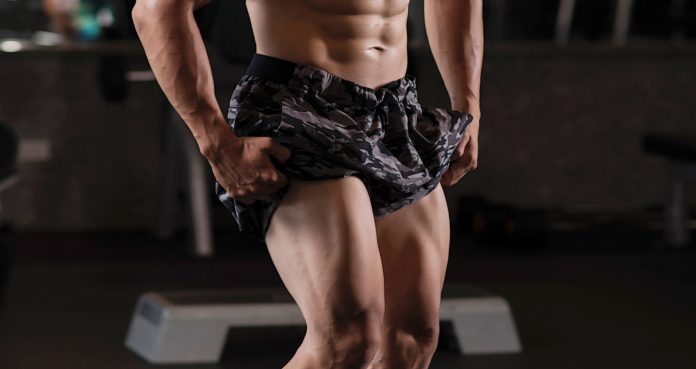
As a beginner, due to the fact that the body is unaccustomed to the stimulus of strength training, deadlifting and squatting regularly will significantly and rapidly build full-body strength.However, as you become more highly conditioned it may be necessary to make a number of substantial changes to your training in order to continue hitting personal bests. Not only does the rate of strength improvement begin to slow over time but muscular imbalances may also be established if the focus is constantly on bilateral (two-limbed) exercise.Incorporating unilateral (single-limb) exercise into your training program can yield great benefits and allow you to surpass your squat and deadlifts PB’s.
Three Benefits of Unilateral Training
This first section will briefly highlight three substantial benefits associated with unilateral training that will ultimately allow you to perform heavy compound lifts more efficiently.
1) Eliminating Muscular Imbalances
Muscular imbalances are not uncommon and it is likely that everyone suffers from imbalances to one degree or another and there are a number of reasons why they develop.Firstly, everyone tends to have a dominant side – right or left. In everyday activities, exercise and sport, it is likely that one side is used more heavily than the other.As a result, the dominant side may increase in strength to a greater degree than the non-dominant side thus causing an imbalance between the right and lift side.While it is typically the case that the weaker side is the non-dominant side, be aware that this is not always the case and the dominant side may well be the weaker side.Another potential cause of an imbalance is injury. As a consequence of injury, often weakness and instability are apparent around the injured site (1). While rehabilitation exercises will help to restrengthen the injured site, an imbalance between sides may still remain.Furthermore, imbalances can become exacerbated by bilateral training. The stronger side can compensate for weakness on the other side and cause the imbalance to develop further.Imbalances need to be assessed and rectified through unilateral training as they may negatively affect performance and may even increase the risk of sustaining an injury.
2) Injury Prevention
Imbalances and weaknesses can significantly alter or interfere with exercise technique which can significantly impact performance.For example, during the squat, if the stronger side is compensating for weakness on the other side, the hips will likely significantly shift towards the stronger side (2).By strengthening the weaker side and correcting any muscular imbalance that exists, the way in which you move will become more efficient and technique will improve.Becoming more competent with your technique will allow you to lift a greater load which will increase the training stimulus and consequent rate of adaptation to the muscles.Stronger muscles will allow the body to cope with a greater amount of stress will also improve the function of joints thus reducing the injury risk.As touched on, having significant muscular imbalances can increase the risk of sustaining an injury, therefore, by reducing imbalances the risk of injury will be significantly lessened.
3) Enhanced Muscle Recruitment
Research comparing electrical activity of muscle during both unilateral and bilateral leg exercises has indicated that unilateral exercise activates muscle to a greater extent in comparison to bilateral exercise (3).Part of the reason for this is that when performing a unilateral exercise you have only one base of support whereas you have two during a bilateral movement. Having just a single base of support increases the instability of the exercise and therefore a large activation from a number of leg muscles is required to assist in stabilization.Not only does unilateral exercise require a greater activation from the lower extremities, the core must also activate more highly to enhance control and stability.Using a single-leg stance will strengthen all of these muscles in a highly functional way. Many everyday activities require you to maintain balance and stability while in a single-leg stance.Some examples that demonstrate this include walking, stepping up, running, sprinting, and changing direction.With this understanding, it is imperative that a number of unilateral strengthening exercises such as lunges, split squats and single-leg deadlifts and incorporated into our training programs.
Three Unilateral Exercises for Leg Strength
The following three unilateral exercises would not be seen as your conventional-type unilateral exercises, however, there is no denying their effectiveness.The following section will provide detail on the exercise, its uses, benefits, the required technique and how it should be programmed into your strength training.
1) Single-Leg Hip Extension with Hamstring Curl
Considering that the hamstrings control the extension of the hips and knee flexion, this exercise will effectively train the hamstring as it incorporates both of these movements.Furthermore, the use of the swiss ball will increase the need for stability which will place an additional demand on a number of stabilizing muscles.Improving the strength and function of the hamstrings will have a significant impact on the deadlift considering that the deadlift is a hamstring-dominant exercise.While this is undoubtedly an excellent accessory exercise for improving both the deadlift and squat, it is also highly recommended for runners as the exercise replicates the demands of road running.Be aware that this exercise is highly demanding on the hamstrings and therefore high repetitions may be something that you wish to avoid. Start with 2-3 sets of 6 reps per side and gradually increase the reps as the week’s progress.
Technique:
1) Lie flat on the floor and start by placing one foot on top of the swiss ball. Ensure that the heel is pressed into the ball and that the toes are pointed upward.2) Perform the hip extension by engaging the core and driving through the hips so that they lift from the floor and hold them in position. 3) Keeping the hips up, pull the ball in towards your glutes by bending the knee until it reaches a 90-degree angle.4) Briefly pause in this position before beginning to extend the knee and slowly return to the starting position all while keeping the glutes engaged.5) Once the leg has been fully extended, gradually drop the hips down until they return to the floor. Repeat this process until the prescribed number of reps have been completed.
2) Kettlebell Swap
When performing the squat and deadlift, the knees should be pushed wide and track over the toes while the feet remain stable. Some individuals find that, when they squat and deadlift, pronation occurs and the feet fold inward. This is something that should be avoided as far as possible as it can lead to injury (4).Allowing the ankles to pronate may place undue stress and strain on the knees and consequently make it more challenging to engage the glutes and lockout the hips. The kettlebell swap is an exercise that is highly recommended for those who experience this pronation of the foot during the squat and deadlift. The exercise places you in a single-leg position in order to improve balance and effectively build strength around the ankle joint.Regularly performing the kettlebell swap and strengthening the ankles and feet will not only work to prevent injury, it will also put you in a stronger and more stable position when squatting or deadlifting.In addition, in order to pass the kettlebell under control and to prevent swinging, the core muscles and a number of hip muscles must powerfully contract.If this exercise is new to you, consider starting with a light load (18-26lbs) and gradually increase the weight over time.The kettlebell swap can serve as an excellent warm-up activity or can be effectively paired with the squat or deadlift. Look to perform sets of 6 reps per side.Be aware that it is possible to use a dumbbell for this exercise if you do not have access to kettlebells.
Technique:
1) Start by standing tall while holding the kettlebell in your left hand. Keep the arm straight so that the weight hangs by the hip. Engage your core muscles, slowly lift one foot from the floor and find your balance.2) Under control, reach across the body with the left hand and pass the kettlebell to the right hand while maintaining a vertical trunk position and return the weight to the side of the hip.3) While still maintaining a core brace, pass the weight back to the left hand and returning to the starting position – this is one rep. 4) Continue to swap back and forth from left to right until you have completed the desired number of reps. Repeat the above steps again but this time starting with the weight in the right hand.
3) Offset Lateral Lunge
When it comes to leg development, often major muscles like the glutes, hamstrings, and quads are prioritized. The adductors can be overlooked yet they play such a crucial role in hip strength and mobility.Having adductors that are weak or tight can interfere with movement generated around the hips and can, therefore, impact deadlift and squatting ability.Lateral lunges are a superb resistance exercise that can be used to build strength in the adductors (as well as the quads and glutes).The lateral lunge is particularly effective as it simultaneously works the adductors of the leading leg and stretches the adductors of the trailing leg.To add a further challenge, using one kettlebell rather than two will decrease stability. If two kettlebells were to be used, the weights counterbalance each other and stability demands decrease.Using one kettlebell will increase the demands on core and lower extremity musculature as they work to increase stability and prevent any rotation or bending through the trunk.On a side note, you may wonder why a lunge exercise is considered a unilateral exercise specifically because both feet are placed in direct contact with the floor.When you review the demands and biomechanics of the exercise it becomes clear that the lunge is really a unilateral exercise (5).During the lunge (and lunge variations) it is the front leg that drives the movement and is exposed to a great amount of stress; the rear leg simply enhances stability and is not activated as highly during the movement.The offset lateral lunge is best used as an accessory exercise after completing sets of squat and deadlift. Keeping in mind that this is an accessory, extremely heavy loads should be avoided. Depending on your strength levels you may wish to start anywhere between 26 – 53 pounds.Look to complete sets of 8 – 12 reps per leg. For comprehensive hip development, consider pairing the lunge with a hip mobility exercise such as split stance adductor mobs.
Technique:
1) Start by standing tall and bringing the kettlebell up to the rack position. This is where the kettlebell is brought up to shoulder height and sits comfortably on the bent arm.2) Before stepping laterally, push the chest up and brace the core. Take a large step to the side which is not holding the weight and plant the foot.3) Bend the knee of the leading leg and drop your backside down towards your heel all while keeping the trailing leg straight – you should feel a significant adductor stretch in the trailing leg.4) Push hard through the heel of the leading leg to drive the body back up to standing. Imagine you are trying to drive your heel through the floor.5) Repeat until the prescribed number of reps has been completed then move the kettlebell to the other side and perform the same number of reps on the other side.
Final Word
Considering the impact that muscular imbalances can have on strength development and injury risk, a significant portion of your training program should be dedicated to unilateral exercise.If you aspire to improve your squat and deadlift performance, incorporating the three aforementioned unilateral exercises into your training is highly recommended.
References:
1 – Fulton, Jessica; Wright, Kathryn; Kelly, Margaret; Zebrosky, Britanee; Zanis, Matthew; Drvol, Corey; Butler, Robert (2014-10). “INJURY RISK IS ALTERED BY PREVIOUS INJURY: A SYSTEMATIC REVIEW OF THE LITERATURE AND PRESENTATION OF CAUSATIVE NEUROMUSCULAR FACTORS”. International Journal of Sports Physical Therapy. 9 (5): 583–595. ISSN 2159-2896. PMC 4196323. PMID 25328821.
2 – Myer, Gregory D.; Kushner, Adam M.; Brent, Jensen L.; Schoenfeld, Brad J.; Hugentobler, Jason; Lloyd, Rhodri S.; Vermeil, Al; Chu, Donald A.; Harbin, Jason; McGill, Stuart M. (December 1, 2014). “The back squat: A proposed assessment of functional deficits and technical factors that limit performance”. Strength and conditioning journal. 36 (6): 4–27. doi:10.1519/SSC.0000000000000103. ISSN 1524-1602. PMC 4262933. PMID 25506270.
3 –McCurdy, Kevin; O’Kelley, Erin; Kutz, Matt; Langford, George; Ernest, James; Torres, Marcos (2010-02). “Comparison of lower extremity EMG between the 2-leg squat and modified single-leg squat in female athletes”. Journal of Sport Rehabilitation. 19 (1): 57–70. doi:10.1123/jsr.19.1.57. ISSN 1056-6716. PMID 20231745.4 – Lee, Jong Dae; Koh, Da Hyun; Kim, Kyoung (2015-1). “The kinematics of the lower leg in the sagittal plane during downward squatting in persons with pronated feet”. Journal of Physical Therapy Science. 27 (1): 285–287. doi:10.1589/jpts.27.285. ISSN 0915-5287. PMC 4305583. PMID 25642092.
5 – Riemann, Bryan L.; Lapinski, Shelley; Smith, Lyndsay; Davies, George (2012-8). “Biomechanical Analysis of the Anterior Lunge During 4 External-Load Conditions”. Journal of Athletic Training. 47 (4): 372–378. ISSN 1062-6050. PMC 3396296. PMID 22889652.
Water Intake Calculator: Calculate Your Recommended H20 Intake
Hydration is huge and knowing how much water to drink can be a game changer inside and out of the gym.
We all know we need to drink to water. We hear it all the time and often times we just brush it off as something we know. But in reality, are we drinking enough despite this? For us bodybuilders and athletes, we always have a water bottle on us, but even then, the question of if we are drinking enough remains number one. The right amount of water intake can affect not only your workouts but also daily life and cannot and should not be ignored.
Let’s take a look at hydration and see why this matters so much. We always hear about it, but knowing the benefits and exactly what this can do for you can greatly affect your gains and give you the best chance at fully optimizing your performance.
Why Hydration Matters
For those of bodybuilders and other strength athletes who regularly partake in grueling workouts, we know how thirsty we get. Hydration matters and for good reason. Let’s take a look at some of the benefits of drinking plenty of water and why hydration ultimately matters.
Physical Performance: The right amount of hydration can reduce fatigue, enhance endurance, keep your muscles functioning properly, and even lower your heart rate, all contributing to improved physical performance for the best results (1).
Cognitive Function: Drinking enough water allows you to focus and have a clearer mind. When it comes to preventing headaches, enough water can prevent this from happening thus keeping you mentally sharp and free of pain (2).
Weight Loss: By always staying hydrated, you actually feel more full, thus decreasing your desire to snack and putting on unwanted weight. Drinking before meals is a great way to control your portions so you only eat what you need to.
Immune System: Water can flush out those nasty toxins and bacteria to support your immune system so you stay as healthy as possible without the fear of falling ill. A stronger immune system means less time out of the gym and more time seeing gains (3).
How To Tell If You Are Dehydrated
The feeling of dehydration is terrible. Plain and simple. We’ve all felt it before, that sluggish, drained feeling that most often ends with a terrible headache. Why put yourself through that? Common side effects of dehydration include things like thirst, dry skin, feeling dizzy or low on energy, and darker yellow urine (4). It’s clear that dehydration can negatively affect your workouts, so why even put yourself in that position? Working on optimizing hydration is exactly what you need in order to fully succeed both inside and out of the gym and stay as hydrated as possible.
Best Ways To Stay Hydrated
With our busy schedules, it can be tough to stay hydrated. You’re always running around, bouncing from place to place, running errands, or just consumed in work. By the time your workout comes along, you realize you’ve had maybe three sips of water. Not good enough. Always having a water bottle with you is an easy way to just take a drink here and there. Soon enough, the bottle is gone, you refill, and you’re off to the races again. For those who love caffeine, maybe try and limit the caffeinated beverages or find a good balance of water to caffeine. If you feel that drinking flat water doesn’t cut it, try flavored sparkling water or check out some awesome supplements to stay hydrated while having a great taste.
Water & Electrolytes
The relationship between water and electrolytes is important to know. We’ve all seen those bottles that have electrolytes mixed into the water. There’s a reason for that. Electrolytes are essential minerals in your body that provide benefits for a host of bodily functions. Things like muscle contractions and balancing pH levels are just a couple of examples. But of course, they also help us stay as hydrated as possible. Why electrolytes are so important is that they help distribute water throughout the body, making sure your muscles and other body parts have enough water to function properly, and of course, stay clear of dehydration (5).
Daily Hydration Chart
It should be said that depending on your exercise and activity level, you should drink more water than if you do not workout. Using things like how you feel and urine color are easy ways to gauge whether or not you are getting to a hydrated or dehydrated state.
Let’s take a look at an average daily H20 intake requirement chart from Harvard T.H. Chan School of Public Health so you get a better sense of what we mean (6).
Age (years)
Amount in Ounces
Amount in Cups
1-3
32
4
4-8
40
5
9-13
56-64
7-8
14-18
64-88
8-11
Men, 19 and older
104
13
Women, 19 and older
72
9
Pregnant Women
80
10
Breastfeeding Women
104
13
Best Supplement To Maximize Hydration
With so many supplements on the market, it can be challenging to decide which one will maximize your gains the most. While it may be obvious to drink water and stay hydrated, the right supplement can optimize hydration so you never suffer from negative side effects. A product loaded with BCAAs and electrolytes is a sure fire way to ensure dehydration never occurs.
Enhanced Labs EAA+
Enhanced EAA+ is a great supplement to aid in your desired muscle growth and workout needs. A serious strength building formula is designed with essential amino acids, nootropics, trace electrolytes, and minerals for a complete mass gainer.
EAA+ pairs branch chain amino acids (BCAAs) with essential amino acids (EAAs), nootropics, trace electrolytes and minerals to make it a complete mass gainer, strength builder, and ultimate hydration option. With high quality ingredients in an advanced formula, you get a seriously effective supplement able to help tackle any and all of your needs. With 10g of clinically dosed essential amino acids, great blends will maximize muscle growth and hydration with just 2-3 servings per day.
Wrap Up
Hydration is absolutely key in terms of working out and with our daily life. Staying hydrated and taking in the right amount of water will greatly affect all your gains and give you the best in terms of seeing that growth you want most. This daily intake graph will hopefully help as a starting point and always remember to keep a water bottle with you so you never have an excuse.
Let us know what you think in the comments below. Also, be sure to follow Generation Iron on Facebook, Twitter, and Instagram.
*Images courtesy of Envato
References
Popkin, B.; et al. (2010). “Water, Hydration and Health”. (source)
Grandjean, A.; et al. (2007). “Dehydration and cognitive performance”. (source)
UCI Susan Samueli Integrative Health Institute (2020). “Hydration for Immune System”. (source)
Shaheen, N.; et al. (2018). “Public knowledge of dehydration and fluid intake practices: variation by participants’ characteristics”. (source)
James, L.; et al. (2015). “Effect of Electrolyte Addition to Rehydration Drinks Consumed After Severe Fluid and Energy Restriction”. (source)
Harvard T.H. Chan School of Public Health. “Water”. (source)
2021 Legion Sports Fest Pro Results
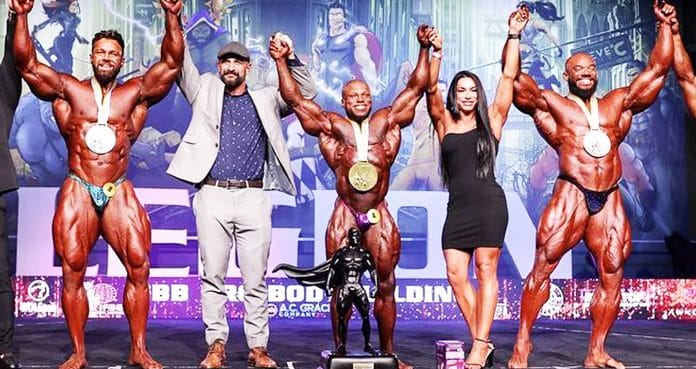
Shaun Clarida wins Men’s Open at the 2021 Legion Sports Fest Pro!
The 2021 Legion Sports Fest Pro was the next big bodybuilding event and it was headlined by Shaun Clarida taking home the prize in Men’s Open. Some of the top competitors in the world gathered to Reno, NV looking to gain qualification to the 2022 Olympia.
There was plenty of talent on stage on Sunday afternoon. In the Men’s Open division, the most exciting story was Shaun Clarida’s Men’s Open debut. Ultimately and seemingly against all odds – Clarida was victorious despite only weighing just under 175 pounds – much lighter than a typical Men’s Open competitor.
The first hint of Clarida’s path to victory was during the prejudging round – where he was placed center during the final callout – a sign the judges were comparing all competitors to Clarida’s physique. He later brought the victory home in the finals.
Shaun Clarida made his debut in the Men’s Open division on Sunday. He is coming off a second-place finish at the Olympia 212. Clarida won the event back in 2020 before finishing second to Derek Lunsford this year. Clarida displayed a strong physique with his usual mix of size and conditioning.
Clarida has his work cutout for him in this contest going up against the likes of XX and Regan Grimes. After a disappointing outing in the Olympia, Grimes hired a new coach and made immediate changes. This paid off as he displayed an even bigger physique that will only continue to improve. Sergio Oliva Jr. was also present at the event. He has turned into one of the best posers in the world.
Cedric McMillan made his return to action this weekend. McMillan missed time with an injury and was forced to sit out of the Arnold Classic but appeared on the broadcast. Maxx Charles and Patrick Moore added even more star power to the competition. There was plenty of size present on stage on Sunday and the event did not disappoint.
There were six events in total at the 2021 Legion Sports Fest Pro looking for an automatic bid to the Olympia. The full results have been announced and can be found below!
2021 Legion Sports Fest Pro: All Division Winners
Men’s Open: Shaun Clarida
Classic Physique:
Men’s Physique:
Fitness:
Bikini:
Women’s Physique:
2021 Legion Sports Fest Pro Breakdown
Men’s Open
First Place – Shaun Clarida
Second Place – Regan Grimes
Third Place – Sergio Oliva Jr.
Classic Physique
Coming Soon
First Place –
Second Place –
Third Place –
Fourth Place –
Fifth Place –
Sixth Place –
Men’s Physique
Coming Soon
First Place –
Second Place –
Third Place –
Fourth Place –
Fifth Place –
Sixth Place –
Fitness
Coming Soon
First Place –
Second Place –
Third Place –
Fourth Place –
Fifth Place –
Sixth Place –
Bikini
Coming Soon
First Place –
Second Place –
Third Place –
Fourth Place –
Fifth Place –
Sixth Place –
Women’s Physique
Coming Soon
First Place –
Second Place –
Third Place –
Fourth Place –
Fifth Place –
Sixth Place –
Generation Iron wishes to congratulate all the great athletes who earned a win at the 2021 Legion Sports Fest Pro. Make sure to check out our full IFBB Pro results page from this year and previous years right here to catch up on any action you may have missed!
Greg has covered the four major sports for six years and has been featured on sites such as Sports Illustrated, Fox Sports, SB Nation, NJ.com, and FanSided. Now, he is transitioning into the world of bodybuilding and strength sports.

Update on Protein Factory’s Research and Development
The following blog post is to update my readers and customers about what Protein Factory is working on in the Research and Development department.
Bio Serum’sI am working on bringing these products to market. I have about three products that are in development. One of them is a total muscle growth formula that combines the Total Frag 250 with the Bio Serum. My idea with this powder is to make an overall muscle-building powder. One takes it grows, simple as that.
Pre Workout Formula (stimulant powder)Pre workout supplements that contain masssive amounts of caffeine, and I’m talking like 500mg are very popular. So I wanted to bring in a product that uses a different stimulant instead of caffeine. Again, I’m going to keep this very simple. I’m formulating it with just 2 or 3 ingredients. If one wants to get wired and “stimulated” like caffeine but better, this is going to be the product.
Next is an ingredient to add to your preworkout. Its a combo of a stimulant nootropic. When you use it your mouth gets a numbing tingline feeling. I like it alot.
Hair Loss.There is an ingredient that I have been working with that helps regrow hair and make it thicker.
Alex Rogers is a supplement manufacturing expert. He has been formulating, consulting, & manufacturing dietary supplements since 1998. Alex invented protein customization in 1998 & was the first company to allow consumers to create their own protein blends. He helped create the first supplement to contain natural follistatin, invented whey protein with egg lecithin, & recently imported the world’s first 100% hydrolyzed whey.
2021 Poland Pro Supershow Scorecards
2021 Poland Pro Supershow Scorecards | IFBB PRO
3 Ways To Build A Powerful Bench Press
Create A Goal Plan
When looking to improve any lift in the gym, or to achieve any goal in life, it is necessary to set out an effective plan that will guide you to success. As the well known saying goes, “fail to prepare, prepare to fail”.
Training Volume for Strength Gains
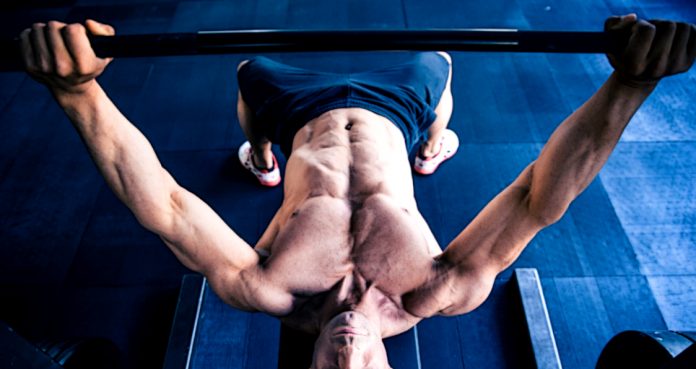
When it comes to benching improvements, benching once a week will simply not suffice, regardless of how many sets and reps are performed in one session.
By following the traditional 5 x 5 method, 25 reps will be completed. That’s 25 reps for the week which is undoubtedly insufficient if the goal is to improve bench press performance.
Instead of training the bench press once a week, it is worthwhile performing it more frequently. Not only will this increase training volume, which can lead to an increase in strength (1), but substantial time can be spent refining technique.
More substantial improvements will be made with an individual practicing multiple times each week than with an individual who practices sporadically.
Even something as simple as switching to benching 3 x 5, twice a week is of great benefit. While the total volume only increases by one set in comparison to 5 x 5, the quality of those sets will be much greater.
Because only 3 sets are being performed, as opposed to 5 sets, the workout volume decreases, the muscles are less fatigued, and therefore, the reps are much smoother.
Frequency is undoubtedly important, but so is the quality of the movement. For strength gains, precise, frequent reps are much superior to sporadic, substandard reps.
Ensuring that the training volume is correct is the first step. However, if a bench press improvements are still stagnant, there are 3 methods that should be employed.
1) Practice Frequently
As mentioned, focusing on the skill acquisition instead of the weight on the bar is an effective method of improving one’s technique.
Regularly benching will allow you to increase overall training volume and consequently allow you to push heavier weights as strength develops.
An effective method of practicing and upping training volume is to add 5-8 sets of 1-3 reps of bench into your training program. Ensure to use a lighter weight and focus on the movements.
By simply adding this in, you will complete 24 additional reps to your weekly training volume. In turn, this will enhance benching technique and strength capacity.
In terms of frequency, anywhere between 2-4 sessions per week would be enough. As referred to, it is possible to add in lighter-weight practice sets into an existing program, if necessary.
It is absolutely fine to tweak the program until you find the optimal combination of both intensity and frequency that brings about results.
2) Performing Effective Variations
If you have been benching for a number of years, it is likely that you have reached a training plateau before. A plateau is simply where progress seems to have stalled or ceased entirely.
One method that is particularly effective for moving beyond a training plateau is to use exercise variations. There are a vast number of variations for the majority of compound exercises.
For the novice, strength gains come easily. This is partly because their nervous system adapts rapidly to the new training stimulus which causes an increase in strength (2).
Frequency should take precedent for the novice and exercise variations are not necessarily required at this stage. Strength will rocket with frequent practice and patience.
However, over time, the body becomes more and more accustomed to the stresses of training and therefore, the rate of adaptation begins to slow as the body becomes more accustomed to the training stimulus.
As a result, increased frequency alone will not have a large muscle stimulating impact. It is at this stage that would be wise to consider bringing in exercise variations.
Studies show that exercise variance is more effective for improving muscular strength in trained individuals than traditional loading schemes (3).
There are a number of factors that should be considered when selecting appropriate variations for bench, or any other exercise for that matter.
The movements involved in the exercise should engage a great amount of muscle, allow for heavy loading and involve a large range of motion.
Keeping this in mind, it should be easy to see why an incline bench press is superior for building strength than a cable fly.
The movements involved in a cable fly may indeed allow for a greater range of motion, however, muscles activation is greater and more weight can be pressed with the incline bench.
With all exercise or sport-specific training, variations should be chosen based on improving a movement rather than strengthening a specific muscle group.
With this understanding, once again, the incline bench press trumps the cable fly. In order to develop benching ability, it is wise to select exercises that replicate the movement patterns of the conventional bench press.
A few examples of effective bench press variations include: decline bench, touch and go bench, pause bench, tempo bench, feet-up bench and slingshot bench.
3) Comprehensive Recovery
The effort that you put into tailoring and executing the perfect bench program will be in vain if adequate recovery from exercise is not prioritized.
There is much more to recovery than simply ensuring that rest days are scheduled into the week. Sleep, nutrition and hydration will all play a role and will therefore have an impact on how effectively you recover.
Firstly, proper nutrition is essential for bringing about changes in body composition. A calorie surplus is required for muscle gain – this is where you consume more calories per day than the body requires (4).
The additional calories are required to accelerate recovery and causes muscle fibers to increase in size.
It is recommended to track your daily calories when looking to add muscle size. This way you can be sure that enough calories are being consumed to cause growth. If you fail to track, you are shooting in the dark.
In addition to this, adequate protein should be consumed every day. Protein is also required in the recovery process from the stresses of strength training.
Failure to consume enough calories and protein each day will fail to bring about optimal muscle growth and strength gains.
The body needs time to recover from the everyday stresses and strains of life and it does so through sleep.
Requirements for sleep tend to vary from person to person, however, typically the recommendation is to aim for between 6-8 hours per night.
It may take a little trial and error to understand how much sleep your body really needs. Often, more sleep is better.
If you’re uncertain about whether or not you’re getting enough sleep, look to go to bed slightly earlier each night and assess if this has a positive impact on your performance in the gym.
Inadequate sleep has been found to hamper muscle building progress predominantly through reducing exercise performance (5).
Finally, hydration often has a bigger impact than many perceive. Drinking water regularly throughout the day can help to keep the body functioning optimally.
For many, hydration levels are not maintained throughout the day which can lead to poor performance in the gym (6). Drinking a vast amount during exercise is simply not enough.
It is important to space out water intake rather than drinking it all in a short time period. Look to be consistent with hydration on both training and rest day.
For those who are unsure how much water they should be drinking each day, aim for half your bodyweight in ounces. From that point, water intake can be steadily increased if necessary.
Proper nutrition, ample sleep and good hydration should not be seen as a privilege, rather an essential for developing strength and size.
If you are fully committed to improving in the gym, then you must be serious about the time spent outside of the gym too.
Final Word
While it is crucial that proper programming is in place, it is equally important to consider other factors that significantly influence strength gains. Appropriate nutrition, sleep, hydration and even genetics will all determine whether or not success is attained in the gym.
References:
1-Services, Department of Health & Human. “Resistance training – health benefits”. www.betterhealth.vic.gov.au.
2-Mangine, Gerald T.; Hoffman, Jay R.; Gonzalez, Adam M.; Townsend, Jeremy R.; Wells, Adam J.; Jajtner, Adam R.; Beyer, Kyle S.; Boone, Carleigh H.; Miramonti, Amelia A. (2015-8). “The effect of training volume and intensity on improvements in muscular strength and size in resistance-trained men”. Physiological Reports. 3 (8). doi:10.14814/phy2.12472. PMID 26272733.
3-pubmeddev; al, Fonseca RM , et. “Changes in exercises are more effective than in loading schemes to improve muscle strength. – PubMed – NCBI”.
4-Leaf, Alex; Antonio, Jose (2017). “The Effects of Overfeeding on Body Composition: The Role of Macronutrient Composition – A Narrative Review”. International Journal of Exercise Science. 10 (8): 1275. PMID 29399253.
5-pubmeddev; al, Knowles OE , et. “Inadequate sleep and muscle strength: Implications for resistance training. – PubMed – NCBI”.
6-pubmeddev; al, Judelson DA , et. “Hydration and muscular performance: does fluid balance affect strength, power and high-intensity endurance? – PubMed – NCBI”. www.ncbi.nlm.nih.gov.
Build A Thick and Wide Cobra Back With This Workout
Build A Cobra Back With This Back Workout
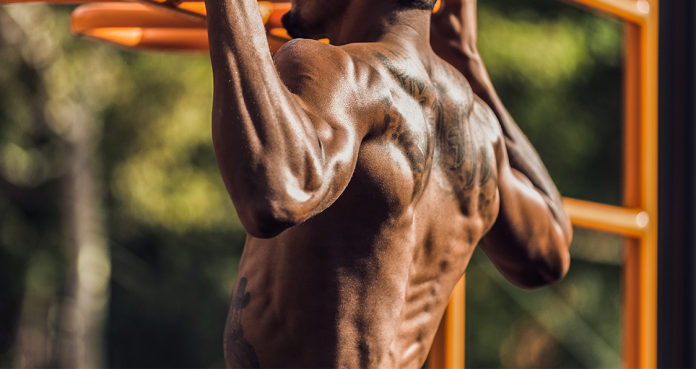
Hitting the lat spread pose should look like you’re drawing curtains on the people standing behind you. Bodybuilding is a game of illusions, and a V-Taper can make you stand out by making your upper body look bigger and meaner.
An effective back workout should have a combination of isolation, compound, pulling, and pushing movements to target your lats optimally. We’ve designed a workout for you which will take your back gains to the next level.
Pull-Ups – 50 Reps
We took this tip from the Governator himself. Arnold used to perform 50 reps of pull-ups at the beginning of each back workout. Pull-ups are a great way of warming up your back and building the width in your lats.
You must hit your back from all the angles. Make sure you’re not just going through the motions. Squeeze and contract your muscles with every rep to make the most of the exercises.
T-Bar Rows – 3 Sets 12-15 Reps
The pulling movements help in building the width in your lats and the rowing lifts develop the thickness in the back. If you don’t have a T-Bar machine at your gym, you can use a barbell as the T-Bar by placing one end of the bar in a corner so it doesn’t move.
Most people make the mistake of standing upright or bending over too much while performing the T-Bar rows. Your torso should be forming a 45-degree angle with the floor throughout the exercise.
Superset
Wide-Grip Lat Pulldowns – 3 Sets 12-15 Reps
Straight Arm Cable Pulldowns – 3 Sets 12-15 Reps
While performing the wide-grip lat pulldowns, make sure you are not using momentum by swinging back and forth. Using the jerking movement takes off tension from your lats by recruiting your arms.
The straight arm cable pulldowns work the thickness of your back. Your elbows will be locked at an angle and your torso will be at a 45-degree angle with the floor. Keep your upper body stationary throughout the exercise.
Single-Arm Dumbbell Rows – 3 Sets 8-12 Reps
Dumbbell rows are a staple in the back workouts. Perform the dumbbell rows by placing one hand and knee on a flat bench while holding a dumbbell in the other hand, and the other foot on the floor.
While rowing the dumbbell, keep all the tension on your lats. If you feel stress building up in your biceps, it means you’re using momentum which is leading to the recruitment of the secondary muscles.
Superset
Barbell Pullovers – 3 Sets 12-15 Reps
Weighted Hyperextensions – 3 Sets 12-15 Reps
Barbell pullovers are one of the most underutilized back exercises. Perform the barbell pullovers by lying across a flat bench while holding a barbell above your chest. You need to keep your elbows locked so your arms are in a straight line. The barbell pullovers help in developing the V-taper. A broad back can make your shoulders look wider and the stomach thinner.
Developing the separation and conditioning in the lower back can be one of the trickiest things. You can perform the weighted hyperextensions by holding a barbell, weight plates or dumbbells in front of your chest.
Which is your favorite back exercise? Let us know in the comments below. Also, be sure to follow Generation Iron on Facebook, Twitter, and Instagram.
Header image courtesy of Envato Elements
2021 San Antonio Classic Results
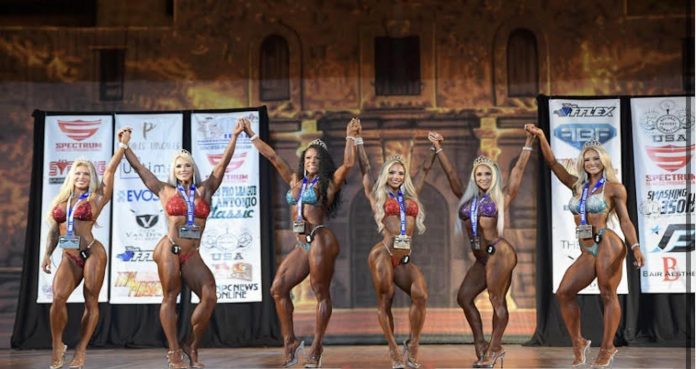
Isabelle Pereira Nunes wins Wellness at the 2021 San Antonio Classic!
The 2021 San Antonio Classic took place on Saturday and it was Isabelle Pereira Nunes who took home the prize in Wellness. Some of the top competitors in the division gathered in San Antonio to earn a victory and show what they can do on stage.
Nunes is two weeks removed from a third-place finish at the 2021 Olympia Wellness. This was the first Wellness competitor at the Olympia and Nunes was one of the top competitors. She qualified for the biggest competition of the year with a win at the Milwaukee Pro back in May. Nunes has taken the next step in Wellness and is an athlete to watch moving forward.
Lorena Ragusa finished second while Devyn Cambre took home bronze. Ragusa was another top-10 finisher at the Olympia as she finished ninth in Wellness. She competed multiple times this year with notable appearances at the Puerto Rico Pro and New York Pro.
Cambre has also gotten comfortable in the top five. She finished fourth at the Milwaukee Pro and fifth in Puerto Rico. This was a chance for Cambre to see where she stacks up and she looked impressive on stage in San Antonio.
The Wellness division featured some top competitors at the 2021 San Antonio Classic looking to take home the prize. The full results have been announced. Check out the full breakdown from the event below!
2021 San Antonio Classic Breakdown
Wellness
First Place – Isabelle Pereira Nunes
Second Place – Lorena Ragusa
Third Place – Devyn Cambre
Fourth Place – Kassandra Gillis
Fifth Place – Brooke Donnelly
Sixth Place – Haley Arnold
Seventh Place – Vicki Counts
Eighth Place – Celeste Morales
Ninth Place – Avis Evans
Tenth Place – Biance Siles
Official Score Card
Generation Iron wishes to congratulate all the great athletes who earned a win at the 2021 San Antonio Classic. Make sure to check out our full IFBB Pro results page from this year and previous years right here to catch up on any action you may have missed!
Greg has covered the four major sports for six years and has been featured on sites such as Sports Illustrated, Fox Sports, SB Nation, NJ.com, and FanSided. Now, he is transitioning into the world of bodybuilding and strength sports.